Sunday, June 30, 2019

Hegel's Phenomenology of Spirit


Introductory Remarks:  The Spirit of the Times

G.W.F. Hegel's most important work is Phenomenology of Spirit [Phänomenologie des Geistes], published in 1807.  The current title only became the definitive title after it was used in posthumous editions of Hegel’s works, starting in 1832.  Hegel’s actual title was System of Science:  Part One, the Phenomenology of SpritGeist (“spirit” or “mind”) is the central concept of the book; in fact, the whole work may be conceived as an attempt to scientifically ascertain the nature of Geist.  In his justifiably famous Preface to the Phenomenology, Hegel wrote “the way to Science is itself already Science, and hence, in virtue of its content, is the Science of the experience of consciousness” (Preface, Phenomenology of Spirit, trans. A.V. Miller, Oxford U. Press, 1977, p. 56). 

Although Hegel’s writing style can be ponderous and theoretically knotted, nonetheless — among philosophers — Hegel’s Phenomenology is widely recognized to be one of those rare, watershed moments in the history of philosophy.  Readers new to Hegel should realize that the Phenomenology was written when Hegel was only thirty-six years old.  More significantly, Hegel struggled to complete the book hastily and under pressure, as Napoleon’s army swept across Europe.  In October 1806, just a few days before his publisher’s deadline — and on the day before the Battle of Jena — Hegel watched as Napoleon himself rode through the city:

I saw the Emperor — this world-soul — riding out of the city on reconnaissance.  It is indeed a wonderful sensation to see such an individual, who, concentrated here at a single point, astride a horse, reaches out over the world and masters it […] this extraordinary man, whom it is impossible not to admire. (from Hegel’s letter to Niethammer, 13 Oct. 1806)

For Hegel, Napoleon signified the birth of a new world.  Scholars have compared the philosophical significance of Kant’s “Copernican Revolution” in philosophy to the French Revolution.  If we take this comparison seriously, then — in its significance for the history of philosophy — Hegel’s Phenomenology of Spirit might be compared to Napoleon’s audacious consolidation and dissemination of the democratic ideals of the French Revolution.  Along these lines, Hegel argues that Absolute Spirit (absoluter Geist) is disclosed in and through the development of human freedom in world history. 

Overview:  the Nature of Geist

As Hegel wrote in his Preface to the Philosophy of Right, a philosophy is a product of its time, and it is in and through philosophy that an age becomes accessible to reason.  If the philosopher attempts to transcend his/her time, this effort leads only to the vague and ambiguous, “soft element” of imagination and ungrounded opinion. 

For Hegel, the essence of Spirit/Mind is freedom.  All thought is purposive — or goal-oriented — and the purpose of Geist is to actualize its essential freedom.  But there is opposition or alienation between Spirit’s (free) essence and Spirit’s (unfree) existence in the world.  The development of the Phenomenology — as well as the development of world history (according to Hegel) — revolves around the effort to overcome this alienation between the essence of Geist and its existence.  Hegel’s Phenomenology involves a philosophy of redemption: rational beings transfigure their existence and actualize their freedom through retrospective self-knowledge.  Or, to give this a further push in the direction of Christian theology, self-alienated subjective spirit overcomes its alienation by dying to itself and being reborn. 

Moreover, freedom can only be actualized — that is, achieved and understood — in a dialectical way.  The process of freedom’s development thus comes into view in and through the relations between the individual life (subjective spirit) and the social order (Sittlichkeit, interpersonal ethical life).  Absolute Spirit realizes itself only in and through the evolution of both subjective spirit and interpersonal ethical life.  That is, the totality actualizes its potential and realizes its truth in the process of its own self-development.  In brief, the whole encounters itself in the form of an object, and comes to know itself in the process of knowing this object:
The notion of Geist [...] is the lineal descendant of the Kantian Transcendental Unity of Self-consciousness and of the Absolute Ego of Fichte and Schelling.  It also claims a collateral source in the Aristotelian nous  which, in knowing the form of an object, thereby knows itself, and which, in its highest phases, may be described as a pure thinking upon thinking.   J.N. Findlay, Foreword, Hegel's Philosophy of Mind. (Oxford: The Clarendon Press, 1971) pp. viif.
In sum, the self-becoming of the whole is achieved insofar as it retroactively re-determines its own content, and this content is nature, which is the presupposition of human consciousness.  The totality returns to itself from the otherness of nature in and through human subjectivity, insofar as the Absolute is both Substance and Subject.  Beginning with Geist at the level of sense perception, Hegel traces the development of Spirit through the encounter with paradox, the conflict between the individual and society, and all of the typical confusions, subversions, doubts and reconciliations that are inherent to the development of intellect.  All of this indicates how Hegel’s Phenomenology is not only a science of consciousness, but also a theory of reality, a theory of knowledge, and a philosophy of history. 
Geist as Dialectical Development

Again, this development of Absolute Spirit as self-thinking thought is not above or beyond the cosmos in some ideal realm: the Absolute does not have a separate existence, in a “transcendental” realm of pure Spirit.  Instead of this, the absolute is nothing but the essence actualizing itself through the very process of its own development:

In the Phenomenology of Spirit, I have exhibited consciousness in its movement onwards from the first immediate opposition of itself and the object to absolute knowing.  “The path of this movement goes through every form of the relation of consciousness to the object and has the Notion [Begriff] of science for its result." (G.W.F. Hegel, Introduction, Science of Logic Amherst, NY:  Humanities Books, 1969, p. 48)
The development of Absolute Spirit has three aspects or phases: 
1. As self-relation:  Spirit has within it the ideal totality; this is Subjective Spirit in its self-contained freedom. 
2. As reality:  this is Objective Spirit, which is Spirit realized in the form of the cosmic object or universe.  In the cosmos, freedom appears in the mode of necessity. 
3. As a union or dialectical synthesis of subject and object. This is Absolute Spirit (cf. Phenomenology, §385). 

The Absolute Spirit is both Substance and Subject, and its nature cannot be defined abstractly, that is, apart from finite — and contingent — things and relations:

While Hegel undoubtedly thought that the sequence of thought-phases described in the Phenomenology — phases experienced by humanity in the past and recapitulated by Hegel in his own thought-adventures up to and including his own advance to the position of Science in about 1805 — was a necessary sequence, still he did not think it the only possible necessary sequence or pathway to Science, and certainly not the pathway to Science that would be taken by men in the future, or that might have been taken in other cultural and historical settings.  For Hegel makes plain [...] that he does not confuse the necessary with the unique, that he does not identify a necessary sequence of phases with the only possible sequence that can be taken. (J.N. Findlay, Foreword, Phenomenology of Spirit, pp. vf.)

The truth disclosed by Hegel’s science of interpersonal Spirit is a union (or identity) of the individual and the specific with the universal.  But in this regard, it is crucial to realize that, for Hegel, union or identity is always identity-in-difference.  This inherent negativity is, for Hegel, the spirit of all natural and intellectual life.  All identity is thus inherently “contradictory”, insofar as inner negativity or inconsistency is the source of all dialectical development.  Because both thoughts and things have internal contradiction, what anything “is” inherently involves what it is not:

Dialectic is, in fact, a richer and more supple form of thought-advance than mathematical inference [...]; dialectic always makes higher-order comments upon its various thought-positions, stating relations that carry us far beyond their obvious content.  What is obvious, for example, in Being is not its identity with Nothing, and what is obvious in Sense-certainty is not its total lack of determinateness.  (J.N. Findlay, Foreword, Phenomenology of Spirit, pp. vf.)

A philosophical idea, for example, does not stand alone; rather, an idea is meaningful only in the full context of its historical development: apart from this context, the idea cannot be evaluated or understood.  In an isomorphic way, an individual human life cannot be understood apart from its evolutionary and environmental aspects, as well as the political, economic, and social conditions of its existence.  In sum, both knowing and being are dialectical.  To relate this Hegelian insight to contemporary continental philosophy and psychoanalysis (both of which have been strongly influenced by Hegel), the subject of the enunciated must be distinguished from the subject of the enunciation, even though each of these can only be analyzed in relation to the other. 

Ontology involves metaphysical inquiry into the nature of being and nonbeing, becoming and changing phenomenal appearances.  The Platonic ideas — as forms of being — opened up both phenomena and empirical generalizations for speculative, dialectical reason.  With reference to Plato’s famous “Divided Line” (Plato’s Republic, 509d-513e), Hegel argues that reason — in opposition to the understanding — develops the dialectic of notions or concepts (Begriffe), and articulates the contradictory movement of notions into each other, into that which they are not.  Along these same lines, the Hegelian notion is always already an ontological concept.  This explains why Hegel insists that phenomena must be brought to their notion, otherwise the phenomena remain begrifflos, "without notion".  In other words, apart from the notion, the ontological status of phenomena remains unclarified.  This indicates how the Hegelian universal differs from an empiricist generalization.  The Hegelian notion (Begriff) is not derived from common features of real, empirical individuals.  As opposed to this, for Hegel the universal implies a totality of negative relations of difference, in the form of a whole which realizes itself in and through the empirical. 

The nature of Geist is to be this totalizing movement that presupposes its purpose as its end.  In other words, Subjective Spirit makes itself what it becomes: a subject is that which freely chooses — in a retroactive, revisionary way — what it always already was to be.  At any point in this process of dialectical development, unrealized potential from the past may be re-discovered and actualized. 

Hegel argues that not only Spirit, but existence too, is this totalizing, redemptive movement.  The structure of the totality is such that the whole is in each part.  Each part of reality, and each term in the system of thought, implicates all others.  And insofar as the definition — and existence — of any unity is constituted only through relations of difference with all others, any one may be viewed from the perspective of the other.  And when considered apart from the totality of its dialectical relations of difference, any one aspect or term is void of significance and cannot exist. 

A careful reading of Hegel thus makes it clear that in Hegelian triadic “synthesis” opposites are not homogenously blended in a way that effaces their difference.  On the contrary, insofar as the universal inherently involves negativity, it is clear that for Hegel “synthesis” involves the positing of difference as such.  To put this in contemporary philosophical terms, synthesis is inherently disjunctive.  And, as already indicated, this Hegelian conception of universality as negative runs counter to empiricist accounts of knowing and existence.  In order to understand the Hegelian notion or concept (Begriff), the most difficult thing for those of us trained in the Anglo-American approach to philosophy is to first forget about empirical generalizations or the nominalist use of the term.  For Hegel, the philosophical notion is universal; it is not merely an empirical generalization. 
As Hegel himself remarks, the word is the murder of the thing, in that the very symbolic representation of a thing mortifies it.  Moreover, the universal cannot be understood to be merely the neutral “container” of its species.  The notion is not strictly distinguished from objects, since the notion is constitutive of objects.  The distinction between an object and a concept (which represents, qualifies, or signifies that object) can neither be rigorously maintained nor entirely dispensed with; the distinction between a concept and an object is itself a conceptual distinction.  Moreover, the notion is not defined in isolation, but only through relations of difference with others, and also in relation to phenomenal objects.  Hegel discusses both the historically contingent as well as the universal notions (Begriffe).  The universal notions that are disclosed in empirical developments are ultimately shown to be aspects of a network that has the character of an organic unity. 
From the standpoint of the understanding (Verstand), general representations are merely determinations made by the understanding, which must be conceived separately and which have no existence, since only individuals exist.  The illusion of the understanding is its presumption that all categories of reason are nothing more than a self-enclosed frame of conceptual representations, and that to make them truly “alive”, you have to add something.  This defect in the understanding is overcome by reason (Vernunft).  In opposition to the understanding, reason discloses concepts as truly universal, that is, as defined only in relation to one another — in a negative way — in and through a totality of differential relations.  Reason discloses conceptualization itself as a constituent of phenomenal objects.  Conceptualizing in this sense is something concrete, not abstract.  The Hegelian notion or concept (Begriff) is thought itself, in its totality of differential relations.  In this sense — and contra Aristotle — the inherent negativity of the notion is the only “prime mover” of dialectical development. 

What does this mean? There is a structural tension between the universal and the particular, such that each particular one is a perspective on the whole.  Any one (when it is considered entirely according to itself) is an empty void (cf. Plato’s Parmenides).  What any particular is — its very existence — is thus determined in an oppositional way, through relations of difference with all others.  Since each particular is atypical, none of the particular “instantiations” of the universal notion ever fully actualizes the meaning of the universal.  In such ways, Hegel takes into account the moment of sheer contingency in nature, history, and thought.  Because of this contingency (cf. the Aristotelian dunamis, or “potentiality”), no universal can completely and consistently “totalize” its particulars.  Along these lines, Hegelian concrete universality does not reduce the universal to the particular.  On the contrary — as several recent commentaries on Hegel have shown — concrete universality refers us to the excessive moment of inconsistency/negativity at the heart of the universal.  There is a moment of antagonism or internal inconsistency at the heart of any unity.  Again, the one as such is internally inconsistent, and this inherent negativity is the primum movens of dialectical development:
In order, then, that in this complete void, which is even called the holy of holies, there may yet be something, we must fill it up with reveries, appearances, produced by consciousness itself. (Phenomenology of Spirit, pp. 88f.)
In Hegelian dialectics — as in Plato’s Parmenides — the space of the (inconsistent) totality is the space between the abstract whole and the particular details that elude its grasp. 
To summarize, sensuous perception is particular knowledge, while the introduction of external determinations is understanding (Verstand).  Universal knowledge, however, is reason (Vernunft).  The true is concrete, and philosophy has its being in that universality which encloses the particular within it, i.e. in the universality of the notion (Begriff).  The fully concrete universality is the Idea (die Idee), defined in a negative way in and through the totality of differential relations.  Hegel’s Phenomenology traces the development of intellect from the abstract universality of the understanding (Verstand), to the notion, which includes reason (Vernunft) as an aspect of the universal.  The content of reason is developed toward the full, concrete universality of the Idea, through which the notion is seen to be a moment of the absolute Geist.  This absolute Spirit is then shown to a self-developing, self-relating totality of differential relations. 
Reason is Spirit when its certainty of being all reality has been raised to truth, and it is conscious of itself as its own world, and of the world as itself. […]   But essence that is in and for itself, and which at the same time actual as consciousness and aware of itself, this is Spirit. (Phenomenology of Spirit § 438, p. 263)

Conclusion:  Reason in History

Hegel coined the term Zeitgeist, “the spirit of the times”, and our postmodern Zeitgeist involves cynicism regarding progress.  We are relativists who believe that everything about thinking is historically contingent, in other words, accidental and relative to its time.  But Hegel recognized that relativism too is historically contingent: it is a phase through which thinking passes now and again.  Plato, Kant, and (in his own way) Hegel, were all struggling against the relativism that was fashionable in their times.  Hegel describes how ideals function in human activity.  Ideals are cultural phenomena that develop historically; philosophers build theories, testing and refuting ideals in the dialectical struggle to attain the truth.  A moral principle, for example, has its significance and its application in relation to other principles: considered entirely according to itself, apart from its context, it would be empty.  As a guide for decision and action, a rule becomes determinate insofar as it is embedded in a particular situation and defined in relation to other rule.  Moreover, the nexus of rules itself implies “meta-rules” which indicate how and when to apply a rule. 

This indicates how Hegel’s antidote to relativism is itself thoroughly historical
There is a kind of universality that is negative; the universal is not an ideal in the sense of some “positive” content that is always implicit to any system of thought.  On the contrary: the universal is a kind of opposition or antagonism around which ever-changing, thoroughly contingent, historical constellations of thought circle and revolve.  Hegelian dialectics should thus be conceived as a process without a Cartesian “thinking substance”, insofar as the dialectic always revolves around a negative differential:

if Hegel’s system is rightly described as one of absolute idealism or spiritualism, it is also rightly described as one of dialectical materialism: it is in fact the true dialectical materialism of which the dialectical materialism of Marx and Engels may be said to be an incompetent, amateur travesty. (J.N. Findlay, Ascent to the Absolute. London: George Allen and Unwin Ltd, 1970, p. 132).

Again, Hegel associates this internal contradiction or “abstract negativity” with freedom, and asserts it to be the only first mover of the dialectical development of thought and existence.  The reconciliation of the universal and the individual is not in some “higher” synthesis that mediates the thesis and the antithesis.  Instead, dialectical analysis reveals that what the universal and the individual share is the very split or ontological difference that runs through both of them. 

According to the hackneyed interpretation of Hegelian dialectics that still predominates in some circles, Hegel presumed to overcome all differences in a system of complete rational synthesis, or “Absolute Knowledge”.  There is, in Hegel, a tension between rationalism as opposed to conflict and contradiction.  But the crucial point is that Hegel locates this very tension within reason itself.  So when reason struggles to overcome contradiction and antagonism, it is fighting against itself, against a deep and ineradicable split that is inherent to rationality.  There is a moment of unreason that is constitutive of reason, and this is why when reason fights its “opposite” it is struggling against itself.  Reason for Hegel essentially involves the excess of madness (cf. the famous “night of the world” passage from the Jenaer Realphilosophie manuscripts). 

In Hegel’s time, Kant had already demonstrated that being is not a predicate; that is, that existence cannot be reduced to the conceptual properties of entities.  Kant recognized the futility of any attempt to completely define what it is that any concept signifies.  Kant bequeathed to his German Idealist followers (Fichte, Schelling, Hegel) a notion of subjectivity as a dialectical split or emptiness.  But whereas Kant’s approach to freedom implied that subjectivity involves immediate access to subjectivity as thing-in-itself, Hegel’s approach to subjectivity never implies this movement from the phenomenal to the noumenal.  Instead, Hegelian dialectic grapples with the problem of how — within being — phenomena, or appearances, ever arise as such.  Kant emphasizes the ontological difference between phenomena (things for us) and noumena (things in themselves). Hegel, however, explicitly denies the existence of noumena, and re-introduces the difference throughout both phenomenal existence and even thought itself.  If we only have access to appearances, how could the term “appearance” as such have meaning, since there is nothing that is not an appearance?  This is Hegel’s problematic, and he highlights the moment of fundamental negativity that prevents any fully-realized dialectical synthesis.  

But although Hegel explicitly denies that there is any noumenal reality outside of or behind phenomenal appearances, this in no way implies that the concept/notion “contains” all reality inside itself.  Instead of reducing all of existence to thought (or all of thought to existence), Hegel metastasizes the very difference between thought and existence throughout both of them.  The Hegelian “negation of the negation” thus does not involve any return to positive identity.  Sublation (Aufhebung) — as the negation of negation — results in an affirmation that is different from the affirmation that was originally negated. 

The Hegelian dialectical process never culminates in any full synthesis that encompasses and neutralizes all difference.  Instead, Hegel makes thematic a fundamental negativity that prevents any complete dialectical synthesis by showing that any unification or synthesis is disrupted from within by an inconsistency/differential that proves to be essential to the very concept in question.  Subject and object are inherently mediated, so that any “epistemological” shift in the subject’s point of view always already reflects an “ontological” shift in the object itself.  Hegelian dialectics does not attempt to resolve all antagonism and efface all difference.  On the contrary, Hegel demonstrates that dialectic is the very shifting movement between opposed perspectives.  The famous (or infamous) Hegelian Absolute Knowledge thus involves the insight that that there is no neutral “perspective of all perspectives” outside of or beyond the subject’s position of enunciation.  


In sum, the self-becoming of the whole is achieved insofar as subjective Spirit retroactively re-creates — in relation to evolving social orders — its own potentiality.  In his emphasis on the abstract negativity of freedom, as well as the retroactive moment inherent to dialectical development, Hegel effectively reinvents the Aristotelian progress from potentiality to actuality.  As several recent treatments of Hegelian dialectic have shown, Hegel reintroduces the openness or potentiality of the present into the already-completed actuality of the past.  Negativity is not reduced to a passing moment in the self-mediating process of dialectical synthesis.  Hegel’s Phenomenology preserves the difference, and posits the difference as such, and this negativity attests to the freedom of the subject.  In such ways, philosophical truth arises as a dialectically-articulated scientific system.  Philosophical dialectic exposes the inherent, structural moment of negativity that drives sensuous knowledge towards science.  Philosophy embodies this constitutive negativity insofar as freedom drives the dialectical process of development.


Friedrich Engels


The state is nothing but an instrument of oppression of one class by another—no less so in a democratic republic than in a monarchy. 
Friedrich Engels, Preface to Marx’ The Civil War in France


Friedrich Engels was born into a privileged family, but fought all his life for the poor.  The eldest son of a prosperous textile manufacturer, young Friedrich both trained on the job at Ermen and Engels, the company of which his father was a co-owner, and excelled at his studies—from an early age he had an extraordinary proficiency in languages.  In a sense, this opposition between intellectual and businessman was to define Friedrich Engels’ entire life: he was to become a political-economic theorist, a prolific writer, and a revolutionary, but he also worked dutifully at a job he detested for decades, primarily in order to provide financial support to his friend and collaborator Karl Marx.  Over the course of his life Engels wrote several influential and theoretically substantial books, as well as hundreds of pamphlets, reviews, and articles; in fact, he actually wrote many of the articles purportedly written by Marx, so that upon publication, Marx would have the royalties.  Engels eventually co-authored several books with Marx, edited Marx’ work, and translated some of Marx’ writing into English.  But Engels was also a brilliant organizer, publicist, and man of action.  Unlike Marx, Engels took up arms and put his life on the line, fighting alongside his comrades in several pitched battles against the forces of oppression and autocracy. 


Friedrich Engels was born on 28 November 1820 in Barmen, near Düsseldorf, in the Rhine province of Prussia.  Just five years prior to his birth, Napoleon’s defeat had led to the formation of reactionary tyrannies throughout central Europe.  However, when Engels was only seventeen, while working as an apprentice to his father’s export agent in the seaport city of Bremen, he was already publishing writings which showed that he was fully aware of the new revolutionary spirit sweeping Europe.  In 1839 young Friedrich published the anonymous Briefe aus dem Wuppertal [Letters from Wuppertal], a scathing exposé of the backwardness, hypocrisy, and prejudice of his home region.  Significantly, even this piece of juvenilia involves analysis of class antagonism: Engels painted a vivid portrait of exploitation, and the physical and mental degradation of the workers in the coal mines, tanneries, and textile mills.  Letters from Wuppertal documents the destructive effects of industrialization in Engels’ home district, and draws attention to the function of religion in diverting the local population away from realizing the rapid degeneration of their society and environment.  By the time he left Bremen, although he was only twenty years old, Friedrich Engels had already anonymously published thirty-seven short texts, including articles, reviews, translations, and poems.  Many of his early writings have an atheistic, revolutionary-political strain that the stolid Engels clan would have found disconcerting, to say the least.    


Engels served his obligatory year with the Prussian army in 1841-42.  Because he was stationed in Berlin, he was able to attend lectures at Berlin University, including the inaugural lecture series given by the conservative German Idealist philosopher Friedrich von Schelling.  At Berlin University, Engels further developed his proficiency in languages and also threw himself into the study of philosophy and political theory.  Significantly, he was not overly impressed by the elderly Schelling’s lectures, which consisted largely of diatribes against Schelling’s deceased rival, G. W. F. Hegel.  Engels, always a voracious reader, immersed himself in the study of Hegel, particularly Hegel’s philosophy of history.  He soon began to conceive human history as developing through revolutionary struggle, and the social antagonism between the oppressors and the oppressed.  Engels’ classmates in Berlin included various members of the leftist group known as the Young Hegelians, and after becoming associated with these radical followers of Hegel, he turned much more active and audacious as a journalist.  Engels was soon to publish (under the pen name Oswald) several widely-read and influential critiques of Schelling’s philosophy. 


Here again we encounter the split or antagonism that defined Engels’ existence: while doing his duty as a Prussian citizen and serving in the army, he studied philosophy and wrote passionate, leftist critiques of the most acclaimed living philosopher in Christian-monarchic Prussia.  Throughout his life Engels paid just enough attention to his responsibilities as a member of the middle class to secure a steady income, but covertly he was doing everything in his power to promote the interests of the radical left and the working class, and thus to undermine the very bourgeoisie of which he was—at least nominally—a member. 


In 1842 Engels moved to Manchester, England, at the centre of the British Industrial Revolution.  He worked as an accountant in the English branch of Ermen and Engels, and studied political economy in his spare time.  Engels was outraged by the misery and poverty of the factory workers in the squalid slums of Manchester; but because he had arrived shortly after the Chartist general strike of 1842, he grasped immediately the revolutionary potential of a unified and educated working class.  By this time, Engels had already met the communists Moses Hess and Karl Marx, editors of the Rheinische Zeitung.  Engels contributed several studies of the economic conditions from which class antagonism arises, and became one of the correspondents in England for the Rheinische Zeitung.  Engels’ writings from this period are remarkable in that they combine Hegelian dialectics with atheistic socialism in order to forge a perspective that was universal but purely human.  Having observed firsthand the methods of factory production, the struggles of labourers, and the results of class antagonism, Engels’ astute articles from England drew the attention of the relatively detached and idealistic socialists in Germany to the cost in real human suffering of the so-called “free-market” system.  Engels’ unique approach conjoined political philosophy and social science, and this orientation decisively influenced later critical analyses of political economy, such as those of his friend and—after 1844, collaborator—Karl Marx.  Engels’ essay “Umrisse zu einer Kritik der National-Ökonomie” [Outlines of a Critique of Political Economy] was published by Marx in 1844 in the Deutsch-französische Jarbücher.  This article analyses capitalist economic theories, including those of Adam Smith, Thomas Malthus, David Ricardo, John Ramsay McCulloch, and James Mill.  Engels argues that this body of so-called “theory” is in fact nothing more than a pseudoscientific justification of the exploitative practices of capitalists.  In Engels’ view, any approach to human relationships that emphasizes competition over cooperation is not only mistaken—insofar as it ignores the fundamentally interrelational dimension of human nature and society—but also immoral:


In other words, because private property isolates everyone in his own crude solitariness, and because, nevertheless, everyone has the same interest as his neighbour, one landowner stands antagonistically confronted by another, one capitalist by another, one worker by another.  In this discord of identical interests resulting precisely from this identity is consummated the immorality of mankind’s condition hitherto; and this consummation is competition.  (“Outlines of a Critique of Political Economy”, Marx/Engels, Collected Works, London 1975, vol. 3, p. 418)


Despite Engels’ later deferential attitude toward Marx, there is no doubt that early on in the relationship Engels’ critique of political economy impressed Marx deeply, and was instrumental in shaping Marx’s own views.  Engels’ observations and research led to the publication in 1845 of what is perhaps his masterpiece, Die Lage der arbeitenden Klasse in England [The Condition of the Working Class in England].  Here is how Engels begins:


Working men!
To you I dedicate a work, in which I have tried to lay before my German countrymen a faithful picture of your condition, of your sufferings and struggles, of your hopes and prospects.  I have lived long enough amidst you to know something about your circumstances; I have devoted to their knowledge my most serious attention, I have studied the various official and nonofficial documents as far as I was able to get hold of them—I have not been satisfied with this, I wanted more than a mere abstract knowledge of my subject, I wanted to see you in your own homes, to observe you in your everyday life, to chat with you on your condition and grievances, to witness your struggles against the social and political power of your oppressors.  (Marx/Engels, Collected Works, London 1975, vol. 4, p. 296)


The Condition of the Working Class in England documents the brutality of the capitalist system: competition between factory owners induces them to pay their workers minimal wages, while squeezing out as much labour as possible.  These circumstances put the workers in competition against one another for jobs, and create a pool of unemployed workers.  The desperate situation of the unemployed induces them to work for lower wages and under worse conditions than anyone else, and this holds down wages, prevents the improvement of working conditions, and hinders the organisation and empowerment of the proletariat.  Obviously a workers’ strike is futile if the unemployed are ready to step immediately into the vacated positions and work under poor conditions for low wages.  Engels described the book in a letter to Marx on 19 November 1844:


I shall be presenting the English with a fine bill of indictment; I accuse the English bourgeoisie before the entire world of murder, robbery and other crimes on a massive scale, and I am writing an English preface which I shall have printed separately and sent to English party leaders, men of letters and members of Parliament.  That’ll give those fellows something to remember me by.  It need hardly be said that my blows [...] are meant for [...] the German bourgeoisie, to whom I make it plain enough that they are as bad as their English counterparts.  (Marx/Engels, Collected Works, London 1975, vol. 38, pp. 9-11)


This influential book not only gives accurate and sympathetic descriptions of the appalling conditions under which the factory workers lived, worked and died.  In addition, it also indicates how these conditions might be changed; in short, the book contains a social history of England, an investigation of the factory system, and a political-economic critique of capitalism.  Writing near the end of his life, Engels referred to his time in Manchester as follows:

While I was in Manchester, it was tangibly brought home to me that the economic facts, which have so far played no role or only a contemptible one in the writing of history, are, at least in the modern world, a decisive historical force; that they form the basis of the origination of the present-day class antagonisms; that these class antagonisms [...] are in their turn the basis of the formation of political parties and of party struggles, and thus of all political history.  (Marx/Engels, Selected Works, London 1968, p. 436)

In 1844 Engels visited Marx in Paris, and this was the beginning of their lifelong collaboration.  Engels was to remain on good terms with Marx even though Marx censured, at one time or another, virtually every other significant communist or socialist thinker.  Marx and Engels co-authored Die Heilige Familie oder Kritik der kritischen Kritik: Gegen Bruno Bauer und Konsorten [The Holy Family or Critique of Critical Criticism: Against Bruno Bauer and Company].  The Foreword, written by Engels, begins: “Real humanism has no more dangerous enemy in Germany than spiritualism or speculative idealism, which substitutes ‘self-consciousness’ or the spirit’ for the real individual man [...]”.  Marx and Engels argued that philosophers such as Edgar and Bruno Bauer were poor socialists because they were too mystical and idealistic; they neglected real empirical observations and also disengaged from political struggle.  The Holy Family reveals the dangers of rejecting practical activity and preoccupying oneself with speculative, anti-revolutionary theories of gradual philosophical enlightenment.  Against this detached and utopian “pure” socialism, Engels and Marx showed that true understanding is not based simply on abstract concepts, but also on empirical observations of the material conditions of existence, as well as a comprehensive grasp of economic interrelations and social antagonism. 

In 1846 they wrote Die deutsche Ideologie [The German Ideology], in which they argue that the approach of such German socialist philosophers  as Ludwig Feuerbach, Bruno Bauer, and Max Stirner was too conceptual and too speculative.  Engels’ and Marx’ materialist version of Hegelian dialectics treated capital not as a personal power but as a collective, social power:

The ideas of the ruling class are in every epoch the ruling ideas: i.e., the class, which is the ruling material force of society, is at the same time its ruling intellectual force. The class which has the means of material production at its disposal, has control at the same time over the means of mental production. (The German Ideology, London 1965, pp.37f.)


In early 1846 Engels and Marx set up the Communist Correspondence Committee in Brussels.  Their plan was to organize and to unify socialist leaders and politically aware workers in different European countries.  Influenced by this plan, English socialists convened in London in June of 1847.  This congress reformed an already existing organization, the “League of the Just”, and renamed it the “Communist League”.  The new organization also adopted a motto suggested by Engels and Marx: “Proletarians of all countries, unite!”  In 1848, Engels settled permanently in England, in order to work in the textile factory and provide financial support to Marx.  In February 1848, Engels and Marx published a programmatic statement, written in German, for the international Communist League.  Engels wrote the first two drafts, and then Marx provided most of the finishing touches.  In its final, published form this slim pamphlet was titled by Engels Manifest der Kommunistischen Partei [The Manifesto of the Communist Party] or, as it is more commonly known today, The Communist Manifesto.  The most widely read political treatise of all time, this concise masterpiece has proved to be even more influential in human history than its predecessors, the American Declaration of Independence (1776) and the French Declaration of the Rights of Man and of the Citizen (1789).  The Communist Manifesto contains a precise and trenchant critique of the global effects of industrial capitalism, especially the way that human relations are redefined in terms of market relations, and persons themselves come to be viewed as commercially exchanged commodities.  These descriptions of how social relations have been dehumanized by developments in systems of production are just as relevant today as when Engels and Marx first wrote them:


The bourgeoisie has stripped of its halo every occupation hitherto honored and looked up to with reverent awe.  It has converted the physician, the lawyer, the priest, the poet, the man of science, into its paid wage-laborers.  The bourgeoisie has torn away from the family its sentimental veil, and has reduced the family relation to a mere money relation.  (The Communist Manifesto, p. 5)


Most importantly, Engels and Marx interpreted historical developments in terms of dialectical materialism, and showed that the key to understanding political events is insight into the conflict of economic interests; thus the allegedly apolitical character of the economic sphere is an illusion.  This means that the primary locus in the struggle for human emancipation is not the realm of politics, but relations within the system of production.  Far from indicating a naive economism, this is an insight that remains valid today.  It was further elaborated in the early twentieth century by Max Horkheimer and other theorists of the Frankfurt School of Western Marxism, and more recently by the contemporary Western Marxists Fredric Jameson, Alain Badiou, and Slavoj Zizek.  As Zizek puts it, the economy functions as a formal structuring principle; it is a global, generative matrix (something like a Kantian transcendental condition of possibility), and is the secret point of reference of political struggles. 


During the period of their closest collaboration (1844-1848), the writings and the political interventions of Engels and Marx were unique, even when compared to the works of other socialists.  While other forms of socialism shared the belief that private ownership of the means of production must be replaced by cooperative management, Engels and Marx went far beyond this.  In the first place, they revealed the extent to which all recorded history has been the history of class struggles, and disclosed the profound antagonism between the working class and the bourgeoisie.  Their aim was to transform socialism from a utopian fantasy into a reality, and they tried to teach other socialist intellectuals that the working classes need not be feared, but only educated, united, and guided.  More than any other revolutionary intellectuals of their time, Marx and Engels educated and inspired the working classes, and turned suffering, exploited labourers into a unified force to be reckoned with.  They provided hope to workers and socialist intellectuals alike, by revealing the extent to which capitalism undermines itself, due to an inherent limitation or self-contradiction. 


The claim that capitalism undermines itself is not an indication of economic determinism; rather, it involves the dialectical insight that the inner limitation and weakness of capitalism is the obverse of capitalism’s strength.  Put simply, capitalism negates itself insofar as the pure focus on ever-increasing profits turns out to be unprofitable.  This means that the inherent self-negation of capitalism is irresolvable, because capitalist circulation cannot endlessly reproduce itself on its own.  Insofar as the development of the productive forces of capitalism deprive the majority (the workers) of property and concentrate more and more property in the hands of an ever-shrinking group of capitalists, capitalism furthers one of the goals of socialism, namely the abolishment of private property.  And the more the capitalist squeezes surplus value out of the workers, the more he will have to provide means of subsistence for his workers.  As Slavoj Zizek points out, this inner contradiction of capitalism is manifested in the phenomenon of the charitable capitalist: in order to sustain the cycle of expanded production, capitalism depends on an extra-economic charity.  Today, in light of the looming ecological catastrophe and the dismantling of the welfare state, such basic insights of Engels and Marx remain vitally relevant.  And insofar as post-Fordist capitalism excludes and disenfranchises more and more workers around the globe, the spectre of communism continues to haunt the world.  


Friedrich Engels died of throat cancer in London on 5 August 1895.  When he heard the news, Vladimir Ilyich Lenin wrote: “After his friend Karl Marx, who died in 1883, Engels was the finest scholar and teacher of the modern proletariat in the whole civilized world.”


Slavoj Žižek - On G.W.F. Hegel


https://www.youtube.com/watch?v=2rzMkvf1Ess


Velvet Underground, "Oh! Sweet Nuthin'" (2015 Remastered)


https://www.youtube.com/watch?v=yhwSPRY51gs


Facebook’s planned digital currency


https://thenextrecession.wordpress.com/2019/06/29/facing-up-to-libra/


Facing up to Libra


by michael roberts


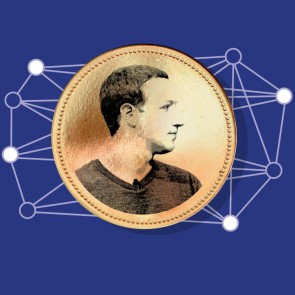
Libra is the name that Facebook, the global social network company, is calling its planned international digital currency. What is Facebook’s purpose with this planned new currency?


According to Facebook, Libra is “a simple global currency and financial infrastructure that empowers billions of people”. In its statement, the company says that: “The world truly needs a reliable digital currency and infrastructure that together can deliver on the promise of “the internet of money.” Securing your financial assets on your mobile device should be simple and intuitive. Moving money around globally should be as easy and cost-effective as—and even more safe and secure than—sending a text message or sharing a photo, no matter where you live, what you do, or how much you earn. New product innovation and additional entrants to the ecosystem will enable the lowering of barriers to access and cost of capital for everyone and facilitate frictionless payments for more people.”


So the professed aim is to provide a currency for everybody using the internet to buy and sell goods and services to each other across the world, seamlessly and with near-zero transaction costs. International banks and national currencies would be by-passed and all their costs and fees would be avoided. Moreover, all transactions would be private and not viewable by the authorities or banks. And supposedly over one and half billion people without bank accounts would be able to carry out transactions globally on their phones and laptops, not using cash.


Libra’s setup may make international transactions a little faster, but actually not nearly as fast as traditional payments processors. It looks like Libra can do about 1,000 transactions per second. A traditional payments processor like Visa can do about 3,000 transactions per second.


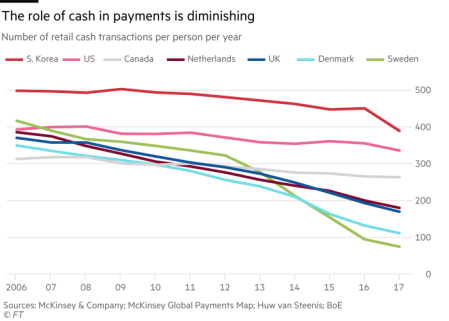
In principle, any digital currency ought to make payments for goods and services simpler and cheaper so that people do not need to carry wads of cash about (eg flying to country with a suitcase). A digital currency seems the way to go in the 21st century – but it immediately poses issues. Who controls this currency and what about people who want to hold cash and do not want to be forced to have a bank account or a Libra ‘wallet’ to buy things?


Facebook is not a pioneer here – already a digital payments service operates in China with WeChat and Alipay. The issue here is the sheer size of Libra’s global grasp, with the billions of Facebook users and also the number of large multinationals that have pledged to back and take the new currency.


Libra is the Latin word for pound in weight of silver or gold. It was a universal measure of value in Roman times. But Facebook's Libra will be no such thing. It is not the future people’s currency controlled by the people. It is a privatized currency for commercial gain for Facebook and its investment backers. It will be owned and controlled by a board of multi-national corporate investors who will pledge capital to get it going.


The US dollar currency is owned by the US government. This is the same for other national currencies. As such, there are regulations and laws on how national currencies are issued. None of that will apply to Libra. Holders of Libra will have to trust Facebook and the investing board, not any government, that nothing will go wrong with their money.


Facebook says it will be using blockchain technology, the decentralized digital settlement system that is behind such so-called cryptocurrencies, like bitcoin. Cryptocurrencies aim to eliminate the need for financial intermediaries by offering direct peer-to-peer (P2P) online payments. Blockchain is a ‘ledger’ containing all transactions for every single unit of currency. It differs from existing (physical or digital) ledgers in that it is decentralized, i.e., there is no central authority verifying the validity of transactions. Instead, it employs verification based on cryptographic proof, where various members of the network verify “blocks” of transactions approximately every 10 minutes. The incentive for this is compensation in the form of newly “minted” cryptocurrency for the first member to provide the verification.


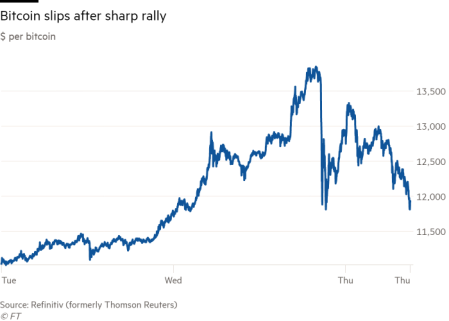
The purpose of money in a capitalist economy is first as a universal means of payment, then as a store of value and finally as a unit of account in balance sheets. Cryptocurrencies are nowhere meeting these three criteria. Their function as a unit of account and store of value are greatly impaired by their speculative nature. The value of bitcoin is very volatile because it is really only bought and sold by speculators and not used by the general public or corporations for transactions or savings.


Libra does not even have the ambition of bitcoin to be a universal decentralized digital currency for people. It will be a private currency designed to extend Facebook’s control over the purchasing power of its 4bn users and make money.


Libra is really, in financial jargon, an exchange traded fund (ETF), where the value of Libra is based on a ‘basket’ of five national currencies (dollars, euros, yen, sterling and Swiss franc) according to a weighted ratio. Libra is not a true international digital currency in its own right but dependent on the value of these major national currencies. It’s a private currency for Facebook users. It will be similar to the Special Drawing Rights (SDR) used by the IMF for the settlement of contributions and payments by national governments to the IMF. SDRs are also tied to the value of national currencies like the dollar.


And here is the rub. If you buy some Libra and hold it in your Facebook Libra ‘wallet’ for future purchases, you won’t get any interest as you would if you held dollar deposits in a bank. But this Libra sitting in wallets around the world will be invested by the multi-national board in financial assets to make money for them. In effect, all interest goes to the owners of this private currency – it’s a form of seignorage, previously only available to national governments and central banks for the use of their currencies. As the white paper puts it: “Interest on the reserve assets will be used to cover the costs of the system, ensure low transaction fees, pay dividends to investors who provided capital to jump-start the ecosystem, and support further growth and adoption…..Users of Libra do not receive a return from the reserve.”


Indeed, the huge amounts of Libra that build up in Facebook users ‘wallets’ would become available for the board to speculate in financial assets globally, thus adding a new dimension to the possibility of credit bubbles and financial crashes that could come back to hit billions of Libra users. The regulation of the banks and other financial institutions has not worked, as the global financial crash proved. And the huge rise of private sector debt continues alongside the rise in public sector debt that mushroomed to bail out the global banking system. With a successful Libra, there would be another new layer of credit-fuelled debt created, with repercussions for billions of people and this time without any deposit insurance from governments!


What is worrying from global capital’s view is that if a large section of a country’s population were to use Libra instead of the sovereign currency, central banks could be left powerless or unable to stop the rapid conversion of currency into Libra during periods of financial distress. Now you might say that’s good news for people, if not for capital. People need to break away from the control of central banks, commercial banks and governments and ‘free up’ the currency and reduce the cost of our transactions.


But Libra will not deliver on this aim. Libra’s claim that the currency will be designed and operated “as a public good” with “decentralised governance” is hard to tally with an operating structure comprised of unaccountable and highly-centralised global corporations such as Facebook, Uber and Paypal. With cash use increasingly restricted, we’re already reliant on a handful of big banks to manage our money and make payments, while Visa and Mastercard have achieved almost total dominance of the card market. Visa now accounts for 98% of debit cards issued in the UK. Libra is really a corporate attempt to assert even greater control over our money.


What we really want from a digital currency is transparency in its operations and privacy with your data – Facebook’s Libra is the mirror opposite of that. What it does show is the bureaucratic, inefficient and autocratic control of our money by the state and its institutions is now under threat from mega-global tech companies using their control of social media. This is ironic just when the supporters of Modern Monetary Theory are telling us that it is the state that controls and creates money so we can use the state to get employment and incomes for all. Now it seems the state will be challenged by mega private monopolies for the control of our money.


What we really need is democratic control of financial institutions and the take-over of mega-tech companies like Facebook, Google and Amazon. Governments should then use technological innovation to develop an international digital currency controlled and run in the public interest. But such a public digital currency would require common ownership and control of financial institutions and digital monopolies. In the meantime, it will be the US dollar or Libra… maybe.