Saturday, August 24, 2019

Why the Democratic National Committee Must Change the Rules and Hold a Climate Debate


August 21 2019, 10:46 a.m.


DEAR MEMBERS OF THE DNC:
Your meeting in San Francisco this weekend takes place against a backdrop that is literally on fire. You are gathering one month after the hottest month ever recorded in human history. You are meeting on the same week that smoke from a record number of wildfires in the Amazon rainforest turned day into night in the Brazilian megapolis of São Paulo. And you are meeting just days after Iceland’s prime minister led her country in its first funeral service for a major glacier lost to climate change.
This is the terrifying context in which you will vote on a series of resolutions to determine whether the presidential primaries will include a dedicated debate about the climate emergency. Not the already scheduled climate “forum” or climate “town hall,” which will surely be fascinating for those who seek them out — but a formal televised debate among the top candidates vying to lead your party and the country.
I am writing to add my voice to the hundreds of thousands of others who have called on you to use your power to turn that debate into a reality.
Many of you are already on board, including the chairs of several state parties, but you are up against some powerful opponents. Let’s take on their two main counterarguments in turn.
First, you will hear that the rules on debates are already set. And, as DNC Chair Tom Perez has declared, the party “will not be holding entire debates on a single issue area.” But here’s the thing: Having a habitable Earth is not a “single issue”; it is the single precondition for every other issue’s existence. Humbling as it may be, our shared climate is the frame inside which all of our lives, causes, and struggles unfold.
More immediately, climate breakdown is already pouring fuel on every evil that humans are capable of conjuring, from deadly wars to femicide to unmasked white supremacy and colonialism. Indeed, President Donald Trump is currently throwing a tantrum because he is being denied what he perceives as the United States’s manifest destiny to purchase the Indigenous-governed territory of Greenland, which has become increasingly valuable because of the wealth made accessible by melting ice. In short, there is nothing singular about planetary breakdown — it encompasses, quite literally, everything.
Other members of the DNC will argue that the climate debate must be shut down because if you give in to this wave of pressure, spearheaded by the Sunrise Movement, it will open up the floodgates for every progressive constituency demanding a dedicated debate of their own.
In truth, that will probably happen. And in retrospect, it probably would have served the country better to have a series of issue-based debates, rather than the incoherent free-for-alls we’ve been treated to so far. But the political and bureaucratic hassles you will face should you greenlight a climate debate need to be weighed against something far more important: the fact that, by breaking your own rules, you have a critical chance to model what it means to treat climate breakdown like a true emergency, which is precisely what the next administration needs to do if our species is going to have a fighting chance. And when you think about it (and I hope you do), that is a pretty fearsome responsibility.
Here is why setting an emergency tone at this crossroads is so important. Imagine that the party does absolutely everything right between now and November 2020. It elects a beloved candidate to lead the party with a bold and positive platform; that candidate goes on to defeat Trump in the general election; other galvanizing candidates succeed in taking the Senate and keeping the House for your party. Even in that long-shot, best-case scenario, a new administration would come to power with the climate clock so close to midnight that it will need to have earned an overwhelming democratic mandate to leap into transformative action on day one.
The timeline we face is nonnegotiable. According to the fateful report issued by the International Panel on Climate Change last October, if humanity is to stand a fighting chance of keeping warming below catastrophic levels, global emissions need to be slashed in half in the decade that follows a new U.S. administration taking office. Not 10 years to agree on a plan or 10 years to get started on the plan. It will have 10 years to get the job done.
According to the IPCC report, there is no historical precedent for change of that speed and scale, though it is technically possible. Some pathways are much more democratic than others. Some are much fairer than others — to workers, migrants, and the front-line communities that have already been forced to bear the toxic burden of our collective addiction to fossil fuels. There are big choices to be made about what path to take, and they must to be explained and debated before millions of Americans.
But let’s be clear about one thing: There is no pathway that stands a chance of cutting emissions in time that does not begin with treating the climate crisis like a true emergency. That has little to do with the words we use — all kinds of governments, from local to national, are declaring “climate emergencies” and then continuing on pretty much as before. Several of the candidates running for president have talked about the “climate emergency” — but it barely earns more than a passing mention in their stump speeches.
What matters is that we act like we’re in an emergency. Because it is only during true emergencies that we discover what we are capable of. During emergencies, we stop all procrastination and delay. We no longer do things just because that’s the way they have always been done — instead, we suspend business as usual and do whatever it takes to get the job done.
Which brings us to your deliberations this week: A very good place to show the country what this actually looks like is to vote to have a climate debate, precedents and procedures be damned.
There will be objections and they will be legitimate. The climate crisis is not the only emergency we face, and many Americans are in the grips of multiple existential emergencies at once. The Trump administration’s brutality against migrants is a full-blown emergency. Mass incarceration and police violence against African Americans is a five-alarm fire. Attacks on women’s rights and bodies are an emergency. Economic inequality is an emergency. Trump himself is a rolling emergency. All of that is true and more.
It does not help the case for this debate that much of the mainstream climate movement has done a poor job of making clear links between the ways that the wealthiest and most powerful interests in our economy are assaulting the earth, assaulting democracy, and assaulting the most vulnerable among us all at the same time and to serve the same profitable goals.
The reasons behind these failures to connect are many. There’s the blinding whiteness of too much of the climate movement. There’s the fact that dependence on philanthropic dollars has fostered an atmosphere of scarcity and competition between movements that should, by all rights, be working in common cause. There’s the long historical tail of the Red Scare, which has made a great many “progressives” unwilling to align themselves with a coherent left-wing worldview that would make these connections legible. All of these forces have succeeded in divided interlocking struggles into safe, “single-issue” silos, built to contain and restrain us.
Thanks to the climate justice movement and the momentum for a Green New Deal, awareness is growing about the ways that our crises overlap and intersect, which is why the calls for a climate debate have been endorse by diverse groups including the NAACP, United We Dream, Fight for $15, and more. But we have a long way to go before we can honestly say that we have built a truly intersectional climate movement.
None of this, however, absolves you of the historic responsibility you carry as you meet to set key rules for the Democratic Party this week. If anything, it heightens your responsibility because you have the power not only to approve a defining climate debate, but to challenge the candidates and moderators to craft the discussion so that it spans the full spectrum of issues involved in both climate breakdown and potential climate solutions. As 17-year-old climate justice organizer Xiye Bastida tweeted to your chair recently: The climate crisis “encompasses economic, health, ecological, racial, labor, energy, GENERATIONAL, and many more issues.” It’s only “single issue” if you allow it to be.

As you search your consciences to decide how to vote, it is worth remembering that 16-year-old Greta Thunberg is currently on a harrowingly small sailboat in the middle of the Atlantic, making her way to New York’s harbor. This week marks exactly one year since she began her “school strike for climate,” an example that has inspired a movement of young people that now spans the globe. In March, an estimated 1.6 million students joined the climate strike (and on the week of September 20, adults worldwide have been asked to join).
I am betting that most of you have appreciated Greta’s speeches over the last few months; many of you probably shared them on social media. But Greta has been very clear that she knows her actions — whether refusing to go to school or refusing to fly — are not going to lower emissions at anything like the speed or scale required. Rather, she is trying to show you what emergency action looks like. And that begins with refusing to behave like everything is normal when the house is on fire.

For Greta, that has meant breaking the rules of what it means to be a child and going on strike from school. For you, this weekend, it should mean setting aside the rulebook and endorsing a climate debate, one thoughtfully designed to hold within it the many intersecting emergencies roiling our world. Making that choice would not solve the climate crisis. But it would send a powerful signal to the country and the world that we are in extraordinary times calling for truly extraordinary measures.
And that’s a very big deal. Because as Greta says, “We cannot solve an emergency without treating it like an emergency.”
Sincerely,
Naomi Klein


Naomi Klein’s book “On Fire: The Burning Case for a Green New Deal” will be published in September by Simon & Schuster. On September 9, she will appear with Greta Thunberg at an event hosted by The Intercept.


TWITTER HELPED CHINESE GOVERNMENT PROMOTE DISINFORMATION ON REPRESSION OF UIGHURS


August 19 2019, 2:28 p.m.


TWITTER HELPED TO promote Chinese government propaganda and disinformation about the country’s controversial internment camps in the Xinjiang region, a review of the company’s advertising records reveals.
The social media company today announced a policy change that would bar such promotion following an inquiry from The Intercept and an earlier controversy over similar propaganda related to demonstrations in Hong Kong.
In Xinjiang, a western province in China, the United Nations has estimated that 1 million ethnic minority Muslim Uighurs — including children, pregnant women, elderly people, and people with disabilities — have been detained under the pretext of fighting extremism. According to Human Rights Watch, Chinese authorities are “committing human rights abuses in Xinjiang on a scale unseen in the country in decades.”


A review of Twitter advertisements from between June and August this year showed that the social media giant promoted more than 50 English-language tweets from the Global Times, a Chinese state media organization. Several of the tweets deliberately obscure the truth about the situation in Xinjiang and attack critics of the country’s ruling Communist Party regime.
The Global Times paid Twitter to promote its tweets to a portion of the more than 300 million active users on the social media platform. The tweets appeared in users’ timelines, regardless of whether they followed the Global Times account. In July, amid global condemnation of the treatment of Uighurs in Xinjiang, Twitter began promoting several Global Times tweets about the region.
One of the promoted tweets, from July 11, included an embedded video in which the Global Times’ editor-in-chief claimed that people who refer to the facilities in Xinjiang as “mass detention camps” have “smeared the vocational education and training centers established to help people avoid extremism.” He went on to attack “European politicians and media workers,” who he claimed had “tried to defend terrorist activities in Xinjiang,” adding, “their hands are in a way soiled with the blood of the Chinese people who died in violent attacks.”
Another promoted tweet, from July 4, included a video purportedly taken in Xinjiang, in which people are seen shopping in the street and eating in restaurants to a soundtrack of piano music. The video describes riots in 2009 that occurred in Urumqi, the capital of Xinjiang, and states that residents there “now live a happy and peaceful life” because they work together to fight terrorism and extremism. There is no mention in the video of the mass detention camps.
Other Global Times ads promoted by Twitter follow a similar theme, presenting the region as a happy and peaceful place where no human rights abuses have occurred. One promoted tweet includes video of an elderly woman receiving a package of medical supplies from government officials before breaking down in tears of joy. The tweet claims that poverty has been alleviated in the area because local residents have “access to high-quality medical care and affordable medicines.”
Patrick Poon, China researcher for Amnesty International, said he found Twitter’s promotion of the advertisements to be “appalling.”
“This is a very important, serious issue that Twitter needs to address,” said Poon. “Twitter is helping to promote false allegations and government propaganda. Allowing such advertising sets an alarming precedent.”
On Monday, Twitter said that it would no longer accept advertising from state-controlled media, in order to “protect healthy discourse and open conversation.”
The announcement was published three hours after The Intercept had contacted the company for comment on its promotion of the Global Times’ Xinjiang tweets. Earlier on Monday, TechCrunch highlighted Twitter’s promotion of tweets from a different state news entity, China Xinhua News, which portrayed largely peaceful pro-democracy demonstrations in Hong Kong as violent.
Twitter’s promotion of Chinese government propaganda had appeared to contradict its own policies, which state that advertising on the platform must be “honest.” The advertisements also undermined statements from Twitter CEO Jack Dorsey, who told the Senate Intelligence Committee last year that the company was working to combat “propaganda through bots and human coordination [and] misinformation campaigns.”

Like many Western technology companies, Twitter has a complex relationship with China. The social media platform is blocked in the country and cannot be accessed there without the use of censorship circumvention technologies, such as a virtual private network or proxy service. At the same time, however, Twitter generates a lot of advertising revenue in China and has a growing presence in the country.
In July, Twitter’s director in China reportedly stated that the company’s team there had tripled in the last year and was the company’s fastest growing division. In May, the social media giant held a “Twitter for Marketers” conference in Beijing. Meanwhile, Twitter was criticized for purging Chinese dissidents’ accounts on the platform – which it claimed was a mistake – and has also been the subject of a protest campaign, launched by the Chinese artist Badiucao, after it refused to publish a “hashflag” symbol to commemorate the 30th anniversary of the Tiananmen Square massacre.
Poon, the Amnesty researcher, said police in China have in recent months increasingly targeted human rights advocates in the country who are active on Twitter, forcing them to delete their accounts or remove specific posts that are critical of the government. These cases have been reported to Twitter, according to Poon, but the company has not taken any action.
“Twitter has allowed the Chinese government to advertise its propaganda while turning a deaf ear on those who have been persecuted by the Chinese regime,” Poon said. “We need to hear how Twitter can justify that.”


GOOGLE IS DEEPENING ITS INVOLVEMENT WITH EGYPT’S REPRESSIVE GOVERNMENT


August 18 2019, 7:00 a.m.


GOOGLE IS SET to re-staff its Cairo office, which more or less went dormant in 2014, following the military coup that brought President Abdel Fattah el-Sisi to power in Egypt. The move comes against the backdrop of well-documented abuses by the Sisi government against dissidents and activists, which it facilitates using mass and targeted internet surveillance, and by blocking news, human rights, and blogging websites.
Google said it would begin recruiting full-time staff for the office after a meeting between Egyptian ministers and Google staff led by Google MENA head Lino Cattaruzzi, according to a June press release from the Egyptian government. The company also recently consulted with the Egyptian government on a data protection bill. And it is in talks to partner with the Egyptian government to expand its “Maharat min Google,” or “Skills From Google,” program, which has provided digital training for entrepreneurs through partner organizations over the past year. The expansion would be overseen by a government ministry.
Google’s renewed engagement with Egypt comes just a year after the company sparked outrage when The Intercept revealed that Google planned to develop a censored search engine for use in China, which it code-named Dragonfly. When Google had previously ended its search services in China in 2010, co-founder Sergey Brin referenced the government’s poor tolerance for dissent as a reason for the pullout. Executives say Dragonfly has been shelved, after harsh criticism from Google employeesadvocacy groups, and the U.S. Congress.

The Cairo office will open full-time in September, according to a source who works at one of Google’s local partner companies, who requested anonymity because they are not authorized to speak on the matter. The tech company is hiring a small staff to focus on customer sales, a Google spokesperson said.
Rights groups are concerned that a more permanent presence in the country will expose Google to added pressure from the Egyptian government, which has a history of using data collection and monitoring to punish dissidents, journalists, and human rights advocates.
“Re-opening an office in Egypt when the government is aggressively asking other internet companies to provide disproportionate access to their data sounds alarming,” said Katitza Rodriguez, the international rights director at the Electronic Frontier Foundation. Google has an obligation to respect human rights under international standards, Rodriguez added, and the company should disclose what steps it will take to safeguard them.

FOR OVER A decade, independent foreign companies like Google have proven crucial to Egyptians seeking to circumvent government control. In 2011, a viral Facebook page co-run by then-Google executive Wael Ghonim helped fuel the 18 days of protests that overthrew President Hosni Mubarak, leading Google’s then-CEO Eric Schmidt to opine at the time that platforms like Facebook “change the power dynamics between governments and citizens.”
A Mubarak-era blogger told The Intercept that activists chose to host their blogs on Blogger because they felt confident that the Egyptian government couldn’t access Google’s servers. And after the internet was shut down at the height of the 2011 protests, Google devised a tool with Twitter that enabled Egyptians to tweet with voicemails to circumvent the blackout.
Google moved its Egypt operations to Dubai in 2014, though it has sometimes used its Egypt office for meetings and other business. At the time, Google did not publicly offer a reason for consolidating its regional offices in Dubai, where Twitter and Facebook are also based. Google’s move followed Yahoo, which closed its Cairo office in late 2013, months after a bloody government crackdown on dissidents killed hundreds in a single day. Now, the tech giant is set to deepen its involvement with a government that researchers say is unleashing the most brutal crackdown in the country’s recent history.
report released last fall by Amnesty International said Egypt’s crackdown on expression had turned the country into an “open-air prison for critics,” citing numerous arrests of journalists, activists, and social media users.
“People are arrested for tweets, for Facebook posts, for giving their opinion about sexual harassment, for supporting a club, or most recently, for cheering for a football player during the Africa Cup games,” said Hussein Baoumi, an Amnesty International researcher.
Wael Abbas, an award-winning journalist, was arrested last year for his Facebook and Twitter posts on charges of “spreading false news,” “involvement in a terrorist group,” and “misuse of social media.” He had previously faced account shutdowns or suspensions from Twitter, Yahoo, Facebook, and YouTube, where he had documented instances of police brutality. The Electronic Frontier Foundation reported after his arrest that prosecutors and state media appeared to be using his social media suspensions as evidence against him. He was jailed for seven months. And a new law passed last year treats social media accounts with more than 5,000 followers as news outlets, further exposing individual social media users to prosecution for “false news.” A 2018 report by the Committee to Protect Journalists found that Egypt imprisoned more journalists on “false news” charges than any other country.
Egypt’s crackdown on dissidents dovetails with its increasing use of mass and targeted surveillance. In 2016 and 2017, a group of prominent Egyptian nonprofit organizations were hit with a sophisticated phishing attack while they were defending themselves against state charges that they were receiving foreign funding to destabilize the government. An analysis by the Egyptian Initiative for Personal Rights strongly suggested that the attack, which included attacks on Gmail accounts, was coordinated or supported by an Egyptian intelligence agency. Amnesty International identified a new wave of phishing attacks following a similar pattern earlier this year.
The state has also purchased the services and technology of top-notch spyware firms, including the Hacking Team, an Italian spyware manufacturer. In 2017, the Egyptian government appeared to intermittently block Google while trying to block Signal, an encrypted messaging service that had been sending its traffic through Google and other web domains to subvert blocks, a practice known as domain fronting. The disruption came during a period of sporadic internet disturbances that a government source told Mada Masr, an independent Egyptian news site, were occurring because the government was configuring new mass surveillance software. Google and Amazon announced in 2018 that their cloud services would no longer support domain fronting.


There is evidence that tech companies operating in Egypt may be susceptible to pressure to reveal user data. In January, Uber users in Egypt saw service disruptions for weeks amid a long-running data dispute between Uber and the government. A few weeks later, Uber agreed to pay a value-added tax in Egypt that it had been shirking for nearly a year. The government had previously asked Uber in 2017 to provide access to “Heaven,” which displays live activity on the app, including Uber rides and customers’ personal data, which the company declined to do. The government had also offered Uber’s then-competitor Careem “preferential treatment” if it surrendered its user data.
A law passed last year now requires ride-sharing companies to provide user data to the government upon request, although it is unclear what data, if any, Uber has ultimately provided to Egypt. In 2015, the government blocked Facebook’s Free Basics service after the company refused to help the government conduct surveillance on the platform.
“Having access to independent communication means is extremely important,” Baoumi said, “particularly in Egypt right now, because of how much control the government exerts over all facets of life.”
GOOGLE IS PLAYING a more active role in Egypt in other ways too. It was one of two dozen international corporations working in Egypt that the government consulted on a data protection bill currently being weighed by Egyptian lawmakers. It is the first legislation in Egypt specifically regulating personal data, and it was passed by a parliamentary communication committee in March. Once it becomes law, it would regulate data ranging from an individual’s voice to their bank account number.
Google is also considering partnering with Egypt’s Ministry of Communications and Information Technology on its “Maharat min Google” program, a Google spokesperson said. The program provides employment-focused digital skills training for Arabic speakers.
“We engage with policymakers to help them understand our business and to explore ways in which technology can improve people’s lives and fuel economic growth,” the spokesperson said.
Meanwhile, it appears that the government is using its work with Google as part of its ongoing efforts to brand Egypt as a foreign investment haven. Press releases from government ministries after Google meetings portray the image of a close relationship with the company. Boosting foreign investment has been a cornerstone of the Sisi government’s strategy to improve the country’s post-uprising economy and generate revenue to manage its $12 billion loan from the International Monetary Fund. The state plans to invest roughly $7.2 million in building a tech-heavy “knowledge city,” a government minister announced last year.
“They try to use their successful business agreements as PR,” said Amr Magdi, a researcher at Human Rights Watch. “So they can use their agreement with a big company like Google to say they are open for business.”


AMY MCGRATH’S SENATE CAMPAIGN MANAGER HELPED GET HER POTENTIAL PRIMARY OPPONENT FIRED


THE MANAGER OF Amy McGrath’s Kentucky Senate campaign was behind the recent firing of McGrath’s potential rival in the Democratic primary, according to Kentucky sources with knowledge of the unusual development in the high-profile race. 
On Friday, WLEX, an NBC affiliate in Lexington, announced that it had fired Matt Jones as the host of “Hey, Kentucky,” a show he had launched on the station four years ago. Jones, Kentucky’s most popular sports radio host, has been openly deliberating a challenge to Mitch McConnell, the Senate majority leader, and has been publicly critical of the early stages of McGrath’s campaign. 
Mark Nickolas, McGrath’s campaign manager, has boasted in Kentucky political circles that he was responsible for Jones’s firing, according to sources with knowledge of the situation. His efforts set up a potentially epic campaign blunder: Jones has been pondering a challenge to McGrath, and the fact that he is no longer employed by the TV station removes one of his most persuasive reasons not to run. After all, he no longer has a TV show to lose. Nickolas did not respond to requests for comment. A spokesperson for McGrath told the Courier-Journal, a Kentucky newspaper, that the campaign had “nothing to do with” Jones’s firing. 
Jones discussed his firing in a Monday interview on his radio show, saying he believed Nickolas to be responsible. “He was the one who pressured to make that happen,” Jones said. “If not for him, I’d still be hosting the show. And I knew that. It is also true, because I heard from many people, that he went around bragging about it. I mean, he went around to people, Amy McGrath’s campaign man, and bragged that he was the person to do it.”
McGrath burst out of the gate raising more than $7 million and locking down support from the national Democratic Party establishment when she launched on July 9, setting up what looked to be a two-person match between her and McConnell. 
But her launch was marred by a series of missteps, odd claims, and flip-flops, capped by her assertion that she would have supported Brett Kavanaugh’s nomination to the Supreme Court. That statement contradicted her position from a year earlier, and she very quickly returned to saying that she would have opposed Kavanaugh’s nomination. 
McGrath’s stumbles created an opening for a competitive Democratic primary, and a number of contenders, including Jones, began floating the possibility of challenging her for the nomination. As Jones inched closer to a decision, observers in the state speculated that he would ultimately be uninterested in giving up his position as a popular radio and TV host in exchange for a long-shot bid for the Senate. 
But then, on Friday, Jones announced that WLEX fired him from the “Hey, Kentucky” show, citing his involvement in politics and his forthcoming book, “Mitch, Please! How Mitch McConnell Sold Out Kentucky (and America Too).” Asked for comment, WLEX directed us to a statement on its website explaining that the decision to fire Jones was consistent with the station’s commitment to “fairness across its platforms.” The show was not canceled, a spokesperson said. 
In July, Jones was pulled from the air temporarily, a move that the station said came after a complaint from one of the Senate campaigns. (The McConnell campaign has said that it did not object, and there’s no evidence that they did, which leaves only the McGrath campaign.) Jones had been critical on air of McGrath’s launch. Jones is one of several high-profile hosts who’ve left the network this summer.

MCGRATH SHOT TO fame with a viral 2018 campaign video that celebrated her ability to overcome gender discrimination in order to become a fighter pilot and included no policy positions. Controversially, her ad used real footage of a target — and presumably the people inside it — being incinerated by American bombs. It was part of her ultimately unsuccessful bid to unseat Republican Rep. Andy Barr in Kentucky’s 6th District — her first run for public office. She outperformed her campaign’s projections in the central city of Lexington, but Barr held onto strongholds in 17 of the district’s 19 counties. She ended up losing by only 3.2 percentage points, eating into Barr’s 22-point lead over his Democratic opponent in 2016. Her loss outside Lexington came despite the McGrath campaign’s heavy emphasis on engaging voters in rural areas, opening offices in every county in the district.

When McGrath finally announced earlier this summer that she’d be taking on McConnell, Jones took the moment to illustrate how, he thought, Senate Minority Leader Chuck Schumer had given up on Kentucky in his quest to secure a Democratic majority. Her decision to run was a win for Schumer, who wouldn’t have to expend resources finding a candidate himself and could count on McGrath to tie up McConnell’s money even if she wouldn’t actually be able to pull off a win. 
“She announces and all the Democratic presidential candidates — or most of them — endorse her, all the congressional people endorse her, all the big donors endorse her, and all of a sudden, she has $5.5 million and the theory is, well, that scares everybody else out and now we have our nominee. And that’s how it works. And by the way, that’s how it works in nearly every state,” Jones said on a recent episode of “The Matt Jones Podcast.” “It should be about the citizens picking who they like,” he went on. “Instead, what happens is Mitch McConnell and Chuck Schumer pick who they like, and there becomes the senators.”
Jones saw an opening for the Senate seat after McGrath’s bizarre launch last month. “I like her, this is not a knock on her, but she has become so robotic and become so consulted that I don’t even know what she stands for anymore. And I think that’s what a lot of people felt,” he told his podcast co-host.

Nickolas is not a cookie-cutter Washington campaign consultant. McGrath’s 2018 campaign largely marked a return to politics for the longtime Democratic consultant and former Kentucky political hand and commentator who had withdrawn from the space for much of the last decade. He suspended his 20-some-year political career in 2011 when he moved to New York to pursue a master of arts in film and media studies at the New School. A California native, Nickolas spent about a decade managing and consulting on Democratic campaigns around the country before launching his widely read and influential Kentucky political blog, the Bluegrass Report, in 2005. In 2006, Nickolas sued former Kentucky Gov. Ernie Fletcher for blocking access to his blog on state computers after Nickolas was quoted in a New York Times article criticizing the governor. 
In the early aughts, he worked on the gubernatorial and House campaigns of former Rep. Ben Chandler, the gubernatorial campaign of then-state Rep. Jody Richards, the Senate campaign of Tim Johnson in South Dakota, and Vice President Al Gore’s 2000 presidential campaign.
His next task as McGrath’s campaign manager may be fending off a primary challenge from a candidate he helped nudge into the race.


Update: August 19, 2019
This article has been updated to include a denial from Amy McGrath’s campaign and a quote from Matt Jones.


OIL LOBBYIST TOUTS SUCCESS IN EFFORT TO CRIMINALIZE PIPELINE PROTESTS, LEAKED RECORDING SHOWS


August 19 2019, 10:50 a.m.


THE AMERICAN FUEL & Petrochemical Manufacturers, a powerful lobbying group that represents major chemical plants and oil refineries, including Valero Energy, Koch Industries, Chevron, ExxonMobil, and Marathon Petroleum, has flexed its muscle over environmental and energy policy for decades. Despite its reach, AFPM channels dark money and influence with little scrutiny.
The group is now leveraging its political power to criminalize protests of oil and gas infrastructure.
In an audio recording obtained by The Intercept, the group concedes that it has been playing a role behind the scenes in crafting laws recently passed in states across the country to criminalize oil and gas pipeline protests, in response to protests over the Dakota Access pipeline. The laws make it a crime to trespass on public land used for “critical infrastructure,” impose a fine or prison time for violators, and hold protesters responsible for damage incurred during the protest. Many of the laws also carry heavy fines to groups and individuals who support such demonstrations.
The trade group, which was founded in 1902, has long played an outsized role in shaping policy disputes. Last year, AFPM and its members mobilized over $30 million to defeat the carbon tax proposed in Washington State, easily outspending an environmentalist campaign funded by philanthropist billionaires and small donors.
In June, Derrick Morgan, a senior vice president for federal and regulatory affairs at AFPM, spoke at the Energy & Mineral Law Foundation conference in Washington, D.C., explaining the role his trade group has played in criminalizing protests. AFPM did not respond to a request for comment.
James G. Flood, a partner with law firm Crowell & Moring’s lobbying practice, introduced Morgan as “intimately involved” in crafting model legislation that has been distributed to state lawmakers around the country. The attendees at the event received copies of the model bill, called the Critical Infrastructure Protection Act, distributed through the American Legislative Exchange Council, a conservative nonprofit that serves as a nexus for corporate lobbyists to author template legislation that is then sponsored by state lawmakers affiliated with ALEC.
When the template legislation went out to hundreds of ALEC member legislators, it was accompanied with a letter of support from AFPM and others, first reported by HuffPost. The ALEC task force that developed the legislation also included representatives from AFPM.
“So you see that, and you’re reading the materials as well, that this model legislation would itemize criminal trespass and also a liability for folks that cause damage during protest,” Morgan said, citing the Standing Rock protests against the Dakota Access pipeline in North Dakota.
“Another key aspect of it,” Morgan continued, “which you also include, is inspiring organizations — so organizations who have ill intent, want to encourage folks to damage property and endanger lives — they are also held liable.”
The legislative text Morgan described has been introduced in various forms in 22 states and passed in nine states: Texas, Louisiana, Oklahoma, Tennessee, Missouri, Indiana, Iowa, South Dakota, and North Dakota.
ANY EFFORT TO sabotage pipeline infrastructure is already a federal crime. The AFPM-backed bills expand the purview of law enforcement, classifying peaceful protests that seek to block the construction of pipelines as a violent threat.
For instance, the Oklahoma variation of the law, which copies much of the template legislation, creates fines of at least $10,000, and imprisons, for up to a year, demonstrators who have shown the “intent” to have trespassed to damage or in any way disrupt an infrastructure facility. Those convicted of damaging or disrupting infrastructure face a minimum of 10 years in prison, as well as much as $100,000 in fines.
The Oklahoma bill, signed by then-Gov. Mary Fallin in 2017 also levels fines for organizations found to have been “conspiring” with perpetrators, with penalties of 10 times the fines paid by perpetrators. This suggests advocacy groups linked to protesters could be fined from $100,000 to $1 million.
In Iowa, the legislation, signed by Gov. Kim Reynolds this year, creates penalties of $85,000 to $100,000 for those convicted of sabotaging critical infrastructure, which the law defines broadly as any interruption to a variety of services.
South Dakota’s version of the critical infrastructure protest law creates civil penalties for “riot boosting,” which the law signed by Gov. Kristi Noem, defines as anyone who “directs, advises, encourages, or solicits other persons participating in the riot.”
The version of the model legislation enacted in Iowa, says Daniel Zeno, ACLU of Iowa Policy Director, “has the potential to chill environmental protest, punish public participation, and mischaracterize advocacy protected by the First Amendment.” The ACLU has also filed a lawsuit against the South Dakota version of the bill, and is monitoring how the bill will be enforced in other states to ensure free speech rights aren’t curtailed.
As The Intercept has previously reported, the Pennsylvania version of the pipeline protest legislation, proposed this year, would require demonstrators to reimburse the cost of policing the demonstration. The bill defines demonstrations as “a political rally or event, a demonstration, speech making, the holding of vigils or religious services and all other forms of conduct the primary purpose of which is expressive activity or expression of views or grievances.”
In his remarks, Morgan cited the costs associated with dealing with the Dakota Access pipeline as the impetus for the lobbying push. “We’ve seen a lot of success at the state level, particularly starting with Oklahoma in 2017,” Morgan said. “We’re up to nine states that have passed laws that are substantially close to the model policy that you have in your packet.”
AFPM also financed a variety of pro-pipeline advocacy groups to build the appearance of public support for the projects, particularly Keystone XL, and was highly involved in the fight over DAPL.
The AFPM lobbyist also boasted that the template legislation has enjoyed bipartisan support. In Louisiana, Democratic Gov. John Bel Edwards signed the version of the bill there, which is being challenged by the Center for Constitutional Rights. Even in Illinois, Morgan noted, “We almost got that across the finish line in a very Democratic-dominated legislature.” The bill did not pass as it got pushed aside over time constraints at the end of the legislative session.
LOBBYING DISCLOSURE STANDARDS vary by state, but evidence suggests AFPM and its member companies have played a direct hand in getting bills passed, moved along through committees, and signed into law.
In Missouri, the witness list in support of the pipeline protest bill lists Peter Barnes, AFPM’s state and local outreach manager. The Cheyenne office of law firm of Holland & Hart reportedly crafted the pipeline protest bill proposed in Wyoming on behalf of AFPM and provided the text for a local GOP lawmaker to introduce, according to a local news story.
Emails obtained by the investigative journalism nonprofit Documented show efforts by the oil and gas lobby to pressure Oklahoma’s governor to sign the pipeline protest legislation. In one email, an assistant to the governor relays a message from Valero lobbyist Julie Klumpyan, noting that she had left a message urging Fallin to sign the bill. “They think it will help deter vandalism & disruptive actions,” wrote the assistant. Valero is a prominent member of AFPM.


The U.S. economy is not the world’s largest


https://rwer.wordpress.com/2019/08/24/the-u-s-economy-is-not-the-worlds-largest/


The U.S. economy is not the world’s largest
August 24, 2019 


I know that reality often has little place in our political debates, but is there any way we can the New York Times and other news outlets to stop saying that the U.S. economy is the world’s largest? 

It happens not to be true.

According to the I.M.F., using purchasing power parity measures, which most economists view as the best measure, China passed the United States in 2015 and is now more than 25 percent larger. 

Maybe reporters and editors get a kick out of saying that the U.S. is the world’s largest economy, but since it happens not to be true, it would be good if they stopped saying it.


Leaked documents show Brazil’s Bolsonaro has grave plans for Amazon rainforest


democraciaAbierta has seen a PowerPoint presentation that shows that Bolsonaro’s government intends to use hate speech to isolate minorities of the Amazon. Español Português
21 August 2019

 
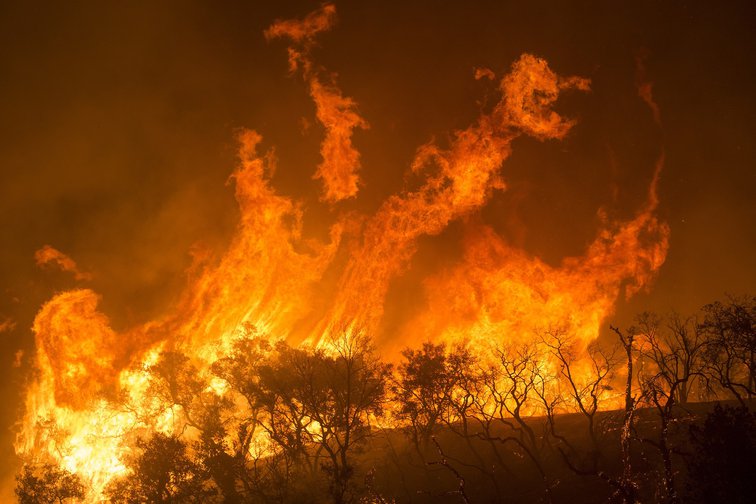
Wildfires have raging through the Amazon rainforest for weeks. Satellite data show an 84% increase of fire outbreaks on the same period in 2018. | Pixabay


Leaked documents show that Jair Bolsonaro's government intends to use the Brazilian president's hate speech to isolate minorities living in the Amazon region. The PowerPoint slides, which democraciaAbierta has seen, also reveal plans to implement predatory projects that could have a devastating environmental impact.
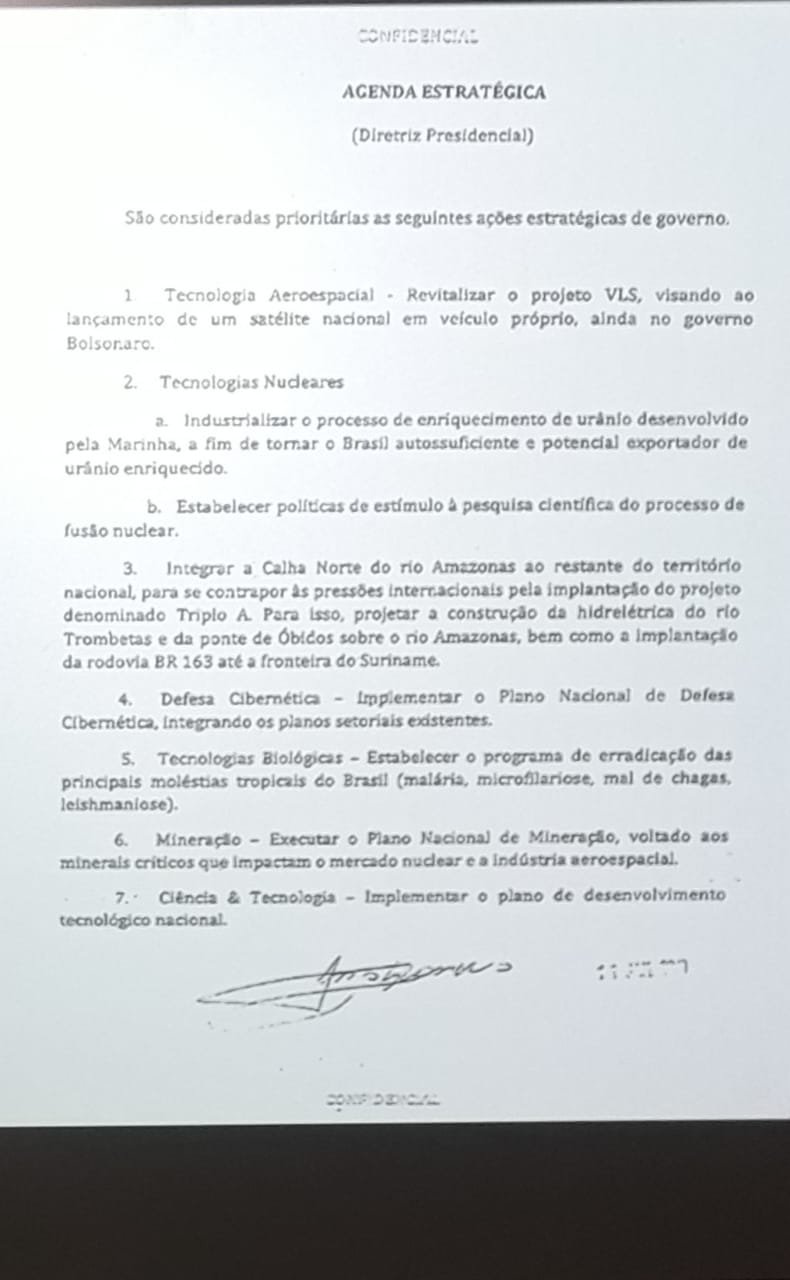
The Bolsonaro government has as one of its priorities to strategically occupy the Amazon region to prevent the implementation of multilateral conservation projects for the rainforest, specifically the so-called “Triple A” project.
"Development projects must be implemented on the Amazon basin to integrate it into the rest of the national territory in order to fight off international pressure for the implementation of the so-called 'Triple A' project. To do this, it is necessary to build the Trombetas River hydroelectric plant, the Óbidos bridge over the Amazon River, and the implementation of the BR-163 highway to the border with Suriname," one of slides read.
One of the tactics cited in the document is to redefine the paradigms of indigenism, quilombolism and environmentalism through the lenses of liberalism and conservatism
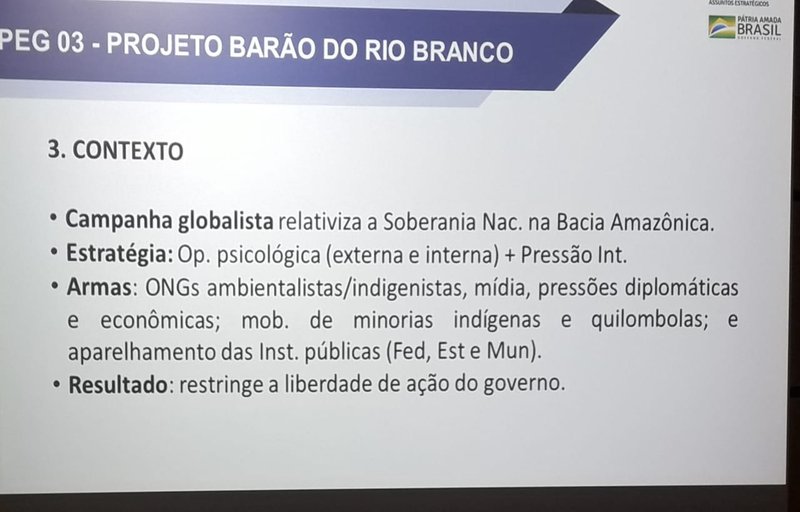
One of the slides from the presentation. | democraciaAbierta
In February, ministers Gustavo Bebianno (Secretary-General of the Presidency), Ricardo Salles (Environment) and Damares Alves (Women, Family and Human Rights) had planned travel to Tiriós (Pará) to speak with local leaders about the construction of a bridge over the Amazon River in the city of Óbidos, a hydroelectric plant in Oriximiná, and the expansion of the BR-163 highway to the Suriname border. But this meeting was canceled.
A second meeting among government officials, also in February, used a PowerPoint presentation that details the projects announced by the Bolsonaro government for the region. The presentation, which was leaked to democraciaAbierta, argues that a strong government presence in the Amazon region is important to prevent any conservation projects from taking roots.
The slides are clear. Before any predatory plan is implemented, the strategy begins with rhetoric. Bolsonaro's hate speech already shows that the plan is working. The Amazon is on fire. It's been burning for weeks and not even those who live in Brazil were fully aware. Thanks to the efforts of local communities with the help of social networks, the reality is finally going viral.
The online reaction is far from being sensationalist. This year alone, Brazil had 72,000 fire outbreaks, half of which are in the Amazon. The National Institute for Space Research (Inpe) reported that its satellite data showed an 84% increase on the same period in 2018.


The Amazon rainforest provides 20% of the world's oxygen. People are deliberately starting fires in effort to illegally deforest land for cattle ranching. President Bolsonaro is letting this slide!! #AmazonRainforest #PrayforAmazonas

Attacking non-governmental organizations is part of the Bolsonaro government's strategy. According to another of the PowerPoint's slide, the country is currently facing a globalist campaign that "relativizes the National Sovereignty in the Amazon Basin," using a combination of international pressure and also what the government called "psychological oppression" both externally and internally.
This campaign mobilizes environmental and indigenous rights organizations, as well as the media, to exert diplomatic and economic pressure on Brazilian institutions. The conspiracy also encourages minorities – mainly indigenous and quilombola (residents of settlements founded by people of African origin who escaped slavery) – to act with the support of public institutions at the federal, state and municipal levels. The result of this movement, they say in the presentation, restricts "the government's freedom of action".
Item 3 of the document points out that the seeks to fight off "international pressures" for the implementation of a conservation projects known as Triple A. | democraciaAbierta
Those are, according to a slide, "the new hopes for the Homeland: Brazil above everything!"
So it is unsurprising that Bolsonaro's response to the fires comes in the form of an attack on NGOs. On Wednesday, August 21, Bolsonaro said he believed non-governmental organizations could be behind the fires as a tactic "to draw attention against me, against the government of Brazil.".
Bolsonaro did not cite names of NGOs and, when asked if he has evidence to support the allegations, he said there were no written records of the suspicions. According to the president, NGOs may be retaliating against his government's budget cuts. His government cut 40 percent of international transfers to NGOs, he added.
Part of the government's strategy of circumventing this globalist campaign is to depreciate the relevance and voices of minorities that live in the region, transforming them into enemies. One of the tactics cited in the document is to redefine the paradigms of indigenism, quilombolism and environmentalism through the lenses of liberalism and conservatism, based on realist theories. Those are, according to a slide, "the new hopes for the Homeland: Brazil above everything!"