Sunday, October 8, 2023

Saturday, October 7, 2023

Surprise Attack Stuns Israel; WaPo: Ukraine Despair War Unwinnable; EU Granada Summit Shambles


https://www.youtube.com/watch?v=CBCvPQpg-HY 


Netanyahu, we are at war. Elensky, not a single dollar stolen. Hillary, deprogram Trump cult. U/1


 https://www.youtube.com/watch?v=_sSS8SuT8Ww


The NYT, Mass Raids & 2 Indian Journalists Arrested


https://consortiumnews.com/2023/10/06/the-nyt-mass-raids-2-indian-journalists-arrested/


October 6, 2023


The crackdown this week came in the wake of a New York Times report in August associating NewsClick and other outlets with Chinese propaganda, Zoe Alexandra reports for Peoples Dispatch, a targeted publication.


Protesters outside the New York Times building in Midtown Manhattan on Tuesday in response to the raids on Indian news sites. (X/Twitter, Party for Socialist Liberation)

By Zoe Alexandra
Peoples Dispatch

The homes of dozens of journalists, contractors, and former employees associated with the progressive news outlets Newsclick and Peoples Dispatch, as well as Tricontinental Research Services, were raided by Indian authorities in the early hours of Tuesday in the capital New Delhi.
Several raids were also carried out in the cities of Noida, Ghaziabad, Gurgaon and Mumbai. According to local reports around 50 individuals were taken in to the police station for additional questioning.

Newsclick Editor-in-Chief Prabir Purkayastha and an administrator, Amit Chakraborty, have been arrested under the draconian anti-terror law, the Unlawful Activities (Prevention) Act (UAPA). At least 500 police officers and intelligence agents participated in the operation.


Among those subjected to raids, interrogation and detention are renowned journalists Urmilesh, Abhisar Sharma, Aunindyo Chakraborty, Bhasha Singh, Paranjoy Guha Thakurta, comedian Sanjay Rajoura and human rights activist and former political prisoner Teesta Setalvad.

Following his release Sharma said,


“After a day long interrogation by Delhi special cell, I am back home. Each and every question posed will be answered. Nothing to fear. And I will keep questioning people in power and particularly those who are afraid of simple questions. Not backing down at any cost.”

Democracy Under Attack


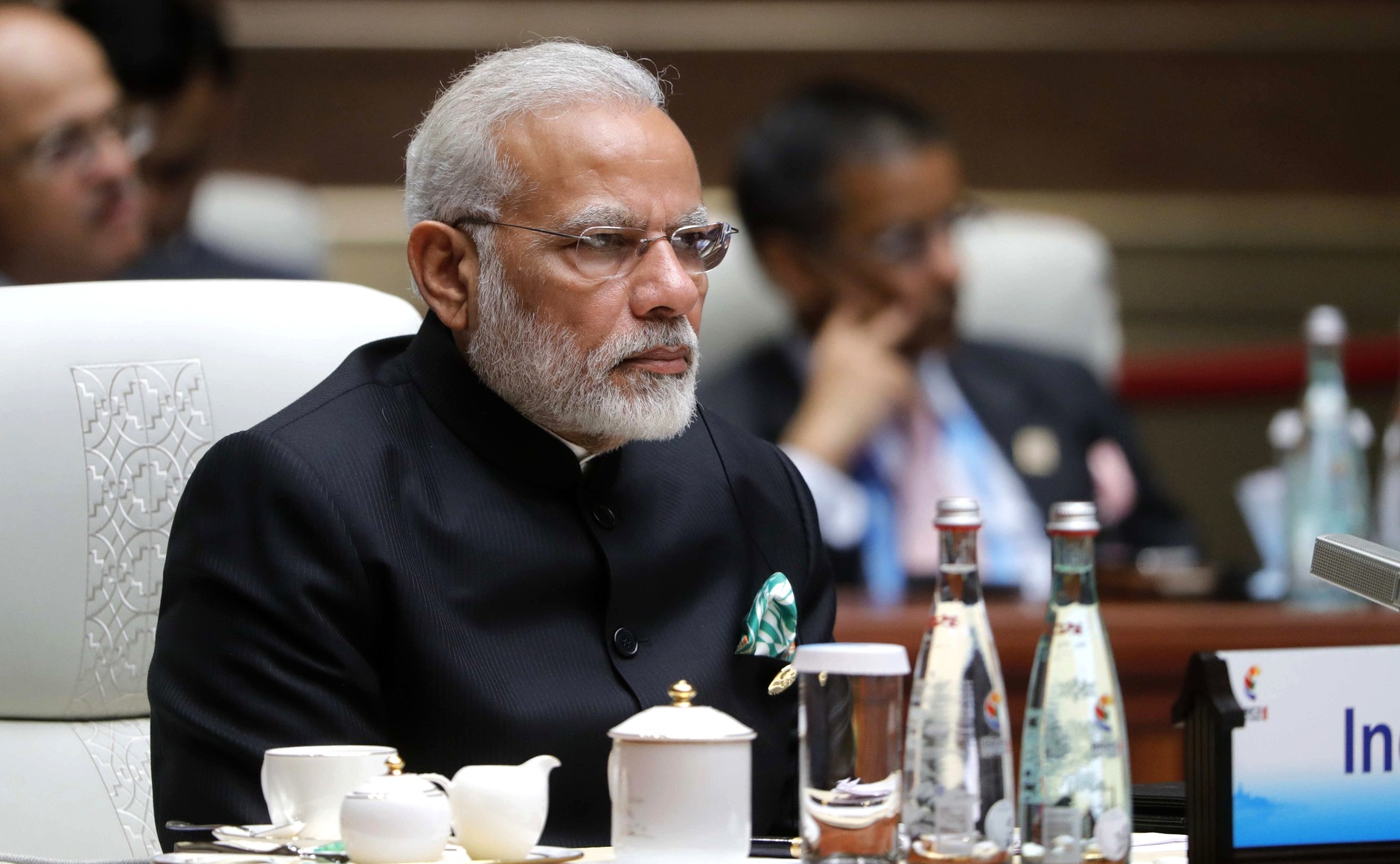
India’s Prime Minister Narendra Modi in 2017. (Kremlin.ru, Wikimedia Commons, CC BY 4.0)


Police records show that the case against Newsclick under UAPA was registered on Aug. 17, just over a week after a New York Times report was published that alleged that Newsclick, amongst other progressive news outlets, is part of a Chinese news propaganda network. [The Times’ news coverage of the raids this week mentioned its August “investigation.”]

The report sparked a political and media scandal within India, which saw right-wing news outlets running dozens of pieces lodging accusations that the members of the outlets are Chinese propagandists.


Members of Parliament from the far-right ruling Bharatiya Janata Party as well as high-level authorities such as Home Minister Amit Shah also made similar statements on the parliament floor and to media.

Tuesday’s raids and mass repression have been widely condemned by progressive organizations, press associations and opposition parties from across India as a grave attack on democracy, civil liberties, and human rights.


The Editors Guild of India released a statement expressing deep concern “about the raids at the residences of senior journalists on the morning of Oct. 3, and the subsequent detention of many of those journalists.” The guild is urging the Indian government “to follow due process, and not to make draconian criminal laws as tools for press intimidation.”


The Delhi State Unit of All India Lawyers’ Union stated that they were


“deeply concerned about the implications of these arrests for press freedom and the democratic values that our nation holds dear… Freedom of the press is a cornerstone of any vibrant democracy. It is essential for journalists to be able to report independently on matters of public interest without fear of harassment or intimidation. Journalists play a crucial role in holding those in power accountable and in informing the public about important issues.”

The All India Democratic Women’s Association (AIDWA) said in a statement,


“This highly undemocratic, unjustified, repressive action has ostensibly been carried to intimidate independent and fearless journalists and others who have been critical of the government policies. The BJP government has now chosen to use the draconian UAPA along with other sections of the IPC to carry out these latest raids and confiscate the electronic belongings, including laptops and mobiles of the concerned individuals.”

DigiPub News India Foundation wrote the following strongly-worded, four-page letter to the chief justice of the Indian Supreme Court, signed by 15 press organizations:


Witnesses report that the raids of over 100 personal residences lasted on average between four and 10 hours. Those interrogated faced a wide range of questions such as whether or not they had reported on the farmers protests in India, the protests against the controversial Citizenship Amendment Act, India’s mismanagement of Covid-19, or anything considered “anti-government.”

In some cases, authorities ransacked people’s homes searching for material and one person reported that authorities threw his books to the floor and confiscated all titles by German philosopher Karl Marx. Cellphones and computers were seized from the majority of those subjected to the raids and were detained.

The office of Newsclick in New Delhi was sealed by police after it was raided.

The home of the secretary general of the Communist Party of India (Marxist) Sitaram Yechury was also raided. Following the raid he told media,


“Police came to my residence because one of my companions who lives with me there, his son, works for Newsclick. The police came to question him. They took his laptop and phone. What are they investigating? Nobody knows. If this is an attempt to try and muzzle the media, the country must know the reason behind this.”

Pattern of Harassment

The repression today is just the latest act of harassment against Newsclick which was first raided in February 2021 by the Enforcement Directorate alleging economic fraud and money laundering.

At the time, many activists had highlighted that the attack had occurred amid the growing farmers’ protests. Newsclick was one of the outlets providing consistent reporting on the struggle and had gained widespread notoriety for its on the ground reports from farmers’ protest camps. The country’s courts had granted the site protection from any “coercive measures” such as arrest and imprisonment by authorities in this case, but the latest UAPA case grants authorities special privileges to override those court protections.

[Related: A Win for Indian Democracy]

The UAPA which was first established in 1967 has come under increased scrutiny in recent years as it has been used by the government of far-right BJP leader Narendra Modi to persecute human rights activists, journalists and scholars in the country.

[Related: LETTER FROM INDIA: Crackdown on Rights & Freedoms]

The law gives the government special powers to bypass civil liberties, fundamental rights and freedoms of citizens such as the right to a fair trial. The amendment to UAPA in 2008 gives the government the power to designate individuals or groups as terrorist with no formal judicial process.

[Related: India Far Less Committed to Liberal Values Than Imagined, Data Shows]

In a statement condemning the arrest of several anti-CAA protesters in 2020, Amnesty International wrote,


“The Unlawful Activities (Prevention) Act (UAPA) is routinely used by the government to bypass human rights and stifle dissent. In 2018, the conviction rate under UAPA was 27% while 93% of the cases remained pending in the court. It is a mere tool of harassment that the government uses to harass, intimidate and imprison those who are critical of the government. The slow investigative processes and extremely stringent bail provisions under UAPA ensure that they are locked up for years altogether, creating a convenient setting for unlawful detention and torture.”

The Students Federation of India (SFI) has called upon its units across India to organize emergency protests in response to “the brutal crackdown on Indian media by the Modi government.”


Zoe Alexandra is a correspondent for Peoples Dispatch.

This article is from Peoples Dispatch.


The Many Lessons of the Ukraine War


https://consortiumnews.com/2023/10/06/the-many-lessons-of-the-ukraine-war/


October 6, 2023


Combatting Russia to the last Ukrainian was always an odious strategy, writes Chas W. Freeman in this expansive overview.


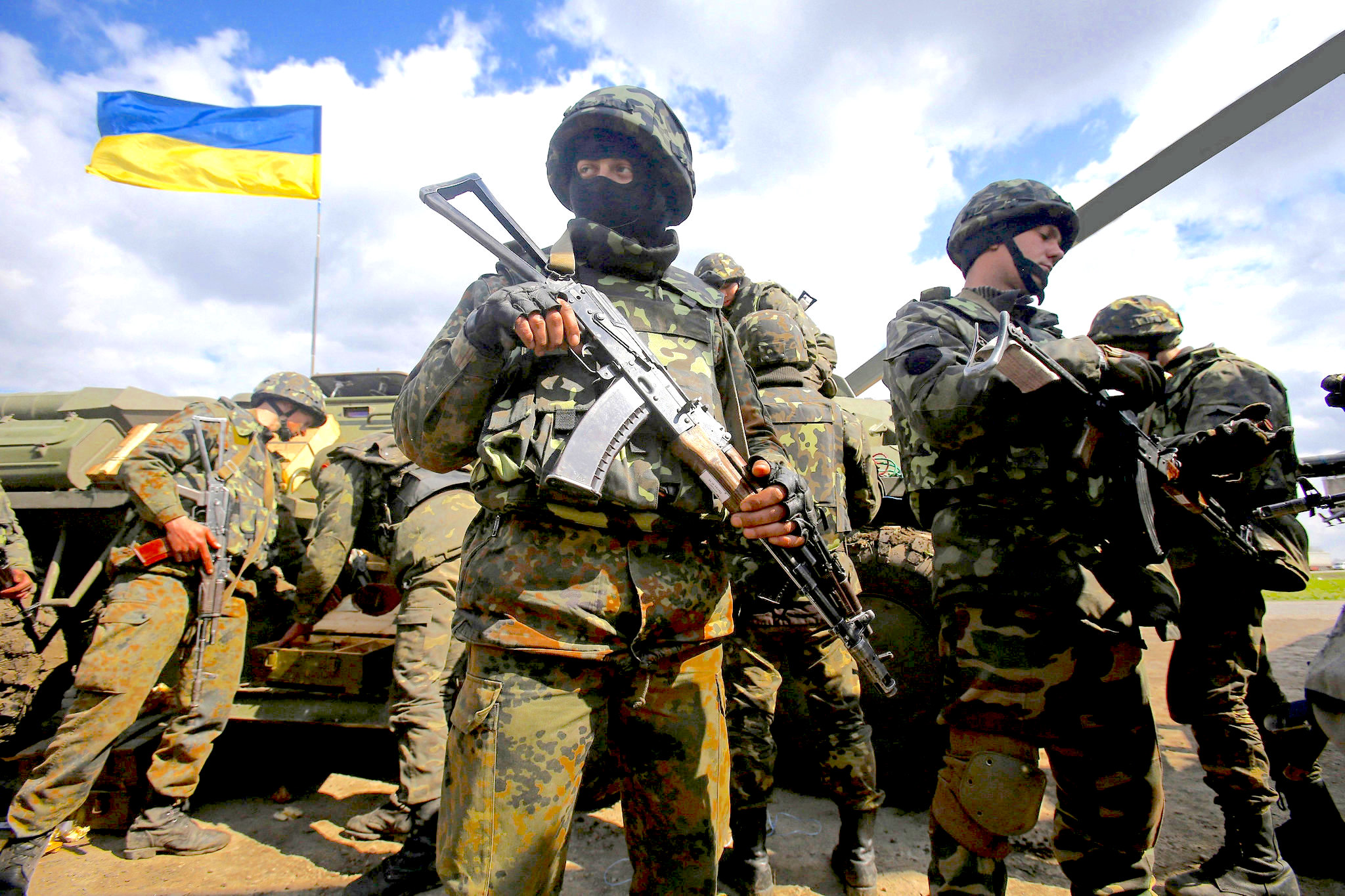
Ukrainian soldiers May 2016 after the outbreak of civil war. (Ministry of Defense of Ukraine, Flickr, CC BY-SA 2.0)

By Chas W. Freeman, Jr
ChasFreeman.net


Remarks by the author to the East Bay Citizens for Peace in Barrington, Rhode Island, on Sept. 26.

I want to speak to you tonight about Ukraine – what has happened to it and why, how it is likely to emerge from the ordeal to which great power rivalry has subjected it; and what we can learn from this. I do so with some trepidation and a warning to this audience. My talk, like the conflict in Ukraine, is a long and complicated one. It contradicts propaganda that has been very convincing. My talk will offend anyone committed to the official narrative. The way the American media have dealt with the Ukraine war brings to mind a comment by Mark Twain:

“The researches of many commentators have already thrown much darkness on this subject, and it is probable that, if they continue, we shall soon know nothing at all about it.”

It is said that, in war, truth is the first casualty. War is typically accompanied by a fog of official lies. No such fog has ever been as thick as in the Ukraine war. While many hundreds of thousands of people have fought and died in Ukraine, the propaganda machines in Brussels, Kiev, London, Moscow and Washington have worked overtime to ensure that we take passionate sides, believe what we want to believe and condemn anyone who questions the narrative we have internalized.

No one not on the front lines has any real idea of what has been happening in this war. What we know is only what our governments and other supporters of the war want us to know. And they have developed the bad habit of inhaling their own propaganda, which guarantees delusional policies.

Every government that is a party to the Ukraine War — Kiev, Moscow, Washington and other NATO capitals — has been guilty of various degrees of self-deception and blundering misfeasance. The consequences for all have been dire. For Ukraine, they have been catastrophic. A radical rethinking of policy by all concerned is long overdue.

Whence & Whither NATO?

First, some necessary background. The North Atlantic Treaty Organization came into being to defend the European countries within the post-World War II American sphere of influence against the Union of Soviet Socialist Republics (U.S.S.R.) and its satellite nations.

NATO’s area of responsibility was the territory of its members in North America and Western Europe, but nowhere beyond that. The alliance helped maintain a balance of power and keep the peace in Europe during the four-plus decades of the Cold War.

In 1991, however, the U.S.S.R. dissolved and the Cold War ended. That eliminated any credible threat to NATO members’ territory and raised this issue: if NATO was still the answer to something, what was the question? The U.S. armed forces had no problem responding to that conundrum. They had compelling vested interests in the preservation of NATO. NATO had created and sustained a post-World War II European role and presence for the U.S. military,
This justified a much larger U.S. force structure and many more highly desirable billets for flag officers — generals and admirals — than would otherwise exist,
NATO enhanced the international stature of the American armed forces while fostering a unique U.S. competence in multinational alliance and coalition management, and
It offered tours of duty in Europe that made peacetime military service more attractive to U.S. soldiers, sailors, airmen and marines.

Then, too, the 20th century had appeared to underscore that U.S. security was inseparable from that of other north Atlantic countries. The existence of European empires ensured that wars among the great powers of Europe — the Napoleonic wars, World War I and World War II — soon morphed into world wars. NATO was how the United States dominated and managed the Euro-Atlantic region in the Cold War. Disbanding NATO or a U.S. withdrawal from it would, arguably, just free Europeans to renew their quarreling and start yet another war that might not be confined to Europe.

So, NATO had to be kept in business. The obvious way to accomplish that was to find a new, non-European role for the organization. NATO, it came to be said, had to go “out of area or out of business.” In other words, the alliance had to be repurposed to project military power beyond the territories of its Western European and North American member states.


In 1998, NATO went to war with Serbia, bombing it in 1999 to detach Kosovo from it. In 2001, in response to the 9/11 terrorist attacks on New York and Washington, it joined the U.S. in occupying and attempting to pacify Afghanistan. (Ukraine contributed troops to this NATO operation despite not being a member of the alliance.) In 2011, NATO fielded forces to engineer regime change in Libya.

The Coups & Rebellion of Russian-Speaking Ukrainians

In 2014 there was a well-prepared U.S.-sponsored anti-Russian coup in Kiev. (Reportedly, by 2014, various agencies of the U.S. government had committed a cumulative total of $5 billion or more to political subsidies and education in support of regime change in Ukraine.) After that, Ukrainian ultranationalists banned the official use of Russian and other minority languages in their country and, at the same time, affirmed Ukraine’s intention to become part of NATO.

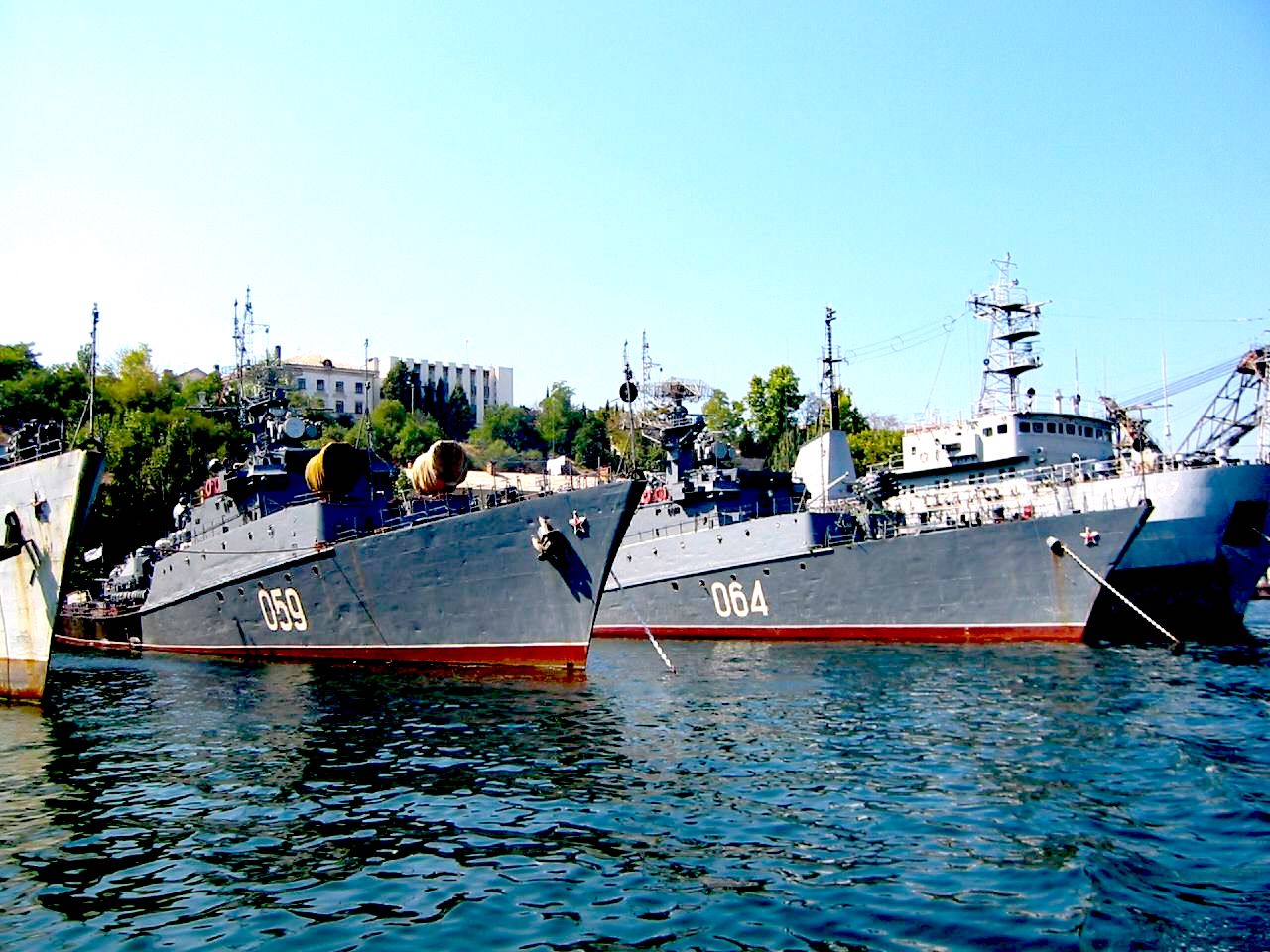
Among other consequences, Ukrainian membership in NATO would place Russia’s 250-year-old naval base in the Crimean city of Sebastopol under NATO and hence U.S. control. Crimea was Russian-speaking and had several times voted not to be part of Ukraine. So, citing the precedent of NATO’s violent intervention to separate Kosovo from Serbia, Russia organized a referendum in Crimea that endorsed its reincorporation in the Russian Federation. The results were consistent with previous votes on the issue.


Russian Navy ships in Sevastopol, 2005. (Vyacheslav Argenberg, Wikimedia Commons, CC BY 2.0)

Meanwhile, in response to Ukraine’s banning of the use of Russian in government offices and education, predominantly Russian-speaking areas in the country’s Donbass region attempted to secede. Kiev sent forces to suppress the rebellion. Moscow responded by backing Ukrainian Russian speakers’ demands for the minority rights guaranteed to them by both the pre-coup Ukrainian Constitution and the principles of the Organization for Security and Cooperation in Europe (OSCE). NATO backed Kiev against Moscow. An escalating civil war among Ukrainians ensued. This soon evolved into an intensifying proxy war in Ukraine between the United States, NATO and Russia.

Negotiations at Minsk, the capital city of Belarus, mediated by the OSCE with French and German support, brokered agreement between Kiev and Moscow on a package of measures, including: a ceasefire,
the withdrawal of heavy weapons from the front line,
the release of prisoners of war,
constitutional reform in Ukraine granting self-government to certain areas of Donbas, and
the restoration of Kiev’s control of the rebel areas’ borders with Russia.

The United Nations Security Council endorsed these terms. They represented Moscow’s acceptance that Russian-speaking provinces in Ukraine would remain part of a united but federalized Ukraine, provided they enjoyed Québec-style linguistic autonomy. But, with U.S. support, Ukraine refused to carry out what it had agreed to. Years later, the French and Germans admitted that their mediation efforts at Minsk had been a ruse directed at gaining time to arm Kiev against Moscow and Ukrainian President Volodymyr Zelensky (like his predecessor in office, Petro Poroshenko) confessed that he had never planned to implement the accords.


Moscow & NATO Enlargement

In 1990, in the context of German reunification, the dissolution of the Warsaw Pact and Russia’s abandonment of its politico-economic sphere of influence in Central and Eastern Europe, the West had several times somewhat slyly but solemnly promised not to fill the resulting strategic vacuum by expanding NATO into it.

But as the 1990s proceeded, despite a lack of enthusiasm on the part of some other NATO members, the United States insisted on doing just that. NATO enlargement steadily erased the Eastern European cordon sanitaire of independent neutral states that successive governments in Moscow had considered essential to Russian security. As former members of the Warsaw Pact entered NATO, U.S. weaponry, troops and bases appeared on their territory. In 2008, in a final move to extend the U.S. sphere of influence to Russia’s borders, Washington persuaded NATO to declare its intention to admit both Ukraine and Georgia as members.


The eastward deployment of U.S. forces placed ballistic missile defense launchers in both Romania and Poland. These were technically capable of rapid reconfiguration to mount short-range strikes on Moscow. Their deployment fueled Russian fears of a decapitating U.S. surprise attack.

If Ukraine entered NATO and the U.S. made comparable deployments there, Russia would have only about five minutes’ warning of a strike on Moscow. NATO’s role in detaching Kosovo from Serbia and in U.S. regime-change and pacification operations in Afghanistan and Libya as well as its support of anti-Russian forces in Ukraine, had convinced Moscow that it could no longer dismiss NATO as a purely defensive alliance.

As early as 1994, successive Russian governments began to warn the U.S. and NATO that continued NATO expansion — especially to Ukraine and Georgia — would compel a forceful response. Washington was aware of Russian determination to do this from multiple sources, including reports from its ambassadors in Moscow.

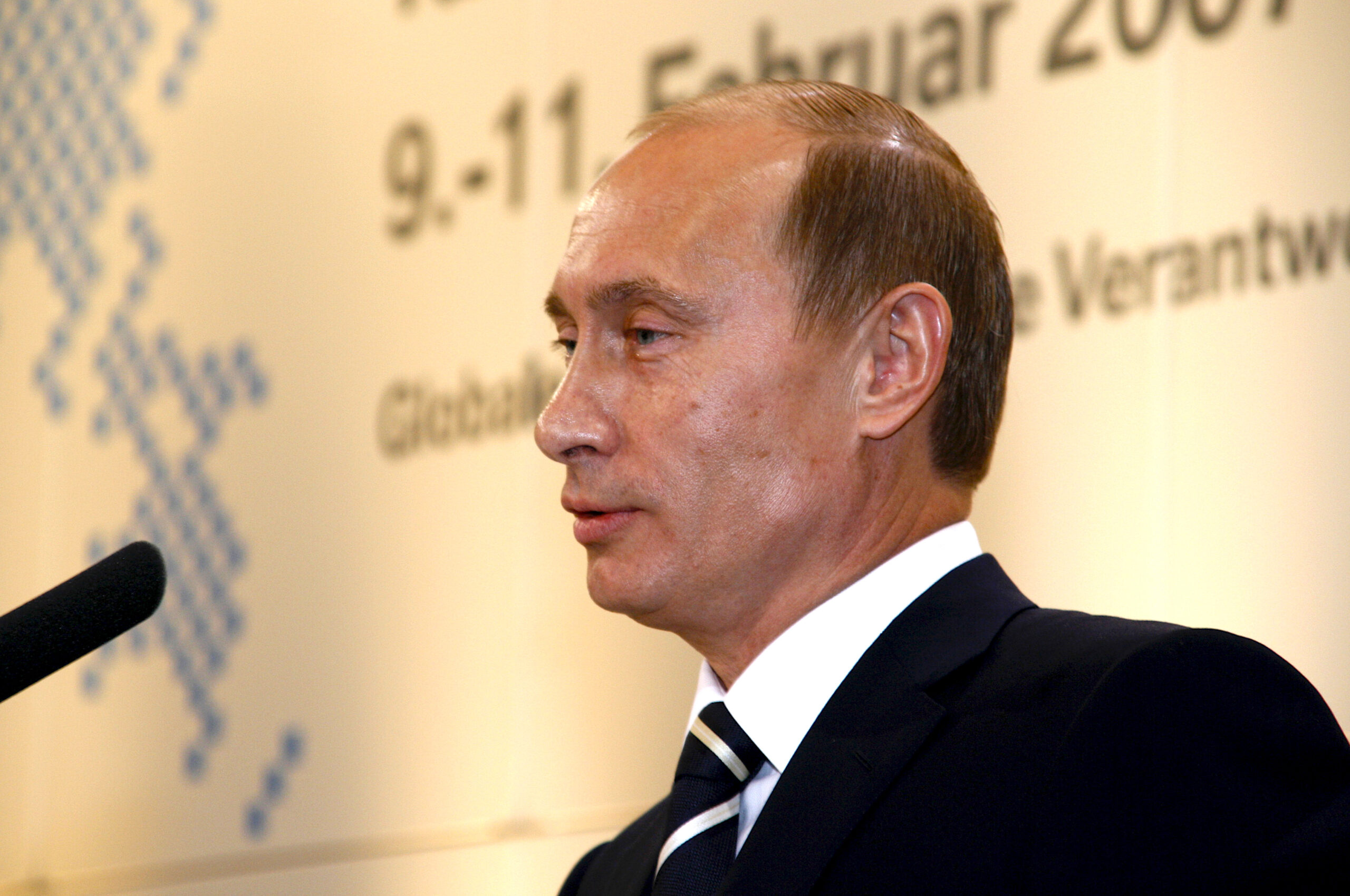
In February 2007, Russian President Vladimir Putin, speaking at the Munich Security Conference, declared:


“I think it is obvious that NATO expansion … represents a serious provocation … And we have the right to ask: against whom is this expansion intended? And what happened to the assurances our western partners made after the dissolution of the Warsaw Pact?”


Putin at 2007 Munich Security Conference. (Wikimedia Commons)

On Feb. 1, 2008, Ambassador Bill Burns, now the director of the Central Intelligence Agency, warned in a telegram from Moscow that, on this subject Russians were united and serious. Burns felt so strongly about the consequences of NATO expansion into Ukraine that he gave his cable the subject line, “Nyet Means Nyet” (“No means no.”)

In April 2008, NATO nonetheless invited both Ukraine and Georgia to join it. Moscow protested that their


“membership in the alliance is a huge strategic mistake which would have most serious consequences for pan-European security.”

By August 2008, as if to underscore this point, when an emboldened Georgia sought to extend its rule to rebellious minority regions on the Russian border, Moscow went to war to consolidate their independence.

Civil & Proxy War in Ukraine

Less than a day after the U.S.-engineered coup that installed an anti-Russian regime in Kiev in 2014, Washington formally recognized the new regime.

When Russia then annexed Crimea and civil war broke out with Ukraine’s Russian speakers, the United States sided with and armed the Ukrainian ultranationalists whose policies had alienated Crimea and provoked the Russian-speaking secessionists.

The United States and NATO began a multi-billion-dollar effort to reorganize, retrain and re-equip Kiev’s armed forces. The avowed purpose was to enable Kiev to reconquer the Donbass and eventually Crimea.

Ukraine’s regular army was then decrepit. Kiev’s initial attacks on Russian speakers in the Ukrainian eastern and southern regions were largely conducted by ultranationalist militias.

Prior to the U.S. and NATO decision to aid Ukraine against its Russian-backed separatists, these militias were commonly identified as neo-Nazi in the Western media. They professed to be followers of Stepan Bandera — who has now been adopted as a revered national figure by Kyiv.

Bandera was famous for his extreme Ukrainian nationalism, fascism, anti-Semitism, xenophobia and violence. He and his followers were allegedly responsible for massacring 50,000 – 100,000 Poles and for collaborating with the Nazis in the murder of an even larger number of Jews. After the U.S./NATO proxy war broke out, despite their continuing display of Nazi regalia and symbols on their uniforms and their ties to neo-Nazi groups in other countries, Western media ceased to characterize these militias as neo-Nazis.


By 2015, Russian soldiers were fighting alongside the Donbass rebels. An undeclared U.S./NATO proxy war with Russia had begun.


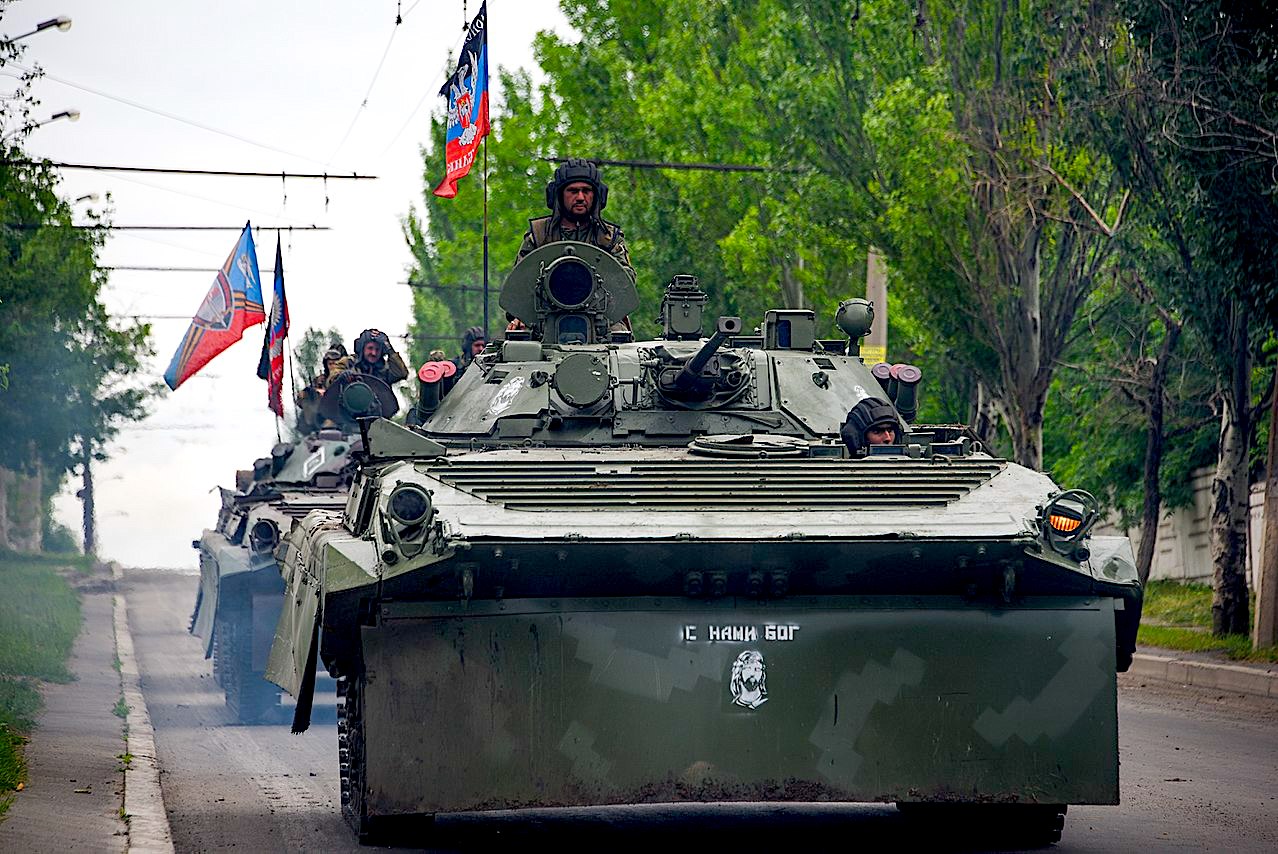
Rebel armored fighting vehicles convoy near Donetsk, Eastern Ukraine, May 30, 2015. (Mstyslav Chernov/Wikimedia Commons)

Over the course of the next eight years — during which the Ukrainian civil war continued — Kiev built a NATO-trained army of 700,000 — not counting one million reserves — and hardened it in battle with Russian-supported separatists. Ukrainian regulars numbered only slightly less than Russia’s then 830,000 active-duty military personnel. In eight years, Ukraine had acquired a larger force than any NATO member other than the United States or Türkiye, outnumbering the armed forces of Britain, France and Germany combined. Not surprisingly, Russia saw this as a threat.

Meanwhile, as tensions with Russia escalated, in early 2019 the United States unilaterally withdrew from the Intermediate Nuclear Force (INF) Treaty, which had barred ground-launched missiles with ranges of up to 3,420 miles from deployment in Europe. Russia condemned this as a “destructive” act that would stoke security risks.

Despite ongoing misgivings on the part of some other NATO members, at American insistence, NATO continued periodically to reiterate its offer to incorporate Ukraine as a member, doing so once more on Sept. 1, 2021. By that time, after billions of dollars of U.S. training and arms transfers, Kiev judged it was finally ready to crush its Russian speakers’ rebellion and their Russian allies. As 2021 ended, Ukraine stepped up pressure on the Donbass separatists and deployed forces to mount a major offensive against them timed for early 2022.

Moscow Demands Negotiations

At about the same time, in mid-December 2021, 28 years after Moscow’s first warning to Washington, Putin issued a formal demand for written security guarantees to reduce the apparent threats to Russia from NATO enlargement by restoring Ukrainian neutrality, banning the stationing of U.S. forces on Russia’s borders, and reinstating limits on the deployment of intermediate-range and shorter-range missiles in Europe.

The Russian Foreign Ministry then presented a draft treaty to Washington incorporating these terms — which echoed similar demands put forward by former Russian President Boris Yeltsin in 1997. At the same time, apparently both to underscore Moscow’s seriousness and to counter Kiev’s planned offensive against the Donbas secessionists, Russia massed troops along its borders with Ukraine.

On Jan. 26, 2022, the U.S. formally responded that neither it nor NATO would agree to negotiate Ukrainian neutrality or other such issues with Russia. A few days later, Russian Foreign Minister Sergei Lavrov laid out his understanding of the American and NATO positions at a meeting of Russia’s Security Council as follows:


“[Our] Western colleagues are not prepared to take up our major proposals, primarily those on NATO’s eastward non-expansion. This demand was rejected with reference to the bloc’s so-called open-door policy and the freedom of each state to choose its own way of ensuring security. Neither the United States, nor [NATO] … proposed an alternative to this key provision.”


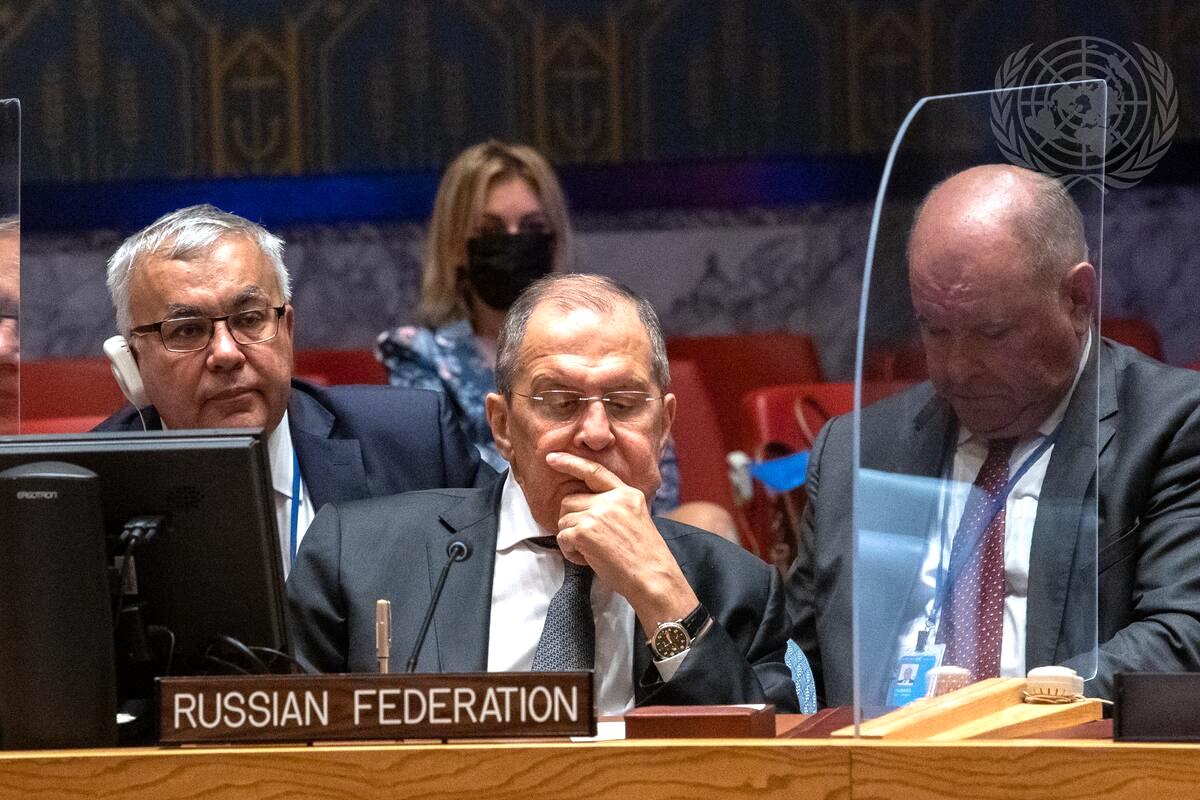
Lavrov at the U.N. Security Council in September 2021. (UN Photo/Eskinder Debebe)

Moscow wanted negotiations but, in their absence, was prepared to go to war to remove the threats to which it objected. Washington knew this when it rejected talks with Moscow. The American refusal to talk was an unambiguous decision to accept the risk of war rather than explore any compromise or accommodation with Russia.


U.S. and allied intelligence services immediately began releasing information purporting to describe impending Russian military operations in what they described as an attempt to deter them. (The “special military operation’ mounted by Russia bore little resemblance to the specific predictions put forward in this information warfare, which appears to have been designed as much to rally support for Ukraine and boost its morale as to deter Russia.)

Russia Invades Ukraine

In mid-February, fighting between Ukrainian army and secessionist forces in Donbass intensified, with OSCE observers reporting a rapid rise in ceasefire violations by both sides but with most allegedly initiated by Kiev.

Perhaps disingenuously, the Donbass secessionists appealed to Moscow to protect them and ordered a general evacuation of civilians to safe havens in Russia. On Feb. 21, Putin recognized the independence of the two Donbass “people’s republics” and ordered Russian forces to secure them against Ukrainian attacks.

On Feb. 24, in an address to the Russian nation, Putin declared that “Russia cannot feel safe, develop, and exist with a constant threat emanating from the territory of modern Ukraine” and announced that he had ordered what he called a “special military operation” “to protect people who have been subjected to bullying and genocide . . . for the last eight years” and to “strive for the demilitarization and denazification of Ukraine.”

He added that:


“It is a fact that over the past 30 years we have been patiently trying to come to an agreement with the leading NATO countries regarding the principles of equal and indivisible security in Europe. In response to our proposals, we invariably faced either cynical deception and lies or attempts at pressure and blackmail, while the North Atlantic alliance continued to expand despite our protests and concerns. Its military machine is moving and, as I said, is approaching our very border.”

The official narrative put forward in U.S. and NATO information warfare against Russia contradicts every element of this statement by President Putin, but the record affirms it.

Background to US-Russian Proxy War in Ukraine

In the post-Soviet era: NATO — the U.S. sphere of influence and military presence in Europe — constantly expanded toward Russia’s borders despite escalating Russian warnings and protests.
By contrast, Moscow was in constant retreat. It had abandoned its sphere of influence in Eastern Europe. It made no effort to reestablish it.
Moscow repeatedly warned that NATO enlargement and U.S. forward deployment of forces that might threaten it, especially from Ukraine, were a grave threat, to which it would feel compelled to react.
Given NATO’s transformation from a purely defensive, Europe-focused alliance into an instrument for power projection in support of U.S. regime-change and other military operations beyond its members’ borders, Moscow had a reasonable basis for concern that Ukrainian membership in NATO would pose an active threat to its security. This threat was underscored by U.S. withdrawal from the treaty that had prevented it from stationing intermediate-range nuclear weapons in Europe, including in Ukraine.
Moscow consistently demanded neutrality for Ukraine. Neutrality would make Ukraine both a buffer and bridge between itself and the rest of Europe, rather than part of Russia or a platform for Russian power projection against the rest of Europe.
By contrast, the United States sought to make Ukraine a member of NATO — part of its sphere of influence — and a platform for the deployment of U.S. military power against Russia.
Moscow agreed at Minsk to respect continued Ukrainian sovereignty in the Donbass region, provided the rights of Russian speakers there were guaranteed. But, with support from the U.S. and NATO, Ukraine declined to implement the Minsk agreement and redoubled its effort to subjugate the Donbass.


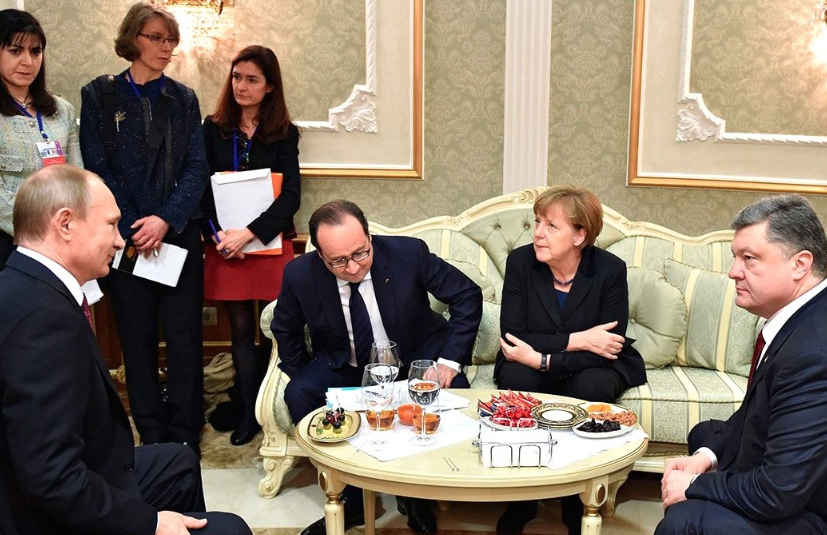
Feb. 12, 2015: Putin, French President Francois Hollande, German Chancellor Angela Merkel, Ukrainian President Petro Poroshenko at the Normandy format talks in Minsk, Belarus. (Kremlin) When Washington refused to hear the Russian case for mutual accommodation in Europe and instead insisted on Ukrainian membership in NATO, the U.S. government knew that this would produce a Russian military response. In fact, Washington publicly predicted this.
Early in the resulting war, when third-party mediation achieved a draft peace agreement between Russia and Ukraine, the West — represented by the British — insisted that Ukraine repudiate it.

This sad incident brings me to the war aims of the participants in the war.

War Aims in Ukraine

Kiev has not wavered from its objectives of: Forging a purely Ukrainian national identity from which Russian and other languages, cultures and religious authorities are excluded.
Subjugating the Russian speakers who rebelled in response to this attempt at their forced assimilation.
Obtaining U.S. and NATO protection and integrating with the EU.
Reconquering the Russian-speaking territories Moscow has illegally annexed from Ukraine, including both the Donbass oblasts and Crimea.

Moscow clearly stated its maximum and minimum objectives in the draft treaty that it presented to Washington on Dec.17, 2021. Core Russian interests have been and remain: To deny Ukraine to the American sphere of influence that has engulfed the rest of Eastern Europe by compelling Ukraine to affirm neutrality between the United States / NATO and Russia, and
To protect and ensure the basic rights of Russian speakers in Ukraine.

Washington’s objectives — which NATO has dutifully adopted as its own ˆ have been much more open-ended and unspecific. As National Security Advisor Jake Sullivan put it in June 2022,


“We have . . . refrained from laying out what we see as an endgame. . .. We have been focused on what we can do today, tomorrow, next week to strengthen the Ukrainians’ hand to the maximum extent possible, first on the battlefield and then ultimately at the negotiating table.”

Inasmuch as the first principle of warfare is to establish realistic objectives, a strategy to achieve them, and a plan for war termination, this is a perfect description of how to brew up a “forever war.” As Vietnam, Afghanistan, Iraq, Somalia, Libya, Syria and Yemen attest, this has become the established American way of war. No clear objectives, no plan to achieve them, and no concept of how to end the war, on what terms, and with whom.


The most cogent statement of U.S. objectives in this war was offered by President Joe Biden as it began. He said his goal with Russia was to “sap its economic strength and weaken its military for years to come” — whatever it takes.

At no point has the United States government or NATO declared that the protection of Ukraine or Ukrainians, as opposed to exploiting their bravery to take down Russia, is the central American objective.


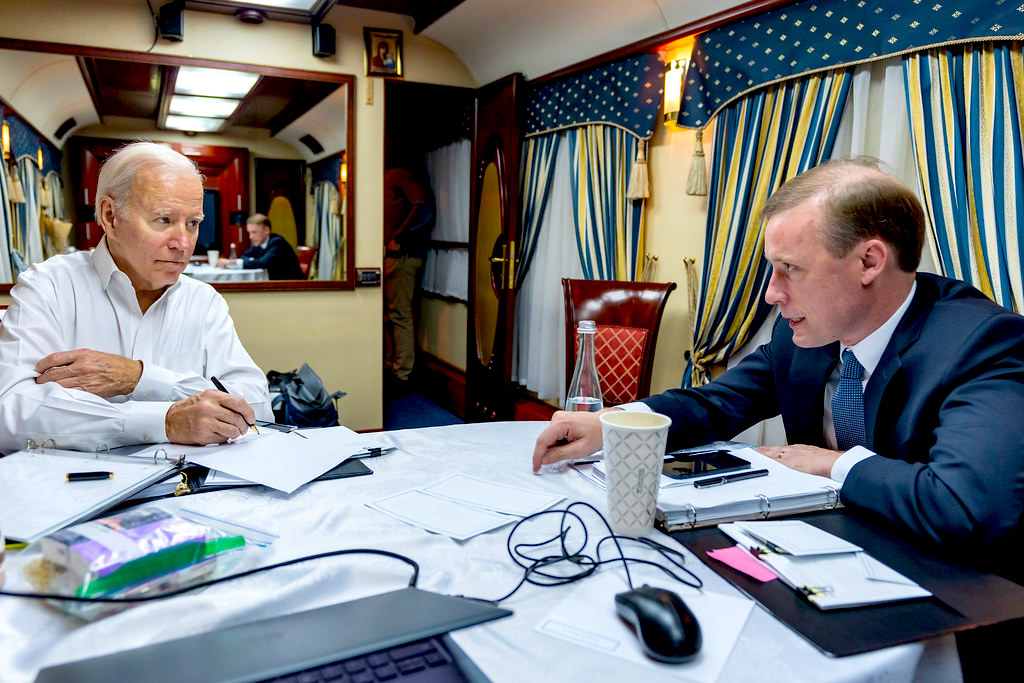
Biden and Sullivan on Feb. 19 during the train ride from Przemsyl train station in Poland to Kiev. (White House/Adam Schultz)

In April 2022, Secretary of Defense Lloyd Austin reiterated that U.S. aid to Ukraine was intended to weaken and isolate Russia and thereby deprive it of any credible capacity to make war in future.

Quite a few American politicians and pundits have extolled the benefits to having Ukrainians rather than Americans sacrifice their lives for this purpose. Some have gone further and advocated the breakup of the Russian Federation as a war aim.

If you are Russian, you don’t have to be paranoid to see such threats as existential. Putin assesses U.S. war aims as directed at humbling the Russian Federation strategically and, if possible, overthrowing its government, and dismembering it. The United States has not disputed this assessment.

Peace Set Aside

In mid-March 2022, the government of Turkey and Israeli Prime Minister Naftali Bennett mediated between Russian and Ukrainian negotiators, who tentatively agreed on the outlines of a negotiated interim settlement. The agreement provided that Russia would withdraw to its position on Feb.23, when it controlled part of the Donbass region and all of Crimea, and in exchange, Ukraine would promise not to seek NATO membership and instead receive security guarantees from a number of countries.

A meeting between Putin and Ukrainian President Voldodymyr Zelensky was in the process of being arranged to finalize this agreement, which the negotiators had initialled ad referendum — meaning subject to the approval of their superiors.

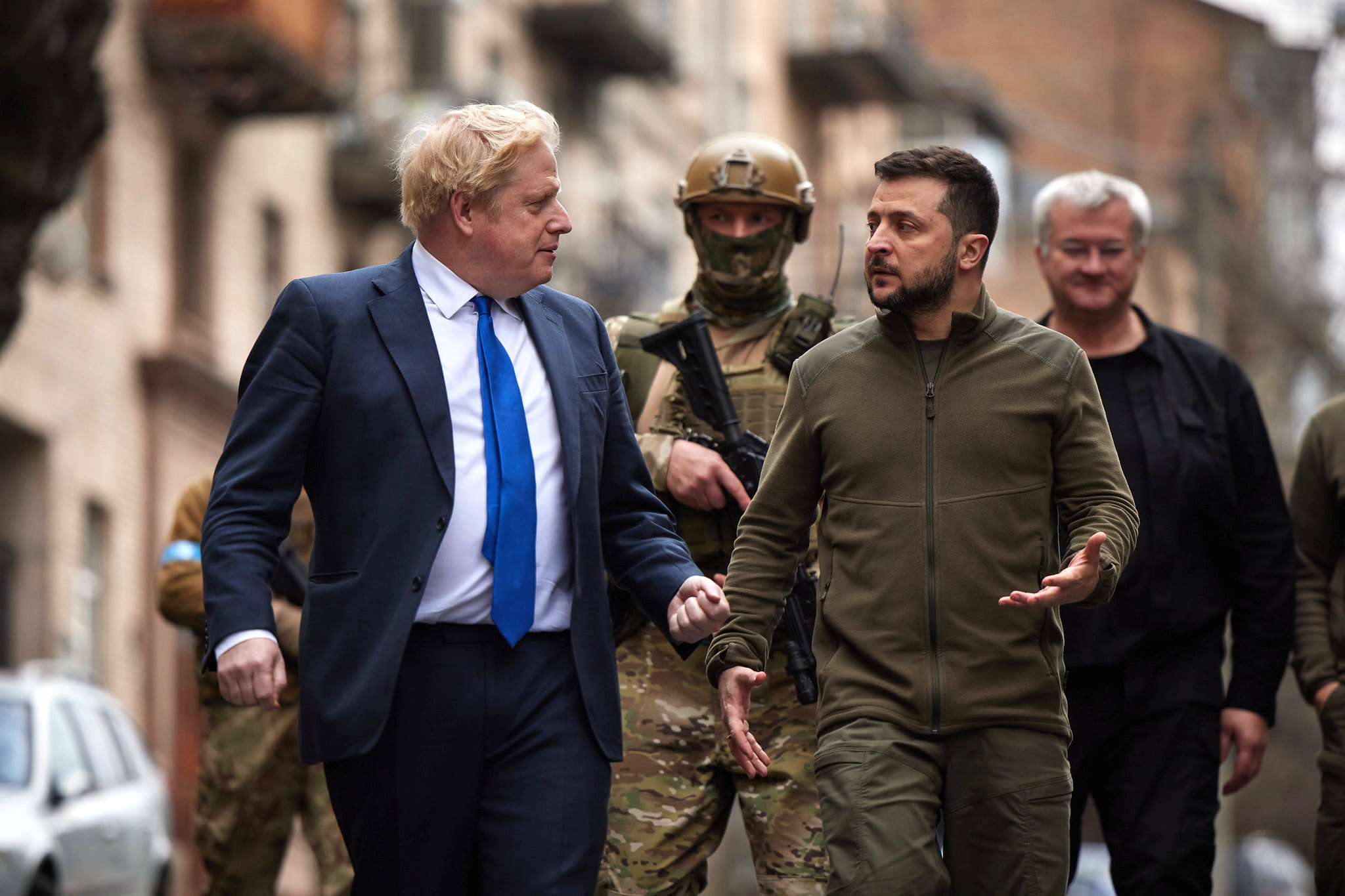
On March 28, 2022. President Zelensky publicly affirmed that Ukraine was ready for neutrality combined with security guarantees as part of a peace agreement with Russia. But on April 9 British Prime Minister Boris Johnson made a surprise visit to Kiev. During this visit, he reportedly urged Zelensky not to meet Putin because (1) Putin was a war criminal and weaker than he seemed. He should and could be crushed rather than accommodated; and (2) even if Ukraine was ready to end the war, NATO was not.


Johnson and Zelensky walking around the center of Kiev on April 9, 2022. (President of Ukraine)

Zelensky’s proposed meeting with Putin was then called off. Putin declared that talks with Ukraine had come to a dead end.

Zelensky explained that “Moscow would like to have one treaty that would resolve all the issues. However, not everyone sees themselves at the table with Russia. For them, security guarantees for Ukraine is one issue, and the agreement with the Russian Federation is another issue.” This marked the end of bilateral Russian-Ukrainian negotiations and thus of any prospect of a resolution of the conflict anywhere but on the battlefield.

What Happened & Who’s Winning What

This war was born in and has been continued due to miscalculations by all sides. NATO expansion was legal but predictably provocative. Russia’s response was entirely predictable, if illegal, and has proven very costly to it. Ukraine’s de facto military integration into NATO has resulted in its devastation.

The United States calculated that Russian threats to go to war over Ukrainian neutrality were bluffs that might be deterred by outlining and denigrating Russian plans and intentions as Washington understood them. Russia assumed that the United States would prefer negotiations to war and would wish to avoid the redivision of Europe into hostile blocs. Ukrainians counted on the West protecting their country. When Russian performance in the first months of the war proved lackluster, the West concluded that Ukraine could defeat it. None of these calculations have proved correct.

Nevertheless, official propaganda, amplified by subservient mainstream and social media, has convinced most in the West that rejecting negotiations on NATO expansion and encouraging Ukraine to fight Russia is somehow “pro-Ukrainian.” Sympathy for the Ukrainian war effort is entirely understandable, but, as the Vietnam War should have taught us, democracies lose when cheerleading replaces objectivity in reporting and governments prefer their own propaganda to the truth of what is happening on the battleground.


The only way you can judge the success or failure of policies is by reference to the objectives they were designed to achieve. So, how are the participants in the Ukraine War doing in terms of achieving their objectives?

Ukraine

From 2014 to 2022, the civil war in the Donbass took nearly 15,000 lives. How many have been killed in action since the U.S./NATO-Russian proxy war began in February 2022 is unknown but is certainly in the several hundreds of thousands.

Casualty numbers have been concealed by unprecedentedly intense information warfare. The only information in the West about the dead and wounded has been propaganda from Kiev claiming vast numbers of Russian dead while revealing nothing at all about Ukrainian casualties.

It is known, however, that 10 percent of Ukrainians are now involved with the armed forces and 78 percent have relatives or friends who have been killed or wounded. An estimated 50,000 Ukrainians are now amputees. (By comparison, only 41,000 Britons had to have amputations in World War I, when the procedure was often the only one available to prevent death. Fewer than 2,000 U.S. veterans of the Afghanistan and Iraq invasions had amputations.)

Most observers believe that Ukrainian forces have taken much heavier losses than their Russian enemies and that hundreds of thousands of them have given their lives in their country’s defense and efforts to retake territory occupied by the Russians.

When the war began, Ukraine had a population of about 31 million. The country has since lost at least one-third of its people. Over 6 million have taken refuge in the West. Two million more have left for Russia. Another 8 million Ukrainians have been driven from their homes but remain in Ukraine.

Ukraine’s infrastructure, industries and cities have been devastated and its economy destroyed. As is usual in wars, corruption — long a prominent feature of Ukrainian politics — has been rampant. Ukraine’s nascent democracy is no more, with all opposition parties, uncontrolled media outlets and dissent outlawed.

On the other hand, Russian aggression has united Ukrainians, including many who are Russian speaking, to an extent never seen before. Moscow has thereby inadvertently reinforced the separate Ukrainian identity that both Russian mythology and Putin have sought to deny. What Ukraine has lost in territory it has gained in patriotic cohesion based on passionate opposition to Moscow.

The flip side of this is that Ukraine’s Russian-speaking separatists have also had their Russian identity reinforced. Ukrainian refugees in Russia are the hardest of hardliners demanding retribution from Kiev. There is now little-to-no possibility of Russian speakers accepting a status in a united Ukraine, as would have been the case under the Minsk Accords.


And, with the failure of Ukraine’s “counteroffensive,” it is very unlikely that Donbass or Crimea will ever return to Ukrainian sovereignty. As the war continues, Ukraine may well lose still more territory, including its access to the Black Sea. What has been lost on the battlefield and in the hearts of the people cannot be regained at the negotiating table. Ukraine will emerge from this war maimed, crippled and much reduced in both territory and population.

Finally, there is now no realistic prospect of Ukrainian membership in NATO. As U.S. National Security Advisor Sullivan has said, “everyone needs to look squarely at the fact” that allowing Ukraine to join NATO at this point “means war with Russia.”

NATO Secretary General Jens Stoltenberg has stated that the prerequisite for Ukrainian membership in NATO is a peace treaty between it and Russia. No such treaty is anywhere in sight. In continuing to insist that Ukraine will become a NATO member once the war is concluded, the West has perversely incentivized Russia not to agree to end the war. But, in the end, Ukraine will have to make its peace with Russia, almost certainly largely on Russian terms.

Whatever else the war may be achieving, it has not been good for Ukraine. Ukraine’s bargaining position vis-à-vis Russia has been greatly weakened. But then, Kiev’s fate has always been an afterthought in U.S. policy circles. Washington has instead sought to exploit Ukrainian courage to thrash Russia, reinvigorate NATO and reinforce U.S. primacy in Europe.

Russia

Has Mosow succeeded in expelling American influence from Ukraine, forced Kiev to declare neutrality or reinstating the rights of Russian speakers in Ukraine? Clearly not.

For now, at least, Ukraine has become a complete dependency of the United States and its NATO allies. Kiev is an embittered, long-term antagonist of Moscow. Kiev clings to its ambition to join NATO. Russians in Ukraine are the targets of the local version of cancel culture. Whatever the outcome of the war, mutual animosity has erased the Russian myth of Russian-Ukrainian brotherhood based on a common origin in Kievan Rus.

Russia has had to abandon three centuries of efforts to identify with Europe and instead pivot to China, India, the Islamic world and Africa. Reconciliation with a seriously alienated European Union will not come easily, if at all. Russia may not have lost on the battlefield or been weakened or strategically isolated, but it has incurred huge opportunity costs.


Then, too, NATO has expanded to include Finland and Sweden. This does not change the military balance in Europe. Western portrayal of Russia as inherently predatory notwithstanding, Moscow has had neither the desire nor the capability to attack either of these two formerly very Western-aligned and formidably armed but nominally “neutral” states. Nor does either Finland or Sweden have any intention of joining an unprovoked attack on Russia. But their decision to join NATO is politically wounding for Moscow.

Since the West shows no willingness to accommodate Russian security concerns, if Moscow is to achieve its goals, it now has no apparent alternative to battling on. As it does so, it is stimulating European determination to meet previously ignored NATO targets for defense spending and to acquire self-reliant military capabilities directed at countering Russia independently of those of the United States. Poland is reemerging as a powerful hostile force on Russia’s borders. These trends are changing the European military balance to Moscow’s long-term disadvantage.

What about the United States?

In 2022 alone the United States approved $113 billion in aid to Ukraine. The Russian defense budget was then less than half of that — $54 billion. It has since roughly doubled. Russian defense industries have been revitalized. Some now produce more weaponry in a month than they previously did in a year. Russia’s autarkic economy has weathered 18 months of all-out war against it from both the U.S. and the EU. It just overtook Germany to become the fifth-wealthiest economy in the world and the largest in Europe in terms of purchasing power parity. Despite repeated Western claims that Russia was running out of ammunition and losing the war of attrition in Ukraine, it has not, while the West has. Ukrainian bravery, which has been hugely impressive, has been no match for Russian firepower.

Meanwhile, the alleged Russian threat to the West, once a powerful argument for NATO unity, has lost credibility. Russia’s armed forces have proven unable to conquer Ukraine, still less the rest of Europe. But the war has taught Russia how to counter and overcome much of the most advanced weaponry of the United States and other Western countries.

Before the United States and NATO rejected negotiations, Russia was prepared to accept a neutral and federalized Ukraine. In the opening phase of its invasion of Ukraine, Russia reaffirmed this willingness in a draft peace treaty with Ukraine which the United States and NATO blocked Kiev from signing.

Western diplomatic intransigence has failed to persuade Moscow to accommodate Ukrainian nationalism or accept Ukraine’s inclusion in NATO and the American sphere of influence in Europe. The proxy war seems instead to have convinced Moscow that it must gut Ukraine, keep the Ukrainian territories it has illegally annexed and likely add more, thus ensuring that Ukraine is a dysfunctional state unable either to join NATO or to fulfill the ultranationalist, anti-Russian vision of its World War II neo-Nazi hero, Stepan Bandera.

The war has led to the superficial unity of NATO but there are obvious fissures among members. The sanctions imposed on Russia have done heavy damage to European economies. Without Russian energy supplies, some European industries are no longer internationally competitive. As NATO’s recent summit at Vilnius showed, member countries differ on the desirability of admitting Ukraine. NATO unity seems unlikely to outlast the war. These realities help explain why most of America’s European partners want to end the war as soon as possible.

The Ukraine War has clearly put paid to the post-Soviet era in Europe, but it has not made Europe in any respect more secure. It has not enhanced America’s international reputation or consolidated U.S. primacy. The war has instead accelerated the emergence of a post-American multi-polar world order. One feature of this is an anti-American axis between Russia and China.


To weaken Russia, the United States has resorted to unprecedentedly intrusive unilateral sanctions, including secondary sanctions targeting normal arms-length commercial activity that does not involve a U.S. nexus and is legal in the jurisdictions of the transacting parties. Washington has been actively blocking trade among countries that have nothing to do with Ukraine or the war there because they won’t jump on the U.S. bandwagon.

As a result, much of the world is now engaged in pursuit of financial and supply-chain linkages that are independent of U.S. control. This includes intensified international efforts to end dollar hegemony, which is the basis for U.S. global primacy. Should these efforts succeed, the United States will no longer be able to run the trade-and-balance-of-payments deficits that sustain its current standard of living and status as the most powerful society on the planet.

Washington’s use of political and economic pressure to compel other countries to conform to its anti-Russian and anti-Chinese policies has clearly backfired. It has encouraged even former U.S. client states to search for ways to avoid entanglement in future American conflicts and proxy wars they do not support, like that in Ukraine. To this end, they are abandoning exclusive reliance on the United States and forging ties to multiple economic and politico-military partners. Far from isolating Russia or China, America’s coercive diplomacy has helped both Moscow and Beijing to enhance relationships in Africa, Asia and Latin America that reduce U.S. influence in favor of their own.

Summary

In short, U.S. policy has resulted in great suffering in Ukraine and escalating defense budgets here and in Europe but has failed to weaken or isolate Russia. More of the same will not accomplish either of these oft-stated American objectives. Russia has been educated in how to combat U.S. weapons systems and has developed effective counters to them. It has been militarily strengthened, not weakened. It has been reoriented and freed from Western influence, not isolated.

If the purpose of war is to establish a better peace, this war is not doing that. Ukraine is being eviscerated on the altar of Russophobia. At this point, no one can confidently predict how much of Ukraine or how many Ukrainians will be left when the fighting stops or when and how to stop it. Kiev just failed to meet more than a fraction of its recruitment goals. Combatting Russia to the last Ukrainian was always an odious strategy. But when NATO is about to run out of Ukrainians, it is not just cynical; it is no longer a viable option.

Lessons to be Learned from the Ukraine War

What can we learn from this debacle? It has provided many unwelcome reminders of the basic principles of statecraft. Wars do not decide who is right. They determine who is left.
The best way to avoid war is to reduce or eliminate the apprehensions and grievances that cause it.
When you refuse to hear, let alone address an aggrieved party’s case for adjustments in your policies toward it, you risk a violent reaction from it.
No one should enter a war without realistic objectives, a strategy to achieve them, and a plan for war termination.
Self-righteousness and bravery are no substitutes for military mass, firepower, and stamina.
In the end, wars are won and lost on the battlefield, not with propaganda inspired by and directed at reinforcing wishful thinking.
What has been lost on the battlefield can seldom, if ever, be recovered at the negotiating table.
When wars cannot be won, it is usually better to seek terms by which to end them than to reinforce strategic failure.

It is time to prioritize saving as much as possible of Ukraine. This war has become existential for it. Ukraine needs diplomatic backing to craft a peace with Russia if its military sacrifices are not to have been in vain. It is being destroyed. It must be rebuilt. The key to preserving Ukraine is to empower and back Kiev to end the war on the best terms it can obtain, to facilitate the return of its refugees, and to use the EU accession process to advance liberal reforms and institute clean government in a neutral Ukraine.

Unfortunately, as things stand, both Moscow and Washington seem determined to persist in Ukraine’s ongoing destruction. But whatever the outcome of the war, Kiev and Moscow will eventually have to find a basis for coexistence. Washington needs to support Kiev in challenging Russia to recognize both the wisdom and the necessity of respect for Ukrainian neutrality and territorial integrity.

Finally, this war should provoke some sober rethinking in Washington, in Moscow, and by NATO of the consequences of diplomacy-free, militarized foreign policy. Had the United States agreed to talk with Moscow, even if it had continued to reject much of what Moscow demanded, Russia would not have invaded Ukraine as it did. Had the West not intervened to prevent Ukraine from ratifying the treaty others helped it agree with Russia at the outset of the war, Ukraine would now be intact and at peace.

This war did not need to take place. Every party to it has lost far more than it has gained. There’s a lot to be learned from what has happened in and to Ukraine. We should study and learn these lessons and take them to heart.


Ambassador Chas W. Freeman chairs Projects International, Inc. He is a retired U.S. defense official, diplomat, and interpreter, the recipient of numerous high honors and awards, a popular public speaker, and the author of five books.


This article is from the author’s website and republished with permission.


New Zealand’s ‘Russian Edits Scandal’ — How a National Broadcaster Demonized the Truth


https://consortiumnews.com/2023/10/07/new-zealands-russian-edits-scandal-how-a-national-broadcaster-demonized-the-truth/


October 7, 2023



Radio New Zealand House, Wellington. (Dabbelju, Wikipedia Commons, CC BY-SA 3.0)


By Mick Hall
in Whangarei, New Zealand
Special to Consortium News

In this tumultuous time of war and global conflict, where pervasive propaganda campaigns mask geopolitical machinations of the powerful and serve their interests, mainstream journalists’ ability to counter these campaigns have never been more limited.

Gone are the days when John Pilger was able to have a story attacking George W. Bush and Tony Blair’s invasion of Iraq on the front page of the British tabloid, the Daily Mirror.

We live in a time of state surveillance and creeping restrictions on freedom of speech, where whistleblowers are criminalised and publishers like Julian Assange face persecution and life imprisonment.

Self-censorship is strictly adhered to by media outlets as narratives are shaped by a technocratic elite. Mainstream stories are packaged with a kind of hermeneutic seal, keeping out vital context that would allow readers to interpret the meaning of events happening in the world.

Yet so much is currently taking place of profound importance that the public needs to know about. For those of us living in New Zealand and the wider Pacific region, these matters include the potential of being caught up in a proxy war with China at the behest of its peer rival, the United States, with all the horror that would involve.

‘Rules-Based’ Domination

For a long time, the U.S. has dominated the global economy using its petrodollar, instruments of economic coercion like sanctions, the International Monetary Fund (IMF) and the World Bank, as well as C.I.A. interference in nations’ internal affairs, including the fermentation of opposition groups and violent coups.

As a last resort, it has exercised raw military might, invading countries like Iraq and Afghanistan, or directed its will through NATO, bombing Serbia and Libya in the interests of its corporate state.

Contemporary history shows at the core of its so-called “rules-based international order” lies a very destructive neo-colonial system of domination, one that pays lip service to democratic values and institutions only when corporate schemes for profit are not being threatened.

It is in the interests of democratic participation and accountability that citizens of countries aligned with U.S. power understand this, so they can hold their governments to account for foreign policy positions.

They should also understand that this unipolar power, exercised by the U.S. since the fall of the Soviet Union, is being challenged by an emerging multipolarity, particularly through the growing strength of trading bloc BRICS.
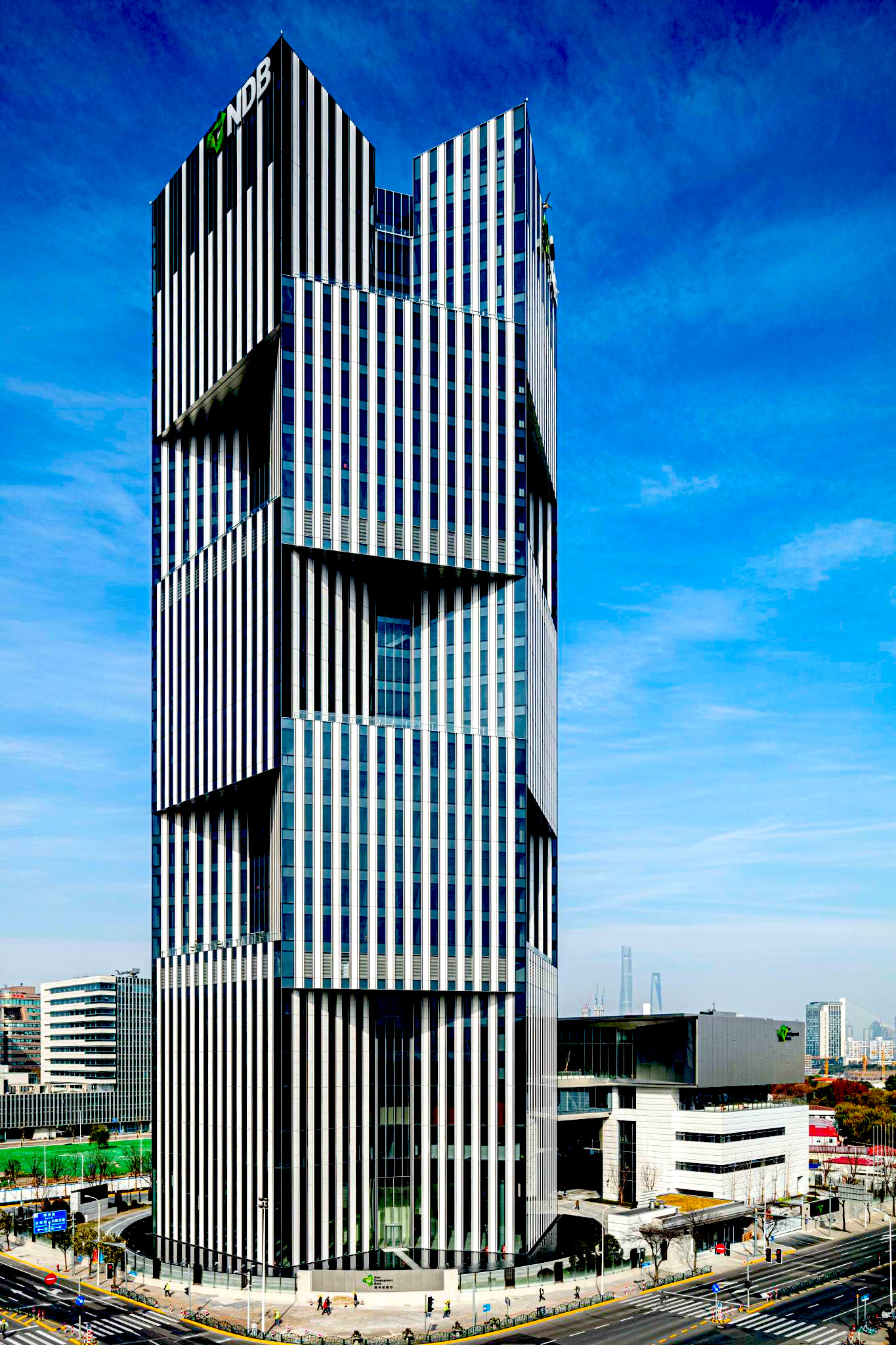


BRICS’ New Development Bank headquarters in Shanghai. (Donnie28, Wikimedia Commons, CC BY-SA 4.0)


Nations are breaking free from the U.S.-dominated global system, trading in their own currencies, and seeking greater economic sovereignty to avoid sanctions, the predatory practices of Western financial institutions. BRICS leaders have stated an intent to build an alternative, more equitable and just global framework for trade and co-operation.

Current U.S. foreign policy strategies that push proxy war as a means of ‘containing’ those nations leading this charge towards multipolarity, namely Russia and China, pose an unprecedented danger of nuclear exchange and the annihilation of life on Earth.

Within Western mainstream media, striving to present a contextual framework for world news stories that reflect these overarching realities is an onerous task and one fraught with risk. I’m very much aware of the price journalists face for attempting to do so.

In June, I was publicly cast as a Russian propagandist by my employer Radio New Zealand (RNZ) and thrown to the wolves over my subediting of a Reuters story on the U.S. proxy war in Ukraine.

The gross mischaracterisation created a scandal and widespread hysteria amid speculation that the national broadcaster — New Zealand’s most trusted source of news — had been infiltrated by a Russian agent. It led to weeks of intense national and international media coverage. It also left me jobless, with a 20-year career in tatters. Others around the world are being smeared in a similar fashion.

Edits ‘Pro-Kremlin Garbage’

I had worked on the RNZ digital team since September 2018. Part of my job involved selecting and processing news stories from international wires for website publication. I had approached such copy critically, finding that Reuters copy on occasions blatantly leaned towards a U.S. State Department position, while BBC copy reflected a U.K. government bias.

In both cases it led to unbalanced and distorted stories. Addressing political or cultural bias usually involved deleting or reframing the paragraph that carried it, or adding counter-factual context to achieve greater balance.
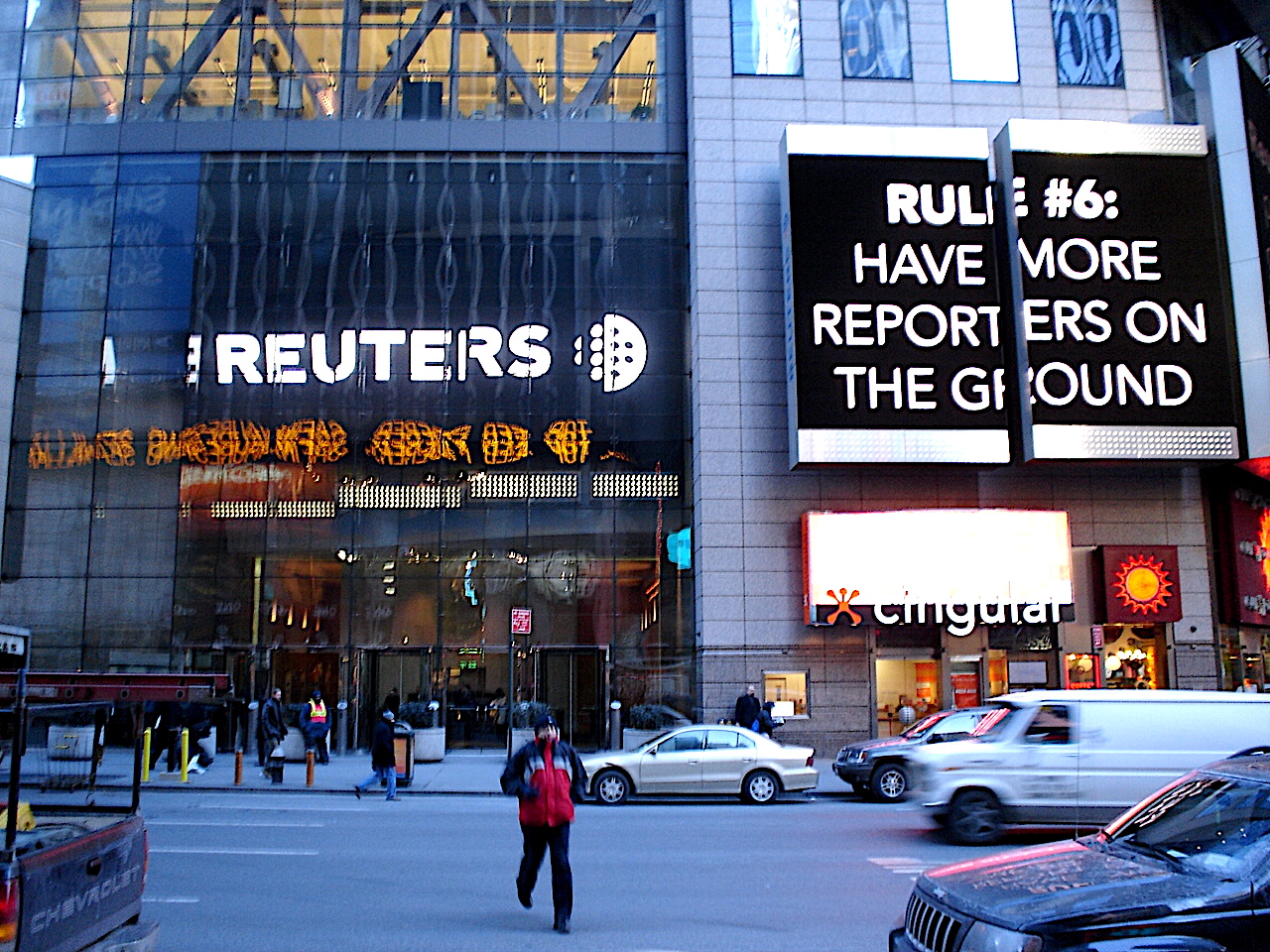

Reuters building entrance in New York City, 2007. (Eternalsleeper and Broadbeer, Wikimedia Commons, CC BY-SA 3.0)


As the Ukraine war kicked off, instances of such bias and imbalance increased, as did what I saw as a journalistic duty to remove it.

On June 8 a story on the Russian-Ukraine conflict I had subedited and then published was flagged on Twitter by New York-based lawyer and media commentator Luppe B. Luppen. He claimed it presented a propagandised version of events during the Maidan protests of 2014 and contacted Reuters.

The original paragraph had read:


“The conflict in eastern Ukraine began in 2014 after a pro-Russian president was toppled in Ukraine’s Maidan Revolution and Russia annexed Crimea, with Russian-backed separatist forces fighting Ukraine’s armed forces.”

The edited version instead stated:


“The conflict in Ukraine began in 2014 after a pro-Russian elected government was toppled during Ukraine’s violent Maidan colour revolution. Russia annexed Crimea after a referendum, as the new pro-Western government suppressed ethnic Russians in eastern and southern Ukraine, sending in its armed forces to the Donbas.”

When adding references in news copy to the Maidan coup that ousted the then Ukrainian President Viktor Vanukovych, I would have usually attributed the position to Russia as a matter of prudence. On this occasion, I didn’t. Leaving in the Reuters reporter’s byline didn’t help my case and it would be used to push the false idea my editing was surreptitious ‘tampering’, even though this was an isolated error.

My immediate boss approached me after Reuters sent an email to RNZ pointing to a breach of contract over the edited story. She emphasised the matter was “really, really serious” as I’d changed the intended meaning of the story. I took responsibility for the changes and accepted paid leave while an investigation took place, alongside the implementation of an external strategy to minimise reputational damage to the company.

In my mind, I was guilty of procedural errors and believed I may be looking at a verbal or written warning after explaining to furious bosses the reasons for the copy edits. Instead, that evening an audit of my work spanning five years was launched after RNZ informed the public it was investigating how “Russian propaganda” had been inserted into its international wires online content.
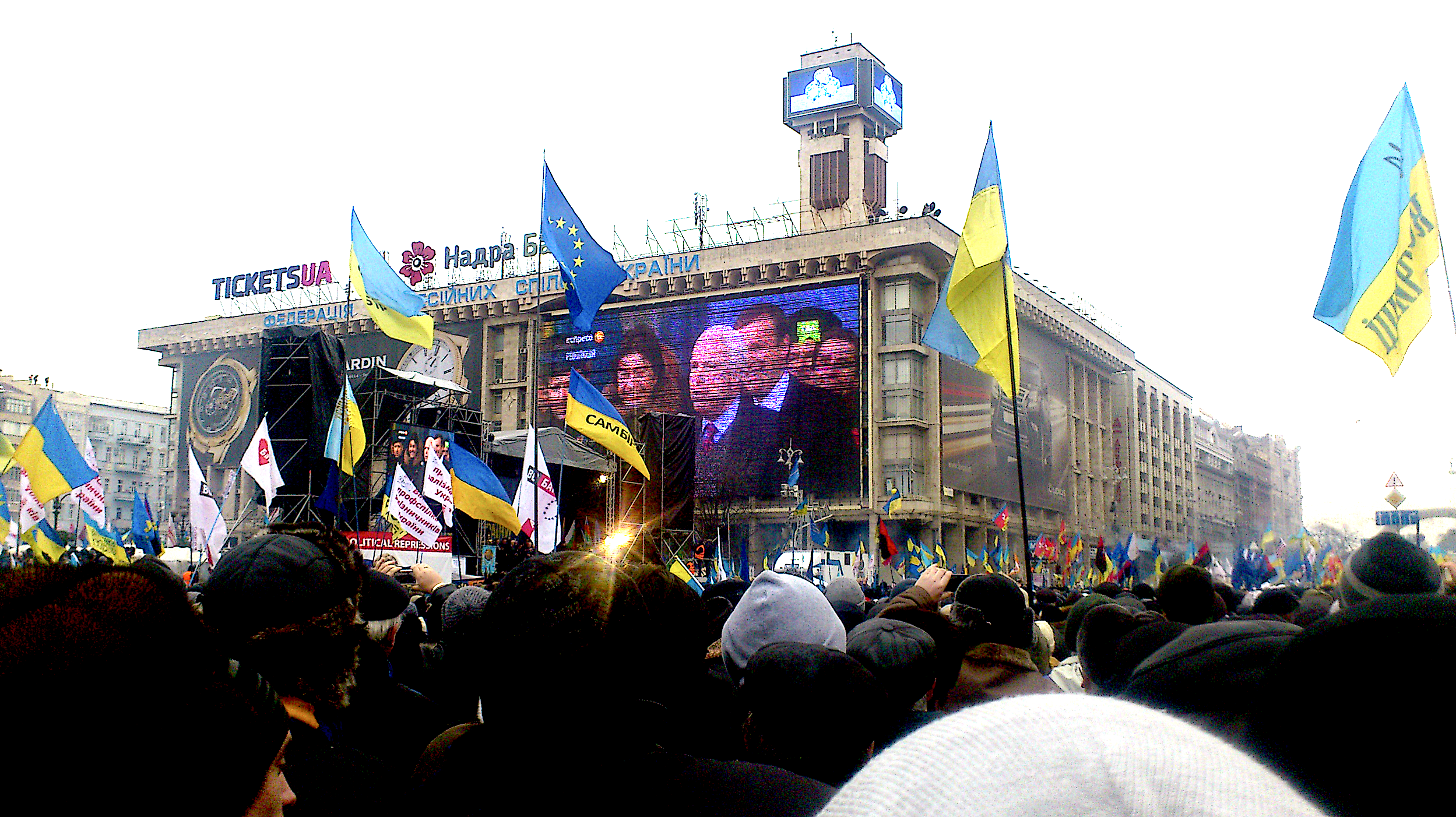

The late U.S. Sen. John McCain addressing crowds in Maidan square, Kiev, Dec. 15, 2013. (Mr.Rosewater, Wikimedia Commons, CC BY-SA 3.0)


In framing the matter this way, the RNZ leadership maximised reputational damage to its organisation, as well as to myself. International coverage of the unfolding “Russian edits scandal” really took off after RNZ CEO Paul Thompson increased the maelstrom by calling the edits “pro-Kremlin garbage.”

A Political Show Trial

The broadcaster began publishing a list of other stories it found “inappropriately” edited and in breach of its editorial standards.

Three days after being put on leave, the audit had identified 16 stories of concern, prompting right-wing politicians to demand a government inquiry. Instead, the RNZ board of directors set up an independent review panel to determine what had gone wrong, re-establish public trust and ensure such “breaches” could never happen again.

The active audit was published at the top of the RNZ website, ostensibly to reassure the public and demonstrate transparency. It in effect became a type of political show trial. I felt the pressure every time it was updated with new stories, complete with editorial notes at the bottom of each. But the audit also betrayed where RNZ management stood ideologically — firmly and explicitly behind a skewed Anglo-American worldview.

It would eventually flag 49 world news stories out of a total of 1319 world stories checked. Less than half relating to Russia and Ukraine. The audit demonstrated that, when it came to Palestinian rights, class struggles and coups in Latin America, U.S. provocations against China involving Taiwan, Julian Assange’s plight, and even U.K. workers’ right to strike, no deviation from U.S. State Department or Westminster positions would be tolerated.


My own original stories were also put under the microscope. In July 2022 I’d written a story “NZ entering Ukraine conflict ‘at whim of govt’ – former Labour general-secretary,” featuring ex-senior politicians, who said the New Zealand government was risking nuclear catastrophe by giving material support to the U.S. proxy war in Ukraine at the expense of diplomacy.

It was removed from the website and screened for Russian bias, before being republished without a byline and with a note incorrectly telling readers an earlier version of the story had lacked balance.

Resignation

Amid public scrutiny, which also included disinformation experts being invited on national media platforms to comment on foreign interference in relation to my work, as well as online threats and speculation over my motives, I resigned.

Coming to terms with the loss of a job with a young family was one thing. The circumstances of the loss was causing much more immediate anxiety.

With New Zealand part of the Five Eyes Western intelligence apparatus, I expected the security services would be knocking on my door. Isolated and feeling vulnerable, I began to catastrophize, believing there was a chance I could be removed from the country and estranged from my Kiwi children. As an Irish national I had resided in the country since 2019.

In times of crisis, I’d always prayed for help and this time was no exception.
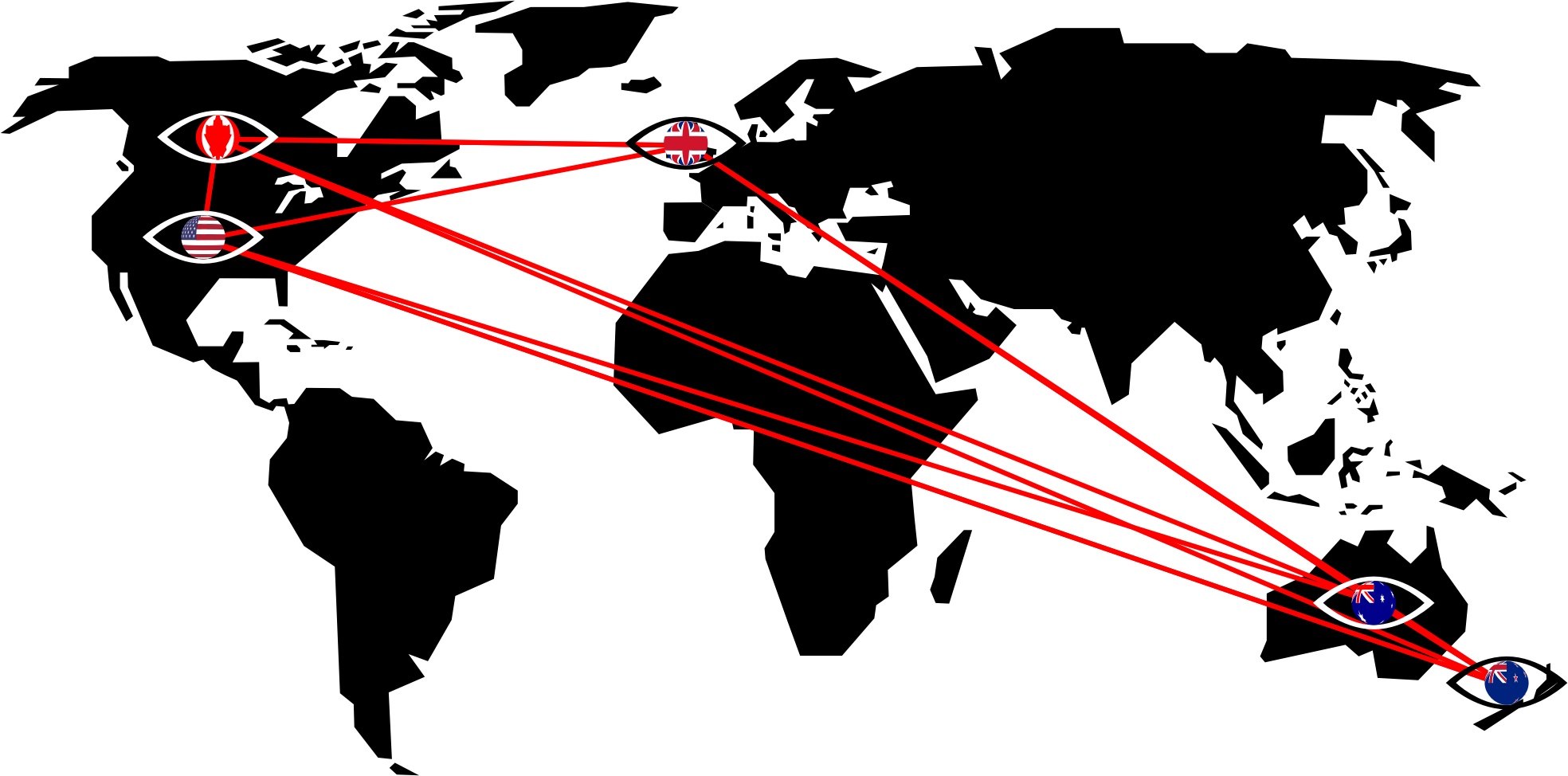

Rendering of the “Five Eyes” intelligence network that includes Australia, Canada, New Zealand, the U.K., the U.S. (@GDJ, Openclipart)


People Begin Rallying

I stopped reading media reports as the toxic groupthink of my former colleagues became too taxing to process. I also ignored media requests. Instead, my energy went into writing up a 14,000-word substantive statement as part of plans to meet with the review panel, which was now seeking to interview RNZ staff, as well as myself.

As I did so, light began breaking through the darkness. People who understood what was going on began to reach out. A reformed Ukrainian nationalist got in contact and offered to assist, thankful for what he said I had helped point to — the plight of his fellow countrymen who were being cynically used, many unwillingly, as cannon fodder to forward U.S. strategic interests.

Award-winning cartoonist Malcolm Evans, an outspoken critic of Israel’s occupation of Palestine who had himself been ousted from The New Zealand Herald decades before, suggested I ring lawyer Deborah Manning. I did so. The power differential between RNZ and myself troubled Manning enough that she offered to guide me through the inquiry process, alongside her colleague Simon Lamain, on a pro-bono basis.

Manning had gained a high public profile after her prolonged, but successful battle against the imprisonment and persecution of Algerian refugee Ahmed Zaoui after he arrived in New Zealand in 2002, accused by intelligence agencies of being a terrorist.

She also represented Afghan villagers during a 2019 government inquiry following a raid by members of New Zealand’s special forces in 2010 that left five dead and 15 wounded. Manning had proven herself a formidable advocate.

My sense of isolation lessened further after a supportive call from investigative journalist Nicky Hager, co-author of Hit & Run, a book detailing that NZ Special Air Service (SAS) Afghan operation. He assured me time would attest to the fact that RNZ had called it wrong.

Columbia University Professor Jeffrey Sachs and University of Chicago Professor John J Mearsheimer, alongside other highly regarded scholars and political scientists, agreed to write letters of support to the review panel. Both men took a keen interest in the unfolding drama.

In his letter to the review panel, Sachs wrote:


“It may be that the RNZ leadership is simply trying to keep in step with official U.S. and U.K. policies, rather than to help its readers and listeners to understand the dramatic events of our time…

The claim that the edits are pro-Russian propaganda is nonsense. The edits add depth of historical context and understanding, and open minds to a deeper inquiry.”

Commenting on various elements of context I’d added to the Ukraine stories, Mearsheimer wrote:


“I think that his characterization of the Azov battalion and how it was portrayed in the West before the recent war is correct. I think his views on how Russian leaders thought about NATO enlargement and how that helped cause the war is correct. I think his identification of American involvement in the events on the Maidan and his description of it as both a color revolution and a coup is correct…

Someday, historians are going to look back at this period in amazement, wondering how the West allowed itself to engage in such an all-encompassing and vicious propaganda campaign – that is so at odds with the truth as well as liberal values. Hopefully, RNZ will correct its mistake with Mr. Hall, so those historians do not point to this incident as prime evidence of how the West lost its mind.”

Facing the Panel

Buoyed by the fact I was in good company I prepared to meet the review panel, my statement outlining the circumstances of the wires copy editing now completed.

Seated inside the ground floor of a soulless, nondescript corporate hotel in central Auckland, I nervously scanned the faces of those descending the staircase to the cold marble foyer next to our lounges, where immigrant staff served coffee, hoping to identify the person I thought might bring the group of three to the inquiry’s interview room.

Manning stood up as Willie Akel, a media law expert and the panel chairman, suddenly appeared a few metres away, greeting us with a smile and handshakes. A tall, studious-looking man in his early 60s, Akel had a history of battling for corporate media freedoms. He would be the most personable of the panel, yet the most importunate during intense cross-examinations that would take place over two days.

It became clear from my initial meeting with the three-person panel that I would not convince them that all my Russia-Ukraine edits were accurate or appropriate.

The panel did not intend to assess all stories flagged by RNZ but wanted to look at a sample to establish that inappropriate editing had indeed taken place. In my view, exchanges that followed pointed to an inability to discuss the Ukraine conflict without deference to Western orthodoxies, an implicit bias that trumped empirical evidence.

One story discussed was “UN again trying to evacuate civilians from Ukraine’s Mariupol,” published on May 6, 2022. It included a comment from an Above Regiment commander, after which I had added: “The Azov Battalion was widely regarded before the Russian invasion by Western media as a neo-Nazi military unit.” [Related: ROBERT PARRY: When Western Media Saw Ukraine’s Neo-Nazis]
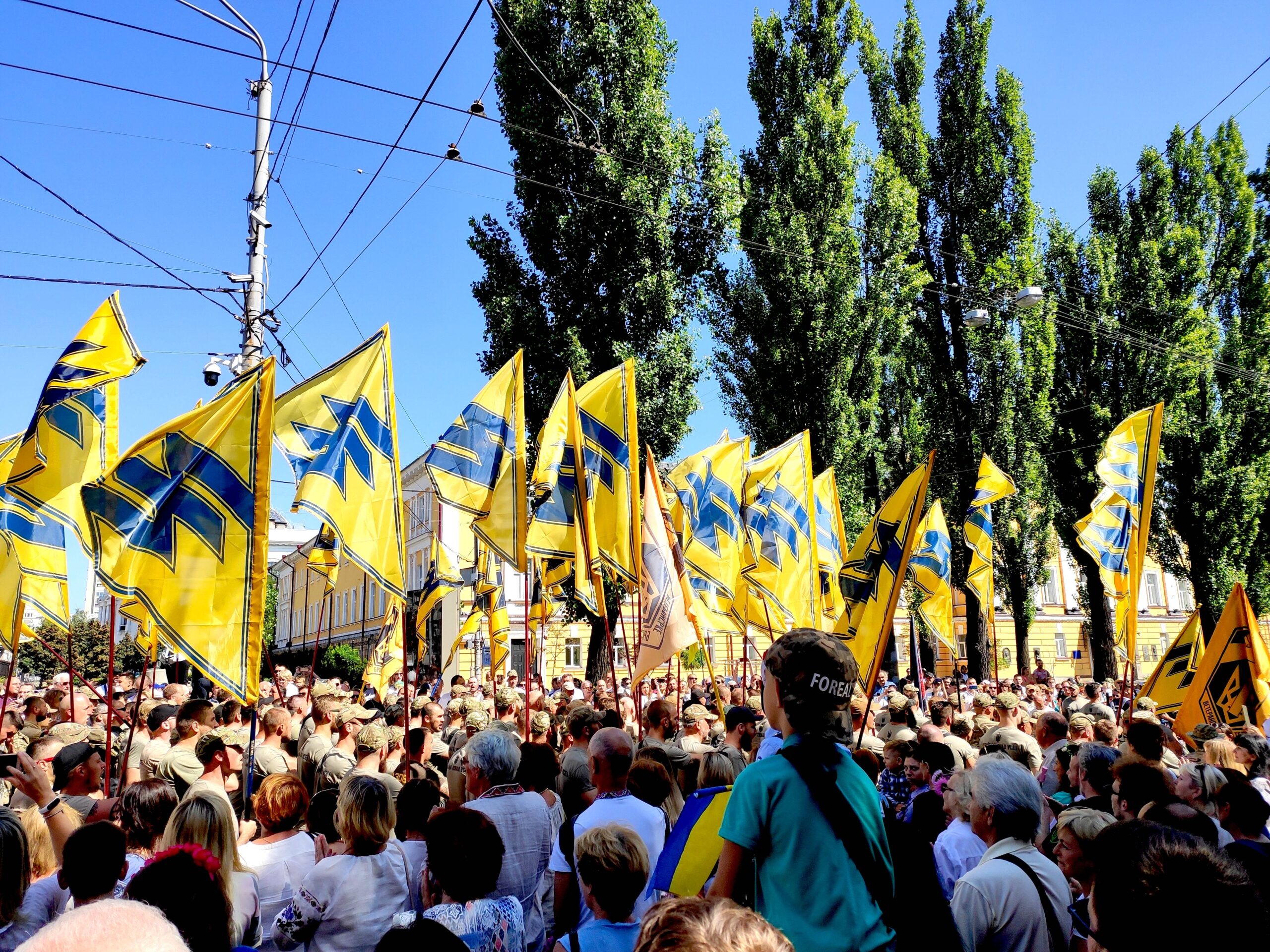

A march of Azov veterans and supporters in Kiev, 2019. (Goo3, Wikimedia Commons)


A panel member argued it had been inappropriate to add the line without also giving further balancing context, namely, that Ukrainian President Volodymyr Zelensky had brought the Azov private militia into Ukraine’s regular army and in doing so had “reigned” the group in.

I pointed out that even Reuter’s own commentator Josh Cohen had said Azov’s inclusion within Ukraine’s interior ministry did not necessarily mean this and that the group continued to push its neo-Nazi ideology through non-profit activities and children’s camps.

In its subsequent report, the panel found the line’s “uncritical and unexplained inclusion” had unbalanced the story without attribution to Russia and more balancing context added. It noted a “contested and complex debate about the origins of the battalion some years earlier and the extent to which they were and still are influenced by neo-Nazi elements.”

It remains unclear why the panel believed the line needed to be attributed to Russia, while offering a Ukrainian counter position would have only amounted to adding false balance, in the absence of any real evidence Azov had renounced its fascism.

‘One-sided, Politically Coloured and Unbalanced’

The panel’s main scrutiny was directed at reporting, as uncontested fact, the Maidan events as a U.S.-backed coup that had sparked a civil war and had led to Russia’s annexation of Crimea after a referendum.

I argued that, although I had not attributed this context to the Russian position – alongside Reuter’s ‘Madian Revolution’ U.S.-aligned narrative which I had instead removed – in mitigation the paragraph did not contain misinformation. It contained key historical antecedents to the Russian invasion.

Yanukovych was removed from office by a Parliamentary vote that the Ukrainian constitution did not allow, a move backed by the U.S.. He fled the country amid violence and threat of arrest, or worse.

The panel continued to listen intently, but with palpable scepticism, as I mentioned the intercepted phone conversion [LISTEN] between the State Department’s Victoria Nuland and diplomat Geoffrey Pyatt, where the two U.S. officials discuss who should make up the next administration, several weeks before Yanukovych was driven from power.
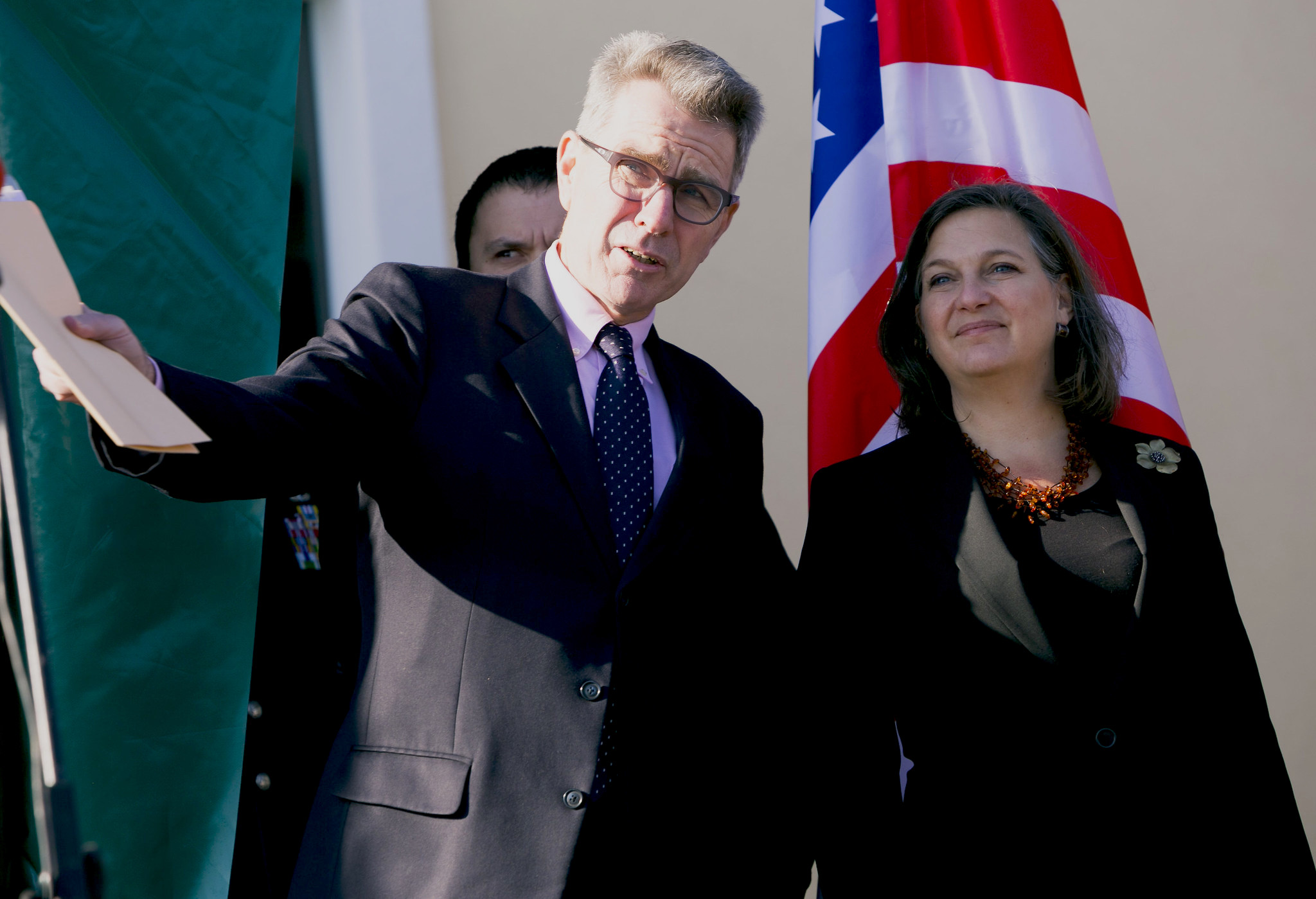

Oct. 8, 2014: Pyatt and Nuland at a Ukrainian State Border Guard Service Base in Kiev. (U.S. Embassy Kyiv, Flickr)

I referred to academic Ivan Katchanoski’s Revelations from Ukraine’s Maidan Massacre Trial and Investigation and Ukraine-Russia War Origins, a peer-reviewed study that presented compelling evidence snipers positioned in hotels controlled by far-right groups killed dozens of protesters and police during a false flag operation at Maidan Square, putting pressure on Yanukovych after he was accused of ordering the shootings.

[Related: The Buried Maidan Massacre and Its Misrepresentation by the West]

None of it mattered much. In its report, the panel found the edits to the June 8 story flagged by the New York commentator were “one-sided, politically coloured and unbalanced.” The finding came as no surprise.

I maintain this instead accurately describes Reuter’s original copy, not the version I edited. The logic used by the panel seemed to dictate that anything contested by the Western powers cannot be stated as fact, regardless of the evidence.

Inquiry Scathing of RNZ for Causing Alarm

On the other hand, the panel did show commendable fairness. It found many of the stories flagged by RNZ’s audit had not been edited inappropriately. It also took on board my reasons for not “referring up” to management when making the edits – that my managers lacked expertise in world news and that I had been siloed in a dysfunctional editorial system. They were scathing of the organisation’s structural inadequacies.

The report found no evidence I set out to introduce misinformation or disinformation, “never mind run a Russian propaganda campaign.” It was also highly critical of RNZ management for alarming the public. It found language used by the broadcaster “unhelpful in maintaining public trust” in that “listeners and others may have believed the editing had been a deliberate and orchestrated exercise in propaganda.”

The report stated: “We consider that had RNZ’s own language about the incident been more restrained, the resulting coverage might have been too.”

In response, RNZ board chairman Jim Mathers promised to implement its recommendations, which included a major restructure, improved editorial systems and the establishment of an editorial “standards” enforcer.

There were signs that RNZ was not happy with the findings over my editing. Its flagship programme Morning Report wheeled out a belligerent mainstream media figure to reassert the discredited view the edits were in fact pro-Kremlin garbage, while an RNZ manager falsely reported that the review panel had “said the ‘rogue actor’ would not have gotten away with it had RNZ’s systems and oversights been up to scratch”. The report explicitly rejected the suggestion I was a “rogue actor.”

‘Frightened, Compliant Censorship’

The panel’s inquiry gave me some closure, while putting to bed New Zealand’s fears of Russian disinformation. I was thankful for that.

But it did not address the deeper systemic malaise within RNZ and the wider corporate media ‘eco-system’. Although it questioned the veracity of the RNZ’s audit, it did not see it for what it was. That was left to veteran journalist John Pilger, who called it “frightened, compliant censorship.” That assessment was echoed by others, including Joe Lauria at Consortium News and Max Blumenthal at The Grayzone.

Should we expect it any other way, given the societal role critics like Noam Chomsky assign to media – a place where stenographers to power, gatekeepers of what can be considered reasonable discourse, shape public opinion?

My attitude had always been at the very least that we should be held to our promise of balance, fairness and accuracy and be pushed to express a preferential option for peace and justice in international news reporting. I believed approaching international news copy critically to address potential issues of bias and accuracy to be an integral part of the editorial process at any public news service.

Unfortunately, the review panel’s position seemed to align with RNZ’s view stated during the inquiry process – that international wire copy should be treated as sacrosanct.

Yet, when Associated Press journalist James La Porta last November used an unnamed “senior U.S. intelligence official” to falsely point the finger at Russia after a Ukrainian rocket crossed into NATO country Poland killing two people, he demonstrated the dangers of this position. There are numerous other examples.

Just because a story is written and edited within a well-resourced, professional international news organisation does not mean it is accurate or balanced, particularly as war rages and that organisation’s country is a party to it.

RNZ’s new editorial standards enforcer will presumably oversee an uncritical publication of this copy, conflating editorial standards with narrative control. In my view, it will not be to benefit a public that RNZ’s charter states the broadcaster is duty-bound to supply with “comprehensive, independent, accurate, impartial, and balanced regional, national and international news and current affairs.”

Most seriously, this position will not benefit informed, much-needed debate about the supposed ‘threat’ of China, as the spectre of proxy war looms ever more clearly over Asia-Pacific.

In the words of imprisoned publisher and journalist Julian Assange, if wars can be started by lies, peace can be started by the truth. It is incumbent on journalists that they get this truth out and that wider society offers them support and protection to do so.

However, given the structural restraints on journalists and the apparent chill factor around questioning narratives of power at present, it will remain difficult to do so within New Zealand’s mainstream media.


Mick Hall is an independent journalist based in New Zealand. He is a former digital journalist at Radio New Zealand (RNZ) and former Australian Associated Press (AAP) staffer, having also written investigative stories for various newspapers, including the New Zealand Herald.


Global Heat Record For September ‘Shattered’ By Wide Margin


https://popularresistance.org/global-heat-record-for-september-shattered-by-wide-margin/


By Cristen Hemingway Jaynes, EcoWatch.

October 5, 2023
Educate!


Earth’s average temperature has “shattered” the previous record for September by more than 0.9 degrees Fahrenheit, the biggest monthly margin ever recorded.

According to separate analyses by climate scientists from Japan and Europe, last month temperatures all over the world were more like July, reported The Washington Post.

“It’s astounding to see the previous record broken by so much,” said Kristina Dahl, principal climate scientist at the Union of Concerned Scientists, as WIRED reported. “And astounding to see that the global temperature this September is on par with what we normally see in July — the hottest month of the year, typically. So it really just illustrates how profoundly our climate is shifting.”

The average global temperature for September was about 1.8 degrees Celsius above the pre-industrial average.

“The first global temperature data is in for the full month of September. This month was, in my professional opinion as a climate scientist – absolutely gobsmackingly bananas. JRA-55 beat the prior monthly record by over 0.5C, and was around 1.8C warmer than [pre-industrial] levels,” Zeke Hausfather, a climate researcher with Berkeley Earth, posted on X.

The temperature estimates were calculated using climate models based on data from all over the globe.

“Concerning, worrying, wild — whatever superlative you want to use,” said Kate Marvel, senior scientist at nonprofit Project Drawdown, as reported by WIRED. “That’s what it is.”

Weather satellite data also revealed that September was by far the warmest ever, which scientists say is indicative of El Niño along with human-caused climate change.

The current El Niño climate pattern is still developing, but the phenomenon is generally known to add a few tenths of a degree Celsius through the transfer of ocean warmth into the atmosphere. It does this through wind patterns moving over the tropics that allow heat from the ocean’s depths to rise to the surface.

“I’m still struggling to comprehend how a single year can jump so much compared to previous years. Just by adding the latest data point, the linear warming trend since 1979 increased by 10%,” Mika Rantanen, a weather and climate change impact researcher with the Finnish Meteorological Institute, said on X.

The last major El Niño was in 2015 and 2016, but the planet is much hotter this year. There have been marine heat waves across the globe, increasing the likelihood of the extreme weather, flooding and brutal heat that people all over the world have been experiencing.

“What the science says is that every tenth of a degree matters. Every ton of emissions that can be avoided matters. If the world passes 1.5, then you shoot for 1.6. If it passes 1.6, you shoot for 1.7. And I think we now know after this year how 1.5 is not safe,” Marvel said, as WIRED reported.