skip to main |
skip to sidebar
https://www.wsws.org/en/articles/2023/01/13/eeko-j13.html
Patrick Martin
18 hours ago
US Attorney General Merrick Garland announced Thursday that he was appointing a special counsel to investigate President Joe Biden’s handling of classified documents during the period after he had ended his two terms as vice president in the Obama administration.
The appointment of Robert Hur, the US Attorney for Maryland, a career federal prosecutor promoted to his current position by President Donald Trump, has the potential to be a major blow to the Biden administration. Hur is charged with determining how a number of classified documents—at this point reported to be in the dozens—ended up in at least three unsecured locations where they were in Biden’s nominal custody.
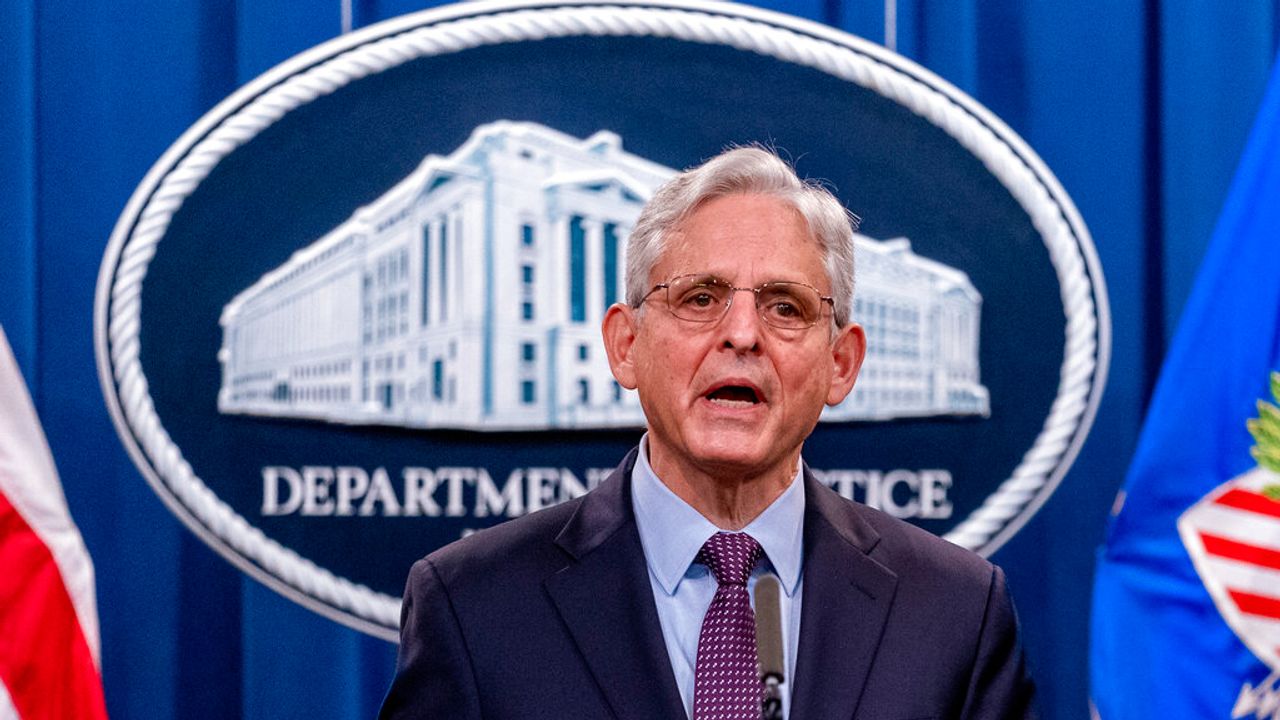 Attorney General Merrick Garland [AP Photo/Andrew Harnik]
The locations were Biden’s private office at a University of Pennsylvania facility in Washington D.C. where he was a visiting professor from 2017 to 2020; in the garage at his Wilmington, Delaware, home; and in one of the rooms of that residence.
Biden has claimed that he was unaware that the documents were at these locations and that he has no idea what the classified material is or how it got there. Aides, speaking anonymously to the press, have said the materials were transferred inadvertently as part of Biden’s moving out of his vice-presidential offices in early 2017.
After the discovery of about a dozen classified documents at the Penn-Biden center in Washington, aides conducted a systematic search of Biden’s home in Wilmington, his beach house in Rehoboth Beach, Delaware and other locations, and found an undisclosed number of documents in the garage, one document in a room in the adjacent home and nothing at any other location.
The timeline given by Attorney General Garland at a five-minute press briefing Thursday made it clear that the Department of Justice and the White House have been engaged in intense reviews and actions on this matter since the discovery of the classified documents November 2 during the cleanup of Biden’s former office at the Penn-Biden Center in D.C. The White House counsel’s office was notified immediately and the documents were turned over to the National Archives the following day.
According to Garland, the National Archives informed the Justice Department on November 4, and on November 9—one day after the US midterm elections—the FBI began to assess whether classified information had been mishandled. This is a federal offense. It can be a misdemeanor if the mishandling is inadvertent or accidental, and a felony if it is intentional.
On November 14, Garland appointed John Lausch, the US attorney in Chicago and a Trump appointee, to make an initial investigation to “inform” Garland’s decision on whether to appoint a special counsel.
On December 20, Biden’s counsel informed Lausch that additional classified documents had been found in the garage of Biden’s home in Wilmington, Delaware, dating from his vice-presidency. The FBI went there and secured the documents.
On January 5, 2023, Lausch advised Garland that additional investigation was warranted and a special counsel should be appointed. He had already made it clear that he would not want the position because he was leaving the department for the private sector. On January 12, Biden’s counsel informed Lausch of another classified document found inside Biden’s Wilmington residence.
The same day, Thursday, Garland named Robert Hur as special counsel and informed the congressional leaders of both parties. Hur is a career prosecutor and registered Republican who held positions in the central office of the Department of Justice in both the Obama and Trump administrations before Trump elevated him to his current position.
At the regular press briefing at the White House, Press Secretary Karine Jean-Pierre was extraordinarily defensive, refusing to answer questions about the documents or deviate in any way from the language already used by Biden himself in responding to a few shouted questions from the press in previous days.
The appointment of the special counsel demonstrates the deepening crisis and instability of the entire US political structure, with both the current president and his predecessor now being investigated by special counsels appointed by the attorney general in a way that gives them considerable freedom of action.
Garland did not include in his timeline the appointment of Jack Smith as special prosecutor investigating Trump, both for the retention of hundreds of classified documents at his Mar-a-Lago estate and for his role in preparing and instigating the mob attack on Congress on January 6, 2021.
He appointed Smith last November 18 to investigate Trump, only four days after he had appointed Lausch to make a preliminary investigation into Biden and come back with a recommendation on whether a special prosecutor should be appointed in that case.
The appointment of Hur is certain to fuel the attacks on Biden by the fascistic right, which is the driving force in the new Republican majority in control of the House of Representatives. This group already demonstrated its power by blocking the election of Republican leader Kevin McCarthy as Speaker of the House for nearly a week in order to extract concessions on both the rules of the House and on going as far as possible in attacking federal social programs and cutting taxes on the wealthy.
On Tuesday, the House established a new subcommittee on the “Weaponization of the Federal Government” by a party-line vote. The subcommittee, to be led by arch-right-winger Jim Jordan, the new chairman of the House Judiciary Committee, will be used to attack any federal investigation into the crimes committed by Trump or by other Republicans acting on his behalf. This could include Jordan himself, as well as many of the 20 Republican representatives who participated in the blocking of McCarthy’s election.
It is not clear whether Jordan’s subcommittee will have the authority to investigate the activities of either the special counsel examining Trump’s actions or the newly appointed special counsel tasked with looking into Biden’s handling of classified documents. But the stage is set for a series of increasingly frenzied attacks by the very figures who two years ago helped politically direct the January 6 insurrection.
This is not a spectacle to inspire snickering, as it does in the petty-bourgeois pseudo-left press. It is a demonstration of the uncontrollable decay of bourgeois democracy in the United States, which is headed inexorably towards a violent explosion, far greater than what took place on January 6, 2021.
And if the conflicts between rival factions of the corporate and political elite can no longer be contained within the traditional norms of the capitalist two-party system, what of the far deeper and more substantial conflicts between the financial aristocracy as a whole and the working class?
The Biden administration and both parties in Congress joined forces last month to outlaw a railroad workers’ strike and impose contract terms on 115,000 workers that many of the workers had already rejected, shredding both their right to vote and their right to strike.
A similar bipartisan effort has plunged the United States into a proxy war against Russia in Ukraine, which threatens to escalate into a third world war fought with nuclear weapons, without ever consulting the American people. The war was not even an issue between the two parties in the midterm elections held in November—working people were presented with the “choice” of two pro-war parties, each backed by billions in spending on advertising and campaigning.
While this pretense of democracy was taking place, as Garland’s timeline indicates, the real differences within the US ruling elite—which relate to tactics and methods, not the fundamental direction of policy—were being fought out behind the scenes, through methods of backroom conspiracies, concocted provocations and sudden “revelations” duly taken up by the corporate media to stampede public opinion.
https://www.wsws.org/en/articles/2023/01/13/bcfu-j13.html
Health Care Worker Newsletter
18 hours ago
The powerful three-day strike of more than 7,000 nurses in New York City was abruptly shut down by the New York State Nurses Association (NYSNA) Thursday morning after NYSNA officials claimed they reached a tentative agreement with Montefiore Medical Center and Mount Sinai. Within a matter of hours, nurses were ordered back to their job before seeing the agreements, let alone voting on them.
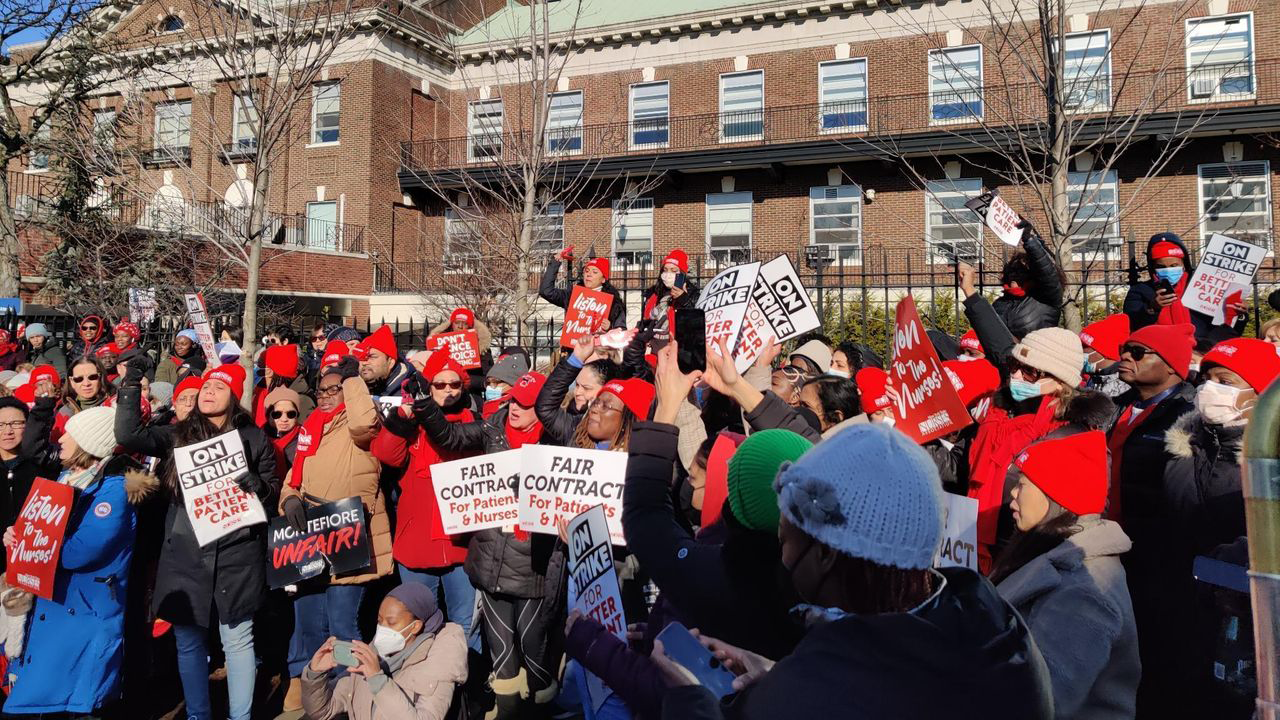 Striking nurses at Montefiore Medical Center [Photo: WSWS]
It soon became clear the NYSNA bureaucrats ended the strike before they even had a full agreement in hand. In a press conference Thursday, NYSNA President Nancy Hagan reported that the union and management are “still ironing all the words out.”
The NYSNA officials did not only lie about reaching a deal, they also lied about the content of the concessions they handed over to the management of the giant hospitals. While the union presented the deal as a major victory, in reality, it is a repackaging of the same rotten terms imposed on 10,000 nurses at other private New York City hospitals. It will do nothing to significantly alter the dangerous understaffing and overwork that nurses face daily, which was the central aim of workers in the strike.
In a revealing statistic, Montefiore has committed to creating just 170 new nursing positions, less than a quarter of the more than 700 vacancies at the Bronx hospital. It is not clear how many nurses are being added at Mount Sinai, where there are at least 500 unfilled positions.
In seeking to dress up the deal, NYSNA highlighted as “precedent-setting” a provision requiring Montefiore to pay out financial penalties to nurses when staffing ratios are exceeded. The union did not release specifics about the size of the penalties nor the timeframe when they would begin.
Regardless of the details, however, the provision underscores that the hospitals, in collaboration with NYSNA, fully intend to maintain the staffing at levels dangerous to patients and intolerable for staff. The bonuses are the equivalent of issuing hazard pay to soldiers in a war zone.
Nurses went on strike to put an end to unsafe and traumatizing conditions, not to provide a contractual slap on the wrist to management for its continued refusal to hire adequate staff. Whatever modest penalty the hospital incurs will more than be made up by increasing the exploitation of nurses and driving even more to the brink and ultimately out of the profession. The precedent set is a dangerous one because it serves to institutionalize understaffing by exploiting the economic insecurity of nurses.
The tentative agreement contains the same nominal raises offered at the other private hospitals of 7 percent, 6 percent, and 5 percent over the next three years. After inflation, these raises do nothing to lift the standard of living of nurses and grow the pool of qualified professionals. Nor do they close the pay gap that exists within the hospital system. Mount Sinai nurses repeatedly stressed on the picket line that lower wages than at neighboring hospitals exacerbated the shortage they faced, as many nurses transfer soon after being hired.
Rank-and-file nurses must begin to mobilize now to defeat this sellout. It is an absolute lie that the giant hospitals, whose income increased by $1 billion last year, do not have the resources to hire enough nurses and pay them decent wages.
Nurses should establish a rank-and-file committee to demand the immediate release of the full contract. If there is no such deal, they should demand the resumption of the strike based on the principle, “no contract, no work.” At the same time, nurses must have a full week to study, discuss and vote on any contract.
The rank-and-file committee should mobilize nurses to overwhelmingly reject the deal and outline a real set of demands from workers for the immediate filling of all vacancies and inflation-busting wage increases. The committee should then reach out to workers across the city to back a resumption of the strike to win these demands.
But as the World Socialist Web Site wrote earlier this week, these necessary militant tactics require a political strategy that places the strike within the context of the broader social issues.
The fundamental issue that underlies this struggle is the irreconcilable conflict between the interests of public health and the private profit interests of the hospital executives and the Wall Street-directed capitalist health care system.
Nurses entered their profession out of a desire to save lives. Wall Street invests in health care to make money. The response to the COVID-19 pandemic proves that these conflicting aims cannot be reconciled. The nurses are fighting for life. The executives are fighting ruthlessly for profits, even if the cost of their policies is sickness, debilitation and death.
The fight of the nurses is, in the final analysis, inseparably linked to a struggle to socialize all health care and liberate it from the grip of the profit system.
The strike comes as “forever COVID” policies are now fully implemented worldwide. In an interview in the Washington Post Thursday, White House COVID coordinator Ashish Jha admitted that the Biden administration’s policies, which he had wholeheartedly supported, were leading to devastating consequences. “I am worried that we are going to have, for years, our health system being pretty dysfunctional, not being able to take care of heart attack patients, not being able to take care of cancer patients, not being able to take care of the kid who’s got appendicitis because we’re going to be so overwhelmed with respiratory viruses for … three or four months a year,” he said.
The struggle taken up by nurses at Montefiore and Mount Sinai, which is part of a wave of health care worker strikes across the US and internationally, is a rebellion against conditions exposed and exacerbated by three years of the pandemic. It represents a rejection of the “new normal” of mass disease and death in which hospital workers must cope with a perpetual crisis, overwhelmed and underpaid, often without so much as a lunch break during a 12-hour shift.
Far from strengthening nurses in this fight, the NYSNA bureaucracy has worked might and main to undermine and hold back this rebellion, confining the strike to two hospitals despite intolerable conditions existing across the industry. Immediately before and during the strike, the union apparatus pushed through one by one a variation of the same sellout contract at 13 different hospitals. In March this year, an additional 9,000 nurses in NYSNA at the city’s public hospitals face an expiring contract, and they will face the same fate unless they take the conduct of the struggle out of the NYSNA bureaucracy’s hands and join forces with their brothers and sisters across the city.
The strike shutdown comes at a time when nurses are winning widespread support within the working class. No one can forget the sacrifices health care workers made when the initial explosion of the pandemic hit New York City, with scenes of nurses at Mount Sinai forced to use plastic bags for personal protective equipment and refrigerated trailers lined up outside serving as mobile morgues. While the politicians hailed nurses as “heroes” for cynical purposes, only to quickly abandon them, the broad masses of workers recognize the critical role nurses continue to play and support the struggle to prioritize human life over the profits of health care corporations.
Concern over the popular support of the strike and its potential to catalyze a broader struggle prompted New York Governor Kathy Hochul to intervene. Hochul initially attempted to prevent the strike from taking place, calling for binding arbitration on behalf of the private hospitals. On Thursday, she pivoted to celebrate the NYSNA deal, shaking hands with nurses arriving at Mount Sinai for their 7 a.m. shift. The same governor is responsible for completing the removal of all pandemic-related public health protections, exacerbating the crisis in the hospitals.
Rejecting the contract means continuing the fight against understaffing in the hospitals, which is caused at its root by the subordination of lives to profit. There is immense potential for developing the struggle, not least of which among New York City nurses in the public and private hospital systems.
Preparing for the next stage of the struggle requires nurses to organize independently of the NYSNA bureaucracy. Rank-and-file committees will fight for demands that protect public health, not health care profits. The committees can serve to break down the artificial barriers keeping nurses in one hospital separated from another, and the struggle of all health care workers separated from allies in other industries. We urge nurses at Montefiore and Mount Sinai to contact the WSWS Health Care Worker Newsletter for assistance.
https://www.wsws.org/en/articles/2023/01/13/lehm-j13.html
Will Lehman
19 hours ago
The following letter was sent by UAW presidential candidate Will Lehman to the court-appointed Monitor overseeing the UAW presidential elections.
On December 19, Lehman filed an official protest over the conduct and results of the first round of the election. We urge workers to share it as widely as possible and submit your statements supporting the challenge to the election results.
Dear Mr. Barofsky,
On December 19, I filed a protest with your office over the entrenched UAW leadership’s systematic effort to suppress the vote in the first round of the national officer election. With the help of over 100 UAW members from over 50 locals from every region, I compiled overwhelming evidence that the UAW bureaucracy deliberately refused to give notice to the rank and file about the election in order to deprive us of a chance to kick the bureaucracy out of power.
Three weeks have gone by, and your office has not responded to my protest. Instead, you are proceeding to conduct the second round between Shawn Fain and Ray Curry, two candidates who each failed to receive the votes of 4 percent of the membership in the fraudulent first round. Yesterday, you held a debate between these two candidates, without inviting any of the other presidential candidates to participate, even though the first round has still not been certified. You have also begun sending out ballots in the run-off election.
This is typical of your firm’s conduct of the election as a whole, in which you have ignored and overridden rank-and-file worker concerns in order to clear the way for officers who come from within the bureaucracy. It is becoming clearer to the rank and file why the UAW’s corrupt leadership proposed your firm to oversee the election in the first place.
Here are 10 of the most important facts that my protest revealed:The 9 percent turnout is among the lowest—perhaps the lowest—in the history of direct elections for national union officers.
The country with the lowest turnout in a national election in the world had double the turnout of the first round (Haiti, 18 percent).
Rank-and-file turnout was closer to 6 percent because tens of thousands of votes were cast by UAW officials and former officials, not actual worker-members.
There were more ballots marked “return to sender” (110,000) than there were ballots cast (104,000).
The UAW bureaucracy used an internal bureaucratic system (Local Union Information System) to inform the apparatus about the vote but not the membership.
Only about 10 percent of locals posted about the election on Facebook or their websites.
The UAW sent out mailer after mailer telling workers to vote for Democrats in the midterm election but decided not to send any notice about the UAW election.
Graduate student locals on the West Coast comprised of roughly 70,000 members saw turnout between 0 percent and 3 percent. Among 11,000 California State University members, just 29 votes were cast; among 9,000 University of Washington students, just 72 votes were cast, and among 48,000 University of California workers (who were on strike), turnout was 2.6 percent.
The UAW bureaucracy lied to temporary part-time (TPT) workers by telling them they could not vote.
The UAW.org’s “member news” page did not make any reference to the election between July 29 and November 29, the four months before the election.
It is clear based on these and other facts in my protest that the first round of the election was not legitimate. As a result, no “run off” can be conducted unless it involves all of the candidates who ran in the first round as well. I have been excluded from the second round, as have all of the other independent candidates, including Brian Keller and Mark Gibson.
In my protest, I demanded there be a re-vote with all the candidates’ names on the ballot, combined with a genuine notice to the entire membership. I wrote:
This election was characterized by a deliberate suppression of the vote of the rank and file by the entrenched UAW leadership. The union intentionally failed to provide adequate notice to the rank and file, who are not accustomed to direct elections and would not ordinarily expect to receive ballots. This fact is confirmed by the extremely low 9 percent turnout. Hundreds of thousands of members were simply unaware that an election was taking place and did not vote. In some locals representing tens of thousands of younger academic workers, turnout was less than one percent…
Under these conditions, the election results cannot be certified. Instead, ballots should be re-issued and a new election should be held. In the alternative, the names of all candidates should be added to the ‘runoff.’ In either case, this time adequate measures must be taken to prevent the union leadership from suppressing the vote and ensure that the entire membership is aware of the election and able to vote.
I reiterate this demand and request a prompt answer explaining your failure to adjudicate my protest and your decision to press on with the illegitimate runoff between two candidates, who between them won the votes of a tiny sliver of the membership.
Will Lehman
https://www.wsws.org/en/articles/2023/01/12/tqjw-j12.html
Robert Stevens
a day ago
Britain stepped up its critical role in NATO’s war against Russia this week, confirming that it intends to send Challenger 2 battle tanks to Ukraine.
The Financial Times and Daily Telegraph reported Wednesday a Downing Street official saying that Prime Minister Rishi Sunak has instructed Defence Secretary Ben Wallace to “work with partners” in the coming weeks and go “further and faster with our support for Ukraine including the provision of tanks”.
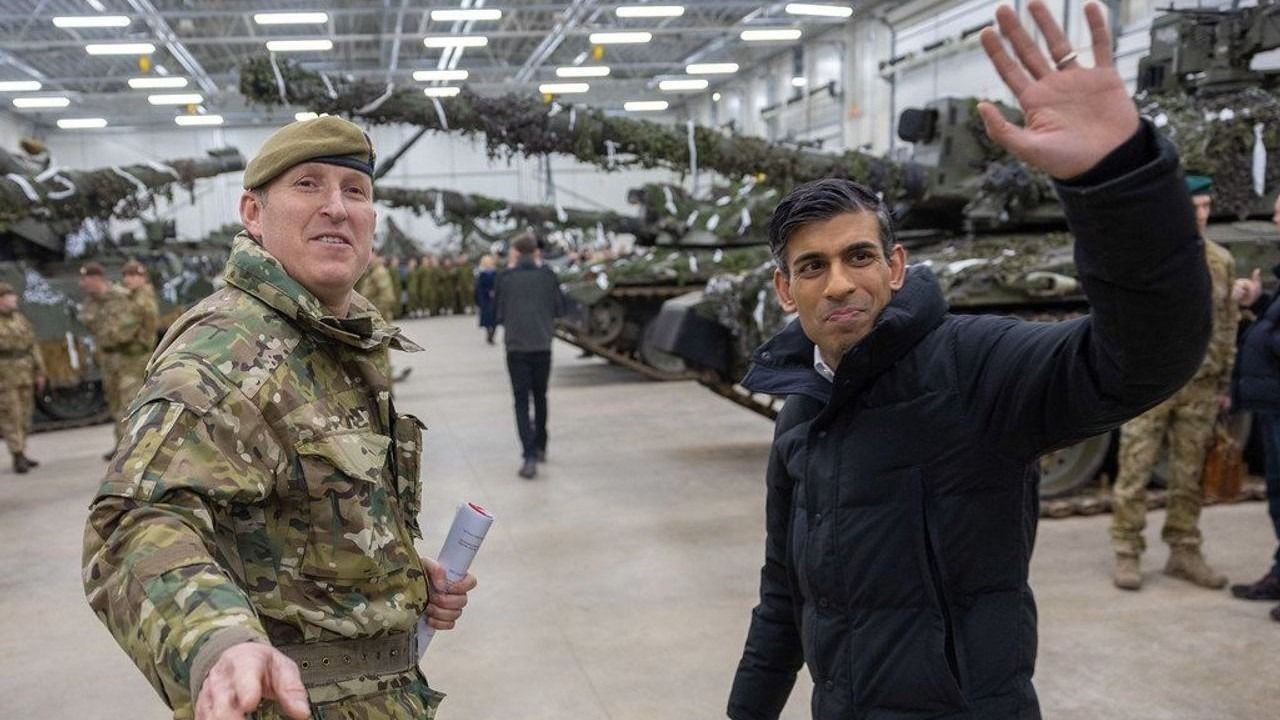 UK Prime Minister Rishi Sunak visits UK troops stationed in Estonia at Tapa military base. In the background are some of the UK's Challenger 2 tank fleet. December 19, 2022, Tapa, Estonia. [Photo by Simon Walker/No 10 Downing Street / CC BY-NC-ND 2.5]
The spokesperson added, “We are accelerating our support to Ukraine with the kind of next-generation military technology that will help to win this war… It is clear that battle tanks could provide a game-changing capability to the Ukrainians.”
According to various sources the decision will be finalised at the January 20 meeting of the United States-led “Ramstein” contact group of defence ministers—comprising the 50 nations flooding Ukraine with ever more advanced, lethal weaponry.
The move takes places just days after the US, France and Germany announced that they will send over a 100 tanks and other armoured, tracked vehicles to Ukraine. As the WSWS noted, “the dispatch of light tanks and infantry fighting vehicles to Ukraine will only be the prelude to the sending of main battle tanks to Ukraine.”
This is now the reality. Britain’s Challenger 2, along with the US-made M1 Abrams and German-manufactured Leopard, is one of the most advanced, heavily armoured battle tanks in the world. Deployed in imperialist military operations in Bosnia and Herzegovina, Kosovo and Iraq, there is only one reported case of the tank being lost in action—destroyed by friendly fire from another Challenger in Iraq in 2003.
It is unclear how many Challengers London will send, with Sky News reporting Monday from a source that “Britain might offer around 10 Challenger 2 tanks, enough to equip a squadron.”
After years of budget cuts to the armed forces following the dissolution of the Soviet Union in 1991, Britain no longer possesses a large tank fleet, with just 227 of the Challenger 1 and 2 in operation. Only one other country, Oman, uses Challengers in its armed forces. According to the Forces website, “One hundred and forty-eight Challenger 2s are currently being upgraded to ‘Challenger 3s’”(at a cost of £800 million)“with the remaining 79 vehicles from the fleet set for retirement.” In sharp contrast, there are more than 2,000 Leopards being operated by 13 European governments.
Forces boasted that Russia would be “fighting an undefeated platform” in the Challenger 2. The Express went further with a headline, “UK tanks set to open up third Ukraine front and cut off Crimea in ‘real problem’ for Putin”, asserting, “The Challenger 2 tanks are one of only three ‘world-class’ tanks capable of destroying their Russian equivalents [T-72s and T-90s], alongside the US Abram M1s and the German Leopard 2s.”
 Soldiers of 1 A Squadron, Queens Royal Lancers (QRL) patrolling outside Basra, Iraq onboard a Challenger 2 Main Battle Tank during Operation Telic 4. [Photo: defenceimagery.mod.uk/ for reuse under the OGL (Open Government License).]
It cited Professor Michael Clarke, a “prominent military analyst”, that Challenger 2 tanks have “the Chobham Dorchester armour, meaning they can take a direct hit from a [Russian] T-72 and it would still not destroy them”.
Clarke mapped out the strategy for Challenger tanks leading the way in seizing the Crimean peninsula from Russia. “If they [Ukraine] have the luxury of going first when the weather starts to ease, then my view is they would use [the Challenger 2 tanks] to open up a third front from Zaporizhzhya directly south to the coast, to [the city of] Melitopol.
“That would cut off Crimea, insulate it in quite an important way. It would give the Russians real problems. It would actually split the land bridge that the Russians have established in two and make Crimea very vulnerable. And it wouldn’t be that difficult to do if they had the tanks and the armoured fighting vehicles.”
Articles in the media across the political spectrum hailed the fact that Britain is set to be the first nation to supply main battle tanks to Ukraine, spurring other NATO powers to do likewise.
The Economist titled its response, “The West should supply tanks to Ukraine—Allies have been too cautious about giving it the means to resist Russian aggression,” stating that with the imminent decision to send Challenger tanks, “Ukraine’s other allies should follow that lead; Poland is keen.”
It was “good news that America, France and Germany are at last sending more powerful weapons—Bradley Fighting Vehicles, the similar French AMX and the German Marder. But that is not enough; these are armoured infantry carriers with guns, rather than true tanks, which have tougher armour and more powerful cannons.” To defeat Russia, Ukraine “will need more: heavy tanks and longer-range missiles.” It concluded in a swipe at Germany, “The assessment that providing a Marder is much safer than sending in a Leopard is flawed. War is dangerous, but Ukraine needs to finish the job. It should be given the tools it needs.”
The London Times editorialised, “while Britain deserves credit for the offer to supply Challengers, the reality is that it has precious few to offer from its own stocks: a few dozen at a stretch, but not the hundreds Ukraine needs to reverse the Russian gains of last year.
“A large-scale Ukrainian armoured offensive would need an injection of hundreds of modern tanks, which means Leopards or Abrams…”
“Britain’s gesture,” it advised, “will encourage allies to think again about handing Kyiv the tools to finish the job. The armoured salvation of Ukraine ultimately lies in the hands of the Americans and Germans.”
Poland said this week it would send Leopard 2 heavy tanks, but that this is dependent on Berlin giving allied countries permission to export the German-made hardware. On a visit to Lviv Wednesday, Polish President Andrzej Duda said, “A company of Leopard tanks will be handed over as part of a coalition that is being built.”
Steffen Hebestreit, the spokesman of German Chancellor Olaf Scholz, said Wednesday, “There is no change in the situation now because of the step that the British government has announced.” Hebestreit described the move by Scholz and Biden to send Marder and Bradley armoured vehicles as “a qualitatively new step,” but what will happen next “[we] will have to see along the way” as part of “international coordination.”
Politico noted that Scholz told a regional election rally in Berlin Monday that tank deliveries to Ukraine must be discussed “together with friends and allies and especially with our transatlantic partner, with the United States of America.”
Social Democratic Party leader Scholz faces massive pressure to grant the export licences from within his own party and its warmongering Greens and Free Democratic Party governing partners.
Pressure was ramped up by Ukrainian Foreign Minister Dmytro Kuleba, who on Wednesday told German TV station ARD, “Even if Germany has certain rational arguments for not doing it [allowing other countries to send Ukraine Leopard tanks], Germany will still do it at a later date.” He added, “We have already seen this with the self-propelled howitzers, with the IRIS-T air defense system, and most recently with the Marders and Patriot [air defense] systems.”
Kuleba added, “It’s always a similar pattern: First they say ‘no,’ then they fiercely defend their decision, only to say ‘yes’ in the end.”
Given the main role of the US in conducting NATO’s war, it is clear that the demands on Germany are being propelled by the Biden administration. Politico reported Wednesday, “Talks between the US and Ukrainians are continuing over providing American-made Abrams tanks, but there has been little progress as the Biden administration thinks a European-led solution is best.”
On Thursday, Germany’s economics minister and vice chancellor Robert Habeck declared, “There is a difference between making a decision for yourself and preventing others from making a decision,” opening the door for Germany to allow Poland to export Leopard 2 tanks to Ukraine.
Hundreds of millions of people in Europe and internationally are being dragged into a maelstrom. On Monday, Nikolai Patrushev, the Russian Security Council secretary, told the weekly Argumenti i Fakti, “The events in Ukraine are not a clash between Moscow and Kyiv—this is a military confrontation between Russia and NATO, and above all the United States and Britain.”
Britain’s ruling elite are insisting that in order to confront Russia and “rising threats” globally, in the words of the Financial Times, “The future of Britain’s military, and how much it costs, is a more urgent matter today than at any time since the end of the cold war.” The brutal offensive against the living standards of the working class is to be ramped up by orders of magnitude to pay for the vast rearmament underway.
https://www.wsws.org/en/articles/2023/01/13/muej-j13.html
Nick Beams
17 hours ago
A speech by Federal Reserve Chairman Jerome Powell earlier this week provided an insight into the anti-democratic and outright dictatorial character of the central banks, acting in the interests of finance capital, as they pursue a policy of deliberately increasing unemployment in an effort to slash workers’ wages.
Speaking at a symposium in Stockholm, Sweden Powell said, “Restoring price stability when inflation is high can require measures that are not popular in the short term as we raise interest rates to slow the economy.”
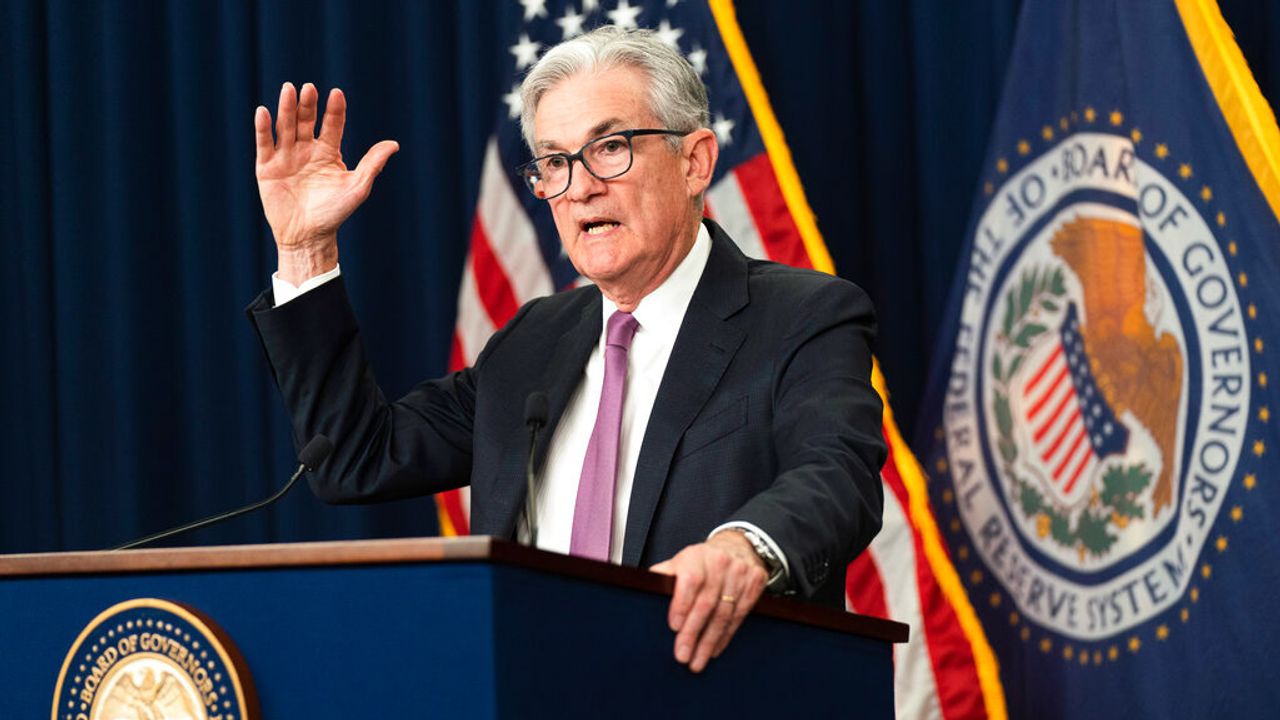 Federal Reserve Chairman Jerome Powell speaks during a news conference at the Federal Reserve Board building in Washington, Wednesday, July 27, 2022. [AP Photo/Manuel Balce Ceneta]
He added, “The absence of direct political control over our decisions allows us to take these necessary measures without considering short-term political factors.”
In other words, in seeking to impose economic “pain” on the population—in the form of increasing the unemployment rate to suppress workers’ wages—the Fed must operate as a law unto itself, in the interests of the corporations, the stock market and finance capital.
The effects of the Federal Reserve’s class war policy have already begun to be felt in major layoffs at high-tech companies and firms such as Amazon, hitting tens of thousands of workers, while manufacturing firms, including the auto industry, prepare savage cost-cutting measures.
Powell’s justification for seeking to increase unemployment is the claim that rising wages are driving inflation. In reality, wages are falling in real terms, even as corporate profits soar.
The inflationary crisis is driven by the impact of the Federal Reserve’s cheap money policies over the past decade and a half; the contraction of the labour force because of COVID deaths, continuing infections and the impact of Long COVID; the US-NATO war against Russia in Ukraine; and, not least, price-gouging by major corporations, particularly in the food and energy sectors.
The Fed aims to place the burden of this deepening crisis of capitalism on to the backs of the working class through its high interest rate regime.
While this has caused turbulence in the stock market, it is seen as a necessary price for achieving the strategic objective of battering back the resistance of the working class.
The longer the monetary tightening continues, the clearer this goal is set out in the Fed’s own policy statements and minutes of the meetings of its governing body.
Its documents and statements are replete with references to the “tight” labour market, that even limited wage rises, well below the rate of inflation, are incompatible with its objective of 2 percent inflation, and that the labour supply must be increased, i.e., by driving up unemployment.
These policies, to use Powell’s own words, are aimed at inflicting “pain” on millions of working class families, while imposing devastation on billions of people around the world.
In imposing its policies, the Fed, along with the capitalist media, promote the lie that it is not a class agenda, and that its measures are carried out in the interests of the economy.
But the history of “central bank independence” shows that this demand was advanced at a definite stage in the deepening crisis of world capitalism that had been building up over decades.
Central bank independence was brought forward at the beginning of the 1990s.
Global capitalism had just concluded a vicious class war program, spearheaded by the then-Fed Chair Paul Volcker, who instituted a record-high interest rate regime to crush a wages movement of the working class. It induced the deepest recessions since the 1930s, wreaking devastation from which whole areas in the US have still not recovered.
The aim of central bank independence was to ensure that this weapon of class war be permanently installed.
It was facilitated ideologically by the liquidation of the USSR in 1991 and the capitalist triumphalism that accompanied it. The end of the USSR demonstrated, it was falsely claimed, that socialism failed and therefore capital had to be given free rein to impose its demands.
The bringing down of inflation after central bank independence had begun was held up as proof of its efficacy. But the low inflation of that period had next to nothing to do with the actions of central banks. It was a product of the globalisation of production, above all the integration of China into the world market, and the output of lower-cost goods.
Central bank independence, it was claimed, was also responsible for the so-called Great Moderation, comprising low inflation, the absence of deep recessions and low interest rates.
That fiction exploded in 2008 with the eruption of the global financial crisis—the most serious collapse since the Great Depression of the 1930s—a result not least of the speculation resulting from the provision of cheaper money by the Fed.
It was a profound experience for the working class in the US and internationally.
As workers lost their jobs, saw their wages reduced, had their houses repossessed and spent considerable periods of time unemployed, they witnessed money being delivered hand over fist to the corporations and the banks through direct government bailouts and by the trillions of dollars delivered by the Fed, via quantitative easing, to the banks, speculators and outright criminals whose activities had sparked the crisis.
The claim that the Fed was an independent institution, standing above class interests and presiding over financial activity in the interests of the economy and the population, was delivered a powerful blow.
The lie was further exposed with the onset of the pandemic in 2020, as the Fed pumped at least $4 trillion into the financial system to stave off its collapse.
This sent the fortunes of moguls such as Amazon boss Jeff Bezos into the stratosphere, while workers’ lives and those of their families were devastated by the pandemic, and the exploitative conditions of work in health care, education and many other parts of the economy were intensified.
Powell claims that his actions are justified by the greater good of the “economy.”
This is intended to instill the belief in the minds of workers that nothing can be done to change the present situation, and that there is no alternative but to submit to the dictates of the financial oligarchy as they impose the deepening crisis of the capitalist order on them.
The situation presents itself altogether differently when it is realized that society and its economy are not shaped by eternal and unalterable conditions, but by the class struggle.
In this struggle, the Federal Reserve, which had for decades blown a series of financial bubbles that massively enriched the financial oligarchy, speaks for the capitalist ruling class in its effort to impoverish and oppress the vast majority of the population.
The response of the working class to this offensive by the financial oligarchy is taking the form of the upsurge of the class struggle all over the world. The working class must take this struggle forward with a conscious fight for socialism, aiming to take political power, reconstruct the economy based on public ownership and democratic control, and ensure its vast resources are used to meet human needs.
https://popularresistance.org/striking-does-work-fort-worth-journalists-win-only-newspaper-union-contract-in-texas/
By Gus Bova, Portside.
January 12, 2023
‘Striking Does Work.’
On The Heels Of An Unprecedented 24-Day Labor Strike Late Last Year, Around 20 Journalists At The 117-Year-Old Fort Worth Star-Telegram Have Ratified The Only Union Contract At A Texas Newspaper.
On the heels of an unprecedented 24-day labor strike late last year, around 20 journalists at the 117-year-old Fort Worth Star-Telegram have ratified the only union contract at a Texas newspaper. The union victory comes after more than two years of difficult negotiations and forms part of a surge in nationwide newsroom organizing since the mid-2010s as journalists have increasingly fought back against corporate predation in a struggling industry. Workers at two other Texas papers, in Dallas and Austin, are still bargaining for union contracts after roughly two years.
Before launching the labor strike on November 28—likely the first open-ended newsroom work stoppage in Texas history—Kaley Johnson, a justice reporter at the Star-Telegram and vice president of the paper’s union, the Fort Worth NewsGuild, said negotiations were largely stuck in the mud. The Star-Telegram, which serves the state’s fifth-largest city and politically crucial Tarrant County, is owned by the McClatchy Company, a chain of about 30 papers nationwide. In turn, McClatchy is now controlled not by the family that ran it from the 19th century until 2020, but by the New Jersey-based hedge fund Chatham Asset Management. These corporate profiteers, per Johnson, were unwilling to move from a wage floor of $45,000 or consider other demands for months on end.
“The main reason we went on strike was because they weren’t negotiating at all; they were committed to stalling tactics and stonewalling,” she said. Once the work stoppage began, McClatchy swiftly cut off health insurance for the strikers and even posted temporary jobs to replace the journalists. Meanwhile, the workers raised some $51,000 on GoFundMe to sustain the effort. Suddenly, a few weeks into the stoppage, the company offered a new wage floor of $52,000 for current employees and $50,000 for future hires, along with other concessions on layoff procedures and bereavement leave.
“It appears that the longer we were on strike, the more pressure they did feel to compromise with us, and that ultimately is what led to us being able to have those wins … so I guess striking does work,” Johnson said.
There are many policies the union forewent by inking the deal. One example that galled many workers: The company will still offer less parental leave to parents who gave birth vaginally than by c-section. And the union had deemed that $57,500 was the necessary salary to live comfortably in Fort Worth. But Johnson said the three-year agreement is a starting point: “They definitely still did not move enough to create equitable conditions, but it’s enough for a first contract.” The Fort Worth newsroom joins about a dozenother papers with union contracts under the NewsGuild, the country’s preeminent journalists’ union with some 26,000 members.
The Star-Telegram was part of a trio of Texas newspapers that announced union drives in 2020, including the Dallas Morning News and the Austin American-Statesman. Prior, there hadn’t been a union paper in the Lone Star State since the San Antonio Light shuttered in 1993. For most of the last two years, workers reported that bargaining progressed comparatively well at the Morning News while journalists at the Star-Telegram and the Statesman, which is owned by the country’s largest newspaper chain, Gannett, struggled mightily against their out-of-state corporate owners.
The 138-year-old Morning News, often deemed the state’s leading paper, is owned by the DallasNews Corporation, which runs no other papers outside Dallas and has been controlled by the same family since the 19th century. (Robert Decherd, the family scion, passed the CEO title to a non-family member last year but remained the majority shareholder.) The paper has a long anti-union history, including possibly coining the misnomer “right to work” and crushing a printing press strike. But after workers voted overwhelmingly in October 2020 to unionize, the company has reportedly been somewhat amenable.
Leah Waters, a housing reporter at the Morning News and chair of the Dallas NewsGuild, said in early January that the sides could reach a tentative agreement within weeks. The last issue to resolve, she said, concerns the company’s ability to replace in-house staff with outside contractors. The parties have already agreed, per Waters, to a new minimum salary scale ranging from $55,000 to $80,000 along with provisions expanding parental leave, increasing diversity, and protecting against unjust firings. Crucially, the sides have agreed to ample notice before layoffs. (The Dallas organizing effort began after the company laid off 43 employees with almost no notice in early 2019.) Waters said the new wage jump will be “life-changing” for some staff.
There has been turmoil, including recent fights over work-from-home exemptions for Dallas staff and the closure of the paper’s Washington, D.C. office. But Waters remains grateful not to be bargaining with a huge corporate chain or hedge fund. “If we were dealing with the parasites, the spineless parameciums, in Gannett, I’m not sure we would ever have a contract, and I feel for my brothers and sisters in McClatchy and Gannett,” she said.
Like most in the industry, the Morning News is facing economic headwinds. Its digital subscription base is up eightfold since 2016, but that hasn’t compensated for the relentless decline in print subscriptions and profitable print advertising. Waters recognizes this and even said the paper should consider going non-profit. “The business model isn’t working, but the solution isn’t to continue to erode workers’ rights and working conditions and then by default, the product of local journalism,” she said.
McClatchy, the DallasNews Corporation, and Gannett did not immediately respond to Texas Observer requests for comment.
As for the Austin American-Statesman, owned by Gannett—a company name synonymous with brutal downsizing and the nation’s largest newspaper owner with some 200 dailies—progress has been characteristically challenging. Katie Hall, a courts reporter for the paper and chair of the Austin NewsGuild, said the company hadn’t made any significant concessions in nearly two years and the sides hadn’t even begun seriously discussing economic issues like wages. The Austin union has filed about a dozen complaints with the National Labor Relations Board, which enforces U.S. labor law, alleging various violations of the workers’ bargaining prerogatives. “It’s indicative of a company that at times doesn’t respect our rights as a union,” Hall said.
In a 2021 annual report, Gannett said 17 percent of its U.S. workforce was unionized and stated, “Our business and results of operations could be materially adversely affected if current or additional labor negotiations or contracts were to further restrict our ability to maximize the efficiency of our operations.”
Gannett’s top executive, Mike Reed, received nearly $8 million in total compensation in 2021. In the latter months of last year alone, the company laid off or bought out hundreds of journalists around the country, though the unionized Austin workers—many of whom reportedly haven’t seen a raise in more than five years—were spared.
Hall doesn’t know if or when there could be a bargaining breakthrough at the Statesman, but she certainly had her eyes on the successful Fort Worth strike. “Whether what Fort Worth did is in our future is entirely up to Gannett; if they want to create a contract that allows for the survival of a local newspaper in Austin, they need to ensure we’re paid a wage that allows us to live in Austin,” she said. “But it will get to a point where if we get fed up, we will begin to escalate the actions that we take.”
GUS BOVA is a senior staff writer and assistant editor at the Texas Observer. He covers labor, politics, and other major Texas stories. He has written extensively on topics ranging from the border wall to homelessness. Before coming to the Observer, he worked at a shelter for recently arrived immigrants and asylum-seekers. He studied Latin American Studies at the University of Kansas.
https://popularresistance.org/why-the-climate-justice-march-in-south-korea-could-be-a-game-changer-for-the-environment/
By Alice S. Kim, Globetrotter.
January 12, 2023
On September 24, 2022, more than 30,000 people occupied the main roads of downtown Seoul, South Korea, for the nation’s largest climate justice march. The sheer turnout of people from all walks of life and the participation by a wide range of advocacy groups were a testament to the impact of climate change on every aspect of life: human rights, women’s rights, religion, food insecurity, and labor rights. For many of these advocacy movements in Seoul, recent crises like COVID-19 have brought home the urgent need to address the climate crisis.
Opening with a rally in Namdaemun Plaza at 3 p.m., the two-hour march occupied four out of six lanes of Seoul’s main Sejong-daero Boulevard. Standing on moving flatbed trucks, people spoke about the intersectionality of the climate crisis and other issues, including labor insecurity, housing instability, and social discrimination.
Ten megaphone-mounted flatbed trucks placed at regular intervals logistically ushered large crowds of protesters—brightly clad youth in headdresses in sunflower or coral reef shapes, families wrapped in “Carbon Neutral” cloak-like banners, Buddhist monks with globe-painted temple lanterns, Catholic nuns wearing “Save the Earth” tunics and holding “Anti-nuclear NOW” placards, regional community groups demanding a stop to coal plants and new airports, and countless union members in matching vests, flying union banners.
The groups of protesters regularly chanted in unison: “lives over profit” and “we can’t live like this anymore!” Drumming, music, and dance filled the streets. During a five-minute “die-in,” protesters fell to the ground, front to rear, like cascading dominoes.
The march was the result of three months of planning, promotion, and fundraising by Action for Climate Justice, a coalition of more than 400 civic, regional/community, and trade union movements united under the guiding concept of climate justice.
Like previous marches, environmental NGOs played leading roles in the organizing, such as Green Korea United and the Korean Federation for Environmental Movements (KFEM), alongside youth movements. But 2022 also saw a large influx of long-established and new movement groups not exclusive to environmental activism but for whom the climate crisis has become central to their agenda—human rights groups, women’s groups, social movements, political parties, religious networks, food cooperatives, irregular contract workers, and trade union movements.
From the Human Rights Movement Sarangbang, combating the violence of political and economic discrimination and exploitation since 1993, to the recent Human Rights Movement Network Baram working to secure the rights and dignity of discriminated groups, such as women, the disabled, LGBTQ communities, immigrants, and irregular contract workers—the COVID-19 pandemic has brought the climate crisis to the fore of their activities.
Climate policy has likewise become a pressing issue for the Anti-Poverty Alliance, which emerged during mass layoffs and bankruptcies following the 1997 financial crisis and neoliberalization of the Korean economy. This “IMF era” alliance has grown to include 49 member organizations engaged in various struggles for livelihood, from the fight for a universal basic income to alternatives to substandard housing (including polytunnel villages where people live in greenhouse-like shelters made out of vinyl) and housing instability in the face of Korea’s speculative housing markets and climate change.
Religious orders are also a sizable part of the movement now. Building on their legacy of sheltering democracy movement activists in the 1970s and 1980s, Korea’s faith-based groups have been organizing a climate movement that is cross-denominational and transnational such as the pan-Asian Inter-Religious Climate and Ecology Network.
The large outpouring of protesters in September 2022 even surpassed organizers’ expectations. Over the past two years, pandemic restrictions on gatherings and suspension of protest permits in South Korea have brought activism online and into classrooms and have included the unconventional occupation of public spaces. Some of the most visible climate actions in Seoul in 2021 appeared not on the city streets but rather above and underneath them, on large billboards mounted on skyscrapers and LCD screens installed inside subway lines. The yearlong campaign from 2020 to 2021, Climate Citizens 3.5, which was jointly conducted with artists, environmental groups, and researchers, used a chunk of its total budget, the largest allotted by Arts Council Korea, to rent 30 large-scale outdoor electronic billboards, 219 digital screens inside 21 subway stations, and all of the advertising space in 48 subway cars. Spread across the city, the billboards and displays were tailored to convey climate change-focused messages targeted to each location—climate policy changes for the traffic-heavy city center at Gwanghwamun and consumption-related taglines for shopping districts in Myeongdong and Gangnam: “Spend Less, Live More!”
Such overlapping and expanding networks in the climate justice coalition attest to the burgeoning consciousness of the climate crisis for a population whose Cold War-divided peninsula placed North Korea and South Korea in the shadow of a nuclear winter long before the threat of exterminism via global warming became an issue. As policy researcher and activist of the Climate Justice Alliance Han Jegak states, “while climate change denial is not a widespread problem in South Korea as it is in other countries, there is still a generalized denial about the urgency to act, the attitude is that we can follow what other countries are doing.” He adds, “people express fear and depression over climate change, but such feelings do not lead to proactive actions. We need to forge alternatives collectively in place of mostly individualized actions like hyper-recycling. The movement needs to harness the anger related to the climate crisis and mobilize that.” One such concrete outcome from the march was the exponential rise in signatories successfully introducing a civil memorandum to stop the opening of new coal plants to the National Assembly floor.
For many in the movement, the unprecedented rainstorms and flooding that took the lives of several people including a family in a semi-basement flat in Seoul in August 2022 has inflamed the call to action. For the Korean Confederation of Trade Unions (KCTU), this incident came as a personal loss, as one of the deceased was a union activist. The largest independent democratic trade union association in Korea with 1.1 million members, KCTU formalized its participation in climate action networks when it voted in a special committee on climate justice within its organization in February 2021. Environmental groups have long reached out to KCTU for more active participation in the movement as “public and energy sector unions and irregular contract workers are situated at the forefront of struggles over policy changes as well as facing the brunt of its effects,” as emphasized by KFEM activist and member of the climate coalition Kwon Woohyun. In many ways, the union’s participation in the climate movement was a significant development, explains Kim Seok, KCTU policy director, because “it was a decision to make the climate issue a key component of KCTU policies, including the collective bargaining agreement process, which is the most fundamental activity for unions.” In 2022, KCTU members circulated the most posters and mobilized 5,000 union activists to join the climate march.
For a country whose export economy is centered on energy-intensive industries, environmental activism by labor unions faces complicated challenges. KCTU must contend with internal pressure from rank-and-file workers seeking compensation for job losses from the transition to clean energy as well as the broader national context in which the state has relinquished the development of clean energy industries to profit-seeking private sector companies.
In the face of these challenges, KCTU’s proactive participation in the Action for Climate Justice coalition and its actions to work jointly with wide-ranging environmental and social movements hold the promise of broadening and solidifying the foundations of the climate movement going forward, while signaling the beginning of a potentially powerful new form of climate activism taking shape in South Korea.
