On the day that the US celebrates its so-called independence on colonized land, Washington signed off on Israel’s clearing itself of direct responsibility for the killing of prominent Palestinian journalist Shireen Abu Akleh.
A statement attributed to Ned Price, spokesperson for the US State Department, said that American officials “could not reach a definitive conclusion regarding the origin of the bullet that killed” Abu Akleh because it was too badly damaged.
Price’s statement added that US officials “concluded that gunfire from IDF [Israeli military] positions was likely responsible for the death of Shireen Abu Akleh.”
But the State Department seemingly attempted to justify Abu Akleh’s killing by saying that US officials “found no reason to believe that this was intentional but rather the result of tragic circumstances during an IDF-led military operation against factions of Palestinian Islamic Jihad … which followed a series of terrorist attacks on Israel.”
Abu Akleh’s family said in a statement that it was “incredulous” following the State Department announcement.
The family pointed to the “numerous eyewitnesses to the killing” and the independent investigations from “multiple local and international media outlets, human rights organizations and the United Nations.”
Those probes all concluded that Abu Akleh was shot by Israeli soldiers and there was no Palestinian gunfire or militants nearby at the time. Some of those probes indicated that Abu Akleh was deliberately targeted.
Yet the US has persistently deferred to Israel’s long discredited self-investigations and pressured the Palestinian Authority to hand over the bullet that killed Abu Akleh for ballistics testing.
The Palestinian Authority meanwhile demanded that Israel hand over the rifle fired by a member of an elite Israeli military unit during the raid in Jenin.
Israel also zeroed in on the bullet as a means of deflecting responsibility to the PA while it has not released any of the drone and body camera footage or the GPS locations of its soldiers present in Jenin at the time of Abu Akleh’s killing.
The Abu Akleh family said that “the focus on the bullet has always been misplaced … as if this were some kind of police whodunit that could be solved by a CSI-style forensic test,” referring to the American police procedural television series.
“The truth is that the Israeli military killed Shireen according to policies that view all Palestinians – civilian, press or otherwise – as legitimate targets,” the family added.
The family called on Washington to open an “open, transparent and thorough investigation” and “clarify the extent to which American funds were involved in Shireen’s killing.”
“US-Backed Israeli Whitewash”
The US probe into Abu Akleh’s killing was led by Michael R. Fenzel a US lieutenant general who oversees so-called security ties between Israel and the Palestinians.
Someone with a vested interest in maintaining the Palestinian Authority’s role as a security subcontractor for the Israeli occupation is hardly an independent observer.
B’Tselem, an Israeli human rights organization, described the State Department statement as a “US-backed Israeli whitewash.”
Through a spokesperson, Mahmoud Abbas, leader of the Palestinian Authority in Ramallah, demanded that “the US hold the Israeli government fully responsible for the crime of killing the martyr Abu Akleh.”
Akram al-Khatib, the Palestinian Authority attorney general who led Ramallah’s investigation into Abu Akleh’s killing, rejected the conclusions of the US probe. He said that “the technical data in our possession indicates that the condition of the shell is viable for matching with the firearm [that shot it].”
The Palestinian Authority foreign ministry said that it would pursue justice for Abu Akleh at the International Criminal Court.
Abu Akleh, a veteran Al Jazeera correspondent and a US citizen, was shot and killed while covering an Israeli raid in the northern West Bank city of Jenin on 11 May. Her producer, Ali Samoudi, was shot in the back and survived.
Abu Akleh was wearing a protective vest and helmet identifying her as a journalist when she was killed.
The State Department added that it would “remain engaged with Israel and the PA [Palestinian Authority] on next steps and urge accountability.”
The US has, however, given Israel the benefit of the doubt every step of the way after Abu Akleh’s killing.
Israel determined ahead of the conclusion of its military’s self-investigation that no soldier would face criminal charges for Abu Akleh’s death.
By definition, according to Israel, her killing could not be a crime because it was a “combat event” – a baseless interpretation of international law that Tel Aviv relies upon to justify its lax open fire regulations resulting in the fatalities of countless Palestinians.
Israeli soldiers are almost never tried and convicted over abuses against Palestinians, and certainly not their commanders or the authors of military policy.
Abu Akleh, a veteran Al Jazeera correspondent and a US citizen, was shot and killed while covering an Israeli raid in the northern West Bank city of Jenin on 11 May. Her producer, Ali Samoudi, was shot in the back and survived.
Abu Akleh was wearing a protective vest and helmet identifying her as a journalist when she was killed.
The State Department added that it would “remain engaged with Israel and the PA [Palestinian Authority] on next steps and urge accountability.”
The US has, however, given Israel the benefit of the doubt every step of the way after Abu Akleh’s killing.
Israel determined ahead of the conclusion of its military’s self-investigation that no soldier would face criminal charges for Abu Akleh’s death.
By definition, according to Israel, her killing could not be a crime because it was a “combat event” – a baseless interpretation of international law that Tel Aviv relies upon to justify its lax open fire regulations resulting in the fatalities of countless Palestinians.
Israeli soldiers are almost never tried and convicted over abuses against Palestinians, and certainly not their commanders or the authors of military policy.
Israeli police meanwhile determined that no police officers will be punished for attacking the pallbearers carrying the slain journalist’s coffin, nearly causing them to drop it, during her funeral in Jerusalem. PR Crisis
Both the US and Israel have treated Abu Akleh’s killing as a public relations crisis rather than a crime demanding justice and accountability.
The State Department’s insistence that the US reached its conclusion “after an extremely detailed forensic analysis” is unlikely to change the perception that it is party to a cover-up.
Nor is the statement’s timing, shortly before US President Joe Biden travels to Israel, the occupied West Bank and Saudi Arabia. The White House has stated that Biden intends to reinforce Washington’s “ironclad commitment to Israel’s security.”
The US provides at least $3.8 billion in military aid to Israel per year.
Biden is also overlooking the 2018 killing of Washington Post columnist Jamal Khashoggi, which the CIA has concluded was committed with the approval of Saudi crown prince Mohammed bin Salman.
Biden’s visit will be the first meeting between a US president and Saudi leadership since Khashoggi’s murder and dismemberment with a bone saw inside the oil-rich kingdom’s consulate in Istanbul.
An unnamed senior White House official who briefed journalists said that Washington seeks to “recalibrate relations” rather than rupturing them “because Saudi Arabia has been a strategic partner of the United States for eight decades.”
Saudi Arabia is also the United States’ largest arms customer, accounting for a quarter of US weapons sold worldwide.
The bullet that killed Shireen Abu Akleh was designed and manufactured in the US, according to Al Jazeera.
Abu Akleh’s killing has attracted rare attention from US Congress, with some 60 legislators, including half of all Democratic senators, calling on the Biden administration to launch an investigation.
The 1997 Leahy Law prohibits the US from providing military assistance to units of foreign militaries when there is credible information that those units violated human rights with impunity.
That law is named for Senator Patrick Leahy of Vermont, who signed on to a letter to the Biden administration calling for a US investigation into Abu Akleh’s killing.
As The New York Times observed, the “need for a resolution” regarding her killing “became more urgent in recent days because it threatened to overshadow discussions” during Biden’s visit to Israel. “Biden Loves Israel”
Abu Akleh is one of only several Palestinians killed in Jenin in recent weeks.
The UN monitoring group OCHA stated last week that “Israeli forces have shot and killed 26 Palestinians, including six children, during search-and-arrest operations across the West Bank” since the beginning of the year, with nearly half of those fatalities occurring in Jenin.
The UN human rights office stated last week that it “is alarmed by the impact of intensified Israeli forces’ operations on the right to life of Palestinians” in the West Bank.
The human rights office said that many of the cases it monitored “indicated that Israeli forces used lethal force in a manner that appears totally inconsistent with international human rights law.”
The State Department didn’t acknowledge those additional deaths or express concerns over Israel’s use of force in its statement.
Meanwhile, Tom Nides, the US ambassador to Israel, tweeted a video of himself grilling hotdogs with Michael Herzog, the Israeli ambassador to the US.
“Looking forward to our own official celebration tomorrow in Jerusalem,” Nides said in his tweet on Monday.
By Gavin O'Reilly, Popular Resistance. July 5, 2022
On Saturday, a month-long state of emergency was declared in the former Soviet Republic of Uzbekistan, in response to violent protests in response to government plans to revoke the autonomy of the north-eastern republic of Karakalpakstan , a decision which Uzbek President Shavkat Mirziyoyev would later drop following a visit to the region.
Despite the current disturbances only starting several days ago, their sudden escalation to extreme violence, as well as the coordinated coverage of the situation by corporate media outlets, including the US government-funded Radio Free Europe, already bears all the hallmarks of a CIA regime change operation.
Indeed, such a situation was predicted by Belarusian President Alexander Lukashenko in January of this year, when a similar regime-change attempt was taking place in Uzbekistan’s larger northern neighbour Kazakhstan.
This attempt, carried out in line with a May 2020 document published by neoconservative think tank the RAND Corporation, sought to destabilise the central Asian Republic in order for the after-effects to spill over into neighbouring Russia, with the 7,000km land border shared between both nations being the second largest in the world after Canada and the US.
Following the deployment of the Moscow-led Collective Security Treaty Organisation (CSTO) to Kazakhstan however, at the request of Nur-Sultan, the Western-backed colour revolution attempt was quelled in the space of two weeks, with the military alliance withdrawing from the central Asian country soon after.
Belarus itself had experienced a colour revolution attempt in August 2020, when following Lukashenko’s Presidential electoral victory over opposition candidate Sviatlana Tsikhanouskaya, a Euromaidan-style colour revolution was launched against Minsk, the former Soviet Republic being a long-time target for the regime change lobby owing to it being Moscow’s sole European ally, having highly-nationalised state industries, and the instalment of a pro-Western government resulting in Russia’s entire Western border being composed solely of NATO-members and allies.
Indeed, the encirclement of Russia was a motivating factor in the aforementioned Euromaidan colour revolution launched in response to then-Ukrainian President Viktor Yanukovych’s November 2013 decision to suspend an EU trade deal in order to pursue closer ties with Moscow.
Violent protests would rock the eastern European nation in the aftermath, centring on Kiev’s Maidan Square, where neoconservative US Senator John McCain would infamously address demonstrators.
This violence would eventually culminate in the predominantly ethnic Russian Donbass region in the east of the country breaking away to form the independent Republics of Donetsk and Luhansk in April 2014, the catalyst for which being the anti-Russian far-right sympathisers who would take part in the Maidan movement, and who would also play a key role in the post-coup Western-backed coalition government of Petro Poroshenko.
An eight-year long war on both Republics would follow, involving the use of neo-Nazi paramilitaries such as Right Sector and Azov Battalion, and leading to an estimated 14,000 deaths.
Despite attempts by the Kremlin to diplomatically resolve the situation via the Minsk Agreements, which would see both Republics granted a degree of autonomy whilst still remaining under the rule of Kiev, Moscow’s hand would ultimately be forced in February of this year when a military intervention was launched into Ukraine.
Almost five months of global condemnation and sanctions towards Russia have since followed, however this has done little to hinder Moscow’s goals of removing the neo-Nazi elements involved in the ethnic cleansing campaign in Donbass, and destroying any Ukrainian military infrastructure that would ultimately have been used by NATO had Kiev gone on to become a member, the alliance having failed to honour a post-Cold War agreement not to expand eastwards.
Indeed, less than 24 hours after Uzbekistan’s state of emergency announcement, Russian Defense Minister Sergey Shoigu announced that the Luhansk People’s Republic had come fully under Russian control, highly coincidental timing that suggests that the current strife in Uzbekistan has been orchestrated as a means to eventually lead to further destabilisation along Russia’s southern border, just as Lukashenko predicted.
Vijay Prashad speaks with Dr. Fred M’membe of the Socialist Party about the reach and impact of the United States Africa Command in Zambia.
On April 26, 2022, the United States Africa Command (AFRICOM) announced that they had set up an office in the US Embassy in Lusaka, Zambia. According to AFRICOM Brigadier General Peter Bailey, Deputy Director for Strategy, Engagement and Programs, the Office of Security Cooperation would be based in the US Embassy building. Social media in Zambia buzzed with rumors about the creation of a US military base in the country. Defense Minister Ambrose Lufuma released a statement to say that “Zambia has no intention whatsoever of establishing or hosting any military bases on Zambian soil.” “Over our dead bodies” will the United States have a military base in Zambia, said Dr. Fred M’membe, the president of the Socialist Party of Zambia.
Brigadier General Bailey of AFRICOM had met with Zambia’s President Hakainde Hichilema during his visit to Lusaka. Hichilema’s government faces serious economic challenges despite the fact that Zambia has one of the richest resources of raw materials in the world. When Zambia’s total public debt grew to nearly $27 billion (with an external debt of approximately $14.5 billion), it returned to the International Monetary Fund (IMF) in December 2021 for financial assistance, resulting in an IMF-induced spiral of debt.
Two months after Hichilema met with the AFRICOM team, he hosted IMF Deputy Managing Director Antoinette M. Sayeh in June, who thanked President Hichilema for his commitment to the IMF “reform plans.” These plans include a general austerity package that will not only cause the Zambian population to be in the grip of poverty but will also prevent the Zambian government from exercising its sovereignty. Puppet Regime
Dr. M’membe, president of the Socialist Party, has emerged as a major voice against the United States military presence in his country. Defense Minister Lufuma’s claim that the United States is not building a base in Zambia elicits a chuckle from M’membe. “I think there is an element of ignorance on his part,” M’membe told me. “This is sheer naivety. He [Lufuma] does not understand that practically there is no difference between a US military base and an AFRICOM office. It’s just a matter of semantics to conceal their real intentions.”
The real intentions, M’membe told me, are for the United States to use Zambia’s location “to monitor, to control, and to quickly reach the other countries in the region.” Zambia and its neighbor, the Democratic Republic of the Congo, he said, “possess not less than 70 percent of the world’s cobalt reserves. There are huge copper reserves and other minerals needed for modern technologies [in both these countries].” Partly, M’membe said, “this is what has heightened interest in Zambia.” Zambia is operating as a “puppet regime,” M’membe said, a government that is de jure independent but de facto “completely dependent on an outside power and subject to its orders,” M’membe added, while referring to the US interference in the functioning of the Zambian government. Despite his campaign promises in 2021, President Hichilema has followed the same IMF-dependent policies as his unpopular predecessor Edgar Lungu. However, in terms of a US base, even Lungu had resisted the US pressure to allow this kind of office to come up on Zambian soil.
After news broke out about the establishment of the office, former Zambian Permanent Representative to the African Union, Emmanuel Mwamba, rushed to see Hichilema and caution him not to make this deal. Ambassador Mwamba said that other former presidents of Zambia—Lungu (2015-2021), Michael Sata (2011-2014), Rupiah Banda (2008-2011) and Levy Mwanawasa (2002-2008)—had also refused to allow AFRICOM to enter the country since its creation in 2007. Is This A Base Or An Office?
Zambia’s Defense Minister Lufuma argues that the “office” set up in Lusaka is to assist the Zambian forces in the United Nations Multidimensional Stabilization Mission in the Central African Republic (MINUSCA). Since 2014, the United States has provided around 136 million kwacha ($8 million) to assist the Zambian military. Lufuma said that this office will merely continue that work. In fact, Zambia is not even one of the top five troop contributing countries to MINUSCA (these include Bangladesh, Cameroon, Egypt, Pakistan and Rwanda). Lufuma’s reason, therefore, seems like a fig leaf.
Neither Zambia nor the United States military has made public the agreement signed in April. The failure to release the text has led to a great deal of speculation, which is natural. Meanwhile, in Ghana, where a defense cooperation agreement was signed between the two countries in May 2018, the United States had initially said that it was merely creating a warehouse and an office for its military, which then turned out to mean that the United States military was taking charge of one of the three airport terminals at Accra airport and has since used it as its base of operations in West Africa. “From the experience of Ghana, we know what it is,” M’membe told me, while speaking about the American plan to make an office in the US Embassy in Zambia. “It is not [very] different from a base. It will slowly but surely grow into a full-scale base.”
From the first whiff that the United States might create an AFRICOM base on the continent, opposition grew swiftly. It was led by former South African President Thabo Mbeki and his Defense Minister at that time, Mosiuoa Lekota, both of whom lobbied the African Union and the Southern African Development Community to reject any US base on the continent. Over the past five years, however, the appetite for full-scale rejection of bases has withered despite an African Union resolution against allowing the establishment of such bases in 2016. The US military has 29 known military bases in 15 of the African countries.
Not only have 15 African countries ignored their own regional body’s advice when it comes to allowing foreign countries to establish military bases there, but the African Union (AU) has itself allowed the United States to create a military attaché’s office inside the AU building in Addis Ababa. “The AU that resisted AFRICOM in 2007,” M’membe told me, “is not the AU of today.”
Obvious examples of Central Intelligence Agency covert action abroad are difficult to identify today, save for occasional acknowledged calamities, such as the long-running $1 billion effort to overthrow the government of Syria, via funding, training and arming barbarous jihadist groups.
In part, this stems from many of the CIA’s traditional responsibilities and activities being farmed out to “overt” organizations, most significantly the National Endowment for Democracy (NED).
Founded in November 1983, then-CIA director William Casey was at the heart of NED’s creation. He sought to construct a public mechanism to support opposition groups, activist movements and media outlets overseas that would engage in propaganda and political activism to disrupt, destabilize, and ultimately displace ‘enemy’ regimes. Subterfuge with a human face, to coin a phrase.
Underlining the Endowment’s insidious true nature, in a 1991 Washington Post article boasting of its prowess in overthrowing Communism in Eastern Europe, senior NED official Allen Weinstein acknowledged, “a lot of what we do today was done covertly 25 years ago by the CIA.” It Begins
Fast forward to September 2013, and Carl Gershman, NED chief from its launch until summer 2021, authored an op-ed for The Washington Post, outlining how his organization was hard at work wresting countries in Russia’s near abroad – the constellation of former Soviet republics and Warsaw Pact states – away from Moscow’s orbit.
Along the way, he described Ukraine as “the biggest prize” in the region, suggesting Kiev joining Europe would “accelerate the demise” of Russian President Vladimir Putin. Six months later, Ukraine’s elected president Viktor Yanukovych was ousted in a violent coup.
Writing in Consortium News earlier that month, investigative legend Robert Parry recorded how, over the previous year, NED had funded 65 projects in Ukraine totaling over $20 million. This amounted to what the late journalist dubbed “a shadow political structure of media and activist groups that could be deployed to stir up unrest when the Ukrainian government didn’t act as desired.”
NED’s pivotal role in unseating Yanukovych can be considered beyond dispute, an unambiguous matter of record – yet not only is this never acknowledged in the mainstream press, but Western journalists aggressively rubbish the idea, viciously attacking those few who dare challenge the established orthodoxy of US innocence.
As if to assist in this deceit, NED has removed many entries from its website in the years since the coup, which amply underline its role in Yanukovych’s overthrow.
For example, on February 3rd 2014, less than three weeks before police withdrew from Kiev, effectively handing the city to armed protesters and prompting Yanukovych to flee the country, NED convened an event, Ukraine’s lessons learned: from the Orange Revolution to the Euromaidan.
Alongside him was Nadia Diuk, NED’s then-senior adviser for Europe and Eurasia, and graduate of St. Antony’s College Oxford, a renowned recruiting pool for British intelligence founded by former spies. Just before her death in January 2019, she was bestowed the Order of Princess Olga, one of Kiev’s highest honors, a particularly palpable example of the intimate, enduring ties between NED and the Ukrainian government.
While the event’s online listing remains extant today, linked supporting documents – including Powerpoint slides that accompanied Leshchenko’s talk, and a summary of “event highlights” – have been deleted.
What prompted the purge isn’t clear, although it could well be significant that Leshchenko’s talk offered a clear blueprint for guaranteeing the failure of 2004’s Orange Revolution – another NED-orchestrated putsch – wasn’t repeated, and the country remained captured by Western financial, political and ideological interests post-Maidan. It was a roadmap NED subsequently followed to the letter.
Along the way, Leshchenko specifically highlighted the importance of funding NGOs, exploiting the internet and social media as “alternative [sources] of information,” and the danger of “unreformed state television.”
So it was that on March 19th, representatives of the far-right Svoboda party – which has been linked to a false flag massacre of protesters on February 20th, an event that made the downfall of Yanukovych’s government a fait accompli – broke into the office of Oleksandr Panteleymonov, chief of Ukraine’s state broadcaster, and beat him over the head until he signed a resignation letter.
That shocking incident, motivated by the station broadcasting a Kremlin ceremony at which Vladimir Putin signed a bill formalizing Crimea as part of Russia, was one of many livestreamed by protesters that traveled far and wide online.
The brutal defenestration of Ukraine’s state TV chief notwithstanding, much of this livestreamed output served to present foreign audiences with a highly romantic narrative on the demonstrations, and their participants, which bore little or no relation to reality. The Revolution Will Be Televised
Writing in NED’s quarterly academic publication Journal of Democracy in July that year, Leshchenko discussed in detail the media’s role in the Maidan coup’s success, drawing particular attention to the fundamental role of “online journalist” Mustafa Nayyem.
He kickstarted the protests the previous November, rallying hundreds of his Facebook followers to protest in Kiev’s Independence – now Maidan – Square, after Yanukovych scrapped the Ukrainian-European Association Agreement in favor of a more agreeable deal with Moscow.
Nayyem was no ordinary “online journalist”. In October 2012, he was one of six Ukrainians whisked to Washington DC by Meridian International, a State Department-connected organization that identifies and grooms future overseas leaders, to “observe and experience” that year’s Presidential election.
Funded by the US embassy in Kiev, over 10 days they “[gained] a deeper understanding of the American electoral process,” meeting candidates and election officials, and touring voting facilities. They were also invited to discuss “Ukraine’s progress towards a more fair and transparent election process” with “equally curious” representatives of US government agencies.
With whom the sextet met is unstated, although promotional pictures show Nayyem filming a personal summit with John McCain on his smartphone. The video was posted to his personal YouTube channel – in it, Nayyem asks the noted warhawk for his thoughts on Ukraine, to which he responds, “I’m concerned with the influence of Russia.”
This is striking, for McCain flew to Kiev in December 2013 to give an address to Maidan protesters, flanked by known Neo-Nazi Oleh Tyahnybok. Then-State Department official Victoria Nuland, notoriously handing out motivational cookies to attendees.
On February 4th 2014, one day after Leshchenko’s NED presentation, an intercepted recording of a telephone call between Nuland – now Under Secretary of State for Political Affairs – and US Ambassador to Ukraine Geoffrey Pyatt was leaked, in which the pair discussed how Washington was “midwifing” Yanukovych’s ouster, and named several handpicked individuals to head the post-coup government.
Whether Nayyem’s influential US contacts in any way motivated his decision to ignite the Maidan demonstrations in November 2013 isn’t certain. The pivotal part he played in promoting the protests globally is far clearer, for he was a key founder of digital broadcaster Hromadske TV.
In his Journal of Democracy article, Leshchenko records how Hromadske hadn’t even officially launched when it began streaming Maidan demonstrations live, the literal second they erupted at Nayyem’s direction.
While Leshchenko coyly states that Hromadske “drew most of its modest funding from international organizations and the donations of Ukrainian citizens,” it actually received hundreds of thousands of dollars in financing from a variety of questionable sources, including the US Embassy in Ukraine, intelligence front USAID, George Soros’ International Renaissance Foundation, American oligarch Pierre Omidyar, and – of course – NED.
Hromadske’s audience expanded rapidly both within and without Ukraine thereafter, its embedded output eagerly recycled by countless mainstream news outlets, meaning Western viewers were presented with a single, partisan perspective on the unrest – and a highly misleading one at that.
Based on Hromadske’s coverage, overseas onlookers would’ve been entirely forgiven for concluding the protests were wholly energized by concerns over human rights and democracy, and overwhelmingly – if not universally – popular.
In a representative February 2014 essay dismissing as Russian propaganda the demonstrable fact that both the Maidan demonstrators and their leadership were riddled with neo-Nazis, academic and Journal of Democracy contributor Andreas Umland boldly declared that “the movement as a whole…reflects the entire Ukrainian population, young and old.”
Nothing could’ve been further from the truth. An extraordinarily revealing Washington Post op-ed by North American academics Keith Darden and Lucan Way published that same month detonated that narrative, which has nonetheless only endured – and intensified – ever since.
The pair forensically exposed how less than 20 percent of protesters professed to be driven by “violations of democracy or the threat of dictatorship,” only 40 – 45 percent of Ukrainains were in favor of European integration, Yanukovych remained “the most popular political figure in the country,” and no poll conducted to date had ever indicated majority support for the uprising.
In fact, “quite large majorities oppose the takeover of regional governments by the opposition,” and the population remained bitterly divided on the future of Ukraine, Darden and Way wrote. Such hostility stemmed from “anti-Russian rhetoric and the iconography of western Ukrainian nationalism,” rife among the demonstrators, “not [playing] well among the Ukrainian majority.”
Of the 50 percent of Ukraine’s population residing in regions that had “strongly identified with Russia” for over two centuries, “nearly all [were] alienated by anti-Russian rhetoric and symbols.”
“Anti-Russian forms of Ukrainian nationalism expressed on the Maidan are certainly not representative of the general view of Ukrainians. Electoral support for these views and for the political parties who espouse them has always been limited,” Darden and Way concluded. “Their presence and influence in the protest movement far outstrip their role in Ukrainian politics and their support barely extends geographically beyond a few Western provinces.” ‘Pro-Ukrainian Agenda’
Despite – or perhaps because of – such slanted coverage, Hromadske only grew from strength to strength subsequently. Such was its surging popularity, Leshchenko records, even Ukraine’s state broadcaster “struck a deal” to amplify its output, “thus handing this small ‘garage’ webcasting enterprise an audience of millions.” In the process, Ukrainians – and the world – were well-educated in the false narrative of Yanukovych being overthrown via popular will.
Hromadske’s potential to influence perceptions was evidently not lost on other Western governments either. In 2015, the British Foreign Office provided significant funds to develop “radio broadcasting” initiatives in the Russian-majority regions of Donetsk and Luhansk, for a project dubbed “Donbas calling”. The next year, London proferred more sums to the outlet, so it could serve as a local “information provider” to an “audience of up to one million people.”
In 2017, Hromadske again received hundreds of thousands of pounds to expand even further into the breakaway regions. Among other things, Britain supported the installation “of 16 FM transmitters in Ukraine-controlled areas along the contact line and ‘grey zone’ in the east,” meaning the station could reach up to two million citizens potentially possessed of separatist perspectives.
The public profiles of Leshchenko and Nayyem concurrently rose exponentially too. In Ukraine’s October 2014 elections, both were elected to parliament as part of Petro Poroshenko’s bloc, the former becoming a member of its anti-corruption committee, the latter its cross-party group on European integration, leading to glowing profiles in the Western media. All along, NED closely monitored their progress, hailing the pair as emblems of the new, liberated Ukraine that flowered in the wake of Maidan.
Nonetheless, Leshchenko’s personal commitment to democracy was rather undermined in August 2016, when he and Artem Sytnyk, head of Kiev’s National Anti-Corruption Bureau, leaked documents – dubbed the “the black ledger” – identifying payments to Donald Trump’s then-campaign manager Paul Manafort from Yanukovych’s Party of Regions, to the US media.
Leshchenko expressed his “hope” that the disclosure would damage Trump’s electoral chances and would be “the last nail in Manafort’s coffin lid,” as “a Trump presidency would change the pro-Ukrainian agenda in American foreign policy.” He was one of several prominent politicians in Kiev “involved to an unprecedented degree in trying to weaken the Trump bandwagon,” as the Atlantic Council, NATO’s propaganda arm, conceded at the time.
Manafort duly resigned, and the RussiaGate racket erupted – a connivance that went some way to ensuring the “pro-Ukrainian agenda in American foreign policy” wasn’t compromised one iota.
Indeed, Trump’s term in office was typified by ever-escalating hostility between Washington and Moscow, the Oval Office resident going to dangerous lengths his predecessor had consistently refrained from to arm and galvanize the most reactionary and violent elements of the Ukrainian armed forces, including the notorious Neo-Nazi Azov Battalion, and tear up Cold War arms control treaties, much to Moscow’s chagrin.
In December 2018, a Ukrainian court ruled that Leshchenko and Sytnyk’s release of the “black ledger” was illegal, amounting to “interference in the electoral processes of the US” that “harmed the interests of Ukraine as a state.”
In May the next year, a corruption probe was launched after Leshchenko purchased a $300,000 apartment in central Kiev, a sum far in excess of his apparent means. Two months later, he was voted out of parliamentc, Zelensky’s Servant of the People party candidate taking his seat in a landslide. His friend and collaborator Nayyem simply opted not to stand, in order to seek a government post “connected to the Donbas.”
Despite no longer being part of the legislature, Leshchenko has continued to wield significant sway over the Ukrainian government, directly advising Zelensky on “Russian disinformation” to this day.
What direct influence NED still exerts over him – and Ukraine’s President by extension – isn’t certain. Although, mere days before the Russian invasion began, in an interview with The Guardian, Leshchenko referred to the Minsk Accords – which Zelensky stood on a specific platform of implementing – as “toxic”, suggesting the leader would “betray” his country by adhering to their obligations, which included granting autonomy to Donetsk and Luhansk.
This reflects NED’s position – on February 14th this year, its Journal of Democracy published an article declaring the Accords to be “a bad idea for the West and a serious threat to Ukrainian democracy and stability,” not least because they would mean “tacitly accepting Russia’s false narratives about the Donbas conflict” – namely, that the conflict “was caused by the West-orchestrated ‘coup’ in 2014.”
In other words, an objective analysis of what actually happened and why, in which NED is completely central. Still, the organization didn’t need to rely purely on Leshchenko to keep the Minsk Accords moribund. Its extensive network of assets in the country, and Washington’s dark alliance with Ukraine’s far-right, was more than sufficient to ensure that Zelensky’s overwhelmingly popular mission of restoring relations with Russia would and could never be fulfilled. ‘In Solidarity’
In the hours following Russia’s invasion of Ukraine, NED hurried to remove any and all trace of its funding for organizations in Ukraine from its website.
A search of the NED grants database today for Ukraine returns “no results,” but a snapshot of the page captured February 25th reveals that since 2014, a total of 334 projects in the country have been awarded a staggering $22.4 million. By NED President Duane Wilson’s reckoning, Kiev is the organization’s fourth-largest funding recipient worldwide.
An archive of NED funding in Ukraine over 2021 – which has now been replaced with a statement “in solidarity” with Kiev – offers extensive detail on the precise projects backed by the CIA front over that pivotal 12-month period.
It points to a preponderant focus on purported Russian misdeeds in eastern Ukraine. One grant, of $58,000, was provided to the NGO Truth Hounds to “monitor, document, and spotlight human rights violations” and “war crimes” in the Donetsk and Luhansk regions.
Another, of $48,000, was provided to Ukraine’s War Childhood Museum to “educate the Ukrainian public about the consequences of the war through a series of public events.” Yet another received by charity East-SOS aimed to “raise public awareness” of “Russia’s policies of persecution and colonization in the region, and document illustrative cases,” its findings circulated to the UN Human Rights Council, European Courts of Human Rights, and International Court of Justice.
There was no suggestion this wellspring would be used to document any abuses by Ukrainian government forces. UN research indicates 2018 – 2021, over 80 percent of civilian casualties were recorded on the Donbas side. Meanwhile, Organization for Security and Cooperation in Europe reports show that shelling of civilian areas in the breakaway regions intensified dramatically in the weeks leading up to February 24th, potentially the precursor of a full-blown military offensive.
As such, NED’s expurgation of records exposing its role in fomenting and precipitating the horror now unfolding in southeast Ukraine not only protects de facto CIA agents on the ground. It also reinforces and legitimizes the Biden administration’s sprawling, fraudulent narrative, endlessly and uncritically reiterated in Western media, that Russia’s invasion was entirely unprovoked and groundless.
Ukrainians now live with the mephitic legacy of that reckless, unadmitted meddling in the most brutal manner imaginable. They may well do so for many years to come. Meanwhile, the men and women who orchestrated it rest comfortably in Washington DC, insulated from any scrutiny or consequence whatsoever, every day cooking up fresh schemes to undermine and topple troublesome foreign leaders, hailed as champions of liberty by the mainstream press every step of the way.
Japan’s prime minister Fumio Kishida comfortably won last October’s general election for the lower house of the Diet for the ruling Liberal Democrats (albeit with a slightly reduced majority). And he is headed for victory in this Sunday’s upper house election, likely to extend the number of seats it holds to 60 out of 125 contested. So politically, Kishida is in a strong position.
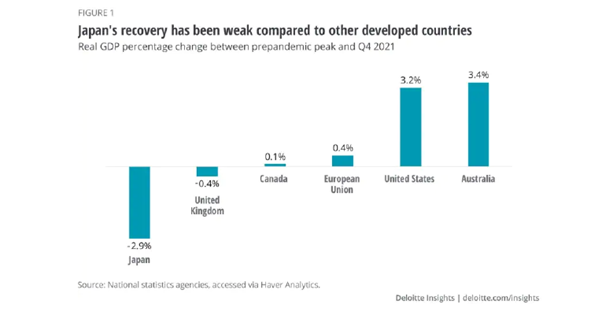
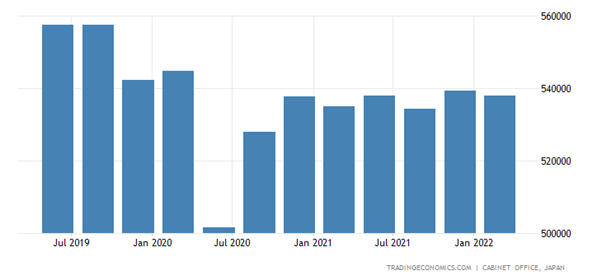
How is ‘new capitalism’ doing in Japan after eight months? Not too well. The Japanese economy contracted in Q1 2022. Record Covid-19 case numbers led the government to introduce quasi-state-of-emergency measures, which along with rising inflation caused private consumption and investment to fall. In Q2, the economy was still struggling. Export growth and manufacturing activity are still sliding, due to supply bottlenecks and a slowing global economy due to war in Ukraine, Covid-19 lockdowns in China and higher global inflation and interest rates. Indeed, real GDP was still 2.9% below its pre-pandemic peak at the end of 2021 when Kishida took over. That’s a weaker performance than most developed economies. And there has been no improvement in 2022.
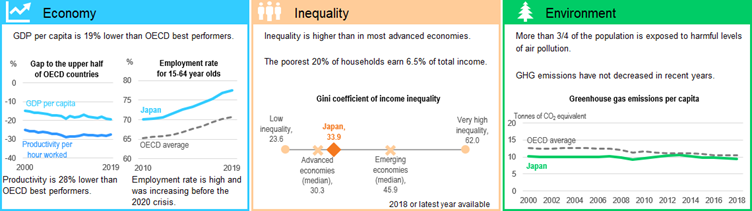
Indeed, according to the OECD, Japan’s GDP per head is still nearly 20% below its G7 leaders; inequality of income remains higher than in most advanced economies; and pollution and greenhouse gas emission are still way too high compared to Paris climate change targets.
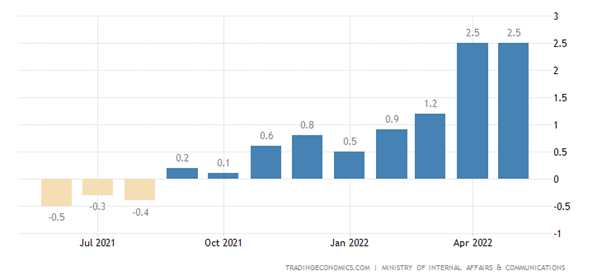
Japan has suffered the same shocks that have affected the global economy amid a surge in oil and gas prices caused by Russia’s invasion of Ukraine. But while consumer price inflation has soared above 8% in the US and the UK, Japan’s headline inflation has risen to only 2.5%.
Why is that? It’s mainly because the Japanese economy remains in the doldrums, continually teetering on outright recession. So investment and consumer demand is weak.
This is particularly the case with wages. Wages even in nominal terms are no higher than before the start of the Great Recession in 2008.
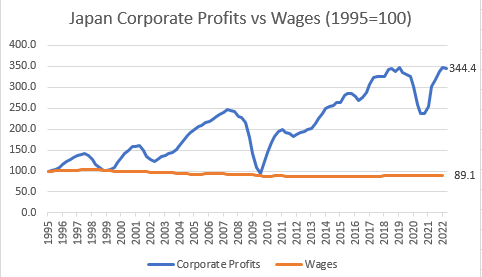
Indeed, it has been a feature of the last 25 years that wages have remained stagnant while profits have risen.
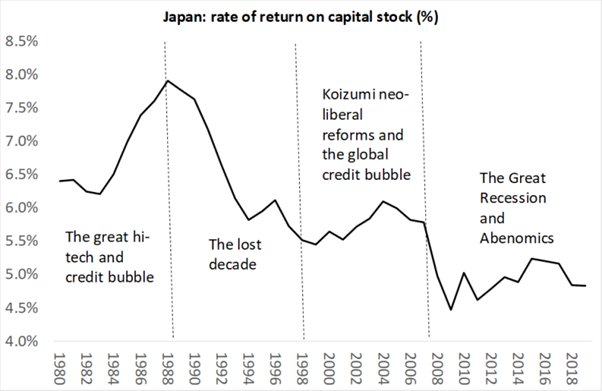
This is the product of the neo-liberal policies adopted by successive governments is trying to reverse the long-term decline in the profitability of Japanese capital, with only limited success.
Japanese workers have paid for these higher profits during the Long Depression of the last decade. Even the Bank of Japan governor admitted as much. Kuroda said persistent deflation between1998 and 2013 had made companies cautious about raising wages. “The economy recovered and companies recorded high profits,” he said. “The labour market became quite tight. But wages didn’t increase much and prices didn’t increase much.” No wage-price spiral in Japan.
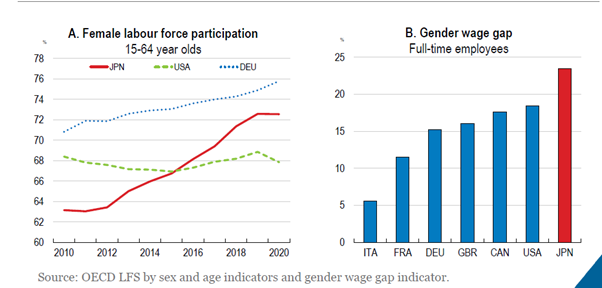
Even though the official unemployment rate is near all-time lows, as in other major economies, there is more ‘slack’ in the labor market than the 2.7% unemployment rate would otherwise indicate. The aggregate number of hours worked is still 2.8% below the level seen two years earlier. And companies are filling gaps in the ranks of their workforces with part-time workers at lower wages. Unemployment is low because of the massive shrinkage in the working-age population, now declining at about 550,000 per year. The impact on the labour market has been compensated for by a sharp rise in female employment, but female employees work in lower wage areas and receive lower wages than males. This keeps wage pressure down and profits up.
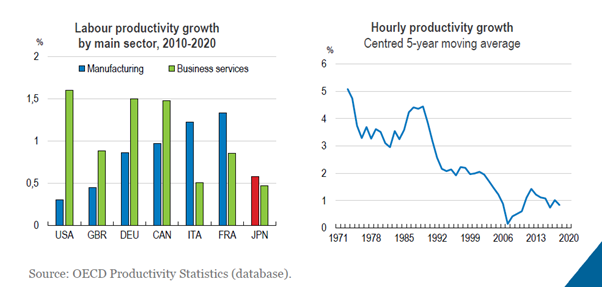
Those in work are overworked. Japan invented the term karoshi — death from overwork — 50 years ago following a string of employee tragedies. Kishida and the large corporates are promoting the idea of a four-day week to relieve this pressure and increase productivity. But there is little sign that this or any other measure is working to raise productivity. Productivity growth continues to slow; Japan has been one of the poorest performers for labour productivity in the last ten years.
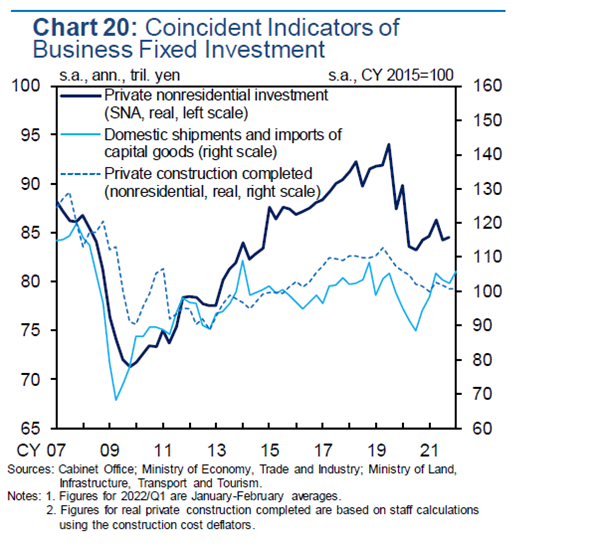
The reason is clear. Business investment growth is very weak. Japan’s corporations may have increased profits at the expense of wages and even managed to raise the profitability of capital a little, but they are not investing that capital in new technology and productivity-enhancing equipment. Real investment is no higher than in 2007.
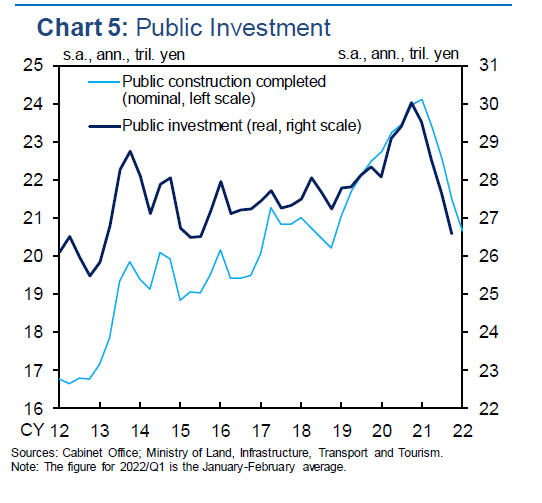
And public investment (about one-quarter of business investment) is static.
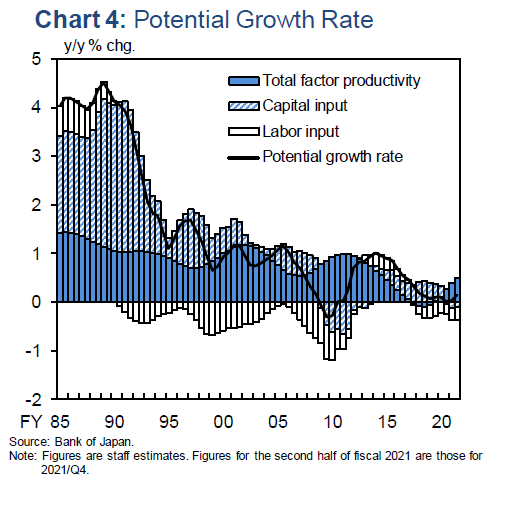
Japanese capital’s image of innovating technology appears to be long gone. A mainstream measure of ‘innovation’ is called total factor productivity (TFP). TFP growth has faded from over 1% a year in the 1990s to near zero now, while the huge capital investment of the 1980s and 1990s is nowhere to be seen. Now Japan’s potential real GDP growth rate is close to zero.
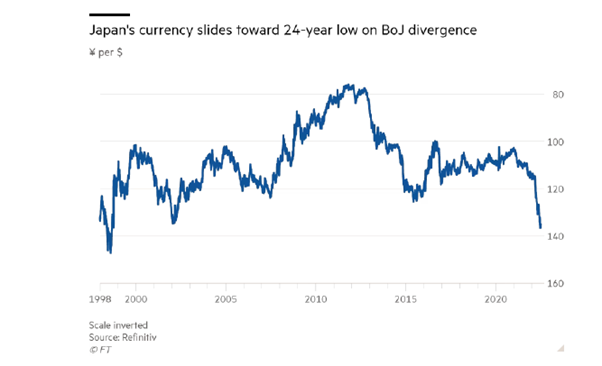
Low wage growth, near stagnation in economic activity and productivity; and a falling workforce; driven by weak investment and falling profitability; have meant that the Bank of Japan has had to keep interest rates close to zero or even negative. This has led to a sharp fall in the yen’s price against other currencies. The yen is now near a 24-year low against the dollar.
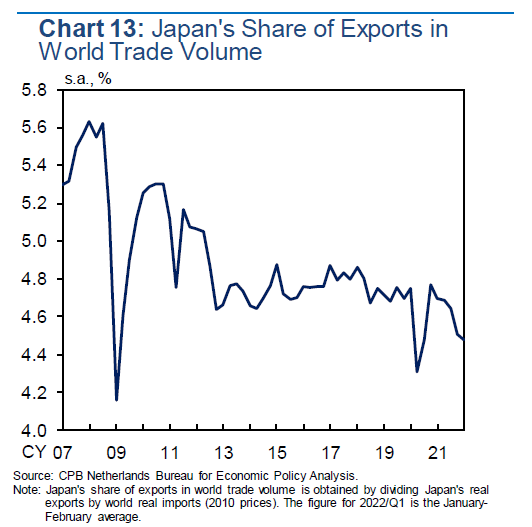
This should help exports in dollar terms. However, Japan’s famed export sector continues to lose ground in world markets, particularly as the auto sector is in deep crisis.
Japan’s ‘new capitalism’ under Kishida looks much the like the old, only worse.
Strengthening the health system and addressing social and environmental determinants of health ranked high among the demands of the national strike in Ecuador.
Yet the provisional agreement with government leaves it unclear if advances will be made.
After more than two weeks of mobilization, people’s movements in Ecuador reached an agreement with the government, bringing the national strike to halt. On Thursday, June 30, representatives of the Confederation of Indigenous Nationalities of Ecuador (CONAIE), the Council of Indigenous Evangelical Peoples and Organizations of Ecuador (FEINE) and the National Confederation of Peasant, Indigenous and Afro-descendant Organizations (FENOCIN) formally recognized a list of measures announced by the government, including a 15-cent reduction of the price of diesel fuel per gallon and a continuation of the discussion on the inclusion of Indigenous communities in debates that impact their livelihoods, like exploitation of land and water sources.
The end of the state of emergency should also mean the end of the numerous violent incidents led by the police and military, but it does not bring closure to all of the strikers’ demands. While the agreement with the government foresees a halt in extractive activities in Indigenous territories and promotion of small-scale peasant agriculture, which are certain to have positive effects on people’s health, other demands which have to do with health have been less clearly addressed. One of these is the original demand to end privatization of public companies and increase public investment in health, which had been raised as one of the necessary points for improving the health status of the population long before the strike. Health Emergency Preceding The Strike
Only a couple of weeks before mobilizations started on June 13, health workers from the Quito-Pichincha province warned about a hospital crisis caused by the shortage of essential medicines and the absence of sound health policy from health authorities. According to the representatives of the Medical Association of Pichincha, the hospital crisis had the most impact on the poor, Indigenous and Afro-descendant communities. These communities remain most dependent on government hospitals, which are chronically underfunded and under-capacitated. “We are experiencing a medical emergency every day, but we do not have the necessary tools to combat it,” agreed the health workers during a press conference organized by the association.
According to Ecuador’s constitution, at least 4% of the gross domestic product (GDP) should be allocated for health. Yet, according to the Latin American Association of Social Medicine (ALAMES), in practice this percentage struggles to reach even 3%. Even if the budget did reach what is designated in the constitution, it would not be enough to meet everyone’s needs, especially considering the impacts of the COVID-19 pandemic on the health system. Because of this, ALAMES published a call to the government in 2020, demanding that at least 5% of the GDP be designated for strengthening the health system.
Their call was rooted in the observation of how the current structure of the health system makes it essentially impossible for the poorest to access the care they need. For one thing, the high rate of out of pocket payments in Ecuador – over 30% of health expenditure in 2019 according to the World Health Organization (WHO) and the World Bank (WB) – indicates that a large part of the burden is being shifted to the people, meaning that those without money in their pockets are left without care.
This impression is echoed in the fact that the health system in Ecuador effectively works through three tiers. Selected few – approximately 1 million out of 17.6 million total population – relied on receiving care in private health facilities in 2016. Around 4.5 million people seeked care relying on coverage through the local social security system (IESS), while the large majority – over nine million people – did so through government hospitals. At the same time, the private sector had around USD 6.524 million at disposal for its work. The social security system provided care with a USD 4.404 million budget, while government institutions managed with USD 2.492 million. In other words, the largest and poorest group of people got the least in terms of health resources. Poverty And Extractivism Erode Health
The structure of the health system has disproportionately negative impacts on Indigenous and Afro-descendant communities, since they are the most exposed to poverty and other social determinants of health. Ecuador is one of the five most unequal countries in Latin America when income is concerned, with about a third of the population living on less than USD 2.85 a day according to the Ecuadorian Institute of Statistics (INEC), with most of them being of Indigenous and Afro-descendant origins.
In 2021, almost 60% of Indigenous people were living under the national poverty line of USD 85.60, and more than 40% were experiencing extreme poverty with a monthly income less than USD 50, INEC data shows. In comparison, a little more than 5% of the white population was living under the extreme poverty line in the same year. As poverty is a clear trigger of ill health, it should be a priority of the government to ensure adequate access to quality health care to the poor. Yet, only a little over 18% of the Indigenous population was covered by the social security system, while the same was true for around 35% of the white population.
The health of Indigenous communities has been additionally eroded by profit-driven policies in the fields of food, agriculture, and extractive industries. As private companies were allowed to dictate what happens to the land and natural resources like water, without the government consulting communities in the process, many people have been uprooted and their livelihoods put under serious threat.
Particularly serious consequences have been felt when it comes to food sovereignty and food production. “The health status of the people is extremely dependent on how food is produced and made available. Essentially all children who were treated by health volunteers during the strike were undernourished. If you talked to school children from Cayambe (a region mostly associated with agricultural production), you’d hear them say ‘We do not have lands for growing food’. So their health is inextricably linked to food sovereignty and self-determination,” explains Erika Arteaga Cruz from the People’s Health Movement (PHM) Ecuador.
The drive for extractivism and large-scale, industrial agriculture has often led to state-backed removal of communities from ancestral lands, as well as contamination of natural resources they relied upon. “For example, although mining has led to the pollution of many water sources used by Indigenous communities, it continues without interruption until today,” said Arteaga Cruz.
The extent to which extractivism and other harmful neoliberal practices have eroded people’s health means that increasing the national health budget is necessary, but unlikely to be enough to put things on the right track, opines Cruz. Instead, she says that “A major overhaul of the whole system is necessary, which would ensure respect for the Indigenous communities’ ancestral practices, put an end to harmful extraction practices, and build a society grounded in values of care. That’s why the part of the agreement which foresees a halt of extractivism is so important, it gives us the chance of doing something we were never able to do before.”
The provisions on the participation of Indigenous communities in dialogues on land and natural resource use mean that the agreement between the organizers of the national strike and the government leave room for hope that the social and environmental determinants of health in Ecuador will improve. Still, given the current state of the public health system and existing health inequities, campaigning for the right to health remains equally important.