Monday, July 11, 2022

Ukrainian court upholds ban on Communist Party


https://peoplesdispatch.org/2022/07/06/ukrainian-court-upholds-ban-of-communist-party/


The Communist Party of Ukraine has been targeted by successive governments through decommunization laws, smear campaigns, and repression July 06, 2022 by Muhammed Shabeer
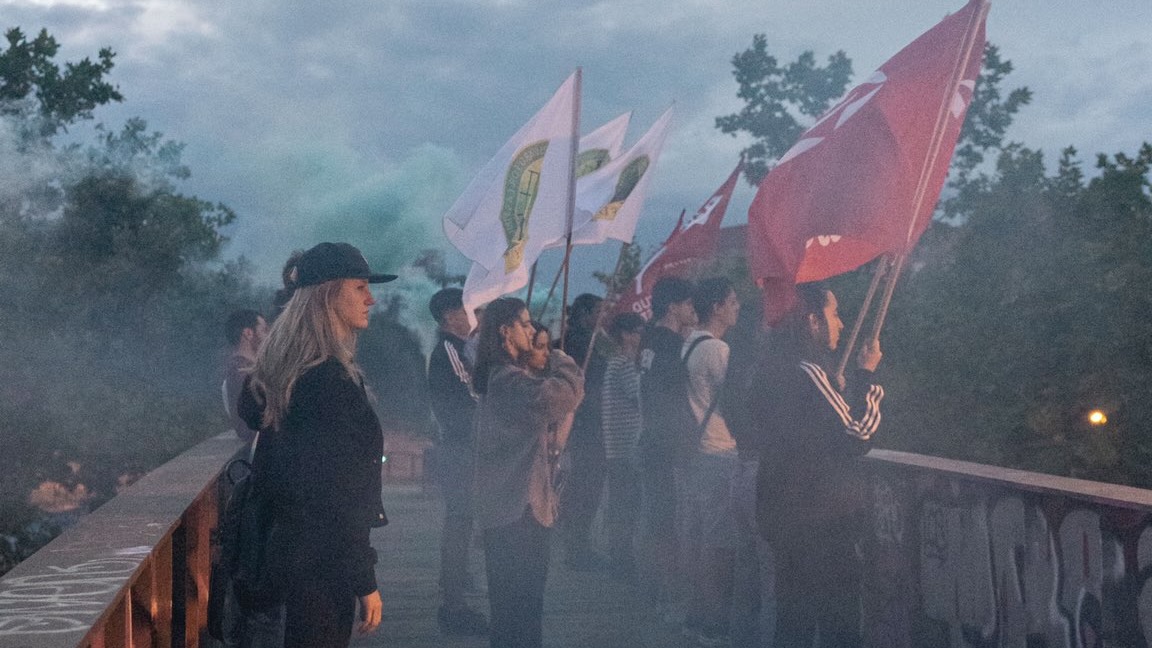
Members of WFDY held a protest in Madrid, Spain during the NATO Summit to demand the release of the Kononovich brothers. Photo: WFDY

The Eighth Administrative Court of Appeal in Lviv, Ukraine ruled on July 5 to uphold the ban on the Communist Party of Ukraine (KPU) and ordered the state to seize the properties of the party.

The Eighth Administrative Court of Appeal stated that in their decision: “We inform you that the court has complied with the requests of the Ministry of Justice of Ukraine: the activities of the Communist Party of Ukraine are prohibited; the property, funds and other assets of the party, its regional, municipal, district organizations, primary organizations and other structural entities have been transferred to the ownership of the State.”

The move is part of a longer campaign of suppression of the party and its views that intensified following the Euromaidan coup in 2014.

In December 2015, the District Administrative Court in Kiev had banned the KPU on the basis of the decommunization laws passed by Ukrainian parliament and over the charges of promoting pro-Russian separatist activities in the country. The KPU had filed an appeal against the ban in higher courts in the county and the European Court of Human Rights, but the ongoing war in Ukraine has worsened the conditions for KPU and other left-wing parties in the country. In March this year, Ukrainian president Volodymyr Zelensky called for the ban of several opposition parties including left-wing, socialist, and pro-Russian regionalist parties in the country.

After the disintegration of the Soviet Union and the dissolution of the Communist Party of Soviet Union (CPSU) in 1991, the Communist Party of Ukraine (KPU) was revived in 1993, and it emerged as a major political force in the county with a strong representation in parliament until the 2014 Euromaidan coup. The KPU was vocally opposed to the anti-Russian, pro-EU Euromaidan protests in Ukraine and its cadres were brutally targeted by the pro-maidan protesters at places like Odessa.

The persecution of Ukrainian communists intensified following the annexation of Crimea by Russia and Russia’s support to the secessionist war in the Donbass region. The pro-EU government led by Petro Poroshenko accused KPU of supporting the pro-Russian secessionist groups in the Donbass region. In succession, the Ukrainian parliament passed decommunization laws in 2015 and banned the public display of communist symbols and dissemination of communist propaganda. The KPU led by Petro Symonenko was banned from contesting elections, its publication Rabochaya Gazeta was also banned, and many of its cadres including the leadership faced police repression and assaults from far-right groups.

Braving all those difficulties, Ukrainian communists continued to organize protests against decommunization, pro-corporate land reforms, government’s support to the neo-nazi groups, rise in electiricty, water prices and NATO expansionsim and organized campaigns urging to peacefully resolve Russia-Ukraine Conflict.
Communist youth in prison

On March 6, following the onset of the ongoing Russia-Ukraine war in February 2022, the Ukrainian security services arrested Mikhail Kononovich and his brother Aleksandr Kononovich, the leaders of the Leninist Communist Youth Union of Ukraine (LKSMU). They have been accused as propagandists with pro-Russian and pro-Belarusian views with the goal of destabilizing the internal situation in Ukraine.

Their trial in the Solomensky District Court of Kiev began on July 1. In the court, the Kononovich brothers stated that “our case is completely fabricated from start to finish. What are we charged with? Pro-Belarussian views are being charged. We are being tried for our views. What kind of democracy can we talk about?”

Following their arrest in March, the World Federation of Democratic Youth (WFDY) launched an international campaign demanding their release. The brothers acknowledged in court the importance of this campaign, “We want to appeal to the European left, to the Federation of Democratic Youth. Thank you, comrades. You are holding actions in Europe near the Ukrainian embassies in support of us so that they let us go, thank you very much. Together we will win!”


In an interview in February 2021, regarding the ban of KPU in 2015, Mykhail Kononovich told Peoples Dispatch that “I emphasize that the communist ideology, the idea cannot be banned by any laws, so it is impossible to ban common sense and science. It is simply impossible to ban the Communist Party of Ukraine (KPU), because we are a party with more than a hundred years of history, a party that has an experience of subterranean struggles. We communists have fought and will continue to fight for the benefit of our people!”.


Lula could win Brazilian presidential elections if the first round was held today


https://peoplesdispatch.org/2022/07/07/lula-could-win-brazilian-presidential-elections-if-the-first-round-was-held-today/


In recent polls, the leftist former president has a strong lead over far-right incumbent Bolsonaro or any other candidate July 07, 2022 by Brasil de Fato
Former president has a large advantage over Bolsonaro - NELSON ALMEIDA / AFP
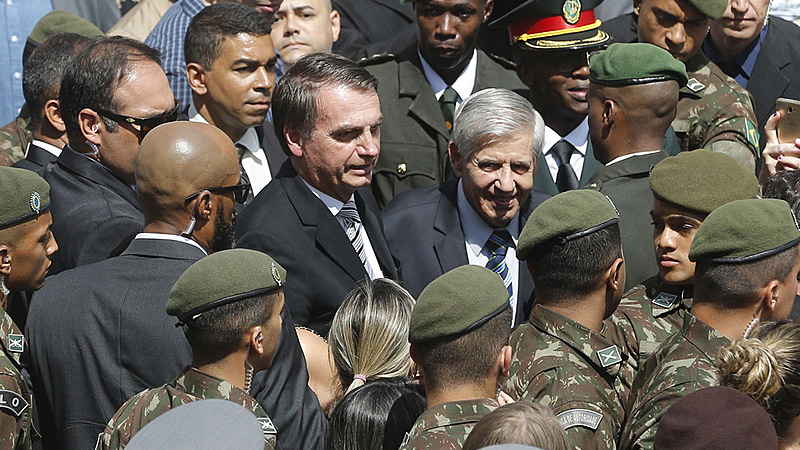
Two new polls released on July 6 indicate that former President Luiz Inácio Lula da Silva (Worker’s Party) is the most likely to win Brazilian presidential elections, followed by sitting far-right President Jair Bolsonaro (Liberal Party).

According to polling organization PoderData, Lula has 44% of voter support, and Bolsonaro has 36%. They are followed by Ciro Gomes (Democratic Labor Party), with 5%, and candidates André Janones (Avante) and Simone Tebet (Brazilian Democratic Movement), both with 3%. Other candidates Luiz Felipe d’Avila (New Party), Pablo Marçal (Republican Party of Social Order), Luciano Bivar (Union Brazil), Leonardo Péricles (Popular Unity), Eymael (Christian Democracy), Sofia Manzano (Brazilian Communist Party), and Vera Lúcia (United Socialist Workers’ Party) did not even reach 1% of voter support. Blank and null votes, which are, respectively, a vote for none of the candidates by pressing a white button or typing a random number, accounted for 5% of respondents. 4% of respondents did not know their answer.

Former President Lula has significant support in the Northeast region of Brazil, where he supersedes Bolsonaro with 56% points versus 30%. Bolsonaro is most popular among the people of northern Brazil, with 56% of voter support, while Lula holds 36%.

The Worker’s Party candidate has a big advantage over Bolsonaro among women, youth, and low-income voters, while Bolsonaro has more support among voters whose income is five times or more the amount of the minimum wage.

A Genial/Quaest poll shows that Lula could win the presidential election if it took place today. He has 45% of valid votes against 42% votes towards all the other candidates combined. This poll’s results are the same as PoderData’s when considering the margin of error.

Within the Genial/Quaest poll, in a scenario where there are 12 pre-candidates for the presidency, Lula holds 43% of the votes and Bolsonaro 31%. Ciro Gomes is in third place with 6%, followed by André Janones and Simone Tebet, both with 2% of voter support. Pablo Marçal received 1%, and the other candidates did not score.

Genial/Quaest poll also simulated a second round, which shows that former President Lula would win against Brazil’s current president, Ciro Gomes, and Simone Tebet. In a second round between Lula and Bolsonaro, the former has 53% of voter support, and the latter, 34%; Lula versus Ciro would have Lula winning with 25% more votes than Ciro. Lula versus Tebet would result in 55% points versus 20%, respectively.

Bolsonaro leads in voter rejection, with 59% of voters saying they would not vote for him. Ciro’s rejection rate is 53%, and Lula’s is 41%.

The PoderData poll was conducted between July 3 and 5, with 3,000 respondents interviewed via automated calls to landlines and cell phones. The Quaest poll was held between June 29 and July 2. Quaest conducted 2,000 personal, home, and face-to-face interviews. The margin of error for PoderData and Genial/Quaest polls is plus or minus two percentage points.


This article was originally published in Brasil de Fato.


Brazil is bracing for a right-wing insurrection far worse than the 2021 US Capitol attack


https://peoplesdispatch.org/2022/07/08/brazil-is-bracing-for-a-right-wing-insurrection-far-worse-than-the-2021-us-capitol-attack/


Post-2020 US elections, right-wing groups stormed the Capitol. As we approach the 2022 elections, Brazil is bracing for something worse. July 08, 2022 by Brasil de Fato
Democrat US congress members have proposed an amendment to the Fiscal Authorization Act that pressures Brazil's armed forces not to interfere in this year's presidential elections - Fernando Frazão/ABr
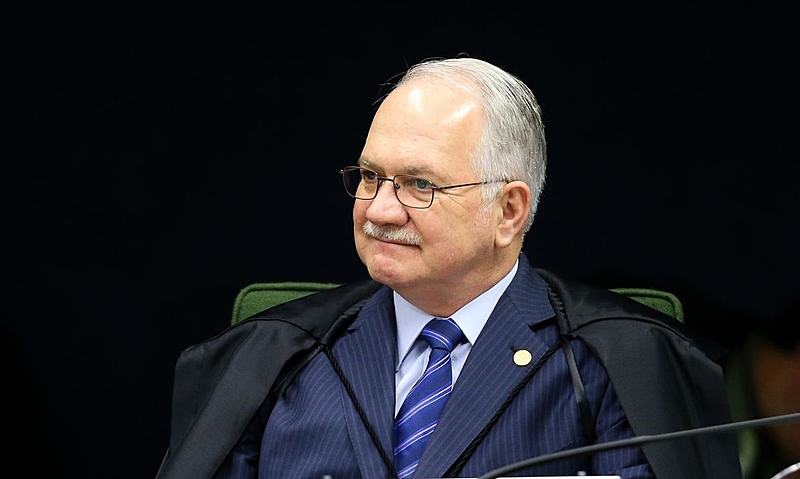
The president of the Superior Electoral Court (TSE), Minister Edson Fachin, declared that during this year’s presidential election, Brazil may have a more serious attack than the January 6, 2021, invasion of the Capitol in the United States.

“We may have an even more aggressive episode than January 6 from here on Capitol Hill. We understand that there are six fundamental conditions to prevent this from happening in Brazil,” said Fachin, during a discussion at the Wilson Center in Washington DC on Wednesday, July 6.

“If there is a dissolution of one of the branches of government, the danger could go to the other side of the street,” he said. “Brazilian society, on October 2, will hold up a mirror to itself. Whether it longs for the war of everyone against everyone, or it longs for democracy and, from there, make its choices in a free and conscious way.” For Fachin, those who attack the electoral process are undermining the Constitution and democracy / Marcelo Camargo/Agência Brasil
To prevent anything worse from happening in Brazil, Fachin said that the Electoral Justice, civil society, the national congress, the Armed Forces, the press, and the international community must act to protect Brazilian democracy.

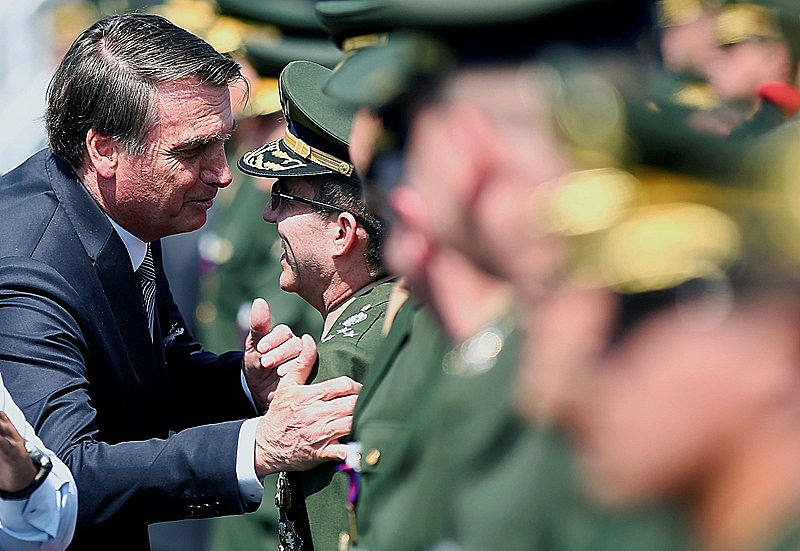
In his customary Thursday live broadcast on social media, President Jair Bolsonaro said he is “suspicious” of the work done by the TSE and that the people should prepare for the elections. “You know what’s at stake, you know how you should prepare – not for a new Capitol, nobody wants to invade anything, but for us to know what we have to do before the elections,” he said.
US Congress creates amendment against interference in Brazilian elections

Six Democrats from the US House of Representatives have proposed an amendment to the Tax Authorization Act that puts pressure on Brazil’s armed forces not to interfere in this year’s presidential elections.

Amendment 893, “Neutrality of the Brazilian Armed Forces During Presidential Elections,” was introduced on Tuesday, July 5 by Congressman Tom Malinowski of New Jersey and signed by colleagues Albio Sires (New Jersey), Joaquín Castro (Texas), Susan Wild (Pennsylvania), Ilhan Omar (Minnesota), and Hank Johnson (Georgia).

The document stipulates that, after the elections in Brazil, the US Department of State has up to 30 days to produce a report to be sent to the US Congress, describing the performance of the Brazilian Armed Forces during the election process.

Should the report point to decisive interference or a coup d’état by the armed forces, the amendment provides for the US to discontinue financial assistance in Brazilian national security. Jair Bolsonaro / Agência Brasil

For the report, congress members established five criteria. If the Brazilian Armed Forces:

1) Interfered with, impeded, or obstructed voting, counting operations, or election operations by independent election authorities.

2) Manipulated, sought to manipulate or canceled the results of the elections

3) Engaged in coordinated information or communication efforts to undermine popular faith and confidence in independent election authorities or questioned the validity of election results

4) Used social media or other mass communication systems, including mobile messaging applications, to attempt to influence widespread opinions about the validity of the election results or the desirability of any particular outcome

5) Encouraged, incited or facilitated activities or rebellions in relation to electoral processes, electoral counting or electoral results, before and after the presidential elections
Bombing Lula’s event

A homemade bomb exploded during an event organized by presidential pre-candidate Luiz Inácio Lula da Silva (Lula) and supporters, in Cinelândia, downtown Rio de Janeiro, on the night of July 7. The explosion occurred before Lula’s arrival, and no one was injured.

The bomb was dropped by an “event infiltrator”, according to Rio’s Military Police, in the area surrounded by the stage. The person responsible was charged with the crime and taken to the police station, where he confessed to launching the explosive.

As the press office of former President Lula reported, “two fireworks exploded, causing noise, thrown from outside into the area of the event,” but that “no one was injured and there was no rioting.”
Attack against judge who arrested Milton Ribeiro

On the same day, the judge who ordered the preventive imprisonment of former Education Minister Milton Ribeiro, Renato Borelli, was the target of an attack as he was leaving his home on his way to work in Brasília. His car was hit by animal feces, eggs and dirt. Although the material was thrown against his windshield, Borelli managed to drive to safety. The judge was not injured.

After he authorized the Federal Police’s “Operation Paid Access”, Borelli reported threats from groups of supporters of President Jair Bolsonaro. Judge Borelli’s windshield / Divulgação

The Federal Police is investigating former minister Milton Ribeiro for the alleged bribery scheme, through the intermediation between lobbyists and city halls, for the release of funds from the National Fund for Education Development (FNDE) at the Ministry of Education.
Liberal Party member accused of sexual abuse

José Renato Silva, former state vice-president of the Liberal Party (PL) in São Paulo, the same party as Bolsonaro, was accused of sexually abusing his daughter and two granddaughters. The Civil Police have been investigating the case since April of this year.

Cintia Renata Lira da Silva, José Renato’s daughter, made the case public with a publication on her Instagram account, on July 7. In the publication, Cintia says that she kept silent about the abuse until the day she found out that José Renato also abused her daughters. “The courage I never had as a daughter, I had as a mother,” she said.

“The feeling of lifting a weight off your back is very intense. Each day that we manage to face one more battle and overcome it, serves as more strength to continue and stay well. It is very important that this issue not be overshadowed,” Cintia wrote.

According to Cintia, José Renato has already been indicted and the case is being kept in judicial secrecy, as confirmed by the Secretary of Public Safety of the state of São Paulo. The case is investigated by the Suzano Police Department for the Defense of Women, through a police investigation.

José Renato’s lawyer, Denis Souza do Nascimento, told Folha that “the investigation is under judicial secrecy to preserve everyone’s privacy, therefore, at the moment, we cannot give more details about the contents of the investigation.”
Ciro Gomes and Bolsonaro to make their candidacies official in July

The former governor of Ceará, Ciro Gomes (PDT) will make his candidacy for the Presidency of the Republic official on July 20, during the party’s national convention in Brasilia. The choice for the date, the first day of the deadline for conventions, according to the legislation, was made “to make the most of Ciro’s official candidacy.”

President Bolsonaro will also make his candidacy official on July 24, at the Maracanãzinho Gymnasium, in Rio de Janeiro.

According to the Genial/Quaest poll, released on July 6, Ciro Gomes has 6% support, behind Lula, who continues to lead the presidential race, with 45%, and Bolsonaro, who has 31%.

The parties have until August 5 to confirm the names of their slates in party conventions.


This article was written by Caroline Oliveira and originally published in Brasil de Fato.


Pentagon spokesperson refuses to “preclude” Ukrainian attack on Russia’s Kerch bridge


https://www.wsws.org/en/articles/2022/07/09/diaa-j09.html


Andre Damon
@Andre__Damon


a day ago


In May, when the Biden administration announced that it would send medium-range missile guided missile launchers to Ukraine, the White House insisted that the weapons would not be used to attack Russian territory.

“We're not going to send to Ukraine rocket systems that strike into Russia,” Biden told reporters. “We are not encouraging or enabling Ukraine to strike beyond its borders,” he later added in a New York Times op-ed announcing the deployment of HIMARs missile systems to Ukraine.

On Friday, however, a Pentagon spokesperson indicated that the United States would not discourage Ukraine from using US weapons to attack territory claimed by Russia.

Asked by a reporter whether there were any “preclusions” on what could be targeted by US-supplied weapons, and whether the Kerch bridge in the Black Sea would be “precluded as a potential target,” the defense department official stated, “there aren't any preclusions that I'm aware of about the Ukrainians fighting on their sovereign territory against Russia.”

The Kerch bridge was built by Russia in 2015-2018 and forms the main connection between Russia and the Crimean peninsula, which Russia annexed in the wake of the US- and EU-backed coup in Kiev in 2014. The statement by the US defense official suggesting that the bridge constitutes Ukraine’s “sovereign territory” is yet another expression of the US endorsement of Ukraine’s aim, openly adopted as military strategy in 2021, to retake Crimea by military means.

The statements by the US official can only be interpreted as a green light for Kiev to attack the Kerch bridge and constitute a significant provocation. They came just one day after Philip Breedlove, the former NATO supreme allied commander in Europe, declared, “the Kerch bridge is a legitimate target.”

Speaking to the British Independent, Breedlove said that “Several people I have spoken to say ‘dropping’ [destroying] Kerch bridge would be a huge blow to Russia. Kerch bridge is a legitimate target.”

Breedlove continued, “But if they wanted to drop the bridge, that would require a more dedicated bombing operation.”

He added, “I hear a lot of people asking whether it is right for Ukraine to take such aggressive action and whether the West would support it, but I cannot understand that argument.”

Breedlove indicated that such an attack on Russian territory could involve the use of US harpoon missiles, which are capable of attacking land targets despite being primarily known as a naval weapon.

Friday’s briefing by the Pentagon, which went largely unreported in the press, was also shockingly blunt about the extent to which the United States systematically worked to prepare its Ukrainian proxy for war with Russia over the course of years.


The United States first initiated a training program for Ukraine in 2015 — yes, 2015 — on helping Ukraine with its capacity to man, train, equip, deploy and sustain combat arms units. It is this background that's important for understanding how early in the war, Ukraine was able to face a larger, more capable Russian force, able to stay nimble, empower subordinates, achieve commendable successes, already be trained on certain capabilities that the United States as well as other countries had provided — notably Javelins but not only Javelins — and therefore, Russia was walking into a battle back in February with a far more capable military than it expected and that it — it had frankly faced back in 2014.

The defense official added,


And what we saw in Ukraine's successful fighting off of the initial attack was that the years of training, equipping and advising, coupled with the surge of key capabilities such as 11,000 anti-armor and almost 1,500 anti-air weapons just in those first weeks, along with critical intelligence sharing, enabled the Ukrainian Armed Forces to successfully defend Kyiv and force the Russians to pull back and reassess their battlefield objectives and their approach.

While the US arming of Ukraine occurred over the span of years, the defense officials made clear that US involvement in the war would continue for years into the future. The US is “thinking about Ukraine's needs over months and years,” the defense official said.

These statements were accompanied by the announcement of yet another $400 million in weapons sales to Ukraine, including the deployment of four more HIMARS medium-range missile systems to the country, bringing the total to twelve.

These statements were made against the backdrop of the G20 Summit, in which the United States categorically ruled out any bilateral discussions for bringing the war to an end.

Asked whether Secretary of State Anthony Blinken would meet with Russian foreign minister Sergei Lavrov, State Department spokesman Ned Price gave a categorical no, saying, “We would like to have the Russians give us a reason to meet on a bilateral basis with them… But the only thing we have seen emanate from Moscow is more brutality and aggression against the people and country of Ukraine.”

As in every war, the goals of the combatants are becoming increasingly clear as time passes. Despite what the US calls “tactical” setbacks, the United States plans to surge weapons and troops into the country in order to bleed Russia dry and to enable Ukraine to eventually mount a counteroffensive, with Crimea constituting a central target. As far as the ruling class is concerned, this war, which has already claimed the lives of tens of thousands, will last, in the words of Joe Biden, “as long as it takes” to achieve these goals.

Major attacks on Russian territory, such as the destruction of the Kerch bridge, would constitute a qualitative escalation of the war. The enormous risks of such an action were spelled out in an op-ed published earlier this year in the Financial Times by Malcolm Chambers entitled, “Crimea could be Putin’s tipping point in a game of nuclear chicken.”


In the absence of a ceasefire… Ukrainian forces will be keen to prevent Crimea becoming a sanctuary from which the Kremlin can resupply its forces in the rest of Ukraine… The Kerch bridge could be a tempting prize.

If attacks on these targets were perceived as precursors to a full-scale Crimean invasion, they could increase the risk of nuclear escalation. This is one of the most concerning scenarios. Putin was at pains to emphasise this risk in the months before the invasion.

Putin’s spurious nuclear threats of recent months have begun to lose their potency. In order to be credible, Russia would have to make explicit that an invasion of Crimea constituted a red line. Faced with losing Crimea, Putin might consider this a worthwhile gamble, believing Ukraine (with western encouragement) would blink first. This would be a moment of extreme peril.

As Chambers makes clear, an attack on the Kerch bridge would massively expand the possibility for the war to spiral into a nuclear showdown with unfathomable consequences. The fact that the Pentagon has publicly refused to preclude such an action makes clear the utter recklessness and desperation guiding US policymakers.


The Democratic Party-sanctioned police rampage in Akron, Ohio


https://www.wsws.org/en/articles/2022/07/09/qlnp-j09.html


Jacob Crosse


a day ago


For the last week, the working class city of Akron, Ohio, located about 40 miles south of Cleveland, has been subjected to a reign of police terror following the release of body camera footage showing eight Akron police officers shooting Jayland Walker in the back scores of times.

Dozens of people, including family members of Breonna Taylor and Jacob Blake, have been arrested for peacefully assembling to protest Walker’s killing. Police have been filmed beating demonstrators and shooting them with tear gas at point-blank range.


This police rampage is being presided over by Democratic Mayor Dan Horrigan, who has imposed a curfew and denounced protesters as “violent” and “lawless.” The curfew and police occupation are being aided by the Biden administration, which has deployed the FBI to “coordinate with state and local partners to provide resources and specialized skills.”

Walker was shot down by police on June 27, 2022 in a hail of gunfire as he was attempting to flee over an alleged vehicle “equipment violation.” Walker, a beloved brother and son, was an African-American delivery driver and former Amazon worker. He was unarmed when police shot and killed him.

The killing of Walker and the subsequent police crackdown have provoked mass anger among the working class community of Akron and throughout the United States. Protests have been held every day in Akron since June 29. Protests have also been held in other US cities, including cities in Ohio, New York and Arizona, as well as in Washington D.C. More demonstrations are planned for this weekend.


In body camera footage reluctantly released by the Akron police this past Sunday, an unarmed Walker is shown being shot by police for roughly seven seconds. The gunfire from the cops caused over 60 wounds to Walker, according to a medical examiner's report.

It is believed that the eight still unnamed and uncharged officers fired over 90 rounds at their victim. Police body camera footage shows Walker’s figure rolling and twitching on the pavement with each bullet fired by the cops that enters his body.


According to photographs in the medical examiner’s report, which were viewed by CNN earlier this week, after executing Walker the police arrested his corpse and left him on the pavement. The report says that Walker’s body was delivered to the coroner's office with his arms still handcuffed behind his back, and that Walker “suffered dozens of gunshot wounds from his ankle to his cheek on both sides of his body.”

Those arrested and facing bogus charges include Jacob Blake Sr., the father of Jacob Blake Jr., and Bianca Austin, Breonna Taylor’s aunt.

Blake Jr. was paralyzed by Kenosha, Wisconsin police officer Rusten Sheskey, who shot him in the back seven times in August 2020. No charges were ever brought against Sheskey, who is still a cop in Kenosha.


Breonna Taylor, a medical technician, was murdered by three Louisville, Kentucky police officers during a midnight “no-knock” raid on her apartment. The police barged into her apartment while searching for her ex-boyfriend on a drug warrant and shot her in her in sleep.

After carrying out mass arrests of protesters throughout the week, the Akron cops have vindictively kept jailed protesters locked up for days inside the Summit County Jail, without access to medical care or even a phone call. Once bail has been posted, police have taken protesters and dropped them off around town, far from their home and their friends and family.

While the Democrats posture as defenders of democratic rights, they, no less than the Republicans, are defenders of the same capitalist system and lavishly fund the police to defend this system of inequality.

Virtually every day in the United States, and over 1,000 times a year, a police officer kills someone. Walker is one of at least 588 people who have been killed by US police so far this year, according to Mapping Police Violence. If the current pace of roughly three police killings per day continues, by the end of the month the police will have killed roughly 660 people and over 1,140 by the end of the year.

Throughout much of the 20th century, Akron was known as the “Rubber Capital of the World.” Between 1910 and 1920, Akron’s population grew from 70,000 to over 200,000, as rural farmers, miners from Appalachia, and African-American sharecroppers who left the Deep South moved to the city to find work at a B.F. Goodrich, Firestone, General or Goodyear tire plants. By 1930, the rubber industry in Akron employed some 58,000 workers.

Rubber workers toiled in dangerous and dirty factories. Their pay was poor, the working conditions were worse, and there were no benefits.

When rubber workers sought to assert themselves by striking, the companies conspired to hire scab labor to replace them. To counter the companies’ use of scabs, in 1936 Akron rubber workers pioneered the “sit-down strike” by occupying factories and refusing to work. This tactic was successfully implemented by auto workers during the Flint, Michigan sit-down strikes in 1936-37.

After decades of deindustrialization, overseen by Democratic and Republican administrations alike, Akron is a shell of what it once was. In the last 60 years, Akron’s population has shrunk from roughly 260,000 to under 190,000 as of 2021, according to the US Census Bureau.

Ashley, an Akron worker and protester, described the social conditions in an interview yesterday with the World Socialist Web Site: “Our city is not in a good place. What jobs are here are scarce... the jobs that are available pay the bare minimum, or minimum wage... the rent is so high... it is a struggle, day and night, hour after hour, seven days a week to make ends meet.”

While Akron’s working class suffers, the police in Akron and throughout the United States have seen their funding increased by the Democratic Party and its “Republican colleagues.” Two years after the killing of George Floyd, which sparked multi-ethnic and multi-racial protests across the US and internationally, the Democrats have reneged on their talk of “defunding the police” and dropped even the most timid police reform measures.

In his last State of the Union address, President Joe Biden declared, “We should all agree the answer is not to defund the police, but is to fund the police. Fund them. Fund them.”

New York Representative Alexandria Ocasio-Cortez and Vermont Senator Bernie Sanders have remained silent on the killing of Walker and the subsequent police occupation of Akron. Their silence is not an oversight. The unity Biden and the Democrats seek with the Republicans is predicated on imperialist war abroad and ruthless class exploitation at home.

The police rampage in Akron makes clear the utter absurdity of the United States’ claims that it is defending “democracy” in its war with Russia. In fact, the rapidly-escalating war will be accompanied by further attacks on the social and democratic rights of the population and the increasingly open turn to dictatorial forms of rule.

The nationwide and global outpouring of anger at Walker’s murder shows that there is enormous opposition within the working class to police violence. This must be channeled not into voting for Democrats and their empty pledges of reform, but into an international movement aimed at eliminating the source of police violence, war and inequality--the capitalist system.


Boris Johnson’s Messy Political Legacy Of Lies, Scandals And Delivering Brexit


https://popularresistance.org/boris-johnsons-messy-political-legacy-of-lies-scandals-and-delivering-brexit-to-his-base/


By Garret Martin, The Conversation. July 8, 2022

Boris Johnson, the now outgoing prime minister of the United Kingdom, had wanted to follow in the footsteps of his idol Winston Churchill and be remembered as a leader of consequence. He aspired to greatness and desired to stay in office longer than the 11 years enjoyed by Conservative icon Margaret Thatcher.

It wasn’t to be.

Instead, on July 7, 2022, Johnson announced that less than three years after becoming prime minister, he was resigning and would remain in office only until a successor emerged. It marks a stunning repudiation of a leader who had delivered Brexit to his supporters and scored a major electoral mandate a mere two and half years previously.

The scandal that brought his downfall wasn’t Johnson’s first. Indeed, throughout his career – and time in office – Johnson has been regarded as a political Houdini, skilled at political survival and endlessly able to rebound from mishaps.

But even he could not overcome the succession of scandals in recent months, not least “Partygate,” which involved revelations around his government’s repeated and brazen ignoring of its own COVID-19 lockdown rules. In the end it was his handling of a tawdry affair involving the promotion of a member of parliament accused of serious sexual wrongdoing that proved the final straw. That scandal precipitated a rash of cabinet resignations that made clear Johnson could no longer rely on the support of his own party.

Yet, Johnson’s legacy will not be confined to the scandals. His tenure coincided with major challenges in the U.K. Some, like the COVID-19 pandemic and the outbreak of war in Europe, were not of his making. Others, notably Brexit, were of his own hand.
First Came Brexit

Boris Johnson and Brexit will forever be inextricably bound.

Johnson had long been a prominent political figure before Britain’s exit from Europe came to dominate U.K. politics. Aside from serving as a member of parliament, he was also the mayor of London as well a well-known media personality. Throughout, Johnson, a fiscal conservative by nature, developed a reputation for being polarizing – witty and charming to some, but dishonest and untrustworthy to others.

He was long talked of as a future prime minister. But it was the 2016 Brexit referendum on whether the U.K. should remain in the European Union that eventually propelled Johnson to power. He became the face of the Leave campaign, at times taking liberties with the truth to make his case for exiting the EU. While he did not become prime minister immediately after the U.K. public opted to exit the EU, his time would come three years later.

When Prime Minister Theresa May resigned in summer 2019, weakened by major divisions over how to implement Brexit within the Conservative Party, Johnson seized his chance.

He promised to “Get Brexit Done” and to end the major deadlock in British politics over what sort of relationship the country would have with the EU.

On that front, he delivered. The December 2019 election was a resounding success for Johnson, earning a substantial majority for the Conservative Party and enabling him to force through his vision of Brexit. His brand of populism, charm, disregard for rules and effective communication not only shored up the Conservative base in that election, but also helped attract many traditional left-wing Labour voters, securing a clear mandate for his party.

With that victory in hand, Johnson was free to complete the formal departure of the U.K. from the EU on Jan. 31, 2020. Later that year, after tumultuous talks, his government negotiated the Trade and Cooperation Agreement with the EU – defining the future relations between the U.K. and its European partners.

Brexit was and remains very divisive in the U.K. But neither supporters nor opponents would deny how consequential that decision was, and it could not have happened without Johnson’s involvement.
… Then The Pandemic

Any hopes that Johnson could bask in the glory of Brexit came quickly crashing down within weeks of it becoming a reality.

The start of the COVID-19 pandemic dramatically changed the situation for the U.K. Johnson and his government fumbled its initial pandemic response, acting slowly and in a lackluster manner – Johnson himself was absent for some of the crucial meetings called to discuss the pandemic in its early days.

According to a government report released in October 2021, the government’s decision to delay a strict lockdown allowed the virus to circulate widely and caused many thousands of additional deaths. And it nearly killed Johnson himself, who spent a week in the hospital in April 2020.

While Johnson recovered from his own bout with the virus, his government also managed to steady the ship. It introduced a series of stringent lockdowns and restrictions in the following year and presided over a successful vaccination rollout. But these same COVID-19 restrictions would also ironically highlight one of Johnson’s main character traits: a disregard for rules that would eventually lead to his political undoing.
… And On To The Lies

Prior to becoming prime minister, Johnson was no stranger to controversy and to a delicate relationship with the truth.

The Times newspaper, where he once worked as a reporter, sacked him for inventing a quote. And in 2001 he lost his senior position in the Conservative Party for lying about an affair.

Yet despite many setbacks usually of his own doing, Johnson had an uncanny ability to rebound, leading former prime minister David Cameron to liken him to a “greased piglet” who could not be caught.

His time in office was in keeping with precedent, littered by multiple scandals that continually led to questions about Johnson’s credibility. That included, among other unfavorable stories, that Johnson had received a secret undisclosed loan to pay for the costs of the renovation of his private quarters at 11 Downing Street, beyond his public allowance; or the reports of a close ally in parliament breaking lobbying rules by accepting payments from companies he was promoting.

Yet, those paled in comparison to the repercussions from “Partygate.”

The revelations in late 2021 and early 2022 that Johnson and his government had been repeatedly breaking COVID-19 restriction rules over the course of a year – including many alcohol-fueled parties and accusations that Johnson lied to Parliament over his attendance at some gatherings – shocked the U.K. public. This scandal led to Johnson’s approval rating plummeting in 2022. It also, slowly but surely, resulted in Johnson losing the support of his own party.

The war in Ukraine gave him temporary reprieve, and he narrowly survived a vote of no-confidence in early June. But he was now vulnerable. His latest scandal, which surfaced when it became apparent Johnson was lying about what he knew about the transgressions of another close ally in Parliament, Chris Pincher, was the final nail in his political coffin.

Deserted by most of his allies, Johnson had to accept the inevitable.
A Second Act?

Churchill famously lost the parliamentary elections in the summer of 1945, shortly after leading the U.K. to victory in World War II.

Ousted by an electorate wanting a break with Churchill’s old-world policies, and a different post-war Britain, he was still able, six years later, to return to office.

Such a second act seems unlikely for Johnson. Yes, he delivered on Brexit, and his supporters will remember that. But his chaotic departure, leaving his country and party very divided, as well as the legacy of his scandals, will be extremely hard to shake off – even for a “greased piglet.”


Fresh US Sanctions On Iran Despite Wanting To Revive Nuclear Deal


https://popularresistance.org/fresh-us-sanctions-on-iran-despite-claims-of-wanting-to-revive-nuclear-deal/


By People's Dispatch. July 8, 2022

The current round of sanctions add to the numerous rounds of similar coercive measures imposed by the US on Iran after the Donald Trump administration unilaterally withdrew from the multi-party JCPOA in May 2018.

On Wednesday, July 7, the US Treasury and State Departments announced fresh sanctions on various entities involved in Iranian oil trade with China and other East Asian countries. The fresh sanctions come despite the ongoing efforts to revive the Joint Comprehensive Plan of Action (JCPOA), or the Iran nuclear deal, in Qatar.

The US Treasury Department targeted companies based in Iran, the UAE and Hong Kong that are allegedly involved in the trade of Iranian oil with China and some other countries in East Asia.

Brian Nelson, the US Treasury’s undersecretary for terrorism and financial intelligence, said in a statement that the US will use all its power to stop the sale of Iranian petrol and related products until both the countries agree to “return to mutual compliance” under the JCPOA.

Another set of companies was targeted by the US State Department. It sanctioned companies based in Iran, Vietnam and Singapore that were accused of buying and selling Iranian oil.

The sanctions would mean freezing of all assets of these entities in the US, a ban on US citizens from doing business with these entities and cutting them off from the US financial system. The current round of sanctions add to the numerous rounds of similar coercive measures imposed by the US on Iran after the former Donald Trump administration unilaterally withdrew from the multi-party JCPOA in May 2018.

The current Joe Biden administration in the US has failed to revive the deal despite expressing its commitment toward the same. Meanwhile, attempts to revive the deal have been made by the rest of the signatories since the Biden administration came to power. However, eight rounds of talks in Vienna failed to yield any agreement primarily due to the US’ reluctance to concede to the main Iranian demand of lifting all sanctions imposed since 2018 with guarantees that the agreement will be effectively implemented. 


Talks In Doha

A fresh round of indirect talks between the Iranian and US delegations was held in Qatari capital Doha last week after the Vienna talks failed to produce significant results. However, so far, not much progress has been made in these talks. The US has accused Iran of introducing fresh demands unrelated to the nuclear deal. These allegations have been denied by the Iranians.

Iran has been demanding guarantees that the Biden administration will respect the deal in the future and protect Iran’s economic interests from its sanctions. However, the US has been evading the issue of guarantees and pressuring Iran to resume its commitments under the deal in return for lifting of the sanctions. The US has also refused to agree to one of the key Iranian demands – to remove the Islamic Revolutionary Guards Corp (IRGC) from its terror list.

Some Western media organizations claimed that Iran refused a comprehensive proposal put forward by the US in Qatar. Syed Mohammad Marandi, who was part of the Iranian delegation in the indirect talks in Vienna, claimed that there was nothing new in this so-called detailed proposal and reiterated the Iranian demand of lifting of all sanctions imposed since the US unilaterally withdrew from the deal in May 2018.


Iranian Foreign Minister Hossein Amirabdollahian, in a joint press conference in Tehran with his Qatari counterpart Sheikh Mohammad bin Abdul Rahman, who visited Iran as part of the process of the indirect talks, said that “our demands are completely within the framework of the 2015 deal,” Tehran Times reported.

Amirabdollahian was responding to claims made by the US lead negotiator in Doha, Rob Malley, that Iran has “added demands” that have “nothing to do with the nuclear deal.”
Blinken Faces Backlash Over Justification Of Fresh Sanctions

In a statement on Twitter, US Secretary of State Antony Blinken justified the fresh US sanctions, claiming that Iran is primarily responsible for them as it has delayed the revival of the JCPOA. He alleged that Iran has so far refused to return to full compliance under the nuclear deal. Blinken’s claims led to a large-scale backlash on social media with commentators and anti-war groups accusing him of lying and twisting the facts to justify the US government’s lack of sincerity in the efforts to revive the 2015 agreement.


US-based anti-war group CODEPINK said on its Twitter page that the Biden administration “has forced Iran to choose between unreasonable concessions or more sanctions which kill the Iranian people. It’s really that simple.”


Israel had objected to the original deal in 2015 and was considered a crucial reason behind Trump’s withdrawal from the deal in 2018. Successive Israeli prime ministers have publicly opposed the talks in Vienna and warned that Israel will not support any future agreement to revive the JCPOA.

Though the US sanctions have had damaging effects on the Iranian economy and prevented it from accessing crucial help during the COVID-19 pandemic, Iran’s increasing exports to China in recent times have helped mitigate their effects. Marandi claimed that the latest rounds of sanctions will have zero effect on Iranian exports but may harm the West more, just like the sanctions on Russia have backfired.