Sunday, July 10, 2022

A whole life under Israeli siege


https://electronicintifada.net/content/whole-life-under-israeli-siege/35841


Ahmed Al-Sammak and Walaa Sabah The Electronic Intifada 6 July 2022

Joud al-Amarin, 6, who was diagnosed with leukemia, stands by her mother, Tahani, and father, Abdallah, in the Gaza Strip. Permit delays have impeded Joud’s medical treatment in the West Bank. Ahmed Al-Sammak The Electronic Intifada

Joud al-Amarin, 6, was diagnosed with acute lymphoblastic leukemia in July 2020.

Before her diagnosis, she had lost weight, her limbs were swollen and she was tired all the time.

Doctors in the Gaza Strip, where Joud and her family live, said she would have to seek treatment at An-Najah Hospital in the West Bank city of Nablus.

Joud’s mother, Tahani, applied for Israeli travel permits to accompany her daughter, and the first three times, the approval process was relatively quick.

Yet the family’s most recent application – needed for Joud’s fourth appointment on 2 April – was different.

Tahani waited almost three months for approval only to be informed that her application was under review by Israel for security reasons.

“We are a poor family whose ultimate goal is to treat our daughter and get our daily livelihood, nothing else,” she said.

“Neither I nor my husband have done anything wrong. We don’t have any political interests. Why was I denied? Our life has turned into hell because of Joud’s condition.”
Permit delays are lethal

Israel’s 15-year siege on the Gaza Strip has had devastating effects on children, and its denial and delay of needed medical travel permits only intensifies children’s physical and mental suffering.

Yasser Abu Jamei, director of the Gaza Community Mental Health Program, said anxiety and stress rise during the waiting period to get the permit.

“They need their mothers or fathers behind them during their treatment,” Abu Jamei said.

Joud’s father, Abdallah, 34, acknowledged that these delays threaten Joud’s life, but he feels “powerless.”

He used to work in a blacksmith shop, but after he was shot in the leg by an Israeli sniper during the Great March of Return in 2018, he could no longer work.

“The Israeli siege has deprived our children and us of everything: treatment, electricity and work,” he said.

Eventually, the al-Amarin family sought help from the Palestinian Centre for Human Rights to sort out their travel permit delay.

The organization filed a petition with Israel’s high court. Only then, in June, was Tahani’s companion permit granted and Joud able to seek out the necessary treatment in Nablus.

Before that trip, Joud, who sat at her mother’s side, explained how she was behind on her reading and writing abilities and just wants to attend first grade like her peers.

Last year, she only attended kindergarten for a few weeks due to lengthy and painful bouts of treatment.

“I am tired,” she said. “There is unbearable pain in my chest. I don’t want to play to avoid any more tiredness.”
Self-harm and suicidal thoughts

A “normal” childhood in Gaza is rarely attainable, given Israel’s 15-year siege, which strips children of not just urgent medical care, but emotional well-being.

Eighty percent of young children in Gaza suffer from emotional distress, 59 percent have had thoughts of self-harm, and 55 percent have had suicidal thoughts, according to a recent Save the Children report on the consequences of Israel’s blockade and assaults on children in Gaza.

Gaza-based psychologist and social worker Enas Faragallah said the need for psychological intervention among children in Gaza has soared due to consecutive wars and the siege.

“I worked with many children whose conditions were unbelievable and preyed on my mind,” she said. “I often feel powerless, as I can’t help them. They need government intervention, not individuals or psychologists.”

Faragallah said she commonly sees a lack of self reliance and sense of belonging, deep sorrow, an inability to engage with society, and emotional imbalance among children in Gaza.
Dreaming of Istanbul

Ahmed al-Gharabli, 14, usually works at his father’s sewing workshop in Shujaiya – a neighborhood in Gaza City – after school.

“I don’t play with my friends so I can help my father,” he said. “Sometimes I don’t have pocket money for school and I can’t buy things like my classmates do, which hurts.”

Before the Israeli siege, Ahmed’s father, Maher, earned up to $7,100 a month. Since he can no longer export clothes to the West Bank, he now earns less than $200 a month.

Maher sold 13 sewing machines to pay his debts and provide for his family of eight, yet they still depend on monthly food vouchers and aid from Qatar and from the anti-poverty group Oxfam.

His sewing workshop used to have 20 workers. Now, it has two – and Ahmed.

Ahmed said he wants to go to university and work abroad to help his family.

“But sometimes I think I may not meet my promise because, if any war erupts, we all might be killed.”

Ahmed has never met any foreigners.

“I always dream of speaking English with foreigners. Although my English is not that good, I can make small conversations,” he said, laughing.

For fun in Gaza, Ahmed and his family go to the sea or Gaza Park, because those are the mostly free options.

His cousins in Turkey sometimes send him photos of Istanbul.

“All I want is to travel there to walk among foreigners, to go to parks and take some pictures with luxurious cars. I want to forget the wars and poverty here.”
Security threat?

Nour Abu Ghali, 15, also has aspirations for her future.

Recently, along with two other pupils, she made a prototype of a smart house, with a sensor lighting system and automatic irrigation. It took them three months, four hours a day to complete.

After winning a local technology competition, they were given the opportunity, along with 28 other pupils, to display their prototype at the Science House in Birzeit in the West Bank as part of a student science fair.

All they needed were the travel permits.

The night of 7 June, Nour received a text message stating that the Israeli government had denied her a travel permit, with no justification.

“I burst into tears for hours,” she said. “Why? Why was I rejected access to the West Bank? My father is a teacher with no political interests, and I am just a 15-year-old girl.”

Nour has never traveled outside of Gaza. She was excited to meet other students in the West Bank and to talk about the competition.

“All at once, I felt that my efforts were in vain,” she said. “The most significant difference between us and non-Gaza students is that they have freedom but we don’t.”

Medhat, Nour’s father, was frustrated with the entire situation.

“What security threat could a 15-year-old girl pose to Israel?” he asked. “She was born under the siege and was supposed to travel to the West Bank, to see the rest of Palestine, our country. That was her sole opportunity to see the world. Why did the Israeli government prevent her?”

Nour wants to be a doctor. She tries to stay hopeful amid the Israeli siege, but the recent permit denial was a major blow.

Nour’s 8-year-old brother Muhammad refused to go to school after Israel’s May 2021 attack on Gaza.

“My mother asked him why,” Nour said. “He replied to her, why should he wake up at 6 a.m. for 10 years and then, in the blink of an eye, he might be killed or, at best, be unemployed like our uncle.”






Excusing Israeli apartheid in the NYT


https://electronicintifada.net/blogs/michael-f-brown/excusing-israeli-apartheid-nyt


Michael F. Brown Media Watch 8 July 2022

The New York Times wrongly claimed that Israeli author A.B. Yehoshua supported one state with equal rights not just for Israel and the West Bank, but for Gaza too. Francesco Militello Mirto ZUMA Press

The New York Times’ June obituary on the life and views of A.B. Yehoshua got a key point about the Israeli author wrong.

Joseph Berger, with contributing reporting from Jerusalem bureau chief Patrick Kingsley, writes that “late in life” Yehoshua “argued for the establishment of a single state encompassing Israel, the West Bank and Gaza, where Jews and Arabs would have equal rights and voting powers.”

I have found no evidence that Yehoshua included Gaza in his plan.

He put forward this plan in a 2018 Haaretz op-ed to “stop the apartheid process in principle, and at a certain stage to reverse it.”

Yehoshua further noted that talk of a “Palestinian state” has “become only a deceptive and crafty cover for a slow but ever-deepening slide into a condition of vicious occupation and legal and social apartheid with which we in the peace camp – Israelis and Palestinians alike – have come to terms out of weariness and fatalism.”

But his claimed reversal of the “apartheid process” applies only to his thinking on Palestinians in the West Bank. He specifically excludes the Gaza bantustan and the 2 million Palestinians living there.

I directed The New York Times to the Haaretz op-ed where he writes, “First, the plan relates only to the West Bank, or Judea and Samaria. It is not intended for the Gaza Strip…”

Yehoshua then describes Gaza as its own “sovereign Palestinian territory” rather than as a bantustan penning in hundreds of thousands of refugees with homes and lands nearby.

Furthermore, his proposal for Israel and the West Bank – on which he elaborates in a January 2022 interview – is plainly racist in its creation of a senate with six or seven states.

Yehoshua expresses astonishment that California with its large population and Wyoming with its small population each have two senators in the US Senate and that such an arrangement is accepted by Americans. He then, however, notes that his own proposal for a senate would “avoid the threat of the demographic invasion of the Arabs.”

This is not equal rights for Palestinians in the West Bank as The New York Times claims, but a repackaging of apartheid to head off Palestinian “demographic invasion” and political clout.

Despite multiple emails, the newspaper failed to issue the requested correction – though it has over the years issued corrections numerous times following my emails.

If there is evidence to the contrary about Yehoshua’s exclusion of Gaza, The New York Times chose not to provide it. A change of mind would have had to occur in literally the final days of his life and would have been a scoop by the newspaper.

Such evidence would mean that Yehoshua moved off of his rejection of equal rights in one state for Palestinians from Gaza and grappled more fully with the apartheid reality he had begun to recognize in the West Bank.

The evidence, however, remains missing.
Biased

Thomas Friedman and Shmuel Rosner in recent New York Times op-eds also fail to grapple sufficiently with the apartheid reality that led directly to the collapse of the Israeli coalition government.

Friedman blames Benjamin Netanyahu, leader of the opposition party Likud, for the government’s collapse.

He writes that Netanyahu cynically “brought the government down by leading a vote against a renewal of the two-tier legal system that allows Israeli settlers in the West Bank to live under Israeli civilian law, instead of under the military law by which Israel governs the Palestinians.”

Friedman had the decency to add that this “two-tier system has been regularly renewed, and Netanyahu’s settler constituency cannot survive without it. But to deny the unity government the capacity to govern, Netanyahu rallied a vote against it.”

Friedman extolled Naftali Bennett’s ruling coalition, without having the decency to acknowledge that many members of that coalition also support Israeli apartheid in the West Bank.

It’s a telling exclusion. Any viable Israeli coalition government will include a large number of apartheid advocates and this government will receive billions of dollars from US taxpayers.

It’s a rotten reality that most US politicians choose to support.

Shmuel Rosner’s take a few days later was, if anything, even worse.

He, too, is intent on lauding the coalition government.

But he completely ignores coalition support for apartheid as causing the government’s collapse.

He twists the reality and instead of relating the collapse to apartheid attributes it to a failure to “extend Israeli citizens’ rights to Israeli settlers.”

“The final straw came when Arab legislators and right-wing opposition lawmakers refused to vote with the coalition on a bill to extend Israeli citizens’ rights to Israeli settlers in the occupied West Bank.”

In Rosner’s telling, superior rights for Jews over Palestinians in the West Bank become a matter of equal civil rights for Jewish settlers with those Israelis living in modern-day Israel.

It’s extraordinary that this sort of apartheid apologia passes for informed commentary at The New York Times.

And this raises the further question: Where are the Palestinian voices on the opinion page pointing out the collapse was over Israel’s insistence on apartheid?
Stolen property

Additionally, we now know that Prime Minister Yair Lapid has moved into a Jerusalem home taken from Palestinian Hanna Salameh in 1948.


This raises the question of how closely The New York Times will engage the provocative move, given that the newspaper has itself invested in “air rights” above stolen Palestinian property.


David E. McCraw, then Vice President and Assistant General Counsel for the newspaper, acknowledged to The Electronic Intifada’s Executive Director Ali Abunimah in 2010 that as a general principle of property law, the “air rights” of a property – the right to build on top of it or use (and access) the space above it – belong to the owner of the ground.

Will President Joe Biden visit Lapid later this month in the stolen home? If so, will The New York Times broach the subject without mentioning its own complicity in the theft of Palestinian property?

In fact, will a New York Times journalist address the two thefts at all in the pages of the newspaper?


Major step forward in fabricating an artificial heart, fit for a human


By recreating the helical structure of heart muscles, researchers improve understanding of how the heart beats 


July 8, 2022
 

Harvard John A. Paulson School of Engineering and Applied Sciences 


Bioengineers have developed the first biohybrid model of human ventricles with helically aligned beating cardiac cells, and have shown that muscle alignment does, in fact, dramatically increases how much blood the ventricle can pump with each contraction.


FULL STORY


Heart disease -- the leading cause of death in the U.S. -- is so deadly in part because the heart, unlike other organs, cannot repair itself after injury. That is why tissue engineering, ultimately including the wholesale fabrication of an entire human heart for transplant, is so important for the future of cardiac medicine.


To build a human heart from the ground up, researchers need to replicate the unique structures that make up the heart. This includes recreating helical geometries, which create a twisting motion as the heart beats. It's been long theorized that this twisting motion is critical for pumping blood at high volumes, but proving that has been difficult, in part because creating hearts with different geometries and alignments has been challenging.

Now, bioengineers from the Harvard John A. Paulson School of Engineering and Applied Sciences (SEAS) have developed the first biohybrid model of human ventricles with helically aligned beating cardiac cells, and have shown that muscle alignment does, in fact, dramatically increases how much blood the ventricle can pump with each contraction.

This advancement was made possible using a new method of additive textile manufacturing, Focused Rotary Jet Spinning (FRJS), which enabled the high-throughput fabrication of helically aligned fibers with diameters ranging from several micrometers to hundreds of nanometers. Developed at SEAS by Kit Parker's Disease Biophysics Group, FRJS fibers direct cell alignment, allowing for the formation of controlled tissue engineered structures.

The research is published in Science.

"This work is a major step forward for organ biofabrication and brings us closer to our ultimate goal of building a human heart for transplant," said Parker, the Tarr Family Professor of Bioengineering and Applied Physics at SEAS and senior author of the paper.

This work has its roots in a centuries old mystery. In 1669, English physician Richard Lower -- a man who counted John Locke among his colleagues and King Charles II among his patients -- first noted the spiral-like arrangement of heart muscles in his seminal work Tractatus de Corde.

Over the next three centuries, physicians and scientists have built a more comprehensive understanding of the heart's structure but the purpose of those spiraling muscles has remained frustratingly hard to study.

In 1969, Edward Sallin, former chair of the Department of Biomathematics at the University of Alabama Birmingham Medical School, argued that the heart's helical alignment is critical to achieving large ejection fractions -- the percentage of how much blood the ventricle pumps with each contraction.

"Our goal was to build a model where we could test Sallin's hypothesis and study the relative importance of the heart's helical structure," said John Zimmerman, a postdoctoral fellow at SEAS and co-first author of the paper.

To test Sallin's theory, the SEAS researchers used the FRJS system to control the alignment of spun fibers on which they could grow cardiac cells.

The first step of FRJS works like a cotton candy machine -- a liquid polymer solution is loaded into a reservoir and pushed out through a tiny opening by centrifugal force as the device spins. As the solution leaves the reservoir, the solvent evaporates, and the polymers solidify to form fibers. Then, a focused airstream controls the orientation of the fiber as they are deposited on a collector. The team found that by angling and rotating the collector, the fibers in the stream would align and twist around the collector as it spun, mimicking the helical structure of heart muscles.

The alignment of the fibers can be tuned by changing the angle of the collector.

"The human heart actually has multiple layers of helically aligned muscles with different angles of alignment," said Huibin Chang, a postdoctoral fellow at SEAS and co-first author of the paper. "With FRJS, we can recreate those complex structures in a really precise way, forming single and even four chambered ventricle structures."

Unlike 3D printing, which gets slower as features get smaller, FRJS can quickly spin fibers at the single micron scale -- or about fifty times smaller than a single human hair. This is important when it comes to building a heart from scratch. Take collagen for instance, an extracellular matrix protein in the heart, which is also a single micron in diameter. It would take more than 100 years to 3D print every bit of collagen in the human heart at this resolution. FRJS can do it in a single day.

After spinning, the ventricles were seeded with rat cardiomyocyte or human stem cell derived cardiomyocyte cells. Within about a week, several thin layers of beating tissue covered the scaffold, with the cells following the alignment of the fibers beneath.

The beating ventricles mimicked the same twisting or wringing motion present in human hearts.

The researchers compared the ventricle deformation, speed of electrical signaling and ejection fraction between ventricles made from helical aligned fibers and those made from circumferentially aligned fibers. They found on every front, the helically aligned tissue outperformed the circumferentially aligned tissue.

"Since 2003, our group has worked to understand the structure-function relationships of the heart and how disease pathologically compromises these relationships," said Parker. "In this case, we went back to address a never tested observation about the helical structure of the laminar architecture of the heart. Fortunately, Professor Sallin published a theoretical prediction more than a half century ago and we were able to build a new manufacturing platform that enabled us to test his hypothesis and address this centuries-old question."

The team also demonstrated that the process can be scaled up to the size of an actual human heart and even larger, to the size of a Minke whale heart (they didn't seed the larger models with cells as it would take billions of cardiomyocyte cells).

Besides biofabrication, the team also explores other applications for their FRJS platform, such as food packaging.

The Harvard Office of Technology Development has protected the intellectual property relating to this project and is exploring commercialization opportunities.

It was supported in part by the Harvard Materials Research Science and Engineering Center (DMR-1420570, DMR-2011754), the National Institutes of Health with the Center for Nanoscale Systems (S10OD023519) and National Center for Advancing Translational Sciences (UH3TR000522, 1-UG3-HL-141798-01).


Story Source:

Materials provided by Harvard John A. Paulson School of Engineering and Applied Sciences. Original written by Leah Burrows. Note: Content may be edited for style and length.


Related Multimedia: YouTube video: This artificial ventricle is a major step forward for organ biofabrication


Journal Reference: Huibin Chang, Qihan Liu, John F. Zimmerman, Keel Yong Lee, Qianru Jin, Michael M. Peters, Michael Rosnach, Suji Choi, Sean L. Kim, Herdeline Ann M. Ardoña, Luke A. MacQueen, Christophe O. Chantre, Sarah E. Motta, Elizabeth M. Cordoves, Kevin Kit Parker. Recreating the heart’s helical structure-function relationship with focused rotary jet spinning. Science, 2022; 377 (6602): 180 DOI: 10.1126/science.abl6395

The Dangerous US Opposition to Eurasian Integration


https://consortiumnews.com/2022/07/08/the-dangerous-us-opposition-to-eurasian-integration/


July 8, 2022


Washington and its allies seek either to remain hegemonic and weaken China and Russia or to erect a new Iron Curtain around these two countries, writes Vijay Prashad. Both approaches could lead to a suicidal military conflict.


Max Ernst, Germany, “Europe After the Rain,” 1940–42.

By Vijay Prashad
Tricontinental: Institute for Social Research


Over the course of the past 15 years, European countries have found themselves with both great opportunities to seize and complex choices to make.

Unsustainable reliance on the United States for trade and investment, as well as the curious distraction of Brexit, led to the steady integration of European countries with Russian energy markets and more uptake of Chinese investment opportunities and its manufacturing prowess.

Closer linkages between Europe and these two large Asian countries, China and Russia, provoked the U.S. agenda to prevent that integration or delay it. This agenda, now deepened during the recent Group of 7 (G7) meeting in Germany and the North Atlantic Treaty Organization (NATO) summit in Spain, is creating a dangerous situation for the world.


Bram Demunter, Belgium, “Linking Revelations and Beekeeping,” 2019.

This goes back to the financial crisis of 2007–08, which was spurred on by the collapse of the U.S. housing market and several key U.S. financial institutions. The crisis signaled to the rest of the world that the U.S.-centered financial system was untrustworthy. The U.S. could not remain the market of last resort for the world’s commodities.

G7 countries – which saw themselves as the guardians of the global capitalist system – begged states outside their orbit, such as China and India, to put their surpluses into the Western financial system to prevent its total meltdown.

In return for this service, countries outside of the G7 were told that, henceforth, the G20 would be the executive body of the world system and the G7 would gradually disband. Yet, almost 20 years later, the G7 remains in place and has arrogated to itself the role of world leader, with NATO – the Trojan horse of the U.S. – now positioning itself as the world’s policeman.


Claude Venard, France, “Nature Morte au Sacre Coeur” or “Still Life at the Sacred Heart,” 1991.

NATO’s Secretary-General Jens Stoltenberg has said that the organization will undergo the largest overhaul of its “collective deterrence and defence since the Cold War.”

The NATO member states, now with the addition of Finland and Sweden, will expand their “high readiness forces” from 40,000 troops to 300,000 who, equipped with a range of lethal weaponry, will “be ready to deploy to specific territories on the alliance’s eastern flank,” namely the Russian border. The United Kingdom’s new chief of the general staff, General Sir Patrick Sanders, said that these armed forces should prepare to “fight and win” in a war against Russia.

With the conflict in Ukraine ongoing, it was obvious that NATO would foreground Russia at the Madrid Summit. But the materials produced by NATO made it clear that this was not merely about Ukraine or Russia but about preventing Eurasian integration.

China was mentioned for the first time in a NATO document at the 2019 London meeting, in which it was said that the country presented “both opportunities and challenges.”

By 2021, the tune had changed, and NATO’s Brussels summit communiqué accused China of “systemic challenges to the rules-based international order.” The revised 2022 Strategic Concept accelerates this threatening rhetoric, with accusations that China’s “systemic competition … challenge[s] our interests, security, and values and seek[s] to undermine the rules-based international order.”

Four non-NATO countries – Australia, Japan, New Zealand and South Korea (the Asia-Pacific Four) — attended the NATO summit for the first time, which drew them closer to the U.S. and NATO’s agenda to put pressure on China.

Australia and Japan, along with India and the U.S., are part of the Quadrilateral Security Dialogue (Quad), often called the Asian NATO, whose clear mandate is to constrain China’s partnerships in the Pacific Rim area. The Asia-Pacific Four held a meeting during the summit to discuss military cooperation against China, erasing any doubt about the intentions of NATO and its allies.


Ma Changli, China, “Daqing People,” 1964.

In the wake of the revelations of the 2007–08 financial crisis and the G7’s broken promises, the Chinese adopted two pathways to gain more independence from the U.S. consumer market.

First, they improved the domestic Chinese market by increasing social wages, integrating China’s western provinces into the economy and abolishing absolute poverty.

Second, they built trade, development and financial systems that were not centered around the U.S. The Chinese participated actively with Brazil, India, Russia and South Africa to set the BRICS process in motion (2009) and put considerable resources into the Belt and Road Initiative or BRI (2013). China and Russia settled a long-standing border dispute, enhanced their cross-border trade and developed a strategic collaboration (but, unlike the West, did not formulate a military treaty).

During this period, Russian energy sales to both China and Europe grew and several European countries joined the BRI, which increased mutual investments between Europe and China.

Earlier forms of globalization in Eurasia were limited by colonialism and the Cold War. This marked the first time in 200 years that integration began to take place on an equitable foundation across the region. Europe’s trade and investment choices were utterly rational, as piped natural gas through Nord Stream 2 was far cheaper and less dangerous than liquified natural gas from the Persian Gulf and the Gulf of Mexico.

Considering the chaotic Brexit situation and difficulties in getting the Transatlantic Trade and Investment Partnership off the ground, much of Europe saw Chinese investment opportunities as far more generous and dependable than other alternatives. In contrast, risk-averse and rent-seeking private equity from Wall Street became less attractive to the European financial sector.

Europe was drifting inexorably towards Asia, which threatened the basis of the U.S.-dominated economic and political system (also known as the “rules-based international order”).

In 2018, U.S. President Donald Trump publicly chastised NATO’s Stoltenberg, telling him,


“we’re protecting Germany. We’re protecting France. We’re protecting all of these countries. And then numerous of these countries go out and make a pipeline deal with Russia, where they’re paying billions of dollars into the coffers of Russia. … Germany is a captive of Russia… I think it’s very inappropriate.”

While NATO’s language has turned to threats of war against China and Russia, the G7 has pledged to challenge China-led initiatives by developing the new Partnership for Global Infrastructure and Investment (PGII), a $200 billion fund to invest in the Global South.

[Related: The US & China’s Belt & Road Initiative]

Meanwhile, the leaders at the BRICS summit, held at the same time, offered a sober appraisal of the times, calling for negotiations to end the Ukraine war and measures to stem the cascading crises experienced by the world’s poor. There was no talk of war from this body which represents 40 percent of the world’s population and BRICS’s strength may well grow as Argentina and Iran have applied to join the bloc.


Jamal Penjweny, Iraq, “Iraq Is Flying,” 2006–10.

The U.S. and its allies seek either to remain hegemonic and weaken China and Russia or to erect a new Iron Curtain around these two countries.

Both approaches could lead to a suicidal military conflict. The mood across the Global South is for a more measured acceptance of the reality of Eurasian integration and the emergence of a world order based on national and regional sovereignty and the dignity of all human beings, none of which can be realized through war and division.

Anticipations of a war at a scale not seen before evokes “A Personal Song” by the Iraqi poet Saadi Yousif (1934–2021), written just before the U.S. started its deadly bombardment of Iraq in 2003:

Is it Iraq?
Blessed is the one who said
I know the road which leads to it;
Blessed is the one whose lips uttered the four letters:
Iraq, Iraq, nothing but Iraq.

Distant missiles will applaud;
soldiers armed to the teeth will storm us;
minarets and houses will crumble;
palm trees will collapse under the bombing;
the shores will be crowded
with floating corpses.
We will seldom see Al-Tahrir Square
in books of elegies and photographs;
Restaurants and hotels will be our roadmaps
and our home in the paradise of shelter:
McDonald’s
KFC
Holiday Inn;
and we will be drowned
like your name, O Iraq,
Iraq, Iraq, nothing but Iraq.


Fueling the Warfare State


https://consortiumnews.com/2022/07/08/fueling-the-warfare-state/


In his annual examination of the U.S. “national security” budget, William D. Hartung finds budgetary malpractice on a grand scale.


U.S. President Joe Biden at the Department of Defense, 2021. (DoD, Lisa Ferdinando)

By William D. Hartung
TomDispatch.com


This March, when the Biden administration presented a staggering $813 billion proposal for “national defense,” it was hard to imagine a budget that could go significantly higher or be more generous to the denizens of the military-industrial complex. After all, that request represented far more than peak spending in the Korean or Vietnam War years, and well over $100 billion more than at the height of the Cold War.

It was, in fact, an astonishing figure by any measure — more than two-and-a-half times what China spends; more, in fact, than (and hold your hats for this one!) the national security budgets of the next nine countries, including China and Russia, combined. And yet the weapons industry and hawks in Congress are now demanding that even more be spent.

In recent National Defense Authorization Act proposals, which always set a marker for what Congress is willing to fork over to the Pentagon, the Senate and House Armed Services Committees both voted to increase the 2023 budget yet again — by $45 billion in the case of the Senate and $37 billion for the House. The final figure won’t be determined until later this year, but Congress is likely to add tens of billions of dollars more than even the Biden administration wanted to what will most likely be a record for the Pentagon’s already bloated budget.

This lust for yet more weapons spending is especially misguided at a time when a never-ending pandemic, growing heat waves and other depredations of climate change, and racial and economic injustice are devastating the lives of millions of Americans. Make no mistake about it: the greatest risks to our safety and our future are non-military in nature, with the exception, of course, of the threat of nuclear war, which could increase if the current budget goes through as planned.

But as TomDispatch readers know, the Pentagon is just one element in an ever more costly American national security state. Adding other military, intelligence, and internal-security expenditures to the Pentagon’s budget brings the total upcoming “national security” budget to a mind-boggling $1.4 trillion. And note that, in June 2021, the last time my colleague Mandy Smithberger and I added up such costs to the taxpayer, that figure was almost $1.3 trillion, so the trend is obvious.

To understand how these vast sums are spent year after year, let’s take a quick tour of America’s national security budget, top to bottom.

The Pentagon’s ‘Base’ Budget


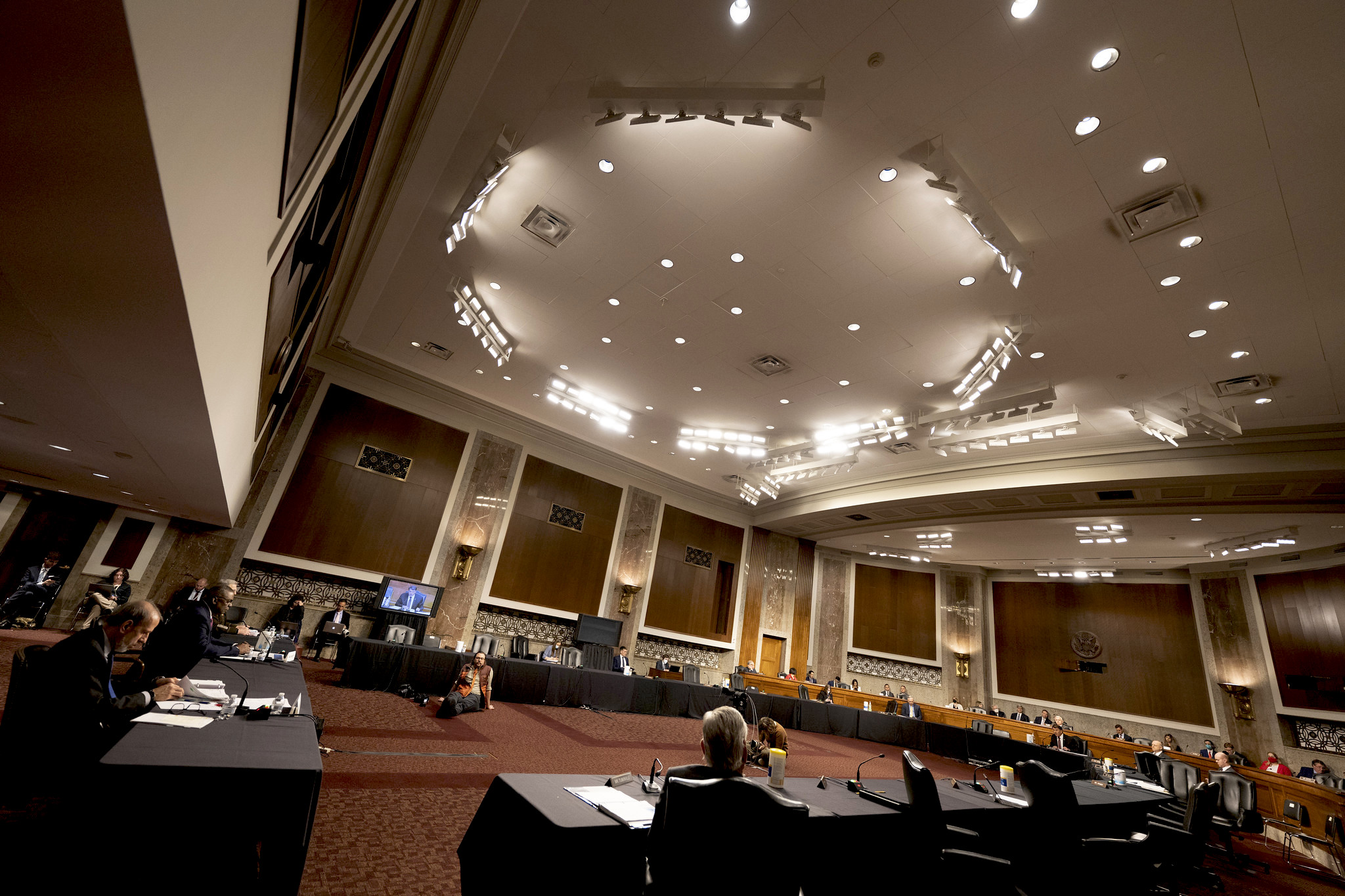
U.S. Secretary of Defense Lloyd Austin providing testimony during a Senate Armed Services Committee hearing on the Defense Department’s fiscal year 2023 budget request on April 7. (DoD, Lisa Ferdinando)

The Pentagon’s proposed “base” budget, which includes all of its routine expenses from personnel to weapons to the costs of operating and maintaining a 1.3 million member military force, came in at $773 billion for 2023, more than $30 billion above that of 2022. Such an increase alone is three times the discretionary budget of the Centers for Disease Control and Prevention and more than three times the total allocation for the Environmental Protection Agency.

In all, the Pentagon consumes nearly half of the discretionary budget of the whole federal government, a figure that’s come down slightly in recent years thanks to the Biden administration’s increased investment in civilian activities. That still means, however, that almost anything the government wants to do other than preparing for or waging war involves a scramble for funding, while the Department of Defense gets virtually unlimited financial support.

And keep in mind that the proposed Biden increase in Pentagon spending comes despite the ending of 20 years of U.S. military involvement in Afghanistan, a move that should have meant significant reductions in the department’s budget. Perhaps you won’t be surprised to learn, however, that, in the wake of the Afghan disaster, the military establishment and hawks in Congress quickly shifted gears to touting — and exaggerating — challenges posed by China, Russia, and inflation as reasons for absorbing the potential savings from the Afghan War and pressing the Pentagon budget ever higher.

[Related: Weapons Industry’s Investment in US Congress]

It’s worth looking at what America stands to receive for its $773 billion — or about $2,000 per taxpayer, according to an analysis by the National Priorities Project at the Institute for Policy Studies. More than half of that amount goes to giant weapons contractors like Raytheon and Lockheed Martin, along with thousands of smaller arms-making firms.


Senate Armed Services Committee hearing on the Defense Department’s fiscal year 2023 budget request, April 7. (DoD, Lisa Ferdinando)

The most concerning part of the new budget proposal, however, may be the administration’s support for a three-decades long, $1.7-trillion plan to build a new generation of nuclear-armed missiles (as well, of course, as new warheads to go with them), bombers, and submarines. As the organization Global Zero has pointed out, the United States could dissuade any country from launching an atomic attack against it with far fewer weapons than are contained in its current nuclear arsenal. There’s simply no need for a costly — and risky — nuclear weapons “modernization” plan. Sadly, it’s guaranteed to help fuel a continuing global nuclear arms race, while entrenching nuclear weapons as a mainstay of national security policy for decades to come. (Wouldn’t those decades be so much better spent working to eliminate nuclear weapons altogether?)

The riskiest weapon in that nuclear plan is a new land-based, intercontinental ballistic missile (ICBM). As former Secretary of Defense William Perry once explained, ICBMs are among “the most dangerous weapons in the world” because a president warned of a nuclear attack would have only a matter of minutes to decide whether to launch them, increasing the risk of an accidental nuclear war based on a false alarm. Not only is a new ICBM unnecessary, but the existing ones should be retired as well, as a way of reducing the potential for a world-ending nuclear conflagration.

To its credit, the Biden administration is trying to get rid of an ill-conceived nuclear weapons program initiated during the Trump years – a sea-launched, nuclear-armed cruise missile that, rather than adding a “deterrent” capability, would raise the risk of a nuclear confrontation. As expected, nuclear hawks in the military and Congress are trying to restore funding for that nuclear SLCM (pronounced “Slick ‘em”).

The Pentagon budget is replete with other unnecessary, overpriced, and often potentially dysfunctional systems that should either be canceled or replaced with more affordable and effective alternatives. The most obvious case in point is the F-35 combat aircraft, meant to carry out multiple missions for the Air Force, Navy, and Marines. So far, it does none of them well.


Reflection of the Pentagon in the drum major’s mace as the Air Force Band takes part in an honor cordon for a visiting dignitary in May. (DoD, Lisa Ferdinando)

In a series of careful analyses of the aircraft, the Project on Government Oversight determined that it may never be fully ready for combat. As for cost, at an estimated $1.7 trillion over its projected period of service, it’s already the most expensive single weapons program ever undertaken by the Pentagon. And keep in mind that those costs will only increase as the military services are forced to pay to fix problems that were never addressed in the rush to deploy the plane before it was fully tested. Meanwhile, that aircraft is so complex that, at any given moment, a large percentage of the fleet is down for maintenance, meaning that, if ever called on for combat duty, many of those planes will simply not be available.

In a grudging acknowledgement of the multiple problems plaguing the F-35, the Biden administration proposed decreasing its buy of the plane by about a third in 2023, a figure that should have been much lower given its poor performance. But congressional advocates of the plane — including a large F-35 caucus made up of members in states or districts where parts of it are being produced — will undoubtedly continue to press for more planes than even the Pentagon’s asking for, as the Senate Armed Services Committee did in its markup of the Department of Defense spending bill.

In addition to all of this, the Pentagon’s base budget includes mandatory spending for items like military retirement, totaling an estimated $12.8 billion for 2023.

Running national (in)security tally: $785.8 billion

The Nuclear Budget


Minuteman flight test, March 2020. (National Nuclear Security Administration, Flickr)

The average taxpayer no doubt assumes that a government agency called the Department of Energy (DOE) would be primarily concerned with developing new sources of energy, including ones that would reduce America’s dependence on fossil fuels to help rein in the ravages of climate change. Unfortunately, that assumption couldn’t be less true.

Instead of spending the bulk of its time and money on energy research and development, more than 40 percent of the Department of Energy’s budget for 2023 is slated to support the National Nuclear Security Administration (NNSA), which manages the country’s nuclear weapons program, principally by maintaining and developing nuclear warheads. Work on other military activities like reactors for nuclear submarines pushes the defense share of the DOE budget even higher. The NNSA spreads its work across the country, with major locations in California, Missouri, Nevada, New Mexico, South Carolina, Tennessee, and Texas. Its proposed 2023 budget for nuclear-weapons activities is $16.5 billion, part of a budget for defense-related projects of $29.8 billion.

Amazingly the NNSA’s record of managing its programs may be even worse than the Pentagon’s, with cost overruns of more than $28 billion during the last two decades. Many of its current projects, like a plan to build a new facility to produce plutonium “pits” — the devices that trigger the explosion of a hydrogen bomb — are unnecessary even under the current, misguided nuclear weapons modernization plan.

Nuclear budget: $29.8 billion

Running (in)security tally: $815.6 billion

Defense-Related Activities

This catch-all category, pegged at $10.6 billion in 2023, includes the international activities of the FBI and payments to Central Intelligence Agency retirement funds, among other things.

Defense-Related Activities: $10.6 billion

Running (in)security tally: $826.2 billion

The Intelligence Budget

Information about this country’s 18 separate intelligence agencies is largely shielded from public view. Most members of Congress don’t even have staff that can access significant details on how intelligence funds are spent, making meaningful Congressional oversight almost impossible. The only real data supplied with regard to the intelligence agencies is a top-line number – $67.1 billion proposed for 2023, a $5 billion increase over 2022. Most of the intelligence community’s budget is believed to be hidden inside the Pentagon budget. So, in the interests of making a conservative estimate, intelligence spending is not included in our tally.

Intelligence Budget: $67.1 billion

Running (in)security tally still: $826.2 billion

Veterans Affairs Budget


A former explosive ordnance disposal technician who suffers from PTSD and traumatic brain injury after combat tours in Afghanistan and Iraq , displays a mask he painted in Hanover, Pa., April 5, 2017. (U.S. Air Force, J.M. Eddins Jr.)

America’s post-9/11 wars have generated millions of veterans, many of whom have returned from battle with severe physical or psychological injuries. As a result, spending on veterans’ affairs has soared, reaching a proposed $301 billion in the 2023 budget plan. Research conducted for the Costs of War Project at Brown University has determined that these costs will only grow, with more than $2 trillion needed just to take care of the veterans of the post-9/11 conflicts.

Veterans Affairs Budget: $301 billion

Running (in)security tally: $1.127 trillion

International Affairs Budget

The International Affairs budget includes non-military items like diplomacy at the State Department and economic aid through the Agency for International Development, critical (but significantly underfunded) parts of the U.S. national security strategy writ large. But even in this category there are significant military-related activities in the form of programs that provide arms and training to foreign militaries and police forces. It’s proposed that the largest of these, the Foreign Military Financing program, should receive $6 billion in 2023. Meanwhile, the total requested International Affairs budget is $67.8 billion in 2023.

International Affairs Budget: $67.8 billion

Running (in)security tally: $1.195 trillion

The Homeland Security Budget

After the 9/11 attacks, the Department of Homeland Security (DHS) was established by combining a wide range of agencies, including the Federal Emergency Management Agency, the Transportation Security Agency, the U.S. Secret Service, Customs and Border Protection, and the Coast Guard. The proposed DHS budget for 2023 is $56.7 billion, more than one-quarter of which goes to Customs and Border Protection as part of a militarized approach to addressing immigration into the United States.

Homeland Security Budget: $56.7 billion

Running (in)security tally: $1.252 trillion

Interest on the Debt

The national security state, as outlined so far, is responsible for about 26 percent of the interest due on the U.S. debt, a total of $152 billion.

Interest on the Debt: $152 billion

Running (in)security tally: $1.404 trillion

Misguided Security Budget

Spending $1.4 trillion to address a narrowly defined concept of national security should be considered budgetary malpractice on a scale so grand as to be almost unimaginable — especially at a time when the greatest risks to the safety of Americans and the rest of the world are not military in nature. After all, the Covid pandemic has already taken the lives of more than one million Americans, while the fires, floods, and heat waves caused by climate change have impacted tens of millionsmore.

Yet the administration’s proposed allocation of $45 billion to address climate change in the 2023 budget would be less than 6 percent of the Pentagon’s proposed budget of $773 billion. And as noted, the Centers for Disease Control and Prevention are slated to get just one-third of the proposed increase in Pentagon spending between 2022 and 2023. Worse yet, attempts to raise spending significantly to address these urgent challenges, from President Biden’s Build Back Better plan to the Green New Deal, are stalled in Congress.

In a world where such dangers are only increasing, perhaps the best hope for launching a process that could, sooner or later, reverse such perverse priorities lies with grassroots organizing. Consider, for instance the “moral budget” crafted by the Poor People’s Campaign, which would cut Pentagon spending almost in half while refocusing on programs aimed at eliminating poverty, protecting the environment, and improving access to health care. If even part of such an agenda were achieved and the “defense” budget reined in, if not cut drastically, America and the world would be far safer places.

Given the scale of the actual security problems we face, it’s time to think big when it comes to potential solutions, while recognizing what Martin Luther King, Jr., once described as the “fierce urgency of now.” Time is running short, and concerted action is imperative.


Opposing 'Tyranny' and 'Scoundrels,' Sri Lankan Protesters Overrun Presidential Palace


https://www.commondreams.org/news/2022/07/09/opposing-tyranny-and-scoundrels-sri-lankan-protesters-overrun-presidential-palace


"Now the president must resign," said one protester in Colombo. "If he wants peace to prevail, he must step down."


Common Dreams staff July 9, 2022


The Prime Minister of Sri Lanka said he would resign on Saturday and the nation's president was called on to do the same after anti-government demonstrators—following months of growing protest and anger over a boiling economic crisis—overran the presidential palace and other buildings of top officials.

"Today we have fought for our freedom from the tyranny and the scoundrels and greedy politicians who have run our nation to ground zero."

According to the Associated Press:


Protesters on Saturday broke into the Sri Lankan prime minister's private residence and set it on fire hours after he said he would resign when a new government is formed, in the biggest day of angry demonstrations that also saw crowds storming the president's home and office.

The office of Prime Minister Ranil Wickremesinghe said the protesters forced their way into his Colombo home in the evening. It wasn't immediately clear if he was inside at the time.

Wickremesinghe announced earlier that he would resign in response to calls by political leaders for him and President Gotabaya Rajapaksa to quit, after tens of thousands of people trooped to the capital to vent their fury over the nation's economic and political crisis.

On the ground in the capital city of Colombo, Al Jazeera correspondent Minelle Fernandez said the demonstrators were adamant the president must go.

"Tens of thousands of Sri Lankans are still streaming into Colombo," Fernandez reported. "People stormed railway stations and literally forced employees to put them on trains and bring them to Colombo. They say they are taking their country back."

As the New York Times notes in its reporting on the crisis, "Sri Lanka has run out of foreign-exchange reserves for imports of essential items like fuel and medicine, and the United Nations has warned that more than a quarter of Sri Lanka's 21 million people are at risk of food shortages." The demonstrations have been growing for months, but even a series of government resignations have not stemmed the populist anger that culminated on Saturday.

"I came here today to send the president home," Wasantha Kiruwaththuduwa, who had walked 10 miles to join the protest, told the Times. "Now the president must resign. If he wants peace to prevail, he must step down."


Al-Jazeera reports:


Months of protests have nearly dismantled the Rajapaksa political dynasty that has ruled Sri Lanka for most of the past two decades.

One of Rajapaksa's brothers resigned as prime minister last month, and two other brothers and a nephew quit their cabinet posts earlier.

Wickremesinghe took over as prime minister in May and protests temporarily waned in the hope he could find cash for the country’s urgent needs.

But people now want him to resign as well, saying he has failed to fulfil his promises. One demonstrator held the Sri Lankan flag in one hand and a placard in the other that read: "Pissu Gota, Pissu Ranil" (Insane Gota, Insane Ranil) in Sinhalese.

Thyagi Ruwanpathirana, a researcher at Amnesty International told Al Jazeera Sri Lanka will "not come out of this crisis for some time."

Footage being shared on social media showed demonstrators, having taken over the presidential palace, swimming in the pool and cheering from the rooftops:


Reporting indicated security personnel was no longer present in the palace, nor in the president's nearby offices which had also been overrun by protesters.

"Today is independence day for me being born in this nation, not 1948, because today we have fought for our freedom from the tyranny and the scoundrels and greedy politicians who have run our nation to ground zero," one protester told Al Jazeera.


US-backed fascism in Japan: How Shinzo Abe whitewashed genocidal imperial crimes


https://www.youtube.com/watch?v=5WWJ3EOmPkY