Saturday, July 2, 2022

Key Takeaways From BRICS Summit


https://popularresistance.org/key-takeaways-from-brics-summit/


Last week the 14th BRICS Summit took place virtually, chaired by Chinese President Xi Jinping. The BRICS bloc (Brasil, Russia, India, China and South Africa) represents a key political, economic, and scientific force in the international arena. These nations represent half of the world’s population and their collective GDP is greater that $20 trillion.

In today’s context, the significance of the BRICS summit is increased to the extent that the bloc represents an alternative to the unipolar world of the decaying West.

What follows are some of the key points from the Summit’s in Beijing: Multilateral compromise in the defense of international law, which includes being more inclusive with less developed countries.


Promote peace and international security without compromising the environment.
 

Support for a an open, multilateral, transparent, inclusive, rules-based, non-discriminatory commercial system.
 

Cooperation to combat COVID-19, with support for multilateral organizations but also searching for medicinal alternatives.
 

Support dialogue between Russia and Ukraine from an impartial perspective.
 

“We strongly support a peaceful, safe, and stable Afghanistan while we emphasize our respect for its sovereignty independence, territorial integrity, national unity, and non-interference in its internal affairs.”
 

The necessity to resolve the nuclear problem in Iran through peaceful and diplomatic means in accordance with international law.
 

Support for bilateral and multilateral negotiations in order to solve the problems related to the Korean peninsula.
 

Compromise for a world free of nuclear arms.
 

Cooperation against terrorism and the reaffirmation of the exclusive authority of the UN Security Council.
 

International cooperation against corruption.
 

Compromise to continue bettering the coordination of macroeconomic policy, to further practical economic cooperation, and to work to achieve post-COVID-19 economic recovery in a sustainable, balanced, and inclusive manner.
 

“We commit to strengthening intra-BRICS cooperation to intensify the BRICS Partnership on New Industrial Revolution (PartNIR) and collectively create new opportunities for development.”
 

“We encourage the BRICS Interbank Cooperation Mechanism to continue playing an important role in supporting BRICS economic and trade cooperation.”
 

Opposition to green commercial barriers and support for coordination on this issue.
 

Cooperation in agriculture.


CIA And Western Special Ops Commandos Are In Ukraine


https://popularresistance.org/cia-and-western-special-ops-commandos-are-in-ukraine-directing-proxy-war-on-russia/ 


Directing proxy war on Russia.

The CIA and special operations forces from Britain, France, and Canada are physically in Ukraine, helping direct the proxy war on Russia, overseeing weapons, training, and intelligence. Some Ukrainian fighters have US flag patches.

The CIA and special operations forces from NATO members Britain, France, Canada, and Lithuania are physically in Ukraine, helping direct the proxy war on Russia, according to a report in The New York Times.

These Western forces are on the ground training and advising Ukrainian fighters, overseeing weapons shipments, and managing intelligence.

At least 20 countries are part of a US Army-led coalition, guiding Ukraine in its fight against Russian troops.

Some Ukrainian combatants are even using US flag patches on their equipment.

This is all according to a June 25 report in The New York Times, titled “Commando Network Coordinates Flow of Weapons in Ukraine, Officials Say.”

The Times is a de facto organ of the US government. Although technically private, the paper closely follows the line of the CIA and Pentagon. Its report is based on statements by top US officials.

This is the strongest evidence yet that the conflict in Ukraine is not just a battle between neighbors, but rather a Western proxy war on Russia, with the direct involvement of NATO forces from several nations.

The Times acknowledged that Ukraine “depends more than ever on help from the United States and its allies — including a stealthy network of commandos and spies rushing to provide weapons, intelligence and training.”


The chief of US Army Special Operations Command, Lieutenant General Jonathan P. Braga, boasted of an “international partnership with the special operations forces of a multitude of different countries” that “have absolutely banded together in a much outsized impact” to help wage the proxy war on Russia.

The Times noted that, “even as the Biden administration has declared it will not deploy American troops to Ukraine, some C.I.A. personnel have continued to operate in the country secretly, mostly in the capital, Kyiv, directing much of the vast amounts of intelligence the United States is sharing with Ukrainian forces.”

The US Army has a “coalition planning cell in Germany to coordinate military assistance to Ukrainian commandos and other Ukrainian troops,” the newspaper reported.

At least 20 countries are part of this US-led cell providing military assistance to Ukraine, “which was modeled after a structure used in Afghanistan,” the newspaper added.

And the 20-nation coalition “is part of a broader set of operational and intelligence coordination cells run by the Pentagon’s European Command to speed allied assistance to Ukrainian troops.”

In a battle in the eastern Donbas region, “a group of Ukrainian special operations forces had American flag patches on their gear and were equipped with new portable surface-to-air missiles as well as Belgian and American assault rifles,” the Times noted.

This is one of many reports proving CIA support for anti-Russian forces in Ukraine.

Ever since the United States sponsored a violent coup d’etat that overthrew Ukraine’s democratically elected government in 2014, CIA agents have been active in the country, training fighters to kill Russian-speaking independence supporters in the east.

Yahoo News published an investigation in March, titled “Secret CIA training program in Ukraine helped Kyiv prepare for Russian invasion,” which revealed that “CIA paramilitaries” began traveling to Ukraine in 2014, and a “covert CIA training program run from Ukraine’s eastern frontlines” was teaching Ukrainians “irregular warfare” tactics.


Another report released in Yahoo News in January, a month before Russia invaded Ukraine, admitted that the CIA had since 2015 been “overseeing a secret intensive training program in the U.S. for elite Ukrainian special operations forces and other intelligence personnel.”

A former CIA official stated openly, before Russia sent its troops in, “The United States is training an insurgency,” in order “to kill Russians.”


Amid outrage over journalist’s killing, US vows to put Israel first


https://electronicintifada.net/blogs/maureen-clare-murphy/amid-outrage-over-journalists-killing-us-vows-put-israel-first


Maureen Clare Murphy Rights and Accountability 28 June 2022

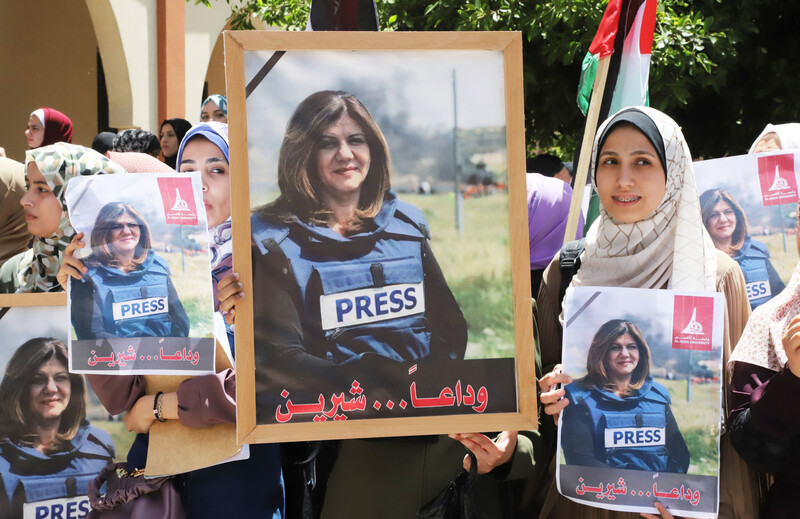
Palestinians in Gaza City hold posters in memory of Shireen Abu Akleh on 11 May, the day the reporter was killed. Youssef Abu Watfa APA images

Pressure is mounting on US President Joe Biden in the absence of an Israeli criminal investigation into the killing of prominent Al Jazeera journalist Shireen Abu Akleh.

The Committee to Protect Journalists – a New York-based press freedoms watchdog – is calling on Biden to “lead a thorough, independent and transparent investigation” into Abu Akleh’s death.

Investigations undertaken by Israeli and Palestinian human rights groups, the Palestinian Authority, CNN, The Associated Press, The New York Times, The Washington Post and the UN human rights office all point to Israeli responsibility for Abu Akleh’s death.

Abu Akleh, who held US citizenship, was shot on 11 May while covering an Israeli raid in the northern West Bank city of Jenin last month. She was wearing a helmet and a protective vest marked “PRESS” when she was shot and killed instantly.

Ali Samoudi, a producer, was shot in the shoulder and survived. Witnesses and survivors of the shooting said that the journalists came under Israeli fire and there were no armed Palestinians present or exchange of fire at the time – contrary to Israel’s claims.

“While your administration has called for an investigation, more than one month after Abu Akleh’s killing, only journalists have carried out serious probes of the incident,” the Committee to Protect Journalists stated.

The watchdog added that “Israel’s attacks on journalists and media facilities is a trend that [the Committee to Protect Journalists] has documented over decades,” with nearly 20 journalists killed while carrying out their work in the West Bank and Gaza since 1992.

The group noted that “exactly one year prior to Abu Akleh’s killing … Israeli warplanes began a bombing campaign targeting at least four buildings in Gaza housing the offices of 18 international and local media outlets.”

The Committee to Protect Journalists said it has not yet received a response from Israeli authorities to a letter asking them to “make public any evidence” that – as Israel claimed – Hamas was using “those buildings for military purposes.”

The watchdog noted that Israel has suggested that Abu Akleh’s killing was justified, with military spokesperson Ran Kochav proclaiming that the targeted journalists were “armed with cameras, if you’ll permit me to say so.”

The reluctance of Tel Aviv’s allies, including the US, “to seek accountability for these violations” has emboldened Israel’s attacks, the Committee to Protect Journalists added.

Nearly 60 members of US Congress, including half of all Democratic senators, have called on the Biden administration to investigate Abu Akleh’s death.
American bullet

Al Jazeera, which obtained an image of the bullet that killed Abu Akleh, said that she was struck by a US-designed and manufactured 5.56mm caliber armor-piercing bullet used in an M4 rifle.

Israel has declined to launch a criminal investigation into the soldiers involved in Abu Akleh’s death, with the military advocate general stating that “the incident had been a ‘combat event’ in which there was no suspicion of a criminal offense,” the Tel Aviv daily Haaretz reported.

Israel has used the same baseless interpretation of international law to justify the use of lethal force against unarmed protesters in Gaza during the Great March of Return protests between March 2018 and December 2019.

Israel argued that the mass protests were orchestrated by Hamas, the political party and resistance group that oversees Gaza’s internal affairs.

Israeli military directives require an immediate criminal investigation into the death of a Palestinian outside combat activity.

More than 215 Palestinians were killed during the Great March of Return protests. Only one Israeli soldier had been indicted over the use of live fire as of late 2020.

Israel’s killing and maiming of Gaza protesters is a main focus of the International Criminal Court’s investigation in Palestine that was opened in March last year.
Calls for ICC probe

The Palestinian Authority and Al Jazeera have separately requested that the tribunal in The Hague investigate Abu Akleh’s killing, as has a filing to the ICC from the International Federation of Journalists, the Palestinian Journalists Syndicate and the International Centre of Justice for Palestinians.

The Biden administration says that it does not support an ICC investigation into the killing of Abu Akleh and has repeatedly deferred to the Israel military’s self-investigation protocol.

Israel’s self-investigations into violations of Palestinians’ rights – long dismissed by human rights groups as a whitewashing mechanism to avoid international scrutiny – will likely become a point of contention for the ICC’s investigation in Palestine, should it move forward.

The Philippines attempted to defer an ICC investigation on the basis that its authorities were investigating or had completed investigations into alleged murders committed in the context of that country’s so-called “war on drugs.”

Under the principle of complementarity, the ICC privileges a country’s internal investigations where they exist.

Karim Khan, the ICC chief prosecutor, rejected the Philippines’ request, stating last week that the government’s procedures “do not seek to establish criminal responsibility, and therefore cannot warrant deferral of the ICC’s criminal investigation.”

Khan added that “the investigation should resume as quickly as possible.”

In addition to shielding soldiers from charge or trial for Abu Akleh’s death, Israeli authorities have said that no police officers will be punished for attacking the pallbearers carrying the slain journalist’s coffin, nearly causing them to drop it, during her funeral in Jerusalem.
“Put them first”

US ambassador Tom Nides said on Tuesday that he had been “working around the clock” to help Tel Aviv meet all requirements to join the State Department’s visa waiver program before the Israeli government votes to dissolve later this week.

“Don’t lose momentum now. This will help Israeli citizens travel to the US – put them first!” he added.

Progressive US lawmakers have urged the Biden administration to keep Israel out of the visa waiver program due to the discrimination faced by Palestinian Americans seeking to visit Israel and the West Bank.

Biden will be traveling to the Middle East next month, first visiting Israel and the West Bank.

From there, Biden will make his way to Saudi Arabia, where he will meet Muhammad Bin Salman, the crown prince, who – according to the CIA – approved the murder of Washington Post columnist Jamal Khashoggi in 2018.


Israel’s claim it defeated Ben & Jerry’s melts under scrutiny


https://electronicintifada.net/blogs/ali-abunimah/israels-claim-it-defeated-ben-jerrys-melts-under-scrutiny


Ali Abunimah Activism and BDS Beat 29 June 2022

Israeli leaders had a meltdown when Ben & Jerry’s announced last year that it would stop selling its frozen treats in Israel’s illegal settlement colonies in the occupied West Bank. Richard B. Levine Newscom

This story has been updated with a statement from Ben & Jerry’s rejecting move by its parent company Unilever.

Israel claims it has forced a reversal of the principled decision last year by Ben & Jerry’s to stop selling its ice cream in illegal settlement colonies in the occupied West Bank.

Unilever, the parent company of Ben & Jerry’s, announced Tuesday that it has sold the Ben & Jerry’s brand in Israel to its Israeli licensee, AQP.

AQP has vowed to keep selling the ice cream in the occupied West Bank with the Ben & Jerry’s name in Hebrew and Arabic, prompting cries of victory from Israeli officials.

However, the ice cream will be sold against the explicit wishes of Ben & Jerry’s, which will earn no income from sales in Israel.

“We are aware of the Unilever announcement. While our parent company has taken this decision, we do not agree with it,” Ben & Jerry’s wrote to The Electronic Intifada on Wednesday.

“Unilever’s arrangement means Ben & Jerry’s in Israel will be owned and operated by AQP. Our company will no longer profit from Ben & Jerry’s in Israel,” the Vermont-based firm added.

“We continue to believe it is inconsistent with Ben & Jerry’s values for our ice cream to be sold in the Occupied Palestinian Territory.”


What appears to have happened is that Unilever went over the ice cream maker’s head in an effort to appease Israel and its lobby.


When Unilever acquired Ben & Jerry’s in 2000 it was under an agreement that the ice cream maker would have the autonomy to continue pursuing the socially conscious principles of its founders.

Ben & Jerry’s retained an independent board. According to the firm’s website, the board is “empowered to protect and defend Ben & Jerry’s brand equity and integrity.”

It appears that Unilever has violated at least in spirit the 2000 acquisition agreement.
“Same look and feel”

Unilever announced on Tuesday that it had “sold its Ben & Jerry’s business interests in Israel to Avi Zinger, the owner of American Quality Products Ltd (AQP),” the current Israeli licensee for Ben & Jerry’s.

“The new arrangement means Ben & Jerry’s will be sold under its Hebrew and Arabic names throughout Israel and the West Bank under the full ownership of its current licensee,” Unilever added.

Unilever’s London press office confirmed to The Electronic Intifada that “the brand in Israel will continue to have the same design look and feel as today.”

“The brand name will be in Hebrew and Arabic. It will be exactly the same ice cream as consumers enjoy today,” the company added.

But the multinational refused to say if Ben & Jerry’s itself supports the deal and the continued use of its name by the Israeli company – albeit not in English.

“In answer to your question on Ben and Jerry’s and whether they support this decision, we wouldn’t comment on internal conversations so again, you are best placed asking Ben & Jerry’s directly for their response,” Unilever wrote to The Electronic Intifada.

Unilever also did not respond about whether the Israeli company will have continued contact with Ben & Jerry’s related, say, to marketing or product development.

Notably, the Unilever press statement contains no quotation from any Ben & Jerry’s spokesperson indicating support for the parent company’s decision.

The parent company acknowledges that “Ben & Jerry’s and its independent board were granted rights to take decisions about its social mission, but Unilever reserved primary responsibility for financial and operational decisions and therefore has the right to enter this arrangement.”

As noted, Ben & Jerry’s has now confirmed that it opposes the move.
Israeli meltdown

In July last year, after years of grassroots campaigning, Ben & Jerry’s announced it would pull its products from settlements.

“We believe it is inconsistent with our values for Ben & Jerry’s ice cream to be sold in the occupied Palestinian territory,” the firm said at the time.

Israel’s leadership and lobby groups had a major meltdown in response.

Israeli Prime Minister Naftali Bennett spoke to Alan Jope, CEO of Unilever, warning him of “severe consequences.”

“Ben & Jerry’s has decided to brand itself as the anti-Israel ice cream,” Bennett asserted.

Israel and its lobby then went into full gear in an effort to reverse a decision they feared would encourage other companies to follow suit.

In March, the Brandeis Center, an Israel lobby group that uses lawfare – legal harassment – against supporters of Palestinian rights, filed a lawsuit in US federal court on behalf of the Israeli licensee against Unilever and Ben & Jerry’s.

The lawsuit accused Unilever of “unlawfully terminating its multi-decade business relationship in order to boycott Israel.”

The Brandeis Center said Wednesday that Unilever’s decision to sell its interests in Israel to Avi Zinger settles that lawsuit and marks a “major victory” against the Palestinian led BDS – boycott, divestment and sanctions – movement.

“The settlement prevents Ben & Jerry’s from boycotting Israel and ensures that Zinger will continue selling Ben & Jerry’s ice cream throughout Israel and the West Bank,” the Brandeis Center claimed.

But that’s a stretch, since there is no indication that Ben & Jerry’s independent board reversed its decision. This looks simply like a strong-arm tactic by Unilever, which never expressed support for Ben & Jerry’s move in the first place.
Hypocrisy over Ukraine, Palestine

“Unilever rejects completely and repudiates unequivocally any form of discrimination or intolerance. Anti-Semitism has no place in any society,” the multinational said in its statement Tuesday, effectively endorsing Israel’s smears that campaigning for Palestinian rights is tantamount to anti-Jewish bigotry.

“We have never expressed any support for the boycott divestment and sanctions (BDS) movement and have no intention of changing that position,” Unilever added.

Declaring itself “very proud of our business in Israel,” Unilever offered no condemnation whatsoever of Israel’s systematic violations of Palestinian rights, which major human rights groups describe as apartheid – a crime against humanity.

But the company does not oppose boycotts in principle.

In March, Unilever, which owns dozens of well-known consumer brands, condemned the war in Ukraine “as a brutal and senseless act by the Russian state.”

“We have suspended all imports and exports of our products into and out of Russia, and we will stop all media and advertising spend,” Unilever added. “We will not invest any further capital into the country nor will we profit from our presence in Russia.”

Given this context, Unilever’s effort to circumvent Ben & Jerry’s decision can only be interpreted as an emphatic endorsement of Israel’s illegal colonization of occupied Palestinian land – a war crime that is under investigation by the International Criminal Court.


Yair Lapid, Israel’s foreign minister who is taking over as caretaker prime minister in the run up to new elections in September, painted Unilever’s move as a “victory” for Israel.


“The anti-Semites will not defeat us,” Lapid asserted. “Today’s victory is for all those who know that the struggle against BDS is first and foremost for advancing partnership, conversation and an ongoing struggle against discrimination and hate.”

That isn’t how human rights defenders see it.

“Ben & Jerry’s decision last year to end sales of its ice cream into Israeli settlements in the occupied West Bank avoids complicity in grave human rights abuses and contributing to a veneer of normalcy over Israeli authorities’ crimes of apartheid and persecution of millions of Palestinians,” Omar Shakir, Israel and Palestine director for Human Rights Watch, said Wednesday.

Shakir added that Unilever’s plan to sell Ben & Jerry’s operations in Israel to Zinger, “amid significant Israeli government pressure,” seeks to undermine that decision.

“But it won’t succeed: Ben & Jerry’s won’t be doing business in illegal settlements,” Shakir added. “What comes next may look and taste similar, but, without Ben & Jerry’s recognized social justice values, it’s just a pint of ice cream.”


Self-Determination Wrenched from Half US Population


https://consortiumnews.com/2022/06/29/self-determination-wrenched-from-half-us-population/


June 29, 2022


There is no reason, in fact or in law, to erase the constitutional right to abortion, writes Marjorie Cohn.


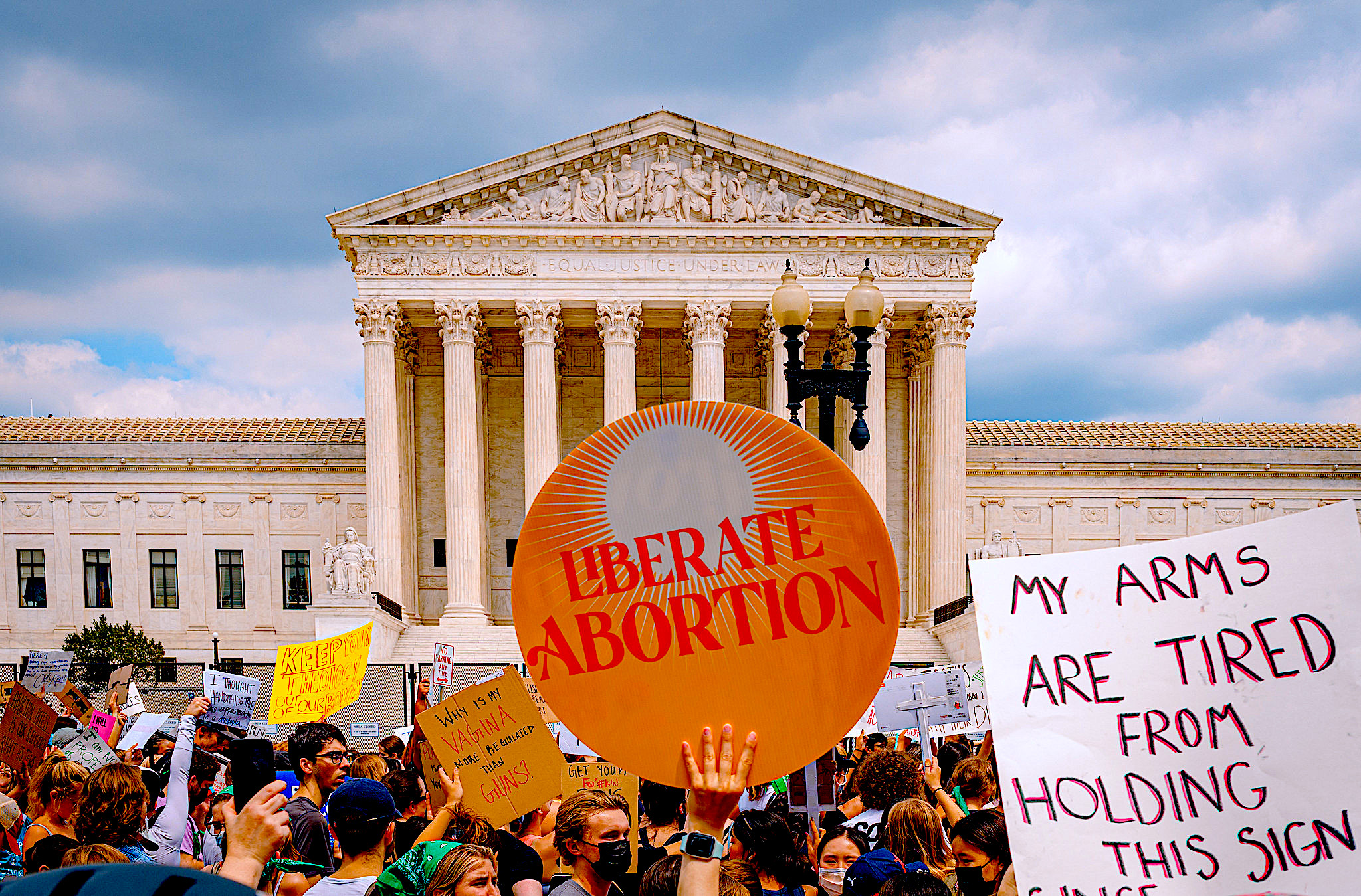
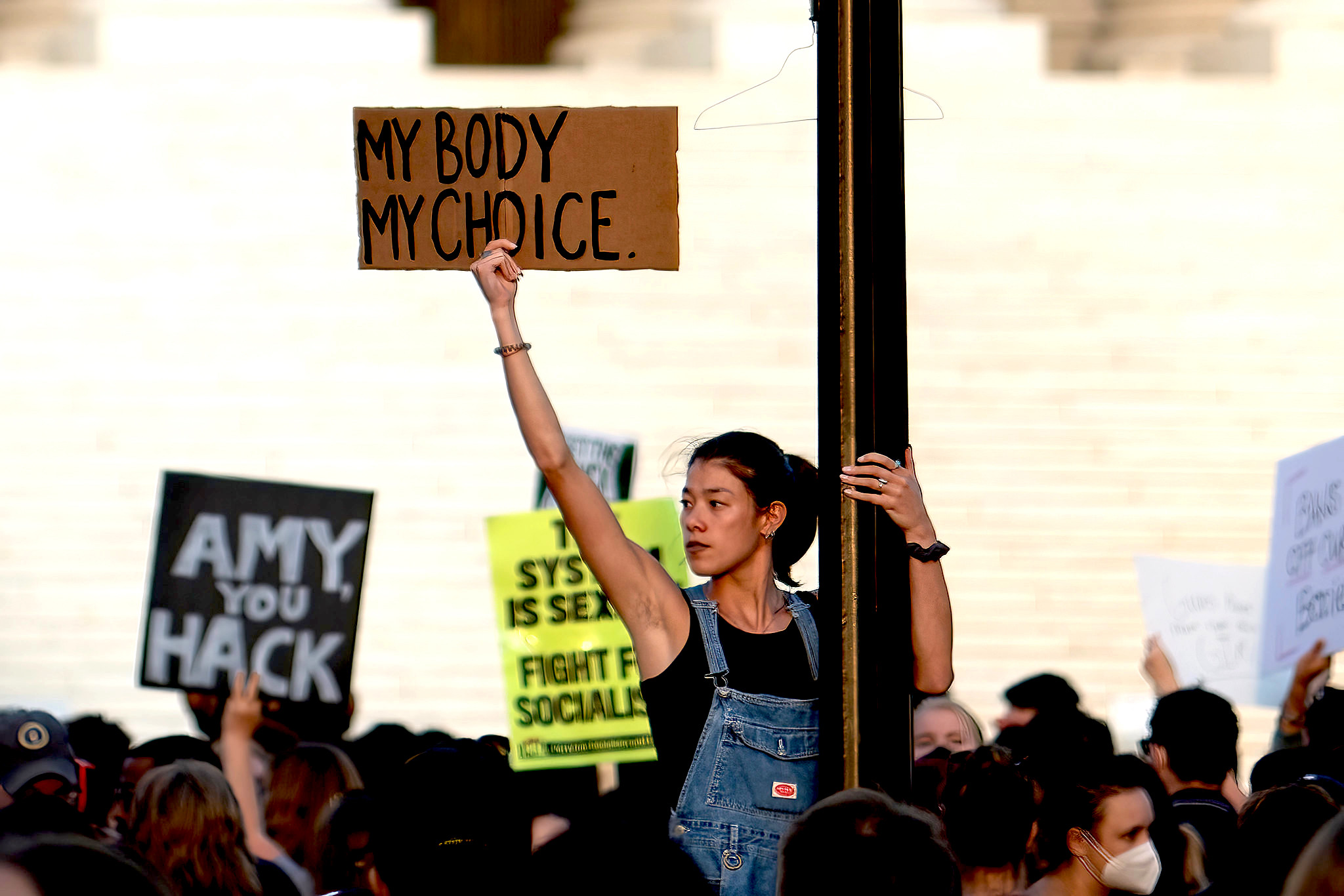
Protests at the U.S. Supreme Court on June 24, the day Roe v Wade was overturned. (Ted Eytan, Flickr, CC BY-SA 2.0)

By Marjorie Cohn
Truthout


For the first time in U.S. history, the Supreme Court has retracted a fundamental constitutional right. “We hold that Roe and Casey must be overruled,” Samuel Alito wrote for the majority of five right-wing zealots on the court in Dobbs v. Jackson Women’s Health Organization. They held that “procuring an abortion is not a fundamental constitutional right because such a right has no basis in the Constitution’s text or in our Nation’s history.”

Since the day Roe v. Wade was decided nearly 50 years ago, its opponents have executed a methodical campaign to overturn it. There is no reason, in fact or in law, to erase the constitutional right to abortion. The Constitution still protects abortion, and there have been no factual changes since 1973 that would support abolishing it. The only thing that has changed is the composition of the court. It is now packed with radical Christian fanatics who have no qualms about imposing their religious beliefs on the bodies of women and trans people, notwithstanding the Constitution’s unequivocal separation of church and state.

Alito was joined by Clarence Thomas, Neil Gorsuch, Brett Kavanaugh and Amy Coney Barrett in stripping protection of the right to self-determination from half the country’s population.

In their collective dissent, Stephen Breyer, Sonia Sotomayor and Elena Kagan said the majority “has wrenched this choice from women and given it to the States.” They wrote that the court is “rescinding an individual right in its entirety and conferring it on the State, an action the Court takes for the first time in history.”

“…the court… is now packed with radical Christian fanatics who have no qualms about imposing their religious beliefs on the bodies of women and trans people, notwithstanding the Constitution’s unequivocal separation of church and state.”

Noting, “After today, young women will come of age with fewer rights than their mothers and grandmothers had,” the dissenters conclude: “With sorrow — for this Court, but more, for the many millions of American women who have today lost a fundamental constitutional protection — we dissent.”

During the December oral argument, Sonia Sotomayor expressed concern about how the Supreme Court would “survive the stench” of the overtly ideological overruling of Roe. It will show, she said, that the Court’s rulings are “just political acts.”

By overturning Roe and Planned Parenthood v. Casey, the court’s majority confirmed the significance of Sotomayor’s query. While purporting to shift the restriction or abolition of abortion to the states, the court has engaged in a political act. It delegated the fate of a right that had been moored in the Constitution to the political process.


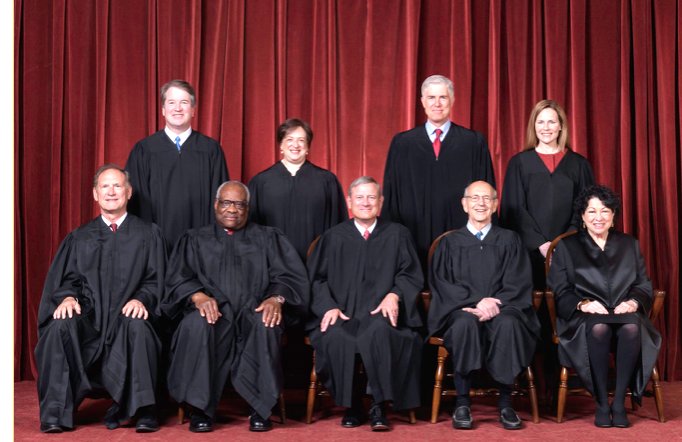
The Supreme Court as composed Oct. 27, 2020, to present. Front row, from left: Samuel A. Alito, Jr., Clarence Thomas, John G. Roberts, Jr., Stephen G. Breyer, Sonia Sotomayor. Back row, from left: Brett M. Kavanaugh, Elena Kagan, Neil M. Gorsuch and Amy Coney Barrett. (Fred Schilling, Collection of the Supreme Court)

“This conservative court defers to the political process when it agrees with its results,” Berkeley Law School Dean Erwin Chemerinsky wrote in the Los Angeles Times, “but the deference vanishes when the conservative justices dislike the states laws.”

As Chemerinsky notes, “there was no deference to the political process earlier this week when the conservatives on the court declared unconstitutional a New York law limiting concealed weapons that had been on the books since 1911 or struck down a Maine law that limited financial aid to religious schools.”

Brett Kavanaugh insisted in his concurrence that the Constitution is “neither pro-life nor pro-choice.” Arguing that it is “neutral” on abortion, he claimed that the issue should be left to the states and “the democratic process.” But partisan gerrymandering and the Supreme Court’s evisceration of the Voting Rights Act to the detriment of Democrats and people of color belie the court’s purportedly “democratic” and “neutral” delegation of abortion to the states.

“… partisan gerrymandering and the Supreme Court’s evisceration of the Voting Rights Act to the detriment of Democrats and people of color belie the court’s purportedly ‘democratic’ and ‘neutral’ delegation of abortion to the states.”

The court held in Roe that abortion was a “fundamental right” for a woman’s “life and future.” It said that states could not ban abortion until after viability (when a fetus is able to survive outside the womb), which generally occurs around 23 weeks. Nineteen years later, the court reaffirmed the “essential holding” of Roe in Casey, saying that states could only place restrictions on abortions if they don’t impose an “undue burden” on the right to a pre-viability abortion.

Alito wrote in Dobbs that since abortion is no longer a fundamental constitutional right, restrictions on it will be judged under the most lenient standard of review — the “rational basis” test. That means a law banning or restricting abortion will be upheld if there is a “rational basis on which the legislature could have thought that it would serve legitimate state interests.”

At issue in Dobbs was Mississippi’s 2018 Gestational Age Act, which outlaws nearly all abortions after 15 weeks of pregnancy, well before viability. The law contains exceptions for medical emergencies and cases of “severe fetal abnormality,” but no exception for rape or incest.

The majority said that Mississippi’s interest in “protecting the life of the unborn” and preventing the “barbaric practice” of dilation and evacuation satisfied the rational basis test so its law would be upheld. The court accepts the notion of protecting “fetal life” but nowhere mentions what the dissenters call “the life-altering consequences” of reversing Roe and Casey.

In both Roe and Casey, the court grounded the right to abortion in the liberty section of the Due Process Clause of the 14th Amendment, which says that states shall not “deprive any person of life, liberty, or property, without due process of law.” The court in Roe relied on several precedents saying that the right of personal liberty prohibits the government from interfering with personal decisions about contraception, marriage, procreation, family relationships, child-rearing and children’s education.

“The court in Roe relied on several precedents saying that the right of personal liberty prohibits the government from interfering with personal decisions about contraception, marriage, procreation, family relationships, child-rearing and children’s education.”

The Dobbs majority said the Constitution contains no reference to abortion and no constitutional provision implicitly protects it. In order to be protected by the Due Process Clause, a right must be “deeply rooted in this Nation’s history and tradition” and “implicit in the concept of ordered liberty.” According to the majority, there is no liberty interest because the law didn’t protect the right to abortion in the 19th century.

To his credit, John Roberts did not vote to overturn Roe and Casey, writing that the majority’s “dramatic and consequential ruling is unnecessary to decide the case before us.” Mindful of the threat this “serious jolt to the legal system” will pose to the legitimacy of the Roberts Court, the chief justice sought to split the baby, so to speak. He discarded the viability test and upheld the Mississippi law, leaving the issue of the constitutionality of abortion to a future case. Purporting to be a supporter of abortion rights, Roberts said women in Mississippi could choose to have an abortion before 15 weeks of pregnancy.


Protesters at the U.S. Supreme Court on May 3, the day after the draft opinion for Dobbs v. Jackson Women’s Health Organization was leaked. (Miki Jourdan, Flickr, CC BY-NC-ND 2.0)

In order to justify their rejection of stare decisis (respect for the court’s precedent) to which the members in the majority had pledged fealty during their confirmation hearings, Alito wrote that Roe was “egregiously wrong.” He and the others in the majority had the nerve to compare abortion to racial segregation, drawing an analogy between the court’s overruling of Roe and its rejection of Plessy v. Ferguson in Brown v. Board of Education.

Nearly half the states have laws banning or severely restricting abortion. Almost 1-in-5 pregnancies (not counting miscarriages) end in abortion, which is one of the most frequent medical procedures performed today. Twenty-five percent of American women will end a pregnancy in their lifetime. Now that Roe has been overturned, it is estimated that 36 million women and others who can become pregnant will be denied the fundamental right to choose whether to continue a pregnancy.

The dissenters observed that under laws in some states (like Mississippi) that don’t offer exceptions for victims of rape or incest, “a woman will have to bear her rapist’s child or a young girl her father’s — no matter if doing so will destroy her life.”

Alito wrote, “The Court emphasizes that this decision concerns the constitutional right to abortion and no other right. Nothing in this opinion should be understood to cast doubt on precedents that do not concern abortion.”

Part of the Constitutional Fabric

But the dissenters were not convinced. “No one should be confident that this majority is done with its work,” they warned. The dissent noted that the right to abortion enshrined in Roe is “part of the same constitutional fabric” as the rights to contraception and same-sex marriage and intimacy. “Either the mass of the majority’s opinion is hypocrisy, or additional constitutional rights are under threat. It is one or the other.”

Thomas didn’t pull any punches in his concurrence. He said that the court “should reconsider” other precedents based on substantive due process, including Griswold v. Connecticut (the right to contraception), Lawrence v. Texas (the right to same-sex sexual conduct) and Obergefell v. Hodges (the right to same-sex marriage).

In Alito’s draft opinion, which was leaked to Politico in May, he wrote that the rights protected by Lawrence and Obergefell are not “deeply rooted in history.” But the final majority opinion didn’t go that far. Kavanaugh would not have signed onto it. He wrote in his concurrence, “Overruling Roe does not mean the overruling of [Griswold, Obergefell, Loving v. Virginia (right to interracial marriage)], and does not threaten or cast doubt on those precedents.”

The dissenters frame the Dobbs v. Jackson Women’s Health Organization ruling as a gross attack on the right to self-determination:


“The Court’s precedents about bodily autonomy, sexual and familial relations, and procreation are all interwoven — all part of the fabric of our constitutional law, and because that is so, of our lives. Especially women’s lives, where they safeguard a right to self-determination.”

It is that right to self-determination that the five ultraconservative members of the court have wrenched away from half of the people in the United States.


Marjorie Cohn is professor emerita at Thomas Jefferson School of Law, former president of the National Lawyers Guild, and a member of the national advisory boards of Assange Defense and Veterans For Peace, and the bureau of the International Association of Democratic Lawyers. Her books include Drones and Targeted Killing: Legal, Moral and Geopolitical Issues. She is co-host of “Law and Disorder” radio.


UK Knew Terrorists Would Gain from Toppling Gaddafi


https://consortiumnews.com/2022/06/30/uk-knew-terrorists-would-gain-from-toppling-gaddafi/


June 30, 2022

The revelation raises serious questions about British foreign policy and whether David Cameron misled Parliament, write Phil Miller and Mark Curtis.


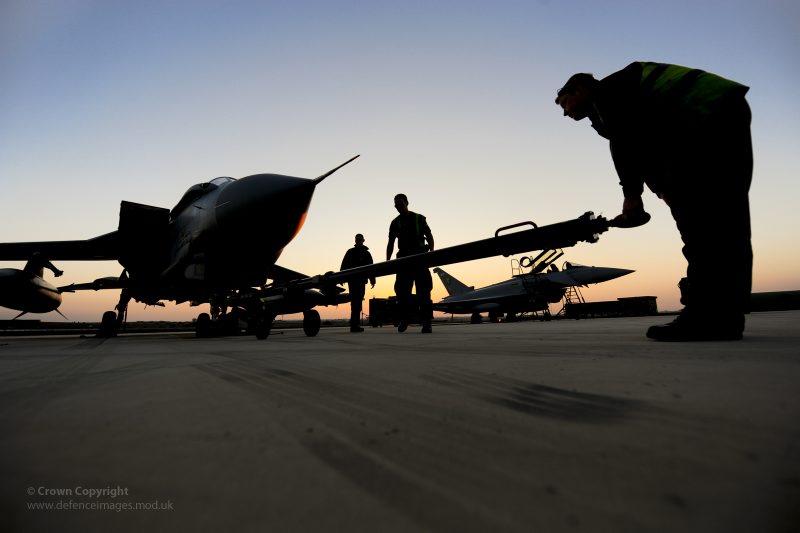
RAF Tornado being prepared for a sortie to help enforce the no-fly zone over Libya, March 24, 2011. (Neil Chapman, MOD)

[This is Part 3 of Declassified UK’s investigation into the Manchester bombing; Here are Part 1 and Part 2.]

By Phil Miller and Mark Curtis
Declassified UK

Britain’s military knew that fighters from an Al Qaeda-linked terrorist organisation were benefiting from the overthrow of Colonel Muammar Gaddafi in 2011, but continued to support NATO airstrikes in Libya for another two months.

The revelation raises serious questions about British foreign policy and whether the U.K.’s then Prime Minister David Cameron misled Parliament.

In early September 2011, Cameron updated the House of Commons about the situation in Libya, telling MPs:


“This revolution was not about extreme Islamism; Al-Qaeda played no part in it.”

However, the Ministry of Defence (MOD) had assessed the month before that: “The 17 February Brigade is likely to be an enduring player in [the] transition” away from Gaddafi’s regime and had “political linkages” to Libya’s rebel leadership, the National Transitional Council.

The 17 February Brigade, also known as the 17 February Martyrs Brigade, was a hardline Islamist militia named after the date the uprising began against Gaddafi. Its ranks included Salman Abedi, who went on to murder 22 innocent people in the Manchester Arena terrorist attack in 2017.

[Related: How the West’s War in Libya Spurred Terrorism in 14 Countries]

The MOD assessment said, “Many 17th February Brigade fighters have affiliations with the Muslim Brotherhood and other Islamist groups, such as the Libyan Islamic Movement for Change (formerly LIFG).”

The LIFG, or Libyan Islamic Fighting Group, was banned by Britain in 2005 as a terrorist organization over its links to Al Qaeda. Its supporters included the Manchester bomber’s father, Ramadan Abedi. The organization rebranded to the Libyan Islamic Movement for Change during the 2011 war.

Although the LIFG’s leadership renounced ties to Al Qaeda as part of a prisoner release deal it made with Gaddafi shortly before the 2011 uprising, many of its members continued to hold violent Islamist views. It was not until 2019 that the ban was lifted on the LIFG in the U.K.

Misleading Parliament?


May 27, 2010: Prime Minister David Cameron, left, with Defence Minister Dr. Liam Fox. (MOD)

The MOD has only released a portion of its assessment to Declassified following a freedom of information request. It is not clear whether the intelligence was shared at the time with ministers.

Dr. Liam Fox, who was defence secretary during the war, told Parliament’s Foreign Affairs Committee in 2016: “I do not recall reading any reports that set out the background of any Islamist activity to specific rebel groups.”

Fox was responding to a question from the committee about whether he was aware that members of the LIFG were participating in the rebellion.

Lord William Hague, who was foreign secretary, told the committee: “Libyan leaders themselves did not have a deeper understanding of what was happening in their own country” and so “it is probably wrong to expect somebody sitting in the backrooms of the Foreign Office or Vauxhall Cross [MI6 headquarters] to know better than they did.”

General Sir David Richards, Britain’s top military officer during the intervention, said Whitehall’s knowledge about the extent of LIFG involvement in the rebellion “was a grey area.” He told the committee “in a perfect world, we would have known it all” and that “we were suspicious and beginning to build up our understanding during the campaign.”

Richards had argued internally for pauses during the bombing campaign to allow for negotiations, but Cameron overruled him.

The former defence chief told Declassified he was concerned that this particular assessment was not shown to him at the time.

“Given my well-known hostility to regime change in Libya, I am certain that my outer office staff would have brought this to my attention if they had seen it,” Richards commented.

“I suspect it remained within Defence Intelligence as one of many sometimes contradictory reports. The report’s importance was also probably not properly understood at the time.”

Defence Intelligence is a branch of the MOD that gathers and analyses information relevant to conflicts.

Failed State

The MOD assessment was compiled sometime in August 2011, when rebels led by former LIFG commander Abdul Hakim Belhaj captured Libya’s capital Tripoli. That operation relied heavily on NATO air power and planning.

Ian Martin, the U.N.’s top official in Libya at the time, has said British attack helicopters were “pivotal … in supporting the final assault on Tripoli”, and that U.K. special forces accompanied and advised a rebel commander throughout the advance.

Although NATO’s U.N. mandate allowed it only to protect civilians, the alliance continued attacking Gaddafi’s forces until the end of October 2011, two months after the fall of Tripoli. Gaddafi was lynched by rebels in his hometown of Sirte on Oct. 20.


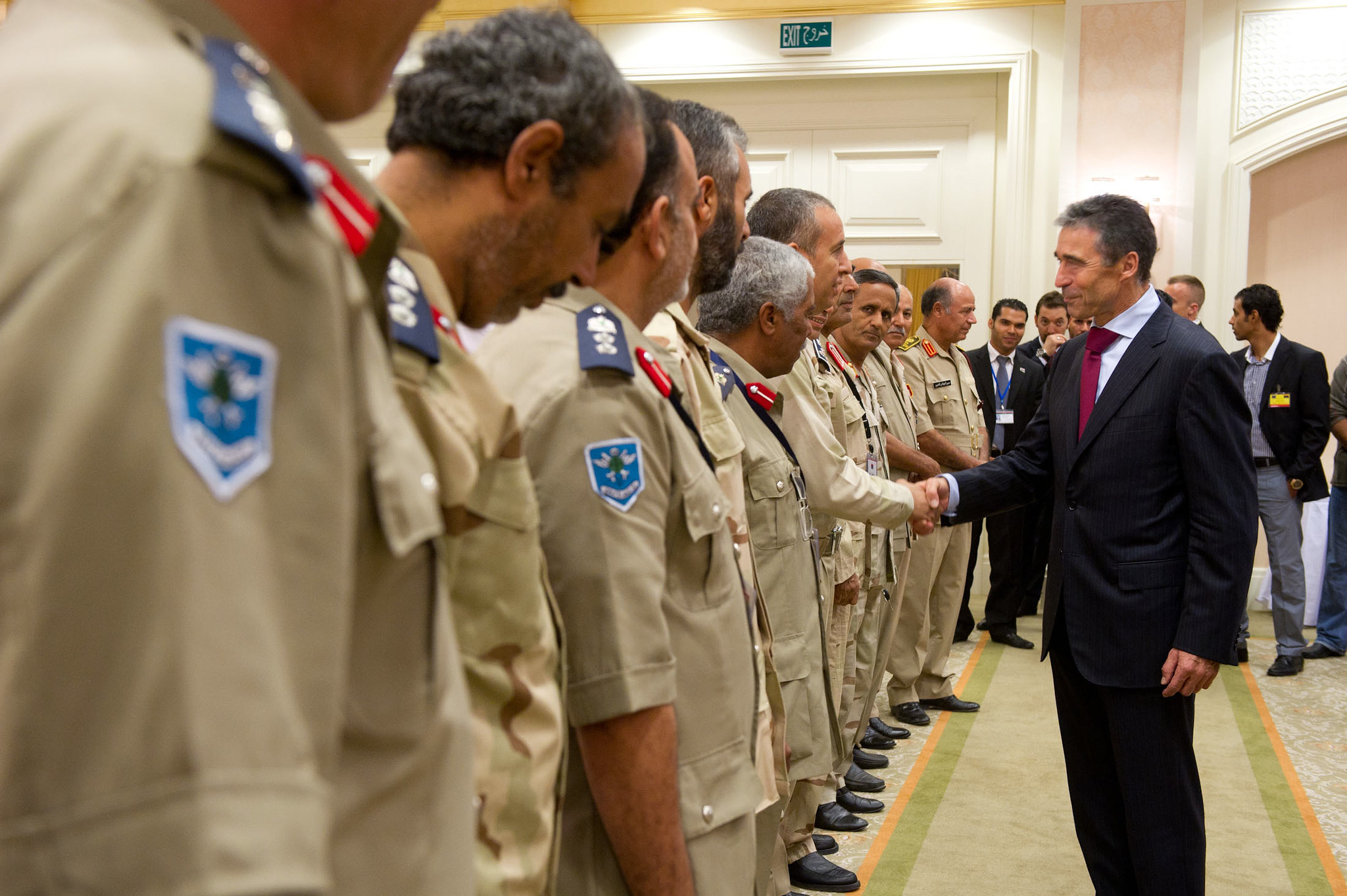
Oct. 31, 2011: NATO Secretary General Anders Rasmussen meets leaders of the National Transitional Council forces in Tripoli. (NATO)

By destroying Libyan government forces, rather than seek a ceasefire and negotiated settlement, as the African Union proposed, NATO helped create a power vacuum in the country.

Elections were held in 2012, at which Islamists failed to win a majority and instead used their militias to maintain political influence. Libya then descended into a failed state, as rival militias vied for control.

The chaos created a safe haven for international terrorism, with Al Qaeda’s Libyan branch Ansar al Sharia and the so-called Islamic State group setting up camps in the country.

Among those fighting with Ansar al Sharia in 2011-12 was Khairi Saadallah, a child soldier who several years later went on to murder three men in a park in Reading. Attacks on Western tourists in Tunisia in 2015, that killed 60 people, were also linked to a terrorist base in Libya.

More than a decade after NATO’s intervention, Libya is split between rival governments and run by militias. A recent survey by The Economist found that Tripoli was one of the worst capital cities in the world to live in.

An MOD spokesperson told Declassified:


“Throughout 2011, the U.K. government was responding to a rapidly changing and volatile situation in Libya and sought to make timely decisions to protect Libyan civilians and U.K. national security. All U.K. military action was taken in accordance with the United Nations mandate to protect civilians.

“Assessments of the different actors in Libya in 2011 were produced as standard by the MoD. These were routinely made available to ministers and senior officials.”

David Cameron, Liam Fox, William Hague and former Home Secretary Theresa May did not respond to requests for comment.


Phil Miller is Declassified UK’s chief reporter. He is the author of Keenie Meenie: The British Mercenaries Who Got Away With War Crimes. Follow him on Twitter at @pmillerinfo

Mark Curtis is the editor of Declassified UK and the author of five books and many articles on UK foreign policy.


This article is from Declassified UK.


US Supreme Court Drops Carbon Bomb on the Planet


https://www.commondreams.org/news/2022/06/30/us-supreme-court-drops-carbon-bomb-planet


One Democratic senator warned the right-wing majority's ruling "could unleash a new era of reckless deregulation that will gut protections for all Americans and the environment."


Jake Johnson June 30, 2022


Update:

The U.S. Supreme Court's right-wing majority handed down a decision Thursday that will severely limit the Environmental Protection Agency's authority to regulate planet-warming greenhouse gas emissions from power plants, undermining the federal government's ability to combat the climate emergency.

In its 6-3 ruling in West Virginia v. Environmental Protection Agency, the court's conservative justices—led by Chief Justice John Roberts—sided with the coal industry and Republican attorneys general who sought to curb the EPA's rulemaking powers under the Clean Air Act.

Amy Coney Barrett, one of the right-wing justices who voted to limit the EPA's authority, has family ties to the fossil fuel industry.

Liberal Justice Elena Kagan warned in her dissent that "today, the court strips the Environmental Protection Agency of the power Congress gave it to respond to 'the most pressing environmental challenge of our time.'"

Environmentalists echoed that assessment in response to the majority's decision, the latest in a series of hugely consequential rulings over the past week. According to EPA data, the power sector represents the United States' second-largest source of greenhouse gas emissions.

"A Supreme Court that sides with the fossil fuel industry over the health and safety of its people is anti-life and beyond broken," said John Paul Mejia, national spokesperson for the youth-led Sunrise Movement. "We cannot and will not let our Democratic leaders standby while an illegitimate court and the GOP goes on the offense."

Wenonah Hauter, executive director of Food & Water Watch, said in a statement that the court's ruling is "part of a broad-based assault on the ability of regulators to protect our air, water, and climate."

"Long-sought by corporate polluters, industry-backed think tanks, and politicians who serve monied fossil fuel interests, this decision strikes at the heart of federal experts' ability to do their jobs," added Hauter, who stressed that "while this ruling intends to hamstring the federal government's ability to regulate dangerous emissions, it does not signal the end of climate action."

"The climate movement must and will continue to pressure agencies and elected officials at the local, state, and federal levels to enact policies that ensure a swift reduction in climate pollution and an end to the fossil fuel era," Hauter said. "The Supreme Court will not stand in the way of the fight for a livable planet."

The court's ruling spells serious issues for President Joe Biden's vow to put the U.S. on a path to 100% clean electricity by 2035. Meanwhile, the administration is moving ahead with oil and gas leasing on public lands, drawing backlash and legal action from climate groups.

The People vs. Fossil Fuels coalition, made up of more than 1,000 U.S.-based environmental groups, called on Biden to use his still-existing authority to "declare a climate emergency and stop new fossil fuel leases, exports, pipelines, and other infrastructure today."

"Using authorities under the National Emergencies Act and the Defense Production Act," the coalition noted, "the president could also halt crude oil exports, stop offshore oil and gas drilling, restrict international fossil fuel investment, and rapidly manufacture and distribute clean and renewable energy systems."

Earlier:

Climate advocates are apprehensively watching the U.S. Supreme Court Thursday morning as it's expected to deliver a ruling that could imperil the federal government's regulatory authority to rein in carbon dioxide emissions from power plants, striking a potentially fatal blow to global efforts to fight the climate crisis.

The closely watched case, formally known as West Virginia v. Environmental Protection Agency, is the culmination of a yearslong legal campaign by Republican attorneys general and right-wing activists financed by the oil and gas industry, which is hoping the high court's right-wing supermajority will hand down a decision that guts the EPA's rulemaking authority.

"The Supreme Court must not give corporations license to recklessly destroy our planet."

If the court does just that, it would spell doom for President Joe Biden's stated goal of transitioning the U.S. to a 100% clean electricity sector by 2035. As the Washington Post notes, West Virginia v. EPA "comes before a Supreme Court that's even more conservative than the one that stopped the Obama administration's plan to drastically reduce power plants' carbon output in 2016."

"This will undoubtedly be the most important environmental law case on the court’s docket this term, and could well become one of the most significant environmental law cases of all time," said Jonathan Adler, an environmental law expert at Case Western Reserve University School of Law.

Given the United States' status as the world's largest historical emitter and second-largest current emitter of planet-warming carbon dioxide, the Supreme Court's decision will have serious ramifications for global efforts to avert climate catastrophe.

"The Supreme Court could hand down an extreme decision in the case of West Virginia v. EPA, which would devastate the federal government's ability to curb climate chaos," Sen. Jeff Merkley (D-Ore.) tweeted late Wednesday. "The Supreme Court must not give corporations license to recklessly destroy our planet."

Sen. Sheldon Whitehouse (D-R.I.) similarly warned earlier this week that the Supreme Court's ruling "could unleash a new era of reckless deregulation that will gut protections for all Americans and the environment."

During oral arguments over the case earlier this year, the Supreme Court's conservative justices appeared inclined to restrict the EPA's regulatory authority to slash carbon emissions—authority that the court affirmed a decade and a half ago in Massachusetts v. EPA.

Climate experts and advocates fear the worst from the industry-friendly Supreme Court majority.

"Each morning at 10 am, my anxiety spikes," Sara Colangelo, director of the Environmental Law and Justice Clinic at Georgetown University Law Center, told the Post Thursday morning, referring to the time the court's ruling is expected to drop.