https://fmovies.ps/tv/watch-station-eleven-online-75478

https://www.marxist.com/they-continue-the-crisis-parliamentary-breakup-in-bulgaria-amidst-war-and-inflation.htm
Emily Wall 30 June 2022
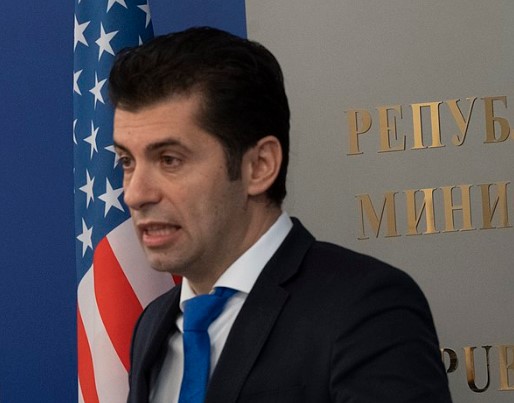
Image: U.S. Secretary of Defense
Share
Tweet
Bulgarian Prime Minister Kiril Petkov and his party “We Continue the Change” (PP, Prodalzhavame Promyanata) – Pro-West darlings, self-proclaimed heroes in the fight against corruption and for liberal democratic values – lost a vote of no-confidence in the National Assembly on 22 June, with 123 in support to 116 against.
This party of Wall Street financiers, as well as US-and-UK-educated technocrats, emerged from the interim government that was hand-picked by President Rumen Radev, which ran the country from May to December 2021. This was during a period of repeat elections and parliamentary crisis in which a ruling majority could not be formed to govern. We described this parliamentary chaos here, and now we see that it continues.
PP, which in last year’s November elections garnered a narrow win over the right-wing GERB party, whose mafia-profiled leader Boiko Borisov had held power for some 12 years, did not take long to fall. Their election platform was based on promising to lead Bulgaria away from its perceived status as looted and ruled by oligarchs, putting it on the the path to a ‘European, modern, liberal future’. They played every pro-West and pro-NATO propaganda card in the book. Whatever illusions existed in their promises soon dissipated. Voter turnout for this third attempt at parliamentary elections was the lowest in 30 years.
The move to expel this fragile government from power by the opposition bloc in Parliament began on 8 June as some members left the ruling coalition, once again leaving the government short of the threshold of minimum seats needed to vote decisively as a majority. The stated reasons for this exodus was the Petkov government’s budget and their betrayal of Bulgaria on the question of relations with North Macedonia. Petkov used his last days after the loss of confidence and before his June 27 resignation to orchestrate a vote in Parliament to remove Bulgaria’s block on North Macedonia’s ascension to the EU, and to urge Macedonian Prime Minister Kovačevski to agree to France’s proposed terms to join the Union.
What failed?
Hopes that PP offered for a facelift of democratic and judicial reform did not last long. Such appeals will increasingly lose their power to move the masses in the future. Liberal free-market rhetoric is completely out of touch with the underlying needs of society suffering the effects of capitalist crisis. Following the 30-year gutting of state resources, and depression brought about by the transition to capitalism, now we have the shock of 15 percent inflation, skyrocketing gas prices, and major problems in agriculture. There is a widening awareness that the country is on the brink of deeper economic fallout from failed and contradictory handling of the COVID-19 pandemic, costs and military aid related to the current war in Ukraine, and to top it off, a hurried switch of currencies to the Euro that is planned to happen at the end of next year.  The increased division in the bourgeoisie in recent years was signalled in the fall of Boiko Borisov's long-standing GERB regime, after it inevitably became too unpopular to be useful to Western imperialism / Image: Defense Visual Information Distribution Service
Consider the current wave of protest around the dissolution of the parliament. While some 5,000 protested in support of the Petkov government on 22 June, the day of the no-confidence vote in parliament, the mood rang hollow and lacked a unified or articulate political expression, despite the fact there were 12 different protests on multiple issues – rising electricity costs, pro and anti-government, etc. – planned that day.
This was for a few reasons. First, Petkov revealed his shallowness by again using cheap business-management-school propaganda to rally support for his continued governance. With the help of the corporate media in Bulgaria and abroad, the attempt by opposition parties to expel him from parliament was portrayed as an attack of “the mafia” against “democracy”; of the “barbaric East” against the “civilised West”. This rhetoric presented the situation as an attack by ugly and stupid Bulgarians against the “smart and beautiful” liberal elite Bulgarians (a trope coined by Borisov in the past to undermine his opposition). Such fairytales do not provide a means of resolving the massive contradictions in Bulgarian society.
The failure over the past decades of all brands of bourgeois political parties and ‘leaders’ has consolidated widespread scepticism towards the viability of the system, and the present regime as a whole. None of the capitalist state’s representatives in parliament are capable of raising mass support. This is evidenced by dwindling participation in elections, despite mounting discontent and will to throw out the establishment parties, the last manifestation of which peaked in the protests in the summer of 2020. Clearly, there is no solution to these issues on the basis of capitalism, despite all talk of “corruption” as the core problem plaguing the country, with the easy fix of replacing the “rotten” government with a more “honest” one.
Marxists understand that, in reality, the division we see playing out in parliament reflects a split in the ruling capitalist class. We have, on the pro-government side, the PP along with the (falsely named, and thoroughly pro-capitalist) “Bulgarian Socialist Party” (BSP) and right-wing “Democratic Bulgaria.” On the anti-government side is the opposition bloc composed of GERB, the “Movement for Rights and Freedoms” (DPS, the party representing the Turkish minority in Bulgaria), “There is Such a People” (Ima Takav Narod, ITN, a confused populist party led by singer Slavi Trifonov, who originally entered parliament as an anti-GERB party and surpassed them in votes in the July 2021 election), and Revival (Vazrazhdane, the fringe nationalist platform for anti-NATO and anti-EU sentiment). The capitalist class in Bulgaria is composed of competing interests. The local oligarchs would profit from economic ties with Russia, while western capital and its puppets are at present used to cut off all business to the East and punish Putin – exemplified by the role of PP.
The increased division in the bourgeoisie in recent years was signalled in the fall of the long-standing GERB regime, whom the Western imperialists wanted to dispense with in order to have a fresh tool of influence, after GERB inevitably became too unpopular to be useful. But now this conflict of interests has further worsened following the Russian invasion of Ukraine in late February, wherein two poles of capitalist power are now dragging Eastern Europe through war, piling pressure on the region to militarise and participate in sanctions on Russia, and to finance support for the Zelensky regime in Ukraine.
Petkov and the beloved war in Ukraine
The drastic drop in the popularity of PP leading up to the no-confidence vote occurred in part because their hard stance against corruption turned out to be a hard pro-West stance, as revealed by the question of war and support for Ukraine. Petkov has adopted the role of a wannabe Zelensky, a small dog barking at Russia in defiance, in war-escalating fashion. He did so to pose as a darling of the West, in spite of the heavy dependence of Bulgaria on Russian gas supplies, and exposing the country to predictable Russian retaliation. 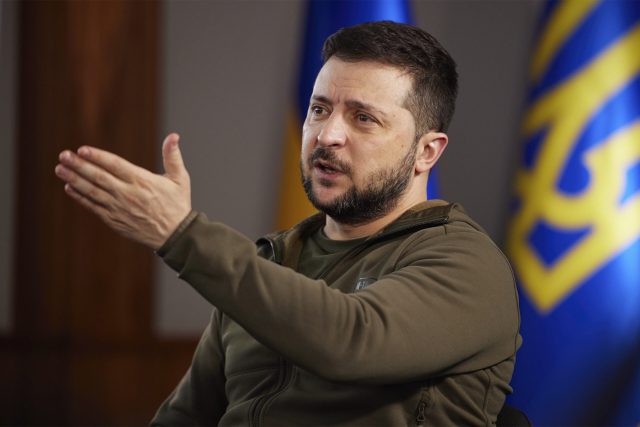 Petkov has adopted the role of a wannabe Zelensky, a small dog barking at Russia, in order to pose as a darling of the West / Image: ZUMAPRESS.com
Despite basic economic logic, internal opposition and the grave misgivings, for example, of President Radev, Petkov refused to agree to Russian terms for natural gas payment in roubles, which led to Russia cutting off its gas, 90 percent of Bulgaria’s total supply, in late April. Within days of this event there was talk of limiting the public transit to a reduced schedule, decreasing the temperature of water over the summer, and shutting down elementary schools because electricity was too expensive. Then came unconvincing reassurances that Bulgaria has plenty of gas stored for now, and will transition, over the summer if not overnight, to other gas suppliers (with much help from the American ambassador).
Petkov has stopped short of providing a direct supply of weapons to Kiev, but is “very much for” the aid provided by Bulgarian weapons manufacturers, selling arms or parts through third countries (arms exports have reportedly increased by three times since the start of the war). He has also agreed to provide technical support to repair Ukrainian weapons, based on a deal made in Kiev in late April. To make sure everyone knows how much he supports Ukraine, he donated a month’s salary to the cause and made an appeal to Bulgarians to do the same! Then, on 28 June, the Petkov government suddenly decided to expel from the country the entire staff of the Russian Embassy, calling them “spies” working against Sofia’s interests, leading to a shut-down of all the consulates.
He has dramatised the ousting of his government as a Kremlin plot, with himself honoured to play such a noble role as target of the forces of evil, saying: “Russia really wants to take down this government because it will show that if you don’t play with them, then governments fall… It would be a great example of how the diversification strategy of gas does not work.” We are all grateful to Petkov for this lesson!
The opposition bloc and the ‘socialists’
Bulgarian society largely supports neutrality in the Russia-Ukraine conflict and has historical ties and affinity with Russian culture. At the fringe, this pro-Russia lean is expressed in hard pro-Kremlin nationalism. Such sentiment is mainly directed through Revival, a new party in Parliament (it won 13 of 240 seats in the last election) whose leader Kostadin Kostadinov radically opposes the Ukrainian regime and calls the pro-government protesters in Bulgaria “fascist scum.” This party has taken up various anti-government causes, organising anti-vaccination mandate protests and falling in line with anti-Macedonian chauvinism. For instance, there was the Bulgarian nationalist attempt to block North Macedonia from EU ascension on the basis of their allegedly falsifying the history of relations between Bulgaria and Macedonia, which they see as belonging to the Bulgarian nation. They also serve to channel much of the anti-Western-imperialism mood, demanding Bulgaria leave the EU and NATO and calling for a referendum on the introduction of the Euro.
Historically, since the transition, the misnamed Bulgarian Socialist Party (BSP) has similarly served as a tool for the Bulgarian bourgeoisie (as well as the western imperialists) while resting on support from their pro-Russia base. They too have refused support to Ukraine, and devote party time and resources to obsess over the contents of the North Macedonian constitution. Yet the BSP stood with the Petkov bloc, which is not surprising from the point of view of how irrelevant they are (their support hit a record low in the last election, as the discredited Ninova clings to authority within the party), and how opportunistic their policy is. As of 29 June, the BSP suspended its willingness to be in a block with PP until Petkov steps away from leadership, following his expulsion of Russian diplomats.
A week after the invasion of Ukraine began, the Petkov government forced the Minister of Defence, Stefan Yanev, to resign after he publicly came out in favour of neutrality in what he insisted on calling the Russian “special operation.” Yanev, who was given this position in Petkov’s PP, and who had been appointed acting Prime Minister in the caretaker government, and formerly served as a general in the Bulgarian Army, has now launched a new party called “Bulgaria Rise.” This party will run in the snap elections that are probably due this fall after the likely failure of reforming a government based on the current elected members of the National Assembly. In his conservative party, we again see nothing pro-working class and therefore nothing genuinely democratic or progressive. His campaign will appeal to “national interest” and ensuring “security” and the protection of family values, and will predictably fall into the category of parties heavily accused of corrupt and dishonest practices by opponents who do the same.
Which way forward?
The instability and dysfunction in parliament is a symptom, not just a cause, of the economic crisis and instability inherent in capitalism. It is a product of the selling out of the peoples’ interests, which has been the defining feature of Bulgaria’s incorporation into the capitalist world beginning more than 30 years ago. In a period of global capitalist decline, such contradictions are deepening. The selling out of the peoples’ interests has been the defining feature of Bulgaria’s incorporation into the capitalist world / Image: Kevin Walsh
Here we find the actual basis of what could be a revolutionary movement, based on the very people who are now entering, or could soon enter en masse, into the political arena and class struggle in Bulgaria. Real solutions will not come about by way of reforms granted by the pro-capitalist, so-called anti-establishment parties of the kind spawned by the last large wave of protests in 2020. Rather, genuine progress will come by a strengthening of the class struggle, based on a programme of socialist political and economic demands.
Such a workers’ alternative is currently missing, but Bulgaria has a rich revolutionary tradition that can be revived as capitalism proves continuously incapable of solving the burning problems of the working class. If established on the right principles, it could grow quickly to lead a transformation of the situation in Bulgaria: to throw the ruling class out as a whole rather than in part, and to oppose imperialist war and plunder, defending national interests and security on the basis of international workers' revolution and cross-border solidarity.
Such a revolutionary party must boldly embrace an anti-capitalist and socialist programme, by confronting the bureaucratic degeneration of the so-called communist regime before 1989, while defending the idea of collective ownership of the means of production, the expropriation of the oligarchy and imperialist exploiters and the establishment of a planned economy democratically controlled by the working class.
In order to do so, it is necessary to sharply cut through the bourgeois and petit-bourgeois illusions that capitalism can provide for the wellbeing of the majority; and that the present regime can be reformed out of cronyism and corruption, which is endemic in capitalism itself. This is the factor needed to finally attain the goals of taking social services and previously-privatised sectors of the economy back into the hands of the people, and charting a future free from enslavement to capital.

 In the wake of the Buffalo and Uvalde mass shootings, 70 percent of Republicans said it is more important to protect gun rights than to control gun violence, while 92 percent of Democrats and 54 percent of independents expressed the opposite view.

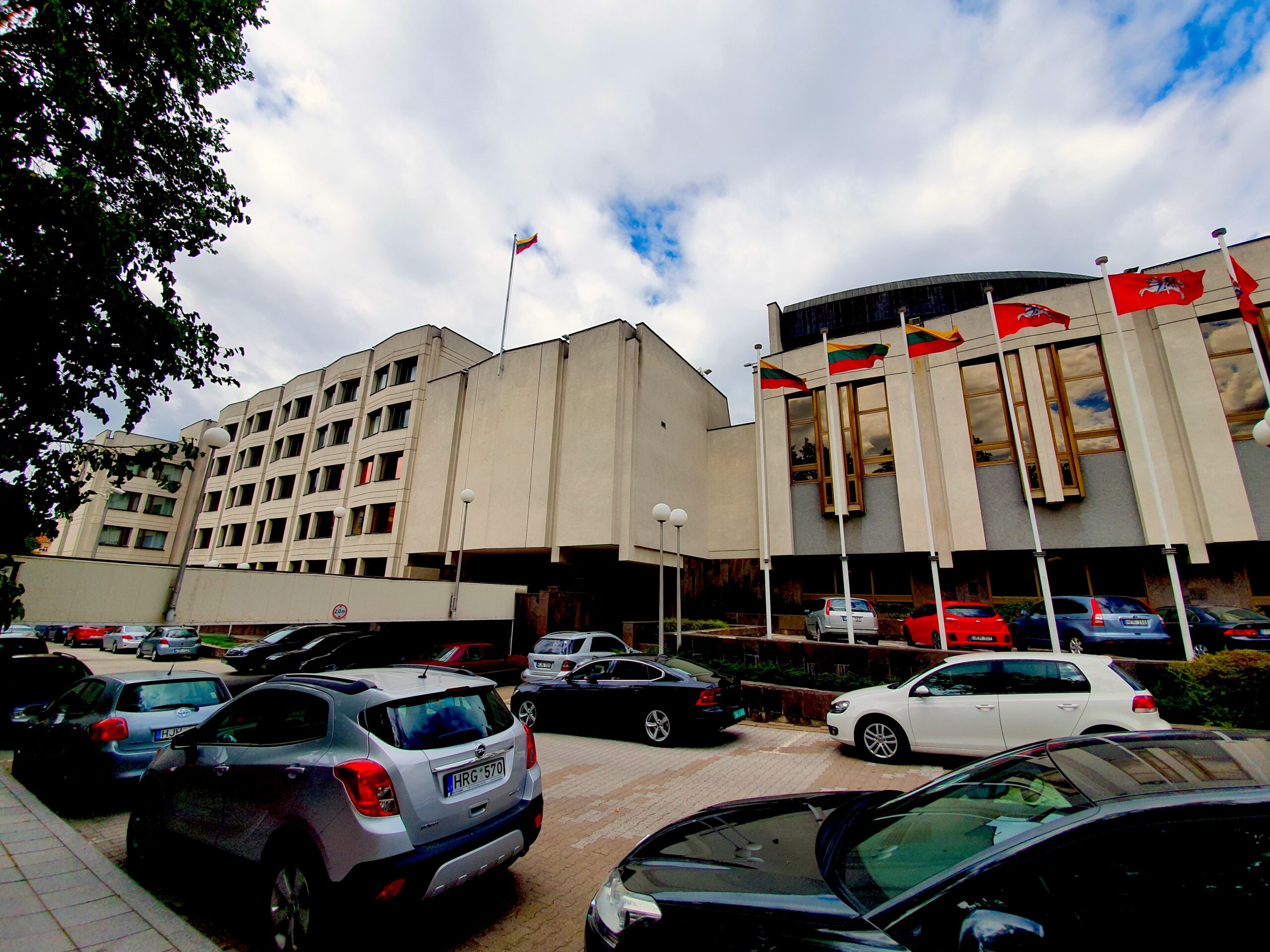
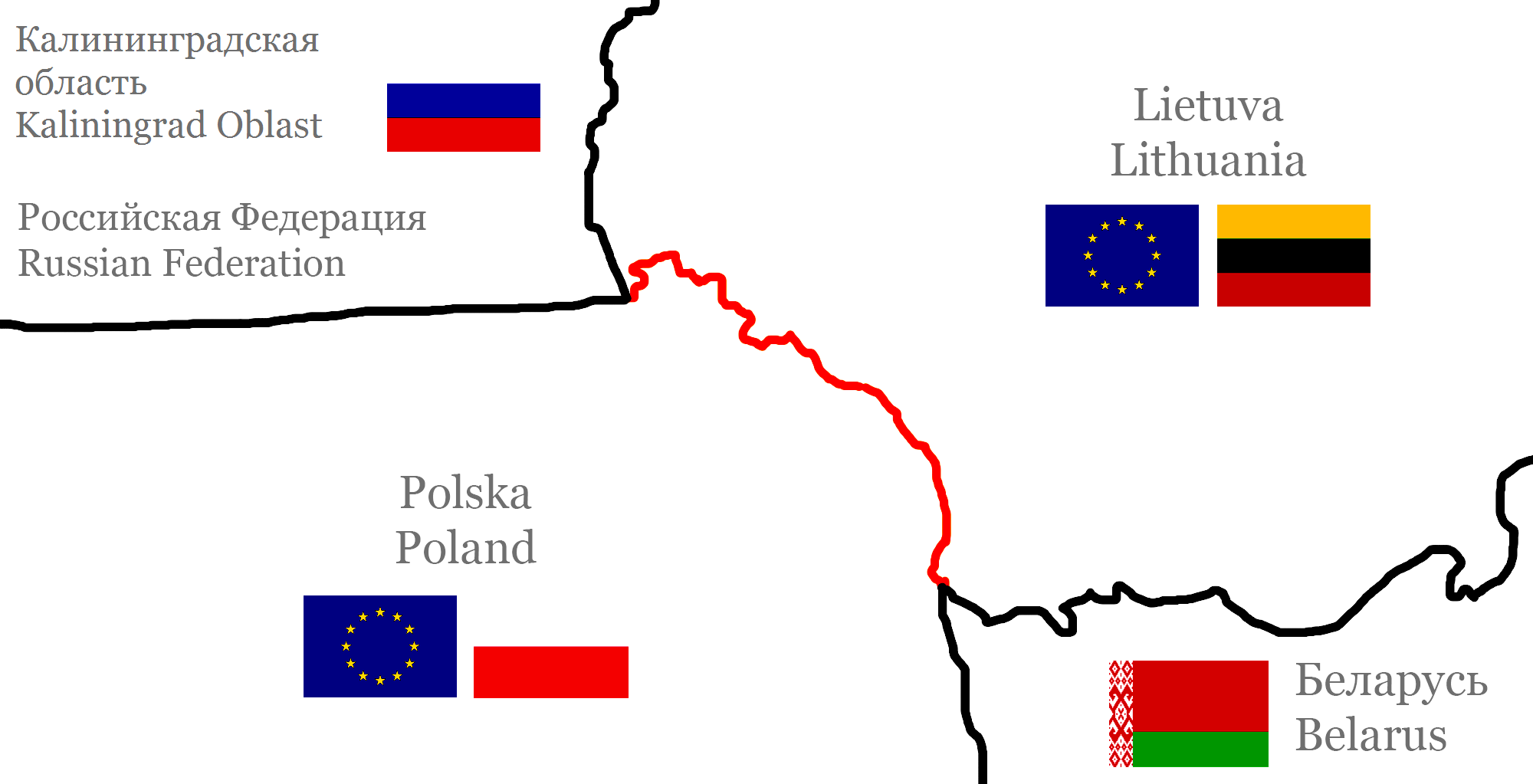
 On June 18 the government of Lithuania acted on a decision by the European Commission that goods and cargo subject to European Union sanctions could be prohibited from transiting between one part of Russia to another, so long as they passed through E.U. territory.
https://www.sciencedaily.com/releases/2022/06/220630142129.htm
New device has the potential to provide an alternative to opioids and other highly addictive drugs
Date: June 30, 2022
Source: Northwestern University
Summary: Researchers have developed a small, soft, flexible implant that relieves pain on demand and without the use of drugs. The first-of-its-kind device could provide a much-needed alternative to opioids and other highly addictive medications. It works by softly wrapping around nerves to deliver precise, targeted cooling, which numbs nerves and blocks pain signals to the brain. After the device is no longer needed, it naturally absorbs into the body -- bypassing the need for surgical extraction.
FULL STORY
A Northwestern University-led team of researchers has developed a small, soft, flexible implant that relieves pain on demand and without the use of drugs. The first-of-its-kind device could provide a much-needed alternative to opioids and other highly addictive medications.
The biocompatible, water-soluble device works by softly wrapping around nerves to deliver precise, targeted cooling, which numbs nerves and blocks pain signals to the brain. An external pump enables the user to remotely activate the device and then increase or decrease its intensity. After the device is no longer needed, it naturally absorbs into the body -- bypassing the need for surgical extraction.
The researchers believe the device has the potential to be most valuable for patients who undergo routine surgeries or even amputations that commonly require post-operative medications. Surgeons could implant the device during the procedure to help manage the patient's post-operative pain.
The study will be published in the July 1 issue of the journal Science. The paper describes the device's design and demonstrates its efficacy in an animal model.
"Although opioids are extremely effective, they also are extremely addictive," said Northwestern's John A. Rogers, who led the device's development. "As engineers, we are motivated by the idea of treating pain without drugs -- in ways that can be turned on and off instantly, with user control over the intensity of relief. The technology reported here exploits mechanisms that have some similarities to those that cause your fingers to feel numb when cold. Our implant allows that effect to be produced in a programmable way, directly and locally to targeted nerves, even those deep within surrounding soft tissues."
A bioelectronics pioneer, Rogers is the Louis Simpson and Kimberly Querrey Professor of Materials Science and Engineering, Biomedical Engineering and Neurological Surgery in the McCormick School of Engineeringand Northwestern University Feinberg School of Medicine. He also is the founding director of the Querrey Simpson Institute for Bioelectronics. Jonathan Reeder, a former Ph.D. candidate in Rogers' laboratory, is the paper's first author.
How it works
Although the new device might sound like science fiction, it leverages a simple, common concept that everyone knows: evaporation. Similar to how evaporating sweat cools the body, the device contains a liquid coolant that is induced to evaporate at the specific location of a sensory nerve.
"As you cool down a nerve, the signals that travel through the nerve become slower and slower -- eventually stopping completely," said study coauthor Dr. Matthew MacEwan of Washington University School of Medicine in St. Louis. "We are specifically targeting peripheral nerves, which connect your brain and your spinal cord to the rest of your body. These are the nerves that communicate sensory stimuli, including pain. By delivering a cooling effect to just one or two targeted nerves, we can effectively modulate pain signals in one specific region of the body."
To induce the cooling effect, the device contains tiny microfluidic channels. One channel contains the liquid coolant (perfluoropentane), which is already clinically approved as an ultrasound contrast agent and for pressurized inhalers. A second channel contains dry nitrogen, an inert gas. When the liquid and gas flow into a shared chamber, a reaction occurs that causes the liquid to promptly evaporate. Simultaneously, a tiny integrated sensor monitors the temperature of the nerve to ensure that it's not getting too cold, which could cause tissue damage.
"Excessive cooling can damage the nerve and the fragile tissues around it," Rogers said. "The duration and temperature of the cooling must therefore be controlled precisely. By monitoring the temperature at the nerve, the flow rates can be adjusted automatically to set a point that blocks pain in a reversible, safe manner. On-going work seeks to define the full set of time and temperature thresholds below which the process remains fully reversible."
Precision power
While other cooling therapies and nerve blockers have been tested experimentally, all have limitations that the new device overcomes. Previously researchers have explored cryotherapies, for example, which are injected with a needle. Instead of targeting specific nerves, these imprecise approaches cool large areas of tissue, potentially leading to unwanted effects such as tissue damage and inflammation.
At its widest point, Northwestern's tiny device is just 5 millimeters wide. One end is curled into a cuff that softly wraps around a single nerve, bypassing the need for sutures. By precisely targeting only the affected nerve, the device spares surrounding regions from unnecessary cooling, which could lead to side effects.
"You don't want to inadvertently cool other nerves or the tissues that are unrelated to the nerve transmitting the painful stimuli," MacEwan said. "We want to block the pain signals, not the nerves that control motor function and enables you to use your hand, for example."
Previous researchers also have explored nerve blockers that use electrical stimulation to silence painful stimuli. These, too, have limitations.
"You can't shut down a nerve with electrical stimulation without activating it first," MacEwan said. "That can cause additional pain or muscle contractions and is not ideal, from a patient's perspective."
Disappearing act
This new technology is the third example of bioresorbable electronic devices from the Rogers lab, which introduced the concept of transient electronics in 2012, published in Science. In 2018, Rogers, MacEwan and colleagues demonstrated the world's first bioresorbable electronic device -- a biodegradable implant that speeds nerve regeneration, published in Nature Medicine. Then, in 2021, Rogers and colleagues introduced atransient pacemaker, published in Nature Biotechnology.
All components of the devices are biocompatible and naturally absorb into the body's biofluids over the course of days or weeks, without needing surgical extraction. The bioresorbable devices are completely harmless -- similar to absorbable stitches.
At the thickness of a sheet of paper, the soft, elastic nerve cooling device is ideal for treating highly sensitive nerves.
"If you think about soft tissues, fragile nerves and a body that's in constant motion, any interfacing device must have the ability to flex, bend, twist and stretch easily and naturally," Rogers said. "Furthermore, you would like the device to simply disappear after it is no longer needed, to avoid delicate and risky procedures for surgical removal."
The study, "Soft, bioresorbable coolers for reversible conduction block of peripheral nerves," was supported by the Phil and Penny Knight Campus for Accelerating Scientific Impact, the Querrey Simpson Institute for Bioelectronics, and the National Science Foundation (award number CMM1635443).
Story Source:
Materials provided by Northwestern University. Original written by Amanda Morris. Note: Content may be edited for style and length.
Journal Reference: Jonathan T. Reeder, Zhaoqian Xie, Quansan Yang, Min-Ho Seo, Ying Yan, Yujun Deng, Katherine R. Jinkins, Siddharth R. Krishnan, Claire Liu, Shannon McKay, Emily Patnaude, Alexandra Johnson, Zichen Zhao, Moon Joo Kim, Yameng Xu, Ivy Huang, Raudel Avila, Christopher Felicelli, Emily Ray, Xu Guo, Wilson Z. Ray, Yonggang Huang, Matthew R. MacEwan, John A. Rogers. Soft, bioresorbable coolers for reversible conduction block of peripheral nerves. Science, 2022; 377 (6601): 109 DOI: 10.1126/science.abl8532
