Saturday, July 2, 2022

Lithuania’s Brinkmanship

Scott Ritter


https://consortiumnews.com/2022/06/30/scott-ritter-lithuanias-brinkmanship/


The restoration of Russia’s rail connection with Kaliningrad is urgently needed to avoid a conflict in the Baltics that has worried NATO for a long time.
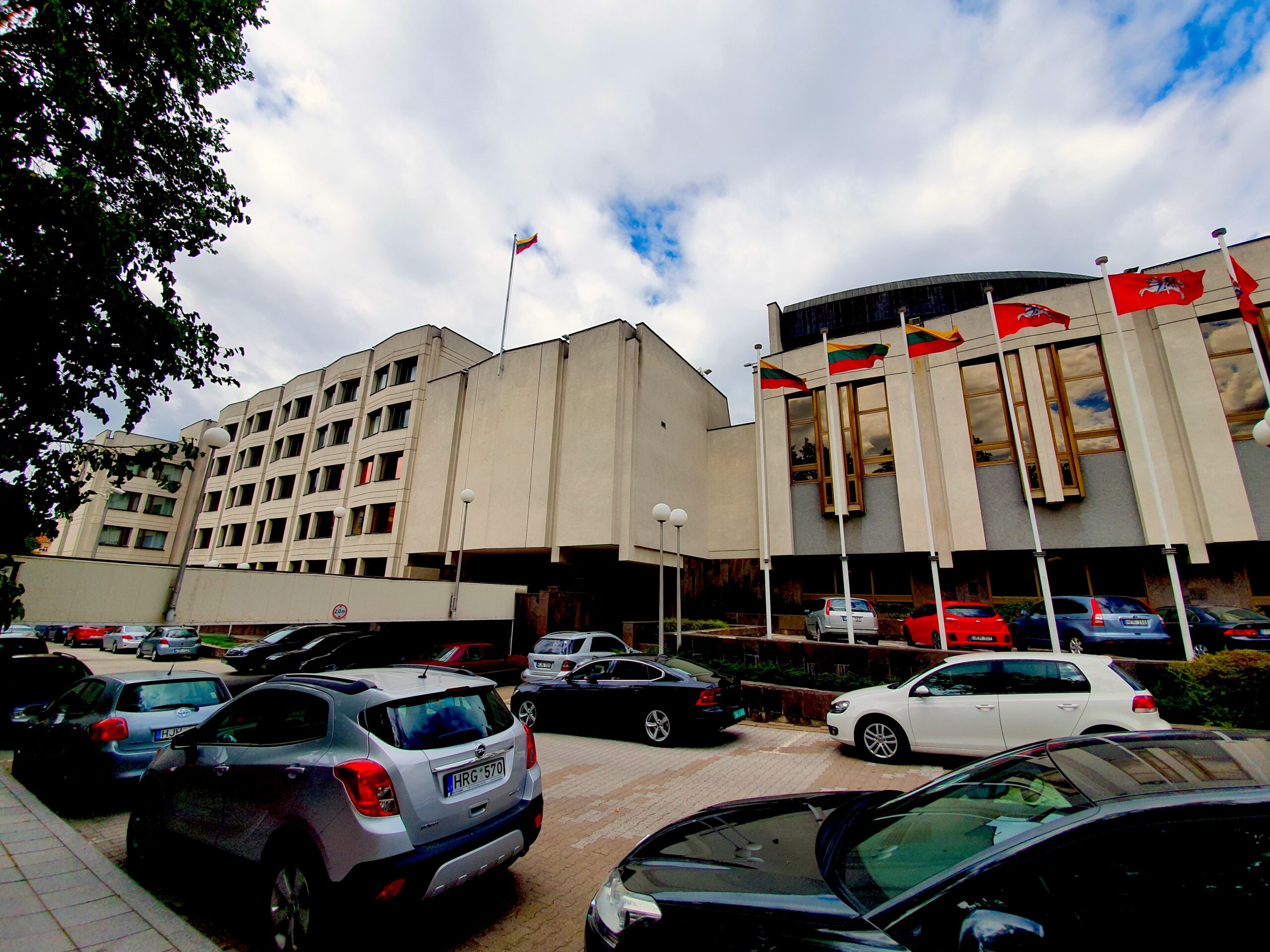


Lithuanian government building in Vilnius. (Pofka, CC BY-SA 4.0, Wikimedia Commons)

By Scott Ritter
Special to Consortium News

On June 18 the government of Lithuania acted on a decision by the European Commission that goods and cargo subject to European Union sanctions could be prohibited from transiting between one part of Russia to another, so long as they passed through E.U. territory.

Almost immediately Lithuania moved to block Russia from shipping certain categories of goods and materials by rail to the Russian enclave of Kaliningrad, encompassing the former East Prussian Baltic port city of Konigsberg and its surrounding environs. They were absorbed into Russia proper as a form of war reparations at the end of the Second World War.

Lithuania cited its legal obligation as an E.U. member to enforce E.U. sanctions targeting Russia. Russia, citing a 2002 treaty with Lithuania which ostensibly prohibits such an action, has called the Lithuanian move a blockade and has threatened a military response.

Lithuania, as a member of the North Atlantic Treaty Organization, or NATO, is afforded the collective security guarantees spelled out in Article 5 of the NATO Charter, which stipulate that an attack against one member is an attack against all. Through its actions, Lithuania risked bringing Russia and NATO to the brink of armed conflict, the consequences of which could be dire for the entire world given the respective nuclear arsenals of the two sides.

From the moment Russia initiated its so-called “Special Military Operation” in Ukraine, the nations that comprise NATO have been engaged in a delicate dance around the issue of how to support Ukraine and punish Russia without crossing the line of committing an overt act of war that could prompt Russia to respond militarily, thereby triggering a series of cause-effect actions that could lead to a general European conflict, and perhaps World War III.
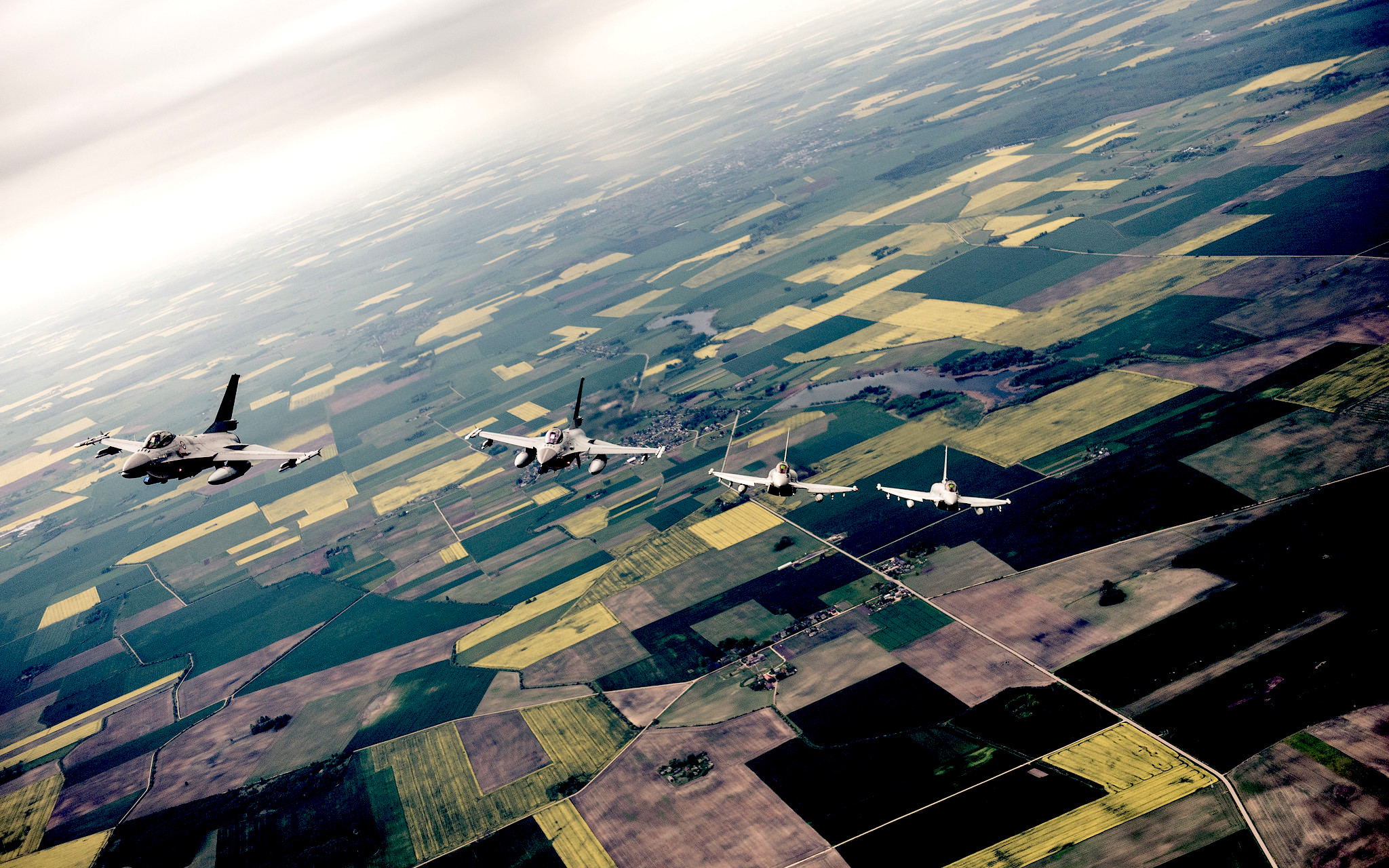

A formation of NATO fighter jets flying over Lithuania in 2015. (NATO)

In retrospect, the early debates in the European halls of power about whether to provide Ukraine with heavy weaponry seem almost innocent when compared to the massive infusion of weaponry that is taking place today.

Even Russia has softened its hardline stance going in, where it had threatened unimaginable consequences for any nation that interfered with its military operation in Ukraine.


Today the situation has evolved to the point where NATO is engaged in a de facto proxy conflict with Russia on Ukrainian soil which is designed, frankly speaking, to kill as many Russian soldiers as possible.

Russian Objectives

Russia, for its part, has adapted its posture into one that is designed to absorb these NATO-linked blows while pursuing its stated military and political objectives in Ukraine with a single-minded purpose.

Ukraine has used NATO-provided weapons and NATO-provided intelligence to lethal effect on the battlefield, killing several Russian generals, sinking the flagship of the Russian Black Sea Fleet and killing and wounding thousands of Russian soldiers while destroying hundreds, if not thousands, of vehicles and pieces of military equipment.

The relative restraint of the Russian approach is evident when contrasted with the hysteria of the United States during its two wars in Iraq and Afghanistan.


Qassem Suleimani, an Iranian general who oversaw an Iraqi resistance against the U.S. occupation of Iraq in the mid-2000’s that was purportedly responsible for the deaths of hundreds of U.S. servicemen, was assassinated by the U.S. government more than a decade after his alleged activities. And it was only a year ago that the U.S. media was in an uproar over allegations (subsequently proven false) that Russia was offering bounties to the Taliban to kill U.S. soldiers stationed in Afghanistan.

The latter claim best illustrates the hypocrisy of the U.S. today. The “bounty” claim was premised on a single attack that left three U.S. servicemen dead. The U.S. today openly brags about killing hundreds of Russians in Ukraine.

Red Lines

Russia’s red lines in Ukraine have evolved to encompass two basic principles — no direct military intervention by NATO forces on Ukrainian soil/airspace and no attack against Russia proper.

Even here, Russia has displayed great patience, tolerating the presence of U.S. special operations forces in Ukraine and holding back when Ukrainian forces, most likely supported by NATO-provided intelligence, engage in limited attacks on targets inside Russia.

Rather than respond by attacking the “decision making centers” outside Ukraine responsible for supporting these actions, Russia has engaged in a graduated campaign of escalation inside Ukraine, striking the very weapons being delivered under the oversight of U.S. commandos and the Ukrainian forces who use them.

It is in this context that the Lithuanian decision to impose a rail blockade on Russia seems to be a stark departure from current NATO and E.U. policy.

Russia immediately made its ire known, indicating that it viewed the Lithuanian actions as an overt act of war which, if not reversed, would result in “practical” measures outside the realm of diplomacy to rectify the situation.


The rhetoric was ratcheted up to high, however, when Andrey Klimov, a Russian senator who chairs the Commission for the Defense of State Sovereignty, called the Lithuanian action “an act of aggression” which would result in Russia seeking to “solve the problem of the Kaliningrad transit created by Lithuania by ANY means chosen by us.”

The Suwalki Gap
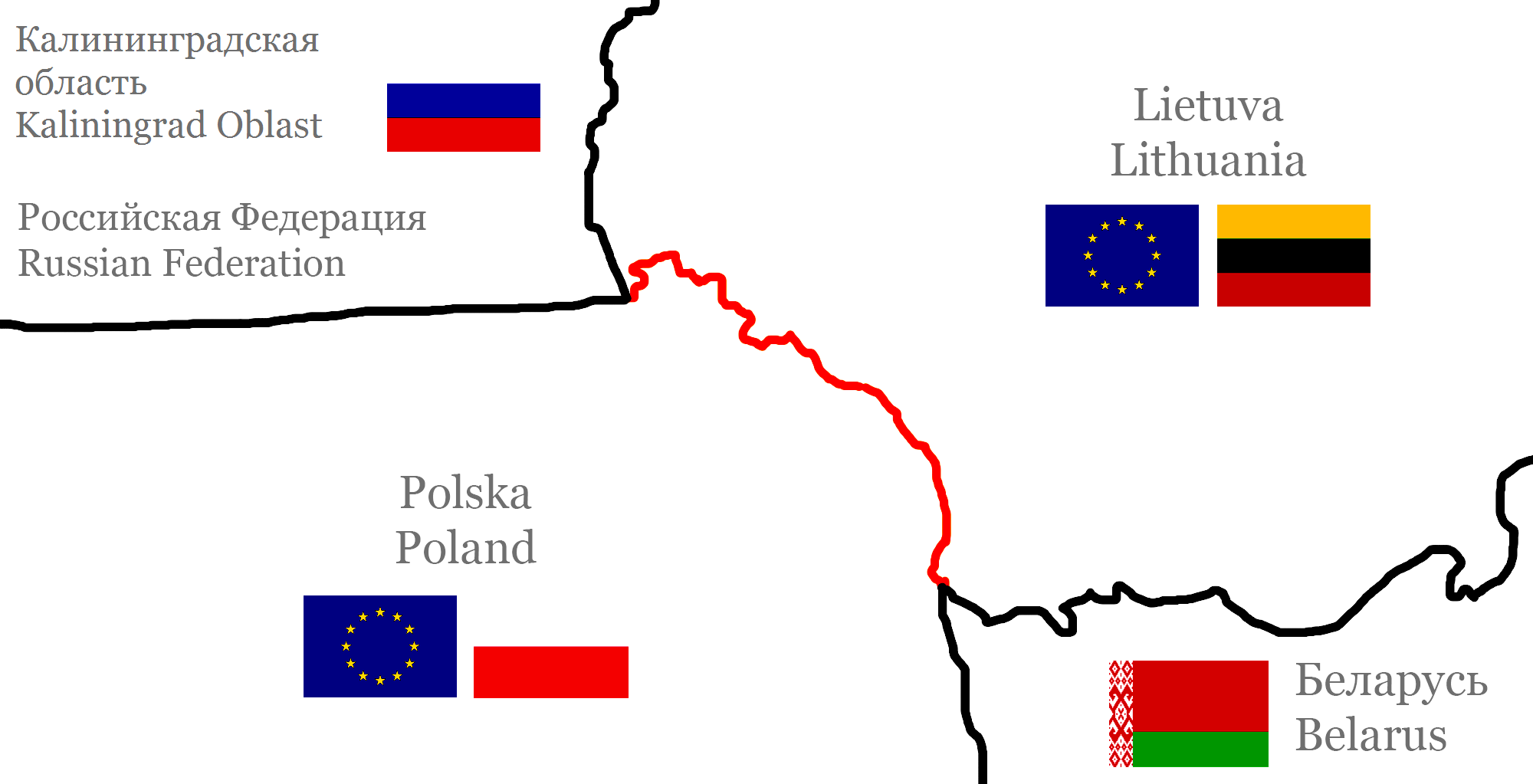

Close-up at the Suwalki Gap. (Jakub Luczak, Wikimedia Commons)

For years, NATO has worried about the possibility of a war with Russia in the Baltics. Much of NATO’s attention has been focused on defending the “Suwalki Gap,” a 60-mile-long stretch of border between Poland and Lithuania that separates Belarus from Kaliningrad. Western military experts have long speculated that, in the event of any conflict between Russia and NATO, Russian forces would seek to advance on the Suwalki Gap, joining Kaliningrad with Belarus and severing the three Baltic nations from the rest of Europe.

But while NATO has focused on defending the Sulwaki Gap, a Russian lawmaker has suggested that any Russian military attack in the Baltics would avoid involving Belarus. Instead, it would focus on securing a land bridge between Kaliningrad and Russia by driving north, along the Baltic coastline, to Saint Petersburg.

A series of wargames conducted by RAND around 2014 showed that NATO was, at the time, not able to adequately defend the Baltics from a concerted Russian attack. According to the wargame results, Russian forces were able to overrun the Baltics in about 60 hours.

Similar projections of Russian offensive prowess against Ukraine — where some military officials, including U.S. chairman of the Joint Chiefs of Staff, General Mark Miley, predicted that Russian forces would take Kiev within 72 hours — proved wrong. But the reality is that the militaries of the three Baltic nations are not on par with those of Ukraine, either in quality or quantity, and there is little doubt Russia, even distracted in Ukraine, could deliver a fatal blow to the militaries of the three Baltic nations.

Escalating Rhetoric
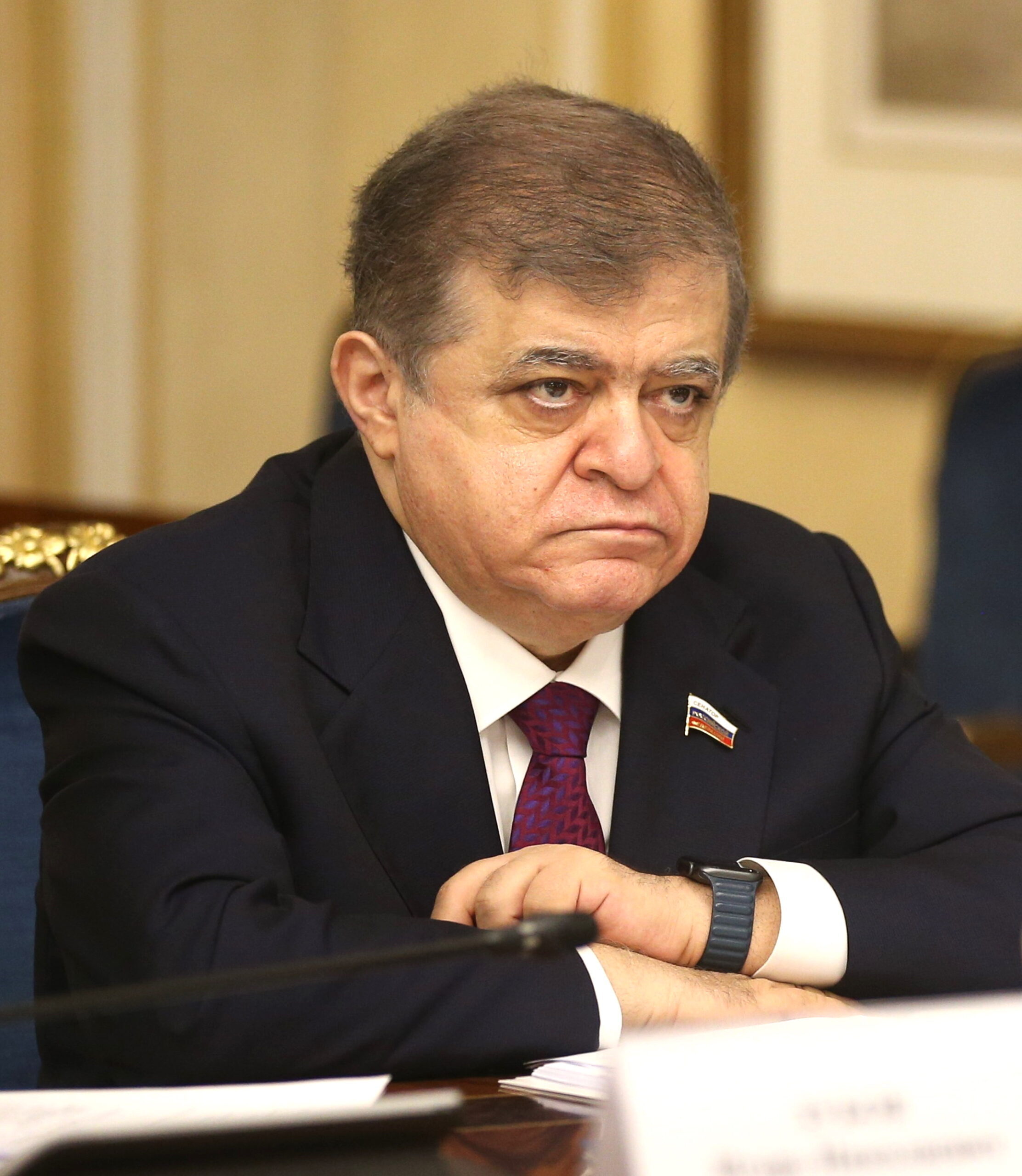

Vladimir Dzhabarov in 2021. (Council.gov.ru, CC BY 4.0, Wikimedia Commons)

The rhetoric out of Russia continues to escalate. Vladimir Dzhabarov, a deputy head of the Foreign Affairs Committee in the lower house of Russia’s Parliament, has threatened that any continued blockade of Kaliningrad “could lead to an armed conflict,” noting that “the Russian state must protect its territory and ensure its security. If we see that a threat to our security that is fraught with a loss of territory, we will certainly take extreme measures, and nothing will stop us.”

If there is one take away from the Russian military operation in Ukraine, it is that Russia doesn’t bluff. NATO and the rest of Europe can rest assured that unless a solution is found that brings an end to Lithuania’s blockade of Kaliningrad, there will be a war between NATO and Russia.

With this reality in mind, the E.U. is working on a compromise arrangement with Lithuania that seeks to have the Russian rail connection with Kaliningrad returned to normal in the near future. This deal, however, must work to Russia’s satisfaction, an outcome which is yet uncertain.


Unlike the Ukrainian conflict, a war in the Baltics will have existential aspects for both sides which brings the possibility — indeed probability — of nuclear weapons being used. This is an outcome that benefits no one and threatens everyone.


Dissolving implantable device relieves pain without drugs


https://www.sciencedaily.com/releases/2022/06/220630142129.htm


New device has the potential to provide an alternative to opioids and other highly addictive drugs 

Date: June 30, 2022

Source: Northwestern University

Summary: Researchers have developed a small, soft, flexible implant that relieves pain on demand and without the use of drugs. The first-of-its-kind device could provide a much-needed alternative to opioids and other highly addictive medications. It works by softly wrapping around nerves to deliver precise, targeted cooling, which numbs nerves and blocks pain signals to the brain. After the device is no longer needed, it naturally absorbs into the body -- bypassing the need for surgical extraction.


FULL STORY


A Northwestern University-led team of researchers has developed a small, soft, flexible implant that relieves pain on demand and without the use of drugs. The first-of-its-kind device could provide a much-needed alternative to opioids and other highly addictive medications.


The biocompatible, water-soluble device works by softly wrapping around nerves to deliver precise, targeted cooling, which numbs nerves and blocks pain signals to the brain. An external pump enables the user to remotely activate the device and then increase or decrease its intensity. After the device is no longer needed, it naturally absorbs into the body -- bypassing the need for surgical extraction.

The researchers believe the device has the potential to be most valuable for patients who undergo routine surgeries or even amputations that commonly require post-operative medications. Surgeons could implant the device during the procedure to help manage the patient's post-operative pain.

The study will be published in the July 1 issue of the journal Science. The paper describes the device's design and demonstrates its efficacy in an animal model.

"Although opioids are extremely effective, they also are extremely addictive," said Northwestern's John A. Rogers, who led the device's development. "As engineers, we are motivated by the idea of treating pain without drugs -- in ways that can be turned on and off instantly, with user control over the intensity of relief. The technology reported here exploits mechanisms that have some similarities to those that cause your fingers to feel numb when cold. Our implant allows that effect to be produced in a programmable way, directly and locally to targeted nerves, even those deep within surrounding soft tissues."

A bioelectronics pioneer, Rogers is the Louis Simpson and Kimberly Querrey Professor of Materials Science and Engineering, Biomedical Engineering and Neurological Surgery in the McCormick School of Engineeringand Northwestern University Feinberg School of Medicine. He also is the founding director of the Querrey Simpson Institute for Bioelectronics. Jonathan Reeder, a former Ph.D. candidate in Rogers' laboratory, is the paper's first author.

How it works

Although the new device might sound like science fiction, it leverages a simple, common concept that everyone knows: evaporation. Similar to how evaporating sweat cools the body, the device contains a liquid coolant that is induced to evaporate at the specific location of a sensory nerve.

"As you cool down a nerve, the signals that travel through the nerve become slower and slower -- eventually stopping completely," said study coauthor Dr. Matthew MacEwan of Washington University School of Medicine in St. Louis. "We are specifically targeting peripheral nerves, which connect your brain and your spinal cord to the rest of your body. These are the nerves that communicate sensory stimuli, including pain. By delivering a cooling effect to just one or two targeted nerves, we can effectively modulate pain signals in one specific region of the body."

To induce the cooling effect, the device contains tiny microfluidic channels. One channel contains the liquid coolant (perfluoropentane), which is already clinically approved as an ultrasound contrast agent and for pressurized inhalers. A second channel contains dry nitrogen, an inert gas. When the liquid and gas flow into a shared chamber, a reaction occurs that causes the liquid to promptly evaporate. Simultaneously, a tiny integrated sensor monitors the temperature of the nerve to ensure that it's not getting too cold, which could cause tissue damage.

"Excessive cooling can damage the nerve and the fragile tissues around it," Rogers said. "The duration and temperature of the cooling must therefore be controlled precisely. By monitoring the temperature at the nerve, the flow rates can be adjusted automatically to set a point that blocks pain in a reversible, safe manner. On-going work seeks to define the full set of time and temperature thresholds below which the process remains fully reversible."

Precision power

While other cooling therapies and nerve blockers have been tested experimentally, all have limitations that the new device overcomes. Previously researchers have explored cryotherapies, for example, which are injected with a needle. Instead of targeting specific nerves, these imprecise approaches cool large areas of tissue, potentially leading to unwanted effects such as tissue damage and inflammation.

At its widest point, Northwestern's tiny device is just 5 millimeters wide. One end is curled into a cuff that softly wraps around a single nerve, bypassing the need for sutures. By precisely targeting only the affected nerve, the device spares surrounding regions from unnecessary cooling, which could lead to side effects.

"You don't want to inadvertently cool other nerves or the tissues that are unrelated to the nerve transmitting the painful stimuli," MacEwan said. "We want to block the pain signals, not the nerves that control motor function and enables you to use your hand, for example."

Previous researchers also have explored nerve blockers that use electrical stimulation to silence painful stimuli. These, too, have limitations.

"You can't shut down a nerve with electrical stimulation without activating it first," MacEwan said. "That can cause additional pain or muscle contractions and is not ideal, from a patient's perspective."

Disappearing act

This new technology is the third example of bioresorbable electronic devices from the Rogers lab, which introduced the concept of transient electronics in 2012, published in Science. In 2018, Rogers, MacEwan and colleagues demonstrated the world's first bioresorbable electronic device -- a biodegradable implant that speeds nerve regeneration, published in Nature Medicine. Then, in 2021, Rogers and colleagues introduced atransient pacemaker, published in Nature Biotechnology.

All components of the devices are biocompatible and naturally absorb into the body's biofluids over the course of days or weeks, without needing surgical extraction. The bioresorbable devices are completely harmless -- similar to absorbable stitches.

At the thickness of a sheet of paper, the soft, elastic nerve cooling device is ideal for treating highly sensitive nerves.

"If you think about soft tissues, fragile nerves and a body that's in constant motion, any interfacing device must have the ability to flex, bend, twist and stretch easily and naturally," Rogers said. "Furthermore, you would like the device to simply disappear after it is no longer needed, to avoid delicate and risky procedures for surgical removal."

The study, "Soft, bioresorbable coolers for reversible conduction block of peripheral nerves," was supported by the Phil and Penny Knight Campus for Accelerating Scientific Impact, the Querrey Simpson Institute for Bioelectronics, and the National Science Foundation (award number CMM1635443).


Story Source:

Materials provided by Northwestern University. Original written by Amanda Morris. Note: Content may be edited for style and length.

Journal Reference: Jonathan T. Reeder, Zhaoqian Xie, Quansan Yang, Min-Ho Seo, Ying Yan, Yujun Deng, Katherine R. Jinkins, Siddharth R. Krishnan, Claire Liu, Shannon McKay, Emily Patnaude, Alexandra Johnson, Zichen Zhao, Moon Joo Kim, Yameng Xu, Ivy Huang, Raudel Avila, Christopher Felicelli, Emily Ray, Xu Guo, Wilson Z. Ray, Yonggang Huang, Matthew R. MacEwan, John A. Rogers. Soft, bioresorbable coolers for reversible conduction block of peripheral nerves. Science, 2022; 377 (6601): 109 DOI: 10.1126/science.abl8532


Will Lehman, Mack Trucks worker, announces campaign for UAW president


https://www.wsws.org/en/articles/2022/06/30/lehm-j30.html


Our reporters


14 hours ago


For more information on the campaign of Will Lehman, visit WillForUAWPresident.org.

Will Lehman, who works at Mack Trucks in Macungie, Pennsylvania, submitted his declaration of candidacy to run for president of the United Auto Workers on Thursday. Lehman, 34, has worked at Mack Trucks for just under five years.

“My campaign is different from every other because I insist that replacing one bureaucrat with another will not change anything about the character of the bureaucracy at the ‘international’ or local level of the UAW,” Lehman said a video statement announcing his candidacy. “Change will only take place to the extent that we organize our independent strength, through the formation of rank-and-file committees composed of and controlled by workers, not bureaucrats.”


Lehman’s video outlines four planks of his campaign: Not the reform of the existing bureaucracy, but its abolition;
An end to all UAW-corporate bodies that serve as a slush fund for the apparatus;
Full rank-and-file control and oversight, including over all bargaining, vote-counting and safety;
A program to fight for what workers need, including massive wage increases, a cost-of-living adjustment (COLA) to meet soaring inflation, the abolition of all tiers, and full health care and pensions for workers and retirees.

“My campaign,” he said, “is aimed at encouraging the growth of a rank-and-file movement of autoworkers, other manufacturing workers, graduate students and professional workers in the UAW in unity with a growing movement of workers throughout the US and internationally. In the coming months, tens of thousands of dockworkers, health care workers, educators and service workers will enter into struggle over the same issues that we confront.”

He pointed to the enormous growth of social inequality, as corporations profit off of the labor of workers, and the renewed spread of COVID-19 throughout the plants, after two and a half years in which the pandemic has killed more than 1 million people in the United States.

“We cannot allow ourselves to forgive the companies and the UAW bureaucracy that are indifferent to these deaths and other injuries,” referring in particular to the deaths of autoworkers Catherine Pace and Wille Dee, who died of COVID-19, and Steven Dierkes and Danny Walters, who died from poor working conditions. “It is up to us to ensure that solidarity means we prevent deaths like these, that we have our own backs.”

Lehman declared his support for the International Workers Alliance of Rank-and-File Committees, which he said was a “growing movement to unify workers across plants, industries and countries.” He stressed that his campaign would be directed to workers throughout the world, not just in the United States:


Despite the misnamed ‘international’ UAW headquarters, the bureaucracy is thoroughly nationalist, claiming that workers here in the US can secure our interests by opposing workers in other countries. This is a lie. Corporations fight globally, constantly seeking out workers to take less than what it offers the ones it currently employs. As the sellers of our labor, we must unite internationally and not be undersold anywhere, and to raise all of our economic conditions through this unity. We must see ourselves as part of an international movement if we are to win.

Lehman also explained that he is a socialist. “Workers have a lot of mistaken ideas about socialism,” he said, “because there have been so many lies about what it is. Socialism means a society based on the principle of equality, where production is controlled democratically by the workers, not an elite layer of multi-billionaires and shareholders.”

He added that workers do not need to be socialists to support his campaign. “If you are tired of being sold out, split into tiers, forced to accept one concessions contract after the next, join and build this movement,” he said.

Speaking to the World Socialist Web Site, Lehman explained that “in order to achieve its aims, my campaign will establish lines of communication between rank-and-file workers at different plants and even in different countries, so that we can break through the lies and isolation of the UAW bureaucracy.

“Autoworkers everywhere should go to my website now and sign up for my text list. Let’s get this campaign moving!”


For more information on the campaign of Will Lehman, visit WillForUAWPresident.org.


Letter to a Young Trotskyist in Russia


https://www.wsws.org/en/articles/2022/06/30/oqgd-j30.html


David North
@davidnorthwsws


15 hours ago


30 June 2022

Dear Comrade:

Thank you for your letter of 28 June and its enthusiastic response to the establishment of a new section of the International Committee in Turkey. The formal expansion of the work of the ICFI is, whatever the country or region, an important political milestone. But it is a source of special satisfaction that it has become possible to make this advance in the country where Trotsky, having been exiled from the Soviet Union, so decisively developed the struggle against the Stalinist regime on a world scale and initiated the founding of the Fourth International. During the visit with the comrades of Sosyalist Eşitlik Grubu to the island of Prinkipo, one could not help but be deeply moved by the awareness of Trotsky’s monumental historical achievement. But we could also draw satisfaction from the fact that we are continuing the work that Trotsky initiated on Prinkipo, and that Trotsky would have been in complete solidarity with the political principles and program of the International Committee.
Leon Trotsky at his desk in Prinkipo

The experience of our comrades in Turkey is certainly, as you write, of great significance for the development of a section of the International Committee in Russia and throughout the former Soviet Union. We worked patiently to create, on the basis of a unified conception of the entire historical experience of the Fourth International, a firm foundation for the establishment of a new section.

The resolution of the Sosyalist Eşitlik Grubu deserves the most careful study. The SEG’s recognition of the political authority of the ICFI should not be understood in a merely organizational sense. The political authority of the ICFI is based on its historical association with the defense of the foundational principles and program of Trotskyism. The SEG resolution identified the essential historical content of the continuity of Trotskyism:


4. Only the ICFI represents the political continuity of the world Marxist/Trotskyist movement. This continuity goes back to the founding of the Left Opposition under the leadership of Leon Trotsky in 1923 to defend the strategy and program of the world socialist revolution against nationalist Stalinist degeneration. It was this strategy and program that guided the October Revolution in 1917 led by the Bolshevik Party in Russia under the leadership of Vladimir Lenin and Leon Trotsky.

5. The founding of the Fourth International in 1938 under the leadership of Trotsky after the collapse of the Communist International paving the way for the Nazis to come to power in Germany in 1933; the founding of the International Committee in 1953 by orthodox Trotskyists led by James P. Cannon of the Socialist Workers Party (SWP) in the US against the revisionist-liquidationist tendency led by Michel Pablo and Ernest Mandel; the political struggle by the British Trotskyists led by Gerry Healy against the unprincipled reunification with the Pabloites in 1963; and the struggle of the American Trotskyists led by David North in 1982-86 against the national-opportunist degeneration of the Workers Revolutionary Party (WRP) in Britain and the regaining the control of the IC by orthodox Trotskyists, constitute critical turning points in this political continuity.

Continuity is not conferred upon an organization through some sort of formal proclamation, let alone in the manner of a British knighthood. A young organization must establish its continuity with the antecedent history of the Trotskyist movement by taking up the fight, in the present, against the opponents—Stalinist, Pabloite, state capitalist, social democratic, labor, petty-bourgeois radical, anarchist, bourgeois nationalist, and liberal reformist—of revolutionary Marxism. This fight is conducted on a theoretical, political, and organizational plane, and is always directed toward establishing the complete and unconditional political independence of the working class from the bourgeoisie. However difficult and contradictory the process, the political movement that conducts this struggle expresses with ever increasing clarity the continuity of Trotskyism and, thereby, moves into alignment with the objective trajectory of the world socialist revolution.

Great historical events, such as those through which we are now passing, reveal the essential class nature of a political organization and the interests that it serves. Of course, the response of an organization to a great crisis is conditioned by its antecedent history. The outbreak of the US-NATO proxy war against Russia has rapidly exposed the state-capitalist and Pabloite organizations as contemptible agents of American and European imperialism. Their theory of “Russian imperialism”—closely associated with Shachtmanism and related varieties of state capitalist conceptions—now serves as an ideological justification for support to US and European imperialism and their lackeys in the Ukrainian regime.

In an attack on the International Committee, Oleg Vernyk of the Ukrainian Socialist League (USL) (an affiliate of the International Socialist League-ISL) writes:


We are well aware that in this confrontation with two imperialisms, Western imperialism and Russian imperialism, Ukraine only plays one role: the role of victim.

It is difficult to imagine a more absurd and deceitful statement. The Ukrainian “victim” is a regime that was brought to power by a coup in 2014 that was financed and organized by the United States, using local fascist organizations to provide the necessary military force. During the last eight years, the US and NATO have carried out the training and arming of the Kiev regime in preparation for war against Russia. Thousands of Ukrainian soldiers were directly trained by the United States in the years leading up to the war. In a report posted on June 25, the New York Times wrote:


Representative Jason Crow, a Colorado Democrat on the House Armed Services and Intelligence Committees, said in an interview that the relationships Ukrainian commandos developed with American and other counterparts over the past several years had proved invaluable in the fight against Russia.

The scale of US/NATO support for Ukraine—already measuring in the many tens of billions of dollars—is without historic precedent. According to the Times:


The commandos are not on the front lines with Ukrainian troops and instead advise from headquarters in other parts of the country or remotely by encrypted communications, according to American and other Western officials, who spoke on the condition of anonymity to discuss operational matters. But the signs of their stealthy logistics, training and intelligence support are tangible on the battlefield.

Several lower-level Ukrainian commanders recently expressed appreciation to the United States for intelligence gleaned from satellite imagery, which they can call up on tablet computers provided by the allies. The tablets run a battlefield mapping app that the Ukrainians use to target and attack Russian troops.

On a street in Bakhmut, a town in the hotly contested Donbas region of eastern Ukraine, a group of Ukrainian special operations forces had American flag patches on their gear and were equipped with new portable surface-to-air missiles as well as Belgian and American assault rifles.

“What is an untold story is the international partnership with the special operations forces of a multitude of different countries,” Lt. Gen. Jonathan P. Braga, the commander of U.S. Army Special Operations Command, told senators in April in describing the planning cell. “They have absolutely banded together in a much outsized impact” to support Ukraine’s military and special forces.

To claim, in the face of these facts, that “Ukraine plays only one role: the role of victim” is a blatant and contemptible falsification of reality in the interests of imperialism.

The political basis of Vernyk’s endorsement of the imperialist war follows:


However, we members of the USL/ISL have as our basic principle the defense of Ukraine as a political subject, the defense of its working people, the defense of the unconditional right to self-determination of the Ukrainian people and the struggle for the preservation of the integrity of the state.

This one paragraph exposes the USL (and its ISL sponsors) as reactionary nationalists and bitter opponents of the Marxist theory of the state. It is an ABC of Marxism that the state is an instrument of class rule. How, then, can “the struggle for the integrity of the state” be reconciled with “the defense of its [Ukraine’s] working people”? Of course, Vernyk makes no mention of the fact that the Ukrainian capitalist regime is utilizing the opportunity provided by the war to abolish laws and regulations protecting workers that date back to the Soviet era. Nor does Vernyk ever explain why the alleged “unconditional right to self-determination” applies only to Ukraine as defined by the Kiev regime, but not to the predominantly Russian-speaking populations in Eastern Ukraine and Crimea.

The reactionary basis of Vernyk’s defense of the Ukrainian regime is most starkly revealed in his attempt to rebrand the fascist Organization of Ukrainian Nationalists (OUN) and its military wing, the Ukrainian Insurgent Army, as a politically heterogeneous movement that included progressive tendencies. Vernyk writes that


in the history of the right-wing political formation of the Organization of Ukrainian Nationalists, there were endless transformations, cracks, radical changes in its slogans, certain inclinations to the left and to the right, cooperation with Hitler and the war on two fronts, among many other events. To this we must add the creation of the Ukrainian Insurgent Army in 1943 and the massive entry to that organization in 1939 of the communists of western Ukraine that miraculously escaped total extermination by the Stalinist regime. All of this forms part of Ukraine's history that is often characterized as extremely complex, controversial and ambiguous.

Vernyk leaves out of his discussion of this “complex, controversial and ambiguous” history any mention of the central role played by the OUN and the Ukrainian Insurgent Army as collaborators of the Nazis in the genocidal extermination of Ukrainian Jews and the mass murder of Poles. Seeking to sow political confusion, Vernyk promotes the anti-Marxist national chauvinist tract written in 1948 by Petró Poltava, who was then a leading ideologist of the Organization of Ukrainian Nationalists. In a reprehensible attempt to politically rehabilitate the OUN as an organization that included genuinely left-wing tendencies that espoused a form of socialist-tinged nationalism, Vernyk claims that Poltava represented “a tendency towards democratization” that “was beginning to emerge within the ranks of the OUN (Organization of Ukrainian Nationalists), toward the ideas of the left and the incitement to a simultaneous war against German national socialism and against Stalinism.”

Vernyk goes so far as to claim that Poltava’s pamphlet “annuls all the arguments of Russian propaganda and its ICFI lackeys regarding the assertion that any nationalist liberation movement in Ukraine should be considered, without exception, a far-right current and Nazi.”

Let us review the text by Poltava that has inspired Vernyk and the USL/ISL. It is titled, “Our Teaching about the National State.” The pamphlet begins with an explicit denunciation of the Marxist theory of the state and nation as “wrong and tendentious.” Poltava wrote:


Their [The Marxists’] view that nations will be able to manage without states in the future is utopian, fantastic, and lacking any basis in reality. In all Marxist theory about the state there is a clear effort to deny that the state has any significance for the people and for humanity in general, as well as any attempt to present history as nothing more than a class struggle—which, as we have already stated, is totally incorrect.

Insisting on the essentially ethnic basis of the state, Poltava inveighed against the existence of multinational states. He declared: “Obviously states of this type should not exist; they should be restructured as soon as possible.” The practical implications of this argument were demonstrated by the OUN in its genocidal attacks on Jews and Poles.

Poltava’s text is suffused with reactionary nationalist mysticism:


We nationalists believe in this eternal truth—that an independent national state is the only form of political organization that guarantees a people the best conditions for all-round development of its spiritual and material resources. Without its own national state, that is, without a state extending over all its ethnic territory, a people cannot fully develop.

At the conclusion of the text, Poltava declared that “the Bolshevik USSR is an implacable enemy of individual subject people and humanity in general.”

Why does Vernyk draw inspiration from this reactionary anti-Marxist ideologue? Clearly, his aim is to create an ideological and political bridge to the present-day Ukrainian nationalists, falsely attributing a progressive content to the war being waged by the Kiev regime in alliance with US and European imperialism.

Toward this end, Vernyk dishonestly attempts to portray Trotsky as an ally of Ukrainian bourgeois nationalism. Vernyk cites a brief passage from Trotsky’s 1939 essay, “Problem of the Ukraine,” in which he defended the slogan, in opposition to the Stalinist regime, of “A united, free and independent workers’ and peasants’ Ukraine.” [Italics in the original].

Vernyk conveniently and duplicitously leaves out of his discussion of Trotsky’s 1939 article any reference to passages in which Trotsky vehemently condemned any collaboration with and concession to the organizations and parties of reactionary Ukrainian bourgeois nationalism. Trotsky wrote:


The Ukraine is especially rich and experienced in false paths of struggle for national emancipation. Here everything has been tried: the petty-bourgeois Rada, and Skoropadski, and Petlura, and “alliance” with the Hohenzollerns and combinations with the Entente. After all these experiments, only political cadavers can continue to place hope in one of the fractions of the Ukrainian bourgeoisie as the leader of the national struggle for emancipation. The Ukrainian proletariat alone is capable not only of solving the task—which is revolutionary in its very essence—but also of taking the initiative for its solution. The proletariat and only the proletariat can rally around itself the peasant masses and the genuinely revolutionary national intelligentsia.

Trotsky concluded his essay with the following timely warning:


At the beginning of the last imperialist war the Ukrainians, Melenevski (“Basok”) and Skoropis-Yeltukhovski, attempted to place the Ukrainian liberation movement under the wing of the Hohenzollern general, Ludendorff. They covered themselves in so doing with left phrases. With one kick the revolutionary Marxists booted these people out. That is how revolutionists must continue to behave in the future. The impending war will create a favorable atmosphere for all sorts of adventurers, miracle-hunters and seekers of the golden fleece. These gentlemen, who especially love to warm their hands in the vicinity of the national question, must not be allowed within artillery range of the labor movement. Not the slightest compromise with imperialism, either fascist or democratic! Not the slightest concession to the Ukrainian nationalists, either clerical-reactionary or liberal-pacifist! No “People’s Fronts”! The complete independence of the proletarian party as the vanguard of the toilers!

As is to be expected from this politically bankrupt opportunist, Vernyk attempts to cover up his capitulation to the Ukrainian bourgeoisie with pathetic slanders against the International Committee. He writes that “a United States citizen, Mr. David North, has been defending the interests of Russian imperialism and its propaganda apparatus on issues related to Ukraine.” According to Vernyk, I accepted this assignment “when it became clear that official Russian propaganda no longer has sufficient informational space within the American media or any other country in the western orbit.” Does Vernyk actually imagine that such nonsense will be believed by anyone?

But I must note that his accusation has an ironic character, inasmuch as the “primal sin” of which the International Committee and I personally are guilty, in the eyes of the Pabloites, has been our relentless exposure of the counterrevolutionary character of Stalinism. This included the ICFI’s work on Security and the Fourth International, which unmasked the agents of the Stalinist bureaucracy in the Trotskyist movement. Moreover, at a time when the Pabloites were singing the praises of Gorbachev, the International Committee was warning that his policies would result in the culmination of the Stalinist betrayal of the October Revolution, that is, the restoration of capitalism.

The Putin regime is the reactionary resurrection of a bourgeois state that emerged out of the 1991 dissolution of the USSR. But the opposition of the International Committee to this regime, including its invasion of Ukraine, is from the socialist left, not the imperialist right.

Precisely because its opposition to the Putin regime is rooted in its antecedent struggle of the Fourth International against Stalinism and the various revisions of the Trotskyist analysis of the Soviet Union (both Pabloite and “state capitalist”), the International Committee analyzes the current war in the historical context of the dissolution of the USSR, which proved a political disaster for the Ukrainian, Russian and international working class.

The way out of this disaster, from which the present war emerged, is to be found not in alliance with US-NATO imperialism or with Putin’s capitalist regime; but only through the unified struggle of the Ukrainian, Russian and international working class against all the warring states. The working class in Russia as well as in Ukraine must uphold the principle: The main enemy is at home.

These comments on Vernyk might serve, perhaps, as an illustration of how the International Committee upholds the defense of Trotskyism. In the relentless exposure of the enemies of Marxism, the International Committee continues the great historical work of the Fourth International and, on this basis, educates the working class and prepares it for the fulfillment of its revolutionary tasks.

It is our hope that the initiative of our comrades in Turkey will serve as inspiration for the efforts of socialists in Russia and Ukraine to expand the work of the International Committee and raise the banner of Trotskyism in their countries and throughout the former Soviet Union.

With Trotskyist greetings,

David North


Germany commits tens of thousands of soldiers, combat aircraft and ships in the deployment against Russia


https://www.wsws.org/en/articles/2022/07/01/nato-j01.html


Johannes Stern
@JSternWSWS


10 hours ago


The two-day NATO summit in Madrid, which ended yesterday, was dominated by the military alliance’s preparations for war against the nuclear powers Russia and China. NATO’s new Strategic Concept describes Russia as “the most significant and direct threat to Allies’ security and to peace and stability in the Euro-Atlantic area.” NATO “cannot consider the Russian Federation to be our partner” and will “significantly strengthen deterrence and defence for all allies.”
German Chancellor Olaf Scholz during a media conference at the NATO summit in Madrid [AP Photo/Manu Fernandez]

For the first time in NATO’s history, the alliance also has China in its crosshairs. The newly adopted NATO strategy speaks of “malicious hybrid and cyber operations,” “disinformation” and “confrontational rhetoric,” among other things. It therefore plans “to address the systemic challenges posed by the PRC [People’s Republic of China] to Euro-Atlantic security and ensure NATO’s enduring ability to guarantee the defence and security of Allies.”

The cynicism is breathtaking. In fact, it is the NATO powers, and their imperialist allies in the South Pacific—including Japan and Australia, both of which were represented in Madrid—who are the aggressors in world politics. They have been waging war almost continuously for 30 years and have reduced entire countries to rubble. Russia and China have also been systematically encircled with the aim of weakening and militarily subjugating these resource-rich and geostrategically important countries.

The Russian invasion of Ukraine is a desperate and, at its core, reactionary response by the capitalist Putin regime to NATO’s war policy, which is now being further escalated. The summit launched measures directly aimed at expanding the NATO-led proxy war in Ukraine into an all-out war against Russia.

With the accession of Finland and Sweden, NATO is turning Scandinavia and the entire Baltic Sea into a second front in the war against Russia. Finland alone has a land border with Russia that is more than 1,300 kilometres long. Should “military contingents and military infrastructure be stationed” in these states, Russia would be forced to respond in kind, Russian President Vladimir Putin warned in the Turkmenistan capital Ashgabat on Thursday.

NATO has decided to turn the whole of Europe into a military staging area for war against Russia. NATO’s rapid reaction force (NRF) will be increased from 40,000 to well over 300,000 soldiers, NATO Secretary General Jens Stoltenberg announced at a press conference. The “battle groups in the eastern part of the alliance” would be strengthened up to brigade level.

All in all, it concerns the “biggest restructuring of our collective deterrence and defence since the Cold War”—a euphemism for the preparations now underway for a devastating hot war. What is planned, he said, was, “More pre-positioned equipment, and stockpiles of military supplies. More forward-deployed capabilities, like air defence. Strengthened command and control. And upgraded defence plans, with forces pre-assigned to defend specific Allies.”

The forces deployed would then “exercise together with home defence forces. And they will become familiar with local terrain, facilities, and our new pre-positioned stocks.” This would enable them to “respond smoothly and swiftly to any emergency.” Specifically, the troops are to be ready for war within a few days. According to a report in Der Spiegel, the new NATO documents speak of a so-called “notice to effect.” According to this, troop units “would not only have to be ready to leave within 10 days but would have to arrive at the place of operations and be ready to fight; the rest would have to be ready within 30 days at the latest.”

The Bundeswehr (German Armed Forces) is playing a central role in this massive rearmament. “In future, we will provide credible and substantial support for the new force structure, whose forces the NATO Secretary General has put at 300,000 for the first hours and days of a crisis,” Chancellor Olaf Scholz said at his press conference at the summit.

Germany had set the standard in the alliance with its “announcement to keep a combat brigade [i.e., up to 5,000 soldiers] exclusively available for the defence of alliance territory in Lithuania.” In addition, he said, “the offer to provide a regional naval command for the Baltic Sea region will enable us to assume leadership responsibility in the maritime domain.”

And that is far from all. “In addition, and in high readiness, the Bundeswehr will permanently maintain at its core an armoured division in the order of 15,000 soldiers for the defence of north-eastern Europe, over 60 aircraft and up to 20 naval units,” Scholz added.

Scholz made clear that the ruling class in Germany regarded the offensive against Russia as an opportunity to increase its own weight within Europe and NATO, and to re-establish itself as a leading imperialist power after losing two world wars in the 20th century. “As a logistical hub in Europe,” Germany made “a strategically important contribution to NATO’s collective defence capability,” Scholz explained.

Eighty-one years ago, on June 22, 1941, Hitler’s army, the Wehrmacht, invaded the Soviet Union and began a war of extermination that claimed the lives of at least 27 million Soviet citizens. Despite these monstrous crimes, the thrust of German imperialism is once again directed towards the East.

“Today, in coordination with NATO, we have already expanded our presence on the eastern flank geographically, and, among other things, by contributing to air surveillance in Poland and Romania with Eurofighters as well as to the NATO unit in Slovakia with currently 500 soldiers and the high-value Patriot capability,” Scholz boasted.

Then, as if moved by the old militaristic megalomania, he exulted that Germany would “further expand its contribution on land, at sea and in the air.” Among other things, he offered to establish a regional maritime command for the Baltic Sea in Rostock. In addition, he “promised that in future, the Bundeswehr will maintain an armoured division for north-eastern Europe, among other things.”

Scholz also used his appearance to defend the massive German arms deliveries to Ukraine, many of which are going to right-wing extremist forces in the Ukrainian army and the country’s so-called territorial defence. It was “right, what we are doing, that we are supplying weapons to Ukraine,” he declared. This included, “of course, the self-propelled howitzers that we have delivered” and the multiple rocket launchers, “but also, all those deliveries that we provide for defence against attacks from the air.” This course would “be continued in this way.”

He said the same applied to the historic rearmament of the Bundeswehr that he had announced previously. “No one should believe that when the 100 billion from the special fund is spent, there will suddenly no longer be a requirement to continue investing accordingly,” he threatened. However, “for the change of direction” one needed “to set the points, so to speak” and this was “the 100 billion euro Bundeswehr special fund.”

Scholz’s press conference and the NATO summit are more than a warning. The imperialist ruling elite have made clear they are preparing for a devastating third world war, for which the working class will pay in every way. As cannon fodder on the battlefields, and in the form of massive attacks on social and democratic rights, and in financing and enforcing the war policy. The only way to prevent a catastrophe is to build a socialist movement of the international working class against war and its root cause: capitalism.
Sign


NATO prepares for “warfighting against nuclear-armed peer-competitors”


https://www.wsws.org/en/articles/2022/07/01/ftvp-j01.html


Andre Damon


At the conclusion of this week’s NATO summit in Madrid, Spain, the members of NATO, including most European states as well as the United States and Canada, adopted a strategy document outlining plans to militarize the European continent, massively escalate the war with Russia, and prepare for war with China.
The NATO Summit in Madrid. (Jonathan Ernst/Pool Photo via AP)

The document pledges to “deliver the full range of forces” needed “for high-intensity, multi-domain warfighting against nuclear-armed peer-competitors.”
An except from the strategy document

In a sea change from the last strategy document, first published in 2010, the new NATO strategy document proclaims that “the Euro-Atlantic area is not at peace” – all but declaring that the alliance is at war. This is despite the fact that none of the members of the NATO alliance have declared any war within the “Euro-Atlantic area.”
The document declares that "The Euro-Atlantic area is not at peace."

The strategic framework document openly adopts the language of power politics, better known by its German name, Machtpolitik. It references the word “interests” seven times, declaring that both China and Russia challenge the “Alliance’s interests.”

The previous NATO strategic framework, published in 2010, used the word “interests” only once, in pledging to “enhance the political consultations and practical cooperation with Russia in areas of shared interests.”

While the 2010 document named Russia a “partner,” this year's strategic framework proclaims Russia a “threat” and China a “challenge.” The new NATO strategy document explicitly justifies these designations by declaring that these countries “challenge our interests.”

It declares that “The PRC [People’s Republic of China] seeks to control key technological and industrial sectors, critical infrastructure, and strategic materials and supply chains. It uses its economic leverage to create strategic dependencies and enhance its influence.”
The document asserts that China's economic development (expressed as 'control') conflicts with the "interests" of NATO members.

In order to preserve their “interests,” the allies pledge to “significantly strengthen deterrence and defense.”

Critically, the document asserts that the series of actions that triggered the war in Ukraine have been a success, declaring “NATO’s enlargement has been a historic success.” The Kremlin justified its invasion of Ukraine by claiming that Ukraine’s efforts to join NATO and the deployment of nuclear weapons on Russia’s border constituted a threat to its national security.

The NATO document doubles down on the expansion of the military alliance, declaring, “We reaffirm our Open Door policy…. Our door remains open to all European democracies that share the values of our Alliance.” It added, “Decisions on membership are taken by NATO Allies and no third party has a say in this process.”

The war now raging in Ukraine is the largest in Europe since the Second World War, and has already killed tens of thousands of Ukrainians and Russians. In describing the expansion of NATO as having been a success, the alliance effectively declares that these deaths, and many more to come, are acceptable costs for protecting the interests of the alliance’s members.

In response to the challenges to the alliance’s “interests,” the NATO members have pledged a program of militarization that will affect all aspects of society. It declares, “In an environment of strategic competition, we will enhance our global awareness and reach to deter, defend, contest and deny across all domains and directions, in line with our 360-degree approach.”

The document further states, “As long as nuclear weapons exist, NATO will remain a nuclear alliance” and the alliance pledges to “ensure a substantial and persistent presence on land, at sea, and in the air, including through strengthened integrated air and missile defense.” The document added that “NATO’s nuclear deterrence posture also relies on the United States’ nuclear weapons forward-deployed in Europe and the contributions of Allies concerned.”

The achievement of the goals set out in the document requires a massive expansion of the troops, munitions, and supply changes necessary for war fighting. “We will deter and defend forward with robust in-place, multi-domain, combat-ready forces, enhanced command and control arrangements, prepositioned ammunition and equipment and improved capacity and infrastructure to rapidly reinforce any Ally, including at short or no notice.”

The NATO strategy document does not acknowledge or recognize any competing priorities for military resources. The words “hunger,” “poverty,” and “unemployment” do not appear, nor is there any reference to the COVID-19 pandemic, which has killed tens of millions worldwide and one million in the United States alone.

The comments of US president Joe Biden were fully consistent with the tone of this document.

At a post-summit press conference, Biden boasted: “We provided Ukraine with nearly $7 billion in security assistance since I took office. In the next few days, we intend to announce more than $800 million more, including a new advanced Western air defense system for Ukraine, more artillery and ammunition, counter-battery radars, additional ammunition for the HIMARS multiple launch rocket system we’ve already given Ukraine and more HIMARS coming from other countries as well.”

He added that the total commitment of the US allies included “nearly 140,000 anti-tank systems, more than 600 tanks, nearly 500 artillery systems, more than 600,000 rounds of artillery ammunition, as well as advanced multiple launch rocket systems, anti-ship systems, and air defense systems.”

Yet when asked about the costs to the American public of the war, Biden did not express that this was even a consideration in determining that this was not even taken into consideration.

At the press conference, Biden was asked by a reporter, “G7 leaders this week pledged to support Ukraine, quote, ‘for as long as it takes.’ And I’m wondering if you would explain what that means to the American people—‘for as long as it takes.’ Does it mean indefinite support from the United States for Ukraine? Or will there come a time when you have to say to President Zelenskyy that the United States cannot support his country any longer?”

Biden replied, “We are going to support Ukraine as long as it takes.”

Another reporter asked about the “high price of gasoline in the United States and around the world… How long is it fair to expect American drivers and drivers around the world to pay that premium for this war?

Biden reiterated, “As long as it takes.”
Biden: Gas Prices Will be High for 'As Long As It Takes'

Biden’s declaration is an effectively unlimited pledge of social resources for the war effort. Having gutted COVID-19 funding, meaning that uninsured workers will be forced to pay out of pocket for vaccines and COVID-19 hospitalization, the American ruling class is instead pressing ahead with funneling vast social resources into the war effort.

The plans outlined in the latest NATO strategy document will have incalculable consequences, not only for the war itself, but also through the endless diversion of social resources to military spending, which will be coupled with the slashing of spending for health care and pensions, and reductions in workers’ wages.

As workers enter into struggle all over the world against the surging cost of living, it is critical that they take up as a critical demand the struggle against war and militarism.


Why was there no organized resistance to Trump’s January 6 coup?


https://www.wsws.org/en/articles/2022/07/01/pers-j01.html


David Walsh


8 hours ago


The current US Congressional hearings into the events of January 6, 2021 have exposed harsh truths about the diseased, precarious state of American democracy.

The hearings have incontrovertibly proven that Donald Trump and his allies led a serious, determined effort to overthrow the constitutional system and establish a fascistic presidential dictatorship, that this conspiracy embraced a substantial portion of the Republican Party, the judiciary and no doubt elements within the military, that it came within minutes (or perhaps seconds) and inches of succeeding and that its failure was not the result of any organized resistance whatsoever but rather happenstance, logistics, inexperience and so on.

This last fact needs to be emphasized. The American media is eternally generating “heroes,” and yet even it has not been able to come up with a single political figure identified with resistance to the January 6 insurrection, not one daring or gallant action, no photo opportunity, nothing. Fleeing politicians, people hiding beneath their seats—not an image, a phrase, a gesture associated with opposition, not one act of even symbolic confrontation.

The ongoing hearings have revealed the magnitude of the event. They have brought to light important, even explosive new facts. But the latter only raise more starkly this issue: Why has it taken 18 months to make the public aware of the reality? In any event, there is not the slightest indication that the hearings will become the basis for any action. President Biden continues to refer to members of the Republican Party as “my friends.”

It is clearer than ever that neither before nor during the coup was there any attempt to forestall or obstruct it in any way. Now, the contrast between the scale of the crimes revealed and the meagerness of the reaction is staggering.

Why did this fascistic coup come so close to succeeding?

Its preparation was no secret; it was organized in plain sight to a large degree. Trump spelled out his plans again and again in the weeks and months leading up to the 2020 election.

The WSWS at the time pointed repeatedly to the ongoing threat. In September 2020, for example, we commented that “Trump is an out-and-out fascist who is conspiring to erect a presidential dictatorship... If the [presidential] debate made one thing clear, it is that he will not accept the outcome of the election.” In October, we argued that “Trump has a strategy to steal the election, the Democrats have no strategy to oppose it.” A score of such citations could be presented.

No faction or individual in the political establishment attempted to prevent Trump’s criminal operation ahead of time. No one alerted the population to the immense risks it confronted in January 2021. The democratic rights of the American people were left entirely vulnerable for the fascist rabble to trample on.

On January 6 itself, there was no effort to put down the coup d’état while it was in progress. Trump’s extreme right supporters came close to murdering leading officials in the US government. Biden issued no statement for hours. Nor did Nancy Pelosi or Charles Schumer. The military and the police-intelligence agencies bided their time, waiting to see who would come out on top.

The coup attempt was not halted, it merely petered out. A grand total of 60 people were detained January 6—on the occasion of a concerted, violent effort to overturn the American government and the Constitution in operation for 232 years—at the US Capitol, in downtown Washington D.C. and along the National Mall, combined. Only 10 were arrested on the spot for unlawfully entering the Capitol, where they planned to assassinate leaders of Congress. The coup plotters, for the most part, made their way home and “lived to fight another day.”

Had the coup succeeded, it would have been accepted by the Democrats and the political-media establishment. Their preoccupation would have been to block, demobilize and demoralize popular opposition. Just as the Democrats accepted the theft of the 2000 election, they would have accepted the suppression of what remained of American democracy.

Had the Democrats planned to act against Trump and the fascist coup makers, they would have done so by now. They will do nothing. This is an imperialist party, a party of Wall Street and the oligarchs, propped up by the trade unions and the upper-middle class race and gender fanatics. The Democrats fear arousing the population against the far right, which all the present circumstances render entirely possible, a thousand times more than they fear each and every far-right conspiracy.

The Democrats primarily differed with Trump while he was in power over his handling of foreign policy, the Ukraine-Russia situation in particular. They wanted him to be more focused and aggressive against the Putin regime—it was this on which they based their impeachment efforts, not the president’s obvious dictatorial tendencies.

The inaction of the Democratic Party in response to January 6, despite the hand-wringing and verbal jousting, comes as no surprise. No less passive and no less criminal roles were played by the AFL-CIO and the rest of the labor federations. In the modern era, resistance to far-right dictatorship depends upon the existence of a powerful, politically vigilant working class movement. On January 6, the AFL-CIO was an irrelevancy. Then-President Richard Trumka did nothing to mobilize resistance, issued no call for a general strike or widespread protest. The only intervention along these lines was the spontaneous action of Twitter employees to cut off Trump’s account and halt his fascist provocations.

The rabidly chauvinist, pro-capitalist American union hierarchy would not be especially troubled by the prospect of a dictatorship in the US. After all, it has helped organize enough of them in Latin America, Africa and elsewhere.

The absence of opposition to January 6 extends to the academic world. Is there a single prominent intellectual who has spoken out or offered a way forward in the face of Trump’s coup? Professor Noam Chomsky rightly observed that the January 6 participants “were united in the effort to overthrow an elected government,” but then went on to blame “[white people’s] fear of ‘losing our country’” for many of the difficulties.

Authors Sinclair Lewis, Jack London and Philip Roth, among others, turned the fascist danger in America into convincing fiction. Now that the threat is more actual than at any time in US history, shamefully, the novelists, poets and dramatists have nothing to say.

The upper-middle class pseudo-left refused to take the coup attempt seriously. Historian Bryan Palmer, for example, claimed that the events of January 6 were not an insurrection and derided those who warned about their significance: “Hyperbole flowed as the trail of tears grew to a tidal wave.” Jacobin magazine lulled its readers to sleep, arguing that the “defeat” of the January 6 attempt and its “quick repudiation by the political and economic elite made plain that there is currently little base in the state or among big capital for a Trumpist coup.” Jacobin issued this immortal pronouncement: “Capital, it seems, is still committed to liberal democracy.”

What’s left of academic “radicalism” has been fatally infected by the race and gender obsession. For such people, class has been abolished as a gauge in politics. While Trump was putting together his plans for authoritarian rule, the identity politics forces in Hollywood, on campuses and in the media were maniacally focused on the persecution and prosecution of individuals over allegations of sexual abuse. To them, Harvey Weinstein, Woody Allen and Kevin Spacey represented a far graver danger than the fascist mobs.

The refusal of these elements to resist the extreme right’s attempt to seize the US government has been mirrored in their attitude toward the murderous COVID-19 pandemic and the US-NATO proxy war with Russia, which threatens a new world war.

A vast flood of cash has corrupted the media, academic life and artistic circles. Following stock market and real estate values and pursuing one’s career have largely replaced a serious concern for social issues and the fate of the broad masses.

Frederick Engels, in 1886, observed that insofar as the German intelligentsia had “set up its temple in the Stock Exchange,” it had “lost… the aptitude for purely scientific investigation, irrespective of whether the result obtained was practically applicable or not, whether likely to offend the police authorities or not.” The “old fearless zeal for theory” had been replaced by “an anxious concern for career and income, descending to the most vulgar job-hunting.” That process has metastasized in our day.

Only one movement was correct in its analysis and warnings on a daily basis of the Trump plot—the WSWS, the Socialist Equality Party and the International Committee of the Fourth International.

The WSWS is the expression of the objective, revolutionary role of the working class, and it consciously articulates the organic resistance of workers to capitalism. As this resistance becomes more pronounced, as militancy and open struggle re-emerge, the correlation between the WSWS and the struggles of the working class will become more evident and powerfully intersect.

The January 6 coup and the response of the entire political establishment to it demonstrates that opposition to dictatorship can only come from a movement that is based on the working class and fights for the overthrow of capitalism. The WSWS does not have to suppress the truth because the program of revolutionary socialism corresponds to the logic of objective developments. The exposure of capitalism is critical to the development of a movement for socialism.

Those who recognize the necessity of this struggle must make the decision to join the SEP.