Sunday, October 3, 2021

Rand Paul Lies to Americans About Natural Immunity to COVID-19


https://www.youtube.com/watch?v=fUHhH4Y6NfQ&ab_channel=act.tv


Manchin Poised to Profit From Mine Reclamation Funding He Championed


https://readsludge.com/2021/09/22/manchin-poised-to-profit-from-mine-reclamation-funding-he-championed/


Enersystems, Joe Manchin's family coal company, has contracts with the only power plant in West Virginia that burns coal from reclaimed mine projects.

PUBLISHED ON SEP 22, 2021 10:33AM EDT

Donald Shaw@donnydonny


Money-in-politics reporter. Co-founder of Sludge.

Share this:

Twitter
Reddit
Facebook
Pocket


Senate Energy and Natural Resources Committee Chairman Joe Manchin, a fossil fuel industry PAC favorite and partial owner of a coal business, has been a leading opponent of climate measures to reduce greenhouse gas emissions and a foe of environmental legislation. But in July, he led his committee to authorize $11.3 billion in new funding for abandoned mine land (AML) reclamation projects, an environmentalist-backed fund that will help coal-country communities clean up polluted sites in their neighborhoods, and he got the money included in the Senate-passed infrastructure bill.

“We applaud Senator Manchin for acting to restore our damaged lands and waters as a way to ensure national investment strategies emphasize the economic revitalization of coal country,” said Angie Rosser, executive director of the West Virginia Rivers Coalition, upon the bill’s introduction in April.

While environmentalists say the funding is good for the region, it may also be good for Sen. Manchin’s bank account.

A big part of most AML projects is the removal of piles of gob, coal refuse that has been left behind at old mine sites and is typically mixed with bits of rock, shale, clay and other debris and mounded into massive piles. The pile sites can span hundreds acres and can have devastating impacts on the land and surrounding watersheds. They can also catch fire and burn for years, emitting greenhouse gases and heavy metals like mercury and arsenic, and creating underground cavities that make fighting them dangerous. As Power has reported, “Refuse mounds, toxic to plant life, are barren and therefore highly erosive. Unstable coal refuse piles can collapse, becoming potential disasters. And bituminous piles, in particular, can leach concentrated levels of acid mine drainage.”

Since Congress created the AML program in the Surface Mining Control and Reclamation Act of 1977, gob piles throughout the country have begun being re-mined and processed, and then sold to special power plants that are equipped with fluidized bed boilers to burn the low-grade material and convert it to electricity. In West Virginia, there is just one power plant that buys reclaimed gob coal—American Bituminous Power Partners’ (AmBit) 80-megawatt plant located near Grant Town, which supplies power to Monongahela Power Company, a subsidiary of First Energy.

The Manchin family’s waste coal brokerage business, Enersystems, has a waste fuel service agreement with AmBit to supply the Grant Town plant with processed gob that lasts until March 2021, and as of a 2017 document it managed waste coal projects at three sites owned by AmBit on a material handling contract that was initiated in 1999 and is renewed on 5-year extensions. If the new billions in extra AML funding becomes law, Enersystems is positioned to see a spike in its business as AmBit and other companies take up new mine reclamation projects in West Virginia. Enersystems could benefit if AmBit takes on more of its own AML projects or from other companies that receive AML grants and free up more gob for the company to sell to AmBit under its waste fuel services contract.

Enersystems was founded by Sen. Manchin in 1988 and is now run by his son. Since joining the Senate, Manchin has been paid more than $4.5 million by the company in which he owns shares that he says in his most recent annual financial disclosure are worth between $1 million and $5 million. Last year, the company paid him nearly $500,000. AmBit’s Grant Town plant has been the only recipient of Enersystems’ coal sales to power plants since 2008, according to The Intercept’s review of U.S. Energy Information Agency and the Public Service Commission of West Virginia.


According to the Senate Energy and Natural Resources Committee, as of 2020 there were at least 140,355 acres of unfunded AML problem areas in West Virginia. Cleaning up those sites would cost nearly $2 billion, according to the committee. The $11.3 billion in new AML project funding is currently sitting in the House, where Democratic leaders are pursuing a two-track approach that links the Senate’s infrastructure bill with passage of the reconciliation package of new spending and tax measures that is currently being developed.

Although cleaning up abandoned mine sites may be beneficial for the people who live near them, burning waste coal taken from the sites may also be worse for the air and human health than burning coal from traditional sources. The Grant Town plant produces more sulfur dioxide and nitrous oxide per unit of energy output than any other coal plant in the state, according to Vice’s reporting on 2018 calculations from Jim Kotcon of the West Virginia Sierra Club.
Polluted water flows from a reclaimed mine site in Kentucky, indicating the presence of high iron levels, “an indicator of a plethora of other heavy and toxic metals like selenium, mercury and manganese,” according to iLoveMountains. (CC image via iLoveMountains/Flickr)

“There’s no doubt that West Virginia needs the mineland reclamation funding that the senator is pushing for, reclaiming old sites,” Kotcon told Sludge. “The issue is that burning the gob creates pollution from the plant, which hopefully is better controlled than the spontaneous burning of gob piles, and it is not always clear that the land and streams really do see a net benefit. Add in the greenhouse gas emissions and increasing price competition from renewables, and we conclude that a land reclamation approach is preferable to burning the gob.”

While Manchin pushed forward this program from which he may profit, he has also worked to kill legislation that could harm his business and those of his donors in the fossil fuel industry. He is currently working to revise President Biden’s proposed clean electricity standard, currently being debated in Congress’ reconciliation package, that would require power companies to gradually increase their renewable energy sources until they are no longer emitting carbon dioxide. Under a $150 billion fund in the reconciliation bill, the government would pay companies that clean up their electricity supply and fine those that miss deadlines. Manchin recently said on CNN that power companies are already on course to renewable energy due to market forces and that the fund “makes no sense at all.” According to The New York Times, Manchin’s version is expected to have less ambitious clean energy standards and provide rewards to companies that build new natural gas powered-plants.


How to Use 90% LESS Water With Core Gardening


https://www.youtube.com/watch?v=OBRocCwjFJA&ab_channel=MIgardener


Congressional Armed Services committee hearings skirt January 6 coup attempt


https://www.wsws.org/en/articles/2021/09/30/sasc-s30.html


Bill Van Auken
29 September 2021


In the first public hearings in which Gen. Mark Milley has testified under oath since the publication of books detailing the Joint Chiefs of Staff chairman’s fears that Donald Trump would stage a fascistic coup, both Democrats and Republicans largely skirted the issue.

Milley testified on Tuesday and Wednesday, together with US Defense Secretary Lloyd Austin and US Central Command (CENTCOM) chief Gen. Frank McKenzie, in back-to-back hearings by the Senate and House Armed Services Committees on the ending of US military operations in Afghanistan.
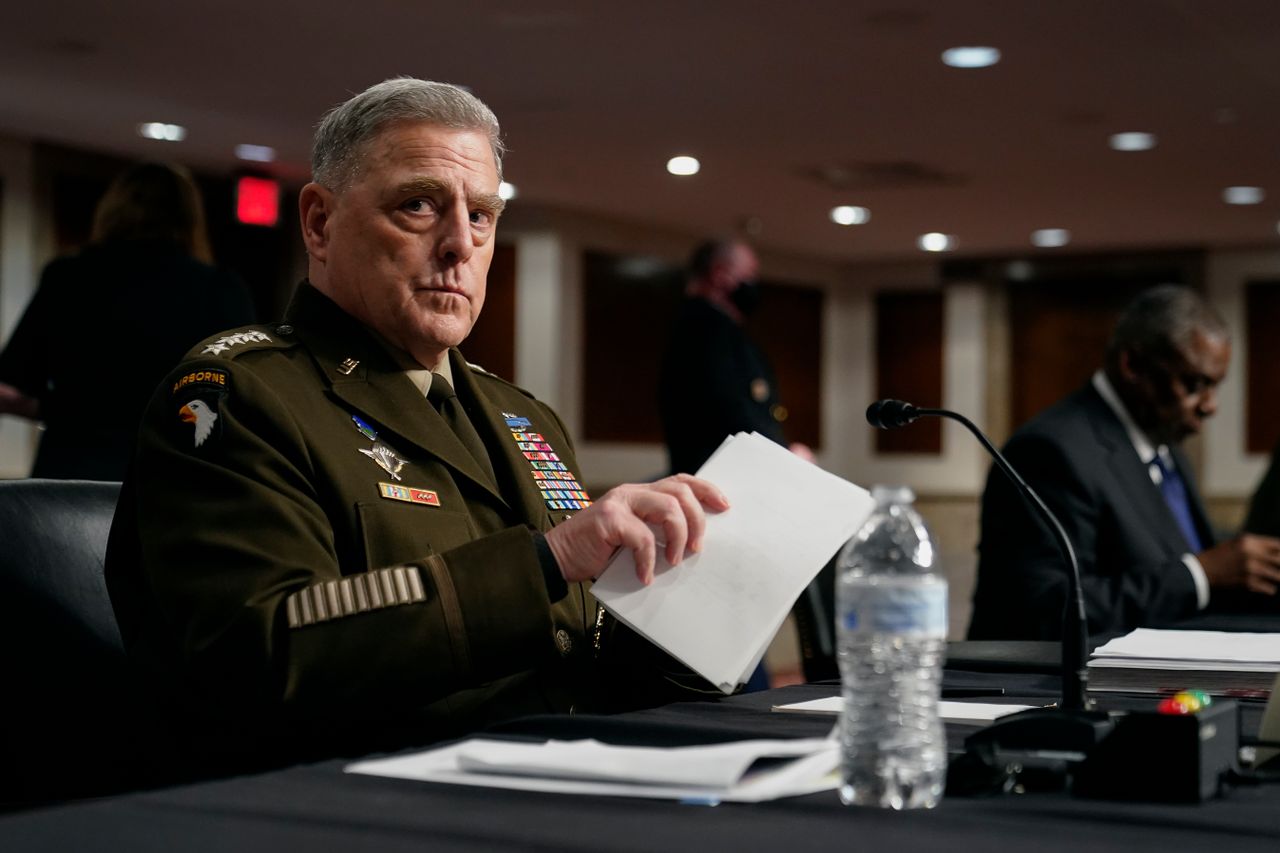
Chairman of the Joint Chiefs of Staff Gen. Mark Milley at a Senate Armed Services Committee hearing, September 28, 2021, on Capitol Hill in Washington. (AP Photo/Patrick Semansky)

He summed up the two days’ worth of testimony before the House committee on Wednesday, providing the most explicit admission thus far from any US official that Washington suffered a humiliating defeat in its 20-year war, while claiming the chaotic US evacuation operation from Kabul had been a success.

“Strategically, the war is lost—the enemy is in Kabul,” Milley told the committee, referring to the Taliban’s overrunning of the Afghan capital on August. 15. “So, you have strategic failure while you simultaneously have an operational and tactical success by the soldiers on the ground.”

The Joint Chiefs chairman added, “It wasn’t lost in the last 20 days or even 20 months. There’s a cumulative effect to a series of strategic decisions that go way back.”

The bulk of the hearings was consumed with vitriolic denunciations by Republicans of the tactics pursued by the Biden administration in the final days of the two-decade-long US imperialist adventure in Afghanistan, countered by Democratic defenses of both the administration and the military.

There was little appetite on the part of politicians of either party to probe the reasons for Washington’s abject failure—after spending trillions of dollars, sacrificing thousands of US lives and killing hundreds of thousands of Afghans—to create a viable puppet regime in Afghanistan and realize its strategic aim of securing a foothold in a country bordering China, Iran and the oil-rich former Soviet republics of Central Asia. There were no questions whatsoever relating to culpability for the countless war crimes carried out by US imperialism against the Afghan people.

The hearings were noteworthy for the acrimonious attacks by Republican legislators on the US military command. For decades, Republicans and Democrats have heard commander after commander of the catastrophic US interventions in Afghanistan and Iraq testifying before the House and Senate panels, treating them with what can only be described as abject obsequiousness.

A central line of the Republican attack focused on the acknowledgement by Generals Milley and McKenzie that they had recommended keeping 2,500 US troops on the ground in Afghanistan to forestall the imminent collapse of the puppet regime of President Ashraf Ghani, who ended up fleeing the country with hundreds of millions of dollars as the Taliban reached Kabul.

These recommendations and Biden’s rejection of them were well known in Washington, but Republicans seized upon them. They cited an August 19 “ABC News” interview in which Biden was pressed as to whether he had been advised that keeping 2,500 troops in Afghanistan could maintain a “stable situation” and he replied, “No one said that to me that I can recall.” This proved, Republicans charged, that Biden is a “liar.”

The questioning also centered on venomous attacks against Milley over three recently published books in which he was quoted in relation to the crisis surrounding the attempt of Trump and his supporters to overturn the 2020 election.

Asked by Tennessee Republican Senator Marsha Blackburn whether he had spoken to the authors of the books, Milley acknowledged that he had, while claiming he could not testify as to whether he was “accurately represented,” because he had not read them.

Blackburn attacked Milley for “making time to talk to these authors, burnishing your image, building that bluster, but then not putting the focus on Afghanistan,” going on to state that he, Austin and McKenzie may be remembered as “the three that broke the military.”

Others pressed this same line of attack, including the right-wing Republican supporters of the January 6 coup, including Missouri Republican Senator Josh Hawley and Florida Republican Congressman Matt Gaetz, both of whom demanded Milley’s resignation. Gaetz accused Milley of being “far more interested in what your perception is and how people think about you in insider Washington books than you care about winning.”

As to the content of the books, questioning by the Republicans was extremely circumscribed, while Democrats largely ignored the issue.

The main Republican focus was on the revelation in the book by Bob Woodward and Robert Costa, Peril, that Milley had twice called his Chinese counterpart, Gen. Li Zuocheng, on the eve of the US presidential election and in the wake of the Capitol insurrection, to allay rising Chinese fears that Trump was preparing an attack on China in a desperate bid to remain in power.

In his testimony, Milley insisted that he had made the calls with the full knowledge and approval of Trump civilian appointees at the Pentagon and that their purpose was to “de-escalate” and assure General Li that “We are not going to attack you.”

This did not stop Alaska Republican Senator Dan Sullivan from accusing Milley of “giving a heads-up to the Chinese Communist Party,” adding that if his Chinese counterpart had acted similarly he would have been “shot.”

The other questions related to the Peril revelations centered on a January 8 conversation between Milley and Democratic House Speaker Nancy Pelosi. Republicans demanded to know whether Milley had stated his agreement with Pelosi’s characterization of Trump as “crazy.” Milley insisted that he had told Pelosi at the time that he was “not qualified to determine the mental health of the president of the United States.”

There was no interest by politicians of either party to probe the substance of the conversation, which was whether Trump could launch a nuclear weapon as part of a coup plot to remain in power. Milley included a memorandum with his written testimony, stating that he had assured Pelosi that Trump could not launch a nuclear attack by himself and that existing “processes, protocols and procedures” precluded an “illegal, unauthorized or accidental launch.”

Nor did the US legislators ask about the Woodward-Costa book’s report of an extraordinary secret meeting of senior officers convened by Milley in which he demanded that they pledge not to carry out any orders for a nuclear attack, including from Trump, without his say-so.

Neither did any of the congress members or senators bother to ask Milley whether the book was accurate in recounting a conversation in which CIA Director Gina Haspel warned the general, “We are on our way to a right-wing coup.” Nor did they ask whether it was true that Pelosi told him, in a passage clearly copied from a phone call transcript, that Trump should have been “arrested on the spot” for carrying out a “coup d’etat against us so he can stay in office.”

While Senator Blackburn elicited an affirmative response to her question as to whether Milley had spoken to Washington Post reporters Carol Leonnig and Philip Rucker, authors of I Alone Can Fix It: Donald J. Trump’s Catastrophic Final Year, no one on either the Senate or the House committee ventured to ask Milley about the statements attributed to him in the book.

In it, he is quoted as telling his aides in the run-up to the January 6 fascist-led assault on the Capitol, “This is a Reichstag moment, the gospel of the Führer,” referring to the 1933 Reichstag Fire, which provided the pretext for Adolf Hitler’s assumption of dictatorial powers.

The book reported that Milley was meeting regularly with the Joint Chiefs of Staff to assess the threat of a coup and draw up contingency plans, as well, no doubt, to gauge the loyalty of the various military commands.

According to the book, Milley “kept having a stomach-churning feeling that some of the worrisome early stages of 20th-century fascism in Germany were replaying in 21st-century America,” that Trump was echoing the rhetoric of Hitler and that fanatical Trump supporters in the fascist Proud Boys, Oath Keepers and similar groups were “brownshirts” and “the same people we fought in World War II.”

The Republicans clearly had no interest in shining a light on these statements, but the Democrats also had no desire to expose the depth of the threat posed on January 6 to the American public.

The only direct reference to the coup attempt of January 6 came Wednesday from Republican Congresswoman Liz Cheney of Wyoming, and it was highly revealing.

Cheney began her remarks by condemning the Republican attacks on Milley as “despicable.” She went on to describe the assault on the Capitol as “an effort to stop the constitutionally prescribed process of counting electoral votes. It was the first time in our nation’s history we did not have a peaceful transfer of power.” She also charged her fellow Republicans, including those sitting in the hearing, with “attempting to obstruct the investigation into that attack, attempting to whitewash what happened.”

Cheney praised Milley for “standing in the breach when so many, including many in this room, failed to do so.”

“Standing in the breach” in military terms means holding back an attack when other defenses have failed. The clear implication is that General Milley played a key role in preventing a successful coup by denying Trump support from the US military.

The book by the Washington Post reporters quotes Milley as telling fellow senior officers in relation to Trump’s coup attempt, “They may try, but they’re not going to f**king succeed. You can’t do this without the military. ... We’re the guys with the guns.”

That the bulwark against a Trump coup was Milley and “the guys with the guns” is testimony to the rotting out of American democracy and its institutions.

The collaboration of the Democrats—along with their pseudo-left accomplices—with the Republicans in keeping a lid on these revelations is testimony to the fact that they fear a revolt from below far more than a coup orchestrated by a Hitler-lover in the White House.


REPORTING A FEDERAL CRIME


By John Kiriakou,
Consortium News.

September 29, 2021


https://popularresistance.org/reporting-a-federal-crime/


Last week I tried to provide evidence of what I believe is major international fraud.

The FBI wasn’t interested.

I tried to report a crime last week. It was a serious crime, too. Rather, it was a whole bunch of federal crimes. It was impossible to find anybody interested.

Let me start at the beginning. Over the past year, I have developed first-hand knowledge of what I believe is a major international fraud. The principal is an American citizen who is defrauding investors in a financial technology bank scam based overseas, and the investors include people in the United States and in at least three foreign countries.

I have thousands of pages of evidence, including forged documents, surreptitious recordings of the principal admitting to his crime, and affidavits from his former employees and targets.

So, what do you do when you have evidence of a major federal crime? You go to the FBI and report it. That’s exactly what I did. At least, that’s what I tried to do.

Last week my attorney and I walked over to the FBI’s Washington Field Office and told the officer on duty that we wanted to report a federal crime. Sorry, the agent told us. You can’t do it like that. You have to go to the Washington, D.C., police department and report it to them. Once they determine that it is indeed a federal crime, they’ll refer it to us.

That sounded awfully inefficient — but totally unsurprising — so we walked the two blocks to the Metropolitan Police Department headquarters.

When we got to MPD, we couldn’t get past the lobby. The police officer on duty told us that we couldn’t enter without an appointment, and we couldn’t get an appointment without a referral. We told him why we were there, and he said he would call the Detective Bureau’s Fraud Division.

Five minutes later, the officer returned to say that we had to call 311 in order to report the crime. “Isn’t that the number you call to report a pothole that needs to be filled?” I asked. Yes, he nodded reluctantly. “I understand that you’re just the messenger,” I told him. “But you realize how ridiculous this sounds, right?” He nodded. “Sorry,” he said. “I wish I could help.”
Making Some Calls

I’ve been in Washington for 39 years. I know how the city works. But this is ridiculous. My attorney and I regrouped. We both know a lot of important people, so it was time to make some calls.

Our first was to a retired former deputy director of the FBI with whom we have both worked in the past. He said that the only way we could get an appointment with an FBI agent was to say that the crime involved terrorism. But it didn’t. And with my luck, that would result in a charge of “making a false statement.” For me! No thanks. Another former senior FBI official told us that he would happy to present our case — for a $5,000 retainer against $1,000 an hour as a “consultation fee.” Again, no thanks.

We decided that if we couldn’t get any satisfaction from the U.S. government, we would go to the affected foreign government. Before we could even mail a thumb drive with the documents, the foreign government decided to arrest the fraudster. I’m testifying before a foreign grand jury next week. I can’t wait to tell the story. God knows how many other people he would have hurt if somebody hadn’t stopped him.

But the more important issue here is the appalling refusal by the FBI to act. They wouldn’t listen to what we had to say. They wouldn’t look at our evidence. They expressed zero concern for victims past, present or future. They said it was because this wasn’t a terrorism case.

I think that’s nonsense. The FBI jumps into non-terrorism cases all the time. They actively pursued the owner of a boat after one of her crew members whistled at a humpback whale. Earlier this year, the FBI arrested two New York men on multiple felony charges for conspiring to catch too many fish off the coast of Long Island. Seriously. And who can forget when the FBI sent more than a dozen agents, all dressed in tactical SWAT-type gear, to Roger Stone’s house at 6:00 am to arrest him (in front of TV cameras) on charges of perjury and making a false statement?

Time magazine said in a 2018 cover story that “The FBI is in crisis. It’s worse than you think.” You bet it is. The FBI has to stop standing behind “terrorism” as a straw man. They have to start doing their jobs to protect all Americans, rather than whales or fish. Distrust in government is bad enough without the FBI giving us even more reasons to not believe in them.


WAR IS A RACKET: EX-STATE DEPARTMENT OFFICIAL MATTHEW HOH SPEAKS OUT


https://popularresistance.org/war-is-a-racket-ex-state-department-official-matthew-hoh-speaks-out/


CUBAN AND MEXICAN PRESIDENTS STRENGTHEN SOLIDARITY


By W. T. Whitney,
Counter Punch.

September 29, 2021


https://popularresistance.org/cuban-and-mexican-presidents-strengthen-solidarity-in-remarkable-display/


The independence of Mexico and of Cuba, got a big hearing in Mexico City on September 16. On that day in 1810, in Dolores, Mexico, Catholic priest Miguel Hidalgo called upon parishioners to join him in rebelling against Spain’s viceregal government. Mexico finally gained independence in 1821. Every year, at 11 PM on September 15, and on September 16, Mexicans and their presidents pay homage to Hidalgo’s iconic Cry of Dolores (Grito de Dolores).

This year, President Andrés Manuel López Obrador, commemorating that important day, had a surprising guest. Cuba’s president Miguel Díaz-Canel was at his side and they both spoke. Shared goals and strong friendship were evident. The extraordinary encounter may portend new substance and heightened commitment for efforts to free Cuba, at long last, from aggressive U.S. interference with Cuba’s sovereignty.

The Cuban president later joined president López Obrador in reviewing Mexican armed forces assembled in the Zocalo, Mexico City’s central plaza. No visiting foreign president had ever done so.

Excerpts of their remarks appear below. What they actually said may more readily communicate concepts, reasoning, convictions, and deep feelings than would have been the case with summarization. The object here is to enhance appreciation of the nature and strength of the two nations’ friendship now and into the future.

To begin: President López Obrador observes that “[Hidalgo] who initiated independence matters more to Mexicans than Iturbide, who consummated it. The priest defended the common people while the royalist general represented the higher-ups … [But] his adversaries never forgave [Hidalgo’s] audacity in wanting to make poor people the equals of the most favored classes.”

“We Mexicans.” he adds, “feel pride in this hero and others, because here, like nowhere else, the independence movement did not begin by simply reaccommodating with the power elite, or act solely through nationalist feelings, but it was the fruit of a craving for justice and freedom. Indeed, the call for liberty and justice preceded the call for political independence.”

López Obrador turns to Cuba:


“Today we remember that heroic deed [of Hidalgo] and we celebrate it with the participation of the President of Cuba. He represents a people who resolved, like few others in the world, to defend with dignity their right to live free and Independent, without allowing the interference of any foreign power in their internal affairs. I have already said and I repeat: we may or may not agree with the Cuban Revolution and Cuba’s government, but to have resisted 62 years without surrender is a historical feat, undoubtedly.“I believe, therefore, that through their struggle in defense of their country’s sovereignty, the people of Cuba deserve a prize for dignity. That island has to be considered as the new Numantia for its example of resistance. And I think for the same reason that the country has to be declared a patrimony of humanity. Now I only add that the government I represent respectfully calls upon the government of the United States to raise its blockade against Cuba, because no state has a right to subjugate another people, or another country. … ”

(Numantia was a hill fortress in northern Spain contested by Roman soldiers and the native Spaniards between 154 B.C. and 133 B.C. The latter did not surrender. Finally, Roman general Scipio Aemilianus and 60,000 soldiers surrounded the fortress with entrenchments. After 15 months, all 6000-8000 Iberian soldiers inside were dead of starvation.)

The Mexican president continues: “I say with complete frankness: It looks very bad that the U.S. government uses the blockade to hurt the people of Cuba with the purpose of having them be forced by necessity to confront their own government. If this perverse strategy achieves success – something that doesn’t appear likely given the dignity we referred to – it would be a Pyrrhic victory, a vile and scoundrelly one. A stain like that is not washed away by all the water of the seas.

“Let President Biden, who possess much political sensitivity, take a wider view and put an end, for always, to the politics of grievances against Cuba. In the search for reconciliation, he must also help the U.S. Cuban community and put aside electoral and partisan issues …It’s a time of brotherhood and not of confrontation. As Jose Martí pointed out: “to avoid shock, we rely upon exquisite political tact that derives from the majesty of disinterest and the rule of love*.”*

President Miguel Díaz-Canel speaks:

“Among all the brothers Our America gave to us, Mexico counts for Cuba as one of the dearest ones, for many reasons. The affection that unites our lands begins with amazement at its diverse and deep traces in the literature and history of America.” Diaz Canel cites Cuban authors José María Heredia and particularly José Martí. He reads Martí’s portrayal of Hidalgo.

Díaz-Canel remarks that, “Through its characteristics, the independence process in Mexico … showed a remarkable component of social demands, on behalf of indigenous peoples especially. It differed in that way from other processes typical of the era of independence struggles. Without question, its impact on the freedom and anti-colonialist struggles of our region, particularly in Cuba, was extraordinary.”

He points out that Mexicans joined Cuba’s first War for Independence from Spain (1868-1878) that Mexico extended recognition to that leader’s insurgent government. He mentions Cubans fighting with Mexicans in their wars against Texan Anglos and U.S. invaders in 1846-1848. Díaz-Canel refers to Martí, who “joined our two nations eternally in all his work, but especially in letters to his great Mexican friend Manuel Mercado.”

On the eve of Cuba’s Second War for Independence (1895-1898), Martí communicated to Mercado his idea of “Using the independence of Cuba to stop the United States in time from extending throughout the Antilles and falling with even more force upon our American lands.”

Díaz-Canel mentions the murder in Mexico City by Cuba’s Machado dictatorship of the young Cuban Communist leader Julio Antonio Mella in 1929. He praises Mexicans’ assistance to preparations there for the Granma expedition led by Fidel Castro in 1956. And, recalls the Cuban president, “faithful to its best traditions, Mexico was the only country in Latin America that did not break relations with Cuba when we were expelled by the OAS by imperial mandate.”

Díaz-Canel emphasizes that, “Mexico’s solidarity with Cuba has awakened in our people a greater admiration and the deepest gratitude … the decision to invite us has an immeasurably greater value, at a time when we are suffering the onslaught of a multidimensional war, with a criminal blockade, opportunistically intensified.” Because we are “under fire in a total war …Cuba will always remember your expressions of support, your permanent demand for the lifting of the blockade and for the annual United Nations vote to be converted into concrete deeds.”.

The Mexican-Cuban alliance has value for Cuba. Mexico’s government has a U.S. ear, if only because disruption of amicable U.S.-Mexican relations might significantly destabilize aspects of life in the United States. Additionally, Mexico does provide material aid to Cuba and has the potential for promoting support for Cuba throughout her Latin America.

An analyst writing for Almayadeen.net offers perspective: “Mexico, during López Obrador’s presidency, has begun a process of winning back its regional influence… The U.S. – Cuba conflict is another relevant factor in Mexico’s position … [Already] documented is the mutual love between the Mexican and Cuban peoples … [Therefore,] the building of a new relation of the region with and Washington cannot exclude Havana, and on that López Obrador has been strong.”

Cuba’s friendship with Mexico hardly matches the importance of its alliance with the Soviet Bloc. Material aid from that source helped assure the revolutionary government’s survival. Soviet military might and worldwide influence discouraged U.S. excesses in regard to Cuba. But activated friendship with Mexico now may add tangible benefits for Cuba’s cause that are lacking with other solidarity efforts, for example: pro-Cuba votes in the United Nations, hit-and-miss material aid, various solidarity statements, and assistance from NGO’s.

Meanwhile reality intrudes. In front of Cuba’s Mexico City Embassy on September 16, a few anti-government activists, having arrived from Cuba, tussled with Cubans living in Mexico who support their government. The Mexican media carried critiques of Díaz-Canel’s presence in Mexico that López Obrador’s own political opposition had generated.

More significantly, the entire region on September 18 missed a fragile opportunity of gaining some independence from U.S. domination. The Community of Latin American and Caribbean States (CELAC), a regional organization to which the United States and Canada do not belong, was holding a summit meeting in Mexico City that day, The CELAC group refused to consider a proposal put forth by President López Obrador and others that member states abandon the Organization of American States (OAS) or alter its functioning. The U.S. government is accused of using OAS as a tool for controlling the region.