Monday, September 27, 2021

UK to hire to foreign truck drivers amid Brexit supply shortages


https://www.youtube.com/watch?v=72iA2HsNdcQ


Germans head for the polls: What's at stake and who are the candidates?


https://www.youtube.com/watch?v=Bn8za-GgECA


Massive Harvest of Chicken of the Woods: How to Identify Mushrooms, 1 Year of Mushrooms


https://www.youtube.com/watch?v=P9aaMGqw8wc


Sunday, September 26, 2021

As US sanctions loom over Ethiopia, who is the real target?


https://peoplesdispatch.org/2021/09/20/as-us-sanctions-loom-over-ethiopia-who-is-the-real-target/


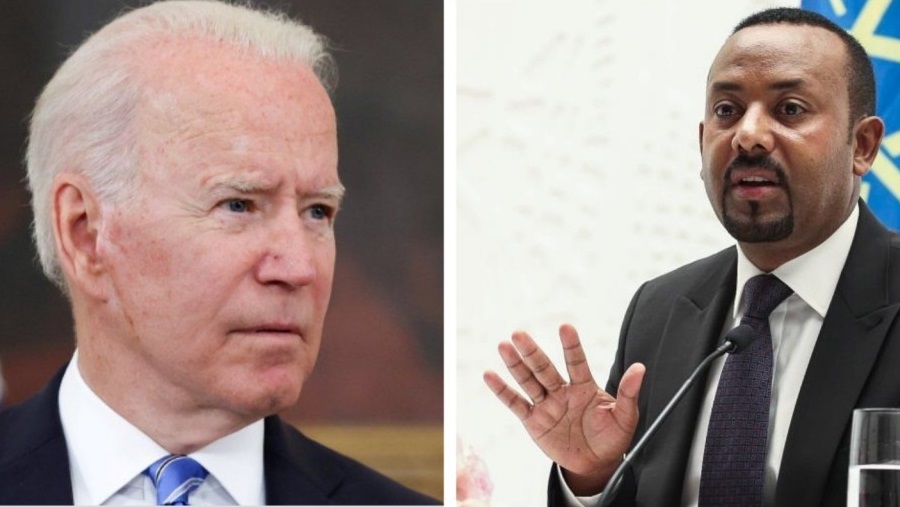
An executive order by Joe Biden makes way for sanctions on all main parties fighting in northern Ethiopia. However, diplomatic positions taken by the US make it evident that the primary target is the Ethiopian federal government, and not the TPLF which has been accused of multiple massacres and human rights violations


Photo: Courtesy KUNGU AL-MAHADI ADAM


On September 17, the US president Joe Biden issued an executive order authorizing the Treasury and State Departments to impose sanctions aimed at pressurizing the Ethiopian federal government to negotiate a ceasefire with Tigray People’s Liberation Front (TPLF). This was welcomed by the northern-Ethiopian separatist TPLF, which has allegedly been committing multiple massacres of civilians while on the retreat after suffering military losses earlier this month.

The text of the order makes way for sanctions on all main parties fighting in northern Ethiopia. However, diplomatic positions taken by the US since the start of this civil war almost a year ago make it evident that the primary target is the Ethiopian federal government, and not the TPLF.

Marginalized after 27 years of authoritarian rule over the country, the TPLF, which is now designated by the Ethiopian parliament as a terrorist organization, has expressed its willingness to cooperate with the US government to end the civil war it started by attacking a federal army base in Tigray regional state’s capital city, Mekele, in November 2020.

Condemning Biden for “cajoling the terrorist TPLF,” the Ethiopian American Civic Council (EACC) said in a press statement on September 17, “The TPLF-led war has resulted in the massacre of thousands of civilians.. internal displacement; and severe food shortages.” The EACC is the largest Ethiopian diaspora organization in the US with 750,000 members.

The EACC further pointed out that when the federal government declared a unilateral ceasefire and withdrew its troops from the regional state of Tigray in June-end to facilitate a peaceful farming season, the “TPLF used the ceasefire to regroup and attack civilians and civilian infrastructures in the (neighboring) Amhara and Afar regions.”
TPLF is choking aid supply to Tigray

The expansion of the fight into Afar led to the severe disruption of food supply to northern Ethiopia. Aid coming in from the port in neighboring Djibouti passes through this region. 5.2 million people, amounting to 90% of the population, are estimated to be in need of food aid. About 400,000 are suffering famine conditions.

The majority of these in need are in Tigray, whose dominant ethnicity the TPLF claims to represent. However, it kept the fighting along the supply route to take the Afar region in order to cut off Addis Ababa, the landlocked country’s capital, from the highway and railway line connecting it to the Djibouti port.

By September 9, the TPLF was pushed out of Afar by the federal forces and the Afar militias. This came a month after over 200 civilians, mostly internally displaced persons (IDP) sheltering in a school and health center, were reportedly killed by the TPLF which used heavy artillery to shell Afar’s Gale Koma district. Following this, there was renewed popular pressure on federal troops to re-engage the TPLF. Pointing out that more than 100 of the victims were children, UNICEF had said it was “extremely alarmed”.

The head of USAID’s mission in Ethiopia, Sean Jones, had pointed out in an interview on August 25 that destruction of houses and looting of trucks and warehouses, including those of the USAID, was widespread in all villages TPLF entered. He made these remarks three days after aid transportation had come to a complete halt due to fighting in Afar.

Throughout this period, however, the US government continued to lead an international effort to blame Ethiopia’s federal government for human rights violations and disruption of aid in order to lay the ground to justify the sanctions it was threatening to impose.

A day before the sanctions were authorized by Biden’s executive order, the UN Ethiopia revealed that “only 38 out of 466 trucks that entered Tigray since 12 July returned.” While the UN did not call out the TPLF, it is known that by early June almost all of Tigray was in its control, which implies that the remaining 428 trucks may have been seized by the TPLF or its affiliated groups. Several clips and pictures were shared by social media users, purportedly showing similar trucks being used by the TPLF to transport its militias.

“At the moment, this is the primary impediment to moving humanitarian aid into Tigray. We are unable to assemble convoys of significant size due to lack of trucks,” added Gemma Snowdon, spokesperson of the UN World Food Program (WFP).

Authorizing sanctions on September 17, the US has threatened sanctions within weeks if a ceasefire is not negotiated. A ceasefire at this point would mean that not only Tigray, but also many portions of Amhara, where the TPLF is allegedly carrying out repeated massacres of civilians as it retreats, will remain under its control.
A trail of massacres as TPLF retreats

On September 7, two mass-graves consisting of at least 100 civilians in Chena Teklehaymanot locality of Dabat District of the North Gondar in Amhara state were discovered after TPLF’s retreat. The Ethiopian Human Rights Commission (EHRC) reported that the victims were those civilians who were unable to flee the area when TPLF took control, and had been assured of their safety so long as they provided the fighters with food. However, when forced to beat a retreat upon the arrival of federal troops and Amharan militias, the TPLF killed the civilians on September 3-4, according to the residents and local authorities.

Confirming the massacre, Amhara Regional State Communication Affairs Director, Gizachew Muluneh, said in a press statement that the TPLF “went house to house, killing elders, women, children and priests from church after tying their hands back.”

Describing TPLF’s atrocities in Chena as “just the tip of the iceberg”, Ethiopian activist Getachew Shiferaw pointed out that “Civilians were [also] massacred in Kobo, Alamata, Lalibela, Abergele, Maytemri, Gaint, Gashena and Mersa, among others towns.”

The press Secretary of the PM’s office, Billene Seyoum, said in a briefing on September 9 that these attacks were carried out by the TPLF to avenge the defeat in Afar. She further alleged that the Chena massacre was carried out by TPLF’s youth group called Samri, which was also the perpetrator of the massacre in Tigray’s Maikadra town in November 2020, according to preliminary investigations by Amnesty International, EHRC and the Ethiopian Human Rights Council (EHRCO).

On being forced to retreat at the arrival of the federal army, EHRCO found, the TPLF massacred over 1,100 civilians, mostly migrant workers of Amharan ethnicity. The Ethiopian federal government has alleged that following the massacre, this group had escaped across the northwestern border to Sudan, where its members were allegedly sheltered in UNHRC’s refugee camps.

In the weeks preceding the Chena massacre, “TPLF fighters with UNHCR ID cards on the outside of the Ethiopian borders have been found within the Amhara State, and UNHCR itself over the past day has admitted a decrease in the number of refugees that it could not account for.”
PM Abiy Ahmed confronts President Biden

“Unfortunately, while the entire world has turned its eyes onto Ethiopia and the Government for all the wrong reasons, it has failed to openly and sternly reprimand the terrorist group in the same manner it has been chastising my Government,” Prime Minister Abiy Ahmed said in an open letter to the US president on Friday, September 17, when his executive order authorized sanctions.

“The many efforts the Ethiopian Government has undertaken to stabilize the region and address humanitarian needs amidst a hostile environment created by the TPLF have been continuously misrepresented,” he lamented, adding that, “As a long-time friend, strategic ally and partner in security, the United States’ recent policy against my country comes not only as a surprise to our proud nation, but evidently surpasses humanitarian concerns.”

Two days after Biden’s executive order, when the TPLF welcomed it and assured cooperation with the US, the EHRC said on Sunday, September 19, that it was yet again receiving reports “about allegations of deliberate attacks against civilians in Kobo town and surrounding rural towns by TPLF fighters, including shelling on civilian areas, house to house searches and killings, looting and destruction of civilian infrastructure.”

“U.S support has inspired TPLF to continue the fight,” Ugandan journalist, Kungu Al-mahadi Adam, observed in an article the same day. “Even TPLF leader Getachew Reda openly praised the United States’ partisan and antagonistic stance against Addis Ababa on Friday, after he told Egypt TV that TPLF will break apart Ethiopia like Yugoslavia on Thursday.”

The US has a long history of supporting the TPLF, which, despite representing only 6% of Ethiopia’s population, had been the country’s ruling party for 27 years starting from 1991. During this period, political parties were not allowed to operate outside the ruling coalition which was dominated by the TPLF. Freedom of speech and press did not exist under its authoritarian rule, which was rife with human rights abuses. Its foreign policy was centered around the war with Eritrea, which the US continues to antagonize.

Ousted in 2018 after years of pro-democracy mass protests, the TPLF was marginalized to a regional party in power in Tigray state alone. Meanwhile Abiy Ahmed, who rose to power as a reformist Prime Minister, gained popularity by releasing political prisoners and lifting the ban on political parties and free press. His initiative to end the war with Eritrea with a peace treaty won him the Nobel Prize for peace.

His Prosperity Party (PP), which champions modernization and a national identity transcending ethnic identity-based politics, won the election in June 2021 with a landslide. Despite the security situation not permitting the polls to be held in many regions, a total of 40 million people came out to vote in other regions of the country, and the election marked a major milestone in Ethiopia’s democratic transition.

“With the Ethiopian people having spoken and affirmed their faith in Prosperity Party to lead them through the next five years in a landslide victory, my Party and administration.. are even more resolute in granting our people the dignity, security and development they deserve within the means we have and without succumbing to various competing interests and pressures,” Abiy Ahmed added in his letter to Biden. “And we will do this by confronting the threats to democracy and stability posed by any belligerent criminal enterprise.”


Wall Street welcomes latest Fed decisions


https://www.wsws.org/en/articles/2021/09/23/2dac-s23.html


Nick Beams
22 September 2021


Financial markets have broadly welcomed the latest update on monetary policy from the US Federal Reserve following its two-day meeting this week, with stocks on Wall Street yesterday ending a four-day losing streak. The three major indexes all finished up by around 1 percent.

The main reason for the rise was the news that the Fed’s tapering of its $120 billion monthly purchases will not be announced before its November meeting and will proceed at a relatively gradual pace until the middle of next year. The markets also drew comfort from Fed Chairman Jerome Powell’s repeated insistence the test for an increase in the Fed’s interest rate is higher than that for reducing asset purchases.
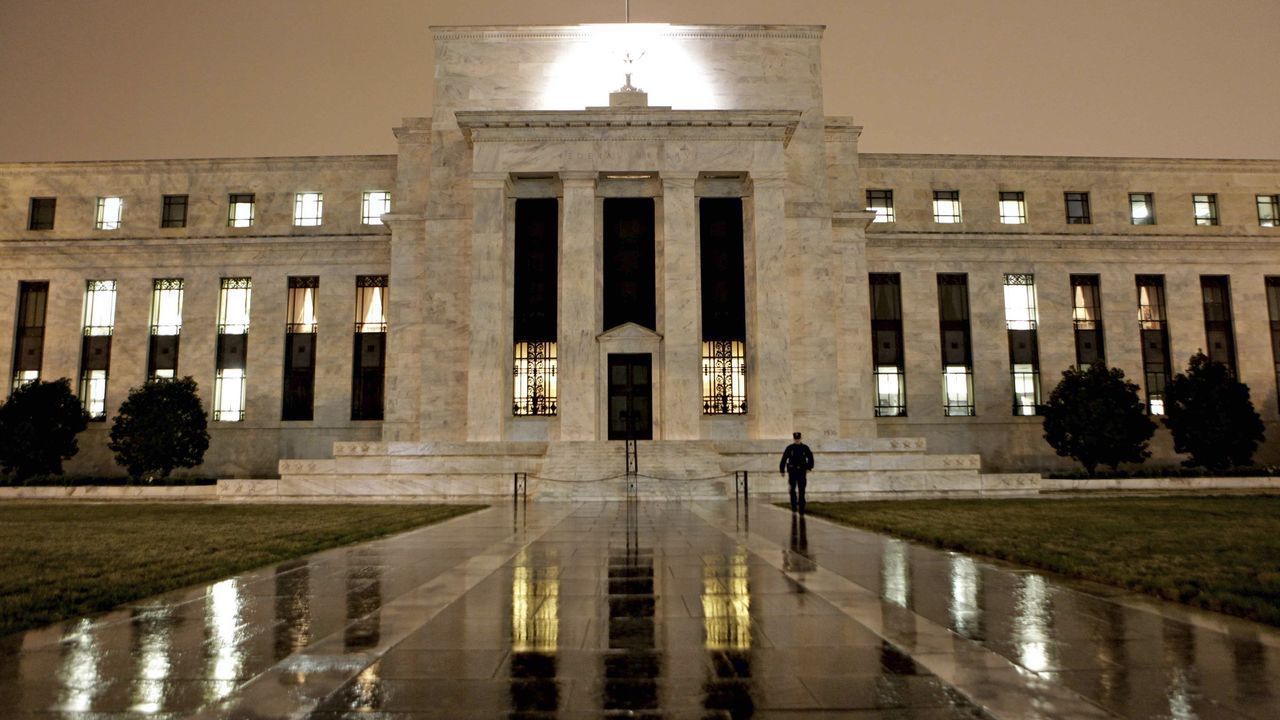
Federal Reserve Building on Constitution Avenue in Washington [Credit: AP Photo/J. Scott Applewhite, file]


According to the interest rate projections by officials of the Federal Open Market Committee (FOMC), nine members expect an interest rate rise in 2022, up from seven in June, while the remaining nine expect the rise to be later.

The Fed has said it will not start easing back on asset purchases until there had been “substantial further progress” towards meeting its goals of average inflation of 2 percent and maximum employment.

Powell, who has sought to balance between members of the FOMC who want tapering to begin sooner and those in favour of holding off, said his own view was the “substantial further progress” test had been all but met and the Fed could “easily move ahead” with an announcement on the taper at its next meeting in November. There was broad agreement the asset purchases would be fully withdrawn around the middle of next year.

Commenting on the projections on interest rate rises by members of the FOMC, he said these did not represent a decision or a plan and that “more important than any forecast is the fact that policy will remain accommodative until we have reached our maximum-employment and price-stability goals.”

Powell emphasised that the taper would take some months and “so you’re going to be well away from satisfying the [interest rate] liftoff test when we begin the taper.”

There were a series of questions at his press conference on the effect of the debt crisis of the Chinese property developer Evergrande, conflict of interest issues surrounding two members of the Fed and the dispute over the lifting of the US debt ceiling now before Congress.

Asked whether the Evergrande crisis was a “warning signal” for corporate debt in the US, Powell emphasised the importance of the massive Fed intervention in March 2020, at the start of the pandemic when the stock market crashed and the $21 trillion US Treasury note market froze.

He said the Fed was “very concerned” there could have been a “wave of defaults” but that did not happen because of the Cares Act and the response of the Fed – it injected some $4 trillion into financial markets. This was a “much stronger response then we’ve ever had” and as a result there were “very, very low” default rates for corporate debt.

He said there was not a lot of direct US exposure to Evergrande but there was a worry that it could affect global financial conditions through “confidence channels.”

Powell was placed in the highly embarrassing position of having to answer several questions relating to conflicts of interest which have emerged following the revelation that two senior Fed officials, Robert Kaplan, the president of the Dallas Fed, and Boston Fed President Eric Rosengren, were actively trading in shares last year when the Fed was intervening to shore up markets.

The two have since said they will sell their shares by the end of the month after their activities were reported by the Wall Street Journal and Powell has ordered a review of its ethics guidelines.

Asked directly whether he had confidence in Kaplan and Rosengren, Powell avoided the question. In terms of confidence, he said no one on the FOMC was happy to be in this situation “to be having these questions raised” and it was “an important moment for the Fed.”

But he was “reluctant to get ahead of the process and speculate” and when the Fed had things to announce it would go ahead “but that’s really what I have for today.”

The issue is significant in and of itself but also more broadly because it is yet another exposure of the Fed’s carefully cultivated image that it acts in the interest of the American people and the economy rather than Wall Street.

With the debt ceiling issue now before the Senate, following a House of Representatives vote to lift it earlier this week, Powell was asked what would happen to the economy if it was not raised. Some 46 Republican senators have said they will not vote in favour, meaning there are not sufficient votes to defeat a filibuster, requiring 60 votes in the 100-member chamber.

Failure to raise the debt ceiling and ensure the government could pay its bills would result in “severe reactions, severe damage to the economy and to financial markets” and was not something “that we should contemplate,” Powell said.

He insisted that “no one should assume that the Fed or anyone else can protect the markets or the economy in the event of a failure,” and it was necessary to pay debts when they are due.

While the Fed meeting was taking place, two leaders of a US government advisory group, the Treasury Bond Advisory Group (TBAC), issued a letter to Treasury Secretary Janet Yellen on Tuesday warning of “severe consequences” if the ceiling were not lifted.

“If a protracted fight over the debt limit casts doubt on the creditworthiness of the US government or the timeliness of its debt payments, the Treasury markets would likely experience significant disruptions that could spark broader market stress,” it said.

The letter, co-signed by TBAC co-chairs Beth Hammack of Goldman Sachs and Brian Sack of the DE Shaw group, said default would be “unthinkable, but even to risk that outcome would be reckless and irresponsible.”

The debt ceiling issue is adding to the growing uncertainty surrounding the direction of the US economy. Despite the continued assurances from Fed Chair Powell that elevated inflation will abate in coming months, there are fears it is becoming entrenched. The Fed has also lowered its projections for economic expansion but continues to see rapid growth.

Like the lower inflation scenario, this assumption is also beginning to be questioned.

A Bloomberg report this week noted that with the winding back of stimulus measures that have supported the economy during the pandemic, growth could start to “slow sharply” in the second half of 2022, and this would be the case even if the Biden administration won congressional approval for its spending program.

According to Wendy Edelberg, director of the Brookings Institution’s Hamilton Project, the US was “in for some very low growth rates” in late 2022 and 2023. Jan Hatzius, chief economist at Goldman Sachs, expects the US growth rate to be only 1.5 percent by the end of next year, down from 5.7 percent in 2021.

But the stock market is continuing to rise, and according to David Jones, director of global investment strategy for BofA Securities, this could create major problems.

“The longer this dissonance between the fundamentals and the positioning lasts, the more it raises the spectre of a violent, disorderly market event in which everyone is running for the door,” he said.


Scientists home in on “missing link” in the natural origins of COVID-19


https://www.wsws.org/en/articles/2021/09/23/wuha-s23.html


Andre Damon@Andre__Damon
23 September 2021


Earlier this month, scientists revealed the closest discovery yet to a “smoking gun” in the search for the origins of the deadly COVID-19 pandemic.

In a new pre-print paper by the French Institute Pasteur and the University of Laos, an international team of scientists say they have found a group of viruses that are the closest relatives of SARS-CoV-2, the virus that causes COVID-19.
A researcher swabs a bat's mouth to take samples at Sai Yok National Park in Kanchanaburi province, west of Bangkok, Thailand, Friday, July 31, 2020. Researchers in Thailand have been trekking though the countryside to catch bats in their caves in an effort to trace the murky origins of the coronavirus. (AP Photo/Sakchai Lalit)

In the part of the virus critical to infecting humans, called the receptor-binding domain (RBD), the newly discovered viruses are more similar to the original variant of SARS-CoV-2 than are the variants of that virus that have emerged in the past year, including the currently dominant Delta variant.

“Sequences very close to those of the early strains of SARS-CoV-2 responsible for the pandemic exist in nature, and are found in several Rhinolophus bat species,” concludes the paper.

Professor Stuart Neil, head of the department of infectious diseases at King’s College London told the Telegraph: “Two or three of these viruses have RBDs which is only two or three changes from that seen in SARS-CoV-2—essentially, closer to the original than some of the variants of concern we see out there in some respects.”

The authors continue, “These viruses may have contributed to SARS-CoV-2’s origin and may intrinsically pose a future risk of direct transmission to humans.”

The newly discovered viruses are more effective at infecting human beings than RaTG13, the bat coronavirus discovered in 2012 that had up to now been the closest relative to SARS-CoV-2.

The scientists note, “The RBDs of the viruses found in our study are closer to that of SARSCoV-2 than to the RaTG13 RBD, the virus identified in R. affinis from the Mojiang mineshaft where pneumonia cases with clinical characteristics strikingly similar to COVID-19 were recorded in 2012.”

In the narrative presented in the US media, the investigation of the origins of COVID-19 is a constant tug-of-war between two competing hypotheses, both backed by evidence. There is supposedly an ongoing “debate” between proponents of the natural origins of COVID-19 and the theory that the disease was released from the Wuhan Institute of Virology in China.

But in the scientific community, there is no debate. New revelations and discoveries are constantly emerging, but they only deepen humanity’s understanding of the natural origins of COVID-19 and the dangers posed by other animal-borne diseases to modern society.

The findings by the French and Laotian scientists refute the “lab leak” conspiracy theory, according to which scientists performed “gain of function” experiments on naturally occurring viruses in order to make them more infectious to humans, then released them, inadvertently or deliberately, into the city of Wuhan, China.

Nicholas Wade, the advocate of racist pseudoscience whose claims about a “lab leak” were cited uncritically by every major US newspaper, claimed that the RBD of SARS-CoV-2 “seemed optimized for the human receptor,” leading to the conclusion that “the virus might have been generated in a laboratory.”

But now a very similar RBD, with apparently the same capacity to infect humans, has been found in nature.

As scientists scour the bat caves of Indochina for potential predecessors of SARS-CoV-2, they are homing in, less than two years into the pandemic, on what for SARS took a decade and a half to discover—the specific natural origin of the virus.

In 2017, Nature reported, “In a remote cave in Yunnan province, virologists have identified a single population of horseshoe bats that harbours virus strains with all the genetic building blocks of the one that jumped to humans in 2002, killing almost 800 people around the world.”

The journal continued, “Although no single bat had the exact strain of SARS coronavirus that is found in humans, the analysis showed that the strains mix often.”

The author of the 2017 study, Shi Zhengli, has been falsely and absurdly demonized by the US media as having created the COVID-19 pandemic. Instead, she warned in 2017 that “The risk of spillover into people and emergence of a disease similar to SARS is possible,” and urged measures to control the spread of animal diseases in humans.

The authors of this month’s study note that, like the 2017 breakthrough that led to the identification of the origins of SARS, proof of the origins of SARS-CoV-2 may come in the form of finding individual pieces of the virus that may have arisen through recombination or “mosaicism.”

They write, “Although the identification of SARS-CoV-2 in bats is a major goal, it may be unattainable. A more realistic objective is to identify the sequences that contribute to its mosaicism.”

Of all the major English-language publications, only the UK-based Telegraph has reported the breakthrough discovery. This report, along with other findings pointing to the widespread prevalence of bat coronaviruses and their ability to infect human beings, have gone unreported by the same newspapers that gave breathless credence to the fabrications of Nicholas Wade.

The latest scientific findings, combined with the admission last month by most of the US intelligence agencies that SARS-CoV-2 was “not genetically engineered,” should put the final nail in the coffin of the Wuhan Lab conspiracy theory. Those newspapers and writers that promoted this conspiracy theory owe the world a public explanation and apology.

But none will be forthcoming, because the advocates of the “Wuhan lab” theory are serving definite class interests. Their shameless lies, using bogus pseudoscience, aim to further a right-wing, xenophobic, and racist campaign to demonize China, laying the ideological groundwork for imperialist war.


COAL MINERS’ ONGOING STRIKE AGAINST BLACKROCK’S WARRIOR MET


By Stansfield Smith, Popular Resistance.

September 22, 2021

https://popularresistance.org/alabama-coal-miners-ongoing-six-month-strike-against-blackrocks-warrior-met/


Webinar update with UMWA District Vice President Larry Spencer.

Larry Spencer, UMWA District 20 Vice President, represents the 1,100 coal miners in three UMWA locals which on strike against Warrior Met in Alabama since April 1, 2021. He will give an update on the strike in a September 28 webinar. The strikers are fighting to reverse concessions that were foisted on them in 2016 when BlackRock and other billionaire creditors set up Warrior Met Coal and took over mine operations with the aid of a bankruptcy court.

To keep their jobs, Warrior Met made the miners work up to seven days a week and take a $6-an-hour pay cut, accept reduced health insurance, and give up most of their overtime pay and paid holidays.

BlackRock is one of the three majority shareholders in the new company. Black Rock is the world’s largest investor in fossil fuels, and the world’s largest asset manager complicit in Amazon destruction.

BlackRock’s net income was $1.55 billion in the second quarter of 2021, with a record $9.5 trillion in assets. Warrior Met makes up just a tiny fraction of its portfolio.

UMWA President Cecil Roberts pointed out, “The workers gave up more than $1.1 billion in wages, health care benefits, pensions, and more to allow Warrior Met to emerge from bankruptcy five years ago. The company has enjoyed revenue in excess of $3.4 billion in that time. But it does not want to recognize the sacrifices these workers made to allow it to exist in the first place. All those billions came up to New York to fatten the bank accounts of the already-rich.”

Invoking shared sacrifice, Warrior Met had promised lots of improvements once the company attained financial solvency. When contract negotiations began last spring, however, Warrior Met reneged on its promise, refusing to bargain in good faith.

“They’re making us work seven days a week, up to 16 hours,” says Brian Kelly, president of United Mine Workers of America Local 2245, who’s worked in the mine for 25 years. “Now we’re forced to work every holiday except Thanksgiving, Christmas Eve, and Christmas.”

Excessive overtime is a key issue in the strike. Miners have been forced into 12-hour shifts stretching into weekends—without the double pay on Saturday and triple pay on Sunday that they used to get.

Health insurance went from $12 for seeing any doctor in the world to $1,500 family deductible and co-pays up to $250. Given work conditions in a coal mine, health care is vital. Miners face silicosis, black lung, diesel, smoke.” Black lung is caused by breathing in coal dust, which silts up the lungs, scarring and destroying them.

Another main dispute is that management is demanding the power to fire strikers and to give strikebreakers and new hires seniority priority.

Strikers blocked scabs from entering the mines—until the company obtained an injunction to stop them. Strikers have been arrested and run into by vehicles driven by company employees.

On July 28, 1,000 miners and supporters rallied in New York City to protest outside the offices of BlackRock Fund Advisors. There, South Dakota Federation of Labor president Kooper Caraway told Wednesday’s demonstrators that “workers all over the world are going to stand with you and support you, and there’s nothing BlackRock or any other rich asshole can do about it.”

Hamilton Nolan wrote an excellent report on one of their biggest rallies a week later, August 4:


There were more than a dozen CWA members from Atlanta who worked for AT&T, decked out in red shirts. There was a gaggle of UAW members. There were Teamsters, and teachers, and government workers, all proudly in their union t‑shirts. There were union officials from Georgia and Kentucky and Tennessee and South Carolina. There were presidents of locals from other states, climbing the stage to present $500 checks to the strike fund. There was an entire tent full of longshoremen wearing custom-made white t‑shirts that said ​“Port workers in solidarity with mine workers.” They had come from Charleston, Jacksonville, and Mobile, Alabama, on a single bus that stopped in each city, collecting the comrades.

I spoke to many of these attendees and, to a person, the question of why they had gone to all the trouble to show up was answered as if it didn’t require any explanation at all. ​“Solidarity,” they said. ​“They supported us, so we’re supporting them.” ​“This is what the union’s about.” To take a 30-hour round trip on a bus was, for them, a no-brainer. This is what the union’s about. For one day, this was just common sense. But in the context of the United States of America in 2021, this was a rare sight to behold.

Little mainstream news has covered the strike, although ABC News had favorable report.

The UMWA declared: “The people who manage the Wall Street hedge funds that own Warrior Met don’t know us, they don’t know our families, they don’t know our communities. And they don’t care. All they care about is sucking as much money as they can, every day that they can, from central Alabama.”

You may donate to support the strikers electronically or sending a check to UMWA 2021 Strike Fund, P.O. Box 513, Dumfries, VA 22026. Messages of support can also be sent umwadistrict20@bellsouth.net.