The stolen election myth inspired thousands of Trump supporters to take over the Republican Party at the local level, exerting more partisan influence on how elections are run.
One of the loudest voices urging Donald Trump’s supporters to push for overturning the presidential election results was Steve Bannon. “We’re on the point of attack,” Bannon, a former Trump adviser and far-right nationalist, pledged on his popular podcast on Jan. 5. “All hell will break loose tomorrow.” The next morning, as thousands massed on the National Mall for a rally that turned into an attack on the Capitol, Bannon fired up his listeners: “It’s them against us. Who can impose their will on the other side?”
When the insurrection failed, Bannon continued his campaign for his former boss by other means. On his “War Room” podcast, which has tens of millions of downloads, Bannon said President Trump lost because the Republican Party sold him out. “This is your call to action,” Bannon said in February, a few weeks after Trump had pardoned him of federal fraud charges.
The solution, Bannon announced, was to seize control of the GOP from the bottom up. Listeners should flood into the lowest rung of the party structure: the precincts. “It’s going to be a fight, but this is a fight that must be won, we don’t have an option,” Bannon said on his show in May. “We’re going to take this back village by village … precinct by precinct.”
Precinct officers are the worker bees of political parties, typically responsible for routine tasks like making phone calls or knocking on doors. But collectively, they can influence how elections are run. In some states, they have a say in choosing poll workers, and in others they help pick members of boards that oversee elections.
After Bannon’s endorsement, the “precinct strategy” rocketed across far-right media. Viral posts promoting the plan racked up millions of views on pro-Trump websites, talk radio, fringe social networks and message boards, and programs aligned with the QAnon conspiracy theory.
Suddenly, people who had never before showed interest in party politics started calling the local GOP headquarters or crowding into county conventions, eager to enlist as precinct officers. They showed up in states Trump won and in states he lost, in deep-red rural areas, in swing-voting suburbs and in populous cities.
In Wisconsin, for instance, new GOP recruits are becoming poll workers. County clerks who run elections in the state are required to hire parties’ nominees. The parties once passed on suggesting names, but now hardline Republican county chairs are moving to use those powers.
“We’re signing up election inspectors like crazy right now,” said Outagamie County party chair Matt Albert, using the state’s formal term for poll workers. Albert, who held a “Stop the Steal” rally during Wisconsin’s November recount, said Bannon’s podcast had played a role in the burst of enthusiasm.
ProPublica contacted GOP leaders in 65 key counties, and 41 reported an unusual increase in signups since Bannon’s campaign began. At least 8,500 new Republican precinct officers (or equivalent lowest-level officials) joined those county parties. We also looked at equivalent Democratic posts and found no similar surge.
“I’ve never seen anything like this, people are coming out of the woodwork,” said J.C. Martin, the GOP chairman in Polk County, Florida, who has added 50 new committee members since January. Martin had wanted congressional Republicans to overturn the election on Jan. 6, and he welcomed this wave of like-minded newcomers. “The most recent time we saw this type of thing was the tea party, and this is way beyond it.”
Bannon, through a spokesperson, declined to comment.
Claudio Katz Dec. 17 — The following is from a lecture the author, an Argentine Marxist economist and political analyst, gave at the reception for the 12th Liberator Award for Critical Thinking 2019. It was given for his book, “La Teoría de la Dependencia, 50 Años Después” (“Theory of Dependency, 50 Years Later”). Simón Bolívar is known as the “Liberator.” Translation by Michael Otto.
Full-blown imperialism
Dependency theory has also been very fruitful in complementary fields of the economy. It especially points out to us the geopolitical preeminence of imperialism — mindful of how the great powers dominate by using force. We Latin Americans have suffered many times from such imperialist intervention, which has dramatically intervened in the Middle East or Africa in recent decades.
Of course, besides using force, the capitalist class also maintains its hegemony through other mechanisms, such as ideology, consent, tradition and deception. And the current evaluation of international relations — in terms of unipolarity, bipolarity or multipolarity — is also very pertinent. But imperialism persists as a dominant fact of life, since capitalism could not persist without armies, military bases and cyber wars.
The Theory of Dependency highlights that evidence, as opposed to conventional political thinking, which invariably hides the coercive foundation of North American geopolitical-military preponderance.
The dependency tradition also studied sub-imperialism [hegemony of an imperialist great power over weaker rivals] to evaluate the oppressive role of certain regional powers. I believe this is an important concept for certain parts of Asia and the Middle East, but it has little significance today in the scenario of Latin America.
Conversely, it is most relevant to observe how U.S. imperialism has strengthened its grip on our region. As the United States lost ground on the world chessboard — after having commanded the first period of globalization — Donald Trump seeks to regain territory with bilateral demands, insults and aggressions of all kinds.
We don’t know if he will use the Pentagon and the Marines to reconquer economic primacy. Trump makes many threats without taking equivalent military action, and at times he seems aware of the limits of the empire he commands. So far, he has not achieved any of his objectives against other state powers, and he faces enormous internal opposition from Congress, the judicial system and African Americans.
To deal with that scenario, Trump is very aggressive toward Latin America. He seeks to showcase imperial power in the hemisphere in order to begin the recovery of the preeminence it has lost on a global scale. That is why he increases the presence of the Pentagon, maintains his harassment of Venezuela, resumes the embargo against Cuba and conspires to capture the Bolivian lithium reserves. He also imposed new demands for patents in the renewal of the free trade agreement with Mexico. He recently raised tariffs on Brazilian exports simply because of rumors of a possible free trade agreement between Brazil and China.
I believe that we should ignite all the warning flares when Trump sends out some imperial message, as when he is despising the Caribbean peoples, insulting the Mexicans or building the wall. We have to blow the whistle when he praises the army’s intervention against the people of Bolivia, reinforces U.S. bases in Colombia, weighs deployment of the Southern Command or appropriates an affiliate of PDVSA [Venezuela’s nationalized oil corporation].
But the most important thing is our response on the ground. And on that plane we have seen how the people of Venezuela have known how to disrupt all the conspiracies. They have shown that it is possible to stop the attacks of imperialism with determination, courage and bravery.
The right wing and fascism
Another area of great current relevance to the Theory of Dependency is the analysis of authoritarian regimes in Latin America. In the 1960s and 1970s, that conception studied the peculiarities of dictatorships and the models of counterinsurgency, evaluating the similarities and differences with fascism.
Using that approach, the theorists exposed the old error of hypotheses that deny the possibility of fascism in the peripheral [nonimperialist] countries. That point of view forgot that Latin America suffered from particular forms of dependent fascism [instead of the classical fascism of Italy and Germany], which reached their apogee in the Cold War and not in the 1930s. These aspects were reflected in Pinochetism [Chile] and Uribism [Colombia]. At present Bolsonaro embodies many powerful features of that strand, which in my opinion has little immediate viability.
But beyond these assessments, it is clear that the right-wing has erupted once again in Latin America. It leads a conservative restoration that seeks the greatest revenge against the progressive cycle [that began with the election of Chávez in Venezuela in 1998]. It repeats the classic script of all reactionaries, who hate the left-wing and imagine crude continental conspiracies allegedly designed by Cuba or Venezuela.
Unlike those in Europe, Latin American right-wingers do not so much demonize emigration. They masquerade as avengers for justice and resort to punitive demagogy, promising magic solutions to the plague of crime. They deliver hypocritical speeches about corruption and flood social networks with intrigues and fake news. But they are so servile to neoliberalism that they forget their old nationalist verbiage.
As we’ve seen in Bolivia, Honduras, Paraguay and Brazil, that right-wing is shamelessly oriented toward coups. It fosters institutional coups and utilizes legal action [“Lawfare”] to outlaw progressive leaders. Furthermore, the right-wing propagates mass media slanders, which are fabricated by the intelligence services, and it often relies on religious fanaticism to create fears and [takes advantage of differences among the people] to destroy solidarity.
Since this right-wing — which operates through the Organization of American States and the Lima Group — lacks autonomy and simply obeys orders from Washington, the anti-fascist struggle in Latin America is in fact a battle against imperialism. These two faces of the same popular resistance against the enemies of our peoples constitute another enduring message from the theorists of dependency.
Theoretical links
A final observation on the position of the Marxist Theory of Dependence in critical thinking: Let’s remember that it was located at the opposite pole of [Brazilian political leader] Fernando Henrique Cardoso’s conventional version; this thinker first rejected the contradiction between dependency and development, then postulated development associated with transnational corporations and finally adopted all the dogmas of neoliberalism.
I believe that Marini, Dos Santos and Bambirra always sought to extend their conception beyond Latin America. And that comprehensive view was confirmed in recent applications, such as the use of dependency models to interpret the debt crisis in Greece. Their concept has also been used to explain how the euro is a monetary association, which imposes value transfers from the periphery to the center of Europe.
I think that such a widespread application of the Theory of Dependency is inspired by the writings of the mature Marx, who reevaluated the national struggle while imagining transitions to socialism from communal forms. It is also based on the later analyses of the classical (and post-war) Marxists, who wrote about the mechanisms of the drain of resources and the appropriation of the surplus of the periphery.
It is also necessary to note the harmony with contemporary thinkers, who explained the reasons for the dependence of Asia and Africa. Or the connection with authors who in recent years have theorized the dynamic of accumulation by dispossession and the new imperial logic dictated by mobile global overproduction.
In all those cases we can see how the dependency theory matured always in fruitful conceptual encounters. An important case was the connection with world-system theory — to understand how underdevelopment is recreated with the stratifications imposed by the international division of labor.
This same kind of confluence with endogenous Marxism [of Ecuadorian Agustín Cueva] made it possible to complement the analysis of the external extraction of resources with studies of internal obstructions to development.
In summary: I believe that if we persist in this tradition that enriches theoretical connections, we will be able to overcome the condition of being simple cultivators of dependency theory. And in that way we will be able to mature and correct mistakes collectively, facing the challenges of a political context very different from the one that reigned in the 1970s. This new scenario should lead us to revise our conceptions in the light of the real problems of the popular movement and the left.
Profiles and tributes
I conclude this presentation with a tribute to three recently deceased figures of the Theory of Dependency: Samir Amin, Theotonio Dos Santos and Immanuel Wallerstein. All three shared the profile of the intellectual who aspires to reunify the social sciences, without imposing the primacy of one discipline over another. All three favored an all-around approach and sought different paths to avoid academic confinement.
For these reasons this award is also for them. It is a recognition of the memory and the great work of those who guided the development of the Theory of Dependency. I am sure they would be very happy to notice how their work is read and studied as a weapon of struggle — in the university, in the street and in militancy joined with the masses.
They aspired to build a future of equality and justice, their goal was a society with neither exploiters nor exploited masses, and we have the responsibility to make that ideal a reality. So again, thank you all very much for coming to this presentation of thinkers, comrades and friends.
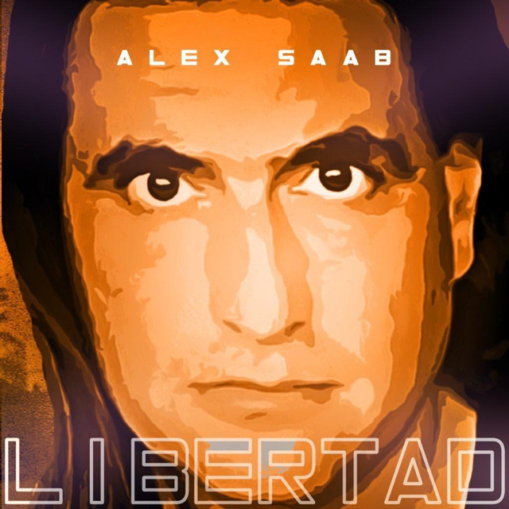
These are the opening paragraphs of an Aug. 26 update on the struggle to free Alex Saab, published in Resumen LatinoAmericano. See Alex Saab’s own letter on his struggle, ‘No retreat, No surrender!’ in Workers World, Aug. 23.
Venezuelan diplomat Alex Saab remains defiant after over 14 months under U.S.-ordered arrest in the African archipelago country of Cabo Verde. A special envoy of the Venezuelan government, he is fighting extradition to the U.S. for the “crime” of trying to procure humanitarian supplies of food, fuel and medicine from Iran in violation of illegal U.S. sanctions. To date, Saab’s legal appeals for freedom have been either denied, rejected or ignored as his extradition to the U.S. is becoming increasingly imminent.
Saab continues to fight this flagrant attempt of extraterritorial judicial overreach by the U.S. In response to Saab’s recent appeal to the U.S. 11th Circuit Court, the U.S. filed on Aug. 24 an application for an extension to reply on Oct. 7. This legal delaying tactic is likely a U.S. ploy to allow Saab’s pending extradition without recognizing his diplomatic immunity.
Under the Geneva Conventions, a credentialed diplomat such as Saab has absolute immunity from arrest, even in the time of war. The U.S. does not recognize Saab’s diplomatic status — as if Washington has the authority to qualify who other countries may choose and receive as their ambassadors. . . .
For the complete Resumen article on Saab’s case, tinyurl.com/ju733uf7.