Saturday, September 4, 2021

Ask Prof Wolff: Socialism's Biggest Failures


https://www.youtube.com/watch?v=RYkdLsb7oxc


Climate denial? Flat Earth? What’s the difference?


August 30th, 2021,
by Tim Radford

https://climatenewsnetwork.net/climate-denial-flat-earth-whats-the-difference/


People who deny that climate change is happening have something in common with people who believe in a flat Earth.

LONDON, 30 August, 2021 − Dover, a town in the county of Kent in the United Kingdom, was during the 1960s rich in eccentrics: one of them was Mr Samuel Shenton, founder and secretary of the International Flat Earth Research Society.

He was regarded with affection and merriment by local and even national newspaper reporters, and so was solemnly consulted during the US Apollo programme, the race to the moon. In 1965 he refused to believe that a photograph of the curvature of the Earth, taken by astronauts on a Gemini mission, proved that the planet was a sphere. Or that it was moving in space at 30kms a second.

“If we were going at such a tremendous speed through space you wouldn’t be able to get out of your house,” he told a Guardian colleague, “and you’d see the effects on the clouds and the waterways.”

Reportedly at his death his society had no more than 100 members. Then it crossed the Atlantic, and something started to happen.

Shared rejection

By 2018, Lee McIntyre, a researcher at Boston University in Massachusetts, could attend a Flat Earth International Conference in Denver, Colorado and use it as a starting point for an enjoyable and even mildly sympathetic new book called How to Talk to a Science Denier (MIT Press, $24.95).

The event became his template for a study of that stubborn phenomenon known as science denial, the outright refusal to accept data, experimental evidence or patient explanation of findings that you have already decided to reject.

In the course of this reporter’s lifetime, such conspicuous refusals have included the link between smoking and cancer and other health conditions; the connection between HIV infection and illness and death from Aids; the value of vaccination as a protection against disease; and most conspicuously, the connection between human exploitation of fossil fuels and the swelling climate crisis.

And although each act of denial begins from an apparently different starting point, the machinery of resistance − that determination not to be persuaded − shares five common factors.


“You cannot change someone’s beliefs against their will, nor can you usually get them to admit there is something they don’t already know”

One is a refusal to accept aspects of the evidence that do not suit your beliefs, but seize upon those that might seem to. This is called cherry-picking: you just believe the bits you like and ignore the rest.

The second factor is a commitment to the notion of massive conspiracy: a global conspiracy if need be, to declare that Covid-19 isn’t a real disease; or alternatively that it is spread by radiation from 5G radio masts; or that all the world’s science academies, almost all the world’s meteorologists and even governments, are in some monstrous plot to pretend that the climate is changing dangerously, when it isn’t, or if it is, it’s because of natural causes.

The third factor is the denunciation of real experts and the reliance on self-appointed experts. The fourth factor almost always involves logical error (we have an example above from Mr Shenton). And the last and − the deniers seem to think − the most clinching tactic is to say: “But you cannot deliver 100% proof.”

In the chapters that follow, McIntyre explores the different forms that denial takes: he talks to coal-miners in Pennsylvania about climate change; he talks to activists and campaigners about the rejection of genetic engineering as a technique for improving crops; to people who reject vaccination as a protection against disease, and to climate deniers. In all cases, he identifies evidence of the five techniques deployed to resist argument.

Selective acceptance

However, not all forms of rejection are quite as uncompromising as faith in Flat Earth. His miners know about climate change, and yes, know the costs too, but they’re miners. Mining coal is what they do.

Those against genetically-modified crops may turn out to be more concerned about economics, or choice, or the growth of corporate power. People can be vaccine-hesitant (“Is it safe? How do you know?”) rather than flat-out deniers. In each case there are separate issues underlying the unease.

Greek astronomers worked out more than 2,000 years ago that they lived on an orb; to believe the Earth is a stationary disc supported on pillars, Flat Earthers must reject the physics, astronomy and radiation science of Copernicus, Galileo, Newton and Einstein, while at the same time using cellphones and the Internet, products of that science.

Climate deniers have the slightly more tricky challenge of acknowledging the value of science except when it’s climate science.

Oil money

Each group believes in a massive, worldwide conspiracy to deceive. Two Flat Earthers told McIntyre that the conspiracy to foist the globalist view of the planet was the work of “the Adversary”, the Devil himself.

Climate deniers have the slightly harder task of persuading themselves that climate scientists − Chinese, British, American, Australian, Brazilian or from anywhere in the world − are all conspiring to issue a false message confected for some kind of pecuniary gain or political motive, or for the sake of a hoax, which is a bit more complicated.

There is another compounding factor addressed by this book: the big oil companies decided in 1998 to actually systematically challenge the science, with of course big money: altogether almost a billion dollars a year now flows into an organised climate change counter-movement.

In the US, climate science, like the Covid-19 pandemic itself, has become a party political issue. Nobody gets rich by denying that the Earth is round. Quite a few already very rich people will be yet richer because concerted global action on the climate emergency has been delayed, by systematic cherry-picking, conspiracy theorising, a small army of fake experts and some wilfully illogical reasoning. A very large number are likely to become miserably and even catastrophically poorer.

Winning ways

Meanwhile, how do you talk to a science denier? McIntyre’s suggested approach involves patience, courtesy, a willingness to listen, and to address the denier’s arguments directly.

“You cannot change someone’s beliefs against their will, nor can you usually get them to admit there is something they don’t already know. Harder still might be to get them to change their values or identity.

“But there is no easier path to take when dealing with science deniers. We must try to make them understand … But first we have to go out there, face-to-face, and begin to talk to them.”


Unknown waters ahead puzzle marine modellers


September 3rd, 2021,
by Tim Radford


https://climatenewsnetwork.net/unknown-waters-ahead-puzzle-marine-modellers/


Climate change will alter the blue planet on an almost global scale. Marine life will change in the unknown waters ahead.

LONDON, 3 September, 2021 − By the close of this century, the world’s mariners may be sailing over unknown waters. Up to 95% of the ocean surface climates that Charles Darwin voyaged in the Beagle in the 19th century, and that became part of the global battleground during the wars of the 20th century, will have vanished.

And some − perhaps most − of these climates will be of a kind that have no precedent in human history, or prehistory.

Quite how sharply those familiar waters will disappear depends on what happens to global greenhouse emissions. But at the rates at which humans have been burning fossil fuels so far, somewhere between 35% and almost all the sea surface conditions will have changed, and so will the marine ecosystems that depend upon those conditions.

What happens to the algae and plankton, the pelagic fish and the predators that hunt them, is increasingly difficult to guess: another study has just concluded that even after more than a century of oceanography and marine biological research, humans still don’t know enough about how ocean ecosystems work to be able to be sure of the future.

US researchers write in the journal Scientific Reports that they looked at measurements that define marine surface climate: water temperature, the concentration of dissolved carbon dioxide that defines its pH value on the acid-alkaline chemical spectrum, and the water’s saturation with aragonite, a form of dissolved calcium carbonate, washed over the aeons by the rivers into the sea.

Telling comparisons

Put simply, as greenhouse gas emissions rise, so the oceans become both warmer and more acidic, and the saturation level of aragonite falls. And as this level falls, corals and other marine creatures find it harder to turn sea water into the shell structures that protect them.

The researchers report that they modelled the ocean climates for the years 1795 to 1834 − the years of Coleridge’s poem Rime of the Ancient Mariner, and of the British Royal Navy’s command of the high seas − and for the years 1963 to 2004, the years of the aircraft carrier and supertanker.

Then they compared their findings with what ocean surfaces will look like if carbon emissions peak in 2050, or − this is sometimes called the “business-as-usual” scenario − in 2100.

Under the first scenario, 35.6% of sea surface climates familiar for the last two centuries may have disappeared. Under the second, 95% will have gone, to be replaced by what the authors call ”novel climates.” And, they say in the constrained syntax of academic language, “the degree of global climate novelty at a location may … indicate how stressful novel conditions will be for all species.

“In contrast, the degree of global climate disappearance for a location may represent how hard it might be for species who are well-adapted to climate at that location to find a similar climate in the future.”


“Attempting to summarise the vast complexity of the global marine ecosystem in a handful of equations is enormously difficult”

That the marine world is changing is no surprise: scientists have reported again and again that once-valuable species are migrating, or growing smaller, or dwindling in number.

As temperatures rise, oxygen levels drop, leaving some species gasping. As breeding grounds warm, spawning becomes problematic. So researchers can see what is already happening. It’s much harder to guess what the oceans will be like decades from now.

And in a timely study in the journal Progress in Oceanography, a team from Australia, the US, Canada and Europe issues a similar warning: humans are about to voyage into unknown waters.

Global heating is already driving what they call “significant changes in the structure of marine ecosystems” worldwide. That is, the tiny creatures on which bigger fish ultimately depend will change. And that could be bad news for the millions of people who live by the sea, and seafood.

But, they warn, it is becoming difficult to calculate how the denizens of the deep, and the citizens of the shallows, will respond to ocean climate shifts. There is a lot more research to be done, and some complex mathematical challenges ahead.

Food supplies lessen

“We know the impact of climate change on both water temperature and primary production will alter marine ecosystems in fundamental ways. Fish and other marine animals will burn more energy in warmer waters, leaving less scope for growth and reproduction.

“At the same time, in regions where primary production from phytoplankton decreases there will be less food, which will drive marine biomass down further,” said Ryan Heneghan of Queensland University of Technology in Australia, who led the study.

“Between now and 2100, the change in global marine animal biomass across our models varied between a 30% decline and a small increase of 5%. Across all the models, there were biomass declines across most of the world’s oceans, but the models disagreed on where, why and by how much marine biomass would decline under climate change,” he said.

“Attempting to summarise the vast complexity of the global marine ecosystem in a handful of equations is enormously difficult, and global marine ecosystem modelling is a relatively new field of research; our oldest models are just over 10 years old, whereas the climate modelling community were developing their first models over 40 years ago. There is a lot of work to do.”


How the Australian Labor Party spearheaded the ramming of anti-democratic electoral laws through parliament


https://www.wsws.org/en/articles/2021/09/03/elec-s03.html


Mike Head
11 hours ago


Labor Party parliamentarians played the leading role, working hand-in-hand with the Liberal-National Coalition government ministers, in rushing anti-democratic electoral bills through Australia’s parliament last week in just over 24 hours.
Anthony Albanese addresses ALP conference (Source: YouTube)

Labor and the Coalition—the two main parties of capitalist rule—hold the overwhelming majority of seats in both the House of Representatives and the Senate, so they collaborated to push the bills through in record time.

The Socialist Equality Party (SEP) has launched a campaign throughout the working class against the laws. The corporate and political establishment is seeking to suppress the rising opposition to its “reopening” drive as the COVID-19 pandemic resurges, threatening thousands of working-class lives, including those of children.

Nothing comparable to last week’s scenes in parliament has been seen since November 2005, when Labor, as well as the Greens, helped the Howard Coalition government recall the Senate to pass sweeping police-state “terrorism” legislation in just 36 hours. That unanimous stand was based on Howard’s dubious claim, never substantiated, that his government had received “specific intelligence” about a terrorist threat.

Labor’s role in spearheading the passage of the latest bills is revealing. It reflects the nervousness in ruling circles that the resistance of workers, students and parents to the premature return to classrooms and workplaces could erupt out of the control of the increasingly discredited and detested Coalition government.

Hence the need to shore up Labor’s vote, as well as the Coalition’s, by barring access to elections for alternative parties. That includes the SEP, the only one advancing the necessity for workers to mobilise on the basis of a socialist perspective to protect lives and eradicate COVID-19.

As the SEP explained in its statement yesterday, “Defeat bipartisan Australian drive to de-register political parties!” the laws set out to strip party registration from every party not currently represented in parliament. With a federal election looming, the legislation compels parties to provide details of 1,500 members—trebling the previous requirement—within just three months, all in the middle of widespread lockdowns.

Without registered party status, election candidates cannot identify their political affiliations on ballot papers. They must be listed without any party name, or as “independents.”

That not only denies the essential right of political parties to campaign and communicate their views in elections. It robs voters of the ability to cast conscious political votes.

One of the bills specifically seeks to block support for the socialist program advocated by the SEP. It bans parties from using the names “socialist” or “communist” (as well as “labor,” “liberal and “green”) if another registered party has already claimed that label, no matter how falsely.

Another provision restricts voting rights by cutting pre-poll voting to a maximum of 12 days before elections. This undercuts the ability of many working-class voters to cast ballots—more than 40 percent of the electorate voted pre-poll or by post at the last election in 2019.

The introduction and passage of these bills have been buried throughout the corporate media. There is clear concern in the ruling class that support is collapsing for the long-time parties of capitalist rule, and the public must be kept in the dark about the efforts to prop them up.

Last week’s token two-hour “debates” in each house of parliament demonstrated that Prime Minister Scott Morrison’s Coalition government is relying on Labor to prosecute the attack on democratic rights.

Labor MPs were the most aggressive exponents of the bills. Milton Dick, who holds the seat of Oxley in western Brisbane, denounced “people whingeing and whining about this change—so-called believers in freedom and democracy.”

Dick also provided a glimpse of the behind-the-scenes operation between the government and Labor to produce the bills. He said Labor’s shadow minister for electoral matters Senator Don Farrell had worked “incredibly hard” with Morrison’s right-hand man, Assistant Minister Ben Morton, “to ensure that we do work in a bipartisan way.”

Both Dick and Morton declared, without explanation, that some “minor parties” already met the new 1,500-member threshold. They referred to the Animal Justice Party, Shooters, Fishers and Farmers, Pauline Hanson’s One Nation, Sustainable Australia and the Liberal Democratic Party. These are all pro-capitalist parties, regarded as useful safety valves to divert the disaffection back into the parliamentary arena.

Labor speakers claimed that the bills would prevent billionaires such as mining magnate Clive Palmer registering parties without real members. But like the other parties with seats in parliament, Palmer’s United Australia Party is exempt from the membership requirement, having just recruited far-right Coalition defector Craig Kelly.

The truth is that all the parliamentary parties would have difficulty nominating 1,500 members, unless they could count MPs, staffers, trade union officials and other office holders. They are bureaucratic shells, dominated by branch-stacking conducted by narrowly-based factional powerbrokers.

Labor and the Coalition were intent on seeking to deregister as many parties as possible. They summarily rejected amendments by Kelly and another right-wing figure, Senator Jacqui Lambie, to lower the membership requirement rule to 1,000, and make it apply to only new parties applying for registration, not those already registered.

Another Labor spokesman, shadow minister Andrew Giles, gave voice to the concerns within the capitalist establishment that alternative parties can gain wider support by standing in federal elections. He said a registered party could “build a profile and name recognition” by having its name on ballot papers.

Giles provided an insight into the profoundly anti-democratic outlook that permeates the ruling class. He declared that such ballot recognition was a “privilege” and “significant benefit,” not a basic democratic right. It was an “advantage” that came with “responsibilities” to uphold the parliamentary order.

Likewise, Giles agreed with his Coalition colleagues that registered parties had to hand over membership lists in order to demonstrate a “genuine base of community support.” That denies the function of elections themselves, which are meant to determine levels of political support.

In an attempt to distance her party from the anti-democratic move, Greens Senator Larissa Waters spoke and voted against the bills in Senate. In the House of Representatives, however, Greens leader Adam Bandt notably remained silent.

Waters said the de-registration measures were an “attack on our democracy.” But the Greens supported the previous 500-member rule, which was an anti-democratic provision introduced under the Hawke Labor government in 1984, requiring party registration for the first time.

Combined with state funding for the parliamentary parties, the 1984 laws were themselves a bid to shore up the parliamentary establishment, for which popular support was already crumbling because of growing social inequality and declining working and living conditions.

The party registration scheme was a pre-emptive strike against working-class unrest. The Hawke government’s corporatist Prices and Incomes Accords with the trade unions paved the way for a decades-long assault on workers’ jobs and conditions provoking widespread disaffection and opposition among workers.

The 1984 legislation proved unsuccessful in bolstering the parliamentary order, however. The share of votes going to Labor and the Coalition has continued to fall, down to 75 percent in 2019. This reflects the deepening hostility to their bipartisan pro-business program.

The SEP has always opposed the party registration laws, which also compel parties to hand over the details of their members. That opens them up to surveillance and harassment, and violates the principle of secret ballots, which are meant to provide voters with privacy regarding their political affiliations.

The SEP calls for a concerted campaign to demand the repeal of the latest laws and all restrictions on the democratic right of parties and individuals to stand in elections. At the same time, we appeal to every one of our supporters and readers: apply to become an electoral member of the SEP to help us retain our registration and defeat this attack.

To discuss and take forward this fight, we urge readers to contact the SEP:

Website: http://www.sep.org.au/
Facebook: https://www.facebook.com/SocialistEqualityPartyAustralia/
Twitter: https://twitter.com/sep_australia


Texas passes bill restricting voting rights after collapse of Democratic walkout


https://www.wsws.org/en/articles/2021/09/02/vote-s02.html


Alex Findijs
18 hours ago


The efforts of Texas Democrats to block passage of a Republican bill restricting voting rights came to an end Tuesday when the State Senate passed Senate Bill 1 (SB1). Republican Governor Greg Abbott is expected to sign the bill into law within days.
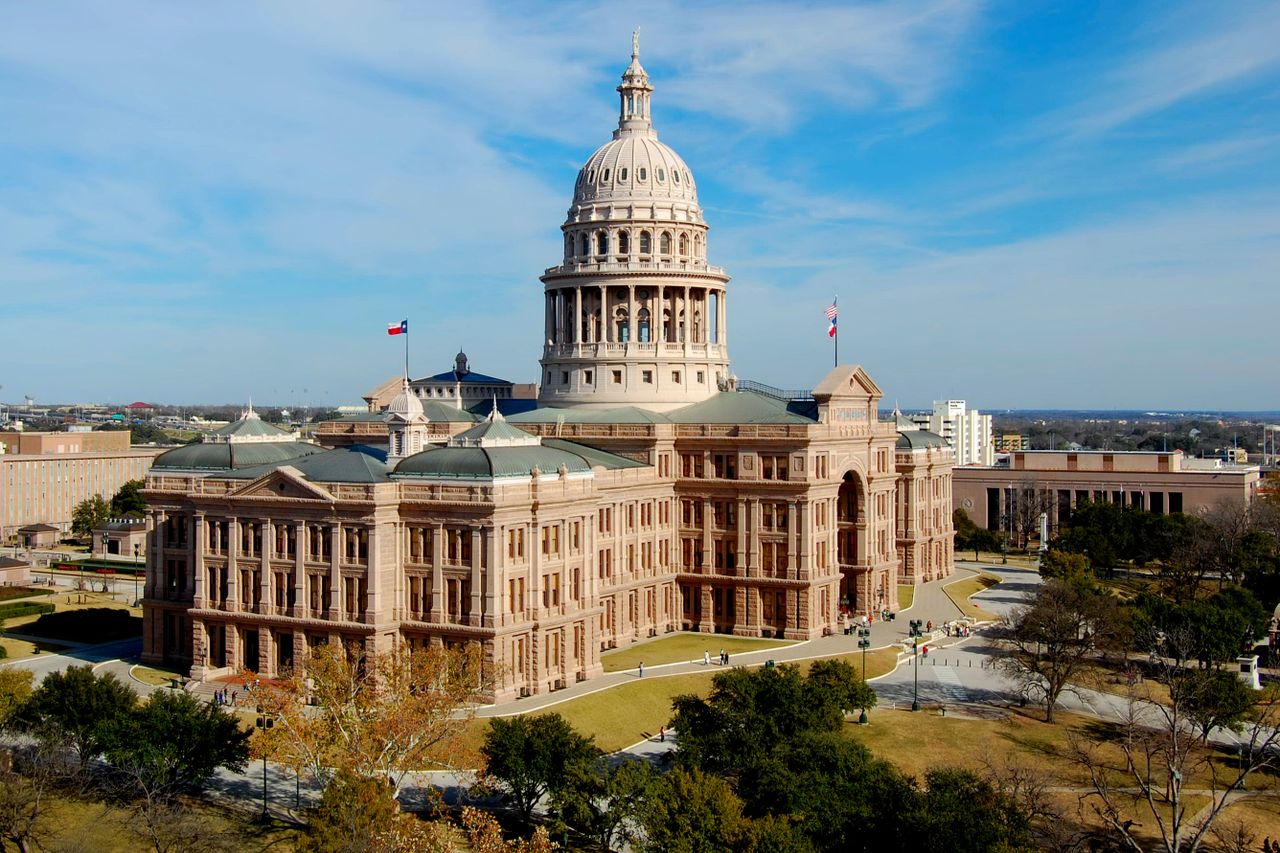
Texas State Capitol (source: Wikimedia Commons)

The passage of SB1 was barely noted by President Joe Biden, who only weeks before had called the attack on voting rights by Republican lawmakers the greatest threat to American democracy since the Civil War.

Leading Democrats are largely ignoring the passage of the Texas law. The Democrats have effectively abandoned their “For the People Act,” which would expand ballot access and ban partisan gerrymandering, and face little chance of passing their more narrow “John Lewis Voting Rights Advancement Act” in the evenly divided US Senate.

The Texas law will place extensive restrictions and potential criminal penalties on voters. Absentee voting will be highly restricted, drop boxes for mail-in ballots and drive-through voting will be banned, and early voting hours will be limited. Election officials will face criminal prosecution if they mail unsolicited absentee ballots to voters or interfere in any way with partisan poll watchers, who are granted extra rights and protections under the law.

The entire bill is designed to place as many barriers and threaten as many criminal penalties as possible in an effort to intimidate and restrict voters, especially working class and minority voters more likely to vote for Democrats. An amendment designed to exclude voters who were unaware that they were ineligible to vote from criminal prosecution was stripped from the final version of the bill, which emerged from the process of reconciling the state House and Senate versions. The so-called Mason Amendment was named after Crystal Mason, a Texas woman facing a five-year prison sentence for illegally voting, despite not knowing that she was ineligible to vote.

Similar provisions exist in bills across the country. The Brennan Center, a voting rights advocacy group, reports that nearly 400 restrictive bills have been introduced in 48 state legislatures, with dozens making their way toward being signed into law.

The Republican assault on voting rights is a coordinated national offensive against basic democratic rights. It is bound up with the turn of the Republican Party toward fascism and the promotion of Trump’s “big lie” that he lost the 2020 election due to massive voter fraud. This was the basis on which Trump mobilized fascistic forces to storm the US Capitol on January 6 in an attempt to block the certification of the Electoral College vote. Virtually the entire Republican Party continues to promote this lie as part of ongoing conspiracies to establish dictatorial rule in the US.

The entire episode of the Texas Democrats’ “resistance” has contained a large element of political theater. In reality, no section of the ruling class or either of its political parties has a commitment to the defense of democratic rights, including the right to vote and have one’s vote counted.

From the start, the flight of the Texas House Democrats from the state, which temporarily prevented a quorum and delayed passage of the anti-voting rights bill in the Texas House, was a political stunt designed to provide a “left” fig leaf to cover up the Democratic Party’s cowardice and capitulation to the Republican offensive.

At no point have the Democrats made any serious attempt to stop the Republican assault on voting rights. In July, more than 50 Texas House Democrats flew to Washington D.C. to lobby the Biden White House and the Democratic-controlled Congress to pass federal legislation that would override the Texas bill. They were verbally hailed by the White House and Democratic leaders as modern-day civil rights heroes, while, in practice, given the cold shoulder.

Biden refused even to meet with them during their weeks-long sojourn in the nation’s capital. He rejected their appeals to support a weakening of the filibuster rule in the Senate so as to enable passage of the Democrats’ voting bills without Republican support.

Instead, he, along with House Speaker Nancy Pelosi and Senate Majority Leader Charles Schumer, made it clear their top priority was securing Republican support to pass a watered-down, pro-corporate infrastructure bill that will provide windfall profits to private contractors. This was consistent with Biden’s posture of seeking bipartisan unity with the increasingly fascistic Republican Party.

The inevitable and ignominious end of the Texas Democrats’ stunt occurred when three of the Democrats who had fled the state over a month ago returned last week to the state House floor, providing the Republicans the quorum needed to pass the bill.

The spinelessness of the Democrats was further exposed in their response to the passage of the bill. Texas State Representative Garnet Coleman, whose return to the chamber helped ensure passage of SB1, attempted to downplay the consequences. “[A]ll I can hope is that if those problems occur … that we come back here in two years and fix it.”

Republican Governor Abbott, a Trump acolyte who has banned masking mandates in reopened Texas schools despite cascading COVID-19 infections and hospitalizations, declared this week that SB1 would “make it easier to vote and harder to cheat,” despite the absence of evidence of significant voter fraud.

When the Democrats first walked out of the state legislature in May to prevent voting on the Republican voting bill, Abbott called a special legislative session to pass it. He repeated this maneuver a few weeks later when the Democrats fled to Washington D.C., accompanied by the issuance of arrest warrants for the Democratic lawmakers for dereliction of their duties.

This debacle is another object lesson in the futility and danger of placing any confidence in the Democratic Party to defend the right to vote or any other democratic right. The political conclusion that must be drawn by workers is the need to break with these parties of Wall Street and the military and mobilize independently on the basis of a socialist program to defend basic democratic rights.

Pandemic-related unemployment programs expire for over 7.5 million jobless workers in the US


https://www.wsws.org/en/articles/2021/09/03/unem-s03.html


Jacob Crosse
12 hours ago


The Labor Day holiday this weekend marks the end of pandemic-related unemployment benefits for millions of jobless workers after the Democratic Party-controlled Congress and President Joe Biden refused to lift a finger to extend the programs which have served as a critical lifeline.
Pedestrians wear face coverings while passing by a sign on an empty restaurant/retail space Thursday, Jan. 21, 2021, in downtown Denver. (AP Photo/David Zalubowski)

Despite the fact that COVID-19 continues to spread uncontrolled throughout the country, resulting in at least 660,000 deaths as of this writing, the ruthless logic of the capitalist system demands that workers return to work producing profits for the ruling class, even if it kills them and their families. An average of 164,000 people are testing positive for the virus every day.

Research conducted by the Century Foundation found that the ending of the CARES Act’s pandemic unemployment aid programs, such as Pandemic Unemployment Assistance (PUA), Federal Pandemic Unemployment Compensation (FPUC) and Pandemic Emergency Unemployment Compensation (PEUC), will leave some 7.5 million workers with no unemployment benefits on Labor Day, September 6, 2021.

“This is a five-alarm fire that we’re treating as if nothing were wrong,” Andrew Stettner, a senior fellow with the Century Foundation, told Politico. “It is an act of policy negligence to allow a record number of workers to be completely cut off from unemployment benefits as the Delta variant surges, jeopardizing the economic progress we have made.”

The elimination of the unemployment programs, meager as they were, will spell catastrophe for millions of jobless workers and their families, many of whom have been forced to subsist on the paltry payments to pay for basic necessities, such as food, shelter and medicine.

While the US government is consigning millions of people to hunger, homelessness and poverty, no such worries plague Wall Street bankers and money managers, who will continue to grow fat off of the Federal Reserve’s monthly $120 billion injections, which Chairman Jerome Powell indicated last Friday would continue.

The Dow Jones Industrial Average continues to set record highs, lining the pockets of the ultra-wealthy and politically connected. Meanwhile, the latest report from the Department of Labor gives some indication of the large number of people reliant on unemployment benefits who will now be without any income. For the week ending August 14, over 12 million claims were made across all unemployment programs. This includes 5.4 million for the PUA and 3.8 million continued claims under the PEUC.

The PUA program was designed for so-called “gig” and contract workers, who would typically not qualify for traditional state unemployment benefits, while the PEUC is designed for workers who have already exhausted state benefits, which in many states typically last between 20 and 26 weeks, but in some states, such as Florida, can be as little as 12 weeks.

The FPUC initially provided an additional $600-a-week federal bonus on top of state-level unemployment benefits. However, this ended last July and was only reinstated briefly by then-President Donald Trump at $300 a week, half of the previous amount, and revived by the Democrats this year at the same level.

A March analysis from Forbes found that there is not a single state where the average weekly state benefit is more than $475, with a vast majority doling out between $236 and $320 a week, that is, between $12,272 and $16,640 a year. For comparison’s sake, a full-time minimum wage worker working 40 hours a week, 52 weeks a year, can expect to earn just over $15,000.

An unemployed worker from Detroit told the World Socialist Web Site that the cutoff of pandemic relief “has made it very difficult to pay bills and forces me to panic.

“Three hundred dollars a week is not enough to pay bills or even buy groceries for two weeks. The Pandemic Unemployment Assistance (PUA) and the Pandemic Emergency Unemployment Compensation (PEUC) at least gave me a few hundred extra dollars to pay bills. Not to mention student loans will go back to normal deductions soon.”

The elimination of benefits began earlier this summer, in June, when 26 states, all but one governed by a Republican, began ending the federal benefits prematurely. The cutoff was done with the blessing of the Biden administration, with White House Press Secretary Jen Psaki telling reporters on June 4 that Republican governors “have every right” to “not accept” federal unemployment payments, adding, “That’s OK.”

The cutting of benefits was hailed in the capitalist press, including NBC News, as a “bold, mass, social and economic experiment” to see if starving workers would be prodded back to work during a public health catastrophe.

The results of this criminal “experiment” were revealed in a recent paper, authored by economists and researchers at Columbia University, Harvard University, the University of Massachusetts Amherst and the University of Toronto. The paper found that ending benefits early did not translate into mass hiring. Instead, in the “cutoff states” studied between June and August, the researchers found that the majority who lost benefits, seven out of eight, did not find new jobs.

“Most people lost benefits and weren’t able to find jobs,” wrote University of Massachusetts Amherst Economics Professor and co-author of the paper, Arindrajit Dube. While the cutoff did not fuel job growth, it did result in a nearly $2 billion reduction in consumer spending from June through the first week of August in the “cutoff states.”

“They turned down federal transfers, and that money didn’t come back into the state [from new jobs income],” University of Toronto Assistant Professor of Economics Michael Stepner told CNBC.

The elimination of the benefits follows the recent Supreme Court ruling that overturned the Centers for Disease Control and Prevention’s (CDC) eviction moratorium. While vindictive landlords and right-wing judges continued to file and process evictions throughout the pandemic, including nearly half a million in the 31 cities tracked by the Princeton Eviction Lab since March 2020, the complete elimination of the moratorium has left some 3.5 million people at risk of eviction in the next two months, according to a mid-August U.S. Census Bureau Household Pulse Survey.

One estimate from Goldman Sachs suggested that 750,000 renter households would likely lose their homes by the end of the year. The same analysis found that between 1 and 2 million households would not receive any federal support, putting them at risk of eviction.

The cutting off of benefits, coupled with the ending of the eviction moratorium, is forcing millions of workers and their families to move in with friends and relatives to avoid homelessness. The cramming of people into small apartments and rental homes exacerbates the spread of the deadly Delta variant of the coronavirus.

This has been given a further boost thanks to the duplicitous trade unions, which have worked hand in glove with the ruling class to reopen schools for in-person learning. This anti-scientific policy has led to the mass infection of children and hundreds of preventable deaths among educators and school personnel, while at the same time fueling community spread of the virus.

While Biden and the Democrats touted the passage of the American Rescue Plan in March as the “most progressive” and “transformative” piece of social legislation since the New Deal of the 1940s, the fact is that many of the “benefits” contained within the bill are mired in red tape or are fleeting, such as enhanced unemployment benefits.

Another example is the estimated $46.6 billion in federal rental assistance included in the bill, which was supposed to help offset the over $70 billion in back rent owed, according to the National Low Income Housing Coalition. However, the Treasury Department revealed this past week that only $5.1 billion, or 11 percent, of the funds had been distributed through July, leaving millions of renters without access to the much needed support. Like state unemployment systems, the process for applying for and getting approved for the aid is purposely convoluted and difficult to navigate.

The incompetence, criminality and indifference to human suffering displayed by the ruling classes in all capitalist countries in response to the pandemic demonstrate the need for the working class to intervene independently with its own socialist program, which prioritizes the preservation of human life and social need above private profit.


At least 43 dead as massive storm ravages US northeast


https://www.wsws.org/en/articles/2021/09/03/idaf-s03.html


Sandy English
12 hours ago


Massive flooding inundated broad swaths of the US northeast on Wednesday night, including New York City and downstate New York, as well as New Jersey and Pennsylvania. Areas of Connecticut, Rhode Island and Massachusetts were also flooded, and tornadoes were reported on Cape Cod.
Residents of a nearby apartment building clear debris from a street where flood waters receded, Thursday, in Mamaroneck, New York (AP Photo/Julie Jacobson)

At least 43 people are dead and more than 250,000 households and businesses are without power. Subway and commuter rail services were halted in many areas, roads were closed and the homes of hundreds of thousands of people were damaged or destroyed.

In New York City alone, at least 12 people died, one in a car stuck in the floodwater and 11 drowned in their basement apartments. Basement apartments, often flouting building codes, are cheaper housing for immigrant workers who live in the most expensive city in the United States. They are often crowded and may house undocumented workers who live in fear of deportation and work some of the lowest paying jobs.

Ang Lama, his wife Mingma Sherpa and their two-year-old son, Lobsang, an immigrant family from Nepal, died in their basement apartment in Woodside, Queens. The apartment has only one door. A neighbor told the media that she believed water was cascading down the staircase outside, which created pressure on the door so that the family could not open it.

As with many New York apartments, the windows were barred and could not be used for escape. A certificate of occupancy obtained by the New York Times shows that the death trap the family called home was not approved for residential use.

Five people died in one apartment complex in Elizabeth, New Jersey, including a couple in their 70s and their 38-year-old son, and one in a car in Passaic when the Passaic River overflowed. At least three people died in Pennsylvania, two apparently by drowning.

Transportation systems have been inundated. The worst conditions were seen in the New York City subway system. Photos posted by riders on Twitter showed water gushing down stairways and on top of trains. According to the MTA, people had to be evacuated from approximately 20 subway cars. Dozens of central auto arteries were closed down, including the New York State Thruway. One road in Portsmouth, Rhode Island, simply crumbled under the impact of the rain.

Residents throughout the region were given almost no time to prepare for the massive flooding. New York Governor Kathy Hochul declared a state of emergency only at 1:42 a.m. on Thursday morning, after the region was flooded. New York City Mayor Bill de Blasio mentioned the rain only briefly at a press conference on Wednesday.

This is despite the fact that the flooding should have been anticipated. One meteorologist told the online journal The City, “The signs were here all week for a significant rain event. Yesterday the Weather Prediction Center had us at a pretty rare high risk of excessive rainfall for our area, which is pretty rare to see.”

The storm is from the remnants of Hurricane Ida, which made landfall in southern Louisiana as a Category 4 storm on Sunday. Winds of over 150 miles an hour (240 kilometers/hour) destroyed buildings, bridges and knocked out New Orleans’ electric grid. Five days later, approximately one million people in Louisiana and Mississippi remain without power, and at least six people died.

Storms with heavy rainfalls, while not completely unprecedented in the northeastern United States, have become more intense and more common in the last few years. Aiguo Dai, a professor of atmospheric science at the University at Albany at the State University of New York, told the New York Times: “Storm intensity is increasing much faster than the average change in precipitation. And it’s the intensity that really matters because that’s what we design our infrastructure to handle.”

Increased precipitation in a single rainfall is a feature of human-induced climate change. As the planet warms, the atmosphere contains more moisture which can fall in a single storm.

New York City’s Central Park measured the highest rainfall on record, 3.15 inches (8 cm) in an hour, on Wednesday night. This was far above the previous record of 1.94 inches (5 cm) during Tropical Storm Henri on August 21, a week and a half ago. Overall, nine inches (23 cm) of rain fell on many parts of New York, Connecticut, New Jersey and Massachusetts. The Schuylkill River in Philadelphia reached levels not seen since the 1850s.

The destruction in the northeast caused by Ida follows a series of other climate-change related disasters this year, including the devastating wildfires in the western United States, the floods in Europe in July that killed more than 200 people, and the floods in China last month, when 8 inches (20 cm) of rain fell in one hour on Zhengzhou, capital of the Chinese province of Henan.

Scientists have warned for decades that climate change will lead to more frequent and extreme weather events, but governments throughout the world have rejected the emergency measures necessary to slow and reverse the process. Nothing, moreover, has been done to make roadways safe, secure housing from flooding or upgrade sewer systems that routinely overflow. Investments and repairs pledged by Democratic Party politicians in New York City after Superstorm Sandy nearly one decade ago have gone largely unfulfilled.

In a statement about the disaster, President Joe Biden said that “extreme storms and the climate crisis are here” and called it “one of the great challenges of our time.” Such statements, made after every disaster, mean nothing.

The necessary reduction in greenhouse gasses required to halt global warming requires massive changes in energy production on the basis of a globally coordinated and scientific plan. To protect millions of workers throughout the world from the impact that climate change is already having requires an enormous diversion of social resources.

This type of transformation is incompatible with the capitalist system. It requires the transition to a planned, socialist economy on a world scale.

Over the past year, the ruling class has demonstrated that it is utterly incapable of responding to a global pandemic. The elementary measures necessary to eradicate the virus—social distancing, mass vaccination, a lockdown of schools and non-essential workplaces as well as support for workers who must stay home—have been rejected because they went against the interests of the financial oligarchy.

The same ruling class cannot and will not sanction the massive allocation of resources and infringements on profit required to address a threat to the very future of humanity itself. The fight against climate change is, as with every great social issue confronting the working class, a revolutionary question.