The horrific Kabul suicide bombing introduces an extra vector in an already incandescent situation: It aims to prove to Afghans and to the outside world that the nascent Islamic Emirate of Afghanistan is incapable of securing the capital.
As it stands, at least 103 people – 90 Afghans (including at least 28 Taliban) and 13 American servicemen – were killed and at least 1,300 injured, according to the Afghan Health Ministry.
Responsibility for the bombing came via a statement on the Telegram channel of Amaq Media, the official Islamic State (ISIS) news agency. This means it came from centralized ISIS command, even as the perpetrators were members of ISIS-Khorasan, or ISIS-K.
Presuming to inherit the historical and cultural weight of ancient Central Asian lands that from the time of imperial Persia stretched all the way to the western Himalayas, that spin-off defiles the name of Khorasan.
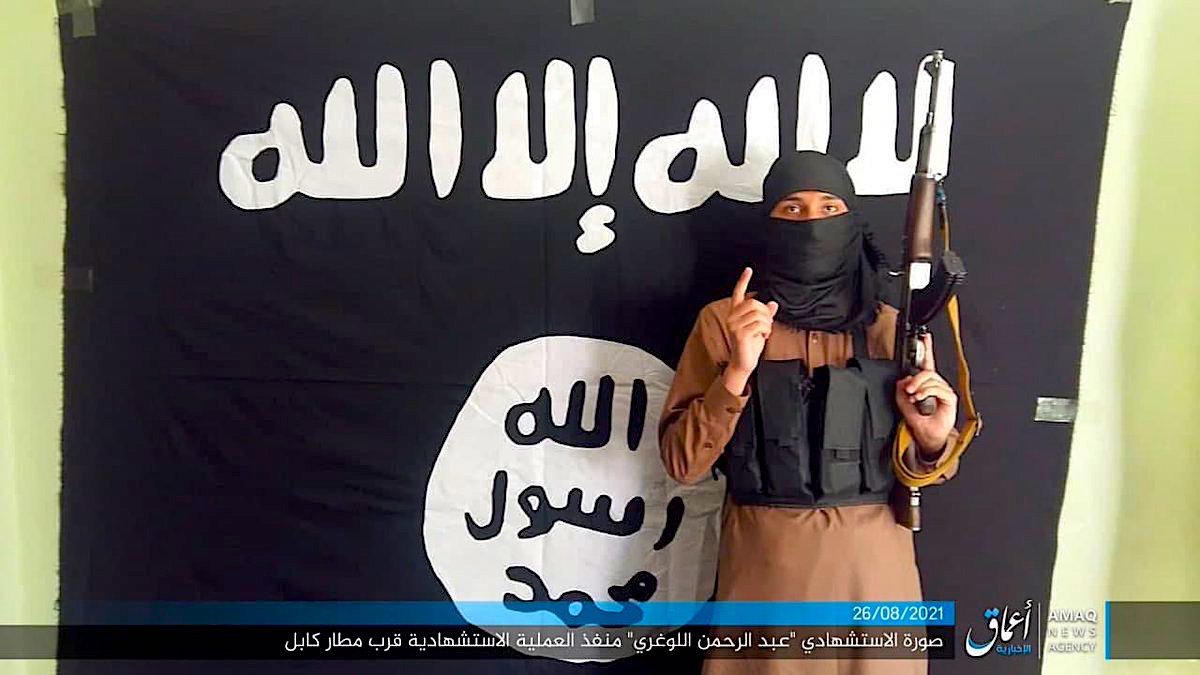
The suicide bomber who carried out “the martyrdom operation near Kabul airport” was identified as one Abdul Rahman al-Logari. That would suggest he’s an Afghan, from nearby Logar province. And that would also suggest that the bombing may have been organized by an ISIS-Khorasan sleeper cell. Sophisticated electronic analysis of their communications would be able to prove it – tools that the Taliban don’t have. The suicide bomber Abdul Rahman al-Logari as presented by ISIS propaganda. (Handout / Daesh)
The way social media-savvy ISIS chose to spin the carnage deserves careful scrutiny. The statement on Amaq Media blasts the Taliban for being “in a partnership” with the U.S. military in the evacuation of “spies.”
It mocks the “security measures imposed by the American forces and the Taliban militia in the capital Kabul,” as its “martyr” was able to reach “a distance of no less than five meters from the American forces, who were supervising the procedures.”
So it’s clear that the newly reborn Islamic Emirate of Afghanistan and the former occupying power are facing the same enemy. ISIS-Khorasan comprises a bunch of fanatics, termed takfiris because they define fellow Muslims – in this case the Taliban – as “apostates.”
Founded in 2015 by emigré jihadis dispatched to southwest Pakistan, ISIS-K is a dodgy beast. Its current head is one Shahab al-Mujahir, who was a mid-level commander of the Haqqani network headquartered in North Waziristan in the Pakistani tribal areas, itself a collection of disparate mujahideen and would-be jihadis under the family umbrella.
Washington branded the Haqqani network as a terrorist organization way back in 2010, and treats several members as global terrorists, including Sirajuddin Haqqani, the head of the family after the death of the founder Jalaluddin.
Up to now, Sirajuddin was the Taliban deputy leader for the eastern provinces – on the same level with Mullah Baradar, the head of the political office in Doha, who was actually released from Guantanamo in 2014.
Crucially, Sirajuddin’s uncle, Khalil Haqqani, formerly in charge of the network’s foreign financing, is now in charge of Kabul security and working as a diplomat 24/7.
The previous ISIS-K leaders were snuffed out by U.S. airstrikes in 2015 and 2016. ISIS-K started to become a real destabilizing force in 2020 when the regrouped band attacked Kabul University, a Doctor Without Borders maternity ward, the presidential palace and the airport.
NATO intel picked up by a UN report attributes a maximum of 2,200 jihadis to ISIS-K, split into small cells. Significantly, the absolute majority are non-Afghans: Iraqis, Saudis, Kuwaitis, Pakistanis, Uzbeks, Chechens and Uighurs.
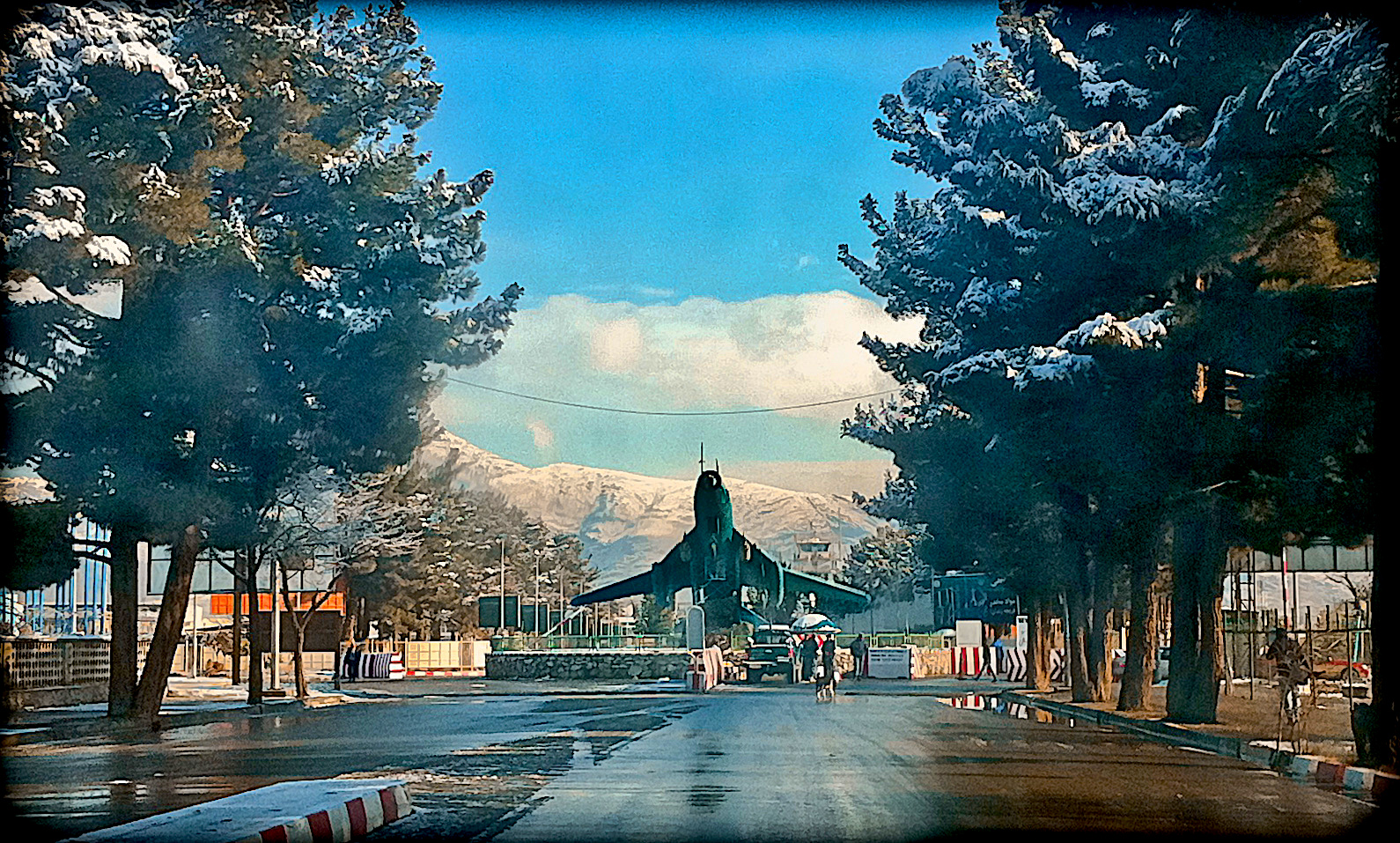
The real danger is that ISIS-K works as a sort of magnet for all manners of disgruntled former Taliban or discombobulated regional warlords with nowhere to go. The Perfect Soft Target Kabul airport. (Peretz Partensky/Wikimedia Commons)
The civilian commotion these past few days around Kabul airport was the perfect soft target for trademark ISIS carnage.
Zabihullah Mujahid – the new Taliban minister of information in Kabul, who in that capacity talks to global media every day – is the one who actually warned NATO members about an imminent ISIS-K suicide bombing. Brussels diplomats confirmed it.
In parallel, it’s no secret among intel circles in Eurasia that ISIS-K has become disproportionally more powerful since 2020 because of a transportation ratline from Idlib, in Syria, to eastern Afghanistan, informally known in spook talk as Daesh Airlines.
Moscow and Tehran, even at very high diplomatic levels, have squarely blamed the U.S.-U.K. axis as the key facilitators. Even the BBC reported in late 2017 on hundreds of ISIS jihadis given safe passage out of Raqqa, and out of Syria, right in front of the Americans.
The Kabul bombing took place after two very significant events.
The first one was Mujahid’s claim during an American NBC News interview earlier this week that there is “no proof” Osama bin Laden was behind 9/11 – an argument that I had already hinted was coming in this podcast the previous week.
This means the Taliban have already started a campaign to disconnect themselves from the “terrorist” label associated with 9/11. The next step may involve arguing that the execution of 9/11 was set up in Hamburg, the operational details coordinated from two apartments in New Jersey.
Nothing to do with Afghans. And everything staying within the parameters of the official narrative – but that’s another immensely complicated story.
The Taliban will need to show that “terrorism” has been all about their lethal enemy, ISIS, and way beyond old school al-Qaeda, which they harbored up to 2001. But why should they be shy about making such claims? After all, the United States rehabilitated Jabhat Al-Nusra – or al-Qaeda in Syria – as “moderate rebels.”
The origin of ISIS is incandescent material. ISIS was spawned in Iraq prison camps, its core made of Iraqis, their military skills derived from ex-officers in Saddam’s army, a wild bunch fired way back in 2003 by Paul Bremmer, the head of the Coalition Provisional Authority.
ISIS-K duly carries the work of ISIS from Southwest Asia to the crossroads of Central and South Asia in Afghanistan. There’s no credible evidence that ISIS-K has ties with Pakistani military intel.
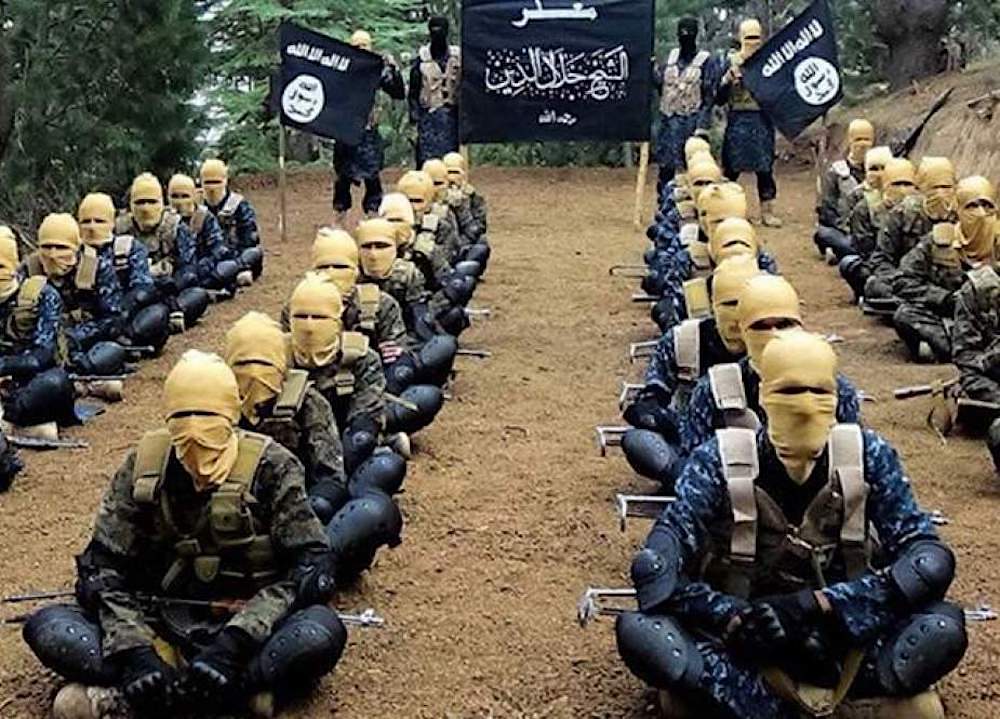
On the contrary: ISIS-K is loosely aligned with the Tehreek-e-Taliban (TTP), also known as the Pakistani Taliban, Islamabad’s mortal enemy. TTP’s agenda has nothing to do with the moderate Mullah Baradar-led Afghan Taliban who participated in the Doha process. IS-K fighters in training in Afghanistan. (Facebook) SCO to the Rescue
The other significant event tied to the Kabul bombing was that it took place only one day after yet another phone call between Presidents Vladimir Putin and Xi Jinping.
The Kremlin stressed the pair’s “readiness to step up efforts to combat threats of terrorism and drug trafficking coming from the territory of Afghanistan”; the “importance of establishing peace”; and “preventing the spread of instability to adjacent regions.”
And that led to the clincher: They jointly committed to “make the most of the potential” of the Shanghai Cooperation Organization (SCO), which was founded 20 years ago as the “Shanghai Five”, even before 9/11, to fight “terrorism, separatism and extremism.”
The SCO summit is next month in Dushanbe – when Iran, most certainly, will be admitted as a full member. The Kabul bombing offers the SCO the opportunity to forcefully step up.
Whichever complex tribal coalition is formed to govern the Islamic Emirate of Afghanistan, it will be intertwined with the full apparatus of regional economic and security cooperation, led by the three main actors of Eurasia integration: Russia, China and Iran.
The record shows Moscow has all that it takes to help the Islamic Emirate against ISIS-K in Afghanistan. After all, the Russians flushed ISIS out of all significant parts of Syria and confined them to the Idlib cauldron.
In the end, no one aside from ISIS wants a terrorized Afghanistan, just as no one wants a civil war in Afghanistan. So the order of business indicates not only an SCO-led frontal fight against existing ISIS-K terror cells in Afghanistan but also an integrated campaign to drain any potential social base for the takfiris in Central and South Asia.
Venezuelan diplomat Alex Saab remains defiant after over 14 months under US-ordered arrest in the African archipelago country of Cabo Verde. A special envoy of the Venezuelan government, he is fighting extradition to the US for the “crime” of trying to procure humanitarian supplies of food, fuel, and medicine from Iran in violation of illegal US sanctions. To date, Saab’s legal appeals for freedom have been either denied, rejected, or ignored as his extradition to the US is becoming increasingly imminent. The legal case
Saab continues to fight this flagrant attempt of extra-territorial judicial overreach by the US. In response to Saab’s recent appeal to the US 11th Circuit Court, the US filed on August 24 an application for an extension to reply on October 7. This legal delaying tactic is likely a US ploy to allow Saab’s pending extradition without recognizing his diplomatic immunity.
Under the Geneva Conventions, a credentialed diplomat such as Saab has absolute immunity from arrest, even in the time of war. The US does not recognize Saab’s diplomatic status as if Washington has the authority to qualify who other countries may choose and receive as their ambassadors.
To begin with, Saab’s arrest on June 12, 2020, was arbitrary, illegal, and irregular. While on his way from Caracas to Tehran, his plane was diverted to Cabo Verde for a technical fueling stop. Saab was forcibly removed from the plane by Cabo Verdean police who did not have an arrest warrant.
The day after the arrest and detention, the US had INTERPOL issue a Red Notice, which was subsequently annulled by INTERPOL. And when the arrest warrant arrived after the fact, it was made out in the name of a person who was not Alex Saab. Such is the truly farcical legal basis for the diplomat’s detention.
Cabo Verde is a member of and under the jurisdiction of the Economic Organization of West African State (ECOWAS) Court of Justice, which ordered Saab to be released and even paid damages by the Cabo Verde government. Cabo Verde appealed the ruling, lost, and then claimed – even though it had recognized the authority of the court by participating in the proceedings – that it did not have to obey the court’s orders.
Subsequently, the United Nations Human Rights Committee called for Saab’s release.
Saab’s legal team went to the Cabo Verde Supreme Court with a writ of habeas corpus. This was denied on the absurd grounds that Saab was at “liberty” under “house arrest.” In fact, he was not only detained but not allowed to be treated for a cancer condition by his doctors or even meet with family who came to support him when they first came to Cabo Verde. Only after pressure was Saab allowed minimal visitation.
On August 13, Saab’s case came before the Cabo Verde Constitutional Court contesting his detention on twelve constitutional grounds. Saab was not allowed to appear in person at the court. Although the Constitution Court is bound to respond, it has simply run the clock so far. The political case
This legal theatre around the Saab case serves as an obfuscation for what is fundamentally a political case of the US attempting to impose regime-change on Venezuela through its punishing unilateral coercive measures; measures which amount to an unlawful blockade of the Latin American nation.
The US wields an inordinate amount of influence on one of the smallest nations in the world with a larger Cabo Verdean population in the US than on the home islands. With few natural resources, Cabo Verde is dependent on remittances from abroad and more unfortunately is “a waypoint for illicit drugs and other transnational organized crime,” according to a US government report. With a GDP of only $1.7bil, the current $400mil US embassy building project is a considerable carrot for Cabo Verde.
The political nature of the case is in effect recognized by the US. Saab is accused by the US of being the mastermind behind a network of sources that has allowed Venezuela to bypass the US blockade and procure needed supplies, which is the reason for targeting Saab. In pursuit of enforcing its illegal sanctions, the US would likely want to extract from Saab information on how Venezuela has tried to circumvent the blockade, which the US has imposed to asphyxiate Venezuela into submission.
Saab alleges that he has been tortured while in Cabo Verde. He has reason to expect that he would face more of the same, if he were extradited to the US, to force him to not only disclose his trade contacts and channels but to denounce the government of Venezuela. Saab in his own words
Saab, however, remains defiant. On August 19, Saab legally charged Cape Verdean authorities with gross misconduct in his case including torture. The following are his own words in a statement released through his lawyers August 25:
“Cape Verde has not decided yet because despite having all legal terms expired and having clear knowledge that innumerable laws have been violated, the fact of now having to totally violate its own constitution in order to extradite me, upsets the conscience of those judges of the Constitutional Court, who have been honest until now, but who are strongly pressured by the US.
In Cape Verde, its president, the prime minister, the corrupt attorney general, and even the humblest people, know and recognize that I am kept kidnapped.
For those who dream that my speech or integrity will change if I am extradited, let me spoil that illusion. My integrity does not change with the [political] climate or the type of torture. Venezuela is sovereign. It is the country that adopted me.
It is the country for which all decent people fight. We do not go around the world lying and asking for sanctions against the people.
Venezuela will win this battle, whether in Cape Verde or in North America, we will win. I hope to see the sanctions lifted soon, and that priority will continue to be given to the people who need at least 30 more years of electoral victories, led by a people united around the PSUV [socialist party] and our President Nicolas Maduro Moros.
So, leave the emotions out wondering if the plane arrived, if it didn’t arrive, if I will ‘sing’ as a tenor in case they extradite me, etc. Let go of that ridiculous illusion, first because there is nothing to ‘sing’ about and second because as I have said many times, I will never betray the Homeland I serve.” International effort to free Alex Saab
Internationally, Cabo Verde has received diplomatic letters protesting the Saab case from Iran, China, Russia, the United Nations, the African Union, ECOWAS, and of course Venezuela based on the principles of immunity and inviolability of consular rights. Over 15,000 internationals have signed a petition to the US and Cape Verdean political leadership to free Alex Saab at https://afgj.org/free-alex-saab.