Sunday, August 22, 2021

Historic US defeat in Afghanistan


https://www.youtube.com/watch?v=yQTE7cz-SIc


Epstein Accuser SUES Prince Andrew


https://www.youtube.com/watch?v=m1d3RE4MFRM


Rainfall Observed at Peak of Greenland Ice Sheet for First Time on Record


https://www.commondreams.org/news/2021/08/20/rainfall-observed-peak-greenland-ice-sheet-first-time-record


"What is going on is not simply a warm decade or two in a wandering climate pattern. This is unprecedented," said one climate scientist.


JAKE JOHNSON
August 20, 2021


This past weekend, researchers at the National Science Foundation's Summit Station observed rainfall at the peak of Greenland's rapidly melting ice sheet for the first time on record—an event driven by warming temperatures.

"This was the third time in less than a decade, and the latest date in the year on record, that the National Science Foundation's Summit Station had above-freezing temperatures and wet snow," the National Snow and Ice Data Center (NSIDC) said in a press release earlier this week. "There is no previous report of rainfall at this location (72.58°N 38.46°W), which reaches 3,216 meters (10,551 feet) in elevation."

Temperatures at the summit of the ice sheet rose above freezing at around 5:00 am local time on Saturday, "and the rain event began at the same time," NSIDC noted. "For the next several hours, rain fell and water droplets were seen on surfaces near the camp as reported by on-station observers."

The anomalous rainfall at the ice sheet's peak marked the start of a three-day period during which "above-freezing temperatures and rainfall were widespread to the south and west of Greenland... with exceptional readings from several remote weather stations in the area," said NSIDC. "Total rainfall on the ice sheet was 7 billion tons."

The warmer-than-usual temperatures caused significant melting of the ice sheet, with melt extent peaking at 337,000 square miles on August 14.

"Warm conditions and the late-season timing of the three-day melt event coupled with the rainfall led to both high melting and high runoff volumes to the ocean," NSIDC observed. "On August 15 2021, the surface mass lost was seven times above the mid-August average... At this point in the season, large areas of bare ice exist along much of the southwestern and northern coastal areas, with no ability to absorb the melt or rainfall. Therefore, the accumulated water on the surface flows downhill and eventually into the ocean."


Ted Scambos, a senior research scientist at the Cooperative Institute for Research in Environmental Sciences at the University of Colorado at Boulder, told the Washington Post on Thursday that while the three-day melting event "by itself does not have a huge impact," it is "indicative of the increasing extent, duration, and intensity of melting on Greenland."

"Like the heat wave in the [U.S. Pacific] northwest, it’s something that's hard to imagine without the influence of global climate change," said Scambos. "Greenland, like the rest of the world, is changing. We now see three melting events in a decade in Greenland—and before 1990, that happened about once every 150 years. And now rainfall: in an area where rain never fell.”

In a landmark report released earlier this month, the Intergovernmental Panel on Climate Change (IPCC) concluded that "it is very likely that human influence has contributed to the observed surface melting of the Greenland ice sheet over the past two decades."

In July—which the National Oceanic and Atmospheric Administration recently deemed the hottest month ever recorded on Earth—a heat wave in Greenland caused enough melting to cover the entire state of Florida with two inches of water.

"What is going on is not simply a warm decade or two in a wandering climate pattern," Scambos told CNN in response to the rainfall at the ice sheet's summit. "This is unprecedented."


Scientific health policies contain delta variant outbreak in China


https://www.wsws.org/en/articles/2021/08/21/chin-a21.html?pk_campaign=newsletter&pk_kwd=wsws


Alex Lantier
12 hours ago


In a devastating exposure of anti-scientific policies pursued by Washington and the European powers that have led to millions of COVID-19 infections and deaths, mass implementation of scientific public health policies in China is containing the latest delta variant outbreak there. This highlights the potential for a global campaign of eradication of the virus to end the pandemic, if the resistance of the ruling class internationally to a scientific policy can be smashed.
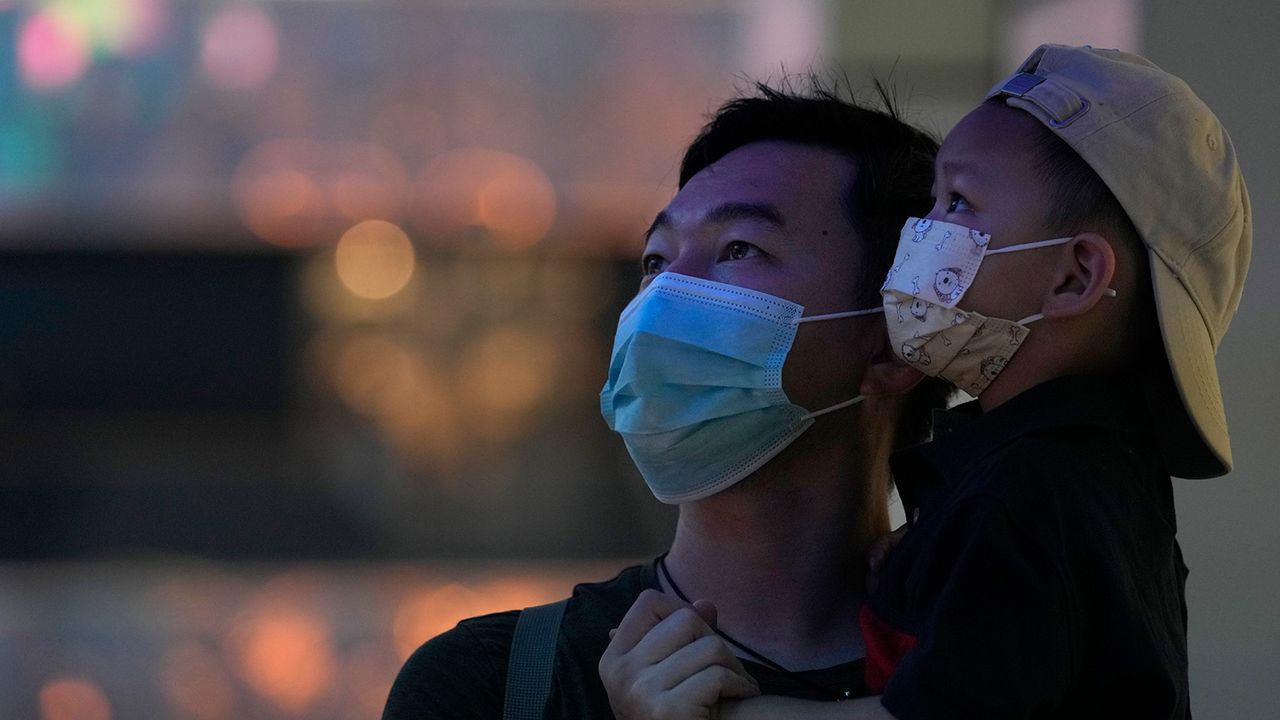
A man and a child wearing masks to protect from the coronavirus walk through a shopping area in Beijing, China, Sunday, Aug. 15, 2021. (AP Photo/Ng Han Guan)

Last month, after a vast public health mobilization ended the epidemic inside China last year, a new outbreak emerged at the Nanjing airport. The delta variant brought aboard Air China flight CA910 from Moscow infected vaccinated maintenance workers at the airport and rapidly spread across China. Detected on July 20, the outbreak had sickened 381 people by the end of July in over a dozen provinces. While the outbreak at its peak infected over 140 people a day, this number is now falling significantly; broad areas of China are reporting no new cases.

Overall, there were 29 COVID-19 cases reported across China yesterday. Jiangsu province, where Nanjing is located and which was the outbreak’s initial epicenter, reported only three new cases. Nearby Shanghai recorded two and the southern border province of Yunnan, the next worst-hit in this outbreak after Jiangsu, eight. The southern industrial hub of Guangdong province reported nine. Hunan province, initially badly hit when tourists from Nanjing brought the delta variant there, reported no new cases.

While the situation in China remains dangerous, this initial success testifies to the enormous power of scientific methods against even the virulent delta variant. Vaccination and lockdowns of affected city districts—together with mass testing of entire cities, including Nanjing, Wuhan and Yangzhou, to find, isolate and rapidly treat the sick—are stopping a virus that is exploding out of control elsewhere around the world.

This comes after the success of the lock-down imposed at the beginning of the pandemic in Wuhan and across Hubei province, from January 23 to April 8 of last year. This strict lockdown, lifted only after new cases of the virus stopped appearing, ended transmission of the coronavirus inside China except for outbreaks imported from outside China’s borders.

In the imperialist countries and most of the rest of the world, however, governments pursued a diametrically opposed strategy. They rejected strict lockdowns or, when forced to implement them by wildcat strikes as in Italy and the United States, lifted them before transmission of the virus was over and programs for mass testing and to track-and-trace new cases were in place.

The resulting difference in health outcomes is staggering. Fewer than 5,000 died of COVID-19 in China, but over 643,000 died in the United States and 1,155,000 in Europe. The contrast is even sharper in the period since the lifting of lockdowns in the spring of 2020.

Since May 1, 2020, after the Wuhan lockdown, two people have died of COVID-19 in China, over 500,000 died in the United States, and over 950,000 in Europe. In India, whose population is similar in size to China’s, somewhere between 2.9 and 5.8 million have died, according to demographers’ estimates, and mostly left uncounted.

Fighting and ending the pandemic requires an international strategy, however. The Nanjing outbreak underscores yet again the impossibility of ending the pandemic with a national policy. Scientific policies must be employed to eradicate the virus on a global scale—otherwise, given the rapidly-mutating, highly contagious nature of the virus, new variants inevitably develop and spread back to areas where the virus has been eradicated.

The main obstacle is the refusal of the imperialist financial aristocracy in North America and Europe to implement a scientific policy. Instead, they gorged themselves on trillions of dollars, euros and pounds in bank and corporate bailouts and demanded that lives be sacrificed so workers could stay at work to generate profits. As millions died needlessly, UK Prime Minister Boris Johnson infamously said: “No more f***ing lockdowns, let the bodies pile high in their thousands!”

Now, as the delta variant is set to provoke record losses worldwide, US and European media are launching a campaign to discredit Chinese health policies. It is more or less apparent that their target is not only China, but opposition in the working class internationally to policies of needless mass death.

In its report “China’s Delta outbreak shows signs of slowing,” CNN demanded Beijing stop trying to limit contagion. While admitting that a “‘zero transmission’ model … has so far proved broadly effective in curbing widespread transmission,” it said: “However, this approach requires punishing, oppressive measures that many argue are simply not sustainable in the long term, especially as new variants spread and other countries open back up. Experts say fortress territories will eventually have to shift away from this strategy—they can’t stay shut off from the world forever.”

Imperialist media are also trying to exploit the political crisis caused by the pandemic in China itself to discredit a scientific policy of saving lives. In France, the conservative daily Le Figaro claimed that Chinese scientists and doctors themselves reject Beijing’s policy and want to adopt President Emmanuel Macron’s call to “live with the virus.” Le Figaro cited the recent controversy in China over statements by leading virologist Dr. Zhang Wenhong.

Le Figaro claimed: “Zhang Wenhong, the well-known expert in infectious diseases in Shanghai, expressed doubts in late July about China’s zero-Covid strategy, calling on them to ‘learn to live with the virus.’” It added that this comment “put in question the viability of China’s pandemic management” and “had provoked bitter debate in the country.”

In reality, Zhang is not a supporter of European governments’ politically-criminal approach to the pandemic, and attempts to portray him as such are a fraud. In his latest post on the Weibo internet platform, Zhang unambiguously endorsed China’s health policy: “The international anti-epidemic situation is still very serious and China still faces enormous epidemic challenges. But we must have the firm conviction that our country’s anti-pandemic strategy is currently the best strategy for ourselves. ‘You tell whether a shoe fits by wearing it.’”

Le Figaro was citing a July 29 Weibo post by Zhang that was criticized in China. After this, his employer, Fudan University in Shanghai, began an investigation of potential plagiarism in Zhang’s PhD thesis. In a distorted echo of the imperialist press campaign itself, there were nationalist criticisms of Zhang on Chinese social media for supporting Western culture.

In the earlier July 29 post, Zhang had written: “As to how the world co-exists with the virus, each country gives its own response. China has given a beautiful response. After the Nanjing outbreak, we will certainly learn more. China must build a shared future with the world, arrive at communication with the rest of the world and return to normal life, while protecting its citizens from fear of the virus. China should have such wisdom.”

Zhang’s statement is ambiguous, because it avoids directly condemning the politically-criminal pandemic policies adopted by the imperialist countries and their allies. This ambiguity is not, however, simply an issue of Zhang’s individual opinions. Zhang, who is a physician and not a politician, is speaking under constraints imposed by his membership in the Chinese Communist Party (CCP), a bureaucratic Stalinist party that restored capitalism in China in 1989 and now has deep economic and financial links to world imperialism.

Enmeshed in capitalist relations, and increasingly afraid of the working class at home, the CCP has largely avoided openly denouncing the health policies of imperialist countries. However, the CCP has not prevented Zhang and other Chinese medical and health workers from implementing policies that saved millions of lives in China.

Two important conclusions flow from this. Firstly, Zhang and other Chinese scientists working to eradicate COVID-19 are neither supporters of the imperialist powers’ reactionary pandemic policy nor agents of “the West” against China. The work that they and the working people of China have done is a great service to workers internationally: it shows that science and collective mobilization can end the pandemic.

Moreover, ending the pandemic requires a conscious, international mobilization of the working class, for socialism and against both imperialism and Stalinism, aiming to take power out of the hands of the capitalist financial aristocracy and impose a scientific policy to save lives.


GUATEMALANS BACK ON THE STREETS DEMANDING PRESIDENT’S RESIGNATION


https://popularresistance.org/guatemalans-back-on-the-streets-demanding-president-resignation/


By
Telesur English.

August 20, 2021
RESIST!


On Thursday The Government Deployed The National Police To Prevent The Protests Yet The Demonstrators Remained In The Streets.

Guatemalan Ancestral Indigenous Authorities and advocate groups took to the streets on Thursday to demand the resignation of President Alejandro Giammattei Attorney and the General of the Public Ministry (MP), María Consuelo Porras.

“The president Alejandro Giammattei and the Attorney General of the Public Ministry did not respond to the people that demand their resignation. In this scenario, the people as taken to the streets and several sectors have called for an indefinite strike,” teleSUR´s correspondent in Guatemala Rolanda García reported.


“President Alejandro Giammattei and the Attorney General of the Public Ministry did not respond to the people demanding their resignation. In this context, the population has resumed the demonstrations and various sectors call for an indefinite strike.”

On the other hand, the Ancestral Indigenous Authorities denounced a campaign to attack Indigenous communities, social movements, and alternative media outlets.

On Thursday the government deployed the National Police to prevent the protests yet the demonstrators continued in the streets. A clash between the protestors and people at a local market was reported.


LATIN AMERICAN SOCIALISTS UNITE WITH AXIS OF RESISTANCE AGAINST IMPERIALISM


https://popularresistance.org/latin-american-socialists-unite-with-axis-of-resistance-against-western-imperialism/


By Ben Norton,
Orinoco Tribune.

August 20, 2021
EDUCATE!


The leftist governments of Venezuela, Cuba, Nicaragua, and Bolivia have found a key strategic ally in Iran, the heart of the Axis of Resistance.

Revolutionary socialist movements in Latin America are developing closer relations with anti-imperialist resistance forces in West Asia, building a united front against Western aggression and exploitation.

This budding alliance is an extremely important development in the struggle against an authoritarian international political and economic system that is essentially a global dictatorship, ruled by the United States and its junior imperialist partners in the European Union, NATO, apartheid “Israel,” and the Gulf monarchies.

As this Washington-led, trans-Atlantic hegemonic order was constructed over the past century, through a long series of wars, military occupations, foreign interventions, coups, regime-change operations, assassinations, and grossly unequal trade arrangements, two regions of the world have been especially targeted: Latin America and the Middle East, or more accurately West Asia.

Both regions have plentiful natural resources and are very geostrategically located. Latin America has vast mineral reserves and agricultural products. West Asia has a plurality of the planet’s hydrocarbon reserves, and connects Europe to Asia, sitting right in the middle of what geopolitical analysts have long called the “World Island.”

Given their status as principal targets of Western imperialism, it only makes sense for resistance forces in these regions to unite. Attempts at forming such an alliance had been made in the past – revolutionary Palestinian militants trained in Cuba and with Nicaragua’s Sandinistas, for instance, and Muammar al-Qaddafi’s Libya supported leftist Latin American guerrillas – but this collaboration was historically limited in scope.

That is, until recently. As the United States accelerated its hybrid warfare to try to re-colonize Latin America and West Asia in the 2000s, indigenous anti-imperialist movements in both regions joined forces, forging not only close political ties, but economic relations as well.

The leftist governments of Venezuela, Cuba, Nicaragua, and Bolivia have found a key strategic ally in Iran, the heart of the Axis of Resistance.
Revolutionary ALBA member states unite with Iran

The director of the main instrument of Latin American economic integration, the Bolivarian Alliance for the Peoples of Our America, known simply as the ALBA, took a historic trip to Tehran this August to meet with the new Iranian President Ibrahim Raisi.

Iran and the ALBA have a lot in common, and both seek to defend the independence and sovereignty of nations and confront the outrageousness of the United States,” remarked the ALBA’s executive secretary, the Bolivian diplomat Sacha Llorenti.


For his part, Raisi kicked off his new administration calling for strengthening relations with Latin America, stressing that it is one of Tehran’s top foreign-policy priorities.

“Iran is determined to develop its political and economic relations with the member states of the ALBA-TCP,” Raisi said, highlighting “the shared values and positions of both parties.”

“There is no doubt that a greater development of the relations between Iran and Latin American countries can halt the North Americans and other arrogant countries,” Raisi added.

Joining Llorenti in Tehran were top officials from Venezuela, Nicaragua, and Bolivia—all member states of the ALBA.

In a meeting with Venezuela’s vice president of planning, Ricardo Menéndez, Raisi stated that “Iran and Venezuela alike have common interests and enemies. We have always shown that with resistance and wisdom, we can thwart the plots of the United States and world imperialism.”


Nicaragua’s Foreign Minister Denis Moncada met with Raisi as well, and called for strengthening relations with Tehran. The Iranian president praised the Central American nation’s Sandinista government as a model of resistance against US aggression, and said, “The people of Iran have always wished for success and victory for the revolutionary nation of Nicaragua.”

Likewise, in his meeting with Raisi, Bolivian Foreign Minister Rogelio Mayta pledged to work more closely with Iran, stating, “Despite sabotage by the United States, we are determined to increase the level of relations with Tehran in all areas.”
Iran and Venezuela resist illegal US blockades

Iran’s support for revolutionary governments in Latin America goes beyond mere words. While many liberal and center-left political forces in the region have opportunistically turned their back on Venezuela, betraying their neighbor on behalf of Washington, Tehran has shown real, tangible support for Caracas.

Both Venezuela and Iran are suffering from illegal US blockades, and these murderous sanctions have led to a shortage of food, medicine, and gasoline. (Venezuela has massive oil reserves, but it is some of the heaviest crude petrol on the planet, which cannot be used or exported without first being refined, so Caracas needs to import lighter crude or other materials that are blocked by Washington.)

To help meet the needs of the Venezuelan people, Iran has repeatedly defied the criminal US blockade and delivered supplies to Caracas, sending huge tankers full of food, medicine, and fuel.

In these altruistic acts, Tehran has valiantly risked US military aggression, putting its money where its mouth is to support the revolutionary government and people of Venezuela.

Iran has also opened a supermarket chain in Venezuela, called Megasis, to help support an ally that is heavily reliant on food imports. It is part of a larger strategy to boost bilateral trade and economic cooperation between both nations.

The brotherhood between Venezuela and Iran was most poignantly illustrated at the 2013 funeral of President Hugo Chávez, who initiated the Bolivarian Revolution. Iranian President Mahmoud Ahmadinejad was photographed hugging and consoling the Venezuelan Comandante’s crying mother.


Solidarity between Latin America and West Asian Resistance Axis

Revolutionary Latin American governments have also sought to collaborate more closely with other forces in the West Asian Axis of Resistance.

Venezuela, Cuba, Nicaragua, and Bolivia vociferously opposed and condemned the US-led imperialist proxy wars against Libya and Syria, which expressly sought the collapse of the nations’ central governments, and succeeded in the former while failing in the latter.

Similarly, these ALBA member states have all shown unflinching solidarity with Palestine. In response to apartheid “Israel’s” 2008-2009 massacre in Gaza, Venezuelan President Chávez officially broke ties with the Zionist regime, denouncing it as a “genocidal state” and “the murderous arm of the US government.”

Then in 2010, in a daring challenge to Washington’s declaration that Iran, Iraq, and North Korea constituted a supposed “Axis of Evil,” Comandante Chávez announced an alliance with Syria, which he dubbed the “Axis of the Brave.”

The Axis of the Brave was a “strategic alliance” against US imperialism, Chávez explained. “A new world is being built,” and “we seek a strategic relationship with that continent,” the Venezuelan president said, referring to West Asia.

Less than a year after Chávez’s announcement, the United States and its proxies launched a devastating decade-long regime-change war on Syria—one that continues today, with more than one-third of Syria’s sovereign territory, seizing most of its oil and wheat reserves, illegally militarily occupied by the United States in the northeast and NATO member Turkey in the northwest.

Chávez’s defense of and alliance with Syria against Western aggression led to the inauguration this March of a monument at the University of Damascus.


Nicaraguan President Daniel Ortega, the leader of the revolutionary Sandinista Liberation Front, has likewise steadfastly defended Syria and “condemned all forms of aggression by foreign powers that attack the sovereignty and self-determination of the [Syrian] people, in clear and flagrant violation of international law.”

During the 2011 NATO regime-change war that intentionally collapsed the state of Libya and unleashed open-air slave markets, Nicaragua’s Sandinista government staunchly opposed Western imperial aggression.

As NATO bombed Libya, the US government refused to give a visa to the North African nation’s United Nations delegate. So in response, Nicaragua’s former foreign minister, Miguel D’Escoto Brockmann, announced he would represent Libya at the UN. (Washington then tried to block D’Escoto’s representation too.)

Axis of Resistance forces in Yemen has returned the solidarity. The de facto government in northern Yemen, ruled by the revolutionary Houthi movement, known officially as Ansarallah, has staunchly defended Venezuela against US aggression.

In a 2015 interview, a senior Ansarallah member declared, “We support Chávez in Venezuela.” When Washington initiated another coup attempt in Venezuela in February 2019, Ansarallah and leftist parties in Yemen held a protest condemning US interference.


Global vanguard in building a new multipolar world

Latin American socialist governments and the Axis of Resistance in West Asia are the vanguards in the struggle to build a new, truly multipolar world based on national sovereignty and self-determination.

Together, they are helping to construct a truly multilateral order that challenges the authoritarian, unilateral, and brutally violent system created and controlled by the United States and its junior partners in imperialism.

This was further illustrated in July, when these nations launched an anti-imperialist alliance inside the United Nations, called the Group of Friends in Defense of the UN Charter. Venezuela, Cuba, Nicaragua, and Bolivia were joined by Iran, Syria, and Palestine, as well as the People’s Republic of China, the Russian Federation, Algeria, the DPRK, Cambodia, Laos, Angola, Belarus, Eritrea, Equatorial Guinea, and Saint Vincent and the Grenadines.


The economic partnership between member states of the Bolivarian Alliance and Iran likewise serves as a model for South-South integration that not only weakens Western imperial hegemony, but also helps to develop these countries in their mutual interests.

The ALBA was itself created to remove the middleman of the United States, so that Latin American nations could trade with each other and strengthen their own domestic economies, cutting out the North American corporations that want them to be dependent on imports.

The historic, 25-year, $400 billion agreement Iran signed with China this March was another crucially important step in building alternative economic structures to weaken Washington’s dominance.

Similarly, the announcement that Cuba and Iran will work together to manufacture COVID-19 vaccines exemplifies how this South-South partnership can help overcome the global pandemic.

If Latin America and West Asia can create a coherent formal alliance with China and Russia, it could pose a serious challenge to the imperialist US-EU-NATO axis.

As the United States accelerates its new cold war on China and Russia, such a coalition will only become more urgent.


IRAN, CHINA TO COOPERATE ON REGIONAL STABILIZATION


https://popularresistance.org/iran-china-to-cooperate-on-regional-stabilization/


By Morgan Artyukhina,
Sputnik News.


August 20, 2021
EDUCATE!


Beijing Urges Taliban To Keep Promises.


A flurry of communication across Eurasia has followed the quick collapse of the US-backed Afghan government over the last two weeks as regional powers struggle to figure out their orientation to the new Taliban government, which has hinted it might not rule the same way as it did before, which earned it few friends and many enemies.

Beijing and Tehran are rushing to ensure stability in Central Asia after the Afghan capital of Kabul suddenly surrendered to the Taliban without a fight on Sunday, something American and Afghan officials had publicly stated they believed wouldn’t happen for at least a month.

On Wednesday, Chinese Foreign Minister Wang Yi spoke with his Pakistani counterpart, Shah Mahmood Quresh, and on Thursday with his Turkish counterpart, Melvut Cavosoglu, about coordination on their Afghanistan policy.


“The leaders of the Taliban said they would solve the problems faced by the people and satisfy the people’s aspirations. This is sending a positive signal to the outside world,” Wang told Cavusoglu, adding that the militant group had made promises that it needed to translate into concrete policies.

A Taliban spokesperson told Chinese media last month that the group would not allow Afghanistan to become a base from which other nations could be attacked.


“To this end, the Afghanistan Taliban needs to completely cut off from all terrorist forces with a clear attitude and take measures to combat international terrorist organisations classified by the UN Security Council, including the East Turkestan Islamic Movement (ETIM),” Wang added, referring to the Islamic terrorist group active in Xinjiang Autonomous Region, which the Taliban has harbored across the border in Afghanistan several times in the past.

A readout of Wang’s and Quereshi’s talk said China and Pakistan “should support Afghanistan in its resolute fight against terrorism, and Afghanistan must not become a gathering place for terrorism again.”


“We should promote international cooperation involving Afghanistan in an orderly manner, establish various complementary mechanisms and expand consensus. In particular, we should give play to the unique role of neighboring countries, so as to push the situation in Afghanistan gradually into a virtuous circle,” Wang added.

Chinese President Xi Jinping also spoke with newly inaugurated Iranian President Ebrahim Raisi on Thursday, several days after China’s special envoy for Afghanistan, Yue Xiaoyong, met with outgoing Iranian Foreign Minister Mohammad Javad Zarif and on Wednesday with the new foreign minister, Hossein Amirabdollahian.

Raisi told Xi that Iran is ready to cooperate with China to establish “security, stability and peace in Afghanistan” and to help the country with further development.


“We believe that the withdrawal of foreigners, as well as past experiences in the country, has highlighted the need for the support and participation of all Afghan groups to ensure the security and development of Afghanistan more than ever,” Raisi said, according to a readout by his office.
Same Old Taliban?

The first time the Taliban was in power, from 1996 until 2001, just four nations recognized their government as the legitimate representatives of the Afghan people – the UAE, Saudi Arabia, Pakistan, and Turkmenistan – and the Islamist militant group rushed to implement a strict form of Sharia law that left few rights for women and proscribed torture or death as punishment for many crimes.

On Thursday, the group again declared the country to be the Islamic Emirate of Afghanistan, reviving their old name, but they have also made certain promises to enact more inclusive policies, including inviting women to join government ministries for the first time and offering mass amnesties for current bureaucrats.


US President Joe Biden has urged that the Taliban hasn’t changed in 20 years, while his senior diplomats have noted they’ll believe Taliban promises when they see them.

By contrast, Chinese Foreign Ministry spokeswoman Hua Chunying urged on Thursday that “nothing stays unchanged” and that in order to understand and handle problems, one “should adopt a holistic, interconnected and developmental dialectical approach.”


“We should look at both the past and the present. We need to not only listen to what they say, but also look at what they do,” she said, adding that “the rapid evolution of the situation in Afghanistan also reveals how the outside world lacked objective judgment on the local situation and accurate understanding of the public opinion there. In this respect, some western countries in particular should learn some lessons.”

She added that while the situation “is not fully clear yet,” many other nations also believe the Taliban will not “repeat history” and that the group “is more clear-headed and rational than it was in power last time.”

It might seem paradoxical that Shiite Iran would be remotely friendly with the Sunni Taliban, who have persecuted Afghan Shiites in the past and even murdered nine Iranian diplomats in Mazar-i-Sharif in 1998. However, the two forces have come to a modicum of understanding in which neither wants the Americans around or for the region to fall into chaos.


Iranian officials “recognized that the Taliban inexorably is a part of realities on the ground,” Diako Hosseini of Tehran’s Center for Strategic Studies, which advises Raisi’s office, told Bloomberg on Thursday. “Continuing enmity between Iran and the Taliban could unleash a relentless clash on the border.”

Foad Izadi, a professor at the Faculty of World Studies at the University of Tehran, told the paper the Iranian government and military “realized some time ago that the Taliban were gaining strength” and “established a working relationship with the Taliban. It’s not because they particularly like them.”
Shanghai Pact Key To Integration Hopes

During the Taliban’s first time in power, any hope of regional integration would have had to occur bilaterally, but since 2003, the Shanghai Cooperation Organization (SCO or Shanghai Pact) has provided a foundation for networking across the Eurasian continent. Afghanistan has been an observer since 2012 and many of its neighbors, including China, Pakistan, Uzbekistan and Tajikistan, are also members of the pact.


Last week, Admiral Ali Shamkhani, secretary of Iran’s Supreme National Security Council, announced only a few “technical formalities” remained before Tehran became the pact’s newest member.

Both Iran and Afghanistan lay along what Beijing has called the Silk Road Economic Belt portion of its massive Belt and Road Initiative infrastructure megaproject, and could provide alternate routes for other smaller projects like the China-Pakistan Economic Corridor (CPEC).

Well before the Taliban seizure of power, observers were already talking about the SCO’s potential to stabilize Afghanistan after the US withdrawal, which was expected to be complete by August 31. Plus, the country is already a part of a quadrilateral agreement with Pakistan, Tajikistan and China aimed at fighting terrorism.


However, if the Taliban wants to join the SOO, it will have to prove it can rule with “stable and healthy” Muslim policies, the same standards Wang laid out for Ghani’s exiled government last month. The SOO is slated to meet next month in Dushanbe.