Saturday, August 14, 2021

Nina Turner Loss Was About More Than Big $$ / Flint Water Cover-Up Update


https://www.youtube.com/watch?v=y-VJcBntVYY&ab_channel=StatusCoupNews


Friday, August 13, 2021

Julian Casablancas Breaks Down Capitalism and Marxism With Economist Richard D. Wolff


https://www.youtube.com/watch?v=LOq5FxSQ1TQ&ab_channel=RollingStone


Amazonia’s forests leak carbon they once stored


https://climatenewsnetwork.net/amazonias-forests-leak-carbon-they-once-stored/


August 11th, 2021, by Tim Radford
Burned Amazonian forests beside the BR 163 road (note the number of dead trees – those without leaves – as a result of the fires). Image: By Marizilda Cruppe/Rede Amazônia Sustentável


Once vital barriers to climate change, Amazonia’s forests now show how that and other human action can harm the rainforest.

LONDON, 11 August, 2021 − Part of Brazil − home to the world’s greatest rainforest − is becoming a source of greenhouse gases. What had once been a powerful machine in the climate system for absorbing carbon dioxide and cooling the planet is now playing a role in accelerating climate change. Much of Amazonia’s forests are no longer carbon sinks: now they are sources instead.

Why? Drought, and forest fires made increasingly likely by drought, have lately killed an estimated 2.5 billion trees and vines, to turn what had once been forest too wet to catch fire into a tinderbox.

And the process is not likely to stop as human numbers multiply and global temperatures soar. Yet another study has found that even those parts of the tropical forest worldwide that are defined as “intact” are at risk: mining, quarrying and extractive industries have concessions that overlap with at least a fifth of the world’s remaining tropical forest.

In the first 13 years of this century alone, an estimated 919,000 sq kms of forest − an area the size of Nigeria − was degraded, destroyed or converted. The area of surviving forest now identified as at risk is 975,000 sq kms, an area almost the size of Egypt.

The restoration and conservation of the world’s forests is a vital part of the global strategy to contain and limit climate change: all three studies confirm the worst fears of conservationists and climate scientists.

East-West split

Researchers have repeatedly warned that what had once been a vast, rich rainforest could − as global temperatures rise and human demands multiply − collapse to something more like dry savannah.

The latest study, in the journal Nature, is a progress report on an ecological catastrophe. Researchers flew 590 missions from four locations above the forest between 2010 and 2018 to make precise measurements of carbon dioxide and carbon monoxide released from stressed and damaged vegetation below.

They found that eastern Amazonia on the whole surrendered more carbon than the forest to the west: over the past 40 years, this region has been more systematically invaded, felled, burned and baked by rising temperatures.

South-eastern Amazonia, in particular, now releases more carbon than it absorbs. Carbon that had once been stored in timber, foliage and soils is now escaping into the atmosphere to make climate change even more hazardous. Researchers estimate that the entire forest is home to 123 billion metric tons of carbon: as more escapes, so much the higher the planetary thermometer could rise.

And extreme drought and extended wildfires will be among the agents that do the damage, according to a new study in the Proceedings of the National Academy of Sciences. Researchers looked at a tract of forest about twice the size of Belgium in eastern Amazonia − it would amount to just 1.2% of the entire Brazilian Amazon rainforest − after the drought triggered by a largely natural climate phenomenon known as El Niño in 2015 and 2016.

They calculate that drought and fire accounted for 2.5 billion trees and shrubs, and the loss of these released 495 million tonnes of carbon dioxide into the air above them. Although, as the rains resumed, the vegetation started to recover, three years later only about a third of the emitted carbon dioxide had been re-absorbed.

But drought and wildfire are not the only agents of destruction: human intrusion is even more destructive, and tends to change the forest forever.

The Wildlife Conservation Society and the WorldWide Fund for Nature report in the journal Frontiers in Forests and Global Change that the extractive industries authorised by governments have gained concessions over huge areas of what conservationists define as tropical intact forested landscapes; that is, the jungles of the Amazon and the Congo, and South-east Asia.

Avoiding disturbance

These intact forests store around two-fifths of all tropical forest carbon, and at least a third of their area is home to − and is protected by − groups recognised as politically and economically marginalised indigenous people.

So undisturbed forest is important for the myriad as-yet-unidentified wild plants and animals that define an ecosystem; it is also an important part of the human mosaic.

The study is only a first measure of the risk to the remaining tropical wilderness. Although extractive industries are more interested in the oil, gas and minerals that lie beneath the forest floor, they depend on roads, pipelines and power lines, housing settlements and supply chains that divide and disturb what had once been wilderness.

That triggers a cascade of other consequences. Loss and disturbance become inevitable and may be permanent. As the researchers point out: “It is almost impossible to restore the myriad values of intact forests once they are lost.”


US facing a deluge of COVID-19 hospitalizations as Delta variant spreads rapidly


https://www.wsws.org/en/articles/2021/08/11/viru-a11.html?pk_campaign=newsletter&pk_kwd=wsws


Benjamin Mateus
10 August 2021


The US added 235,099 cases of COVID-19 to its growing tally of cases Monday, according to the New York Times COVID tracker. It was the highest number of new infections recorded on a single day since mid-January. However, this shocking number is clearly inaccurate, as many states have scaled back their reporting on cases and deaths, thus making sense of the sudden jump in infections challenging and troubling.

As Dr. Jorge Caballero, who has called sending unvaccinated children and teachers back into schools “immoral,” recently tweeted, many states are dumping the backlog of weekend numbers, making tracking daily statistics impossible. Weekly trends now must stand in to provide a semblance of a picture, but in the context of a highly transmissible virus, they cannot aid in tracking and tracing infections. Nonetheless, the seven-day moving average continues to climb, having reached 117,000 new infections each day. The last time the US saw such a rate was in the first week in February, just over six months ago.
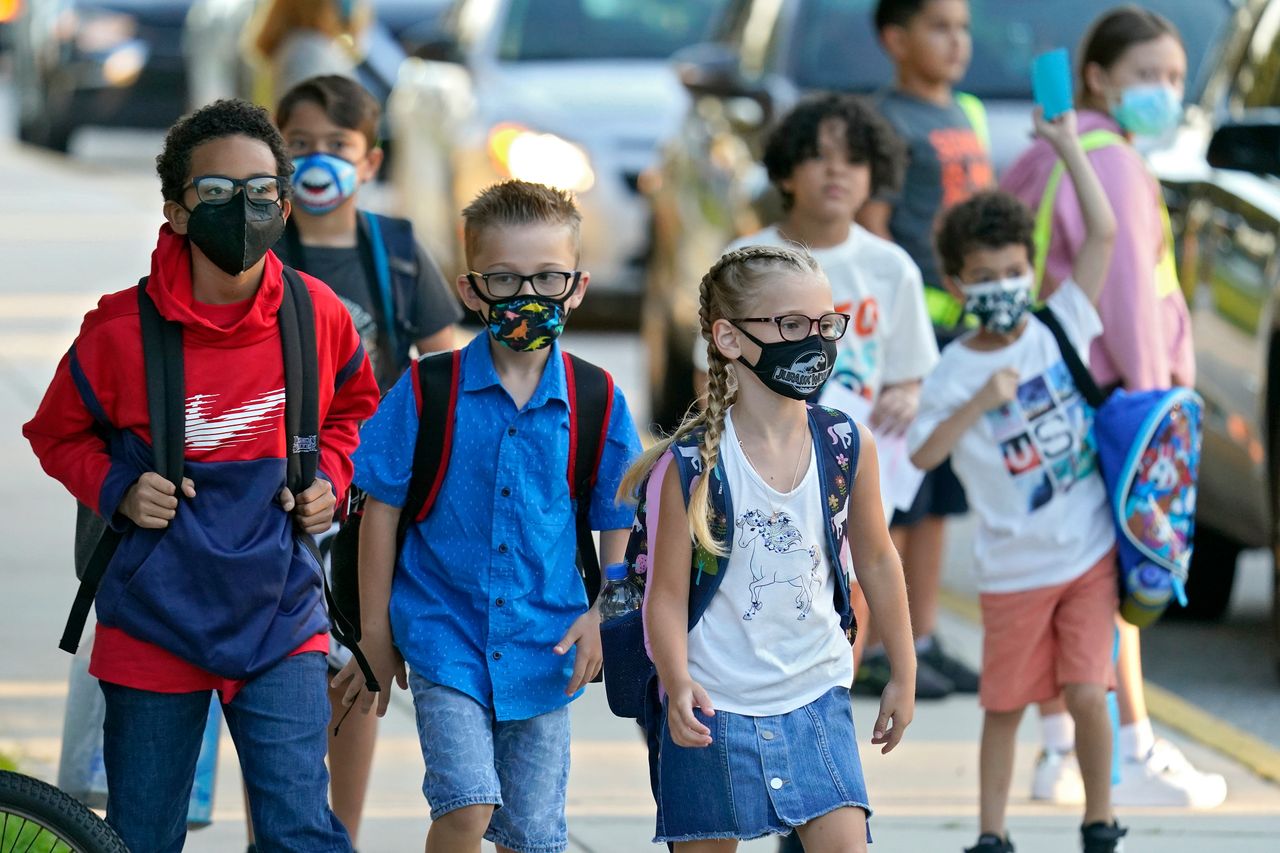
Students arrive for the first day of school at Sessums Elementary School, August 10, 2021, in Riverview, Florida. (AP Photo/Chris O'Meara)

Florida, which is facing a rapidly worsening health care crisis, only releases weekly reports, making it impossible to determine where infections are occurring and how they are spreading. Adding to the confusion, the Centers for Disease Control and Prevention (CDC) arbitrarily divided the 56,633 cases reported by Florida over the weekend, recording 28,316 new COVID cases on Saturday and 28,317 new cases Sunday. Rather than demanding timely and accurate data, such casual data manipulation only confirms it has abdicated its leadership.

Still, what remains certain is that the positivity rate for the state is now close to 20 percent, as the state has broken hospitalization records for COVID-19 for nine consecutive days. As of last week, close to 14,000 people were hospitalized in Florida, with 2,835 in intensive care, representing 45 percent of the state’s ICU capacity. On Sunday, COVID-19 patients accounted for 25 percent of all hospital patients.

On August 5, 2021, US News reported that despite the rise in cases, seven states—Florida, South Dakota, Iowa, Alaska, Maine, Michigan and Oklahoma—have reduced the frequency of reporting their COVID-19 statistics, while Nebraska stopped updating its COVID dashboard on June 30, around the time Governor Pete Ricketts ended a state of emergency. Dr. Bob Rauner, chief medical officer of OneHealth Nebraska, plainly told the Lincoln Journal Star, “It’s a bad idea to not report data so others can’t analyze it.”

Presently, there are almost 69,000 COVID-19 patients hospitalized in the US, an increase of 2,591 from the week before. Of these, 16,828 are in ICUs. Every state except Utah has seen a rise in new cases. The daily average of COVID-19 deaths has risen by more than 100 percent over two weeks, standing at over 550 per day.

There is also a rising trend among fully vaccinated people hospitalized with severe breakthrough infections. These individuals are generally the elderly with comorbidities who live in long-term care facilities. It underscores the dangers of the new variants and the need to expose the dangerous idea that vaccination alone can navigate the world through the pandemic without the comprehensive social measures—masking, social distancing and the lockdown of non-essential businesses—that have proven to save lives.

With schools set to open, many pediatricians and health clinicians are warning of the dangers posed to children who remain unvaccinated. Just last week, new pediatric COVID-19 cases neared 94,000, with rising numbers of hospitalizations. This week saw a single-day high in pediatric admissions for COVID-19. Compared to last month, children are now being hospitalized at a rate almost four times higher.

The president of the American Academy of Pediatrics, Dr. Lee Savio Beers, is urging the Food and Drug Administration to authorize vaccines for those five years of age and older as soon as possible. “We need to be approaching the trials and authorization of COVID vaccines for children with the same urgency we did for adults. Just as it can be a serious disease in adults, it can be a very serious disease in children,” she said. However, one COVID-19 vaccine manufacturer, Pfizer, will only apply for such authorization at the end of September, which would mean the commencement of vaccinations in December.

In the meantime, the COVID-19 Forecast Hub at the University of Massachusetts at Amherst has predicted that if the current surges are not immediately contained, new hospitalizations could quadruple by Labor Day to as high as 33,300 per day.
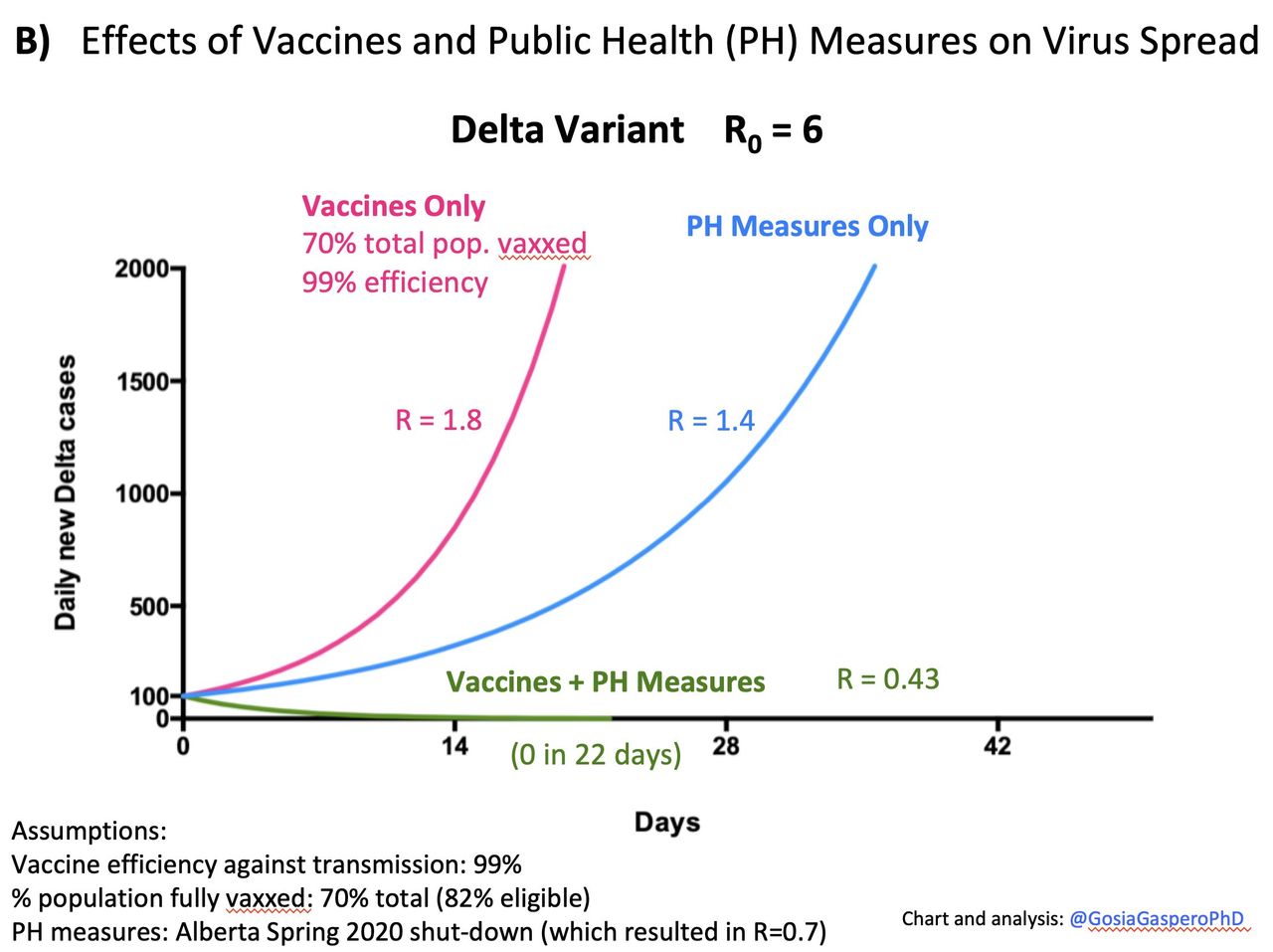
Figure 1 Effects of vaccines and public health measures on the spread of the Delta variant. source @GosiaGasperoPhD.

While states like Florida, Louisiana, Arkansas, Alabama, Missouri, Mississippi and Texas have the country’s highest case rates, 90 percent of counties nationwide, home to 98 percent of the US population, are reporting substantial or high community transmissions.

For example, Minnesota health officials reported that 333 people were hospitalized on Tuesday. Admissions have tripled over the past month, highlighting the broad spread of the Delta variant across the United States. Ninety-two people are in intensive care due to respiratory difficulties and medical complications associated with the infection. According to the Star Tribune, the positivity rate of COVID-19 tests has jumped from 1.1 percent in June to 4.9 percent now. These trends are alarming for a state that has exceeded the national average, with 54 percent of its population fully vaccinated.

The Minnesota Department of Public Health has confirmed that the new Delta variant may cause at least 85 percent of all new infections. The state, like many others, has attempted to use monetary incentives to increase the size of the vaccinated population. However, without strict public health measures to stop the spread and eliminate the coronavirus, even a robust vaccination status will not curb the spread of the variant.

Epidemiologist Larry Brilliant, part of the World Health Organization team that helped eradicate smallpox, offered CNBC a sobering assessment Monday. “I think we’re closer to the beginning than we are to the end [of the pandemic], and that’s not because the variant that we’re looking at right now is going to last that long,” Brilliant warned. “Unless we vaccinate everyone in 200 plus countries, there will still be new variants.” Currently, approximately 15 percent of the world’s population has been fully vaccinated.

Dr. Malgorzata Gasperowicz, a developmental biologist and researcher at the University of Calgary, tweeted on July 23, “we can’t vaccinate our way out of the pandemic. We need both vaccines and public health measures. It was barely possible with the original variant. [But] with the Delta variant both public health and vaccines become less effective. But combined, they may still work.” [Emphasis added]

Looking at the current epidemiologic curve, assuming that 70 percent of the population is fully immunized (the US is at 50 percent) and the COVID vaccines could offer 99 percent efficacy, which they do not, the number of new COVID cases would still continue to climb if strict public health measures are not also implemented. In such a scenario, the coronavirus would only burn itself out after it had spread into every community by infecting all available people, including children.

In addition to Brilliant, every epidemiological authority on the pandemic has stated in no uncertain terms that mutations are probable, if not inevitable, especially considering the repeated high levels of community transmission across the globe. In such an event, even vaccines and strict public health measures may not curb the spread of emerging strains.
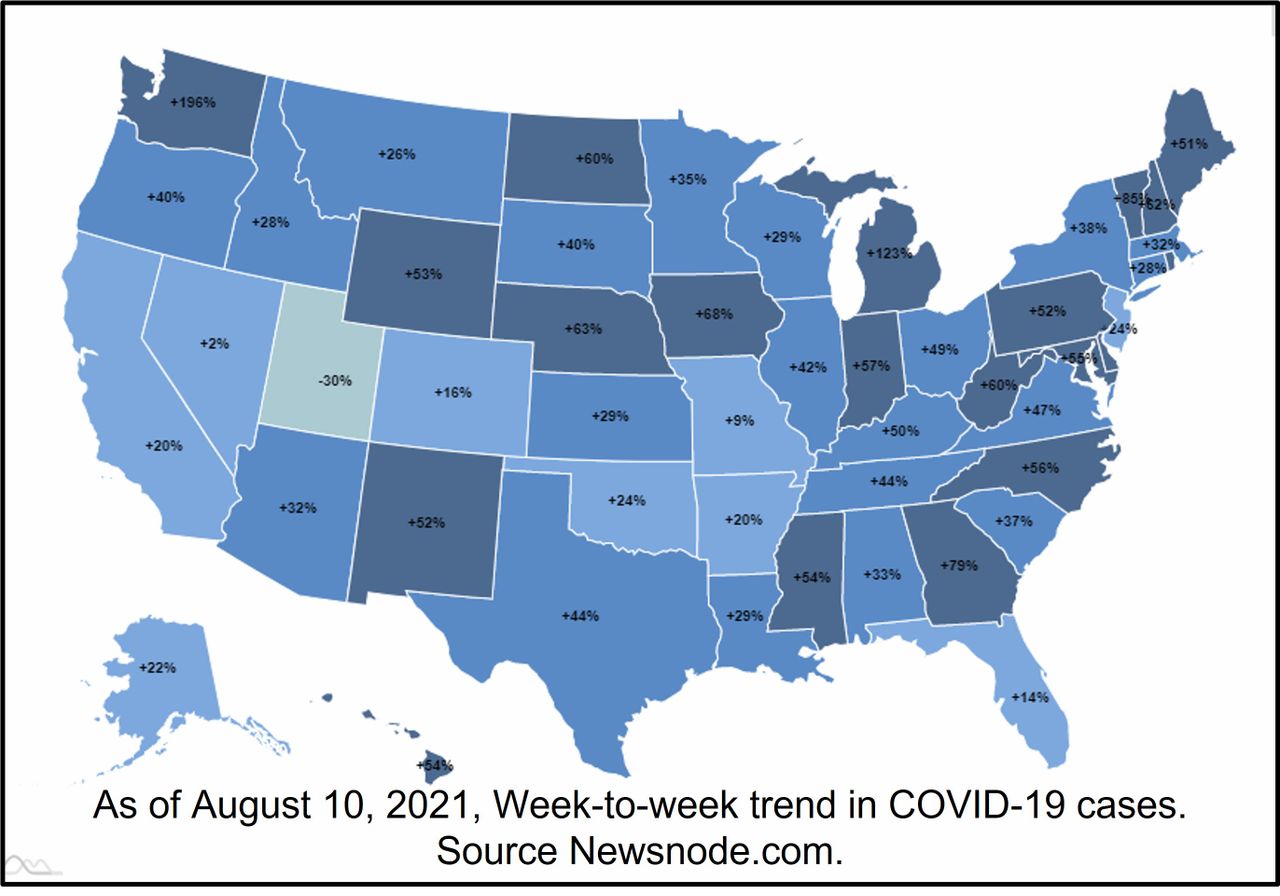
Figure 2 Week-over-week trends in new COVID cases in the US, August 10, 2021. source newsnode.com.

The worrisome week-over-week rising trends in COVID-19 cases across the US, regardless of each states asserted vaccination rates, only confirms in the real-world sense the validity of Dr. Gasperowicz’s conclusions.

Adding the proverbial insult to this gruesome injury, the present situation in the US harks back to the early March days of 2020, when a flawed diagnostic test and lack of meaningful public health measures—contact tracing and isolation, social distancing and mass testing—meant the country was flying blind through the storm of the pandemic.

On Tuesday, the head of the Oxford Vaccine Group, Andrew Pollard, explained that herd immunity is “not a possibility” with the Delta variant. Speaking to the UK’s All-Party Parliamentary Group on coronavirus, he offered these sage words and advice: “We are in a situation with this current variant where herd immunity is not a possibility because it still infects vaccinated individuals. I suspect that what the virus will throw up next is a variant that is perhaps even better at transmitting in vaccinated populations. So, that’s an even more of a reason not to be making a vaccine program around herd immunity.”


Ancient sea level rises may have been fairly minimal


https://climatenewsnetwork.net/ancient-sea-level-rises-may-have-been-fairly-minimal/


August 12th, 2021, by Tim Radford
A study of shorelines in the Bahamas may change estimates of past sea levels: Scientists survey coastal rocks formed there when sea levels were higher. Image: By courtesy of Blake Dyer.


Maybe ancient sea level rises were not so dramatic. But they’d still have been pretty frightening.

LONDON, 12 August, 2021 − Earth scientists have measured the rising tides of a warmer world more than 100 millennia ago and found a glimmer of good news: ancient sea level rises during a warm spell in the last Ice Age were quite possibly only about 1.2 metres higher than they are today.

Since, between 128,000 and 117,000 years ago, the world was perhaps as much as 2°C warmer than it would become for most of human history, this really is encouraging. Right now, climate scientists project a rise of somewhere between 60cm and 1.5m later this century, as global temperature levels rise 2°C or more above those normal before the Industrial Revolution.

But until now, geological orthodoxy has proposed that during the last “interglacial” or sudden warming, sea levels rose by six metres or possibly even nine metres. This could only happen if the Antarctic or Greenland ice sheets had collapsed.

And although these are indeed already losing ice at an accelerating rate, it doesn’t seem possible for such a colossal quantity of ice to melt in only a handful of decades.

Missing factor

So there was a mismatch between the predictions of the world’s scientists and the apparent evidence from the past.

Now a new study in the Proceedings of the National Academy of Sciences offers a solution: calculations about past sea level heights may have been perhaps too gloomy because they did not fully factor in sea level’s other great uncertainty — the movement of the continents lapped by the sea.

This bedevils all predictions about sea level rise. Seas rise and fall with global temperatures, but so do landmasses. Right now, although sea level is creeping up at a rate measured in millimetres per year, the land under a number of great coastal cities is sinking dramatically, as humans build ever more massive cities and abstract ever more groundwater. So predictions warn that millions could be at risk of coastal flooding.

But there is another, deeper reason for the uncertainty: as rising temperatures remove the massive burden of ice from glaciated land, and wind and rain erode mountains, so the subterranean rocks in the Earth’s mantle, far below the crust, respond by inching upwards. Even the seemingly solid rocks are elastic, subsiding under pressure and rising when the mass is removed.

All this means that, unless researchers can make an accurate estimate of land movement as well, sea level estimates are riven with uncertainties.

So a team from Columbia University in the US has looked at evidence of sea level rise and fall preserved in fossilised reefs and dunes in just one 1200km chain of islands − the Bahamas in the Atlantic − to come up with a new set of projections.

In the next 100 years, sea levels will rise by about 1.2 metres. This could be too modest: sea levels could just possibly rise by perhaps 5.3 metres, but this doesn’t seem likely. And a nine-metre rise is highly improbable.

“To get to nine metres of sea level rise, you’d have to melt large parts of Greenland and Antarctica,” said Blake Dyer, of the university’s Lamont-Doherty Earth Observatory.

Tricky calculation

“This suggests that didn’t happen. So maybe we should feel not so bad about the future. On the other hand, our lower estimate is bad, and our upper one is really bad.”

At the heart of the puzzle is a phenomenon known to geophysicists as isostasy: vast tracts of continental landmass have been heaving up and down, imperceptibly, over periods of tens of thousands of years, in response to ice and erosion.

So calculating sea level rise and fall when the thing on which sea level measurements are recorded − the land − is itself always shifting becomes tricky. That has always been why climate projections of sea levels contain a range of forecasts, rather than a hard number.

The argument is that changes recorded along the north-south lie of the Bahamas would provide a new and more sophisticated way of reconstructing sea heights in the relatively recent past.

Melting not guaranteed

The study doesn’t settle the question: estimates of past sea level change on a dramatic scale come from many parts of the planet, and glaciologists still have to reconstruct the rate at which the northern ice, for instance, may have retreated while the southern ice cap continued to advance during the last interglacial: that too would have limited sea level rise.

“This is still a question. Models of ice sheets are still in their toddlerhood,” said Maureen Raymo, a director of the Earth Observatory and a co-author.

Human carbon emissions are now heating the globe far more rapidly and evenly than during the last interglacial, so there is no guarantee of any melting at different rates in two hemispheres

“That makes it more difficult to apply the results to today. The easy thing to say would be, ‘Oh we showed that sea levels were not so bad, and that’s terrific.’ The harder answer, the more honest answer, is that maybe things were different then, and we’re not in the clear.”


Climate change: the fault of humanity?


https://thenextrecession.wordpress.com/2021/08/12/climate-change-the-fault-of-humanity/


The sixth report from the Intergovernmental Panel on Climate Change (IPCC) runs to nearly 4,000 pages. The IPCC has tried to summarise its report as the ‘final opportunity’ to avoid climate catastrophe. Its conclusions are not much changed since the previous publication in 2013, only more decisive this time. The evidence is clear: we know the cause of global warming (mankind); we know how far the planet has warmed (~1C so far), we know how atmospheric CO2 concentrations have changed since pre-industrial times (+30%) and we know that warming that has shown up so far has been generated by historical pollution. You have to go back several million years to even replicate what we have today. During the Pilocene era (5.3-2.6 million years ago) the world had CO2 levels of 360-420ppm (vs. 415ppm now).

In its summary for Policy makers, the IPCC states clearly that climate change and global warming is “unequivocally caused by human activities.” But can climate change be laid at the door of the whole of humanity or instead on that part of humanity that owns, controls and decides what happens to our future? Sure, any society without the scientific knowledge would have exploited fossil fuels in order to generate energy for production, warmth and transport. But would any society have gone on expanding fossil fuel exploration and production without controls to protect the environment and failed to look for alternative sources of energy that did not damage the planet, once it became clear that carbon emissions were doing just that?

Indeed, we now know that scientists warned of the dangers decades ago. Nuclear physicist Edward Teller warned the oil industry all the way back in 1959 that its product will end up having a catastrophic impact on human civilization. The main fossil fuel companies like Exxon or BP knew what the consequences were, but chose to hide the evidence and do nothing – just like the tobacco companies over smoking. The scientific evidence on carbon emissions damaging the planet, as presented in the IPCC report, is about as inconvertible as smoking in damaging health. And yet little or nothing has been done, because the environment must not stand in the way of profitability.

The culprit is not ‘humanity’ but industrial capitalism and its addiction to fossil fuels. At a personal level, in the last 25 years, it is the richest one percent of the world’s population mainly based in the Global North who were responsible for more than twice as much carbon pollution as the 3.1 billion people who made up the poorest half of humanity. A recent study found that the richest 10 percent of households use almost half (45 percent) of all the energy linked to land transport and three quarters of all energy linked to aviation. Transportation accounts for around a quarter of global emissions today, while SUVs were the second biggest driver of global carbon emissions growth between 2010 and 2018. But even more to the point, just 100 companies have been the source of more than 70% of the world’s greenhouse gas emissions since 1988, according to a new report. It’s big capital that is the polluter even more than the very rich.

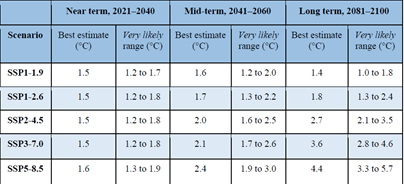
The IPCC material distils a massive pool of data into a report that it hopes is irrefutable and alarming enough to force more radical change. And it provides various scenarios on when global temperatures will reach the so-called Paris target of 1.5c degrees above average pre-industrial levels. Its main scenario is called the Shared Socioeconomic Pathway (SSP1-1.9) scenario in, in which it is argued that if net carbon emissions are reduced, then the 1.5C target will be reached by 2040 at the latest, then breach the target up to 2060 before falling back to 1.4C by the end of the century.

But this is the most optimistic of five scenarios on the pace and intensity of global warming in the 21st century and it’s bad enough! The other scenarios are way bleaker, culminating in SSP5-8.5 which would see global temperatures rise 4.4C by 2100 and continuing upward thereafter (Inset 1). There isn’t a scenario better than SSP1-1.9 and these are ignored by the IPCC.

Shared socioeconomic pathways

SSP1-1.9 is the most optimistic scenario, global CO2 emissions are cut to net zero by 2050. There is a huge shift to sustainable development, with well-being prioritised over pure economic growth. Investments in education and health rise and inequality falls. Extreme weather continues to increase in frequency, but the world avoids the worst impacts of climate change. Global warming is kept to around 1.5C, stabilising around 1.4C by the end of the century.

SSP1-2.6 is the next-best scenario, global CO2 emissions fall but net zero is not reached until after 2050. It assumes the same socioeconomic shifts as in SSP1-1.9 are met. But temperatures are left 1.8C higher by 2100.

SSP2-4.5 is the “middle of the road” scenario (i.e. the most likely). CO2 emissions hover around current levels before starting to fall mid-century, but do not reach net-zero until nearer 2100. Shifts towards a more sustainable economy and improvements in inequality follow historic trends. Temperatures rise 2.7C by the end of the century.

SSP3-7.0 is one where emissions and temperatures continue to rise steadily, ending at roughly double current levels by 2100. Countries become more competitive national and food security is prioritised. Average temperatures rise by 3.6C.

SSP5-8.5 is the apocalyptic scenario. CO2 emissions roughly double by 2050. The global economy continues to grow quickly by exploiting fossil fuels, lifestyles remain energy intensive and average global temperatures are 4.4C higher as we enter the 22nd century.

No probabilities are offered for any of these scenarios – just the hope and expectation that SSP1 will happen. But the pace of emissions growth and temperature is already on a much faster trajectory. The planet has already warmed 1.0-1.2C depending on how you want to measure it (current or 10-year average). The trend is well established and is tending to surprise on the upside, not the downside. Furthermore, the rate of change in atmospheric chemistry is unprecedented and continues to accelerate.

Even at 1.5oC, we will see sea level rises of between two and three metres. Instances of extreme heat will be around four times more likely. Heavy rainfall will be around 10 percent wetter and 1.5 times more likely to occur. Much of these changes are already irreversible, like the sea level rises, the melting of Arctic ice, and the warming and acidification of the oceans. Drastic reductions in emissions can stave off worse climate change, according to IPCC scientists, but will not return the world to the more moderate weather patterns of the past.

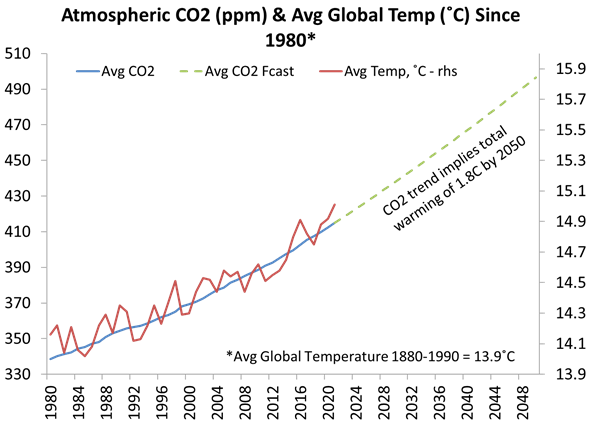
Even if we assume the SSP1-1.9 objectives can be met by 2050, cumulative global CO2 emissions would still be a third higher than the current 1.2trn tons of CO2 emitted since 1960. That would push atmospheric CO2 beyond 500ppm, or 66% higher than where things stood in the pre-industrial period. That pathway implies 1.8C of warming by 2050, not 1.5C.

The reality is that the IPCC’s very low emissions scenario is improbable: and the global temperature is likely to hit 1.5C much earlier than 2040 and reach a much higher level, even with the conditions of SSP1 in place, namely a 50% reduction in CO2 emissions by 2050.

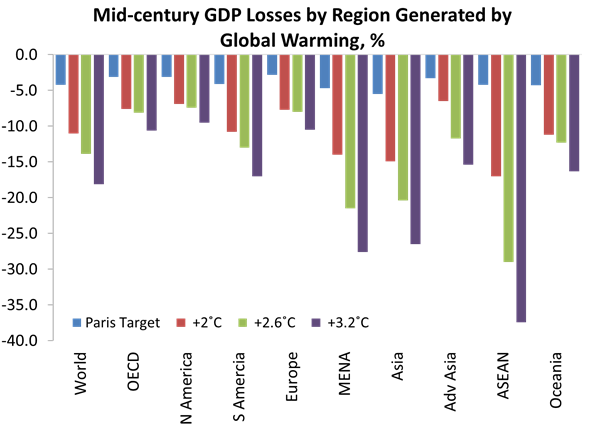
More likely, global warming will reach around 1.8C by 2050 and 2.5C by the end of the century. That means even more drought and flood events than currently forecast and so even more suffering and mounting economic losses from the mix – a loss in world GDP of 10-15% on current trajectories and double that in the poor Global South.

António Guterres, the secretary-general of the United Nations, responded to the report by taking aim at the fossil fuel industry: “This report must sound a death knell for coal and fossil fuels, before they destroy our planet.” But how? First and foremost, it’s not enough to end the government subsidies and financing of fossil fuel sectors by governments around the world (and that is still going on). Instead, there must be a global plan to phase out fossil fuel energy production.

Left Democrat Robert Reich, former official in the Clinton administration, reckons the answer is to stop oil company lobbying, oil exploration, ban oil exports and make the oil companies pay compensation. He stops short of public ownership. But how can a really successful plan to stop global warming work unless the fossil fuel companies are brought into public ownership? The energy industry needs to be integrated into a global plan to reduce emissions and expand superior renewable energy technology. This means building renewable energy capacity of 10x the current utility base. That is only possible through planned public investment that transfers the jobs in fossil fuel companies to green technology and environmental companies, where there will be many jobs.

Second, public investment is needed to develop the technologies of carbon extraction to reduce the existing stock of atmospheric emissions. The IPCC says that going beyond net zero by removing large quantities of carbon from the atmosphere “might be able to reduce warming”, but carbon removal technologies “are not yet ready” to work at the scale that would be required, and most “have undesired side effects”. In other words, private investment is failing to deliver on this so far.

Decarbonizing the world economy is technically and financially feasible. It would require committing approximately 2.5 percent of global GDP per year to investment spending in areas designed to improve energy efficiency standards across the board (buildings, automobiles, transportation systems, industrial production processes) and to massively expand the availability of clean energy sources for zero emissions to be realized by 2050. That cost is nothing compared to the loss of incomes, employment, lives and living conditions for millions ahead.

End fossil fuel production through public ownership and a global investment plan – this is just utopia, critics may say. But then, market solutions of carbon pricing and taxation, as advocated by the IMF and the EU, are not going to work, even if implemented globally – and that is not going to happen.

There is less than three months before the delayed COP26 conference in Glasgow. The previous two major conferences produced nothing at all: COP15 in Copenhagen in 2009, and COP21 in 2015 (the Paris Agreement) only committed nations to voluntary emissions reductions targets that would lead to about 2.9oC of warming if achieved. Glasgow is shaping up to be no less of a failure.


Environmental Demonstrators vs Militarized Police


https://consortiumnews.com/2021/08/12/environmental-demonstrators-vs-militarized-police/


August 12, 2021


The movement against climate chaos is running up against intense repression funded by private corporations as well as the federal government, writes Shea Leibow.

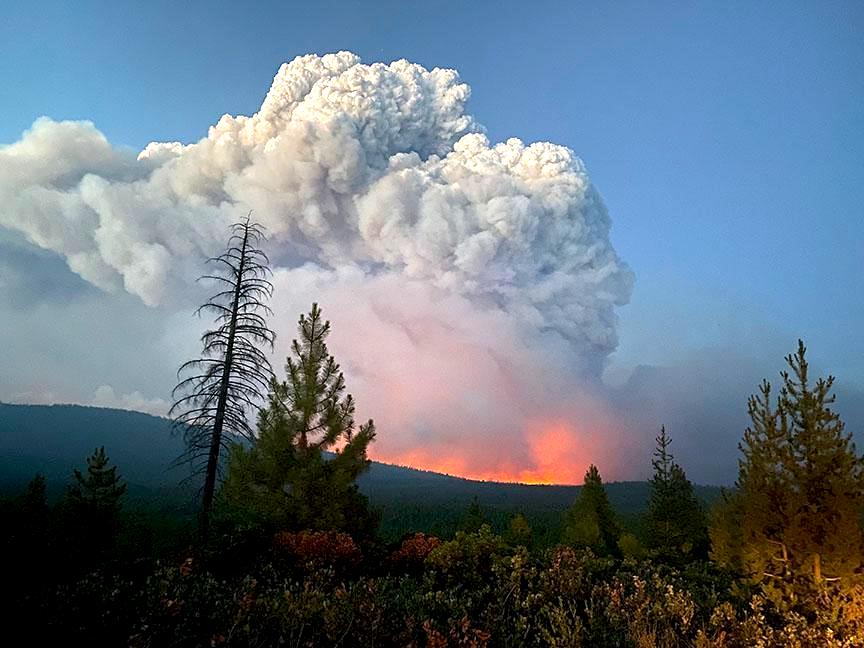
A huge column of smoke from the Bootleg Fire in Oregon could be seen for miles on July 8. (National Interagency Fire Center, Wikimedia Commons)

By Shea Leibow
OtherWords

This summer, we’ve seen the Bootleg fire rage through Oregon. East Coasters have been breathing West Coast smoke. Massive floods have slammed towns from Germany to China. The town of Lytton, British Columbia, burned to the ground.
These disasters give a new sense of urgency to transition away from the fossil fuels that are causing this climate chaos. That’s the good news. The bad news is that the movement fighting for this transition is running up against intense police repression — funded by private corporations as well as the federal government.

I saw some of this firsthand.

In June, I was one of the thousands who converged in Northern Minnesota for the Treaty People Gathering to protest the Line 3 tar sands pipeline. Tar sands are one of the dirtiest and most carbon-intensive fuel sources on the planet. The pipeline also violates the treaty rights of the local Anishinaabe people, threatening their water supply and sacred wild rice beds.


The Treaty People Gathering kicked off a summer of protests against the pipeline. Unfortunately, these nonviolent protests have been brutally cracked down on. Over 500 protestors have been arrested or issued citations so far.

While I was there, demonstrators were hounded by a Border Patrol helicopter flying close to the ground, kicking up dust and disorienting protestors. Police attacked protestors with a Long-Range Acoustic Device (LRAD) and built a physical barricade outside a pipeline resistance camp on private property, preventing vehicle access.


Although the police claim to “protect and serve” the communities they work in, these confrontational, militarized responses would indicate the opposite. It’s disappointing, but not surprising — Enbridge, the pipeline operator, is directly funding many Minnesotan police departments.

The Line 3 construction permit requires Enbridge to create a “public safety escrow account” that allows Minnesota police to seek reimbursement for “services” including “maintaining the peace in and around the construction site.”

This incentivizes more arrests, as the police can bill Enbridge for any activity related to suppressing Line 3 resistance. The escrow account provides funding for police “personal protective equipment, ” which includes batons, shields, and gas masks. Police have also submitted invoices for tear gas grenades, tear gas projectiles, and bean bag rounds.

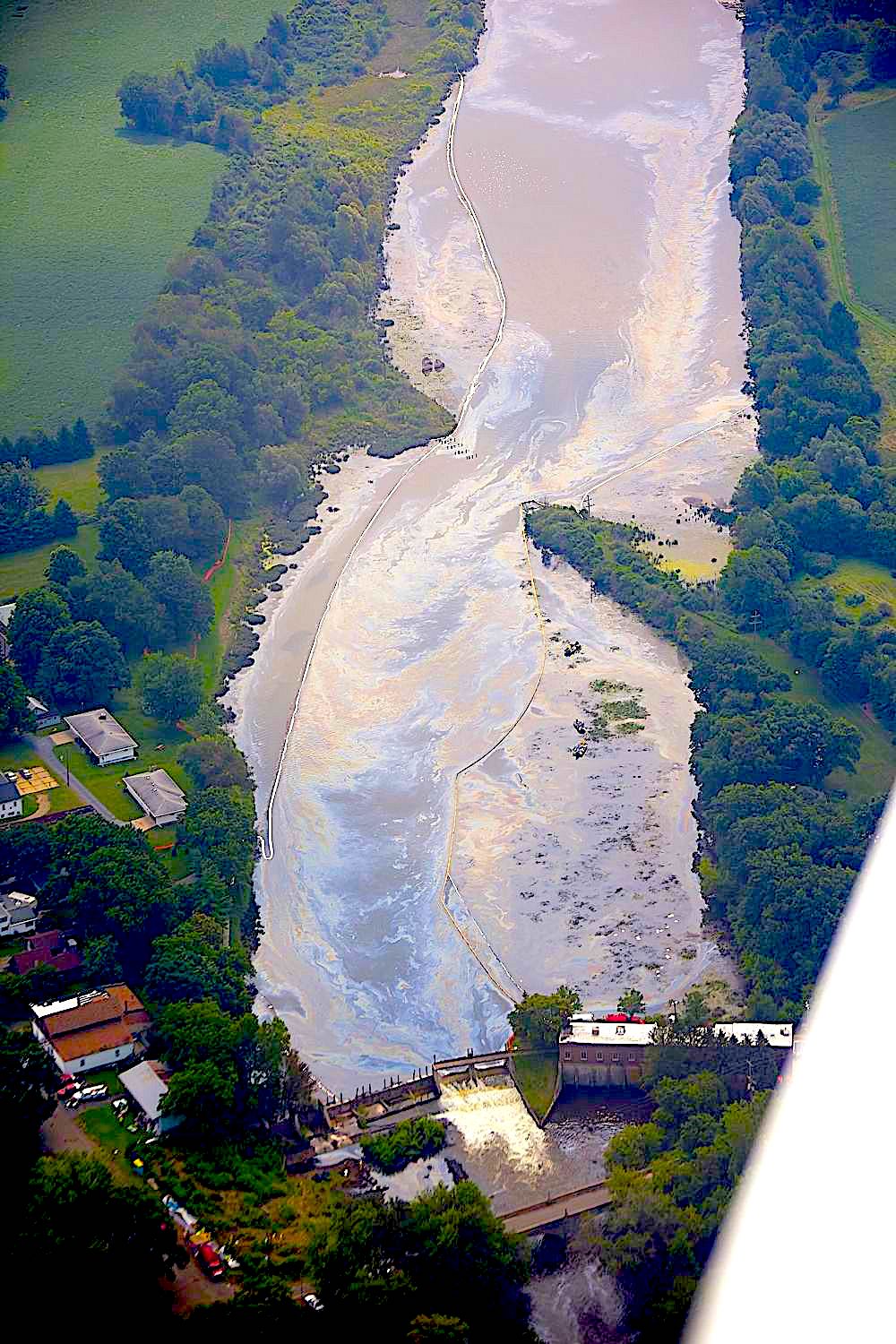
Aug. 9, 2010: Aerial view of oil sheen emitting from contaminated vegetation at the Ceresco Dam area between the Enbridge oil spill site and Battle Creek, Michigan. (U.S. EPA, Wikimedia Commons)

Federal 1033 Program

Funding police violence against nonviolent protests should cross a line. But it’s not just corporations — the federal government does it, too. The federal 1033 program transfers surplus military equipment to local police departments, free of charge.

This equipment has been repeatedly used by local police departments to violently suppress racial justice protests in places like Ferguson, Minneapolis, and Kenosha. The 1033 program also likely supplied the helicopters, assault rifles, excavators, and the mine-resistant armor-protected vehicle that violently suppressed the Standing Rock protests in 2016.

Hubbard County, Minnesota, where hundreds have been arrested, has received hundreds of thousands of dollars worth of military equipment from the 1033 program, including M16 and M14 assault rifles and a mine-resistant armor-protected vehicle.

The simultaneous occurrence of this summer’s intense climate-related weather events and this severe crackdown on anti-pipeline activists is deeply troubling.

The development of more fossil fuel infrastructure such as Line 3 will only worsen our climate catastrophe. But while the anti-pipeline movement is trying to save the planet, militarized, corporate-funded police forces are making that as difficult as possible.

In order to protect our environment, the police must be demilitarized. That means ending the 1033 program and getting corporate money out of police departments. The fate of our planet depends on it.