Saturday, August 14, 2021

The Pretty Reckless - Make Me Wanna Die


https://www.youtube.com/watch?v=txBfhpm1jI0&ab_channel=PrettyRecklessVEVO


Our mix-and-match vaccination strategy


https://www.mcgill.ca/oss/article/covid-19-health/our-mix-and-match-vaccination-strategy


Ideally, we would have kept to the original study protocols. But the practical realities of this pandemic have forced us to change course.

Christopher Labos MD, MSc | 30 Apr 2021
COVID-19
Health


This article was first published in The Montreal Gazette.

The recent announcement that some people will be getting a second COVID-19 vaccine that is different from their first has created some public confusion about the change in strategy. From the beginning, the official line was that your first and second doses had to be the same, but necessity and expediency have dictated a change in government policy. And in reality, the mixing and matching of vaccine doses will probably be OK.

The rationale for sticking with one type of vaccine for both your first and second dose is obvious. The studies that led to vaccine approval for the Pfizer, Moderna and AstraZeneca vaccines were done in this way, and there was a general consensus that we should follow the study protocols.

But a few issues recently have changed the pandemic landscape. The rise of variants of concern has led to a third wave that undid much of the progress of the past few months. Another issue is the problem of vaccine supply. While Pfizer has announced that it will increase shipments to Canada, Moderna is cutting back its planned delivery because of production problems, a huge supply of the Johnson & Johnson vaccine was spoiled due to human error and led to a delay of this vaccine’s arrival in Canada, and our supply of the AstraZeneca vaccine is drying up as doses manufactured in India are being redirected due to that country’s dire situation.

The clock is ticking and many people are due for their second dose, a dose that has already been pushed back beyond its initially studied interval. They will either have to endure a longer delay or take a booster manufactured by a different company.

Quebec recently announced that rather than risk letting people go unvaccinated, it would substitute the second Moderna dose with a Pfizer dose where necessary. While this is technically an untested strategy, it is important to remember that both Pfizer and Moderna are mRNA vaccines. The fact that they operate via a similar mechanism and have a similar efficacy makes it reasonable to assume that they are roughly equivalent. It is admittedly an assumption, but the risk of delaying people’s second dose for even longer is considered by many to be the more risky option.

The role of AstraZeneca in this situation is more nuanced. The AstraZeneca vaccine operates via a different mechanism. It is a viral vector vaccine and therefore works differently than either the Pfizer or Moderna mRNA vaccines. Superficially, it might seem like getting one dose of AstraZeneca and then a second dose of Pfizer would be riskier than a Pfizer-Moderna mix-and-match strategy. However, it should be noted that both vaccines were tested in large clinical trials and it is not clear how or even why they would interact with each other in a negative way. Second, some people have theorized that using vaccines with different mechanisms of actions might be beneficial. The idea is that different vaccines would stimulate the immune system in different ways and provide a broader, more robust immune response.

The theory is not without some merit, although it is still unproven. The definitive answer will come from the Com-COV study, which is now being run in the U.K. Com-COV is in fact two parallel studies looking at different combinations of vaccines to determine whether receiving different doses has any effect, positive or negative, on a person’s immune response. The results, once published, should provide more clarity on the issue.

In an ideal world, we obviously would have kept to the original study protocols. But the practical realities of this pandemic have forced us to change course and alter our positions in an effort to make the best of a bad situation. So substituting Pfizer for Moderna is a reasonable strategy, because the alternative is going unvaccinated, and that is much worse.

@DrLabos


The Pretty Reckless - Witches Burn


https://www.youtube.com/watch?v=0M6-el4zCH8&ab_channel=ThePrettyReckless


Mix-and-match COVID vaccines trigger potent immune response


https://www.nature.com/articles/d41586-021-01359-3


Preliminary results from a trial of more than 600 people are the first to show the benefits of combining different vaccines.

Ewen Callaway


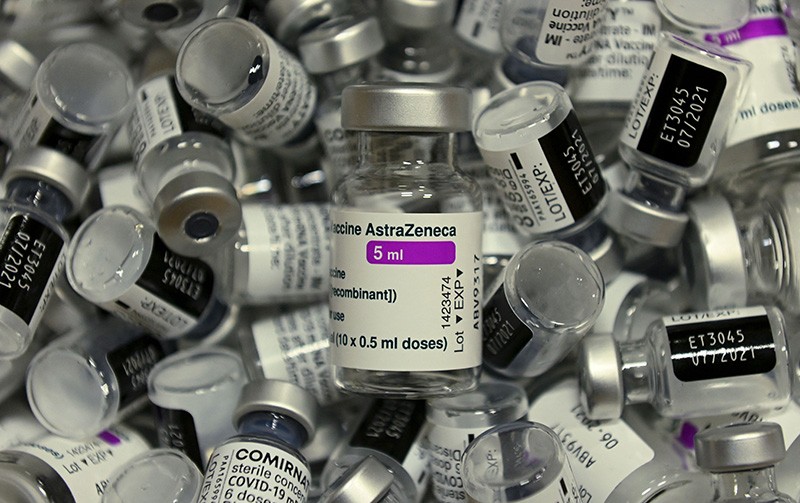
Countries with fluctuating supplies of COVID-19 vaccines could benefit from using different vaccines for the first and second dose.Credit: Christof Stache/AFP/Getty

Vaccinating people with both the Oxford–AstraZeneca and Pfizer–BioNTech COVID-19 vaccines produces a potent immune response against the virus SARS-CoV-2, researchers conducting a study in Spain have found.

Preliminary results from the trial of more than 600 people — announced in an online presentation on 18 May1 — are the first to show the benefits of combining different coronavirus vaccines. A UK trial of a similar strategy reported2 safety data last week, and is expected to deliver further findings on immune responses soon.


Pfizer COVID vaccine protects against worrying coronavirus variants


Because of safety concerns, several European countries are already recommending that some or all people who were given a first dose of the vaccine developed by the University of Oxford, UK, and AstraZeneca in Cambridge, UK, get another vaccine for their second dose. Researchers hope that such mix-and-match COVID-19 vaccination regimens will trigger stronger, more robust immune responses than will two doses of a single vaccine, while simplifying immunization efforts for countries facing fluctuating supplies of the various vaccines.

“It appears that the Pfizer vaccine boosted antibody responses remarkably in one-dose AstraZeneca vaccinees. This is all around wonderful news,” says Zhou Xing, an immunologist at McMaster University in Hamilton, Canada.
Prime and boost

Starting in April, the Spanish CombivacS trial enrolled 663 people who had already received a first dose of the Oxford–AstraZeneca vaccine, which uses a harmless chimpanzee ‘adenovirus’ to deliver instructions for cells to make a SARS-CoV-2 protein. Two-thirds of participants were randomly picked to receive the mRNA-based vaccine made by Pfizer, based in New York City, and BioNTech, in Mainz, Germany, at least eight weeks after their first dose. A control group of 232 people has not yet received a booster. The study was led by the Carlos III Health Institute in Madrid.

The Pfizer–BioNTech booster seemed to jolt the immune systems of the Oxford–AstraZeneca-dosed participants, reported Magdalena Campins, an investigator on the CombivacS study at the Vall d’Hebron University Hospital in Barcelona, Spain. After this second dose, participants began to produce much higher levels of antibodies than they did before, and these antibodies were able to recognize and inactivate SARS-CoV-2 in laboratory tests. Control participants who did not receive a booster vaccination experienced no change in antibody levels.


How can countries stretch COVID vaccine supplies? Scientists are divided over dosing strategies


That is what researchers hoped for and expected from mixing different vaccines, a strategy known as a heterologous prime and boost, which has been deployed for vaccines against other diseases, such as Ebola. “These responses look promising and show the potential of heterologous prime–boost regimens,” says Dan Barouch, director of the Center for Virology and Vaccine Research at Beth Israel Deaconess Medical Center in Boston, Massachusetts.

Xing says the antibody response to the Pfizer boost seems to be even stronger than the one most people generate after receiving two doses of the Oxford–AstraZeneca vaccine, according to earlier trial data. But it is not clear how those responses compare with those seen in people who receive two doses of mRNA vaccines such as Pfizer–BioNTech’s, which tend to trigger an especially potent antibody response after a second dose.

Making such comparisons is “apples and oranges”, says Daniel Altmann, an immunologist at Imperial College London. A strong immune response to the mix-and-match strategy is “entirely predictable from the basic immunology”, he adds.

Giving people first and second doses of different vaccines probably makes sense, says Altmann. But he wonders what will happen if people need a third dose to prolong immunity or protect against emerging coronavirus variants. Repeated doses of virus-based vaccines such as the Oxford–AstraZeneca one tend to be increasingly less effective, because the immune system mounts a response against the adenovirus. RNA vaccines, by contrast, tend to trigger stronger side effects with added doses. “I do think there’s a brave new world of vaccinology to be scoped in all of this,” Altmann says.

Last week, a UK study called Com-COV, which analysed combinations of the same two vaccines, found that people in the mix-and-match groups experienced higher rates of common vaccine-related side effects, such as fever, than did people who received two doses of the same vaccine2. In the Spanish CombivacS trial, mild side effects were common, and similar to those seen in standard COVID-19 vaccine regimens. None was deemed severe.

Nature 593, 491 (2021)

doi: https://doi.org/10.1038/d41586-021-01359-3


References

1.

Borobia, A. M. et al. Preprint at SSRN https://ssrn.com/abstract=3854768 (2021).
2.

Shaw, R. H. et al. Lancet https://doi.org/10.1016/S0140-6736(21)01115-6 (2021).

The Pretty Reckless - 25 (Official Music Video)


https://www.youtube.com/watch?v=As03tlODkdw&ab_channel=PrettyRecklessVEVO


WHO warns individuals against mixing and matching COVID vaccines


https://www.reuters.com/business/healthcare-pharmaceuticals/who-warns-against-mixing-matching-covid-vaccines-2021-07-12/


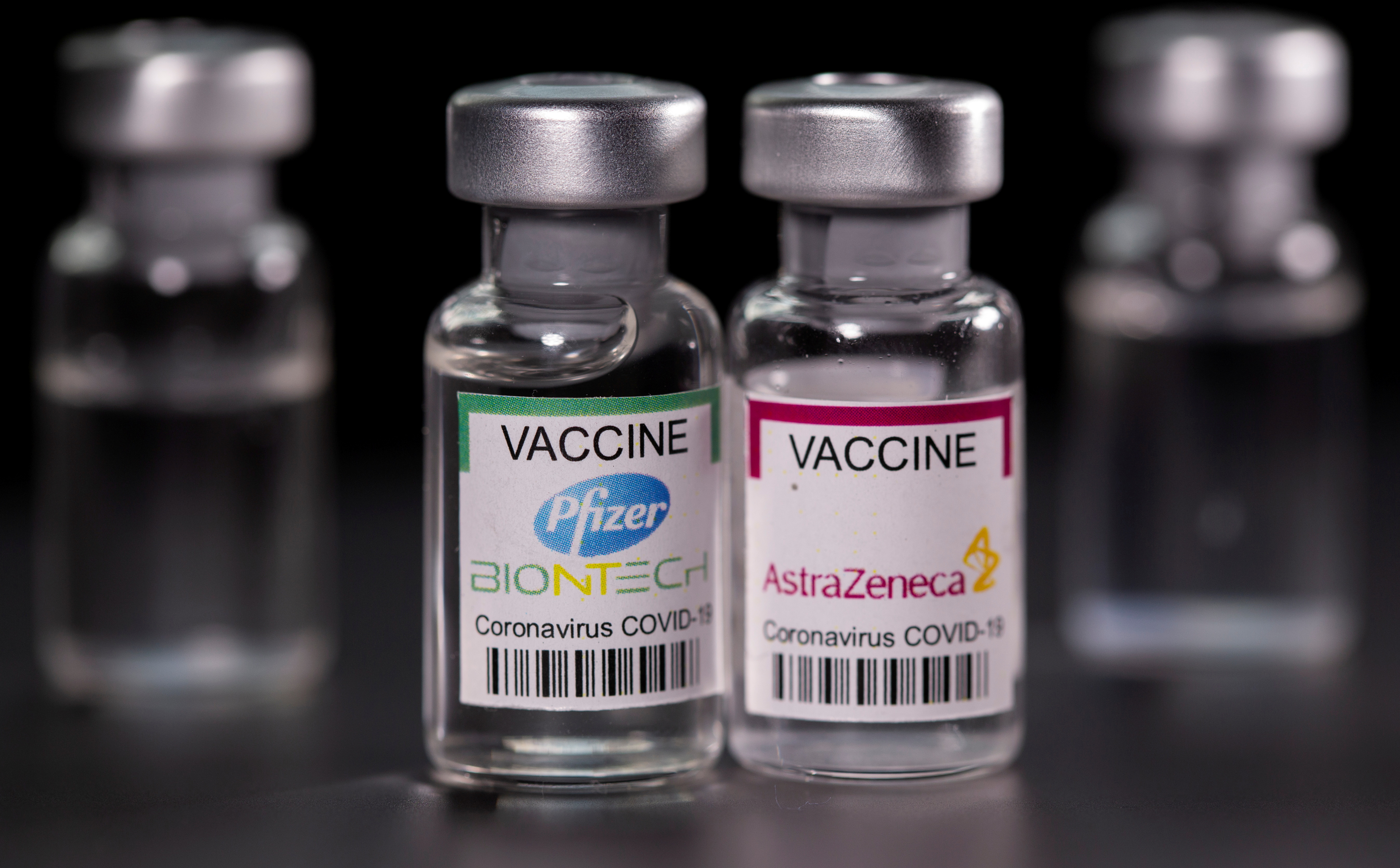
GENEVA, July 13 (Reuters) - The World Health Organization's chief scientist has advised individualsagainst mixing and matching COVID-19 vaccines from different manufacturers, saying such decisions should be left to public health authorities.

"It's a little bit of a dangerous trend here," Soumya Swaminathan told an online briefing on Monday after a question about booster shots. "It will be a chaotic situation in countries if citizens start deciding when and who will be taking a second, a third and a fourth dose."

Swaminathan had called mixing a "data-free zone" but later clarified her remarks in an overnight tweet.


World Health Organization (WHO) Chief Scientist Soumya Swaminathan attends a press conference organised by the Geneva Association of United Nations Correspondents (ACANU) amid the COVID-19 outbreak, caused by the novel coronavirus, at the WHO headquarters in Geneva Switzerland July 3, 2020. Fabrice Coffrini/Pool via REUTERS
Read More


"Individuals should not decide for themselves, public health agencies can, based on available data," she said in the tweet. "Data from mix and match studies of different vaccines are awaited - immunogenicity and safety both need to be evaluated."


The WHO's Strategic Advisory Group of Experts on vaccines said in June the Pfizer Inc (PFE.N) vaccine could be used as a second dose after an initial dose of AstraZeneca (AZN.L), if the latter is not available.

A clinical trial led by the University of Oxford in the UK is ongoing to investigate mixing the regimen of AstraZeneca and Pfizer vaccines. The trial was recently expanded to include the Moderna Inc (MRNA.O) and Novavax Inc (NVAX.O) vaccines.


(This story corrects spelling of Novavax in last paragraph)


Reporting by Emma Farge and John Revill; Editing by Hugh Lawson, Raissa Kasolowsky and Peter Cooney


The Pretty Reckless - House on a Hill (Official Audio)


https://www.youtube.com/watch?v=UK6RS5BN01c&ab_channel=PrettyRecklessVEVO