Thursday, August 12, 2021

Afghan regime’s rout exposes crisis of US imperialism


https://www.wsws.org/en/articles/2021/08/10/pers-a10.html


Bill Van Auken
9 August 2021


The rout of Afghan regime forces at the hands of the Taliban insurgency has led to increasingly bitter recriminations in US ruling circles on the theme of “Who lost Afghanistan?” The Wall Street Journal Monday published an editorial that termed the US withdrawal a “debacle” and charged that the Taliban was able to make its advances because “Biden ignored military advice and withdrew so recklessly and without a plan to prevent disaster.”


Taliban in Kunduz city, northern Afghanistan on Aug. 9, 2021. (AP Photo/Abdullah Sahil)


A military catastrophe on this scale, however, cannot be attributed to the lack of a “plan.” The reality is that US imperialism is paying the price for two decades of crimes against the people of Afghanistan carried out under four successive administrations, Democratic and Republican alike. Together they sent three-quarters of a million US troops to Afghanistan to wage a dirty colonial-style war in which it is conservatively estimated that at least 175,000 civilians were killed. The result of this mass killing, as well as the terrorizing of the population with the ever-present threat of bombing raids and drone strikes, night raids and the systematic torture of detainees, succeeded only in swelling the ranks of the insurgency.

Within the space of barely one week, the Taliban has overrun six provincial capitals. On Friday, they captured Zaranj, near the border with Iran, and Sheberghan in the north, and on Sunday they took three more capitals: Kunduz, the commercial hub in the north of the country, as well as Sar-i-Pul and Taloqan. On Monday, local officials confirmed that the insurgency was fully in control of Aybak City, the capital of Samgan province, which controls the main highway linking the capital of Kabul with the country’s northern provinces.

Ongoing urban warfare has reduced the grip of the US-backed regime in Kabul to just some neighborhoods and, in some cases, blocks in other besieged capitals, including Lashkar Gah, the capital of Helmand province, and Kandahar City in the south. Fierce fighting is also taking place in Herat and Mazar-i-Sharif, the largest city in Afghanistan’s north.

Defending forces loyal to the US-backed regime in Kabul have surrendered to the Taliban by their thousands or laid down their weapons and removed their uniforms. In some cases they have defected to the insurgency. The Taliban has insisted that, in most instances, it has been able to negotiate surrenders of districts and cities without fighting.

Where there has been resistance to the insurgents, as in Lashkar Gah and other besieged capitals, it has been heavily reliant on airstrikes by US warplanes operating from “over the horizon.” This has included the use of B-52 strategic bombers flying from the Al-Udeid airbase in Qatar, F/A-18 Super Hornet fighter jets flying off the deck of the nuclear-powered aircraft carrier USS Ronald Reagan deployed in the Arabian Sea, and AC-130 Specter gunships.

The use of this airpower against heavily populated urban areas will inevitably inflict a bloody toll in terms of civilian casualties. In Lashkar Gah, US bombs destroyed a health clinic and a school, while officials reported 20 civilian deaths over the space of 48 hours. Afghan security officials, while attempting to minimize the government’s loss of control, have taken to touting body counts from the air strikes, claiming the deaths of hundreds of Taliban fighters. How many civilian bodies are lumped into these totals is unknown.

The reasons for the Taliban’s success can be grasped in the record of the US occupation in the largest of the cities the insurgency has overrun in recent weeks, Kunduz, with a population of nearly 350,000.

In 2001, shortly after the US invasion, Taliban forces in Kunduz surrendered to US special forces and a militia loyal to the warlord Gen. Rashid Dostum, who forced them into metal shipping containers and transported them to Sheberghan, Dostum’s stronghold. Most of some 2,000 prisoners suffocated in the containers, those still alive were shot.

In 2009, a German officer called in a US military airstrike against a crowd in Kunduz province that was siphoning fuel from two tanker trucks stuck at a river crossing. The 500-pound US bombs left at least 142 civilians incinerated.

And in 2015, a US AC-130 gunship slowly and deliberately reduced to rubble a civilian hospital run by Doctors Without Borders (MSF) in Kunduz, killing at least 42 patients and medical staff and wounding many others.

No one has ever been punished for any of these crimes, but they are certainly not forgotten by those who survived them and the relatives, friends and neighbors of those who did not.

The regime that these crimes were meant to defend has never been more than a puppet of the US occupation and a corrupt kleptocracy, enriching a layer of politicians, warlords and their cronies through the embezzlement of US aid.

At a press conference last month, US President Joe Biden defended his decision to order all but a handful of US troops out of Afghanistan by the end of this month and strenuously denied that there existed any similarity between the debacle in Afghanistan and the one in Vietnam in 1975. “They’re not remotely comparable in terms of capability,” he said. “There’s going to be no circumstance when you’re going to see people being lifted off the roof of an embassy of the United States from Afghanistan.”

With both Washington and London telling their citizens over the weekend to get the first flight out of Afghanistan, and gun battles breaking out in the streets of Kabul, Biden’s assurances ring increasingly hollow.

In Vietnam, it took more than two years from the withdrawal of US troops for North Vietnamese and National Liberation Front forces to take Saigon. In Afghanistan, the US intelligence agencies’ “worst case scenario” of Kabul falling within three months of US troops pulling out of Afghanistan is beginning to look overly optimistic.

A debacle on this scale calls into question the survival of not just the regime in Kabul, but the one in Washington as well. The collapse in Afghanistan is part of the implosion of an entire policy pursued by US imperialism over the course of more than three decades.

In the wake of the Stalinist bureaucracy’s dissolution of the Soviet Union in 1991, the American ruling class concluded that nothing stood in the way of its employing US imperialism’s overwhelming military power to reverse the protracted erosion of Washington’s global economic position and impose US hegemony over strategically vital areas of the globe. From the first Persian Gulf War and the US interventions in former Yugoslavia in the 1990s, Washington has been at war ever since.

The US invasion of Afghanistan in October 2001, launched on the pretext of retaliation for the September 11 attacks, had been prepared well before the collapse of the Twin Towers. The war’s strategic objective was not the destruction of Al Qaeda, a Frankenstein’s monster created by the CIA-orchestrated war against Soviet forces in Afghanistan in the 1980s. Rather it was waged to project US military power into Central and South Asia by seizing control of a country bordering not only the oil-rich former Soviet republics of the Caspian basin, but also China and Iran.

Under the slogan of the “war on terror” or what George W. Bush described as “the wars of the 21st century,” Washington claimed the right to invade any country it perceived as a threat to its global interests. Within less than two years of the Afghanistan invasion, the US military was sent into a war in Iraq based on lies about nonexistent “weapons of mass destruction.” Regime change wars, launched under the hypocritical banner of “human rights,” were waged in both Libya, the country with the largest oil reserves in Africa, and Syria.

While killing and maiming millions, turning tens of millions more into refugees and decimating entire societies, these wars have failed to further Washington’s hegemonic aims, while producing debacles similar to the one now unfolding in Afghanistan.

Far from deterring the growth of American militarism, the debacles produced by the “war on terrorism” have only paved the way to the shift of US global strategy to “great power conflict,” in the first instance, confrontation with nuclear-armed China and Russia. The withdrawal from Afghanistan was carried out not to end America’s longest war, but rather to shift the Pentagon’s resources to the South China Sea, Eastern Europe and the Baltic.

Underlying the eruption of American militarism and the growing threat of a third world war is the insoluble crisis of US and world capitalism, which finds its sharpest expression in the policy of “herd immunity” and social murder pursued by the ruling classes in the United States and internationally in response to the COVID-19 pandemic. The relentless pursuit of profits at the expense of human life has laid bare the irreconcilable contradiction between capitalism and the needs of masses of working people the world over, while provoking mounting class struggle.

This struggle of the working class in the United States and internationally is the objective foundation for a movement against the drive to war by US and world imperialism. The most urgent need is that of a revolutionary leadership that can arm this movement with a socialist and internationalist perspective. That requires building sections of the International Committee of the Fourth International in every country.



US daily hospital admissions for children reach all-time pandemic high


https://www.wsws.org/en/articles/2021/08/10/usco-a10.html


Benjamin Mateus
9 August 2021


“We have reached a grim juncture: more US children are hospitalized with COVID than at any other time point in the pandemic, and this number will continue to grow as the Delta variant spreads.”—Dr. Heather Haq, Baylor College of Medicine, August 9, 2021

The United States has reclaimed its position as the global epicenter of the COVID-19 pandemic—a criminal “achievement” of the American ruling elite—due to the rapid transmission of the Delta variant, which now accounts for more than 93 percent of all sequenced cases.

Every reputable epidemiologist and public health official had warned that abandoning mitigation measures combined with ending mask mandates was a recipe for disaster. Now the disaster is here.

The country saw almost 700,000 new cases of COVID-19 last week, a 17 percent increase over the previous week. The death toll last week was 3,500 people, a 13 percent rise from the preceding week, and deaths are a lagging indicator. They will increase more rapidly. Every state in the US is reporting a rise in daily case rates. The current cumulative totals are 36.63 million COVID-19 infections and over 633,000 deaths.
Peyton Copeland, 5, hospitalized with Multisystem Inflammatory Syndrome in Children (MIS-C). Photo: (Twitter/@Cleavon_MD via Tara Copeland)


According to the COVID tracker of the Centers for Disease Control and Prevention (CDC), the current seven-day moving average (the daily rate averaged over a seven-day period) is 683 percent above the lows observed on June 19, 2021. In contrast, the number of COVID tests has barely climbed 15 percent. This means that American society is flying blind into a new pandemic storm.

The current seven-day average of positive tests is close to 10 percent. The seven-day average for new hospital admissions of patients with confirmed COVID-19 in the United States in the first week of August was 8,308, a 22 percent increase from the last week in July. In total, there are now 66,477 people admitted to US hospitals for complications from COVID.

Much of the current surge is taking place across Southern states—Florida, Louisiana, Arkansas and Missouri—that have had relatively low rates of COVID vaccinations compounded by resistance to implementing any significant measures to contain the spread of the virus. However, former Food and Drug Administration (FDA) Commissioner Dr. Scott Gottlieb recently warned that Northern states may see a rapid rise in cases once children are back in school.

“The Northern states are more impervious to the kind of spread we saw in the South, but they’re not completely impervious. The challenge right now is that the infection is going to start to collide with the opening of school,” he explained on “Face the Nation” Sunday.

The director of the National Institutes of Health, Dr. Francis Collins, speaking on ABC News, noted, “And now we’re paying a terrible price as the cases go up quickly, most of the cases, of course, now in unvaccinated people.”

The US has just fully vaccinated half the population and about 90 million people have yet to get a single dose. Collins added, “Almost all of the deaths are unvaccinated people. And these are younger people now, including children. The largest number of children so far in the whole pandemic right now are in the hospital, 1,450 kids in the hospital from COVID-19.”

The American Academy of Pediatrics, which has been a consistent source of information on COVID and children, reported that since the onset of the pandemic nearly 4.3 million children have tested positive with the virus. Of the almost 700,000 COVID cases confirmed in the US in the first week of August, 94,000 were among children. The positivity rate on tests among children ranges between 4.8 and 17.6 percent, underscoring the fact that the number of pediatric cases is grossly underestimated.

The state of Mississippi is facing a dangerous collapse in its ability to render immediate intensive care to its population. State health officer Dr. Thomas Dobbs informed the press that there were no ICU beds available in about 20 of the state’s top-level hospitals. On Monday, more than 200 people were crowded into emergency rooms across many of the state’s hospitals waiting for admission.

Dobbs tweeted the following grim statistics from the Mississippi State Department of Health: “Today MSDH is reporting 6,912 more cases of COVID-19 in Mississippi, 28 deaths, and 153 ongoing outbreaks in long-term care facilities.”

In Louisiana, COVID hospitalization records are being shattered almost daily. The number of COVID admissions has risen to the highest level since the beginning of the pandemic. Over the weekend, the state confirmed more than 12,200 new infections, bringing the seven-day count to an all-time high of 28,239. On Sunday, there were 2,720 patients hospitalized across the state.

In Florida, Darlene Andrews, a nurse at AdventHealth’s Orlando-area hospitals, noted that occupancy at six of seven hospitals had reached beyond full capacity with one at 123 percent for adults, she told the Wall Street Journal. The waiting time in the emergency rooms for beds is growing. Delays threaten unstable COVID cases or other urgent health conditions. The chief clinical officer Neil Finkler said point-blank, “This surge has come at us like a freight train.”

The two most populous states in the South, Texas and Florida, have the most reactionary, anti-science and, literally, anti-human, state officials.

The office of Florida Governor Ron DeSantis released a statement to the effect that the State Education Board could withhold salaries of superintendents who choose to implement mask mandates.

His office recently issued an executive order banning masks in schools, writing, “Education funding is intended to benefit students first and foremost, not systems. The Governor’s priorities are protecting parents’ rights and ensuring that every student has access to high-quality education that meets their unique needs.”

Such reactionary statements and maneuvers are motivated by political calculations and eschew any concerns for the public health safety of his constituents. And in this, the Republican governor has partners among the Democrats, despite their pretense of bitter hostility: The White House and the CDC are equally impervious to the requirements of science when they order children to go back to in-person instruction in schools, an effort that will insure mass infection and innumerable deaths.

In a similar vein, Governor Greg Abbott of Texas has thrown down the gauntlet staking out a firm position against any mask mandates while health officials are warning of reaching ICU capacity in the Austin area. The COVID-19 modeling consortium of the University of Texas projected that if the pandemic does not slow, it is almost certain that school openings will increase community transmission, fueling an already untenable situation.

When the mayor of San Antonio criticized Abbott’s ban on mask mandates as “risking the safety of our children,” the governor’s office issued a callous and chilling statement: “Governor Abbott has been clear that we must rely on personal responsibility, not government mandates. Every Texan has a right to choose for themselves and their children whether they will wear masks, open their business, or get vaccinated.”

No one has the “right” to infect or kill other people under conditions of a deadly pandemic—not even the governor of Texas. This is a declaration, not of individual rights, but of government indifference to mass death.

And for all of the posturing about the “right to choose,” the children of Texas and throughout the country are being sent back into schools without any rights at all, including the right to be free of a disease that threatens death, or, in the form of Long COVID, a long-term and perhaps permanent physical and intellectual disability.

As the tweet by Dr. Heather Haq, assistant professor in the Department of Pediatrics at Baylor College of Medicine, noted, with 259 children hospitalized on August 7, the US surpassed a grim milestone for more children hospitalized in one day for COVID than any other time during the pandemic.

The rising number of pediatric hospitalizations is sparking concerns among health officials that when schools reopen, children will become the focal point of the burgeoning health crisis. The question is no longer if they get infected, but rather how sick can they get? Dr. Richard Malley, a pediatric infectious disease specialist at Boston Children’s Hospital, told the New York Times, “Everybody is a little bit nervous about the possibility that the Delta variant could in fact be, in some way, more dangerous in kids.”

To put it bluntly, this is not the time to experiment with the lives of children and certainly not to facilitate reopening of schools so that parents can go back to work producing profits and adding to the already bloated wealth of the capitalist elite. As one forthright epidemiologist warned, the next stage in the coronavirus tragedy, affecting millions of children, would be “the pandemic of the innocent.”


UN agency report documents worldwide impact of climate change


https://www.wsws.org/en/articles/2021/08/10/clim-a10.html


Patrick Martin
9 August 2021


The latest report issued by the Intergovernmental Panel on Climate Change (IPCC) Monday morning goes beyond all previous global scientific documents to definitively link human industrial and agricultural activity to climate change, and to link climate change to specific weather events like recent droughts, heat waves, storms and flooding.
ClimateChange 2021: the Physical Science Basis (Source: Twitter/IPCC_CH)


Some 234 scientists summarized the results of more than 14,000 separate studies, but the language of the report is stripped of the usual bureaucratese that afflicts agencies of the United Nations, mainly to conceal conflicting class and national interests. In part, that is because this report is confined to the physical evidence of climate change and avoids any discussion of the social consequences or policy proposals—both are set for reports to be issued next year.

Nonetheless, the language is much stronger than previous IPCC studies. The summary for policy makers declares, “It is unequivocal that human influence has warmed the atmosphere, ocean and land. Widespread and rapid changes in the atmosphere, ocean, cryosphere and biosphere have occurred.”

They go on to warn, “Human influence has warmed the climate at a rate that is unprecedented in at least the last 2000 years,” adding, “Observed warming is driven by emissions from human activities…”

“Evidence of observed changes in extremes such as heatwaves, heavy precipitation, droughts, and tropical cyclones, and, in particular, their attribution to human influence, has strengthened,” the report continues.

The report notes that from 1850 to the present, human activity has raised the average temperature of the globe by 1.1 degrees Celsius, mainly through the burning of fossil fuels like coal, gas and oil.

A further increase of 0.4 degrees, bringing the total rise to 1.5 degrees Celsius, will take place over the next decade, regardless of what policy measures are adopted. It is the inevitable consequence of emissions of carbon dioxide that have already taken place, as well as other processes that are now in the past.

The report is strongest when it applies new developments in data modeling, satellite measurement and attribution science (establishing causal links) to give regional and even local accounts of the impact of climate change. For example, the United States was divided into Western, Central and Eastern portions, each considered separately and as parts of the global whole.

Unlike the last such report, issued in 2013, this IPCC document directly links climate change to such events as the recent flooding in Germany and Belgium, the heat dome over the Pacific Northwest, droughts and wildfires in the western US and the eastern Mediterranean, and the increasing frequency and intensity of hurricanes and cyclones.

The alarm being raised by the scientists is thus not merely general, but concrete and specific. If there is not a concerted, systematic and global response to the dangers, there will be more frequent and ever larger such disasters.

In part, the prospect of greater weather extremes at both ends of the spectrum—drought and storms—relates to a simple physical relationship. The higher the temperature of the air, the more water vapor it can accommodate and store. Rainfall can be heavier, but also, droughts can be longer and more severe since water is diverted elsewhere.

An atmosphere 1.1 degrees hotter than in the preindustrial era already produces disastrous changes in rainfall, heat waves and snowstorms. The 1.5-degree rise that is inevitable will have further consequences. A rise by 2 degrees, let alone 3 or 4, would mean catastrophes on the order of the German and Chinese floods taking place every week or every day.

Added to this is the disproportionate impact of global warming on the polar regions, the Arctic and Antarctic, and especially the huge glacial formations there, which, once melted, cannot be easily reconstituted under conditions of a warming planet.

The objective data is absolutely irrefutable: carbon dioxide in the atmosphere reached a seasonal high of 419 parts per million this year, the highest in two million years, based on the fossil record.

Many of the consequences of global warming are already irreversible, at least on a scale of decades. Increased ocean temperature and acidity have already killed off massive swaths of the world’s coral reefs, while sea levels have steadily risen one inch every decade for more than a century.

Catastrophes on a truly global scale, such as the disintegration of the Greenland or Antarctic ice caps, or the breakup of the Gulf Stream, are on the horizon if there is not significant change in the trajectory of climatic processes.

The new report sets the framework for an upcoming conference of 197 nations in Glasgow, Scotland in November, the next stage in an endless, and fruitless, process that included the Paris accords in 2015, in which the same countries pledged to take voluntary action to limit the rise in world temperatures to 1.5 degrees Celsius above the preindustrial level.

The conference led to no concrete improvement and was followed by the US withdrawal from the accord under the Trump administration, headed by a scientific ignoramus and mouthpiece for the fossil fuel industries who called claims of global warming a Chinese plot.

The replacement of Trump by Biden allows the reestablishment of a superficial global consensus, which will duly be ratified at Glasgow through some diplomatic patchwork. But no assembly of capitalist nation-states is capable of actually dealing with the existential threat of climate change, whatever the rhetoric of Biden and his climate envoy, John Kerry, the former senator and secretary of state (and apologist for American imperialist violence and aggression).

Climate change is a global threat, but it is inextricably bound up with the development of the capitalist system. It is not industrial development itself—as the IPCC report implies—that is the cause of the climate crisis, but the development of the productive forces under the aegis of the capitalist ruling class, on the basis of private profit and the nation-state system, that has given rise to the disaster now facing humanity.

Dealing effectively and rationally with climate change can no more be left to the world’s financial aristocracy than dealing with a global pandemic. Both require the mobilization of the only social class that will defend all that is progressive in modern science and technology, while abolishing the irrational, exploitative and monstrously self-destructive social relations of the profit system. That means the international working class, under the leadership of the world party of socialist revolution.


Israel launches aerial strikes on Lebanon escalating covert war against Iran


https://www.wsws.org/en/articles/2021/08/09/leba-a09.html


Jean Shaoul
9 August 2021


Israel has launched a series of air strikes on Lebanon in a marked escalation of hostilities in response to the launching of a handful of rockets by militant groups in the south of the country.

It is the first time that Israel has admitted conducting air strikes against Lebanon since 2014, although its fighter planes have for years breached Lebanese airspace on an almost daily basis as it prosecutes its covert war on Iran and its allies, including Lebanon’s Hezbollah group, in Syria.

The strikes come in the wake of mounting tensions between Israel and Iran following the drone attack, which Washington, London and Tel Aviv have attributed to Iran, on the oil tanker MV Mercer Street. The tanker is operated by an Israeli-owned shipping company and was sailing in international waters off the coast of Oman.
F-16I Soufa Multirole Fighter in flight (Wikimedia Commons/Israeli Air Force)


That attack, which killed the ship’s Romanian captain and British security officer, was likely in response to the long-running, covert offensive by Israel’s naval, air, security, intelligence and cyber forces against Iran. While the United States and Britain said they would work with their allies to respond to the attack, Israel said it reserved the right to act alone if necessary.

Tensions rose further when several ships were delayed in the Gulf of Oman last Monday, after one of them appeared to hit a mine at sea. Later, the United Kingdom Maritime Trade Operations agency reported the end of a “potential hijack” of one of the ships by armed attackers, in a sequence of events that are far from clear.

On Wednesday, Israel launched 92 rounds of artillery fire against targets in south Lebanon, reportedly hitting an open area near the town of Mahmoudiya in the Marjayoun district and causing a fire in a nearby village.

This assault was in response to what the Israel Defense Forces (IDF) said were three rockets fired into Israel by Palestinian militants in the area earlier that day, without identifying the Palestinian group it held responsible. One of the rockets was intercepted by Israel’s Iron Dome defence system, with two rockets landing inside Israel, sparking fires near Kiryat Shemona. It marked the sixth such incident in the last three months, including three sets of rockets fired at Israel from Lebanon during Israel’s 11-day war on Gaza in May and a further three since then, after reported Israeli airstrikes on Syria, meaning that there were more incidents on Israel’s northern border than on its border with Gaza.

While the IDF attributed all of them to Palestinian militants in southern Lebanon, not Hezbollah, it stressed that Hezbollah was probably aware of their plans.

On Wednesday night, Israel’s fighter jets launched strikes against sites and infrastructure the IDF claimed were used for rocket launches. A spokesman said that Israel held the Lebanese government responsible for shelling from its territories and warned against more attacks. Defence Minister Benny Gantz told Ynet that Israel was prepared to attack Iran, saying both “Israel and the international community must act to curb Iran's actions.” He described Israel’s strikes as “warning shots… It’s obvious we are capable of doing a lot more, and we hope we won’t be dragged into it.”

On Friday, Hezbollah, the bourgeois-clerical group backed by Iran, fired 19 missiles into uninhabited areas in northern Israel. Three fell within Lebanon, while 10 of the remaining 16 were intercepted by the Iron Dome. No casualties were reported.

Hezbollah released a video of its fighters launching the rockets, making it the first time since Israel’s war on Lebanon in 2006 that Hezbollah publicly took responsibility for rocket fire on Israel. It said the rocket fire was in response to Israeli aggression, indicating the killing of a Hezbollah member who had crossed into northern Israel at a protest during the assault on Gaza and the wounding of another in Syria by an airstrike attributed to Israel, as well as the previous day’s aerial attacks.

An IDF spokesman said Israel had responded with further artillery and aerial strikes in a third day of cross-border attacks by “striking the rocket launch sites in Lebanon” and open areas “in order not to escalate the situation,” justifying it with the claim that Iran had fired into open areas in the Golan Heights instead of populated ones. Israel’s TV Channel 12 cited an unsourced report as saying that the Israeli defence establishment had warned there could soon be several days of fighting, although Gantz urged Israelis not to cancel their vacation plans in the Galilee region.

Ned Price, spokesperson for the US State Department, confirmed Washington’s unconditional defence of Israel’s belligerence, telling reporters, “Israel has the right to defend itself against such attacks.” He indirectly acknowledged Washington’s prior knowledge if not approval of the attack, saying the US would remain engaged with its “Israeli and Lebanese counterparts, as well as with the Lebanese Armed Forces.” He called on the Lebanese government “urgently to prevent such attacks and bring the area under its control,” a clear instruction to the army to rein in Hezbollah.

On Saturday, Hezbollah’s Secretary-General Hassan Nasrallah said that his group was not seeking to escalate the conflict. “What happened over the past few days was a dangerous development, something that has not happened for 15 years,” he said, warning that Hezbollah would expand its range to “the Galilee or parts of the Lebanese Golan that Israel has occupied,” if Israel continued its airstrikes.

Israel’s aggressive action against the Palestinian militant groups and Hezbollah is bound up with its broader hostility to Iran, which indicated its collaboration with its allies by giving the secretary-general of Palestinian Islamic Jihad, Ziad al-Nakhalah, the head of Hamas’ Political Bureau Ismail Haniyeh, and the deputy secretary-general of Hezbollah Naim Qassem front-row seats, in front of the European Union’s delegate, at President Ebrahim Raisi’s inauguration in Tehran on Thursday.

The following day, Raisi met with Qassem, Haniyeh and other leading officials from Iran’s regional allies, while on Saturday Hossein Salami, who heads the Islamic Revolutionary Guard Corps, met with Qassem.

Israel’s airstrikes seek to undermine the position of Tehran’s allies in Lebanon, which is reeling under an economic and social firestorm exacerbated by the pandemic and the devastation caused by last year’s blast at Beirut port. The Sunni and Christian political elite backed by Washington and Paris have tried and failed for the past year to form a government that meets the approval of President Aoun, his Christian Patriotic Free movement and Hezbollah, which with its allies has the largest bloc in Lebanon’s parliament. The successful formation of such a government under their latest candidate Najib Mikati would serve to ramp up the pressure on Iran, forcing further concessions from Tehran if not the outright ending of the Vienna talks aimed at reinstating some version of the 2015 nuclear accords.

At the very least, Israel sought to estimate the extent of the Palestinian militants’ independence from Hezbollah, which had rejected any responsibility for the attacks, and of Hezbollah’s support within southern Lebanon, its long-time stronghold. Druze villagers in Chouaya located Hezbollah’s rocket launcher and vented their anger.

Aoun said that Israel’s overnight air strikes showed an escalation in its “aggressive intent” towards his country. They not only constituted a direct threat to the security and stability of southern Lebanon but violated UN Security Council resolutions. The Lebanese army said it had detained the “four people who launched the rockets and seized the launcher used in the operation,” but Druze leaders supported Hezbollah, saying it had the right to act against Israel.

On Saturday, Israeli aircraft bombed Hamas sites in Gaza in response to incendiary balloons launched from the besieged Palestinian enclave.


Climate change widespread, rapid, and intensifying: IPCC


https://www.sciencedaily.com/releases/2021/08/210809111125.htm


Scientists are observing changes in the Earth's climate in every region and across the whole climate system, according to the latest Intergovernmental Panel on Climate Change (IPCC) Report, released today. Many of the changes observed in the climate are unprecedented in thousands, if not hundreds of thousands of years, and some of the changes already set in motion -- such as continued sea level rise -- are irreversible over hundreds to thousands of years.


However, strong and sustained reductions in emissions of carbon dioxide (CO2) and other greenhouse gases would limit climate change. While benefits for air quality would come quickly, it could take 20-30 years to see global temperatures stabilize, according to the IPCC Working Group I report, Climate Change 2021: the Physical Science Basis, approved on Friday by 195 member governments of the IPCC, through a virtual approval session that was held over two weeks starting on July 26.

The Working Group I report is the first installment of the IPCC's Sixth Assessment Report (AR6), which will be completed in 2022.

"This report reflects extraordinary efforts under exceptional circumstances," said Hoesung Lee, Chair of the IPCC. "The innovations in this report, and advances in climate science that it reflects, provide an invaluable input into climate negotiations and decision-making."

Faster warming

The report provides new estimates of the chances of crossing the global warming level of 1.5°C in the next decades, and finds that unless there are immediate, rapid and large-scale reductions in greenhouse gas emissions, limiting warming to close to 1.5°C or even 2°C will be beyond reach.

The report shows that emissions of greenhouse gases from human activities are responsible for approximately 1.1°C of warming since 1850-1900, and finds that averaged over the next 20 years, global temperature is expected to reach or exceed 1.5°C of warming. This assessment is based on improved observational datasets to assess historical warming, as well progress in scientific understanding of the response of the climate system to human-caused greenhouse gas emissions.

"This report is a reality check," said IPCC Working Group I Co-Chair Valérie Masson-Delmotte. "We now have a much clearer picture of the past, present and future climate, which is essential for understanding where we are headed, what can be done, and how we can prepare."

Every region facing increasing changes

Many characteristics of climate change directly depend on the level of global warming, but what people experience is often very different to the global average. For example, warming over land is larger than the global average, and it is more than twice as high in the Arctic.

"Climate change is already affecting every region on Earth, in multiple ways. The changes we experience will increase with additional warming," said IPCC Working Group I Co-Chair Panmao Zhai.

The report projects that in the coming decades climate changes will increase in all regions. For 1.5°C of global warming, there will be increasing heat waves, longer warm seasons and shorter cold seasons. At 2°C of global warming, heat extremes would more often reach critical tolerance thresholds for agriculture and health, the report shows.

But it is not just about temperature. Climate change is bringing multiple different changes in different regions -- which will all increase with further warming. These include changes to wetness and dryness, to winds, snow and ice, coastal areas and oceans. For example:
Climate change is intensifying the water cycle. This brings more intense rainfall and associated flooding, as well as more intense drought in many regions.
Climate change is affecting rainfall patterns. In high latitudes, precipitation is likely to increase, while it is projected to decrease over large parts of the subtropics. Changes to monsoon precipitation are expected, which will vary by region.
Coastal areas will see continued sea level rise throughout the 21st century, contributing to more frequent and severe coastal flooding in low-lying areas and coastal erosion. Extreme sea level events that previously occurred once in 100 years could happen every year by the end of this century.
Further warming will amplify permafrost thawing, and the loss of seasonal snow cover, melting of glaciers and ice sheets, and loss of summer Arctic sea ice.
Changes to the ocean, including warming, more frequent marine heatwaves, ocean acidification, and reduced oxygen levels have been clearly linked to human influence. These changes affect both ocean ecosystems and the people that rely on them, and they will continue throughout at least the rest of this century.
For cities, some aspects of climate change may be amplified, including heat (since urban areas are usually warmer than their surroundings), flooding from heavy precipitation events and sea level rise in coastal cities.

For the first time, the Sixth Assessment Report provides a more detailed regional assessment of climate change, including a focus on useful information that can inform risk assessment, adaptation, and other decision-making, and a new framework that helps translate physical changes in the climate -- heat, cold, rain, drought, snow, wind, coastal flooding and more -- into what they mean for society and ecosystems.

This regional information can be explored in detail in the newly developed Interactive Atlas https://interactive-atlas.ipcc.ch/ as well as regional fact sheets, the technical summary, and underlying report.

Human influence on the past and future climate

"It has been clear for decades that the Earth's climate is changing, and the role of human influence on the climate system is undisputed," said Masson-Delmotte. Yet the new report also reflects major advances in the science of attribution -- understanding the role of climate change in intensifying specific weather and climate events such as extreme heat waves and heavy rainfall events.

The report also shows that human actions still have the potential to determine the future course of climate. The evidence is clear that carbon dioxide (CO2) is the main driver of climate change, even as other greenhouse gases and air pollutants also affect the climate.

"Stabilizing the climate will require strong, rapid, and sustained reductions in greenhouse gas emissions, and reaching net zero CO2 emissions. Limiting other greenhouse gases and air pollutants, especially methane, could have benefits both for health and the climate," said Zhai.

Climate Change 2021: The Physical Science Basis. Contribution of Working Group I to the Sixth Assessment Report of the Intergovernmental Panel on Climate Change

The Working Group I report addresses the most updated physical understanding of the climate system and climate change, bringing together the latest advances in climate science, and combining multiple lines of evidence from paleoclimate, observations, process understanding, global and regional climate simulations. It shows how and why climate has changed to date, and the improved understanding of human influence on a wider range of climate characteristics, including extreme events. There will be a greater focus on regional information that can be used for climate risk assessments.

The Summary for Policymakers of the Working Group I contribution to the Sixth Assessment Report (AR6) as well as additional materials and information are available at https://www.ipcc.ch/report/ar6/wg1/


Story Source:

Materials provided by Intergovernmental Panel on Climate Change (IPCC). Note: Content may be edited for style and length.


Trade Wars Are Class Wars


https://consortiumnews.com/2021/08/11/trade-wars-are-class-wars/

August 11, 2021


Narrowing the great divides — between the rich and everyone else — will be the key to reducing new Cold War tensions, writes Sam Pizzigati.


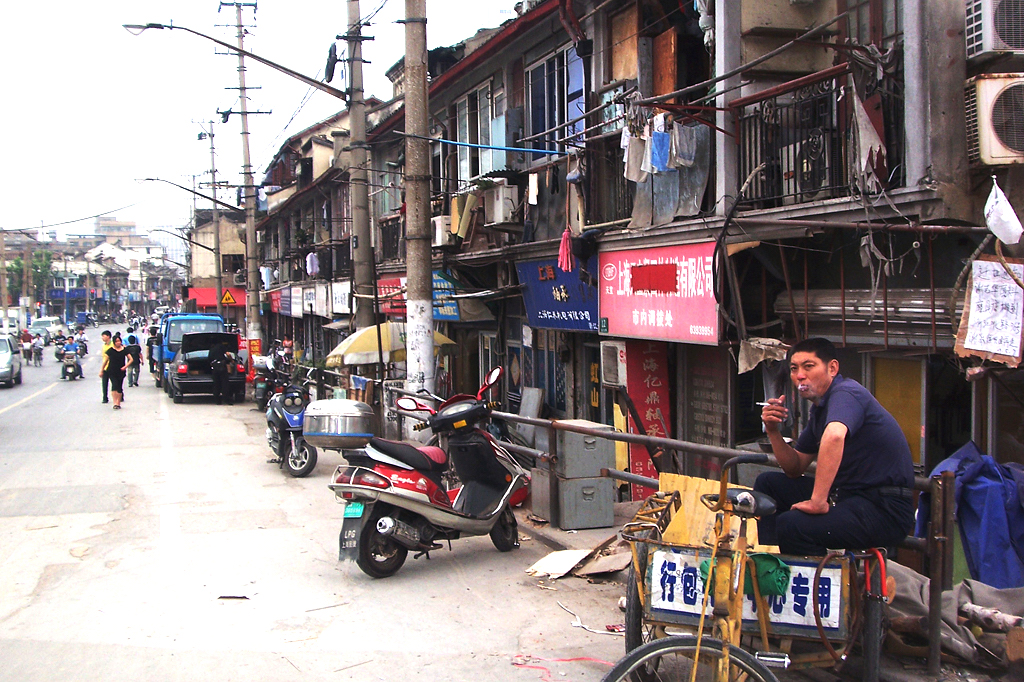
Shanghai, 2008. (Wolfgang Staudt, Flickr, CC BY-NC 2.0)

By Sam Pizzigati
Inequality.org

Has the United States now entered a new Cold War, this time around with China?
“Rhetoric coming out of Washington, amplified by hawkish media commentary,” Andrew Bacevich of the Quincy Institute for Responsible Statecraft observed this past spring, “appears to take a Second Cold War as a given, something perhaps even to be welcomed.”

The 2020 U.S. presidential election, John Kemp at Reuters noted last month, saw “both major candidates determined to appear tough on China.” Kemp sees elites “in both countries” ready for an ever deeper row, amid “growing complaints” about everything from intellectual property theft and trade imbalances to espionage and territorial challenges.

U.S. diplomats, for their part, appear to be almost itching for more confrontation. Biden national security adviser Jake Sullivan has declared that “the era of engagement with China has come to an unceremonious close,” and Antony Blinken, the current U.S. secretary of state, pointedly pontificated before his first meeting with China’s top diplomats that no one should consider that session the start of a “strategic dialogue.”

BBC diplomatic correspondent Jonathan Marcus, meanwhile, is advising us not to consider current China-U.S. relations a mere “Cold War mark II.” The superpower face-off now emerging, he predicts, could become “something far more dangerous.”

Can we avoid that danger? Sure, but only if instead of itching for a new Cold War, our two global superpowers start itching for greater economic equality — on both sides of the Pacific. Narrowing our great divides — between the rich and everyone else — will be the key to reducing our new Cold War tensions.

So suggests the work of Matthew Klein and Michael Pettis, the authors of Trade Wars Are Class Wars: How Rising Inequality Distorts the Global Economy and Threatens International Peace. The world typically sees disputes over trade, the pair note, as conflicts between countries with incompatible national interests.

But such disputes, Klein and Pettis believe, much more commonly reflect “the unexpected result of domestic political choices” that “serve the interests of the rich at the expense of workers and ordinary retirees.”

Klein, currently an economics commentator at Barron’s, has been a financial industry investment associate and a researcher at the Council on Foreign Relations. Pettis has worked on Wall Street for over 30 years and currently teaches at the Peking University Guanghua School of Management.

“If you’re an American worker and you feel as if the Chinese government has done things that are bad to you, you’re probably right,” Klein has noted. “But, to be clear, the reason you’re right is because the Chinese government did things that were bad for the vast majority of people who live in China. And it’s a side effect of those choices that American workers have been harmed.”

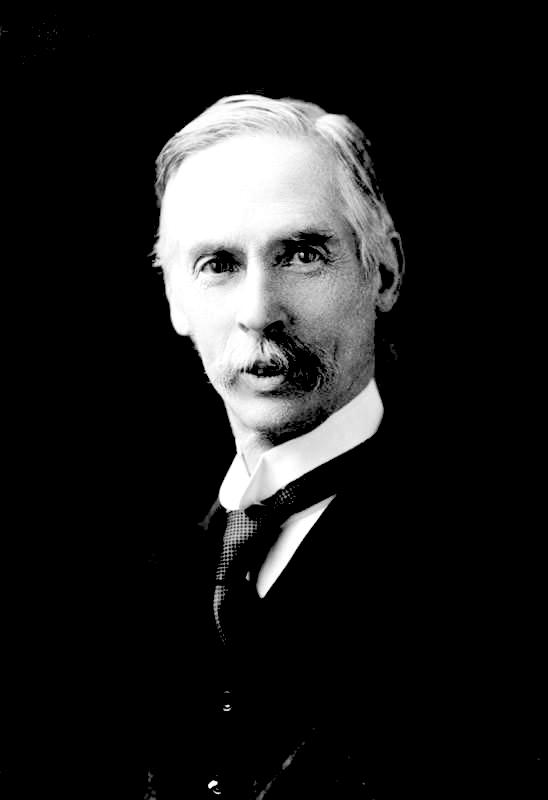
Klein traces his perspective back to the insights of J.A. Hobson, the British social critic who authored the influential 1902 book Imperialism.

Klein’s take on Hobson’s key point: If you want to understand the classic European imperialism of the late 19th century, “you have to understand the internal dynamics of the distribution of income within the major European powers.”


J. A. Hobson, English economist, social scientist and critic of imperialism. (Elliott & Fry, Wikimedia Commons)

Back then, in the raw early years of the industrial age, the rich routinely ran roughshod over their workers. Their intense exploitation stunted the growth of European domestic markets. Working families simply had too little to spend. That meant, notes Klein, that powerhouse European nations had to go abroad to find markets and attractive investment opportunities. That dynamic would eventually spur imperial conflict and unimaginable horror.

Similar Dynamic

A similar dynamic is playing out today.

“Growing inequality within countries,” as David Beckworth of the Mercatus Center sums up Klein’s core point, “is creating tensions between countries.”

Inequality within modern China started soaring in the 1990s. New economic policies fueled the soaring. China, Klein notes, would “squeeze workers and household consumers” as much as feasible to “create a massive glut of goods” for export. That “glut of goods,” in turn, undermined workers in the United States and other nations that had become China’s export markets.

On paper, this export-oriented approach worked out well. China’s share of global GDP jumped from under 3 percent in 1978 to almost 20 percent in 2015, point out economists Thomas Piketty, Li Yang, and Gabriel Zucman. Real incomes in China’s poorest half, over those same years, increased at a 4.5 percent annual clip. Incomes in the middle 40 percent increased even faster, at a 6 percent rate.

But some in China — the rich — did even better. China’s top 1 percent averaged 8.4-percent annual income gains between 1978 and 2015, with the richest of the rich, China’s top 0.001 percent, enjoying a 10.4-percent annual rate of income growth.

Overall, calculates the Piketty team, the top 1 percent’s share of Chinese income went from a little over 6 percent in 1978 to at least 14 percent in 2015.

“The level of inequality in China in the late 1970s,” these researchers conclude, “used to be less than the European average — closer to those observed in the most egalitarian Nordic countries — but it is now approaching a level that is almost comparable with the U.S.”


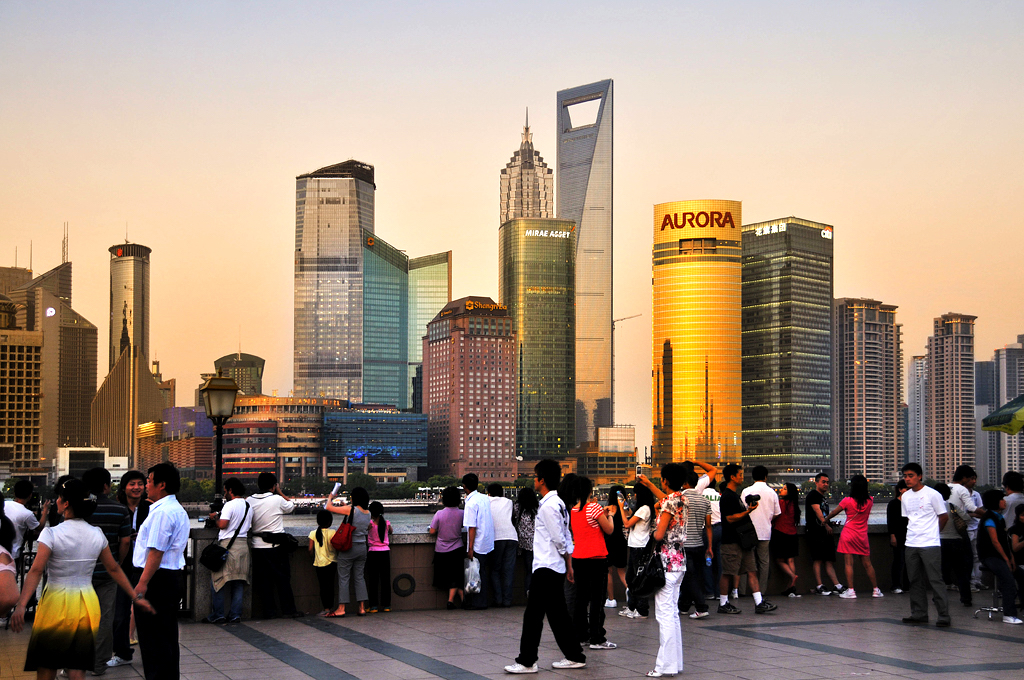
Pudong New Area, an economic development zone in Shanghai, in 2008. (Wolfgang Staudt, Flickr, CC BY-NC 2.0)

This rising level of inequality has created the sorts of social and cultural stressors that widening inequality always creates. In societies growing ever more unequal, the “winners” — the rich — signal their success with the products they buy and the services they engage. The “losers” — everyone else — find themselves under enormous pressure to keep up, no matter the sacrifices that “keeping up” may demand.

Grueling Sacrifices

Those sacrifices can be unforgivably grueling. In the United States, for instance, students and their families now face mountains of college debt. In China, tens of millions of families are going deep into debt to fund private tutors to help their children get into college.

In China today, Bloomberg explained earlier this week, graduating from an elite urban university all but guarantees “a well-paying career.” Entrance into these highly competitive schools rests on how well aspiring college students perform on the gaokao, “a notoriously difficult, life-defining college-entrance examination.” The “defining” impacts parents as well as students since most parents lack adequate pensions and depend on an only child to “make enough to support them in old age.”

These pressures make after-school tutors for kids an absolute essential, and the tutoring business has become a highly profitable, $100-billion industry. In Beijing, parents are paying up to $46,400 a year — over three times the average local disposable income — on extra Chinese, English, math, and calligraphy classes for 9-year-olds.

These classes don’t eliminate anxiety for Chinese parents. They do create mammoth private fortunes. Larry Chen, the founder and CEO of Gaotu Techedu, started this year with a net worth of over $15 billion. TAL Education Group CEO Zhang Bangxin entered this summer worth almost $3 billion. His New Oriental Education & Technology Group rival, Yu Minhong, entered with $1.3 billion.


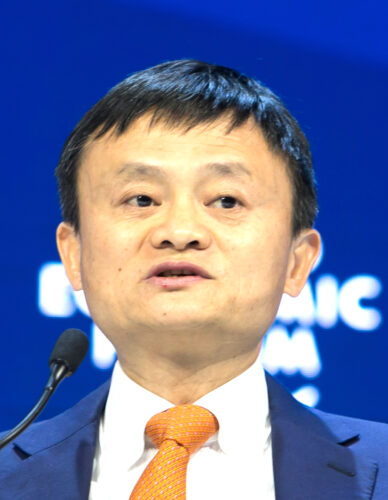
Jack Ma, executive chairman of Alibaba Group Holding, at the 2018 meeting of the World Economic Forum. (World Economic Forum, Ciaran McCrickard, Wikimedia Commons)

Billionaires like this trio abound in China, and outrage at their enormously good fortune has been growing, especially since the start of the pandemic. As of last October, the personal wealth of China’s richest mogul, Jack Ma of e-commerce giant Alibaba, had jumped 45 percent for the 2020 pandemic year, up to $58.8 billion. China’s billionaires, as a group, had gained $1.5 trillion.

Ma and other superstars of China’s high-tech boardrooms have been operating, just like their U.S. counterparts, largely by their own rules. Their wealth has essentially insulated them from any existing regulations they may find inconvenient. Last fall, in front of an august assembly of Chinese economic and political luminaries, an arrogant and condescending Ma openly blasted government regulators for stifling innovation.

But this time Chinese authorities struck back. They squashed a planned initial public offering of Ma’s finance arm that had been expected to reap the biggest IPO windfall of all time and announced new regulations on micro-lending that could severely shave Ma’s financial earnings.

U.S. cheerleaders for a new Cold War dismissed the policy significance of this pushback against Ma. They either deemed that pushback a mere show of pique or portrayed Ma as a valiant defender of China’s “innovative” high-tech pioneers. But these claims, other observers note, miss the real story. The move against Ma, they argue, signals a tougher Beijing stance on China’s entire high-tech billionaire class.

Early last month, for instance, government regulators had China’s wildly dominant version of Uber removed from app stores. Food-delivery services now have to pay a living wage. Tech firms with over a million users must “pass a review before listing overseas” on foreign stock exchanges. These overseas listings had been the quick ticket to corporate executive jackpots.

Even more dramatically, Chinese authorities have totally upended the fabulously profitable after-school tutoring industry. They’ve ordered private tutoring companies to become nonprofits that can’t pursue executive-enriching IPOs or rake in foreign capital. Share prices for China’s tutoring giants naturally tanked almost immediately after the government’s ruling. China’s billionaire tutoring titans have subsequently all lost their billionaire status.

Bigger Statistical Picture

The bigger statistical picture: Over the first six months of 2021, the world’s 10 richest grew $209 billion richer. China’s richest lost $16 billion over the same time span.

”The age of unfettered gains for China’s ultra-rich,” Bloomberg’s Blake Schmidt, Coco Liu, and Venus Feng report, “now appears to be coming to an abrupt end.”

What’s going on here? Some analysts are pointing to many of the same concerns fueling public policy debates in the United States, among them “anticompetitive behavior in the tech industry, risks to financial stability from lightly regulated lending platforms, and the rapid proliferation of sensitive personal information in the hands of large corporations.”

Chinese officials, adds veteran business analyst Hubert Horan, have learned from the U.S. high-tech experience. They’ve watched from afar as years of laissez-faire toward America’s tech giants have let a handful of companies achieve “unprecedented” size and made it “virtually impossible” to address the “externalities” the tech giants have created. Any system that gives moguls like Jeff Bezos and Mark Zuckerberg the “unfettered freedom to flaunt any rules they didn’t like,” Chinese officialdom has come to see, “may not have been producing efficient outcomes for the rest of society.”

Chinese authorities have also come to see the public outrage at the unfairness of their economy as a clear and present danger.

“The government is going after industries that are creating the most social discontent,” posits Liao Ming, the founder of a Beijing-based financial company, Prospect Avenue Capital.

China, in effect, is abandoning the “development phase” of its past three decades. In the new phase that China’s upper political echelons envision, “common prosperity” will take priority over massive concentrations of private wealth, and keeping average Chinese families smiling will rate as far more important than keeping home-grown billionaires beaming.

Chief Bloomberg economist Tom Orlik and his colleague Tom Hancock are calling the emerging new attitude of Chinese officialdom “progressive authoritarianism.” Whatever the right tag may be, China’s new crackdown on the rich appears to be wildly popular within China. A similar crackdown on the super rich, polls indicate, would be equally popular in the United States.

Indeed, could we finally have found a socially redeeming arena of competition between the United States and China? Why, after all, waste billions on an arms race prepping for a new Cold War when we can compete instead over which nation, China or the United States, can do more to narrow corrosive gaps between the rich and the rest of us?

What a glorious competition this face-off for greater equality could be! The peoples of both the “winner” and the “loser” in this competition would find themselves living on a much more equal globe, a world better able to battle the real terrors that confront it, starting with climate change.

Forget the new Cold War. We need a race to end grand private fortune.

Ask Prof Wolff: What's the Story in Cuba?


https://www.youtube.com/watch?v=HdFGjhe19Oc