Saturday, April 24, 2021

50 Sci-Fi & Fantasy Works Every Socialist Should Read


Author China Mieville lays out a list of 50 science fiction and fantasy works he feels every socialist ought to read.


https://portside.org/2017-11-18/50-sci-fi-fantasy-works-every-socialist-should-read


When I became a socialist I was also studying Sociology and Philosophy academically. I experienced something that seems to be a trend among many (though assuredly not all) folks who delve into these worlds: a sudden loss of interest in fiction.

Over time I only read non-fiction work and discovered something missing. Reading fiction again had a major impact on me, stimulating parts of my brain that had laid mostly dormant (or only experienced anything through film and TV shows). I feel invigorated from diving back in and also feel better equipped to deal with issues as a socialist (and as a sociologist and a philosopher).

I recommend Mieville’s recommendations because he is himself a fantastic science fiction author. There is a fantastic interview with him at the website of the International Socialist Review. He is the author of such fantastic works as The City & the City, Kraken and his new book that I’m holding in my hand in eager anticipation, Embassytown. Enjoy!
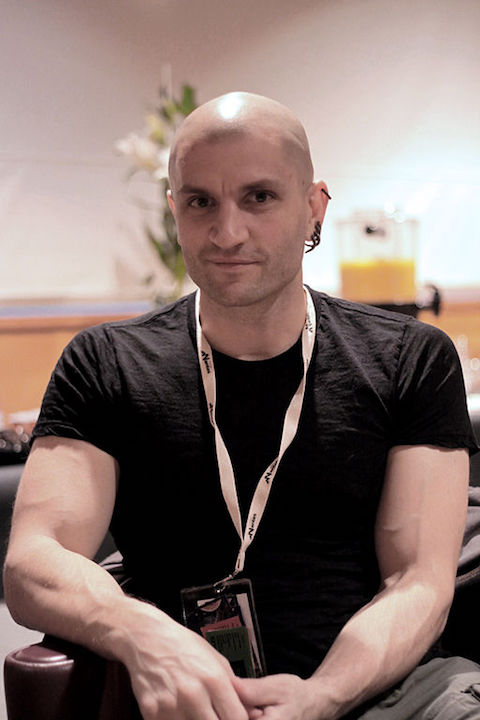

China Mieville


This is not a list of the “best” fantasy or SF. There are huge numbers of superb works not on the list. Those below are chosen not just because of their quality—which though mostly good, is variable—but because the politics they embed (deliberately or not) are of particular interest to socialists. Of course, other works—by the same or other writers—could have been chosen: disagreement and alternative suggestions are welcomed. I change my own mind hour to hour on this anyway.

Iain M. Banks--Use of Weapons (1990)

Socialist SF discussing a post-scarcity society. The Culture are "goodies" in narrative and political terms, but here issues of cross-cultural guilt and manipulation complicate the story from being a simplistic utopia.

Edward Bellamy--Looking Backward, 2000-1887 (1888)

A hugely influential, rather bureaucratic egalitarian/naive communist utopia. Deals very well with the confusion of the "modern" (19th Century) protagonist in a world he hasn't helped create (see Bogdanov).

Alexander Bogdanov--The Red Star: A Utopia (1908; trans. 1984)

This Bolshevik SF sends a revolutionary to socialist Mars. The book's been criticized (with some justification) for being proto-Stalinist, but overall it's been maligned. Deals well with the problem faced by someone trying to adjust to a new society s/he hasn't helped create (see Bellamy).

Emma Bull & Steven Brust--Freedom & Necessity (1997)

Bull is a left-liberal and Brust is a Trotskyist fantasy writer.F&Nis set in the 19th Century of the Chartists and class turmoil. It's been described as "the first Marxist steampunk" or "a fantasy for Young Hegelians."

Mikhail Bulgakov--The Master and Margarita (1938; trans. 1967)

Astonishing fantasy set in '30s Moscow, featuring the Devil, Pontius Pilate, The Wandering Jew, and a satire and critique of Stalinist Russia so cutting it is unbelievable that it got past the censors. Utterly brilliant.

Katherine Burdekin (aka "Murray Constantine")--Swastika Night (1937)

An excellent example of the "Hitler Wins" sub-genre of SF. It's unusual in that it was published by the Left Book Club and it was written while Hitler was in power, so the fear of Nazi future was immediate.

Octavia Butler--Survivor (1978)

Black American writer, now discovered by the mainstream after years of acclaim in the SF field.Kindredis her most overtly political novel, the Pattern master series the most popular. Survivor brilliantly blends genre SF with issues of colonialism and racism.

Julio Cortazar--"House Taken Over" (1963?)

A terrifying short story undermining the notion of the house as sanctity and refuge. A subtle destruction of the bourgeois oppositions between public/private and inside/outside.

Philip K. Dick--A Scanner Darkly (1977)

Could have picked almost any of his books. Like all of them, this deals with identity, power, and betrayal, here tied in more directly to social structures than in some other works (though see Counter-Clock World and The Man in the High Castle). Incredibly moving.

Thomas Disch--The Priest (1994)

Utterly savage work of anti-clericalism. A work of dark fantasy GBH against the Catholic Church (dedicated, among others, to the Pope...)

Gordon Eklund--All Times Possible(1974)

Study of alternative worlds, including an examination of hypothetical Left-wing movements in alternative USAs.

Max Ernst--Une Semaine de Bonte (1934)

The definitive Surrealist collage novel. A succession of images the reader is involved in decoding. A Whodunwhat, with characters from polite commercial catalogues engaged in a story of little deaths and high adventure.

Claude Farrere--Useless Hands (1920; trans. 1926)

Bleak Social Darwinism, and a prototype of "farewell to the working class" arguments. The "useless hands"--workers--revolt is seen as pathetic before inexorable technology. A cold, reactionary, interesting book.

Anatole France--The White Stone (1905; trans. 1910)

In part, a rebuttal to the racist "yellow peril" fever of the time--a book about "white peril" and the rise of socialism. Also interesting is The Revolt of the Angels, which examines now well-worn socialist theme of Lucifer being in the right, rebelling against the despotic God.

Jane Gaskell--Strange Evil (1957)

Written when Gaskell was 14, with the flaws that entails. Still, however, extraordinary. A savage fairytale, with fraught sexuality, meditations on Tom Paine and Marx, revolutionary upheaval depicted sympathetically, but without sentimentality; plus the most disturbing baddy in fiction.

Mary Gentle--Rats and Gargoyles (1990)

Set in a city that undermines the "feudalism lite" of most genre fantasy. An untypical female protagonist has adventures in a cityscape complete with class struggle, corruption, and racial oppression.

Charlotte Perkins Gilman--"The Yellow Wallpaper" (1892)

Towering work by this radical thinker. Terrifying short story showing how savage gender oppression can inhere in "caring" relationships just as easily as in more obviously abusive ones. See also her feminist/socialistic utopias "Moving the Mountain" (1911) andHerland(1914).

Lisa Goldstein--The Dream Years (1985)

A time-slip oscillating between Paris in the 1920s, during the Surrealist movement, and in 1968, during the Uprising. Uses a popular fantastic mode to examine the relation between Surrealism as the fantastic mode par excellence and revolutionary movements (if nebulously conceived).
Stefan GrabiƄski--The Dark Domain (1918-22; trans. and collected 1993)

Brilliant horror by this Polish writer. Unusually locates the uncanny and threatening within the very symbols of a modernizing industrialism in Poland: trains, electricity, etc. This awareness of the instability of the everyday marks him out from traditional, "nostalgic" ghost story writers.

George Griffith--The Angel of Revolution (1893)

Rather dated, but unusual in that its heroes are revolutionary terrorists. Very different from the devious anarchist villains of (e.g.) Chesterton.

Imil Habibi--The Secret Life of Saeed the Pessoptimist (1974; trans. 1982)

The full title is much longer. Habiby was a member of the Palestinian Community Party, a veteran of the anti-British struggle of the 40s, and a member of the Knesset for several years. This amiable, surreal book is about the life of a Palestinian in Israel (with surreal bits, and aliens).

M. John Harrison--Viriconium Nights (1984)

A stunning writer, who expresses the alienation of the modern everyday with terrible force. Fantasy that mercilessly uncovers the alienated nature of the longing for fantastic escape, and show how that fantasy will always remain out of reach. Punishes his readers and characters for their involvement with fantasy. See also The Course of the Heart.
Ursula K. Le Guin--The Dispossessed: An Ambiguous Utopia (1974)

The most overtly political of this anarchist writer's excellent works. An examination of the relations between a rich, exploitive capitalist world and a poor, nearly barren (though high-tech) communist one.

Jack London--Iron Heel (1907)

London's masterpiece: scholars from a 27th Century socialist world find documents depicting a fascist oligarchy in the US and the revolt of the proletariat. Elsewhere, London's undoubted socialism is undermined by the most appalling racism.

Ken MacLeod--The Star Fraction (1996)

British Trotskyist (of strongly libertarian bent), all of whose (very good) works examine Left politics without sloganeering. The Stone Canal, for example, features arguments about distortions of Marxism. However, The Star Fraction is chosen here as it features Virtual Reality heroes of the left, by name--a roll call of genuine revolutionaries recast in digital form.

Gregory Maguire--Wicked (1995)

Brilliant revisionist fantasy about how the winners write history. The loser whose side is here taken is the Wicked Witch of the West, a fighter for emancipatory politics in the despotic empire of Oz.

J. Leslie Mitchell (Lewis Grassic Gibbon)--Gay Hunter(1934, reissued 1989)

By the Marxist writer of the classic work of vernacular Scots literatureA Scots Quair, andSpartacus, the novel that proves that propaganda can be art. This is great science fiction. Bit dewy-eyed about hunter-gatherers perhaps, but superb nonetheless. As an added bonus, it also has a title that sounds amusing today. Check out his short fiction, which includes a lot of SF/Fantasy work.

Michael Moorcock--Hawkmoon (1967-77, reprinted in one edition 1992)

Moorcock is an erudite Left-anarchist and a giant of fantasy literature. Almost everything he's written is of interest, but Hawkmoon is chosen here in honor of Moorcock having said about it: "In a spirit consciously at odds with the jingoism of the day, I chose a German for a hero and the British for villains." There are also plenty of satirical references and gags about 1960s/70s politics for the reader to decode.

William Morris--News From Nowhere (1888)

A socialist (though naively pastoral) utopia, written in response to Bellamy (above), that unusually doesn't shy away from the hard political question of how we get the desired utopia-proletarian revolution. See alsoThe Well at the World's Endand his other fantasies.

Toni Morrison--Beloved (1987)

It's well known that Beloved is a superb book about race and slavery and guilt, but it's less generally accepted that it's a fantasy. It is. It's a ghost story that wouldn't have half the charge without the fantastic element.

Mervyn Peake--The Gormenghast Novels (1946-59)

An austere depiction of dead ritualism and necessary transformation. Don't believe those who say that the third book is disappointing.

Marge Piercy--Woman on the Edge of Time (1976)

A Chicano woman trapped in an asylum makes contact with a messenger from a future utopia, born after a "full feminist revolution".

Philip Pullman--Northern Lights (1995)

Pullman let us down. This book is here because it deals with moral/political complexities with unsentimental respect for its (young adult) readers and characters. Explores freedom and social agency, and the question of using ugly means for emanicipatory ends. It raises the biggest possible questions, and doesn't patronise us that there are easy answers. The second in the trilogy, The Subtle Knife, is a perfectly good bridging volume... and then in book three,The Amber Spyglass, something goes wrong. It has excellent bits, it is streets ahead of its competition... but there's sentimentality, a hesitation, a formalism, which lets us down. Ah well.Northern Lightsis still a masterpiece.

Ayn Rand--Atlas Shrugged (1957)

Know your enemy. This panoply of portentous Nietzcheanism lite has had a huge influence on American SF. Rand was an obsessive "objectivist" (libertarian pro-capitalist individualist) whose hatred of socialism and any form of "collectivism" is visible in this important an influential--though vile and ponderous--novel.

Mack Reynolds--Lagrange Five (1979)

Reynolds was, for 25 years, an activist for the U.S. Socialist Labor Party. His radical perspective on political issues is reflected throughout his work. This book--examining a quasi-utopia without sentimentalism--is only one suggestion. Also of huge interest are Tomorrow Might Be Different (1960) and The Rival Rigelians (1960), which explicitly examine the relation between capitalism and Stalinism.

Keith Roberts--Pavane (1968)

These linked stories take place in a present day where Elizabeth I was assassinated and Spain took over Britain. This examines life in a world where a militant feudal Catholicism acts as a fetter on social and productive functions. Though Roberts was no lefty at all, and you could probably power France on the energy from his spinning grave at being included in this list.

Kim Stanley Robinson--The Mars Trilogy (1992-96)

Probably the most powerful center of gravity for Leftist SF in the 1990s. A sprawling and thoughtful examination of the variety of social relations feeding into and leading up to revolutionary change. (It's also got some Gramsci jokes in it.)

Mary Shelley--Frankenstein, or the Modern Prometheus (1818)

Not a warning "not to mess with things that should be let alone" (which would be a reactionary anti-rationalist message) but an insistence on the necessity of grappling with forces one unleashes and the fact that there is no "innate" nature to people, but a socially-constructed one.

Lucius Shepard--Life During Wartime (1987)

Horrific vision of a future (thinly disguised Vietnam) war. Within the savage examinations of the truth of war and U.S. foreign policy, Shepard also investigates the relation between SF, fantasy, and "magic realism", and uses their shared mode to look back at reality with passion.

Norman Spinrad--The Iron Dream (1972)

A SF novel by Adolf Hitler... Spinrad's funny, disturbing and savage indictment of the fascist aesthetics in much genre SF and fantasy. What if Hitler had become a pulp SF writer in New York? Not a book about that possibility but a book from it. "By the same author: Triumph of the Will and Lord of the Swastika." Brave and nasty.

Eugene Sue--The Wandering Jew (1845)

Huge book by radical socialist Sue, about the adventures of the family of the Wandering Jew of legend. Symbolic fantasy elements: the Jew is the dispossessed laborer and his partner is downtrodden woman. Marx hated Sue as a writer (not without reason--less, for Sue, is not in more) but hell, it's an important book.

Michael Swanwick--The Iron Dragon's Daughter (1993)

Great work that completely destroys the sentimental aspects of genre fantasy. From within the genre--fairies, elves, and all--Swanwick examines the industrial revolution, the Vietnam War, racism and sexism, and the escapist dreams of genre fantasy. A truly great anti-fantasy.

Jonathan Swift--Gulliver's Travels (1726)

Savage attack on hypocrisy and cant that never dilutes its fantasy with its satire: the two elements feed off each other perfectly.

Alexei Tolstoy--Aelita (1922; trans. 1957)

Distant relative of the other Tolstoy. The "revised" version is less good, written in the stern environment of Stalinism. A Red Army officer goes to Mars and foments a rebellion of native Martians. Good rousing stuff, but also interesting in terms of "exporting" revolution. See also the superb avant-garde film version from 1924.

Ian Watson--Slow Birds (1985)

Left-wing author whose short story collection above includes a cold demolition of Thatcher and Thatcherism. His take on oppression--cognitive and political--informs all his rather austere, cerebral writing.

H.G. Wells--The Island of Dr Moreau (1896)

Like a lot of Wells's work, this is an uneasy mixture of progressive and reactionary notions. It makes for one of the great horror stories of all time. A fraught examination of colonialism, science, eugenics, repression, and religion: a kind of fantasy echo of Shakespeare'sT he Tempest.

E. L. White--"Lukundoo" (1927)

One of the most utterly extraordinary (and almost certainly unconscious) expressions of colonial anxiety and guilt in the history of literature.

Oscar Wilde--The Happy Prince and Other Stories (1888)

Children's fantasies by this romantic, socialist author. Marked by a sharp lack of sentimentality, a deeply subversive cynicism, which doesn't blunt their ability to be intensely moving.

Gene Wolfe--The Fifth Head of Cerberus (1972)

Wolfe is a religious Republican, but his tragico-Catholic perspective leads to a deeply unglamorized and unsanitized awareness of social reality. This book is a very sad and extremely dense, complex meditation on colonialism, identity and oppression.

Yevgeny Zamyatin--We (1920; trans. 1924)

A Bolshevik, who earned semi-official unease in the USSR even in the early 1920s, with this unsettling dystopian view of absolute totalitarianism. These days often retrospectively, ahistorically, and misleadingly judged to be a critique of Stalinism.


US HAS NO MORAL STANDING TO CRITICIZE RUSSIA OR CHINA


By Dave Lindorff, Counterpunch.

April 22, 2021


https://popularresistance.org/us-has-no-moral-standing-to-criticize-russia-or-china/


NOTE: This article points out the hypocrisy of the United States criticizing Russia and China for alleged human rights abuses while it clearly abuses human rights at home. My one criticism is that Lindorff perpetuates the myth that the US-backed protesters in Hong Kong are ‘pro-democracy.’ To learn more about Hong Kong, there are many articles here. – MF

President Joe Biden and his Secretary of State Antony Blinken are worried about Russian Putin critic and presidential aspirant, currently in a Russian prison after conviction on charges of skipping bail and leaving the country and other charges, being abused and at risk of dying in jail.

That threat may or may not be real, but US objections to Russia’s treatment of a political rival or dissident, like US objections to China’s harsh treatment of democracy advocates and former democratic members of Hong Kong’s now crushed and no longer autonomous Legislative Assembly would carry a lot more weight, and be far less laughable around the globe if these two leaders would also be demanding decent treatment and release from prison of political prisoners who have been getting abused, degraded and denied adequate medical treatment at the hand of the US “justice system.”

While the list is fairly long, I will highlight three cases here.

The first and most urgent is Mumia Abu-Jamal, ones a leading Black journalist in Philadelphia who was convicted in 1982 of the killing of a white Philadelphia police officer in a trial marked by perjured testimony from clearly coached witnesses claiming to have seen an “execution style” slaying that crime photos and a gun test conducted by myself and fellow journalist Linn Washington, Jr., prove could not have happened as portrayed by the prosecutor, who himself was guilty of misconduct in lying about the availability of a witness to the judge. Abu-Jamal, who is about to turn 67, has served 40 years in prison, more than two decades of that time on death row before his death sentence was ruled unconstitutional and converted to life in prison without parole. During all those death row years he was held in solitary confinement.

He suffers from diabetes and contracted Hepatitis C, which the prison system first failed to diagnose and then refused to treat with proper medication until ordered to do so by a federal court in a case that the state fought tooth and nail, delaying so long that by the time he finally was provided with the medication that is 95% successful at curing the deadly disease, it had already destroyed his liver with cirrhosis. Now he’s been diagnosed with Congestive Heart failure and is about to be given open heart bypass-surgery to replace clogged arteries, no doubt due to his imprisonment, inactivity and poor prison diet.

Abu-Jamal is currently appealing his conviction arguing after six boxes of documents pertaining to the prosecution’s case including evidence of possible bribery of a witness were discovered in the DA’s office, where they had been hidden from Abu-Jamal’s attorneys for four decades. The city’s supposedly “progressive” DA is fighting that appeal, as is the police officer’s widow Maureen Faulkner who receives financial support for her efforts to intervene in the case from Philadelphia’s Fraternal Order of Police and other police organizations who for years lobbied for Abu-Jamal’s execution and now want to see him die in prison.

Then there’s Leonard Peltier, the American Indian Movement activist who has been serving two life sentences federal prison following a controversial 1977 conviction for the murder of two FBI agents who were investigating a different case on the Oglala Lakota Reservation in South Dakota. Peltier has already served 44 years in prison, has serious medical issues, and is widely considered to be a political prisoner of the US, being punished primarily because of his advocacy of Native American rights.

And finally there’s Julian Assange, the journalist and founder of Wikileaks. Assange, an Australian citizen, became a wanted man by the US after his Wikileaks organization began exposing US war crimes in Iraq and Afghanistan, most notably with the release of a gun-sight video of a cobra helicopter whose two crew members were slaughtering a group of Iraqi civilians including two cameramen working for a US news organization, and laughing as they killed the wounded with additional fire.

Although the trove of documents provided by Wikileaks to various news organizations in the US, Britain and Europe, were all giving major play, earning awards for many of those outfits, for his efforts to expose the crimes of the US war machine, Assange found himself the subject of an indictment for espionage and theft of government secrets filed by the US Justice Department. Assange was eventually in Britain when the US asked for his extradition to face federal charges in a US court.

Initially free on bail, Assange, fearing extradition and possible execution or confinement at Guantanamo in a country where top leaders were calling for his death (Secretary of State Hillary Clinton suggest that he be “droned”) he sought asylum in the tiny Ecuadoran Embassy in London. When the left-leaning leader of Ecuador lost an election to a conservative candidate, that asylum was terminated and Ecuador invited London Metro Police to enter their embassy and haul Assange off to jail to face charges of bail jumping and an extradition hearing. Since then he has been held for several years in a gritty prison in solitary confinement where friends and medical experts have said his continuous detention and solitude while hiding in the Ecuadoran embassy and in jail have caused serious health and mental problems.

When the bail charges were mooted and a judge rejected the US extradition request, the Trump administration appealed the decision. President has rejected calls from many prominent civil liberties attorneys and human rights activists to drop the case against him.

It all makes a farce of the US criticizing the Russian government for it’s treatment of Navalny, and China’s imprisonment of democracy activists in Hong Kong.

It’s time for the US government to walk the walk, and not just emptily talk the talk.

Mumia, Peltier and Assange should all be freed and the cases against them dropped. Other prisoners in the US whose lengthy prison sentences are clearly the result of political persecution should also be freed. Now!

Otherwise our political leaders are just power-tripping autocrats in glass houses tossing stones at other autocrats.


Dave Lindorff is a founding member of ThisCantBeHappening!, an online newspaper collective, and is a contributor to Hopeless: Barack Obama and the Politics of Illusion (AK Press).


PAULO FREIRE’S BRAZIL: ‘RETURN TO GRASSROOTS POPULAR EDUCATION’


By Paolo Vittorio, Il Manifesto.

April 22, 2021


https://popularresistance.org/paulo-freires-brazil-return-to-grassroots-popular-education/


We Spoke With Frei Betto, The Dominican Friar, Liberation Theologian, Educator And Political Militant.

‘September will mark the 100th anniversary of his birth, and it is only right to recall how popular education, which he introduced, still has the potential to make the oppressed into social and political protagonists.’

The Dominican friar who rebelled against the military dictatorship and was imprisoned in the 1970s is today an educator, political activist, liberation theologian and writer. Frei Betto, one of Brazil’s greatest intellectuals, makes us into witnesses of historical paths and of the political necessity of popular education inspired by Paulo Freire, as a method of overcoming the ideology of capitalism.

The first experiences of popular education in Brazil arose from the resistance movements against the military dictatorship. Even prisons became a place of experimentation. What memories do you have of that era?

In my case, I spent four years in prison, two with political prisoners and two with ordinary prisoners. With the common prisoners, we experimented with popular education through theater, reading circles, crafts and painting. At the time, we were already inspired by the methodology devised by Paulo Freire. Next September will mark the 100th anniversary of his birth, and it is only right to recall how popular education, which he introduced, still has the potential to make the oppressed into social and political protagonists. I believe that it is also thanks to Paulo Freire that, in an elitist country like Brazil, where bankers are even richer than European ones, a metalworker trade unionist like Lula became president of the Republic, elected for two terms. Thanks to Freire, many popular leaders have become important political players. Currently, we are continuing to work with his method, more or less openly, but not everyone realizes the quality of this approach.

What aspect, in particular, of Freire’s pedagogy proved to be the most useful?

It was starting from the context of the students, as Freire did in literacy work, through the so-called generative words that emerged from a dialogical process based on concrete situations. We would start from there and from the narratives of the prisoners, including what crimes they had committed. Obviously, not everyone was willing to talk, but some even described things in detail, and it worked almost like group therapy. The effects were impressive, in the drama groups, for that methodology that contextualized their lives, stimulating everyone to reflect on their actions, the consequences and causes. I also reworked the analyses proposed by Paulo Freire when I got out of prison, and began working with popular movements. With prisoners, grassroots communities, trade unions, workers, it is important to overcome low self-esteem—many have not had the opportunity to study—by promoting an awareness of having a culture that often not even astrophysicists, chemists, great engineers or lawyers possess. There are distinct but socially complementary cultures.

Dialogue enhances cultures dialectically, reciprocally, making sure that each learns from the other.

The masses have the perception of life as a mere biological process: I am born, I am part of a family, I study, I marry, I have children, I work to support the family. Capitalism is based on this biological cycle of economic reproduction that boils down to producing and consuming. Popular education “carries” us from being “the masses” to “the people,” from the perception of life as a biological cycle to a biographical cycle: I am part of a family, which is part of a certain class, inserted in a context, in an international conjuncture, which poses certain questions. Dialogue is fundamental to promote this historical-biographical consciousness of a political, social and economic process, which is one’s own life.

What value does this process have today?

I was in the Lula government (2003-2004) for two years in the “Zero Hunger” program, and today I would reluctantly admit that we have distanced ourselves from the popular base. There is a Freirian principle that is very important for epistemology: the head thinks where the feet are; that is, when we change the social place we also change the epistemic place. Coming out of direct contact with the grassroots and starting to live in the “halls of power” has resulted in a lack of awareness of the importance of popular education. I think that one of the errors of the Latin American left was that they abandoned that work with the poorest sectors. In Brazil, they say that the left is only united in prison, and that’s true. When we won popular democratic governments, we neglected the peripheries, favelas, rural areas. There was a disconnect that favored the fact that popular spaces were being occupied by fundamentalist, authoritarian ideologies, slaves to drug trafficking and the false beliefs generated by populism.

The growing phenomenon of populism has given space to a violent ideological persecution against Freire’s thought.

I believe that the right’s most brutal tool to attack his thought is that of fake news and denialism, which has been spreading since Bolsonaro—I call him “Bolso-Nero”—took up the presidency of the Republic. Denialism is not just about Covid, but about elements of our history, such as the value of Paulo Freire’s thought, or even the existence of the military dictatorship. Those who deny it ignore that Freire spent more than 15 years in exile, or stories like those of Frei Tito, who died after terrible torture, and Frei Fernando, who wrote a diary from prison on sheets of silk.

Denialism is the result of cultural impoverishment and the weakening of popular movements, but also of consumer ideology, is it not?

Certainly, these processes of critical analysis are fundamental to understanding the essence of the capitalist system. One cannot disregard Marx’s philosophy—in my opinion distorted by many, especially in its aspects regarding religion—in critically interpreting capitalism by opening windows towards its overcoming. There are attempts to humanize and improve capitalism, but they are intra-systemic, and it is like caressing the shark’s teeth, deluding oneself that one will eliminate its aggressiveness. Capitalism is inherently inhumane, because the priority, the number one value is the private appropriation of wealth, which gives the few the freedom to own a lot and prevents the many from having anything. If we want real change in Latin America, we need to return to the grassroots work of popular education. Transformation only happens if the popular sectors organize and mobilize to go beyond this system that generates poverty, misery, hunger, inequality, exclusion, with all the consequences from the point of view of human and environmental destruction.


WORKER CENTERS: WHERE CAUSES COHERE, AND FORGE POWER


By Sarah Jaffe, The American Prospect.

April 22, 2021


https://popularresistance.org/worker-centers-where-causes-cohere-and-forge-power/


At The Crossroads Of Diverse Social Movements And Worker Representation, Many Centers Have Become Models Of Intersectionality.

In October 2020, on what Amazon calls “Prime Day,” Fadumo Mohamed and her co-workers at an Amazon fulfillment center outside Minneapolis stood in the whipping wind alongside a handmade banner that read “Amazon: Hear Our Voice.” As the wind howled, Mohamed, bundled in hijab, a face mask, a long black skirt, and track jacket, approached a microphone and shouted to be heard over the storm, “We are human, we are not robots! We have to speak up! We have a voice! We are risking our health!”

In February, Mohamed’s two-and-a-half-year-old son took sick, and she had to take him to the hospital for emergency surgery. She’s a single mother, an immigrant with no family in the area—so caring for her son was all on her. Amazon, she said, told her that she could use her “UPT,” unpaid time off. When she called in to talk to HR about absence beyond her allotted leave time, she said, she was fired. When she spoke to me, she reiterated a common theme among Amazon workers: The company doesn’t treat them like humans, with lives and needs that persist into the workday. Her son’s illness wasn’t important to the company, and she also wondered if the company had taken the opportunity to let her go because she’d been outspoken about problems at the fulfillment center.

Mohamed is just one of many East African immigrant workers who have organized with the help of the Awood Center, a small worker center based in Minneapolis’s Somali community. “Awood,” its website explains, is the Somali word for power. It’s a relatively new—founded in 2017—entrant into the network of unions and worker centers in the Twin Cities that have quietly (and sometimes not so quietly) built one of the country’s strongest urban labor movements.

In recent years, as union density has plummeted and workers’ conditions worsened, worker centers have popped up around the country to fill in the gaps. Worker centers like Awood bring a social-movement energy to organizing, as well as a willingness to experiment and an understanding that the specific needs and desires of the workers they serve can be sources of power, not weaknesses. They are often rooted deeply in a particular community and know that the issues that motivate their members go beyond simple “bread and butter” concerns. In Awood’s case, that awareness has helped them to be one of the first organizations to successfully bring Amazon to the bargaining table.

Workers like Mohamed have long been considered “unorganizable” in union conventional wisdom, and organizing around culturally specific demands—like prayer time and accommodations for fasting for Muslim workers, issues on which Awood has focused—has been deemed ill-advised and insufficiently universal. Yet the victories Awood has won and the near-constant struggle the Amazon workers it supports have been waging on the shop floor remind us of the value of treating workers as whole persons, not as cogs with interchangeable needs. As Mohamed and her co-workers declared, “We are human!”

Mohamed Mire is also from Somalia and an Amazon worker since 2017, when he first moved to Minnesota. “The human body and the system at Amazon, they don’t fit,” Mire said. “We are running after machines. The human body works on energy, it needs food, water. I don’t know how people can compete with electric systems with a human body and human energy. If you were standing in front of an 18-wheeler and holding your hand on the front, if the truck started accelerating, do you think you could hold it?” Basic needs like a bathroom break, Mire explained, leave workers under cascading pressures when they return to their station. The scanning technology keeps track of the worker’s pace, but if a bathroom break takes 20 minutes, the worker has to scramble to get back on track or face a write-up for low productivity. “It’s like when you have credit card debt and you can’t pay it, so the interest is going up and up and up,” he explained.

The constant speedup, the ratcheting up of expectations at the warehouse, said Tyler Hamilton, another Amazon employee, led the workers to reach out to Awood. It was the beginning of 2019, and the facility had announced a series of changes. “Of all the things announced, none of them were actually good for us workers.”

Telling the managers that it wasn’t working didn’t seem to matter. “We had a big chunk of our team that wanted to try and fix this, but we didn’t know how,” Hamilton said. “When you go through our school system, they don’t teach you anything about your labor rights. You learn about the Bill of Rights, freedom of speech, freedom of expression, petition, assembly, but not that you actually have a protected right to discuss your compensation and your working conditions with your co-workers. You can pass out flyers. You can make petitions at work. You can walk out. You can have strikes.”

Hamilton and his fellow workers had heard about the Awood Center’s work with Amazon employees, so they reached out and learned that, indeed, walkouts were legally protected. “A couple days after we talked with them, we just did it. We walked out,” Hamilton said. “Since we first had our walkout two years ago, we’ve continuously been organizing in different ways.” Workers got their productivity targets lowered, and have helped workers at risk of losing their jobs avoid firing.

The labor rights training that the Awood Center provides, as Hamilton noted, isn’t necessary only for immigrants like Mire and Mohamed, but it is especially helpful to the Somali migrants who have been heavily recruited by Amazon. New immigrants can be easily exploited, and before Awood, there was no organization in the area supporting Somali and East African migrants as workers. To Mire, Awood’s place at the intersection of justice movements—struggles for immigrant rights, workers’ rights, and justice for Black Americans—makes it more powerful.

The COVID-19 pandemic only accelerated the workers’ fight against Amazon, as walkouts occurred across the country and workers at the Bessemer, Alabama, facility filed for a union election. “The work is still dangerous for all of the reasons it was dangerous before, but also now we have coronavirus to deal with,” Hamilton said. He was one of thousands of Amazon workers who got the virus, but, he noted, the conditions might have been even worse if the workers hadn’t been pressing for safety measures. “The people who are directly impacted by problems and issues will usually have some of the best insight for how to mitigate those, how to fix them,” he said.

But the pandemic also brought home the personal impact of the work for Mire. He choked up as he talked about leaving home before his children wake up in the morning, and then having to tell them not to hug him when he gets home, until he’s had a chance to shower and change clothes, in case he’s brought home the virus from work. “Imagine your daughters, they want to give you hugs, and you have to tell them ‘no.’ They’re going to say, ‘I hate Amazon.’”

But social-distancing protocols in the warehouse have also been used, Hamilton and Mire said, to tamp down organizing. Workers, Mire said, get written up for not socially distancing, even as the managers have meetings together every day. Before the pandemic, Hamilton added, there were state-mandated labor-management safety committee meetings, which the workers had used as another organizing opportunity, bringing as many employees as they could to those meetings. When COVID hit, though, the meetings were canceled, even though safety was obviously more of an issue than ever.

Recently uncovered data, Hamilton noted, backs up the workers’ assertions that the robotics-filled warehouses like the one where he works are more dangerous than the others, and Amazon’s facilities in general tend to have more injuries than the average in the warehousing industry. The robots just speed up the pace at which the workers have to go. And the speedup, Mire said, is draining the life out of the workers. “It’s like [they’re] putting a needle into your arm and sucking your blood. At the end of the day I have zero blood in my body. I’m empty. Ten hours lifting was sucking my blood.”

Last spring, when protests erupted after a Minneapolis police officer killed George Floyd, the headquarters of Centro de Trabajadores Unidas en la Lucha (CTUL) became a hub of protest. CTUL has been organizing low-wage workers of color in the Twin Cities for over a decade, and well before last year’s protests had spread to every corner of the U.S., its members had been involved in fighting racism and police violence. Henry Scott, who came into CTUL through its work on the Fight for $15 and is now a leader in its new Black worker group, Future Fighters, had spoken at the city’s budget hearings about redistributing money from policing into housing and homeless services. He called the work at CTUL’s headquarters, just a block from where Floyd was killed, “beautiful.”

During the protests, Scott explained, “We had places where we set up tables and brought out different products to make sure that people had things like deodorant and soap and toilet paper and Pampers and milk and groceries. Because I live on the north side of Minneapolis, that gave me the opportunity to do things like go up on Broadway and help the older people in my community who actually can’t get out, to be able to deliver things to them.” To him, it felt like a moment when Minneapolis could change, really tackle systemic inequality.

A single father, Scott had moved to Minneapolis from Chicago, and CTUL backed him up when the McDonald’s where he worked was underpaying its staff, ignoring the newly increased minimum wage. “I had been calling my job trying to get paid for a couple of days and one of the people that was at my job had told me, ‘If you call one more time asking about your paycheck, you’re going to be fired!’ and hung up in my face.” CTUL organizers joined him in going to the store to demand his pay, and the store eventually had to pay its workers $20,000 in back wages and penalties. (The franchise called it an “inadvertent error.”)

CTUL’s work began with janitors who worked for third-party contractors cleaning major retail chains like Target and Home Depot. As the organization’s name indicates, those early workers were primarily Spanish-speaking immigrants from Latin America, and through organizing and strategic strikes, they brought the chains to the table, winning responsible contractor policies at Target and elsewhere, and even the right to a union. CTUL and Awood have both received support from and partnered with Service Employees International Union (SEIU) Local 26. Generally, however, worker centers’ projects are less about winning collective bargaining than about using direct action and community pressure to wring concessions—in CTUL’s case, from major corporations, which tend to be more image-conscious than the subcontractors they rely on.

CTUL has also focused on improving public policy. Scott recently spoke alongside Congressmember Ilhan Omar at a press conference calling for a national $15-an-hour minimum wage, telling the audience that his need to work when he’d been a teenager had affected his schoolwork. “If parents are making better wages, it takes a lot of weight off of the parents and gives them time to spend with their kids, which … that’s our future,” he told the Prospect. In Minneapolis, CTUL and other advocates won an increased minimum wage and also “sick and safe pay,” or paid sick leave, in 2016.

Scott is looking forward to building out Future Fighters, continuing to press on the crises of policing and homelessness and other issues facing Black low-wage workers. He also continues to work on the enforcement of the minimum wage and sick and safe laws. Echoing Tyler Hamilton, he noted that the schools don’t teach people about their labor rights. “Especially Black kids, they believe that when it comes to politics, they really don’t have a lot of say in what’s going on. So, I’m not only telling my kids, I’m telling everybody’s kids,” he laughed. He’s on the board of directors now at CTUL, and said, “When you get to hold a position like that, it makes you feel like you’re somebody and gives you the courage to open your mouth and stand up for yourself.”

Worker centers are not unions; they are something else. And that “something else” has allowed them to connect dots that unions that engage in collective bargaining often miss. They root themselves in a community rather than a given workplace, though often they run campaigns pressing for change at a specific company, like CTUL at Target and Awood at Amazon. Other times, as with the Miami Workers Center’s focus on caring workers or Voces de la Frontera’s organizing with dairy farm workers in Wisconsin, their community base allows them to bring together members who might be atomized, isolated from one another in workplaces that might be someone’s home or farm.

Ruth Milkman, a professor of sociology at The Graduate Center, CUNY and at the CUNY School of Labor and Urban Studies, and the author of many books and articles looking at worker centers, unions, and immigrant and women’s movements, explained that worker centers arose to organize workers who were too often being ignored by traditional unions. Some of that was sectoral: Day laborers and domestic workers, for instance, were scattered across the landscape rather than clustered together in a traditional workplace. Some of that was legal: Farm and domestic workers were excluded from the right to bargain collectively under the National Labor Relations Act. (Fearing African American empowerment, Southern senators conditioned their support for the act on those exclusions when it came up for a vote in 1935.) But some of that was based on who those workers are: immigrants, mostly, many undocumented, and thus written off as unorganizable. But Milkman’s research has shown that those immigrant workers often brought traditions of militancy that Americans missed out on—as anyone watching the Awood workers singing a Somali solidarity song alongside Omar could attest. The worker centers introduced such traditions back into an American labor movement that had lost much of its power.

Ellen Bravo, a longtime organizer now with Family Values @ Work, cut her teeth with 9to5, an organization of women office workers best known perhaps for inspiring the film and Dolly Parton song, but which embodied many social-movement principles and strategies in the 1970s. She shared a story of infiltrating a management group holding a seminar titled “9to5: Not just a movie: How to keep them out of your office.” “A secretary opened a mailing [promoting] this seminar by a union-busting management firm that always held these ‘union-free’ seminars. And she sent it to us,” Bravo laughed, “Who do they think opens the mail?” Bravo sneaked into the seminar, and heard the union busters describe her group as particularly perilous because it was a new kind of hybrid: “[9to5] combines the militancy of the trade union movement with the personal approach of the women’s movement. That’s why they’re so dangerous.”

Much like 9to5, today’s worker centers, Bravo continued, understand that “what happens in [workers’] lives, what happens to their kids, what happens in their homes is all part of who they are—and if we didn’t take into account the whole picture, the whole self, we’d never succeed.” For 9to5, that meant structuring an organization that valued caregiving, where the organizers, too, had flexible schedules and realistic work hours. “We knew that to be successful, the movement had to be broad and engage lots of women workers. We could only do that if we found activities and ways to make them able to be part of a movement that honored the other responsibilities in their lives,” she added. “One of my mottos was ‘We’re all special and none of us are indispensable.’ That’s the only way you can really build a lasting movement.”

That also meant bringing all those issues of workers’ lives into the room, even when those issues might initially be remote to or even opposed by other members. “When you build an organization or a coalition where people meet folks who are a category that they’ve been taught to hate or be afraid of, someone who is LGBTQ or someone who is from an immigrant family,” Bravo said, “but when you’re also in the struggle together and your kids play with each other at meetings and you know each other’s lives, then you don’t have to convince people that these are issues ‘we’ should take up.”

There’s another reason that worker centers have often highlighted the conditions of whoever gets left out of rights or protections: Those will end up being the conditions of everyone else. Ai-jen Poo of the National Domestic Workers Alliance has noted many times that the rapidly spreading working conditions of the gig economy aren’t new; they’re the conditions domestic workers have long labored under. Domestic workers, of course, were carved out of New Deal–era labor protections as much because the majority of them were Black women as because the men in charge couldn’t fathom the home being a workplace. Racism and sexism shaped those conditions, which continue to creep into other excluded quarters of the labor market.

But worker centers, Milkman said, “tend to be more adaptable and flexible and have a broader sense of what counts as serious organizing.” They don’t write off organizing around police violence or prayer time because those are issues that might affect some of the workers more than others. Workers like Tyler Hamilton step up for their Muslim co-workers because they understand that improving conditions for the more marginalized workers in turn helps improve their own.

Which is why worker centers tend to understand that organizations must be led by the people who are most affected. The generation that launched the worker centers, Milkman continued, came of age when issues of racism, sexism, homophobia, and Islamophobia were central, and many of its leaders are women of color. “These are new organizations that don’t have a patriarchal tradition in the way unions mostly do,” she said.

And those worker centers have helped fuel movement energy. The massive “Day Without an Immigrant” marches in 2006, in response to a bill in Congress that would have criminalized undocumented immigrants, changed how much of organized labor saw immigrant workers: “The people that were still skeptical that you could do anything with immigrant workers saw how organizable they actually were,” Milkman said.

Worker centers helped build those marches (as did SEIU, which had a large immigrant membership), and continue to do similar work. Bravo pointed to Voces de la Frontera in Wisconsin, which brought an estimated 60,000 people to the streets in February 2017 as Trump ramped up his deportation machine. Another massive march went off later that spring against Milwaukee’s Trump-besotted Sheriff David Clarke. Those work stoppages, explained Christine Neumann-Ortiz, the director of Voces, were able to beat back the planned local expansion of the 287(g) program, which enlisted local law enforcement to act as immigration enforcers. “These are strikes,” Neumann-Ortiz noted, yet they still often get left out of the conversation about striking, and are missed in official strike counts.

During the 2011 battle against Wisconsin Gov. Scott Walker’s Act 10, which stripped public-sector workers of many fundamental union rights, Voces members, particularly youth members, came out alongside their teachers, who in turn had supported their fights for rights as immigrants. Voces sent buses to the occupation of the State Capitol, and immigrant youth spoke at the rallies, linking the issues of justice for migrant families to justice for public workers.

During the pandemic, Voces has organized an essential workers’ rights network. Many of their members are farmworkers in dairies or in meatpacking, and it helped, Neumann-Ortiz said, to have that existing trust as workers’ conditions rapidly grew more dangerous. “We really elevated their voice in public, and with elected officials,” she explained. “We’re pushing back to say worker lives matter, and worker lives come first. [Since the meatpacking companies] were making huge profits, certainly it wasn’t a question about money.”

Neumann-Ortiz pointed to meatpacking workers’ self-organized work refusals, which forced companies to implement some safety procedures. “We think beyond what the law provides, and we always have,” Neumann-Ortiz said.

Organizing those immigrant workers around their immediate needs helped Voces build out a powerful network that wields power in a variety of ways. “It’s part of the racial-justice movement, it’s part of the rights of working people,” Neumann-Ortiz said. Members do electoral work through Voceros por el Voto, which Neumann-Ortiz described as “one of the largest relational voting programs in the country.” It’s built through people like Eduardo Perea, a Voces member and essential worker. “He’s been here working in construction for 15 years, lived in Milwaukee for 30 years,” Neumann-Ortiz said. “He’s undocumented. All of his children are U.S. citizens. His two oldest children just voted. It’s about building that progressive, pro-immigrant voting bloc, [where members are] intimately connected to one another and care about one another.”

This is what worker centers do at their best: They build a multifaceted movement. Organizations like Voces, Bravo said, “do really nitty-gritty. They teach people English. They do citizenship classes. They help when people need—literally—to fight to prevent a deportation or when someone needs food. They do things that someone might call social services, but they are as focused on organizing and engaging people in the fight for systemic change.”

The kinds of services that organizations like Voces provide can be essential for organizing, but also provide a challenge, Ruth Milkman noted. Existing outside of the labor laws that govern (and hamper) unions, the centers have experimented with ways to reach the workers they wanted to organize, but, Milkman said, “they could easily be overwhelmed by the demand for services, and then just be swamped by that to the point where it was hard to do anything else.”

Yet adept organizations also learn from the demands placed upon them and incorporate workers’ varied needs into their analysis. Something like the way the Femme Agenda, developed by the Miami Workers Center from its work among care workers, most of them women of color, winds up informing every facet of the organization’s work. “We don’t live single-issue lives as domestic workers, so the work that we do cannot just be around my rights as a domestic worker,” explained June Barrett, an organizer and board member at the center.

Barrett, who uses they/them pronouns, used to be a home care worker, but last year received a Dorothy Bolden Fellowship from the National Domestic Workers Alliance, of which MWC is an affiliate, to become a full-time organizer. Their work has revolved around building out We Dream in Black, a network for Black domestic workers within the broader alliance, and work on a research project on Black domestic workers with the Institute for Policy Studies.

Barrett also helped to distribute emergency funds from NDWA’s coronavirus care fund. “The Miami Workers Center was getting calls [from] workers saying, ‘My boss told me not to come in because they are afraid of this virus.’ My own twin sister, she lost all her cleaning jobs,” Barrett explained. “We’re not a service organization, but yes, in the middle of a crisis, the Miami Workers Center was a very vital force in terms of community aid.”

Losing work left many domestic workers unable to pay rent, and as the national eviction moratorium expires soon, the center has turned its attention to housing. Bereatha Howard is a member of the Center, and has involved herself in the housing organizing. “I saw housing inequality and they were addressing it,” she said. She joined canvasses of the neighborhood to share information on resources for tenants—once again, the kind of public-education work that supports the community as a whole and brings new members into the organization.

As Santra Denis, the organization’s director, explained, “eviction defense work reinforces that as we think about race, as we think about gender, if you are at those intersections, you are often the ones who are most impacted by the situation. That is how we frame our Femme Agenda. We talk about ‘Who is the most impacted? Who is getting the worst of it?’ That means we have to elevate the narrative and the leadership and the experience of those folks.”

It’s not just evictions that require that intersectional analysis. In the course of the pandemic—which has disproportionately killed Black and brown people—many care workers are immigrants and have fears about interacting with a health care system that might require them to share information in order to be vaccinated. Domestic workers who work in someone’s home are unlikely to have health insurance or other benefits. And deportations continue under the Biden administration.

If a client’s income takes a hit, Denis noted, “the first thing to go is the care workers.” The Center assumed that those workers would be the ones hit hardest by housing insecurity, and the eviction information from the courts proved them right. So they built up safe door-knocking practices to distribute information about the national eviction moratorium, and the county moratorium, and spread the news that only a sheriff has the right to evict them. They held a tenant town hall to hear from renters, and learned that landlords were cutting electricity or changing locks despite the official eviction bans. They helped connect tenants to legal partners.

MWC has also had to figure out new ways to organize virtually, which means, of course, a lot of Zoom calls. Howard found herself more comfortable speaking up in virtual meetings than in traditional ones. The “loving encouragement” of MWC staff, she said, helped her step out of her comfort zone and learn to facilitate calls. The Zoom meetings, Barrett added, can be more accessible for domestic workers, who can be on a Zoom call from their phone while they work.

During the pandemic in particular, Barrett said, depression and anxiety have become widespread among members. “People say they’re unsure of their future, of what tomorrow looks like.” The Center, Denis explained, had created the Women’s Circle to provide a monthly healing space and time for members; it’s been ongoing for years but has grown during COVID. It’s a space where members listen to and support one another, and learn techniques and exercises for managing and facing their emotions.

Through all of this, Howard said, it matters to her to see people who look like her in the leadership of the organization. It matters that they understand the culture she comes from. “They have their finger on the pulse of this community,” she said. “They’ve been consistent over 20 years and they have earned their trust.”

Despite their notable achievements, worker centers face daunting challenges. Where unions are funded by members, Milkman noted, worker centers often rely on foundation funding, which constrains them in a different way. While worker center staff and board members may come from the communities they serve, the funders, well, usually don’t. And that can lead to clashes over tactics and over the demand for “deliverables.”

There’s no surefire way to avoid such clashes, Bravo noted, but it matters that members are the ones doing the organizing and leading the charge, rather than staff, in many effective worker centers. The shoestring budgets they often operate on, Milkman noted, means that workers have to step up because there simply aren’t staff to do all the work.

That kind of leadership also means that those workers’ demands are ever front and center. While some organizations might have been inclined to cut the Biden administration some slack early on, Christine Neumann-Ortiz and Voces’s members were gearing up for actions to get immigrants included in the pandemic relief bills as they meandered through Congress. People say, Neumann-Ortiz noted, that “we’re thankful for essential workers,” but Voces aims to make sure that they put that into law by giving those immigrant essential workers the rights to which they’re entitled.

And on the ground in Minnesota, the Awood Center members keep up the daily fight—for causes like Fadumo Mohamed’s jobs, and for an expansive view of worker justice. Tyler Hamilton pointed to the long struggle to unionize U.S. Steel for a comparison. “These jobs are basically like the industrial jobs that we used to have. Amazon is just the industrialization of retail,” he said. “But these aren’t jobs that you can outsource. The only way you can be affordable and cheap is if it’s right here.” That means that opposing worker organizing “is just a part of [Amazon’s] business model,” he concluded. “Until we can get them to change it.”


OHIO STUDENTS SIT-IN TO DEMAND UNIVERSITY CUT TIES WITH POLICE


By Graeme Massie, The Independent.

April 22, 2021

https://popularresistance.org/ohio-students-sit-in-to-demand-university-cut-ties-with-police/


NOTE: There were few articles about this action taken by the students at Ohio State. Note that the article seems to justify the murder of Ma’Khia Bryant, but we have many videos of police de-escalating situations in which a white person has a lethal weapon without shooting them. Ma’Khia’s family reports that it was Ma’Khia who called police for help. In a video that goes with the article (not included with this post), the media goes so far as to find a Black neighbor who defends the murder by police. – MF
Ma’Khia Bryant, A Black Teenager, Was Shot And Killed In The City As Police Responded To Reports Of Fight.

Students at Ohio State staged a sit-in protest and demanded that the university cut ties with Columbus Police in the wake of the killing of Ma’Khia Bryant.

The protest took place one day after a police officer shot and killed the 16-year-old girl in the city, just as the verdict in the George Floyd trial was reached.

Students staged their Wednesday protest in the Ohio Union before taking to the streets to march.

Some carried signs with the victim’s name, along with phrases like “say her name”, while another student had a sign that said, “Being Black shouldn’t be a death sentence.”

Ohio State supports the right of our students, faculty and staff to peacefully express their views and to speak out about issues that are important to them,” the university said in a statement.

“Freedom of speech and civic engagement are central to our values as an institution of higher education.”

The university added that its own police force deals with campus security, and that they contract with CPD for specific services, mostly traffic control at sporting events.


Columbus police have defended the killing and named the officer involved as Nicholas Reardon.

Officials say that Officer Reardon has been a Columbus police officer since December 2019, and he has been placed on leave while the incident is investigated.

The body camera footage, which the department released within six hours of the killing, showed officers approaching a driveway at the home they had been called to.

There were several young women in the driveway, and one, now identified as Ma’Khia, appeared to have a knife in her hand and was approaching another young woman.

When the woman fell to the ground, Ma’Khia is seen moving towards another woman, who is against a car.

The officer then fired his weapon, with four shots being heard on the video, and Ma’Khia fell to the ground.

WE CAN SOLVE THE CLIMATE CRISIS!


By Tina Landis, Liberation News.April 22, 2021

https://popularresistance.org/we-can-solve-the-climate-crisis/


Today Is Earth Day — A Global Day Of Action To Demand The Protection Of The Environment And Fight For A Sustainable Future.

First held in 1970, Earth Day has taken on even deeper significance in recent years as catastrophic climate change plays out and the need for a new system that respects the people and the planet becomes ever more apparent.

Climate change is unfolding at an increasingly rapid rate with more severe droughts, storms, wildfires and floods impacting the globe. Yet, the capitalists continue to plunder the planet and extract fossil fuels, destroying ecosystems and increasing warming. The 2018 UN Intergovernmental Panel on Climate Change report warned that we have 12 years to avert runaway catastrophe. That call to action becomes more urgent by the day while the majority of governments globally take limited actions that fail to meet the urgency of the crisis.

The very system of capitalism itself is the cause of climate change with the Global North holding the majority of responsibility due to earlier development and consumer lifestyles. Big Oil knew that fossil fuels were warming the planet as early as the 1950s, but did nothing to change course. To the capitalists, the immense profits to be made in the short term outweighed the looming disaster to come.

Capitalism requires endless growth and the maximization of profits. This is inherent to the system itself and cannot be altered. Corporations can be taxed and regulated, but their ultimate goal of increasing value for shareholders cannot be changed; any impediment to profits is just passed onto the consumer through higher costs. In the end this doesn’t alter the system of capitalist production that is based on what the billionaires can make a profit from rather than what is actually needed by society or what is sustainable for the planet. The incredibly wasteful system of capitalism is driving humanity and all life on the planet toward mass extinction.

We see today, in the United States and around the globe, transnationals continuing their plunder of the planet through resource extraction, oil and gas drilling and deforestation, despite all of science warning of the urgency to end these practices for our survival. Despite President Biden’s pause on drilling on federal lands — which constitutes only one-quarter of lands where fossil fuel extraction takes place — Big Oil continues to expand drilling on non-federal lands. For instance, permits were approved in March for up to 43,000 new oil wells in Kern County, Calif. And this is in California which has the most aggressive greenhouse gas reduction goals and some of the most stringent industry regulations in the country!

We are far beyond piecemeal solutions and waiting for industry to “do the right thing.” The laws of capitalism promote and allow endless plundering of the planet regardless of the impacts on humanity or other life on the planet.

We must call out capitalism for what it is — the cause of the climate crisis — and build a new eco-socialist system that puts the needs of humanity and all life first and works to restore the damage done by centuries of environmental destruction.
How Can We Solve The Crisis?

The answer is two fold. We must immediately shift from fossil fuels to wind, water and solar energy production. The technology exists to make the switch today and still meet all of the world’s energy needs. At the same time, we need to greatly reduce energy consumption and wasted energy by weatherizing buildings, providing the most energy-efficient appliances, lighting and heating to all, eliminating food waste — which is as high as 40% in the US — providing affordable housing near jobs and building an expanded zero-emission transit system nationwide to greatly reduce the need for cars.

At the same time we must restore the damage done to the planet from centuries of plunder by reforesting previously-forested lands, and restoring oceans, wetlands, mangrove swamps and grasslands to increase biodiversity and the natural carbon capture mechanisms of the planet. Healthy biodiverse ecosystems benefit us all by producing more oxygen, retaining more water and increasing carbon capture mechanisms.

We must also shift away from industrial agriculture and factory farming methods to regenerative agriculture and managed grazing of livestock, which has proven to produce higher yields at lower costs to farmers while increasing biodiversity, water retention, soil health and carbon capture. Projects and continuing research around the globe demonstrate that restoring these degraded ecosystems can cool the climate in just decades.

So why are these scientifically-proven practices not being implemented immediately on a mass scale? Because they are not profitable. Once the renewable energy infrastructure is built, there are few profits to be made beyond maintenance and replacement after decades of use, unlike ongoing profits made by the fossil fuel industry. Planting trees and restoring natural lands is not profitable, but rather will be a one-time cost and then the living systems will for the most part do the rest. Restoring oceans means ending industrial overfishing and eliminating the petrochemical industry that produces plastics that are choking the oceans — meaning major profits lost by those industries.

A shift to regenerative agriculture means the end of the highly-profitable GMO, synthetic fertilizer and pesticide companies. It would also spell the demise of Big Ag with the shift away from monoculture crops for feedlots and an end to the overproduction of livestock — 70% of agricultural land in the United States is used to grow corn, soy and hay for feedlots. The Amazon rainforest is also being cleared by transnationals for this same purpose as well as for crops for biofuel.

This is the reason for government inaction. It’s not that they don’t understand the problem. They are just unwilling and unable to make the shift due to the system itself that prioritizes profits above life itself. This is why only solutions that can make a profit along the way are even discussed by the Biden administration and the corporate-owned media, such as electric vehicles, carbon capture technologies (rather than biosequestration that uses plants to capture carbon), geoengineering schemes, and a heavy reliance on nuclear and biofuels as false forms of renewable energy.
How Socialism Can Implement The Changes Needed

Life on Earth is an interconnected web of species working together to optimize life for the whole. With the rise of class society, humanity strayed from our role of one intelligent species within an intelligent system to being a conqueror and exploiter of nature. Despite being only 5% of the world’s population, Indigenous-managed lands hold 80% of the world’s biodiversity. Indigenous communities worldwide hold ancestral knowledge of living in alignment with the entire ecosystem, holding a duty to protect the earth and all its inhabitants as a priority. It is crucial that Indigenous communities be equal partners in the restoration of the planet and climate solutions. We must replace the capitalist consumer culture with one that reflects this alignment with regenerative practices for the continuity of all life.

Socialism is that system. Under an eco-socialist planned economy — which is a truly participatory democracy — resources and human labor are pooled to meet the needs of society in an equitable way that aligns with the needs of all life for long term sustainability. Socialism is the opposite of capitalism. With socialism, everyone benefits equally from the labor and ingenuity of humanity, rather than a handful of people who don’t do the work, profiting off everyone else’s labor.

Through socialism, the changes that are needed to solve the climate crisis can be implemented in an efficient and comprehensive way in a relatively short time frame. Fossil fuel workers and those in other industries that are no longer needed can be retrained while getting paid a living wage in fields that benefit people and the planet, such as:
building the renewable energy infrastructure
ecological restoration work and clean up of polluted lands and waters
shifting to regenerative agriculture
retrofitting buildings and distributing energy efficient appliances
“greening” cities to be integrated into the ecosystem
building an expansive zero-emission public transit system including nationwide high speed rail

The implementation of what is needed in the pressing timeframe cannot occur under capitalism where changes that impede “business as usual” like the Green New Deal cannot even get a hearing in the halls of Congress. We must take the power away from the billionaires and their lackeys in government for the survival of humanity.

Not only will systemic change allow humanity to stem the climate crisis and regenerate the biosphere, it will allow for humanity to prepare and protect people from the impacts we are already experiencing. We can see just this past year how the U.S. government has done nothing to help the population prepare or recover for these crises. Look at COVID-19 and the extreme winter storms in Texas that left people to freeze to death in their homes.

Scientists have warned that viruses like COVID-19 are becoming more prevalent as the world warms and human encroachment into wildlands increases. The extreme storms in Texas were the result of the weakening jet stream that brought the polar vortex south, a direct result of climate change, which scientists have warned will become more frequent and erratic.

The current U.S. death toll from COVID is over 550,000, the highest death rate in the world. This was completely preventable with early action, universal healthcare and a guaranteed wage for all those left without work so they could quarantine safely. Also, vaccine development in a socialist world would have been more efficient with knowledge sharing across borders rather than patent rights held by individual corporations developing their own vaccines with profits as the priority.

The climate crisis will continue to worsen without effective global action and the working class and poor of the world will be hardest hit. In a socialist world, international cooperation in adaptation and mitigation efforts could greatly curb warming and help the planet rebalance and help all of the world’s people prepare for the near-future impacts.

Instead the U.S. empire continues with divisive imperialist policies and war that undermines countries’ ability to adapt to climate change and develop on a sustainable path. Reparations must be paid to oppressed communities and countries of the Global South for the centuries of plunder to bring about equity in the transition to a sustainable system. Through socialism, humanity can work collectively pooling resources and knowledge to overcome the greatest existential crisis we have ever faced.
How Do We Get There?

There are sparks of change happening from frontline communities fighting big polluters to Native struggles against pipelines and extractive industries. There is hope in the global youth movement against climate change, as well as in the multinational movement for racial justice. But we need to build a more organized and powerful people’s movement that impedes the profits of the ruling class, that forces major concessions, and in the end, overthrows capitalism.

We must unite together across borders and struggles to build a movement for systemic change — for socialism. All the problems faced by the poor and working class — from poverty to homelessness, unemployment, lack of health care, racism, police brutality, and environmental destruction — are caused by the system of capitalism that puts profits before all else, leaving more and more of us destitute each day while the billionaires get richer. We must build the people’s movement and educate others on the issues showing that humanity does have the knowledge and tools to stem climate change. We must call out capitalism as the cause of the climate crisis and socialism as the solution and make an evolutionary leap forward to a world that benefits all life. Together we can win. Join us.


PRESIDENT ZELENSKY SAYS UKRAINE ‘READY’ FOR WAR WITH RUSSIA


By Jason Melanovski and Clara Weiss, WSWS.

April 22, 2021

https://popularresistance.org/president-zelensky-says-ukraine-ready-for-war-with-russia/

Amid mounting tensions in the Black Sea region, President Volodymyr Zelensky declared on Tuesday night that Ukraine is “ready” for war with Russia. He warned that the country would “stand to the last man” in the event of a war.

Zelensky also signed a law allowing the Ukrainian army to mobilize its reservists without notice within 24 hours. Those avoiding the draft will be subject to criminal prosecution. The new law had been proposed by the Ukrainian General Staff.

Zelensky’s aggressive declarations came amidst reports of growing NATO activity near Russia’s borders.

On Wednesday, the Russian press reported that two NATO aircraft, an American P-8A Poseidon and a British RC-135W, and an American drone had conducted reconnaissance flights for several hours near the Crimean Peninsula in the Black Sea.

A French military aircraft carrier was spotted off the Romanian Black Sea coast, and several NATO aircraft carriers took off over Estonia, Latvia and Poland on Tuesday to intercept and escort Russian reconnaissance aircraft, fighters and bombers over the Baltic Sea. On April 19, Ukraine and NATO-member Romania had conducted joint military exercises in the Black Sea.

The Nezavisimaya Gazeta reported that more than 20 American F-16 and F-15 fighters had been suddenly deployed from the UK to Poland. It quoted a Russian military expert who indicated that two American missile destroyers, USS Donald Cook and USS Roosevelt, were “now in the northern part of the Aegean Sea [just off the Black Sea], participating in the maneuvers of NATO Rammstein Dust II 21.” Last week, the US canceled the deployment of two warships to the Black Sea at short notice but just days later, the UK sent two warships to the region.

Russia just concluded its own military exercises in the Black Sea, involving 20 warships from the Black Sea Fleet and over 50 fighter jets. Most of the troops and military equipment the Kremlin moved there for military exercises remain in the region.

On Monday, the Kremlin declared that large parts of Crimea, including its southern part where the naval base of Russia’s Black Sea Fleet is located, as well as parts of the Black Sea itself, would be “temporarily dangerous for aircraft flights.” Russia has also closed the sea passage between the Azov Sea and the Black Sea for foreign war ships from April 24 through October 31.

The activities by NATO dangerously heighten tensions in a region where the military situation is already on a knife edge. The last few weeks have seen an uptick in fighting between the Ukrainian army and Russian-backed separatists in East Ukraine.

A civil war has raged here since a February 2014 US- and German-backed coup in Kiev ousted the pro-Russian government of Viktor Yanukovich. The war has killed an estimated 14,000 people and displaced millions. This year, over 30 Ukrainian soldiers have already been killed, compared to 50 Ukrainian troops during all of 2020.

On Monday, another Ukrainian soldier was killed just hours before representatives of Ukraine, Russia, Germany and France were scheduled to meet in an attempt to renegotiate a failed ceasefire between the east Ukrainian separatists and the Ukrainian army. The talks reportedly accomplished little.

The immediate backdrop for the recent escalation of military clashes was the Ukrainian government’s adoption of a strategy to launch an offensive in the Donbass and “recover” Crimea. The peninsula in the Black Sea was annexed by Russia in March 2014, following the coup in Kiev and a popular referendum in which Crimea’s residents overwhelmingly voted in support of becoming a Russian territory.

Over the past few weeks, the Ukrainian government of Volodymyr Zelensky has aggressively lobbied the US and EU to accelerate Ukraine’s admission to NATO. However, French President Emmanuel Macron and German Chancellor Angela Merkel have refused to support Ukraine’s NATO admission at this point.

The Ukrainian ambassador to Germany has threatened that the Kiev government is considering the acquisition of nuclear weapons “on its own” should its request to join NATO not be granted. According to Russian press reports, the Ukrainian parliament is now also preparing a letter to the US Congress to request the status of “major non-NATO ally” (MNNA).

On Wednesday, Ukraine’s Foreign Minister Dmitry Kuleba revealed that he had asked US Secretary of State Antony Blinken to provide Ukraine “powerful means of electronic warfare” for its stand-off with Russia. He also said that he had called upon EU Foreign Ministers to cut Russia off the SWIFT system, an international communication system for banks and other financial institutions. Such a step is understood to potentially lead to the complete collapse of the Russian financial system.

The Ukrainian ruling class is also stepping up its domestic preparations for war. This Monday, the Ukrainian Security Service (SBU) announced that it would be carrying out “multi-stage anti-terrorist” drills across the country. In an indication that the government is preparing for martial law, the announcement said that “a special regime may be temporarily introduced in certain areas amid the drills, as well as restrictions or bans on the movement of motor vehicles and pedestrians, ID checks, and inspection of vehicles, etc.” A precedent for this was set by former President Petro Poroshenko in 2018, who declared martial law after staging a provocation in the Azov Sea.

At a meeting last Thursday with the country’s National Security and Defense Council, Ukrainian President Volodymyr Zelensky discussed the government’s military readiness. Urging citizens to “trust the official statements of our General Staff or the President’s Office only,” he stated. “The army is ready—that’s the most important thing.”

The press service of the city of Kiev had previously published a map of updated bomb shelters and revealed that government funds had been used to build civil defense structures to shelter the population in case of war.

Well aware that the continuation, let alone expansion, of the war in East Ukraine, is deeply unpopular, the Ukrainian ruling class is seeking to mobilize the country’s far right. Neo-Nazi forces have already played a central role in the 2014 coup and the subsequent civil war.

Last week Arsen Avakov, Ukraine’s Minister of Foreign Affairs, a man close to the far right and one of the country’s most powerful politicians, appealed to these forces on Facebook. Calling them “patriots” and using fascistic language, he asked them to prepare for war and protect the “Motherland.” Avakov suggested that Ukraine would fare better than it did in 2014 due to the over $2 billion in military aid and equipment it has received from the US since.

As Minister of Internal Affairs, Avakov controls the country’s National Guard, which was created in 2014 and incorporated the neo-fascist Azov and Donbass battalions. In recent years, his ministry has played a central role in protecting and developing the country’s far-right forces. Organizations like the Azov Battalion and C-14 have carried out a number of deadly attacks on journalists and ethnic minorities, with near immunity from prosecution.

Within the Ukrainian press, the notion that the United States and NATO will militarily back Ukraine against Russia continues to be pushed. Much was made of recent comments by acting US Ambassador to Ukraine Kristina Kvien, who suggested that the US may consider deploying more troops to Ukraine in the event of a war with Russia.

While speaking with Ukrainian Prime Minister Denis Shmyhal, Kvien stated, “We are constantly assessing the situation and making an assessment of the needs of the Ukrainian side. And we have a permanent presence of 160 American troops. And if, according to our estimates, the needs change and need to be increased, we will consider the issue.”

There is widespread opposition in the population to an all-out war between Ukraine and Russia, which threatens the lives of tens of millions. Thousands of Ukrainians have deserted the front in the civil war in East Ukraine. Zelensky himself was only elected in 2019 due to mass opposition to the former president’s rabidly anti-Russian policies and war mongering.

Whatever the decision of the United States and European imperialist powers in regards to Ukraine, the only way to stop the imperialist war drive is through the creation of an international, socialist antiwar movement of workers across Eastern Europe and the world opposed to the outdated and barbarous capitalist system.