Thursday, April 8, 2021

Toilet paper demonstrates how competitive markets destroy small business - Richard Wolff


https://www.youtube.com/watch?v=VTZf6OHucCU&ab_channel=DemocracyAtWork


Rammstein - "Left 2, 3, 4"

600 billionaires rule the US. But not for long. 


https://www.youtube.com/watch?v=Ph-CA_tu5KA&ab_channel=RammsteinOfficial


Ask Prof Wolff: Chinese Defense Spending Games


https://www.youtube.com/watch?v=N7G6qixIfCY&ab_channel=DemocracyAtWork


Biden’s infrastructure plan: Identity politics and anti-Chinese nationalism


https://www.wsws.org/en/articles/2021/04/06/infr-a06.html


Patrick Martin
a day ago


The Biden administration has begun a campaign to seek support for the president’s proposed infrastructure plan, which would provide $2.25 trillion for a range of physical and social infrastructure projects, ranging from roads and bridges to rural broadband and increased spending on child care and care for the elderly.
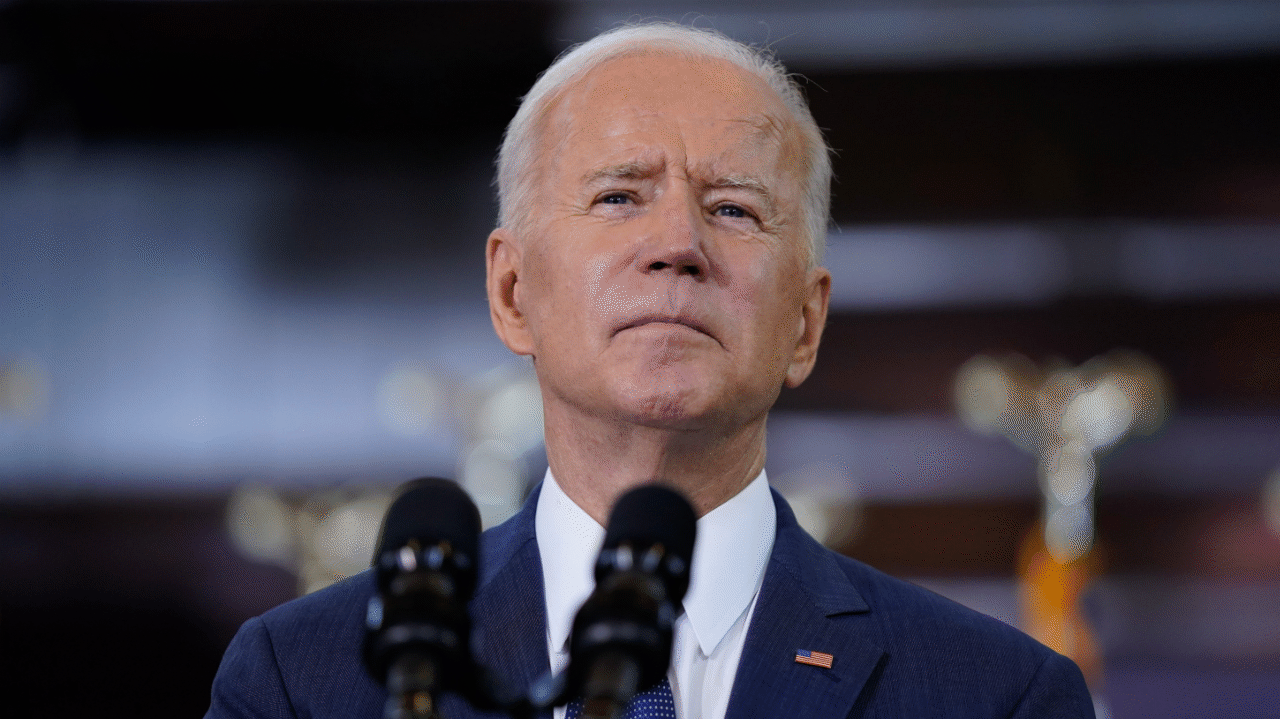
President Joe Biden delivers a speech on infrastructure spending at Carpenters Pittsburgh Training Center in Pittsburgh, March 31, 2021 (AP Photo/Evan Vucci, File)


After his first formal cabinet meeting last week, Biden announced that he has asked five cabinet members to make the public case for the so-called American Jobs Plan. These are: Transportation Secretary Pete Buttigieg, Energy Secretary Jennifer Granholm, Housing and Urban Development Secretary Marcia L. Fudge, Labor Secretary Martin Walsh and Commerce Secretary Gina Raimondo.

The five include three women, one of them African American, a gay man and a former union bureaucrat, thus embodying the identity politics of the Democratic Party. Identity politics seeks to disguise the Democrats’ loyalty to the Wall Street financial aristocracy by promoting the interests of sections of the upper middle class who seek a “fairer” distribution of wealth within the top 10 percent of society.

The five were not picked at random, but just about any five members of the Biden cabinet would have served as a similar demonstration of “diversity.” Gushing media commentaries after the first cabinet meeting—delayed until 23 of Biden’s 24 nominees had received Senate approval—noted that only six out of the 23 are straight white men, while at a similar stage in Trump’s cabinet, 18 out of 23 were in that category.

These commentaries entirely ignore the substance of the policies pursued by the Biden administration. In its demands that schools reopen and parents go back to work, regardless of the threat to health and life from COVID-19, the Biden administration is just as brutally opposed to the interests of the working class as the Trump administration.

In its foreign policy, based on confronting China and Russia directly, the Biden administration is even more flagrantly and consistently aggressive than the Trump administration, even if it proceeds with soporific rather than directly provocative language.

The infrastructure plan, despite its presentation by apologists like Bernie Sanders as the greatest step forward for progressive, social reform politics since the Great Society of Lyndon Johnson, or even Roosevelt’s New Deal, is entirely integrated into the fundamentally right-wing policies of the Biden-Harris administration.

In their first appearances on the Sunday television interview programs as advocates for the Biden plan, both Secretary of Transportation Buttigieg and Secretary of Energy Granholm sought to present spending on infrastructure as an important part of the US response to China’s rise as a global power.

Speaking on NBC’s “Meet the Press,” Buttigieg declared, “The American Jobs Plan is not about short-term stimulus. It’s about making sure that America is positioned to compete for the next decade and for the generation ahead. We know that China and our other strategic competitors are already making major investments. It’s time for America to lead the way again.”

One of NBC’s paid commentators, former Chicago Mayor Rahm Emanuel, summed up the Biden political strategy as follows: “On infrastructure, if you vote no, you’re with China. If you vote yes, you’re with America,” adding, “They’re picking the right enemies.”

Speaking on CNN’s “State of the Union” program, Secretary of Energy Granholm, the former governor of Michigan, spelled out the economic nationalism of the plan in more detail.

“I look at this from being a former governor of a manufacturing state … for decades now, we have watched our manufacturing jobs leave. We’re at a 70-year low. This bill says we’re going to make stuff in America. We’re going to make the means to our own energy security. I mean, it is an amazing statement that, finally, we’re going to invest in America, instead of watching all of these other countries beat us to the punch.”

She continued, “Part of that investment is making sure that we can build the batteries in the US for electrifying transportation and for energy storage, instead of getting those batteries from our economic competitors. China came out with their most recent five-year plan. And they have a plan to corner the market on the supply chain for batteries ... we can just sit there and watch that happen. Or we can decide, no, we want to build that stuff here.”

The anti-China thrust of the Biden infrastructure plan was underscored in an opinion column by retired US Army Gen. John Adams, published in Newsweek magazine. In words that echoed Granholm’s, Adams cited the importance of rebuilding US capacity in steel, aluminum and microchips and the danger of relying on China as the principal supplier of all three.

“We cannot rely on geopolitical rivals for the raw materials and critical components essential to US national security,” he wrote. “If COVID-19 has taught us anything, it’s that America must maintain control over critical supply chains, such as pharmaceuticals, vaccines, and critical metals such as steel and aluminum. COVID has disrupted global supply chains on a wide range of goods, from automobiles to semiconductors, as well as hindered global transportation networks.

“Consider the ongoing disruption in COVID vaccine supply as European governments are refusing to allow vaccine exports to other countries. It is no stretch to imagine a similar situation; if the US had to acquire high purity aluminum from Russia or the Middle East during a crisis, would they deny us the materials? … Our very national security and prosperity would be jeopardized if America is dependent on Russia, China, India, and the Middle East for aluminum.”

Notably, while invoking the Chinese bogeyman, neither representative of the Biden administration gave prominence to corporate opposition to the proposed rise in the corporate tax rate from 21 percent to 28 percent. On the contrary, Granholm took care to point out that Biden was choosing not to return the rate to 35 percent, the level that prevailed before the 2017 Trump tax cut for the wealthy. She called the 28 percent rate offered by Biden, leaving half the Trump tax cut in the pockets of big business, “the reasonable middle.”

The RATE Coalition, a corporate lobby in Washington that numbers AT&T, Fedex, Kimberly- Clark, Home Depot, Toyota and UPS as members, attacked the tax increase in a statement issued in the name of Blanche Lincoln, a former Democratic senator from Arkansas and longtime colleague of Biden, now turned lobbyist for giant corporations.

None of the Biden spokespeople, in many media interviews over the course of the weekend, has chosen to focus on the brazen tax dodging and tax avoidance carried out by corporate America. According to a new study released by the Institute on Taxation and Economic Policy, 55 large corporations paid no federal income taxes at all last year, despite raking in $40.5 billion in pretax income. If they had paid at the current rate, 21 percent, they would have paid a total of $8.5 billion in income tax. Instead, they collected tax refunds totaling $3.5 billion.

“Their total corporate tax breaks for 2020, including $8.5 billion in tax avoidance and $3.5 billion in rebates, comes to $12 billion,” the ITEP report said.

Twenty-six of the Fortune 500 companies have paid zero income tax since 2017, when the Trump tax cut was passed. These include such household names as FedEx, Duke Energy, Nike, and DTE Energy, the Detroit-based utility that was notorious for shutting off electricity for impoverished households in Detroit and its working class suburbs. DTE gained an accelerated refund of tax credits totaling $220 million from the CARES Act, passed with near-unanimous bipartisan support last year.


FRED HAMPTON WAS RIGHT


By Lauren Araiza, Truthout.

April 5, 2021


https://popularresistance.org/fred-hampton-was-right/


We Must Fight Racism With Cross-Racial Solidarity.

On March 15, the Academy of Motion Picture Arts & Sciences announced that the film Judas and the Black Messiah, about the assassination of Chicago Black Panther Party leader Fred Hampton, received six Oscar nominations, including one for best picture. Hampton was assassinated because the FBI and Chicago Police Department viewed the 21-year-old as a threat to be eliminated not just because of his leadership of the Black community, but because of his skill in forming bonds across race with other oppressed people, forming what has been referred to as the first Rainbow Coalition. Oscars are a deserved recognition for this important film, but if we really want to honor Hampton, we need to try to emulate him. The day after the Oscar nominations were announced, eight people — six of whom were Asian and Asian American women — were shot and killed by a white man on a murderous rampage through Atlanta. This horrendous crime is proof that we need solidarity among marginalized people — a new Rainbow Coalition.

Hampton and the rest of the Black Panther Party exemplify the possibility and power of cross-racial solidarity. From its founding in 1966 in Oakland, California, the party sought racial and economic justice on behalf of all oppressed peoples and advocated multiracial solidarity, forming alliances with organizations as varied as the radical Chinese American organization the Red Guard Party; the predominantly Mexican American union the United Farm Workers (UFW); and in Chicago, the Puerto Rican nationalist Young Lords and the white Appalachian Young Patriots Organization. The Panthers recognized that despite their racial or ethnic differences, these groups could come together in a shared struggle against white supremacy and capitalist exploitation.

The Black Panthers and their allies demonstrated their solidarity in numerous, concrete ways. For example, in Chicago, the Panthers, Young Lords and Young Patriots Organization worked together to address poverty, urban renewal and unsafe housing in their communities. In California, Panthers and UFW organizers combined their boycotts of Safeway grocery stores and walked picket lines together, and Japanese American activists demonstrated outside the trial of party co-founder Huey Newton. These groups wrote about each other’s causes in their newspapers, attended each other’s rallies and demonstrations, and worked to convince their communities of the importance of cross-racial solidarity. In my book, To March for Others: The Black Freedom Struggle and the United Farm Workers, I demonstrate that these alliances were successful because these activists intentionally sought to find common cause with each other.

The Black Panther Party’s cross-racial coalitions are part of a long history of solidarity movements between people of color. For example, in the 19th century, abolitionist Frederick Douglass spoke against the impending Chinese Exclusion Act and called for unfettered immigration. Responding to white North American economic exploitation and racial discrimination in the Southwest, in 1915 Mexican and Tejano rebels wrote the Plan de San Diego, which called for the creation of a “Liberating Army for Races and Peoples” consisting of Mexican American, African American, and Japanese soldiers; Black liberation and the creation of an independent Black republic in southern Texas; and the restoration of lands to Native American nations. Following the 1943 “Zoot Suit Riots” in Los Angeles, the local NAACP banded together with the Mexican American Community Service Organization to demand accountability from the U.S. Navy. In 1968, Asian American, Black, Chicana/o, and Native American students of San Francisco State University joined together and organized a massive strike that led to the creation of the first Black Studies department and School of Ethnic Studies in the country.

At other times, however, possibilities for cross-racial solidarity were diminished by inter-group tensions, hostility and bigotry, as well as failures to grasp the interconnections between the various forms of racism and exploitation experienced by different groups.

It is this sort of dynamic that Black Panther Party co-founder Bobby Seale sought to warn against, writing: “Racism and ethnic differences allow the power structure to exploit the masses of workers in this country, because that’s the key by which they maintain their control.”

Within the last decade, a new generation of coalitional activism has emerged. In 2012 Arab American, Black, and Latinx youth formed the Dream Defenders, whose organizing focuses on criminal justice reform, immigrant rights and economic justice. The Asian American Organizing Project shared resources in Cantonese and Mandarin that explain George Floyd’s murder and call for Asians and Asian Americans to support the Black Lives Matter movement. In North Carolina, the Carolina Federation, Mijente and Poder NC collaborated to register Black and Latinx voters and get them to the polls for the 2020 presidential election.

In the wake of the Atlanta shootings and Derek Chauvin’s trial for the murder of George Floyd, powerful new expressions of cross-racial solidarity between Asian Americans and African Americans have emerged, such as the Black & Asian Solidarity protest and march in New York City on March 21. Many African Americans are among the volunteers of Compassion in Oakland, which was founded in February to provide free escorts for seniors in Oakland, California’s Chinatown. In Chicago, InterAction — founded in 2015 to organize young people of color — recently established the Young Black and Asian Solidarity Working Group to promote coalition-building between the two communities.

As a historian, I look at these expanding spaces of cross-racial solidarity with optimism, knowing that the Rainbow Coalition in Chicago was so successful because its participants refused to allow themselves to be divided. In a 1969 speech Fred Hampton declared, “We say you don’t fight racism with racism — we’re gonna fight racism with solidarity.” He and his allies knew that the forces against them were so powerful that only by working together would they even begin to achieve equality and justice.

We must acknowledge that the massacres in Atlanta, Charleston and El Paso — all perpetrated by 21-year-old white men (ironically, the same age as Hampton when he was assassinated) — are all connected by the common thread of white masculine supremacy. And law enforcement’s attempts to humanize and defend the murderers are just echoes of those who orchestrated Hampton’s assassination. As Hampton warned us, marginalized people must work together if we hope to survive, much less achieve equality and justice.


FAIRY CREEK BLOCKADE DEMONSTRATORS CALL IN MORE PROTESTERS


By Julian Kolsut, Chek News.

April 5, 2021


https://popularresistance.org/fairy-creek-blockade-demonstrators-call-in-more-protesters/


Demonstrators at the Fairy Creek logging blockade say they are digging in and calling in more help after an injunction was granted against them this week.


On Saturday there was a steady stream of supporters arriving at their headquarters.

Shambu, an organizer with the blockade, said they are moving forward because it is “rightful.”

“We have the B.C. Union of Hereditary Chiefs on board, because we have every chamber of commerce on board with us,” said Shambu. “People are coming out, people are wanting this. It’s everyone’s block aid. There are countless examples of immoral laws, laws that serve a few, that were law and became illegal, and it was through this kind of civil disobedience.”

The blockade has been in place since August 2020, organized in part by members of the Rainforest Flying Squad, to stop the logging company Teal-Jones from building a road into the Fairy Creek area and prevent old-growth logging.

Demonstrators say they are extremely disappointed with the decision, and that now is the last chance to save the area.

“This is the last stand, literally last stand of old-growth. Ninety-seven per cent of the forests of British Columbia are tree farms,” said Shambu.

“The last time trees were saved, it took how many arrests to make that happen [in the Clayoquot protests]?”

Protesters say due to the Easter weekend, they expect a big boost in numbers of around 150 people showing up by early next week.

After the B.C. Supreme Court granted an injunction on Thursday, the RCMP have not made contact with the protestors.


'Follow the Money': Corporations Gave $50 Million to GOP Lawmakers Behind Voter Suppression Onslaught


"No matter how many PR statements Big Business puts out, its complicity with the antidemocratic forces that want to make voting harder is clear."


by
Jake Johnson, staff writer


https://www.commondreams.org/news/2021/04/05/follow-money-corporations-gave-50-million-gop-lawmakers-behind-voter-suppression


Since 2015, AT&T, Comcast, UnitedHealth Group, Walmart, and other big businesses have donated a combined $50 million to state Republican lawmakers who are currently supporting voter suppression bills across the United States—generous political spending at odds with recent corporate efforts to rebrand as defenders of voting rights.

A new report (pdf) released Monday morning by consumer advocacy group Public Citizen found that during the 2020 election cycle alone, U.S. corporations donated $22 million to Republican architects of voter suppression bills that are advancing through state legislatures nationwide.


"This is why you follow the money, not the good PR," Public Citizen tweeted."AT&T [since 2015] has given the most, $811,000," Public Citizen found, citing data from The National Institute on Money in Politics. "AT&T is followed by Altria/Philip Morris, Comcast, UnitedHealth Group, Walmart, State Farm, and Pfizer. Household names that fell just out of the top 25 list... include Nationwide ($182,000), Merck ($180,000), CVS ($174,000), John Deere ($159,000), and Caterpillar ($157,000)."

The group's findings came after a number of prominent corporations—including AT&T, Comcast, and Georgia-based companies Coca-Cola and Delta—issued statements denouncing a sweeping Georgia voter suppression measure only after Republican Gov. Brian Kemp signed it into law last month.

Despite vocal demands for them to speak out and use their influence to fight the bill, those companies were largely quiet as the measure made its way through Georgia's Republican-dominated legislature.

Between 2015 and 2020, according to Public Citizen, corporations donated more than $10.8 million to Georgia Republicans who are supporting the 26 voter suppression bills that have been introduced in the state's legislature this year. Corporations have also donated big to voter suppression advocates in Texas, Arizona, Virginia, Iowa, Pennsylvania, and Arkansas.

"From coast to coast, politicians that Corporate America helped elect are pushing racist voter suppression laws," Rick Claypool, research director for Public Citizen's president's office and one of the authors of the new report, told Common Dreams.

"No matter how many PR statements Big Business puts out, its complicity with the anti-democratic forces that want to make voting harder is clear," Claypool added. "Corporations should keep their money out of our democracy—and Congress must put the people back in charge by swiftly passing the For The People Act."

According to the latest tally by the Brennan Center for Justice, legislators have introduced 361 bills with vote-restricting provisions in 47 states this year, and five have become law.


In the wake of the January 6 Capitol insurrection by a mob of Trump supporters, many large corporations vowed to temporarily suspend all political giving as they faced backlash for financially supporting Republican members of Congress who helped provoke the attack with brazen lies about the 2020 presidential election.

But Public Citizen argued Monday that such face-saving efforts—as well as belated disavowals of voter suppression measures—"will amount to a meaningless gesture if corporations continue to bankroll the bills' supporters with future campaign contributions."

"The days in which corporate America can fund politicians and then claim no responsibly for their actions may be coming to an end," the group said. "Corporations seeking to demonstrate their reverence for our democracy could best do so by ending their attempts to influence the outcomes of elections at the federal and state levels."