Monday, December 7, 2020

If Israel goes to elections, it’ll be over the wrong problem


You could almost hear the collective groan this past week when Knesset members advanced a bill to dissolve the parliament and initiate Israel’s fourth election in two years. The decision is only in its preliminary stages, and the key dispute that ostensibly caused it — the government’s internal wrangling over next year’s state budget — may yet be resolved. Nonetheless, the move is very telling of the deep dysfunction at the heart of Israeli politics.

Expectations were not high when Blue and White leader Benny Gantz broke his campaign promises — and his own party — by allying with Benjamin Netanyahu in March. Despite claiming he had no illusions about the prime minister, it is clear that the former army chief was out of his element: Netanyahu manipulated and bypassed Gantz at every turn, from pursuing the normalization agreements with the UAE and Bahrain to stalling the proceedings over his corruption charges. The man hailed as the harbinger of Netanyahu’s ouster instead became his rival’s accomplice.

As the country’s Jewish parties rush to realign their political partnerships, the Joint List, an alliance of Arab parties in Israel, finds itself in a severe crisis. The insistence of Mansour Abbas, who heads the Islamist Ra’am party, to cooperate with Netanyahu as a way of pursuing policy actions on behalf of Palestinian citizens, has riled the other factions. Lacking a coherent strategy and reeling from disputes on everything from LGBTQ rights to the recommendation of Gantz as prime minister, the once-inspiring political slate may be facing its demise.

Caught on the brink of another election, the political scene in Israel is now characterized by precariousness across the board. That, however, can hardly be said of the issue politicians ought to be most concerned about yet is completely absent from the current arguments: Israel’s control over all the land and people between the river and the sea.

For most Palestinians, the bickering in the halls of a parliament that they cannot vote for, yet which governs every aspect of their life, is irrelevant. For them, apartheid existed regardless of whether the Israeli government was left or right wing. Until outside pressure forces the Palestinians back onto the agendas of Israeli politicians, that unjust regime will continue to thrive, no matter who wins the next election.


(LINKS TO ARTICLES BELOW)


Why are Palestinians being forced to prove their humanity?


‘I can’t fall asleep’: The trauma of Israeli raids on Palestinian homes


How crime became a cover for Israel to control its Palestinian citizens


Biden warned of annexation 50 years ago. Will he finally stop it?


Rudy Giuliani HOSPITALIZED for COVID; Trump Announces on Twitter


https://www.youtube.com/watch?v=eEyS8tviKpg&ab_channel=ChristoAivalis


Kelly Loeffler Robotically Repeats "Radical Liberal Raphael Warnock" in PATHETIC Georgia Debate


https://www.youtube.com/watch?v=6Yw3KU7rlas&ab_channel=ChristoAivalis


Always Money For WAR -- Congress Won't Help People, But Passes War Budget.


https://www.youtube.com/watch?v=kuajdaP-vgE&ab_channel=TheJimmyDoreShow


The U.S. Has Passed the Hospital Breaking Point


A new statistic shows that health-care workers are running out of space to treat COVID-19 patients.


December 6, 2020 Robinson Meyer and Alexis C. Madrigal THE ATLANTIC


https://portside.org/2020-12-06/us-has-passed-hospital-breaking-point


Since the beginning of the pandemic, public-health experts have warned of one particular nightmare. It is possible, they said, for the number of coronavirus patients to exceed the capacity of hospitals in a state or city to take care of them. Faced with a surge of severely ill people, doctors and nurses will have to put beds in hallways, spend less time with patients, and become more strict about whom they admit into the hospital at all. The quality of care will fall; Americans who need hospital beds for any other reason—a heart attack, a broken leg—will struggle to find space. Many people will unnecessarily suffer and die.

“If, in fact, there’s a scenario that’s very severe, it is conceivable that will happen,” Anthony Fauci, the nation’s top infectious-disease doctor, said in mid-March. “We’re doing everything we can to not allow that worst-case scenario to happen.”

Fear of this scenario drove many of the most stringent stay-at-home orders in the spring. “There will be no normally functioning economy if our hospitals are overwhelmed,” Liz Cheney, a leading House Republican, said a week and a half later.

Yet that worst-case scenario never came to pass at a national level. At the springtime peak, even as northeastern hospitals faced a deluge, 60,000 people were hospitalized nationwide. When the Sun Belt frothed with cases this summer, hospitalizations again reached the 60,000 mark before they started to fall.

A month ago, in early November, hospitalizations passed 60,000—and kept climbing, quickly. On Wednesday, the country tore past a nauseating virus record. For the first time since the pandemic began, more than 100,000 people were hospitalized with COVID-19 in the United States, nearly double the record highs seen during the spring and summer surges.

The pandemic nightmare scenario—the buckling of hospital and health-care systems nationwide—has arrived. Several lines of evidence are now sending us the same message: Hospitals are becoming overwhelmed, causing them to restrict whom they admit and leading more Americans to die needlessly.

The current rise in hospitalizations began in late September, and for weeks now hospitals have faced unprecedented demand for medical care. The number of hospitalized patients has increased nearly every day: Since November 1, the number of people hospitalized with COVID-19 has doubled; since October 1, it has tripled.

Throughout that time, health-care workers have worried that hospitals would soon be overwhelmed. “The health-care system in Iowa is going to collapse, no question,” an infectious-disease doctor told our colleague Ed Yong early last month. The following week, a critical-care doctor in Nebraska warned, “The assumption we will always have a hospital bed for [you] is a false one.”

These catastrophes seem to be coming to pass—not just in Iowa and Nebraska, but all across the country. A national breakdown in hospital care is now starkly apparent in the coronavirus data.

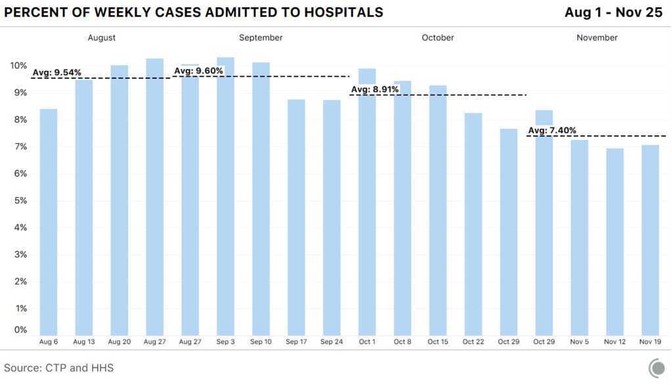
It is clearest in a single simple statistic, recently observed by Ashish Jha, the dean of the Brown University School of Public Health. For weeks, the number of people hospitalized with COVID-19 had been about 3.5 percent of the number of cases reported a week earlier. But, he noticed, that relationship has broken down. A smaller and smaller proportion of cases is appearing in hospitalization totals.

“This is a real thing. It’s not an artifact. It’s not data problems,” Jha told us.

Why would this number change? As hospitals run out of beds, they could be forced to alter the standards for what kinds of patients are admitted with COVID-19. The average American admitted to the hospital with COVID-19 today is probably more acutely ill than someone admitted with COVID-19 in the late summer. This isn’t because doctors or nurses are acting out of cruelty or malice, but simply because they are running out of hospital beds and must tighten the criteria on who can be admitted.

Many states have reported that their hospitals are running out of room and restricting which patients can be admitted. In South Dakota, a network of 37 hospitals reported sending more than 150 people home with oxygen tanks to keep beds open for even sicker patients. A hospital in Amarillo, Texas, reported that COVID-19 patients are waiting in the emergency room for beds to become available. Some patients in Laredo, Texas, were sent to hospitals in San Antonio—until that city stopped accepting transfers. Elsewhere in Texas, patients were sent to Oklahoma, but hospitals there have also tightened their admission criteria.

The COVID Tracking Project has found the same phenomenon by looking at a different variable in the data produced by the Department of Health and Human Services: the number of people admitted to the hospital every week. (Jha was analyzing the number of people currently hospitalized.)

In August and September, about 9.5 percent of COVID-19 cases were admitted to hospitals nationwide, according to federal data. As October began, this case-hospitalization proportion held for about a week. But then cases began to explode, especially in the Midwest and Great Plains, and hospitals suffered strain. In the last week of October, the average number of new COVID-19 cases surged past its all-time high of 66,000 new cases a day. Less than 8 percent of those cases made it into the hospital, a 16 percent drop in the proportion of sick people admitted versus September.


As the pandemic intensified, the fall continued. On November 10, the U.S. recorded more virus hospitalizations than ever before, passing the previous high set during the spring and summer surges. More than 100,000 Americans were diagnosed with the virus every day last month, on average, and more than ever were hospitalized as well. But as facilities ran short on bed space, the fraction of admitted cases fell. Ultimately, only 7.4 percent of COVID-19 cases were hospitalized in November—the lowest percentage yet.

This change may not seem ominous at first. You might expect to see such a divergence, for instance, if testing rapidly increased, so that states were suddenly detecting many more mild cases of COVID-19. But the data don’t show any evidence of this kind of “casedemic”—if anything, they show the opposite. Last month, the number of total COVID-19 tests increased by about a third compared with October, but the number of total cases discovered more than doubled. More people are getting sick.

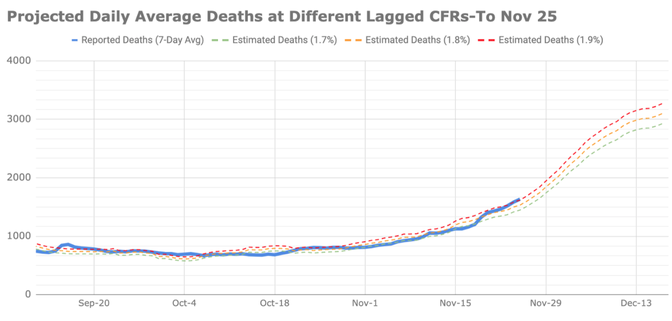
At the same time, the virus seems to be killing a slightly higher fraction of people diagnosed with it. Using a method that accounts for clinical- and data-reporting lags between cases and deaths, for most of October and November, about 1.7 percent of cases resulted in death. But in the middle of November, that number lurched to more than 1.8 percent. While this change may seem small, it represents hundreds of deaths, because many more people are getting sick every day.

In other words, we’re observing exactly the opposite of what you’d expect from a rash of mild cases in the data. The virus seems to be killing more people. And that makes sense: As Yong and our colleague Sarah Zhang have both written, many of our medical triumphs over the virus have come from more attentive and knowledgeable hospital care for COVID-19 patients. (Very few, if any, people outside of a clinical trial have received the cocktail of antibody drugs that President Donald Trump claims is a “cure” for the disease.) Yet a smaller fraction of people are now receiving that expert and conscientious care.


Since March, most of our writing about the pandemic has focused on the near-term future. We’ve described data as worrying or ominous, words implying that the worst is soon to arrive. There’s a good reason for this forward-looking approach: It gives people a sense of what’s coming, and it helps people make decisions to protect themselves or their family.

But ominous no longer fits what we’re observing in the data, because calamity is no longer imminent; it is here. The bulk of evidence now suggests that one of the worst fears of the pandemic—that hospitals would become overwhelmed, leading to needless deaths—is happening now. Americans are dying of COVID-19 who, had they gotten sick a month earlier, would have lived. This is such a searingly ugly idea that it is worth repeating: Americans are likely dying of COVID-19 now who would have survived had they gotten September’s level of medical care.

The first doses of vaccine will almost certainly go out by Christmas. Tens of millions of Americans could have protective immunity within eight weeks. As the days lengthen and the weather warms, the vaccine will become easier to get; more than 100 million Americans may have immunity by the end of February. Many indicators suggest that next summer will be happy and prosperous, and we will gather indoors and outdoors and grin at one another like children in June. But the world will be reduced, and not as wise, because tens of thousands of Americans will be dead when they should be alive.


Le Manifeste Travail / The Working Manifesto - Meet the Authors


https://www.youtube.com/watch?v=ZbLlLHor1-A&feature=emb_logo&ab_channel=DemocratizingWork


Latest Jobs Report Bad News for Unemployed Workers


Unless Congress acts, these programs will pay their last benefits for the week ending December 26.


https://portside.org/2020-12-06/latest-jobs-report-bad-news-unemployed-workers


December 6, 2020 Chad Stone CENTER ON BUDGET AND POLICY PRIORITIESPRINTER FRIENDLY

Twitter
Facebook
Mail

,


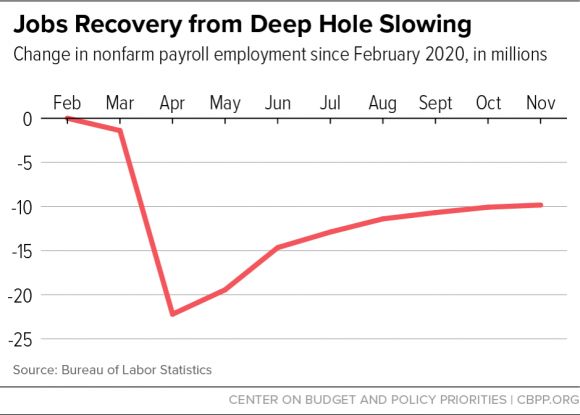
The recovery from the deep economic nosedive of last spring continues to lose steam, the latest jobs report shows. Job growth slowed further in November, long-term unemployment (27 weeks or more) kept rising, and, as in past recoveries, jobs are returning more slowly for Black and Hispanic workers than for white workers in a still-depressed job market. To relieve hardship and promote a strong recovery, policymakers should enact a stimulus package before the end of the year that, among other things, prevents millions of unemployed workers from running out of unemployment benefits right after Christmas.

Payroll employment barely halfway back to pre-crisis level. Nonfarm payroll employment rose by 245,000 jobs in November — the fifth straight month of shrinking job gains — and is still 9.8 million jobs (6.5 percent) lower than when the recession started in February. Private employment rose by 344,000 jobs but remains 6.6 percent below February’s level. State and local government employment is 1.3 million jobs below its February level, with 1.0 million of those job losses in education.


Millions in danger of running out of unemployment insurance (UI) benefits. The number of people who have been unemployed for more than 26 weeks — the maximum duration of regular state UI benefits in most states — has risen from 1.1 million in February to 3.9 million in November. Two-thirds of the Labor Department’s reported number of UI recipients are in temporary programs created by the CARES Act of March that expire right after Christmas. They include people who have exhausted their regular state UI benefits and are getting up to 13 weeks of federally funded Pandemic Emergency Unemployment Compensation and people who have lost their jobs and don’t qualify for regular state benefits but are receiving federal benefits under the Pandemic Unemployment Assistance program. Unless Congress acts, these programs will pay their last benefits for the week ending December 26.

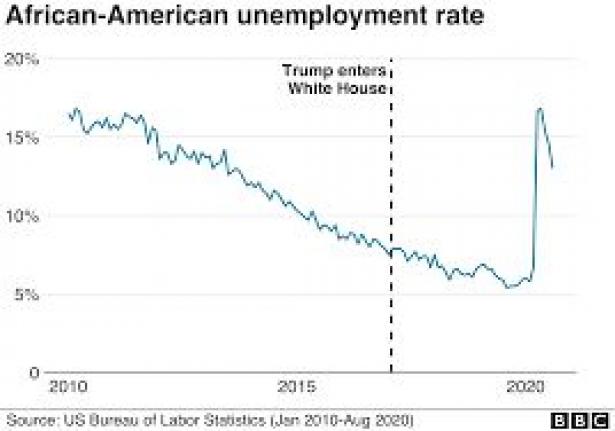
Large racial and ethnic disparities in employment persist. The official unemployment rate, which spiked to 14.7 percent in April, was a still-elevated 6.7 percent in November. Black and Hispanic unemployment rates, while remaining higher than white rates, fell to historically low levels before the crisis of early this year. Unemployment rose sharply for all groups in the recession and remained high in November, but the Black and Hispanic unemployment rates (at 10.3 and 8.4 percent, respectively) were 4.5 and 4.0 percentage points higher in November than in February, while the white rate (at 5.9 percent) was a lesser 2.8 percentage points higher.

These patterns have endured in recessions and recoveries alike and are rooted in this nation’s history of structural racism, which curtails job opportunities for Black people through policies and practices such as unequal school funding, mass incarceration, and hiring discrimination. Black workers tend to be “the last hired and first fired.” High unemployment rates for Hispanic people, which also consistently exceed the white rate, reflect many of the same barriers to opportunity.

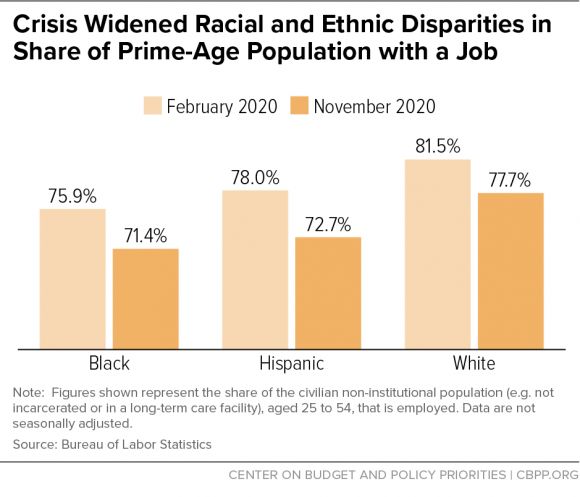
The unemployment rate is an incomplete measure of joblessness because it only includes people who are actively looking for work (or have been laid off but are subject to recall to their former jobs). It doesn’t include people who want a job but haven’t been looking due to the lack of job opportunities. The prime-age employment-to-population ratio — which measures the share of the population aged 25-54 with a job — doesn’t have that shortcoming, and it tells a similar story of large, continuing racial disparities. The employment-to-population ratio was lower for Black and Hispanic workers than for white workers when the recession started and has fallen more for them since. In November, the Black employment-to-population ratio was 4.5 percentage points lower than in February, the Hispanic rate was 5.3 points lower, and the white rate was 3.8 points lower.

More stimulus needed now. With the economy still in a deep hole, policymakers face an imperative to enact a relief and stimulus package quickly to support the recovery and ensure that millions of UI recipients don’t lose their benefits in the coming weeks.