https://www.youtube.com/watch?v=TzIym0eZsH0&ab_channel=AndreAntunes
Tuesday, November 10, 2020

Trump Admin Halts Biden Transition Process
https://www.youtube.com/watch?v=7jJrmPQf4NQ&ab_channel=TheRationalNational
Trump is Spiraling Out of Control, Family Reportedly Planning Intervention
https://www.youtube.com/watch?v=sCwz7clR_jY&ab_channel=TheHumanistReport
If progressives let Biden replicate Obama's sellouts, then a fascist will probably be elected in 2024.
If progressives let Biden replicate Obama's sellouts, then a fascist will probably be elected in 2024. The good news: the progressive movement is in a much stronger position today.
Democrats must act to ward off the electoral rise of rightwing extremism by delivering gains for the working class
David Sirota
In the final scene of the film The Candidate, the newly elected Democratic Senator Bill McKay asks a harrowing question amid his victory celebration: “What do we do now?”
Democrats in 2020 have won a similar presidential victory – and under eerily similar circumstances as the movie depicted. The national campaign was primarily a referendum on the incumbent Donald Trump, with Democrat Joe Biden mostly offering vague promises of a better way – and so the same question is now upon us.
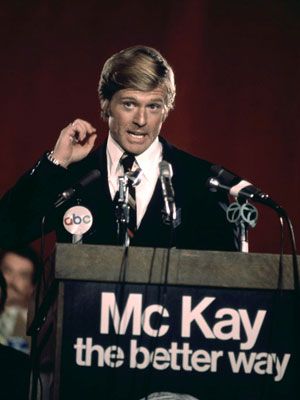
To answer it, you must first appreciate how we arrived at this moment of peril. In this week’s election, Trump kept the race close by winning 82% of voters who listed the economy as their top concern, according to exit polls. He was able to do that amid an economic crisis because Democrats did not forcefully articulate an economic message. Instead, Biden cast his candidacy in gauzy platitudes about restoring the country to a pre-Trump status quo.
That was enough to barely defeat Trump, who mismanaged the coronavirus response – but it was not enough to prevent Republican gains down ballot. Even more problematic, that much-glorified pre-Trump “normal” of crushing economic inequality is what originally created the conditions for Trumpism, and that larger ism probably isn’t going away.
By
And so moving forward, the answer to Democrats’ “what do we do now?” question should be clear: a new Democratic White House must show it is using its power to deliver for the working class. It must avoid replicating what happened in the first few years of the last Democratic presidency, or else we may get something worse than Trump in the future.
Recall that back in 2008, Barack Obama won the White House on a wave of anger at the incumbent president, and he took office under similar crisis conditions. And yet, despite Democrats winning large congressional majorities, Obama’s administration used its power to merely tweak the economic status quo, but not really change it.
From the get-go, the new White House brushed off progressives and championed a stimulus package that many economists said was far too small to quickly right the economy.
While Obama’s Affordable Care Act created some long-overdue consumer protections, it ultimately strengthened the power of private insurers. Despite Obama campaigning for a public insurance option, his administration dropped it, Democratic senators helped Republicans initially vote it down and then refused to ever bring it back up to force the issue, even though there was a good chance it would pass. The result: Millions have lost their health insurance and millions more are paying ever-higher premiums, while insurance companies have booked huge profits – and now support for the ACA is soft.
Similarly, Obama backed off his promise to pass new union protections for workers, and he reversed his promise to reform bad trade deals, instead pressing even more of those pacts that have become a symbol of a corrupt Washington more interested in enriching CEOs than helping workers.
Obama’s administration also refused to prosecute bankers and its Wall Street reform package was pathetically weak. Its Treasury Department helped kill an initiative to break up the banks, while it approved and defended big bonuses for Wall Street executives who engineered the crisis. The moves were a boon to a financial industry that bankrolled Obama’s campaign, but political poison.
During this period, progressive organizations and congressional lawmakers largely deferred to the new administration, which tried to bully the left into silence. When liberal groups floated the idea of pressuring incumbent Democrats to support more robust health care reforms, White House chief of staff Rahm Emanuel infamously berated them as “f-ing retarded.”
The enforced deference and failure to seriously try to transform the economy ended up delivering a cataclysm: Republicans in 2010 took back Congress in what Obama himself called a “shellacking.”
By the end of Obama’s presidency, Democrats held fewer elected offices than at any time since the early 20th century. Trump in 2016 made fraudulent promises to crack down on Wall Street -- and he won the White House by flipping disaffected voters in locales that had been particularly hurt by a financial crisis that had never been rectified or reckoned with.
To be sure, Republicans were a powerful and determined opposition to Obama. But Democrats’ capitulations were disasters. They never understood the truism about political capital articulated by Republican strategist Karl Rove: “If you don’t spend it, it’s not like treasure stuck away at a storehouse someplace. It is perishable. It dwindles away.”
With a likely GOP Senate, a prospective Biden administration is certainly in a weaker position than Obama was in 2008 -- but there are ways for the new White House to spend political capital on a working class agenda.
As president, Biden will have the unimpeded executive authority to implement a number of administrative rules and regulations to reform the tax code, lower drug prices, reduce student debt, crack down on Wall Street and raise wages.
He can refuse to populate his administration with corporate insiders, lobbyists and Republican Cabinet secretaries and instead staff the executive branch with officials committed to progressive economic policies.
Meanwhile, Biden can launch his first 100 days by introducing legislation that honors his campaign promises to boost the minimum wage, strengthen union protections and impose a wealth tax on billionaires. He can also push for a public health insurance option and for investments in infrastructure, renewable energy and climate mitigation.
A Fox News exit poll shows many of those are popular — for example, the survey showed nearly three quarters of voters favor “changing to a government-run health care plan” and favor “increasing government spending on green and renewable energy.” Waging high-profile fights with Senate Republicans over these matters is good politics, and could potentially peel off necessary Republican votes for good policy.
Then again, Biden often prioritizes decorum, comity and bipartisanship. He has also told his donors that if he is elected “nothing would fundamentally change” and that he would not propose any legislation to change corporate behavior.
The onus, then, is on progressive activists, advocacy groups and lawmakers to demand the new president fight the good fight. The conflicts -- even if unsuccessful -- are a way for Democrats to clarify which side it is on in the oligarch’s intensifying class war.
Senator Bernie Sanders has the right idea: He said he is planning to push a new Biden administration by introducing his own working-class legislative agenda in the first 100 days of the new Congress -- and he said he will support primary challenges to lawmakers who abandon the Democratic Party’s promises. That effort could be boosted by newly elected House progressives, who seem eager for a battle.
A Democratic party that did not bow down to corporate power would be a return to the tradition of Franklin Roosevelt. He welcomed the hatred of the rich and powerful and championed a New Deal agenda that delivered for the working class. That helped prevent the rise of a fascist alternative and created an era of Democratic supremacy.
Democrats must be forced to do the same today. Like FDR, they must spend political capital on an agenda that materially improves people’s lives. That is the best way to ward off the electoral rise of right-wing extremism and build a lasting Democratic majority for decades to come.
Why Trump won't concede
Judd Legum Nov 10


Photo by ALEX EDELMAN/AFP via Getty Images
Joe Biden is the president-elect. Biden won or has significant leads in states that represent 306 electoral votes — far more than the 270 needed to win.
Biden leads by about 10,000 votes in Georgia and 17,000 votes in Arizona, the two most closely contested states. But even if Biden's lead were to somehow be reversed in both states, Biden would still win comfortably.
Every major media outlet, including Fox News, has called the election for Biden. Major international leaders have offered their congratulations. The coverage has largely moved on to Biden's transition. But yet, Trump has refused to concede.
Why? Part of the explanation is narcissism. Trump is having a hard time acknowledging that he lost, even though it is obvious. But another big factor is money. The proof is in the emails.
After Election Day, the Trump campaign sent more than 130 emails soliciting campaign contributions, according to a tally maintained by the Twitter account @TrumpEmail. Most of those emails appear to be soliciting funds to support the legal effort that Trump claims will reverse the results of the election.

The increasingly desperate subject lines of these emails paint a clear picture that the money is essential to contest the results.
DEFEND the integrity of the Election
The Election is under attack
🛑🛑 STOP voter fraud 🛑🛑
DEFEND THE RESULTS
Democrats will try to STEAL this ELECTION
STOP THE FRAUD
Joe Biden wants to count ILLEGAL ballots
Nothing matters more than the integrity of this Election
STOP COUNTING ILLEGAL BALLOTS
But if you read the fine print, money sent to the Election Defense Task Force will not necessarily be used to finance the Trump campaign's lawsuits. Donors are actually contributing to the Trump Make America Great Again Committee (TMAGAC), a joint fundraising committee of Donald J. Trump for President, Inc. and the Republican National Committee. 60% of the money donated to TMAGAC will go to pay the Trump campaign's debt and 40% will go to the general operating account of the Republican National Committee. Money is only designated for recounts or other legal efforts if an individual donor reaches their legal limit or Trump retires his debt.
60% to DJTP for deposit in DJTP’s 2020 General Election Account for the retirement of general election debt (up to a maximum of $2,800/$5,000) or, if such debt has been retired or any portion of the contribution would exceed the limit to the 2020 General Election Account, for deposit in DJTP’s Recount Account (up to a maximum of $2,800/$5,000); 40% to the RNC’s Operating account (up to a maximum of $35,500/$15,000); and any additional funds to the RNC for deposit in the RNC’s Legal Proceedings account or Headquarters account (up to a maximum of $213,000/$90,000).
Contributions directly to Donald J. Trump for President, Inc. will be split between debt retirement and the recount effort. But the Trump campaign hasn't sent a solicitation from Donald J. Trump for President, Inc. since November 3.
No one knows how much money Trump is raising from this gambit. But the campaign has tens of millions of email addresses. If even a small fraction of the list is responding to these appeals, the campaign is raising millions of dollars each day.
If Trump concedes, that money would come to a halt. You can't pretend to raise money for a legal challenge once you admit you've lost.
The sorry state of Trump's election lawsuits
Trump isn't devoting this new cash to fund his legal challenges to the election results, and it shows. Most of the lawsuits the campaign has filed have been dismissed by the courts. In one case in Michigan, lawyers representing Trump made basic errors in submitting their appeal. The filing was rejected as "defective."

The initial case was dismissed after Trump's "legal team submitted a sworn affidavit by a designated poll watcher who repeated a rumor that she heard from an unidentified person about what some 'other hired poll workers at her table' allegedly told her."
"Come on now," the Michigan judge said before throwing out the suit.
In Pennsylvania, the Trump campaign continues to claim that its observers in Philadelphia were excluded from watching ballots be counted. In court, however, a Trump lawyer admitted there were observers in place. So who would make such a claim? The main witness featured at Trump's campaign press conference is a registered sex offender from New Jersey:
The first person Rudy Giuliani, the attorney for President Donald Trump, called up as a witness to baseless allegations of vote counting shenanigans in Philadelphia during a press conference last week is a sex offender who for years has been a perennial candidate in New Jersey.
“It’s such a shame. This is a democracy,” Daryl Brooks, who said he was a GOP poll watcher, said at the press conference, held at Four Seasons Total Landscaping in Northeast Philadelphia. “They did not allow us to see anything. Was it corrupt or not? But give us an opportunity as poll watchers to view all the documents — all of the ballots.”
...Brooks was incarcerated in the 1990s on charges of sexual assault, lewdness and endangering the welfare of a minor for exposing himself to two girls ages 7 and 11, according to news accounts.
On Monday, "the Trump campaign unveiled a new lawsuit repackaging debunked claims that poll workers gave Trump supporters markers—knowing that those markers would bleed through ballots and that the ballots would not be counted, and all to help Joe Biden win Arizona."
The lawsuit is essentially the same as a lawsuit filed days ago by a group of conservative lawyers, based on a conspiracy theory known as "Sharpiegate." The premise of the lawsuit, that using a Sharpie will invalidate a ballot, is false.
 Secretary Katie Hobbs @SecretaryHobbsIMPORTANT: If you voted a regular ballot in-person, your ballot will be counted, no matter what kind of pen you used (even a Sharpie)! 1/
November 4th 20202,050 Retweets8,666 Likes
That lawsuit was quietly withdrawn. The primary difference between the Trump campaign's new lawsuit and the previous one is that, while the initial lawsuit focused on "Sharpies," the revised lawsuit refers to "markers."
In the evening, the Trump campaign filed a sweeping lawsuit in Pennsylvania that does not allege any fraud but argues the state should be prevented from certifying its election because it allowed people to vote by mail.
Georgia's Republican Senators call for the resignation of Georgia's Republican Secretary of State
Georgia Senators Kelly Loeffler (R) and David Perdue (R) released a joint statement calling on Brad Raffensberger, Georgia's Republican Secretary of State to resign. The statement claimed that Raffensberger "failed to deliver honest and transparent elections."
 Kyle Cheney @kyledcheneyLOEFFLER and PERDUE jointly attack the Republican secretary of state in Georgia.
November 9th 20201,581 Retweets3,605 Likes
They provided no evidence to support their claims. Moments later, Trump tweeted that he would win Georgia.
Monday, November 9, 2020
Joe Biden Won, But Intra-Party Warfare Will Continue. The Left Must Fight Him.
https://www.youtube.com/watch?v=Klc2RX3Ed-8&ab_channel=TheHumanistReport
Lame-Duck Trump Freezes Frontline Workers’ Wages
After the last polls closed in the 2020 election, Trump’s Labor Department issued a rule freezing farmworkers’ wages, even as his administration predicts a big increase in agribusiness profits.
Julia Rock
After the last polls closed, but before the final votes had been tallied, Donald Trump’s administration quietly issued a rule to help corporate interests deny pay hikes to frontline farmworkers who help maintain America’s food supply. The rule follows a Trump administration report forecasting a steep rise in agribusiness profits.
On Nov. 5, the Department of Labor (DOL) published a rule to freeze wages for farmworkers who are working under H-2A visas until 2023. The H-2A visa program allows foreign farmworkers to access temporary visas to work in the United States for approved employers.
The American Farm Bureau Federation, the agriculture industry’s major lobbying group, welcomed the new rule, saying it provides “stability during the uncertainty created by the pandemic and trade imbalances.”
Secretary of Agriculture Sonny Perdue praised the wage freezes in a press release: “This rule shows once again President Trump’s commitment to America’s farmers by delivering lower costs when they need it the most.” He added that, “Over the past several years farm wages have increased at a higher pace than other industries, which is why this DOL rule could not come at a better time.”
The move to slash workers’ wages follows Perdue’s department in September reporting that “net farm income, a broad measure of profits, is forecast to increase $19 billion (22.7 percent) from 2019 to $102.7 billion in 2020.”
Perdue is personally invested in agribusiness, and watchdog groups recently demanded the U.S. Department of Agriculture (USDA) inspector general investigate whether Perdue violated the ethics agreement he signed when he joined the Trump administration.
Essential Workers
H-2A visa holders work under precarious circumstances, and have been hit hard by the COVID-19 pandemic despite being deemed essential, said Daniel Costa, the Director of Immigration Law and Policy Research at the Economic Policy Institute.
“Despite the fact that wages are going up a little bit, there’s still a labor market where almost half of farmworkers are undocumented,” Costa told The Daily Poster. “Ten percent of them are on [H-2A] work visas that don’t allow them to switch employers, so they are very exploitable. And there are lots of cases of wage trafficking.”
In FY2019, the Labor Department documented 5,000 cases of wage theft among H-2A workers. The H-2A wage freeze is projected to cut the wages of more than a quarter million foreign farm workers by a total of $178 million per year over the next decade –– a number that doesn’t account for the adverse effect the wage freeze will likely have on U.S. workers’ wages.
In April, the Department of Homeland Security announced it was temporarily amending the H-2A visa program to make it easier for workers with those visas to renew or extend their stays. The purpose was to “provide agricultural employers with an orderly and timely flow of legal foreign workers, thereby protecting the integrity of the nation's food supply chain and decreasing possible reliance on unauthorized aliens, while encouraging agricultural employers' use of the H-2A program, which protects the rights of U.S. and foreign workers,” according to the published rule.
Even before the pandemic, farmworkers toiling in the U.S. on H-2A visas faced poor working conditions. Workers typically pay recruiters to help them find placements with employers, which can cost a couple thousand dollars, according to Costa.
“They’re already in this position where they are in danger of being in debt bondage, to recruiters, because employers work with recruiters to find the workers,” Costa told The Daily Poster.
While the Trump administration has restricted other visa programs as part of its anti-immigrant agenda, the H-2A program has grown under his presidency, with nearly 225,000 people being approved for these visas in the first three quarters of 2020.
In order to employ H-2A workers, employers must first attempt to recruit U.S. workers who are U.S. citizens and fail, and they must provide housing to their H-2A workers and pay them what is known as an Adverse Effect Wage Rate (AEWR), a wage that varies by state and is set based on USDA data about how much farmworkers are paid.
Since the visa is tied to a specific employer, workers are vulnerable to abuses.
“Because their work is tied to their visa status,” Costa said, “they become instantly deportable. They have a lot of incentive not to complain when things go wrong.”
Farmers have exploited this vulnerability during the pandemic, despite collecting record amounts of government agricultural subsidies. COVID-19 outbreaks among H-2A workers have been reported across the country, in California, Washington, and other states.
An NBC News investigation from August reported that in addition to rising documented labor violations of H-2A workers, “Workers are often reluctant to speak out against employers who are responsible for their housing, transportation and paychecks — and who control their ability to stay in the U.S. — workers and labor advocates say.”
“Many Workers Will Suffer Increased Debt, Lower Wages, Worse Housing Conditions”
And yet, even as the Department of Homeland Security was relaxing visa requirements to ensure that enough agricultural workers were working through the pandemic, the Department of Labor was attempting to undercut their wages.
The wage freeze is the Trump administration’s second attempt this fall to cut wages for H-2A visa holders. On Sept. 30, Secretary of Agriculture Perdue published a one-page notice announcing that the USDA was suspending the Farm Labor Survey, a data collection tool that has been used for over a century to calculate wages for migrant workers, known as Adverse Effect Wage Rates (AEWRs). AEWRs are supposed to protect U.S. farmworkers, by requiring that employers pay foreign farm workers the prevailing wage in each state so that their employment doesn't drive down wages for U.S. workers.
Without the survey, wages for H-2A recipients and other farm workers would fall by a projected 5 percent in California and up to 46 percent in Idaho, according to a lawsuit that the United Farm Workers filed against Perdue and the USDA to block the suspension of the survey. A federal judge granted a restraining order halting the suspension of the survey, finding compelling evidence that farmworkers would suffer irreparable economic harm as a result.
Less than a month later, the Trump administration came back with a second attempt to cut the wages of H-2A workers, enacting a rule to freeze wages for H-2A workers. The DOL rule had first been proposed on July 26, 2019, and received widespread opposition from farmworker advocacy organizations. A coalition led by worker advocacy group Farmworker Justice and including 42 other organizations, wrote in a lengthy public comment on the rule, “If the proposed rule is adopted as drafted, many workers will suffer increased debt, lower wages, worse housing conditions, and more uncertainty regarding job terms.”
The rule that was published last week only included the wage aspects of the rule that was initially proposed. The new rule will raise the AEWRs for a small number of H-2A workers in more specialized or supervisory roles, but will lower the rate for the vast majority of H-2A workers.
According to Costa, the Economic Policy Institute director, it might be hard for a Biden administration to reverse the rule change, even if it has the will. “Maybe it can get fixed right away when Biden comes in, but maybe it gets stuck in the courts and takes a long time to fix,” Costa said.
He added that “since it has already gone to notice and public comment, it’s not that easy to just get it enjoined as a procedural violation,” the way other Trump administration immigration rules have been blocked.
“The fact that they're issuing it now is absolutely tied to the fact that [Trump was not] reelected and they want to get it out,” Costa said.
Subscribe to:
Comments (Atom)