Sunday, October 18, 2020

Amy Coney Barrett Doesn't Know the Constitution


Her originalism ignores the significance of the second American Revolution -- the Civil War and Reconstruction.

October 16, 2020 Jamelle Bouie NEW YORK TIMES


https://portside.org/2020-10-16/amy-coney-barrett-doesnt-know-constitution


On Tuesday, Judge Amy Coney Barrett took a few minutes during her confirmation hearing to discuss her judicial philosophy, best known as originalism. It means, she explained, “that I interpret the Constitution as a law, I understand it to have the meaning that it had at the time people ratified it. That meaning doesn’t change over time and it is not up to me to update it or infuse my policy views into it.”

Now, originalism is subject to a good deal of criticism and critique as a method for decoding the Constitution. Zeroing in on its narrow preoccupation with language, Jonathan Gienapp, a historian of the early American republic at Stanford, charges originalists with building a framework “such that no amount of historical empiricism can ever challenge it,” in which neither “the Framers’ thoughts or agendas or the broader political, social, or intellectual contexts of the late eighteenth century” have any bearing on the so-called original public meaning of the Constitution.

Likewise, the historian Jack Rakove, also at Stanford, argues in a 2015 paper, “Tone Deaf to the Past: More Qualms About Public Meaning Originalism,” that the events of the American Revolution put “sustained pressure” on critical terms like “constitution” or “executive power” that cannot be understood without a historical understanding of this political and intellectual tumult. “Anyone who thinks he can establish conditions of linguistic fixation without taking that turbulent set of events into account is pursuing a fool’s errand,” Rakove writes.

But today, at least, I don’t want to challenge originalism as a method as much as I want to ask a question: When we search for the original meaning of the Constitution, which Constitution are we talking about?

Barrett’s Constitution is the Constitution of 1787, written in Philadelphia and made official the following year. That’s why her formulation for originalism rests on ratification, as she states at the outset of a paper she wrote called “Originalism and Stare Decisis.”


Originalism maintains both that the constitutional text means what it did at the time it was ratified and that this original public meaning is authoritative. This theory stands in contrast to those that treat the Constitution’s meaning as susceptible to evolution over time.JAMELLE BOUIE’S NEWSLETTER: Discover overlooked writing from around the internet, and get exclusive thoughts, photos and reading recommendations from Jamelle.
Sign Up

Many Americans think the same, identifying the Constitution with the document drafted by James Madison to supplant the Articles of Confederation and create more stable ground for national government. But there’s a strong argument that this Constitution died with the attack on Fort Sumter on April 12, 1861.

The Civil War fractured an already divided country and shattered the constitutional order. What came next, Reconstruction, was as much about rebuilding that order as it was about rebuilding the South. The Americans who drafted, fought for and ratified the Thirteenth, Fourteenth and Fifteenth Amendments did nothing less than rewrite the Constitution with an eye toward a more free and equal country. “So profound were these changes,” the historian Eric Foner writes in “The Second Founding: How the Civil War and Reconstruction Remade the Constitution,”


that the amendments should not be seen simply as an alteration of an existing structure but as a “second founding,” a “constitutional revolution,” in the words of Republican leader Carl Schurz, that created a fundamentally new document with a new definition of both the status of blacks and the rights of all Americans.

Whereas the Constitution of 1787 established a white republic in which the right to property meant the right to total domination of other human beings, the Reconstruction Constitution established a biracial democracy that made the federal government what Charles Sumner called the “custodian of freedom” and a caretaker of equal rights. To that end, the framers of this “second founding” — men like Thaddeus Stevens, Lyman Trumbull and John Bingham — understood these new amendments as expansive and revolutionary. And they were. Just as the original Constitution codified the victories (and contradictions) ofthe Revolution, so too did the Reconstruction Constitution do the same in relation to the Civil War.

Credit...Erin Schaff/The New York Times

The Thirteenth Amendment, ratified in 1865, may read like a simple prohibition against slavery, an affirmation of the post-Emancipation Proclamation status quo. But at a time when Americans still conceived of the national government as the principal threat to liberty, the Thirteenth Amendment reframed that government as the principal defender of a new right to personal freedom, derived from the ban on bondage. With its enforcement clause (“Congress shall have the power to enforce this article by appropriate legislation”), lawmakers were given seemingly limitless authority to, in the words of the Chicago Tribune at the time, “prevent actions by states, localities, businesses, and private individuals that sought to maintain or restore slavery.

The Fourteenth Amendment, ratified in 1868, similarly recast the government as the defender of individual rights, including the right to citizenship. It extended the Bill of Rights to all Americans, guaranteed “equal protection of the laws” and declared that no state “shall abridge the privileges and immunities of citizens of the United States,” a phrase understood to include any number of inalienable and fundamental rights claimed by the people but left unarticulated in the Constitution. “The amendment,” Foner writes,


asserted federal authority to create a new, uniform definition of citizenship and announced that being a citizen — or, in some cases, simply residing in the country — carried with it rights that could not be abridged. It proclaimed that everyone in the United States was to enjoy a modicum of equality, ultimately protected by the national government.

As for the Fifteenth Amendment, ratified in 1870, it too represented a sweeping expansion of federal power for the sake of equality, announcing that “The right of citizens of the United States to vote shall not be denied or abridged by the United States or by any State on account of race, color, or previous condition of servitude.” Where voting rights were once the domain of the states, to be granted (or restricted) as the states desired, they were now guaranteed by the national government. And while the amendment was too limited to prevent Jim Crow voting laws — and left most women disenfranchised for another 50 years — it still opened the space for Congress to protect and expand Americans’ access to the ballot.

The Reconstruction Constitution is a fundamentally different document than the Constitution of 1787. Yet our conversations around “original meaning” rarely take account of this change. Our politics would likely look very different if Reconstruction were the basis for our common constitutional understanding, if founders’ chic included Bingham and Sumner as much as Madison and Benjamin Franklin, and our jurists were preoccupied with bringing the original meaning and intent of those amendments to bear on American life. Here, Ruth Bader Ginsburg stands as a particularly strong example, because she used the Fourteenth Amendment to fight sex discrimination, giving more and greater meaning to the amendment in the process.

For a sense of what this might look like under the other Reconstruction amendments, consider the 1872 case Blyew v. United States, in which the Supreme Court overturned convictions of two Kentucky men arrested and tried for an attack on a Black family that left four people dead. At the time, Kentucky did not allow Black Americans to testify against whites and barred them from jury service, but the Civil Rights Act of 1866 allowed federal prosecutors to move from state to federal courts any case “affecting” persons who had been denied equal treatment in the states. The Court disagreed. By its reasoning, the Black witnesses to the crime were not actually affected by the state’s discrimination. The only affected persons were, instead, the white defendants.

In his dissent, Justice Joseph P. Bradley, an appointee of President Ulysses Grant, rejected this claim that racial discrimination in jury selection was of no larger impact. In doing so, he offered a robust vision for what the Thirteenth Amendment could accomplish. Here’s Foner:


Slavery, Bradley observed, “extended its influence in every direction, depressing and disenfranchising the slave and his race in every possible way.” Abolition meant not merely “striking off the fetters” but destroying “the incidents and consequences of slavery” and guaranteeing the freed people “the full enjoyment of civil liberty and equality.”

If we were to try to build an “original meaning” of the Constitution around the Reconstruction amendments, we might come to this view of the Thirteenth Amendment, which could open the doors to vastly more aggressive federal action to reduce racial discrimination, racial inequality and other “badges and incidents of slavery.” A similar approach to the other amendments would be equally transformative: The “privileges and immunities” of citizenship, for example, might include the right to education and employment. And a Congress fully empowered to secure voting rights could act very aggressively to head off those states that seek to deprive their residents of equal access to the ballot.

To take the Second Founding seriously is to reject a vision that binds us to the Constitution as it was in 1787. It is also to embrace a broader vision of the “framing” of American democracy, one that looks to the reconstruction of the country after its near-destruction as much as to its birth and founding.

As a matter of history, the Constitution is neither fixed in meaning nor in structure; the men who wrote and ratified it disagreed as much about what it meant as we do today. But even if it had a singular meaning, you would still have to make a choice about which Constitution to adhere to, either one written to secure the interests of a narrow elite or one written for the sake of us all.

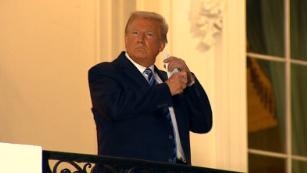
White House's New Covid-19 Strategy Is Madness


The idea that we should not try to control infections other than of vulnerable groups is based on a complete misunderstanding of the real choices facing the US

October 16, 2020 Jeffrey Sachs CNN


https://portside.org/2020-10-16/white-houses-new-covid-19-strategy-madness

(CNN)As if Donald Trump's irresponsibility was not already a national tragedy, the White House seems now to favor a controversial approach to Covid-19 that threatens to bring nothing less than mass suffering.

More than 216,000 Americans have already died. Yet on Tuesday, senior Trump administration officials said that they were receptive to pursuing "herd immunity," an approach touted by a group of scientists who have put out what they call the "Great Barrington Declaration." The idea is that the federal government should let the pandemic run its course until most of the population is infected and has ostensibly developed antibodies to ward off future infections. Typical estimates hold that 70% or more of the population would thereby become infected.

According to this idea, vulnerable groups would be targeted for "focused protection," for example, introducing extra precautions such as frequent Covid-19 testing to avoid infections of the elderly living in nursing homes. The rest of the population "should immediately be allowed to resume life as normal," according to the declaration.

This approach runs strongly against the overwhelming consensus of public health specialists, including Dr. Anthony Fauci, the director of the National Institute of Allergy and Infectious Diseases. The new Covid-19 approach would undoubtedly add massively to the suffering in the US in a very short period of time.

The idea that we should not try to control infections other than of vulnerable groups is based on a complete misunderstanding of the real choices facing the US -- or facing any country for that matter. The core mistake is the belief that the only alternative to an economic shutdown is to let the virus spread widely in the population. Instead, a set of basic public health measures is enough, as many other countries have shown, to control the spread of the virus. The proper measures include widespread testing, contact tracing, isolating of infected individuals, wearing face masks, physical distancing, and barring super-spreader events (like Trump rallies). South Korea has exemplified this policy approach, as have many of its neighbors in the Asia-Pacific region.


Trump's Covid-19 recklessness is costing the US dearly

Sadly, this very basic information seems not to have reached the White House or been understood by it, even though experts already knew in April that the Asia-Pacific region was suppressing the pandemic through these public health measures, and without the need for comprehensive lockdowns (or with only brief lockdowns to give time to scale up the public health measures). By suppressing the virus, these countries have limited the economic fallout.

Indeed, according to the IMF's new report, China, which has broken the pandemic by means of public health control, will achieve positive growth of GDP 1.9% this year, compared with America's expected GDP decline of 4.3%. The Trump team is so obsessed with their anti-China propaganda that they utterly refused to learn from China's success in cutting transmission of the virus enabling an economic rebound. Trump and his team have also refused to learn from similar successes in Australia, Japan, New Zealand, and South Korea, all of which have very low transmission of the virus.

The herd immunity approach is a nightmare for four reasons:

First, according to a study published in The Lancet in late September, fewer than 10% of Americans have so far been infected with the novel coronavirus. Another 60% or so of Americans would likely become infected in a herd immunity strategy. That amounts to around 200 million additional cases of Covid-19 in the United States and countless deaths. This would obviously be wanton madness, since the pandemic can be controlled by low-cost and proven public health means.


Data scientist explains dangers of trying for herd immunity 02:58

Second, there would absolutely be no reliable way to protect vulnerable populations through "focused protection." Many older people do not live in nursing or retirement homes where protective measure can systematically be implemented. And as the CDC has alerted, there are vast numbers of vulnerable Americans who are not among the elderly, but who suffer from medical conditions as widespread as obesity, cancer, kidney disease, high blood pressure, chronic obstructive pulmonary disease, diabetes and others. And in addition to people with prior health conditions, the CDC also points to other groups that need extra precautions: pregnant and breastfeeding women, people with disabilities, people with developmental and behavioral disorders, and others.

For a White House team that can't even properly protect its guests at a White House event, the notion that it could suddenly oversee the implementation of "focused protection" to vulnerable people spread throughout the country in the midst of an uncontrolled pandemic is a fantasy.

Third, the proponents of herd immunity seem to discount the fact that in addition to the acute and short term effects of Covid-19, there are also long-term disease consequences for many, ranging from the Covid-19 "brain fog" to long-lasting damage to many organ systems. The evidence continues to mount that Covid-19 is a frighteningly dangerous disease for many people who survive the infection and in ways that scientists are still coming to understand.

Fourth, it's especially ill-timed to let the pandemic run wild when the White House is touting a vaccine as being just around the corner. If a reliable and safe vaccine will soon be available to protect citizens, surely there is overwhelming reason not to become infected now, but rather to stay safe until the vaccine arrives.

Trump's utter ignorance has already resulted in unprecedented suffering, and the latest bad idea would gravely multiply the damage. If implemented, a herd immunity strategy might just be the most reckless action by the White House yet.

Poll Update: Biden Is Dominating


https://www.youtube.com/watch?v=ZRr2at5otXs&ab_channel=TheRationalNational


Supreme Nightmare -- When Abortion Wasn't Legal


https://www.youtube.com/watch?v=ifuSQENWRw4&ab_channel=MichaelMoore


Multiple Police Fired from Detroit Corruption Scandal


https://www.youtube.com/watch?v=b68kt6xd3Zo&ab_channel=HardLensMedia


Labor’s Electoral Strategy: It’s Not Enough to Reach Our Members


Two extensive union programs—one long established, one new—are focusing on swaying working-class voters who, like most Americans, don’t belong to unions.

October 16, 2020 HAROLD MEYERSON THE AMERICAN PROSPECT


https://portside.org/2020-10-16/labors-electoral-strategy-its-not-enough-reach-our-members


About 20 years ago, American unions realized they couldn’t do electoral politics as they had in the past—at least, not if they wanted their preferred candidates to win. The reason was simple: They no longer had enough members to swing elections as they once had.

Consider, for instance, the rate of unionization in the three states of the industrial Midwest that cost Hillary Clinton the White House in 2016. In the mid-20th century, just about half of the workers in Wisconsin, Michigan, and Pennsylvania were union members. In 2019, according to the most recent annual tally from the Bureau of Labor Statistics, only 8.1 percent of Wisconsin workers were union members, only 13.6 of Michigan’s, and only 12.0 percent of Pennsylvania’s. Clearly, if pro-labor candidates were to carry those states, the unions—more precisely, their political-action arms—would have to make their appeals to a broader audience than just their own members.

When John Sweeney became AFL-CIO president in 1995, labor’s political big sleep was ended. The Federation’s new political director, Steve Rosenthal, crafted a new program in which local union shop stewards began talking politics with their friends and fellow members at the worksites. And by 2003, labor, acknowledging its shrinkage, inaugurated a new program, Working America, which sought to reach out to working-class voters who weren’t union members, its organizers going door-to-door in their neighborhoods to talk about the issues—and eventually, the candidates—in upcoming elections.

This year, with more at stake for unions, and America, than in any election since, perhaps, 1860, the unions have upped their game, with two massive outreach programs to working-class voters in swing states. The first of these efforts—Union 2020—is the brainchild of Rosenthal, long retired from his post at the AFL-CIO but still among the most active and savvy of labor’s electoral strategists.

Rosenthal began by asking some of the nation’s largest unions to provide him with lists of their former members—which, for many unions, is a longer list than their current membership rolls. He then narrowed them down to former members in the crucial states of Wisconsin, Michigan, and Pennsylvania, and narrowed them further after targeting data enabled him to eliminate strong Democratic and Republican partisans. With funding from six major unions, he established Union 2020, a concerted outreach program to those still on the list. Further targeting enabled the program to identify other working-class residents of those three states who shared the generally pro-union perspectives of the former members already on the list. (The process was helped along by the stunning rise in unions’ approval ratings in recent years—to 65 percent in the most recent Gallup poll, the highest rating unions have seen in many decades. Rosenthal notes that when he started his AFL-CIO program in 1996, it was called “Labor ’96,” because the word “union” was then politically toxic to many; that today’s program is called “Union 2020” reflects the fact that it’s toxic no more.)

Since last spring, Union 2020 has established ongoing communications with 171,000 voters in Wisconsin, 266,000 in Michigan, and 588,000 in Pennsylvania. Given the demographics of those states, more than 90 percent of those voters were white. It more recently expanded the program to Minnesota, where it’s added a further 122,000 voters, and, with an unexpected donation from Michael Bloomberg, to 264,000 voters in Florida.

In pre-pandemic days, all these voters would have received periodic front-porch visits from canvassers. With the threat of COVID-19 stalking all too many front porches, the program has communicated with its voters through mail (both snail and e-) and social media. The mailings and messages have focused on issues like workplace and school safety in times of pandemic, the importance of workers’ say in designating a workplace to be safe, the contrasting positions of Joe Biden and Donald Trump on the pandemic, paid sick leave, the minimum wage, and so forth.

Last December, before the program began, polling by Lake Research Partners of workers representative of the targeted group showed they supported a generic Democrat (the primaries had yet to begin) over Trump by a 59 percent to 24 percent margin. By mid-September, after months of interactions with Union 2020, polling by Change Research showed that Biden was leading Trump among those voters by a 73 percent to 21 percent margin.


This year, the unions have upped their game, with two massive outreach programs to working-class voters in swing states.

Not until next week will Union 2020 likely begin phone contact with its members. With so many Americans working from home or in quasi-lockdown mode, more of them have been willing to engage with political phone canvassers than has been the case in recent elections. Rosenthal displays some wariness about phone contacts now: “People have been getting so many such calls they’re burning out,” he says. But in the absence of door-knocking, a phone call from a union activist may be the next best thing.

That’s certainly the belief at the AFL-CIO’s Working America program, whose long-established precinct walks in working-class neighborhoods have been supplanted this year by phone contacts. The program has been active in every swing state, beginning with an immense list of residents in working-class areas (it had 24 million names on it), narrowing it down through targeting to a manageable number, and then reaching out to those on the remaining list through all manner of mail and media—including phone calls. Like Union 2020, Working America winnowed its contacts to exclude strong partisans. Its contacts, says program director Matt Morrison, “don’t watch Fox News or CNN or MSNBC. They watch the local news.”

In a sample transcript of Working America phone calls that the program shared with the Prospect, one phone canvasser began by asking the recipient what he thought we should do to protect frontline workers like nurses and supermarket employees from the pandemic. When the recipient said he thought workers needed the right to protect themselves, possibly through unions, the canvasser engaged him in a talk about unions and worker rights, which led to their discussion of the choice on November’s ballot.

The talk didn’t have the intimacy of a front-porch colloquy; on the other hand, as anyone who’s gone precinct-walking and usually found nobody home can tell you, you can reach people telephonically much more quickly. “Normally,” says Morrison, “we would have 1,000 full-time door-knockers working now; instead, we have 180 phoners working seven days a week since Labor Day. They can reach seven to nine times [the number of] our members that our door-knockers could reach.”

Through the miracle of Alexander Graham Bell’s high-tech invention, and Working America’s own thematic appeals, the program has prodded roughly 500,000 voters, by Morrison’s estimate, to switch their voting preference from Trump, undecided, or not voting at all, to Biden. Its surveys show it’s been particularly effective in Michigan and Arizona.

If the numbers they’re seeing pan out on Election Day, both Morrison and Rosenthal want to roll their respective programs on so they influence legislative battles, elections, and even workplace struggles to come. Keeping the contacts going, Rosenthal says, “could build community support for organizing campaigns or strikes.” For his part, says Morrison, “it’s not enough to win the war—this election. We need to win the peace.”

Socialism: Republicans Keep Being Forced To Love It


https://www.youtube.com/watch?v=raeyhY0eqWM&ab_channel=AJ%2B