skip to main |
skip to sidebar
Internal Document Shows Trump Officials Were Told to Make Comments Sympathetic to Kyle Rittenhouse
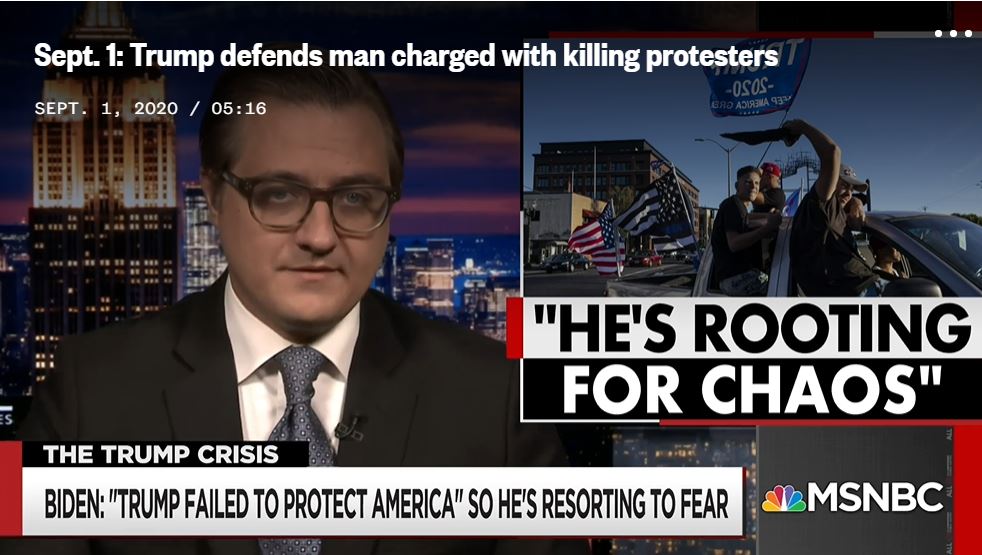
Federal law enforcement officials were directed to make public comments sympathetic to Kyle Rittenhouse, the teenager charged with fatally shooting two protesters in Kenosha, Wisconsin, according to internal DHS talking points obtained by NBC News.
October 1, 2020 Julia Ainsley NBC NEWS
https://portside.org/2020-10-01/internal-document-shows-trump-officials-were-told-make-comments-sympathetic-kyle
In preparing Homeland Security officials for questions about Rittenhouse from the media, the document suggests that they note that he "took his rifle to the scene of the rioting to help defend small business owners."
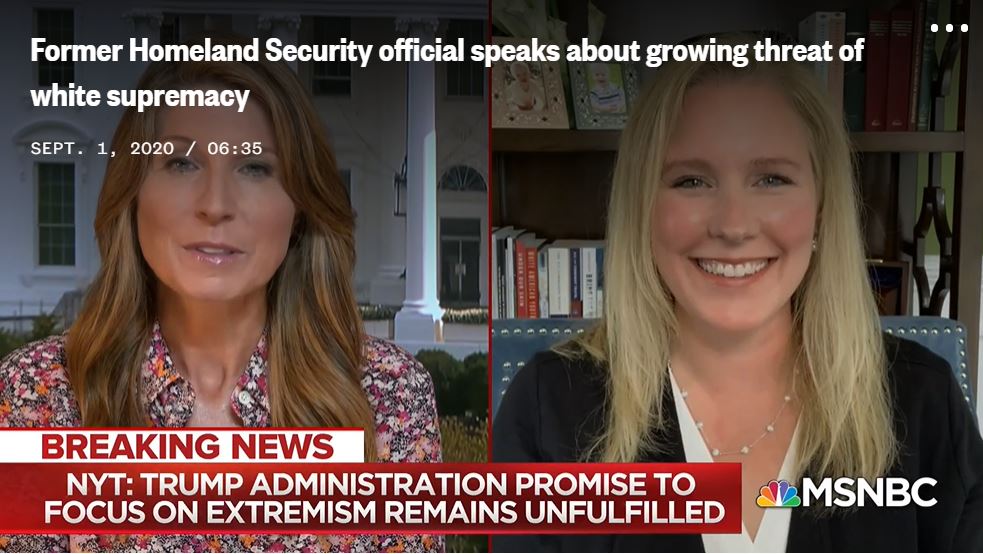
Another set of talking points distributed to Homeland Security officials said the media were incorrectly labeling the group Patriot Prayer as racists after clashes erupted between the group and protesters in Portland, Oregon.
It is unclear whether any of the talking points originated at the White House or within Homeland Security's own press office.
Watch here
Rittenhouse, 17, supported Trump and police on his social media pages before he traveled from his home in Antioch, Illinois, to Kenosha on Aug. 25 with an AR-15-style rifle, authorities said. Rittenhouse was arrested on first-degree murder charges and is fighting extradition to Wisconsin. His attorneys argue that he was acting in self-defense.
Four former Homeland Security officials, two of whom worked for Republican administrations, said it was unusual for law enforcement officials to be instructed to weigh in on a case involving a particular group or individual before investigations had concluded.
"It is as unprecedented as it is wrong," said Peter Boogaard, who was a spokesperson for Homeland Security during the Obama administration.
"What strikes me about the talking points is that they didn't call for calm among the public,” said Elizabeth Neumann, who served as DHS's assistant secretary for threat prevention and security policy in the Trump administration. “Even in the early hours after the incident, it was known private militias had self-deployed. …They seemed more interested in Rittenhouse's reputation than calling for calm and actual law and order.”
Neumann, who left the Trump administration in April, recently endorsed former Vice President Joe Biden for president.
The Rittenhouse talking points also say, "Kyle was seen being chased and attacked by rioters before allegedly shooting three of them, killing two."
"Subsequent video has emerged reportedly showing that there were 'multiple gunmen' involved, which would lend more credence to the self-defense claims."
The document instructs officials, if they are asked about Rittenhouse, to say they are not going to comment on an ongoing investigation and to say that "what I will say is that Rittenhouse, just like everyone else in America, is innocent until proven guilty and deserves a fair trial based on all the facts, not just the ones that support a certain narrative. This is why we try the accused in the court of law, not the star chamber of public opinion."
Watch here
Officials were instructed to bring conversations back to the need to preserve law and order: "This is also why we need to stop the violence in our cities. Chaotic and violent situations lead to chaotic, violent and tragic outcomes. Everyone needs law and order."
Trump has expressed sympathy for Rittenhouse, saying it appeared that he was "trying to get away from them," referring to the protesters he is accused of having fatally shot.
Despite the talking points, Homeland Security officials have not gone as far to support Rittenhouse. Ken Cuccinelli, the official performing the duties of deputy Homeland Security secretary, said on Twitter after the shooting that the Rittenhouse case shows "the complexities involved in an investigation and why it can take some time to reach conclusions."
By contrast, Trump and other officials in his administration have been quick to blame left-wing extremists. Acting Customs and Border Protection Commissioner Mark Morgan has repeated Trump's claim that organized black-clad members of "antifa" were being flown to protests across the country to incite violence.
In Tuesday night's debate, Trump refused to condemn white supremacy and instead blamed left-wing groups.
"The Proud Boys," said Trump, referring to a right-wing group that has rallied in his support and against anti-racism protesters. "Stand back and stand by."
"But I'll tell you what, I'll tell you what, somebody's got to do something about antifa and the left, because this is not a right-wing problem," he said.
By Yanis Varoufakis, The Correspondent.
October 1, 2020
https://popularresistance.org/how-progressives-could-still-win-the-21st-century/
Our era will be remembered for the triumphant march of authoritarianism in whose wake the vast majority of humanity have experienced unnecessary hardship and the planet’s ecosystem has suffered avoidable climate destruction.
For a brief period – a period the British historian Eric Hobsbawm described as “the short 20th century” – establishment forces were united in dealing with challenges to their authority. It was a rare period in which the establishment had to face a variety of progressives, all seeking to change the world: social democrats, communists, self-management experiments, national liberation movements in Africa and Asia, the early, radical, ecologists etc.
I grew up in mid-1960s Greece, governed by a right-wing dictatorship that was instigated by the United States under Lyndon Johnson (whose administration was one of the most progressive domestically, but which nonetheless did not hesitate to prop up fascists in Greece or carpet-bomb Vietnam). The fear and loathing of right-wing populism that can be found today plastered on every page of the New York Times was simply absent back then.
Things changed after 2008, the year the western financial system imploded. Following 25 years of financialisation, Read more in Ann Pettifor’s piece on the global financial system under the ideological cloak of neoliberalism, global capitalism had a 1929-like spasm that nearly brought it to its knees. The immediate reaction to this crisis, intended to prop up financial institutions and markets, was to turn on the central banks’ printing presses, and to transfer bank losses to the working and middle classes via so-called “bailouts”.
This combination of socialism for the few and stringent austerity for the masses did two things. First, it depressed real investment globally, as firms could see that the masses had little to spend on new goods and services, producing discontent among the many while the very few received huge doses of “liquidity”.
Secondly, it gave rise initially to progressive uprisings – from the Indignados in Spain and the Aganaktismeni in Greece to Occupy Wall Street and various left-wing forces in Latin America. These movements, however, were relatively short-lived, and they were efficiently dealt with either by the establishment directly ( the crushing of the Greek Spring in 2015, for example) or indirectly (leftist Latin American governments fading as Chinese demand for their exports collapsed).
As progressive causes were snuffed out one by one, the discontent of the masses had to find a political expression. Mimicking the rise of Mussolini in Italy, who promised to look after the weakest and to make them feel proud to be Italian again, we’ve witnessed the rise of, what we can call, the Nationalist International, most clearly expressed in the rightist arguments fuelling Great-Britain’s exit from the European Union and the election successes of right-wing nationalists: Donald Trump in the United States; Jair Bolsonaro in Brazil; Narendra Modi in India; Marine Le Pen in France; Matteo Salvini in Italy and Viktor Orban in Hungary.
And so for the first time since the second world war, the great political clash has shifted from between the establishment and assorted progressives, to one between different parts of the establishment: one part appearing as the stalwarts of liberal democracy, the other as the representatives of illiberal democracy.
Of course, this clash between the liberal establishment and the Nationalist International was utterly illusory. In France, the centrist Macron needed the threat of far-right nationalism under Le Pen, without whom he would never be president. And Le Pen needed Macron and the liberal establishment’s austerity policies that generated the discontent that fed her campaigns. Similarly in the United States, where the policies of the Clintons and the Obamas that bailed out Wall Street fuelled the discontent that gave rise to Donald Trump whose rise, in a never ending circle, shored up Clinton’s and Biden’s defences against someone like Bernie Sanders. It was a reinforcement mechanism between the establishment and the so-called populists that has been replicated across the world.
Nevertheless, the fact that the liberal establishment and Nationalist International are, in reality, codependent does not mean that the cultural and personal clash between them is not authentic. The authenticity of their clash, despite the lack of any real policy difference between them, made it next to impossible for progressives to be heard over the cacophony caused by the clashing variants of authoritarianism.
This is exactly why we need a Progressive International – an international movement of progressives to counter the fake opposition between two variations of globalised authoritarianism (the liberal establishment and the Nationalist International) which trap us in a business-as-usual agenda that destroys life prospects Read Danny Dorling’s analysis of how austerity affects life expectancy in the UKand wastes opportunities to end climate change. Read Jason Hickel’s piece on how we need less growth to fight the climate crisis
The question then is: what would a Progressive International do? To what purpose? And by which means?
If our Progressive International simply creates space for open discussion in city squares (as Occupy Wall Street did a decade ago) or just seeks to emulate efforts such as the World Social Forum, it will again eventually fizzle out. To succeed we will need a common plan of action and an uncommon campaign strategy to energise progressives around the world to implement that plan. Last but not least, we’ll need the shared will to envision a postcapitalist reality.
Allow me to unpack these three prerequisites one at a time.
Prerequisite 1: A Common Progressive Action Plan
The fascists and the bankers have a common programme. Whether you speak to a banker in Chile or to one in Switzerland, to a supporter of Trump in the US or a Le Pen voter in France, you will hear the same narrative. Bankers will say that regulation and capital controls are detrimental to progress; that financial engineering increases the efficiency with which capital flows to the economy; that the private sector is always better at delivering services than the public sector, that minimum wages and trades unions impede growth or that climate change can only be dealt with by the private sector.
For their part, the Nationalist International narrative is as follows: electrified border fences are essential for preserving national sovereignty, migrants threaten local jobs and social cohesion; Muslims in particular cannot be integrated and need to be kept out; foreigners conspire with local liberal elites to weaken the nation; women must be encouraged to raise their children at home; LGBTQ+ rights come at the expense of basic morality and, last but not least: “Give us the power to act in an authoritarian manner and we shall make our country great and you proud again”.
Progressives also need shared narratives. Thankfully, we know what must be done: power generation must shift massively from fossil fuels to renewables, wind and solar primarily; land transport must be electrified while air transport and shipping must turn to new zero-carbon fuels (such as hydrogen); meat production needs to diminish substantially, with greater emphasis on organic crops; and strict limits on physical growth (from toxins to cement Read about cement in this piece by Maikel Kuijpers) are of the essence.
We also know that all this will cost at least 10% of global income, or nearly $10 trillion, annually – a sum that can be easily mobilised as long as we are ready to create institutions that will coordinate the various works and redistribute the benefits from the global north and the global south. To accomplish this, we need to invoke the spirit of Franklin D Roosevelt’s original New Deal – a policy that succeeded because it inspired people who had given up hope that there are ways of pressing idle resources into public service.
Our International Green New Deal will have to utilise transnational bond instruments and revenue-neutral carbon taxes – so that the money raised from taxing diesel can be returned to the poorest of citizens relying on diesel cars, in order to strengthen them generally and also allow them to buy an electric car. To plough these resources into green investments, a new Organisation for Emergency Environmental Cooperation, is necessary to pool the brainpower of the international scientific community into something like a Green Manhattan Project – one that aims, instead of mass murder, at ending extinction.
Even more ambitiously, our common plan must include an International Monetary Clearing Union, of the type John Maynard Keynes suggested during the Bretton Woods conference in 1944, featuring well-designed restrictions on capital movements. By rebalancing wages, trade and finance at a planetary scale, both involuntary migration and involuntary unemployment will recede, thus ending the moral panic over the human right to move freely about the planet.
Prerequisite 2: An Uncommon Campaign
Without this, our common plan, the International Green New Deal, will stay on the drawing table, so here is a campaign idea: let’s identify multinational companies that abuse workers locally and target them globally, utilising the great disparity between the cost to participants of, for example, boycotting Amazon for a day and the costs of such boycotts to targeted firms. Global consumer boycotts are not new but now, using the power of platform megafirms, like Amazon, against them, they can be far more effective. Especially in a second phase, they are combined with local strike action involving the relevant trades unions. Such global action in support of local workers or communities has immense scope. With some clever communication and planning, they can become a popular way people around the world share a feeling that they are helping make the world a freer, fairer place.
Of course, to make this happen, our Progressive International requires a nimble international organisation. The problem with organisations that are capable of global coordination is that they, surreptitiously, reproduce within them bureaucracies, exclusion and power games. How can we prevent neoliberalism and authoritarian nationalism from wrecking the world without creating our very own variety of authoritarianism? Granted, it is harder to find the right answer to this question as progressives who reject hierarchies, bureaucracies and the encroachments of paternalism, but we have a duty to find it nevertheless.
Prerequisite 3: A Shared Vision Of Postcapitalism
Consider what happened on 12 August 2020, the day the news broke that the British economy had suffered its greatest slump ever. The London Stock Exchange jumped by more than 2%! Nothing comparable had ever occurred. Similar developments unfolded on Wall Street in the United States.
In essence, when Covid-19 met the gargantuan bubble with which governments and central banks have been zombifying corporations and financial institutions since 2008, financial markets finally decoupled from the underlying capitalist economy.
The result of these remarkable developments is that capitalism has already begun to evolve into a type of technologically advanced feudalism. Neoliberalism is now what Marxism-Leninism used to be during the Soviet 1980s: an ideology utterly at odds even with the regime invoking it. Following the collapse of the Soviet bloc in 1991, and of financialised capitalism in 2008, we are well into a new phase in which capitalism is dying and socialism is refusing to be born.
If I am right in this, even progressives who still entertain hopes of reforming or civilising, capitalism, must consider the possibility that we must look beyond capitalism – indeed, that we must plan for a postcapitalist civilisation. The problem is that, as my great friend Slavoj Zizek has pointed out, most people find it easier to imagine the end of the world than the end of capitalism.
To counter this failure of our collective imagination, in a recent book entitled Another Now: Dispatches from an alternative present, Read about this in my recently published book, Another Now: Dispatches from an alternative present. I try to imagine that my generation had not missed every pivotal moment history presented us with. What if we had seized the 2008 moment to stage a peaceful high-tech revolution that led to a postcapitalist economic democracy? What would it be like?
To be desirable, it would feature markets for goods and services since the alternative – a Soviet-type rationing system that vests arbitrary power in the ugliest of bureaucrats – is too dreary for words. But to be crisis-proof, there is one market that we cannot afford to preserve: the labour market. Why? Because, once labour time has a rental price, the market mechanism inexorably pushes it down while commodifying every aspect of work (and, in the age of Facebook, of our leisure even). The greater the system’s success in doing this, the less the exchange value of each unit of output it generates, the lower the average profit rate and, ultimately, the nearer the next systemic crisis.
Can an advanced economy function without labour markets? Of course it can. Consider the principle of one-employee-one-share-one-vote. Amending corporate law so as to turn every employee into an equal (though not equally remunerated) partner, via granting them a non-tradeable one-person-one-share-one-vote, is as unimaginably radical today as universal suffrage used to be in the 19th century. If, in addition to this pivotal transformation of company ownership, Central Banks were to provide every adult with a free bank account, a postcapitalist market economy would be delivered.
With share markets gone, debt leverage linked to mergers and acquisitions would also become a thing of the past. Goldman Sachs and the financial markets oppressing humanity will suddenly become extinct – without even the need to ban them. Freed from corporate power, unshackled from the indignity imposed upon the needy by the welfare state, and liberated from the tyranny of the profits v wages tug-of-war, persons and communities can begin to imagine new ways of deploying their talents and creativity.
We are at a fork in the road. Postcapitalism is underway, albeit on a path to dystopia. Only a Progressive International can help humanity alter this path.
By Kristian Hernandez, Fort Worth Star Telegram.October 1, 2020
A new study found that health care workers have almost twice as many cases than reported by the CDC.
https://popularresistance.org/covid-19-cases-among-health-care-workers-under-reported/
Fiana Tulip spent the last 10 weeks trying to figure out how her mother, a health care worker in Dallas, contracted and died of COVID-19.
Isabelle Papadimitriou, 64, was a respiratory therapist at the Baylor Scott & White Institute for Rehabilitation. She died on July 4, one week after contracting the novel coronavirus.
Tulip said she learned after talking with her mother’s colleagues and reading her journals and text messages that the hospital failed to alert her mother and other staff members at the rehabilitation center that one of the patients had tested positive for COVID-19.
“It breaks my heart to think about my mom walking into the face of danger, without realizing it.” Tulip said. “There wasn’t a kind of notification system in place.”
Baylor Scott & White did not immediately respond to a request for comment. In July, a spokesperson for Baylor Scott & White declined to answer questions on whether Papadimitriou was working directly with COVID-19 patients who had active infections.
A new report by the National Nurses United union found more than 100,000 cases of COVID-19 infection among health care workers than previously reported by the U.S. Centers for Disease Control and Prevention.
As of Sept. 16, at least 258,768 health care workers had tested positive for COVID-19, according to the report. At the same time, the CDC reported 153,306 cases, according to the union’s nationwide study.
The report titled, “Sins of omissions: How government failure to track COVID-19 data led to more than 1,700 health care worker deaths and jeopardize public health,” blames the failure by federal and state governments to track and publicly report “transparent, accurate, and timely” data on the pandemic for health care workers infected and killed by the virus.
Only 16 states are providing infection numbers for all health care workers on a daily, semiweekly, or weekly basis, according to the report. In Texas, hospitals are only required to report daily bed capacity and COVID-19 test results on a daily basis.
“If hospitals are not widely required to publicly disclose their deaths and infection rates, they lack important incentives not to become zones of infection,” states the report. “We cannot allow the more than 1,700 deaths, many of them avoidable, to be swept under the rug, and vanished from our collective memory by the health care industry.”
The report found that minorities represent 58% of the registered nurses who have died of COVID-19. They make up 24% of the profession.
Zenei Cortez, a registered nurse and a president of the union, said in a news release that nurses and health care workers have been forced to work without personal protective equipment. Cortez asked that state and federal governments publish daily reports of cases and deaths down to the local level, along with the names of the hospitals and health care providers.
“We have the right to a safe workplace under the Occupational Safety and Health Act. Information is a part of safety. But some employers are not telling nurses when they have been exposed or who has been infected. This is irresponsible and dangerous for nurses, health care workers, and patients,” Zenei wrote.
After her mother’s death, Tulip also learned about personal protective equipment shortages and a lack of face mask enforcement when patients refused to wear their masks at the rehab center.
Days before her mother’s funeral in Brownsville, Tulip wrote a letter to Gov. Greg Abbott and criticized him for his response to the pandemic and invited him to her mother’s funeral. As of Tuesday, she had not heard back from his office.
“I wanted him to see what it was like to lose a family member, to lose a healthcare professional,” Tulip said. ”I was hoping that the emotional aspect would encourage him to do more to help, rather than jeopardizing the lives of our loved ones for the economy.”
Next week, Tulip and other family members who have lost loved ones to COVID-19 will be hosting a week of mourning. The event is hosted by Marked by COVID, an online community that wants to elevate awareness about COVID-19 by sharing the stories of those they lost.
An Atlantic investigation reveals who they are and what they might do on Election Day. President Trump when asked in the debate whether he would “condemn white supremacists and militia groups, said “stand back and stand by”.
October 1, 2020 Mike Giglio THE ATLANTIC
https://portside.org/2020-10-01/right-wing-militias-are-bracing-civil-war-pro-trump-group-has-recruited-thousands-police
Stewart Rhodes was living his vision of the future. On television, American cities were burning, while on the internet, rumors warned that antifa bands were coming to terrorize the suburbs. Rhodes was driving around South Texas, getting ready for them. He answered his phone. “Let’s not fuck around,” he said. “We’ve descended into civil war.”
It was a Friday evening in June. Rhodes, 55, is a stocky man with a gray buzz cut, a wardrobe of tactical-casual attire, and a black eye patch. With him in his pickup were a pistol and a dusty black hat with the gold logo of the Oath Keepers, a militant group that has drawn in thousands of people from the military and law-enforcement communities.
Rhodes had been talking about civil war since he founded the Oath Keepers, in 2009. But now more people were listening. And whereas Rhodes had once cast himself as a revolutionary in waiting, he now saw his role as defending the president. He had put out a call for his followers to protect the country against what he was calling an “insurrection.” The unrest, he told me, was the latest attempt to undermine Donald Trump.
Over the summer, Rhodes’s warnings of conflict only grew louder. In August, when a teenager was charged with shooting and killing two people at protests over police brutality in Kenosha, Wisconsin, Rhodes called him “a Hero, a Patriot” on Twitter. And when a Trump supporter was killed later that week in Portland, Oregon, Rhodes declared that there was no going back. “Civil war is here, right now,” he wrote, before being banned from the platform for inciting violence.
By then, I’d spent months interviewing current and former Oath Keepers, attempting to determine whether they would really take part in violence. Many of their worst fears had been realized in quick succession: government lockdowns, riots, a movement to abolish police, and leftist groups arming themselves and seizing part of a city. They saw all of it as a precursor to the 2020 election.
As Trump spent the year warning about voter fraud, the Oath Keepers were listening. What would happen, I wondered, if Trump lost, said the election had been stolen, and refused to concede? Or the flip side: What if he won and his opponents poured into the streets in protest? The U.S. was already seeing a surge in political violence, and in August the FBI put out a bulletin that warned of a possible escalation heading into the election. How much worse would things get if trained professionals took up arms?
I’d been asking a version of these questions since 2017, when I met a researcher from the Southern Poverty Law Center who told me about Rhodes and the Oath Keepers. She’d received a leaked database with information about the group, and she said it might contain some answers.
Rhodes was a little-known libertarian blogger when he launched the Oath Keepers in early 2009. It was a moment of anxiety on the American right: As the Great Recession raged, protesters met the new president with accusations of socialism and tyranny. “The greatest threats to our liberty do not come from without,” Rhodes wrote online, “but from within.” Republicans had spent eight years amassing power in an executive branch now occupied by Barack Obama. The time for politics was ending. “Our would-be slave masters are greatly underestimating the resolve and military capability of the people,” Rhodes wrote.
Rhodes had joined the military just out of high school, hoping to become a Green Beret, but his career was cut short when he fractured his spine during a parachute training jump. After his discharge, he worked as a firearms instructor and parked cars as a valet. In 1993, he dropped a loaded handgun and it shot him in the face, blinding him in his left eye. The brush with death inspired him, at 28, to enroll in community college. He went on to the University of Nevada at Las Vegas, where he graduated summa cum laude, and then to Yale Law School, where he won a prize for a paper arguing that the Bush administration’s enemy-combatant doctrine violated the Constitution.
He married a fellow libertarian, started a family, and hung out a shingle as a lawyer in Montana—“Ivy League quality … without Ivy League expense,” read a classified ad in 2008. He volunteered for Ron Paul’s presidential campaign that year. But after the election, he veered from politics toward something darker.
His blog post was both a manifesto and a recruiting pitch. He based it on the oath that soldiers take when they enlist—minimizing the vow to obey the president and focusing on the one that comes before it, to “support and defend the Constitution against all enemies, foreign and domestic.” Law-enforcement officers swear a similar oath, and Rhodes wrote that both groups could refuse orders, including those related to gun control, that would enable tyranny. And, if necessary, they could fight.
Responses poured in, and Rhodes published them on his blog:
“Your message is spreading and I will make sure it gets to more Marines.”
“Not only will I refuse any unlawful order that violates the Constitution I will fight the tyrants that give the orders. Rest assured that me and my brothers in Law Enforcement talk about this subject on a regular basis.”
“I fully support you and what you stand for and I do talk about these things with some of my subordinates,” an Air Force officer wrote. “Those who I trust that is.”
Rhodes kept the nature of the Oath Keepers ambiguous—the group was officially nonpartisan and was not, as a later post on the blog put it, a militia “per se.” Even so, he cautioned that its members would be painted as extremists and said they could remain anonymous. “We don’t ask current-serving law enforcement and military to sign up on any kind of membership list,” he said in a radio interview. “We think that’d be foolish.”
But eventually he did create such a list. It collected members’ names, home and email addresses, phone numbers, and service histories, along with answers to a question about how they could help the Oath Keepers. Last year, the Southern Poverty Law Center passed the entries for nearly 25,000 people along to me.
On April 19, 2009, Rhodes traveled to Lexington Green, in Massachusetts, for the anniversary of the first shots of the American Revolution. Standing before a crowd of new members, he led a reaffirmation of their oaths. With him were two heroes of the militant right: Richard Mack, who popularized the idea that county sheriffs are the highest law in the land, and Mike Vanderboegh, the founder of the Three Percenters, an umbrella militia based on the myth that it took just 3 percent of the population to fight and win the Revolutionary War.
With his Ivy League law degree, Rhodes’s background was unusual. One of the first cases he’d taken on after law school was helping with the pro bono defense of a militia leader jailed for making machine guns. His early writings on his blog, and on a web forum where he used the handle Stewart the Yalie, reveal a fixation on the rise of the hundreds of militia groups that, in the early 1990s, loosely coalesced under the banner of the Patriot movement.
Rhodes was deeply affected by the 1993 government siege outside Waco, Texas, which ended in the deaths of more than 70 members of an armed Christian sect, which to him showed the danger of government power. But the Patriot movement became notorious for its connections to white nationalists—and it fell apart after Timothy McVeigh, who’d attended militia meetings, bombed a federal building in Oklahoma City in 1995.
Rhodes wanted to avoid repeating these earlier groups’ mistakes, and he showed a talent for giving fringe ideas more mainstream appeal. His refusal to call the Oath Keepers a militia helped, as did the fact that he put a disavowal of racism on his blog and warned members not to make overt threats of violence. He insisted that the Oath Keepers would fight only as a last resort.
Rhodes believed that the militia groups of the past had been too secretive, which made the public suspicious and gave authorities more leeway to crack down. He established the Oath Keepers as a registered nonprofit with a board of directors; members did relief work after hurricanes and spoke at local Republican events. They could walk into police stations or stand outside military bases with leaflets; they could meet with sheriffs and petition lawmakers.
Rhodes wrote a creed listing 10 types of orders that members vow to resist. Gun-control laws are first among them. Then come libertarian concerns such as subjecting American citizens to military tribunals and warrantless search and seizure. After those come more conspiratorial fears—blockades of cities, foreign troops on U.S. soil, putting Americans in detention camps. Here Rhodes was drawing from the “New World Order” theory, a worldview that is central to the Patriot movement—and that can be traced back to what the historian Richard Hofstadter, writing in the 1960s, called the paranoid style in American politics. It linked fears of globalism, a deep distrust of elites, and the idea that a ballooning federal government could become tyrannical.
Rhodes appeared on Hardball and The O’Reilly Factor, where his ideas were called dangerous; on conservative talk radio, where they were met more favorably; and on The Alex Jones Show, where he was featured so often that he and Jones became friends. He kept the Oath Keepers at the vanguard of the Patriot movement, which was seeing a resurgence, and traded his blog for a website that sold branded body armor and a Facebook page that reached half a million followers before it was shut down in August.
In 2014, Rhodes and the Oath Keepers joined an armed standoff between Patriot groups and federal authorities in Nevada on behalf of the cattle rancher Cliven Bundy. The next year, they led another standoff, at the Sugar Pine Mine in Josephine County, Oregon. Both times, what started as a dispute over land-use issues became a rallying cry on the militant right. Both times, the authorities backed down. In 2014, Rhodes sent teams to Ferguson, Missouri, to protect businesses during the unrest over police brutality after Michael Brown’s killing. Images of Oath Keepers standing guard on rooftops with semiautomatic rifles became symbols of an America beginning to turn on itself.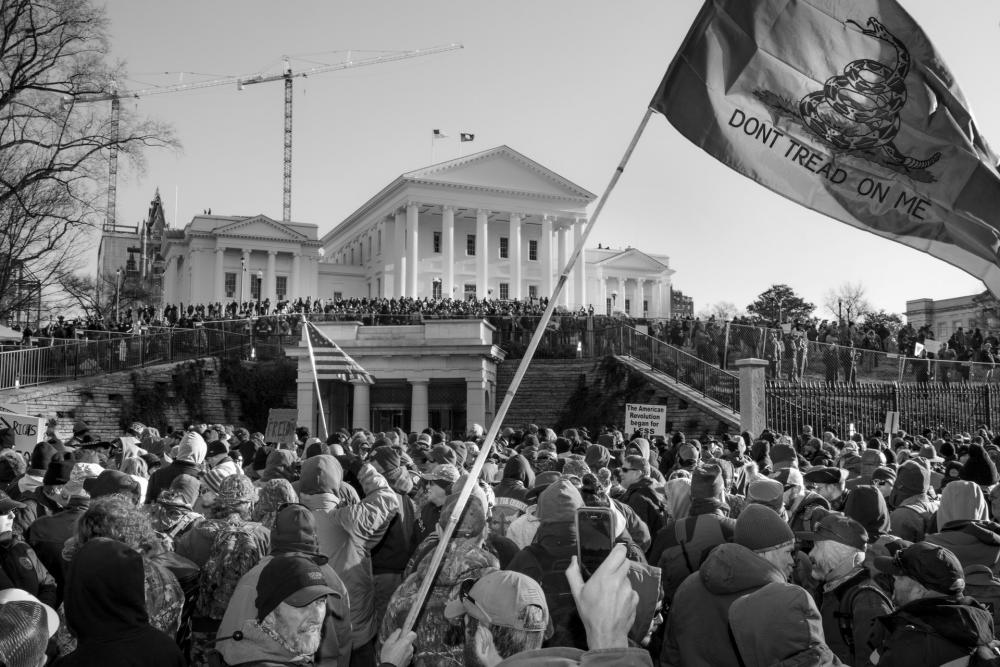
On Martin Luther King Day, an estimated 22,000 gun-rights advocates protested outside the Virginia state capitol, in Richmond.
Photograph by Philip Montgomery // The Atlantic
In Trump, the Patriot movement believed it had an ally in the White House for the first time. In 2016, when Trump had warned of election fraud, Rhodes put out a call for members to quietly monitor polling stations. When Trump warned of an invasion by undocumented immigrants, Rhodes traveled to the southern border with an Oath Keepers patrol. He sent members to “protect” Trump supporters from the protesters at his rallies and appeared in the VIP section at one of them, standing in the front row in a black Oath Keepers shirt. When Trump warned of the potential for civil war at the start of the impeachment inquiry last fall, Rhodes voiced his assent on Twitter. “This is the truth,” he wrote. “This is where we are.”
Even while he courted publicity, Rhodes maintained secrecy around his rank and file. Monitoring groups couldn’t say for sure how many members the Oath Keepers had or what kind of people were joining.
But the leaked database laid everything out. It had been compiled by Rhodes’s deputies as new members signed up at recruiting events or on the Oath Keepers website. They hailed from every state. About two-thirds had a background in the military or law enforcement. About 10 percent of these members were active-duty. There was a sheriff in Colorado, a SWAT-team member in Indiana, a police patrolman in Miami, the chief of a small police department in Illinois. There were members of the Special Forces, private military contractors, an Army psyops sergeant major, a cavalry scout instructor in Texas, a grunt in Afghanistan. There were Immigration and Customs Enforcement officers, a 20-year special agent in the Secret Service, and two people who said they were in the FBI.
“I will not go quietly into this dark night that is facing MY beloved America,” a Marine veteran from Wisconsin wrote; an officer in the Los Angeles Police Department said he’d enlist his colleagues “to fight the tyranny our country is facing.” Similar pledges came from a police captain in Texas, an Army recruiter in Oregon, and a Border Patrol agent in Arizona, among many others. “Funny story,” wrote a police sergeant in a St. Louis suburb. “I stopped a speeding truck driver, who had your decal on the side of his truck, I asked about it, he went on and on, I said, ‘Damn I’m all about this.’ ” He listed skills as a firearms and tactical instructor and said he would forward the membership application to his fellow officers. A special agent in the New York City Police Department’s intelligence bureau recalled that he’d been heading to work one day when he saw a window decal with the Oath Keepers logo and jotted down the name on his hand. He vowed to be ready “if the balloon ever goes up.”
Many answers to the question of how new members could help the Oath Keepers were innocuous: “I make videos!” and “Not much but my big mouth! Too old for much else!” People offered to show up at protests, hand out flyers, and post on Facebook. Others provided résumés with skills suited for conflict. A soldier with a U.S. Army email address detailed a background in battlefield intelligence, writing, “I am willing to use any skills you identify as helpful,” and an Iraq War veteran pledged “any talents available to a former infantry team leader.” Still others listed skills in marksmanship, SWAT tactics, interrogation. A Texas businessman offered his ranch “for training or defensive purposes,” and a Michigan cop, retired from the Special Forces, volunteered as a “tactical/political leader when occasion arrives in near future.”
As I pored through the entries, I began to see them as a window into something much larger than the Oath Keepers. Membership in the group was often fleeting—some people had signed up on a whim and forgotten about it. The Oath Keepers did not have 25,000 soldiers at the ready. But the files showed that Rhodes had tapped into a deep current of anxiety, one that could cause a surprisingly large contingent of people with real police and military experience to consider armed political violence. He was like a fisherman who sinks a beacon into the sea at night, drawing his catch toward the light.
The entries dated from 2009 until 2015, not long before the start of Trump’s presidential campaign. I used them as a starting point for conversations with dozens of current and former members. The dominant mood was foreboding. I found people far along in deliberations about the prospect of civil conflict, bracing for it and afflicted by the sense that they were being pushed toward it by forces outside their control. Many said they didn’t want to fight but feared they’d have no choice.
The first person I contacted, in January, was David Solomita, an Iraq War veteran in Florida whose entry said that a police officer had recruited him to the Oath Keepers while he was out to dinner with his wife. I didn’t mention civil war when I emailed, yet he replied, “I want to make this clear, I am a libertarian and was in Iraq when it became a civil war, I want no part of one.”
Later, Solomita said that he’d been an Oath Keeper for a year before leaving because Rhodes “wanted to be at the center of the circus when [civil war] kicked off.” America’s political breakdown, he added, reminded him too much of what he’d seen overseas.
On Martin Luther King Day, I walked into downtown Richmond, Virginia, behind a group of white men in jeans with rifles on their shoulders and pistols at their waists. A mother pulled her toddler away, whispering, “Those men have guns.” Semitrucks paraded down the street, flying Trump flags. They blared their horns, and the men cheered. Soon I was at the state capitol, surrounded by 22,000 people, many of them carrying AR-15s and political signs. OPPOSE TYRANNY. GUNS SAVE LIVES. TRUMP 2020.
In Virginia, the holiday is the occasion for an annual event called Lobby Day, when citizens petition lawmakers about any issue they like. This year, the atmosphere was charged. The state legislature had just sworn in its first Democratic majority in two decades, and lawmakers had advanced a raft of gun-control measures. Rural counties were declaring themselves “Second Amendment sanctuaries” as sheriffs vowed not to enforce new gun laws. Virginia is an open-carry state, and armed protesters from across the country had turned the day into a rally for gun rights.
Rhodes was there, along with some other Oath Keepers. On a Facebook page called “The Militias March on Richmond,” an organizer of the event declared that he’d sworn an oath to defend the Constitution against enemies foreign and domestic when he joined the military and the police—and now a militia. He called Virginia the scene of “a great awakening.”
Virginia was a microcosm of the far right’s fears for the 2020 election: a swing to the left followed by an immediate push for gun control that would be the starting point for a wider assault on American freedoms. Many current and former Oath Keepers told me that gun rights were what had inspired them to join the group; some dismissed the more lurid parts of Rhodes’s list of 10 orders to defy.
David Hines, a conservative writer, has called guns the right’s most successful organizing platform. The issue demands local involvement, to closely track not just federal but state and municipal laws and politics. Guns are also social. To shoot them, you’ll likely head to a range, and to buy them, you’ll likely visit a store or a gun show where you’ll find people who share your mindset. “Guns,” Hines writes, “are onramps to activism.”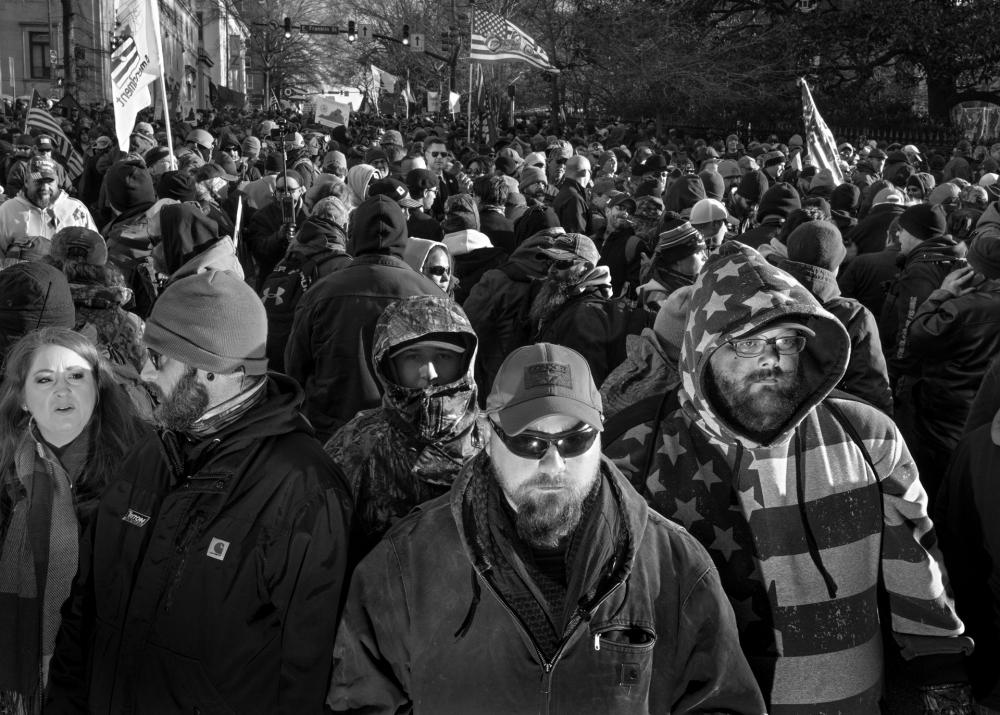
The MLK Day gun-rights rally in Virginia
Photograph by Philip Montgomery // The Atlantic
I couldn’t find Rhodes or any other Oath Keepers as I squeezed through the crowd. Instead I met protesters like Daniel McClure, a 23-year-old working as a contractor for the Tennessee Valley Authority, who stood with his dad near the capitol lawn. He was pleased by the turnout, he told me, but also willing to abandon peaceful protest if democracy stopped working. His idea of responsible citizenship meant keeping the prospect of insurrection in reserve. He repeated a maxim I heard often: Gun rights are the rights that protect all the rest. “If speaking softly won’t work,” he said, lifting the butt of his rifle, “the stick will come.”
Before the rally, the FBI had arrested alleged white supremacists who planned to fire on the crowd to incite a wider conflict, according to prosecutors, and social media had been filled with not-so-veiled threats against Virginia’s Democratic lawmakers. I was struck by how commonplace talk of violence had become. Liberals had been invoking it, too. “Your little AR-15 isn’t going to do shit to protect you from the government—who has tanks and nuclear weapons. That is a pathetic fantasy,” the top aide to a Virginia lawmaker had written in a viral tweet a few months earlier.
In the crowd, I noticed men muttering into walkie-talkies, their eyes hidden behind wraparound shades. To me they had the aspect of children playing at war, only their guns were real. There was a loud bang, and I whirled around as hands moved toward triggers. But someone had only knocked a metal sign onto the pavement.
The rally ended peacefully. Protesters picked up trash as the men with walkie-talkies faded into the city.
“That’s a nice transition, ISIS to us,” Rhodes said when I first called him, in February, and told him what had led me to the Oath Keepers. It wasn’t just the membership files. In 2016, I’d been reporting on the fall of the Islamic State in Mosul when I noticed that Americans were threatening civil conflict at home and wondered if any of them were really serious.
I told him there’s nothing worse than civil war. “I beg to differ,” he replied. He ticked off dictators: Stalin, Hitler, Pol Pot, Mao. “I think what was done by them was far worse,” he said. “If you’re going to slide into a nightmare like that, you need to fight.” He referenced a passage from The Gulag Archipelago, by the Russian dissident Aleksandr Solzhenitsyn:
And how we burned in the camps later, thinking: What would things have been like if every Security operative, when he went out at night to make an arrest, had been uncertain whether he would return alive and had to say good-bye to his family?
People on the militant right often cite these lines or a similar passage from an acclaimed 1955 book about Germany’s descent into Nazism, They Thought They Were Free:
Each act, each occasion, is worse than the last, but only a little worse. You wait for the next and the next. You wait for one great shocking occasion, thinking that others, when such a shock comes, will join with you in resisting somehow … But the one great shocking occasion, when tens or hundreds or thousands will join with you, never comes.
For people like Rhodes, the message of both passages is the same. Americans are sleepwalking toward an abyss. Patriots need to wake up and resist.
“It’s not just about guns,” Rhodes said. But guns were at the heart of it. Trump was stoking the idea that conservatives are a minority threatened by a demographic tide that will let liberal cities dictate the terms for the rest of the country. When I asked Rhodes and other people on the militant right to name concerns beyond gun rights, they mentioned how history is taught in schools, or how the Green New Deal would threaten land use, agriculture, single-family homes. They stressed that America is a republic, not a democracy. Liberals, Rhodes told me, want to see “a narrow majority trampling on our rights. The only way to do that is to disarm us first.”
I asked whether the Oath Keepers were white nationalists. The group had participated in events with the Proud Boys, a group of self-described “Western chauvinists,” and provided security at a so-called free-speech rally headlined by the alt-right activist Kyle Chapman. “We’re not fucking white nationalists,” Rhodes said, pointing out that the Oath Keepers have disavowed the Proud Boys and that their vice president is Black. “That’s the new smear. Everybody on the right is a white nationalist. And when you have that drumbeat of demonization, then what are we supposed to think?”
Like Trump, Rhodes relentlessly demonizes Black Lives Matter activists as “Marxists”—a foreign enemy. And he dwells on imagined threats from undocumented immigrants and Muslims that fit his ideas about a globalist push to undermine Western values. His mother is from a family of Mexican migrant laborers; as a child, he spent summers picking fruit and vegetables alongside them. But he told me that his relatives were conservative Christians and that they—the key word—“assimilated.”
Rhodes said I should investigate militant groups on the left such as the John Brown Gun Club, and seemed obsessed with antifa, which he said the Oath Keepers had faced down while providing security at right-wing rallies. “If Trump wins, guess who’s going to show up,” he said. “The left will be in the streets rioting.”
He added that he’d been using liberals’ “drumbeat of anti-cop sentiment” in his outreach to police. “That’s what we tell them: ‘Come on, guys. They hate your guts.’ ”
The most famous Oath Keeper after Rhodes is John Karriman, a pastor and former police trainer from Missouri who participated in the Ferguson operation. Critics saw the Oath Keepers’ presence in Ferguson as inflammatory, an attempt to intimidate protesters. But to Karriman, the operation was a success: They’d helped protect the community, including a Black-owned business, and left without raising their weapons. It was an example of what he wanted the Oath Keepers to be—a group that could “keep our country free and keep our fellow travelers honest and not step a foot over the line,” he told me. “I had high hopes that the Oath Keepers could be the brand that other groups could rally around.”
But behind the scenes, Karriman and others who were close to Rhodes told me, the Oath Keepers were plagued by dysfunction. Rhodes would disappear for long stretches and stall on initiatives—such as a national program to offer community training in firearm safety, first aid, and disaster relief—that would have been a boon to recruiting. Wealthy donors offered money, Karriman said, but when they asked to see the group’s books, Rhodes declined. In 2017, a blogger published allegations of embezzlement by the group’s IT administrator and accused Rhodes of covering it up, citing documents and recordings. Karriman demanded reforms but was ultimately pushed out. Other board members resigned, chapters dissolved, and the membership files were leaked to the Southern Poverty Law Center. (Rhodes denies these accusations and attributes them to a “coup attempt” by people with whom he has ideological differences.)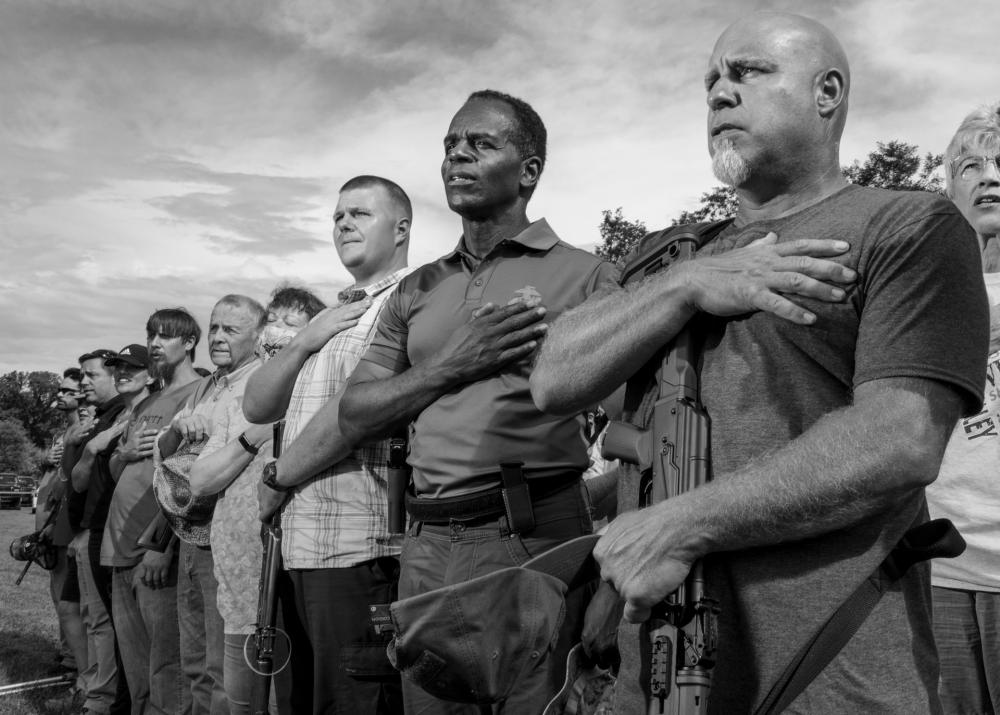
A militia muster in Front Royal, Virginia, in August
Photograph by Philip Montgomery // The Atlantic
Several former deputies to Rhodes told me his behavior had grown erratic. At the Bundy-ranch standoff in 2014, he’d claimed to have intelligence that the Obama administration was planning a drone strike on the Patriot encampment. The Oath Keepers pulled back as militiamen from other groups accused them of desertion. The next year, he said in a speech that John McCain should be tried and hanged for treason because he supported the indefinite detention of American citizens suspected of terrorism. Afterward, he told me, he began facing heightened scrutiny at airports. In 2015, he was disbarred. In 2018, his wife petitioned for an order of protection during divorce proceedings, alleging that Rhodes had once grabbed their daughter by the throat and had a habit, during marital arguments, of waving a pistol in the air before pointing it at his head. (Rhodes denies these allegations. The petition was not granted.)
He was also pushing the Oath Keepers in a direction that clashed with the quieter mode some of his members favored. In the files, I found a note appended to the entry of an Air Force officer asking that his name be stricken from the rolls. The officer “will still be with us,” the note read, but he wanted to protect his 15-year career in the military. The note was from Steve Homan, a Vietnam veteran from Nebraska and a former vice president of the Oath Keepers. When I called him, he recounted how he’d focused on recruiting people with military skills while trying not to draw too much attention. He weeded out the “wild hats.” He wanted people willing and able to “slug back” against the government if necessary but levelheaded enough not to start the fight. He referred to them as “quiet patriots,” his version of the militant right’s Gray Man trope, a silent majority that will come to his side in a conflict.
This description fit a Special Operations soldier I found in the files who told me he’d never appeared at an event but was ready to step in if needed. He has an Oath Keepers bumper sticker on his vehicle at the base, so that other soldiers will ask him about it. The question of violence, he said, “definitely comes up, and my response is that it absolutely could include armed conflict. I like to use the Revolutionary War as an example. The militias were there, well armed and organized, not looking to pick a fight but ready when it happened.”
Homan’s approach required subtlety, and gathering a band of gray men in the shadows was difficult when Oath Keepers were toting weapons on the national news. Appended to several entries, I found letters of resignation in which people complained that the group was becoming too militialike. But I also noted spikes in new members—each paying a $50 annual fee—when Rhodes made headlines. “The publicity and the money, it was feeding him,” Homan recalled. Eventually he resigned.
One Marine veteran told me that when he signed up in 2013, he’d recently retired after seven years as a military contractor, during which he’d trained indigenous forces in Afghanistan. Senior Oath Keepers asked him to provide members with paramilitary training. He warned Rhodes that training the wrong people could lead to trouble; they might even turn on him. But he agreed after Rhodes said he could do the vetting himself.
He kept a lookout for people who displayed red flags such as talking about making explosives or silencers. “There were guys who wanted to go full-blown militia. And there were people like myself who just wanted to support the community in case of a breakdown in order,” he said. Eventually he felt that Rhodes was adopting an “offensive mindset”—almost pushing for a fight, especially after the Bundy standoff. He resigned, became a sheriff’s deputy, and is now training as a priest.
In April, a group called the Michigan Liberty Militia appeared with semiautomatic rifles at a rally in the state capitol, where protesters were demanding an end to coronavirus lockdowns and calling the governor a Nazi. The militiamen looked down from a second-floor balcony as lawmakers wearing body armor pushed through the crowd below. Images of the scene went viral. Afterward, I called one of the militia’s leaders, Phil Robinson, at his home in a small town west of Lansing. “I’m not going to lie to you, man,” he told me. “I feel like a movie star.”
Rhodes, meanwhile, was struggling to find his place in the anti-lockdown movement. He initially worried about the pandemic, and wrote an early post urging shutdown measures before facing a backlash; one prominent Oath Keeper accused him of being “controlled opposition” and resigned. Soon Rhodes was in the unmasked crowds himself, echoing Trump’s claims that the hysteria about the virus was part of a plot against him.
But the ideas that Rhodes had helped popularize were spreading. Robinson told me he’d never been in the police or military—then noted that joining his group meant swearing an oath to protect the Constitution against all enemies, foreign and domestic. Other militias simply pasted Rhodes’s 10 orders on their websites without attribution. Videos circulated of uniformed police officers calling the lockdown measures tyrannical, emphasizing their oaths, and telling their fellow officers to wake up.
Then the Black Lives Matter protests erupted. Armed men surfaced amid the unrest, carrying out Ferguson-style operations. Rhodes tried to organize vigilante teams of his own on the social-networking site Discord, but he made little progress before the forum he created was shut down and the participants banned.
Newer groups were calling openly for civil war, saying they wanted to get on with it already. Members of the so-called boogaloo movement wore aloha shirts when they appeared in the crowds with semiautomatic weapons, suggesting that they saw the outbreak of violence as something like a party. Many in the new generation dismissed older leaders like Rhodes as too tame. On gun rights and other issues, they resented their forebears for giving up so much already.
The moment lacked the clarity of the era in which Rhodes had gained prominence, when Patriot groups positioned themselves against Obama and the federal government. Some “boog bois” were white supremacists. Yet when police tried to separate the protesters into opposing sides, some of the young men in aloha shirts insisted on standing with Black Lives Matter. There were alleged shootings by white supremacists and also by people who’d come out to protest against police brutality. Patriot groups became obsessed with a new Black militia called the Not Fucking Around Coalition; the two sides confronted each other at a march honoring Breonna Taylor, and police had to intervene. Sales of guns and ammo were surging.
One afternoon, I received an email from an Army veteran and former Oath Keeper named Adam Boyle, who said he’d been protecting a shopping center in Missouri with a former Marine special operator named Nick. Boyle’s story had the dreamlike logic of nonlinear conflict. “Myself and Nick established a defensive security position in front of Pepperoni Bill’s Pizza,” he wrote, and then protesters arrived. The duo braced themselves, detecting an agitator among the protesters, who appeared to have a knife, but the protesters drove him away. Boyle and his friend began talking with the protesters and realized that they shared some common ground.
Then a new enemy emerged: Two white men drove up, and Nick saw that they had a pistol in the car. When two Black women tried to leave, the men in the car chased after them. “Nick jumped into my truck, armed himself at a low-ready with his AR-15, and we aggressively pursued the men,” Boyle wrote. The men retreated, and the vigilantes embraced the rally’s organizer. “We had bridged a political gap and come together for a common cause of peace,” Boyle wrote. I noted the almost desperate attempt to reestablish goodwill—and the myriad ways the night could have turned into a catastrophe. While Rhodes was invoking the glory of Lexington Green, a grim reality could have played out in the confusion at Pepperoni Bill’s.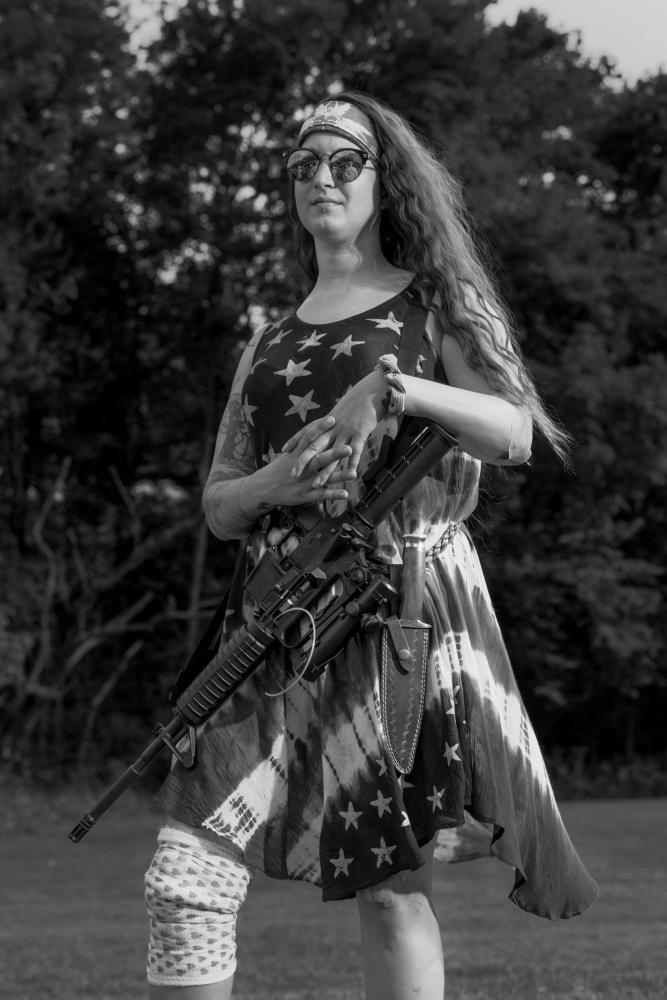
Militia musters have been quietly occurring across Virginia as the state legislature has advanced new gun-control laws.
Photograph by Philip Montgomery // The Atlantic
One evening in July, I walked into a VFW hall outside Nashville, past a bar crowded with maskless patrons and into a windowless room with a dance floor. A couple dozen people sat at tables on one side. Next to the door was a sign-in sheet that asked for the same information that appeared in the leaked files: name and contact information, what skills people could offer.
Rhodes had called the meeting as part of a new organizing push. He’d been driving around the South—attending a militia rally in Virginia one day, visiting members in North Carolina another—and agreed to let me join him in Tennessee. He was late. Some Three Percenters sat in one corner, looking impatient. I sat with a pair of Oath Keepers in another.
One was an older man in an Australian-outback hat. The other was an Iraq War combat veteran who had recently joined the Oath Keepers. He began talking about his experience overseas, and how in the chaos of war, U.S. soldiers had faced the horrible prospect of killing children, who might charge at them strapped with IEDs. “I prefer that to the alternative,” the man in the hat said, “of being splattered against the wall.”
Finally Rhodes walked in and put his dusty Oath Keepers hat on a table. “Why are you all sitting so far apart?” he asked. “Let’s get everyone together.”
Rhodes spoke like an errant professor, intent on explaining an idea: that it’s the people themselves, not any one group, who are the real militia. This, he said, was what the Founders had had in mind. He suggested that the attendees organize locally. The Oath Keepers would act like the Special Forces do overseas, training people and serving as a force multiplier. “Don’t call yourselves Oath Keepers or Three Percenters,” he said. “Call yourselves the militia of Rutherford County.”
As Rhodes told the people in the crowd to be ready for war, I sized them up. Some looked hardened, but many more did not. One man rested a hand on a cane. When Rhodes asked what their concerns were, several said they feared that rioters would show up in their neighborhoods.
His comments became more inflammatory as he began to warn about antifa and protesters. “They are insurrectionists, and we have to suppress that insurrection,” he said. “Eventually they’re going to be using IEDs.”
“Us old vets and younger ones are going to end up having to kill these young kids,” he concluded. “And they’re going to die believing they were fighting Nazis.”
Afterward, Rhodes traveled through Kentucky, meeting Oath Keepers at their homes, where the conversations stretched for hours, always winding around the same question—what if?—and always coming back to the election. A man named James, a new member, told me people would accept the result—“as long as we believe the vote was fair. And if both sides can’t come to an agreement, then you’re going to have a conflict.”
It could start with a protest gone wrong, he said, or shots from a provocateur. Someone mentioned a young mother in Indiana who’d been shot and killed after reportedly shouting “All lives matter” during an argument with strangers.
“We talk about being attacked,” another man said. “Now, I have a question. What if you’re attacked in subtle and consistent ways over a period of time?”
I drove from Kentucky into the mountains of Carroll County, Virginia, and, in a field along a winding road, parked at the end of a long row of pickup trucks and SUVs. A hundred people, most of them armed, were looking up at a man giving a speech from the back of a flatbed truck that was painted in camouflage. Between the crowd and me were two young men with semiautomatic rifles. They stopped me in a manner—neither friendly nor unfriendly—that I’d encountered at checkpoints in other parts of the world.
So-called militia musters like this one had been quietly happening all over the state. The legislature was still pushing ahead with gun-control measures, and people were preparing for the possibility of more riots, and for the election. Rhodes was scheduled to give remarks but, as usual, he was late.
One of the young men said something into a walkie-talkie, and a muscular Iraq War veteran named Will joined me and explained the reason for the guards and the men posted in the woods on the far side of the field. They weren’t worried about law enforcement—a deputy from the sheriff’s department stood not far from me, leaning against his cruiser. It was leftists, antifa, who might record your license plate, dox you, show up at your home.
This was a different kind of crowd than Rhodes had drawn to the VFW hall. Many were in their 20s and 30s and had come in uniforms—some Three Percenters wore black T‑shirts and camouflage pants, and members of another group stood together in matching woodland fatigues. From the latter, a man climbed onto the flatbed and introduced himself as Joe Klemm, the leader of a new militia called the Ridge Runners.
He was a 29-year-old former marine and spoke with a boom that brought the crowd to attention. “I’ve seen this coming since I was in the military,” he said. “For far too long, we’ve given a little bit here and there in the interest of peace. But I will tell you that peace is not that sweet. Life is not that dear. I’d rather die than not live free.”
“Hoo-ah,” some people cheered.
“It’s going to change in November,” Klemm continued. “I follow the Constitution. We demand that the rest of you do the same. We demand that our police officers do the same. We’re going to make these people fear us again. We should have been shooting a long time ago instead of standing off to the side.”
“Are you willing to lose your lives?” he asked. “Are you willing to lose the lives of your loved ones—maybe see one of your loved ones ripped apart right next to you?”
After he finished, Rhodes rolled up in his rented Dodge Ram and parked in the grass beside me. He walked to the flatbed but didn’t climb it. Then he turned and faced the crowd. His speech meandered back to revolutionary times, evoking the traditions of a country founded in bloodshed. He urged them to build a militia for their community.
Rhodes stayed at the muster long after most people had left, meeting every last person, his history lessons stretching on and on. Eventually the conversation turned to the problems in the area—the drug overdoses and mental-health crises and the desperate state of the local economy. The people there seemed to believe that taking up arms would somehow stave off the country’s unraveling rather than speed it along.
When the protests erupted in Kenosha a month later, many of the demonstrators brought guns, and vigilante groups quickly formed on the other side. They called themselves the Kenosha Guard. There was a confrontation near a gas station like the one at Pepperoni Bill’s, and a teenager allegedly opened fire and killed two people. A man affiliated with antifa allegedly gunned down a Trump supporter in Portland later that week, and Rhodes declared that “the first shot has been fired.”
By then, some writers popular on the militant right had been warning that wars don’t always start with a clear, decisive event—an attack, a coup, an invasion—and that you might not realize you’re in one until it’s under way. Civil conflict is gradual. The path to it, I thought, might begin with brooding over it. It could start with opening your mind.
Trump was asked to employ jobless workers to plug abandoned wells that are exacerbating climate change — instead he bailed out oil and gas execs and shareholders. Now states may owe $280 billion.

Julia Rock
Oct 1 


This report was written by Julia Rock
This spring, states pitched the Trump administration on an innovative jobs proposal: use federal stimulus funds to hire thousands of unemployed fossil fuel workers to plug oil and gas wells leaking emissions that are intensifying the climate crisis. Instead, the Trump White House funneled nearly $100 billion in bailouts to oil and gas corporations through the Federal Reserve.
That move enriched fossil fuel industry executives and investors that have been among Trump’s big boosters, but it has left a huge problem: State governments could now be on the hook for up to a quarter trillion dollars to plug methane-leaking wells that fossil fuel corporations have abandoned, according to a new report.
The $280 billion price tag is the estimated cost of plugging onshore wells and remediating the surrounding land after they are no longer in operation, according to the study released today by Carbon Tracker, a think tank that documents the impact of the energy transition on capital markets.
States from Colorado to Louisiana to Ohio are being warned that the costs of cleanup could be enormous. State governments cannot run deficits — so those costs would have to be paid either by raising taxes or slashing government programs.
“For a long time, those liabilities were far off in the future,” study co-author Robert Schuwerk told The Daily Poster. The thinking was, “the industry is going strong, it’s going to get bigger, as the world grows, we’ll need more oil.” So regulators and industry leaders agreed, “let’s just accept that we’ll let these liabilities be settled by these companies’ future cash flows, and we’re comfortable enough that we are going to have that.”
The problem now, Schuwerk says, is that the oil and gas industry is in decline, and oil companies aren’t going to be able to afford the cost of remediation.
Moreover, regulators and oil companies are severely underestimating the cost of cleaning up the wells those corporations profited from. Industry and regulatory projections put the cost of cleanup at $30,000 per well, but Carbon Tracker has previously found that plugging many wells would cost closer to $300,000.
Millions Of Wells Must Be Plugged To Combat Climate Change
As part of the transition away from fossil fuels, 2.6 million documented onshore oil wells in the United States need to be plugged, because they leak methane and pollute groundwater. Of the more than 4 million onshore oil wells that have been drilled in the U.S. since 1900, only 1.6 million have been plugged, according to the report.

Climate scientists are only beginning to understand the extent of the methane leaks from these abandoned wells.
According to EPA projections, abandoned oil and gas wells, or improperly plugged wells emit enough methane each year to cause the climate-damage equivalent of one day of U.S. oil consumption. It is possible that the abandoned wells emit three times that amount, according to the EPA, because the projections were based on incomplete data.
Fossil Fuel Companies Offload Cleanup Costs Onto The Public
Oil and gas companies are, by law, on the hook for these obligations — they are required to “plug and abandon” their wells once they are no longer in use. However, when companies file bankruptcy, this cleanup responsibility falls to creditors or state governments — even though fossil fuel companies had previously banked big profits off the wells.
For many years, the oil industry has heavily discounted the costs of plugging wells, assuming most of those expenses will be incurred far into the future. And even for these lowball estimates, state governments have only required oil and gas companies to cover, on average, 1 percent of their liabilities through surety bonds.
But the new Carbon Tracker report finds that these loose regulations and low estimates could cost taxpayers hundreds of billions of dollars.
This is already happening. In Colorado, oil and gas company PetroShare Corporation filed for bankruptcy with nearly $16 million in cost liabilities for reclamation for its oil wells. But the state of Colorado had only required PetroShare to set aside $400,000 for reclamation costs.
Last month, the state reached a settlement that allowed PetroShare’s creditors to leave the orphaned wells to the state without paying the reclamation costs. In other words, taxpayers are on the hook for at least $16 million in cleanup costs since PetroShare declared bankruptcy.
Overwhelming evidence supports Jurassic fossil does belong to Archaeopteryx
https://www.sciencedaily.com/releases/2020/09/200930085159.htm
A new study provides substantial evidence that the first fossil feather ever to be discovered does belong to the iconic Archaeopteryx, a bird-like dinosaur named in Germany on this day in 1861. This debunks a recent theory that the fossil feather originated from a different species.
The research published in Scientific Reports finds that the Jurassic fossil matches a type of wing feather called a primary covert. Primary coverts overlay the primary feathers and help propel birds through the air. The international team of scientists led by the University of South Florida analyzed nine attributes of the feather, particularly the long quill, along with data from modern birds. They also examined the 13 known skeletal fossils of Archaeopteryx, three of which contain well-preserved primary coverts. The researchers discovered that the top surface of an Archaeopteryx wing has primary coverts that are identical to the isolated feather in size and shape. The isolated feather was also from the same fossil site as four skeletons of Archaeopteryx, confirming their findings.
"There's been debate for the past 159 years as to whether or not this feather belongs to the same species as the Archaeopteryx skeletons, as well as where on the body it came from and its original color," said lead author Ryan Carney, assistant professor of integrative biology at USF. "Through scientific detective work that combined new techniques with old fossils and literature, we were able to finally solve these centuries-old mysteries."
Using a specialized type of electron microscope, the researchers determined that the feather came from the left wing. They also detected melanosomes, which are microscopic pigment structures. After refining their color reconstruction, they found that the feather was entirely matte black, not black and white as another study has claimed.
Carney's expertise on Archaeopteryx and diseases led to the National Geographic Society naming him an "Emerging Explorer," an honor that comes with a $10,000 grant for research and exploration. He also teaches a course at USF, called "Digital Dinosaurs." Students digitize, animate and 3D-print fossils, providing valuable experience in paleontology and STEAM fields.
Story Source:
Materials provided by University of South Florida. Note: Content may be edited for style and length.
Related Multimedia:
YouTube video: Overwhelming evidence supports Jurassic fossil does belong to Archaeopteryx
Journal Reference:
Ryan M. Carney, Helmut Tischlinger, Matthew D. Shawkey. Evidence corroborates identity of isolated fossil feather as a wing covert of Archaeopteryx. Scientific Reports, 2020; 10 (1) DOI: 10.1038/s41598-020-65336-y
Global heating means the southern ice will melt. Antarctica’s ice loss could then be permanent, drowning many great cities.
By Tim Radford
LONDON, 2 October, 2020 – The greatest mass of ice on the planet is growing steadily more unstable, and that means Antarctica’s ice loss may before long be inexorable.
New studies show that right now, just one degree of warming must mean an eventual sea level rise of 1.3 metres, simply from the flow of melting ice from the continent of Antarctica.
If the annual average temperature of the planet goes beyond 2°C, then the Antarctic melting rate will double. And when global heating really steps up to 6°C or beyond, melting accelerates to the almost unimaginable level of 10 metres for every single degree rise in planetary average temperatures.
And, the researchers say, there is no way back. Even if the world’s nations stick to a promise made in Paris in 2015, to keep global heating to “well below” 2°C by the end of the century, the losses of the southern polar ice sheet cannot be restored: the process of melting, once triggered by global temperature rise, becomes inexorable.
European and US researchers report in the journal Nature that they worked through ice core records of long-ago change in Antarctica and employed a million hours of computer simulation time to build up a reliable picture of change on the Antarctic continent, in response to ever-higher planetary average temperatures, driven by ever more profligate use of fossil fuels to generate ever-higher atmospheric ratios of greenhouse gases.
Their word for the state they wanted to study is hysteresis: this can be interpreted as the way altered conditions might commit a state to further change.
The planet’s climate has oscillated many times over many millions of years. What this climate shift does to the polar regions can literally change the map of the planet. Antarctica is an enormous continent, the size of the US, Mexico and India together, and the ice it bears would, if it all were to melt, raise global sea levels by 58 metres.
“Antarctica holds more than half of Earth’s fresh water, frozen in a vast ice-sheet which is nearly five kilometres thick. As the surrounding ocean water and atmosphere warm due to human greenhouse gas emissions, the white cap on the South Pole loses mass and eventually becomes unstable,” said Ricarda Winkelmann, of the Potsdam Institute for Climate Impact Research.
“Because of its sheer magnitude, Antarctica’s potential for sea level contribution is enormous. We find that already at two degrees of warming, melting and the accelerated ice flow into the ocean will, eventually, entail 2.5 metres of global sea level rise just from Antarctica alone. At four degrees, it will be 6.5 metres and at six degrees almost 12 metres, if these temperature levels would be sustained long enough.”
That loss of ice would be slow – it would take many thousands of years – but the point the researchers make is that the continent may already be nearing a tipping point, after which the slide towards ever-higher sea levels would be unstoppable.
Since the great ice sheets of Greenland and Antarctica are part of the planetary cooling system – their whiteness reflects solar radiation back into space, so that the ice becomes its own insulation – their loss would inevitably trigger the process of further and faster warming.
Scientists from all nations have been warning for more than a decade that the continent is losing its protective screen of seaborne shelf ice, which in turn would make glacier flow towards the sea ever faster, and that the rate of loss of ice has begun to accelerate.
No going back
“In the end, it is our burning of coal and oil that determines ongoing and future greenhouse gas emissions and, therefore, if and when critical temperature thresholds in Antarctica are crossed.
“And even if the ice loss happens on long time scales, the respective carbon dioxide levels can already be reached in the near future,” said Professor Winkelmann.
“We decide now whether we manage to halt the warming. So Antarctica’s fate really lies in our hands – and with it that of our cities and cultural sites across the globe, from Rio de Janeiro’s Copacabana to Sydney’s Opera House. Thus this study really is another exclamation mark behind the importance of the Paris Climate Accord: Keep global warming below two degrees.”
And her Potsdam co-author Anders Levermann reinforced the argument. “Our simulations show that once it’s melted, it does not regrow to its initial state even if temperatures eventually sank again.
“Indeed, temperatures would have to go back to pre-industrial levels to allow its full recovery – a highly unlikely scenario. In other words: what we lose of Antarctica now is lost forever.”
And he warned: “If we give up the Paris Agreement, we give up Hamburg, Tokyo and New York.”
