As hundreds of thousands of people take to the streets in efforts to resist Donald Trump, Professor Erica Chenoweth has been obsessed with one question: How many people exactly?
Erica Chenoweth is one the leading scholars on authoritarian regimes and how to overthrow them. In her book Why Civil Resistance Works, she compiled 323 cases of nonviolent and violent campaigns in order to assess which were more successful in achieving their stated goals of regime change. Much to her surprise, Chenoweth discovered that nonviolent campaigns were nearly twice as effective as armed campaigns over the past century.
Chenoweth says the most effective variable in toppling a dictator is the number of people participating in a movement. Chenoweth argues that many more people—and more diverse groups of people—participate in nonviolent campaigns than in activities perceived to be violent. She concludes that this means nonviolence is not merely a moral choice for an individual, but a strategic necessity for a movement.
I sat down with Professor Chenoweth to discuss how her work studying efforts to overthrow dictators abroad can relate to resisting Trump at home, and whether authoritarianism is rising in the United States.
How do mobilizations like the Women’s March and the airport rallies impact the Trump administration?
They signal that resistance to the administration’s plans is alive and well, and they signal this to lots of important audiences. The first audience is other would-be protesters, who may be more willing to participate as they see the movement growing and winning key gains. The second audience is the silent majority, who may see the protests and demonstrations as reason to interpret the Trump administration’s actions with more skepticism. The third audience is the people who actually implement policy—Congress, law-enforcement officials, civil servants, and others who may be involved—who see that implementing the policies might be too costly, thereby motivating them to resist internally. And the fourth audience is people observing abroad, who see the resistance as a sign that the preferences of the American electorate are actually quite different from those of the American president. Public resistance can help to temper the consequences of any reckless missteps from the administration.
Do you consider Donald Trump to be an aspiring authoritarian?
There are certainly demagogic aspects of his behavior: disregard for institutional limits of his own authority, disregard for democratic norms and human rights, bullying and threatening political opponents, scapegoating of the vulnerable, mischaracterizing opposition to his plans as treachery, and a seeming indifference to understanding the US Constitution. But it’s also important to recognize the broader authoritarian currents in the American polity that put him in power.
First there are strategies to reinforce elite loyalty through purges, paying off an inner entourage, and co-opting oppositionists through threats and bribes.
Second, there are strategies to suppress or undermine opposition. This includes using direct violence against oppositionists or their associates, of course, but it also involves counter-mobilizing one’s own supporters, infiltrating the movement, expanding surveillance, using pseudo-legitimate laws and practices that criminalize or increase penalties for erstwhile legal behaviors, adding administrative, financial, or legal burdens to civil-society groups, and planting plainclothes police and agents provocateurs to push the opposition into chaotic and/or undisciplined behavior.
Third, autocrats use strategies to reinforce support among the silent majority and other observers. This includes scapegoating foreigners and outsiders for domestic problems; mischaracterizing oppositionists as terrorists, traitors, coup plotters, “thugs,” or communists; censoring information or engaging in misinformation campaigns; and co-opting or bullying the independent media into submission. As authoritarians consolidate power, all of these behaviors tend to increase in frequency and intensity.
What is civil resistance and how it is different than what we might consider typical rallies and marches?
Civil resistance is a method of waging conflict where people use a wide variety of coordinated actions to disrupt and confront the opponent. There are many hundreds (or thousands) of techniques of civil resistance, which vary in their risk and disruptiveness. Actions like blockades, highway shutdowns, human barricades, and nonviolent occupations tend to involve higher risk and disruptiveness, whereas rallies and marches involve moderate risk and disruptiveness (depending on their size and the transgressiveness of their claims).
What does the success of a civil-resistance movement depend on?
Generally speaking, successful civil-resistance campaigns have four things in common: the continual growth of the number and diversity of participants; the ability to elicit loyalty shifts among the opponent elites and their supporters; the innovation of new methods rather than reliance on a single method; and the ability to remain resilient, disciplined, and united in the face of escalating repression.
We’ve seen videos of bricks thrown at store windows and cars and other objects lit on fire at some protests. These acts of property destruction are sometimes defended by a small segment of activists in the name of “diversity of tactics.” Can you be for nonviolence and for a diversity of tactics? What’s at stake in this question for organizers?
My take is that the widespread acceptance of “diversity of tactics” as a necessary or superior method of struggle compared to nonviolent discipline is misplaced. The most systematic studies on social movements in the US suggest that the technique has been politically counterproductive, even in cases where it had short-term tactical advantages. It has tended to alienate participants and would-be sympathizers, while undermining loyalty shifts among the opponent elites and increasing repression against movement activists and those they purported to represent.
Studies in other contexts and my own work with Kurt Schock on violent flanks suggest that combining violent and nonviolent action has been counterproductive in many other contexts as well (i.e., in both democratic and authoritarian systems, among different types of movement claims, etc.). There have been longer-term consequences too, as these activities have tended to deepen movement fragmentation and polarization over time. This has increased the propensity for authoritarianism and civil war long after mass movements have ended.
The approach undeniably has had short-term tactical advantages that many organizers take for granted. However, in the competition for legitimacy among the silent majority, these short-term tactical advantages have had long-term political costs that have been difficult to overcome.
How does property destruction affect the success of a movement?
A systematic survey on different public attitudes toward property destruction (among other tactics, like riots, protests, using graffiti, etc.) found that it is deeply unpopular in the United States. According to their surveys, the average white or Hispanic American believes that brutal forms of state violence (including the declaration of martial law, disappearances, and torture) are permissible when protesters engage in property destruction.
Omar Wasow also looked at nonviolent protests versus riots and violent protest in the 1960s in the US (the latter of which often involved property destruction). He found that proximity to nonviolent protests increased white Democratic vote share, whereas proximity to violent protests caused substantively important declines and likely tipped the 1968 election from Hubert Humphrey to Richard Nixon.
Tragically, we live in a country where many people have valued private property above human life. This ought to be contested and transformed. But this existing normative structure is an important part of the strategic operating environment, and it explains why so many studies have found property destruction to be counterproductive in terms of strategic success.
What trends have you seen from your studies about when a movement begins to lose nonviolent discipline?
Research finds that nonviolent discipline is more likely to slip away both when the opponent represses the movement and when it makes some midstream concessions to the movement. Repression can lead more militant voices to encourage the group to abandon nonviolent discipline out of a sense of desperation, whereas concessions can also split the movement into hard-liners and moderates, leading factions to spin out and form violent flanks. Many movements have successfully trained and avoided the breakdown of nonviolent discipline—and that this has allowed them to remain resilient (and therefore win in the end), despite the state’s attempts to divide and thwart them.
It seems clear that Donald Trump and Steve Bannon are pursuing a “divide-and-conquer” strategy of polarization. Is it right to assume that Trump and Bannon are waiting for a war, terrorist attack, or riots, to justify increasing authoritarianism? What can organizers do before the administration employs such tactics?
Any government could use such an action to justify increasing authoritarianism—whether it’s Trump’s administration or any other. A strong civil society can be an effective bulwark against authoritarianization. I believe that people in this country must protect and expand every bit of space they have to convene, talk, and build unity, solidarity, and capacity for the long haul. Of course, protests, marches, and rallies are opportunities for civil society to express itself. But, as Theda Skocpol argues, a strong civil society really comes from simple things like convening conversations over food, reading and study groups, encouraging involvement in various civic activities, community meetings, interfaith dialogues, and coalition-building.
In many civil resistance campaigns around the world, we’ve seen the last stage of a movement through iconic images of security forces refusing to obey orders and deciding to side with civilians. While the US military is one of the most racially integrated institutions in our country, how will these dynamics play out in our politics and in our policing system which are highly racialized?
READY TIn some systems, defections among security forces are impossible because of racial or ethnic divides. This was true in South Africa, for instance, where trying to elicit defections from security forces would have been disastrous (and incredibly dangerous) for black activists in the townships, particularly because of the tendency to view all black people as potential “terrorists” in the armed wing of the ANC. So instead, anti-apartheid mobilization aimed to hit the wallets of economic and business elites, and this was the crucial pillar of support that withdrew its cooperation from legalized apartheid as a result.
One lesson from this and other cases abroad is that effective community organization and resilience, building strategies that identify various other targets and methods of pressure, and avoiding deliberately provocative confrontations with security forces whenever possible can help a movement win in the end, while reducing needless exposure to risk.
There is strong evidence to suggest that the Americans view protest and policing through similarly racialized lenses. For instance, in recent survey research, many African Americans see all police violence against protesters as illegitimate. Conversely, many white Americans are more likely to interpret police violence as legitimate when it is directed against brown and black bodies, as compared with white bodies. However, when police are of mixed race and protesters are of mixed race, white Americans become confused and ambivalent about which side to support. There is an opening here to make them more sympathetic to the protesters.
This racist status quo is unacceptable, and progressives must work to change it. But in the meantime, these findings reveal important practical considerations regarding the current American polity. First, the findings speak to the strategic value of white allies showing up in actions to confound observers who would otherwise support police brutality. The findings also speak to the wisdom of longer-term efforts by many communities to bring racial and ethnic diversity into their police forces.
What do you think efforts to stop or remove Trump most depend on?
Once democracies begin the slide into authoritarianism, institutions cannot save them. The only protection against total failure is the capacity of civil society to effectively mobilize collective action. So, basically, we’re it! The ability to protect (and improve) the republic depends on whether a diverse coalition of progressive groups can restore, sustain, and mobilize an effective civil society.
Several years ago, before their protest movement was co-opted by violence, a group of young Syrians looking for a way to topple President Bashar al-Assad traveled to an isolated beach resort outside Syria to take a weeklong class in revolution.
The teachers were Srdja Popovic and Slobodan Djinovic — leaders of Otpor, a student movement in Serbia that had been instrumental in the overthrow of Slobodan Milosevic in 2000. After then helping the successful democracy movements in Georgia and Ukraine, the two founded the Center for Applied Nonviolent Action and Strategies (Canvas), and have traveled the world, training democracy activists from 46 countries in Otpor’s methods.
These two Serbs start with the concepts of the American academic Gene Sharp, the Clausewitz of the nonviolent movement. But they have refined and added to those ideas. In a new book, “Blueprint for Revolution,” Popovic recounts Canvas’s strategies and how people use them. Photo
“Blueprint” strains a bit too hard to be funny, but the title is no exaggeration. Otpor’s methods and signature — a stylized graphic clenched fist — have been adopted by democracy movements around the world. The Egyptian opposition used them to topple Hosni Mubarak. In Lebanon, the Serbs helped the Cedar Revolution extricate the country from Syrian control. In Maldives, their methods were the key to overthrowing a dictator who had held power for 30 years. In many other countries, people have used what Canvas teaches to accomplish other political goals, such as fighting corruption or protecting the environment.
I met Popovic and Djinovic in Belgrade five years ago, wrote about Otpor in a book and later met them in an Asian city to watch them train democracy activists from Burma.
I have lived in two dictatorships and seen dozens of democracy movements in action. But what the Serbs did was new. Popovic cheerfully blows up just about every idea most people hold about nonviolent struggle. Here are some:
Myth: Nonviolence is synonymous with passivity.
No, nonviolent struggle is a strategic campaign to force a dictator to cede power by depriving him of his pillars of support.
In the first hours of the Syrians’ workshop, some participants announced that violence was the only way to topple Assad. Every workshop begins this way, in part because some people think the Serbs are going to teach them to look beatific and meditate. Popovic said out loud what many were thinking: “So you just ask Assad to go away? Please, Mr. Assad, please can you not be a murderer anymore?” Popovic whined. “It’s not nice.”
Just the opposite, said Djinovic: “We’re here to plan a war.” Nonviolent struggle, Djinovic explained, is a war — just one fought with means other than weapons. It must be as carefully planned as a military campaign.
Over the next few days, the Serbs taught the young Syrians the techniques they had developed for taking power: How do you grow a movement from a vanload of people to hundreds of thousands? How do you win to your side the groups whose support is propping up the dictator? How do you wage this war safely when any kind of gathering can mean long prison terms, torture or death? How do you break through people’s fear to get them out into the street?
Myth: The most successful nonviolent movements arise and progress spontaneously.
No general would leave a military campaign to chance. A nonviolent war is no different.
Myth: Nonviolent struggle’s major tactic is amassing large concentrations of people.
This idea is widespread because the big protests are like the tip of an iceberg: the only thing visible from a distance. Did it look like the ousting of Mubarak started with a spontaneous mass gathering in Tahrir Square? Actually, the occupation of Tahrir Square was carefully planned, and followed two years of work. The Egyptian opposition waited until it knew it had the numbers. Mass concentrations of people aren’t the beginning of a movement, Popovic writes. They’re a victory lap.
In very harsh dictatorships, concentrating people in marches, rallies or protests is dangerous; your people will get arrested or shot. It’s risky for other reasons. A sparsely attended march is a disaster. Or the protest can go perfectly, but someone — perhaps hired by the enemy — decides to throw rocks at the police. And that’s what will lead the evening news. One failed protest can destroy a movement.
So what do you do instead? You can start with tactics of dispersal, such as coordinated pot-banging, or traffic slowdowns in which everyone drives at half speed. These tactics show that you have widespread support, they grow people’s confidence, and they’re safe. Otpor, which went from 11 people to 70,000 in two years, initially grew like this: three or four activists staged a humorous piece of anti-Milosevic street theater. People watched, smiled — and then joined.
Myth: Nonviolence might be morally superior, but it’s useless against a brutal dictator.
Nonviolence is not just the moral choice; it is almost always the strategic choice. “My biggest objection to violence is the fact that it simply doesn’t work,” Popovic writes. Violence is what every dictator does best. If you’re going to compete with David Beckham, Popovic says, why choose the soccer field? Better to choose the chessboard.
The Syrians who came to the workshop, needless to say, had little influence over the strategies that were later chosen by other groups opposed to Assad. Violence eventually prevailed — with devastating results.
But that is Popovic’s point: violence often brings devastating results. The scholars Erica Chenoweth and Maria J. Stephan analyzed campaigns of violent and nonviolent revolution in the last century (their book, “Why Civil Resistance Works,” uses Otpor’s fist as its cover image) and found that nonviolence has double the success rate of violence — and its gains have been more likely to last.
Only a handful of people will join a violent movement. Using violence throws away the support of millions — support you could have won through nonviolence.
Milosevic’s base of support was Serbia’s senior citizens. Otpor won them over by provoking the regime into using violence. Once Otpor’s leaders realized that its members who were arrested were usually released after being held for a few hours, it staged actions for the purpose of getting large numbers of members detained. Grandparents didn’t like having their 16-year-old grandchildren arrested, or the regime’s hysterical accusations that these high school students were terrorists and spies. Old people switched sides, becoming a key pillar of the Otpor movement. If there had been any truth to the accusations that Otpor used violence, the grandparents would have stayed with Milosevic.
Myth: Politics is serious business.
According to the Pixar philosopher James P. Sullivan, laughter is 10 times more powerful than scream. Nothing breaks people’s fear and punctures a dictator’s aura of invincibility like mockery — Popovic calls it “laughtivism.” Otpor’s guiding spirit was Monty Python’s Flying Circus, a television show its members had grown up watching, and its actions were usually pranks.
Popovic writes about a protest in Ankara after the Turkish government reacted with alarm to a couple kissing in the subway. Protesters could have chosen to march. Instead, they kissed – 100 people gathered in the subway station in pairs, kissing with great slobber and noise. You are a policeman. You have training in how to deal with an anti-government protest. But what do you do now?
Myth: You motivate people by exposing human rights violations.
Most people don’t care about human rights. They care about having electricity that works, teachers in every school and affordable home loans. They will support an opposition with a vision of the future that promises to make their lives better.
Focusing on these mundane, important things is not only more effective; it’s safer. In their Canvas workshop, the Burmese knew it was too risky to organize for political goals — but decided they could organize to get the Yangon city government to collect garbage. Gandhi wisely began his campaign of mass civil disobedience by focusing on Britain’s prohibition on collecting or selling salt. Harvey Milk failed in several campaigns for the San Francisco City Council. He won when he campaigned not on gay rights, but to rid the city’s parks of dog poop. A benefit of such campaigns is that their goals are achievable. Movements grow with small victory after small victory.
Talking about the miseries of life under a dictator is also a bad strategy for mobilizing activists. People already know — and they react by becoming cynical, fearful, atomized and passive. They might be angry, but they’re not going to act on it. Anger is not a motivator.
This was Otpor’s biggest obstacle. Most Serbs wanted Milosevic out. But the vast majority believed that was impossible to accomplish, and too perilous to attempt.
Otpor got people into the streets by making the movement about their own identity. Young people flocked to Otpor because it made them feel cool and important. They had great music and great T-shirts, adorned with the fist. Boys competed to rack up the most arrests. Young Serbs stopped feeling like passive victims and started feeling like daring heroes.
Myth: Nonviolent movements require charismatic leaders who give inspiring speeches.
Otpor had no speeches, ever. And while its strategies were meticulously planned, the people who did the planning were behind the scenes. Its spokesperson changed every two weeks, but it was usually a 17-year-old girl. (“Terrorists? Us?”)
In a traditional party, even parties in opposition to the dictator, the leaders’ job is to make speeches, and their followers listen and applaud. Not Otpor. Its messages were tested in focus groups, and its strategies carefully planned. It was not at all anarchic on the strategic level. But on a tactical level, decentralization was critical. Otpor had only two rules: You had to be anti-Milosevic and absolutely nonviolent. Follow those rules, and you could do anything and call yourself Otpor. This kept activists feeling busy, useful and important.
Myth: Police, security forces and the pro-government business community are the enemy.
Maybe, but it’s smarter to treat them like allies-in-waiting. Otpor never taunted or threw stones at the police. Its members cheered them and brought flowers and homemade cookies to the police station. Even the interrogations after arrest were an opportunity to fraternize and demonstrate Otpor’s commitment to nonviolence.
It paid off. The police knew that if the opposition won, Otpor would make sure they were treated fairly. During the last battle, police officers walked away from the barricades when the opposition asked them to. A dictator who can’t be sure his repressive orders will be obeyed is finished.
I lived in Chile when the opposition to Augusto Pinochet made mistake after mistake; advice from Otpor might have shortened the dictatorship by years. Had the Occupy movement in the United States adopted these tactics, it might still be a relevant force.
But nothing is more tragic than contemplating what Syria could have been now, had the nonviolent activists in the opposition movement prevailed — and followed Popovic’s blueprint.
Mercenaries are back! After a three-century hiatus, sensible people are once again realizing that renting an army is cheaper than owning one: the United States in Iraq and Afghanistan, Putin in Ukraine and Syria, even Nigeria against Boko Haram. It’s boom time, boys! But why work for someone when you could be king? Countries are ripe for the plucking these days, from the Crimea to the Gambia to large swaths of the Middle East. Just don’t be an amateur about it. Here are some tips to be a professional coup maker.
1. Choose your country. Select a country that has been consigned to the trash heap of history, preferably one without strong regional allies. The discerning mercenary looks for the following qualities in a potential selection: exploitable natural resources, corruptible and/or incompetent military, and at least one functional airstrip.
To facilitate recreational activities, make certain your target country has a good brewery, beautiful beaches, and women sans veils. Although this rules out central Africa, most of the Middle East, and some of Asia, you’ll have a much more enjoyable war with beer, bathing, and babes.
2. Find a warlord and co-opt him. Taking over a small country can be exhausting work, so don’t do it alone. Local knowledge (and muscle) is best. Win a native strong man to your side. This is the easiest part. He will handle the recruitment of local talent and interrogation of sources, and will generally keep trains running on time.
3. Secure funding. Unless you’ve got oodles of cash in unmarked bills lying around the chateau, you’re going to have to find someone else to pay for your king-making enterprise. The U.S. government might bankroll your private army, and USAID will throw money at anything. Be sure to mention “capacity building” using “holistic modalities” that establishes the “rule of law” to “counter violent extremism” and deny “terrorist safe havens” in your proposal. List your strongman as an “implementing partner” with the highest respect for human rights. They won’t check, so it’s alright.
4. Create a shell company. To get people to give you huge amounts of cash, you need the pretense of legitimacy. Have a look at the advertisements in the back of the Economist magazine. For $398 you can have your own offshore company in the Bahamas and go scuba diving too. Make sure your offshore company is located in a country with no extradition treaties. That will come in handy later.
Branding note: Don’t call your new company something obvious like Sharp End International. Choose something vague and dull using any combination of the following words: operations, options, strategy, group, global, international, solutions, or just use the name of your college alma mater or a famous statesman. Nifty combinations might include Harvard Operations Group (HOG) or Polk International Strategic Solutions (PISS).
5. Raise your mercenary army. More likely than not, there is a huge labor pool of raw talent in your country’s neighborhood. Don’t bother with a TV or radio recruitment campaign (they won’t have electricity), billboards (no roads), or posters in villages (they can’t read). Instead, lean on your local strongman to put the word out in the ungoverned countryside through the beer delivery trucks, who intrepidly venture where CIA agents don’t dare and are beloved by everyone.
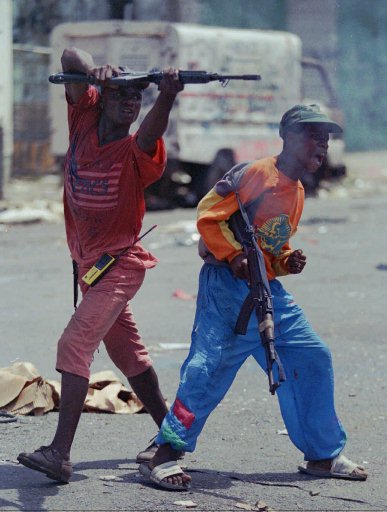
Initially, you’re going to need some battle-hardened combatants, preferably from disenfranchised ethnic groups or tribes that used to be in power and are surly about it. Anyone identified by Human Rights Watch as a systematic violator of human rights is a sure bet for real talent. Offer $100 a rebel (in crisp U.S. greenbacks), an all-the-enemies-you-can-kill deal, and promise a massive keg party at the end of it. That should do the trick. A few hundred recruits will do in the beginning, and the rest will join at gunpoint later. If you have trouble making your numbers, children are easily pressed into service. Alternatively, you can always start your own cult.
You will soon learn that your new recruits have a great deal of shooting experience, but little ability to shoot accurately. You will have to break bad habits, such as: shooting with one hand over their eyes, shooting their legs off, shooting colleagues, and disco-shooting — a technique involving shooting AK-47s while dancing in the middle of a firefight. Expect to lose one quarter of your recruits during basic rifle marksmanship. Whatever you do, don’t give out the grenades until game-day. Remember — your army doesn’t have to be well trained, just better trained or crazier than your adversary’s army. If you’re lucky, you’ll be squaring off against an American trained force.
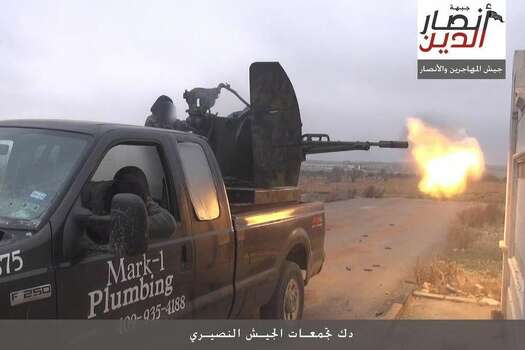
If you are operating in Africa, you will find that most of what you require can be purchased cheaply and easily at the village market. For example, an AK-47 should cost no more than $20 or a small goat. Other equipment to procure includes: ammo, RPGs, crew-served weapons, and the ubiquitous Toyota Hilux pickup truck with .50cal attachment (aka a “technical”). Avoid pistols, as they tend to be used against you by overly ambitious subordinates, typically once you have seized power.
If you have problems sourcing equipment, try the local United Nations mission, who spend months collecting weapons from former warring parties. For a little baksheesh, UN peacekeepers (especially those from South Asia or Nigeria) are often willing to under-report a few tons of weapons. If all else fails, go on a shopping spree in Eastern Europe. Serbia, Bulgaria, and Romania are best. Avoid Russia. Ukraine is busy. Also, don’t bother with the middleman: go directly to the weapons factory. Expect to spend a lot of tush-time in dilapidated, four-prop AN-12 cargo planes flying with the aid of a Garmin suckered to the windshield. Bring earplugs. Pack a lunch, a few briefcases of cash, and some firepower in case the deal goes bad. While in flight, do not be alarmed by the drunken crew smoking on your live-ammo crates while drinking homemade slivovitz that tastes vaguely like distilled hydraulic fluid. This is normal, and you will be expected to participate.
6. Develop a propaganda campaign. You can count on the international press not caring about your country-to-be, unless white tourists are killed. However, noisome Non-Governmental Organizations (NGOs), such as Amnesty International, may raise a stink after your coup, so pre-empt them by offering a counter-narrative to the complacent press. Claim that you “nobly plan to restore hope to a beleaguered people, victimized by a serial human rights abusing, terrorist-loving tyrant.” Be sure to flash pictures of starving babies with flies on their faces to attract Hollywood celebrities to your cause. Include some combination of the following buzz-phrases in your press release: “local ownership,” “human security” and “good governance.”
For NGOs who fail to get the message, don’t order a “disappearance” of their staff, as they will only use this against you. Instead, arrange for a sex-scandal involving the NGO’s country director, small native boys, and YouTube. With luck, the entire NGO will be declared persona non grata, and kicked out of the country by dawn.
7. Stage your coup. Once you’ve passed out the hand grenades, fueled up the technicals, and verified that your army is high on dope (you can’t stop this so you might as well channel it for the cause), you are ready to stage your coup d’etat. Most fragile states are so accustomed to coups that all you really need to do is take over the radio station and the Presidential Palace to achieve local “buy-in.”
First, attack at dawn, when government forces will be hung-over and thus incapacitated.
Second, take out the cell-phone towers. You will find that this eliminates 99% of the government’s ability to communicate (the last 1% comprise of hand-signals and verbal abuse).
Third, drive madly down the main streets shooting into the sky and cursing wildly. This is standard coup-protocol, and signals to the citizens: “Armed coup in progress; please remain inside your homes.”
Fourth, expect a final stand of semi-sober, loyal government forces at the palace front gate. This will be a paltry but fearless force of the president’s “elite” inner-circle bodyguard. Usually this means about a hundred deranged child soldiers who worship the president as father and king. The best way to defeat these mini-monsters is to take cover and taunt them via bullhorn, calling them names (e.g., teeny squirt, virgin-boy, lil’ pecker, mini-me-men, etc.). Inevitably, they will become enraged and shoot all their ammo at you. When it runs out, crash down the gates and crack heads.
Fifth, go straight to the president’s bedroom and dig him out from under his pile of whores (caution: he may be dressed as one of them). He will appear much smaller in real life than on TV, so it might take a while to recognize him. Almost immediately (within the hour) conduct a “war crimes” trial followed by a good old-fashion hanging, Saddam Hussein-style. A minimal level of pageantry is important. For some reason, the international community respects this more than a bullet to the head.
Finish up with a national feast, involving free beer from the local brewery, indigenous dancing, and virginal sacrifice (if culturally appropriate).
8. Cement your position. To your surprise, you will find that the citizenry will continue on with “business as usual.” However, you will have to act immediately to establish your authority among pesky rivals by eliminating the opposition entirely and making a few examples of ambitious allies (e.g., your co-opted warlord). You must do this on the same day as the coup, which will send ripples through the countryside, contain most of the bloodshed to a single day, and make good press.
Avoid becoming a global pariah by joining a “coalition of the willing” and/or becoming a U.S. partner in the “War on Terror” or whatever they call that now. Instead, volunteer your country as a secret U.S. air base or CIA prison center in exchange for Washington’s political cover at the United Nations and lots of military aid (it worked for Pakistan and Egypt for years).
9. Do some nation building. In order to avoid a coup yourself, you will need more than repressive secret police — you will need to generate some Gross Domestic Product for your country. If you can grow them, poppies or coca leaves yield more revenue than, say, rice or whatever the World Bank is pushing these days. And then people will pay you not to grow them, so it’s “win-win.”
However, becoming a narco-state is so yesterday. Instead, consider turning your country into an offshore tax haven for hedge funds and oligarchs. As the British Virgin Islands shows, laundering billions of dollars will not only pay handsomely, it will also put you in tight with the Fortune 500 cocktail circuit, who will pay to develop ultra-posh scuba resorts on your beaches, right next to your banks. Of course, this will land your new nation on the Financial Action Task Force blacklist, but think of this as free advertising.
Lastly, shore up customer confidence by not signing quaint extradition treaties. Let them know that they always have a “home away from home,” if they must suddenly flee their country. You may have missed out on the Arab Spring wave but you might get lucky with an African Spring, Latin Spring or Asian Spring. You will soon realize that once you have a vote in the United Nations, you can do whatever you want — enjoy!
10. Bask in your victory. You will find that ruling a small country is akin to being a rock star. Give yourself a new name in the local language, like “Rooster Who Gets All the Hens,” and even name your new nation after yourself like Cecil Rhodes did. You will have hoes-a-plenty, drugs, money, a private jet, an entourage, and no responsibility. People will expect you to misbehave, so don’t let them down.
Israeli intelligence is polishing off a dubious propaganda campaign to suggest Hezbollah was to blame for the recent catastrophe in Beirut. But the factual record either contradicts Israeli claims or reveals a complete dearth of evidence. By Gareth Porter
Israeli officials have exploited the massive explosion at the Port of Beirut this August to revive a dormant propaganda campaign that had accused the Lebanese militia and political party Hezbollah of storing ammonium nitrate in several countries to wage terror attacks on Israelis.
The Israeli intelligence apparatus had planted a series of stories from 2012 to 2019 claiming Hezbollah sought out ammonium nitrate as the explosive of choice for terrorist operations. According to the narrative, Hezbollah planned to covertly store the explosive substance in locations from Southeast Asia to Europe and the US — only to be foiled repeatedly by Mossad. In each one of those cases, however, the factual record either contradicted the Israeli claims or revealed a complete dearth of evidence.
The narrative first debuted in the Israeli press after a June 2019 story in the British pro-Israel daily The Telegraph on alleged Hezbollah storage of the explosive around London. The Times of Israel introduced for the first time the much broader theme that Hezbollah planned to use the explosive for “huge, game-changing attacks on Israeli targets globally.”
Next, “new details” appeared in the Hebrew daily Yedioth Ahronoth from “unnamed Israeli intelligence officials,” disclosing how Israel had supposedly stymied ammonium nitrate-based terror plots by Hezbollah in London, Cyprus and Thailand.
Following the calamity of the Beirut explosion, the narrative story was opportunistically revived in the Israeli media, with The Times of Israel summarizing an Israeli Channel 13 report citing an “unsourced assessment” that Hezbollah “apparently planned to use the ammonium nitrate stockpile that caused a massive blast at Beirut’s port this week against Israel in a ‘Third Lebanon War’.”
A review of the supposedly open-and-shut cases in both Thailand and Cyprus, however, reveals serious questions about the evidence used to accuse Hezbollah suspects and the role of the Mossad in those cases. It also shows that an alleged Hezbollah plot involving ammonium nitrate in New York City was contrived by the FBI and Justice Department without any real evidence. Thailand: Muddling the Issue, Bending the Law
The arrest of Hussein Atris, a dual Swedish-Lebanese citizen, in Bangkok on January 13, 2012 occurred after the Mossad received a report that a terrorist attack was due to occur in the middle of that month. The Israeli intelligence agency had given the Thai police a list of 14 or 15 suspects — all Iranian or Lebanese — to be placed under surveillance, including Atris.
But it was Atris who received the bulk of attention. After his arrest, he told police about goods he had stored in a commercial building in Bangkok. Shortly after his arrest, he was taken out of his cell to a house where he was interrogated by three Mossad agents, as was typical of Mossad operations in countries where Israel cultivated close relations with law enforcement. On January 17, Thai police visited the commercial building near Bangkok and reportedly found 4.8 tons of urea fertilizer and 40 liters (100 pounds) of ammonium nitrate.
Atris was immediately charged by the police with “possession of prohibited substances.” But in fact, the ammonium nitrate that Atris had stored in the building was not illegal; it was merely a component of frozen gel packs for sore muscles commonly bought and sold wholesale and retail all over the world.
The boxes of gel packs were stored along with electric fans, slippers and copy paper on the second floor of the building. And as Atris explained to his interrogators and to a reporter from the Swedish daily Aftonbladet who interviewed him in jail, he had been purchasing various goods in Asia and exporting them to other countries like Liberia. He had already arranged for a freighter to ship the goods he had stored there, as the chief of Bangkok metropolitan police confirmed in an interview with the New York Times.
The Mossad interrogators refused to accept the explanation by Atris and accused him of lying about his business. Further clouding the picture, police found two tons of urea fertilizer in bags labeled as cat litter on the same floor as the cold packs. But Atris told an interviewer he had never dealt with fertilizer in his business, and that he believed “it must have been placed in our storage facility by someone, probably Mossad.”
Mossad and its Thai allies were committed to the idea that Atris was a Hezbollah operative from the beginning, even though they apparently had no actual hard evidence to back it up. The claim of Hezbollah membership was nevertheless sold successfully to cooperative local and national news media. A Reuters story headlined “Thailand: Hezbollah man arrested in terror scare.” When he was brought to trial in 2013, Atris firmly denied any links to Hezbollah, and the court ultimately found that there was no evidence to support the contention by the police and Mossad that he was in any way involved with the Lebanese movement.
International press coverage of the case blurred details in a way that incorrectly suggested terrorist intent. When Atris’s case went to trial in July 2013, Agence-France Presse falsely reported that he and “unidentified accomplices” had “packed more than six tons of ammonium nitrate into bags,” thus confusing the already commercially-packaged cold packs with the urea fertilizer, which was not an illegal substance under Thai law and which he specifically denied owning. Time magazine distorted the case more seriously by referring to the bags of urea fertilizer as “chemicals being assembled into explosives…in bags labeled as kitty litter.”
In the end, Atris was convicted of “illegal possession” of ammonium nitrate, which was a banned substance under Thai law. However, the country had not intended for the provision to apply to frozen gel packs for pain relief, which are commonly traded in bulk internationally.
Despite the absence of any evidence that Atris was either a Hezbollah agent or a terrorist, the US State Department bowed to its Israeli allies and declared him to be “a member of Hezbollah’s overseas terrorist unit.” Cyprus: The mysterious appearance of ammonium nitrate
In 2015, the Cypriot government’s prosecuted Canadian-Lebanese Hussein Bassam Abdallah for allegedly being part of a Hezbollah ammonium nitrate terrorist plot after police found 420 boxes of the fertilizer in the house where he was staying. Yet virtually no details about the case were ever released because the entire legal process took place behind closed doors. What’s more, Abdallah’s defense was never made public.
Furthermore, information from the Kuwaiti daily Al-Jarida, which Israelis have often used to disseminate propaganda into the Arab Middle East, raises serious questions about the origin of the ammonium nitrate found in the house where Abdallah was staying. The newspaper published a story citing a “private source” who said that Mossad agents had been tracking Abdallah, following his every movement and intercepting all his phone calls from Cyprus. The Mossad surveillance continued, according to the story, “until he obtained the materials and fertilizer, after which Cypriot authorities were informed [and] raided his place of residence and arrested him and seized two tons of [ammonium nitrate].…”
By reporting an apparent Mossad account that the ammonium nitrate was not at the house until just before Mossad tipped off the police, the Al-Jarida account obviously suggested that the timing of its appearance was not merely coincidental.
This was not the first time that Mossad-related evidence against one of its targets turned out to be highly suspect. Two Iranian men who were visiting Mombasa, Kenya in 2012 were charged with having buried 15 kg of the explosive RDX on a golf course. However, they had been interrogated — and one of them allegedly drugged — by three Mossad agents. Though Kenyan police had supposedly been carrying out constant surveillance on them for the entire length of their stay, no direct evidence of the Iranians ever possessing RDX came to light. That anomaly resulted in the case against the Iranians being thrown out by Kenya’s Court of Appeal , and suggested that Mossad itself had planted the explosive on the golf course.
In Abdallah’s case, the evidence also indicated the use of a classical prosecution tactic was employed to force him to admit to a Hezbollah ammonium nitrate terrorism plot: forcing a plea bargain on him by the threat of a much longer sentence if he refused to plead guilty.
After the first week of interrogation, a Cypriot security official told a journalist that Abdallah denied all charges against him and was not “cooperating” — meaning he was not admitting what both Israel and Cyprus wanted him to. Weeks later, however, following a trial closed to the public, Abdallah admitted to all eight charges against him. The semi-official Cyprus News Agency reported he had given the police a statement that the ammonium nitrate was to have been used for terrorist attacks against Jewish or Israeli interests in Cyprus. In return he was given a six-year sentence instead of the 14 years he would have received without the deal.
Abdallah’s defense lawyer, Savvas A. Angelides, pressed his client to accept the plea bargain, advancing the political interests of Cyprus as a close ally of Israel. For his part, Angelides had his eyes on a high-level national security posting in his country’s government. Sure enough, in early 2018, the lawyer was appointed Defense Minister of Cyprus.
The idea that Hezbollah obtained ammonium nitrate for use in New York City – another Israeli contention – was not supported by any evidence whatsoever. In this case, a Lebanese-American named Ali Kourani stood accused of hatching a Hezbollah terror plot. But the closest the US Justice Department could come to linking to ammonium nitrate was a statement in its criminal complaint against him.
It claimed that in May 2009, Kourani “entered China at an airport in Guangzhou, the location of Guangzhou Company-1, i.e., the manufacturer of the ammonium nitrate-based First Aid ice packs sized in connection with thwarted IJO attacks in Thailand and Cyprus.” The suggestion that a trip to Quangzhou somehow counted as evidence of an effort to procure ammonium nitrate for Hezbollah terrorism was patently absurd. London and Germany: Mossad’s phantom Hezbollah explosives
The next apparent Israeli intel dump arrived in the form of a June 2019 story in the Telegraph UK, a right-wing Murdoch-owned daily which loyally follows Israeli propaganda lines. According to the report, in 2015, the UK MI5 intelligence service and London’s Metropolitan Police were tipped off by the Mossad about thousands of ice packs containing three tons of ammonium nitrate in warehouses in Northwest London. The Telegraph revealed that London police had arrested one man “on suspicion of plotting terrorism” but had eventually released him without charges. That detail was the giveaway that the British had come to realize that they had no evidence linking cold packs or their owner to any Hezbollah terrorist plot — contrary to the Israel narrative.
The Telegraph’s suggestion that MI5 decided not to prosecute to disrupt the threat isn’t credible, because no one was ever prosecuted. And its implication that the British government kept quiet about the episode because it was protecting the Iran nuclear deal did not apply once Trump tore up the agreement in 2018. The British government, which banned Hezbollah in February 2020, has never suggested that the Lebanese militia had been plotting to use ammonium nitrate from warehouses in the UK to carry out terrorist attacks.
According to a report this May by Israel’s Channel 12, days before Germany announced its banning of Hezbollah from the country, Mossad had gathered information on alleged Hezbollah terrorism-related activities in Germany. The supposed plotting consisted of the identification of warehouses in southern Germany where the Mossad said Hezbollah was storing ‘hundreds of kilograms” of ammonium nitrate.
After the information was presented to German intelligence and law enforcement agencies, according to the report, the German Interior Ministry announced in April 2020 that it was banning Hezbollah. It simultaneously raided four mosque associations accused of being close to Hezbollah. But German law enforcement never announced any action regarding warehouses supposedly holding ammonium nitrate, indicating that the German government found nothing that backed up the claims by Mossad.
Hoping to seize the Beirut explosion as a historic propaganda opportunity, the Israelis clearly believe they can fashion a new and more powerful narrative by knitting together false claims related to these episodes. Their objective is to achieve their longtime objective of forcing Hezbollah out of the Lebanese government by implicating it in the calamitous blast. So far, Western corporate media appears inclined to accept the baseless Israeli claims on face value. The day after the blast in Beirut, the Washington Post reported that Hezbollah “has long shown an interest in acquiring [ammonium nitrate] for use in a variety of terrorist plots.”
 Srdja Popovic. Credit Darko Vojinovic/Associated Press