Wednesday, August 26, 2020

Feds propose 10-year oversight of UAW, Detroit News reports


https://www.wsws.org/en/articles/2020/08/25/fede-a25.html

By Jessica Goldstein and Marcus Day
25 August 2020

The US Department of Justice (DOJ) has proposed federal supervision of the United Auto Workers union for 10 years and the appointment of an independent monitor in a potential agreement that would defer prosecution of the UAW, according to a report published in the Detroit News last week.

The report stated that US Justice Department officials “proposed subjecting the United Auto Workers to 10 years of federal oversight to eliminate corruption within the union, one of the longest periods of federal supervision in recent history,” and that the proposal had been in the works for “several weeks.” The agreement would stop short of a full federal takeover of the UAW under the auspices of the Racketeer Influenced and Corrupt Organizations (RICO) Act, according to the News, avoiding the type of government trusteeship which the Teamsters union underwent following its prosecution in the late 1980s.

Since the Detroit News’ report, there has been virtually no further media coverage of the proposal. Throughout the years-long UAW corruption and bribery scandal, the News has served as a conduit for the FBI and the federal prosecutor’s office.

If federal oversight of the UAW or some cosmetic “reform” measures are implemented, they will do nothing to change the character of the UAW as an arm of the corporations run by company agents vehemently hostile to workers. Instead, the UAW would be even more dependent upon the capitalist state—which is not a neutral party, but rather represents the interests of the corporate and financial aristocracy—for its continued existence, and even more beholden to the demands to implement the brutal policies of the ruling class.

The possibility of an independent monitor for the UAW was earlier floated at the beginning of July in talks between UAW President Rory Gamble and US Attorney Matthew Schneider, the federal prosecutor overseeing the years-long investigation into UAW corruption and bribery. That federal criminal investigation, along with a more recent civil racketeering suit by General Motors against its rival Fiat Chrysler, revealed what autoworkers long suspected: that the UAW is a cesspool of criminality, run by bribed operatives of the companies.
To date, 10 UAW officials, including former UAW President Gary Jones, along with the widow of one high-ranking UAW officer, have pleaded guilty to charges ranging from violation of labor laws, racketeering, embezzlement, conspiracy and tax fraud. While forcing through year after year of concessions contracts and auctioning off workers’ rights, UAW officials lived the high life, with months-long getaways to luxury resorts, lavish meals, endless golf junkets, designer clothing and jewelry, bottles of Cristal champagne and high-end cigars.

In the most recent and explosive revelations brought to light in the course of GM’s lawsuit, top UAW officers, including among others former Presidents Ron Gettelfinger and Dennis Williams and former Vice President Joe Ashton, were alleged to have been given control of secret foreign bank accounts by FCA into which tens of millions of dollars were funneled, in a scale of bribery far beyond that which had previously been revealed.

Former UAW President Gary Jones and former UAW-GM Vice President Joe Ashton are each still awaiting sentencing following their earlier convictions. Jones pleaded guilty in June to charges that he conspired to embezzle $1.5 million in members’ dues money for the personal use of top union officials, and Ashton pleaded guilty last December to money laundering and wire fraud charges. Former UAW-FCA Vice President Norwood Jewell, who pled guilty in April 2019 for his part in the bribery conspiracy with FCA, served five months of a slap-on-the-wrist prison term in a minimum-security facility before being released early in May to serve the remainder of his sentence at home.

Former President Dennis Williams, whose home was raided by the FBI last year, reportedly returned $55,000 in “inappropriately” used expenses earlier this year. While Williams was one of the unnamed co-conspirators in the case against Jones, according to sources cited by the Detroit News, he himself has yet to be charged. The UAW, which has doled out over $2 million in union funds to cover its officers’ legal fees, just recently stopped covering Williams’ legal defense, in a possible indication that an indictment may still be in store for him.

Current UAW President Rory Gamble, who has been leading the talks with the DOJ, was himself previously reported to have been under investigation for potentially taking kickbacks from a highly paid union apparel vendor. As with Jones before him, Gamble was held up as representing a clean slate and “reform from within” by the UAW upon assuming the role of acting president after Jones stepped down.

Significantly, the Detroit News again cited comments in its report last week by US Attorney Schneider that he favored implementing the direct election of union officials to the UAW’s executive board, rather than the current antidemocratic set-up, in which UAW executives are elected by tightly vetted delegates to its conventions.

This proposal, worked out between the UAW and the Trump administration’s Justice Department, would do nothing to change the corporatist character of the UAW, which cannot be undone simply via the replacement of a few “bad apples,” or make it a genuinely democratic organization. One should consider the role of Schneider: the federal prosecutor now improbably posing as a champion of union democracy played a leading role in the enforced bankruptcy of Detroit, which stripped retired public employees of pension and health benefits, and has backed the use of Trump’s federal forces in Detroit.

Nonetheless, this has not stopped the proposal from being trumpeted by the Unite All Workers for Democracy (UAWD) faction within the union as a means to supposedly reverse the UAW’s decades-old transformation into a tool of management and cheap labor contractor. Earlier this year, the UAW squashed a bid by the UAWD to hold a special convention to amend the union’s constitution to allow direct elections.

Scott Houldieson, former UAW Local 551 vice president at Ford’s Chicago Assembly Plant, founding member of the UAWD, and longtime supporter of the pseudo-left Labor Notes publication, told the Detroit News, “We have been pushing for direct elections for international officers, and we want to see that come to fruition. Along with that, we would like to have the ability for a monitor or a judge to be able to intervene if the elections weren’t going properly. Without direct elections, it’s nearly impossible to hold officers accountable.”

An ardent supporter of the Democratic Party, Houldieson has worked throughout his career to keep workers’ opposition from breaking out of the confines of the UAW, promoting illusions in the possibility of various reform efforts, and seeking above all to prevent the development of a movement of workers independent of both the unions and Democratic Party.

For Houldieson and others like him, it is not unlikely that they smell an opportunity to win lucrative positions in the UAW leadership through federal oversight.

Anyone harboring lingering hopes that things will improve for autoworkers through the intervention of the state, the direct election of union executives or some other “reform” measures should consider the disastrous outcome of previous such experiences in the unions.

In the early 1970s with the United Mine Workers of America (UMW) and the late 1980s and beyond with the Teamsters, the federal government intervened under the pretext of combating corruption, overseeing union elections in the case of the UMW and carrying out a takeover of the Teamsters under the RICO act, placing it under trusteeship. The reform factions which came into the leadership as a result of this process—the Miners for Democracy and Arnold Miller in the first case (and later Richard Trumka, now president of the AFL-CIO), Teamsters for a Democratic Union and Ron Carey in the latter—immediately came into conflict with workers.

Wherever these or other “reform” factions in the unions, including New Directions in the UAW itself, came into power, they worked just as consistently to enforce the will of management, with the result being the decimation of workers’ rights won over generations of struggle.

As with previous interventions by the federal government to supposedly clean up union corruption, the state criminal cases against UAW officials have not been driven by a desire to make the UAW into an organization which represents workers. Rather, it has been aimed at heading off a full-scale rebellion by autoworkers outside the control of the union.

After the US auto industry was restarted in May following its shutdown—which itself was the result of wildcat actions taken by rank-and-file workers in North America and Europe, which the unions tried to halt—anger has continued to grow, as workers are confronting the danger of exposing themselves to the coronavirus at their workplaces on a daily basis. Workers have begun to organize rank-and-file safety committees independent of the unions at auto plants across the Midwest in order to fight for safe and humane working conditions.

There have been earlier indications that the state is growing nervous about the potential impact of any additional revelations of UAW criminality adding further fuel to this opposition. Judge Paul Borman, who has also been overseeing the federal criminal cases, has twice now blocked GM’s racketeering suit from proceeding any further, referring to it as “waste of time and resources.” If the government does reach a deal with the UAW which avoids a full takeover, it would not be because it has become any less corrupt, but rather because the state feels that the UAW can still be relied upon the enforce the will of management without more drastic, and potentially destabilizing, measures (such as a full federal takeover) being taken at this point.

US autoworkers must not take a “wait and see” approach to the outcome of the talks between the federal government and the UAW. Rank-and-file safety committees, genuinely democratic workers’ organizations independent of the unions, must be formed and expanded, forming a network across the auto industry and linking up with the vast opposition developing among teachers and other workers in a movement fighting to secure the interests of the entire working class.

The WSWS Autoworker Newsletter will provide workers every assistance in building these committees. To get involved, contact us today.


The author also recommends:

Judge blocks GM’s bid to reopen racketeering case against Fiat Chrysler
[17 August 2020]

The United Auto Workers: A criminal conspiracy against the working class
[7 August 2020]

UAW president meets with prosecutor to avoid government takeover
[2 July 2020]

Brick-Stupid Eric Trump Takes COVID Victory Lap


https://www.youtube.com/watch?v=Yf9kx5KRfyE


This is the bogus anti-Semitism report that sank Jeremy Corbyn


Asa Winstanley The Electronic Intifada 
24 August 2020

https://electronicintifada.net/content/bogus-anti-semitism-report-sank-jeremy-corbyn/31026


The road to Jeremy Corbyn’s political downfall began at Oxford University Labour Club in February 2016.

A rogue inquiry by a Labour staffer with close ties to the Israeli embassy included fabricated allegations of anti-Semitism.

It destroyed the lives of several pro-Corbyn students sympathetic to the Palestinian cause.

It also triggered Labour’s “anti-Semitism crisis” in earnest. The manufactured crisis continues today, even with Corbyn now marginalized.

After an internal Labour disciplinary investigation, some of the accused were cleared of anti-Semitism the following year.

But by that time the damage had been done.

After a four-year investigation, The Electronic Intifada has obtained the full Rubin report, which has never been published.

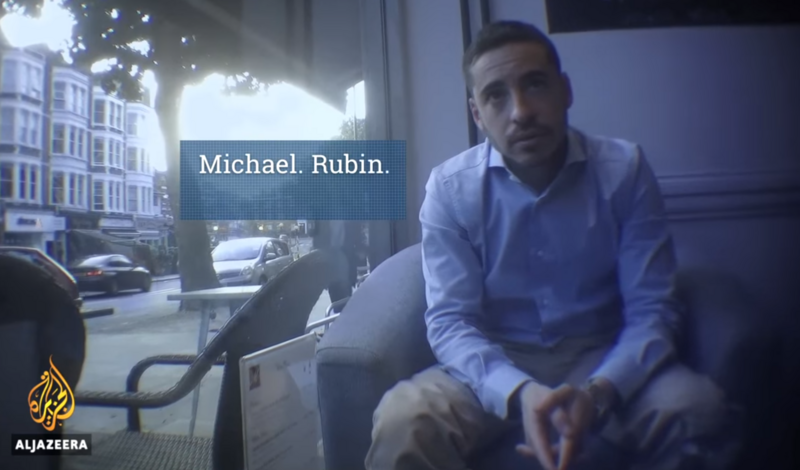
Michael Rubin, who wrote it, was chair of the right-wing group Labour Students. But the “inquiry” was his own initiative and had not been mandated by either Labour’s leader or its ruling National Executive Committee.

Rubin was also collaborating with Shai Masot, an Israeli “diplomat” who would be kicked out of the UK the following year.

Soon after writing the report, Rubin was hired by Labour Friends of Israel, a group which secretly coordinates with the Israeli embassy in London.

Masot was caught in undercover footage recruiting to the Israeli front group.
Influence

After years working for them, Rubin was promoted in July this year to director of Labour Friends of Israel.

He also met with Corbyn’s right-wing successor, Keir Starmer, to discuss their opposition to the party’s policy of sanctions against Israel.

The inquiry conducted by Rubin directly influenced the far better known Royall and Chakrabarti inquiries into alleged Labour anti-Semitism.

The Electronic Intifada has protected some names in the report so as not to further Rubin’s disinformation campaign. You can read redacted extracts below.

The document shows how vague or fabricated allegations of anti-Semitism against left-wing supporters of Corbyn were laundered into serious accusations.

It states that Rubin reported to Labour staff six Oxford University Labour Club students he claimed were guilty of “repeated and potentially criminal anti-Semitism over a sustained period of time.”

But the document fails to support this allegation.

Rubin’s “evidence” is at best tenuous. But it also includes outright falsehoods.

Israeli embassy spy Shai Masot worked closely with Michael Rubin for several years. Al Jazeera

The timing is also notable: The club had just voted to endorse Israeli Apartheid Week, an annual fixture in the Palestine solidarity movement’s calendar.

One former student attacked in the report, who asked not to be named, told The Electronic intifada that the document had misattributed an anti-Semitic quote to them.

According to the student, someone had falsely inserted the word “Jewish” into a statement the student had made about the influence of the wealthy over elections.

“As I recall, what I actually said was that there is ‘influence wielded over elections by high net-worth individuals.’ I would never blame this on Jewish people,” the former student said.

“The sections of the report on me are false. Labour Students never even contacted me to get my side of the story.”

In other examples, one of the six allegedly “rolled [their] eyes” when a Jewish student spoke. On another occasion, the same accused individual supposedly “jeered” when the name of a former Israeli prime minister was mentioned.

One anonymous Jewish student alleged only that they were sent “a message that was aggressive and delegitimized the feeling I had.”

But astonishingly, Rubin concluded that all four of these allegations constituted “sufficient evidence” of anti-Semitism to report to Labour’s disciplinary staff.

The document also inadvertently proves that Rubin’s “witnesses” were often only relating hearsay and gossip.

One anonymous student said they “heard from other students” that one of the accused “engaged in songs which glorify rocket attacks against Tel Aviv” but admitted that they hadn’t actually seen this.

No one seems to be able to explain what this song supposedly was, how its lyrics went, or to have heard it sung.

Rarely in the Rubin report are there any specific or dated incidents, or any direct claim to have actually witnessed anti-Semitism.

Yet in such cases, Rubin often still claimed there was “sufficient evidence” to report individuals for disciplinary action.
Right-wing racism

The full document also suggests Rubin covered up allegations of racism by right-wingers in the Labour club – even alleged anti-Semitism.

It records several such allegations against right-wingers, but they were either ignored or marked “not sufficient evidence.”

One anonymous student quoted in the document states that during the club’s debate over Israeli Apartheid Week, a Palestinian student was “shouted down by the chair of the meeting, Alex Chalmers, called a terrorist sympathizer and subject to particularly aggressive questioning and speeches,” especially by David Klemperer, another right-winger.

A Jewish campaigner for Palestinian rights reported being on the receiving end of hostility from Chalmers: “Alex wanted to make me feel I was a traitor” and “a self-hating Jew,” the individual said.

Chalmers’ main right-wing accomplice, former club co-chair Klemperer, was accused of anti-Semitism too.

According to an anonymous student quoted in the report, Klemperer allegedly said: “You’re exactly the sort who should’ve died in the Holocaust.”

Rubin recommended no disciplinary action against either of the two, claiming there was “not sufficient evidence.”

Chalmers quit Labour and Klemperer was kicked out after they supported Liberal Democratic candidates in local elections. But Klemperer now appears to be back in the party.

Chalmers did not reply to a request for comment. Klemperer set both of his Twitter accounts to private soon after The Electronic Intifada emailed him a request for comment, but did not otherwise respond.
The lie that got around the world

Chalmers’ false allegations of anti-Semitism against the Oxford University Labour Club made international headlines after his resignation as co-chair on the night of the vote for Palestinian rights on 15 February 2016.

The Israeli embassy accused Oxford students of “disgraceful activity.”

Former Labour leader Ed Miliband canceled a speaking event there and the government’s minister for universities Jo Johnson demanded Oxford investigate Chalmers’ allegations – despite how blatantly false they appeared even at the time.

As The Electronic Intifada revealed soon after, Chalmers had also worked for BICOM, a pro-Israel advocacy organization.

The “Labour anti-Semitism” controversy rages on to this day. Some Israel lobbyists are even calling for Corbyn to be kicked out of Labour.

It has for years been reported that two of the main targets of the Rubin report’s false accusations were James Elliott and Max Shanly – then leading pro-Corbyn activists in Labour’s youth wing.

Shanly was a left-wing member of Young Labour’s national committee and a supporter of Corbyn. Elliott had advised Corbyn on youth policy during his 2015 leadership campaign.

Elliott was also standing for election to a seat on Labour’s ruling National Executive Committee.

Rubin’s “inquiry” was wrapped up in about a week. Details from the report were then almost immediately leaked to the right-wing press – days before the NEC election.

After the press smears about the pair, combined with a whispering campaign organized by Elliott’s right-wing rival, Elliott lost the seat by a single vote.
“Mental health destroyed entirely”

In 2018, on his podcast All the Best, Shanly opened up about the effects of what he called a smear campaign against the pair.

He revealed he had been suffering from serious depression for the previous two years, from “February 2016 when all the [Oxford University Labour Club] stuff kicked off.”

“I had my mental health destroyed entirely,” he said.

Shanly explained that in the years he was under investigation, the Labour Party refused to hear his side of the story – even Janet Royall when she did her investigation into Oxford. He said that Labour Students also never bothered to speak to him.

“The allegations that were made against me were all false,” he said. “There was no evidence. It was all ‘I heard of.’ It all comes down to Michael Rubin’s report.”

“The reason I ended up getting so depressed is that no one wants to employ someone” at the heart of an internationally reported, alleged anti-Semitism scandal, he said.

That same year, Shanly was hospitalized after a severe mental health crisis.

All that summer, Labour’s civil war over allegations of anti-Semitism had been raging.
“I knew Shai… we did a couple of things together”

Michael Rubin and Labour Friends of Israel did not reply to requests for comment for this article.

In 2016, The Electronic Intifada asked Rubin in person if he regretted his part in the smear campaign against left-wing students at Oxford.

“I don’t know what you’re talking about,” he said, before rushing away.

But he has admitted to conducting the investigation, in undercover footage released in 2017. The document itself confirms this in its metadata.

Rubin had been close with Israeli embassy agent Shai Masot even before he started working for Labour Friends of Israel in May 2016.


In the undercover footage Rubin admitted: “I knew Shai in my role at Labour Students, we did a couple of things together.” You can watch him make this admission in the video above.

The footage was filmed by Al Jazeera for its investigative series The Lobby.

Masot was expelled from the UK after it hit headlines in January 2017.

The footage shows Rubin admitting to an undercover reporter that Labour Friends of Israel was essentially a front for the Israelis, but that “publicly we just try to keep the LFI as a separate identity to the embassy.”


It also revealed that the embassy finances Labour Friends of Israel’s activities.

Rubin discussed launching a youth wing with events funded by the Israelis: “the Israeli embassy are able to get a bit of money.”

Masot apparently told Rubin he would “help fund a couple of events.”

“I don’t think money should be a problem,” Rubin told Al Jazeera’s undercover reporter, who had been posing as a pro-Israel Labour activist.

After Al Jazeera’s film was broadcast, Boris Johnson – then foreign minister – said in Parliament that Masot’s “cover” had been “well and truly blown.”

Posing as a “senior political officer” at the London embassy, Masot was according to all indications an agent for Israel’s secretive Ministry of Strategic Affairs, which is staffed by former officers from Israel’s spy agencies.

Since 2015, the ministry has been Israel’s semi-covert dirty tricks agency dedicated to fighting a war against BDS, Palestine’s boycott, divestment and sanctions movement.

Asa Winstanley is an investigative journalist with The Electronic Intifada.


How the IMF and World Bank Are Used as Tools of Imperialism


https://www.youtube.com/watch?v=lkDelRyBmgY


Court rules against Florida governor but schools to remain open


https://www.wsws.org/en/articles/2020/08/25/flor-a25.html

By Alex Johnson
25 August 2020

On Monday, a Florida judge issued a temporary injunction against an order by the state mandating that schools provide full in-person instruction by the end of August or risk losing state funding. Within hours, the state filed an appeal, placing a stay on the preliminary injunction and effectively reinstating the criminal state order.

The Florida Education Association (FEA), which filed the initial lawsuit, said it will file a motion to reinstate the judge’s ruling. Whether this is granted or not, the final outcome for educators, parents and students will only be slightly altered.

While the unions and the media presented the judge’s ruling as a major victory for teachers, the reality is the school districts such as Duval County that have already opened will likely stay open. Meanwhile, educators in other districts will be herded back into unsafe classrooms, albeit under plans outlined by local district officials working with the unions, not under the timetables and rules set by Governor Ron DeSantis and his state education officials.

Facebook groups opposed to the Republican governor’s reopening of schools have formed across Florida, attracting thousands of members and serving as a means to organize protests. Last Thursday, roughly 80 teachers in Duval County (Jacksonville) organized a wildcat “sickout” strike on the first day of in-person learning. More than 1,200 Jacksonville school bus drivers and aides are conducting a strike vote. In addition, hundreds of teachers across the district and thousands statewide have resigned out of fear of returning to unsafe conditions.

Faced with this revolt, the FEA filed the lawsuit to try to corral the opposition and contain it behind appeals to the courts and local school officials to work with the unions to open the schools. The FEA and its parent unions, the National Education Association (NEA) and American Federation of Teachers (AFT), have adamantly opposed any mobilization of the union’s 150,000 members in any form of statewide protest or strike action.

Instead, numerous districts have been allowed to reopen across the state, producing at least 626 confirmed COVID-19 infections among students and staff, the largest confirmed total of any state.

In early July, the FEA filed the lawsuit against DeSantis, the Department of Education, and Education Commissioner Richard Corcoran, asserting that the state’s edict violates the state constitution’s guarantee of “safe and secure” public education.

Leon County Circuit Judge Charles Dodson ruled in favor of the FEA, arguing that local school boards should be able to “make safety determinations for the reopening of schools without financial penalty.” Dodson’s decision also concluded that the state order overrode the constitutional authority of local school boards to operate their own school systems and delay the resumption of in-person instruction.

Dodson made reference to the Hillsborough County school board decision in early August to delay reopening of its classrooms by four weeks, before being warned by Corcoran and other state officials they stood to lose up to $23 million a month. Bending to this pressure, the district later advanced its reopening date to August 31.

Dodson’s ruling is a highly calculated political decision. Given the popular opposition to the unsafe openings, the judge and the Democratic Party hope to breathe new life into the largely discredited teacher unions. Having declared in July that they would not organize any nationwide struggle to prevent the reopening of schools, the NEA and AFT have fully acquiesced to and facilitated the homicidal campaign to reopen schools.

Outgoing NEA President Lily Eskelsen GarcĂ­a hailed the court decision as “a victory for students and educators from being forced into unsafe school buildings.” AFT President Randi Weingarten declared, “The judge ruled that decisions about reopening should be made locally, not dictated by the state, either directly or through funding decisions.”

In reality, the ruling does nothing to ensure public health and prevent the reopening of schools, simply shifting responsibility to the local level. If the stay remains in effect, as an overturn is far from a guarantee, it will be as if the judge’s order doesn’t exist. The DeSantis administration would then be able to revert back to their original July order and compel school districts to fully reopen schools or risk losing funding.

Moreover, Dodson’s ruling also maintained that DeSantis and Corcoran’s order would become “constitutional” if the “unconstitutional” portions were deleted. This included removing language relating to required dates to begin in-person classes, mandatory reopening plans, and funding waivers. Therefore, language such as saying all schools “must open” was struck and instead replaced with language saying those decisions must be made by local district officials, such as the superintendent, school boards, and local unions.

Having set a precedent of mass openings, few districts will now voluntarily return to online learning without immense pressure from educators, parents and students. If the stay is overturned, local officials may utilize the considerable difficulties accompanying the establishment of distance learning as a pretext to resume in-person learning.

Many students in the state from low-income or rural communities have very unreliable or non-existent access to high-speed internet in their homes, which has made online instruction nearly impossible. There is also increasing concern over the inability of non-English speakers and homeless minors to have stable learning environments, with large numbers of both demographics not having access to learning devices or the internet. No extra funding is being allotted to address such dire circumstances.

Educators, parents and students must not be fooled by Monday’s judicial decision or harbor any illusions that the corporate-controlled legal system will defend their rights and safety. The chief task is to form an interconnected network of rank-and-file safety committees, independent of the unions and both big business parties, to prepare for a nationwide general strike to halt the reopening of schools and stop the spread of the pandemic.

There is tremendous support for such a struggle within the working class, but what is required is organization and leadership. The Educators Rank-and-File Safety Committee was formed to help guide this work, and we urge all those who agree with the need for a broader struggle to contact us today, join our Facebook group and make plans to attend our next online call-in meeting Saturday, August 29. Register today and share the event widely with your coworkers!

Trump, aides embrace fascist Republican candidates


https://www.wsws.org/en/articles/2020/08/25/qano-a25.html


By Patrick Martin
25 August 2020


At a press briefing last week, President Donald Trump offered public encouragement to supporters of QAnon, an online fascistic conspiracy theory group that justifies violence against Trump’s political opponents, including leaders of the Democratic Party such as House Speaker Nancy Pelosi and former presidential nominee Hillary Clinton.

Trump went out of his way to praise supporters of the online trend. He claimed not to know very much about QAnon—although he has retweeted QAnon-linked material at least 200 times, according to Media Matters, a site that monitors right-wing media and internet activity.

“I’ve heard these are people that love our country,” he said during a White House news briefing on the coronavirus. “I don’t know much about the movement other than I understand they like me very much, which I appreciate. But I don’t know much about the movement.”

Warming to the subject, Trump continued, “These are people that don’t like seeing what’s going on in places like Portland and places like Chicago and other cities and states.”

It was after a reporter gave details about QAnon in a follow-up question—noting that QAnon claims Trump is fighting a Satanic cult of child sex traffickers and cannibals linked to the Democratic Party—that the US president went beyond his previous arms-length posture.

“Well, I haven’t heard that, but is that supposed to be a bad thing or a good thing?” he replied. “If I can help save the world from problems, I’m willing to do it. I’m willing to put myself out there.”

Online message boards linked to QAnon immediately lit up, hailing Trump’s reply as an endorsement of their demented and bigoted ravings.

At least one supporter of QAnon recently won a Republican primary in Georgia for a seat in the House of Representatives. The candidate, Marjorie Taylor Greene, is expected to win the general election in Georgia’s heavily Republican 14th Congressional District and become the first open QAnon backer in Congress.

Another supporter of the trend won the Republican primary for US Senate in Oregon, although Democratic Senator Jeff Merkley is a heavy favorite for reelection there. A total of 19 Republican congressional candidates have been linked to QAnon, although only two, Greene and Lauren Boebert in Colorado’s 3rd Congressional District, are considered likely to win seats.

Another ultra-right candidate, Laura Loomer, won the Republican nomination for Congress in Florida’s 21th Congressional District, a heavily Democratic district currently held by Representative Lois Frankel.

The main significance of Loomer’s victory was that Trump is a resident of that district, which includes his Mar-a-Lago estate in Palm Beach, and he likely voted for her in the primary, for which he requested a mail ballot. Trump effusively welcomed her candidacy. “Great going Laura. You have a great chance against a Pelosi puppet!” he tweeted on the night Loomer won the nomination.

Loomer is an ultra-Zionist and vitriolic Islamophobe, who has described Islam as “a cancer on society” and called for “a non-Islamic form of Uber or Lyft because I never want to support another Islamic immigrant driver.” She has been banned from most social media platforms because of her strident anti-Islamic bigotry.

In 2017, she retweeted a magazine headline about 2,000 migrants drowning in the Mediterranean and added an applause emoji and the words, “Good. Here’s to 2,000 more.” She has also dismissed the terrorist attack in New Zealand, in which a fascist gunman murdered 50 Muslim worshippers at two mosques, declaring, “Nobody cares about Christchurch.”

Neither anti-immigrant racism nor fascistic conspiracy theories are too much for the Republican Party. Loomer was endorsed in the primary by Representative Matt Gaetz of Florida and Paul Gosar of Arizona, and Greene had the support of House Freedom Caucus leaders such as Andy Biggs of Arizona and Jim Jordan of Ohio.

According to a report in the Guardian, Greene had significant financial support from Mark Meadows, a former leader of the House Freedom Caucus who is now White House chief of staff, and other high-ranking Republican campaign donors.

The Your Voice Counts Political Action Committee, linked to Meadows, gave $2,000 to Greene’s campaign in March. The RightWomen PAC, whose executive director is Meadows’s wife Debbie, gave $17,500 to help Greene in her runoff victory against conservative Republican John Cowan. The House Freedom Fund spent more than $30,000 to support Greene and raised nearly $90,000 more from donors for her campaign, the Guardian wrote.

This explains why, when asked on several Sunday morning television interview programs about Trump’s comments embracing QAnon, Meadows declined to condemn the conspiracy theory outlet, but instead attacked journalists for raising the subject. In response to a question from ABC News anchor George Stephanopoulos, Meadows flatly lied, saying of QAnon, “I had to Google it to figure out what it is.”

Other donors to Greene included Barb Van Andel-Gaby, chairman of the board at the Heritage Foundation, a leading right-wing think tank in Washington, and a member of the family that founded Amway, along with the late Richard DeVos, father of Dick DeVos, the billionaire husband of Trump’s secretary of education.

The Guardian cited several other billionaires who had given money to Greene, including at least one who is Jewish, even though Greene traffics regularly in anti-Semitic attacks on liberal Jewish billionaire George Soros.

Supporters of QAnon have been arrested for real-world crimes that were politically motivated by materials posted on social media, including at least one would-be assassin of Democratic presidential nominee Joe Biden. The army reservist who attempted to kill Canadian Prime Minister Justin Trudeau in July was also linked to QAnon.

According to a report Friday in the New York Times, the most open connection between the Republican Party and the fascist trend has developed in Texas, where the state Republican Party has launched a new campaign slogan, “We Are the Storm.” This is a direct overture to QAnon supporters, who frequently use that slogan to describe what they anticipate will be a military coup led by Trump that will end in the round-up and mass execution of his Democratic Party opponents.


The author also recommends:

Fascistic candidate wins Republican congressional nomination in Georgia
[14 August 2020]

Further details emerge on far-right views of Canadian army reservist who tried to kill Trudeau
[15 July 2020]

Trotsky’s Last Year


https://www.wsws.org/en/articles/2020/08/25/trot-a25.html

Part Three


By David North
25 August 2020


This is the third part in a four-part series. The first part was published on August 20. The second part was published on August 21. The fourth and final part will be published on Friday, August 28.

Following the completion of his Manifesto for the Emergency Conference of the Fourth International, Trotsky’s relentless and punishing schedule of writing projects was interrupted by an event he had long foreseen, though its exact date could not have been predicted. In the early morning hours of May 24, 1940, the Mexican painter and fanatical Stalinist David Alfaro Siqueiros led a squad of assassins, armed with 45-caliber Thompson submachine guns, 30-caliber automatic rifles and incendiary bombs, in an assault against the leader of the Fourth International.

The assassins did not have to storm the villa on the Avenida Viena. The guard on duty, Robert Sheldon Harte, unlocked the iron gate and allowed the assassins to enter. The gunmen clearly were familiar with the entire layout of the compound. One group moved toward the section of the villa that housed the bedroom of Trotsky and his wife Natalia and that of their grandson Seva. Another group moved rapidly to the opposite end of the courtyard, outside the section of the compound where Trotsky’s guards were quartered. While the second group of gunmen laid down fire in the direction of the guards’ rooms, effectively pinning them down and rendering them totally ineffective, the main team of assassins entered Trotsky’s bedroom.

The room was dark, and the assassins fired wildly in all directions. Trotsky had taken a sleeping pill upon retiring for the night and was groggy as he was awakened by the gunfire. Natalia responded more quickly and saved Trotsky’s life. As he recalled in “Stalin Seeks My Death,” an account of the assault written in the first week of June 1940:


My wife had already jumped from her bed. The shooting continued incessantly. My wife later told me that she helped me to the floor, pushing me into the space between the bed and the wall. This was quite true. She had remained standing, beside the wall, as if to shield me with her body. But by means of whispers and gestures I convinced her to lie flat on the floor. The shots came from all sides, it was difficult to tell just from where. At one point my wife, as she later told me, was able clearly to distinguish spurts of fire from a gun; consequently, the shooting was being done right in the room although we could not see anybody. My impression is that altogether some two hundred shots were fired, of which about one hundred fell right beside us. Splinters of glass from windowpanes and chips from walls flew in all directions. A little later I felt that my right leg had been slightly wounded in two places. [1]

As the gunmen withdrew from the room, Trotsky heard his 14-year-old grandson, Seva, cry out. Trotsky recalled this terrible moment:


The voice of the child in the darkness under the gunfire remains the most tragic recollection of that night. The boy—after the first shot had cut his bed diagonally as evidenced by marks left on the door and wall—threw himself under the bed. One of the assailants, apparently in a panic, fired into the bed, the bullet passed through the mattress, struck our grandson in the big toe and embedded itself in the floor. The assailants threw two incendiary bombs and left our grandson’s bedroom. Crying, “Grandfather!” he ran after them into the patio, leaving a trail of blood behind him and, under gunfire, rushed into the room of one of the guards. [2]

Trotsky credited his survival to “a fortunate accident.”


The beds were under crossfire. Perhaps the assailants were afraid to hit each other and instinctively fired higher or lower than they should have. But that is only a psychological conjecture. It is also possible that my wife and I came to the aid of the happy accident by not losing our heads, not flying around the room, not crying out or calling for help when it was hopeless to do so, not shooting when it was senseless, but remained quietly on the floor pretending to be dead. [3]

The assassination squad made its escape, not realizing that its mission had ended in failure. Trotsky left his room and entered the courtyard, from which the smoke from gunfire was still rising. He was searching for members of the guard, who were still in their rooms. None of them had been trained to react to an assault of this character. Their efforts to return fire had been sporadic and ineffective. Harold Robins’ machine gun jammed on the first round. He learned later that the wrong ammunition had been loaded into the weapon. Robins recalled that Trotsky’s demeanor was remarkably calm. Having experienced numerous battles during the savage Russian Civil War of 1918-21, the former supreme commander of the Red Army was not unfamiliar with gun fire. But Robins also sensed that Trotsky was disappointed with the utterly ineffective response of his guards. [4]

The guards discovered that a detail of Mexican police, who had been assigned to man a post outside the villa, had been tied up. On Trotsky’s instructions, they were immediately unbound. A more disturbing discovery was that Robert Sheldon Harte had departed with the assailants, which immediately aroused suspicions that he was involved in the conspiracy. In the absence of definite evidence of Harte’s involvement, Trotsky upheld his innocence—a position that seemed to be vindicated when the guard’s body was discovered several weeks later.

For reasons that can be well understood, Trotsky was reluctant, in the immediate aftermath of the assault, to level an accusation against Harte. But he did not exclude the possibility that Harte had acted in collusion with the GPU. “Despite all precautions,” Trotsky wrote, “it is, of course, impossible to consider as absolutely excluded the possibility that an isolated agent of the GPU could worm his way into the guard.” [5] He noted that Harte, due to his disappearance, had come under suspicion. But based on the evidence then available, Trotsky was not prepared to conclude that Harte was guilty. He accepted the possibility that new information might require a reevaluation of Harte’s role. Whatever the final verdict, he continued, “If contrary to all my suppositions such a participation should be confirmed, then it would change nothing essential in the character of the assault. With the aid of one of the members of the guard or without this aid, the GPU organized a conspiracy to kill me and burn my archives.” [6]

Trotsky expressed confidence in the SWP’s choice of guards. “They were all sent here after special selection by my experienced and old friends.” [7] What Trotsky did not know was that the Socialist Workers Party did not seriously vet the individuals it dispatched from the United States to Coyoacán. In the case of Harte, the 25-year-old New Yorker had virtually no political history in the SWP. After his son’s disappearance, his father, Jesse Harte, a wealthy businessman and friend of J. Edgar Hoover, flew to Mexico. In the course of meetings with the Mexican police, the elder Harte informed them that a photo of Stalin had been found in his son’s New York apartment. When this information was leaked to the press somewhat later, Trotsky sent Jesse Harte a telegram, asking for confirmation of this report. Harte replied with an unequivocal and dishonest denial: “DEFINITELY DETERMINED STALINS PICTURE NOT IN SHELDONS ROOM.” [8]


The release of GPU archives following the dissolution of the Soviet Union in 1991 established definitively that Harte was a Stalinist agent, who played a critical role in the May 24 attempt on Trotsky’s life. Several days after the assassination attempt, the GPU rewarded Harte for his treachery by murdering him. Contemptuous of the young traitor, Siqueiros and his accomplices viewed Harte as an unreliable individual who might talk if he were eventually questioned by police. While Harte slept, they fired a bullet into his brain, threw his body into a dirt pit and covered it with lime. Hart’s decomposed remains were discovered several weeks later.As part of the investigation into the assassination of Trotsky, which it initiated in 1975, the International Committee of the Fourth International reviewed all the evidence relating to Sheldon Harte’s role in the May 24 raid. The ICFI concluded that Harte was, indeed, a participant in the conspiracy. This finding was denounced by the Socialist Workers Party (SWP), led by Joseph Hansen, and its allies in anti-Trotskyist Pabloite organizations all over the world, who were bitterly opposed to the exposure of Stalinist and other police agents inside the Fourth International. They denounced the investigation into Trotsky’s assassination as “agent baiting.” The ICFI was accused in a public statement issued by the SWP and its international allies of “desecrating the grave of Robert Sheldon Harte.” [9]

Despite the obvious fact that the attempt on Trotsky’s life had been carried out on Stalin’s orders, the hirelings of the GPU operating in the Mexican Communist Party, the trade unions and newspapers initiated a campaign to disorient public opinion by claiming that the May 24 raid was actually a “self-assault,” initiated by Trotsky himself. In two major articles, “Stalin Seeks My Death” and “The Comintern and the GPU”—the latter was completed on August 17, 1940, only three days before the second, and successful, attack, carried out by Ramon Mercader—Trotsky subjected the Stalinist lies to a devastating refutation.

In “The Comintern and the GPU,” Trotsky exposed the absurdity of the claim that he would have or could have orchestrated the May 24 attack.


What aims could I pursue venturing on so monstrous, repugnant, and dangerous an enterprise? No one has explained it to this day. It is hinted that I wanted to blacken Stalin and his GPU. But would another assault add anything at all to the reputation of a man who has destroyed the entire old generation of the Bolshevik Party? It is said that I wish to prove the existence of the “Fifth Column.” Why? What for? Besides, GPU agents are quite sufficient for the perpetration of an assault; there is no need for the mysterious “Fifth Column.” It is said that I wished to create difficulties for the Mexican government. What possible motives could I have for creating difficulties for the only government that has been hospitable to me? It is said that I wanted to provoke a war between the United States and Mexico. But this explanation completely belongs to the domain of delirium. In order to provoke such a war, it would have been in any case much more expedient to have organized an assault on an American ambassador or on oil magnates and not a revolutionist-Bolshevik, alien to and hateful to imperialist circles.

When Stalin organizes an attempt to assassinate me, the meaning of his actions is clear: he wants to destroy his enemy number one. Stalin incurs no risks thereby; he acts at long distance. On the contrary, by organizing “self-assault” I have to assume responsibility for such an enterprise myself; I risk my own fate, the fate of my family, my political reputation and the reputation of the movement which I serve. What would I gain from it?

But even if one were to allow the impossible, namely, that after renouncing the cause of my whole life, and trampling underfoot common sense and my own vital interests, I did decide to organize “self-assault” for the sake of some unknown goal, then there still remains the following question: Where and how did I obtain twenty executors? How did I supply them with police uniforms? How did I arm them? How did I equip them with all the necessary things? etc. etc. In other words, how did a man, who lives almost completely isolated from the outside world, contrive to fulfill an enterprise conceivable only for a powerful apparatus? Let me confess that I feel awkward in subjecting to criticism an idea that is beneath all criticism. [10]

In his analysis of the GPU’s political preparation of the assault, Trotsky provided fresh evidence of his extraordinary perspicacity. He called attention to the Extraordinary Congress of the Mexican Communist Party, which had been held in March of 1940. The main theme that dominated the congress was the need to exterminate Trotskyism. Trotsky surmised that the congress’s decision to expel Hernán Laborde, the secretary general of the Mexican Communist Party, and ValentĂ­n Campa, a leading figure in the trade unions, was bound up with the need to remove from positions of authority individual leaders who were reluctant to involve the party in a politically dangerous and unpopular assassination plot. Trotsky emphasized that the initiative for this purge clearly came from outside the organization, that is, from the GPU acting on the directives of the Kremlin regime. Explaining that the implementation of the brutal organizational changes at the congress would have required several months to prepare, Trotsky argued that the order for the assassination attempt had arrived from Moscow in November or December 1939.

Trotsky’s analysis of the protracted preparations for the May 24 assault and the significance of the Mexican CP’s Extraordinary Congress has been substantiated by recent scholarship, which has demonstrated that planning for Trotsky’s murder began in the spring of 1939. Laborde was approached by an agent of the GPU who was operating under the cover of the Comintern. The agent’s mission “was to seek the cooperation of the PCM Secretariat in plans to eliminate Trotsky. Laborde allegedly consulted with Campa and Rafael Carrillo [another leading member of the Mexican CP] and reached the conclusion that not only would such a move endanger the PCM’s relations with the Cárdenas government, but that it was in any case unnecessary since Trotsky was a spent force.” [11]

The GPU did not agree with Laborde and Campa’s assessment of Trotsky’s political influence. Laborde, Campa and Carrillo traveled to New York in May 1939 to seek support from Earl Browder, leader of the Communist Party of the United States (CPUSA), for opposition to an attack on Trotsky. They were not successful. The decision to convene an extraordinary congress was taken at the September 1939 plenum of the Mexican CP’s National Committee. According to scholar Barry Carr, the CPUSA and the Comintern were concerned “over the inadequacies of the Mexican party’s anti-Trotsky campaign and over its supposedly shallow defense of Soviet foreign policy, particularly the decision to intervene militarily in Finland in November 1939.” [12]

The first public call for the Extraordinary Congress was issued in November. Comintern delegates from Europe, actually agents of the GPU, began arriving in Mexico from Europe. Among them was Vittorio Codovilla, who had been stationed in Spain. Carr writes that the Comintern envoys were dissatisfied with the preparations and agenda of the planned congress.


Codovilla suggested a complete rewriting of the agenda and a concentration on one essential point “so as not to distract the attention of delegates.” He went on to outline the structure of the revised agenda, including a new item on the struggle against the enemies of the people (with the main theme being the struggle against Trotskyism…)

The envoys did not limit their activities to suggestions about the format of the Extraordinary Congress’s preliminary documents. They also urged the party to conduct a “house cleaning” prior to the Congress, expelling Trotskyists… the services of exiled Spanish communists were offered for this latter task. [13]

Stalin viewed Trotsky as the most serious political threat to his regime. He had come to view the decision to deport Trotsky from the Soviet Union in 1929 as his greatest political mistake. Stalin had assumed that Trotsky, isolated in a foreign country, would be incapable of mounting serious opposition to the Kremlin. Stalin was mistaken. As Trotsky noted, “Events have shown, however, that it is possible to participate in political life without possessing either an apparatus or material resources.” [14] Stalin’s biographer, Dmitri Volkogonov, who had access to his subject’s private papers, wrote that the dictator was obsessed by “Trotsky’s ghost.”


He [Stalin] thought of Trotsky when he had to sit and listen to Molotov, Kaganovich, Khrushchev and Zhdanov [members of the Stalinist Politburo]. Trotsky was of a different caliber intellectually, with his grasp of organization and his talents as a speaker and writer. In every way he was far superior to this bunch of bureaucrats, but he was also superior to Stalin and Stalin knew it. “How could I have let such an enemy slip through my fingers?” he almost wailed. On one occasion he confessed to his small circle that this had been one of the biggest mistakes of his life…

The thought that Trotsky was speaking not only for himself, but for all his silent supporters and the oppositionists inside the USSR, was particularly painful to Stalin. When he read Trotsky’s works, such as The Stalin School of Falsification, An Open Letter to Members of the Bolshevik Party, or The Stalinist Thermidor, the Leader almost lost his self control. [15]

Stalin’s hatred of Trotsky was not of a purely, or even predominately, personal character. The homicidal dimensions of his rage were the concentrated expression of the hostility that the ruling bureaucracy, as a privileged caste, felt toward its most implacable opponent. As Trotsky explained in “The Comintern and the GPU”:


The Moscow oligarchy’s hatred of me is engendered by its deep-rooted conviction that I “betrayed” it. This accusation has a historical meaning of its own. The Soviet bureaucracy did not elevate Stalin to leadership at once and without vacillation. Until 1924 Stalin was unknown even among the broader party circles, let alone the population, and as I have already said he did not enjoy popularity in the ranks of the bureaucracy itself. The new ruling stratum had hopes that I would undertake the defense of its privileges. No few efforts were expended in this direction. Only after the bureaucracy became convinced that I did not intend to defend its interests against the toilers, but on the contrary the interests of the toilers against the new aristocracy, was the complete turn toward Stalin made, and I was proclaimed “traitor.” This epithet on the lips of the privileged caste constitutes evidence of my loyalty to the cause of the working class. It is not accidental that 90 percent of those revolutionists who built the Bolshevik Party, made the October Revolution, created the Soviet state and the Red Army, and led the civil war were destroyed as “traitors” in the course of the past twelve years. On the other hand, the Stalinist apparatus has taken into its ranks during this period people the overwhelming majority of whom stood on the other side of the barricades in the years of the revolution. [16]

The political degeneration and moral decay were not confined to the Soviet Communist Party. The same insidious process was to be observed throughout the Comintern, whose leading personnel in every country had been changed in line with the political and ideological requirements of the Kremlin. National leaders were chosen not on the basis of their revolutionary intransigence, political intelligence and personal integrity. What the Kremlin sought in the individuals it selected as leaders of national parties was spinelessness, opportunism and willingness to take orders. Trotsky was very familiar with the type favored by Stalin:


Lacking independent stature, independent ideas, independent influence, the leaders of the sections of the Comintern are only too well aware that their position and reputations stand and fall with the position and reputation of the Kremlin. In the material sense, as will be later shown, they live on the handouts of the GPU. Their struggle for existence resolves itself therefore into a rabid defense of the Kremlin against any and all opposition. They cannot fail to sense the correctness and therefore the danger of the criticism which comes from the so-called Trotskyists. But this only redoubles their hatred of me and my co-thinkers. Like their Kremlin masters, the leaders of the Communist parties are unable to criticize the real ideas of the Fourth International and are forced to resort to falsifications and frame-ups which are exported from Moscow in unlimited quantities. There is nothing “national” in the conduct of the Mexican Stalinists; they merely translate into Spanish the policies of Stalin and the orders of the GPU. [17]

Trotsky documented the systematic corruption of the Comintern sections fostered by the GPU. Bribes, backed by threats, replaced political argument as a means of ensuring the implementation of policies desired by the Kremlin.
The outbreak of World War II intensified Stalin’s fear of Trotsky. Despite Stalin’s desperate hope that Hitler would adhere to the Non-Aggression Pact and refrain from invading the Soviet Union, he certainly realized that, notwithstanding all the concessions he had made to Hitler, the danger of a German invasion was very real. If and when that occurred, the disastrous consequences of Stalin’s policies—which included the launching of a bloody purge of the military in 1937-38 that involved the physical annihilation of the Red Army’s most experienced and capable generals and approximately three-quarters of its officer corps—would leave the regime totally discredited. The defeats suffered by the tsarist armies during World War I had been a major factor in the eruption of the Russian Revolution only a little more than 20 years earlier. The tsar, who had assumed supreme command of the military, was swept from power. Did there not exist, therefore, the possibility that a new war would result in an uprising within the Soviet Union, especially if the outbreak of war were followed by defeats caused by the incompetence of the regime? Stalin was certainly familiar with the essay written in 1937 by the celebrated writer and revolutionary Victor Serge. Despite all the persecutions, Serge wrote, the “Old Man”—as Trotsky was affectionately called by so many of his followers—had not been forgotten by the Soviet people.


As long as the Old Man lives, there will be no security for the triumphant bureaucracy. One mind of the October revolution remains, and that is the mind of a true leader. At the first shock, the masses will turn towards him. In the third month of a war, when the difficulties begin, nothing will prevent the entire nation from turning to the “organizer of victory.” [18]

There was yet another reason why Stalin sought Trotsky’s death. The Kremlin dictator knew that Trotsky was hard at work on a biography of Stalin. One of the aims of the May 24 raid had been to destroy Trotsky’s archives. Stalin certainly assumed that among Trotsky’s papers was the manuscript of the biography, which the May 24 raid failed to locate and destroy. The only way the completion of the biography could be prevented was to murder its author. Stalin feared the consequences of Trotsky’s exposure of his background, his political mediocrity, his minor role in the history of the Bolshevik party prior to 1917 and during the Revolution, his incompetence during the Civil War, and, above all, the pattern of disloyalty and treachery that led Lenin to conclude in early 1923 that Stalin had to be removed from his post as general secretary. Stalin’s determination to stop the completion and publication of the biography was certainly a major factor in the very short period of time—less than three months—that elapsed between the unsuccessful assault of May 24 and the assassination carried out by Ramon Mercader on August 20, 1940.

The assassination did, in fact, prevent the completion of the biography. But Trotsky left behind a large manuscript that provided an extraordinary insight into Stalin’s personality and political evolution. It was not until 1946 that Trotsky’s biography was published; but this version was incompetently organized, mixing together completed chapters with fragments of notes and passages that had not been clearly integrated by Trotsky into the biographical narrative. The translator, Charles Malamuth, was incompetent. As early as 1939, based on what he had seen of Malamuth’s initial efforts to translate sections of the manuscript, Trotsky complained: “Malamuth seems to have at least three qualities: he does not know Russian; he does not know English; and he is tremendously pretentious.” [19]

Still worse, following the assassination, Malamuth took extraordinary liberties with Trotsky’s text, arbitrarily inserting his own words and phrases, intentionally imposing on the biography opinions that directly contradicted those of the author. Malamuth’s interpolations frequently extended for several pages, thus diluting and distorting the narrative as written by Trotsky. This was the only version of the biography to which the general public had access for approximately 70 years. In 2016, a new version of the biography was published, with a far more conscientious approach to the translation and organization of the manuscript and previously unassimilated fragments. [20]

In the final volume of his Trotsky trilogy, Isaac Deutscher wrote that the biography of Stalin—even if the author had lived to complete it—“would probably have remained his weakest work.” This criticism, which arose from Deutscher’s political objections to Trotsky’s unequivocal appraisal of Stalinism as counterrevolutionary, is profoundly wrong. Despite the fact that the biography was left incomplete, both in terms of its content and the evident absence of a final editing process that would have enabled the great writer to impart the full scope of his artistry to the manuscript, Trotsky’s Stalin is a masterpiece. Countless biographies of Stalin have been written, including one by Deutscher that presented Stalin as a political giant. None of these works comes close to matching Trotsky’s biography in terms of political depth, psychological insight and literary brilliance.

Trotsky’s biography is informed by an unequaled knowledge of the economic, social, cultural and political environment in which the revolutionary workers’ movement developed throughout the vast Russian Empire. Trotsky’s recreation of Stalin’s personality is not a caricature. The persona of Djughashvili-Stalin, as Trotsky demonstrates, was shaped by the backward conditions of his family upbringing and the cultural and political environment within which his early political activities unfolded.

This is not the place for a comprehensive and detailed review of this extraordinary work. But the one critical element of the biography to which attention must be called is Trotsky’s preoccupation with the objective conditions, and the reflective subjective processes, which made possible Stalin’s rise to supreme power. Trotsky calls attention repeatedly to the change in the social culture of the Bolshevik Party in the aftermath of the Civil War. The party that led the revolution provided a heroic example “of such solidarity, such idealistic resurgence, such devotion, such selflessness” as to be almost beyond comparison with any other movement in history. [21]


Within the Bolshevik Party there were internal debates, conflicts, in a word, all those things that are a natural part of human existence. As for members of the Central Committee, they too were only human, but a special epoch lifted them above themselves. Without idealizing anything, and without closing one’s eyes to human weaknesses, we can nevertheless say that in those years, the air that one breathed in the party was that of the mountain peaks. [22]


But the atmosphere changed in the aftermath of the Civil War, as new, untested and socially alien elements poured into the party. There were episodic efforts to protect the party against the influx of careerists. But objective conditions were moving in an unfavorable direction.


After the Civil War, and especially after the defeat of the revolution in Germany, the Bolsheviks no longer felt like warriors on the march. At the same time, the Party passed from the revolutionary period to the sedentary one. Not a few marriages took place during the years of the Civil War. Toward its end, couples produced children. The question of apartments, of furnishings, of the family began to assume an ever greater importance. The ties of revolutionary solidarity which had overcome difficulties on the whole were replaced to a considerable degree with ties of bureaucratic and material dependants. Before, it was possible to win by means of revolutionary ideals alone. Now, many people began to win with material positions and privileges. [23]

Trotsky was not arguing for a perpetual and unattainable asceticism remote from all personal and material concerns. He himself had four children. He was, rather, explaining how a conservative social environment gradually developed within the party and interacted with far-reaching socioeconomic processes within the country, associated with the New Economic Policy’s revival of a capitalist market. The renewed importance of private enterprise in the countryside created a sudden acceptance and even encouragement of social inequality. The emphasis placed by Trotsky and his supporters in the Left Opposition on equality came under attack. Stalin adapted to and exploited this mood. Equality “was proclaimed by the bureaucracy as a petty-bourgeois prejudice.” The animus to equality was accompanied by a growing hostility to the perspective of permanent revolution:


The theory of “socialism in one country” was championed in that period by a bloc of the bureaucracy with the agrarian and urban petty-bourgeoisie. The struggle against equality welded the bureaucracy more strongly than ever, not only to the agrarian and urban petty-bourgeoisie, but to the labour aristocracy as well. Inequality became the common social basis, the source and raison d’ĂŞtre of these allies. Thus economic and political bonds united the bureaucracy and the petty-bourgeoisie from 1923 to 1928. [24]

Stalin’s rise to power was bound up with the crystallization of the bureaucratic apparatus and its growing awareness of its specific interests. “In this respect, Stalin presents a completely exceptional phenomenon. He is neither a thinker, nor a writer, nor an orator. He assumed power before the masses had learned to discern his figure from others at the celebratory marches on the Red Square. Stalin rose to power not thanks to personal qualities, but to an impersonal apparatus. And it was not he who created the apparatus, but the apparatus that created him.” [25]

Trotsky shattered the “myth of Stalin” by revealing the socioeconomic and class relations from which it emerged. This myth, Trotsky wrote, “is devoid of any artistic qualities. It is only capable of astonishing the imagination through the grandiose sweep of shamelessness that corresponds completely with the character of the greedy caste of upstarts, which wishes to hasten the day when it has become master in the house.” [26]

Trotsky’s description of Stalin’s relationship to his entourage of corrupt satraps brings to mind the satires of Juvenal:


Caligula made his favorite horse a Senator. Stalin has no favorite horse and so far there is no equine deputy sitting in the Supreme Soviet. However, the members of the Supreme Soviet have as little influence on the course of affairs in the Soviet Union as did Caligula’s horse, or for that matter even the influence his Senators had on the affairs of Rome. The Praetorian Guard stood above the people and in a certain sense even above the state. It had to have an Emperor as final arbiter. The Stalinist bureaucracy is a modern counterpart of the Praetorian Guard with Stalin as its Supreme Leader. Stalin’s power is a modern form of Caesarism. It is a monarchy without a crown, and so far, without an heir apparent. [27]

In the realm of politics, Trotsky was the greatest mind of his age. He posed an intolerable threat to the Stalinist regime, which functioned in the final analysis as an agency of world imperialism. It could not allow him to live. Trotsky understood very well the forces arrayed against him: “I can therefore state that I live on this earth not in accordance with the rule, but as an exception to the rule.” [28] But even in the face of such extreme danger, Trotsky maintained an extraordinary degree of personal objectivity:


In a reactionary epoch such as ours, a revolutionist is compelled to swim against the stream. I am doing this to the best of my ability. The pressure of world reaction has expressed itself perhaps most implacably in my personal fate and the fate of those close to me. I do not at all see in this any merit of mine: this is the result of the interlacing of historical circumstances. [29]


To be continued

[1] Writings of Leon Trotsky 1939-40, p. 233

[2] Ibid, pp. 233-34

[3] Ibid, p. 235

[4] The author of this essay engaged in numerous discussions with Harold Robins (1908-1987) during our collaboration in the 1970s and 1980s on the International Committee’s investigation into the assassination of Trotsky.

[5] Writings of Leon Trotsky 1939-40, p. 247

[6] Ibid, p. 248

[7] Ibid, p. 247

[8] Patenaude, Bertrand M., Trotsky: Downfall of a Revolutionary (HarperCollins e-books. Kindle Edition), p. 256

[9] “Healy’s Big Lie,” in Education for Socialists, December 1976, p. 36

[10] Writings of Leon Trotsky 1939-40, pp. 363-64

[11] Barry Carr, “Crisis in Mexican Communism: The Extraordinary Congress of the Mexican Communist Party, Science & Society, Spring, 1987, Vol. 51, No. 1, p. 50

[12] Ibid, p. 51

[13] Ibid, p. 54

[14] Writings of Leon Trotsky 1939-40, p. 352

[15] Stalin: Triumph & Tragedy, translated by Harold Shukman (New York, 1988), pp. 254-256.

[16] Writings of Leon Trotsky 1939-40, p, 350

[17] Ibid, p. 351

[18] From Lenin to Stalin (New York, 1937), p. 104

[19] Writings of Leon Trotsky: Supplement 1934-40 (New York, 1979), p. 830

[20] The translator and editor of this new edition is Alan Woods. Though he is associated with a left-wing political tendency with which the International Committee has well-known and fundamental political differences, Woods’ efforts in producing this edition of Trotsky’s Stalin deserves appreciative recognition and commendation.

[21] Leon Trotsky, Stalin, edited and translated by Alan Woods (London, 2016), p. 545

[22] Ibid

[23] Ibid

[24] Ibid, p. 565

[25] Ibid, p. 676

[26] Ibid, p. 672

[27] Ibid

[28] Writings of Leon Trotsky 1939-40, p. 250

[29] Ibid