Saturday, July 11, 2020
Victoria records highest number of cases since pandemic began, as Australian coronavirus surge intensifies
https://www.wsws.org/en/articles/2020/07/10/viup-j10.html
By Oscar Grenfell
10 July 2020
A continuing spike in coronavirus infections, centred in the Victorian state capital Melbourne, is exposing the criminally-negligent “reopening of the economy” by state and federal governments over the past six weeks and their refusal to even consider any strategy aimed at eliminating COVID-19 transmission.
This afternoon, 288 new cases were reported in Victoria, the highest daily total in any state since the pandemic began. Announcing the grim milestone, Victoria’s chief health officer, Professor Brett Sutton forecast high infection tolls over the coming fortnight.
“We will see an increase in hospitalised and ICU [Intensive Care Unit] cases and in deaths in the coming days because of the spike that we have seen,” Sutton declared.
He revealed that there were almost 5,000 people who had come into contact with affected individuals. The state, Sutton said, does not have a sufficient number of medical professionals to contact all of them, so “where feasible,” they will receive an automated message.
Today’s tally is the fifth straight day of triple-digit infections in Victoria. Active cases across the state stand at 1,172, the largest number since the coronavirus crisis began.
The spike is continuing as a city-wide lockdown, announced earlier in the week, goes into effect. The measure, while placing further restrictions on travel within Melbourne, visits to other people’s homes and outdoor gatherings, will not impede the operations of most businesses, especially the largest companies.
Yesterday’s announcement of 165 Victorian infections revealed widespread community transmission. Some 30 of those infections were related to “known clusters,” while 130 were “under investigation,” meaning that their source is unknown. None of Thursday’s cases were among returned travellers in hotel quarantines.
Unlike in the initial stages of the pandemic, when those affected were wealthier residents returning from overseas holidays in Europe and the US, the current spike is hitting the working class, the poor and the vulnerable the hardest.
More than 100 cases are among residents of nine public housing towers in the inner-city suburbs of Flemington and North Melbourne. When residents were forced into a police imposed “hard lockdown” on Saturday, that figure was below 50.
Victorian Labor Premier Daniel Andrews announced yesterday that the stay-at-home order would be lifted in all but one of the towers, after widespread public anger over the failure to provide tenants with basic essentials, including decent food.
At least 53 infections have been confirmed in the North Melbourne building that will remain under lockdown for another nine days. It remains unclear how many tenants in other buildings have tested positive. Andrews said that more than 100 would be given the offer of quarantining in hotels. Some media reports have stated that in all of the towers, including the North Melbourne building, 159 infections have been detected.
This likely indicates that the bureaucratically-imposed and punitive restrictions have failed to halt rampant transmission within at least some of the towers, or that testing prior to the “hard lockdown” was minimal.
Cases are again emerging in aged care facilities, where most deaths have occurred since the pandemic began. A resident at the Glendale Aged Care facility in Werribee tested positive this week, as have staff members at Uniting AgeWell in Preston, Baptcare Karana in Kew and Doutta Galla Lynch’s Bridge in Kensington.
Workplaces continue to be centres of transmission, underscoring the reckless character of the pro-business drive to force all workers back to their places of employment. At least four workers have tested positive at a Footscray “customer fulfillment centre” operated by supermarket giant Woolworths, following multiple cases at a warehouse operated by its main rival Coles and confirmed infections in two abattoirs.
Some 113 cases have been among students and staff at the Al-Taqwa College in western Melbourne, the largest outbreak in the more than 30 schools forced to close after face-to-face teaching was prematurely resumed in late May.
Despite this, the Andrews government is forcing teachers to return to schools next week for the beginning of Term 3 with a reduced student cohort, and has still not ruled out a complete reopening over the following weeks.
As in the previous wave of infections in March–April, transmission is occurring within the health system itself. Cases have been reported in Royal Melbourne Hospital, the emergency department of Sunshine Hospital and Brunswick Private Hospital, while eleven infections have been confirmed at the worst cluster in Epping’s Northern Hospital. At least four paramedics have tested positive. The total number of infected healthcare workers is almost two dozen.
Around 41 COVID-19 patients have been hospitalised. Twelve of them are in intensive care, up from the seven reported yesterday.
Despite the relatively low numbers at this stage, medical professionals have warned that Melbourne’s hospitals are already in danger of being overwhelmed. Senior doctors who spoke to the Guardian yesterday stated that a “hard stop” to elective surgeries was required to ensure capacity, differing with official instructions that 75 percent of such procedures should be carried out.
One doctor stated: “There is no free, or surge bed capacity, at the moment,” adding that their hospital “only had three beds available for COVID or suspected COVID patients [this week]. That’s scary. The Australian hospital system is always at 100% capacity. There aren’t a lot of spare beds.”
The situation had not improved over the previous six months, she said, with overcrowded waiting rooms threatening broad transmission.
When the pandemic began in March, there were just 2,200 intensive care unit (ICU) hospital beds across the country. From 1977, the number of all hospital beds per 1,000 people had halved from 8.1 to 3.9, bringing Australia’s ratio below countries such as Italy.
In justifying the lifting of coronavirus restrictions beginning in May, governments proclaimed that they had increased hospital capacity to cope with any surge in infections.
An article in the Age on Wednesday called into question those assertions. It revealed that in Victoria alone, an order of 3,000 intensive care monitors in April was “significantly reduced,” plans to “buy hundreds of defibrillators from overseas never proceeded” and a proposal for a “750-bed intensive care facility at the Melbourne Convention and Exhibition Centre was also quietly shelved.”
While each one of those initiatives was announced with great fanfare, their cancellation was not even publicly-revealed prior to Wednesday.
The Australian has claimed that an assessment by the Australian Health Protection Principal Committee found that Victoria did not follow guidelines specifying that “close contacts should be followed up daily for flu-like symptoms, a breakdown that led to surging transmission rates.” It is also alleged that the Victorian health department has an insufficient number of specialists trained in contact-tracing.
Chief health officer Sutton appeared to confirm those claims during the announcement of today’s record infections. In any event, the high proportion of cases of “unknown origin” each day clearly suggests that efforts to trace the spread of the virus are failing.
There are growing fears that the spike will extend across the country, intensified by the announcement of 14 new COVID-19 infections in New South Wales today (NSW). A closure of the border between Victoria and NSW, the country’s two most populous states, began this week.
The lack of any warning of the unprecedented move, which is being enforced by hundreds of police officers, has created a crisis for those living in border towns. Some have been cut off from their places of employment, their close relatives and even their nearest medical facility.
Thousands of people have already been granted exemptions, however, meaning that the dangers of transmission across state boundaries remain high.
Earlier this week, it was revealed that some passengers of a Jetstar flight from Melbourne to Sydney were waived through on arrival, despite medical checks supposedly being mandated. This has been compared to the disastrous handling of mass infections on the Ruby Princess cruise ship, which resulted in hundreds of cases across the country.
The primary concern of the ruling elite is to ensure that the current surge does not impact on their reckless back-to-work drive. Restrictions are continuing to be eased, with Queensland announcing the opening of its state border, except for Victorian residents.
Liberal-National Prime Minister Scott Morrison has backed Victorian Labor Premier Andrews, in line with the bipartisanship that has been on display throughout the crisis. Morrison has reportedly offered to deploy hundreds more army personnel to assist with Melbourne’s lockdown, in the latest warning of the increasingly militarised response to the pandemic.
The calculations in the political and financial establishment were spelled out in back-to-back editorials in the Australian.
This morning, the Murdoch-owned paper insisted that there was “no need for panic or extreme measures that would prolong the economic fallout from COVID-19 unnecessarily.”
It denounced calls for any attempt to eliminate transmission, a strategy already rejected by Morrison and the state leaders, on the grounds that this would “do the nation no favours.” The editorial callously noted that the majority of those who had died of COVID-19 were over 70. Given this, it was necessary for Australians to “learn to live with the virus, as safely as possible,” as they had done with the flu, in order to “protect the economy.”
Yesterday’s editorial also downplayed the crisis, blithely stating: “The infections setback aside, a more positive national policy is possible.” This had been seen with the establishment of a bipartisan “national cabinet,” largely ruling through anti-democratic fiat, and the creation of government-led working groups, bringing together union officials and company executives to plan a sweeping pro-business overhaul of industrial relations and workplace conditions.

Melbourne public housing resident denounces Australian police lockdown
“I’ve been made to feel like a criminal, but I haven’t done anything wrong”
https://www.wsws.org/en/articles/2020/07/10/kati-j09.html
By Eric Ludlow
9 July 2020
Kat, a working-class stay-at-home mother, spoke with the WSWS on Wednesday about the situation confronting locked-down residents of public housing towers in Melbourne, Australia’s epicentre of the coronavirus pandemic.
On Saturday afternoon, the Victorian state Labor government of Premier Daniel Andrews announced that the 3,000 residents of nine towers in the inner-city suburbs of Flemington and North Melbourne would be subject to a “hard” lockdown.
Residents—who come from the most oppressed sections of workers, with many having migrant backgrounds—were surrounded by 500 police officers sent in to prevent anyone from leaving or entering the buildings. Tenants were starved of basic necessities and healthcare.
Only yesterday did Andrews announce the lifting of the restrictions on all but one of the towers. Cases among residents now stand at over one hundred. There are more than fifty confirmed cases in the one North Melbourne building that will remain under police lockdown for another nine days.
Kat explained that she heard of the lockdown from a fellow resident who received a text from health authorities which said a “lockdown would be in place effective about midnight” while they were playing with their toddlers in a nearby park.
After returning home, Kat and her friend “thought to quickly run to the shops and get some supplies before they lock us in. The police were already at the doors and not letting us out. When I asked about it starting at midnight, they said it’s effective immediately.”
Kat and her family were not contacted by the authorities until her partner received a phone call on Tuesday afternoon, during which “detention centre rules” were read out.
On Sunday, Kat called the health department, telling them that she has a toddler and was in need of nappies and milk. She was informed that “they would deliver food that night or the next morning. But the first bit of food we received wasn’t until Monday, 11 p.m., other than some sausage rolls that were left on our doorstep.
“But most of our building is Muslim, so most people couldn’t even eat that. I saw some of the stuff that was left for other people. Some expired in May, bags of prison slop. I realise that they’ve never had to do anything like this in Australia, but I still think it is being managed pretty poorly.”
The food, Kat said, included “a fair bit of fresh fruit and vegetables. But otherwise it’s mostly canned stuff. There are no proteins or anything like that, no butter. There’s so much canned food and pasta sauce. It’s just stuff that we and most of the people in the building don’t eat.
“Neighbours have been knocking on our door, bringing the stuff that they don’t want. If that’s not the best way to spread COVID, then I don’t know what is. I’ve been saying no at the door. I don’t want to offend anyone, I don’t want to accuse anyone of being sick, but at the same time it’s about being careful. So, there’s enough, you’re not going to die of starvation. Whether it’s nutritious or not, I’m not really sure.”
As of Wednesday, testing still had not commenced in Kat’s building, increasing the anxiety of residents. Only on Thursday evening did Andrews announce that all tenants had been examined.
Like other residents, Kat said that she was provided with minimal information throughout the lockdown: “We’re getting frustrated not knowing what is going on, because you keep getting told that this is going to happen, and it just doesn’t… We want some real answers because no one is giving them to us.”
When asked if social and healthcare workers were present, Kat responded: “Nothing. Nobody except police. Tuesday was the first day anybody came through and cleaned the communal areas of the building. The hand sanitiser dispensers in the lobby have been empty for days, and the health department refuse to provide PPE [personal protective equipment] unless you have masks already. I don’t know why it took three days to get anybody to clean anything when you’re telling us that there are infections in the building.”
She added: “I was given a phone number for a doctor in Flemington who said there is supposed to be somebody here but there is no-one. Only police.”
The police presence included as many as seven officers at each of the three entrances to the building. “Some of them talk to you like you’re a human being,” Kat said, “but a lot of them are aggressive. I’ve been made to feel like a criminal, but I haven’t done anything wrong.”
Kat, who has lived in the flats since April 2018, said her building had some refurbishment work done, but the contract expired halfway. She said “when you go above around level 12—I’m on level 16—it’s pretty bad. The floors are unfinished. I don’t even know how you would sanitise it. There’s no linoleum or tiles or anything. The insides have all been redone, but the communal areas are trashed.”
She said “you don’t end up here because you have done very well in life. I ended up here because I was homeless when I was pregnant with my daughter. These are situations people can’t avoid.
“There are a lot of unaddressed mental health issues in these buildings. It is very difficult when you are in a bad state of mind to go and ask for help. People have already been throwing things outside their windows. It is going to come to a point where somebody is going to lose it.”
While there were confirmed COVID-19 cases in the buildings, residents reported that sick people were not removed and treated at hospitals. “I’ve seen one ambulance in the last four days,” Kat said. “I’m sure they don’t really want to draw any attention to the cases. But I haven’t heard of anyone being taken away. Knowing that there are cases in our building, what are they doing with those people?”
The government’s police response, Kat said, has “a lot to do with the colour of people’s skin and the fact that we are of a lower social standing, which is disgusting. It’s 2020 in Australia. We’re a civilised country, this sort of stuff shouldn’t be happening here.”
On the impact of COVID-19 internationally, Kat said she had heard that there are 3 million cases in the US. She said, “I pity the people who have Trump as a president. It doesn’t look like anything’s being done to handle the situation. There was a little bit of isolation, but that’s all over now. Businesses are all open and everything’s back to normal, isn’t it?”
The WSWS interviewer explained that this was an international phenomenon, based on the “reopening of the economy” to shore up the profits of the wealthy and the murderous policy of “herd immunity.”
Kat said: “That is so disgusting. That’s all about that one percent looking out for each other, isn’t it? That makes me really angry.
“Like I was telling you, when I was watching these press conferences, he [Andrews] has this way of saying things like, it’s under control, or it has been thought about, and somebody gives a shit about us, you know. But the proof is in the pudding, and I am not seeing any of that proof trickling down to us.”
Chancellor Sunak announces end of UK jobs furlough and rolls out cheap labour scheme
World Socialist Website
By Robert Stevens
10 July 2020
Wednesday’s speech in parliament by Chancellor Rishi Sunak confirmed that the Conservative government’s furlough scheme will end in October.
The speech was billed as centred on a “Plan for Jobs,” but Sunak made clear that the Tories have no intention of defending workers’ jobs.
Around 9 million workers and a further 2 million of the self-employed are currently being paid 80 percent of their wages by the state, under the Job Retention Scheme. Making clear this will end in October, after first being wound down by making employers pay out a larger percentage of wages, Sunak denounced as “irresponsible” calls for “endless extensions to the furlough.”
He said contemptuously that “if I say the scheme must end in October, critics will say it should end in November. If I say it should end in November, critics will just say December.”
His declaration that “we can’t protect every job” is the understatement of the century. Nearly 200,000 jobs have gone already during the pandemic, with companies announcing thousands more redundancies every day.
All Sunak proposed was a miserly £1,000 offered to companies for every furloughed worker they keep in employment until January. This is not even a month’s wages for those on minimum wage and working full-time. To incentivise companies to cut pay, and also hours, Sunak said that to qualify for the £1,000 means agreeing that each “employee must be paid at least £520 on average, in each month from November to January. …”
The scheme will be a gift only for companies that don’t intend to lay workers off.
Other measures announced were presented as major interventions to boost the economy and restore consumer spending. These included everyone receiving “Eat Out to Help Out” discount vouchers for August, subsidising 50 percent of the cost of food at participating cafés and restaurants three days a week, up to a maximum £10 per head. All that can be assured by this is the further spread of the coronavirus.
The chancellor also announced a temporary Value Added Tax cut for the next six months and said no stamp duty land tax would be paid on property purchases up to £500,000—ending next March.
Sunak, married to the daughter of Indian billionaire N.R. Narayana Murthy, personifies the social layers dedicated to Prime Minister Boris Johnson’s goal of completing the “Thatcher Revolution”—with the economy freed of any and all restrictions and regulations hindering the glutting of the super-rich. His own contribution to achieving this goal was to announce a new cheap labour scheme. Its purpose is to ensure a generation of youth enter the labour force on rock-bottom wages that are the “new normal.”
The “KickStart Scheme” is mainly aimed at the under-25s and particularly “Over 700,000 people [who] are leaving education this year.” Sunak claimed that these will be new jobs, “with the funding conditional on the firm proving these jobs are additional.” But everyone knows that companies will just lay off existing higher-paid workers, cook the books, and employ the new recruits.
Sunak boasted that the jobs will be for “a minimum of 25 hours per week paid at least the National Minimum Wage.” The UK’s National Minimum Wage is among the lowest of all Western economies. Those under 18 classed as “apprentices” receive £4.15 an hour, and those under 18 in non-apprentice jobs £4.55. Workers aged 18 to 20 get £6.45, and those aged 21 to 24 get £8.20. Someone under 18 receiving an apprentice’s wage on Sunak’s scheme and working 25 hours a week will receive just £103.75 a week. A 24-year-old on the same hours would receive £205 a week.
To enforce the scheme, Sunak will pay businesses £2,000 for all young apprentices they hire. Those over 25 are also dragged into the scheme with companies being paid £1,500 for the hiring of “apprentices” 25 and over. A further £1 billion is being put into doubling the number of “work coaches” at job centres to enlist this low-pay army.
The most significant statement made by Sunak was his warning that “world economic activity has slowed, with the IMF [International Monetary Fund] expecting the deepest global recession since records began.” The “independent Office for Budget Responsibility and Bank of England are both projecting significant job losses.”
This is the backdrop to the Tories’ drive to scale up its attacks against jobs, wages, and conditions beyond anything seen since the Great Depression of the 1930s. All the state debt accumulated during the pandemic will be put on the backs of the working class, with Sunak announcing a “Budget and Spending Review in the autumn” to “put our public finances back on a sustainable footing.”
With the £30 billion in spending announced yesterday, the Treasury has already borrowed £350 billion this financial year. Since March, the cost of the furlough scheme—solely aimed at bailing out big business—and other support measures for the economy have cost almost £189 billion. The Financial Times noted that “with tax revenues hit hard by the crisis, the deficit is likely to reach £361.5bn.” It predicted the deficit was “likely to reach 18 per cent of national income…almost twice the size of the deficit at its peak in the 2008-09 global financial crisis.” Institute for Fiscal Studies Deputy Director Carl Emmerson said, “the UK will borrow more as a share of GDP than it ever has done in the last 300 years, outside of the two world wars.”
Just 24 hours after Sunak’s speech thousands more job losses were announced by major high street firms—4,000 at Boots, 1,300 at John Lewis, 1,600 at Burger King. Rolls-Royce stated that plans were continuing to make 2,000 redundant at two UK plants with 1,000 more jobs threatened.
On Tuesday, the Organisation for Economic Co-operation and Development warned that the number of unemployed people in Britain could increase to almost 15 percent of the working population (around 5 million workers) from 3.9 percent, if the UK is hit by a second wave of the coronavirus pandemic. And such a “second wave”—which will claim more lives than the 70,000 killed so far—is guaranteed by the Johnson’s government’s reckless throwing open of the economy. To compound this, all school children and teachers are being forced back into classrooms in September—just ahead of the annual flu season. Among the final sections of the economy that are still closed, gyms will be allowed to reopen possibly as soon as next week. These will be followed by swimming pools, beauty salons, nail bars, bowling alleys and casinos.
In response to the chancellor’s speech, Len McCluskey, the leader of the largest trade union, Unite, said, “Redundancy notices are already flying around like confetti…so today was the day we needed the chancellor to put a stop to this with policies as bold and as necessary as the jobs retention scheme. This statement failed that test. … Our fear is the summer jobs loss tsunami we have been pleading with the government to avoid will now surely only gather pace.”
McCluskey specialises in this sort of bluster. When he shuts up, Unite just gets on with its main role of facilitating job losses, pay cuts and whatever else is required by the corporations it serves.
The UK has entered unchartered territory economically, politically and socially. The government has declared class war, and the working class must mount a counter-offensive. This means forming rank-and-file action committees to ensure safety in the workplace and to oppose all job cuts and speed-ups, guided by a socialist programme to replace the failed capitalist system with a socialist government of the working class.
French-backed security forces in the Sahel guilty of mass extrajudicial executions
https://www.wsws.org/en/articles/2020/07/10/burk-j10.html
By Will Morrow
10 July 2020
A Human Rights Watch report published yesterday provides evidence that Burkina Faso troops are carrying out mass extrajudicial executions of civilians as part of operations in the French-led war in the Sahel.
The report is another exposure of the Franco-German-led war in Mali and the Sahel as a neo-colonial intervention whose aim is the subjugation of the resource-rich and geo-strategically critical region and its population. It follows a series of reports documenting similar atrocities by troops in Niger and Mali, which along with Burkina Faso, Chad and Mauritania make up the G5 force fighting alongside the European-led intervention. It also comes as the European powers are escalating their occupation, which is being cynically waged under the banner of combating “terrorism” and protecting human rights.
The report is based on interviews with 23 people from the northern town of Djibo, 45 kilometers from the border with Mali, including farmers, traders, civil servants and aid workers. All spoke anonymously for fear of government reprisals. In recent months, common graves have been uncovered in Djibo containing the bodies of at least 180 people, all men, killed in that town alone. All the witnesses said they believed the murders were committed by security forces, after the victims had been arrested.
The executions reportedly spanned from November 2019 to June 2020. The victims’ bodies were left under roadways and bridges, fields and vacant lots. Most were found with their hands bound tightly behind their back and blindfolded, shot in the head. One farmer told HRW, “At night, so many times I’d hear the sound of vehicles and then, bam! bam! bam! And the next morning we’d see or hear of bodies found in this place or that.”
The residents reported that in most cases the bodies were left out in the open for days or weeks. Anyone accused of harboring sympathy for the Islamist ISIS forces fighting against the government could be killed. “People are just too terrified that if they claim the body of a man accused of being a terrorist, they too will be taken and end up dead,” one resident said.
The report includes specific details of mass executions. One man said: “I discovered the bodies of nine people some meters off the road, one of whom was my 23-year-old nephew. They’d been arrested the day before. A friend called around 11:00 a.m. saying there was trouble in the market, that my boy had been arrested. I went to the market immediately and saw all nine, tied up and face down on the ground. Four gendarmes led them into their vehicle and took them away. That night around 8:00 p.m. I heard shots near the Djibo dam, and in the morning saw them in the bush, hands tied, riddled with bullets… We were too afraid to even bury them … we had to watch my nephew turn into a skeleton. He was not laid to rest until the mass burial in March, with dozens of others, but it was hardly a funeral and my boy was not a jihadist.”
In March and April, the residents received permission to bury the bodies, and were “strictly forbidden” from taking photographs of the mass graves. “No one would dare do that because the FDS [Defense and Security Forces] was watching,” a resident said.
“I didn’t recognize any of them,” one resident said, “but several of those watching the burial later told me they’d recognized their father, brother, or son … that he’d been missing since being arrested by the soldiers in Djibo or in their village—weeks or months earlier. They didn’t say anything during the burial though … out of fear that they too would be arrested.”
Most of those killed by state forces belong to the ethnic Peuhl, or Fullani, community, which are predominately Muslim. Because of this, they are accused of being more sympathetic to recruiters for ISIS.
It is increasingly clear that the strategy of the European powers is based on the stoking of ethnic conflict between the Fulani and Dogons. The different ethnicities have long existed peacefully side by side in the same towns throughout the region. Since the launching of the war in Mali by France in August, 2014, however, a series of increasingly horrific ethnic massacres have taken place. Local security forces are widely reported to have armed and supported Dogon militia as part of the war against ISIS, and turned a blind eye to sectarian massacres.
In central Mali alone, HRW claims that it has documented the killing of 800 civilians in dozens of large-scale massacres of Peuhl citizens, and numerous killings of civilians by armed Peuhl groups and Islamists.
On February 14, 2020, a Dogon militia killed 35 villagers in the town of Ogossagou, the same location of a massacre of more than 150 people a year before, on March 23, 2019. It occurred within hours of a Malian security detail departing that had been stationed there since the previous year’s massacre.
The government has inexplicably claimed that the decision to stop protection of the village was a “tactical error.” According to a report in May by HRW, they withdrew without providing any explanation to the town’s inhabitants. Within hours villagers began to see a build-up of armed men in the Dogon neighborhood. They made calls to high-level Malian authorities, including government ministers, and to the UN peacekeeping mission, requesting protection.
“Among those they said they contacted were security force personnel—including gendarme and army personnel—based in Bankass, just 15 kilometers away,” the report stated. In addition, “a witness who had attended a meeting of high-level government and MINUSMA officials said … three ministers, including the defense and security ministers, had been contacted in the early evening of February 13 to raise the alarm about the likelihood of an attack.” The massacre was allowed to occur.
For European imperialism, such sectarian killings serve not only to terrorize the local population, but to provide a “human rights” rationale for maintaining a permanent occupation of the region. The Sahel contains not only contain uranium deposits that supply France for its energy production. The region is situated in a geographically important area of western Africa where European imperialism is seeking to hold back growing economic and diplomatic activity influence of China.
With criminal recklessness, French and German imperialism are following the strategy pursued by United States in its occupation of Iraq and Afghanistan, which destroyed entire societies and led to the deaths of over one million people and the forced emigration of tens of millions.
In a war-mongering July 6 column published in Le Monde, the German Social Democratic Party deputy Nils Schmid declared that “contrary to the anti-jihadist operations in Iraq and Afghanistan, led by the United States, France and Germany carry the principal responsibility for what is happening in the Sahel. We therefore cannot abdicate responsibility to the Americans or pull out our troops free of charge!”
Indeed, France and Germany are using the occupation of the Sahel as a testing ground for the methods developed by the United States in its decades-long “war on terror” in the Middle East. France is already operating armed drones from Niger for targeted assassinations. Germany is planning to deploy drones to the region. French President Emmanuel Macron travelled to Mauritania on June 30 to an international summit with the G5 leaders to announce a further intensification of the intervention and even closer collaboration with the G5.
The latest HRW report has received scant coverage in the French-language media and no comment from the French government. One can only imagine the wall-to-wall media editorials, government denunciations, and threats of sanctions that would follow if such documented atrocities were committed by militaries working with the armies of Iran, China or Russia.
Mexican labor lawyer released under punitive deal after arbitrary imprisonment
https://www.wsws.org/en/articles/2020/07/10/prie-j10.html
By Andrea Lobo
10 July 2020
After a three-week imprisonment in the Mexican state of Tamaulipas, labor lawyer Susana Prieto Terrazas was released on probation on July 1.
Her arrest on June 8 was based on trumped up charges of instigating “an uprising or riot” and offenses against employees at a local labor court in Matamoros who claimed that auto parts workers assaulted them during a protest on March 10. The workers were demanding that the US-based Tridonex Cardone corporation stop paying automatic dues to a corrupt union belonging to the Confederation of Mexican Workers (CTM).
Prieto was not present at the demonstration, and no evidence was produced demonstrating any direct involvement. However, she was targeted since many of the workers demonstrating were hoping to switch to the Independent Union for Industry and Service Workers (SNITIS), founded and de facto led by Prieto.
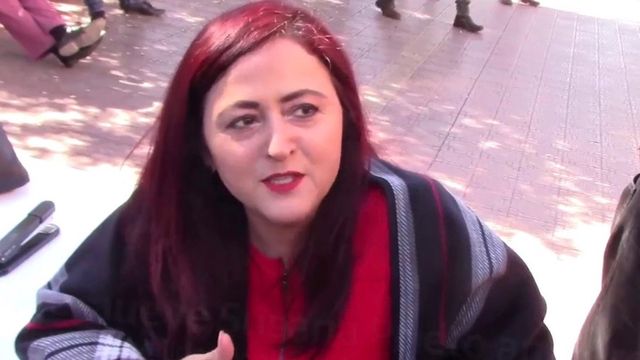
Susana Prieto Terrazas
The release followed an agreement reached between a judge and Prieto’s lawyers, which entails a $3,000 compensation for the alleged “victims.” The court order requires Prieto, for a period of 30 months, to reside in her hometown of Ciudad Juárez, Chihuahua, while refraining from coming near the Matamoros labor court or the “victims,” and traveling abroad, including El Paso, Texas, where her immediate family lives.
Soon after her return, Prieto made a statement claiming that there are two arrest warrants pending against her in Chihuahua.
Despite its profound political differences with Prieto, the World Socialist Web Site called on workers to “demand Prieto’s release and oppose this attack on the rights to freedom of speech, assembly and organization” by organizing independently of “every faction of the trade union bureaucracy and political establishment.”
The illegal imprisonment and draconian conditions of her probation period are aimed at intimidating the working-class rebellion against corporate abuses, most immediately the growing wave of protests and strikes in Matamoros since April to oppose the forced return to plants that have turned into COVID-19 hotspots.
Tamaulipas Attorney General Irving Barrios Mojica led the prosecution, asking for a 4-year prison sentence. He portrayed the protest on March 10 as “the perpetration of crimes through aggression, threats and a danger to society.” Numerous videos, however, show that the 400 workers at the protest rallied peacefully while being harassed by the state police and National Guard troops, while the court refused for several hours to attend the workers’ lawyer.
During the three-week imprisonment, thousands of workers and youth joined marches and demonstrations in Matamoros, Ciudad Juárez and Mexico City demanding Prieto’s release.
The detention received a green light from Mexican president Andrés Manuel López Obrador (AMLO). During a press conference on June 12, he noted that his government was immediately informed of the arrest but refused to call for Prieto’s release. Instead he claimed that “it has to do with the Tamaulipas state government, it’s not a federal issue.”
The case exposed that all factions of the ruling elite, from the ostensibly “left” López Obrador administration to the National Action Party (PAN) state governments in Tamaulipas and Chihuahua, are lurching toward authoritarian forms of rule to defend the profits of foreign and national corporations, including through arbitrary detentions.
While organizing several rallies calling for her release, Prieto’s colleagues in the so-called “independent” trade unions channeled all appeals behind the federal government.
As confirmed by Prieto herself, her release was secured through back-channel negotiations, including with the Trump administration. “I thank Mr. Andrés Manuel López Obrador, the Federal Government, the US embassy, the National Human Rights Commission, workers in Matamoros, Tamaulipas and national and international activists for my safe release,” she declared in a video when leaving the prison.
She also explained that, fearing for her safety, the American embassy secured an escort of Mexican federal police and National Guard units to accompany her out of the state of Tamaulipas.
At a US congressional hearing on June 17, the Trump administration’s trade representative, Robert Lighthizer, announced that the US government would request Prieto’s release. He said, “That is something we are working very closely with our embassy. We are aware of it. We are working on it. It’s something that we are going to monitor. We’ll take action if it’s appropriate… [The imprisonment] is a bad indicator.”
Then, on June 30, a group of 59 US Democratic representatives led by Bill Pascrell (New Jersey) wrote a letter to US Secretary of State Michael Pompeo to “request that your department aggressively work to help secure the immediate release of imprisoned Mexican labor lawyer Susana Prieto Terrazas.” The AFL-CIO also called for her “immediate and unconditional release.”
All of the statements by US officials said that they were concerned for the right of Mexican workers to belong to “independent” and “democratic” unions, claiming that this is crucial to raising their wages and “bringing jobs back to America.” They add that this is a central focus of the new US-Mexico-Canada (USMCA) trade deal, which went into effect the day of Prieto’s release. However, the deal actually seeks to intensify the exploitation of cheap labor in Mexico by US and Canadian corporations to underpin their profits while economically isolating China, their geopolitical rival.
The last thing the Trump administration, US imperialism and the AFL-CIO are concerned about are the conditions of the Mexican working class, which has long been used as a cheap labor source for US based transnationals.
Instead, the intervention by the American ruling class was spurred by fears that Prieto’s detention was quickly eroding workers’ illusions in AMLO and the “independent” unions, which have been critical in reopening indispensable Mexican suppliers for US industries amid the sprawling pandemic in both countries.
Above all, Washington fears that the rebellion against the corrupt CTM unions will take a genuinely anti-capitalist direction and increasingly strive to unify with the working class in the United States. Already Mexican workers in Matamoros and at the GM plant in Silao have established direct lines of communication, with the assistance of the World Socialist Web Site, with workers in the US.
The AFL-CIO, the United Auto Workers (UAW) and other US unions have long sought to divide US workers from their class brothers and sisters below the Rio Grande. The criminal indifference of the ruling class on both sides of the border and their homicidal return to work policy, however, is provoking resistance of American and Mexican workers.
Fiat Chrysler workers in Michigan have formed rank-and-file safety committees to fight independently of the UAW and called on workers everywhere to join their struggle to protest workers’ lives during the pandemic. To fight the transnational corporations, workers in the US and Mexico need new organizations of struggle, independent of the nationalist and pro-capitalist unions, to unify their struggles across the border while they connect their day-to-day resistance with the fight for international socialism.
The release followed an agreement reached between a judge and Prieto’s lawyers, which entails a $3,000 compensation for the alleged “victims.” The court order requires Prieto, for a period of 30 months, to reside in her hometown of Ciudad Juárez, Chihuahua, while refraining from coming near the Matamoros labor court or the “victims,” and traveling abroad, including El Paso, Texas, where her immediate family lives.
Soon after her return, Prieto made a statement claiming that there are two arrest warrants pending against her in Chihuahua.
Despite its profound political differences with Prieto, the World Socialist Web Site called on workers to “demand Prieto’s release and oppose this attack on the rights to freedom of speech, assembly and organization” by organizing independently of “every faction of the trade union bureaucracy and political establishment.”
The illegal imprisonment and draconian conditions of her probation period are aimed at intimidating the working-class rebellion against corporate abuses, most immediately the growing wave of protests and strikes in Matamoros since April to oppose the forced return to plants that have turned into COVID-19 hotspots.
Tamaulipas Attorney General Irving Barrios Mojica led the prosecution, asking for a 4-year prison sentence. He portrayed the protest on March 10 as “the perpetration of crimes through aggression, threats and a danger to society.” Numerous videos, however, show that the 400 workers at the protest rallied peacefully while being harassed by the state police and National Guard troops, while the court refused for several hours to attend the workers’ lawyer.
During the three-week imprisonment, thousands of workers and youth joined marches and demonstrations in Matamoros, Ciudad Juárez and Mexico City demanding Prieto’s release.
The detention received a green light from Mexican president Andrés Manuel López Obrador (AMLO). During a press conference on June 12, he noted that his government was immediately informed of the arrest but refused to call for Prieto’s release. Instead he claimed that “it has to do with the Tamaulipas state government, it’s not a federal issue.”
The case exposed that all factions of the ruling elite, from the ostensibly “left” López Obrador administration to the National Action Party (PAN) state governments in Tamaulipas and Chihuahua, are lurching toward authoritarian forms of rule to defend the profits of foreign and national corporations, including through arbitrary detentions.
While organizing several rallies calling for her release, Prieto’s colleagues in the so-called “independent” trade unions channeled all appeals behind the federal government.
As confirmed by Prieto herself, her release was secured through back-channel negotiations, including with the Trump administration. “I thank Mr. Andrés Manuel López Obrador, the Federal Government, the US embassy, the National Human Rights Commission, workers in Matamoros, Tamaulipas and national and international activists for my safe release,” she declared in a video when leaving the prison.
She also explained that, fearing for her safety, the American embassy secured an escort of Mexican federal police and National Guard units to accompany her out of the state of Tamaulipas.
At a US congressional hearing on June 17, the Trump administration’s trade representative, Robert Lighthizer, announced that the US government would request Prieto’s release. He said, “That is something we are working very closely with our embassy. We are aware of it. We are working on it. It’s something that we are going to monitor. We’ll take action if it’s appropriate… [The imprisonment] is a bad indicator.”
Then, on June 30, a group of 59 US Democratic representatives led by Bill Pascrell (New Jersey) wrote a letter to US Secretary of State Michael Pompeo to “request that your department aggressively work to help secure the immediate release of imprisoned Mexican labor lawyer Susana Prieto Terrazas.” The AFL-CIO also called for her “immediate and unconditional release.”
All of the statements by US officials said that they were concerned for the right of Mexican workers to belong to “independent” and “democratic” unions, claiming that this is crucial to raising their wages and “bringing jobs back to America.” They add that this is a central focus of the new US-Mexico-Canada (USMCA) trade deal, which went into effect the day of Prieto’s release. However, the deal actually seeks to intensify the exploitation of cheap labor in Mexico by US and Canadian corporations to underpin their profits while economically isolating China, their geopolitical rival.
The last thing the Trump administration, US imperialism and the AFL-CIO are concerned about are the conditions of the Mexican working class, which has long been used as a cheap labor source for US based transnationals.
Instead, the intervention by the American ruling class was spurred by fears that Prieto’s detention was quickly eroding workers’ illusions in AMLO and the “independent” unions, which have been critical in reopening indispensable Mexican suppliers for US industries amid the sprawling pandemic in both countries.
Above all, Washington fears that the rebellion against the corrupt CTM unions will take a genuinely anti-capitalist direction and increasingly strive to unify with the working class in the United States. Already Mexican workers in Matamoros and at the GM plant in Silao have established direct lines of communication, with the assistance of the World Socialist Web Site, with workers in the US.
The AFL-CIO, the United Auto Workers (UAW) and other US unions have long sought to divide US workers from their class brothers and sisters below the Rio Grande. The criminal indifference of the ruling class on both sides of the border and their homicidal return to work policy, however, is provoking resistance of American and Mexican workers.
Fiat Chrysler workers in Michigan have formed rank-and-file safety committees to fight independently of the UAW and called on workers everywhere to join their struggle to protest workers’ lives during the pandemic. To fight the transnational corporations, workers in the US and Mexico need new organizations of struggle, independent of the nationalist and pro-capitalist unions, to unify their struggles across the border while they connect their day-to-day resistance with the fight for international socialism.
NTEU steps up collaboration with Australian university managements amid job cuts “tsunami”
https://www.wsws.org/en/articles/2020/07/10/unis-j10.html
By Mike Head
10 July 2020
In the face of what it calls “the first wave of the predicted tsunami of job losses,” the National Tertiary Education Union (NTEU) is intensifying its efforts to help university managements impose cuts in pay and conditions, as well as thousands of job cuts.
Despite the collapse of its pay-cutting “national framework” with university managements, which provoked a revolt by union members, the NTEU is seeking deals across the country to achieve the same basic result: The imposition of unprecedented sacrifices on university workers in response to the COVID-19 pandemic.
The latest July 7 edition of the NTEU magazine Advocate contains a list of the agreements struck by the union already, combined with appeals to both the employers and the Liberal-National government to work with the union.
One Advocate article boasts of the “union-supported packages” adopted at various universities. It states that “where proposals were developed cooperatively” with the NTEU, “union members are prepared to contribute to a collective effort.”
These “contributions” include 10 percent pay reduction, plus “deferral of wage rises and increments and some directions to take annual leave” at La Trobe University. Pay freezes were agreed at Monash and the University of Tasmania, as were “purchased leave schemes”—another form of wage-cutting and deferral—and other concessions at Western Sydney University (WSU) and the University of Western Australia.
The article then lists “unendorsed variations” at Wollongong, Melbourne and the Australian National University, where employers sought very similar pay cuts and sacrifices, but without “the power of union support.” The Melbourne proposal was rejected in a staff ballot.
The union’s only objection to the “unendorsed variations” is that they do not include agreements to retain the NTEU as a management partner by establishing new employer-union committees to monitor and implement the cuts.
The Advocate article claims that the union-backed deals provide “guarantees on job security.” In reality, each agreement leaves open wide scope for retrenchments, on top of the thousands of jobs already eliminated, mostly of casuals.
At WSU, for example, the document commits management to nothing, just no “forced” redundancies for “COVID reasons” in 2020 and no stand-downs “without pay” during 2020. This does not prevent the management from eliminating jobs for other reasons, such as course closures, and it has an even freer hand for 2021 and beyond, when greater revenue losses are expected.
In another Advocate article, NTEU national assistant secretary Gabe Gooding admits that 20 universities have “cut casual and fixed-term staff and/or indicated that job losses are inevitable” and “many, many, more job losses are coming.”
So far, this “tsunami” includes over 400 jobs being axed at Deakin, 271 jobs at Central Queensland and 200–300 jobs at Wollongong. Gooding’s only criticism of the Deakin cuts is that they are not based on “strategic decision making,” just cost-cutting.
In fact, the NTEU already has proven that it does not oppose job cuts. It claimed that the pay cuts of up to 15 percent offered by its failed “national framework” would “save” just 12,000 of the 30,000 jobs that Universities Australia estimates will be eliminated to overcome revenue losses of $16 billion over the next three years.
Gooding concludes her article by pleading for the Liberal-National government and the employers to adopt “viable solutions.” In particular, she calls on “the managerial class of the sector to unify behind the common goal of a sustainable vision for higher education.”
In his article, NTEU general secretary Matthew McGowan makes a similar plea for “a mechanism for high level dialogue within the sector,” while NTEU national president Alison Barnes urges the government to “fully fund our universities so they can truly play a vital role in rebuilding Australia’s economy and help create a better future for all Australians.”
These appeals align directly with the government’s pro-business and nationalist program, which is what lies behind its ongoing refusal to offer any financial assistance to the public universities.
In a July 2 media statement, Education Minister Dan Tehan stepped up the commercialisation of universities by announcing new “partnerships between universities and industry,” known as Industrial Transformation Research Hubs, to produce “real-world commercial” research.
“We want universities to be even more entrepreneurial and engaged with industry,” Tehan stated. This was “part of our Job-ready Graduates reforms.”
These “reforms” feature more than doubling the student fees for humanities courses, seeking to “incentivise” young people to take narrower, more vocational courses that big business regards as vital, such as science, maths, agriculture, IT, engineering, teaching and nursing.
The government also is insisting that the universities return to face-to-face teaching, threatening the health and lives of staff and students. This is part of the bipartisan drive, backed by the opposition Labor Party, to fully reopen the economy despite the worsening global COVID-19 pandemic.
This agenda consists of exploiting the COVID-19 crisis to accelerate the cost-cutting and pro-business restructuring of the 39 public universities. Far from opposing this agenda, the magazine articles confirm that the NTEU supports the transformation of universities into institutions ever-more directly serving the profit needs of Australian capitalism.
Not only are the livelihoods and futures of university employees, both academic and administrative, at stake, so are the basic rights and conditions of students, whether domestic or international. The job losses, together with course and campus closures, mean narrower study choices, lower quality education, larger classes and worse services and facilities.
These developments underscore the call issued by the Committee for Public Education (CFPE) and the International Youth and Students for Social Equality (IYSSE) for a unified struggle by university workers and students for the defence of jobs and conditions and for the right to decent, free and first-class education for all, including international students, and full-time jobs for all university workers.
This requires the formation of democratically elected rank-and-file committees of university workers and students. These have to be completely independent of the NTEU and other trade unions, which have shown they are nothing but political and industrial police forces, committed to meeting the requirements of big business.
Such a struggle means challenging the capitalist profit system and turning to a socialist perspective, based on the total reorganisation of society in the interests of all, instead of the financial oligarchy.
The author also recommends:
Australian government steps up attack on university students and workers
[22 June 2020]
Australian pseudo-left groups protect university union from revolt against pay-cutting plans
[18 June 2020]
Reject Australian universities-NTEU job and pay cuts!
[15 June 2020]
Australian Committee for Public Education holds online forum on COVID-19 and the universities crisis
[19 May 2020]
Subscribe to:
Posts (Atom)