skip to main |
skip to sidebar
James Averhart confined the Iraq War whistleblower to a tiny cell 23 hours a day -- and now could end up as the Democratic Party’s nominee in Alabama

Andrew Perez
Jul 7 


As Democrats campaign against “tough on crime” policies and for criminal justice reform, the party may end up with a congressional nominee who confined former Army intelligence analyst Chelsea Manning to an 8-by-6-foot cell at least 23 hours a day.
James Averhart, who is competing in a July 14 run-off election for an Alabama congressional seat, also oversaw a Bush-era military push to track down and punish veterans who deserted the Vietnam War -- an initiative seen as an attempt to discourage soldiers from deserting during the Iraq War.
Averhart, who served as Chief Warrant Officer Five in the U.S. Marine corps, has a solid chance of being the Democratic nominee in the open-seat election in Alabama’s Republican-leaning first congressional district. Professor Kiani Gardner won 44 percent of votes in the March 3 primary contest, while Averhart received 40 percent.
The Democratic Party has sought out veterans to run for red seats in recent years, and the party has increasingly aligned itself with national security officials associated with harsh defense policies. Former deputy CIA director Avril Haines, who helped limit accountability for the agency's torture program, is leading the foreign policy and national security transition team for former Vice President Joe Biden's presidential campaign.
In the Alabama race, Averhart became a candidate after overseeing the brig at Quantico, Va., where Manning was held between July 2010 and April 2011. Manning was arrested in May 2010 and charged by the government with 22 counts for leaking hundreds of thousands of classified documents to WikiLeaks. The troves of files included a video documenting a U.S. helicopter massacre in Iraq that killed a dozen people, and military intelligence assessment briefs on hundreds of people detained by the U.S. at Guantanamo Bay in Cuba.
The terms of Manning’s pre-trial imprisonment at Quantico were extremely harsh. She was characterized as a maximum security prisoner and a Prevention of Injury (POI) assignment, both of which carried heavy restrictions.
According to a report from Glenn Greenwald in December 2010, Manning was held at "in intensive solitary confinement" -- completely isolated in a cell all but one hour a day, prohibited from exercising in her cell, and denied the right to have a pillow or sheets.
Amnesty International detailed additional restrictions in a January 2011 letter to Defense Secretary Robert Gates. Manning was checked on by guards every five minutes, prohibited from sleeping during the day, and could only sleep in her underwear at night. Manning was kept on POI assignment after her psychiatrist said it wasn’t necessary, according to the group, which said the treatment appeared to violate her human rights. Manning was transferred to Fort Leavenworth in April 2011.
“Averhart and his successor rejected psychiatrists' nearly weekly recommendations to ease the restrictions that kept Manning in an 8-by-6-foot cell at least 23 hours a day,” the Associated Press wrote in 2012.
According to Courthouse News, Averhart put Manning on suicide watch three times despite the recommendations of her psychiatrist. “Suicide watch forced Manning to strip naked, put on a rough smock and sleep on a special mattress and a blanket,” the news service wrote.
The Marines’ chief of corrections specifically criticized Averhart for twice failing to remove Manning from suicide watch for several days after a psychiatrist’s recommendation.
Averhart argued that vague regulatory wording -- "When prisoners are no longer considered to be suicide risks by a medical officer, they shall be returned to appropriate quarters” -- gave him “the opportunity to evaluate” when to release Manning from suicide watch.
In 2013, Manning was sentenced to 35 years in prison at Fort Leavenworth, Kan. She attempted suicide twice in 2016, the second time after she was placed in solitary confinement. Former President Barack Obama commuted Manning’s sentence in 2017, days before Donald Trump’s inauguration. Unfortunately, Manning’s freedom was only temporary.
She was jailed by the Trump administration last year for refusing to testify before a grand jury about WikiLeaks, briefly released, and jailed again for refusing to cooperate with the grand jury. In March, days after Manning made another attempt on her life, a federal judge announced he had ordered the government to release her and had dismissed the grand jury.
Averhart, who retired from active duty in 2017, also previously led the Marine Corps Absentee Collection Center. In that capacity, he directed an effort to track down Vietnam War deserters by reopening cold cases. They located at least 33 Vietnam-era deserters between 2004 and 2006. The campaign was perceived as an effort to discourage soldiers from deserting during the Iraq War.
"My view is that the Marines are trying to send a message to people in the ranks today that they, too, will be required to participate in a war, whether they think it's illegal or immoral," Louis Font, a lawyer for one ex-Marine accused of deserting during Vietnam, told USA Today in 2006.
By Katu Arkonada on July 4, 2020
https://www.resumen-english.org/2020/07/let-the-rich-pay-for-the-crisis/
After the economic crisis of 2008, there was a sector that not only recovered quickly but continued to grow exponentially, the luxury goods sector. While a large part of the population saw their social and labor rights cut back, the occupation of 5-star hotels, the sale of real estate by luxury firms such as Engel & Völkers, or the purchase of products such as expensive watches, jewelry or art, increased by over 10 percent annually.
This obscene indicator sums up very well what the 2008 crisis meant for humanity.
The way out of the crisis was paid for by the social majorities for the benefit of an elite. The losses were socialized, through the purchase of the debt of the private banks with the objective of not collapsing the international financial system, and the profits were privatized. Other large companies such as General Electric or General Motors were rescued, without the State, after saving these companies, imposing any clause for the recovery of jobs. And when some of those jobs were recovered, it was with infinitely worse wage conditions than before the crisis.
Today, when the worst of the pandemic and the health crisis may be over, we are on the verge of a global economic crisis, probably stronger and deeper than that of 2008.
The World Trade Organization has estimated that the world economy could contract by as much as 18.5 percent, and the International Monetary Fund’s April report estimates that regional GDP could fall by 5.2 percent, up from 5 percent in the 1930s after the 1929 New York Stock Exchange crash and certainly larger than the 2 percent after 2008.
In Latin America and the Caribbean, a region that exports raw materials and manufactured products, the ILO estimates that more than 10 million people will lose their jobs as a result of the pandemic, and ECLAC in its report “The Social Challenge in the Time of Covid-19” calculates an increase in poverty of 4.4 percentage points that translates into an additional 28.7 million poor people (to reach 214.7 million people) and an increase in extreme poverty of 2.6 percentage points, bringing the total to 83.4 million people in the region.
In addition to all this, there is the oil crisis, with a drop in production of 10 million barrels and the collapse of prices which, although already in recovery, will not reach those of 2019 by the end of 2020, according to the International Energy Agency.
If we add to this the structural crisis in the form of climate change that we are experiencing, with an increase in annual carbon dioxide emissions of more than 50 gigatons (each gigaton is equivalent to one billion tons), the result is devastating: accelerated melting of the poles at the same time as the sea level rises, and an increase in the average global temperature of between 1.2 and 1.3 °C over the next five years, which brings us closer to the dreaded limit of more than 2 °C of the average temperature of the planet above the pre-industrial period.
For all the above reasons, the debate on the capitalist mode of production is becoming increasingly urgent, but without positions, as we are used to reading about everything that has to do with the development model. The countries of the South not only have the right, but also the obligation, to lift hundreds of millions of people out of poverty, doing so in a balance between the growth to which the countries of the North had access, and the rights of nature on a finite planet that does not have much more of itself to give
The global coronavirus pandemic has accelerated a crisis that was already looming on the horizon, that of an unsustainable mode of production, especially in the countries of the North, which also do not want to transfer technology, as a partial payment of the ecological debt they have with the South for the exploitation of their peoples, people, and natural resources for centuries. If we also add to the equation the variable of the financialization of the economy, with less and less production of tangible goods, and more economic speculation, the combination is explosive, and above all, unsustainable.
But if anything good comes out of this pandemic, it is the return of the State, the break between broad layers of the middle class of the cultural consensus installed by neoliberalism that the State was not necessary and that the less State, the more efficient it is. It is going to be very difficult for the defenders of neoliberal globalization in crisis to defend that the common goods, especially health, should not be in the hands of the State in order to guarantee universal access in the best possible conditions for its population.
There is the crack to break the neoliberal consensus, still hegemonic from the cultural point of view. The need for the return of the State. And after installing this new consensus, it is necessary to take a new step: that the crisis is not paid by the usual ones, those from below, the most humble. Let those at the top pay for the economic crisis that is coming. Let the rich pay for the crisis.
BY
MATT BRUENIG
https://jacobinmag.com/2020/07/racial-wealth-gap-redistribution
In light of the recent resurgence of Black Lives Matter protests, there has been renewed discussion of the racial wealth gap and how to close it (Nikole Hannah-Jones, Annie Lowrey). I have written on this topic many times in the past (I, II, III, IV). One thing I have tried to emphasize over the years, which I will do again here in a different way, is that due to the extremely concentrated wealth distribution in the United States, the racial wealth gap is almost entirely about the upper classes in each racial group. I say this not to imply that it is unimportant, but rather because this fact must be grappled with upfront if we are going to make a serious effort to close the racial wealth gap.
If you take the net worth of all white households and divide it by the number of white households, you get $900,600. If you do the same thing for black households, you get $140,000. The difference between these figures — $770,600 — is the best representation of the overall racial wealth gap. That is how much more wealth black people would need per household to have as much wealth as white people have per household.

But overall statistics can be misleading. If you decompose both of these bars into deciles, what you find is that nearly all white wealth is owned by the top 10 percent of white households just as nearly all black wealth is owned by the top 10 percent of black households. The lower and middle deciles of each racial group own virtually none of their racial group’s wealth.


What this means is that the overall racial wealth disparity is being driven almost entirely by the disparity between the wealthiest 10 percent of white people and the wealthiest 10 percent of black people.
One way to illustrate this point (h/t Sam Tobin-Hochstadt) is to see what would happen to the overall racial wealth gap if we entirely closed the wealth gap that exists between the bottom 90 percent of each racial group. Put differently: What would happen to mean black wealth if the bottom 90 percent of black families were given the exact same per-household wealth as the bottom 90 percent of white families?
The answer is that mean black wealth would rise from $140,000 to $311,100. The overall racial wealth gap would thus decline from $760,600 to $589,500, a fall of 22.5 percent. This means that even after you have completely closed the racial wealth gap between the bottom 90 percent of each race, 77.5 percent of the overall racial wealth gap still remains, which is to say that the disparity between the top deciles in each race drives over three-fourths of the racial wealth gap.

In much of the popular discourse on the racial wealth gap, the emphasis is on the median white household and the median black household. To understand how misguided this emphasis is, we can do exactly what we did above but for the bottom 50 percent of each race. After topping off the current bottom 50 percent of black families so that they have as much wealth per household as the current bottom 50 percent of white families, mean black wealth rises by $23,100, cutting the racial wealth gap by 3 percent.

What this shows is that 97 percent of the overall racial wealth gap is driven by households above the median of each racial group. This explains why you can produce shocking conclusions that show a relatively small amount of money can dramatically reduce the (median) racial wealth difference: it is not that hard to get two groups who own relatively little to own the same amount of relatively little. But such measures would not make much of a dent in the overall racial wealth gap.
In my mind, this information should force us to be more clear about what exactly we are trying to achieve when we talk about closing the racial wealth gap. If we are trying to make the black wealth distribution match the white wealth distribution, then fixing the racial wealth gap mostly involves redistributing a lot of wealth between the white and black upper classes. That’s where the wealth is, and so that’s where the wealth gap is.
If we are just trying to make it so the “everyday black family” (defined by the median) looks like the “everyday white family,” then that costs very little (0.5 percent of the national wealth) because it ignores all the people who own meaningful amounts of wealth.
Both ideas seem a bit ridiculous in different ways, the first idea because it’s essentially a squabble between the upper classes, the second idea because it does nothing to really cut down on overall racial wealth inequality. The way through this bind is, of course, to acknowledge that racial capitalism has concentrated almost all of the national wealth in the hands of a small number of white families and that the proper course of action is to redistribute that wealth to the multiracial lower and working classes, tackling both racial and class inequality simultaneously.
Superpowers launch simultaneous drills and tough rhetoric as disputed waters boil in the South China Sea
By RICHARD JAVAD HEYDARIAN
JULY 6, 2020
https://asiatimes.com/2020/07/us-china-inch-closer-towards-a-conflict-at-sea/?mc_cid=90884d585a&mc_eid=7864488218
The United States and China have just simultaneously conducted military exercises in the disputed South China Sea, dueling big boat deployments that threaten to tilt the volatile maritime region ever closer to a superpower conflict.
The US Navy deployed two aircraft carriers, namely the USS Ronald Reagan and USS Nimitz, to the sea while marking America’s Independence Day on July 4.
The Pentagon described the dual-carrier operations, the first launched since 2014, as “exercises in support of a free and open Indo-Pacific.”
“Sailors from both carrier strike groups continue to stand the watch, defending freedom every day of deployment, and reflecting on the freedoms we hold sacred and celebrate during this holiday,” the US Navy’s Seventh Fleet said in a statement.
At the same time, China displayed its latest warships, including Type 052D guided-missile destroyers and Type 054A guided-missile frigates, in integrated military exercises across the South China Sea, East China Sea, and Yellow Sea.
Crucially, the PLA has also been testing its new anti-aircraft carrier weapons, the so-called “aircraft carrier killer” DF-21D and DF-26 missiles, which in any conflict scenario could target America’s largest vessels from Chinese shores.
China maintained that its drills were “regularly scheduled” and simply “aimed at safeguarding China’s territorial integrity and sovereignty and do not target any other country.”
“The fundamental cause of instability in the South China Sea is due to large-scale military activities and flexing of muscles by some non-regional country that lies tens of thousands of miles away,” maintained Chinese Foreign Ministry spokesperson Zhao Lijian in referring to the US naval exercises.
China’s state-affiliated state media took a more skeptical line on America’s latest show of naval force in the area.
The “South China Sea is fully within grasp of the [People’s Liberation Army]; any US aircraft carrier movement in the region is at [our] pleasure,” China’s jingoistic, state-affiliated Global Times warned in a tweet.
Chinese military expert Song Zhongping, meanwhile, said, “it’s unrealistic for the US to wage a war against China with just two aircraft carriers in the South China Sea, and it’s very unlikely the two sides could accidentally spark a conflict due to the drills.”
“[T]he PLA can conduct surveillance missions on US drills, and [easily] expel US surveillance attempts using proper measures,” he added.
The US’ latest deployments have coincided with a chorus of criticism against China’s strategic opportunism amid a devastating pandemic.
During the recently-concluded summit of Association of Southeast Asian Nations (ASEAN), Vietnam’s Prime Minister Nguyen Xuan Phuc criticized China, without directly naming the country, for “irresponsible acts and acts in violation of international law” while “the entire world is stretched thin in the fight against the pandemic.”
Indonesian President Joko Widodo, in turn, reiterated “ASEAN must be the guardian of our own region not the projection of power by bigger nations.”
The most surprisingly strident response, however, came from the Philippines, which has developed especially warm ties with China under President Rodrigo Duterte.
In response to China’s People’s Liberation Army (PLA) early-July military drills in the Paracel Islands, Philippine Foreign Secretary Teodoro Locsin Jr warned on July 3 of a “severest response” if Chinse military activities extended into Philippine-claimed waters.
The Philippines’ diplomatic chief accused China of aiming to “establish a perennial and unchallenged presence that may in time congeal into right” and that Beijing was “playing fast and loose with historical narratives.”
“I will end on what has become a trite but still true statement: We call on the erring parties to refrain from escalating tension and abide by the responsibilities under international law, notably [the United Nations Convention on the Law of the Sea],” Locsin added, directly accusing China of contributing to regional instability.
Last month, the Philippines suspended its earlier decision to abrogate a key defense agreement that allowed for the rotational presence of US soldiers in the country. Top Philippine officials made it clear that the policy reversal was driven by anxieties over China’s maritime assertiveness in recent months.
Regional states seem to be encouraged by the US’ determined pushback and apparent new willingness to put naval muscle behind its rhetoric. The Pentagon was quick to criticize China’s latest South China Sea drills as “counter-productive to efforts at easing tensions and maintaining stability,”
At the same time, the US Navy’s Seventh Fleet described its dual-carrier deployment as “[h]igh-end integrated exercises” that aim to “build unmatched flexibility, endurance, maneuverability, and firepower in an all-domain warfighting environment.”
“These efforts support enduring US commitments to stand up for the right of all nations to fly, sail, and operate wherever international law allows,” said the US Navy statement, underscoring the broader strategic and symbolic value of its latest show of force in the disputed waters.
Rear Admiral George Wikoff, commander of Carrier Strike Group 5, however, denied that the recent dual-carrier deployment was a direct response to China’s large-scale drills in the South China Sea.
“We aggressively seek out every opportunity to advance and strengthen our capabilities and proficiency at conducting all-domain warfighting operations,” Wikoff added, while portraying the dual-carrier deployment as part of “routine” exercises to project American leadership.
“Dual carrier operations demonstrate our commitment to regional allies, our ability to rapidly mass combat power in the Indo-Pacific, and our readiness to confront all those who challenge international norms that support regional stability,” said the US commander. “The US Navy remains mission-ready and globally deployed.”
Earlier this year, the US had to temporarily suspend overseas military deployment and ground the iconic USS Theodore Roosevelt carrier amid an epidemic outbreak, raising new questions about America’s ability and resolve to maintain freedom of navigation in the South China Sea at a time China was showing signs of rising assertiveness.
https://consortiumnews.com/2020/07/05/bountygate-scapegoating-systemic-military-failure-in-afghanistan/
The story of the alleged “bounty scheme” grew up in the context of top U.S. brass blaming Russia for America’s defeat in Afghanistan, says Scott Ritter.
By Scott Ritter
Special to Consortium News
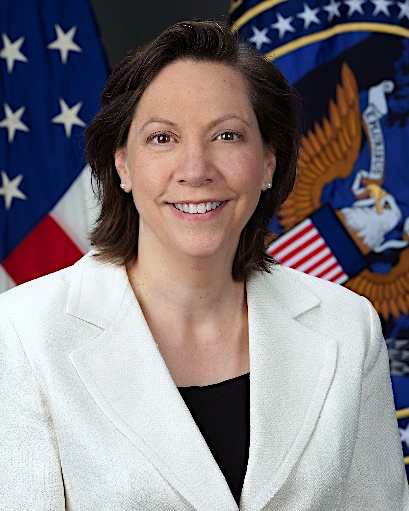
 On the morning of Feb. 27, Beth Sanner, the deputy director of national intelligence for mission integration, arrived at the White House carrying a copy of the Presidential Daily Brief (PDB), a document which, in one form or another, has been made available to every president of the United States since Harry Truman first received what was then known as the “Daily Summary” in February 1946.
The sensitivity of the PDB is without dispute; former White House Press Secretary Ari Fleischer once called the PBD “the most highly sensitized classified document in the government,”while former Vice President Dick Cheney referred to it as “the family jewels.”
The contents of the PDB are rarely shared with the public, not only because of the highly classified nature of the information it contains, but also because of the intimacy it reveals about the relationship between the nation’s chief executive and the intelligence community.
“It’s important for the writers of the presidential daily brief to feel comfortable that the documents will never be politicized and/or unnecessarily exposed for public purview,” former President George W. Bush observed after he left office, giving voice to a more blunt assessment put forward by his vice president who warned that any public release of a PDB would make its authors “spend more time worried about how the report’s going to look on the front page of The Washington Post.”
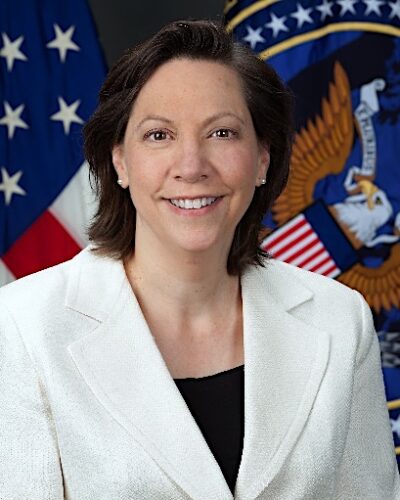
Beth Sanner.
Sanner’s job was the same for those who had carried out this task under previous presidents: find a way to engage a politician whose natural instincts might not incline toward the tedious, and often contradictory details contained in many intelligence products. This was especially true for Donald J. Trump, who reportedly disdains detailed written reports, preferring instead oral briefings backed up by graphics.
The end result was a two-phased briefing process, where Sanner would seek to distill critical material to the president orally, leaving the task of picking through the details spelled out in the written product to his senior advisors. This approach was approved beforehand by the director of national intelligence, the director of the CIA and the president’s national security advisor.
Sanner, a veteran CIA analyst who previously headed up the office responsible for preparing the PDB, served as the DNI’s principal advisor “on all aspects of intelligence,” responsible for creating “a consistent and holistic view of intelligence from collection to analysis” and ensures “the delivery of timely, objective, accurate, and relevant intelligence.”
If there was anyone in the intelligence community capable of sorting out the wheat from the chaff when it came to what information was suited for verbal presentation to the president, it was Sanner.
No copy of the PDB for Feb. 27 has been made available to the public to scrutinize, nor will one likely ever be.
However, based upon information gleaned from media reporting derived from anonymous leaks, a picture emerges of at least one of the items contained in the briefing document, the proverbial “ground zero” for the current crisis surrounding allegations that Russia has paid cash bounties to persons affiliated with the Taliban for the purpose of killing American and coalition military personnel in Afghanistan.
Links Between Accounts
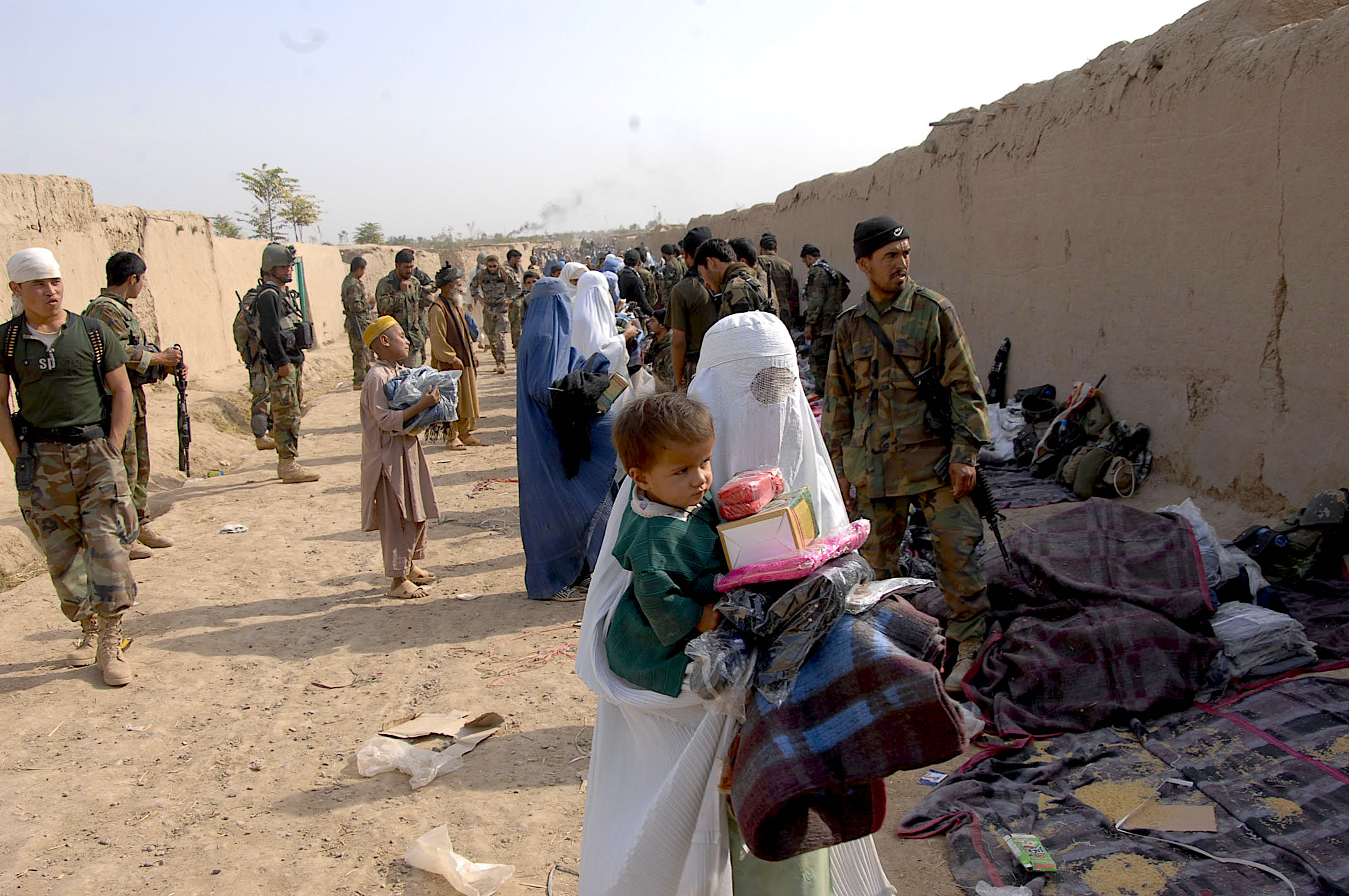
Afghan soldiers hand out supplies to Afghans who had been evicted from their villages by Taliban fighters in Konduz, Afghanistan, Nov. 6, 2009. (U.S. Army/Spc. Christopher Baker)
Sometime in early January 2020 a combined force of U.S. special operators and Afghan National Intelligence Service (NDS) commandos raided the offices of several businessmen in the northern Afghan city of Konduz and the capital city of Kabul, according to a report in The New York Times. The businessmen were involved in the ancient practice of “Hawala.” It is a traditional system for transferring money in Islamic cultures, involving money paid to an agent who then instructs a remote associate to pay the final recipient.
Afghan security officials claim that the raid had nothing to do with “Russians smuggling money,” but rather was a response to pressure from the Financial Action Task Force (FATF), an international body established in 1989 whose mission is, among other things, to set standards and promote effective implementation of legal, regulatory and operational measures for combating money laundering and terrorist financing.
“If there was anyone in the intelligence community capable of sorting out the wheat from the chaff when it came to what information was suited for verbal presentation to the president, it was Sanner.”
This explanation, however, seems more of a cover story than fact, if for no other reason than that the FATF, in June 2017, formally recognized that Afghanistan had established “the legal and regulatory framework to meet its commitments in its action plan,” noting that Afghanistan was “therefore no longer subject to the FATF’s monitoring process.”
The joint U.S.-Afghan raid, according to the Times, was not a takedown of the Halawa system in Afghanistan—a virtually impossible task—but rather a particular Halawa network run by Rahmatullah Azizi, a one-time low-level Afghan drug smuggler-turned-high profile businessman, along with a colleague named Habib Muradi.
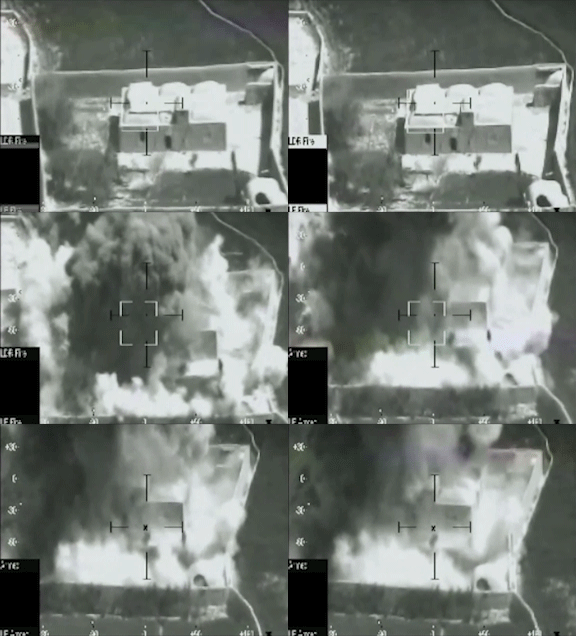
Afghan Air Force GBU-58 strike on Taliban compound in Farah Province, April 2019. (USAF)
Azizi’s portfolio is alleged by the Times, quoting a “friend,” to include serving as a contractor for U.S. reconstruction programs, managing undefined business dealings in Russia, which supposedly, according to unnamed U.S. intelligence sources quoted by the Times, included face-to-face meetings with officers from Russian Military Intelligence (GRU), and serving as a bagman for a covert money laundering scheme between the Taliban and Russia.
Some thirteen persons, including members of Azizi’s extended family and close associates, were rounded up in the raids. Both Azizi and Muradi, however, eluded capture, believed by Afghan security officials to have fled to Russia.
Based in large part on information derived from the interrogation of the detainees that followed, U.S. intelligence analysts pieced together a picture of Azizi’s Halawa enterprise—described as “layered and complex”, with money transfers “often sliced into smaller amounts that routed through several regional countries before arriving in Afghanistan.”
What made these transactions even more interesting from an intelligence perspective, were the links made by U.S. analysts between Azizi’s Halawa system, an electronic wire transfer, a Taliban-linked account, and a Russian account that some believed was tied to Unit 29155 (a covert GRU activity believed to be involved with, among other activities, assassinations). The transactions had been picked up by the National Security Agency (NSA), the U.S. intelligence agency responsible for monitoring communications and electronic data worldwide.
The discovery of some $500,000 in cash by U.S. special operators at Azizi’s luxury villa in Kabul was the icing on the cake—the final “dot” in a complex and convoluted game of “connect the dots” that comprised the U.S. intelligence community’s assessment of the alleged Russian (GRU)-Taliban-Azizi connection.

GRU HQ, Moscow.
The next task for U.S. intelligence analysts was to see where the Russian (GRU)-Taliban-Azizi connection took them. Using information gathered through detainee debriefings, the analysts broke down money Azizi received through his Halawa pipeline into “packets,” some comprising hundreds of thousands of dollars, which were doled out to entities affiliated with, or sympathetic to, the Taliban.
According to Afghan security officials quoted by the Times, at least some of these payments were specifically for the purpose of killing American troops, amounting to a price tag of around $100,000 per dead American.
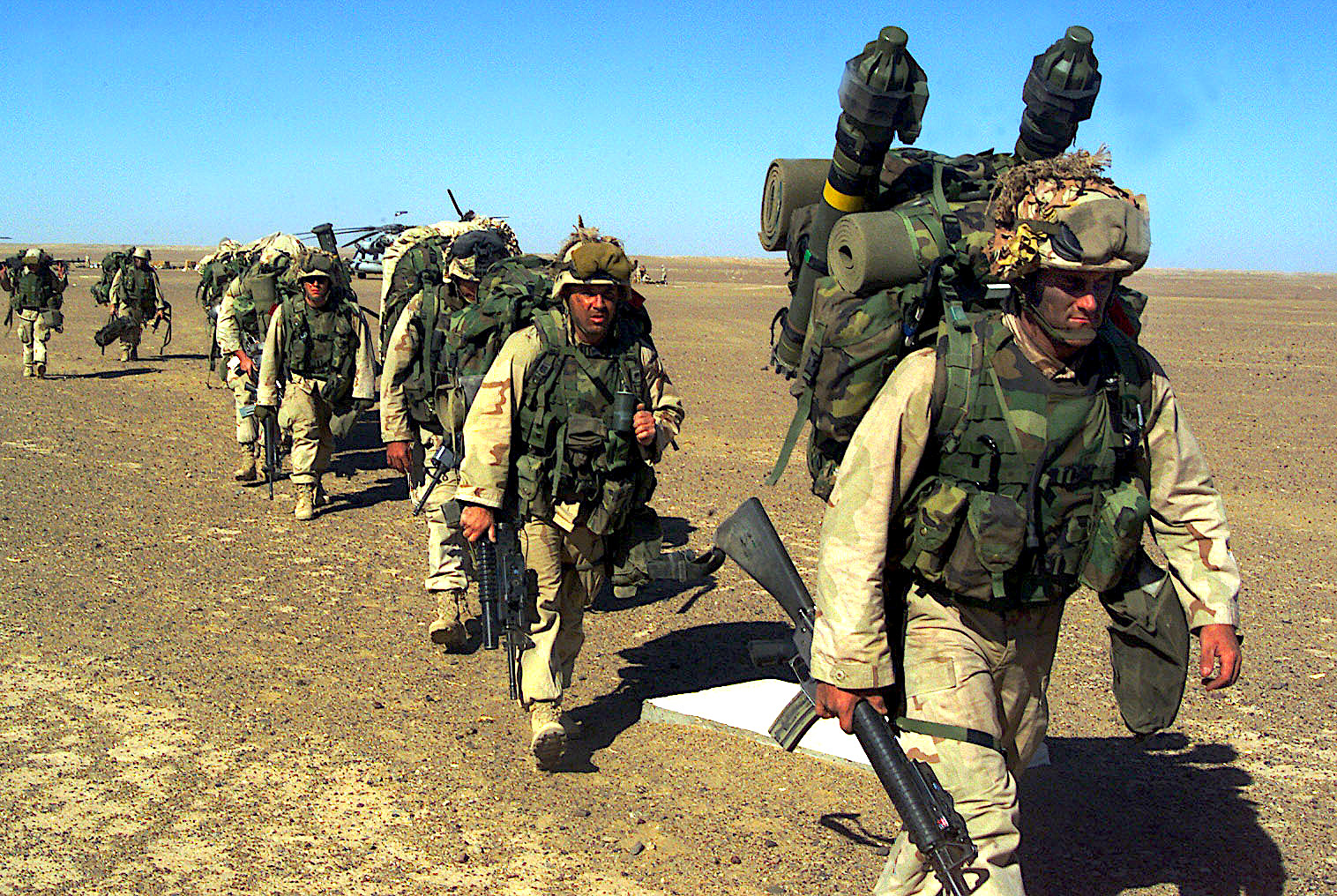
The game of “connect the dots” continued as the U.S. intelligence analysts linked this “bounty” money to criminal networks in Parwan Province, where Bagram Air Base—the largest U.S. military installation in Afghanistan—is located. According to Afghan security officials, local criminal networks had carried out attacks on behalf of the Taliban in the past in exchange for money. This linkage prompted U.S. intelligence analysts to take a new look at an April 9, 2019 car bomb attack outside of Bagram Air Base which killed three U.S. Marines.
This information was contained in the PDB that was given to Trump on Feb. 27. According to standard procedure, it would have been vetted by at least three intelligence agencies—the CIA, the National Counterterrorism Center (NCC), and the NSA. Both the CIA and NCC had assessed the finding that the GRU had offered bounties to the Taliban with “moderate confidence,” which in the lexicon used by the intelligence community means that the information is interpreted in various ways, that there are alternative views, or that the information is credible and plausible but not corroborated sufficiently to warrant a higher level of confidence.
The NSA, however, assessed the information with “low confidence,” meaning that they viewed the information as scant, questionable, or very fragmented, that it was difficult to make solid analytic inferences, and that there were significant concerns or problems with the sources of information used.
Floating in the Bowl
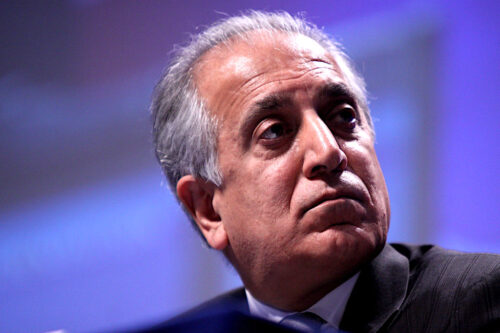
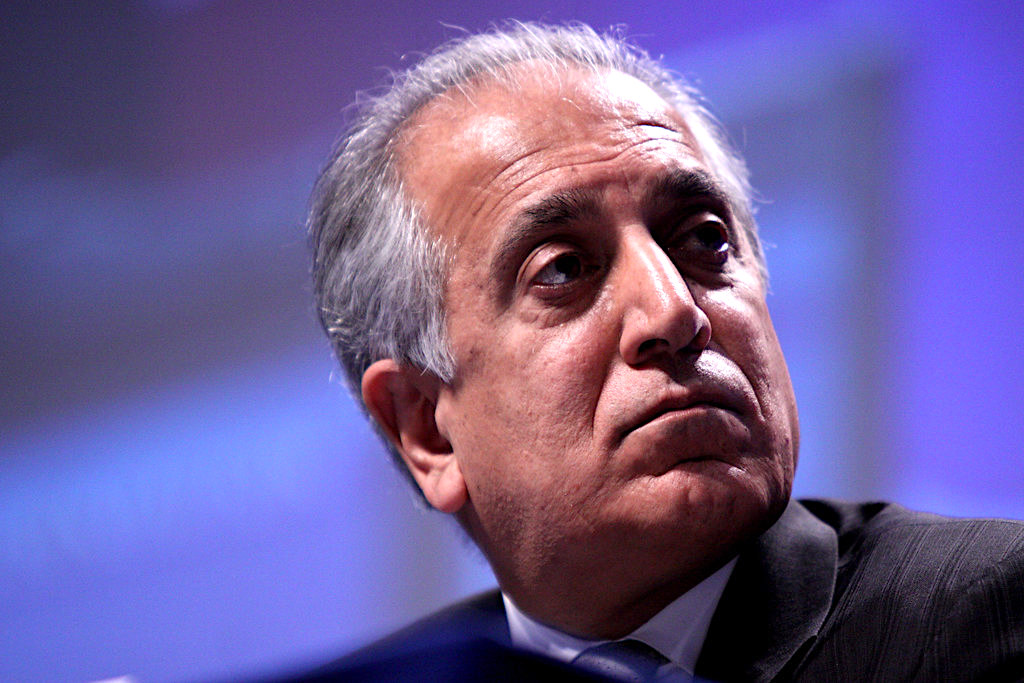
Zalmay Khalilzad. (Gage Skidmore)
All of this information was contained in the PDB carried into the White House by Sanner. The problem for Sanner was the context and relevance of the information she carried. Just five days prior, on Feb. 22, the U.S. and the Taliban had agreed to a seven-day partial ceasefire as prelude to the conclusion of a peace agreement scheduled to be signed in two days’ time, on Feb. 29.
The U.S. Representative for Afghanistan Zalmay Khalilzad, was in Doha, Qatar, where he was hammering out the final touches to the agreement with his Taliban counterparts. Secretary of State Mike Pompeo was preparing to depart the U.S. for Doha, where he would witness the signing ceremony. The information Sanner carried in the PDB was the proverbial turd in the punchbowl.
The problem was that the intelligence assessment on alleged Russian GRU “bounties” contained zero corroborated information. It was all raw intelligence (characterized by one informed official as an “intelligence collection report”), and there were serious disagreements among the differing analytical communities—in particular the NSA—which took umbrage over what it deemed a misreading of its intercepts and an over reliance on uncorroborated information derived from detainee debriefs.
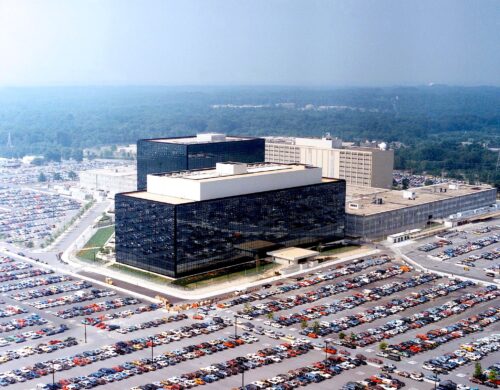
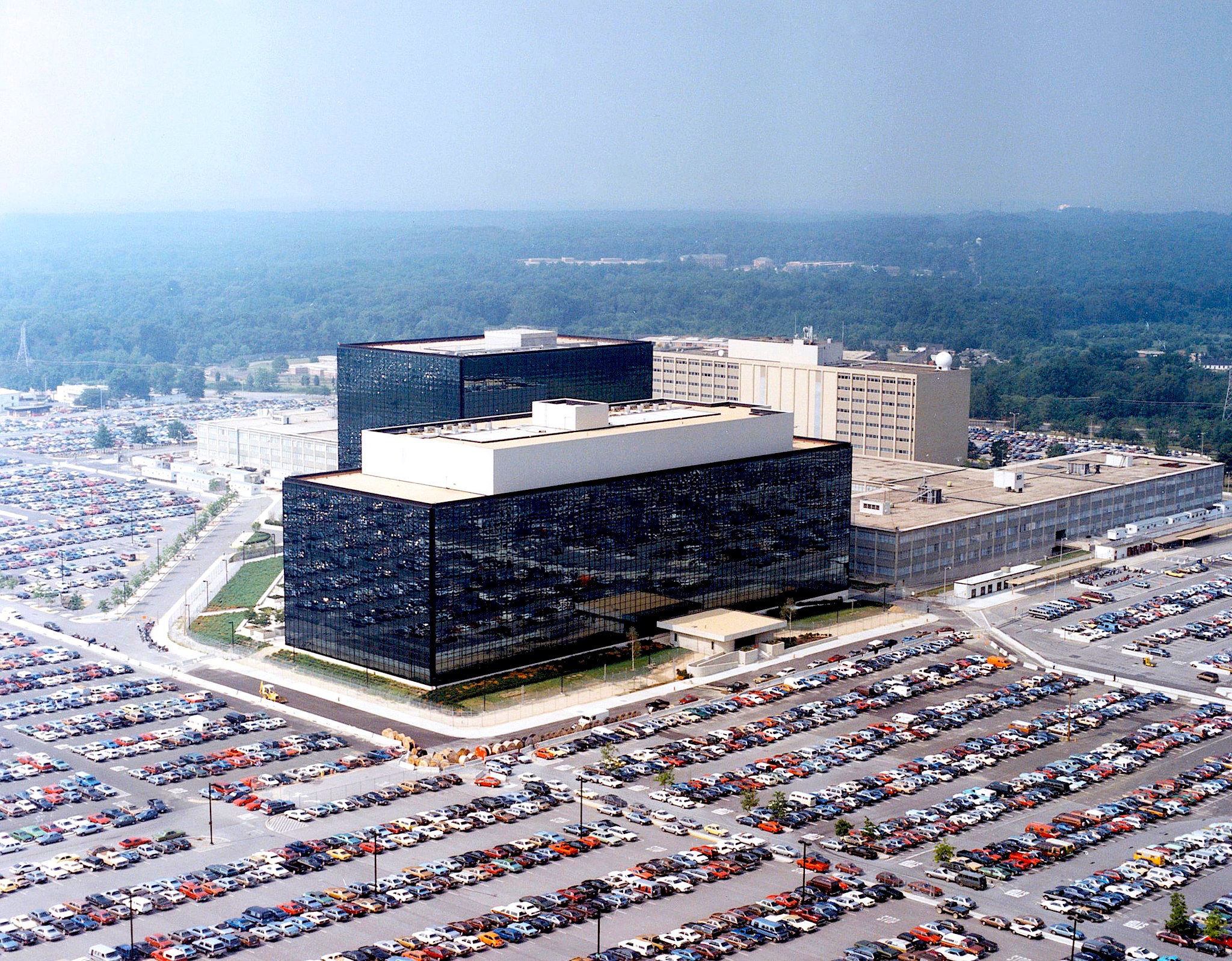
NSA HQ, Fort Meade, Maryland. (Wikimedia Commons)
Moreover, none of the intelligence linking the GRU to the Taliban provided any indication of how far up the Russian chain of command knowledge of the “bounties” went, and whether or not anyone at the Kremlin—let alone President Vladimir Putin—were aware of it.
None of the information contained in the PDB was “actionable.” The president couldn’t very well pick up the phone to complain to Putin based on a case drawn solely from unverified, and in some cases unverifiable, information.
To brief the president about an assessment which, if taken at face value, could unravel a peace agreement that represented a core commitment of the president to his domestic political base—to bring U.S. troops home from endless overseas wars—was the epitome of the politicization of intelligence, especially when there was no consensus among the U.S. intelligence community that the assessment was even correct to begin with.
This was a matter which could, and would, be handled by the president’s national security advisors. Sanner would not be briefing the president in person on this report, a decision that Trump National Security Adviser Robert O’Brien agreed with.
Blaming Russia
Ending America’s nearly 19-year misadventure in Afghanistan had always been an objective of President Trump. Like both presidents before him whose tenure witnessed the deaths of American service members in that hard, distant and inhospitable land, Trump found himself confronting a military and national security establishment convinced that “victory” could be achieved, if only sufficient resources, backed by decisive leadership, were thrown at the problem.
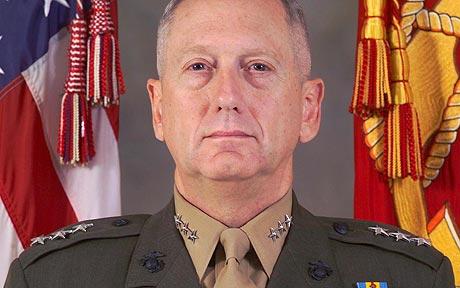
His choice for secretary of defense, James “Mad Dog” Mattis, a retired Marine general who commanded Central Command (the geographical combatant command responsible for, among other regions, Afghanistan) pushed Trump for more troops, more equipment, and a freer hand in taking on the enemy.
By the Fall of 2017, Trump eventually agreed to the dispatch of some 3,000 additional troops to Afghanistan, along with new rules of engagement, which would allow greater flexibility and quicker response times for the employment of U.S. air strikes against hostile forces in Afghanistan.
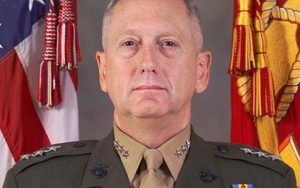
Mattis: Got what he wanted.
It took little more than a year for the president to come to grips with a reality that would be reflected in the findings of Special Inspector General for Afghanistan Reconstruction John Sopko, that there had been “explicit and sustained efforts by the U.S. government to deliberately mislead the public…to distort statistics to make it appear the United States was winning the war when that was not the case.”
In November 2018, Trump turned on “Mad Dog”, telling the former Marine General “I gave you what you asked for. Unlimited authority, no holds barred. You’re losing. You’re getting your ass kicked. You failed.”
It was probably the most honest assessment of the War in Afghanistan any American president delivered to his serving secretary of defense. By December 2018 Mattis was out, having resigned in the face of Trump’s decision to cut American losses not only in Afghanistan, but also Syria and Iraq.
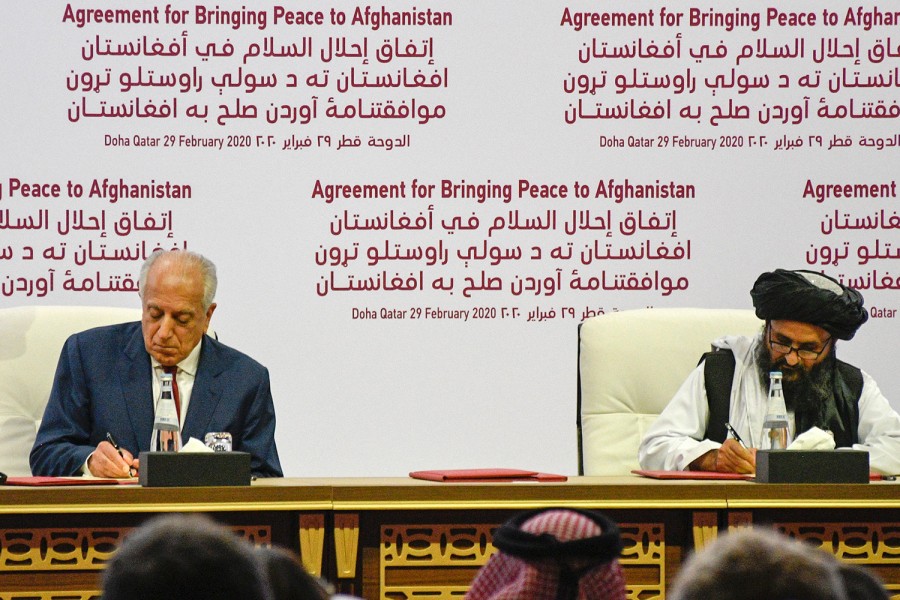
Khalilzad signs peace deal with Taliban, next to Mullah Abdul Ghani Baradar, the group’s top political leader, in Doha, Qatar, Feb. 29, 2020.
(J.P. Lawrence/ STARS AND STRIPES/DOD)
That same month, U.S. diplomat Khalilizad began the process of direct peace talks with the Taliban that led to the Feb. 29 peace agreement. It was a dispute over Afghan peace talks that led to the firing of National Security Advisor John Bolton. In September 2019—Trump wanted to invite the Taliban leadership to Camp David for a signing ceremony, something Bolton helped quash. Trump cancelled the “summit”, citing a Taliban attack that took the life of an American service member, but Bolton was gone.
Taking on Failure
One doesn’t take on two decades of systemic investment in military failure that had become ingrained in both the psyche and structure of the U.S. military establishment, fire a popular secretary of defense, and then follow that act up with the dismissal of one of the most vindictive bureaucratic infighters in the business without accumulating enemies.
Washington DC has always been a political Peyton Place where no deed goes unpunished. All president’s are confronted by this reality, but Trump’s was a far different case—at no time in America’s history had such a divisive figure won the White House. Trump’s anti-establishment agenda alienated people across all political spectrums, often for cause. But he also came into office bearing a Scarlet Letter which none of his predecessors had to confront—the stigma of a “stolen election” won only through the help of Russian intelligence.
The “Russian interference” mantra was all-pervasive, cited by legions of anti-Trumpers suddenly imbued with a Cold War-era appreciation of global geopolitics, seeing the Russian Bear behind every roadblock encountered, never once pausing to consider that the problem might actually reside closer to home, in the very military establishment Trump sought to challenge.

Nicholson (l.) Navy Adm. Mike Mullen, chairman of the Joint Chiefs of Staff, and Gen. David Petraeus at ISAF Headquarters in Kabul, Afghanistan, Sept. 3, 2010. (DOD)
Afghanistan was no different. Prior to stepping down as the commander of U.S. forces in Afghanistan in September 2018, Army General John Nicholson sought to deflect responsibility for the reality that, despite receiving the reinforcements and freedom of action requested, his forces were losing the fight for Afghanistan.
Unable or unwilling to shoulder responsibility, Nicholson instead took the safe way out—he blamed Russia.
Scapegoating
“We know that Russia is attempting to undercut our military gains and years of military progress in Afghanistan, and make partners question Afghanistan’s stability,” Nicholson wrote in an email to reporters, seemingly oblivious to the history of failure and lies being documented at that moment by Sopko.
In March 2018 Nicholson had accused the Russians of “acting to undermine” U.S. interests in Afghanistan, accusing the Russians of arming the Taliban. But the most telling example of Russian-baiting on the part of the general occurred in February 2017, shortly after President Trump was inaugurated. In an appearance before the Senate Armed Services Committee, Nicholson was confronted by Sen. Bill Nelson, a Florida Democrat and ardent supporter of the U.S. intervention in Afghanistan.
“If Russia is cozying up to the Taliban—and that’s a kind word—if they are giving equipment that we have some evidence that the Taliban is getting…and other things that we can’t mention in this unclassified setting? And the Taliban is also associated with al-Qaida? Therefore Russia is indirectly helping al-Qaeda in Afghanistan?” Nelson asked.
“Your logic is absolutely sound, sir,” was Nicholson’s response.
Except it wasn’t.
Russia has a long and complicated history with Afghanistan. The Soviet Union invaded Afghanistan in 1979, and over the course of the next decade fought a long and costly war with Afghan tribes, backed by American money and arms and a legion of Arab jihadis who would later morph into the very al-Qaeda Sen. Nelson alluded to in his question to General Nicholson.
By 1989 the Soviet Empire was winding down, and with it its disastrous Afghan War. In the decade that followed, Russia was at odds with the Taliban government that arose from the ashes of the Afghan civil war that followed in the wake of the withdrawal of Soviet forces.
Moscow threw its support behind the more moderate forces of the so-called Northern Alliance and, after the al-Qaeda terror attacks on the U.S. on Sept. 11, 2001, was supportive of the U.S.-led intervention to defeat the Taliban and bring stability to a nation that bordered the Central Asian Republics of the former Soviet Union, which Russia viewed as especially sensitive to its own national security.
Realized US Was Losing the War
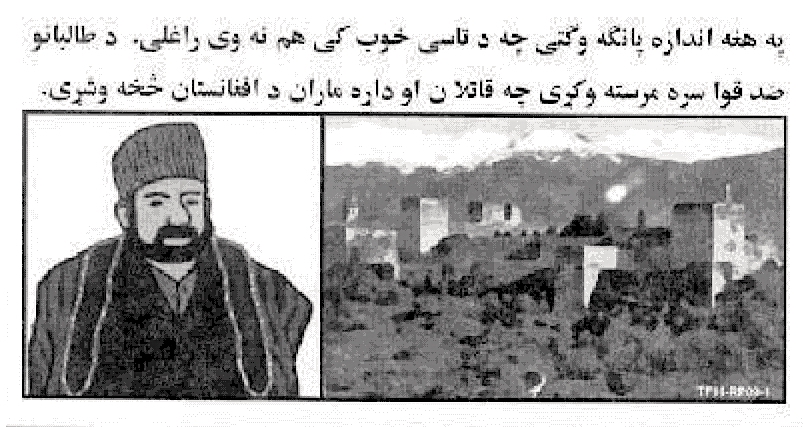
CIA bounty leaflet. “You can receive millions of dollars for helping the Anti-Taliban Force catch Al-Qaida and Taliban murderers. This enough money to take care of your family, your village, your tribe for the rest of your life. Pay for livestock and doctors and school books and housing for all your people.” (Wikimedia: This image is a work of a Central Intelligence Agency employee, taken or made as part of that person’s official duties. As a Work of the United States Government, this image or media is in the public domain in the United States.)
Fourteen years later, in September 2015, Russia was confronted by the reality that the U.S. had no strategy for victory in Afghanistan and, left to its own devices, Afghanistan was doomed to collapse into an ungovernable morass of tribal, ethnic and religious interests that would spawn extremism capable of migrating over the border, into the former Soviet Central Asian Republics, and into Russia itself.
“One doesn’t take on two decades of systemic investment in military failure that had become ingrained in both the psyche and structure of the U.S. military establishment, fire a popular secretary of defense, and then follow that act up with the dismissal of one of the most vindictive bureaucratic infighters in the business without accumulating enemies.”
Russia’s concerns were shared by regional countries such as Pakistan and China, both of which faced serious threats in the form of domestic Islamist extremism.
The capture of the northern Afghan city of Konduz, followed by the rise of an even more militant Islamist group in Afghanistan known as the Islamic State-Khorassan (IS-K), both of which occurred in September 2015, led the Russians to conclude that the U.S. was losing its war in Afghanistan, and Russia’s best hope was to work with the prevailing side—the Taliban—in order to defeat the threat from IS-K, and create the conditions for a negotiated peace settlement in Afghanistan.
None of this history was mentioned by either Gen. Nicholson or Sen. Nelson. Instead, Nicholson sought to cast Russia’s involvement in Afghanistan as “malign”, declaring in a Dec. 16, 2016 briefing that:
“Russia has overtly lent legitimacy to the Taliban. And their narrative goes something like this: that the Taliban are the ones fighting Islamic State, not the Afghan government. And of course … the Afghan government and the U.S. counterterrorism effort are the ones achieving the greatest effect against Islamic State. So, this public legitimacy that Russia lends to the Taliban is not based on fact, but it is used as a way to essentially undermine the Afghan government and the NATO effort and bolster the belligerents.”
Absent from Nicholson’s comments is any appreciation surrounding the creation of IS-K, and the impact it had on the Taliban as a whole.
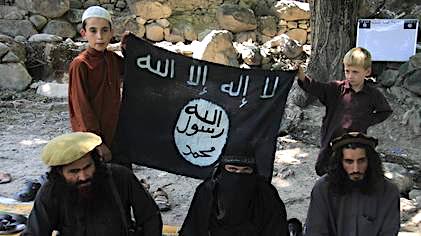
Afghan ISIL fighters during documentary by Al Jazeera, inside their territory, Feb. 2017. (Wikipedia).
The formation of IS-K can be causally linked to the disarray that occurred within the internal ranks of the Taliban in the aftermath of the death of Mullah Omar, the founder and moral inspiration of the organization. The struggle to pick a successor to Omar exposed a Taliban fractured into three factions.
One, representing the mainstream faction of the Taliban most closely linked to Mullah Omar, wanted to continue and expand upon the existing struggle against the Government of Afghanistan and the U.S.-led coalition, which supported and sustained it in an effort to re-establish the Emirate that ruled prior to being evicted from power in the months after the terror attacks of 9/11.
Another, grounded in the ranks of Pakistani Taliban, wanted a more radical approach which sought a regional Emirate beyond the borders of Afghanistan.
A third faction had grown tired of years of fighting and viewed the passing of Mullah Omar as an opportunity for a negotiated peace settlement with the Afghan government. IS-K emerged from the ranks of the second group, and posed a real threat to the viability of the Taliban if it could motivate large numbers of the Taliban’s most fanatic fighters to defect from the ranks of the mainstream Taliban.
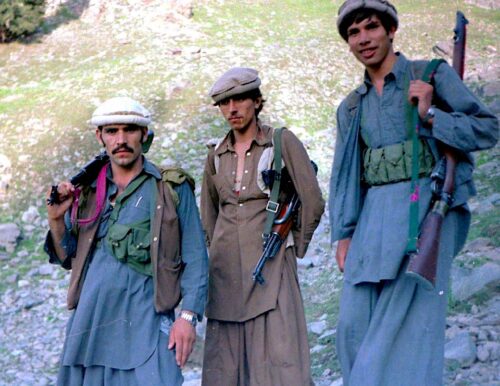
Mujahideen who fought Soviets, Aug. 1985 (Wikimedia Commons)
For the Russians, who witnessed the growing potency of the Taliban as manifested in its short-lived capture of Konduz, the biggest danger it faced wasn’t a Taliban victory over the U.S.-dominated Afghan government, but rather the emergence of a regionally-minded Islamist extremist movement that could serve as a model and inspiration for Muslim men of combat age to rally around, allowing the violent instability to fester locally and spread regionally for decades to come. The mainstream Taliban were no longer viewed as a force to be confronted, but rather contained through co-option.
In a statement before U.S. troops in December 2016, then-President Barack Obama openly admitted that “the U.S. cannot eliminate the Taliban or end violence in that country [Afghanistan].” Russia had reached that conclusion more than a year prior, following the Taliban capture of Konduz.
A year before Obama made this announcement, Zamir Kabulov, Russia’s special representative to Afghanistan, noted that “Taliban interests objectively coincide with ours” when it came to limiting the spread of the Islamic State in Afghanistan, and he acknowledged that Russia had “opened communication channels with the Taliban to exchange information.”
For its part, the Taliban was at first cold to the thought of cooperating with the Russians. A spokesperson declared that they “do not see a need for receiving aid from anyone concerning so-called Daesh [Islamic State] and neither have we contacted nor talked with anyone about this issue.”
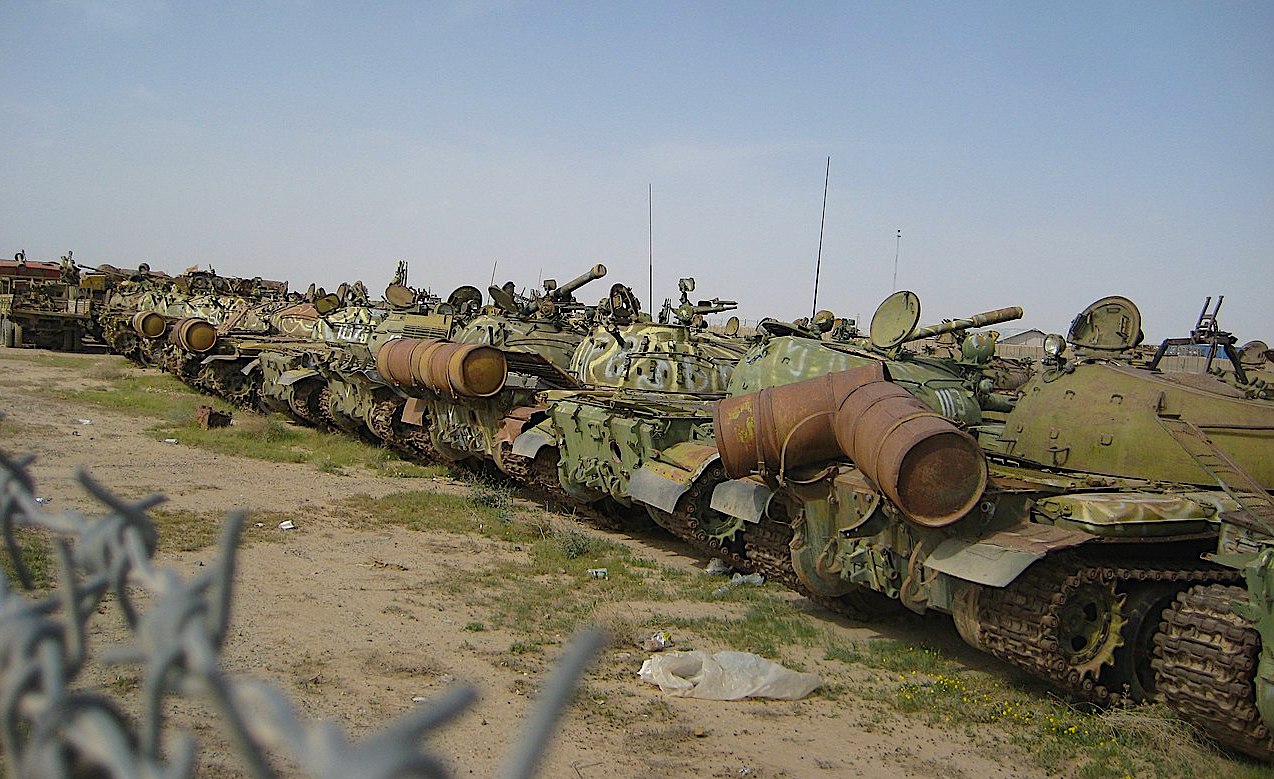
Abandoned Soviet T-54/55s lined up outside Kandahar Airfield in Afghanistan, April 2011. (Wikimedia Commons/Gregology)
Many of the Taliban leadership had a history of fighting against the Soviets in the 1980s and were loath to be seen as working with their old enemies. The rise of IS-K in Afghanistan, however, created a common threat that helped salve old wounds, and while the Taliban balked at any overt relationship, the Russians began a backchannel process of discreet diplomatic engagement. (Kabulov had a history of negotiations with the Taliban dating back to the mid-1990’s).
By November 2018 this effort had matured into what was called the “Moscow Format”, a process of diplomatic engagement between Russia and Afghanistan’s neighbors which resulted in the first-ever dispatch of a Taliban delegation to Moscow for the purpose of discussing the conditions necessary for peace talks to be held about ending the conflict in Afghanistan.
“The mainstream Taliban were no longer viewed as a force to be confronted, but rather contained through co-option.”
When President Trump terminated the U.S.-Taliban peace negotiations in September 2019, it was the “Moscow Format” that kept the peace process alive, with Russia hosting a delegation from the Taliban to discuss the future of the peace process.
The Russian involvement helped keep the window of negotiations with the Taliban open, helping to facilitate the eventual return of the U.S. to the negotiating table this February, and played no small part in the eventual successful conclusion of the Feb. 27, 2020 peace agreement—a fact which no one in the U.S. was willing to publicly acknowledge.
Bad Intelligence
The Intelligence Collection Report that found its way into the Feb. 27 PDB did not appear in a vacuum. The singling out of the Hawala network operated by Rahmatullah Azizi was the manifestation of a larger anti-Russian animus that had existed in the intelligence collection priorities of the U.S. military, the CIA and the Afghan NDS since 2015.
This animus can be traced to internal bias that existed in both U.S. Central Command and the CIA against anything Russian, and the impact this bias had on the intelligence cycle as it applied to Afghanistan.
The existence of this kind of bias is the death knell of any professional intelligence effort, as it destroys the objectivity needed to produce effective analysis.
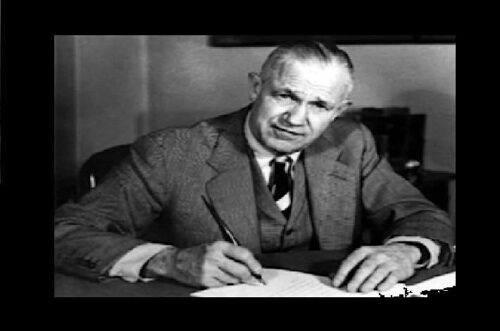
Sherman Kent
Sherman Kent, the dean of U.S. intelligence analysis (the CIA’s Center for Intelligence Analysis is named after him), warned of this danger, noting that while there was no excuse for policy or political bias, the existence of analytic or cognitive bias was ingrained in human condition, requiring a continuous effort by those responsible for overseeing analytical tasks to minimize.
Kent urged analysts “to resist the tendency to see what they expect to see in the information,” and “urged special caution when a whole team of analysts immediately agrees on an interpretation of yesterday’s development or a prediction about tomorrow’s.”
Part of a Litany of Intel Failures
The nexus of theory and reality was rarely, if ever, achieved within the U.S. intelligence community. From exaggerated Cold War estimates of Soviet military capability (the “bomber” and “missile” gaps), the underestimation of Viet Cong and North Vietnamese military capability, a failure to accurately predict the need for, and impact of, Gorbachev’s policies of reform in the Soviet Union, the debacle that was Iraqi WMD, a similar misreading of Iran’s nuclear capability and intent, and the two decade failure that was (and is) the Afghanistan experience, the U.S. intelligence community has a track record of imbuing its analysis with both political and cognitive bias—and getting it very, very wrong about so many things.
The Russian bounty story is no exception. It represents the nexus of two separate analytical streams, both of which were amply imbued with policy bias; one, representing America’s anger at not being able to control the fate of Russia in the aftermath of the collapse of the Soviet Union, and the second, America’s total misread of the reality of Afghanistan (and the Taliban) as it related to the Global War on Terror (GWOT).
For the first decade or so, these streams lived separate but equal lives, populated by analytical teams whose work rarely intersected (indeed, if truth be told, the Russian/Eurasian “house” was frequently robbed of its best talent to feed the insatiable appetite for more and better “analysis” driven by the GWOT enterprise.)
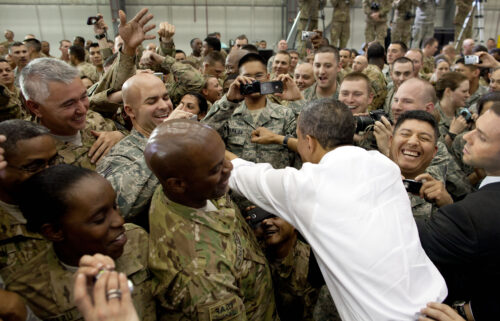
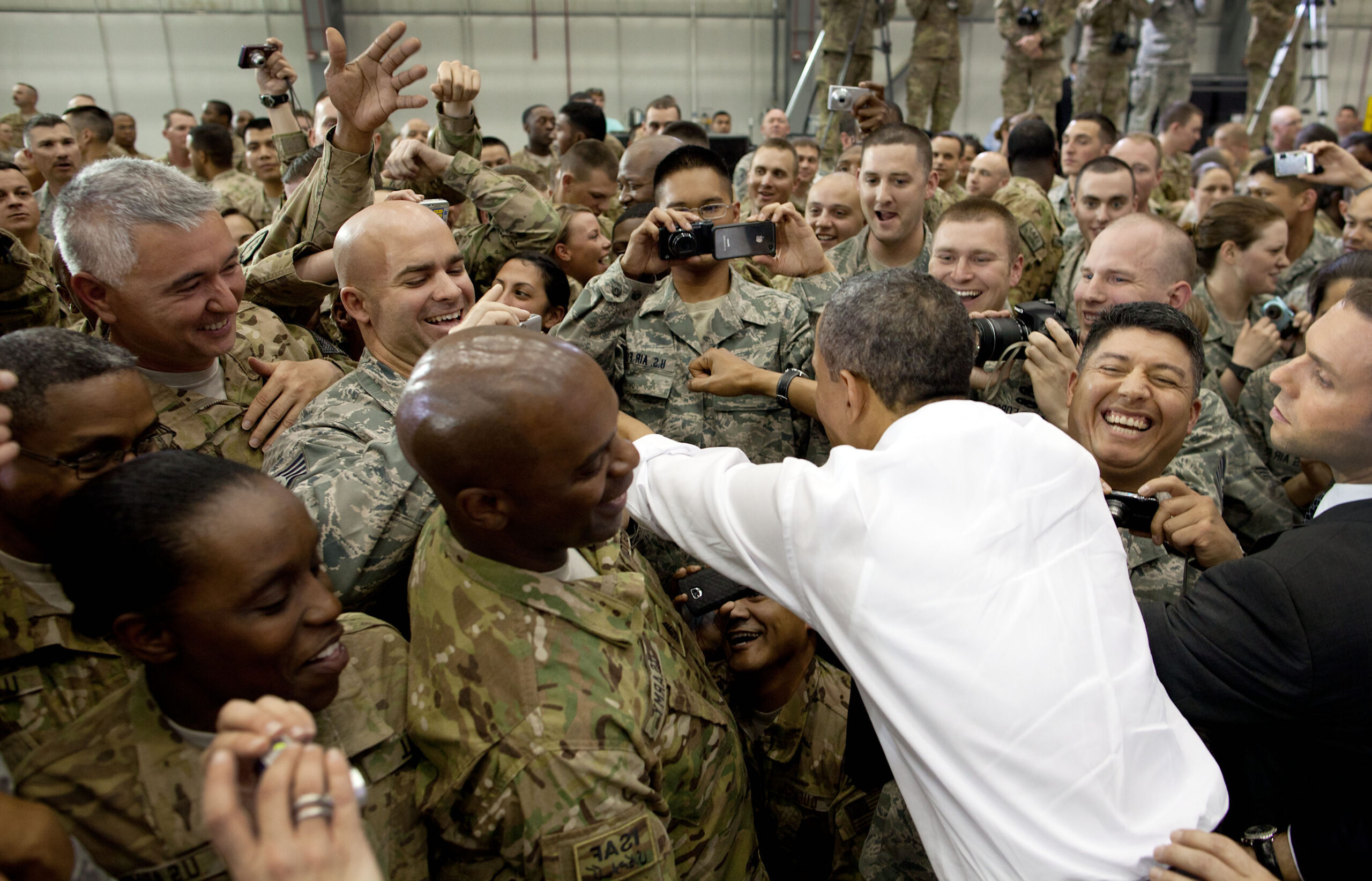
Obama at Bagram Air Field, Afghanistan, May 1, 2012. (Official White House Photo by Pete Souza)
The election of Barack Obama, however, changed the intelligence landscape and, in doing so, initiated processes which allow these two heretofore disparate intelligence streams to drift together.
Under President Obama, the U.S. “surged” some 17,000 additional combat troops into Afghanistan in an effort to turn the tide of battle. By September 2012, these troops had been withdrawn; the “surge” was over, with little to show for it besides an additional 1,300 U.S. troops killed and tens of thousands more wounded. The “surge” had failed, but like any failure rooted in Presidential policy, it was instead sold as a success.
That same year the Obama administration suffered another policy failure of similar magnitude. In 2008, Russian President Vladimir Putin swapped places with Prime Minister Dmitri Medvedev, and when Obama took office, his team of Russian experts, led by a Stanford professor named Michael McFaul, sold him on the concept of a “reset” of U.S.-Russian relations, which had soured under eight years of the Bush Presidency.
But the “reset” was decidedly one-sided—it placed all of the blame for the bad blood between the two nations on Putin, and none on two successive eight-year presidential administrations, led by Bill Clinton and George W. Bush, which saw the U.S. expand the NATO alliance up to Russia’s borders, abandon foundational arms control agreements, and basically behave like Russia was a defeated foe whose only acceptable posture was one of acquiescence and subservience.
This was a game Russia’s first President, Boris Yeltsin, only seemed too happy to play. His hand-picked successor, Vladimir Putin, however, would not.
With Medvedev installed as president, McFaul sought to empower Medvedev politically—in effect, to give him the “Yeltsin” treatment—in hopes that an empowered Medvedev might be able to muscle Putin out of the picture.
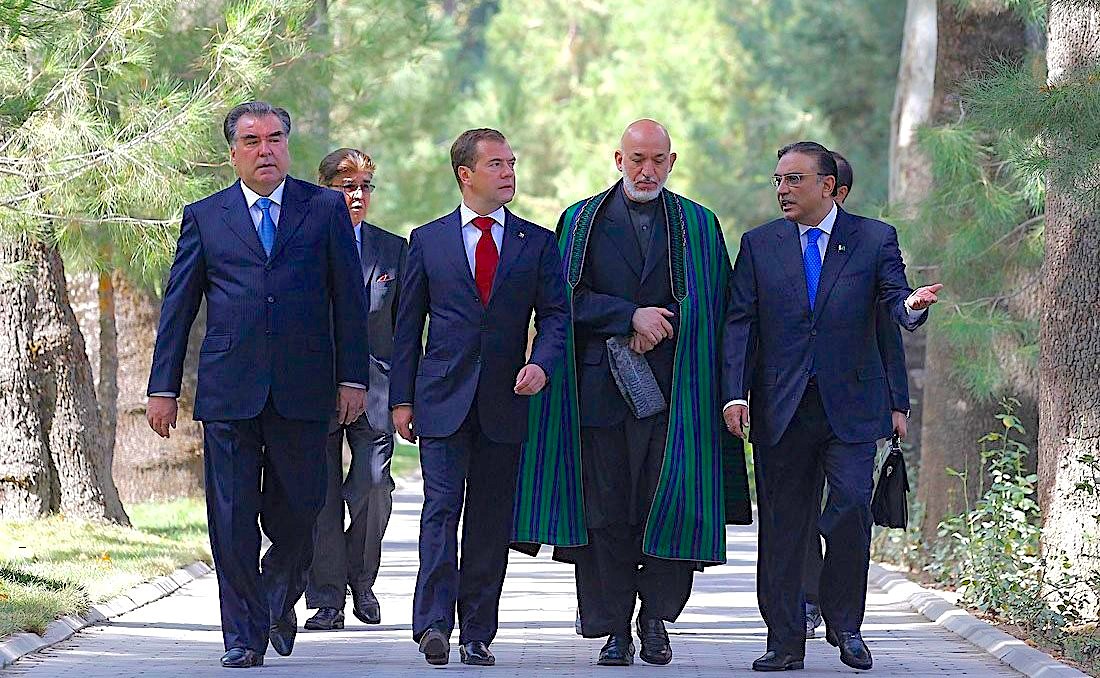
Tajik President Emomali Rahmon, Russian President Dmitry Medvedev, Afghan President Hamid Karzai, and Pakistan President Asif Ali Zardari, Dushanbe, Sept. 2011 (President of Russia)
For any number of reasons (perhaps most important being Putin had no intention of allowing himself to be so squeezed, and Medvedev was never inclined to do any squeezing), the Russian “reset” failed. Putin was reelected as president in March 2012. McFaul’s gambit had failed, and from that moment forward, U.S.-Russian relations became a “zero sum game” for the U.S.—any Russian success was seen as a U.S. failure, and vice versa.
In 2014, after watching a duly elected, pro-Russian Ukrainian president, Viktor Yanukovych, removed from office by a popular uprising which, if not U.S. sponsored, was U.S. supported, Putin responded by annexing the Russian-majority Crimean peninsula and supporting pro-Russian secessionists in the breakaway Donbas region of Ukraine.
This action created a schism between Russia and the U.S. and Europe, resulting in the implementation of economic sanctions against Russia by both entities, and the emergence of a new Cold War-like relationship between Russia and NATO.
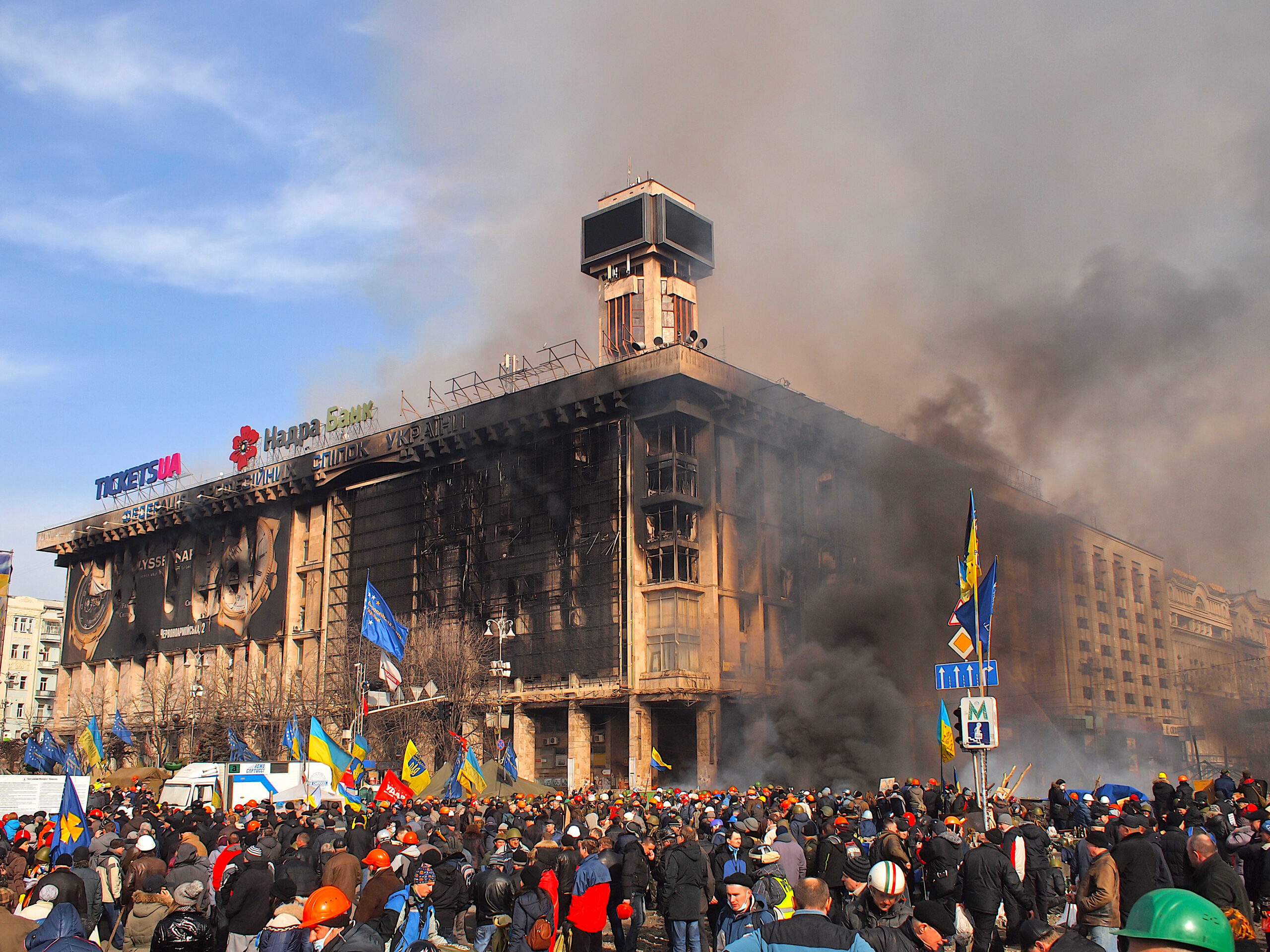
U.S.-backed, violent coup in Ukraine, 2014. (Wikipedia)
In 2015 Russia followed up its Ukraine action by dispatching its military into Syria where, at the invitation of the Syria government, it helped turn the tide on the battlefield in favor of Syria’s embattled president, Bashar al-Assad, against an assortment of jihadist groups.
Overnight, the intelligence backwater that had been Russian/European affairs was suddenly thrust front and center on the world stage and, with it, into the heart of American politics. The McFaul school of Putin-phobia suddenly became dogma, and any academic who had published a book or article critical of the Russian president was elevated in status and stature, up to and including a seat at the table in the senior-most decision-making circles of the U.S. intelligence community.
The Russians were suddenly imbued with near super-human capability, up to and including the ability to steal an American presidential election.
After the failure of the Obama surge in Afghanistan, and the withdrawal from Iraq at the end of 2011 of all U.S. combat troops, the mindset throughout the Central Command area of operations was “stability.” This was the command guidance and pity the intelligence analyst who tried to raise a red flag or inject a modicum of reality into the intelligence enterprise whose mission it was to sustain this sense of stability.
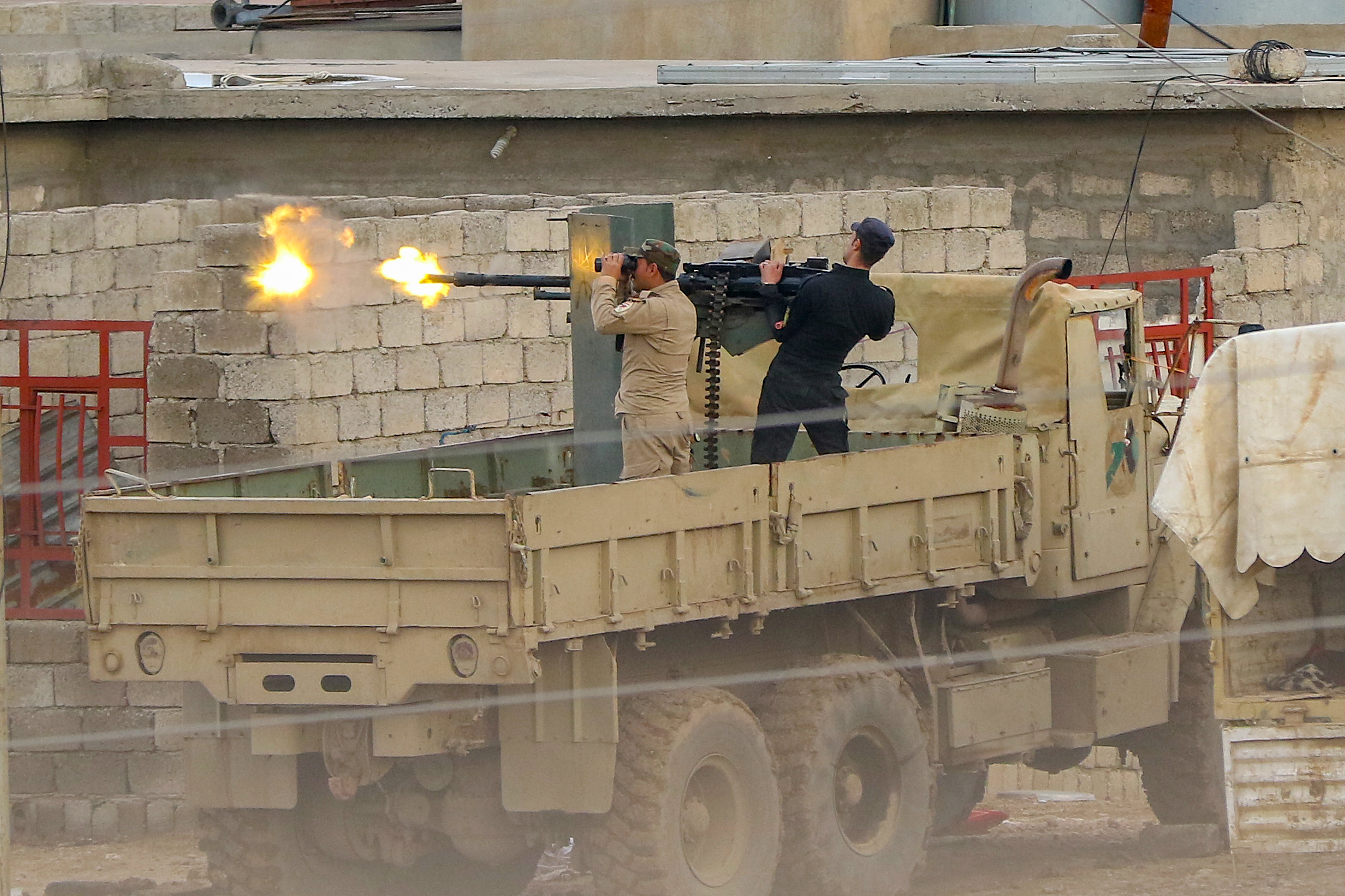
Members of 9th Iraqi Army Division, supported by Combined Joint Task Force, fire heavy machine gun at ISIS fighter positions near Al Tarab, Iraq, March 17, 2017. (U.S. Army/Staff Sgt. Jason Hull)
Indeed, when the Islamic State roared out of the western deserts of Iraq to establish itself in eastern Syria, dozens of CENTCOM intelligence analysts officially complained that their senior management was purposefully manipulating the analytical product produced by CENTCOM to paint a deliberately misleading “rosy” picture of truth on the ground out of fear of angering the Commanding General and his senior staff.
For anyone who has spent any time in the military, the importance of command guidance, whether written or verbal, when it comes to establishing both priorities and approach, cannot be overstated. In short, what the general wants, the general gets; woe be the junior officer or analyst who didn’t get the memo.
“The Russians were suddenly imbued with near super-human capability, up to and including the ability to steal an American presidential election.”
By 2016, the commander of U.S. forces in Afghanistan, Gen. Nicholson, wanted to see Russians undermining U.S. policy objectives in Afghanistan. The poisonous culture that existed inside CENTCOM’s intelligence enterprise was only too happy to comply.
The corruption of intelligence at “ground zero” ended up corrupting the entire U.S. intelligence community, especially when there was a systemic desire to transfer blame for the failure of U.S. policy in Afghanistan anywhere other than where it belonged—squarely on the shoulders of U.S. policy makers and the military that did their bidding.
And there was a beefed-up Russia/Eurasia intelligence apparatus looking for opportunities to foist blame on Russia. Blaming Russia for U.S. policy failure in Afghanistan became the law of the land.
The consequences of this political and cognitive bias is subtle, but apparent to those who know what to look for, and are willing to take the time to look.
Following the leak to The New York Times about the Russian “bounty” intelligence, members of Congress demanded answers about the White House’s claim that the information published by the Times (and mimicked by other mainstream media outlets) was “unverified.”
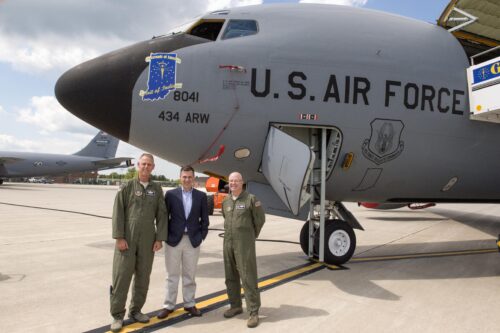
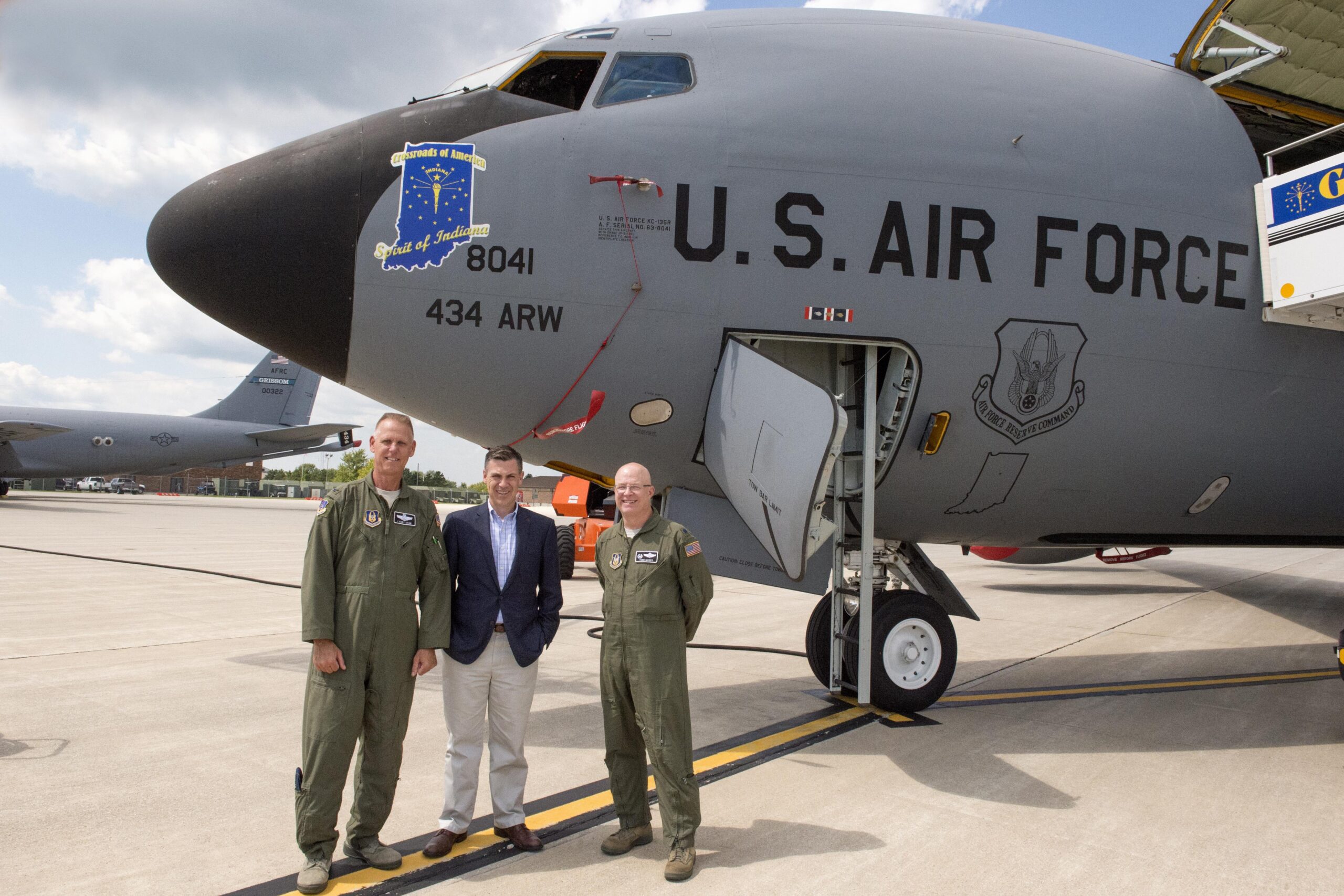
Banks during visit to Grissom Air Reserve Base, Ind., Aug. 23, 2017.(U.S. Air Force graphic/Tech. Sgt. Benjamin Mota)
Rep. Jim Banks, who sits on the Armed Services Committee as one of eight Republican lawmakers briefed by the White House on the substance of the intelligence regarding the alleged Russian “bounties”, tweeted shortly after the meeting ended that, “Having served in Afghanistan during the time the alleged bounties were placed, no one is angrier about this than me.”
Bank’s biography notes that, “In 2014 and 2015, he took a leave of absence from the Indiana State Senate to deploy to Afghanistan during Operations Enduring Freedom and Freedom’s Sentinel.”
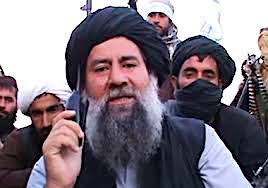
Banks’ timeline mirrors that offered by a former senior Taliban leader, Mullah Manan Niazi, who told U.S. reporters who interviewed him after the Russian “bounty” story broke that “the Taliban have been paid by Russian intelligence for attacks on U.S. forces—and on ISIS forces—in Afghanistan from 2014 up to the present.”
Niazi: shady character. (ToloNews/YouTube)
Niazi has emerged a key figure behind the crafting of the “bounty” narrative, and yet his voice is absent from The New York Times reporting, for good reason—Niazi is a shady character whose acknowledged ties to both the Afghan Intelligence Service (NDS) and the CIA undermine his credibility as a viable source of information.
Officials, speaking anonymously to the media, have stated that “the bounty hunting story was ‘well-known’ among the intelligence community in Afghanistan, including the CIA’s chief of station and other top officials there, like the military commandos hunting the Taliban. The information was distributed in intelligence reports and highlighted in some of them.”
If this is true, and some of this information found its way into the intelligence report referred to by Rep. Banks, then the U.S. intelligence community has been selling the notion of a Russian bounty on U.S. troops since at least 2015—coincidentally, the same time Russia started siding with the Taliban against IS-K.
Seen in this light, claims that Bolton briefed President Trump on the “bounty” story in March of 2019—nearly a full year before the PDB on it was delivered to the White House—don’t seem too far-fetched, except for one small detail: what was the basis of Bolton’s briefing? What intelligence product had been generated at that time which rose to a level sufficient enough to warrant being briefed to the president of the United States by his national security advisor?
The answer is, of course—none. There was nothing; if there was, we would be reading about it with enough corroboration to warrant a White House denial. All we have is a story, a rumor, speculation, a “legend” promoted by CIA-funded Taliban turncoats that had seeped itself into the folklore of Afghanistan enough to be assimilated by other Afghans who, once detained and interrogated by the NDS and CIA, repeated the “legend” with sufficient ardor to be included, without question, in the intelligence collection report that actually did make into a PDB—on Feb. 27, 2020.
“Blaming Russia for U.S. policy
failure in Afghanistan became the law of the land.”
There is another aspect of this narrative that fails completely, namely the basic comprehension of what exactly constitutes a “bounty.”
“Afghan officials said prizes of as much as $100,000 per killed soldier were offered for American and coalition targets,” the Times reported. And yet, when Rukmini Callimachi, a member of the reporting team breaking the story, appeared on MSNBC to elaborate further, she noted that “the funds were being sent from Russia regardless of whether the Taliban followed through with killing soldiers or not. There was no report back to the GRU about casualties. The money continued to flow.”
There is just one problem—that’s not how bounties work. Bounties are the quintessential quid pro quo arrangement—a reward for a service tendered. Do the job, collect the reward. Fail to deliver—there is no reward. The idea that the Russian GRU set up a cash pipeline to the Taliban that was not, in fact, contingent on the killing of U.S. and coalition troops, is the antithesis of a bounty system. It sounds more like financial aid, which it was—and is. Any assessment that lacked this observation is simply a product of bad intelligence.
The Timing
U.S. 15th Marine Expeditionary Unit after seizing a Taliban forward-operating base Nov. 25, 2001, shortly after U.S. invasion. (Sergeant Joseph R. Chenelly, U.S. Marine Corps)
Whoever leaked the Russian “bounty” story to The New York Times knew that, over time, the basics of the story would not be able to stand up under close scrutiny—there were simply too many holes in the underlying logic, and once the totality of the intelligence leaked out (which, by Friday seemed to be the case), the White House would take control of the narrative.
The timing of the leak hints at its true objective. The main thrust of the story was that the president had been briefed on a threat to U.S. forces in the form of a Russian “bounty,” payable to the Taliban, and yet opted to do nothing. On its own, this story would eventually die out of its own volition.
On June 18, the U.S. fulfilled its obligation under the peace agreement to reduce the number of troops in Afghanistan to 8,600 by July 2020. By June 26, the Trump administration was close to finalizing a decision to withdraw more than 4,000 troops from Afghanistan by the fall, a move which would reduce the number of troops from 8,600 to 4,500 and thus pave the way for the complete withdrawal from U.S. forces from Afghanistan by mid-2021.
Both of these measures were unpopular with a military establishment that had been deluding itself for two decades that it could prevail in the Afghan conflict. Moreover, once the troop level had drop to 4,500, there was no turning back—the total withdrawal of all forces was inevitable, because at that level the U.S. would be unable to defend itself, let alone conduct any sort of meaningful combat operations in support of the Afghan government.
It was at this time that the leaker chose to release his or her information to The New York Times, perfectly timed to create a political furor intended not only to embarrass the president, but more critically, to mobilize Congressional pushback against the Afghan withdrawal.

A meeting of the House Armed Services Committee in March. (U.S. Air Force/Wayne Clark)
On Thursday, the House Armed Services Committee voted on an amendment to the National Defense Authorization Act which required the Trump administration to issue several certifications before U.S. forces could be further reduced in Afghanistan, including an assessment of whether any “state actors have provided any incentives to the Taliban, their affiliates, or other foreign terrorist organizations for attacks against United States, coalition, or Afghan security forces or civilians in Afghanistan in the last two years, including the details of any attacks believed to have been connected with such incentives”—a direct reference to the Russian “bounty” leak.
The amendment passed 45-11.
This, more than anything else, seems to have been the objective of the leak. The irony of Congress passing legislation designed to prolong the American war in Afghanistan in the name of protecting American troops deployed to Afghanistan should be apparent to all.
The fact that it is not speaks volumes to just how far down the road of political insanity this country has travelled. On a weekend where America is collectively celebrating the birth of the nation, that celebration will be marred by the knowledge that elected representatives voted to sustain a war everyone knows has already been lost. That they did so on the backs of bad intelligence leaked for the purpose of triggering such a vote only makes matters worse.