Tuesday, June 9, 2020


How Che Guevara Taught Cuba to Confront COVID-19
Che envisioned a new medicine, with doctors who would serve the greatest number of people with preventive care and public awareness of hygiene.


June 8, 2020


Don Fitz


MONTHLY REVIEW

https://portside.org/2020-06-08/how-che-guevara-taught-cuba-confront-covid-19


Beginning in December 1951, Ernesto “Che” Guevara took a nine-month break from medical school to travel by motorcycle through Argentina, Chile, Peru, Colombia, and Venezuela. One of his goals was gaining practical experience with leprosy. On the night of his twenty-fourth birthday, Che was at La Colonia de San Pablo in Peru swimming across the river to join the lepers. He walked among six hundred lepers in jungle huts looking after themselves in their own way.

Che would not have been satisfied to just study and sympathize with them—he wanted to be with them and understand their existence. Being in contact with people who were poor and hungry while they were sick transformed Che. He envisioned a new medicine, with doctors who would serve the greatest number of people with preventive care and public awareness of hygiene. A few years later, Che joined Fidel Castro’s 26th of July Movement as a doctor and was among the eighty-one men aboard the Granma as it landed in Cuba on December 2, 1956.
Revolutionary Medicine

After the January 1, 1959, victory that overthrew Fulgencio Batista, the new Cuban constitution included Che’s dream of free medical care for all as a human right. An understanding of the failings of disconnected social systems led the revolutionary government to build hospitals and clinics in underserved parts of the island at the same time that it began addressing crises of literacy, racism, poverty, and housing. Cuba overhauled its clinics both in 1964 and again in 1974 to better link communities and patients. By 1984, Cuba had introduced doctor-nurse teams who lived in the neighborhoods where they had offices (consultorios).

The United States became ever more bellicose, so in 1960 Cubans organized Committees for Defense of the Revolution to defend the country. The committees prepared to move the elderly, disabled, sick, and mentally ill to higher ground if a hurricane approached, thus intertwining domestic health care and foreign affairs, a connection that has persisted throughout Cuba’s history.

As Cuba’s medical revolution was based on extending medical care beyond the major cities and into the rural communities that needed it the most, it was a short step to extend that assistance to other nations. The revolutionary government sent doctors to Chile after a 1960 earthquake and a medical brigade in 1963 to Algeria, which was fighting for independence from France. These actions set the stage for the country’s international medical aid, which grew during the decades and now includes helping treat the COVID-19 pandemic.

In the late 1980s and early ’90s, two disasters threatened the very existence of the country. The first victim of AIDS died in 1986. In December 1991, the Soviet Union collapsed, ending its $5 billion annual subsidy, disrupting international commerce, and sending the Cuban economy into a free fall that exacerbated the AIDS epidemic. A perfect storm for AIDS infection appeared on the horizon. The HIV infection rate for the Caribbean region was second only to southern Africa, where a third of a million Cubans had recently been during the Angolan wars. The embargo on the island reduced the availability of drugs (including those for HIV/AIDS), made existing pharmaceuticals outrageously expensive, and disrupted the financial infrastructures used for drug purchases. Desperately needing funds, Cuba opened the floodgate of tourism, bringing an increase in sex exchanged for money.

The government drastically reduced services in all areas except two: education and health care. Its research institutes developed Cuba’s own diagnostic test for HIV by 1987. Over twelve million tests were completed by 1993. By 1990, when gay people had become the island’s primary HIV victims, homophobia was officially challenged in schools. Condoms were provided for free at doctor’s offices and, despite the expense, so were antiretroviral drugs.

Cuba’s united and well-planned effort to cope with HIV/AIDS paid off. In the early 1990s, at the same time that Cuba had two hundred AIDS cases, New York City (with about the same population) had forty-three thousand cases.1 Despite having only a small fraction of the wealth and resources of the United States, Cuba had overcome the devastating effects of the U.S. blockade and had implemented an AIDS program superior to that of the country seeking to destroy it. During this Special Period, Cubans experienced longer lives and lower infant mortality rates in comparison to the United States. Cuba inspired healers throughout the world to believe that a country with a coherent and caring medical system can thrive, even against tremendous odds.
COVID-19 Hits Cuba

Overcoming the HIV/AIDS and Special Period crises prepared Cuba for COVID-19. Aware of the intensity of the pandemic, Cuba knew that it had two inseparable responsibilities: to take care of its own with a comprehensive program and to share its capabilities internationally.

The government immediately carried out a task that proved very difficult in a market-driven economy—altering the equipment of nationalized factories (which usually made school uniforms) to manufacture masks. These provided an ample supply for Cuba by the middle of April 2020, while the United States, with its enormous productive capacity, was still suffering a shortage.

Discussions at the highest levels of the Cuban Ministry of Public Health drew up the national policy. There would need to be massive testing to determine who had been infected. Infected persons would need to be quarantined while ensuring that they had food and other necessities. Contact tracing would be used to determine who else might be exposed. Medical staff would need to go door to door to check on the health of every citizen. Consultorio staff would give special attention to everyone in the neighborhood who might be high risk.

By March 2, Cuba had instituted the Novel Coronavirus Plan for Prevention and Control .2 Within four days, it expanded the plan to include taking the temperature of and possibly isolating infected incoming travelers. These occurred before Cuba’s first confirmed COVID-19 diagnosis on March 11. Cuba had its first confirmed COVID-19 fatality by March 22, when there were thirty-five confirmed cases, almost one thousand patients being observed in hospitals, and over thirty thousand people under surveillance at home. The next day it banned the entry of nonresident foreigners, which took a deep bite into the country’s tourism revenue.3

That was the day that Cuba’s Civil Defense went on alert to respond rapidly to COVID-19 and the Havana Defense Council decided that there was a serious problem in the city’s Vedado district, famous for being the largest home to nontourist foreign visitors who were more likely to have been exposed to the virus. By April 3, the district was closed. As Merriam Ansara witnessed, “anyone with a need to enter or leave must prove that they have been tested and are free of COVID-19.” The Civil Defense made sure stores were supplied and all vulnerable people received regular medical checks.4

Vedado had eight confirmed cases, a lot for a small area. Cuban health officials wanted the virus to remain at the “local spread” stage, when it can be traced while going from one person to another. They sought to prevent it from entering the “community spread” stage, when tracing is not possible because it is moving out of control. As U.S. health professionals begged for personal protective equipment (PPE) and testing in the United States was so sparse that people had to ask to be tested (rather than health workers testing contacts of infected patients), Cuba had enough rapid test kits to trace contacts of persons who had contracted the virus.

During late March and early April, Cuban hospitals were also changing work patterns to minimize contagion. Havana doctors went into Salvador Allende Hospital for fifteen days, staying overnight within an area designated for medical staff. Then they moved to an area separate from patients where they lived for another fifteen days and were tested before returning home. They stayed at home without leaving for another fifteen days and were tested before resuming practice. This forty-five-day period of isolation prevented medical staff from bringing disease to the community via their daily trips to and from work.

The medical system extends from the consultorio to every family in Cuba. Third-, fourth-, and fifth-year medical students are assigned by consultorio doctors to go to specific homes each day. Their tasks include obtaining survey data from residents or making extra visits to the elderly, infants, and those with respiratory problems. These visits gather preventive medicine data that is then taken into account by those in the highest decision-making positions of the country. When students bring their data, doctors use a red pen to mark hot spots where extra care is necessary. Neighborhood doctors meet regularly at clinics to talk about what each doctor is doing, what they are discovering, what new procedures the Cuban Ministry of Public Health is adopting, and how the intense work is affecting medical staff.

In this way, every Cuban citizen and every health care worker, from those at neighborhood doctor offices to those at the most esteemed research institutes, plays a part in determining health policy. Cuba currently has eighty-nine thousand doctors, eighty-four thousand nurses, and nine thousand students scheduled to graduate from medical studies in 2020. The Cuban people would not tolerate the head of the country ignoring medical advice, spouting nonsense, and determining policy based on what would be most profitable for corporations.

The Cuban government approved free distribution of the homeopathic medicine PrevengHo-Vir to residents of Havana and Pinar del Rio province.5 Susana Hurlich was one of many receiving it. On April 8, Dr. Yaisen, one of three doctors at the consultorio two blocks from her home, came to the door with a small bottle of PrevengHo-Vir and explained how to use it. Instructions warn that it reinforces the immune system but is not a substitute for Interferon Alpha 2B, nor is it a vaccine. Hurlich believes that something important “about Cuba’s medical system is that rather than being two-tiered, as is often the case in other countries, with ‘classical medicine’ on the one hand and ‘alternative medicine’ on the other, Cuba has ONE health system that includes it all. When you study to become a doctor, you also learn about homeopathic medicine in all its forms.”6
Global Solidarity in the Time of COVID-19

A powerful model: Perhaps the most critical component of Cuba’s medical internationalism during the COVID-19 crisis has been using its decades of experience to create an example of how a country can confront the virus with a compassionate and competent plan. Public health officials around the world were inspired by Cuba’s actions.

Transfer of knowledge: When viruses that cause Ebola, mainly found in sub-Saharan Africa, increased dramatically in fall 2014, much of the world panicked. Soon, over twenty thousand people were infected, more than eight thousand had died, and worries mounted that the death toll could reach into hundreds of thousands. The United States provided military support; other countries promised money. Cuba was the first nation to respond with what was most needed: it sent 103 nurse and 62 doctor volunteers to Sierra Leone. Since many governments did not know how to respond to the disease, Cuba trained volunteers from other nations at Havana’s Pedro Kourí Institute of Tropical Medicine. In total, Cuba taught 13,000 Africans, 66,000 Latin Americans, and 620 Caribbeans how to treat Ebola without themselves becoming infected. Sharing understanding on how to organize a health system is the highest level of knowledge transfer.

Venezuela has attempted to replicate fundamental aspects of the Cuban health model on a national level, which has served Venezuela well in combating COVID-19. In 2018, residents of Altos de Lidice organized seven communal councils, including one for community health. A resident made space in his home available to the Communal Healthcare System initiative so that Dr. Gutierrez could have an office. He coordinates data collections to identify at-risk residents and visits all residents in their homes to explain how to avoid infection by COVID-19. Nurse del Valle Marquez is a Chavista who helped implement the Barrio Adentro when the first Cuban doctors arrived. She remembers that residents had never seen a doctor inside their community, but when the Cubans arrived “we opened our doors to the doctors, they lived with us, they ate with us, and they worked among us.”7

Stories like this permeate Venezuela. As a result of building a Cuban-type system, teleSUR reported that by April 11, 2020, the Venezuelan government had conducted 181,335 early polymerase chain reaction tests in time to have the lowest infection rate in Latin America. Venezuela had only 6 infections per million citizens while neighboring Brazil had 104 infections per million.8

When Rafael Correa was president of Ecuador, over one thousand Cuban doctors formed the backbone of its health care system. Lenin Moreno was elected in 2017 and Cuban doctors were soon expelled, leaving public medicine in chaos. Moreno followed International Monetary Fund recommendations to slash Ecuador’s health budget by 36 percent, leaving it without health care professionals, without PPE, and, above all, without a coherent health care system. While Venezuela and Cuba had 27 COVID-19 deaths, Ecuador’s largest city, Guayaquil, had an estimated death toll of 7,600.9

International medical response: Cuban medicine is perhaps best known for its internationalism. A clear example is the devastating earthquake that rocked Haiti in 2010. Cuba sent medical staff who lived among Haitians and stayed months or years after the earthquake. U.S. doctors, however, did not sleep where Haitian victims huddled. They instead returned to luxury hotels at night and departed after a few weeks. John Kirk coined the term disaster tourism to describe the way that many rich countries respond to medical crises in poor countries.

The commitment that Cuban medical staff show internationally is a continuation of the effort made by the country’s health care system in spending three decades finding the best way to strengthen bonds between caregiving professionals and those they serve. By 2008, Cuba had sent over 120,000 health care professionals to 154 countries, its doctors had cared for over 70 million people in the world, and almost 2 million people owed their lives to Cuban medical services in their country.

The Associated Press reported that when COVID-19 spread throughout the world, Cuba had thirty-seven thousand medical workers in sixty-seven countries. It soon deployed additional doctors to Suriname, Jamaica, Dominica, Belize, Saint Vincent and the Grenadines, Saint Kitts and Nevis, Venezuela, and Nicaragua.10 On April 16, Granma reported that “21 brigades of healthcare professionals have been deployed to join national and local efforts in 20 countries.”11 The same day, Cuba sent two hundred health personnel to Qatar.12

As northern Italy became the epicenter of COVID-19 cases, one of its hardest hit cities was Crema in the Lombardy region. The emergency room at its hospital was filled to capacity. On March 26, Cuba sent fifty-two doctors and nurses who set up a field hospital with three intensive care unit beds and thirty-two other beds with oxygen. A smaller and poorer Caribbean nation was one of the few aiding a major European power. Cuba’s intervention took its toll. By April 17, thirty of its medical professionals who went abroad tested positive for COVID-19.13

Bringing the world to Cuba: The flip side of Cuba sending medical staff across the globe is the people it has brought to the island—both students and patients. When Cuban doctors were in the Republic of the Congo in 1966, they saw young people studying independently under streetlights at night and arranged for them to come to Havana. They brought in even more African students during the Angolan wars of 1975–88 and then brought large numbers of Latin American students to study medicine following Hurricanes Mitch and Georges. The number of students coming to Cuba to study expanded even more in 1999 when it opened classes at the Latin American School of Medicine (ELAM). By 2020, ELAM had trained thirty thousand doctors from over one hundred countries.

Cuba also has a history of bringing foreign patients for treatment. After the 1986 nuclear meltdown at Chernobyl, twenty-five thousand patients, mostly children, came to the island for treatment, with some staying for months or years. Cuba opened its doors, hospital beds, and a youth summer camp.

On March 12, nearly fifty crew members and passengers on the British cruise ship MS Braemar either had COVID-19 or were showing symptoms as the ship approached the Bahamas, a British Commonwealth nation. Since the Braemar flew the Bahamian flag as a Commonwealth vessel, there should have been no problem disembarking those aboard for treatment and return to the United Kingdom. But the Bahamian Ministry of Transport declared that the cruise ship would “not be permitted to dock at any port in the Bahamas and no persons will be permitted to disembark the vessel.”14 During the next five days, the United States, Barbados (another Commonwealth nation), and several other Caribbean countries turned it away. On March 18, Cuba became the only country to allow the Braemar’s over one thousand crew members and passengers to dock. Treatment at Cuban hospitals was offered to those who felt too sick to fly. Most went by bus to José Martí International Airport for flights back to the United Kingdom. Before leaving, Braemar crew members displayed a banner reading “I love you Cuba!”15 Passenger Anthea Guthrie posted on her Facebook page: “They have made us not only feel tolerated, but actually welcome.”16

Medicine for all: In 1981, there was a particularly bad outbreak of the mosquito-borne dengue fever, which hits the island every few years. At the time, many first learned of the very high level of Cuba’s research institutes that created Interferon Alpha 2B to successfully treat dengue. As Helen Yaffe points out, “Cuba’s interferon has shown its efficacy and safety in the therapy of viral diseases including Hepatitis B and C, shingles, HIV-AIDS, and dengue.”17 It accomplished this by preventing complications that could worsen a patient’s condition and result in death. The efficacy of the drug persisted for decades and, in 2020, it became vitally important as a potential cure for COVID-19. What also survived was Cuba’s eagerness to develop a multiplicity of drugs and share them with other nations.

Cuba has sought to work cooperatively toward drug development with countries such as China, Venezuela, and Brazil. Collaboration with Brazil resulted in meningitis vaccines at a cost of 95¢ rather than $15 to $20 per dose. Finally, Cuba teaches other countries to produce medications themselves so they do not have to rely on purchasing them from richer countries.

In order to effectively cope with disease, drugs are frequently sought for three goals: tests to determine those infected; treatments to help ward off or cure problems; and vaccines to prevent infections. As soon as polymerase chain reaction rapid tests were available, Cuba began using them widely throughout the island. Cuba developed both Interferon Alpha 2B (a recombinant protein) and PrevengHo-Vir (a homeopathic medication). TeleSUR reported that by March 27, over forty-five countries had requested Cuba’s Interferon in order to control and then get rid of the virus.18

Cuba’s Center for Genetic Engineering and Biotechnology is seeking to create a vaccine against COVID-19. Its Director of Biomedical Research, Dr. Gerardo Guillén, confirmed that his team is collaborating with Chinese researchers in Yongzhou, Hunan province, to create a vaccine to stimulate the immune system and one that can be taken through the nose, which is the route of COVID-19 transmission. Whatever Cuba develops, it is certain that it will be shared with other countries at low cost, unlike U.S. medications that are patented at taxpayers’ expense so that private pharmaceutical giants can price gouge those who need the medication.

Countries that have not learned how to share: Cuban solidarity missions show a genuine concern that often seems to be lacking in the health care systems of other countries. Medical associations in Venezuela, Brazil, and other countries are often hostile to Cuban doctors. Yet, they cannot find enough of their own doctors to travel in dangerous conditions or go to poor and rural areas, by donkey or canoe if necessary, as Cuban doctors do.

When in Peru in 2010, I visited the Pisco policlínico. Its Cuban director, Leopoldo García Mejías, explained that then-president Alan García did not want additional Cuban doctors and that they had to keep quiet in order to remain in Peru. Cuba is well aware that it has to adjust each medical mission to accommodate the political climate.

There is at least one exception to Cuban doctors remaining in a country according to the whims of the political leadership. Cuba began providing medical attention in Honduras in 1998. During the first eighteen months of Cuba’s efforts in Honduras, the country’s infant mortality rate dropped from 80.3 to 30.9 deaths per 1,000 live births. Political moods changed and, in 2005, Honduran Health Minister Merlin Fernández decided to kick Cuban doctors out. However, this led to so much opposition that the government changed course and allowed the Cubans to stay.

A disastrous and noteworthy example of when a country refused an offer of Cuban aid is in the aftermath of Hurricane Katrina. After the hurricane hit in 2005, 1,586 Cuban health care professionals were prepared to go to New Orleans. President George W. Bush, however, rejected the offer, acting as if it would be better for U.S. citizens to die rather than admit the quality of Cuban aid.

Though the U.S. government does not take kindly to students studying at ELAM, they are still able to apply what they learn when they come home. In 1988, Kathryn Hall-Trujillo of Albuquerque, New Mexico, founded the Birthing Project USA, which trains advocates to work with African-American women and connect with them through the first year of the infant’s life. She is grateful for the Birthing Project’s partnership with Cuba and the support that many ELAM students have given. In 2018, she told me: “We are a coming home place for ELAM students—they see working with us as a way to put into practice what they learned at ELAM.”

Cuban doctor Julio López Benítez recalled in 2017 that when the country revamped its clinics in 1974, the old clinic model was one of patients going to clinics, but the new model was of clinics going to patients. Similarly, as ELAM graduate Dr. Melissa Barber looked at her South Bronx neighborhood during COVID-19, she realized that while most of the United States told people to go to agencies, what people need is a community approach that recruits organizers to go to the people. Dr. Barber is working in a coalition with South Bronx Unite, the Mott Haven Mamas, and many local tenant associations. As in Cuba, they are trying to identify those in the community who are vulnerable, including “the elderly, people who have infants and small children, homebound people, people that have multiple morbidities and are really susceptible to a virus like this one.”19

As they discover who needs help, they seek resources to help them, such as groceries, PPE, medications, and treatment. In short, the approach of the coalition is to go to homes to ensure that people do not fall through the cracks. In contrast, U.S. national policy is for each state and each municipality to do what it feels like doing, which means that instead of having a few cracks that a few people fall through, there are enormous chasms with large groups careening over the edge. What countries with market economies need are actions like those in the South Bronx and Cuba carried out on a national scale.

This was what Che Guevara envisioned in 1951. Decades before COVID-19 jumped from person to person, Che’s imagination went from doctor to doctor. Or perhaps many shared their own visions so widely that, after 1959, Cuba brought revolutionary medicine anywhere it could. Obviously, Che did not design the intricate inner workings of Cuba’s current medical system. But he was followed by healers who wove additional designs into a fabric that now unfolds across the continents. At certain times in history, thousands or millions of people see similar images of a different future. If their ideas spread broadly enough during the hour that social structures are disintegrating, then a revolutionary idea can become a material force in building a new world.

Notes
Nancy Scheper-Hughes, “AIDS, Public Policy, and Human Rights in Cuba,” Lancet 342, no. 8877 (1993), 965–67.
Pascual Serrano, “Cuba en Tiempos de Coronavirus,” cuartopoder, March 21, 2020.
Helen Yaffe, “Cuban Medical Science in the Service of Humanity,” CounterPunch, April 10, 2020.
Merriam Ansara, “John Lennon in Quarantine: A Letter From Havana,” CounterPunch, April 9, 2020.
Heidy Ramírez Vázquez, “Medicamento Homeopático a Ciudadanos en Cuba,” Infomed al Día, April 12, 2020.
Resumen-English, April 9, 2020.
Cuban Docs Fighting Coronavirus Around World, Defying US,” Associated Press, April 3, 2020.
Ministry of Foreign Affairs Statement, “The COVID-19 Pandemic Makes Clear the Need to Cooperate Despite Political Differences,” Granma, April 16, 2020.
Ángel Guerra Cabrera, “Cuba: El Interferón Salva Vidas,” La Jornada, April 16, 2020.
Farooque Chowdhury, “Undaunted Cuba Defies the Empire and Extends Hands of Solidarity to Continents,” Countercurrents, April 17, 2020.
Amy Goodman with Peter Kornbluh, “‘Humanitarian Solidarity’: Even Under U.S. Sanctions, Cuba Sends Doctor Brigade to Italy and More,” Democracy Now!, March 24, 2020.
Kornbluh, “Cuba’s Welcome to a Covid-19-Stricken Cruise Ship.”
Helen Yaffe, “Cuba’s Contribution to Combating COVID-19,” Links International Journal of Socialist Renewal, March 14, 2020.

A reality check on the ongoing spread of the coronavirus pandemic


https://www.wsws.org/en/articles/2020/06/09/pers-j09.html


9 June 2020

The ruling elites in the United States and throughout Europe, Asia and Latin America have abandoned any pretense of stopping the coronavirus pandemic through social distancing and the shutdown of non-essential production. However, the virus continues to spread rapidly throughout the world.

More than 400,000 men, women and children have lost their lives and at least 7.1 million have been infected, many with debilitating effects that may last for years to come. The lives of countless millions more remain in danger as the number of cases continues to grow.

The situation in the United States is particularly dire. There are now more than two million cases and 112,000 dead across every state and territory, more than any other country in the world. Tens of thousands are newly infected each day and many hundreds die, though the official figures in the US and other countries vastly understate reality.

World Health Organization Director General Tedros Adhanom Ghebreyesus reported yesterday that new cases saw their biggest daily increase ever on Sunday. “More than six months into the pandemic, this is not the time for any country to take its foot off the pedal,” he said. Such counsel, however, is falling on deaf ears.

New York Governor Andrew Cuomo chose yesterday to focus not on the grim reality of the city’s 205,000 cases and 22,000 deaths, but on the fact that “our mojo is back” because the city’s restaurants, businesses and subways are now reopened. In New York City alone, a world epicenter of the disease in April, hundreds of transit workers have died.

Twenty-two states in the US are seeing an increase in coronavirus cases. The number of new cases in Florida has increased an average of 46 percent over the past week. There are sharp increases in Utah, Arkansas and Arizona.

Texas just recorded a record number of COVID-19 hospitalizations. “As Texas moves forward with a new phase of Governor Greg Abbott’s plan for reopening businesses,” the Texas Tribune reported, “the daily number of confirmed coronavirus cases is on a steady, upward trend… The 14-day trend line shows new infections in Texas have risen about 71 percent in the past two weeks.”

A de facto policy of “herd immunity” has been adopted by the Trump administration and Democratic and Republican state governors. If brought to fruition, an estimated 1.6 million people in the country will ultimately die. The policy of the ruling class is: Whatever happens, happens.

The deadliness of the pandemic has manifested itself sharply in meatpacking plants across the US. USA Today reported that as a result of Trump’s executive order in late April forcing slaughterhouses and processing plants to remain open, “the number of coronavirus cases tied to meatpacking plants has more than doubled… topping 20,400 infections across 216 plants in 33 states, the Midwest Center for Investigative Reporting found. At least 74 people have died.”

Corporations, assured that they will be protected by the government, are flouting basic health and safety measures. The USA Today article cited the comments of a federal meat inspector, who said that she visited plants where workers “were not wearing masks and practiced only limited social distancing. Some, she said, had also recently tested positive for COVID-19.”

The coronavirus does not respect national boundaries and the global spread will have devastating consequences for every country.

Europe has suffered nearly 2.1 million infections and more than 179,000 deaths. While the virus has been somewhat suppressed in early epicenters such as Spain, Italy, Germany and France, infections and fatalities have continued to rise in the United Kingdom and Eastern Europe. Russia now has 476,000 cases and 5,900 known deaths and the country has one of the highest rates of new cases and new deaths in the world.

Other epicenters of the pandemic are South Asia and South America. There are now at least 10,000 new cases a day in India and 250 deaths, numbers that are trending upwards. The country has currently recorded 265,000 cases and 7,400 deaths.

The situation is worse in Brazil, which has had between 15,000 and 30,000 new cases each day for the past 14 days, along with 500 to almost 1,500 new deaths daily. Its official case count and death toll, figures that fascistic President Jair Bolsonaro has tried to censor, stand at 694,000 and 37,000, respectively.

Thousands of autoworkers in Mexico’s maquiladora plants have been infected and hundreds have died since the plants were reopened in May. Dozens of transit workers in London have died, even as the United Kingdom was ostensibly locked down to halt the spread of the virus. This grim reality is going to become more apparent as governments continue their homicidal drives to reopen their economies.

The policy of the ruling class must be countered through the organized resistance of the working class. In its May 21 statement, the Socialist Equality Party said, “If infection, sickness and death are to be prevented, it is necessary to create a new form of workplace organization that oversees and enforces safe working conditions.

“Therefore, the SEP advises workers to form rank-and-file safety committees in every factory, office and workplace. These committees, democratically controlled by workers themselves, should formulate, implement and oversee measures that are necessary to safeguard the health and lives of workers, their families and the broader community.”

The development of such organizations, in the US and throughout the world, is an urgent necessity to safeguard workers’ lives.

The expansion of the pandemic takes place as an unprecedented social and economic crisis confronts millions of workers. Despite Trump’s claims that the economy is roaring back, tens of millions remain out of work, with no job to return to. The stock market is rocketing back to its pre-pandemic highs due to the trillions of dollars that have been pumped into Wall Street and financial markets, with the support of Democrats and Republicans.

The seething social anger over the response of the ruling class to the pandemic is a central factor underlying the eruption of mass protests throughout the world sparked by the police murder of George Floyd. At the same time, the brutal police response and the attempt by the Trump administration to impose a military dictatorship and violently suppress popular opposition are motivated by an understanding within the ruling class that it confronts far greater social convulsions to come.

The fight to defend democratic rights and oppose dictatorship must be fused with the struggles of workers against inequality and exploitation. The pandemic has exposed the reality and bankruptcy of capitalism, which is a barrier to human progress and the very survival of the human species.

Against the homicidal policy of the capitalist ruling elites, workers must and will insist that “workers’ lives matter.” But the fight to defend the lives of workers against the coronavirus pandemic is inseparably linked to a struggle of the entire working class against the ruling class and the capitalist profit system.

Bryan Dyne


Pittsburgh Post-Gazette censors accurate reporting of protests against police brutality


https://www.wsws.org/en/articles/2020/06/09/pitt-j09.html


By Samuel Davidson
9 June 2020

Two black journalists at the Pittsburgh Post-Gazette have been barred from reporting on the continuing protests over police brutality sparked by the police murder of 46-year-old George Floyd, and the writing of other journalists and photographers were removed from the paper’s website in a direct act of political censorship.

Alexis Johnson was told last Monday that she was no longer allowed to report on the Pittsburgh protests.

Photo journalist Michael Santiago was also told that he could not report on the protests but he says he was not given a reason why. Michael Santiago was part of the team that won the Pulitzer Prize for their coverage of the 2018 fascist massacre at the Tree of Life Synagogue.

The paper has claimed that Johnson’s reporting is biased, citing a tweet posted by Johnson on her personal Twitter account which, in a sarcastic fashion, questioned the rationale of the police crackdown on the peaceful protesters protesting racism.

The tweet shows four photos of garbage and debris piled up on city streets with the caption, “Horrifying scenes and aftermath from selfish LOOTERS who don’t care about this city!!!!! .... oh wait sorry. No, these are pictures from a Kenny Chesney concert tailgate. Whoops.”

The reference is to the summer concerts featuring country singer Kenny Chesney which have been notorious in Pittsburgh for leaving garbage. In 2016, concert-goers left a staggering 46 tons scattered around the concert site.

Following her removal, many other staff members of the paper reposted her tweet with the hashtag #IStandWithAlexis. On Thursday evening, the paper responded by removing two articles of two other reporters who had also covered the protests.

Lauren Lee had written a story about a peaceful protest through Pittsburgh’s East Liberty neighborhood, while Ashley Murray had written a story about statements from City Council members about police brutality and reforms in which they said that the council needed to have a discussion.

Both article and photos were published on the paper’s website but were taken down and did not appear in the paper’s weekend print edition. The paper’s social media postings were still listing the articles. Viewers who clicked on the links receive the 404 “page not found” error.

Newspaper Guild of Pittsburgh president and Post-Gazette reporter Mike Fuoco stated that the articles were removed because of the writers’ support for Johnson.

The Newspaper Guild also pointed to the racist nature of the censoring of Johnson and Santiago. In a letter to members, Fuoco wrote: “at a time when issues of race and racism and unequal treatment under the law are finally being verbalized so all can hear, the Post-Gazette sees fit to remove one of its few black reporters, someone who has lived the experience, from coverage of such a mammoth issue. Remember this is a newspaper that promoted to executive editor the person who wrote the ‘Reason as Racism’ editorial and shamed an iconic newspaper forever. So, there are not only contractual issues but also racial issues at work here. And we will not stand for either.”

In the Twitter feed, several reporters who are Jewish note that they were not pulled from reporting on the Tree of Life Synagogue massacre.

The censoring of the reporting is not solely based on race, as both Lee and Murray are white, but their stories reported the protests as peaceful and discussed the problem of racism within the police.

The removal of the stories coincided with the newspaper’s reporting of the protests as dominated by looters and criminals, justifying the police repression of the protests. Articles about peaceful protests cut across the paper’s editorial line.

The paper replaced Lee and Murray’s articles with a report on the arrest of a 20-year-old youth for allegedly starting a riot when he spray-painted and smashed the windows of a police car during last Saturday’s protests.

Video of the incident shows a lone actor with several protesters urging him to stop. Many at the protest also questioned why a police car was left unattended in the middle of the protest. Those actions were used by the police as the pretext for cracking down on the protest, which had gone on for hours, and the arrest of 46 people.

Similarly last Monday, after demonstrators had been marching for hours throughout the East Liberty neighborhood, police fired rubber bullets, tear gas and pepper spray at them, driving the protesters down a street where they were corralled and 22 arrested.

Again, the police claim that they were responding to protesters’ violence, but two separate videos of the attack show marchers gathered peacefully. Less than 30 seconds after giving the order to clear the street, police began attacking the crowd.

At least three residents of nearby apartment buildings who were filming the assault from their windows have been targeted by police with the threat of search warrants and arrests.

Once known as a liberal newspaper, the Post-Gazette , which has a virtual monopoly as the only daily published in the city, has shifted far to the right since the election of Donald Trump.

In March of 2018, Block Communications, Inc., the family-owned company which runs the Pittsburgh Post-Gazette and its sister paper The Blade of Toledo, Ohio, merged the two papers’ editorial boards.

Shortly afterwards, the paper published its unsigned editorial headlined “Reason as Racism,” which justified Donald Trump’s references to African nations as “shithole countries,” and attacked those who called Trump a racist.

Soon after, in June 2018, the paper fired longstanding editorial cartoonist Rob Rogers, who was a critic of conservatives in general and Trump in particular. Rogers had worked at the Post for 25 years and was a runner-up for a Pulitzer Prize.

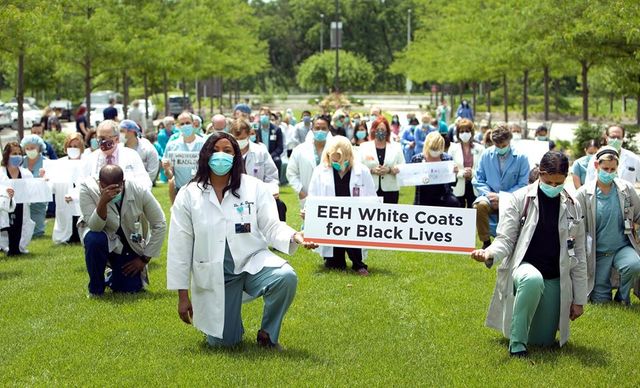
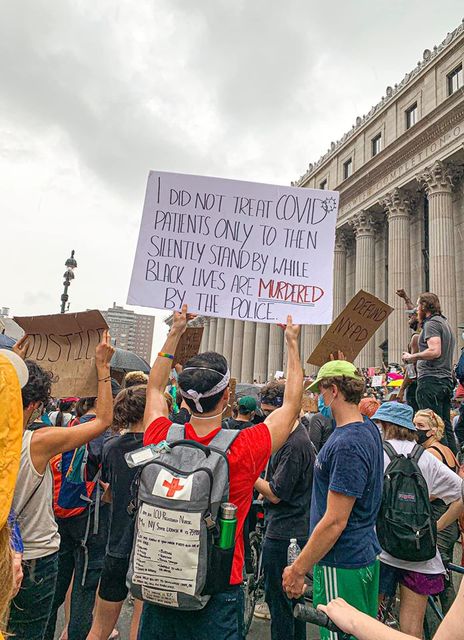
Protests continue throughout Pittsburgh. This week, hospital workers from all the major hospitals took part in protests, many still wearing protective gear from working with COVID-19 patients joined protests. Doctors, nurses and other staff at UPMC, the largest hospital chain in the city, came outside and took a knee for nearly nine minutes, representing the time that police held their knee on George Floyd's neck.

On Monday over 500 Pittsburgh teachers and other school employees marched for two miles from one school building to another.

Police have not made any additional arrests since the initial days of the protests, even going so far as the chief of police marching with protesters on Friday and taking a knee alongside them. Their presence remains strong, however, with hundreds of officers mobilized and in full riot gear. Three police helicopters regularly fly over protests to monitor their movements.


“Our system is so broken, it needs to be broken down and rebuilt”


https://www.wsws.org/en/articles/2020/06/09/medi-j08.html


Health care workers join mass protests against racism and police violence, and explain why
By Clara Weiss
9 June 2020

Over the past 10 days, thousands of health care workers have joined the growing protest movement against police violence and racism in the US and internationally. Many have joined protests, including to provide medical care for demonstrators who have been violently attacked by police, while thousands more have staged demonstrations of support at their hospitals under the slogan WhiteCoatsforBlackLives.

No information has been released by the media about the total number of workers participating in these protests, and there has been only very limited national coverage. However, based on social media, it is clear that workers at hundreds, if not thousands, of facilities have been involved, spanning virtually all states in both rural and urban areas.

While the protests have focused on police violence and racism, underlying them is much broader social and political anger about social inequality, the criminal response by the government to the coronavirus pandemic, and opposition to both the threat of the dictatorship and both big business parties.
Hospital workers at Elmhurst, New York City

Health care workers have been at the forefront of the fight against COVID-19 for months. However, their lives and health have been endangered by the criminally callous response of the government which has left them without adequate Personal Protective Equipment (PPE). At least 586 US health care workers have died from COVID-19, according to the latest count by the Guardian and Kaiser Health News, and over 62,000 have been infected. Meanwhile, almost 1.5 million workers in the health care sector have been laid off and tens of thousands have been furloughed, even as leading hospital chains received $1.5 billion as part of the bailouts of the major corporations and Wall Street.

The WSWS spoke to several medical workers in Illinois and Kentucky who have joined the protests or are working on organizing protests themselves. Their first names have been changed to protect their identities.

Kelly is an ICU [intensive care unit] nurse from Kentucky who has been treating COVID-19 patients for the past months. Now, on top of her intensive work schedule, she is organizing protests against police violence among medical workers in Louisville.

Explaining her motivation to do so, Kelly highlighted not only her opposition to racism but also the enormous amounts of money spent by the US on the military: “In 2015, military expenditures accounted for about 54 percent of our discretionary spending, according to The National Priorities Project. In contrast, education accounted for only 6 percent of the budget. To see our nation underprepared for a pandemic of this proportion was not surprising, it took many countries down. However, the perspective is changed vastly when we see the ability to mobilize police and military with such ease in just days.

“It is now months after our first case of COVID-19 and I’m still wearing the same N95 I’ve had for weeks (only because the strap broke on my previous one that I have had since the beginning, I was able to get an additional one). These obvious inequalities are right in front of us, we are living them in real time.”

Kelly’s sentiments were echoed by Linda, a paramedic from Kentucky, who has joined protests in her city and has been providing medical care for protesters. She told the WSWS: “My motivations for participating are obviously that there is a deeply rooted problem with racism in the US, but also a larger problem with the militarization of our police. I work on the street level. I go into people’s homes and transfer patients between facilities. I see that our police are well-equipped for war with civilians, but I was only issued one N95 mask.

“I read the statistics and know that black people are dying at higher numbers in my state, disproportionate to the population, because they lack resources and health care. I know that people are poor, desperate and sick, and our government is brutalizing them in the street, and billionaires in my country have profited from this outbreak while ignoring our suffering.”

The role of the police as a force deployed against workers is being broadly discussed by health care workers and among other sections of the working class on social media. One nurse from Kentucky described on Facebook how the police attacked teachers and students on a picket line, demonstrating for more funding:

“I once walked a picket line with elementary school teachers on strike. PUBLIC SCHOOL TEACHERS. There were also adorable little kids on the picket line. Obviously, it was peaceful ... We were chanting about needing increased funding for little kids. Then the police showed up to help keep it ‘peaceful.’ They were there in full force, guns prominently displayed for all the 8-year-olds to see, being threatening, taking surreptitious photos of picketers, following people back to their cars.

“Every time a scab showed up, they’d push us roughly out of the way so the scabs could cross the picket line. A picketer ‘got too close to the car’ of a scab trying to drive through the line of teachers. A cop grabbed him by the back of the shirt, spun him around, and slammed him face first into the wall while putting him in handcuffs. ‘Disorderly conduct.’ Just a few hours later, a scab rammed through the picketers with her car. The cops turned their backs and pretended not to see.”
Health care worker at a demonstration in New York City

As the military and police have been mobilized to violently crack down and intimidated demonstrators, the international extension of the mass demonstrations has been encouraging for many workers and youth in the US. This weekend, millions of protesters in the US were joined by hundreds of thousands of workers and youth who protested in Germany, the UK, Australia, Austria and many other countries. Videos from these protests have been watched by millions on social media.

A nurse from Illinois who joined a demonstration at her hospital pointed to these protests and said, “I have heard about the protests in London and other places. The word is finally getting out. This is not just a problem in the United States. It is a worldwide problem. History shows us that it is a problem that is long overdue to be eradicated. I believe when we come to the other side, we will be stronger and united.”

Asked about the move by Trump toward dictatorship and the response by the Democrats, she said, “Trump’s move absolutely terrifies me. I am very concerned that he is going to take the opportunity and try to postpone the election.” Kelly and Linda expressed strong opposition not only to the moves toward dictatorship but to the entire political system.

Kelly stated: “From the first day Trump took office he has been moving us toward a dictatorship, that’s how he operates. You look at the top 1 percent, there is no trickle-down effect, the money and power stay at the top. He wants desperately for our country to run that way, while he is the one in power … I think our two-party system is overwhelmingly flawed and to see any real advancements it needs to be disassembled. The entire political ring is a circus full of corporate sponsorships and overpriced goods for us to consume while we watch the show.”

Linda said: “Democrats have enacted another wave of the Patriot Act that would give Trump more police power. They are ineffective and the opposite side of the same coin, owned by the corporate elite. Our system is so broken, I don’t see a way forward while working within its parameters. It needs to be broken down and rebuilt.”


Democrats announce toothless police reform bill


https://www.wsws.org/en/articles/2020/06/09/dems-j09.html


By Barry Grey
9 June 2020

With a great deal of rhetoric accompanied by a political stunt, the Democratic congressional leadership on Monday released its “Justice in Policing 2020” bill.

Prior to the press conference to present the measure, more than 20 Democratic lawmakers, all wearing African kente cloths, knelt in the Capitol’s Emancipation Hall for eight minutes and 46 seconds, the amount of time fired Minneapolis police officer Derek Chauvin kept his knee on the neck of George Floyd, killing the 46-year-old African American worker.

The group of Democrats included House Speaker Nancy Pelosi, Senate Minority Leader Charles Schumer, Congressional Black Caucus Chairwoman Karen Bass and senators Cory Booker and Kamala Harris.

At the press conference, Bass, Pelosi, Schumer and other sponsors of the bill repeatedly cited the nationwide mass demonstrations against the murder of Floyd and touted their bill as a “transformational” and “bold” attack on police violence and systemic racism. But their statements and the token character of the reforms included in the bill make clear that the measure is nothing of the kind.

Rather, it is a political maneuver designed to provide cover for Democratic governors and mayors who have overseen brutal police attacks on protesters, not to mention the pro-police record of the Obama administration. It is also aimed at containing and dissipating social protests by workers and youth against not only racism and the fascistic Trump administration, but also the social inequality, repression and poverty that are embedded in the capitalist system and magnified by the coronavirus pandemic.

The Democrats are well aware that even their collection of mild reforms has no chance of being passed by the Republican-controlled Senate or signed into law by President Trump. Just minutes after the Democrats’ press conference, Trump, who later met behind closed doors with law enforcement officials, tweeted: “This year has seen the lowest crime numbers in our Country’s recorded history, and now the Radical Left Democrats want to Defund and Abandon our Police. Sorry, I want LAW & ORDER!”

The major provisions of the bill include:

* Changes in the wording of statutes dealing with police abuse that somewhat lower the legal threshold for obtaining a conviction. The bill alters the federal standard for criminal police behavior from “willfully” violating the constitutional rights of a victim to doing so “knowingly or with reckless disregard.”

It also changes the standard for determining whether the use of force is justified from whether it is “reasonable” to whether it is “necessary.”

* It somewhat limits, but does not eliminate, the application of “qualified immunity” to police offenders. For the past 15 years, the Supreme Court has interpreted the “qualified immunity” doctrine, which applies to public officials pursuing their official duties, to vacate civil suits and throw out criminal cases against police who break the law or use unwarranted force.

Legal researchers Amir H. Ali and Emily Clark argued in 2019 that “qualified immunity permits law enforcement and other government officials to violate people’s constitutional rights with virtual impunity.” The Obama administration repeatedly intervened in Supreme Court cases to uphold the blanket use of “qualified immunity” to shield cops from civil suits or criminal prosecution.

* The bill limits, but does not eliminate, the transfer of military equipment to the police. Obama continued the practice of militarizing police departments with billions of dollars worth of military-grade weapons, armored vehicles, attack helicopters, drones and other tactical weapons.


* The bill creates a national register of police misconduct.

* It bans chokeholds.

* It establishes a grant program allowing—but not requiring—state attorneys general to create an independent process to investigate misconduct or excessive force.

* It requires body cameras for federal uniformed police officers and dashboard cameras for marked federal police vehicles. These federal forces comprise only a small fraction of the 687,000 full-time law enforcement officers in the US. The bill also mandates that state and local agencies use federal funds to “ensure” the use of body and dashboard cameras.

* The bill bans racial profiling.

* It grants subpoena powers to the civil rights division of the Justice Department for “pattern and practice” investigations of police departments.

* It makes lynching a federal hate crime.

At the press conference, Bass, who represents parts of South Los Angeles, went out of her way to profess her support for the police. “I am certain that police officers, professionals who risk their lives every day, are deeply concerned about their profession and do not want to work in an environment that requires their silence when they know a fellow officer is abusing the public,” she said.

She went on to present police officers as the unwitting victims of poor training and policing practices and a lack of “transparency.”

Pelosi called the bill a “transformational” and “structural change,” ran through its main provisions, and concluded by saying, “Police brutality is a heartbreaking reflection of an entrenched system of racial injustice in America.” She called the bill a “first step,” promising “more to come.”

New York Senator Schumer, known as the senator from Wall Street, referred nervously to the massive demonstrations that have continued in New York City and in cities and towns across the US for nearly two weeks, noting in particular their multi-racial and multi-ethnic diversity.

He then proceeded to define the issue of police violence exclusively in racial terms, saying, “The poison of racism affects more than just our criminal justice system. It runs much deeper than that. There are racial disparities in housing and health care, education, the economy, jobs, income and wealth and COVID has only placed a magnifying glass on them.”

This is a continuation of the narrative that has been employed by the ruling class, and particularly that faction represented by the Democratic Party, for more than 50 years, ever since the massive urban rebellions of the 1960s. Beginning with the Kerner Commission Report of 1968, there has been a concerted effort to portray the essential social category in America as race, rather than class.

This was designed from the outset to divert attention from the class exploitation upon which capitalism is based and within which racism serves as a weapon to divide the working class. All of the African-American lawmakers at the Democrats’ press conference are wealthy beneficiaries of policies that have elevated a thin layer of blacks into the upper-middle class and the bourgeoisie, while leaving black workers, and the working class as a whole, in far worse circumstances than in the 1960s.

A reporter asked if the sponsors of the “Justice in Policing Act” supported calls for “defunding” the police that have been embraced by some local Democratic officials, who have generally defined it as diverting a small portion of the police budget to social services. Bass had previously made clear she did not support such calls and the campaign of Joe Biden released a statement Monday disavowing the demand.

Responding to the question, Pelosi said, “We want to work with our police departments. There are many who take pride in their work, and we want to be able to make sure the focus is on them.” She went on to warn against getting “into these questions that may come by the small minds of some.”

As Marxists have long explained, the police are not “guardians of public safety” or “protectors of the people.” They are the shock troops of the capitalist state, which, as Lenin and Engels explained, is composed of “special bodies of armed men having prisons, etc. at their command.” Citing Engels, Lenin noted that the state is fundamentally “a product and a manifestation of the irreconcilability of class antagonisms,” and that the power and violence of the state “grows stronger … in proportion as class antagonisms within the state become more acute.”

The police cannot be reformed. The institution must be dismantled through the revolutionary mobilization of the working class to overthrow the capitalist state and establish a truly democratic workers’ state, based on socialist policies.


The author also recommends:

Democrats cover for Trump’s coup d’état
[3 June 2020]

New York Mayor Bill de Blasio defends police violence against protesters
[2 June 2020]


US VETERANS, INCLUDING ACTIVE DUTY, REJECT MILITARIZATION AGAINST DEMONSTRATORS


By Margaret Flowers and Kevin Zeese, Clearing the FOG.


June 8, 2020


https://popularresistance.org/veterans-active-duty-reject-militarization/


The United States is in the midst of a mass uprising against police violence, but also a whole list of grievances such as the lack of jobs, health care, education and more. Sustained protests have been going on for two weeks defying curfews and severe repression by police. The national guard has been deployed to 23 states and President Trump threatened to deploy the military against people expressing their First Amendment rights. We speak with Danny Sjursen, a retired Major and spokesperson for About Face: Veterans Against the War, about how members of the military are responding to current events. Veterans have called for members of the national guard and military to refuse illegal orders and they are receiving an unprecedented number of responses. Danny also provides insight into the police community and why they are doubling down on repression.

Listen here:
Subscribe to our show on iTunes, SoundCloud, MixCloud or Stitcher.

Review us on iTunes! Click here … Then click on “View in iTunes … Then click “Ratings and Reviews.”

Guest:

Danny Sjursen is a retired US Army officer and contributing editor at Antiwar.com His work has appeared in the NY Times, LA Times, The Nation, Huff Post, The Hill, Salon, Mother Jones, Popular Resistance, and Tom Dispatch, among other publications. He served combat tours in Iraq and Afghanistan and later taught history at West Point. He is the author of a memoir and critical analysis of the Iraq War, Ghostriders of Baghdad: Soldiers, Civilians, and the Myth of the Surge. His forthcoming book, Patriotic Dissent: America in the Age of Endless War(Heyday Books) is available for pre-order. Follow him on Twitter @SkepticalVet and see his website for speaking/media requests and past publications.


FBI LAUNCHES OPEN ATTACK ON ‘FOREIGN’ ALTERNATIVE MEDIA OUTLETS CHALLENGING US FOREIGN POLICY


By Gareth Porter, The Grayzone.


June 8, 2020


https://popularresistance.org/fbi-launches-open-attack-on-foreign-alternative-media-outlets/


Under FBI Orders, Facebook And Google Removed American Herald Tribune, An Alternative Site That Publishes US And European Writers Critical Of US Foreign Policy.

The bureau’s justification for the removal was dubious, and it sets a troubling precedent for other critical outlets.

The FBI has publicly justified its suppression of dissenting online views about US foreign policy if a media outlet can be somehow linked to one of its adversaries. The Bureau’s justification followed a series of instances in which Silicon Valley social media platforms banned accounts following consultations with the FBI.

In a particularly notable case in 2018, the FBI encouraged Facebook, Instagram and Google to remove or restrict ads on the American Herald Tribune (AHT), an online journal that published critical opinion articles on US policy toward Iran and the Middle East. The bureau has never offered a clear rationale, however, despite its private discussions with Facebook on the ban.

The FBI’s first step toward intervening against dissenting views on social media took place in October 2017 with the creation of a Foreign Influence Task Force (FTIF) in the bureau’s Counterintelligence Division. Next, the FBI defined any effort by states designated by the Department of Defense as major adversaries (Russia, China, Iran and North Korea) to influence American public opinion as a threat to US national security.

In February 2020, the FBI defined that threat in much more specific terms and implied that it would act against any online media outlet that was found to fall within its ambit. At a conference on election security on February 24, David K. Porter, who identified himself as Assistant Section Chief of the Foreign Influence Task Force, defined what the FBI described as “malign foreign influence activity” as “actions by a foreign power to influence U.S. policy, distort political sentiment and public discourse.”

Porter described “information confrontation” as a force “designed to undermine public confidence in the credibility of free and independent news media.” Those who practice this dark craft, he said, seek to “push consumers to alternative news sources,” where “it’s much easier to introduce false narratives” and thus “sow doubt and confusion about the true narratives by exploiting the media landscape to introduce conflicting story lines.”

“Information confrontation”, however, is simply the literal Russian translation of the term “information warfare.” Its use by the FTIF appears to be aimed merely at justifying an FBI role in seeking to suppress what it calls “alternative news sources” under any set of circumstances it can justify.

While expressing his intention to target alternative media, Porter simultaneously denied that the FBI was concerned about censoring media. The FITF, he said “doesn’t go around chasing content. We don’t focus on what the actors say.” Instead, he insisted that “attribution is key,” suggesting that the FTIF was only interested in finding hidden foreign government actors at work.

Thus the question of “attribution” has become the FBI’s key lever for censoring alternative media that publishes critical content on U.S. foreign policy, or which attacks mainstream and corporate media narratives. If an outlet can be somehow linked to a foreign adversary, removing it from online platforms is fair game for the feds.
The Strange Disappearance Of American Herald Tribune

In 2018, Facebook deleted the Facebook page of the American Herald Tribune (AHT), a website that publishes commentary from an array of notable authors who are harshly critical of U.S. foreign policy. Gmail, which is run by Google, quickly followed suit by removing ads linked to the outlet, while the Facebook-owned Instagram scrubbed AHT’s account altogether.

Tribune editor Anthony Hall reported at the time that the removals occurred at the end of August 2018, but there was no announcement of the move by Facebook. Nor was it reported by the corporate news media until January 2020, when CNN elicited a confirmation from a Facebook spokesman that it had indeed done so in 2018. Furthermore, the FBI was advising Facebook on both Iranian and Russian sites that were banned during that same period of a few days. As Facebook’s chief security officer Alex Stamos noted on July 21, 2018, “We have proactively reported our technical findings to US law enforcement, because they have much more information than we do, and may in time be in a position to provide public attribution.”

On August 2, a few days following the removal of AHT and two weeks after hundreds of Russian and Iranian Pages had been removed by Facebook, FBI Director Christopher Wray told reporters at a White House briefing that FBI officials had “met with top social media and technology companies several times” during the year, “providing actionable intelligence to better enable them to address abuse of their platforms by foreign actors.” He remarked that FBI officials had “shared specific threat indicators and account information so they can better monitor their own platforms.”

Cybersecurity firm FireEye, which boasts that it has contracts to support “nearly every department in the United States government,” and which has been used by the Department of Homeland Security as a primary source of “threat intelligence,” also influenced Facebook’s crackdown on the Tribune. CNN cited an unnamed official of FireEye stating that the company had “assessed” with “moderate confidence” that the AHT’s website was founded in Iran and was “part of a larger influence operation.”

The CNN author was evidently unaware that in U.S. intelligence parlance “moderate confidence” suggests a near-total absence of genuine conviction. As the 2011 official “consumer’s guide” to US intelligence explained, the term “moderate confidence” generally indicates that either there are still differences of view in the intelligence community on the issue or that the judgment ”is credible and plausible but not sufficiently corroborated to warrant higher level of confidence.”

CNN also quoted FireEye official Lee Foster’s claim that “indicators, both technical and behavioral” showed that American Herald Tribune was part of the larger influence operation. The CNN story linked to a study published by FireEye featuring a “map” showing how Iranian-related media were allegedly linked to one another, primarily by similarities in content. But CNN apparently hadn’t bothered to read the study, which did not once mention the American Herald Tribune.

Finally, the CNN piece cited a 2018 tweet by Daily Beast contributor Josh Russell which it said provided “further evidence supporting American Herald Tribune’s alleged links to Iran.” In fact, his tweet merely documented the AHT’s sharing of an internet hosting service with another pro-Iran site “at some point in time.” Investigators familiar with the problem know that two websites using the same hosting service, especially over a period of years, is not a reliable indicator of a coherent organizational connection.

CNN did find evidence of deception over the registration of the AHT. The outlet’s editor, Anthony Hall, continues to give the false impression that a large number of journalists and others (including this writer), are contributors, despite the fact that their articles have been republished from other sources without permission.

However, AHT has one characteristic that differentiates it from the others that have been kicked off Facebook: The American and European authors who have appeared in its pages are all real and are advancing their own authentic views. Some are sympathetic to the Islamic Republic, but others are simply angry about U.S. policies: Some are Libertarian anti-interventionists; others are supporters of the 9/11 Truth movement or other conspiracy theories.

One notable independent contributor to AHT is Philip Giraldi, an 18-year veteran of the CIA’s Clandestine Service and and an articulate critic of US wars in the Middle East and of Israeli influence on American policy and politics. From its inception in 2015, the AHT has been edited by Anthony Hall, Professor Emeritus at University of Lethbridge in Alberta, Canada.

In announcing yet another takedown of Iranian Pages in October 2018, Facebook’s Gleicher declared that “coordinated inauthentic behavior” occurs when “people or organizations create networks of accounts to mislead others about who they are what they’re doing.” That certainly doesn’t apply to those who provided the content for the American Herald Tribune.

Thus the takedown of the publication by Facebook, with FBI and FireEye encouragement represents a disturbing precedent for future actions against individuals who criticize US foreign policy and outlets that attack corporate media narratives.

Shelby Pierson, the CIA official appointed by then director of national intelligence in July 2019 to chair the inter-agency “Election Executive and Leadership Board,” appeared to hint at differences in the criteria employed by his agency and the FBI on foreign and alternative media.

In an interview with former acting CIA Director Michael Morrell in February, Pierson said, “[P]articularly on the [foreign] influence side of the house, when you’re talking about blended content with First Amendment-protected speech…against the backdrop of a political paradigm and you’re involving yourself in those activities, I think that makes it more complicated” (emphasis added).


Further emphasizing the uncertainty surrounding the FBI’s methods of online media suppression, she added that the position in question “doesn’t have the same unanimity that we have in the counterterrorism context.”