Friday, June 5, 2020
Socialist Appeal weekly bulletin
The murder of George Floyd in the USA and the protests against police violence seen in America and internationally have shone a light on the racism that is systemic within capitalism. As black revolutionary Malcolm X correctly stated: You can't have capitalism without racism.
The police are an intrinsic component of the capitalist state: a monopoly of institutionalised, organised violence, which exists to defend the property and profits of the capitalist class. This state machinery must be overthown.
This is why we need to build a strong Marxist tendency - to organise workers and youth around a clear revolutionary alternative. We therefore urge all our readers to join us today in the fight for socialism.
We also invite all of our readers to our upcoming online day school on Marxist economics on Saturday 13 June, looking at how capitalism works - and how it doesn't!
With sessions on capitalist crisis, Marxism vs Keynesianism, and the socialist solution, this will be an invaluable event for those looking to make sense of the chaos of capitalism we see around us today.
Register here to attend via Zoom.
[...]

What's the difference between a member of congress and a jellyfish?
ONE IS A SPINELESS VENOMOUS BLOB, AND THE OTHER IS A FORM OF SEA LIFE.
https://www.youtube.com/watch?v=rUogIRH2XwQ&feature
Bolsonaro Follows Trump’s Example and Calls Protestors “Terrorists”
https://www.resumen-english.org/2020/06/bolsonaro-follows-trumps-example-and-calls-protestors-terrorists/
Repeating Trumps’ words, the President of Brazil, Jair Bolsonaro, labeled those who came out to protest against his government as “terrorists.” Trump had used this term to refer to the hundreds of thousands of US citizens who mobilized in the streets all over the country to protest the death of George Floyd, a young Black man, at the hands of the police – four officers including Derek Chauvin.
Standing in front of the Palacio de Alvorada, Bolsonaro advised his supporters not to come out into the streets next Sunday, when massive “pro-democracy” mobilizations are expected in the main cities of Brazil. The ultra-right head of state also supported the political repression of the demonstrations and suggested that a former major ally, Rio de Janeiro Governor Wilson Witzel, might be arrested.
In this period, when Brazil has more than 600,000 cases of coronavirus infections and 34,000 dead, a general without any experience in healthcare was appointed the new Minister of Health, swelling the already massive lists of military officers in the Bolsonaro cabinet.
“It has started here already, with Antifa ( anti-fascists) in the streets,” said Bolsonaro, speaking from the Palacio de Alvorada about the mobilizations against his government. “The political motive is different from those protesting in the United States, in my opinion. They are lower-class marginal elements, they are terrorists,” added the ultra-right president, in his regular meeting with the media. In that regard, Bolsonaro assured the media that he would not permit that “Brazil would become like Chile was a short time ago,” in reference to the wave of protests that began last October against the government of Sebastián Piñera and the structural inequalities of its design of society. “This is not democracy or freedom of expression. This, in my opinion, is terrorism,” he insisted.
Bolsonaro also asked his followers not to be out in the streets this Sunday, contrary to what not only his supporters but even the President himself have been accustomed to doing all during the coronavirus pandemic, without observing social distancing measures. Gatherings of anti-fascist groups against his government are planned for this coming Sunday all over Brazil. “I have already advised that people do not come out this Sunday, although I have no influence because I am not in charge of any group. I never summoned anyone to come out into the streets,” he said, indicating that this was a precaution so that “the police can do their work well, whatever happens,” in case there are disturbances.
In recent days there have been massive protests against his rule and on social media more are planned in various cities. The marches are inspired by the “pro-democracy” demonstration that took place last Sunday on the Avenida Paulista. There the mobilization ended badly when the demonstrators called together by the various supporters of the Paulista football team clashed with supporters of Bolsonaro who were protesting against the quarantine measure. At one point, the police used tear gas to disperse them. A new protest in Curitiba also ended Monday with aggressive police intervention.
The marches planned for next Sunday in cities like Rio de Janeiro, Brasilia, Salvador, and Goiania include the fight against racism, echoing the demonstrations that exploded in the U.S. and extended to other countries after the racist crime against George Floyd. “It is not possible to fight for democracy without fighting against racism, fascism, and oppression,” is the slogan used to publicize the demonstrations in social media.
In his brief meeting with his followers and the media, Bolsonaro also referred to the recent police investigation regarding the supposed diversion of funds meant for the battle against coronavirus by the government of Rio de Janeiro. A military policeman from Rio who was present in the vicinity of the Palacio de Alvorada complained to the head of state about government measures he judged to have had a negative impact. “I am not going to speak with Wilson Witzel,” Bolsonaro said, referring to the governor of Rio. “You know where he ought to be, right?” he said in a challenging manner. These words of Bolsonaro were interpreted as a threat to arrest Witzel, whose official residence, the Palacio de Laranjeira, was broken into last week in the setting of so-called “Operation Placebo.” Witzel is one of the governors with whom Bolsonaro has kept up an ongoing conflict with during the process of the health crisis. The president consistently refused to adopt “drastic measures” like stay-at-home orders in contrast to decisions taken by the governments of densely populated states like Rio de Janeiro and San Pablo.
As Brazil continues to be the country with the second-highest level of coronavirus problems in the world, and the greatest number of cases in Latin America, Bolsonaro proceeded to formally name General Eduardo Pazuello as the new Minister of Health, after the resignation of the two previous Health Ministers, in the midst of the pandemic. Pazuello became acting minister on May 15, although the President said he expected that the general would remain in the post “for a long time.”
The designation of Pazuello as Minister of Health was published this Wednesday in the Diario Oficial de la Unión, setting the stage for more military influence in the cabinet, where officers of the armed forces now occupy 40 positions. The general takes the place of Nelson Teich, who resigned on May 15 due to “disagreements” with Bolsonaro about the use of chloroquine as a treatment for coronavirus. Teich, in his turn, had taken office after the resignation of Luiz Henrique Mandetta only one month before, also for differences of opinion with the president about the management of the pandemic.
Where did the grandeur go?
Martin Parker
https://aeon.co/essays/superlative-projects-are-made-possible-by-great-collective-efforts
In 1978, the science-fiction author Michael Moorcock wrote the celebrated essay ‘Epic Pooh’ that lambasted J R R Tolkien and his ilk for constructing fantasy universes in which – whatever the ‘there and back again’ meanderings of the plot – nothing ever really changes. Moorcock felt that his own ‘new worlds’ science fiction of the 1960s was a radical intervention for producing difference, while the fantasists were essentially nostalgic for a past in which everything had its proper place: the king on his throne, the dragons slain, the ordinary hobbits happy with their pastoral lot.
We have a lot of this fantasy futurism nowadays, with the armies of good and evil being arranged on opposing sides of the wall, or across a rift in the time-space continuum. Jon Snow and the New Avengers will come to save us, swinging swords to ensure that everything stays pretty much how it was before Voldemort, Sauron or the White Witch started messing things up. Fantasy is not really that fantastic, essentially because it takes a set of tired archetypes, adds a bit of sex and chopping, and then delivers a message about singular heroes, villains and obstacles. The Marvel Universe, currently at 23 movies, will soon be overtaking James Bond as the biggest film franchise of all time. Add in comics, TV and games, and you have a huge investment in the idea that we need heroes to save us. As flies to the gods are we.
Perhaps this cultural leaning isn’t about the future at all – just the recitation of comforting stories from long ago and far away to lull us to sleep. Real attempts to describe (and realise) human futures have always been more dangerous. What we now call the Enlightenment made curiosity possible, even celebrated, instead of thinking of it as a sin to be punished. At the same time that ‘utopian’ fiction was invented, we find attempts to produce a new sort of mercantile world, in which the timeless sclerosis of hierarchical feudalism was gradually eroded by the speculations of projectors, inventors and adventurers who built new organisations and machines.
Later, the ingenuity of the Industrial Revolution was predicated on the coordination of people and things at scale, towering mill buildings and a rail network that compressed space through the precision of the timetable and technology. This was organising on a grand scale, and it required the coordination of people and materials in ways never imagined before. In the 20th century, the Empire State building, the Apollo space programme and the supersonic gee-whizzery of Concorde are emblems of a future in which nothing could ever be the same again. These were grand projects of massive complexity, auguries of a modern world, and they drew their strength and efficacy – and, not least, their imaginative purchase on the future – from the new science of management.
In English, the word ‘management’ has an interesting history, and some rather productive differences of meaning. It is derived from the Italian mano, meaning hand, and its expansion into maneggiare, the activity of handling and training a horse carried out in a maneggio – a riding school. From this form of manual control, the word has expanded into a general activity of training and handling people. It is a word that originates with ideas of control, of a docile or wilful creature that must be subordinated to the instructions of the master.
It’s a really interesting word that grows in influence and application as the feudal order of fixed social relations based on ownership of land is disturbed by the rise of a mercantile class. This bourgeois revolution rested upon a relationship to capital, of which land was only one element, but it relied as well on more complex forms of production and distribution, and consequently on organisations with more elaborate divisions of labour. Localised craft economies were displaced by manufactories, machine production, urbanisation and also longer distribution networks via canals and trains. Its practice is fabricated in the ‘dark satanic mills’ that romantics and radicals were keen to condemn for the brute people and despoiled landscapes that they produced.
But the later imperialism of this beast-handling word doesn’t tell the whole story. In English, the earliest use of ‘management’ was as a verb that could be applied to the need to deal with complex or adverse matters, and it is the oldest usage. In Richard II, written in 1595, William Shakespeare has Green say: ‘Now for the rebels which stand out in Ireland,/Expedient manage must be made, my liege.’ The word could mean something like careful planning, necessary in this case because of the complexity and danger of that which was being faced.
The future has been displaced into the soma of fantasy
The London Encyclopaedia (1829) has an entry for ‘Manage’, which suggests that it is:
an obsolete synonyme of management, which signifies, guidance; administration; and particularly able or prudent administration of affairs: managery is another (deservedly obsolete) synonyme of this signification: manageable is tractable; easy to be managed.
This sense of management as coping, as dealing with a particular state of affairs, is still passable in everyday English. You might ask ‘How are you managing?’ if someone has told you about some problem they face. To organise complex matters, to arrange people and things, to be resilient in the face of adversity, now that requires managery. This second meaning, not distinct but different in emphasis, emerges in the 19th century with the class of people called ‘managers’. These managers do management. And as this occupational group grows throughout the 20th century, driven by the growth of the capitalist corporation, so the business school expands to train them.
At the present time, that sense of managing as the art of ‘organising’ to cope with challenges is largely obscured by the idea of the manager as someone who helps to create financial value for organisations, whether they operate in state-engineered pseudo-markets, or the carbon-max madness of global trade. This means that questions about what sort of future human beings might create tend to be limited by the horizon of the management strategies of market capitalism. This version of the future isn’t about radical discontinuity at all, just an intensification of the business practices that promise to give us Amazon Prime by drone at the same time that the real Amazon burns. This is what they teach in business schools – how to keep calm and carry on doing capitalism. But the problems we face now are considerably bigger than a business school case study, so is it possible to rescue managery from management?
Captain Marvel and Thor aside, the other set of gods that dominate our futures are the business school heroes – Bezos, Musk, Zuckerberg and many others. Amazon has made Jeff Bezos the wealthiest of them, personally worth about $138 billion dollars currently, and with a company that now seems to own the world. Close behind him, perfecting his Tony Stark-Iron Man look is Elon Musk, busy making our futures with Neuralink, Tesla and SpaceX. Geek-lord Mark Zuckerberg’s Facebook doesn’t actually make or do anything: the enterprise just collects information that allows it to sell advertising. These are the unicorns, the people who started a business in a garage and now live in fenced compounds overlooking some canyon or other. Their future is one in which you keep paying so that people like them can keep selling you things you didn’t know you wanted.
In the hands of technology entrepreneurs, driven by the imperatives of shareholder value and richer even than the robber barons of a century ago, the future has been displaced into the soma of fantasy, colonised by people who want you to pay a subscription for an app that helps you sleep, a delivery service that allows you to stay indoors when it’s wet out, or a phone that switches on the heated seats in your car before you leave home. This is a future of sorts, but it’s a business school version in which everything is pretty much the same, just a bit smarter and more profitable. It’s being sold to us in adverts at the cinema and in pop-ups on our screens, as if it were the real future, but it’s not. For something to count as the future, for innovation to be as inspiring as the Eiffel Tower, Apollo or Concorde, it must promise something that has never been before. It must be a rupture, a break in the ordinary series of events that produces a future that is altered in profound ways, and something on the horizon that is unknowable, but different.
The historian David Nye in 1994 captured something rather important about how we think about the future when he coined the phrase ‘technological sublime’, drawing on Edmund Burke’s A Philosophical Enquiry into the Origin of Our Ideas of the Sublime and Beautiful (1757), which provided a compelling rationale for exposing oneself to the awe-fullness of nature. If smallness, delicacy, fragility, smoothness, sweetness and gradual variation were characteristics of the beautiful, then the sublime was characterised by vastness, darkness, danger, power, infinity and suddenness. It is because, Burke suggested, these qualities remind us of our mortality and insignificance that exposure to the sublime provokes such strong emotions. Towering mountains and crashing seas stir us to a greater degree than tranquil pastoralism, and call forth in us dramatic, even heroic feelings, which in turn inspire our grandly romantic sense of quest, spirit and dreaming.
Nye’s 20th-century version of the sublime is the airship, the Hoover Dam, the skyscraper, the railroad – magnificent mountains of steel, grand architectural projects, incredible distances and speeds. These technological feats became symbols of national pride and fuelled prophecies that nothing would ever be the same again. A particularly American version of the future was everywhere from the 1930s onwards with pulp sci-fi writers selling stories to magazines called Amazing Stories and Astounding Stories of Super-Science – visions that later became radio and then TV shows, boldly exploring where no man had been before. And for me, growing up in England in the 1960s, it was the Apollo space programme, and then Concorde, that looked like splinters from a new world, somewhere just around the corner.
The Moon landing was also a huge exercise in New Deal economics
In 1968, James Edwin Webb, then ex-administrator of the US space agency NASA, delivered a series of McKinsey Foundation lectures at the Graduate School of Business at Columbia University in New York, which were published under the title Space Age Management the next year – but before the Moon landing of July 1969. Webb had been schooled in Franklin D Roosevelt’s New Deal administration and was an advocate of grand-scale government intervention, big projects to change the world. At that time, ‘space age’ was a prefix that was being applied to everything. Effectively, it meant something like ‘modern’, and the coupling of ‘space age’ and ‘management’ in his book combines this sense of modernity with a particularly technocratic sense of control. The space age was going to be an age of mass organisation, of pills instead of meals, of new products that saved time, and of factories and offices and launch pads connected by freeways and telephones. It was a world of harmonious organisation, managed by wise and well-qualified elders who would deal with our problems by organising the world in a better way. It was the shape of things to come.
In order to achieve John F Kennedy’s goal, articulated in 1961, of landing men on the Moon before the decade was out, huge numbers of people, things and places needed to be made, coordinated and controlled. In 1966, NASA directly employed a staff of 36,000, with another 400,000 people working for 20,000 contractors and 200 universities in 80 countries. Such numbers are almost unimaginable today. It meant that Webb needed to account for people and things, chains of command, scheduled meetings with determinate agendas, as well as plans, predictions, reports and deadlines. The Moon landing was a triumph of organisation, of project management and control of a huge and complex sociotechnical system. It was also a huge exercise in New Deal economics, with a wide variety of state subsidies being channelled through NASA to aerospace corporations, universities, local regions and so on. The contradiction between ideas of individualism and the free market and this taxpayer-funded technocracy didn’t go unnoticed, and it meant that Webb and others needed to make constant reference to a dead president and a new frontier to keep NASA’s funding rolling in.
Going to the Moon made little sense, after all. It was criticised then and since as a monumental distraction from the problems of the Earth and a subsidy for the military-industrial complex – a white male fantasy in which fighter-pilot heroes ride rockets while the world looks on in awe. As the American poet Gil Scott-Heron put it in 1970: ‘No hot water, no toilets, no lights./(but Whitey’s on the moon)’. Yet Apollo was also one of the iconic moments of the 20th century, and inspired feelings of admiring wonder among millions of people that still resonate half a century later. It also encouraged many radical writers and activists to make connections between science, fiction and possibility that were substantially at odds with the political and financial interests key to driving the actual space programme. This sense of ambition for a revolutionary change – for something that the Marxist philosopher Ernst Bloch described as the ‘not-yet’ – is written across much of the previous century.
There are different versions of utopia, such as the Arcadian pastoral idyll or the unlimited consumption of Cockaigne, but the 20th century provided us with the most intensely technocratic versions of what a good future might look like. The cultural critic Constance Penley in 1997 called this ‘NASA/Trek’, an entanglement of technocratic managerialism with a Star Trek sense of quest and adventure. The sort of management imagined by Webb aimed to solve big problems with big money to stimulate innovation from universities and corporations alike. Although it required complex coordination, it was shot through with a sense of vision that brought together millions of people in a collective effort to achieve something that they could be proud of.
This future wasn’t that long ago, but it has felt lost. The Game of Thrones fantasies of Westeros distract us from the actual domination of capitalism by tech giants that use logistics and algorithms to deliver us all that we would ever need. Yet we need this radical future now more than ever.
The most worrying thing about this failure of imagination is that it is happening now, at a point when the entire human species, and lots of other ones too, are facing an Armageddon-sized climate crisis and a deadly pandemic. If everything was going well, we might be forgiven for being distracted by stories of heroes who never were and getting Five Guys Deliverooed to our front doors. It seems that, after a hard day at the app developers’ or the call centre, few people can conjure a new way of living.
Yet we have no choice. This carbon-intensive world can’t continue, and the collective development of real futures is more important now than ever. In 2015, a group of distinguished British scientists, economists and businessmen launched the Global Apollo Programme, calling on developed nations to commit to spending 0.02 per cent of their GDP, ever year for 10 years, to fund coordinated research to make carbon-free baseload electricity less costly than electricity from coal by the year 2025.
Meanwhile, Mariana Mazzucato, a professor in the economics of innovation and public value at University College London, used the Apollo space programme as an example of visionary collectivism in order to push forward her idea of ‘mission-oriented’ research and innovation at a multistate level. Her proposed missions are ambitious: gigantic attempts to conjoin governments, cities, business and citizens in achieving goals that will redefine the future for all of us. In her 2018 report to the European Commission she suggests a few: 100 carbon-neutral cities by 2030; a plastic-free ocean; addressing dementia. All these targets represent enormous challenges, requiring coordination between organisations and interest groups that are currently part of the problem. They also require that, in order to produce a future worth having, we stop doing most of the things we do now. (Tell that to the oil industry, routinely given to disguising business as usual with a promise that it has changed.)
Science-fiction writers have always had the sense that yesterday and tomorrow don’t need to be the same
Another version of this sort of response to grand challenges, one that directly inherits the Keynesian commitments of Webb’s space-age management, is the Green New Deal. Though the US and the UK versions are slightly different, both rely on the idea of massive state-backed intervention funding investments in renewable energy, retrofitting houses, reorganising our food production and so on. Vast sums of money and huge amounts of labour will be required to alter just about every area of human activity on the planet: so, imagine lifelike avatars that can have meetings in Los Angeles, vertical farming taking place in deep mines, entire cities being rebuilt to get rid of the need for the private car. This is the stuff of 1930s science fiction, the sort of realist speculation that projected change on a grand scale, but stayed away from magic and dragons.
The Apollo space programme, love it though I do, represents a past to which we can never return. It was based on military technologies and driven by imperial capitalism, and it guzzled gas like there was no tomorrow. Watching footage of Saturn V taking off always brings a tear to my grizzled eye, but that’s not sufficient reason to imagine that we could (or should) go back to then. But what I do want to rescue is the sense that the future can be different: the sense that science-fiction writers have always had that yesterday and tomorrow don’t need to be the same. Capitalism has captured the future, and is now commodifying it and selling it back to us as gizmos and widgets, or else distracting us with fantasy – defined by its refusal to engage in realism or real problems. As the literary critic Fredric Jameson said in 2003, or rather said that someone else said, ‘it is easier to imagine the end of the world than to imagine the end of capitalism.’
Now, more than ever, we need these stories about the future. Not the cityscape lensflare adverts in which we all have friends and lives that play to a soundtrack of Coldplay-lite thanks to our oh-so-very-smart telephones, and the sort of marketing taught in business schools. We need real futures, stories about radical changes that we’ll all be making in order to build the world differently. Deserts covered in solar panels, food made from algae grown in space, underground distribution systems that bring us what we need so that our roads can become parks for children to play in. These futures need to co-opt stories as compelling as those being told by Marvel and Samsung – not puritan warnings about what you can’t have, but pictures of lives that are rich and full, in which people can be heroes and you have nice things to eat.
This is the world that we need managery to make, and that we need wisdom, planning and complex organisation to produce. Webb would have relished the challenge, a way of organising that could produce something as sublime as an endless forest of wind turbines, or a train that travels as fast as a plane. It’s not too much to ask of clever monkeys like us, unless we continue to be distracted by Middle Earth and Instagram.
COVID-19 Can Last for Several Months
Ed Yong
https://www.theatlantic.com/health/archive/2020/06/covid-19-coronavirus-longterm-symptoms-months/
For vonny leclerc, day one was March 16.
Hours after British Prime Minister Boris Johnson instated stringent social-distancing measures to halt the SARS-CoV-2 coronavirus, LeClerc, a Glasgow-based journalist, arrived home feeling shivery and flushed. Over the next few days, she developed a cough, chest pain, aching joints, and a prickling sensation on her skin. After a week of bed rest, she started improving. But on day 12, every old symptom returned, amplified and with reinforcements: She spiked an intermittent fever, lost her sense of taste and smell, and struggled to breathe.
When I spoke with LeClerc on day 66, she was still experiencing waves of symptoms. “Before this, I was a fit, healthy 32-year-old,” she said. “Now I’ve been reduced to not being able to stand up in the shower without feeling fatigued. I’ve tried going to the supermarket and I’m in bed for days afterwards. It’s like nothing I’ve ever experienced before.” Despite her best efforts, LeClerc has not been able to get a test, but “every doctor I’ve spoken to says there’s no shadow of a doubt that this has been COVID,” she said. Today is day 80.
COVID-19 has existed for less than six months, and it is easy to forget how little we know about it. The standard view is that a minority of infected people, who are typically elderly or have preexisting health problems, end up in critical care, requiring oxygen or a ventilator. About 80 percent of infections, according to the World Health Organization, “are mild or asymptomatic,” and patients recover after two weeks, on average. Yet support groups on Slack and Facebook host thousands of people like LeClerc, who say they have been wrestling with serious COVID-19 symptoms for at least a month, if not two or three. Some call themselves “long-termers” or “long-haulers.”
Read: Why some people get sicker than others
I interviewed nine of them for this story, all of whom share commonalities. Most have never been admitted to an ICU or gone on a ventilator, so their cases technically count as “mild.” But their lives have nonetheless been flattened by relentless and rolling waves of symptoms that make it hard to concentrate, exercise, or perform simple physical tasks. Most are young. Most were previously fit and healthy. “It is mild relative to dying in a hospital, but this virus has ruined my life,” LeClerc said. “Even reading a book is challenging and exhausting. What small joys other people are experiencing in lockdown—yoga, bread baking—are beyond the realms of possibility for me.”
RELATED STORIES
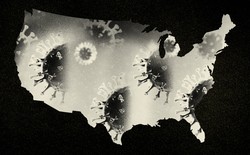
America’s Patchwork Pandemic Is Fraying Even Further
Why Some People Get Sicker Than Others
‘ICU Delirium’ Is Leaving COVID-19 Patients Scared and Confused
Even though the world is consumed by concern over COVID-19, the long-haulers have been largely left out of the narrative and excluded from the figures that define the pandemic. I can pull up an online dashboard that reveals the numbers of confirmed cases, hospitalizations, deaths, and recoveries—but LeClerc falls into none of those categories. She and others are trapped in a statistical limbo, uncounted and thus overlooked.
Some have been diagnosed through tests, while others, like LeClerc, have been told by their doctors that they almost certainly have COVID-19. Still, many long-haulers have faced disbelief from friends and medical professionals because they don’t conform to the typical profile of the disease. People have questioned how they could possibly be so sick for so long, or whether they’re just stressed or anxious. “It feels like no one understands,” said Chloe Kaplan from Washington, D.C., who works in education and is on day 78. “I don’t think people are aware of the middle ground, where it knocks you off your feet for weeks, and you neither die nor have a mild case.”
The notion that most cases are mild and brief bolsters the belief that only the sick and elderly need isolate themselves, and that everyone else can get infected and be done with it. “It establishes a framework in which ‘not hiding’ from the disease looks a manageable and sensible undertaking,” writes Felicity Callard, a geographer at the University of Glasgow, who is on day 77. As the pandemic discourse turns to talk of a second wave, long-haulers who are still grappling with the consequences of the first wave are frustrated. “I’ve been very concerned by friends and family who just aren’t taking this seriously because they think you’re either asymptomatic or dead,” said Hannah Davis, an artist from New York City, who is on day 71. “This middle ground has been hellish.”
Read: What will you do if you start coughing?
It “has been like nothing else on Earth,” said Paul Garner, who has previously endured dengue fever and malaria, and is currently on day 77 of COVID-19. Garner, an infectious-diseases professor at the Liverpool School of Tropical Medicine, leads a renowned organization that reviews scientific evidence on preventing and treating infections. He tested negative on day 63. He had waited to get a COVID-19 test partly to preserve them for health-care workers, and partly because, at one point, he thought he was going to die. “I knew I had the disease; it couldn’t have been anything else,” he told me. I asked him why he thought his symptoms had persisted. "I honestly don’t know," he said. "I don’t understand what’s happening in my body."
On march 17, a day after LeClerc came down with her first symptoms, SARS-CoV-2 sent Fiona Lowenstein to the hospital. Nine days later, after she was discharged, she started a Slack support group for people struggling with the disease. The group, which is affiliated with a wellness organization founded by Lowenstein called Body Politic, has been a haven for long-haulers. One channel for people whose symptoms have lasted longer than 30 days has more than 3,700 members.
“The group was a savior for me,” said Gina Assaf, a design consultant in Washington, D.C., who is now on day 77. She and other members with expertise in research and survey design have now sampled 640 people from the Body Politic group and beyond. Their report is neither representative nor peer-reviewed, but it provides a valuable snapshot of the long-hauler experience.
Of those surveyed, about three in five are between the ages of 30 and 49. About 56 percent have not been hospitalized, while another 38 percent have visited the ER but were not admitted. About a quarter have tested positive for COVID-19 and almost half have never been tested at all. Some became sick in mid-March, when their home countries were severely short on tests. (Most survey respondents live in the U.S. and the U.K.) Others were denied testing because their symptoms didn’t match the standard set. Angela Meriquez Vázquez, a children’s activist in Los Angeles, had gastrointestinal problems and lost her sense of smell, but because she didn’t have a cough and her fever hadn’t topped 100 degrees Fahrenheit, she didn’t meet L.A.’s testing criteria. By the time those criteria were loosened, Vázquez was on day 14. She got a test, and it came back negative. (She is now on day 69.)
A quarter of respondents in the Body Politic survey have tested negative, but that doesn’t mean they don’t have COVID-19. Diagnostic tests for SARS-CoV-2 miss infections up to 30 percent of the time, and these false negatives become more likely a week after a patient’s first symptoms appear. In the Body Politic survey, respondents with negative test results were tested a week after those with positive ones, on average, but the groups did not differ in their incidence of 60 different symptoms over time. Those matching patterns strongly suggest that those with negative tests are indeed dealing with the same disease. They also suggest that the true scope of the pandemic has been underestimated, not just because of the widespread lack of testing but because many people who are getting tested are receiving false negatives.
Read: Why the coronavirus is so confusing
COVID-19 affects many different organs—that much is now clear. But in March, when many long-haulers were first falling sick with gut, heart, and brain problems, the disease was still regarded as a mainly respiratory one. To date, the only neurological symptom that the Centers for Disease Control and Prevention lists in its COVID-19 description is a loss of taste or smell. But other neurological symptoms are common among the long-haulers who answered the Body Politic survey.
As many people reported “brain fogs” and concentration challenges as coughs or fevers. Some have experienced hallucinations, delirium, short-term memory loss, or strange vibrating sensations when they touch surfaces. Others are likely having problems with their sympathetic nervous system, which controls unconscious processes like heartbeats and breathing: They’ll be out of breath even when their oxygen level is normal, or experience what feel like heart attacks even though EKG readings and chest X-rays are clear. These symptoms wax, wane, and warp over time. “It really is a grab bag,” said Davis, who is a co-author of the Body Politic survey. “Every day you wake up and you might have a different symptom.”
It’s not clear why this happens. Akiko Iwasaki, an immunologist at Yale, offers three possibilities. Long-haulers might still harbor infectious virus in some reservoir organ, which is missed by tests that use nasal swabs. Or persistent fragments of viral genes, though not infectious, may still be triggering a violent immune overreaction, as if “you’re reacting to a ghost of a virus,” Iwasaki says. More likely, the virus is gone but the immune system, having been provoked by it, is stuck in a lingering overactive state.
It’s hard to distinguish between these hypotheses, because SARS-CoV-2 is new and because the aftermath of viral infections is poorly understood. Many diseases cause long-lasting symptoms, but these might go unnoticed as trends unless epidemics are especially large. “Nearly every single person with Ebola has some long-term chronic complication, from subtle to obviously debilitating,” says Craig Spencer of the Columbia University Medical Center, who caught the virus himself in 2014. Some of those persistent problems had been noted during early Ebola outbreaks, but weren’t widely appreciated until 28,600 people were infected in West Africa from 2013 to 2016.
The sheer scale of the COVID-19 pandemic, which reached more than 6 million confirmed cases worldwide in a matter of months, means that long-haulers are now finding one another in sufficient numbers to shape their own narrative.
As the pandemic continues, long-haulers are navigating a landscape of uncertainty and fear with a map whose landmarks don’t reflect their surroundings. If your symptoms last for longer than two weeks, for how long should you expect to be sick? If they differ from the official list, how do you know which ones are important? “I’m acutely aware of my body at all times of the day,” LeClerc told me. “It shrinks your entire world to an almost reptilian response to your surroundings.”
If you’re still symptomatic, could you conceivably infect someone else if you leave your home? Garner, the infectious disease expert, is confident that this far out, he’s not shedding live virus anymore. But Meg Hamilton, who is a nursing student in Odenton, Maryland—and, full disclosure, my sister-in-law—said that her local health department considered her to be contagious as long as she had a fever; she is on day 56, and has only had a few normal temperature readings. Davis said that she and her partner, who live in different apartments, talked through the risks and decided to reunite on day 59. Until then, she had been dealing with two months of COVID-19 alone.
The isolation of the pandemic has been hard enough for many healthy people. But it has exacerbated the foggy minds, intense fatigue, and perpetual fear of erratic symptoms that long-haulers are also dealing with. “It plays with your head, man,” Garner said. Some feel guilt over being incapacitated even though their cases are “mild.” Some start doubting or blaming themselves. In her fourth week of fever, Hamilton began obsessively worrying that she had been using her thermometer incorrectly. “I also felt like I wasn’t being mentally strong enough, and by allowing myself to say that I don’t feel good, I was prolonging the fever,” she said.
Then there’s the matter of who to tell—and when. At first, Hamilton kept the news from her parents. She didn’t want them to worry, and she assumed she’d be better in two weeks. But as two weeks became three, then four, then five, the omission started feeling like an outright lie. Her concern that they would be worried morphed into concern that they would be mad. (She finally told them last week; they took it well.)
Other long-haulers have been frustrated by their friends’ and families’ inability to process a prolonged illness. “People know how to react to you having it or to you getting better,” LeClerc said. But when symptoms are rolling instead of abating, “people don’t have a response they can reach for.” They ask if she’s improving, in expectation that the answer is yes. When the answer is instead a list of ever-changing symptoms, they stop asking. Others pivot to disbelief. “I’ve had messages saying this is all in your head, or it’s anxiety,” LeClerc said.
Read: Friends are breaking up over social distancing
Many such messages come from doctors and nurses. Davis described her memory loss and brain fog to a neurologist, who told her she had ADHD. “You feel really scared: These are people you’re trying to get serious help from, and they don’t even understand your reality,” she said. Vázquez said her physicians repeatedly told her she was just having panic attacks—but she knows herself well enough to discount that. “My anxiety is thought-based,” but with COVID-19, “the physical symptoms happen first,” she said.
Athena Akrami, a neuroscience professor at University College London, said two doctors suggested that she was stressed, while a fellow neuroscientist told her to calm down and take antidepressants. “I’m a very calm person, and something is wrong in my body,” said Akrami, who is now on day 79, and is also a co-author on the Body Politic survey. “As a scientist, I understand there are so many unknowns about the virus, but as a patient, I need acknowledgment.” Every day, Akrami said, “is like being in a tunnel.”
To be sure, many health-care workers are also exhausted, having spent several months fighting a new disease that they barely understand, without enough masks and other protective supplies. But well before the pandemic, the health-care profession had a long history of medical gaslighting—downplaying a patient’s physical suffering as being all in their head, or caused by stress or anxiety. Such dismissals particularly affect women, who are “less likely to be perceived as credible witnesses to our own experiences,” said LeClerc. And they’re especially common when women have subjective symptoms like pain or fatigue, as most long-haulers do. When Garner wrote about those same symptoms for the British Medical Journal’s blog, “I had an unbelievable feeling of relief,” Callard, the geographer, told me. “Since he’s a guy and a professor of infectious disease, he has the kind of epistemic authority that will be harder to discount.”
Read: The doctor doesn’t listen to her. But the media is starting to.
Garner’s descriptions of his illness are similar to those of many long-haulers who have been taken less seriously. “It wasn’t like he wrote those posts in some arcane language that’s steeped in authority,” said Sarah Ramey, a musician and author in Washington, D.C. “If you took his words, put my name on them, and put them up on Medium, people would say, ‘Ugh, who is this person and what is she talking about?’”
Ramey can empathize with long-haulers. In her memoir, The Lady’s Handbook for Her Mysterious Illness, she writes about her 17-year ordeal of excruciating pain, crushing fatigue, gastro-catastrophes, and medical gaslighting. “Being isolated and homebound, incredible economic insecurity, the government not doing enough, testing not being up to snuff—all of that is the lived experience of someone like me for decades,” she says. “The illness itself is horrible and ravaging, but being told you’ve made it up, over and over again, is by far the worst of it.”
Formally, Ramey has myalgic encephalomyelitis/chronic fatigue syndrome (ME/CFS) and complex regional pain syndrome. Informally, she’s part of a group she has dubbed WOMIs—women with mysterious illnesses. Such conditions include ME/CFS, fibromyalgia, and postural orthostatic tachycardia syndrome. They disproportionately affect women; have unclear causes, complex but debilitating symptoms, and no treatments; and are hard to diagnose and easy to dismiss. According to the Institute of Medicine, 836,000 to 2.5 million people in the U.S. alone have ME/CFS. Between 84 and 91 percent are undiagnosed.
That clusters of ME/CFS have followed many infectious outbreaks is noteworthy. In such events, some people get better quickly, others are sick for longer with postviral fatigue, and still others are suffering months or years later. In one Australian study, 11 percent of people infected with Ross River virus, Epstein-Barr virus, or the bacterium behind Q fever were diagnosed with ME/CFS after six months. In a study of 233 Hong Kong residents who survived the SARS epidemic of 2003, about 40 percent had chronic-fatigue problems after three years or so, and 27 percent met the CDC’s criteria for ME/CFS. Many different acute pathogens seem to trigger the same inflammatory responses that culminate in the same chronic endgame. Many individuals in this community are worried about COVID-19, according to Ramey: “You’ve got this highly infectious virus sweeping around the world, and it would be unusual if you didn’t see a big uptick in ME/CFS cases.”
ME/CFS is typically diagnosed when symptoms persist for six months or more, and the new coronavirus has barely been infecting humans for that long. Still, many of the long-haulers’ symptoms “sound exactly like those that patients in our community experience,” says Jennifer Brea, the executive director of the advocacy group #MEAction.
LeClerc, Akrami, and others have noted that their symptoms reappear when they try to regain a measure of agency by cleaning, working out, or even doing yoga. This is post-exertional malaise—the defining feature of ME/CFS. It’s a severe multi-organ crash that follows activity as light as a short walk. It’s also distinct from mere exhaustion: You can’t just push through it, and you’ll feel much worse if you try. The ME/CFS community has learned that resting as much as possible in the early months of postviral fatigue is crucial. Garner learned that lesson the hard way. After writing that “my disease has lifted,” he did a high-intensity workout, and was bedridden for three days. He is now reading literature about ME/CFS and listening to his sister, who has had the disease. “We have much to learn from that community,” he says.
The symptoms of ME/CFS have long been trivialized; its patients disbelieved; its researchers underfunded. The condition is especially underdiagnosed among black and brown communities, who are also disproportionately likely to be infected and killed by COVID-19. If the pandemic creates a large population of people who have symptoms that are similar to those of ME/CFS, it might trigger research into this and other overlooked diseases. Several teams of scientists are already planning studies of COVID-19 patients to see if any become ME/CFS patients—and why. Brea says she would welcome such a development. But she also feels “a lot of grief for people who may have to walk that path, [and] grief for the time we could have spent over the last four decades researching this so we’d have a better understanding of how to treat patients now.”
Graeme Wood: What’s behind the COVID-19 racial disparity?
Some long-haulers will get better. The Body Politic Slack support group has a victories channel, where people post about promising moments on the road to recovery. Such stories were scarce last month, but more have appeared in the past weeks. The celebrations are always tentative, though. Good days are intermingled with terrible ones. “It’s a reverse-circling of the drain,” Vázquez said. “It has gotten better, but I track that trajectory in weeks, not days.” The COVID-19 dashboard from Johns Hopkins shows that about 2.7 million people around the world have “recovered” from the disease. But recovery is not a simple matter of flipping a switch. For some, it will take more time than the entire duration of the pandemic thus far.
Some survivors will have scar tissue from the coronavirus’s assault on their lungs. Some will still be weak after lengthy stays in ICUs or on ventilators. Some will eventually be diagnosed with ME/CFS. Whatever the case, as the pandemic progresses, the number of people with medium-to-long-term disabilities will increase. “Some science fiction—and more than a few tech bros—have led us to believe in a nondisabled future,” says Ashley Shew of Virginia Tech, who studies the intersection between technology and disability. “But whether through environmental catastrophe, or new viruses, we can expect more, exacerbated, and new disabilities.”
In the early 1950s, polio permanently disabled tens of thousands of people in the U.S. every year, most of whom were children or teenagers who “saw their futures as able and healthy,” Shew says. In the ’60s and ’70s, those survivors became pioneers of the disability-rights movement in the U.S.
Perhaps COVID-19 will similarly galvanize an even larger survivor cohort. Perhaps, collectively, they can push for a better understanding of neglected chronic diseases, and an acceptance of truths that the existing disability community have long known. That health and sickness are not binary. That medicine is as much about listening to patients’ subjective experiences as it is about analyzing their organs. That being a survivor is something you must also survive.
Our fellow citizens are not the enemy, and must never become so, says former chairman of the Joint Chiefs of Staff.
I Cannot Remain Silent
Mike Mullen
https://portside.org/2020-06-03/i-cannot-remain-silent
It sickened me yesterday to see security personnel—including members of the National Guard—forcibly and violently clear a path through Lafayette Square to accommodate the president's visit outside St. John's Church. I have to date been reticent to speak out on issues surrounding President Trump's leadership, but we are at an inflection point, and the events of the past few weeks have made it impossible to remain silent.
Whatever Trump's goal in conducting his visit, he laid bare his disdain for the rights of peaceful protest in this country, gave succor to the leaders of other countries who take comfort in our domestic strife, and risked further politicizing the men and women of our armed forces.
There was little good in the stunt.
While no one should ever condone the violence, vandalism, and looting that has exploded across our city streets, neither should anyone lose sight of the larger and deeper concerns about institutional racism that have ignited this rage.
As a white man, I cannot claim perfect understanding of the fear and anger that African Americans feel today. But as someone who has been around for a while, I know enough—and I’ve seen enough—to understand that those feelings are real and that they are all too painfully founded.
We must, as citizens, address head-on the issue of police brutality and sustained injustices against the African American community. We must, as citizens, support and defend the right—indeed, the solemn obligation—to peacefully assemble and to be heard. These are not mutually exclusive pursuits.
And neither of these pursuits will be made easier or safer by an overly aggressive use of our military, active duty or National Guard. The United States has a long and, to be fair, sometimes troubled history of using the armed forces to enforce domestic laws. The issue for us today is not whether this authority exists, but whether it will be wisely administered.
I remain confident in the professionalism of our men and women in uniform. They will serve with skill and with compassion. They will obey lawful orders. But I am less confident in the soundness of the orders they will be given by this commander in chief, and I am not convinced that the conditions on our streets, as bad as they are, have risen to the level that justifies a heavy reliance on military troops. Certainly, we have not crossed the threshold that would make it appropriate to invoke the provisions of the Insurrection Act.
Furthermore, I am deeply worried that as they execute their orders, the members of our military will be co-opted for political purposes.
Even in the midst of the carnage we are witnessing, we must endeavor to see American cities and towns as our homes and our neighborhoods. They are not “battle spaces” to be dominated, and must never become so.
We must ensure that African Americans—indeed, all Americans—are given the same rights under the Constitution, the same justice under the law, and the same consideration we give to members of our own family. Our fellow citizens are not the enemy, and must never become so.
Too many foreign and domestic policy choices have become militarized; too many military missions have become politicized.
This is not the time for stunts. This is the time for leadership.
MIKE MULLEN is a retired admiral from the U.S. Navy and was the 17th chairman of the Joint Chiefs of Staff.
Subscribe to:
Comments (Atom)