Thursday, June 4, 2020

Beijing to bypass US systems with e-RMB drive


A new centralized processing platform for e-RMB fits the need for self-reliance when ties with US sour
By FRANK CHEN


JUNE 4, 2020


https://asiatimes.com/2020/06/beijing-to-bypass-us-systems-with-e-rmb-drive/?mc_cid=89274cf53a&mc_eid=7864488218


China has made a head start in the global race to research and launch a full digital currency, with some civil servants in a few pilot cities including Shenzhen, Suzhou and Chengdu getting half their pay in the form of the e-RMB.

Internal testing and trials spearheaded by the People’s Bank of China (PBoC) have long been underway, with the central bank aiming for a wider roll-out for athletes, spectators and journalists at the 2022 Winter Olympics, when Beijing and the many towns near the venues will go fully paperless in all transactions.

The PBoC’s top-down push for the e-RMB is not intended to give China’s omnipresent WeChat Pay and AliPay a good run for their money or even supersede the duopoly of the two digital payment platforms, the cash cows of Chinese tech behemoths Tencent and Alibaba.

Rather, the e-RMB is part of Beijing’s imperative to safeguard currency sovereignty and promote the Chinese yuan beyond its borders.

When Facebook unveiled its Libra blockchain digital currency, otherwise known as the “Facebook coin,” in June 2019 to promote its stable, low inflation and freely-convertible cryptocurrency for worldwide transactions and transfers, the move piqued the interest of PBoC chief Yi Gang.


While the project has faced criticism and objections since its conception, Yi reportedly instructed the bank’s digital currency division to expedite the process, building on the groundwork laid by China’s ubiquitous penetration of mobile payment services. 

The PBoC will need to print less paper money and cut the cost of money supply with the wider roll-out of the e-RMB. 

With central banks across the United States, Japan and Europe scrambling to formulate strategies for currency sovereignty since the advent of digital money, China’s e-RMB had been six years in the making since former governor Zhou Xiaochuan first broached the idea of launching a digitalized legal tender.

But Facebook’s Libra project sped up the birth of the e-RMB as the PBoC pooled its resources and fast-tracked reviews and approvals, while keeping guard on Beijing’s currency sovereignty.

Mu Changchun, chief of the PBoC’s Digital Currency Research Institute, was quoted as saying that the centralized processing platform for e-RMB being tested would help China shed its over-reliance on the US-dominated Society for Worldwide Interbank Financial Telecommunication (SWIFT) and the New York-based Clearing House Interbank Payments System (CHIPS) for the settlement of cross-boundary RMB transactions.

The speedy trial of the digital redback and its dedicated processing and clearing platform sits well with Beijing’s emphasis on self-reliance to prevent the US from cashing in on its financial and technical dominance, now that ties between the two powers are at an all-time low.


Beijing is concerned about a possible worst-case scenario with its banks and dealers shut out of the SWIFT and CHIPS transactions. Iranian and North Korean businesses and traders are already denied access to the two systems as part of Washington’s sanctions against the two countries.

Yet it remains to be seen if the e-RMB can gain a wider use overseas and accelerate the internationalization of the yuan. 

Xinhua has suggested that Beijing can encourage Chinese lenders and state-owned enterprises to use the e-RMB for yuan-denominated international e-commerce and purchases, like those already in place with Russia, Pakistan and other traditional allies and participants of the Belt and Road Initiative.

The news agency also cited observers as saying that Beijing could consider making acceptance of the e-RMB a prerequisite for future pecuniary aid and economic and financial largesse for African and Latin American countries to help central banks there sign up to China’s e-RMB settlement platform and popularize the digital currency in emerging markets.


Nonetheless, other than the fundamental obstacle of capital account control and the inability for the yuan to float, other features of e-RMB including transparency and traceability will also hinder its international adoption.

Chinese state media say the e-RMB will be fully traceable with real-name registration for authorities to monitor and track the flow of money.

For instance, casino operators in Macau, who rely on hordes of high-rollers from mainland China for the lion’s share of their income, now fear for their business outlook if the e-RMB takes hold.

Their VIP patrons from the mainland, many of whom prefer to stay low-key and are very protective of privacy and details of how the money is marshaled across the border, may find it hard to park their capital in offshore havens when all accounts and transactions become transparent and when the cross-boundary flow of money is surveiled.

Xu Yuan, a senior researcher with the Peking University’s Digital Finance Research Institute, said following the launch of the digital yuan, there would be no transaction that regulatory authorities would not be able to see and check.


This means money laundering, tax evasion or other related offenses would face more crackdowns but the digital yuan may also put people’s privacy and legit business secrets on the line.

There are also questions about whether the PBoC’s systems are impregnable against hacking and stealing of e-RMB.

Despite its first-mover status, the PBoC has come down hard on the trading of other digital currencies and banned commercial banks from accepting cryptocurrencies to safeguard financial stability. The way the e-RMB is managed on an unified platform is also strikingly different from bitcoin’s decentralized storage and distribution approach.


Read more: China trials digital payments, prints less cash


HK residents evacuated as virus spreads in building


People in rooms on different floors became infected and authorities were checking the plumbing
JUNE 4, 2020


https://asiatimes.com/2020/06/hk-residents-evacuated-as-virus-spreads-in-building/?mc_cid=89274cf53a&mc_eid=7864488218


The residents of 28 units in a public housing block in Hong Kong’s Sha Tin district were evacuated on Thursday after one more local coronavirus infection was identified in the building.

A 72-year-old man was found to be infected on Thursday and became the seventh patient identified in Luk Chuen House at Lek Yuen Estate in Sha Tin in the New Territories, according to the Center for Health Protection.

On June 1 the man, who resided in unit No 12 in Luk Chuen House, sent a deep-throat saliva sample to the Centre for Health Protection for a test after a cluster of six people in the building were infected. However, his sample tested negative.

On Wednesday, he developed a fever and his latest sample tested positive. The man has diabetes and high blood pressure.

It was possible the coronavirus was spread through water or sewage pipes as the man and two previous patients were living in unit No 12 on different floors, said Chuang Shuk-kwan, director of the Communicable Disease Division at the Centre for Health Protection.


All residents in units No 10 and No 12 were evacuated to a quarantine center, while the government will check the pipes, Chuang said.

According to the building’s architectural drawing, units No 10 and No 12 share the same sewage pipe. An infected couple were living in a No. 10 unit.

Tse Chin-wan, the Under Secretary for the Environment, said it was also possible that the patients were infected after touching other public facilities such as mailboxes and door handles.

Chuang added that the Centre for Health Protection had received 1,200 sample bottles from residents in Luk Chuen House, but failed to get in touch with residents in six units. She said the government had issued a mandatory quarantine order to these residents.

The partial evacuation has been the second one after a similar decision was made in February to evacuate more than 100 people in Hong Mei House, Cheung Hong Estate, Tsing Yi, to a quarantine center.


At that time, two people who lived in the same unit on different floors were identified as infected, indicating that the virus could have been transmitted through sewage pipes.


The first case in the cluster in Luk Chuen House was a 34-year-old woman whose infection was confirmed on Sunday. Since then, her husband and four other residents have been diagnosed with the virus, along with two of the woman’s colleagues and a paramedic who had treated her.

Earlier this week, health experts said there was no need for the housing block to be evacuated, and it was unlikely that any structural issues with the building were allowing the virus to spread.

Meanwhile, the Centre for Health Protection also identified five imported cases in Hong Kong on Thursday, bringing Hong Kong’s total to date to 1,098. They all arrived in the city from Bangladesh.


Read: New HK cluster extends social distancing rules


Read:HK outbreak linked to food packaging company


AS ATTACKS ON PROTESTERS AND JOURNALISTS INCREASE, COVERAGE OF COMMUNITIES AND POLICE NEED TO CHANGE


By Timothy Karr, Free Press.

June 3, 2020


https://popularresistance.org/coverage-of-communities-and-police-need-to-change/


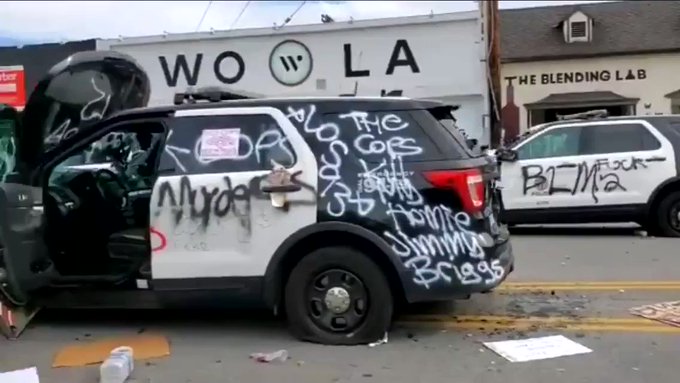
The weekend saw escalating police violence against protesters and reporters at nationwide demonstrations against the police killing of George Floyd and systemic racial injustices. There has been an unprecedented number of attacks against journalists at many of these protests as law-enforcement officers have specifically targeted those engaged in First-Amendment protected newsgathering and reporting. This mirrors the ways police are targeting those engaged in First-Amendment protected protest.

President Trump has egged on the police crackdown in a series of recent tweets, including one that labels news outlets covering the protests as the “Enemy of the People.” Reporters and researchers at the U.S. Press Freedom Tracker are investigating more than 100 separate incidents in which officers attacked reporters, permanently blinding a photojournalist in one eye and causing other grave injuries.

Free Press News Voices Organizing Manager Alicia Bell made the following statement:

“Free Press believes in solidarity with the Movement for Black Lives and is committed to protecting the rights and safety of protesters and the reporters who cover these demonstrations. It bears repeating: The First Amendment prevents law enforcement from silencing the voices of protesters and from beating back the journalists who seek to share their concerns with the world.

“It’s not enough to cover the protests via the official podiums of local police departments and politicians. Reporters need to be free to turn their cameras and microphones toward the local organizers who have long engaged in the fight for Black dignity alongside those who are now taking to the streets with legitimate grievances against a system that devalues the lives of our people.

“Rather than allowing law enforcement to control the narrative and vilify Black people, as has been the case too often in the past, journalists have the right to mingle among protesters to document and air their perspectives.

“This moment underscores the importance of deep relationship building between newsrooms and communities. Newsrooms must replace police ride-alongs with community-listening sessions and other intentional tactics for shifting power.

“Free Press supports the ongoing calls for urgent transformation of a system that puts Black people at risk. Coverage of protests like the ones unfolding across the country is essential to informing the public, exposing official violence and responding to our communities’ needs. Free Press is working with allies to reimagine crime-justice reporting. We’re eager to extend our work with newsrooms committed to deeper engagement — and ultimately, to shifting power away from the anti-Black status quo and toward a shared vision of the future.”


WHAT WILL IT TAKE TO STOP THE POLICE FROM KILLING?


By The Collective, Anarchist News.

June 3, 2020


https://popularresistance.org/what-will-it-take-to-stop-the-police-from-killing/


We’ve reached a breaking point. The murders of George Floyd—and Breonna Taylor, Tony McDade, and the other Black people whose lives were ended by police just this month—are only the latest in a centuries-long string of tragedies. But in the context of the COVID-19 pandemic, when the state is openly treating Black communities as a surplus population to be culled by the virus, the arrogance and senselessness of the murder carried out by Officer Derek Chauvin crossed a line. Supported by hundreds of thousands across the US and beyond, the people of Minneapolis have made it clear that this intolerable situation must end, no matter what it takes.

Since the Ferguson uprising of 2014, considerable attention has focused on racist police killings in the United States. Reformers of many stripes have introduced new policies in hopes of reining in the violence. Yet according to the Police Shootings Database, the police killed more people in the US last year than in 2015. If police killings are continuing or even increasing despite widespread public attention and reform efforts, we need to revisit our strategy.

How can we bring an end to racist police murders once and for all?
Criminal Charges And Civil Lawsuits

It’s widely known that the chances of individual officers or departments suffering real consequences for killing people, especially Black people, are next to nothing. It makes sense that protesters and grieving families often demand criminal charges against murderous cops—the US criminal legal system offers no other model for “justice,” and by refusing to press charges, the authorities show how little they value Black lives. But locking ordinary people in cages doesn’t prevent anti-social activity—and considering that police violence is legitimized by exceptional laws and powerful institutions, this deterrent seems to be even less effective for police. Johannes Mehserle, the officer who murdered Oscar Grant in Oakland in 2008, was one of very few police to serve prison time; yet the 2018 killing of Joshua Pawlik and many other police murders in the region suggest that this precedent has not deterred Bay Area police from fatally shooting people.

Nor do lawsuits seem to make a difference. The family of Justine Damond received a $20 million settlement after her murder by Minneapolis police—an extremely rare occurrence, likely related to the unusual circumstance of a Black male officer killing a white woman. But forcing the city’s taxpayers—some of whom suffer police violence daily—to shell out millions to pay for their murderous activity doesn’t work to stop police killings.

If it did, George Floyd would still be alive.
Civilian Review Boards And Police Accountability Measures

Minneapolis already has a civilian review board, but this didn’t prevent Chauvin from killing George Floyd. In fact, the review board had failed to impose consequences for any of the eighteen previous complaints made against Chauvin. It also didn’t prevent the murders of Justine Damond, Jamar Clark, or any of the other people killed by the city’s police.

Police commissioners themselves are now calling for oversight and accountability, likely in hopes of preventing further rioting. This shows how little threat such measures pose to their power.
Body Cameras And Filming The Police

Most of the police killings that have taken place over the past few years have been carried out by officers wearing body cameras. This hasn’t stopped them from killing—and it has almost never resulted in criminal convictions. An independent 2016 Temple University study concluded that on the contrary, the use of wearable body cameras correlated with an increase in fatal shootings by police, disproportionately threatening males, young people, and people of color. Other research efforts that have touted the technology’s benefits, such as the 2017 University of Nevada Las Vegas study, were conducted in part by police departments looking to save money on complaints.

Although it doesn’t seem to reduce killings, body camera footage does put the rest of us in danger, as it provides evidence that prosecutors sympathetic to police can cherry-pick to find ways to blame us when officers attack us.

We don’t need more thorough information about what the police are doing. We need to stop them from doing what they do. We’re not looking for transparency or accountability. We’re looking for a world without police.

See “Cameras Everywhere, Safety Nowhere; Why Police Body Cameras Won’t Make Us Safer”

Civilian filming also isn’t enough. Derek Chauvin knew he was being filmed, yet he still murdered George Floyd without hesitation. The officers who murdered Philando Castile, Eric Garner, and countless other people weren’t stopped by the cameras trained on them. Even if “the whole world is watching,” more surveillance won’t make us any safer as long as killer cops can act with impunity.

Body cameras only enrich surveillance companies and provide prosecutors with more material to use against us.
Pressuring Politicians

Perhaps we should direct our rage at politicians rather than police, as New York City Mayor Bill de Blasio suggests?

Of course politicians are complicit for their cowardly support for the police. But they’re not the ones who harass and bully us every day, who invade our privacy and spy on us, who physically stand between us and the resources we need, who beat and shoot and kill us. In fact, unlike the police with their guns, tear gas, and tanks, the power of politicians is an illusion; it only exists because of the ways we cede our power to make decisions to them. If not for the police protecting their privileges and enforcing their orders, politicians wouldn’t matter at all. Without the military, Homeland Security, Secret Service, and armed vigilantes to ensure that we do his bidding, Trump would be nothing more than an especially obnoxious bully. As long as the police regulate everything we can do, directing our anger against politicians will make little impact.

In a time of increasing social tension and volatility, when power structures increasingly rely on brute force rather than the consent of the general population, politicians of all stripes are especially fearful about losing the loyalty of the armed wing of the state. If they don’t guarantee police officers impunity, they risk undermining their own power; in an extreme case, they might even be deposed, as we have seen in coups from Chile to Egypt. Why did a Black president with “social justice” credentials stand by and watch as the killers of Michael Brown, Freddie Gray, Eric Garner, and so many others got away with murder? Perhaps because it was more important to Barack Obama to protect the stability of his regime than to pursue justice for racist killings. This makes it even more unlikely that appeals to politicians will make a difference.
Voting

Should we be registering to vote and making our voices heard in the ballot box, as Atlanta Mayor Keisha Bottoms insists?

Again, what happened in Minneapolis implies that this doesn’t work. If a city with a progressive mayor and a city council composed entirely of Democrats and Green Party members still can’t prevent out-of-control racist cops from killing people again and again and again, there’s no reason to believe that voting differently in those elections would have made any difference. Racist police violence is only on the national agenda because the courageous, defiant resistance of people in the streets has put it there. Police murder has never been on the ballot as an item to vote for or against. Their violence is the glue holding together a system we never chose. It won’t be votes that abolish it, either. It’ll be by action.


Bae Guevara@Kaimandante


Liberal Minneapolis needed a full blown uprising in order to have a murderous pig arrested. It wasn’t the votes u guys fetishize so much that got it done, it was the ppl speaking thru direct action.
10.2K
1:12 PM - May 29, 2020
Twitter Ads info and privacy
2,587 people are talking about this


Peaceful Protest

Well then, if direct action is the only way to address police murders, then certainly the most effective way to make change is through strict non-violence, as Martin Luther King Jr.’s granddaughter tells us.

Unfortunately, that’s rhetoric, not history. In fact, the civil rights movement drew its successes from a combination of militant direct action, armed self-defense, rioting, and non-violent civil disobedience. King’s appeal as a civil rights leader—and the interest politicians today have in promoting his legacy to the exclusion of all others—arose in no small part because he offered an alternative to the threat of ungovernable urban riots and Black Power militancy. Condemning all action that falls outside the paradigm of nonviolence divides movements, protecting the reigning order and concealing the history of how change really happens.
Riots

If not strictly nonviolent protests, can riots ensure that police stop killing and are held accountable?

Riots can accomplish many things that peaceful protesting rarely does. They raise the economic and political costs of police violence for the regimes that perpetuate it. They can enable marginalized people to meet their needs directly via empowering group action—their needs for collective grieving, for vengeance, even for material goods. They dispel the myth that the police are invulnerable and rupture the illusion of political consensus. They expand the horizons of our collective imagination about what we can do together and how the world could be different.

But riots alone may not suffice. While mass unrest has forced reluctant authorities to press charges against killer cops—in Oakland, in Ferguson, in Baltimore, and now in Minneapolis—they often don’t secure convictions, as the court cases in Ferguson and Baltimore make clear. And even if they could discourage further killings by some specific police forces, the consistent rate of police murders over the past five years shows that they have yet to made a dent in the overall problem. The flames of Ferguson were just dying down when St. Louis police fatally shot Isaac Holmes, despite the threat of further unrest.

If we have to burn down whole neighborhoods just to get a single officer indicted, that’s not a viable program to make the US justice industry accountable. The courage and determination of the rebels in Minneapolis and around the country represents an inspiring step forward. But we should not understand them as a means of reform. We should approach them as a step towards revolution.


Arte y Anarquía@ArteYAnarquia


Buenos días


5,805
3:58 AM - May 31, 2020
Twitter Ads info and privacy
1,970 people are talking about this


A good start.
So What Do We Do?

If none of the “solutions” that governments, police departments, and some community activists have proposed will suffice, what could put a stop to racist police murders once and for all? It is not easy to answer this question, but we have to ask it in earnest.

The assumption that Black and Brown lives are expendable is fundamental to all of the institutionalized power structures of our time. We will answer the question of what will work to abolish police murders in practice, through a lifelong process of experimentation—but it is clear that it will require us to abolish or utterly transform all of these power structures. Starting from the model of collective defiance we have seen over the past week, we have to extrapolate what long-term change can look like. Here are some long-term objectives—some stars to navigate by.
Disarm And Abolish The Police.

As long as police have weapons and impunity, they will go on killing us. All of our efforts have only made a dent in their impunity; it’s time to go all the way. Only when the highway patrol cannot end our lives during a routine traffic stop will the terror that so many of us feel every time we see blue lights flashing begin to ease. Only when no group of uniformed thugs feels entitled to pin anyone to the ground and ignore his pleas will all of us be free from the threat of becoming the next George Floyd.

Once police are disarmed, it will become clear to everyone how useless they are at the things we think we need them for. When mentally ill people act in ways that seem erratic to others, we need counselors and advocates, not armed gunmen. When romantic partners and neighbors have conflicts, we need people with conflict resolution and de-escalation skills, not violent escalators enforcing a patriarchal agenda. When kids need traffic directed so they can cross the street, we need friendly elders and neighbors who know them, not people toting lethal weapons who have little experience working with children. When we lose things or find things, we need a community center to exchange them, not a precinct. When our cars break down by the side of the road, we need a community of Good Samaritans, not a mercenary looking to write us a ticket. The majority of what the police do is harmful and should be immediately eliminated to make us all safer; much of the rest could be done much better by skilled, unarmed volunteers of good will.

As an institution, policing itself is violent and oppressive to the core. The thousands of murders individual officers perpetrate are just the tip of the iceberg. How can we measure the daily anxiety, the acute terror, the petty humiliations, the impact of family members being kidnapped and shaken down that so many people experience every time they must engage with infuriating arrogance grinning from behind a badge? From their origin in slave patrols to today’s high-tech spy drones and predictive policing algorithms, police have never existed to protect us.

It’s not a question of bad apples. The entire barrel is rotten.

Nothing about the institution of policing can be salvaged.

Promote collective self-defense.

The chant “Who keeps us safe? We keep us safe!” is more than a slogan—it’s a necessity. There is no safety we can count on that is not built on our trust and relationships with each other. To be certain of our safety, we must be able to define for ourselves what risks we face and how to address them together.

Critics argue that it’s naïve to talk about disarming and abolishing the police, citing the aggression and chaos we will supposedly unleash on each other without the violence of thin blue line to keep us in check. But what’s truly naïve is to continue believing that an institution responsible for killing a thousand people every year is somehow keeping us safe.

Collective self-defense will not be easy, but it’s our only hope. It will mean organizing to prevent the violence of the far right—of those encouraged by Trump to shoot looters and by state governments to run over protesters. It will mean taking responsibility for developing new skills in conflict resolution and new structures for rapid response in times of crisis. The indications that Minneapolis gangs are organizing a truce to collaborate on protecting protesters from far-right violence are encouraging. We will need all of our courage and creativity to develop new approaches that value and protect all of us, rather than sacrificing millions of us to be caged or killed in order to secure the safety and property of some.
Share Resources Freely Through Mutual Aid.

Want to prevent looting? Ensure that everyone has housing, enough to eat, and enough resources to live a dignified life. When they don’t, who can blame them for taking out their rage against those who stand between them and the resources they need?

In Minneapolis, local communities are establishing supply depots where resources redistributed during the riots can be freely shared, both to support the protests and to enable neighbors to live. The crisis has popularized mutual aid networks; the riots are taking them to the next level. The police exist to ensure that resources are distributed not according to need, but according to an archaic system of property rights that benefits those who hoard them for themselves rather than sharing them. The protesters have turned this upside down. Contrary to critics who see looters of a Target as “destroying their own community,” it’s more accurate to say that they have transformed an institution that existed to siphon profits out of their neighborhood to outside investors into a project that actually serves their immediate material needs. Destroying the barriers that separate our communities from the resources we need is one of the most crucial things we can do to transform our society. Abolishing the police is a step towards accomplishing this, while ending the killings they perpetrate.


CrimethInc.@crimethinc


A community project freely distributing food and much-needed supplies in Minneapolis.

Capitalism impoverishes us all while enabling a few to hoard everything. State violence preserves these imbalances along white supremacist lines.

Resistance + redistribution = revolution.


201
6:01 PM - May 30, 2020
Twitter Ads info and privacy
83 people are talking about this


Delegitimize And Disempower All The Institutions That Excuse Police Murder.

One of the reasons why cops get away with murder so often is that the Supreme Court has interpreted laws to grant police “qualified immunity” for killing people—which has happened in over half of the cases that reached appellate courts in the past five years. Why should an unrepentant rapist and his cronies be in the position to authorize cops to kill us whenever they see fit? For that matter, why should they be able to determine whether we can have abortions, or how we can organize unions, or the limits of indigenous sovereignty, or anything else?

The persistence of police murder is just one of the risks we engender by relinquishing our power to nine black-robed figures. To ensure our freedom, we must take back our self-determination from the clutches of the courts.

“The more we can delegitimize the authority of Supreme Courts to shape our lives, and the more powerful and creative we can make our alternatives, the less we will have to fear from the Trumps and Kavanaughs of the world. Let’s build a society that enables everyone to engage in genuine self-determination—in which no man can decide what all of us may do with our bodies—in which no state can take away our power to shape our future.”

-“Kavanaugh Shouldn’t Be on the Supreme Court. Neither Should Anyone Else.”

-“the student strikes in Montréal”

While we’re at it, what about those politicians? If electing new officials can’t stop the police from killing us, what good are they? If we really want to secure our future against the arbitrary power of the authorities, we can’t go half way. As we organize in our neighborhoods to share and distribute resources, let’s lay the groundwork for a new grassroots form of political organization that can exercise power directly without need for representatives. Inspired by the -“council system” in the Kurdish territories of Rojava, the assemblies of the -“Greek anarchist movement”, -“the student strikes in Montréal”, and many other examples, we can build a new world from the bottom up, without politicians at the top to boss us around.
To End Police Murder Once And For All

So what will it take for us to end police murders once and for all? Nothing short of a revolution.


But that revolution isn’t a distant utopia or a single spasm in which we storm the Winter Palace. It’s an ongoing process of building relationships, sharing resources, defending ourselves, undoing the interlocking structures of white supremacy, and organizing to meet our needs together without police or politicians—and it’s already happening. It’s time for each and every one of us to choose a side and take a stand. The stakes are high—the life you save might be your own. But as the courageous protesters in Minneapolis and beyond have shown us, not even the power of the police is absolute. Together, we can overcome their violence and build a new world.


DAVID MCATEE, LOUISVILLE BUSINESS OWNER, KILLED BY AUTHORITIES


By Phillip M. Bailey and Darcy Costello, Louisville Courier Journal.

June 3, 2020


https://popularresistance.org/david-mcatee-louisville-business-owner-killed-by-authorities/


‘My Son Didn’t Hurt Nobody.’

Louisville, KY – David McAtee, who turned his talent for food into a popular West End eatery, was shot and killed by law enforcement officers early Monday morning, an incident that’s now under state, local and federal investigation.

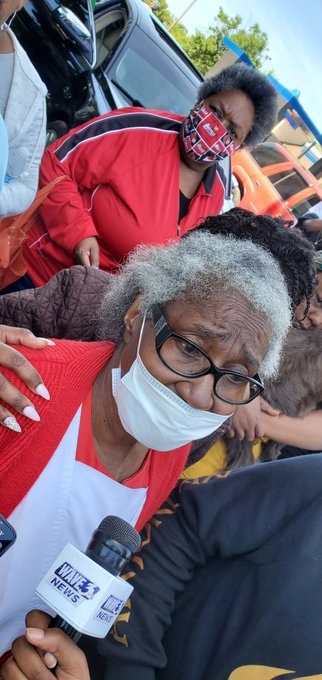
McAtee, the owner of YaYa’s BBQ in western Louisville, was known as a “community pillar,” said his mother, Odessa Riley.

“He left a great legend behind. He was a good person. Everybody around him would say that,” she said. “My son didn’t hurt nobody. He didn’t do nothing to nobody.”

Riley was among the hundreds who had swarmed the corner of 26th and Broadway Monday where Louisville police and National Guard personnel were breaking up a “large crowd” that had gathered in the parking lot outside a Dino’s Food Mart, according to law enforcement officials.

LMPD Chief Steve Conrad said in a statement that someone shot at police and officers and soldiers “returned fire,” killing McAtee.

McAtee’s barbecue business is next to the Dino’s Food Mart parking lot where the shooting took place around 12:15 a.m. Monday.

His identity was confirmed to The Courier Journal Monday by his nephew.
Who Was David McAtee?

McAtee, 53, operated a barbecue business at one of the West End’s most popular corners, especially on the weekends.

“I’ve been doing this for about 30 years, but I’ve been here for two,” he told West of Ninth, a photo blog by Walt and Marshae Smith, in a February interview. “This location is the one of the busiest locations in west Louisville. I always wanted to be in this spot, and when the opportunity came, I took it.”

McAtee said he hoped to one day buy the lot at 26th and Broadway, and build a brick-and-mortar restaurant.

“I gotta start somewhere, and this is where I’m going to start,” he said in February. “It might take another year or two to get to where I’m going, but I’m going to get there.”

Those who spoke with The Courier Journal said they knew the chef as someone who would cook at several community events across the area’s nine neighborhoods.

“Mr. McAtee would help us with Californian Day for at least 15 years, if not longer,” Greg Cotton, Jr., who lives in Middletown, said in an interview Monday. “He was one of the ones who would donate all his time and all his food; everybody could just come up and take it and he wouldn’t charge because it was for the neighborhood.”

McAtee’s mother and his nephew told The Courier Journal that he was known to feed police as well. The two said he would give law enforcement officers free meals.

“He fed them free,” Riley said. “He fed the police and didn’t charge them nothing.

“My son was a good son. All he did on that barbecue corner is try to make a dollar for himself and his family,” she added. “And they come along and they killed my son.”

Metro Council President David James described McAtee as a personal friend who cared about the California neighborhood and all other parts of the West End. He said the local chef was knowledgeable about what was going on in the neighborhood and the city, and always would offer free food to those in need and others.

“He’s just a good, decent person,” James said. “He believes in this neighborhood. He loves his city, loves his neighborhood, loves to cook food, loves to keep people happy with his sense of humor. He’s just a great guy.”

Councilwoman Jessica Green said she didn’t know McAtee personally but called the chef a “staple in the community” who was always friendly to people.

“And so, to wake up and see that he was now dead, I honestly for the last week and a half, I’ve had a pit in the bottom of my stomach about all of this,” she said. “I’m just very distressed and uneasy right now.”

Cotton said the death of a generous working man in the community is going to be another slap as the city is still reeling from the controversial police shooting of Breonna Taylor.

“Mr. McAtee’s legacy is something that cannot be duplicated or replaced,” he said. “There are only a handful of people who care about the community the way that he did.”


What Have His Family Members Said?

McAtee returned to his native city of Louisville about eight years ago after living briefly in Atlanta.

The chef said he had “been shot and robbed since” moving back because he was “living a crazy lifestyle, but I had to give it up.”

Riley said her son was always a good cook growing up. She told reporters Monday that when a mother loses a child, “a piece of you goes along with that child.”

“It’s alright to lose a mother or father. You get hurt by that, too. But when a mother loses her child, a piece of you goes along with that child,” she said.

“Why? Because you carry that child for nine long months.”

She said she buried her “baby daughter on Jan. 22” and “now, my baby son has gotten killed.”

“I’m just going through it,” she said.


Philmonger@phillipmbailey


"Right now, I can't tell you the feeling I have. All I can say -- when a mother loses her child, a piece of you goes along with that child." -- Odessa Riley, #DavidMcAtee's mother #Louisville #BreonnaTaylor


1,415
11:00 AM - Jun 1, 2020
Twitter Ads info and privacy
799 people are talking about this


Mayor Greg Fischer cut through the massive crowd that had gathered at 26th Street and Broadway to speak with McAtee’s mother directly. He spoke with the family as some onlookers expressed appreciation for the mayor appearing while others said he was there for a photo op and should instead call for the National Guard to be pulled back.

Riley, McAtee’s mother, said Fischer expressed his condolences and said that “anything that he can do for me, he’s there for me and my family.”

“He even said a prayer and everything before he left,” she said. “Mayor Fischer was really nice, and I told him he was a good person.”


Reach Phillip M. Bailey at pbailey@courier-journal.com or 502-582-4475. Follow him on Twitter at @phillipmbailey.


ACLU DEMANDS CONGRESSIONAL PROBE INTO ‘POLITICALLY-MOTIVATED’ ATTACK ON PEACEFUL PROTEST


By Jon Queally, Commondreams.

June 3, 2020


https://popularresistance.org/aclu-demands-congressional-probe-into-politically-motivated-attack-on-peaceful-protest/


“This Appears To Be Grossly Unjustified Use Of A Dangerous Chemical Weapon On Protesters And Raises Serious Human Rights Concerns Under International Law,” The Civil Liberties Group Said.

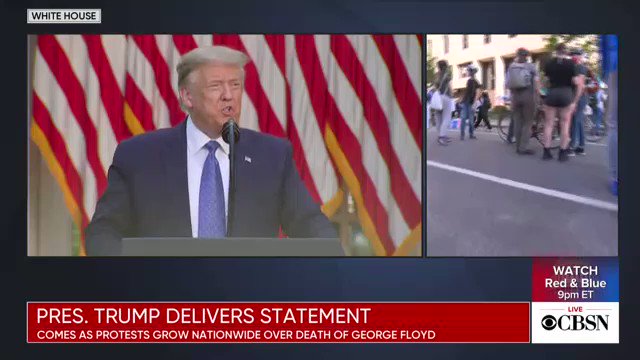
The American Civil Liberties Union is demanding a congressional probe into the deployment of tear gas, rubber bullets, and other “indiscriminate weapons” against nonviolent demonstrators in Lafayette Square outside the White House on Monday evening—a use of force apparently greenlit by President Donald Trump so that he could enjoy a photo opportunity of himself marching through the cleared area on his way to nearby St. John’s Episcopal Church.


“Elected officials, including Congress, must investigate this politically-motivated and life-threatening use of indiscriminate weapons.” —Jamil Dakwar, ACLU

As the Washington Post reports:


Hundreds of protesters were pushed away from Lafayette Square, where they were protesting the police killing of George Floyd, by the National Guard, U.S. Park Police and Secret Service. The ambush began half an hour before the city’s newly imposed curfew of 7 p.m. went into effect. When the crowds were cleared, the president walked through the park to visit the historic St. John’s Episcopal Church, which had been set on fire Sunday.

The sudden use of force left early protesters bruised, bleeding and in shock. Although the night would ultimately end with a spattering of smashed windows and vandalized businesses, the scene in front of the White House when federal law enforcement descended was far from the “violent mobs” Trump described in his speech. The gathering was smaller and calmer than previous evenings, with people dancing and singing to a woman playing a guitar instead of knocking over barricades.

Jamil Dakwar, director of the ACLU’s Human Rights Project, denounced both the nature and the timing of the assault on the unsuspecting demonstrators, given that it happened just as Trump delivered a speech from the Rose Garden in which he threatened tougher police tactics—including use of U.S. military forces—to quell protests in cities nationwide.

“This appears to be grossly unjustified use of a dangerous chemical weapon on protesters and raises serious human rights concerns under international law,” Dakwar said of what transpired in Lafayette Square. “Health experts warned that the use of tear gas can have long-term effects on respiratory function. Elected officials, including Congress, must investigate this politically-motivated and life-threatening use of indiscriminate weapons.”


ACLU
✔@ACLU


This appears to be grossly unjustified use of a chemical weapon on protesters and raises serious human rights concerns under international law.

Elected officials, including Congress, must investigate this politically-motivated, life-threatening use of indiscriminate weapons. https://twitter.com/Yamiche/status/1267593673530884103 …
Yamiche Alcindor
✔@Yamiche


Here is what was happening outside the White House as President Trump was giving his Rose Garden address and saying he is an “ally of all peaceful protestors.” Peaceful protestors being tear gassed outside of the WH gates. I confirmed because I was teargassed along with them.


23.5K
10:02 PM - Jun 1, 2020
Twitter Ads info and privacy
10.1K people are talking about this


Rep. Jerrold Nadler (D-NY), chair of the House Judiciary Committee, also condemned the disproportionate use of force.

“President Trump has always shown us exactly who he wants to be—a dictator,” Nadler said in a statement late Monday night. “Today, Trump demonstrated once again that he is incapable of leadership and knows only how to sow division. In the midst of the coronavirus pandemic, which has disproportionately impacted African Americans, the killing of George Floyd tore open a deep wound in an already grieving nation. Understandably frustrated, thousands of Americans – the vast majority of whom are peacefully exercising their constitutional rights – have taken to the streets to make clear their anguish and frustration with a society that has not addressed the fundamental problems of racial and economic inequality.”

Instead of recognizing the rightful “frustration” of Americans nationwide and trying to “soothe tensions,” added Nadler, “Trump—from the Rose Garden no less—threatened to deploy armed soldiers to ‘dominate’ the streets, and allowed tear gas to be fired on peaceful protesters so he could walk across the street for a photo op. This is disgusting, and as far from the ‘rule of law’ and the Constitution as it gets.”


Ro Khanna
✔@RoKhanna


US House candidate, CA-17


The wrong response to protests against police brutality and violence is more police brutality and violence.

We need to listen to Black communities and everyone joining them in protests for justice.

Force must be a last resort. https://twitter.com/CBSNews/status/1267590281265889283 …
CBS News
✔@CBSNews


President Trump says he wants mayors and governors to establish "an overwhelming law enforcement presence until the violence has been quelled," and if they don't, "I will deploy the United States military, and quickly solve the problem for them" https://www.cbsnews.com/news/trump-statement-protests-white-house-watch-live-stream-today-2020-06-01/ …


241
8:23 PM - Jun 1, 2020
Twitter Ads info and privacy
73 people are talking about this


Rep. Sheila Jackson Lee (D-Texas), also a member of the Judiciary Committee, rejected Trump’s call for state governors—who he called “weak” in a White House phone call earlier on Monday—to get tougher with demonstrators in their respective states.

“They are not weak, they are confronting the humanity of their people,” the congresswoman said in a thread on Twitter. “Violence to suppress protests that are guaranteed by the constitution is unacceptable.”


“When you refuse to use violence to suppress the constitutional right of innocent protesters, who are in pain over the tragic murder of a fellow citizen,” she added. “That is not weakness, that is strength!”


PENTAGON READY TO SEND TROOPS TO MINNEAPOLIS IF STATE ASKS


By James LaPorta and Robert Burns, Associated Press.

June 3, 2020


https://popularresistance.org/minneapolis-pentagon-ready-to-send-troops-to-minneapolis-if-state-asks/


Note: In a separate article, AP reports on June 3 that “Defense Secretary Mark Esper is breaking with President Donald Trump, saying he opposes using active-duty military forces for law enforcement duties in the US. Esper said the Insurrection Act, which would allow Trump to use active-duty military for law enforcement in containing street protests, should be invoked in the United States “only in the most urgent and dire of situations.” He declared, ‘We are not in one of those situations now.'”

And, the New York Times reports there are many military officials who oppose the use of the military in domestic law enforcement, writing,In “Retired senior military leaders condemned their successors in the Trump administration for ordering active-duty units Monday to rout those peacefully protesting police violence near the White House.”

They report that “Gen. Martin Dempsey, a former chairman of the Joint Chiefs of Staff, wrote on Twitter that ‘America is not a battleground. Our fellow citizens are not the enemy.’ And Gen. Tony Thomas, the former head of the Special Operations Command, tweeted: “The ‘battle space’ of America??? Not what America needs to hear … ever, unless we are invaded by an adversary or experience a constitutional failure … ie a Civil War.'” – KZ

The Pentagon said Saturday it was ready to provide military help to authorities scrambling to contain unrest in Minneapolis, where George Floyd’s death has sparked widespread protests, but Gov. Tim Walz has not requested federal troops.

Jonathan Rath Hoffman, the chief Pentagon spokesman, said several military units have been placed on higher alert “as a prudent planning measure” in case Walz asks for help. The Associated Press first reported on the potential deployments and, citing sources with direct knowledge of the orders, named four locations from which soldiers would be drawn.

Hoffman did not identify the units, but other officials said they are mainly military police. Hoffman said these are units normally on 48-hour recall to support state authorities in the event of crises like natural disasters. They are now on four-hour alert, Hoffman said.

Defense officials said there was no intent by the Pentagon to deploy any federal forces to Minnesota unless Walz asked for help. If he did make such a request, federal units such as military police could provide logistical and other kinds of support to the Minnesota National Guard or state law enforcement, but would not get directly involved in law enforcement under current plans, the officials said. They were not authorized to discuss the planning publicly and spoke on condition of anonymity.

Hoffman said Defense Secretary Mark Esper and Gen. Mark Milley, chairman of the Joint Chiefs of Staff, had spoken to Walz twice in the past 24 hours and told him the Pentagon was prepared to help if needed.

Maj. Gen. Jon Jensen, the adjutant general of the Minnesota National Guard, said the Pentagon’s decision to place some military units on a higher state of alert for potential deployment was “a prudent move” that gave Walz more options.

Earlier, Alyssa Farah, the White House director of strategic communications, told the AP that the deployment of active-duty military police to Minnesota was untrue. In an email, she referred to Title 10, the U.S. law that governs the armed forces and would authorize active duty military to operate within the country

“False: off the record – title 10 not under discussion,” said Farah. No off-record agreement was negotiated with the AP.

President Donald Trump urged Walz and other authorities in Minnesota to “be tough” in Minneapolis.

“We have our military ready, willing and able if they ever want to call our military, and we can have troops on the ground every quickly,” Trump said.

Soldiers from Fort Bragg in North Carolina and Fort Drum in New York have been ordered to be ready to deploy within four hours if called, according to three people with direct knowledge of the orders. Soldiers in Fort Carson, in Colorado, and Fort Riley in Kansas have been told to be ready within 24 hours. The people were not were not authorized to discuss the preparations publicly and spoke on condition of anonymity.

The get-ready orders were sent verbally on Friday, after Trump asked Esper for military options to help quell the unrest in Minneapolis after protests descended into looting and arson in some parts of the city.

Trump made the request on a phone call from the Oval Office on Thursday night that included Esper, national security advisor Robert O’ Brien and several others. The president asked Esper for rapid deployment options if the Minneapolis protests continued to spiral out of control, according to one of the people, a senior Pentagon official who was on the call.

The person said the military units would be deployed under the Insurrection Act of 1807, which was last used in 1992 during the riots in Los Angeles that followed the Rodney King trial. Another official said Saturday, however, that federal troops could be deployed to Minnesota without invoking that act. In that situation, they would perform non-law enforcement duties such as providing logistics help.

“If this is where the president is headed response-wise, it would represent a significant escalation and a determination that the various state and local authorities are not up to the task of responding to the growing unrest,” said Brad Moss, a Washington D.C.-based attorney, who specializes in national security.

Members of the police units were on a 30-minute recall alert early Saturday, meaning they would have to return to their bases inside that time limit in preparation for deployment to Minneapolis inside of four hours. Units at Fort Drum are set to head to Minneapolis first, according to the three people, including two Defense Department officials. Roughly 800 U.S. soldiers would deploy to the city if called.

Protests erupted in Minneapolis this week after video emerged showing a police officer pressing his knee into Floyd’s neck for several minutes even after Floyd stopping moving and pleading for air. Floyd later died of his injuries. The officer, Derek Chauvin, was arrested and charged with third-degree murder and manslaughter on Friday.

The protests turned violent and on Thursday rioters torched the Minneapolis Third Police Precinct near where Floyd was arrested. Mayor Jacob Frey ordered a citywide curfew at 8 p.m. local time, beginning on Friday. In that city, peaceful protests picked up steam as darkness fell, with thousands of people ignoring the curfew to walk streets in the southern part of the city. Some cars were set on fire in scattered neighborhoods, business break-ins began and eventually there were larger fires.

Active-duty forces are normally prohibited from acting as a domestic law enforcement agency. But the Insurrection Act offers an exception. There was no indication Saturday that Trump intended to invoke that act.

It would allow the military to take up a policing authority it otherwise would not be allowed to do, enforcing state and federal laws, said Stephen Vladeck, a University of Texas School of Law professor who specializes in constitutional and national security law.

The statute “is deliberately vague” when it comes to the instances in which the Insurrection Act could be used, he said. The state’s governor could ask Trump to take action or Trump could act on his own authority if he’s determined that the local authorities are so overwhelmed that they can’t adequately enforce the law, Vladeck said.

“It is a very, very broad grant of authority for the president,” he added.