Tuesday, May 12, 2020

Generation screwed—and screwed again
https://rwer.wordpress.com/2020/05/11/generation-screwed-and-screwed-again/
from David Ruccio

You know your generation’s screwed when even Monopoly is mocking you.
Back in 2016, I argued that Millennials were in fact generation screwed.
For example, in 2010 (when some of them were 20 to 24 years of age), their unemployment rate was 17.2 percent, much higher than the already high national average of 9.9 percent.*
Partly because of the difficulty they had finding jobs, but also because they have been saddled with high student and healthcare debt, the typical Millennial family lost ground between 2010 and 2016, falling further behind the typical wealth lifecycle than any other birth cohort. According to the Federal Reserve Bank of St. Louis (pdf), a typical 32-year-old family respondent in 2016 (born in 1984) was 34 percent ($12,000) below the 32-year-old benchmark established by earlier generations.


No wonder Hasbro decided to lampoon their inability to purchase real estate.
Still, the authors of the report thought there were grounds for optimism, since “These families have many more years to earn, save and accumulate wealth.”
Except now, according to Vox (first in early April and now in May), Millennials have been screwed again.
As someone on the tail end of the millennial generation, I was lucky enough to still be in school when the 2008 recession hit. Yet financial anxiety has been an omnipresent part of how I see the world. It feels as though the one-time hallmarks of adulthood — buying a house, having kids, stability, even thinking about these things — are no longer milestones, but irresponsible dreams. Meanwhile, millennials older than me, many of whom are in their 30s and began their job searches in the thick of the 2008 recession, are even more financially fragile.
In fact, Millennials have every reason to be concerned, about their present and their future. They (and the next younger cohort) appear to have been most affected by furloughs, layoffs, and pay cuts in the midst of the current economic crisis. Moreover, we know that those making less money and those working in certain sectors (such as hospitality, restaurant services, and retail trade) have been more likely to be laid off than other, often older workers. And yet still Millennials have to continue to pay off their student loans and healthcare debts and make their rent payments.
The last time I analyzed the situation of Millennials, I discovered they were more inclined to identify as members of the working-class (and not, for example, as middle-class) and more critical of capitalism than previous generations.
I wonder now, when they’re being screwed a second time in their short lives, how they will identify and what economic and social arrangements they will end up criticizing.
Millennials still have plenty of time, if not to accumulate wealth, at least to change the world.
*For the sake of comparison, the difference between the two unemployment rates in 2007 was only 2.8 points.
Victory in Europe Day: These American Corporations Aided Nazi Germany
May 9, 2020
https://citizentruth.org/victory-in-europe-day-these-american-corporations-aided-nazi-germany/
From Coca-Cola to Nestle, some of the most iconic American brands eagerly took part in the Nazi experiment.
(By: Alan Macleod, Mintpress News) May 8 marks the 75th anniversary of the Allied armies’ victory in Europe, the day when they accepted the formal surrender of Nazi Germany after a bitter, six-year-long struggle that saw tens of millions killed in fighting, famines or exterminated in death camps. While many novel socially-distanced celebrations across the world are going on, some large corporations are laying low in the knowledge that they actively collaborated with and helped Hitler’s war machine.
Standard Oil, a huge monolith now split up into a myriad of smaller ones, including Chevron, ExxonMobil, BP, and Marathon, was crucial to both prolonging and intensifying the bloodiest conflict in human history. In the 1930s and 1940s, only the United States and Venezuela produced large quantities of oil. Starved of the substance, Germany was almost completely dependent on imports from the Western hemisphere, which Standard Oil dominated. Even after the United States declared war on Germany, it continued to use a great array of tricks to fuel Germany’s war effort, quietly filling up German tankers in the Spanish Canary Islands who would then transport the crucial liquid to German ports. Indeed, one historian quipped that “Without the explicit help of Standard Oil, the Nazi air force would never have gotten off the ground in the first place.”
The American business community was deeply impressed by Hitler. Wall Street executive Prescott Bush (the father and grandfather of two presidents) aided Hitler’s rise and even organized a failed coup to overthrow President Roosevelt and install German-style fascism in the United States. Chase Bank performed a number of key duties for the Nazis, including accepting, laundering and converting their money into foreign currency. In 1945, they were placed on trial in a federal court for violation of the Trading with the Enemy Act. And if there is one thing Henry Ford is known for besides his cars, it is his antisemitism. Ford himself received a medal from Hitler in 1938 and profiteered from both sides during the war, manufacturing vehicles for both the Allies and the Nazis. The company is also widely accused of knowingly using slave labor in its German plants. In 2000, Food giant Nestle paid out over $14 million to survivors for the same practice.
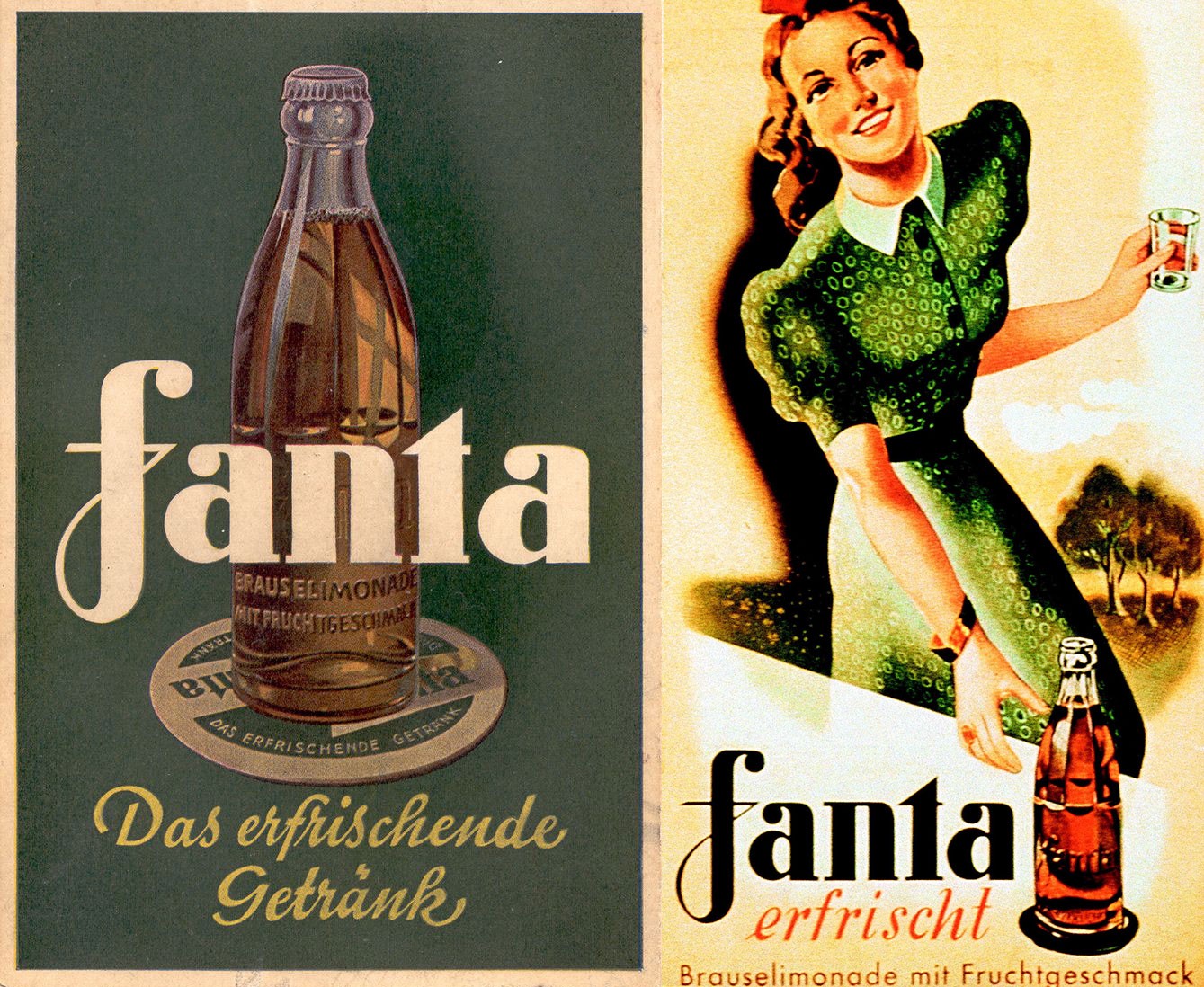
Despite being an iconic American brand, Coca-Cola was also intimately intertwined with fascism, conducting years-long publicity campaigns associating itself with Nazism and the Hitler Youth. As a result, between 1933 and 1939, the company’s sales in Germany rocketed 4,400 percent. As Coke syrup shipments dried up during the war, the company created a new drink for the German market that still exists to this day: Fanta.
Perhaps New York-based tech company IBM has the most infamous connection to the Nazis, however. Through their subsidiary, Dehomag, the company supplied Hitler with new technology to identify undesirable classes of people and to facilitate their transport to extermination camps. IBM made huge profits designing and manufacturing a system of punch cards that allowed officials to search through databases to identify individuals for extermination, expanding their business as the Holocaust accelerated.
While many corporations are keen for the day to be over, other groups want the public to remember their particular version of events. The U.K. Foreign Office, for example, released a video where Russia’s role in bringing about the end of the war was barely to be seen. NATO’s Joint Force Commander in Naples, Admiral James Foggo, also described the brave Allied forces engaged in combat in North Africa, Normandy and Italy, but appeared to make a point of not mentioning any of the far larger battles that raged on the Eastern Front, between Soviet and Axis forces. Meanwhile, NATO-linked think tank the Atlantic Council used the occasion to accuse Putin of hijacking V-E Day to push Russian aggression in Eastern Europe. The Soviet Union comprised 80 percent of German casualties, with the current Russian government estimating their own total losses at 26.6 million people. In contrast, the U.S. did not enter the European area in any serious numbers until well after the tide had been turned, the Soviets driving Axis forces back hundreds of miles out of Russia and Ukraine by 1944. However, decades of propaganda have got people to forget these inconvenient facts; by 2015, only 11 percent of Americans and 15 percent of Britons answered the U.S.S.R. when asked which country contributed most to the defeat of Hitler.
Lest we forget, remembrance is always political. There are some who would prefer we remember certain particular aspects of events. There are others who would prefer we forgot altogether.
Perhaps New York-based tech company IBM has the most infamous connection to the Nazis, however. Through their subsidiary, Dehomag, the company supplied Hitler with new technology to identify undesirable classes of people and to facilitate their transport to extermination camps. IBM made huge profits designing and manufacturing a system of punch cards that allowed officials to search through databases to identify individuals for extermination, expanding their business as the Holocaust accelerated.
While many corporations are keen for the day to be over, other groups want the public to remember their particular version of events. The U.K. Foreign Office, for example, released a video where Russia’s role in bringing about the end of the war was barely to be seen. NATO’s Joint Force Commander in Naples, Admiral James Foggo, also described the brave Allied forces engaged in combat in North Africa, Normandy and Italy, but appeared to make a point of not mentioning any of the far larger battles that raged on the Eastern Front, between Soviet and Axis forces. Meanwhile, NATO-linked think tank the Atlantic Council used the occasion to accuse Putin of hijacking V-E Day to push Russian aggression in Eastern Europe. The Soviet Union comprised 80 percent of German casualties, with the current Russian government estimating their own total losses at 26.6 million people. In contrast, the U.S. did not enter the European area in any serious numbers until well after the tide had been turned, the Soviets driving Axis forces back hundreds of miles out of Russia and Ukraine by 1944. However, decades of propaganda have got people to forget these inconvenient facts; by 2015, only 11 percent of Americans and 15 percent of Britons answered the U.S.S.R. when asked which country contributed most to the defeat of Hitler.
Lest we forget, remembrance is always political. There are some who would prefer we remember certain particular aspects of events. There are others who would prefer we forgot altogether.
THE HIDDEN PLOT OF THE NEW FAILED US ATTEMPT AGAINST VENEZUELA
By Marco Teruggi, Resumen English.
May 10, 2020
| EDUCATE!
https://popularresistance.org/the-hidden-plot-of-the-new-failed-us-attempt-against-venezuela/
Operation Gideon.
(From May 5, 2020) In Venezuela, Operation Gideon is underway; an incursion of Venezuelan and U.S. mercenaries who aim to overthrow the government of Nicolas Maduro. Several of them have already been arrested and killed in the last 48 hours. The orders come from Washington.
The mercenary action against Venezuela was due to begin on March 10. The plans failed because the local opposition failed to activate the necessary street scenario. The arrival of the pandemic and the quarantine disrupted plans for what finally became known as Operation Gideon on Sunday, May 3.
That morning a boat arrived at the coast of La Guaria, in the town of Macuto, a short distance from Caracas. There, a deployment of the Bolivarian National Police, the Special Action Forces, the Bolivarian Intelligence Service, the Military Counter-Intelligence Directorate and the Bolivarian National Armed Force (FANB), particularly the Navy, was waiting for them.
The speedboat where the mercenaries were coming opened fire. It was a dark night. The response of the Bolivarian Government managed to deactivate the members of the boat that capsized, and the patrol boats and helicopter gunships with experts in night combat were deployed over the coast in search of the second boat.
The balance was eight mercenaries killed, two detained and one country that woke up in shock. High-caliber weapons, satellite phones, vehicles were seized. Diosdado Cabello, president of the National Constituent Assembly, took the floor and explained the scenario of the armed incursion in progress. He stated that it was not over.
This Monday, May 4, the second deactivation action of another group of mercenaries took place. This time on the coast of Aragua, in the town of Chuao, an area connected through the mountains to the capital of the country. Eight members were arrested there, among them two Americans, Luke Denman and Aaron Berry, former officers of the US Special Operations Forces.
With them was one of the heads of the operation, the fugitive captain, Antonio Sequea, who had participated in the attempted coup of April 30, 2019. The day before, another chief of the operation, fugitive captain Robert Colina, aka Pantera, had died in the confrontation. In the following hours on Monday, another arrest took place, this time of two former police officers, Rodolfo Rodriguez and Yeferson Fernandez, who were carrying logistical materials, such as weapons and vests.
Thus, less than 48 hours after the start of Operation Gideon, the Government managed to capture 12 mercenaries and 8 were killed. They had all left from Colombia, in the Guajira area. Venezuelan intelligence knew what was coming and had prepared to deal with it. The name given by the Government to that defense action was Operation Black First Crush of the Enemy.
What Is Operation Gideon?
Caracas achieved the first victories to deactivate the coup plan. According to Venezuelan President Nicolas Maduro, between April 19 and May 3 they had proceeded to dismantle part of the mercenary support base inside the country in other words Operation Gideon was infiltrated.
But who commands and how many members does this mercenary action have? On the afternoon of Sunday, May 2, a video was broadcast on social networks in which two men took the lead: fugitive captain Nieto Quintero and U.S. military contractor Jordan Goudreau, owner of the mercenary Silvercorp USA. Both stated that the operation was still underway and called on the FANB to join in its objectives of capturing Maduro and the leadership of the political process.

Camila@camilateleSUR
Jordan Goudreau is a U.S. mercenary training paramilitaries in Colombia. He met with Guaido's people in Miami last year, worked security for the fake aid concert in Cúcuta and he's introduced here as a current member of U.S. army special forces.

360
6:25 PM - May 3, 2020
Twitter Ads info and privacy
272 people are talking about this
Goudreau gave an interview in the evening to tell his version of events. The former member of the US Special Forces stated that he had been in charge of the planned actions for months from Colombia and that this operation had been initially agreed on with Juan Guaidó, with whom he had signed a contract for 212 million dollars, but Guaidó had never fulfilled his part.
The existence of that contract, which Goudreau showed, had been denied by Guaidó since March when former Major General Cliver Alcalá had confessed that he was leading an attempted military incursion from Colombia in which Guaidó was immersed. That incursion was the one that reached the Venezuelan coast last Sunday morning.
In this way, Guaidó was exposed in what Goudreau confirmed as his initial involvement and then betrayal. Both the self-proclaimed president and the opposition sector surrounding him denied the existence of Operation Gideon and accused the government of having carried out a montage to cover up the difficulties in the country.
So according to the contractor’s explanation, and later that given by Quintero, the operation was developed almost without financing, without support from the U.S. Government, Colombia, or the Venezuelan opposition. It would have been a mercenary self-management that would have gathered, according to Quintero, “about 3,000 members among officers, noncommissioned officers, troops in exile”.
The Privatization Of War
Two days before the start of Operation Gideon, an article was published in the AP news agency, in which Goudreau’s existence, his relationship with Cliver Alcalá and part of the mercenary plot was noted. Both were presented as isolated actors within an attempted armed incursion into Venezuela.
Colombia denies responsibility in “alleged invasion attempt” in Venezuela
The attempt was to remove all U.S., Colombian and Guaidó ties began before the first action was taken. The aim was to exonerate the political actors from the zero hour and relieve them of all responsibility in the face of such an action of war and probable defeat.
Thus, neither the contractor nor the mercenary training camps – denounced on several occasions by Maduro – would have been developed in Colombia without anyone knowing it.
This prefabricated version was dismantled by the Venezuelan president on Monday night when he gave an account of those involved. The operation was armed by the United States and operated through its anti-drug agency in Colombian territory, the DEA, where U.S. instructors trained the teams that entered Venezuela.
According to Maduro, during Colombian President Ivan Duque’s last visit to the White House on March 2, U.S. President Donald Trump gave him the order to initiate the actions which, after delays, were carried out.
As for financing, a central part came from the “capos and cartels of the Colombian Upper Guajira,” said Maduro, the area where most of the military training centers were located. They also relied on criminal gangs from several Venezuelan states, including Falcón, La Guaira, Caracas and Miranda.
It was never a question of mercenary self-financing motivated by altruism, as Goudreau and Quintero pointed out, but rather a format implemented by the United States for many years and that is the privatization of war.
The scheme goes as follows: Washington tightens the economic blockade, puts a price on the heads of Nicolás Maduro and Diosdado Cabello, reinforces its military presence in the Caribbean Sea, announces a transition framework, gets diplomatic support, and works the covert military operations through a contractor and Venezuelan deserters from the rear which is in the territory of Colombia.
President Donald Trump said on Tuesday, as expected, that he was not aware of the operation and denied that his government was involved.
Are We At War?
One of the most striking photographs was that of a militiaman in civilian clothes with a gun in his hand in the front of the boat with the mercenaries in Chuao. The role of what is called popular intelligence has been central, as Diosdado Cabello explained.
The Venezuelan civil-military deployment is on high alert to the development of what is not yet over. According to the government, 56 mercenaries tried to enter the country, 54 Venezuelans and two Americans, some of whom have been arrested and others killed in Sunday morning’s confrontation. The objective of these groups was to attack the DGCIM, SEBIN and the Miraflores Palace.
The structuring of the final plan to asphyxiate Venezuela
The strategy of Caracas is to deactivate the actions before they happen, to avoid the execution of the coup plans. The captures, so far, have been early: before the mercenary’s entry and during the arrival of part of the boats.
Venezuela is facing a new phase of an uninterrupted siege. The bet of the United States is to achieve that the set of variables with guerilla type attacks to finally succeed in overthrowing Nicolás Maduro so that the restoration and revenge foreseen within the strategy designed from Washington can begin.
The Government and Chavism are facing a scenario with three simultaneous fronts: the fight against the pandemic, which is under control due to the measures implemented, the economic situation, which is largely delicate due to the US blockade, and the mercenary incursion of Operation Gideon.
SOLIDARITY WITH OHIO PRISONERS
By Martha Grevatt, Workers World.
May 10, 2020
| RESIST!
https://popularresistance.org/solidarity-with-ohio-prisoners/
Over 200 people demonstrated outside the state prison in Marion, Ohio, May 2 to protest the conditions inside and demand prisoners who meet certain criteria be released. The prison drew national attention after 80 percent of the prisoners tested positive for COVID-19.
Conditions are now deplorable, with the prisoners only receiving two meals a day. Those meals do not meet the caloric intake or nutritional needs of an adult male. The excuse given is that staff needs extra time to sanitize. However, the more critical steps of requiring masks and social distancing have not been taken.
The protesters demanded that all the 400 prisoners housed at the Marion Reintegration Center be given clemency by Gov. Mike DeWine. Most of them are deemed “low risk” and are within a year of their release date.
“There is no reason to keep everybody there,” Kevin Ballou, one of the protest organizers and a former Marion prisoner, told Workers World. “It’s like a huge warehouse or a huge garage. People sleep 2 feet away from each other. Several have had to nurse each other back to health. People are bedridden.
“One friend had to help an elder prisoner go to the bathroom and back to his cell. One we called ‘Old Man George’ passed away. He was always playing chess. No one knows what happened to him. The people in charge are not qualified to take care of human beings. This isn’t just a criminal justice issue; it’s a humanitarian issue.”
Speakers at the rally included Ballou and other former Marion prisoners, Cleveland City Councilmember Basheer Jones, and several family members of prisoners. People drove in from all over Ohio to take part in the protest. Some people who drove by were hostile, but many honked in support.
Subscribe to:
Comments (Atom)