Thursday, May 7, 2020

Thailand’s ‘five families’ poised to profit on the plague


PM Prayut calls on billionaire class to save a sinking economy but small business pain will be the 'big five's' post-pandemic gain
MAY 7, 2020


https://asiatimes.com/2020/05/thailands-five-families-poised-to-profit-on-the-plague/


BANGKOK – On a Covid-19 darkened alley, a 7-Eleven convenience store burns brightly in the night.

Thailand’s coronavirus lockdown has shuttered all variety of businesses, but 7-Eleven, Family Mart and other modern franchised stores controlled and operated by major Thai conglomerates were allowed to keep the lights on as essential services, significantly while many traditional small entrepreneur-run shops were forced to go dark.

7-Eleven in Thailand is owned by the Charoen Pokphand (CP) Group, the nation’s leading conglomerate founded by the Chearavanont family, the kingdom’s wealthiest business clan. Family Mart is run by Thai retail giant the Central Group. Both, by all accounts, did brisk business while others were forcibly locked down for health reasons.

As Thailand loosens its lockdown, it’s not clear how many of its small and medium enterprises (SMEs) will ever re-emerge from the viral devastation. Thailand’s top “five family” conglomerates, on the other hand, are cashed up to seek opportunities in crisis across the nation’s now cash-starved and indebted corporate landscape, analysts say.


Those “five family” firms, namely the CP Group, ThaiBev, Central Group, King Power Group and Boonrawd, among others backed ex-coup maker, now elected Prime Minister Prayut Chan-ocha’s 2019 election campaign, support seen as payback for regulatory favors and concessions granted during his 2014-19 coup regime.

Prayut has won certain plaudits for his containment of the kingdom’s viral outbreak, which has been comparatively mild with just 2,989 cases and 55 deaths. The verdict on his pandemic management, however, will be largely decided on how he steers recovery in what is expected to be one of Asia’s worst pandemic-hit economies.


Enter the “five families” into the picture. In a leaked letter, Prayut called on Thailand’s 20 richest billionaire tycoons for proposals and plans to revive the economy and help the needy amid reports at least 7 million Thais have already become unemployed. “I want all of you to do more,” the former army commander wrote.

Critics have argued his government should do more as Thailand’s Covid-19 relief measures already appear to be missing the mark, with as many as 27 million desperate Thais applying for “Nobody Left Behind” branded cash handouts, a program policy-makers initially designed for only four million or so of the kingdom’s lowest earners.


That criticism could mount as Prayut looks to big, not small, companies to restore the virus-hit economy back to health. It’s a potentially perilous path as the premier’s coup era reliance on the “five families” saw economic growth stagnate and poverty rise, from 7.2% in 2015 to 9.9% in 2018, while their holdings, enterprises and profits rapidly grew.


That’s, of course, not how “five family” patriarchs see it. CP Group founder and senior chairman Dhanin Chearvanont responded to Prayut’s letter by highlighting 700 million baht (US$23 million) in “donations” his company has made to its own Covid-19 programs, including the establishment of a surgical face mask factory.

Dhanin said his CP Group has more Covid-19 alleviation in the pipeline, including a scheme to boost farmer incomes, an online learning project, and plans to develop virus test kits, research and medicine. He said the group has retained all of its staff, including at 7-Eleven convenience stores, and created more new jobs in March.


Central Group said it had earmarked 2.3 billion baht to support economy, including funds to buy farmer and SME goods for sale in its various stores. Other “five family” business patriarchs did not make public their replies to Prayut’s call for help. None of the “big five” companies responded to Asia Times’ emailed request for comment for this article.

Some analysts saw the government’s surprise lockdown ban on booze sales, initially scheduled to run through May 31 but inexplicably lifted on May 2, as a not-so-delicate strong-arm message to liquor and beer duopolist ThaiBev to dedicate more future resources to the local economy and less to a recent asset-buying spree abroad.

But striking a corporate balance between helping and profiting will require delicate handling and deft messaging in what is already one of Asia’s most unequal societies, a wealth gap that will inevitably widen with Covid-caused SME bankrupticies and unemployment. SMEs usually employ some 60% of Thailand’s 39 million workforce.

An unknown number of the kingdom’s three million SMEs are now teetering on the brink of bankrutcy, business and financial analysts estimate. Fitch Ratings said in a report that 62% of Thai companies had “low” rating headroom, meaning they were perceived by the ratings agency as overleveraged, before the virus crisis struck.

Analysts say it is difficult to predict how far Thailand’s economy will fall, particularly without any big state bailouts of companies and markets in sight. Last month, the Bank of Thailand caught many analysts off-guard by predicting a deeper -5.3% plunge in this year’s GDP than most big investment banks were projecting at the time.

Read: Fever pitch call for change in viral Thailand

Private analysts have focused on the pandemic’s more measurable impact on tourism, which usually contributes 20% of GDP but has collapsed with Covid-19 closed borders and shuttered hotels. Fewer have predicted how the crisis could infect the more opaque property sector, which was showing signs of ill-health even before the plague.

A hotel and resort building spree, fuelled by rosy projections of ever-rising tourist arrivals, largely from China, now looks particularly vulnerable in sight of a looming global recession and already shifting perceptions about the safety and desirability of globe-trotting leisure travel, a now well-established source of Covid-19’s lethal spread.

It’s not transparently clear which Thai banks are most exposed to the suddenly beleaguered hotel segment. What is clear is that Krung Thai, Thai Military and Kasikornbank all have big exposure to SMEs, hundreds of thousands of which are at risk of collapse after weeks without revenues and scant prospects for a quick return to business-as-usual.Fitch Ratings notes that bank bad loans were on a “gradual negative trend” for many years up to 2020, and that the industry now faces an “escalation” of non-performing loans (NPLs) with the repayment capacity of weaker borrowers, namely SMEs, “particularly vulnerable” to a prolonged economic downturn.

Those looming NPLs, some investment analysts suggest, may have motivated Kasikorn Bank’s long-time, founding family chairman Banthoon Lamsam’s recent decision to retire, notably before the inevitably messy business of seizing collateral assets from virus crisis-hit SME borrowers and reselling them to liquidity-rich big corporates.

To be sure, Thailand’s “five families” and other billionaire clans have also taken Covid-19 hits, measured in declines disclosed in a Forbes wealth list published in early April. The CP Group’s Chearavanont family has seen their net worth dip US$2.2 billion from $29.5 billion in 2019 to $27.3 billion at present, according to Forbes.

The Chirativat clan has been harder hit due to its Central Group’s high exposure to locked down hotels, malls and resorts, falling from $21 billion in 2019 to $9.5 billion. ThaiBev’s founder Charoen Sirivadhanabhakdi has seen his wealth slip from an estimated $16.2 billion last year to $10.5 billion, according to the same Forbes rating.

Still, they all had plenty of capital cushion. Credit Suisse, an investment bank, claimed in its global wealth report released in late 2018 that Thailand was the “most unequal” economy in the world. The report claimed that 67% percent of the nation’s wealth is held by 1% of the population in 2018, rising rapidly from 58% in 2016.

As such, the “big five” will be among the few cashed-up Thai buyers for the massive amount of distressed assets Thai banks will need to recycle on to the market, likely at fire sale prices, to maintain their own balance sheets and financial health. The “big five”, analysts note, are already among the banks’ biggest, best and most trusted customers.

One strategist at an Asia-focused private equity fund foresees opportunities for the Chirativat clan to consolidate their position in the high-end tourism sector, the segment expected to recover fastest after the pandemic, by buying financially distressed boutique properties on prime real estate that could potentially be developed into tall tower hotels.Another analyst at a Western investment bank sees property crisis opportunities for the CP Group to extend its 7-11 convenience store push even deeper into the provinces and on prime Bangkok real estate. In March, CP Group flexed its rich capital position in a US$10.6 billion agreement to buy for Tesco Holdings retail outlets in Thailand and Malaysia.

ThaiBev, which grew super rich over the decades through cornered market booze sales, has recently moved in a big way into property development, including construction now underway for the largest mixed use development ever built in Bangkok. The company could likewise leverage the crisis to extend its ever-growing land bank, the analyst says.

Still, the “five families” will not be able to absorb the vast amount of distressed assets expected to soon come under banks’ auction blocks. That, some suggest, could open the way for Chinese buying, particularly as previously favored and open US and Australian markets close due to Covid-19 and wider eco-strategic tensions.

The CP Group is known to have top-tier political connections in Beijing and has facilitated Chinese investments and other ventures in Thailand. So, too, has ThaiBev, including in provincial property deals, according to one due diligence investigator. But any perceived as opportunistic Chinese impaired asset buying will carry risks, particularly with cries rising in the West for China to pay “reparations” for the damage and loss caused by the virus.

Thai social media is abuzz with anti-China sentiment, with many netizens blaming China for the pandemic and thereby Thailand’s economic collapse. It’s not clear that renewed waves of Chinese tourists – despite the hotel-filling, yuan-spending stimulus – would be as warmly received as previously so soon after the virus crisis.

Prayut will thus need to carefully calibrate how much he relies on the “five families”, and how much on China to revive the economy in the months and, if he survives politically, years ahead. The political opposition is already launching broadsides that the government is not doing enough for unemployed workers and capital-starved SMEs.

Many Thais associate “big five” businesses with convenience, modernity and, indeed, even “Thainess.” Their various enterprises are woven deeply into the national fabric. But the “five families’” domination of the Thai economy will likely never have been more visibly apparent than in the consolidation to come after the plague.


More details emerge of the mercenary military coup plot in Venezuela


Jorge Martin

07 May 2020

http://www.marxist.com/more-details-emerge-of-the-mercenary-military-coup-plot-in-venezuela.htm


We said from the very beginning that the Venezuelan opposition and the US administration were responsible for the attempted mercenary coup foiled in Venezuela on 3 May. As days go by, more details emerge which confirm that assessment.

Yesterday, 6 May, Venezuela announced the arrest of more members of the mercenary expeditionary force that was to carry out the coup. In a press conference with the attendance of the international media, president Maduro gave more details about the attempted coup. During the press conference, Maduro showed a video clip featuring US mercenary and former Special Forces soldier Luke Denman: one of two US mercenaries arrested as part of the mercenary force.

A key aspect of this saga is the contract signed by Guaidó and his representatives with US mercenary agency Silvercorp USA, headed by former Special Forces soldier Jordan Goudreau. The contract was for carrying out a military coup, as well as capturing Maduro and other high-ranking Venezuelan officials and handing them over to the US.

Washington and the Venezuelan opposition both knew about this botched, clumsy coup attempt / Image: VTV


The first one to mention the contract was Cliver Alcalá Cordones: a former Venezuelan officer who was based in Colombia when he issued a video statement citing it. Alcalá was part of the same military coup attempt to be carried out by mercenaries being trained in camps in Colombia by US mercenaries. When the Colombian police seized a cache of weapons on 24 March, destined for these camps, Alcalá’s position became very fragile. In order to protect himself, he released a video explaining the role played in the plot by Venezuelan opposition leader Juan Guaidó. He then handed himself over to the authorities and was taken by the DEA to the US where he has been indicted on charges of narcotrafficking. He has probably cut himself a deal in which he will testify against president Maduro and other Venezuelan officials.

In his video statement, Luke Denman confirmed the existence of the training camps in Colombia, and gave their precise location in Rioacha, on the Caribbean coast, less than 100km from the Venezuelan border in Zulia.
Opposition and Washington implicated

The existence of the contract was also confirmed by Jordan Goudreau, head of Silvercorp, on Monday, as the operation was floundering. He showed several pages from the main document, which had the signatures of himself for Silvercorp, of Venezuelan reactionary lobbyist JJ. Rendón, Venezuelan lawmaker Sergio Vergara and Juan Guaidó, as well as that of Miguel J. Retureta, a reactionary Cuban-American lawyer who specialises in defending narco-traffickers (including the son of Honduran former dictator Lobo, and the brother of Honduran illegitimate president Juan Orlando Hernandez).

After a while, Juan Guaidó and his spokespersons declared that the contract was false and that he had never signed one. However, now JJ. Rendón has admitted in an interview on CNN that the contract exists and that he signed it. Although he says Juan Guaidó never signed the contract, the fact remains that Rendón and Vergara did and they were acting on behalf of Guaidó, who had appointed Rendón as the head of a “Strategic Planning Committee” to deal with, precisely, the organisation of plots to remove Maduro from power. Rendón repeated his version of the Washington Post, adding that he paid Goudreau $50,000 for expenses, from his own pocket.

Although Rendón tries to play down the meaning of the contract, which he describes as a “test” of what was possible, the contract itself is very specific and talks about “An operation to capture/detain/remove Nicolás Maduro... remove the current Regime and install the recognized Venezuelan President Juan Guaidó.”

Rendón claims that, after signing the contract, they got cold feet and started to doubt the ability of Goudreau to carry out the plan, so they broke the agreement at a meeting in his Miami apartment on 11 November. Even if you believe this version of the story, the fact remains that the Venezuelan opposition did sign a contract with a mercenary agency to carry out a coup and that if they broke the contract, this was only because they were not sure this group of mercenaries was capable of carrying it out!

There is no doubt that Guaidó was fully aware of the contract and in fact Goudreau has provided an audio recording of a conversation with Guaidó, which the Washington Post accepts as veridic.

The WP story also confirms that Goudreau had been in touch with Schiller, the long-time Trump bodyguard, something which was already known. Furthermore, Goudreau boasted that he had worked security for Trump at several rallies. There are pictures of Goudreau doing that at a Trump rally in Charlotte on 28 October 2018:


Jorge Martin@marxistJorge


Here's Jordan Goudreau, the former US Special Forces mercenary working security at a Trump rally in Charlotte on Octuber 28, 2018. Goudreau and his @silvercorpUSA agency trained the Venezuelan deserters of #OperacionGedeon


9
03:19 - 6 May 2020
Twitter Ads information and privacy
See Jorge Martin's other Tweets


Goudreau and his Silvercorp mercenary agency were in charge of security at the so-called “humanitarian aid” concert in Cúcuta, Colombia, in February 2019, organised and attended by Guaidó. That’s where Goudreau made contact with several deserters from the Venezuelan army who had been encouraged by Guaidó to cross the border. It is possible that he got the job at the concert as a result with his links with Schiller and his security agency.

A separate report by AP gives other significant details. First, it links the weapons cache seized by the Colombian police in March to Goudreau: “The stockpile, worth around $150,000, included spotting scopes, night vision goggles, two-way radios and 26 American-made assault rifles with the serial numbers rubbed off.” Part of the equipment was sold by High-End Defense Solutions, based in Miami. According to AP, this is “the same company that Goudreau visited in November and December, allegedly to source weapons, according to two former Venezuelan soldiers who claim to have helped the American select the gear.”

Second, AP quotes “two former law enforcement officers” who claim that “an informant approached the Drug Enforcement Administration in Colombia prior to the weapons’ seizure with an unsubstantiated tip about Goudreau’s alleged involvement in weapons smuggling.”

So, here you have it, in black and white: the DEA knew, at least in March or perhaps earlier, that Goudreau was smuggling weapons to Colombia. What did they do about it? According to the former agents quoted by AP: “The anti-narcotics agency, not knowing who Goudreau was at the time, didn’t open a formal probe.” We find this difficult to believe. In fact, the same AP report adds a few sentences later: “One of the officials said the information was later passed on to the Department of Homeland Security.” This is confirmation that the US administration knew Goudreau was smuggling weapons to Colombia. It is very difficult to believe that they did not look deeper into it.

There is another aspect of this whole story, which has not been fully discussed. Alcalá Cordones gave himself up to Colombian police and the DEA at the end of March. Did they not ask him about the Venezuelan mercenary training camps he talked about in a video tape? Did they not investigate this further? Again, this is very difficult to believe. Both the US and Colombian authorities must have known what was happening under their own noses. They are reactionary, sometimes clumsy, but not completely stupid.

Third, the AP story adds further detail to the plot. According to AP’s sources: “Silvercorp in December bought a 41-foot fiberglass boat, Florida vessel registration records show, and proceeded in February to obtain a license to install maritime navigation equipment. On his application to the Federal Communications Commission, he said the boat would travel to foreign ports.”

The same sources then mention that the mercenary agency’s boat was seen in Jamaica, “where Goudreau had gathered with a few of his special forces buddies looking to participate in the raid” but that “as they were readying their assault, the boat broke down at sea on 28 March and an emergency position-indicating radio beacon was activated, alerting naval authorities on the island of Curacao. Goudreau had to return to Florida, prevented from rejoining his troops prior to the landing because of travel restrictions put in place due to the coronavirus pandemic.”

This story about Jamaica shows the haphazard nature of this mercenary gang, which seem to have been inspired by watching Amazon Prime’s Jack Ryan series. But it also confirms a separate report about Jamaica published by ConnectingVets.com website in the US: “A U.S. military source who also spoke to Connecting Vets on the condition of anonymity said that the CIA had caught wind of the coup plot in Jamaica and warned Silvercorp not to go through with it on numerous occasions.” Whatever you want to make of the claim that the CIA had tried to stop them from going ahead, the salient point is that this would indicate that the CIA knew about the plot. Perhaps seeing how badly organised they were, they tried to convince them not to go ahead. Whatever the case, the CIA knew and did nothing to actually stop them, other than, perhaps, trying to talk them out of it over a few beers.
Guaidó knew

All of the above is conclusive evidence that Guaidó was fully aware and part of this plot, even if he might have withdrawn from it at the last minute. The Venezuelan opposition is fraught with factionalism and power struggles between different cliques. It is quite possible that this played a role in the unravelling of this operation, which was infiltrated by the Venezuelan government. Venezuelan communication minister Jorge Rodriguez claimed that there had been a power struggle within the mercenary coup plot between Alcalá Cordones and Ivan Simonovis (a former police officer who was arrested for his part in the April 2002 coup against Chavez and then released from jail by Guaidó’s failed coup on 30 April 2019).

The US government has insisted, in statements by Trump and Mike Pompeo, that it was not involved in the coup. Of course, this is the old story. When you get involved in a foreign military adventure, you always need to have deniability. If the plot works out, then you reveal publicly your role and claim credit. If it fails, then you deny any knowledge of it.

However, if you listen carefully to Pompeo’s denial, you are able to come closer to the truth. What he actually said was that the US had had “no direct involvement”, which obviously means that they knew and were involved indirectly. He boasts that if Washington had been involved “things would have turned out differently”, and then, when asked about what they know about the funding of the operation, he hints that they know and that information will be revealed in due course. This is a clear admission that the US government had prior knowledge of this plot and did nothing to stop it nor to warn the Venezuelan government about it.

Scandalously, Pompeo says the US government will use all tools available to get the two arrested US mercenaries back, but does not offer a word of condemnation of the attempt. We are talking here about a group of mercenaries attempting a coup in a sovereign country, trained and organised by a US mercenary agency, but Pompeo does not think it is necessary to say that his government “rejects such methods” or words to that effect. In fact, the US government does not reject such methods, it has used them many times in the past and he is clear in saying that in fact what he regrets is that the plot has failed, “if we had been involved it would have turned out differently”.

Of course, when the US Justice Department offers a $15 reward for “information leading to the capture of Nicolás Maduro,” you do expect someone will try and claim the ransom. That’s the aim of offering a bounty.

It is also worth noting that none of the 50-odd governments around the world that recognised Guaidó as “president” have uttered a word of condemnation of this plot, nor Guaidó’s part in it. So much for “the restoration of democracy” that they talked about.

The Washington Post has also published the attachments to the contract: a very illuminating 41 page document, which the Post says “was provided by Venezuelan opposition officials.” This confirms the veracity of the document and the Venezuelan opposition’s official involvement in the plot.

The document is extremely detailed and goes into all the different aspects of the planned mercenary coup. The aim of the contract is clear: to remove Maduro from power and install Guaidó:


The initial phase of the project is said to cost $50 million and the total project on completion $212 million.


The contract goes into all sorts of details about payment schedules, recovery of assets, targets that should be taken out, collateral damage, crowd control techniques (including the use of lethal force), damage to infrastructure, etc. There is a section about insurance for the “members of the task force” in case they are killed or maimed in carrying out their murderous activities. There is even a section about “property rights”, as if there was something unique about this military coup! Bizarrely, the contract includes an equal rights clause:


It is always to be commended that mercenaries carrying out a military coup have such concern for inclusiveness! How touching… I am sure Venezuelan workers and peasants would really appreciate being shot dead by a “diverse and inclusive project team.” The only thing that seems to be missing is provision of labour and trade union rights for the mercenaries!

At the end of the contract, however, there is a bit that has been redacted on instructions of the Venezuelan opposition officials who gave the document to the Washington Post:


This is very significant. The redacted part is in the section dealing with the chain of command. That section includes “President Juan Guaidó” as “Commander in Chief” (he does like to proclaim himself to hold various offices…), so the redaction cannot be to protect him. The only logical explanation is that the part redacted out makes mention of the role played by the US, through some agent or another appointed to this position.

Once again, it is worth noting that the attachments to the agreement are signed by Sergio Vergara as “High Presidential Commissioner for Crisis Management” on behalf of Gauidó’s “Bolivarian Republic of Venezuela”:


How Guaidó can still claim to know nothing about the document is beyond belief.

The coup-plotters roam free


Over the next few days and weeks, the full story behind this mercenary attack will come to light and we are certain that it will reveal the responsibility of both Guaidó and his puppet master Trump.

Some, in Venezuela and abroad, including president Maduro, have likened this mercenary attack to the CIA-backed Bay of Pigs (Playa Girón) disembarkment of counter-revolutionaries in Cuba in 1961. All that needs to be said about that is that Playa Girón marked a turning point in the radicalisation of the Cuban Revolution: the general arming of workers and peasants to fight the counter-revolution, the declaration of the socialist character of the revolution, and the beginning of the expropriation of capitalists, landlords and imperialist property, which would lead within the space of a few months to the abolition of capitalism on the island.


Unfortunately, the course followed by Venezuela’s president Maduro is the opposite: the arrest of revolutionary activists and agrarian revolution fighters, the return of land to the landowners, privatisation of nationalised companies and offers of talks, concessions and national unity to the reactionary coup-plotting opposition and the capitalists. And Guaidó remains free to continue to plot.


COVID-19: Donald Trump’s Caligula Moment


https://consortiumnews.com/2020/05/06/covid-19-donald-trumps-caligula-moment/


By John Wight
in Edinburgh, Scotland
Medium

For four years between 37 and 41 CE the Roman Empire was ruled by one Gaius Julius Caesar Augustus Germanicus. He is known both to history and infamy as Caligula, an emperor whose wanton cruelty, barbarity, caprice, sadism and perversity is immediately suggestive of a grotesquely disordered mind.
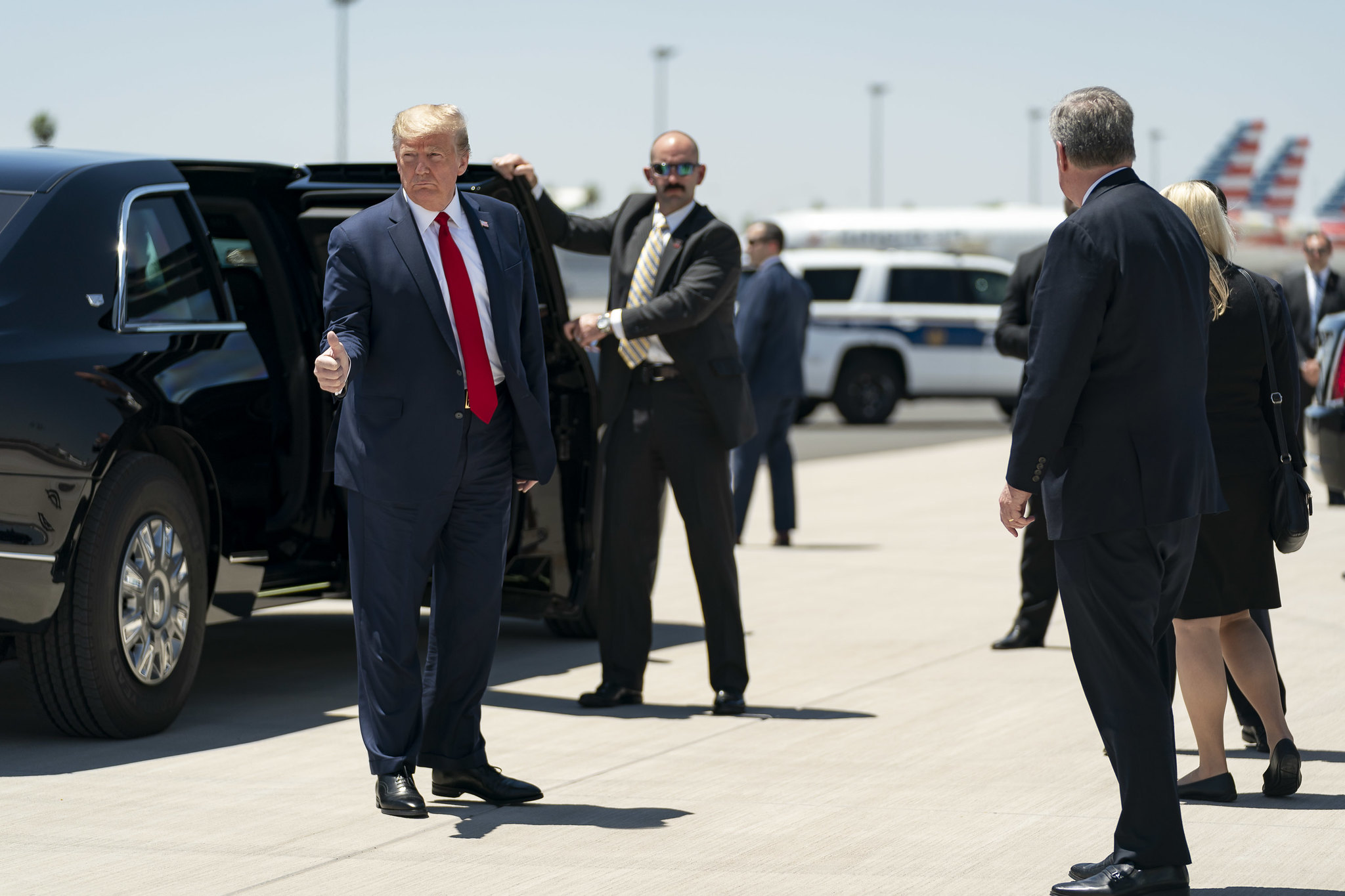

Caligula


Among his more outlandish ideas was his plan to make his horse a consul — in other words a high official within his retinue of officials and advisers. Caligula, somewhat inevitably, was assassinated, hacked to pieces by his own Praetorian Guard in his own palace.

History repeats itself, Marx famously opined, the first as tragedy, then as farce. In the personage of Donald Trump, the 45th president of the United States, tragedy and farce are both present.

The tragedy was his election in 2016, which marked the nadir of this grand experiment in placing democratic lipstick on the pig of a state then empire forged in genocide, ethnic cleansing and human slavery.

It was a victory for anti-intellectualism and mass ignorance, of which both prevail in large parts of this ill-starred land. They say that you can’t blame a mushroom for growing in the dark, which is true, and the intellectual and cultural darkness in which millions of Americans exist is evidenced in a gun culture that connotes societal madness, along with a hatred and fear of the other that blows out of the water any vestige of social cohesion.


President Donald J. Trump, May 5, 2020. (White House, Shealah Craighead)


Within Trump we have embodied the Trail of Tears, the overseer’s whip, the Klu Klux Klan, the Pinkerton detectives sent to crush the Homestead strike, along with too many others to mention during the U.S. Labor Wars of the late 19th and early 20th century. Within him, too, is embodied the police batons of Jim Crow, the slum landlordism of urban America, the electric chair and the gas chamber.

In other words, Donald Trump is the land of the free with its mask removed.

His daily press briefings have also left no doubt that he, like Caligula, carries all of the symptoms of a disordered mind. His assertion that disinfectant could be injected or ingested as a potential cure for Covid-19, as his advisers looked on with the po-faces of shuffling courtiers, was a moment of peak insanity and crack-pottery, even for him. We can only hope, metaphorically speaking, that the Praetorian Guards in Washington are now astir.

This having been said, we in Britain, we are obliged not to forget, have our own problems with disordered minds in our midst. With a clutch of fanatical ideologues at the helm, led by a prime minister whose practiced buffoonery and nuttiness has quite literally got more people killed in this past month than can be put down to events, we find ourselves cursed with the worst possible government upon whose lap has landed the worst possible crisis.


Dominic Cummings.


Learning as we just have that Boris Johnson’s brain — the other-wordly and decidedly dangerous Dominic Cummings — has been sitting in on meetings of the government’s top scientific advisory panel should be grounds for public alarm. Firstly, it confirms that the medical and scientific advice that the country has been receiving has been politicized, and thereby compromised, throughout. Secondly, Cummings is a man who eclipses every Bond villain ever created in the sinister stakes, a malign character whose approach to politics is that of a mad scientist conducting mad experiments in a laboratory of the damned.


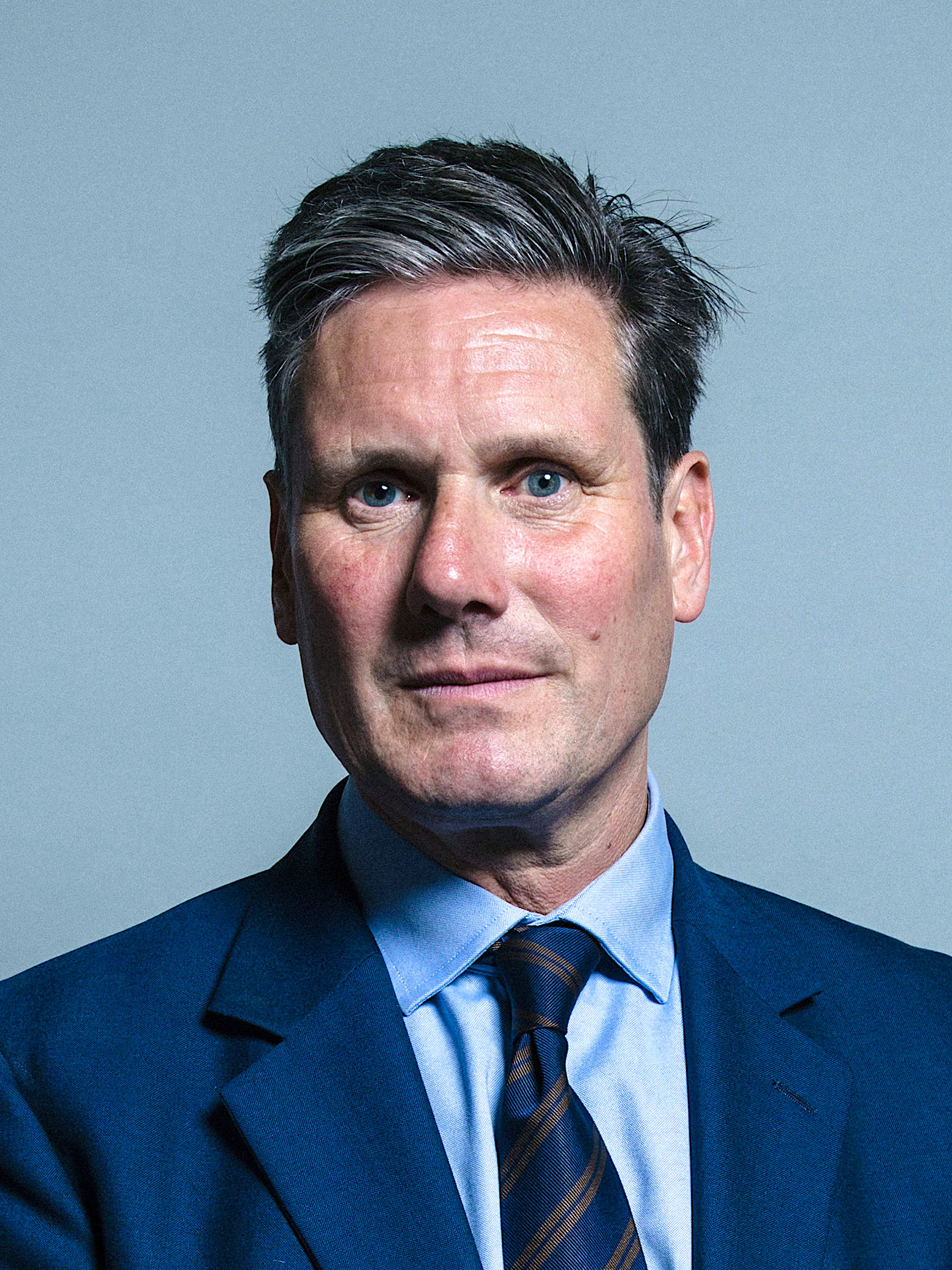
British Labour leader Keir Starmer.


But have no fear, because Keir is here, what with his “constructive opposition,” “forensic” questions, and the “functioning opposition” to the government he’s leading. Indeed our centrist/Blairite chorus was in full orgasmic voice in response to this trusty knight of the realm’s debut at Prime Minister’s Questions.

It didn’t exactly hurt that facing him at the despatch box was a political pygmy in the shape of Dominic Raab. It likewise didn’t hurt that the newly elected leader of the opposition enjoys the full-throated support of the entire media class all the way from Guardianista liberal to Thatcher-loving right. Call me old fashioned, but when a former Tory chancellor such as Gideon Osborne — the man who injected the country with the anti-people poison of austerity — endorses the leader of the Labour Party, it’s a party headed at warp speed for perdition.

When it comes to the comparing of Keir Starmer and Dominic Raab at what was the first PMQs both men conducted, one is reminded of the sage words of Gore Vidal:

“One does not bring a measuring rod to Lilliput.”


Bat 'super immunity' may explain how bats carry coronaviruses, study finds


Bat-virus adaptation may explain species spillover, researchers say

May 6, 2020

University of Saskatchewan

Researchers have uncovered how bats can carry the Middle East respiratory syndrome (MERS) coronavirus without getting sick -- research that could shed light on how coronaviruses make the jump to humans and other animals.


https://www.sciencedaily.com/releases/2020/05/200506133614.htm


A University of Saskatchewan (USask) research team has uncovered how bats can carry the Middle East respiratory syndrome (MERS) coronavirus without getting sick -- research that could shed light on how coronaviruses make the jump to humans and other animals.


Coronaviruses such as MERS, Severe Acute Respiratory Syndrome (SARS), and more recently the COVID19-causing SARS-CoV-2 virus, are thought to have originated in bats. While these viruses can cause serious and often fatal disease in people, for reasons not previously well understood, bats seem unharmed.

"The bats don't get rid of the virus and yet don't get sick. We wanted to understand why the MERS virus doesn't shut down the bat immune responses as it does in humans," said USask microbiologist Vikram Misra.

In research just published in Scientific Reports, the team has demonstrated for the first time that cells from an insect-eating brown bat can be persistently infected with MERS coronavirus for months, due to important adaptations from both the bat and the virus working together.

"Instead of killing bat cells as the virus does with human cells, the MERS coronavirus enters a long-term relationship with the host, maintained by the bat's unique 'super' immune system," said Misra, corresponding author on the paper. "SARS-CoV-2 is thought to operate in the same way."

Misra says the team's work suggests that stresses on bats -- such as wet markets, other diseases, and possibly habitat loss -- may have a role in coronavirus spilling over to other species.

"When a bat experiences stress to their immune system, it disrupts this immune system-virus balance and allows the virus to multiply," he said.

The research was carried out at USask's Vaccine and Infectious Disease Organization -- International Vaccine Centre (VIDO-InterVac), one of the world's largest containment level 3 research facilities, by a team of researchers from USask's Western College of Veterinary Medicine and VIDO-InterVac.

"We see that the MERS coronavirus can very quickly adapt itself to a particular niche, and although we do not completely understand what is going on, this demonstrates how coronaviruses are able to jump from species to species so effortlessly," said VIDO-InterVac scientist Darryl Falzarano, who co-led the bat study, developed the first potential treatment for MERS-CoV, and is leading VIDO-InterVac's efforts to develop a vaccine against COVID-19.

So far, the SARS-CoV-2 virus has infected more than 3.5 million people worldwide and killed seven per cent of those infected. In contrast, the MERS virus infected nearly 2,500 people in 2012 but killed one in every three people infected. There is no vaccine for either SARS-CoV-2 or MERS. While camels are the known intermediate hosts of MERS-CoV, bats are suspected to be the ancestral host.

Coronaviruses rapidly adapt to the species they infect, Misra said, but little is known on the molecular interactions of these viruses with their natural bat hosts. A 2017 USask-led study showed that bat coronaviruses can persist in their natural bat host for at least four months of hibernation.

When exposed to the MERS virus, bat cells adapt -- not by producing inflammation-causing proteins that are hallmarks of getting sick, but rather by maintaining a natural antiviral response, a function which shuts down in other species, including humans. Simultaneously, the MERS virus also adapts to the bat host cells by very rapidly mutating one specific gene, he said.

Operating together, these adaptations result in the virus remaining long-term in the bat but being rendered harmless until something -- such as disease or other stressors -- upsets this delicate equilibrium.

Next, the team will turn its focus to understanding how the bat-borne MERS virus adapts to infection and replication in camelid (a group of even-toed ungulates that includes camels) and human cells.

"This information may be critical for predicting the next bat virus that will cause a pandemic," said Misra.

Lead researchers on the paper were Misra's former PhD students Arinjay Banerjee and Sonu Subudhi who are now at McMaster University and Massachusetts General Hospital respectively. Other team members included researchers Noreen Rapin and Jocelyne Lew, as well as summer student Richa Jain.


Story Source:

Materials provided by University of Saskatchewan. Note: Content may be edited for style and length.


Journal Reference:
Arinjay Banerjee, Sonu Subudhi, Noreen Rapin, Jocelyne Lew, Richa Jain, Darryl Falzarano, Vikram Misra. Selection of viral variants during persistent infection of insectivorous bat cells with Middle East respiratory syndrome coronavirus. Scientific Reports, 2020; 10 (1) DOI: 10.1038/s41598-020-64264-1


Mutations in SARS-CoV-2 offer insights into virus evolution


May 5, 2020

University College London

By analyzing virus genomes from over 7,500 people infected with COVID-19, researchers have characterized patterns of diversity of SARS-CoV-2 virus genome, offering clues to direct drugs and vaccine targets. The study identified close to 200 recurrent genetic mutations in the virus, highlighting how it may be adapting and evolving to its human hosts.


https://www.sciencedaily.com/releases/2020/05/200505190550.htm


By analysing virus genomes from over 7,500 people infected with Covid-19, a UCL-led research team has characterised patterns of diversity of SARS-CoV-2 virus genome, offering clues to direct drugs and vaccine targets.


The study, led by the UCL Genetics Institute, identified close to 200 recurrent genetic mutations in the virus, highlighting how it may be adapting and evolving to its human hosts.

Researchers found that a large proportion of the global genetic diversity of SARS-CoV-2 is found in all hardest-hit countries, suggesting extensive global transmission from early on in the epidemic and the absence of single 'Patient Zeroes' in most countries.

The findings, published today in Infection, Genetics and Evolution, also further establish the virus only emerged recently in late 2019, before quickly spreading across the globe. Scientists analysed the emergence of genomic diversity in SARS-CoV-2, the new coronavirus causing Covid-19, by screening the genomes of over 7,500 viruses from infected patients around the globe. They identified 198 mutations that appear to have independently occurred more than once, which may hold clues to how the virus is adapting.

Co-lead author Professor Francois Balloux (UCL Genetics Institute) said: "All viruses naturally mutate. Mutations in themselves are not a bad thing and there is nothing to suggest SARS-CoV-2 is mutating faster or slower than expected. So far we cannot say whether SARS-CoV-2 is becoming more or less lethal and contagious."

The small genetic changes, or mutations, identified were not evenly distributed across the virus genome. As some parts of the genome had very few mutations, the researchers say those invariant parts of the virus could be better targets for drug and vaccine development.

"A major challenge to defeating viruses is that a vaccine or drug might no longer be effective if the virus has mutated. If we focus our efforts on parts of the virus that are less likely to mutate, we have a better chance of developing drugs that will be effective in the long run," Professor Balloux explained.

"We need to develop drugs and vaccines that cannot be easily evaded by the virus."

Co-lead author Dr Lucy van Dorp (UCL Genetics Institute) added: "There are still very few genetic differences or mutations between viruses. We found that some of these differences have occurred multiple times, independently of one another during the course of the pandemic -- we need to continue to monitor these as more genomes become available and conduct research to understand exactly what they do."

The results add to a growing body of evidence that SARS-CoV-2 viruses share a common ancestor from late 2019, suggesting that this was when the virus jumped from a previous animal host, into people. This means it is most unlikely the virus causing Covid-19 was in human circulation for long before it was first detected.

In many countries including the UK, the diversity of viruses sampled was almost as much as that seen across the whole world, meaning the virus entered the UK numerous times independently, rather than via any one index case.

The research team have developed a new interactive, open-source online application so that researchers across the globe can also review the virus genomes and apply similar approaches to better understand its evolution.

Dr van Dorp said: "Being able to analyse such an extraordinary number of virus genomes within the first few months of the pandemic could be invaluable to drug development efforts, and showcases how far genomic research has come even within the last decade. We are all benefiting from a tremendous effort by hundreds of researchers globally who have been sequencing virus genomes and making them available online."

The study was conducted by researchers in the UCL Faculties of Life Sciences and Medical Sciences, alongside colleagues from Cirad and Université de la Réunion, University of Oxford, and Imperial College London, and supported by the Newton Fund UK-China NSFC initiative and the Biotechnology and Biological Sciences Research Council (BBSRC).


Story Source:

Materials provided by University College London. Note: Content may be edited for style and length.


Journal Reference:
Lucy van Dorp, Mislav Acman, Damien Richard, Liam P. Shaw, Charlotte E. Ford, Louise Ormond, Christopher J. Owen, Juanita Pang, Cedric C.S. Tan, Florencia A.T. Boshier, Arturo Torres Ortiz, François Balloux. Emergence of genomic diversity and recurrent mutations in SARS-CoV-2. Infection, Genetics and Evolution, 2020; 104351 DOI: 10.1016/j.meegid.2020.104351


Exclusive: OPCW chief made false claims to denigrate Douma whistleblower, documents reveal


May 6, 2020


The Grayzone has obtained documents exposing numerous falsehoods and misleading claims by OPCW Director General Fernando Arias to degrade the reputation of Douma whistleblower Ian Henderson.


By Aaron Mate

https://thegrayzone.com/2020/05/06/opcw-douma-whistleblower/#more-24067


The Organization for the Prohibition of Chemical Weapons has made false and misleading statements about two veteran inspectors who challenged a cover-up of their investigation in Syria, leaked documents show. The inspectors probed an alleged chemical weapons attack in the Syrian city of Douma in April 2018, and later objected when their evidence was suppressed.

Documents obtained by The Grayzone reveal that OPCW leaders have engaged in a pattern of deception that minimized the inspectors’ senior roles in the Douma mission and diminished the prestige they enjoyed within the world’s top chemical weapons watchdog.

OPCW Director General Fernando Arias has claimed that the first inspector, South African chemical engineering and ballistics expert Ian Henderson, “was not a member” of the Douma investigative team and only played a “minor supporting role.”

However, contemporaneous communications from the OPCW’s Douma Fact-Finding Mission (FFM) directly contradict Arias. They show that Henderson was indeed a Douma team member, and that OPCW leadership directed him to lead its most critical inspections. They also show that Arias, rather than acknowledge that Henderson was an FFM member, offered up a false explanation for why Henderson was in Syria at the time of the probe.

Arias has also disingenuously minimized the role of the second inspector, known only to the public as “Inspector B.” This will be examined in part two of this article.

The OPCW’s investigation was triggered when extremist anti-Syrian government militants and Western states accused the Syrian army of dropping gas cylinders on two buildings in Douma, killing dozens of civilians. The U.S., France, and Britain bombed Syrian government targets days later, asserting their right to enforce the chemical weapons “red line.” After a nearly year-long investigation, the OPCW issued a final report in March 2019 that claimed “reasonable grounds” existed to believe that a chlorine attack occurred.

However, a trove of leaked documents has shown that the OPCW leadership suppressed and manipulated evidence that undermined the allegation against the Syrian military. The first of such leaks was an engineering assessment authored by Henderson that concluded that the gas cylinders in Douma were likely “manually placed.”

That conclusion suggested the incident was staged on the ground by the armed militants who controlled Douma at the time. Additional leaks later revealed that Inspector B protested the censorship of critical evidence and toxicology reports, as well as the manipulation of chemical samples and witness statements. Henderson and B also complained that OPCW leaders excluded all of the Douma investigators except for one paramedic from a so-called “core” team that wrote the organization’s final report.

In response to the scandal, OPCW Director General Arias convened an inquiry into the Henderson leak and unveiled its findings in February 2020. In a bid to strip Henderson and Inspector B of credibility, Arias and the inquiry team painted the two as rogue actors with only peripheral roles.

Evidence obtained by The Grayzone reveals that Arias’ characterization of the two inspectors was inaccurate, and contradicted by facts OPCW officials kept private.
“ODG is happy if the visits to the cylinders and hospital are led by Ian Henderson”

Arias and the inquiry team have asserted that Ian Henderson was not an official participant in the Douma investigation. Henderson, they claimed, “was not a member of the FFM” [Fact-Finding Mission], and instead merely “accompanied the FFM to certain sites of interest” in a “minor supporting role.”

Contemporaneous OPCW documents undermine this characterization, revealing that the OPCW leadership disingenuously minimized Henderson’s involvement by issuing false statements and omitting key facts about his real role.

An April 2018 letter obtained by The Grayzone shows that while it was headed by Arias’ predecessor, the OPCW’s Office of Director General (ODG) specifically requested that Henderson lead inspections at three high-priority locations in Douma. The letter, an operations communication from OPCW headquarters, instructed the Douma team to visit the two locations where the gas cylinders were found; the hospital where a video was filmed of alleged gas attack victims; and a fourth, redacted location.

“…ODG is happy,” the letter instructed, “if the visits to the cylinders and hospital are led by Ian Henderson.”
Extract from an OPCW communiqué on behalf of the Director General’s Office. The full document can be viewed here.

The April 2018 directive by OPCW leadership for Henderson to lead the inspections at three of the investigation’s most critical and sensitive locations was completely at odds with the claims by organization leadership that Henderson merely “accompanied the FFM to certain sites of interest,” and “assisted” in a “minor supporting role.”

The two cylinders were undoubtedly the mission’s most important inspections: it was at these locations that the alleged chemical weapons attack took place, and the cylinders were the alleged means of delivery. The fact that Henderson was tasked with leading the inspection of the alleged crime scene shows that OPCW leaders did not see him as playing a “minor supporting role,” but a major leadership one.
“Ian HENDERSON | FFM”

If Henderson was “not a member” of the Douma Fact Finding Mission, as Arias now claims, why did his predecessor’s office specifically request that Henderson lead three inspections at the mission’s most important locations? The answer is that Arias had made another false statement: a second leaked OPCW document from the Douma mission explicitly listed Henderson as an FFM member.

The document obtained by The Grayzone is a sensitive security-planning memorandum, known as a CONOPS (Concept of Operations). It detailed the operational and security arrangements for one of the FFM’s location visits in Douma. On a page outlining the OPCW’s “Mission Personnel” and their roles, Henderson is listed, next to the title, “FFM.”
Extract from an OPCW CONOPS document listing Ian Henderson as a member of the FFM in Douma. The Grayzone has viewed the document to confirm its authenticity but is only publishing this extract due to the sensitive nature of the document for UN security operations.
“INSPECTOR HENDERSON, IAN WILL BE PART OF THE TEAM”

In trying to justify his current claim that Henderson was not an FFM member, Arias has adduced the fact that Henderson’s “name is not included in the mandates issued for FFM deployments signed by my predecessor.” But Arias’ account distorts the actual timeline of events and omits other OPCW documents.

As Henderson has previously noted publicly, he was not included in the initial OPCW “mandate,” because at that point he was on a separate mission in Nepal. Upon his return, Henderson was immediately assigned to the FFM team in Douma. The Syrian government was then notified that Henderson was joining the mission – a communication that Arias has conveniently ignored.

The Grayzone has obtained an “F038” notification document advising the Syrian government that Henderson is joining the Douma mission as a member of the FFM team. “PLEASE NOTE THAT INSPECTOR HENDERSON, IAN WILL BE PART OF THE TEAM CONDUCTING THE TECHNICAL SECRETARIAT VISITS,” the communiqué reads. Henderson is also listed as the newly added member of a 7-person “LIST OF INSPECTORS.”
Extract from an OPCW notification to the Syrian government adding Ian Henderson to the FFM team of inspectors in Douma. The full document can be viewed here.
Why Henderson was in Douma

Rather than acknowledge the documented fact that Henderson was a member of the FFM tasked with leading some of its most high-priority and sensitive operations, the OPCW has offered an unusual explanation for his presence in Douma.

The OPCW leadership has attributed Henderson’s on-the-ground involvement to happenstance, the result of his already being in Syria anyway. “[Henderson] provided support to the FFM team investigating the Douma incident since he was at the command post in Damascus at the relevant time,” the OPCW’s inquiry stated. [emphasis added] “It is customary for the inspector serving at the command post to provide assistance to the FFM.”

But an OPCW document obtained by The Grayzone shows that Henderson only took over the Damascus command post after the Douma FFM mission had finished its deployment. On May 3rd 2018 – two days after Henderson and the FFM wrapped up 10 days of inspections in Douma – the OPCW’s Damascus mission recorded that Henderson had taken control. 

OPCW document acknowledging that Ian Henderson has taken over the OPCW’s Command Post in Damascus on May 3rd – two days after the end of the Douma FFM’s mission.


“Our best ITL… used for the most complex and sensitive missions”

In addition to making false statements about Henderson’s role in the Douma FFM, Arias and the OPCW inquiry have also made several denigrating statements about the inspector’s standing within the organization that omitted important facts.

In a February 2020 letter published by The Grayzone, Henderson confronted Arias for making “underhanded” and “demeaning” comments that falsely minimized his experience and seniority within the OPCW. Henderson served with the organization since its inception, first from June 1997 to December 2005, and then for a second tenure from June 2016 to May 2019.

Arias said that Henderson was “eventually… promoted to Team Leader,” when in fact he was among the first group of Inspection Team Leaders (ITLs) to be appointed at the P-5 level – the OPCW’s most senior designation for an inspector. Arias has also claimed that Henderson “was rehired at a lower level” upon his return in June 2016, when in fact, at that point, the P-5 designation for OPCW ITLs no longer existed due to budgetary decisions.

Annual performance appraisals and letters obtained by The Grayzone also reveal that Henderson was highly regarded within the organization. In 2005, the Director of the OPCW’s Inspectorate Division – which oversees all of the organization’s global inspections – wrote that “in all of Mr. Henderson’s annual appraisal reports” during his OPCW tenure, he had received “the highest rating possible.”

The Director added: “In my opinion, I consider that Mr. Henderson is one of the best of our Inspection Team Leaders… Being one of the best Inspection Team Leaders, Mr. Henderson is aware that he can expect to be selected to lead the most demanding and sensitive assignments.”

In 2018, an OPCW manager described Henderson as having “a wealth of knowledge,” whose “negotiation talent paired with his technical knowledge and skill make him an asset.” The previous year, a manager lauded Henderson for having “contributed to CBCP [Capacity Building and Contingency Planning Cell] cell achievements significantly.” The manager particularly praised Henderson for “leading and participation” in sensitive contingency operations, including the OPCW’s inspection of Syria’s Scientific Studies and Research Center (SSRC) in 2017.
Who went rogue?

In his letter to Arias, Henderson invoked his and Inspector B’s lengthy, celebrated tenures inside the OPCW. “We are long-serving and dedicated OPCW supporters,” Henderson wrote. “We both have reams of documents such as performance appraisals, emails, letters of commendation and others, that reflect a history of service at the highest level in terms of qualifications, skills, expertise, leadership, integrity and professionalism throughout our time at the OPCW.”

“Does this not place the efforts by some to smear our reputations, on questionable ground?” he continued. “As a manager, as the highest official in the Organisation, does this not lead to the question: Why would a pair of the top Inspection Team Leaders, both with impeccable records… suddenly ‘go rogue’?”

The documentary evidence that Henderson played a leading role in the Douma investigation – and that Arias has made false statements to the contrary – adds new salience to those questions. It also raises an inverse question for Arias: why has the OPCW Director General falsified Henderson’s role in the Douma investigation?


In Leaked Audio, Texas Governor Admits Reopening Economy Will Lead to 'Increase and Spread' of Covid-19


"Abbott does not care about the lives of Texans... Our governor is morally bankrupt."


by
Jake Johnson, staff writer


19 Comments


https://www.commondreams.org/news/2020/05/06/leaked-audio-texas-governor-admits-reopening-economy-will-lead-increase-and-spread


Greg Abbott, the Republican governor of Texas, admitted in a private call with lawmakers last week that his decision to lift Covid-19 safety guidelines and reopen the state's economy "will lead to an increase and spread" of the virus that has infected more than 34,000 Texans and killed nearly 1,000.

"How do we know reopening businesses won't result in faster spread of more cases of COVID-19?" Abbott asked during a Friday call with members of the Texas legislature and Congress. "Listen, the fact of the matter is pretty much every scientific and medical report shows that whenever you have a reopening—whether you want to call it a reopening of businesses or of just a reopening of society—in the aftermath of something like this, it actually will lead to an increase and spread. It's almost ipso facto."

An short audio clip of the call, which took place a day after Abbott allowed his stay-at-home order to expire, was obtained by The Daily Beast on Tuesday.

Listen to the clip:


As The Daily Beast reported, "though Abbott has repeatedly said in public interviews that reopening 'can' or 'could' cause a spike in cases, the audio recording from last Friday's call appeared to show a more direct and certain understanding of the risks."

Texas is one of several states currently taking steps to reopen businesses even as public health experts warn of a massive surge in Covid-19 deaths if safety guidelines are relaxed. Internal Centers for Disease Control and Prevention projections that emerged earlier this week show that the nationwide coronavirus death toll could soar to 3,000 per day by June.

Last Thursday, the day before Abbott allowed Texas businesses to reopen at limited capacity, an additional 1,033 Texans tested positive for the coronavirus and 50 died, according to figures released by the state health department. Out of concern for public health, some local Texas leaders are considering extending county-level stay-at-home orders even as the governor pushes to lift restrictions.

On Tuesday, as audio from his private call went viral, Abbott announced that he will allow tanning salons, hair salons, and barbershops to reopen Friday.

"Gov. Abbott does not care about the lives of Texans, and specifically black and brown Texans. He demonstrates this in every step of his leadership," tweeted Rae Martinez, director of advocacy group Texas Rising. "Our governor is morally bankrupt. Your friends deserve better, your family deserves better, you deserve better."