Tuesday, May 5, 2020

Nina Turner & Movement for a People's Party
In a time of deep hurt and great uncertainty, the heart and soul of our progressive movement took the stage today and pointed the way forward as only she could!

This is the start of a new chapter in our movement and our country's history. When we tell stories of how the political revolution was won, we will sing of the day that Sen. Nina Turner joined us.

It's all hands on deck now! We're working towards the People's Convention this summer, building local hubs, and bringing our message to groups and working people across the country. Sign up to volunteer, join a working group, start a hub, and join our community.
Sign up to volunteer
Then join our Welcome and Onboarding Call tonight at 7 pm ET to meet the team and learn about our mission, platform, decentralized structure, regenerative culture, projects, and strategy to form the largest party in America over the next four years.
Join the Welcome Call tonight
Next up is our National Call on Thursday at 8:30 pm ET to hear the incredible updates from the past two weeks, news from across the movement, our current projects, and how you can help out.
Join the National Call Thursday
As Nina says,
When I asked my grandmother what does it take to be successful in life? She said, "My dear granddaughter, all you need are the three bones. The wishbone, the jawbone, and the backbone." She said, "The wishbone will keep you hoping and praying because hope is the motivator but the dream is the driver." She said, "the jawbone will give you courage to speak truth to power, to lift your voice."
"But the most important bone of all, the supercalifragilisticexpialidocious bone is the backbone. Because it will keep you standing through your trials and your tribulations." And sisters and brothers, in this life we're going to go through some stuff. But we can’t have a testimony without a test. And we’re all being tested. Whether or not we have courage and conviction enough to do what it right, even when other folks are standing on the sidelines. Whether or not we got courage enough to get comfortable with being uncomfortable.
Let's finish this political revolution!
The National Organizing Team
Movement for a People's Party
Monday, May 4, 2020
We found and tested 47 old drugs that might treat the coronavirus: Results show promising leads and a whole new way to fight COVID-19
https://theconversation.com/we-found-and-tested-47-old-drugs-that-might-treat-the-coronavirus-results-show-promising-leads-and-a-whole-new-way-to-fight-covid-19-136789
The more researchers know about how the coronavirus attaches, invades and hijacks human cells, the more effective the search for drugs to fight it. That was the idea my colleagues and I hoped to be true when we began building a map of the coronavirus two months ago. The map shows all of the coronavirus proteins and all of the proteins found in the human body that those viral proteins could interact with.
In theory, any intersection on the map between viral and human proteins is a place where drugs could fight the coronavirus. But instead of trying to develop new drugs to work on these points of interaction, we turned to the more than 2,000 unique drugs already approved by the FDA for human use. We believed that somewhere on this long list would be a few drugs or compounds that interact with the very same human proteins as the coronavirus.
We were right.
Our multidisciplinary team of researchers at the University of California, San Francisco, called the QCRG, identified 69 existing drugs and compounds with potential to treat COVID-19. A month ago, we began shipping boxes of these drugs off to Institut Pasteur in Paris and Mount Sinai in New York to see if they do in fact fight the coronavirus.
In the last four weeks, we have tested 47 of these drugs and compounds in the lab against live coronavirus. I’m happy to report we’ve identified some strong treatment leads and identified two separate mechanisms for how these drugs affect SARS-CoV-2 infection. Our findings were published on April 30 in the journal Nature.
 Every place that a coronavirus protein interacts with a human protein is a potential druggable site. QBI Coronavirus Research Group, CC BY-ND
The testing process
The map we developed and the FDA drug catalog we screened it against showed that there were potential interactions between the virus, human cells and existing drugs or compounds. But we didn’t know whether the drugs we identified would make a person more resistant to the virus, more susceptible or do anything at all.
To find those answers we needed three things: the drugs, live virus and cells in which to test them. It would be optimal to test the drugs in infected human cells. However, scientists don’t yet know which human cells work best for studying the coronavirus in the laboratory. Instead we used African green monkey cells, which are frequently used in place of human cells to test antiviral drugs. They can be readily infected with the coronavirus and respond to drugs very closely to the way human cells do.
After infecting these monkey cells with live virus, our partners in Paris and New York added the drugs we identified to half and kept the other half as controls. They then measured the amount of virus in the samples and the number of cells that were alive. If the samples with drugs had a lower virus count and more cells alive compared to the control, that would suggest the drugs disrupt viral replication. The teams were also looking to see how toxic the drugs were to the cells.
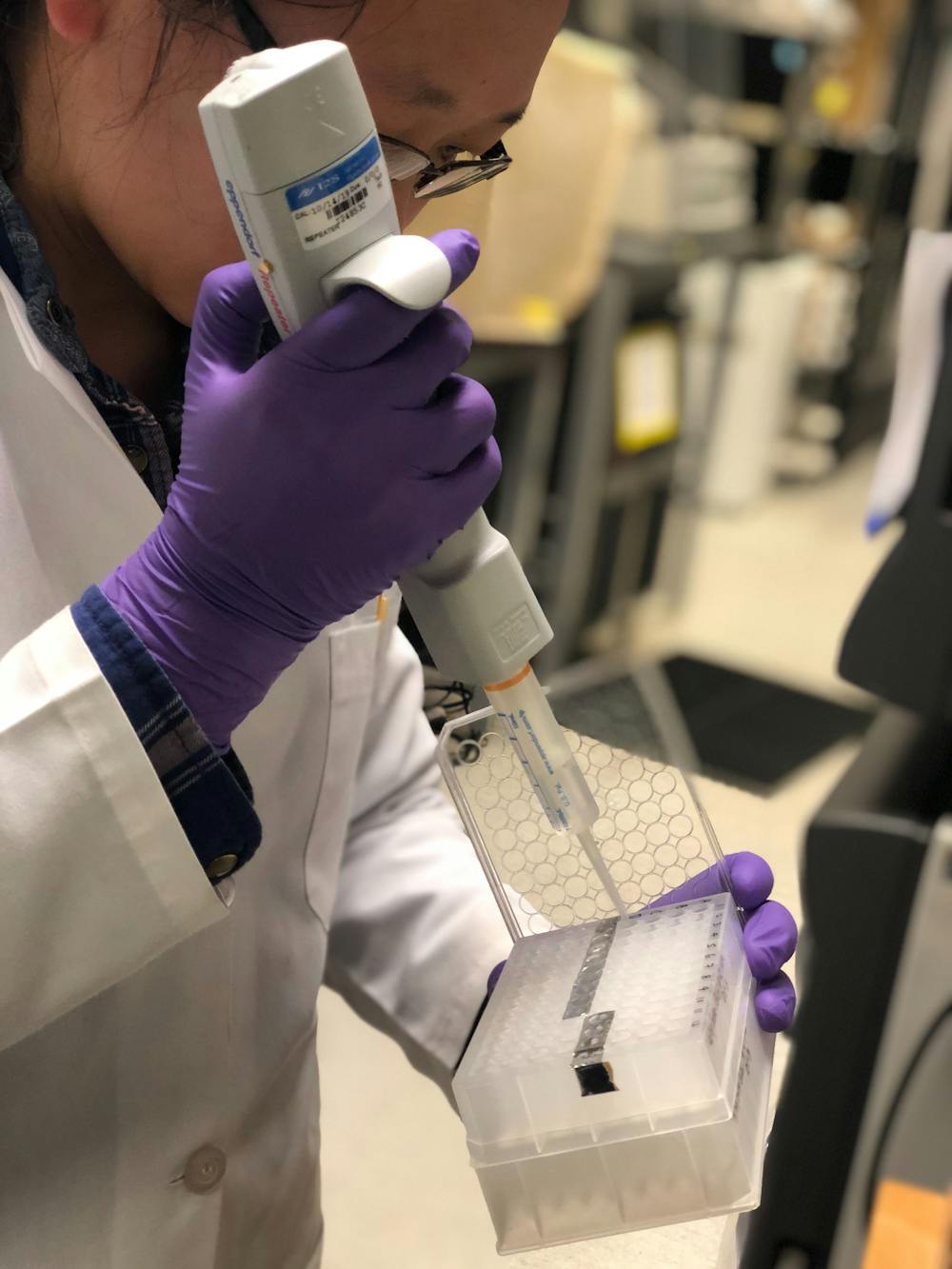 With dozens of drugs each needing full testing, to get results in four weeks required round-the-clock effort. Quantitative Biosciences Institute, CC BY-ND
After sorting through the results of hundreds of experiments using 47 of the predicted drugs, it seems our interaction predictions were correct. Some of the drugs do in fact work to fight the coronavirus, while others make cells more susceptible to infection.
It is incredibly important to remember that these are preliminary findings and have not been tested in people. No one should go out and buy these drugs.
But the results are interesting for two reasons. Not only did we find individual drugs that look promising to fight the coronavirus or may make people more susceptible to it; we know, at a cellular level, why this is happening.
We identified two groups of drugs that affect the virus and they do it two different ways, one of which has never been described.
Disrupting translation
At a basic level, viruses spread by entering a cell, hijacking some of the cell’s machinery and using it to make more copies of the virus. These new viruses then go on to infect other cells. One step of this process involves the cell making new viral proteins out of viral RNA. This is called translation.
When going through the map, we noticed that several viral proteins interacted with human proteins involved in translation and a number of drugs interacted with these proteins. After testing them, we found two compounds that disrupt the translation of the virus.
The two compounds are called ternatin-4 and zotatifin. Both of these are currently used to treat multiple myeloma and seem to fight COVID-19 by binding to and inhibiting proteins in the cell that are needed for translation.
Plitidepsin is a similar molecule to ternatin-4 and is currently undergoing a clinical trial to treat COVID-19. The second drug, zotatifin, hits a different protein involved in translation. We are working with the CEO of the company that produces it to get it into clinical trials as soon as possible.
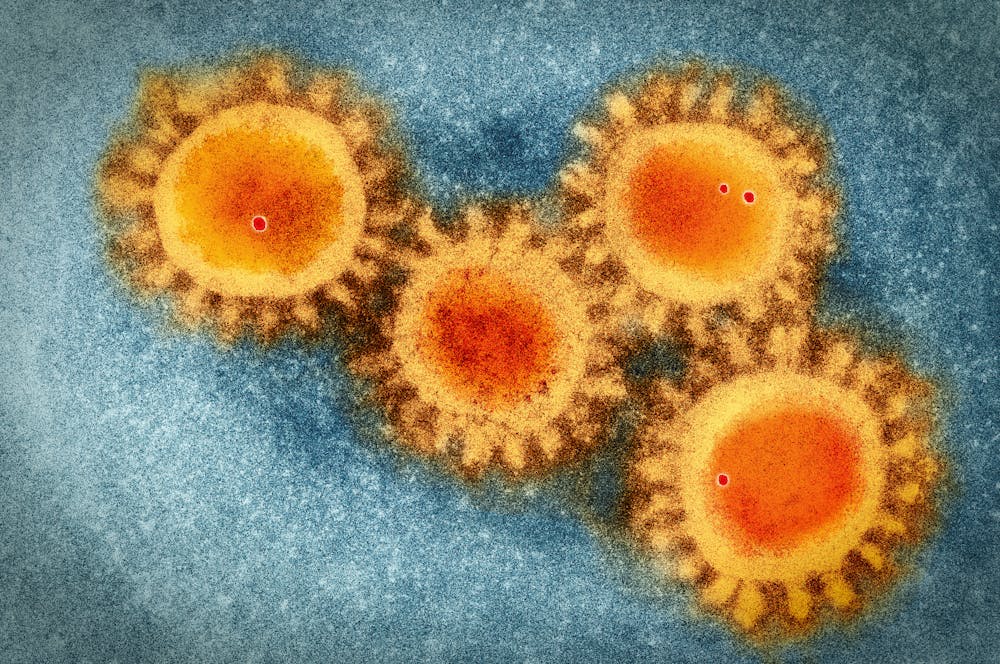 The coronavirus attacks human cells using dozens of devious tricks. narvikk/iStock Getty Images Plus via Getty Images
Sigma receptors
The second group of drugs we identified work in an entirely different way.
Cell receptors are found both inside of and on the surface of all cells. They act like specialized switches. When a specific molecule binds to a specific receptor, this tells a cell to do a specific task. Viruses often use receptors to infect cells.
Our original map identified two promising MV cell receptors for drug treatments, SigmaR1 and SigmaR2. Testing confirmed our suspicions.
We identified seven drugs or molecules that interact with these receptors. Two antipsychotics, haloperidol and melperone, which are used to treat schizophrenia, showed antiviral activity against SARS-CoV-2. Two potent antihistamines, clemastine and cloperastine, also displayed antiviral activity, as did the compound PB28 and the female hormone progesterone.
Remember, all these interactions have so far only been observed in monkey cells in petri dishes.
At this time we do not know exactly how the viral proteins manipulate the SigmaR1 and SigmaR2 receptors. We think the virus uses these receptors to help make copies of itself, so decreasing their activity likely inhibits replication and reduces infection.
Interestingly, a seventh compound – an ingredient commonly found in cough suppressants, called dextromethorphan – does the opposite: Its presence helps the virus. When our partners tested infected cells with this compound, the virus was able to replicate more easily, and more cells died.
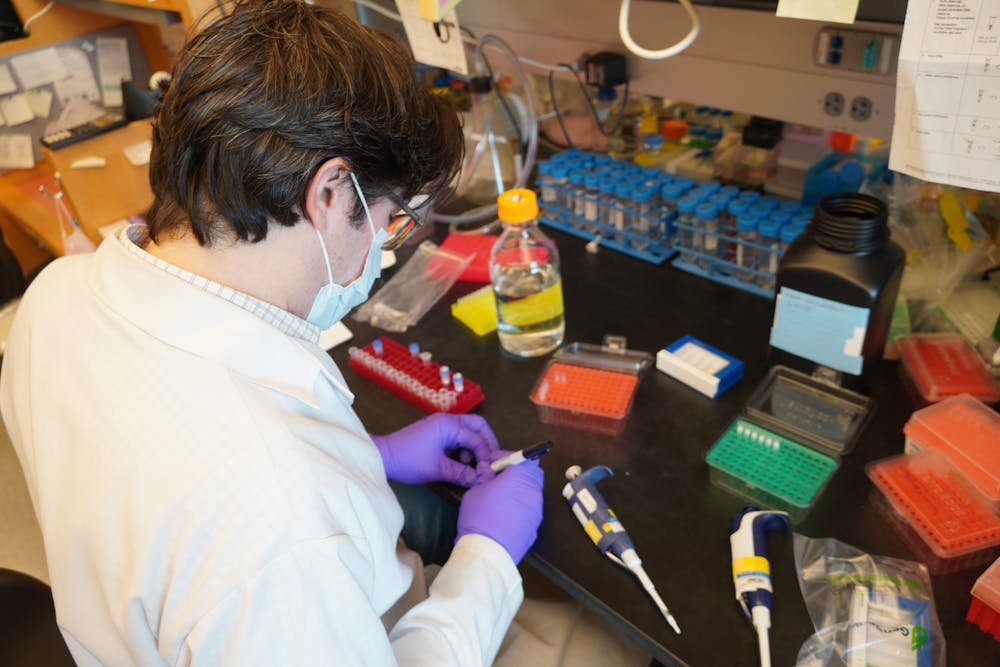 Laboratory testing is excellent at generating leads but clinical trials must be done to know if these findings translate to the real world. Quantitative Biosciences Institute, CC BY-ND
This is potentially a very important finding, but, and I cannot stress this enough, more tests are needed to determine if cough syrup with this ingredient should be avoided by someone who has COVID-19.
All these findings, while exciting, need to undergo clinical trials before the FDA or anyone else should conclude whether to take or stop taking any of these drugs in response to COVID-19. Neither people nor policymakers nor media outlets should panic and jump to conclusions.
Another interesting thing to note is that hydroxychloroquine – the controversial drug that has shown mixed results in treating COVID-19 – also binds to the SigmaR1 and SigmaR2 receptors. But based on our experiments in both labs, we do not think hydroxychloroquine binds to them efficiently.
Researchers have long known that hydroxychloroquine easily binds to receptors in the heart and can cause damage. Because of these differences in binding tendencies, we don’t think hydroxychloroquine is a reliable treatment. Ongoing clinical trials should soon clarify these unknowns.
Treatment sooner rather than later
Our idea was that by better understanding how the coronavirus and human bodies interact, we could find treatments among the thousands of drugs and compounds that already exist.
Our idea worked. We not only found multiple drugs that might fight SARS-CoV-2, we learned how and why.
But that is not the only thing to be excited about. These same proteins that SARS-CoV-2 uses to infect and replicate in human cells and that are targeted by these drugs are also hijacked by related coronaviruses SARS-1 and MERS. So if any of these drugs do work, they will likely be effective against COVID-22, COVID-24 or any future iterations of COVID that may emerge.
Are these promising leads going to have any effect?
The next step is to test these drugs in human trials. We have already started this process and through these trials researchers will examine important factors such as dosage, toxicity and potential beneficial or harmful interactions within the context of COVID-19.
The Real Reason Why the WHO Waited Until March to Declare a Global Pandemic
The 2005 regulations pushed on the World Health Organization by the United States and the Europeans hampered the WHO’s ability to declare an emergency and a pandemic.
BY VIJAY PRASHAD
http://inthesetimes.com/article/22492/world-health-organization-march-pandemic-covid-19
When U.S. President Donald Trump cut off his government’s funding to the World Health Organization (WHO), one of his grievances was that the WHO—under Chinese tutelage—failed to declare the global coronavirus outbreak as a pandemic soon enough. Not long after the virus brought patients to Hubei Provincial Hospital, the Chinese medical and public health authorities brought it to the notice of the WHO. The WHO investigated the virus over the course of early January, sending a team into Wuhan and making public whatever credible information it could report.
The WHO’s International Health Regulations (2005) Emergency Committee met twice in January, first on January 22-23 and then again on January 30; in the first meeting, the committee felt it had insufficient evidence to declare an emergency, but at the second meeting it took the decision to declare a public health emergency of international concern (PHEIC). This is the penultimate step for the WHO; on March 11, after it became clear that the virus was spreading across borders, but not before the WHO made many warnings to governments, the WHO declared a global pandemic.
Trump and his Democratic rival Joe Biden, as well as a host of other U.S. politicians, made the argument that the WHO did not act fast enough with its declaration. Whatever problems posed to the United States by the virus were not the responsibility of the U.S. government, they suggested; the fault lay with the Chinese government and with the WHO.
Our investigation finds that this argument has little foundation. The WHO’s reporting mechanisms are sound, but the WHO’s own ability to make these formal declarations—a public health emergency and a global pandemic, which come with serious financial consequences for member states—has been circumscribed; those who have constrained the World Health Organization—the United States and European nations—are the very same countries whose leaders are now complaining about Chinese influence over the WHO.
Revisions
By the 1990s, it had become clear that the WHO’s old International Health Regulations—originally issued in 1969, with only a few minor updates and new editions over the two decades after that—were inadequate. For one, these regulations were produced before the emergence of very infectious, lethal, and recurrent infections such as Ebola and the avian influenzas. Secondly, these old regulations were made before air travel began to move about 4.3 billion passengers per year, the scale of air traffic now making the movement of viruses so much easier.
In May 2005, the 58th World Health Assembly revised the 1969 regulations, pointing out that the new regulations would “prevent, protect against, control and provide a public health response to the international spread of disease in ways that are commensurate with and restricted to public health risks, and which avoid unnecessary interference with international traffic and trade.”
The North American and European states, in particular, insisted that the declaration of a PHEIC or global pandemic only be made after it was clear that air travel and trade would not be unduly interrupted. This restriction, essentially the core foundations of globalization, has constrained the WHO since 2005.
The 2009 Test
The new WHO regulations were tested when a new influenza emerged out of Mexico and the United States in mid-April 2009. This H1N1 was a combination of influenza virus genes that had links to swine-lineage H1N1 from both North America and Eurasia (thus the 2009 outbreak was commonly known as “swine flu”). It was first detected on April 15. On April 24, the U.S. Centers for Disease Control and Prevention uploaded a gene sequence onto a publicly accessible influenzas database. On April 25, ten days after the first detection of the virus, the WHO declared the 2009 H1N1 outbreak a PHEIC. On June 11, the WHO said that a global pandemic was underway.
In 2020, the WHO took a month to declare a PHEIC for the coronavirus and took an additional two months after that to pronounce a global pandemic. It was slower to announce the emergency, but it took the same time to declare a global pandemic.
By July 2009, the dangerous H1N1 virus had a less lethal impact than the WHO had feared. However, for the full year from its first detection, 60.8 million people were infected and 12,469 died.
Almost immediately, the WHO was attacked for the June 11 description of the outbreak as a pandemic. When the WHO declares a pandemic, governments are expected to do a variety of things including mass purchase of drugs and vaccines. These are costly.
That December, members of parliament in the Council of Europe opened an inquiry into the WHO declaration. Fourteen members of the Council charged the WHO with what was essentially fraud. They said that “pharmaceutical companies have influenced scientists and official agencies, responsible for public health standards, to alarm governments worldwide. They have made them squander tight health care resources for inefficient vaccine strategies and needlessly exposed millions of healthy people to the rise of unknown side-effects of insufficiently tested vaccines.” “The definition of an alarming pandemic,” they wrote, “must not be under the influence of drug-sellers.”
The criticism of the WHO stung. It had declared a pandemic, but the virus had stabilized very soon after the declaration. The WHO responded to such criticism with humility. “Adjusting public perceptions to suit a far less lethal virus has been problematic,” the WHO responded. “Given the discrepancy between what was expected and what has happened, a search for ulterior motives on the part of the WHO and its scientific advisers is understandable, though without justification.”
Trump’s Attacks
A WHO official told one of us that the agency had been shaken by the assault in 2009. Over the past ten years, the agency has struggled to regain its confidence, working through the Ebola outbreak in 2014 and then Zika in 2016. In neither of those cases was there a need to make any global declaration.
This year, the WHO declared a global pandemic within three months of the first cases. But there is no doubt that the attack on the WHO a decade ago has made an impact. Former WHO employees tell us that fear of being attacked like this by the main donors seriously hampers the independence of the WHO and its scientific advisers. Trump’s current attack is going to weaken further the ability of the WHO to operate at its own pace and with credibility.
The World Health Organization is not the first UN agency to face the wrath of the U.S. administration. The Trump administration sent its budget to Congress with zero dollars for a line item called International Organizations and Programs. Under this line item comes United States funds for UN Development Program, UNICEF, UNESCO, Office of the High Commissioner for Human Rights, UN Women, and UN Population Fund. In 2018, the United States stopped funding the UN’s Palestine agency (UNRWA). When the UN is useful, the United States uses it; when the UN goes against United States interests, it will lose its funding.
When Trump said that the WHO is “China centric,” he offered no evidence; he did not have to.
No doubt that the United States is currently facing the wrath of the global pandemic. If the U.S. government had begun to plan effectively after the WHO declared a public emergency on January 30 or even when it declared a global pandemic on March 11, the problems would not be so grave. But there was no planning at all, which is distressing. As George Packer put it in the Atlantic, the United States in the months after January was “like a country with shoddy infrastructure and a dysfunctional government whose leaders were too corrupt or stupid to head off mass suffering.” From Trump, the U.S. citizenry got “willful blindness, scapegoating, boasts, and lies.” This sums it up. Part of the scapegoating was directed at China; it is far easier to blame China—already part of a dangerous trade war and a simmering regional struggle in Asia—than to accept responsibility oneself.
(This is the second part of a two-part series, which is fully available here.)
Subscribe to:
Comments (Atom)