Wednesday, April 1, 2020

Trump admin’s $15 million bounty on Maduro triggers explosive confession of violent Guaidó plot


https://thegrayzone.com/2020/03/27/trump-bounty-maduro-guaido-plot/#more-22582


The Trump administration’s deception-laden indictment of President Nicolas Maduro and members of his inner circle has badly backfired, resulting in the exposure of a violent assassination plan that could lead to the arrest of coup leader Juan Guaidó.
By Leonardo Flores


For twenty years, right wing extremists in Miami and Washington have been slandering the Venezuelan government, accusing it of drug trafficking and harboring terrorists without offering even a shred of evidence.

The item at the top of their wishlist was fulfilled on March 26, when the U.S. Department of Justice unveiled indictments against President Nicolás Maduro and 13 other current or former members of Venezuela’s government and military.

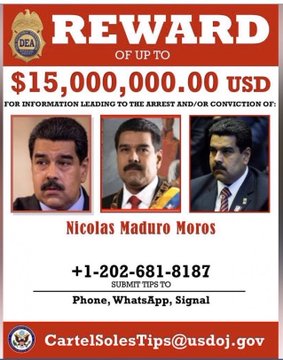
In addition to the indictments, Attorney General William Barr offered a $15 million reward for information leading to the arrest or conviction of Maduro, as well as $10 million rewards for Diosdado Cabello (president of Venezuela’s National Constituent Assembly), Tarek El Aissami (vice president for the economy), Hugo Carvajal (former director of military intelligence) and Cliver Alcalá (retired general).

The indictment has backfired already. Hours after the announcement, Alcalá posted videos online that threaten to cause further splits in the opposition and exposed a violent plot that could result in the arrest of Juan Guaidó. Before going into those details, however, it’s important to understand just how politically biased the charges are against Maduro et al.


The myth that Venezuela is a narco-state has already been debunked by the Washington Office in Latin America (WOLA), a think tank in Washington that generally supports US regime change operations in the region, as well as by FAIR, 15 y Último, Misión Verdad, Venezuelanalysis and others. It cannot be denied that Venezuela is a transit country for cocaine, but as the maps above and below show, less than 7% of total drug movement from South America transits from Venezuela (the Eastern Caribbean region includes Colombia’s Guajira Peninsula). These maps, produced by the Drug Enforcement Agency and U.S. Southern Command, respectively, immediately raise questions as to why Venezuela is the country being targeted.
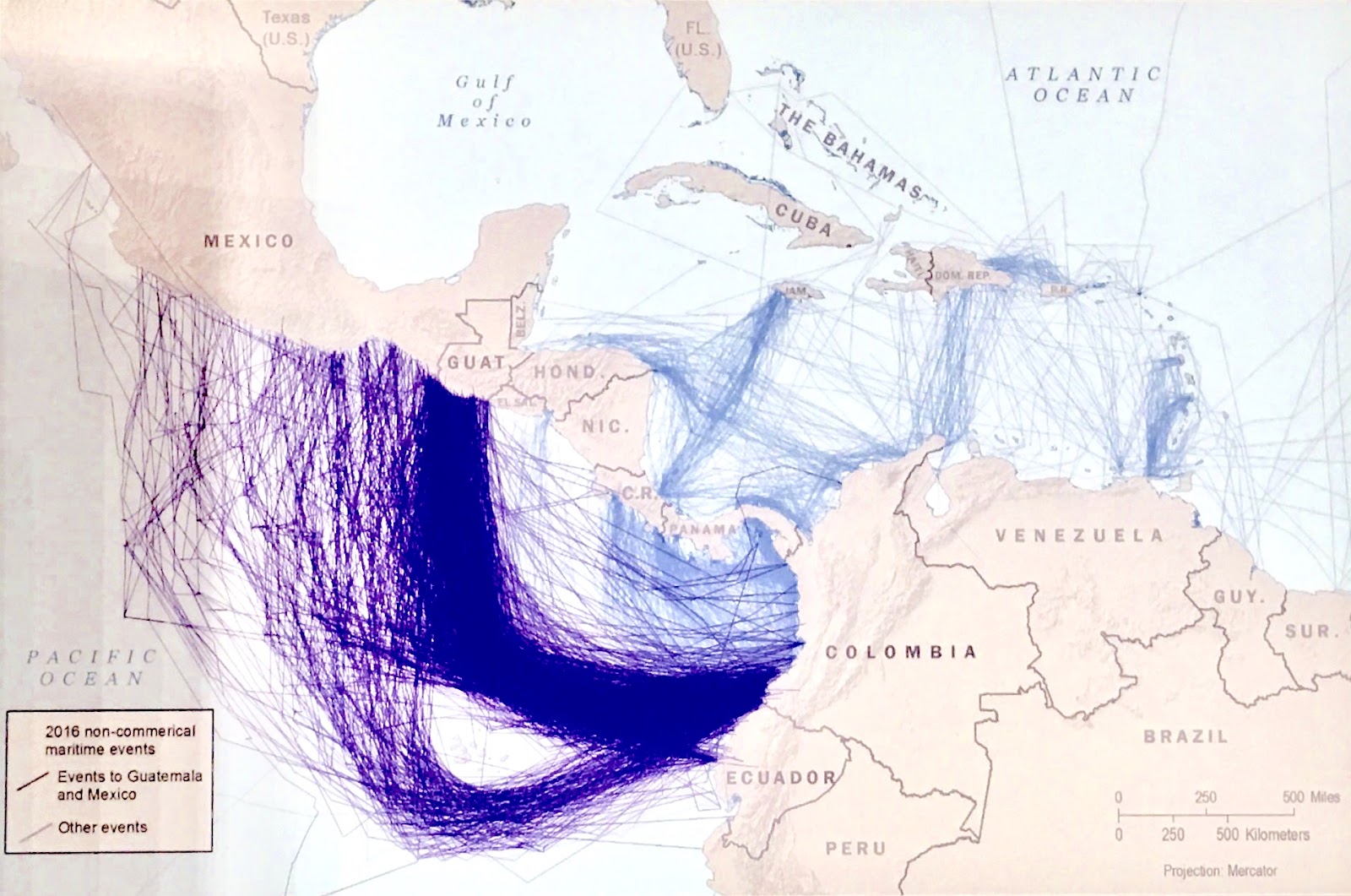
Maritime drug flows from South America in 2017. Photo: Adam Isaacson


Of course, the charges have nothing to do with the drug trade; they are the latest escalation in the Trump administration’s “maximum pressure March.” The pretext is an alleged plot by the Venezuelan government to flood the United States with “somewhere between 200-250 metric tons of cocaine.” Although that figure might seem high, it’s important to understand the context. The United States is the world’s biggest consumer of cocaine and Colombia is the world’s biggest producer. On the other hand, Venezuela does not cultivate coca, does not produce cocaine and, according to the U.S. government’s own figures, less than 10% of global cocaine traffic transits through the country.

For the sake of comparison, the U.S. agencies that provided Barr with the figure of “200-250 tons” also say that an average of nearly 2,400 tons of cocaine flowed through Colombia between 2016 and 2019 (Venezuela averaged 216 tons – ten times less – in the same period). Colombia’s current president, Iván Duque, is a close ally of the country’s former president, Alvaro Uribe, who himself has been linked to drug trafficking. Almost exactly a year ago, President Trump complained that “more drugs are coming out of Colombia right now than before” Duque was president, yet the U.S. continues giving millions in security aid to Colombia as part of its failed war on drugs.

The U.S double standard about narco-states is not limited to Colombia. Honduras’s U.S.-backed president, Juan Orlando Hernández, was linked to drug trafficking in a U.S. court, yet this news did not warrant a major announcement by the DOJ, presumably because Hernández is a U.S. ally. Another U.S. ally, Guatemala, had six times as much cocaine flow through its territory as Venezuela.

The indictments are another brick in the foundation for a pretext for either a direct U.S. military invasion or a proxy war using Colombian forces. There are obvious comparisons to 1989, when the U.S. put a $1 million bounty on Panamanian president Manuel Noriega, only to subsequently invade the country, causing an estimated 4,000 deaths.

The rewards the U.S. is offering for Maduro and four others are also troubling, as they have already been compared to a bounty. Maduro has survived at least one assassination attempt (in August 2018 when drones laden with explosives detonated prematurely), and the rewards could be interpreted as, at minimum, a “get out of jail free” card should someone succeed in murdering him. On the other hand, the rewards verify what the Venezuelan government has been saying all along: the U.S. is offering millions of dollars for people to turn on the country’s leadership.

Yet the Trump administration appears to have made a serious miscalculation by including the retired General Alcalá in the indictments. A former ally of ex-president Hugo Chávez, Alcalá joined the opposition in 2015 and has been linked to various coup plots and planned terror attacks since 2016. He is the highest profile former officer to turn against Maduro and is considered the “leader of pro-Guaidó military personnel.” Alcalá is now wanted both by the United States and by Venezuela.

Alcalá is implicated in a recent plot to attack the Maduro government. On March 24, Colombian authorities seized a truck full of weapons and military equipment, including 26 assault rifles, worth $500,000. Venezuelan intelligence services linked the weapons to three camps in Colombia where paramilitary groups of Venezuelan deserters and U.S. mercenaries are training to carry out attacks against Venezuela. According to Venezuela’s Communication Minister Jorge Rodríguez, these groups were planning to take advantage of the COVID-19 pandemic to attack military units and plant bombs. He also linked the groups to Alcalá.

These allegations proved to be correct, as Alcalá, in a video he posted online hours after the indictments, admitted that the weapons were under his command. He further admitted that the weapons were purchased with funds given to him by Juan Guaidó, with whom he allegedly signed a contract. Additionally, Alcala claimed that the operation was planned by U.S. advisors, with whom he supposedly met at least seven times. Aclalá also alleged that Leopoldo López, the founder of Guaidó’s party Voluntad Popular who was sprung from house arrest during Guaidó’s April 30 attempted insurrection, had full knowledge of the terror plot.

As a result of these videos, Venezuela’s Attorney General has opened an investigation into Juan Guaidó for an attempted coup. Despite Guaidó’s self-proclamation as president in January 2019, his attempted insurrection in April 2019, his repeated calls for sanctions and a military invasion, Venezuelan authorities had refrained from moving against him. The U.S. indictments appear to have caused the Venezuelan government to issue its strongest response to the Trump administration’s and Guaidó’s continued provocations.

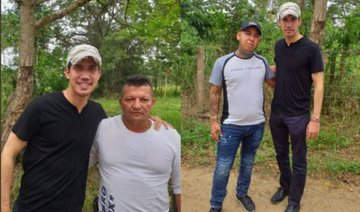
Of course, if the Trump administration were truly serious about combating terror, corruption and drug trafficking, the first Venezuelan they should look at ought to be Juan Guaidó. After all, he was photographed with members of the infamous Los Rastrojos drug cartel, who allegedly helped him cross into Colombia in exchange for his turning a blind eye to the cartel’s expansion from Colombia into western Venezuela. Guaidó’s team in Colombia embezzled humanitarian aid funds and now he has been directly implicated in a terror plot, one which presumably used money given to him by the United States (as that is his only source of financing).


Max Blumenthal
✔@MaxBlumenthal


The US regime has put a mafia-style bounty on the head of the elected leader of Venezuela and set the stage for a Panama-style intervention.

It seeks to install Juan Guaido, an unelected marionette who has worked hand in glove with the Los Rastrojos narco gang in Colombia.
2,585
1:37 PM - Mar 26, 2020
Twitter Ads info and privacy
1,844 people are talking about this


The revelations about Guaidó’s spending of U.S. funds to buy weapons and his alleged involvement in yet another violent plot are putting pressure on opposition figures and parties that have hinted at wanting to participate in this year’s legislative elections but have yet to fully commit to dialogue. A day before the U.S. indictments were revealed, President Maduro invited several of these leaders to join a dialogue in the Apostolic Nuncio (the Vatican’s embassy in Caracas) in order to try to reach consensus over the nation’s response to COVID-19. Now they are faced with the difficult choice of either angering Venezuelan voters (83% of whom reject a military option) by continuing to support Guaidó’s violence or angering the United States by working with indicted government officials.

The Trump administration has been sabotaging a negotiated solution to Venezuela’s problems for two years, including in February 2018, when it threatened an oil embargo and support for a coup during negotiations between the government and the opposition in the Dominican Republic, and again in August 2019, when it imposed a full embargo during another attempt at dialogue. These new indictments, which even the New York Times described as “highly unusual”, seemed timed to sabotage negotiations once again, as earlier in the week members of the moderate opposition, including National Assembly president Luis Parra, had recently urged the U.S. to lift the sanctions due to the coronavirus pandemic.

Yet another blunder with the indictments is that the Trump administration is sending contradictory messages. On the one hand, they have spent three years urging high level Venezuelan government and military officials to defect, promising space to operate politically after a transition government comes into power. On the other, they indicted the most high-profile member of the military who has defected, Cliver Alcalá, on serious charges of narcoterrorism.


The brazenness of the indictments in attempting to cast Venezuela as a narco-state, the lack of foresight regarding possible repercussions, the attempted sabotage of dialogue and the mixed messaging are all signals that the Trump administration is desperate to ensure its regime change policy shows results. The victims of this policy are the Venezuelan people, who would be much better off with a policy of de-escalation, dialogue and a removal of the deadly sanctions.


As Washington privatized pandemic preparation, the national security state left Americans defenseless against coronavirus


https://thegrayzone.com/2020/03/30/coronavirus-privatization-pandemic-national-security/#more-22689


Responsibility for pandemic preparation was privatized under the Obama and Trump administrations. It’s time to face down the national security state that wasted trillions on imperial wars and abandoned Americans to fight coronavirus alone.
By Gareth Porter


Donald Trump’s failure to act decisively to control the coronavirus pandemic has likely made the Covid-19 pandemic far more lethal than it should have been. But the reasons behind failure to get protective and life-saving equipment like masks and ventilators into the hands of health workers and hospitals run deeper than Trump’s self-centered recklessness.

Both the Obama and Trump administrations quietly delegated state and local authorities with the essential national security responsibility for obtaining and distributing these vital items. The failure of leadership was compounded the lack of any federal power center that embraced the idea that guarding for a pandemic was at least as important to national security as preparing for war.

For decades, the military-industrial-congressional complex has force-fed the American public a warped conception of US national security focused entirely around perpetuating warfare. The cynical conflation of national security with waging war on designated enemies around the globe effectively stifled public awareness of the clear and present danger posed to its survival by global pandemic. As a result, Congress was simply not called upon to fund the vitally important equipment that doctors and nurses needed for the Covid-19 crisis.

At the heart of the growing coronavirus crisis in the US is a severe shortage of N95 respirators and ventilators. Those items should have been available in sufficient numbers through the Strategic National Stockpile (SNS), which holds the nation’s largest supplies necessary for national emergencies. But the stocks of crucial medical have not been maintained for years, largely because Congress has not provided the necessary funding.

Congress has been willing to dole out load of cash after pandemics hit the US. When the H1N1 flu crisis hit the United States in 2009, and close to 300,000 Americans were hospitalized, Congress appropriated $7.7 billion in special funding, including support for building up the SNS. That allowed the stockpile to provide 85 million respirators and millions of ventilators to hospitals around the country, especially during the second half of the yearlong crisis.

But since that 2009-10 crisis ended, the stockpile of such vital equipment has never been replenished. In 2020 the stockpile holds only 12 million N95 respirators – as little as 1 percent of what is now needed by health workers – and just 16,000 ventilators, compared with the estimated 750,000 people at minimum who will need a ventilator because of the Covid-19 pandemic.

These numbers are so scandalously low in relation to what is needed that senior officials Department of Health and Human Services have refused to reveal publicly how many they have in stock.

The failure to maintain those items in the stockpile was not the result of any lack of warning about the serious risk of a global pandemic that could be worse than any since the 1918 Spanish flu. It has been obvious that the frequency and ferocity of such rapidly spreading flu pandemics has been steadily rising throughout the 21st century.

The parade of recent pandemics began with SARS in 2002-3, continued with the much more serious H1N1 pandemic in 2009, and escalated with the spread of MERS IN 2012. Each one involved influenza viruses.

The H1N1 pandemic infected nearly 61 million Americans and hospitalized 274,000, causing 12,500 deaths. Another epidemic of the Ebola virus spread across much of Africa in 2014-16 but made only a slight appearance in the United States.

George Poste, a former director of Arizona State University’s Biodesign Institute with close ties to the US military-intelligence apparatus, warned in 2018 that even though the horror of the 1918 flu epidemic had not been repeated, it was “inevitable that a pandemic strain of equal virulence will emerge.”

The awareness of the threat of a pandemic even reached into the National Security Council. In 2015, once the Ebola crisis had passed, the Obama administration’s departing Ebola coordinator convinced the White House to create an National Security Council (NSC) office for the threat from pandemics.

Then, a week before Trump’s inauguration, Obama’s outgoing homeland security adviser, Lisa Monaco, organized a simulation based on how the administration would respond to what she called a “nightmare scenario”: a flu pandemic that forces a halt to international travel and causes a stock market crash and for which there is no effective vaccine.

In May 2018, Luciana Borio, the director for medical and biodefense preparedness on the NSC staff, declared publicly that a flu pandemic that we “know cannot be stopped at the border” was the leading health security threat, and that the United States was not prepared for it.

But neither the NSC office nor the NSC itself produced a major initiative to focus political attention on the pandemic threat. The office’s role, as described by Beth Cameron, who oversaw it, was limited to closely monitoring global health threats to provide early warning of any potential pandemic.

So when arch-militarist John Bolton promptly downgraded the office after becoming Trump’s national security adviser, it made little difference.

Responsibility for domestic preparedness for a pandemic has always belonged not to NSC but to the Department of Health and Human Services (HHS). HHS organized a month-long simulation in 2019 involving a number of federal offices that ultimately demonstrated how seriously unprepared the government was to cope with a pandemic. Following such an exercise, it should have been obvious that a new stockpile of necessary medical gear was urgently needed.

However, the HHS made no serious effort to replenish the country’s diminished stockpiles of masks, ventilators, and other critical supplies. And even if it had, it would have had to have competed with a much more powerful military-industrial complex for funding, and almost certainly would have failed.

Deeply entrenched bureaucracies and defense contractors dominate the federal government. Thanks to hefty campaign contributions and other benefits to members of Congress who control budgetary decisions, the national security state is easily able to secure its demands. In contrast, no such lobbying complex exists to ensure the country is adequately prepared for a pandemic.

In fact, as Greg Burel, the director of the US strategic stockpile from 2009 to 2021, explained, HHS and the Strategic National Stockpile lost all responsibility for sending N-95 masks and ventilators to state and local health services and hospitals in a national health emergency. Hospitals and state and local health departments must therefore compete with one another to obtain limited commercially available suppliers after they are already knee-deep in a pandemic.

Responsibility for the preparation for the most significant threat to US security – a pandemic that would upend the economy and society as a whole – was thus privatized under both the Obama and Trump administrations.

At the same time, a bipartisan consensus emerged around shoveling $15 trillion in taxpayer money into wars that had little to do with national security in any true sense, and focused instead on the perpetuation of American empire.

The catastrophic human consequences of the failure to provide these essentials for a minimally adequate response should become the basis of nationwide political movement that takes on the national security state and its deadly grip on Congress.

Multi-billion-dollar weapons systems may have provided lucrative kickbacks to members of Congress and spacious Northern Virginia McMansions to arms industry lobbyists, but they have not provided an iota of security from coronavirus.

Such a movement would have seemed impossible only a few weeks ago. But after decades of preemption of resources for the parochial interests of a self-serving national security bureaucracy and its elite political allies, it is clear that most Americans have been abandoned before a pandemic their leaders dismissed and ignored.

A simple insistence that the actual security interests of the American people be served, rather than those of militarists who have hijacked the concept of national security for their own self-interest, is paramount.

A movement demanding this radical shift could be driven by very reasonable expectation that untold hundreds of thousands could die during a series of viral outbreaks throughout the next decade. As Dr. Peter Daszek, the president of the EcoHealth Alliance and a leading expert in predicting their impact of pandemics, recently told the Wall Street Journal, “We’re going to be hit with a much bigger one sometime in the next 10 years.”


Southcom boosts US military presence in Latin America, citing China, Russia ‘threats’


https://thegrayzone.com/2020/03/30/southcom-latin-america-china-russia-threats-brazil/#more-22180


Southern Command is ramping up the US military presence in Latin America to counter China, Russia, and Venezuela, after signing a historic military agreement incorporating Bolsonaro’s Brazil into its imperial orbit

By Ben Norton


The Donald Trump administration has ramped up US interventionism in Latin America, overseeing a far-right military coup in Bolivia and backing coup attempts against the leftist governments of Venezuela and Nicaragua.

Against the backdrop of regime change operations, the United States Southern Command has announced a massive expansion of its military presence in the region.

Brazil will play an anchoring role in the new arrangement, embracing its new role as an extension of Pax Americana under the far-right government of Jair Bolsonaro. In recent months, Brazil has been designated a “major non-NATO ally” and signed a historic agreement incorporating its domestic defense industry into a Pentagon funding and research program.

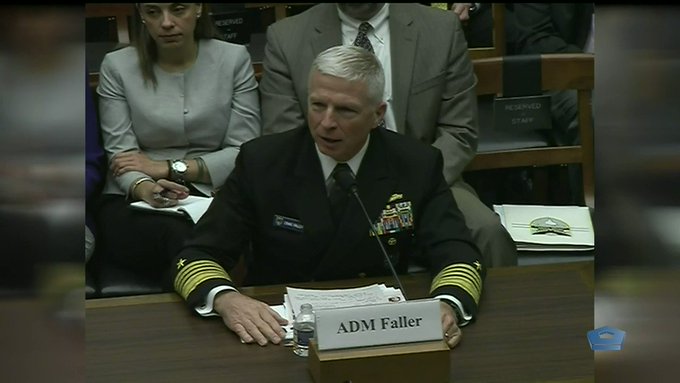
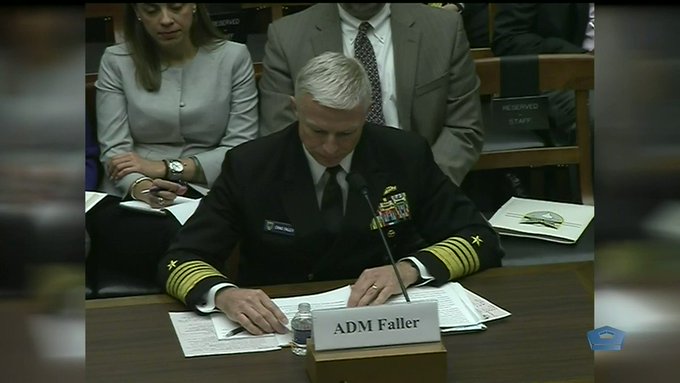
In testimony before the House Armed Services Committee on March 11, the commander of US Southern Command, Admiral Craig S. Faller, announced, “There will be an increase in US military presence in the hemisphere later this year.”


U.S. Southern Command
✔@Southcom


#SOUTHCOM’s Adm. Faller: “There will be an increase in US military presence in the hemisphere later this year. This will include an enhanced presence of ships, aircraft, & security forces to reassure our partners… & counter a range of threats to include illicit narco-terrorism.”


2,374
9:37 AM - Mar 11, 2020
Twitter Ads info and privacy
1,835 people are talking about this


This hearing was held before the US government took lockdown measures over the coronavirus pandemic. But many US military activities have continued despite the spread of the deadly Covid-19 virus — as have Washington’s suffocating sanctions imposed on Venezuela and Iran.
New cold war rhetoric demonizing China and Russia

The bellicose rhetoric Faller displayed in his verbal testimony and written statement submitted to Congress reflects the tone of Cold War aggression officially adopted by the US Department of Defense (DOD).

In 2018, the DOD published its first new national defense strategy in a decade. The historic document marked a shift from the US government’s so-called “war on terror” to a new military paradigm based on countering and containing China and Russia. In the words of former Defense Secretary James Mattis, “great power competition, not terrorism, is now the primary focus of U.S. national security.”

Faller’s congressional testimony reflected the new framework. The Southcom commander rattled off phrases like “the bad guys” when referring to the US government’s supposed enemies, and described China, Russia, Iran, Cuba, and Venezuela as “malign state actors” who are part of “a vicious circle of threats.”

Characterizing the Western hemisphere as “our hemisphere” and “our neighborhood,” Faller lamented that “Russia once again projected power in our neighborhood.” He added, “The ‘aha’ moment for me this past year is the extent to which China is aggressively pursuing their interests right here in our neighborhood.”

The goal is to “maintain the regional balance of power in favor of the United States,” Faller bluntly declared, advancing a clash of civilizations perspective in which China and Russia “don’t share our values.”

The Southcom commander’s testimony fixated on China, painting it as the supreme “threat.” Faller referred to China’s loans to countries in the region as “predatory financing,” and he claimed “the Chinese government absorbed three more Latin American countries into its One Belt One Road Initiative,” fear-mongering about Beijing’s attempt to build a new global territorial and maritime silk road.


U.S. Southern Command
✔@Southcom


During testimony before the #HASC, #SOUTHCOM’s Adm. Craig Faller discusses the importance of providing security support & investments for partner nations in #LatinAmerica & the #Caribbean and counter #China’s influence in the region.


144
10:07 AM - Mar 11, 2020
Twitter Ads info and privacy
124 people are talking about this


As usual, the Kremlin was singled out as a global evildoer. “Russia continues to play the role of ‘spoiler,’ seeking to sow disunity and discredit the United States within our own hemisphere,” Faller said.

The Southcom commander heaped praise on right-wing US governments in Brazil, Ecuador, and Bolivia, where a military coup installed an unelected Christian nationalist regime. Faller was especially grateful that these governments “now recognize the Cuban threat to freedom, expelling thousands of Cuban officials.”

Echoing the line from Washington, Faller denigrated the democratically elected Sandinista government in Nicaragua as “authoritarian,” and referred to Venezuela’s elected government as “the former Maduro regime.”

Without offering any concrete evidence, Faller went on to claim the “final malign actors—Maduro and his cronies in Venezuela—pose one of the most direct threats to peace and security in the Western Hemisphere.”
Expanding military presence in Latin America

In his congressional testimony, Admiral Faller disclosed that there are “recurring rotations of small teams of Special Operations Forces, Soldiers, Sailors, Airmen, Marines, Coast Guardsmen, and National Guard personnel” in Latin America.

“There is no other region we depend upon more for our prosperity and security,” Faller said, “than Latin America and the Caribbean.”

The Southcom commander promised “major exercises to more directly support the global competition with the PRC and Russia.”

The National Guard has a State Partnership Program (SPP), he noted, in which it collaborates with the militaries of right-wing governments in the region.

The Southcom commander emphasized that Brazil is the newest member of the SPP. He added that the US military is “strengthening partnerships with” right-wing countries in the region, especially Brazil.

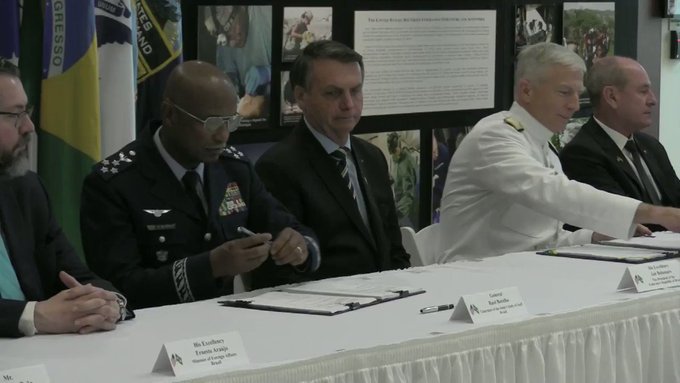
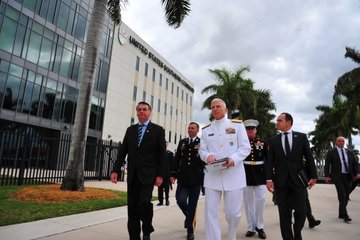
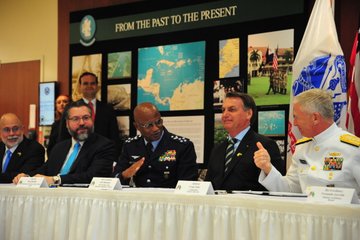
Brazil’s far-right President Jair Bolsonaro visited US Southern Command on March 8, 2020
US signs historic military agreement bringing Brazil into its imperial orbit

Craig Faller gave his congressional testimony just three days after hosting Brazil’s far-right President Jair Bolsonaro at US Southern Command.

Bolsonaro had traveled to Florida to meet with Donald Trump at his resort in Mar-a-Lago to discuss escalating their hybrid war on Venezuela.

The extreme-right Brazilian leader then toured the headquarters of Southcom, where he signed a major military agreement.

Southcom effused in a press release that “Bolsonaro’s historic visit marks the first time a Brazilian president has visited U.S Southern Command.”

Bolsonaro’s trip came just days after he endorsed a series of far-right, explicitly anti-democracy protests back in Brazil calling for the restoration of the military dictatorship.


U.S. Southern Command
✔@Southcom


During @jairbolsonaro visit to #SOUTHCOM today, the U.S. & Brazil signed a bilateral Agreement on Research Development, Test & Evaluation Projects that will expand opportunities to collaborate on new defense capabilities. @EmbaixadaEUA @DefesaGovBr @thejointstaff @USAemPortugues


2,234
11:40 AM - Mar 8, 2020
Twitter Ads info and privacy
1,310 people are talking about this


Under the new agreement with the US, Brazil’s Ministry of Defense joined the Pentagon’s Research, Development, Test and Evaluation (RDT&E) funding system.

The deal followed Trump’s designation of Brazil as a “major non-NATO ally,” conferring special military status on the country.

The Brazilian daily, Folha de S.Paulo, described the treaty signed at Southcom as “an unprecedented military agreement that, if fully exploited, could help open the world’s largest defense market to the domestic industry.”

The RDT&E negotiations began in 2017 under the government of Michel Temer, an unelected right-wing leader who was installed after a parliamentary coup against the democratically elected left-leaning President Dilma Rousseff of the Workers’ Party.

The right-wing Argentine newspaper Clarín summarized the agreement with the following headline: “Brazil is incorporated into the US military-industrial complex.”

Clarín noted that the deal shows “Brazil has changed its international status and left the regional framework of South America,” essentially integrating itself into the US imperial system.

This is especially significant because Brazil is the largest country in Latin America, with the sixth-greatest population on Earth and the fifth-largest economy.

Clarín called the RDT&E deal “an inflection point in the history of Brazil and Latin America’s relations with the US.”

Bolsonaro’s administration has now proposed a free trade agreement with the US, the newspaper added, conditioned on the implementation of four neoliberal reforms: cutting the social security system, liberalizing protectionist measures, privatizing 140 state companies, and opening up the Brazilian economy to foreign capital.

“From this moment on, Brazil has become the United States’ main strategy ally in South America,” Clarín said.


U.S. Southern Command
✔@Southcom


Strengthening Partnerships: Photos from today's visit by #Brazil’s President @jairbolsonaro to #SOUTHCOM. Bolsonaro met w/ Adm. Craig Faller, & @DeptofDefense leaders to discuss the growing U.S.-Brazil defense partnership. @EmbaixadaEUA @DefesaGovBr @USAemPortugues


718
1:26 PM - Mar 8, 2020
Twitter Ads info and priva


cy
430 people are talking about this

Our nativist freakout about China hides the real origin of the coronavirus. It’s political, global, and made in the USA.


https://thegrayzone.com/2020/03/30/china-origin-coronavirus-political-global-usa/#more-22739


We’re facing something that’s more difficult than a medical emergency. We’re facing a political fight against the most powerful corporations in the world.
By Yasha Levine


This was originally published at Immigrants as a Weapon. Subscribe to Yasha Levine’s newsletter here.

Since the coronavirus started making news here in America, it’s been portrayed as a foreign pathogen. It’s not just Donald Trump and his the MAGA fan club. Starting with the Chinese bat soup meme, all kinds of nativist political theories and racist conspiracies have been oozing out of centrist, rightist, and progressive media and political circles — making it seem like the virus is primarily a foreign problem and quite possibly a foreign conspiracy against the United States.

Just check out this crazy viral xenophobic theorizing that ties the disruption caused by corona closures to Russia and Putin. It’s pushed by a respected liberal academic — someone who regularly gets space in the New York Times. Americans love their insane nativist conspiracies about foreign plots by shady asiatics. Don’t deny them this basic right!


This stuff is infectious and has already led to sporadic violence against Chinese-Americans and people from Asia in America. But this nativist blaming isn’t just happening here.

China’s been trying to pin the virus on the American government, and so has Russia. A few weeks back, Russian state news broadcast a segment that tied the virus to an American plot against China. Channelling Brass Eye, the host of the news program laid out his logic like this: China is America’s greatest enemy. “Corona” means “crown.” And Donald Trump “crowned” the winners of his Miss Universe pageant. It all added up. Trump unleashed a bioweapon. The clue is in the etymology!

And really, who knows? Maybe the virus is some shadowy American warfare program that backfired. It wouldn’t the first. See: lyme disease.


“Take the word ‘crown.’ What did Donald Trump, the president America, the main rival of China, do in his previous life? That’s right! He handed out crowns at his famous beauty contest.” — Kirill Kleimyonov, Channel 1


I’m sure that xenophobic panics have always followed pandemics and outbreaks of disease, going back to origins of human history. It’s a natural response when faced with a mysterious, deadly calamity. You blame the out-group — a different ethnic or religious or minority group. You blame whoever your official enemy is, or whoever it is most politically useful to blame. It happened during the “Spanish” Flu that decimated humanity a century ago. (Later it was determined that the “Spanish” Flu was actually made in America.) And it hasn’t changed today — in our age of supposed rationality.

And what’s politically useful today about blaming the coronavirus on a specific country? It helps obscure the real origin of the pathogen — which is not national, but international. It’s economic and political.

There’s a great academic by the name of Rob Wallace who has been doing amazing, pioneering work on this issue — looking at how our neoliberal globalized industrial economy pumps out deadly pathogens with increasing frequency.

Rob’s work shows that the real driver of corona isn’t China — it’s our oligarchic, hyper-industrial mode of food production. This monopolized, vertically integrated system was perfected here in America and then exported to every corner of the world. It paves over everything and prioritizes concentration of wealth and maximum profitability for a tiny elite, while offloading the death and destruction it causes to everyone else.

It has created perfect conditions for producing deadly pathogens. It draws out deadly diseases from deep in the forests and jungles by destroying habitats, builds vertically integrated industrial “meat” farms filled with cloned animals that breed the most virulent pathogens, and then hooks both of these disease factories up to a global supply chain that spreads the stuff around the world and to all of us.

If DARPA wanted to outsource an R&D lab for pandemic production — it couldn’t have come up with a better pathogen machine. Or as Rob said recently, “Agribusiness is so focused on profits that selecting for a virus that might kill a billion people is treated as a worthy risk.”

Everyone is focused on trying to contain corona — and naturally this is the right thing to do. But there is a deeper problem here. This is not a singular event. Diseases like this (and possibly worse) will keep popping up with greater and greater frequency, unless we radically change our hyper-industrialization food production to something that respects the limits of our “natural” world.

This machinery is driven by largest companies in the world: Goldman Sachs, Koch Industries, Cargill, ADM, JBS, DuPont, Monsanto — you can can go down the line. Some names you’ll recognize. Others you wont. But together they might represent the largest concentration of political and economic power in the known universe.

In that sense, we’re facing something that’s even more difficult than a medical emergency. We’re facing a deep, systemic political problem — an issue that butts up against the interests of the most powerful corporations in the world and which goes to the heart of all the problems that we face in our hyper-industrialized, oligarchic consumerist society. Looking at part of this problem is something that Rowan and I are trying to do in with our documentary about the power of California oligarch farmers.


Subscribe now

We can’t solve this corona global health emergency without understanding what’s actually causing it. And Rob is a great resource for this.

He’s got a great book — Big Farms Make Big Flu — that lays out exactly how this happens. And Rob’s been giving very informative interviews on the topic over the last few weeks. One of them was with Marx21, a German lefty journal, where he encapsulates the work he’s been doing. I highly recommend it.

I’ll just quote a few parts:


The real danger of each new outbreak is the failure or—better put—the expedient refusal to grasp that each new Covid-19 is no isolated incident. The increased occurrence of viruses is closely linked to food production and the profitability of multinational corporations. Anyone who aims to understand why viruses are becoming more dangerous must investigate the industrial model of agriculture and, more specifically, livestock production. At present, few governments, and few scientists, are prepared to do so. Quite the contrary.

When the new outbreaks spring up, governments, the media, and even most of the medical establishment are so focused on each separate emergency that they dismiss the structural causes that are driving multiple marginalized pathogens into sudden global celebrity, one after the other.

Who is to blame?

I said industrial agriculture, but there’s a larger scope to it. Capital is spearheading land grabs into the last of primary forest and smallholder-held farmland worldwide. These investments drive the deforestation and development leading to disease emergence. The functional diversity and complexity these huge tracts of land represent are being streamlined in such a way that previously boxed-in pathogens are spilling over into local livestock and human communities. In short, capital centers, places such as London, New York, and Hong Kong, should be considered our primary disease hotspots.

For which diseases is this the case?

There are no capital-free pathogens at this point. Even the most remote are affected, if distally. Ebola, Zika, the coronaviruses, yellow fever again, a variety of avian influenzas, and African swine fever in hog are among the many pathogens making their way out of the most remote hinterlands into peri-urban loops, regional capitals, and ultimately onto the global travel network. From fruit bats in the Congo to killing Miami sunbathers in a few weeks‘ time.

What is the role of multinational companies in this process?

Planet Earth is largely Planet Farm at this point, in both biomass and land used. Agribusiness is aiming to corner the food market. The near-entirety of the neoliberal project is organized around supporting efforts by companies based in the more advanced industrialised countries to steal the land and resources of weaker countries. As a result, many of those new pathogens previously held in check by long-evolved forest ecologies are being sprung free, threatening the whole world.

The capital-led agriculture that replaces more natural ecologies offers the exact means by which pathogens can evolve the most virulent and infectious phenotypes. You couldn’t design a better system to breed deadly diseases.

How so?

Growing genetic monocultures of domestic animals removes whatever immune firebreaks may be available to slow down transmission. Larger population sizes and densities facilitate greater rates of transmission. Such crowded conditions depress immune response. High throughput, a part of any industrial production, provides a continually renewed supply of susceptibles, the fuel for the evolution of virulence. In other words, agribusiness is so focused on profits that selecting for a virus that might kill a billion people is treated as a worthy risk.

As for our xenophobic panic against the coronavirus? According to Rob, that panic should be directed at ourselves. “Capital centers — London, New York, Hong Kong, etc. — finance deforestation and development in capital peripheries around the world,” Rob wrote to me. “Look up Goldman Sachs buying into Chinese farms post-housing crisis. In a way the absurdity of blaming the U.S. for this isn’t that far off the mark once one reads between the lines of the nationalist sparring.”

Anyway, make sure you check out the rest of Rob’s interview here and read his book while you self-isolate. Take care of yourself!


Brazil’s ex-President Lula on Venezuela: Maduro is democratic, Guaidó should be in prison, US blockade kills civilians


https://thegrayzone.com/2020/03/30/brazil-lula-maduro-guaido-us-blockade/#more-21995


In comments ignored by English-language media, Lula da Silva slammed the US coup attempt against Venezuela, calling Nicolás Maduro a democratic leader who has supported dialogue while blasting Juan Guaidó as a criminal.
By Ben Norton


The far-right government of Brazilian President Jair Bolsonaro is one of Washington’s closest allies in Latin America. It has played a major supporting role in the Donald Trump administration’s coup attempt against Venezuela, even supporting a terror plot against the government of President Nicolás Maduro.

This March, the Bolsonaro administration signed a historic military agreement, bringing Brazil directly into the US imperial sphere of influence, essentially merging the country’s defense industry with Washington’s military-industrial complex.

Days before the deal was finalized, however, Brazil’s former president, the left-wing labor organizer Lula da Silva, spoke out vociferously against US meddling in Latin America, harshly criticizing Washington’s putsch against Evo Morales in Bolivia and its ongoing coup attempt against Venezuela.

In an interview with Brazilian media that has yet to be covered in the English-language press, Lula condemned US-backed Venezuelan coup leader Juan Guaidó as a warmongering criminal who should be in prison. He went on to emphasize that President Nicolás Maduro is a democratically elected leader who has encouraged peace and diplomacy.

“Europe and the United States can’t recognize a fraud who declares himself to be president,” Lula said, referring to Guaidó. “It is not right. Because if fashion takes over democracy, it is thrown in the garbage, and any scammer can declare themself president. I could declare myself president of Brazil, but where would democracy go?”

Lula was interviewed by Folha de S.Paulo, the most widely circulated Brazilian newspaper, which is owned by an elite family of billionaire media oligarchs.

When the paper pushed back against his comments, calling Maduro a “dictator,” Lula stressed that the Venezuelan president was elected, and has shown the kind of patience and restraint that no other leader would in similar circumstances.

“He [Guaidó] should be in prison,” Lula said. “And Maduro was so democratic and did not arrest him when he went to Colombia to try to instigate an invasion of Venezuela.”

“The one who is taking the initiative to talk is Maduro, not Guaidó,” Lula stated. “Guaidó would like the Americans to invade Venezuela — in fact, he even tried to force it.”

The newspaper pushed back again, saying Maduro has presided over an economic crisis in Venezuela.

“Whether his government is doing well or not, that’s another story. But you aren’t going to attack all of the countries that aren’t doing well,” Lula responded.

“People can’t criticize Maduro and not criticize the blockade. The blockade doesn’t attack soldiers, it doesn’t kill the guilty, the blockade kills innocents,” the former Brazilian president said.

These remarks from Lula received virtually no coverage in the English-language press, although they were widely covered in Portuguese- and Spanish-language media.
Lula defends Bolivian President Evo Morales

The Brazilian paper also pushed Lula to denounce Bolivian President Evo Morales, who was overthrown in a US-backed far-right military coup in November 2019.

Folha de S.Paulo noted that Morales had run for a fourth term as president, although the paper failed to mention that Bolivia’s Supreme Court permitted him to do so.

In the first round of the October 2019 election, Morales won with more than a 10 percent margin.

The newspaper falsely claimed that there were irregularities in the election — a myth initially spread by the Organization of American States (OAS) that has subsequently been debunked by numerous investigations by top scholars.

Lula defended Morales and his government against the newspaper’s claims that the Bolivian election was marred by supposed “complications.”

“Wasn’t George Bush complicated in his election against Al Gore? It was complicated, Bush took control of the government for eight years,” Lula replied.

“Was Trump not complicated? It was complicated, and he took power,” he said.

“Was Bolsonaro not complicated? Everyone know the farce of ‘fake news.'”
US coups brought extreme-right to power in Brazil

Remarks like these illustrate why Washington has backed coups and meddled in Brazil’s internal politics in order to overthrow Lula and his left-wing Workers’ Party and prevent them from returning to power.

Lula has not only been one of the most popular politicians in Brazil, he represents a regional buffer against US hegemony. When he left office in 2010, after completing his second term as head of state, he had a staggering 87 percent approval rating — one of the highest in the entire world.

Lula’s successor from the Workers’ Party, President Dilma Rousseff, was ousted in 2016 in a parliamentary coup led by Brazil’s right-wing opposition and a collection of oligarchs that was backed behind the scenes by the United States.

Lula has repeatedly stressed that Washington played a decisive role in the coups in Brazil. “Everything that is happening has the hand of the United States on it,” he said in a 2019 interview.

“The US created the Lava Jato investigation,” Lula added, referring to the supposed “anti-corruption” operation that was used to oust the Workers’ Party and install the far-right administration of Jair Bolsonaro, an extremist who has called for restoring the military dictatorship.

In 2018, Lula was campaigning again for the presidential election, and leading the polls by a huge margin. It was only then that he was imprisoned on false charges of corruption, providing an opening for Bolsonaro to take power.

The judge who oversaw Lava Jato and imprisoned Lula, Sergio Moro, was subsequently rewarded by Bolsonaro with a post as minister of justice.

Immediately after taking office, Bolsonaro and Moro paid a special visit to CIA headquarters.

“No Brazilian president had ever paid a visit to the CIA,” commented Celso Amorim, who served as Foreign Minister under Lula. “This is an explicitly submissive position. Nothing compares to this.”


Tuberculosis drug could be Covid-19 silver bullet


Australian researchers set to test century-old TB treatment while global scientists expect to have Covid-19 meds ready by June
MARCH 31, 2020


https://asiatimes.com/2020/03/tuberculosis-drug-could-be-covid-19-silver-bullet/


SYDNEY – On April 6, Australian researchers will start trials of the tuberculosis drug Bacillus Calmette-Guerin (BCG) as a possible treatment of the deadly Covid-19 coronavirus now spreading across the globe.

It represents perhaps the most hopeful test yet of an existing medicine currently in everyday use to tame the highly contagious Covid-19 virus.

“I am hopeful that within three months we will have a good idea which drugs are good and which drugs are bad,” said Australian National University geneticist Gaetan Burgio. “The field is moving very quickly.”

Fast action is required as the pandemic jumps from global epicenter to epicenter, with caseloads currently exploding in the United States while still ravaging Europe and gaining ground in South America after originating in China.


Global scientists say they expect to have medicines ready to treat the Covid-19 coronavirus by the end of June, the product of an unprecedented global research effort backed by dozens of laboratories and a network of corporate donors.

Researchers are already undertaking more than 100 clinical trials of possible treatments worldwide, mostly of existing drugs. New drugs and vaccines are also being developed, but will not be ready for at least a year, reports say.

Healthcare workers in Melbourne, Australia, will next week start taking BCG, a shot that has been given to 130 million schoolchildren in the past century to protect against tuberculosis.

Australian researchers at the University of Queensland are among those rushing to develop a vaccine for the Covid-19 coronavirus. Image: Facebook


Staff will be randomly given either BCG, an influenza shot or a combination of the two, without knowing which as part of the clinical trial.


“These trials will allow the rapid advancement of the most promising candidates to clinical practice, giving us the most number of shots on goal against Covid-19 as possible,” said Professor Kathryn North, director of the Murdoch Children’s Research Institute director in Melbourne, while making a football allusion.

The institute’s director of infectious diseases, clinician–scientist Professor Nigel Curtis, added: “We wouldn’t be doing this if we didn’t think that this might work. And of course the only way to find out is with our trial.”

Smaller tests of the drug are also underway in the Netherlands, and the institute is looking for potential trial sites in the US city of Boston. It is expected that several dozen hospitals in Australia will join the program, which initially aims to protect frontline medical staff from the virus.

It is not likely, however, that results of the trial will be released until September, a life time as the pandemic takes a rising lethal toll, with over 785,000 and 37,600 deaths from the disease recorded worldwide as of March 31.


Although it was developed to combat tuberculosis, BCG has been found to boost the “frontline” immunity of babies and trains their bodies to resist germs with greater intensity. Studies in Africa have shown that the drug builds up white blood cells that then target non-specific pathogens.

Curtis said about 4,000 doctors and nurses will join the trial. “We need to enroll them in the coming weeks, so the clock is definitely ticking,” he said.
Various labs are testing whether the anti-malarial drug chloroquine is a reliable treatment for the Covid-19 virus. Photo: Facebook


Separate trials of the retired drugs remdesivir and chloroquine, used to treat AIDS and malaria respectively before better treatments were developed, are proceeding in Queensland, despite safety warnings over chloroquine.

About 50 hospitals across Australia have started human trials of the drugs, both separately and together, and the program is being fast-tracked. It is believed a treatment, possibly using remdesivir, could be ready in months.

US President Donald Trump has talked up the combination of the two drugs as a “game changer” against the virus, but chloroquine can be fatal when ingested in high doses. An Arizona man died recently after ingesting a fish tank cleaner that contained the drug, according to news reports.

“What many people don’t realize is that the dose you use for malaria is very low, whereas studies show that for Covid-19 doses are 10 to 100 times higher,” said Burgio in Canberra. “I don’t think it is clear-cut that we can say it is going to be a cure. We are not at that point yet,” he said.

The Queensland trials will aim to determine what doses are acceptable, or whether it should be used at all. Chinese scientists said they had used chloroquine to treat infected patients, but their test results have not been publicly released.

China has also claimed that danoprevir, a hepatitis C treatment sold under the brand name Ganovo, is a “promising therapeutic option” that shows no side-effects. However, it was used on only 11 patients, too few to be considered a proper clinical study.

Meanwhile, the first human trials of four drugs formerly used to treat malaria, HIV-AIDS, and ebola, and combinations of them, have started in Spain and Norway as part of a global collaboration overseen by the World Health Organization.
A medical worker wearing protective gear looks out from behind a hospital tent built in preparation for dealing with a coronavirus case in Lhokseumawe, Aceh, March 17, 2020. Photo: AFP Forum via NurPhoto/Zick Maulana


Research groups in Iran, Germany, Italy and Switzerland will next test the drugs for their safety and effectiveness.

“This is a historic trial which will dramatically cut the time needed to generate robust evidence about drug work,” said WHO director general Tedros Adhanom Ghebreyesus. “The more countries [that] join the trial, the faster we will have results.”

Tedros said that almost 50 countries were contributing to the drugs research and had said they were interested in conducting human trials.


Italy Becomes 53rd Nation to Call for Global Ceasefire During Pandemic


https://consortiumnews.com/2020/03/30/covid19-italy-becomes-53rd-nation-to-call-for-global-ceasefire-during-pandemic/


March 30, 2020 • 6 Comments


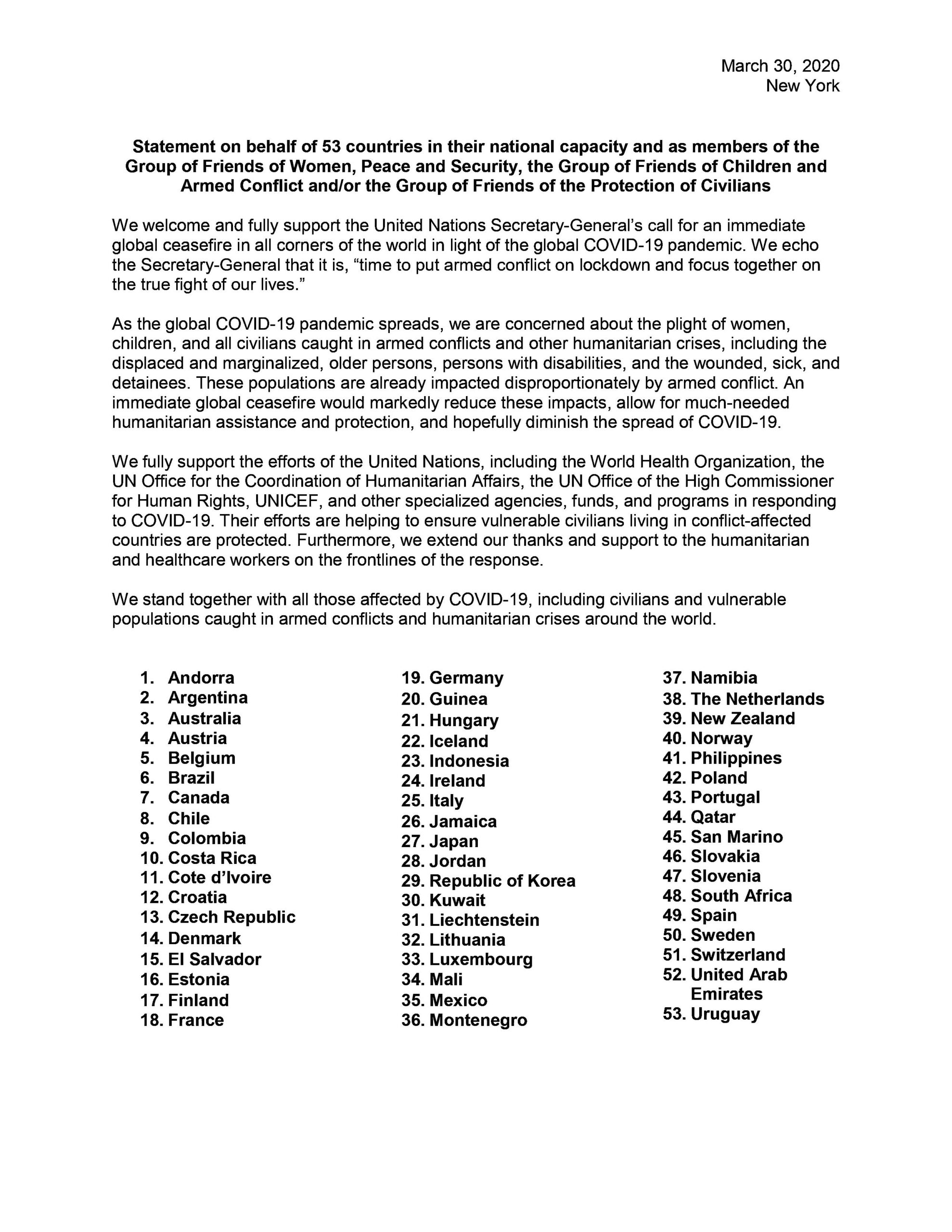
Italy on Monday became the 53rd nation to join a call by the UN secretary general for a ceasefire in all the world’s wars as the globe fights the Covid-19 pandemic.

Missing among the nations supporting a global ceasefire in the more than 40 wars being fought around the world are four of the five permanent members of the UN Security Council—Britain, China, Russia and the United States—who are among the world’s largest arms traders. All possess a nuclear weapons arsenal. Only France among the P5 has called for the ceasefire.

This statement by the 53 nations listed supports an end to hostilities to help prevent the further spread of the pandemic, “the true fight of our lives,” according to Secretary General Antonio Guterres.

War, it seems, is the only part of “normal” life that continues.