Tuesday, March 31, 2020

Europe paralysed amidst mutual recriminations
http://www.marxist.com/europe-paralysed-amidst-mutual-recriminations.htm
More than 20 years ago, on the eve of the introduction of the Euro, the Marxist tendency predicted that faced with new and insoluble problems the common currency would “break down amidst mutual recriminations”. Those recriminations began in a five-and-a-half-hour-long conference call between EU leaders last Thursday.
Coronabonds
The question that split the European Council was that of Coronabonds: a eurozone-wide debt instrument that would make it easier, and cheaper, for struggling southern states to access funding for emergency health and economic stimulus measures.
On the eve of the summit, the leaders of nine Eurozone countries, including France, Italy and Spain penned a letter to the European Council leader, Charles Michel, calling for “a common debt instrument issued by a European institution to raise funds on the market on the same basis and to the benefits of all member states”.
But this proposal received short shrift from wealthier northern states such as Germany, the Netherlands and Finland, which have consistently opposed the creation of so-called Eurobonds in any form since the idea was first raised during the 2009 Eurozone crisis.

Italy’s Prime Minister, Giuseppe Conte: “If Europe does not rise to this unprecedented challenge, the whole European structure loses its raison d’être to the people” / Image: NAJ OLEARI
These northern states have always opposed this idea for the simple reason that they would effectively be paying for the spending of other states. The patronising term “moral hazard” has been repeatedly raised by German and Dutch politicians, referring to the risk that lazy and profligate southerners would lavish unsustainable lifestyles upon themselves (such as eating every day) at northern taxpayers’ expense. Rather than helping to squash this poisonous debate over “strivers” and “skivers”, which we have seen in all countries, European integration seems to have amplified it to a continental scale.
Southern states are afraid of a rather different moral hazard, however; that if the rest of the bloc continues to stand aloof from the suffering of fellow Europeans – and more importantly, is clearly seen to be doing so – this could undermine any remaining pro-EU sentiment amongst their populations, making further “Brexit-like” crises inevitable.
Italy’s Prime Minister, Giuseppe Conte, who has unsurprisingly been at the forefront of calls for Coronabonds, posed the matter starkly when he said over the weekend, “If Europe does not rise to this unprecedented challenge, the whole European structure loses its raison d’être to the people.” The French President, Emmanuel Macron, went so far as to declare that “what’s at stake is the survival of the European project”.
Tensions
Tensions boiled over during the Council’s ‘virtual summit’, when the Italian and Spanish leaders even threatened not to sign up to the Council’s joint statement at the end of the meeting unless support was given for the idea of a joint debt instrument. To avoid an ugly split, Michel engineered a compromise stating the following:
“At this stage, we invite the Eurogroup to present proposals to us within two weeks. These proposals should take into account the unprecedented nature of the COVID-19 shock affecting all our countries and our response will be stepped up, as necessary, with further action in an inclusive way, in light of developments, in order to deliver a comprehensive response.”
Another classic in the rich tradition of EU statements that say absolutely nothing, the statement amounts to a unanimous agreement to… come up with something in a couple of weeks. Meanwhile, more people die, particularly in hardest-hit Italy and Spain, and old wounds open wider.
The prospects for a unified and effective response from European leaders are not good. Angela Merkel set out Germany’s preference, that there is already a mechanism specifically designed for this sort of situation – the European Stability Mechanism. The problem with this is, just like calling in the IMF, it comes with strings attached; namely a raft of ‘reforms’ designed to bring down deficits, such as selling off public assets, cutting public sector wages and pensions, and attacking workers’ conditions. The cure is worse than the disease, and no government in its right mind would accept it, especially after the experience of Greece.
But the war of words was only just beginning. Following the summit, the Dutch Finance Minister provoked a furious backlash when he suggested that Brussels should “investigate” why some countries were not financially able to withstand a downturn. This obvious dig at the likes of Italy and Portugal drew an indignant response, with the Portuguese prime minister labelling his comments “repugnant” and others pointing to the Netherlands’ tax system, which was accused of assisting companies to avoid paying tax elsewhere in Europe.
Seeing the European leaders squabbling while the EU faces the greatest crisis in the history of its existence has sent the more far-sighted strategists of capital into a fit of panic. They recognise where this will lead: an increase in protectionism that would transform this recession into the deepest depression since the 1930s, if not deeper. As one editorial in the Financial Times pleaded: “Protection magnified the disaster of the Great Depression of the 1930s. It must not do so this time.”
Accordingly, they demand that their leaders “learn the lessons of history” and change course. But this split is not the accidental product of leaders’ blindness or intransigence. It is a necessary product of the fundamental nature of capitalism, which is incapable of overcoming the limitations of the nation state.
This goes doubly for the EU – an attempt to bind together capitalist nation states, each with their own set of capitalists and their own national interests. During a boom, the unavoidable contradictions between them can be partially and temporarily overcome, but in times of crisis, as we saw in 2009 and are seeing today, the national ruling classes start moving in different directions.
Nationalist tendencies
The rise of nationalist and protectionist tendencies has been a recognised feature of European politics for a decade. Often ascribed to the bad influence of “populists”, it actually stems directly from the differing interests of the various states themselves who, for all the talk of European brotherhood, are in competition with one another after all.
The speed with which the majority of the single market’s founding principles have been thrown out of the window simply reflects the fact that it is not currently in the interests of the major powers to maintain them. There is little controversy over the abolition of the free movement of people and restrictions on the free movement of goods, because powerful states like France and Germany have been among the first to break these rules.

These northern states have always opposed this idea for the simple reason that they would effectively be paying for the spending of other states. The patronising term “moral hazard” has been repeatedly raised by German and Dutch politicians, referring to the risk that lazy and profligate southerners would lavish unsustainable lifestyles upon themselves (such as eating every day) at northern taxpayers’ expense. Rather than helping to squash this poisonous debate over “strivers” and “skivers”, which we have seen in all countries, European integration seems to have amplified it to a continental scale.
Southern states are afraid of a rather different moral hazard, however; that if the rest of the bloc continues to stand aloof from the suffering of fellow Europeans – and more importantly, is clearly seen to be doing so – this could undermine any remaining pro-EU sentiment amongst their populations, making further “Brexit-like” crises inevitable.
Italy’s Prime Minister, Giuseppe Conte, who has unsurprisingly been at the forefront of calls for Coronabonds, posed the matter starkly when he said over the weekend, “If Europe does not rise to this unprecedented challenge, the whole European structure loses its raison d’être to the people.” The French President, Emmanuel Macron, went so far as to declare that “what’s at stake is the survival of the European project”.
Tensions
Tensions boiled over during the Council’s ‘virtual summit’, when the Italian and Spanish leaders even threatened not to sign up to the Council’s joint statement at the end of the meeting unless support was given for the idea of a joint debt instrument. To avoid an ugly split, Michel engineered a compromise stating the following:
“At this stage, we invite the Eurogroup to present proposals to us within two weeks. These proposals should take into account the unprecedented nature of the COVID-19 shock affecting all our countries and our response will be stepped up, as necessary, with further action in an inclusive way, in light of developments, in order to deliver a comprehensive response.”
Another classic in the rich tradition of EU statements that say absolutely nothing, the statement amounts to a unanimous agreement to… come up with something in a couple of weeks. Meanwhile, more people die, particularly in hardest-hit Italy and Spain, and old wounds open wider.
The prospects for a unified and effective response from European leaders are not good. Angela Merkel set out Germany’s preference, that there is already a mechanism specifically designed for this sort of situation – the European Stability Mechanism. The problem with this is, just like calling in the IMF, it comes with strings attached; namely a raft of ‘reforms’ designed to bring down deficits, such as selling off public assets, cutting public sector wages and pensions, and attacking workers’ conditions. The cure is worse than the disease, and no government in its right mind would accept it, especially after the experience of Greece.
But the war of words was only just beginning. Following the summit, the Dutch Finance Minister provoked a furious backlash when he suggested that Brussels should “investigate” why some countries were not financially able to withstand a downturn. This obvious dig at the likes of Italy and Portugal drew an indignant response, with the Portuguese prime minister labelling his comments “repugnant” and others pointing to the Netherlands’ tax system, which was accused of assisting companies to avoid paying tax elsewhere in Europe.
Seeing the European leaders squabbling while the EU faces the greatest crisis in the history of its existence has sent the more far-sighted strategists of capital into a fit of panic. They recognise where this will lead: an increase in protectionism that would transform this recession into the deepest depression since the 1930s, if not deeper. As one editorial in the Financial Times pleaded: “Protection magnified the disaster of the Great Depression of the 1930s. It must not do so this time.”
Accordingly, they demand that their leaders “learn the lessons of history” and change course. But this split is not the accidental product of leaders’ blindness or intransigence. It is a necessary product of the fundamental nature of capitalism, which is incapable of overcoming the limitations of the nation state.
This goes doubly for the EU – an attempt to bind together capitalist nation states, each with their own set of capitalists and their own national interests. During a boom, the unavoidable contradictions between them can be partially and temporarily overcome, but in times of crisis, as we saw in 2009 and are seeing today, the national ruling classes start moving in different directions.
Nationalist tendencies
The rise of nationalist and protectionist tendencies has been a recognised feature of European politics for a decade. Often ascribed to the bad influence of “populists”, it actually stems directly from the differing interests of the various states themselves who, for all the talk of European brotherhood, are in competition with one another after all.
The speed with which the majority of the single market’s founding principles have been thrown out of the window simply reflects the fact that it is not currently in the interests of the major powers to maintain them. There is little controversy over the abolition of the free movement of people and restrictions on the free movement of goods, because powerful states like France and Germany have been among the first to break these rules.
The various EU states, for all the talk of European brotherhood, are in competition with one another / Image: The Kremlin
The suspension of EU rules on state aid, likewise, reflects the growing concern of the ruling classes of Europe that their “national interests” could be harmed by the collapse of vital companies or their takeover by foreign firms. This is itself a powerful sign of the rise of protectionist tendencies throughout the bloc, with member states planning on buying up companies of national, not European importance. This raises the serious possibility of protectionist measures being applied within the free trade bloc itself and not just directed at outside competitors like the USA.
This common interest does not apply when it comes to Coronabonds, however. On the contrary, the interests of the northern and southern states are diametrically opposed on this question, and will pull further and further apart as the crisis goes on.
It is not in the interest of the German or Dutch government to raise its cost of borrowing, even by a small amount, in order to help finance the policies of foreign states over which it has next to no control. To do so would be to expose its right flank to nationalist parties like AfD, which is already gaining from the resentment built over years of austerity and the absence of a genuine left alternative.
On the other hand, southern governments, like that of Italy for example, have no option but to push for greater burden sharing across the bloc. To accept stringent conditions for support, like those required under the ESM or to quietly accept rising debt costs while the northern states (who have profited so much from the European project) sit pretty would effectively guarantee the coming to power of right-wing nationalists such as Salvini, and could even threaten their departure from the euro. In short, if they don’t make these demands, someone else will.
Impasse
This has left the EU’s institutions in a complete impasse, as can be seen from the vacillating positions adopted by both Christine LaGarde, President of the ECB, and Ursula von der Leyen, President of the European Commission – the head of the executive of the EU.

The suspension of EU rules on state aid, likewise, reflects the growing concern of the ruling classes of Europe that their “national interests” could be harmed by the collapse of vital companies or their takeover by foreign firms. This is itself a powerful sign of the rise of protectionist tendencies throughout the bloc, with member states planning on buying up companies of national, not European importance. This raises the serious possibility of protectionist measures being applied within the free trade bloc itself and not just directed at outside competitors like the USA.
This common interest does not apply when it comes to Coronabonds, however. On the contrary, the interests of the northern and southern states are diametrically opposed on this question, and will pull further and further apart as the crisis goes on.
It is not in the interest of the German or Dutch government to raise its cost of borrowing, even by a small amount, in order to help finance the policies of foreign states over which it has next to no control. To do so would be to expose its right flank to nationalist parties like AfD, which is already gaining from the resentment built over years of austerity and the absence of a genuine left alternative.
On the other hand, southern governments, like that of Italy for example, have no option but to push for greater burden sharing across the bloc. To accept stringent conditions for support, like those required under the ESM or to quietly accept rising debt costs while the northern states (who have profited so much from the European project) sit pretty would effectively guarantee the coming to power of right-wing nationalists such as Salvini, and could even threaten their departure from the euro. In short, if they don’t make these demands, someone else will.
Impasse
This has left the EU’s institutions in a complete impasse, as can be seen from the vacillating positions adopted by both Christine LaGarde, President of the ECB, and Ursula von der Leyen, President of the European Commission – the head of the executive of the EU.
The EU’s institutions are in a complete impasse, as can be seen from the vacillating positions of both Christine LaGarde, President of the ECB, and Ursula von der Leyen, President of the European Commission / Image: PoR
Lagarde initially pleased the Bundesbank with her comment that it was not the ECB’s job to close the spread between Italian and German bonds, only to perform a spectacular u-turn in the face of investor panic and fury amongst southern states. Von der Leyen then performed the same political acrobatics when she ruled out Coronabonds as a “slogan”, reflecting her closeness to her former employer, the German government, only to suddenly announce that “all options” were on the table, and that the EU would “help Italy and Spain very intensively” after her comments provoked uproar.
It is fascinating to see these two individuals following such a similar trajectory, and it ultimately reflects the fact that the EU’s transnational institutions do not exist independently of the major member states, and therefore must reflect their interests. When their interests are so clearly and severely divided, they both initially rest upon the most powerful section – Germany – only to row back for fear of provoking a split with the sizeable and vocal minority faction.
This merry dance has determined the prevaricating and ineffectual policy of the EU ever since 2008. The can has been kicked down the road more times than anyone can remember at this point. It was kicked again on Thursday and it will be sure to get another kicking in the near future.
The inevitable reckoning cannot be put off indefinitely. Either the Eurozone will transform itself into a single, unified federation in which the question of burden sharing becomes moot, or the question of who pays for all this debt will be posed again and again until the bloc collapses. Events over more than a decade have confirmed which of these outcomes is most likely.
Class unity
European integration stalled a long time ago, held back by the contradiction of trying to overcome the bourgeois nation state on a capitalist basis. Genuine integration and unification are impossible on the basis of a system of exploitation. Today, European unity and “solidarity” are just as much a sham as the “national unity” being peddled across the world by governments handing out trillions to the exploiters while the workers are forced to work and die for their profits.
The present crisis will do more than threaten the break up of the Euro. In every country, the crisis triggered by Coronavirus has already provoked dramatic shifts in consciousness. Everywhere, what Trotsky called the “molecular process of revolution” is building up towards a mighty explosion, which will threaten not just the European project but European capitalism itself.
Genuine solidarity can only emerge from genuine equality. Not European brotherhood but class unity will save Europe from this catastrophe. We must fight for a workers’ Europe: free from borders, bankers and bosses.
“Workers of all countries, unite!”
Lagarde initially pleased the Bundesbank with her comment that it was not the ECB’s job to close the spread between Italian and German bonds, only to perform a spectacular u-turn in the face of investor panic and fury amongst southern states. Von der Leyen then performed the same political acrobatics when she ruled out Coronabonds as a “slogan”, reflecting her closeness to her former employer, the German government, only to suddenly announce that “all options” were on the table, and that the EU would “help Italy and Spain very intensively” after her comments provoked uproar.
It is fascinating to see these two individuals following such a similar trajectory, and it ultimately reflects the fact that the EU’s transnational institutions do not exist independently of the major member states, and therefore must reflect their interests. When their interests are so clearly and severely divided, they both initially rest upon the most powerful section – Germany – only to row back for fear of provoking a split with the sizeable and vocal minority faction.
This merry dance has determined the prevaricating and ineffectual policy of the EU ever since 2008. The can has been kicked down the road more times than anyone can remember at this point. It was kicked again on Thursday and it will be sure to get another kicking in the near future.
The inevitable reckoning cannot be put off indefinitely. Either the Eurozone will transform itself into a single, unified federation in which the question of burden sharing becomes moot, or the question of who pays for all this debt will be posed again and again until the bloc collapses. Events over more than a decade have confirmed which of these outcomes is most likely.
Class unity
European integration stalled a long time ago, held back by the contradiction of trying to overcome the bourgeois nation state on a capitalist basis. Genuine integration and unification are impossible on the basis of a system of exploitation. Today, European unity and “solidarity” are just as much a sham as the “national unity” being peddled across the world by governments handing out trillions to the exploiters while the workers are forced to work and die for their profits.
The present crisis will do more than threaten the break up of the Euro. In every country, the crisis triggered by Coronavirus has already provoked dramatic shifts in consciousness. Everywhere, what Trotsky called the “molecular process of revolution” is building up towards a mighty explosion, which will threaten not just the European project but European capitalism itself.
Genuine solidarity can only emerge from genuine equality. Not European brotherhood but class unity will save Europe from this catastrophe. We must fight for a workers’ Europe: free from borders, bankers and bosses.
“Workers of all countries, unite!”
Trump admin’s $15 million bounty on Maduro triggers explosive confession of violent Guaidó plot
https://thegrayzone.com/2020/03/27/trump-bounty-maduro-guaido-plot/#more-22582
The Trump administration’s deception-laden indictment of President Nicolas Maduro and members of his inner circle has badly backfired, resulting in the exposure of a violent assassination plan that could lead to the arrest of coup leader Juan Guaidó.
By Leonardo Flores
For twenty years, right wing extremists in Miami and Washington have been slandering the Venezuelan government, accusing it of drug trafficking and harboring terrorists without offering even a shred of evidence.
The item at the top of their wishlist was fulfilled on March 26, when the U.S. Department of Justice unveiled indictments against President Nicolás Maduro and 13 other current or former members of Venezuela’s government and military.
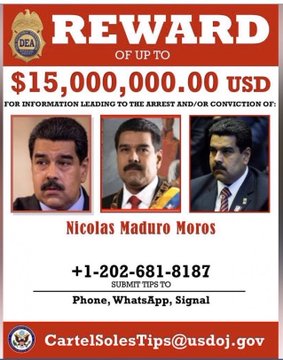
In addition to the indictments, Attorney General William Barr offered a $15 million reward for information leading to the arrest or conviction of Maduro, as well as $10 million rewards for Diosdado Cabello (president of Venezuela’s National Constituent Assembly), Tarek El Aissami (vice president for the economy), Hugo Carvajal (former director of military intelligence) and Cliver Alcalá (retired general).
The indictment has backfired already. Hours after the announcement, Alcalá posted videos online that threaten to cause further splits in the opposition and exposed a violent plot that could result in the arrest of Juan Guaidó. Before going into those details, however, it’s important to understand just how politically biased the charges are against Maduro et al.

The myth that Venezuela is a narco-state has already been debunked by the Washington Office in Latin America (WOLA), a think tank in Washington that generally supports US regime change operations in the region, as well as by FAIR, 15 y Último, Misión Verdad, Venezuelanalysis and others. It cannot be denied that Venezuela is a transit country for cocaine, but as the maps above and below show, less than 7% of total drug movement from South America transits from Venezuela (the Eastern Caribbean region includes Colombia’s Guajira Peninsula). These maps, produced by the Drug Enforcement Agency and U.S. Southern Command, respectively, immediately raise questions as to why Venezuela is the country being targeted.
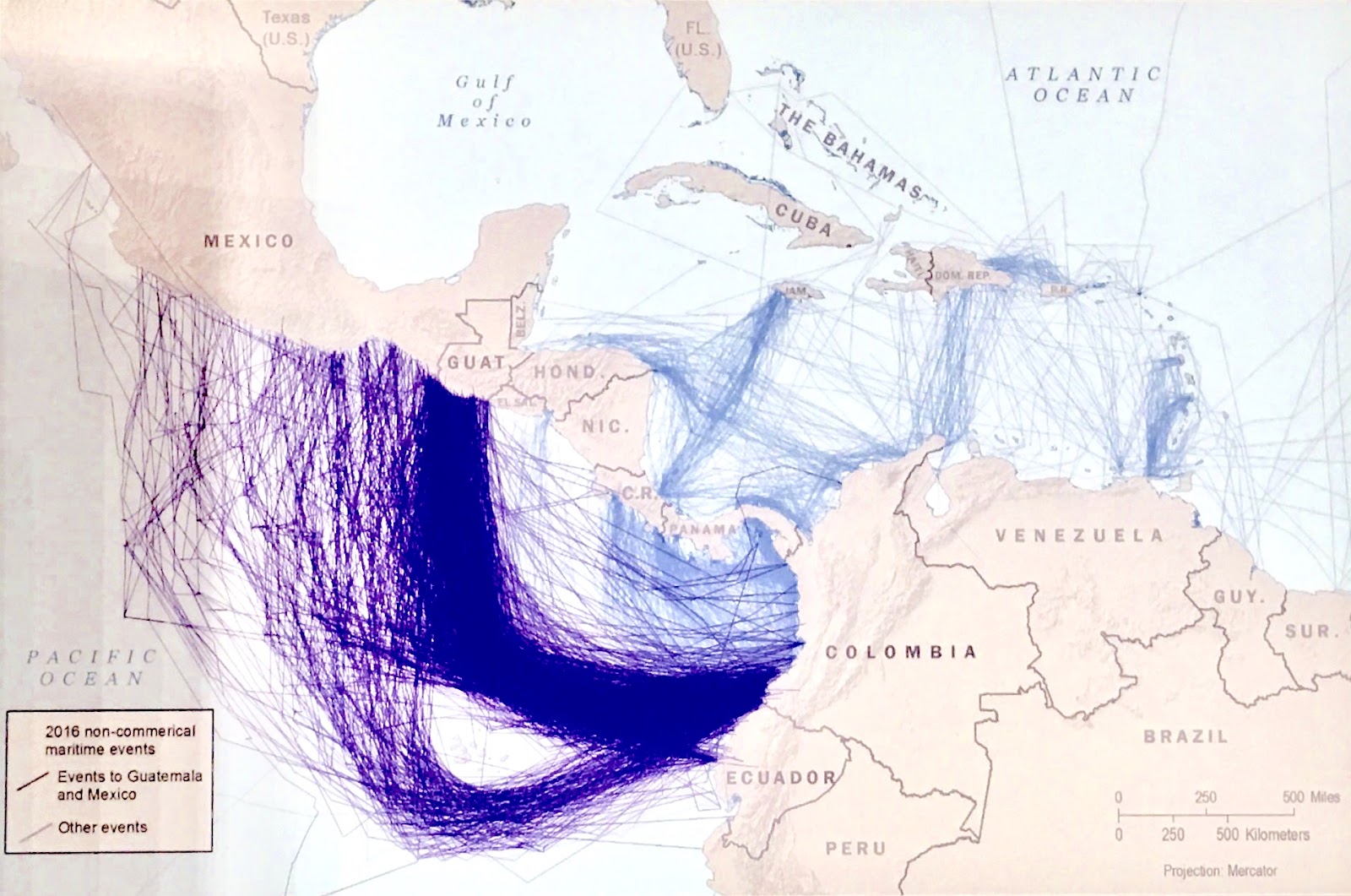
Maritime drug flows from South America in 2017. Photo: Adam Isaacson
Of course, the charges have nothing to do with the drug trade; they are the latest escalation in the Trump administration’s “maximum pressure March.” The pretext is an alleged plot by the Venezuelan government to flood the United States with “somewhere between 200-250 metric tons of cocaine.” Although that figure might seem high, it’s important to understand the context. The United States is the world’s biggest consumer of cocaine and Colombia is the world’s biggest producer. On the other hand, Venezuela does not cultivate coca, does not produce cocaine and, according to the U.S. government’s own figures, less than 10% of global cocaine traffic transits through the country.
For the sake of comparison, the U.S. agencies that provided Barr with the figure of “200-250 tons” also say that an average of nearly 2,400 tons of cocaine flowed through Colombia between 2016 and 2019 (Venezuela averaged 216 tons – ten times less – in the same period). Colombia’s current president, Iván Duque, is a close ally of the country’s former president, Alvaro Uribe, who himself has been linked to drug trafficking. Almost exactly a year ago, President Trump complained that “more drugs are coming out of Colombia right now than before” Duque was president, yet the U.S. continues giving millions in security aid to Colombia as part of its failed war on drugs.
The U.S double standard about narco-states is not limited to Colombia. Honduras’s U.S.-backed president, Juan Orlando Hernández, was linked to drug trafficking in a U.S. court, yet this news did not warrant a major announcement by the DOJ, presumably because Hernández is a U.S. ally. Another U.S. ally, Guatemala, had six times as much cocaine flow through its territory as Venezuela.
The indictments are another brick in the foundation for a pretext for either a direct U.S. military invasion or a proxy war using Colombian forces. There are obvious comparisons to 1989, when the U.S. put a $1 million bounty on Panamanian president Manuel Noriega, only to subsequently invade the country, causing an estimated 4,000 deaths.
The rewards the U.S. is offering for Maduro and four others are also troubling, as they have already been compared to a bounty. Maduro has survived at least one assassination attempt (in August 2018 when drones laden with explosives detonated prematurely), and the rewards could be interpreted as, at minimum, a “get out of jail free” card should someone succeed in murdering him. On the other hand, the rewards verify what the Venezuelan government has been saying all along: the U.S. is offering millions of dollars for people to turn on the country’s leadership.
Yet the Trump administration appears to have made a serious miscalculation by including the retired General Alcalá in the indictments. A former ally of ex-president Hugo Chávez, Alcalá joined the opposition in 2015 and has been linked to various coup plots and planned terror attacks since 2016. He is the highest profile former officer to turn against Maduro and is considered the “leader of pro-Guaidó military personnel.” Alcalá is now wanted both by the United States and by Venezuela.
Alcalá is implicated in a recent plot to attack the Maduro government. On March 24, Colombian authorities seized a truck full of weapons and military equipment, including 26 assault rifles, worth $500,000. Venezuelan intelligence services linked the weapons to three camps in Colombia where paramilitary groups of Venezuelan deserters and U.S. mercenaries are training to carry out attacks against Venezuela. According to Venezuela’s Communication Minister Jorge Rodríguez, these groups were planning to take advantage of the COVID-19 pandemic to attack military units and plant bombs. He also linked the groups to Alcalá.
These allegations proved to be correct, as Alcalá, in a video he posted online hours after the indictments, admitted that the weapons were under his command. He further admitted that the weapons were purchased with funds given to him by Juan Guaidó, with whom he allegedly signed a contract. Additionally, Alcala claimed that the operation was planned by U.S. advisors, with whom he supposedly met at least seven times. Aclalá also alleged that Leopoldo López, the founder of Guaidó’s party Voluntad Popular who was sprung from house arrest during Guaidó’s April 30 attempted insurrection, had full knowledge of the terror plot.
As a result of these videos, Venezuela’s Attorney General has opened an investigation into Juan Guaidó for an attempted coup. Despite Guaidó’s self-proclamation as president in January 2019, his attempted insurrection in April 2019, his repeated calls for sanctions and a military invasion, Venezuelan authorities had refrained from moving against him. The U.S. indictments appear to have caused the Venezuelan government to issue its strongest response to the Trump administration’s and Guaidó’s continued provocations.
Of course, if the Trump administration were truly serious about combating terror, corruption and drug trafficking, the first Venezuelan they should look at ought to be Juan Guaidó. After all, he was photographed with members of the infamous Los Rastrojos drug cartel, who allegedly helped him cross into Colombia in exchange for his turning a blind eye to the cartel’s expansion from Colombia into western Venezuela. Guaidó’s team in Colombia embezzled humanitarian aid funds and now he has been directly implicated in a terror plot, one which presumably used money given to him by the United States (as that is his only source of financing).

Max Blumenthal
✔@MaxBlumenthal
The US regime has put a mafia-style bounty on the head of the elected leader of Venezuela and set the stage for a Panama-style intervention.
It seeks to install Juan Guaido, an unelected marionette who has worked hand in glove with the Los Rastrojos narco gang in Colombia.

2,585
1:37 PM - Mar 26, 2020
Twitter Ads info and privacy
1,844 people are talking about this
The revelations about Guaidó’s spending of U.S. funds to buy weapons and his alleged involvement in yet another violent plot are putting pressure on opposition figures and parties that have hinted at wanting to participate in this year’s legislative elections but have yet to fully commit to dialogue. A day before the U.S. indictments were revealed, President Maduro invited several of these leaders to join a dialogue in the Apostolic Nuncio (the Vatican’s embassy in Caracas) in order to try to reach consensus over the nation’s response to COVID-19. Now they are faced with the difficult choice of either angering Venezuelan voters (83% of whom reject a military option) by continuing to support Guaidó’s violence or angering the United States by working with indicted government officials.
The Trump administration has been sabotaging a negotiated solution to Venezuela’s problems for two years, including in February 2018, when it threatened an oil embargo and support for a coup during negotiations between the government and the opposition in the Dominican Republic, and again in August 2019, when it imposed a full embargo during another attempt at dialogue. These new indictments, which even the New York Times described as “highly unusual”, seemed timed to sabotage negotiations once again, as earlier in the week members of the moderate opposition, including National Assembly president Luis Parra, had recently urged the U.S. to lift the sanctions due to the coronavirus pandemic.
Yet another blunder with the indictments is that the Trump administration is sending contradictory messages. On the one hand, they have spent three years urging high level Venezuelan government and military officials to defect, promising space to operate politically after a transition government comes into power. On the other, they indicted the most high-profile member of the military who has defected, Cliver Alcalá, on serious charges of narcoterrorism.
The brazenness of the indictments in attempting to cast Venezuela as a narco-state, the lack of foresight regarding possible repercussions, the attempted sabotage of dialogue and the mixed messaging are all signals that the Trump administration is desperate to ensure its regime change policy shows results. The victims of this policy are the Venezuelan people, who would be much better off with a policy of de-escalation, dialogue and a removal of the deadly sanctions.
As Washington privatized pandemic preparation, the national security state left Americans defenseless against coronavirus
https://thegrayzone.com/2020/03/30/coronavirus-privatization-pandemic-national-security/#more-22689
Responsibility for pandemic preparation was privatized under the Obama and Trump administrations. It’s time to face down the national security state that wasted trillions on imperial wars and abandoned Americans to fight coronavirus alone.
By Gareth Porter
Donald Trump’s failure to act decisively to control the coronavirus pandemic has likely made the Covid-19 pandemic far more lethal than it should have been. But the reasons behind failure to get protective and life-saving equipment like masks and ventilators into the hands of health workers and hospitals run deeper than Trump’s self-centered recklessness.
Both the Obama and Trump administrations quietly delegated state and local authorities with the essential national security responsibility for obtaining and distributing these vital items. The failure of leadership was compounded the lack of any federal power center that embraced the idea that guarding for a pandemic was at least as important to national security as preparing for war.
For decades, the military-industrial-congressional complex has force-fed the American public a warped conception of US national security focused entirely around perpetuating warfare. The cynical conflation of national security with waging war on designated enemies around the globe effectively stifled public awareness of the clear and present danger posed to its survival by global pandemic. As a result, Congress was simply not called upon to fund the vitally important equipment that doctors and nurses needed for the Covid-19 crisis.
At the heart of the growing coronavirus crisis in the US is a severe shortage of N95 respirators and ventilators. Those items should have been available in sufficient numbers through the Strategic National Stockpile (SNS), which holds the nation’s largest supplies necessary for national emergencies. But the stocks of crucial medical have not been maintained for years, largely because Congress has not provided the necessary funding.
Congress has been willing to dole out load of cash after pandemics hit the US. When the H1N1 flu crisis hit the United States in 2009, and close to 300,000 Americans were hospitalized, Congress appropriated $7.7 billion in special funding, including support for building up the SNS. That allowed the stockpile to provide 85 million respirators and millions of ventilators to hospitals around the country, especially during the second half of the yearlong crisis.
But since that 2009-10 crisis ended, the stockpile of such vital equipment has never been replenished. In 2020 the stockpile holds only 12 million N95 respirators – as little as 1 percent of what is now needed by health workers – and just 16,000 ventilators, compared with the estimated 750,000 people at minimum who will need a ventilator because of the Covid-19 pandemic.
These numbers are so scandalously low in relation to what is needed that senior officials Department of Health and Human Services have refused to reveal publicly how many they have in stock.
The failure to maintain those items in the stockpile was not the result of any lack of warning about the serious risk of a global pandemic that could be worse than any since the 1918 Spanish flu. It has been obvious that the frequency and ferocity of such rapidly spreading flu pandemics has been steadily rising throughout the 21st century.
The parade of recent pandemics began with SARS in 2002-3, continued with the much more serious H1N1 pandemic in 2009, and escalated with the spread of MERS IN 2012. Each one involved influenza viruses.
The H1N1 pandemic infected nearly 61 million Americans and hospitalized 274,000, causing 12,500 deaths. Another epidemic of the Ebola virus spread across much of Africa in 2014-16 but made only a slight appearance in the United States.
George Poste, a former director of Arizona State University’s Biodesign Institute with close ties to the US military-intelligence apparatus, warned in 2018 that even though the horror of the 1918 flu epidemic had not been repeated, it was “inevitable that a pandemic strain of equal virulence will emerge.”
The awareness of the threat of a pandemic even reached into the National Security Council. In 2015, once the Ebola crisis had passed, the Obama administration’s departing Ebola coordinator convinced the White House to create an National Security Council (NSC) office for the threat from pandemics.
Then, a week before Trump’s inauguration, Obama’s outgoing homeland security adviser, Lisa Monaco, organized a simulation based on how the administration would respond to what she called a “nightmare scenario”: a flu pandemic that forces a halt to international travel and causes a stock market crash and for which there is no effective vaccine.
In May 2018, Luciana Borio, the director for medical and biodefense preparedness on the NSC staff, declared publicly that a flu pandemic that we “know cannot be stopped at the border” was the leading health security threat, and that the United States was not prepared for it.
But neither the NSC office nor the NSC itself produced a major initiative to focus political attention on the pandemic threat. The office’s role, as described by Beth Cameron, who oversaw it, was limited to closely monitoring global health threats to provide early warning of any potential pandemic.
So when arch-militarist John Bolton promptly downgraded the office after becoming Trump’s national security adviser, it made little difference.
Responsibility for domestic preparedness for a pandemic has always belonged not to NSC but to the Department of Health and Human Services (HHS). HHS organized a month-long simulation in 2019 involving a number of federal offices that ultimately demonstrated how seriously unprepared the government was to cope with a pandemic. Following such an exercise, it should have been obvious that a new stockpile of necessary medical gear was urgently needed.
However, the HHS made no serious effort to replenish the country’s diminished stockpiles of masks, ventilators, and other critical supplies. And even if it had, it would have had to have competed with a much more powerful military-industrial complex for funding, and almost certainly would have failed.
Deeply entrenched bureaucracies and defense contractors dominate the federal government. Thanks to hefty campaign contributions and other benefits to members of Congress who control budgetary decisions, the national security state is easily able to secure its demands. In contrast, no such lobbying complex exists to ensure the country is adequately prepared for a pandemic.
In fact, as Greg Burel, the director of the US strategic stockpile from 2009 to 2021, explained, HHS and the Strategic National Stockpile lost all responsibility for sending N-95 masks and ventilators to state and local health services and hospitals in a national health emergency. Hospitals and state and local health departments must therefore compete with one another to obtain limited commercially available suppliers after they are already knee-deep in a pandemic.
Responsibility for the preparation for the most significant threat to US security – a pandemic that would upend the economy and society as a whole – was thus privatized under both the Obama and Trump administrations.
At the same time, a bipartisan consensus emerged around shoveling $15 trillion in taxpayer money into wars that had little to do with national security in any true sense, and focused instead on the perpetuation of American empire.
The catastrophic human consequences of the failure to provide these essentials for a minimally adequate response should become the basis of nationwide political movement that takes on the national security state and its deadly grip on Congress.
Multi-billion-dollar weapons systems may have provided lucrative kickbacks to members of Congress and spacious Northern Virginia McMansions to arms industry lobbyists, but they have not provided an iota of security from coronavirus.
Such a movement would have seemed impossible only a few weeks ago. But after decades of preemption of resources for the parochial interests of a self-serving national security bureaucracy and its elite political allies, it is clear that most Americans have been abandoned before a pandemic their leaders dismissed and ignored.
A simple insistence that the actual security interests of the American people be served, rather than those of militarists who have hijacked the concept of national security for their own self-interest, is paramount.
A movement demanding this radical shift could be driven by very reasonable expectation that untold hundreds of thousands could die during a series of viral outbreaks throughout the next decade. As Dr. Peter Daszek, the president of the EcoHealth Alliance and a leading expert in predicting their impact of pandemics, recently told the Wall Street Journal, “We’re going to be hit with a much bigger one sometime in the next 10 years.”
Subscribe to:
Comments (Atom)