Wednesday, April 1, 2020

Creeping fascism and the ongoing democracy theater (election) in the US
Trump is unpredictable, and he has more than once antagonized his corporate masters, who control the US.
As a result, Trump's corporate masters would apparently now prefer to install a demented and totally compliant Biden (along with an equally compliant neoliberal female VP).
But whether or not the ongoing democracy theater (election) leaves Trump in place, the US will likely see the kind of right-wing power-grab we just saw in Hungary.
Mnuchin's recent corporate bailouts are a step in this direction.
But the US congress is already so corrupt and compliant that this power-grab may pass virtually unnoticed by the public.
Along these lines, the US mainstream media is such an effective propaganda machine that most of what happens here always goes unnoticed by the public.
This is why Trump's approval ratings are high right now.
The Democrat elites prefer Trump to Bernie Sanders...
Week ending December 28, 2019, influenza-like illness activity in Maryland was HIGH
https://www.maryland.gov/pages/search.aspx?q=flu%20in%20maryland,%20december%202019&site=v6vsk0os4s4&name=the%20Department%20of%20Health%20and%20Mental%20Hygiene
Maryland Weekly Influenza Surveillance Activity Report
https://phpa.health.maryland.gov/influenza/fluwatch/.../ Weekly%20Influenza%20Report%2020191228%20MMWR%20Week%20...
File Format: PDF/Adobe Acrobat
Dec 28, 2019 ... During the week ending December 28, 2019, influenza-like illness (ILI) activity in Maryland was. HIGH and there was WIDESPREAD ...
Fort Detrick
Fort Detrick is a United States Army Medical Command installation located in Frederick, Maryland.
Historically, Fort Detrick was the center of the U.S. biological weapons program from 1943 to 1969.
Since the discontinuation of that program, it has hosted most elements of the United States biological defense program. Wikipedia
Aug. 2, 2019: Fort Detrick lab shut down after failed safety inspection; all research halted indefinitely
By Heather Mongilio hmongilio@newspost.com
Aug 2, 2019
10
https://www.fredericknewspost.com/news/health/fort-detrick-lab-shut-down-after-failed-safety-inspection-all/article_767f3459-59c2-510f-9067-bb215db4396d.html
All research at a Fort Detrick laboratory that handles high-level disease-causing material, such as Ebola, is on hold indefinitely after the Centers for Disease Control and Prevention found the organization failed to meet biosafety standards.
No infectious pathogens, or disease-causing material, have been found outside authorized areas at the U.S. Army Medical Research Institute of Infectious Diseases.
The CDC inspected the military research institute in June and inspectors found several areas of concern in standard operating procedures, which are in place to protect workers in biosafety level 3 and 4 laboratories, spokeswoman Caree Vander Linden confirmed in an email Friday.
The CDC sent a cease and desist order in July.
After USAMRIID received the order from the CDC, its registration with the Federal Select Agent Program, which oversees disease-causing material use and possession, was suspended. That suspension effectively halted all biological select agents and toxin research at USAMRIID, Vander Linden said in her email.
The Federal Select Agent Program does not comment on whether a program such as USAMRIID is registered and cannot comment on action taken to enforce regulations, Kathryn Harben, a spokeswoman for the CDC, wrote in an email.
“As situations warrant, [Federal Select Agent Program] will take whatever appropriate action is necessary to resolve any departures from regulatory compliance in order to help ensure the safety and security of work with select agents and toxins,” Harben said in the email.
The suspension was due to multiple causes, including failure to follow local procedures and a lack of periodic recertification training for workers in the biocontainment laboratories, according to Vander Linden. The wastewater decontamination system also failed to meet standards set by the Federal Select Agent Program, Vander Linden said in a follow-up email.
“To maximize the safety of our employees, there are multiple layers of protective equipment and validated processes,” she said.
Vander Linden could not say when the laboratory would be able to continue research.
“USAMRIID will return to fully operational status upon meeting benchmark requirements for biosafety,” she said in an email. “We will resume operations when the Army and the CDC are satisfied that USAMRIID can safely and consistently meet all standards.”
USAMRIID has been working on modified biosafety level 3 procedures and a new decontamination system since flooding in May 2018. This “increased the operational complexity of bio-containment laboratory research activities within the Institute,” she said.
At the time of the cease and desist order, USAMRIID scientists were working with agents known to cause tularemia, also called deer fly or rabbit fever, the plague and Venezuelan equine encephalitis, all of which were worked on in a biosafety level 3 laboratory. Researchers were also working with the Ebola virus in a biosafety level 4 lab, Vander Linden said.
Of the pathogens, Ebola, bacteria Yersinia pestis (plague), and bacterium Francisella tularensis (tularemia) are on the list of the Health and Human Services select agents and toxins. The three are considered Tier 1 agents, which pose a severe public health and safety threat.
Venezuelan equine encephalitis also falls under the Federal Select Agent Program, according to the Code of Federal Regulations.
The military research institute is looking at each of its contracts to see what will be affected by the shutdown. USARMIID work outside the lab is not expected to be affected, including on Ebola, Vander Linden said.
“We are coordinating closely with the CDC to ensure that critical, ongoing studies within bio-containment laboratories are completed under appropriate oversight and that research animals will continue to be cared for in accordance with all regulations,” she said in an email. “Although much of USAMRIID’s research is currently on hold, the Institute will continue its critical clinical diagnostic mission and will still be able to provide medical and subject matter expertise as needed to support the response to an infectious disease threat or other contingency.”
According to the Code of Federal Regulations, which also lists required training, records and biosafety plans, Federal Select Agents Program registration can be suspended to protect public health and safety. It is not clear if this is why the USAMRIID registration was suspended.
The code also gives the Department of Health and Human Services, under which the CDC falls, the right to inspect any site and records, without prior notifications. Vander Linden said in the email that the CDC inspected USAMRIID several times over the past year, both unannounced and on a regularly scheduled basis.
USAMRIID will work to meet requirements set by the Army and the CDC and have its suspension lifted, Vander Linden said.
“While the Institute’s research mission is critical, the safety of the workforce and community is paramount,” she said. “USAMRIID is taking the opportunity to correct deficiencies, build upon strengths, and create a stronger and safer foundation for the future.”
Fort Detrick laboratory restored to full operations after being shut down by CDC
By Heather Mongilio hmongilio@newspost.com
Heather Mongilio
16 hrs ago
https://www.fredericknewspost.com/news/politics_and_government/military/fort-detrick-laboratory-restored-to-full-operations-after-being-shut/article_fcee204f-1493-52fb-ba9b-f80cb00da727.html
The Centers for Disease Control and Prevention has restored a military laboratory on Fort Detrick to full capacity, approximately eight months after shutting down research in its top laboratories.
The CDC approved U.S. Army Medical Research Institute of Infectious Diseases return to full capacity, allowing it to conduct its full scope of work on infectious diseases, according to a press release from Sens. Ben Cardin and Chris Van Hollen and Reps. David Trone and Jamie Raskin.
“USAMRIID conducts vital research on the spread and containment of infectious diseases. As we continue to battle the coronavirus outbreak, ensuring their ability to work at full capacity is more important now than ever,” Van Hollen said in the release. “We fought hard to ensure USAMRIID had the resources necessary to receive CDC approval and get back up to full operational capacity. We will continue working to support funding for USAMRIID to carry out its crucial mission.”
In July, the CDC issued a cease and desist order for work in biosafety level 3 and 4 laboratories, where researchers handle dangerous pathogens like Ebola and the bacteria causing the plague. The order came after the CDC noted lapses in biosafety protocols during a site visit.
The two breaches reported by USAMRIID to the CDC demonstrated a failure of the Army laboratory to “implement and maintain containment procedures sufficient to contain select agents or toxins” that were made by operations in the biosafety level 3 and 4 laboratories, according to a report obtained last year by The Frederick News-Post.
The CDC revisited USAMRIID multiple times since July, allowing the laboratory to resume partial operations in November. Each follow-up visit allowed a little more work.
Follow Heather Mongilio on Twitter:
@HMongilio
Save
MORE INFORMATION

Fort Detrick lab shut down after failed safety inspection; all research halted indefinitely
All research at a Fort Detrick laboratory that handles high-level disease-causing material, such as Ebola, is on hold indefinitely after the C…
Effect of USAMRIID shutdown o
Fact check: Could your December cough actually have been coronavirus? Experts say more research is needed
[THERE WERE OUTBREAKS IN THE US OF STRANGE FLU-LIKE ILLNESSES DURING FALL 2019, AND UP UNTIL JANUARY 2020. MY WIFE AND I HAD WHAT WE THOUGHT WAS THE WORST FLU EVER, BUT WE TESTED NEGATIVE FOR THE FLU. --vanishing mediator]
Ian Richardson
USA TODAY
updated March 29, 2020
https://www.usatoday.com/story/news/factcheck/2020/03/26/coronavirus-fact-check-could-your-december-cough-have-been-covid-19/2899027001/
The claim: People who suffered from a round of illness in November and December likely had the coronavirus
A handful of widely circulated Facebook posts have asserted that people in the United States likely contracted the coronavirus as early as last fall.
“Who got sick in November or December and it lasted 10 to 14 days, with the worst cough that wouldn’t go away?” the posts say. “If you can answer, yes, then you probably had the coronavirus. There were no tests and the flu test would come back negative anyway. They called it a severe upper respiratory infection.”
Many of the posts currently circulating include the profile photo of a Facebook user named Donna Lee Collier. Collier did not respond to a USA TODAY request for comment on the origin of the posts.
Daily coronavirus updates:Get USA TODAY's Daily Briefing in your inbox
Bonnie Powell, of Waynesboro, Georgia, copied the status and received more than 230 shares. She said the post reflects her opinion, not necessarily scientific proof. But she said she had heard from friends about sickness at the end of last year, which makes her suspicious.
"Our area has had a very virulent 'flu' season with many of my friends testing negative for flu," she said in a Facebook message.
Coronavirus likely originated in November, was first in U.S. in January
Researchers have tied the origin of the virus to a live animal market in Wuhan, China. The World Health Organization first received a report of the outbreak on Dec. 31, but the virus originated in China more than a month earlier than that. A study published in early March by researchers at ETH Zurich puts the origin of the virus in the first half of November.
Fact check:Coronavirus originated in China, not elsewhere, researchers and studies say
Rumors surrounding the origins of the novel coronavirus have swirled as it spreads around the globe. Theories that the virus originated in a Chinese laboratory, or that it originated outside of China and was brought over by the U.S. Army, are not supported by evidence, according to medical experts. The virus is believed to have animal origins, likely in bats.
Fact check:Is COVID-19 caused by human consumption of animals?
On Jan. 21, the Centers for Disease Control and Prevention announced the first case of novel coronavirus in the United States from a person who had recently returned to Washington from Wuhan. The United States has since surpassed China and Italy to become the most infected country in the world, according to a tracker from Johns Hopkins University.
Symptoms of the novel coronavirus include a fever, cough and shortness of breath. Reported illnesses range from mild symptoms to severe symptoms and death.
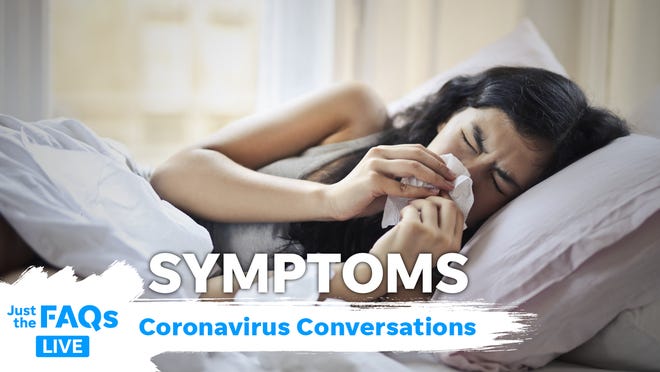
Could the coronavirus have been in the U.S. before January?
Experts say it's plausible that coronavirus came over to the U.S. from China before that first January case, but more testing is needed to be sure.
"Anecdotally, we've heard about some influenza-like illnesses in December and January that were a little bit atypical," said Dr. Luis Ostrosky, a professor of infectious diseases at McGovern Medical School at UTHealth in Houston. "But the thing we need to solve that puzzle is when we actually start doing testing of antibodies, not just detecting the virus."
Ostrosky said that would include taking a look at blood samples from December and January to see if the virus was already in circulation.
Dr. Georges Benjamin, executive director of the American Public Health Association, said he believes when researchers do more testing, they will probably find the disease was in the U.S. earlier than first believed.
"I believe at the end of this, when we do look back – and we will – we will probably find that this disease was here earlier than we thought," he said. "We also know that when we closed our borders, it was very, very leaky."
However, Benjamin said it's "plausible but not likely" that the coronavirus was in the United States in November and December. If it were in the U.S. before the end of the year, the case would also have likely been connected to travel from China, he said, and likely not widespread.
Dr. Josh Petrie, assistant research professor at the University of Michigan School of Public Health, said it's important to remember that multiple existing viruses can cause severe upper respiratory symptoms and circulated late last year. Among them was Influenza B, which grew in intensity around November and December, as well as RSV and Influenza A.
He said it's possible there were "sporadic" travel-related cases earlier than the discovery of the first case but agreed it was likely not widespread as far back as November or December.
"There's a lot of surveillance that goes on for influenza every year, and so if we were seeing a lot of coronavirus activity at that time – even if you couldn't test for it – you would see signals in that influenza surveillance," he said.
Would already having the coronavirus make someone immune to further infection by it? That's also still under investigation. Ostrosky said that, in general terms, other coronaviruses do result in built-up immunity.
A New York Times article published Wednesday about research efforts underway to study antibodies characterized the answer to the immunity question as "a qualified yes, with some significant unknowns." Dr. Vineet D. Menachery, a virologist at the University of Texas Medical Branch at Galveston, told the Times that people who are infected may have one to two years of immunity, with any longer time span hard to predict.
Our ruling: More information needed
At this point, experts contacted by USA TODAY say it's unlikely that just because someone had a cough or other symptoms of an upper respiratory infection that they "probably had the coronavirus," especially as far back as November.
But it's also plausible that some cases did arrive in the U.S. earlier than the first reported case in January. Experts say additional testing and research is needed to get an exact picture.
Our fact-check sources:
USA TODAY: Fact check: Coronavirus originated in China, not elsewhere, researchers and studies say
USA TODAY: Fact check: Did the coronavirus originate in a Chinese laboratory?
Centers for Disease Control and Prevention: Information on common human coronaviruses
Centers for Disease Control and Prevention: Information on the novel coronavirus
Centers for Disease Control and Prevention: First travel-related case of 2019 novel coronavirus detected in U.S.
ETH Zurich: Study on COVID-19 Origins
Johns Hopkins University: Coronavirus case map
The New York Times: Can you become immune to the coronavirus?
Ian Richardson covers the Iowa Statehouse for the Register. Reach him at irichardson@registermedia.com, at 515-284-8254, or on Twitter at @DMRIanR.
Subscribe to:
Posts (Atom)