Monday, December 9, 2019
US farmer suicides on the rise as Trump’s trade war, extreme weather hit hard
https://www.wsws.org/en/articles/2019/12/07/farm-d07.html
By Anthony Bertolt
7 December 2019
Last month, the Washington Post profiled the suicide of farmer Chris Dykshorn in Platte, a rural farming town in South Dakota, in the context of the rising suicide rate among farmers in the US.
With $300,000 in debt, Dykshorn and his family were unable to sell their excess grain crop due to Trump’s trade war with China and record rains had flooded their fields, severely curtailing the growing season. Squeezed under this immense pressure, and not knowing how he could provide for his wife and children, Dykshorn used a gun to take his own life.
While suicide is the tenth leading cause of death overall in the US, a recent study published by the University of Iowa found that the suicide rate for farm operators and farm workers has been more than three times higher than the national rate dating back to the 1990s and early 2000s.
Although the past two years have not yet been reported, mental health experts expect the numbers to be even higher for 2018 and 2019 as suicide hotlines have been receiving more calls in rural areas. This has prompted a limited response from federal and state agencies, including a $1.9 million US Department of Agriculture initiative to establish support groups for farms and ranches and $450,000 to train USDA employees in how to make mental health treatment referrals.
In an interview with Time, Mike Rosmann, a clinical psychologist and farmer from Iowa, reported that he was receiving seven calls per week from farmers with mental health problems usually resulting from their struggles with finances.
The death of Chris Dykshorn provides a glimpse into the devastation brought about by consecutive years of extreme weather that have cut the growing season short and destroyed crop yields, trade war, and the predation of financial institutions burying farmers in unbearable debts.
Compounding the already record rainfall from the previous year, this year saw historic floods in the Midwest from melting ice and snow from the record-breaking winter, devastating crop yields primarily for corn and soybean farmers. Farmers whose fields were less affected by the flooding were still cut off from roads and railways, limiting their ability to sell their crops and transport or feed livestock.
According to the USDA, only 30 percent of corn fields had been planted as of May this year, compared to the 66 percent average. In South Dakota, the amount of corn fields planted dropped to 4 percent compared to the average of 54 percent over the past five years, and 21 percent in Minnesota compared to the average of 65 percent.
In addition to abysmal crop yields for this year, Trump’s trade war has driven down the buying prices of crops as China has refused to buy any crops from American farmers, leaving soybean farmers without any buyers and unable to pay off massive debts. After Trump’s trade-war tariffs directed at China in August, China cancelled all purchases of US agricultural products in a retaliation against the Trump administration. The tariffs were 10 percent for all $300 billion in Chinese agricultural imports.
Farm debt in the US stands at a combined $416 billion, which is an all-time high, and more than half of all farmers have lost money every year since 2013. Like other areas of the economy, small farmers and farm workers are losing their jobs to technological advances that are mostly implemented by the largest corporate farms and too expensive for independent farmers to afford. While the US lost almost 100,000 farms from 2011 to 2018, the number of large farms with over 2000 acres has been steadily increasing.
Dean Foods, the largest milk producer in the country, has been shuttering processing plants, laying off hundreds of workers and leaving dairy farmers to sell their farms or go further into debt. A 26 percent decline in milk consumption in the US and the loss of contracts with Walmart and Food Lion cut into the company’s revenues, leading to its filing for Chapter 11 bankruptcy in November.
The social crisis wrought by the economic pressure on farmers has resulted in increasing rates of death by suicide and homicide all across the United States but especially in the South and Midwest, where access to mental healthcare is limited.
The loss of a job for independent farmers often means losing a home which has been their family farm for generations. The likelihood of finding another job in rural areas is low with even department store chains, long the mainstays of small towns, shuttering in the face of competition from warehouse and delivery giants like Amazon.
Aware of the deepening impact of the tariffs, the Trump administration has attempted to placate farmers ahead of the 2020 elections with the institution of nearly $16 billion in bailout programs for farmers affected by the trade war.
However, most of the aid has gone to the largest farms, leaving independent farmers to fend for themselves. Over the course of this year alone, farm bankruptcies have increased by over 24 percent, jumping to the highest level since 2011.
Every aspect of the crisis this year was only made worse by the negligence of the ruling class. Farmers and workers were forced to deal with all of the preparations and cleanup after the floods in the spring, putting up sandbags to protect their homes and belongings, only to be left with little to no form of assistance after the floods.
Low crop yields, low buying prices for commodities and/or no buyers for crops due to Trump’s trade war with China have precipitated a major crisis for farmers in the US. There is extreme pressure on farmers, who find themselves unable to pay off massive loans or even sustain their own lives and those of their families. The crisis facing agriculture in the US will also drive food prices higher on the shelves of grocery stores, only adding to the misery of the same struggling rural farmers and working-class families.
Each aspect of the crisis facing American farmers serves as a damning exposure of the irrationality of the capitalist system, in which the ruling class finds a more lucrative opportunity in forcing independent farmers into financial ruin and personal despair than in meeting the needs of those who produce a significant portion of the world’s food supply.

Australian cities bathed in smoke from hundreds of bushfires
https://www.wsws.org/en/articles/2019/12/07/bush-d07.html
By Martin Scott
7 December 2019
The horror early start to Australia’s bushfire season has continued this week, with fires burning out of control in the states of New South Wales (NSW), Queensland, Western Australia and Victoria.
Sydney has been enveloped in toxic smoke for days on end as a result of blazes burning to the south, west and north of the city. The NSW Department of Planning, Industry and Environment reported that air quality was “hazardous” in the city on 12 days last month. At times, smoke haze has caused air quality in both Sydney and Brisbane to rank among the worst in the world.
In the latest flare-ups, the NSW Rural Fire Service (RFS) issued an emergency warning for a fire burning at Gospers Mountain, northwest of Sydney. The fire, which has already burnt more than 250,000 hectares, merged with two smaller blazes on Friday morning.
Southwest of Sydney, the Green Wattle Creek fire has consumed more than 45,000 hectares and jumped Lake Burragorang, Sydney’s main water supply reservoir. Three firefighters were injured fighting the blaze and had to be airlifted to hospital on Thursday. Press photographers and firefighters described witnessing a spontaneous explosion of bushland on Thursday night that was unlike anything they had seen before.
On the NSW South Coast, a fire originating near Currowan has threatened residents throughout the week. The fire crossed the main coastal Princes Highway on Monday, leaving residents of Depot Beach, Pretty Beach, Pebbly Beach and Bawley Point with no way to leave. The fire has spread over more than 70,000 hectares and destroyed at least one home. While it has been downgraded to “watch and act,” residents of the South Durras area have been encouraged to leave.
Less than 100 kilometres inland, a fire in the Tallaganda National Park burnt through more than 30,000 hectares in 10 days. Residents in Braidwood and surrounding areas, not far from Canberra, are still being told to monitor the situation carefully, as hot, dry and windy conditions are forecast for the coming days.
There are currently 100 bush and grass fires burning across NSW, 13 of which carry “emergency” or “watch and act” warnings. Since July, bushfires in the state have scorched more than two million hectares of land, and destroyed more than 680 homes. Six people have been killed.
In southeast Queensland, Cypress Gardens and Forest Ridge were evacuated on Wednesday, threatened by the worst of the 47 fires burning across that state. While the blaze continues, the warning has been downgraded to “watch and act.” So far, at least three homes have been lost.
There is no reported immediate threat to human lives from bushfires currently burning in Victoria, but fires in East Gippsland last weekend claimed the life of a 69-year-old worker assisting the firefighting effort when his vehicle rolled down an embankment.
The most serious fire in Western Australia is at Nambeelup, just south of Perth. Although the fire is currently contained, the weather forecast is for strong winds and high temperatures, raising concerns the fire may spread toward built-up areas.
The danger of bushfires is not limited to the immediate vicinity of the fire. Smoke from the fires has travelled as far as New Zealand and South America.
While the sight of ashes falling from the sky is a stark reminder of the ongoing catastrophe, the invisible components of the smoke present a greater threat. Tiny (smaller than 2.5 micrometres) particles in bushfire smoke cause irritation in the eyes and throat, and enter the bloodstream through the lungs.
The effects are unpleasant for otherwise healthy people, but for sufferers of respiratory illnesses, including asthma, lung cancer and emphysema, or those at risk of heart attack, this level of smoke pollution can be life-threatening.
In NSW, ambulance calls related to asthma or breathing issues are up 30 percent on the weekly average, and emergency presentations are up 25 percent due to the smoke haze.
Smoke-polluted air is also known to cause an increase in the number of people needing medical attention for deep vein thrombosis, complications of diabetes and neurological disorders including Parkinson’s disease.
A recent US study found that short-term exposure to fine particulate matter was positively correlated with an increase in deaths and hospital admissions resulting from conditions not previously thought to be related to air pollution, including septicaemia, fluid and electrolyte disorders, renal failure and intestinal obstruction without hernia.
The NSW government has denied reports that its fire services have suffered cuts of up to $40 million. But it is clear that spending on firefighting personnel and resources is not keeping pace with the impact of climate change, population growth and shoddy construction practises, including flammable cladding on apartment buildings.
Unlike police officers, firefighters are not designated “frontline workers” and are therefore not exempt from the NSW Labour Expense Cap, an austerity measure ordering government agencies to limit promotions, cut overtime payments through increased use of part-time and casual workers, and reduce staff numbers through “natural attrition.”
This means greater reliance on volunteers. The annual labour cost for the state’s RFS volunteer force is less than $120 million, in the form of insurance, workers’ compensation and a payroll tax exemption for employers while their employees are fighting fires.
As climate change increases the number and intensity of bushfires, and the length of fire seasons, ever-greater demands are being placed on volunteer firefighters. Former chief executive of the Country Fire Authority (CFA), the Victorian equivalent of the RFS, Neil Bibby, recently told reporters: “Disasters are becoming bigger and lasting longer, and starting earlier and finishing later in the year… [W]e’re coming to the tipping point where the ability to rest people and the ability to do the job the volunteers do is diminishing.”
The sustainability of volunteer-based fire services is being further undercut by the ageing of the population. This is exacerbated in rural areas by an exodus of younger people, driven by high unemployment, lack of educational opportunities and the consolidation of small family farms into massive agribusinesses.
Longer working hours, more families with both parents working full-time and increased commute times as a result of inadequate infrastructure and overpriced housing, also leave workers with little time to volunteer for fire fighting.
Nonetheless, thousands of workers still come forward, saving countless lives and homes. The bravery and generosity displayed by ordinary people in times of crisis stand in sharp contrast to the response of capitalist governments, which put the profit interests of big business and tax cuts for the wealthy ahead of the health and safety of people and the environment.
South Florida UPS driver, motorist killed in reckless police shootout in rush hour traffic
https://www.wsws.org/en/articles/2019/12/07/poli-d07.html
By Matthew Taylor
7 December 2019
A Miami, Florida area UPS driver was killed in a shootout Thursday between police and two carjackers who had taken the driver hostage and commandeered his vehicle after fleeing a jewelry store robbery in the wealthy suburb of Coral Gables. Another innocent bystander was also killed, along with the carjackers.
The UPS worker, Frank Ordonez, a 27-year-old father of two, was working as driver alone for the first time, covering the route for a co-worker who had called-in sick.
The incident started around 4 p.m. on Thursday when the two unidentified men attempted to rob a jewelry store located in the upscale shopping district known as Miracle Mile. This resulted in a shootout with the store owner and the men fleeing the scene. A woman in the store at the time was reportedly injured.
As the shootout spilled out onto the street, bullets struck nearby buildings, including city hall. The two robbers reportedly abandoned their getaway vehicle and then hijacked the UPS truck driven by Ordonez, who was in the area making a delivery.
The robbers then led police on a high-speed chase across Dade and Broward counties, ending miles away in Miramar when the UPS truck got stuck on Miramar Parkway, a section of I-75, during rush hour traffic.
At least nineteen police officers then surrounded the vehicle on three sides and began exchanging fire with the two criminals. In video of the incident police officers can be seen taking cover behind vehicles with drivers and passengers still inside, unable to escape the deadly gridlock.
Police officers from five different agencies participated in the shootout, firing at least 200 rounds. As footage of the incident spread social media users denounced the police for recklessly opening fire while Ordonez was still being held hostage and endangering innocent bystanders caught in the hail of bullets.
One video posted on social media showed police firing dozens of shots at one of the robbers through the passenger side door as Ordonez, on his knees, tried to crawl to safety. It was at this time that he was likely killed by police gunfire.
Another innocent person was also killed in the shootout and at least one other injured. The slain motorist was identified by police as Richard Cutshaw, a 70-year-old resident of Pembroke Pines. Cutshaw, who worked as a union organizer, was returning home from work when he was caught in the crossfire.
Ordonez’s step-sister Genevieve Merino posted on Twitter “Today I lost my brother, because of the fucking negligence and stupidity of the police. Instead of negotiating with a hostage situation they just shot everyone. (Including my brother) please retweet this so everyone can be aware how stupid these cops are.”
Joe Merino, Ordonez’s stepfather, spoke to local media about his stepson and the circumstances leading to his death:
“Frank was 27 years old, he has a three and five-year-old daughter, dads not coming back... Frank can’t speak for himself, I will. I want to let everyone know this is police negligence. I’m gonna use a strong word because it’s been on my mind all night. Murder. They murdered him... It could have been prevented…
“Look at the videos…Frank is laying down behind the suspect, the suspect is shooting at the police and the bullets, if you look at the thirty, forty bullets riddled throughout the truck you can tell it was incoming, the suspect was pointing to the police and the police were shooting back. The video doesn’t lie...it was a wild west shooting, they had no regard for rush hour…that’s why I use words like recklessness, irresponsibility, disregard for human life, they went home that night to their families, Frank never came back.”
On Genevieve Merino’s Twitter account fellow UPS drivers and others posted messages supporting the family and condemning the police. AlfonsoD27 wrote “I’m really sorry for you and your family’s loss. I’m a UPS driver in CA. What happen to your brother really hit home. I know there’s nothing anyone can say to make this any better but just know there’s a bunch of drivers in Cali praying for you guys. Its so unfair.”
Another post read, “I have no words to express how tragic unnecessary and barbaric this was. My condolences to your family & friends. No one should have to witness a loved one encounter such violence perpetrated by those sworn to protect & serve.”
A GoFundMe fundraiser set up by Raymond Mathers, a UPS driver in New York, raised more than $42,000 in less than 24 hours from more than 1,300 donors to help Ordonez’s family cover the cost of his funeral and burial.
Ordonez had worked for five years at UPS loading trucks at the warehouse before recently being promoted to a cover driver, a position where he took up routes for co-workers who were sick or absent. He was due to receive his own route in January.
Harvard University retaliates against striking graduate students
https://www.wsws.org/en/articles/2019/12/07/harv-d07.html
By Kate Randall
7 December 2019
The administration of Harvard University in Cambridge, Massachusetts has begun to retaliate against the strike by graduate students, which began on Tuesday. Members of the Harvard Graduate Students Union–United Automobile Workers (HGSU–UAW) struck on both the Cambridge and Longwood campuses of the Ivy League school after more than a year of negotiations and 28 bargaining sessions failed to reach an agreement.
The strike has already caused the cancellation of some tutoring sessions for undergraduate students and delays in the grading of tests and papers. UPS drivers organized in Teamsters Local 25 have refused to cross picket lines to deliver packages.
Grad students help teach classes, grade papers and work in research labs. The university had called on faculty to do the work of graduate students and scab on them in the event of a strike. If the strike continues, it could disrupt exams, which begin December 10.
In an attempt at intimidation, several academic departments emailed graduate student teaching staff asking whether they are participating in the strike, prompting anger among striking union members and faculty.
The memo, which was originally sent to Government Department affiliates by Chair Jeffry A. Frieden, informed graduate students that they are responsible for reporting whether they are working and that those who strike should not expect to be paid. University faculty were also reminded that they are “management” and are responsible for their “instructional responsibilities.”
In a statement, Frieden wrote that he has “emailed all graduate students who are serving as Teaching Fellows to ask if they are working,” and to inform them that “We are collecting that information, as requested by the administration.” Other departments in the Faculty of Arts and Sciences later sent out similar memos to their graduate students and faculty.
“Please respond to this email to confirm whether or not you intend to fulfill your responsibilities as a Teaching Fellow,” reads a segment included in some emails from administrators at Harvard Divinity School, the Physics Department and the African and African American Studies departments. “Please note that by not responding to this message, you are confirming your decision to strike.”
Administrators from other departments, including the Classics, Celtic Languages and Literatures, Astronomy, Comparative Literature, East Asian Languages and Civilizations, and Germanic Languages and Literatures departments, declined to send similar emails to students.
Harvard faculty have spoken out in defense of the grad students and against the university’s intimidation tactics. Bart Bonikowski, associate professor of sociology, wrote on Facebook: “Just to be clear, like many other faculty I know, I support the @hgsuuaw strike, refuse to report any information about students’ strike participation to the administration, and won’t be holding any meetings or classes on campus until the strike is over. Solidarity!”
Dozens of faculty members have also signed a statement in support of the striking grad students. However, the strike has been ineffective at mobilizing anything but moral support from other unions on the campus. HGSU–UAW has made it clear that its picket lines are “porous” and that students, faculty and other campus workers will not be blocked from entering university buildings.
On Friday, HGSU–UAW was officially chartered as Local 5118, Region 9A of the United Auto Workers. The Harvard grad students, like grad students at universities across the country, both private and public, are determined to fight for higher wages, decent working conditions and improved benefits. But the record of the UAW proves that it is not the instrument of struggle they need to win their fight.
Most recently, the UAW betrayed the 40-day strike by General Motors workers. It has signed contracts at GM, Ford and Fiat Chrysler that will vastly expand the number of temporary workers, who have no rights but are still forced to pay union dues. The union is currently caught up in a corruption scandal that has led to guilty pleas by numerous officials and forced the resignation of the president, Gary Jones, who is implicated in the theft of hundreds of thousands of dollars in members’ dues money.
The UAW, anxious to bolster its dues base, depleted by the destruction of hundreds of thousands of autoworkers’ jobs as a result of its treacherous policies, has made a concerted effort to organize campus workers. Region 9A has organized locals at numerous Northeast campuses, including Columbia University, New York University, the University of Connecticut, the University of Massachusetts and The New School.
At Columbia in November 2018, the Graduate Workers of Columbia–UAW and the Columbia Post-Doctoral Workers–UAW entered into a “framework agreement” with the university as the “exclusive bargainers” for students. Columbia received a 14-month no-strike clause, while the students won only the “privilege” of being represented by the UAW and paying dues to the union bureaucracy.
On their own initiative, striking Harvard grad students have gained the support of UPS drivers. Strikers and their supporters have set up pickets at gates, loading docks and delivery centers. The strike has also disrupted BorrowDirect, a library borrowing service across US academic institutions. Some of BorrowDirect’s deliveries rely on UPS.
To win their struggle, however, Harvard strikers and other student workers need organizations that will fight for their democratic and social rights. The pro-capitalist and nationalist trade unions such as the UAW have proven themselves incapable of carrying out such a struggle.
Rank-and-file strike committees should be built at Harvard to reach out to the thousands of transit workers, public employees, tech and research workers and other campus workers in the Boston area and beyond.
The struggle for improvements in living standards and working conditions is above all a political issue and must be combined with the building of a mass political movement of the working class, independent of both big-business parties, the Democrats and Republicans.
We urge grad students who agree with these policies to contact the International Youth and Students for Social Equality today.
Uranium contaminated site collapsed into the Detroit River during the Thanksgiving holiday
https://www.wsws.org/en/articles/2019/12/07/detr-d07.html
By Kevin Reed
7 December 2019
The shoreline of a Detroit, Michigan property contaminated by uranium and other chemicals dating back to the 1940s collapsed into the Detroit River during the Thanksgiving holiday weekend. The public was not alerted to the existence of the toxic spill until a report was published this week by the local paper in Windsor, Ontario.
The property known today as the Detroit Dock was previously owned by Revere Copper and Brass, Inc., a provider of uranium rods for US nuclear weapons development during and after World War II.
According to a report in the Windsor Star on Thursday, the property has been listed by both the US Department of Energy and the US Environmental Protection Agency (EPA) as a contaminated site for decades. It has also been listed by the Wall Street Journal as one of the country’s forgotten nuclear legacy “waste lands” where “potential exists for significant residual radiation.”
The Windsor Star report said, “The riverbank apparently collapsed under the weight of large aggregate piles stored at the site by Detroit Bulk Storage which has a long-term lease on the property for such use.”
The Star report also said the collapse of the site—which is adjacent to the property of the historic colonial-era Fort Wayne and the narrowest stretch of the Detroit River between the US and Canada—“initially remained unknown to many responsible state and federal environmental regulatory agencies” because of the holiday weekend.
Responding nearly a week after the incident, a spokesman for Michigan’s primary environmental agency issued a statement, “Any time the Michigan Department of Environment, Great Lakes, and Energy (EGLE) learns of incidents such as the one at the Revere Copper site in Detroit, staff is greatly concerned about the impact on water quality and the public.”
The official added, “EGLE staff will evaluate what is known about the conditions onsite, look into whether there are any environmental concerns, and determine what, if any, obligations the property’s owner has, before we decide our next steps.”
Meanwhile, representatives of the US EPA were unaware of the collapsed shoreline when contacted by the Windsor Star. The agency officials said that federal responsibility for the former Revere Copper and Brass site “belongs with the U.S. Department of Energy which was tasked decades ago with oversight of dangerous properties that feature nuclear or radiation histories across the US—especially those connected with war-related equipment.”
Initially, representatives of Detroit Bulk Storage did not respond to media inquiries although heavy equipment was seen moving crushed stone around near the collapsed bulkhead on the waterfront. Subsequent reports said that Noel Frye, owner of Detroit Bulk Storage, claimed he was unaware of the environmental history of the property until the shoreline collapse.
Among the major concerns about this alarming event is the impact it will have on Detroit’s water supply. The city has water intake lines a short distance downriver from the Detroit Dock collapse.
As pointed out by Derek Coronado of Windsor’s Citizen’s Environmental Alliance, aside from the uranium, beryllium and thorium in the contaminated soil that fell into the river, the disturbance of the sediment on the bottom of the Detroit River is a major concern. Coronado told the Star, “Sediment in that area is loaded with a cocktail of chemicals that include mercury, PCBs and PAHs which all have negative health implications for humans, wildlife and the water.”
Coronado added, “But the volume of stuff (aggregate) that went into the river would cause resettlement of the contaminated sediment which is really not good. Moving that stuff around will spread contamination and cause greater destruction to what’s in the water.”
Michigan government environmental officials moved in quickly on Friday to test the water in the Detroit River and down play the risks from the spill. A report in the Detroit News said, “State testing at the site of a southwest Detroit dock collapse found radiation levels that fell below what is considered naturally occurring levels in Michigan, indicating there is no danger to public health, according to the state environmental agency.”
The News also reported, “The Great Lakes Water Authority believes the two intake sites several miles upstream and several miles downstream of the collapse are in no danger of contamination from the incident. ‘… the intake is located on the Canadian side of the Detroit River and is not in the direct flow stream of the river where the land collapsed,’ the authority said.”
Other experts have been quoted saying that the risks of harmful radiation exposure from the uranium is very low. The News reported, “Uranium generally is harmful when ingested in large amounts, which could affect kidney function. It’s unlikely that’s the case for this incident.”
However, with Detroit residents already on alert from the experience of lead contaminated water in Flint, Michigan beginning in 2014, no one is going accept the word of environmental officials that Detroit water is safe and that no one should worry about radiation poisoning.
Canadian officials have expressed concerns about the handling of the situation by state of Michigan and US government officials. New Democratic Party politician Brian Masse, the member of parliament who represents much of Windsor, has called for an “immediate binational investigation” of the collapse that includes both national governments.
Revere Copper and Brass was a subcontractor for the Manhattan Project—the secret US program for the development of the atomic bomb—and extruded and machined uranium and thorium rods for nuclear weapons development in the 1940s and 1950s. Between 1943 and 1944, 1,220 tons of uranium was extruded at the site and Revere abandoned the site in 1985.
The Detroit riverfront property collapse—with its connections to US-Canada relations, the failure of government oversight of environmental safety and the history of American industry going back to the heyday of its technological, economic and military supremacy in the era of World War II—is a microcosm of the crisis facing the working class across the country under capitalism.
While billions of dollars are being invested in Detroit by real estate speculators and the auto corporations with the expectation that enormous financial returns will be realized, the conditions of life for the city’s working class population are becoming ever more precarious and deadly.
The Plot to Discredit and Destroy Julian Assange
Robert Scheer
DEC 06, 2019
https://www.truthdig.com/articles/the-plot-to-discredit-and-destroy-julian-assange/
A day after dozens of doctors around the world released a statement about their mounting concerns regarding Julian Assange’s health as he’s detained in a British prison, Truthdig Editor in Chief Robert Scheer spoke with Tariq Ali, a renowned British journalist and co-editor of a recent collection of essays titled “In Defense of Julian Assange.” To Scheer, Ali and the book’s many contributors, the case against the WikiLeaks founder boils down to an international effort to suppress press freedoms. Yet as Sweden, the United Kingdom and the United States have co-authored Assange’s downfall, many journalists and publishers, including some at The Guardian and The New York Times—two publications that published work based on WikiLeaks—have refused to defend Assange.
“What we did in assembling ‘In Defense of Julian Assange’ was to take every single facet of the case and present it before a reading public. And one reason we had to do this is because the [liberal] press have given up on him, having used WikiLeaks, having got their scoops, having raised their own circulations,” Ali says in the latest installment of the “Scheer Intelligence” podcast.
Corporate media’s abandonment of Assange and whistleblower Chelsea Manning is no surprise to Scheer, who has spent much of his career defending and working with whistleblowers Daniel Ellsberg, John Kiriakou, Edward Snowden and others.
RELATED ARTICLES
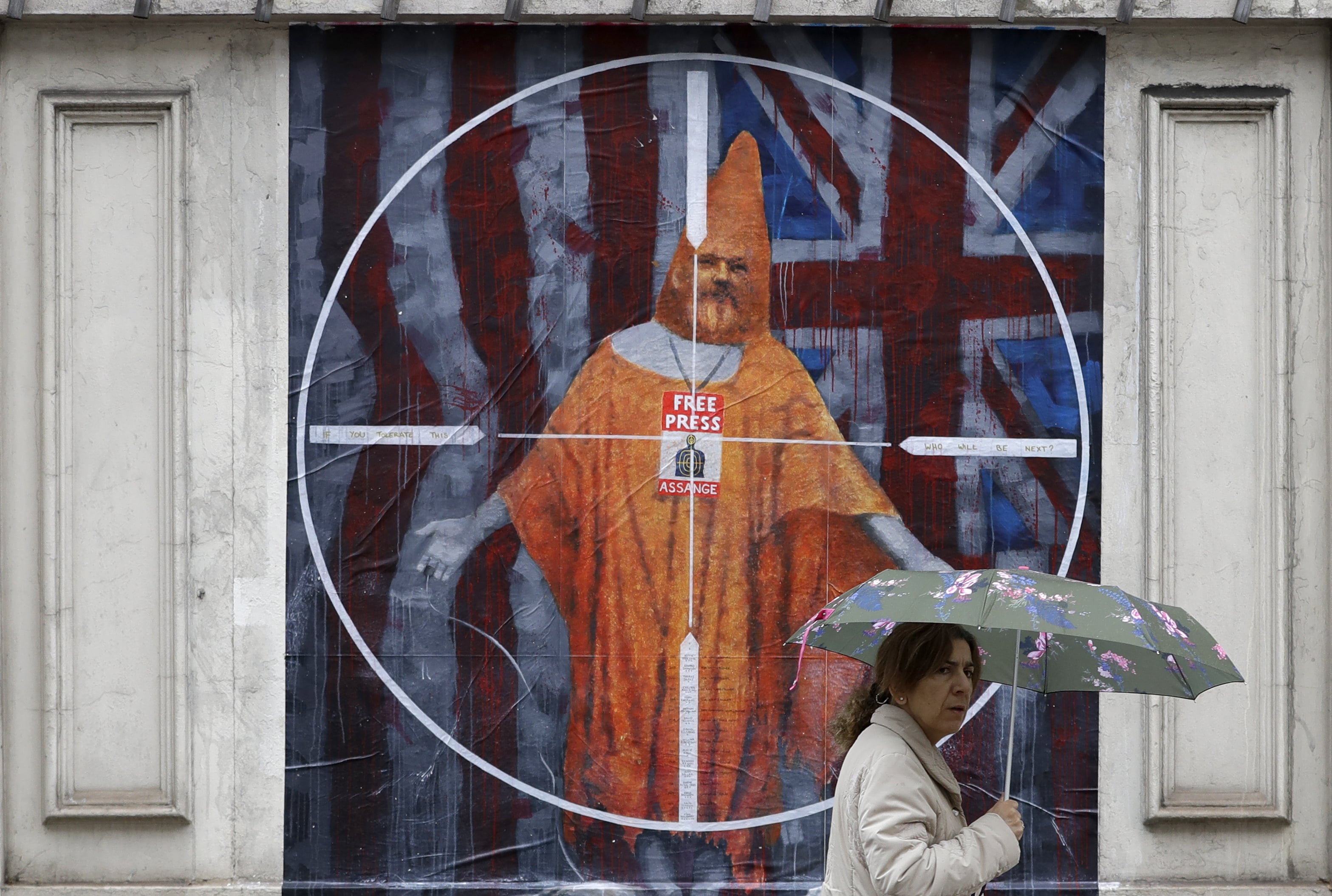
The Annihilation of Julian Assange
BY CRAIG MURRAY
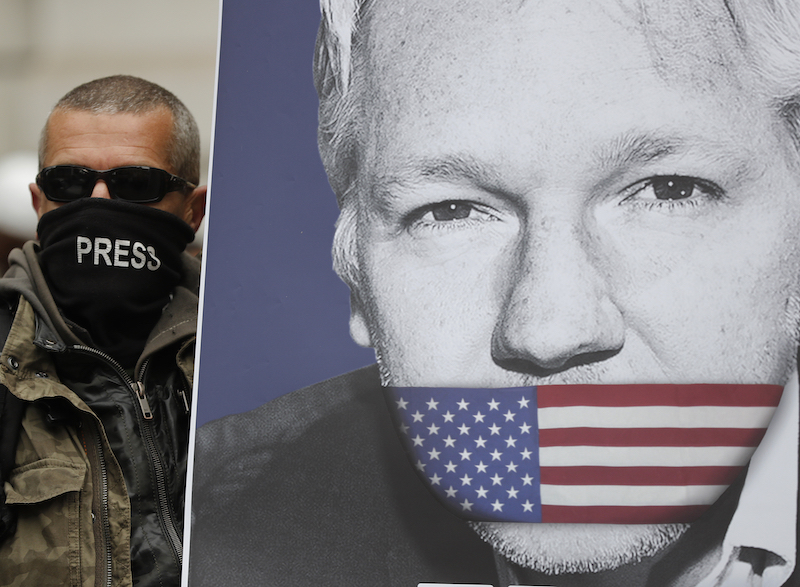
18 Ways Julian Assange Changed the World
BY LEE CAMP
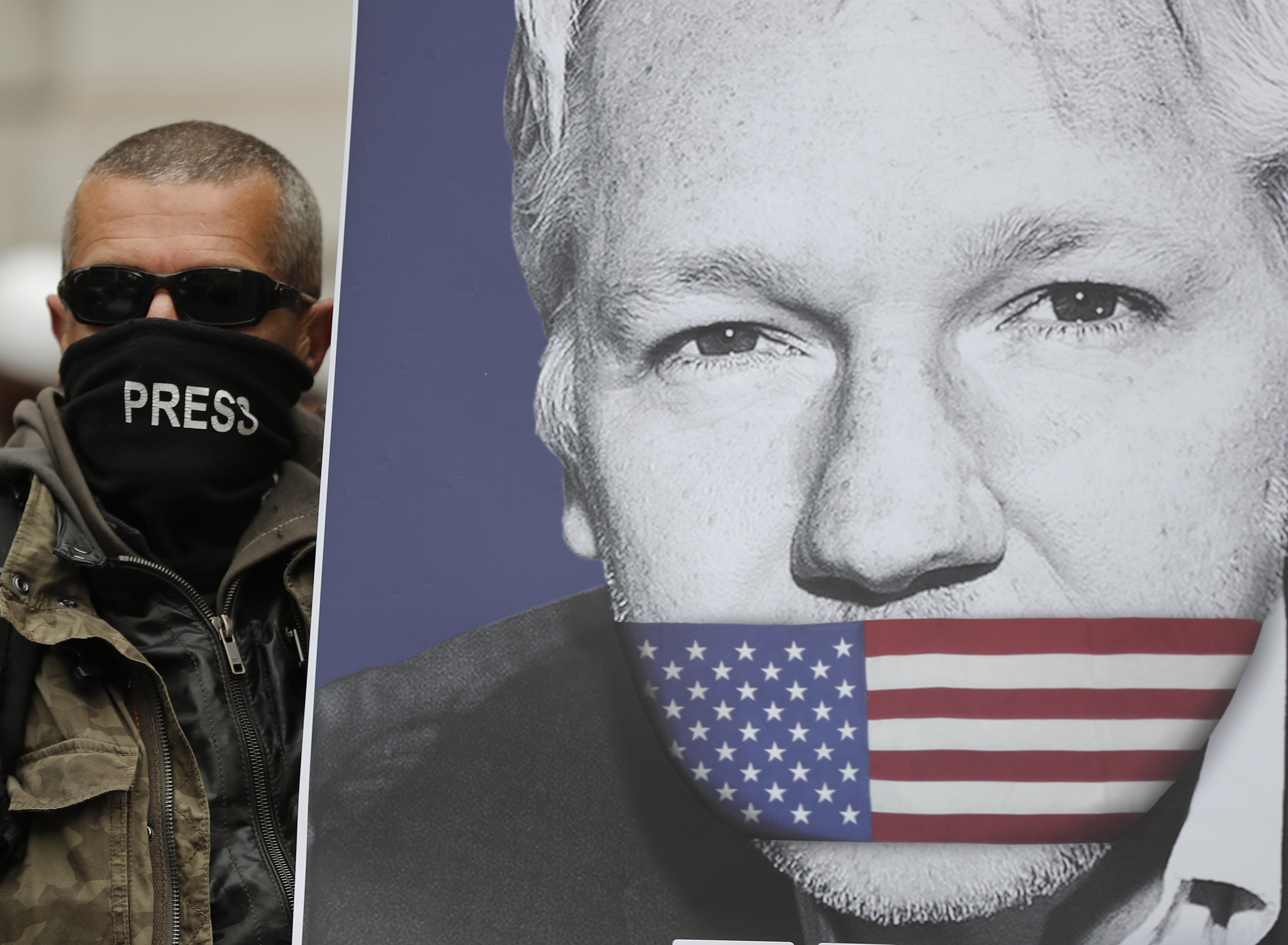
U.N. Report Condemns Torture of Assange
BY ROBERT SCHEER
“Everyone likes a whistleblower, as long as he’s blowing the whistle on their opponent, or in some other regime, or so forth,” Scheer tells Ali.
A prime example of this hypocrisy can be seen in the treatment of the Ukraine scandal whistleblower, who has been touted by Democrats and much of the press as a hero. Manning and Assange, on the other hand, are vilified, discredited, ignored, jailed and, in Assange’s case, psychologically and possibly physically tortured.
“The British government [is] keeping [Assange] in Belmarsh prison, which is a high-security prison where he’s [surrounded] either by people who have committed unspeakable murders, or so-called terrorists charged under the Prevention of Terrorism Acts, with very high security; he’s been kept in isolation. [Doctors are] worried that he might die in prison.”
Listen to Ali and Scheer’s full conversation on the many facets of the persecution of Assange, a man who, both journalists agree, is solely guilty of exposing war crimes and uncomfortable truths the establishment wanted to keep hidden from the public. You can also read a transcript of the interview below the media player and find past episodes of “Scheer Intelligence” here.
—Introduction by Natasha Hakimi Zapata
Robert Scheer: Hi, this is Robert Scheer with another edition of Scheer Intelligence, where the intelligence comes from my guests. In this case, Tariq Ali, a well-known British journalist born in Pakistan; educated, I think, largely in England; and who has written incredibly important books and analysis of U.S. foreign policy, generally critical of the tendency towards empire. And the reason for this interview is he’s assembled, along with Margaret Kunstler, a really important book. It’s called In Defense of Julian Assange, and it’s scores of people writing about different aspects of the case of Julian Assange.
Now, one reason I do these podcasts is it compels me to read a book that I might otherwise have skimmed. And that’s certainly the case of this book; its [publisher is OR Books], and In Defense of Julian Assange. I thought I knew a lot about this case. And I was surprised, in reading this book, that I fell for some of the traps set by the mass media and by governments–the U.S. government, the Swedish government; the Ecuadorian government, of late; and the British government, certainly, where Julian Assange is being held as a prisoner. I must say, much to my shame, had I not read this book carefully, I was falling for some of the personal attacks and attempts to dismiss the significance of Julian Assange.
Having read the book–and I think it’s 450, almost 500 pages–I was rewarded with an understanding, a very clear understanding, that Julian Assange is truly one of the most important journalists of, I don’t know what, the last 50 years. And I say this having been an active journalist, as Tariq has, and thought I knew quite a bit. But when I went through, really, what WikiLeaks revealed, and the universality of their concerns–including, by the way, documents unflattering for Putin’s Russia, since that’s at the key of the drama now, what was WikiLeaks’ connection with Russia–but, you know, throughout the world. And the very idea–I ended up sort of in a rage at the end of this, thinking, how dare anyone challenge Julian Assange’s role as a journalist? You don’t have to agree that he’s your kind of journalist, but the idea that he is a journalist, deserving of press freedom, acknowledgment–which is, you know, the whole attempt to justify his being held under the most brutal conditions in England–that, to my mind, is the value of your collection.
I defy anyone to spend even a few hours with this collection and have any doubts as to the significance of Julian Assange as a practicing journalist, as a publisher, deserving–as even lawyers who’ve worked for the New York Times recognize–the same consideration that the Washington Post or the New York Times had when they published the Pentagon Papers, when they publish other information uncomfortable to the U.S. government on national security terms, and so forth. And as they warned–some of these lawyers most effectively, who represented the New York Times–that if you can get these charges that are filed against Julian Assange right now by the U.S. government, basically concern the normal practices of journalists dealing with the national security state. And take it from there. I mean, but I think that is the power of this collection that you have assembled.
Tariq Ali: Well, thanks, Bob. I mean, it’s very good, especially as it comes from someone like you, who knows what investigative journalism is. It’s a sort of dying cause now, and very little of it goes on. But precisely what we did in assembling In Defense of Julian Assange was to take every single facet of the case and present it before a reading public. And one reason we had to do this is because the press have given up on him, having used WikiLeaks, having got their scoops, having raised their own circulations–the liberal press, The Guardian and the New York Times and others in Europe. It was El País, actually, to its credit, which carried on supporting the Assange. The others fell a bit silent and hoped that the case would go away, instead of defending him. Because in defending him, as The Guardian has now recognized, they were defending themselves. If Julian is found guilty of these absurd charges that have been laid against him of espionage, et cetera, then the same applies to the editor of the New York Times and the editor of The Guardian, who published these things. Why aren’t they being tried? And the reason they’re not being tried is because that would be going too far, and would raise a storm. And we did this, we put this collection together, precisely to raise a storm–saying Julian is not the editor of a mainstream liberal newspaper in the Western world, but he is the editor, and has been, of WikiLeaks, which has done an amazing job. You’re absolutely right, there’s been nothing like it over the last 50 years. Obviously there’s been whistleblowers, and some famous ones; the Pentagon Papers, you know, in the Vietnam days–
RS: And by the way–and by the way, Daniel Ellsberg has been very clear. Because nowadays, you know, he’s the favorite whistleblower for many establishment, and particularly democratic party, people. You know, they say well, Daniel Ellsberg–but at the time, I happened to be at his trial. I was then editing Ramparts, which had published quite a few whistleblowers. And at that trial, Daniel Ellsberg was facing, you know, 125 years in jail, facing the same espionage charge. Which was only, at that point had been used in, I think, three cases. It was Barack Obama who brought, I think, 11 cases under the Espionage Act, you know, and revived this 1917 legislation, which really had nothing to do with this sort of issue; it was giving secrets, military secrets to a real enemy that you would recognize.
But in this case, what is so appalling is that–and I want you to discuss the range of your book. Because you know, people are dismissing Julian Assange, or are hostile to him–as many democratic politicians, they call–can’t call him a traitor, since he’s not an American citizen. But they were really hostile because he inconvenienced or harmed Hillary Clinton’s campaign for president. Which, after all, has never been the standard of judging the value of journalism. I mean, Daniel Ellsberg harmed Richard Nixon’s reelection campaign with the revelations of the Pentagon Papers–big deal. You know, that’s not the test of journalism, whether it’s inconvenient. But the fact is–and discuss the charges against Julian Assange; they predate anything to do with telling us what was in Hillary Clinton’s speeches to Goldman Sachs and others, or what was in the Podesta files about undermining Bernie Sanders’ campaign. This all relates these charges to journalism that he did in 2010–correct me if I’m wrong. And why don’t you tell us the kind of journalism–the range, the scope, you know, of powerful people [who have] been disturbed by this, which does range from Russia to the U.S. with stops along the way in Africa and the Mideast, and actually credit for fueling the Arab Spring reprisal against Mideast dictators.
TA: Well, exactly, Bob. I mean, the range of Assange’s journalism and publishing activities is quite unique in this world. The scale of it is pretty amazing; every continent covered, every report WikiLeaks considered was important, published, from Iraq–I mean, one of the things they did in the case of Iraq, which enraged the Pentagon and the Defense Intelligence Agency, was to release a video–a very, very notorious video now; it’s on YouTube, people can watch it–of a helicopter gunship killing innocent Iraqis for no bloody rhyme or reason. I mean, just killing them, celebrating their murder, saying ”we got them,” as if they were playing a video game.
RS: Yeah, they described that, ”Let them pick up the gun and then we can shoot”–and they killed two Reuters correspondents, because they confused the camera with some sort of weapon, right?
TA: Yeah. They did that. And they killed a lot of Iraqis like that. And the video released, sent on to WikiLeaks–
RS: Let me just say–I’m sorry–one little detail, a lot of Iraqis. One was a child, and the pilots actually made a joke about it–”Who told them to bring their child along to such an event?”
TA: Exactly, exactly.
RS: I mean, it was–the cynicism was ghoulish. It was creepy. And yet those pilots and the people who ordered them into this kind of activity–they’re not condemned. They’re not judged. Julian Assange is sitting in jail. So is, by the way, we should mention Chelsea Manning, who was then Bradley Manning, was a lower-level U.S. military person who had access to this and released it, because this was evidence of serious war crime. And if you take the Nuremberg principles, which the U.S. held up for the whole world, you’re not supposed to sit by when you’re witnessing a war crime. And there was no question, serious war crime. And Bradley Manning should have been rewarded with some kind of Medal of Freedom or something, and instead is now in jail. Let’s cut to the chase here. Bradley Manning, now Chelsea Manning, is in prison. Why? Because they want to break her to testify against Julian Assange, that somehow he was complicit. So he’s not just a publisher, he’s actually an activist or something. The same way Daniel Ellsberg–Daniel Ellsberg was not a publisher, Daniel Ellsberg was in the position that Chelsea Manning is in: seeing evidence of war crimes, and releasing them as a whistleblower. Julian Assange, as you pointed out, is in the position of the New York Times and the Washington Post, that published the Pentagon Papers.
TA: We live in a very debased world now, Bob, where double standards have prevailed for so long that very few citizens actually recognize what a norm is, or how people should behave. They’ve been swept into this mainstream media bubble. And you know, when the WikiLeaks papers were published by all these journalists, their readers were applauding them for doing it. But then memories are short. And I think what did play some part in sidelining Julian was the role of the Swedish government, which initially said–on the basis of very confused complaints, which many of us pointed out at the time–that in most countries of the world, what these two women who Julian had had relationships with were saying would not be considered rape. And in fact, three times the Swedish prosecutors said they had no case and dropped it, then were pushed into picking it up again. Now, just 10 days ago they’ve dropped it, hopefully finally, and said there is no case to answer. And the reason they gave was that he has no case to answer because memories are confused. It’s their phrase they’re using now.
The question is this, that the one thing we all know from the enormous amount of writing and coverage of rape, of men, young men and women in different parts of the world, that the one experience which is never confused–they never forget it; they might put it out of their minds for a while–is the day, the time, the hour they were raped. So if there was doubt right from the beginning, which has now become plain, some of the charges being made by Julian’s supporters when this case first went in that direction in Sweden was that this is a frame-up, that it’s a rigged trial. And the aim is to lock Julian up in a prison in Sweden till the United States can lift him from there somehow or the other, and take him back to the United States. When–
RS: Right, and–
TA: When Assange said this, they said he’s paranoid.
RS: No, but–yeah, but let me–let me just interrupt you for a second, because I earned the right, because I read the book [Laughs] very carefully. And one of the compelling points in the book that you edited is even if you took the worst case, this has nothing to do with why Julian Assange is sitting in a jail, in a prison, in England. And he’s there because the United States government has filed a complaint against him–complaints–that have nothing to do with what he did in Sweden. And had nothing to do, in fact, with what he did or did not do in relation to the 2016 election campaign. They specifically relate to the incident, and the incidents, of that time period that you described, where Julian Assange revealed very serious war crimes committed by the United States in Iraq. And that information–going back to 2010, preceding all this other stuff–is clearly information which Julian Assange, as a publishing journalist, revealed information that the world had a need and a right to know, OK.
And so we should, if we read the charge that the U.S. government has leveled now against Julian Assange–and against, even though Barack Obama pardoned Chelsea Manning, but they’re keeping Chelsea Manning now in jail to testify against Julian Assange–the issue here is a classic Nuremberg trial whistleblower issue. If you see war crimes, as Chelsea Manning, then Bradley Manning did, do you have an obligation to reveal that information? And should a publisher, within the standard that the U.S. has held up to the whole world with this First Amendment–does that fall under the protection of press freedom? Everything else–and that’s what I got from your book more than anything else–everything else is a distraction. Everything else is a distraction. The U.S. government has now asked the government of England to keep this man under horrible conditions, in prison, where he can’t even consult his notes, easily consult his lawyers. Why? For only one reason, according to their document, which is that he revealed information relating to war crimes committed by the United States government. And now they want to grab him, they want to extradite him, and they want to throw him in a maximum security prison somewhere in Colorado so no one can ever hear from him again. That’s the nut of this case, is it not?
TA: Absolutely right. And the British government organizing a dress rehearsal for this by keeping him in Belmarsh prison, which is a high-security prison where he’s [surrounded] either by people who have committed unspeakable murders, or so-called terrorists charged under the Prevention of Terrorism Acts, with very high security; he’s been kept in isolation. And just yesterday, Bob, 60 doctors signed a public statement saying that they were extremely concerned at Julian’s state of health, and they were worried that he might die in prison. And one reason why they’re worried, some have actually inspected him and done tests. The others are basing their judgments on how he was when he appeared before court, and found it very difficult to speak because of the conditions under which he’s being kept. We don’t know for sure whether he’s being given drugs, as well, as they used to do in the bad old hospitals to calm him down, et cetera, et cetera.
So it’s a very serious situation. And you’re right, the main charge against him, so-called espionage, is actually revealing war crimes. And even though, because of the human rights interventions, so-called, there was a court set up at The Hague in Holland to try politicians and leaders and military leaders for war crimes, this is only applied to countries which the United States regards as hostile. So Milosevic of Serbia was taken to prison, tried; he died during the trial, in bad health conditions. The same court has also dried Rwandans, et cetera. But this court cannot try the United States for war crimes, because the United States refused to accept any foreign jurisdiction or international jurisdiction on what they do. And if my memory serves me right, they actually passed in Congress a law which was like the invasion of Holland act–that if any U.S. soldier or officer was taken before this court, the U.S. reserved right to invade that country and get him or her released.
So, but leave aside the United States–I mean, in Britain, where I’m based, Tony Blair lied through his teeth to force this country to go to war against massive opposition, and they’ve committed war crimes. And Blair really should, Blair and Bush and Cheney should be tried as war criminals. But will they be touched? No. Instead, they have gone on the offensive against people who are now revealing systematically what war crimes took place, not just in Iraq, but also other parts of the Middle East and elsewhere in the world. And this is now a continuing problem.
So the case of Julian Assange is extremely important. Because they’re now–in the way they’re dealing with him, in trying to crush him–is I think, by and large, intended as a deterrent to stop any other whistleblowers in doing government jobs. Which Assange wasn’t; he’s just a publisher. But the people who he got the leaks from–Bradley, now Chelsea Manning, and others–were working in, you know, important positions. Important not in a hierarchical sense, but important in the sense that they were reading the information. It’s to frighten these people off–your Edward Snowdens, who’s a nice, decent, all-American kid, shocked by his bosses when they lied to the Senate committee and said that American citizens weren’t being spied on. And then it was revealed not only were American citizens being spied on, but European heads of states. And Angela Merkel, the German chancellor’s secret, private phone, was being tapped with the collaboration of the German secret service.
RS: Right, and let me just point out that–and which in your book is pointed out very clearly–that Julian Assange played a critical role in helping Edward Snowden avoid prosecution and being grabbed and silenced, which is what the U.S. government wanted to do at that point. And then they denied him the right to fly anywhere, and he ended up in Moscow not out of choice, but because his passport was pulled. But let me just cut to the key issue here. Because it’s interesting; at this very moment when we’re taping this, Donald Trump is now under attack by the same democrats that called Snowden a traitor, and attacked Julian Assange because he inconvenienced them. But Donald Trump has come, I think immorally, to the defense of a Navy SEAL who was involved in the death of innocents, or somebody they claimed was criminal, and was photographed with this person. It was the same kind of act that Bradley Manning was able to reveal on the part of U.S. pilots. They were gleefully killing civilians, and photographing it and everything else, you know. And so what was revealed by Julian Assange, which is the basic charge against him, is exactly the kind of activity that this Navy SEAL was convicted on, and that Donald Trump is now trying to release.
I also want to make one critical point here, which your book is a collection of essays by really quite authoritative voices, and it does range through all of the character assassination against Julian Assange, and it dissects it, and it’s important for that reason. Yes, and the character assassination, by the way, I didn’t mean to dismiss it; it’s quite effective. It’s why Julian Assange is not getting the support he deserves from the very news organizations that publish the information he revealed. They’re in this incredibly hypocritical position of saying he’s not a journalist, but they won prizes publishing the material that he gave them. That’s called journalism, OK. They endorsed his journalism by reprinting it all over the world, the most famous publications. But character assassination of a whistleblower is not new. It’s the norm.
And Daniel Ellsberg experienced it. Let me just make that point, because again, I was at that trial, and I’ve known Daniel for all these years; I admire him enormously. But he was the victim of very similar character assassination about his personal life and everything. And indeed, Watergate came unglued over the revelation it started that these same Watergate people had broken into Daniel Ellsberg’s psychologist’s office in Beverly Hills to get negative material about Daniel’s personal life. That was the whole–preceded Watergate, the break-in of–why were they there? Because they were out to smear Daniel Ellsberg, and say oh, he’s not really a serious person concerned about issues. he’s some kind of degenerate. And they do that with every whistleblower. They manage to effectively destroy their lives, they deny them their pensions, and they always try to break the whistleblowers. And in this case, Julian Assange is not the whistleblower, he is the publisher, very much like–exactly like–the New York Times or the Washington Post, that is printing someone else’s story.
Now, let’s talk about the US. charges against him. The reason some in the media are now changing their editorial tone is because the charges go to the very idea of investigative journalism. They say if you take any material that has been called classified on some level–and by the way, the material that Julian Assange revealed was a low level of classification, it should be pointed out, you know. But the fact of the matter is that every newspaper that publishes stories on the national security state, and what the military does, they’re printing material that generally have a higher level of classification than that revealed by Julian Assange. So it finally dawned on the editorial board of the New York Times, which first had attacked Julian Assange and the Washington Post, that wait a minute, this is setting a very dangerous precedent. Because Julian Assange didn’t do anything different than what the New York Times did.
TA: Well, this is absolutely correct. I mean, it’s the same here. The Guardian, which had ignored Julian for some years, and not been supportive, was forced to write an editorial in which they said that the–more or less what you’re saying, in a milder way. But–and said that under no circumstances should he be extradited to the United States. So they have come clean. And the last time I met Julian, just before he was transferred to Belmarsh prison, when we were about to commence work on the book, I went to see him to make sure he was OK with the idea of doing a book like this. And he was naturally very happy and pleased, since support for him had ebbed away. I said, Julian, tell me honestly, do you have any hope? And he said, in the judicial system of the West, no; but my one hope is that Jeremy Corbyn is elected and is in Downing Street; that is the only hope I have. And of course the Labour frontbenches in Parliament have defended Julian very strongly. Both Jeremy Corbyn, the leader of the Labour Party, and his shadow Home Secretary–the woman who would be the Home Secretary if Corbyn won, Diane Abbott–made it very clear that they don’t accept these charges, that what Julian is really being charged for is exposing murder and war crimes in a number of countries which have been invaded, et cetera. So the other point, Bob, which is I think worth stressing, is that however much they used debased stuff to try and discredit Ellsberg, as you point out, which I have a vague memory of, and more recently Julian Assange–
RS: By the way–by the way–
TA: –it doesn’t work, because sooner or later someone else, someone decent, watching a war crime being committed, will do the same thing. They will not remember these things, of what was done to X or Y, or won’t let it influence them, and will reveal them. And the big difference between the Ellsberg phase and the world today is that the access to the web, the existence of the web, does make a huge difference. And the stuff can be transmitted, published, very quickly, without even appearing in a mainstream paper. So I think in a way–and they probably know it, which is why the stakes are so high–they’re fighting a losing battle.
RS: Well, except have you read your Orwell lately? Ah–
TA: Well, no. I mean–yes, that would of course be a question of making democracy purely a ritual. So no substance whatsoever.
RS: Let me just jump in on this thing with Ellsberg, because I think it’s important. The reason Daniel Ellsberg–and I’ve done a podcast with him, but I also know him quite well–the reason he speaks out so strongly is he knows, he felt the lash of this kind of character assassination, dismissal. Here was a guy who had been a Marine, he supported the war, he worked for the Pentagon, he was one of the real top, bright guys. And then he realized he had been lied to, and he revealed this history, which is what the Pentagon Papers showed: that the whole effort was a tissue of lies, and that they knew it in real time–the top people, McNamara and Johnson and then others. And what is at issue here, really, is political convenience and opportunism and power taking over logic, fact, decency, morality. That’s really what’s going on.
And the power of your collection here–and by the way, OR Books, I guess, is a smaller publisher, but people–thanks again to the internet, yes, they can go online and get this book in Kindle form, or find some independent bookstore, or get it through Amazon or what have you. So they can have this book within 15 minutes of hearing this podcast. And I would really recommend it, because you may think you know a lot about this case–and every aspect is dealt with. Every single aspect–the indictment, the charges in Sweden, the slander–everything is dealt with, and I think in a ruthlessly honest way, by the way. Ruthlessly honest, you know. And yet at the heart of it is, this is a question of press freedom and the right of citizens to know the truth. That is the issue.
And you have really not talked about the range of Julian’s work. So I want to make that point. I was unaware of the, you know, the attack on Julian–which should be irrelevant anyway–is to say, oh, he’s got an axe to grind against the U.S. government or so forth. OK, even if that were true, shooting the messenger, the publisher of information–which is what Nixon did to Ellsberg, by the way. You know, challenge him, character assassination and so forth, weakening American security and all that. But the reality is that Julian Assange was an equal opportunity [Laughs] exposer of crimes. And he did so with dictators in Africa and the Middle East; he released a lot of information that was very inconvenient to Putin’s government in Russia. And your book makes very clear, in a number of these really detailed and important articles on every level–including from Women Against Rape and so forth, who attack that whole canard against him–that in fact the media has distorted this case, and until it realized that they were going to be the next target, were quite willing to have Julian Assange destroyed.
That is the ugly truth here. That here you have a guy who performed incredibly valuable journalism–and as I say, equal opportunity, and making powerful people around the world uncomfortable–uncomfortable, given a lot of credit for the Arab Spring, for example. And yet there’s a failure to support him. And particularly–I’m part of the liberal, so-called liberal or neoliberal community in the United States. I can tell you, I’m doing this from a university campus, the University of Southern California; I have colleagues here who have told me, I don’t give a rat’s ass about Julian Assange. Or they don’t care about him anymore, even though they may be journalism professors or what have you. It is appalling. And why? Because you know, they’re not–they’re saying if the information that came out was valuable, but it inconvenienced–and let’s cut to the chase here, even though it’s not the basis of the charges against him. What is the big crime that he released this information?
And let’s end on this. In your book, there are a lot of people who say, wait a minute, the Russian connection–there’s no evidence for a Russian connection. Which by the way, even if there was, if the information is information that should be out there, that should be the standard. But in your book, there’s really detailed discussion of the whole case here that is motivating a lot of liberal people, that somehow he came down on the side of Trump. Where on the contrary, first of all, the information that was revealed, we had a right to have. What did Hillary Clinton say in those speeches to Goldman Sachs? Which was, basically, she was going to take these same bankers who caused the Great Recession with her back to Washington. And also the evidence in the Podesta emails of the Democratic National Committee undermining Bernie Sanders’ campaign. You know, nobody ever talks about what was the information revealed; they talked about where did it come from. But in your book, there’s a pretty strong case made that the Russia connection is highly dubious.
TA: Well, it is very dubious. And you know, Julian Assange has denied it to me personally, and to lots of other people. But he’s not being taken seriously, because it doesn’t fit in with the liberal attack on Julian Assange. I mean, there are U.S. democrat senators, Bob–Senator Joe Manchin, for instance, who declared–and I just want to read out what this democrat senator said: ”It will be really good to get him back on United States soil. He is our property, and we can get the facts and the truth from him.” I mean, it’s just disgusting–
RS: How does he get to be their property?
TA: Exactly–
RS: That’s like kidnapping, because he’s not even–he’s not a US citizen.
TA: No. It’s sort of, it’s–it’s the use of gangster language, actually, both in relation to him and others, which has now got so common. And if, you know, if Americans want to know the honest truth, which many of them know, that the people who put Trump into power, I’m afraid, are Hillary Clinton and Barack Obama, and their failures. That’s who put Trump into power, not the leaking of documents which just simply tell the truth. I mean, why should these documents be hidden from the U.S. public? The way the United States functions now, and many European countries as well, is that there are certain things which the public–should be kept from the public. It’s as though citizens were children, and as parents used to say, ”not in front of the children.” And that is how they treat their own citizens. They don’t want them to know. But it’s very difficult now to push this through and carry on behaving as they were decades ago, because of the web and the internet. A lot of rubbish and lies are published on the web, too, but it’s incredibly useful when it comes to revealing information. And this hatred for him, professed by Clinton supporters, don’t challenge what Clinton herself was doing. It was Goldman Sachs, it was the coup in Honduras, et cetera, et cetera. How the hell does that help the Russians in particular? I don’t even understand.
And in any event, any newspaper–serious newspaper with serious editors, and there are very few now, I agree–when handed a piece of information, and after they’ve convinced themselves that this piece of information is actually accurate, they never release, or they shouldn’t release, the name of the source. I mean, that is a golden rule of investigative journalism. If you are convinced by your source–I mean, Sy Hersh does it all the time. Publishes facts about massacres, war crimes all over the world; he carries on doing this; he will not reveal his source. He will say it was someone in intelligence; he will not go beyond that. Does that disqualify the information? I don’t think so. If the journalist in question, whether it’s Sy Hersh or Julian Assange, is proved right.
But Sy Hersh isn’t in prison–fortunately. Julian Assange is. And I think American journalism departments, and American journalists–people who actually believe in the ideology that the press should be free, and not like, as they say constantly in Putin’s Russia–they should do something about it. It’s time to take a stand on Julian, whatever you may think of his personal character or his personal habits–utterly irrelevant in this case. It’s the role he plays, the role he occupies, and why he is getting support from all of us. But we’re not enough to try and stop the extradition. And here the plans are being made for a big demonstration when the court trial begins in February, which could go on for some time. Unless there’s a Labour government, in which case the charges–they might find a way to, you know, challenge the extradition.
RS: Let me wrap this up by saying there’s a human drama here that is appalling. And we’ve talked a lot about Julian Assange, but the real victim here is Chelsea Manning. And here is an incredibly heroic figure. Not originally some famous person, not some highly educated person; not some, you know, person who could articulate a great deal about a lot of things. Sitting there as a low-ranking army personnel person, with access to this data. And says, ”My god, this stuff is horrible. My god, I just saw a video where”–and I’m, you know, I’m putting words in her–in his mouth, then, and Bradley Manning. But you know, my sense of it is this is a person looking at video and saying, ”They’re killing children, they’re killing innocent people, and they’re laughing about it. They are monsters, our own troops, my colleagues are acting as monsters. I have an obligation to get this out there.”
And let’s be clear about one thing that your book that you edited makes very clear. Bradley Manning did not take this material originally to Julian Assange. Bradley Manning took this material, originally tried to get the Washington Post, the New York Times, and others to print it. They were not interested, as I understand. And in the telling of the story in this book, In Defense of Julian Assange, he becomes the publisher of last resort. He’s the one that has the courage to reveal war crimes, which you would think would be the obligation of any publisher.
TA: Yeah. And then having, Julian having done it, these newspapers which refused to touch the material when it was provided directly to them by Manning, are only too happy to use a third party, a mediator, who has taken the risks, done everything, and then they can publish it. I mean, that itself is, in itself is a sad commentary, Bob, on the state of mainstream journalism today. I mean, it just is atrocious.
RS: Well, let’s really nail that one down. And there’s a side issue connected with it. Because first of all, you’ve written a lot about foreign policy, and about communism and everything else. And in fact, there’s a very interesting essay in your collection, I forget who wrote it. But really, this debate between Russia and the United States is not a debate between communism and capitalism. It’s a debate between the 1% in Russia–in post-communist Russia, capitalist Russia–the 1% against the 1% in the U.S., you know, fighting over leverage. And you know, and we have red-baiting without reds. I mean, Putin was elected–actually, Putin was working, you know, for the American-selected leader of Russia. And he was the candidate against the communists, and he was–when Boris Yeltsin was hopelessly drunk, Putin was the one that Yeltsin turned to, to be the candidate in that 2000 election against a communist.
But we have red-baiting without reds. We have red-baiting against a rival cartel economy. And the irony here is that the principle that should be driving everyone is freedom of information, right? Freedom, the right of the public to know. And no one can question that Julian Assange did more than any other single publisher that I know of. After all, the New York Times spread misinformation about the Gulf War; the New York Times spread misinformation about the Vietnam War. I mean, these other publishers don’t have these spotless records, after all, you know. But the irony here is that the character assassination against Julian Assange is used to disparage the importance of his journalism. You know, and the journalism is unquestionably excellent journalism.
You know, if you want to talk about fake news, if it had been fake speeches that Hillary Clinton gave to Goldman Sachs, you could say wait a minute, this guy fabricated, or those were fake videos of U.S. troops shooting innocent civilians. But no one has questioned the veracity. In fact, they have actually accused Julian of releasing too much of the information, because in the early release there were names and so forth. They wanted him, as most journalists of the establishment do, to redact it, so you don’t get into these security issues, and then Julian Assange and WikiLeaks performed differently. But the fact of the matter is, no one has questioned the veracity of the information, or said it was cherry-picked or distorted, or anything else. The mainstream media made a living off this information from this publisher, when they themselves didn’t have the guts to run it. And then they turned on him. That’s the reality.
And the crucifixion of Julian Assange–which is really what’s going on. Because if the man is driven mad, if he’s destroyed–and as I say, even more so–we haven’t spent time, because this book is not called “in defense of Chelsea Manning.” But for my money, the real hero here is Chelsea Manning. This is the person that is now sacrificing her freedom. So instead of just turning on Julian Assange–if she had turned on Julian Assange, she’d be a hero to the very people in the Democratic Party who are now, you know, trying to crucify Julian Assange. So Chelsea Manning has shown, from beginning to end, an incredible courage. I don’t know if we’ve ever had a more courageous person on the side of freedom of information than Chelsea Manning. And I don’t want that lost in this podcast, because that’s the thought I had in reading this book. Their effort now to get Julian Assange really depends on breaking Chelsea Manning, who as we speak is in prison.
TA: I couldn’t agree more, Bob. I mean, what Chelsea, then Bradley Manning, did as a very junior operative in signals in the U.S. military intelligence, working for the U.S. Army took a hell of a lot of guts and courage. And one can only imagine the impact of watching these crimes being committed day in and day out, and finally watching things he just–at that time, he–couldn’t simply accept anymore. That is when he broke, if you like, from the system and its pattern of lies and evasions and cover-ups, and came out. And then was locked up, kept in horrible conditions in the United States, finally released–the one useful, decent, halfway decent thing Obama did. And then captured again. Let’s not say ”arrested”; captured by the U.S. judicial system, and told to testify against Julian. And if she did so, obviously, she would have been–you know, she’s kept very strong, I mean very, very strong faith in what she did, and in what he did. And it is to their enormous credit that we are where we are in our knowledge of what happened in the case, particularly of war crimes in Iraq. No doubt in 25 years’ time everyone will be saying it like they never believed us when we said it about Vietnam till My Lai erupted; then they said the My Lai massacre was just, you know, a bad–a bad thing, it wasn’t like that. But we now know it was like that. And this wasn’t the only massacre that was carried out.
And so Julian has reminded us of all that history in the publication of U.S. diplomatic documents. Now the irony here is, Bob, which we should just register, is that some of the stuff being sent by American embassies secretly, in classified encryptions back to DC and the State Department, contained some very useful information from some intelligent U.S. diplomats, contradicting the public stuff the politicians were coming up with, and giving an account privately, or in private documents, of what was actually going on in the country they were based in. I mean, very useful stuff for any investigative journalist. So even on that level, they shouldn’t have been victimizing him. And the later Secretary of State, Mike Pompeo, saying that he’s running a privatized intelligence agency–now, think about that. What the hell is a privatized intelligence agency? I mean–
RS: I’ll tell you what it is, and we’re going to close with this. Everyone likes a whistleblower as long as he’s blowing the whistle on their opponent, or in some other regime, or so forth. And you know, [Laughs] Donald Trump–I don’t know why I’m laughing, but it’s such a bizarre situation–at one point praised Julian Assange, because he’s taking on the democrats. And now of course he’s the man that’s going to kill Julian Assange, one way or another; drive him mad, try to drag him to a maximum security prison in the United States and throw away the key until the guy’s a blithering idiot. And that’s what it’s all about. But that’s all the hypocrisy we can explore in this limited time. I’ve been talking to Tariq Ali, who along with Margaret Kunstler has collected an incredible book. I mean, you’ve got to get ahold of this book if you really want to understand. And In Defense of Julian Assange is really in defense of press freedom.
Britain's Choice Is Socialism or Barbarism
DEC 04, 2019
Alan Minsky
https://www.truthdig.com/articles/britains-choice-is-socialism-or-barbarism/
I am an American with a partner from England and a daughter with dual United Kingdom-U.S. citizenship. For a Yankee, I follow British politics closely.
During the past few years, thanks to the Brexit mess, the Gordian entanglements of U.K. politics have been vertigo-inducing, to say the least. However, since U.S. politics are also in a constant red-hot crisis, I’ve been unable to follow the U.K. tragicomedy at the granular level.
Paradoxically, this has been helpful, per my understanding of U.K. politics. While I’ve missed out on innumerable headline-grabbing absurdities, my distance has allowed me to maintain perspective on the big picture—at least, that’s my sense.
In that spirit, here are my observations about the Dec. 12 U.K. general election from the western shore of the Atlantic.
Corbyn is offering, by far, the best option on Brexit.
Whatever you might have heard about how Labour Leader Jeremy Corbyn has handled the Brexit crisis, here’s what’s important: as of right now, he has arrived at the best solution going forward.
No political issue in my lifetime has been more mind-numbingly tedious than the Brexit morass. Suffice to say, an ocean’s distance is helpful in maintaining one’s sanity, let alone clarity. So, apologies for sounding like a scold—but, c’mon you Brits, wake up and recognize that Corbyn is providing a simple, sane pathway to survive this clusterf*ck.
Here’s his plan, which, if you ask me, makes a lot of sense.
If elected prime minister, Corbyn will negotiate a new Brexit deal, aiming for an arrangement similar to Norway’s current relationship with the EU (which means the U.K. will remain part of the EU common market). Then, he would put that deal up for a popular vote with the only other option being to remain in the union. The whole thing will be resolved in half a year.
The only other option is a Tory-led government that eliminates any Remain option and that will present the familiar anti-worker, deregulatory, pro-finance Brexit that’s already proved very unpopular, and which, among other things, will almost certainly lead to the breakup of the U.K.
So, it’s very simple. If you support Remain, you have only one hope left: defeating the Tories. That means voting tactically for Labour and its allies, i.e., those parties that might be willing to form a Labour-led government so Corbyn can pursue Brexit sanity.
Also, if you support Brexit but actually want a positive arrangement with the EU—one that prioritizes the concerns of average people and the environment, as well as respects the Good Friday accord–you should also support Labour and its allies. This argument is not a pro-Remain sleight-of-hand. I am pro-Remain, but I sincerely believe that a Norway-like Brexit deal will have a very good shot of winning a second referendum. Norway, after all, is doing pretty damn well these days.
So, if you’re pro-Remain—you have to vote Labour and friends. If you want a decent Brexit—ditto. Those two positions have to represent two-thirds of the electorate. Why is this not a landslide?
Boris Johnson is the U.K.’s Trump, part of a global ethno-nationalist, anti-Democratic far-right revival. He must be vanquished.
This is obvious to the rest of the world, but for some reason seems lost on much of the U.K. public. I’m baffled.
Here’s a guy who has spent his entire time as prime minister so far making a series of anti-constitutional moves and political power plays that would make Russia’s Vladimir Putin, Turkey’s Recep Tayyip Erdoğan, Hungary’s Viktor Orbán or Brazil’s Jair Bolsonaro blush. Whatever Johnson’s past as an occasionally moderate Tory or a disarmingly witty caricature, he is now Team Trump. Nigel Farage, Steve Bannon and Donald Trump certainly understand this.
A question for the British: If Johnson’s Tories win an outright majority, how often do you think he’ll have to “withdraw the whip” on members of the majority (i.e., kicking Tory members of Parliament out of the party for disagreeing with him)? The likely answer is never. Having won the majority that eluded David Cameron in 2010 and Theresa May in 2017, he’ll have a Conservative majority as pliant as the American GOP and just as contemptuous of parliamentary procedure as they are of inconvenient facts.
In other words, a Johnson victory will be a blow to constitutional democracies on par with Trump’s 2016 win—and provide the Donald with a talking point he is sure to trumpet in 2020. Even worse, it will be readily understood as the greatest validation yet of global Trumpism.
Neoliberalism brought us Trumpism. The Labour Party’s Manifesto is the humane alternative to both.
After four decades as the dominant socioeconomic order, neoliberalism is in crisis. The general population now understands that the system’s prevailing logic, “the market knows best,” works for the investor class (aka the rich) and leaves the vast majority (very far) behind.
Of course, an economic oligarchy is a difficult fit for a democracy—eventually the people will vote in their interests.
Hence, the rise of Trumpism, an anti-constitutional political tendency that preserves the neoliberal economic order—effectively buying it time through appeals to xenophobic populism—while simultaneously weakening democratic institutions.
On Dec. 12, the British electorate can take the other path—the one once offered not by Mussolini, but by FDR.
The 2019 Labour Party Manifesto (i.e., its party platform) is about reallocation and reinvestment of wealth away from the oligarchs and to necessary services the market doesn’t care to fund (health, education and affordable housing), to populated regions that capital has abandoned, and into green technologies we desperately need but investors see as too long-term. It spreads the wealth and generates more wealth, a formula conducive to a healthy democratic society.
We have to move past neoliberalism. As a wise soul once whispered, “It has to start somewhere, it has to start sometime. What better place than here, what better time than now.” The U.K. started neoliberalism with Margaret Thatcher in 1979, and it owes the world to take the lead again in the opposite direction. Our collective future depends on it.
Only a Labour-led government will adequately address the climate emergency.
In an emergency, how long do you continue with the same strategy without getting positive results?
You are lying to yourself if you think “the market” by itself will change course when it comes to the climate emergency. You are lying to yourself if you think a Tory-led government will do anything but rely on markets. If you vote Tory, you are complicit.
The outgoing governor of the Bank of England, Mark Carney, has already explained how markets are responding to the climate crisis—with a frenzy of investment in fossil fuel technology. According to Carney (hardly a socialist), if current investments across the globe in fossil fuel infrastructure are used to their capacity, as the investors believe they will, the result is a catastrophic 4-degree Celsius rise in global temperature. In other words, a radical intervention is necessary or humanity is toast (way to go, markets!).
When markets fail, and large-scale investment is required, government action is an absolute necessity. Thanks to the ambitious Green New Deal outlined in the Labour Manifesto, the British voters have an opportunity to lead the world in addressing the greatest crisis of our time.
Corbyn is an honorable man; BoJo is a self-serving inveterate liar.
I’ve followed politics my entire adult life and I have never encountered a politician more nakedly self-serving than Johnson. This is not a novel observation. Why anyone would put their faith in him is beyond me.
Corbyn is the exact opposite. Like Bernie Sanders, he has stood for the same things throughout his long political career. He is a model of integrity, a man of his word.
Regarding the matter of anti-Semitism in the U.K. and Corbyn’s relationship to the matter—an issue that has come up throughout the Labour leader’s tenure—I have two observations as a self-identified Jew who travels frequently to the U.K. and who loathes all instances of anti-Semitism. First, a Corbyn-led government will make a long-overdue adjustment in U.K. policy towards Israel/Palestine, grounded in Corbyn’s deeply held belief in the human rights of all people. This is not anti-Semitic, though it will be called such by people with a transparent agenda. It’s also not anti-Israel, which will find it has many more friends on the global stage if it shifts course and begins respecting the rights of Palestinians.
Second, a Corbyn government will inevitably place anti-Semitism under the microscope in Britain—and this is long overdue. I’m certainly sick of hearing how this or that bloke is too “Jewy” to pick up a tab at a pub in the U.K. and whispers of how Jews control global finance—almost always from folks who are distinctly not pro-Labour. I understand these are petty instances, but I’ve heard enough to know Britain needs a national reckoning on this matter. I, for one, will welcome the scrutiny—and know that Cornyn will be all-in on this. Indeed, he has promised to call out all variants of racism, including the frequent instances of explicit Islamophobia inside the Tory Party and across British society. He has said so, and Corbyn is nothing if not a man of his word.
Lastly, the matter of Jeremy’s integrity is of special importance as we approach Dec. 12.
Vote Tactically on Dec. 12
On this, I break with Labour orthodoxy. The task at hand is simple: prevent a Tory majority. This requires throwing all support behind whatever non-Tory candidate has the best chance of winning the constituency. This is not hard to figure out in the digital era.
What about the Liberal Democrats, a party that claims to be pro-Remain but has a stated policy of not cooperating with Corbyn to defeat Brexit?
The Lib Dems won 12 seats last election and took a “close” second to a Tory in another handful of constituencies (about 16).
My advice is simple—Labour supporters need to be the adults in the room and accept that only the Lib Dems have a chance of defeating the Tories in those 28-odd districts. (Of course, don’t trust me on those numbers—do the research yourself for each district, and then coordinate with people in the district itself to make sure.)
While the Lib Dem’s opposition to Corbyn show them to be inveterate apologists for neoliberal economics, they can be counted on to disrupt the Tories’ Brexit plans, and that is the first order of business at hand.
Having said that, Lib Dem supporters in every other closely contested constituency in the land have to understand that a vote for the Lib Dem in their district is a de facto vote for Brexit.
Simply put, if the final results show that Lib Dem voters in competitive districts are greater than the difference between the Tory candidate and the Labour candidate, they will be exposed as the people who, on the final day that mattered, voted to ensure Brexit.
So, if you are a Lib Dem, but the Labour candidate clearly has a chance to win in a tight race against a Tory, you must vote Labour. Same for Labour supporters in which the Lib Dem has a better chance—and, by all measure, both Lib Dems and Labour supporters in those 12 seats that the Scottish National Party (SNP) can reclaim from the Tories, need to vote SNP, and so on and so forth. Apply this strategy with unrelenting rigor in every region of the country.
(Now, I don’t want to create the impression that the SNP and the Lib Dems are ready to be full coalition partners with Labour. Britain being Britain, it’s much more complicated than that. The SNP, though, are pretty close—they’ve stated they are willing to support the formation of a Corbyn-led Labour government even while not entering into a formal coalition. So that’s pretty benign. The Lib Dems, much less so. In fact, they’ve gone right out and stated they will refuse to support any Labour-led government with Corbyn as the prime minister. Pretty toxic, right? So why am I calling for any voting, however tactical, for the Lib Dems? Two reasons: Anything is better than a Tory majority and in roughly 30 districts only the Lib Dems has any chance of beating the Tory; and because if the Lib Dems do end up with the fate of the next government in their hands due to a hung Parliament, which is quite possible, the odds of them backing the Tories as opposed to Labour seemed pretty slight. After all, only a coalition with Labour will produce a revote on Brexit, which is the Lib Dems’ central policy position this election, not to mention they’re still paying for the last time they went into a coalition with the Tories).
The main issue is that the Tory and Brexit parties are perfectly aligned on their side. The tactical voters (Labour, Lib Dems, SNP et al.) have to equal their efficiency or they will lose.
Once Brexit is settled, you can return to your obstinacy, but this is truly a once-in-a-lifetime election. You need a coalition of 326 to block the Tories, nothing less will do.
If this tactical approach gives you pause, it shouldn’t. Unlike Johnson, Corbyn believes in the parliamentary system. He is a staunch constitutional Republican. If Corbyn becomes prime minister through a coalition (and frankly, that looks like the only way he can get to 10 Downing Street in this election), he will stick to his word (as he always does), negotiate a new Brexit deal and put it to a people’s vote.
After all that dust settles, both Labour and the Tories will want new elections, and you’ll all head back to the hustings.
Then, finally, the people of the U.K. can set about determining their future with the Gordian knot of Brexit untangled.
Subscribe to:
Comments (Atom)