Wednesday, September 4, 2019

US fentanyl seizures show China is not the main supplier, Beijing drugs official says


China has made efforts to curb flow of the opioid, vice-commissioner of anti-drugs body says

Liu Yuejin adds that the issue is ‘totally irrelevant’ to trade talks

Published: 2:33pm, 3 Sep, 2019


China has hit back at US President Donald Trump’s accusations that it is the main source of fentanyl that has killed large numbers of Americans, saying that it has done its best to curb the trafficking of the substance.
In Beijing on Tuesday, Liu Yuejin, vice-commissioner of the Ministry of Public Security’s drugs control commission, said China had made efforts to curb the supply of fentanyl, including widening restrictions on the substance and cooperation with US law enforcers. It added all fentanyl-related substances to a controlled list from May, a measure intended to stop drug makers altering the chemical structure to get around existing regulations.
US officials have accused China of being the main source of illicit fentanyl and related substances that are smuggled into the United States.
Last month, Trump accused his Chinese counterpart, Xi Jinping, of failing to meet his promises and of not doing enough to stop the flow of the potent synthetic opioid.
Citing statistics from the US government, Liu said that of 229 cases of trafficking in which 537kg (1,184lbs) of fentanyl-related substances were seized between last October and March, only 17 of them, involving 6kg of the substances, were found to have originated from China.
“Since the ban on May 1, the Chinese side has not found any criminal cases of trafficking fentanyl-related substances,” Liu said.
Fentanyl has been among the contentious issues between the two countries at a time when they have been locked in a protracted trade war. US and Chinese officials reportedly held a “working-level” meeting by telephone last Thursday during which Beijing said it was making progress in restricting outbound fentanyl shipments as it tries to persuade the White House to cut tariffs on Chinese goods.
But Liu said on Tuesday that although China had been working closely with the US on curbing the illicit flow of the substances, such efforts were “totally irrelevant” to the trade negotiations and the two issues “should not be mixed together”.
“The US has not properly solved the abuse of fentanyl in the United States, and never done a proper investigation on the origin of fentanyl. Instead, it throws mud at us,” he said.
“This is not the right way to solve the problem, and it should not be mixed with the China-US trade negotiations – it’s a totally unrelated issue.
“China has tightened the control over fentanyl-related substances, but there are more and more people in the US dying from [the drug]. This proves that China is not the main source of fentanyl.”
Liu also denied speculation that China had shipped fentanyl to Mexico as a way of obscuring the drugs’ origin, saying that no such cases had been reported by US, Chinese or Mexican authorities.
He added that China would conduct a crackdown across 12 provinces in the next three months, stepping up patrols and increasing checks at the country’s borders and of international mailing.
The Trump administration has railed against illegal imports of fentanyl from China as the US battles an opioid crisis. There were more than 70,000 drug overdose deaths in the country in 2017, with 68 per cent of them involving prescription or illicit opioids, according to the US Centres for Disease Control and Prevention.

Trump tweeted on August 23 that Xi had not taken enough action to stop fentanyl being shipped from China to the US, and ordered carriers including American courier company FedEx, e-commerce giant Amazon, delivery company United Parcel Service and the US Postal Service to “search and refuse” fentanyl deliveries.
He has previously called fentanyl a “horror drug”, and has entwined the issue with the trade war with China. In December, Trump said that Xi had agreed during trade talks to take action over fentanyl exports.
The Chinese foreign ministry said last week that China had made “unprecedentedly intensive efforts” since the changes in May, and urged the US government to improve its domestic regulations to tackle the roots of the opioid crisis.
Mo Guanyao, a professor specialising in law and enforcement on drugs at Yunnan Normal University, said that the US accusation was groundless and China had imposed stricter controls over fentanyl.
“The Chinese president promised in his meeting with US President Donald Trump in December to make all fentanyl [variants] controlled substances and that measure has already been in place since May 1. What else does Trump want?” Mo said.


Additional reporting by Sarah Zheng

This article appeared in the South China Morning Post print edition as: Don’t blame us for rising drug deaths, Beijing tells Trump


Hong Kong leader Carrie Lam announces formal withdrawal of the extradition bill and sets up a platform to look into key causes of protest crisis


City’s leader finally agrees to one of protesters’ five demands after weeks of insisting bill would not be withdrawn
Published: 2:04pm, 4 Sep, 2019


Embattled Hong Kong leader Carrie Lam Cheng Yuet-ngor has formally withdrawn the much-despised 
extradition bill  that sparked the nearly three-month long protest crisis now roiling the city, confirming the South China Morning Post’s exclusive report earlier on Wednesday.
She will also set up an investigative platform to look into the fundamental causes of the social unrest and suggest solutions for the way forward — though stopping short of turning it into a full-fledged commission of inquiry, as demanded by protesters.
The decision to withdraw the bill will mean that the government is finally acceding to at least one of the five demands of the protesters, who have taken to the streets over the past 13 weeks to voice not just their opposition to the legislation, but the overall governance of the city in demonstrations that have become increasingly violent.
Apart from the formal withdrawal of the legislation, the protesters have asked for the government to set up a commission of inquiry to investigate police conduct in tackling the protests; grant amnesty to those who have been arrested; stop characterising the protests as riots; and restart the city’s stalled political reform process.

Whether they will view the investigative committee as adequate in meeting the call for a commission remains to be seen. Concerning the bill’s withdrawal, a government source said that Lam will emphasise that the move is a technical procedure to streamline the legislative agenda, with the Legislative Council set to reopen in October after its summer break.

Lam had earlier suspended the bill, which would have allowed for the extradition of criminals to jurisdictions with which the city lacked a treaty, including the mainland, but critics have not been satisfied.
They argued that for as long as the bill remained on the legislative agenda, there was every chance it could be resuscitated within the Legislative Council’s current term, which ends next year.
Lam dug her heels in, saying the bill was suspended to signal that the government’s intention – to close existing loopholes to the legislation to pursue criminals who were treating the city as a safe haven – remained a worthy and legitimate goal.
A day after she suspended the bill, an estimated 2 million people took to the streets  on June 16, and more protests have since followed throughout the summer.

The chief executive then declared the bill to be “dead”, stressing that there was not a chance that it would be tabled. Critics again lambasted her for being prideful in not wanting to be seen to be backing down.
Last weekend saw some of the fiercest battles between protesters and police, as the force launched a wave of mass arrests on the eve of a banned march, and demonstrators lobbed 100 petrol bombs at targets such as police headquarters and stations and government buildings.
“This gesture to formally withdraw is a bid to cool down the atmosphere,” a source said.
Another source said the full withdrawal of the bill was the easiest way to ease tensions in the city.
“The chief executive started to change her mind after meeting with 19 city leaders two weeks ago. She heeded their views on how to de-escalate the tensions,” the source said.
On August 24, some 19 senior city leaders and politicians gathered at Lam’s residence to brainstorm how to broker a dialogue with those behind Hong Kong’s crippling anti-government protest crisis.


Tik Chi-yuen, chairman of the political group, Third Side, and one of the attendees at the August 24 meeting, said the withdrawal of the bill and the launch of an independent inquiry, were practical ways for the government to show sincerity in engaging in dialogue with various sectors.
Analysts said there were critical differences between the suspension and withdrawal of a bill.
Experts on parliamentary procedures said that with a suspension, the legislation was technically still alive and, in theory, could be reintroduced by way of a straightforward notice from the government to the Legislative Council president.
It remains on the books as part of the government’s legislative agenda, but its shelf life will exist in sync with the current term of Legco, which ends in July 2020.
In 2003, the government tried to enact a national security law, a constitutional duty under Article 23 of the Basic Law, the city’s mini-constitution. Back then half a million people took to the streets in opposition.
Then chief executive Tung Chee-hwa first delayed the second reading of the draft bill on the national security law in July, and promised to listen to public opinion and study the draft bill again. But faced with doubts, Tung withdrew the bill entirely two months later.
In anticipation of Lam’s announcement, the Hang Seng benchmark index jumped 952 points, or 3.73 per cent, to 26,359 as of 3.25pm.

On LIHKG, the Reddit-like site popular with protesters, the immediate reaction appeared of scepticism as commenters said the withdrawal was too little too late. They said the key demand now was to hold the police force accountable, as clashes with them had turned increasingly violent.
Lam’s decision comes a day before she leaves for Nanning in Guangxi for the annual pan-Pearl River Delta regional cooperation conference. It will mark her first official trip outside the city since the protests began on June 9. Chief Secretary Matthew Cheung Kin-chung will be acting chief executive.


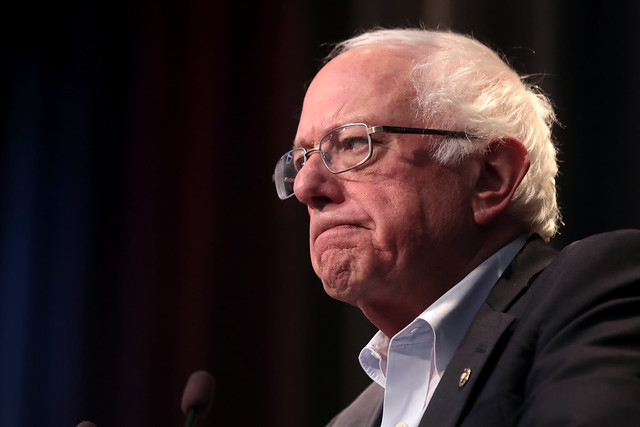
Bernie Sanders Is Coming to American Journalism's Rescue


SEP 03, 2019


Bernie Sanders Is Coming to American Journalism's Rescue 
Criticizing the media has become a sensitive issue for many on the left in the age of Trump. With an authoritarian president in office who seeks to discredit the media at every turn and regularly calls the press the “enemy of the people,” being too critical of the journalism business in 2019 can feel a bit like kicking someone when they’re down. Journalists in and beyond the U.S. not only must deal with a hostile president who attacks reporters and publications that don’t offer a steady stream of fawning coverage, but they are also grappling with the fact that their industry is in rapid decline.
At a time when journalism has never been a more essential public good, the journalism business is dying. Monthly layoffs plague the industry and newsroom employment has dropped by a quarter since 2008. More than 2,000 American newspapers have closed since 2004, and now half the counties in the country can claim only one local newspaper (while 171 counties have none at all). Meanwhile, full-time journalism jobs are increasingly difficult to come by, and for many reporters and writers today, the only certainty is the precarity of the gig economy.
With this gloomy prognosis, coupled with growing hostility toward the press, it might seem like the last thing the country needs right now is leftists railing against the media. This is apparently the attitude among many prominent beltway journalists, who have been quick to equate progressive critiques of the corporate media with Trumpian attacks on the “fake news” media. When the country’s most famous democratic socialist, Bernie Sanders, made a critical comment about coverage from The Washington Post a few weeks ago, for example, pointing out that Jeff Bezos owned the paper (which does seem to have a pretty clear agenda against the Vermont senator), he was labeled a conspiracy theorist and slammed on CNN for his “Trump-like attack” of the press.

This beltway backlash continued last week in an article published in the Guardian’s U.S. edition, in which author Joan Greve, formerly of The Washington Post, pondered whether Sanders’ criticism of the Post was “Trumpian” in nature. Sanders’ comments, wrote Greve, “come amid an increasing willingness among the broader Democratic presidential field to harshly criticize the press—even as violence against US journalists has escalated and the president’s hostile rhetoric of ‘fake news’ continues unabated.” To some observers, Greve reported, “it now seems the anti-media accusations of the right are being mirrored on the left, albeit not at the dangerous levels of the president.”
While it is perfectly reasonable to question whether rhetoric goes too far in certain instances, the idea that leftist critiques of the corporate media bear even the slightest resemblance to right-wing attacks on the press is laughable. Indeed, to liken media criticisms from the left to Trump’s incoherent ravings against the press betrays a fundamental misunderstanding of the left’s critique, which is grounded in a structural and institutional analysis, not paranoid conspiracy theories and authoritarian politics.
The subtitle of Edward S. Herman and Noam Chomsky’s classic study of the media, “Manufacturing Consent: The Political Economy of the Mass Media,” is pretty self-explanatory. The authors lay out how the progressive critique of the media is part of a larger critique of free market capitalism and of the corporate structure of our economy. According to this analysis, the fact that around 90% of the media in America is controlled by six corporations (down from 50 companies in the early 1980s) tells us a lot more about media bias than whether a majority of journalists personally vote Democrat or Republican.
From the left-wing perspective, it is impossible to completely separate media companies from the economic forces that drive their business. Then there’s the question of ownership; of course, there’s a big difference between activist owners like Rupert Murdoch and someone like Bezos, who avoids direct editorial interference. Sanders made just this point during the Democratic debate on CNN in late July. In response to moderator Jake Tapper’s misleading question about tax increases under Sanders’ health care plan (Tapper ignored that health care savings would offset any tax increases for the vast majority), the Vermont senator accurately predicted that “the health care industry will be advertising tonight on this program.”
It is also worth noting that this could happen only in America or New Zealand, the two countries where direct-to-consumer drug advertising is legal. Market forces and the profit motive drive most media companies today, and to say this has absolutely no impact on programming or coverage is either naive or disingenuous.
Not long after making his comment about The Washington Post and Jeff Bezos, Sanders qualified his remarks: “Do I think Jeff Bezos is on the phone, telling the editor of The Washington Post what to do? Absolutely not. It doesn’t work that way.”
With an “authoritarian-type” president “trying to intimidate the media,” Sanders explained, progressives have to be careful with their critiques, and must defend the free press at all costs.
But defending a free and independent press from authoritarian demagogues and right-wing terrorists isn’t good enough today, and sadly, the free market has proven to be an even greater long-term threat to the press than the Tweeter in Chief. The market hasn’t just put countless newspapers out of business and myriad journalists out of work; it has led to a precipitous decline in the quality of journalism, as the daily struggle for survival has forced outlets to chase ratings and clicks, sacrificing quality for quantity.
Twenty years ago, Nieman Reports published a report on how network television news had changed over the previous two decades. Up until the last decades of the 20th century, there had been no profitable news business on broadcast television. “The Big Three broadcast television networks—ABC, CBS and NBC—all covered news, but none generally made money doing so,” explained the report’s authors. “Nor did they expect to turn a profit from news programming.” “I have Jack Benny to make money,” the owner of CBS, William Paley, told news reporters in the early 1960s, who were instructed not to worry about costs.
The demand for profit from news programming arose as profits from entertainment programming began to dwindle. Suddenly, news was expected to make money, and the results were entirely predictable. One way to make the news profitable was to “make the product more entertaining,” according to Neiman Reports. This would generate higher ratings and thus higher revenues. Another part of the formula was to control spending: “The networks have, among other things, closed foreign and domestic bureaus, laid off staff, eliminated some money-losing documentary units, and curbed convention and election coverage.”
In the two decades since then, the news business has continued to transform. A kind of creative destruction has forced many traditional media companies out of business while the market has cultivated clickbait journalism. It has become harder and harder for small and independent outlets to survive, while media conglomerates have grown even more massive since the 1996 Telecommunications Act deregulated the media industry a quarter-century ago.
Last month, CBS and Viacom announced that they would be reuniting in a merger (after splitting in 2005) to form ViacomCBS. Meanwhile, AT&T acquired Time Warner last year after overcoming an antitrust lawsuit from the Justice Department, making AT&T the largest media company in the world based on revenue.
None of these trends bode well for the future of journalism, and in an editorial published last week in The Guardian, Sanders further addressed the current state of media. “One reason we do not have enough real journalism in America right now is because many outlets are being gutted by the same forces of greed that are pillaging our economy,” wrote the senator, denouncing the “corporate conglomerates and hedge fund vultures” who buy struggling companies only to slash their newsrooms, along with the television pundits who earn “tens of millions of dollars to pontificate about frivolous political gossip” as thousands of journalists are laid off.
“Today, after decades of consolidation and deregulation, just a small handful of companies control almost everything you watch, read and download,” continued Sanders. “Given that reality, we should not want even more of the free press to be put under the control of a handful of corporations and ‘benevolent’ billionaires who can use their media empires to punish their critics and shield themselves from scrutiny.”
This take, it should be clear, is not tantamount to an authoritarian or “Trumpian” critique of the media directed at journalists. Rather, it’s a democratic critique aimed at corporate executives and billionaire tycoons. Part of Sanders’ plan to fix journalism is to “boost media workers’ laudable efforts to form unions and collectively bargain with their employers.”
If elected, he wrote, he would also “reinstate and strengthen media ownership rules,” limiting the number of stations that broadcasting companies can own, and direct federal agencies to “study the impact of consolidation in print, television and digital media to determine whether further antitrust action is necessary.” The senator also called out big tech companies like Google and Facebook, which have played an outsize role in disrupting the traditional revenue model for publications.
Ultimately, Sanders and other progressives understand that capitalism is a greater long-term threat to American journalism than Donald Trump. There is no simple solution to the multitude of problems facing the journalism business today, but the fact that journalism is treated as a “business” rather than a public good seems to be at the root of all its problems.
As dangerous as Trump’s rhetoric is, journalists aren’t going to be unemployed (or underemployed) because of his threatening tweets—although this is not to say Trump hasn’t pushed for policies that would damage journalism even further.
Yet some possible solutions remain. One of the many ways to address the market’s steady erosion of journalism would be to support public funding of the media. Predictably, the Trump administration has tried to eliminate all funding for public broadcasting, even though the entire annual budget is less than what it costs the military to purchase a few aircraft.
The U.S. already has a dismal record when it comes to public funding of journalism: The average per capita spending on public broadcasting in countries from Europe to Australia was $86 in 2014, compared to $3 per capita in the United States. In Norway it is a whopping $180, and the second lowest on the list, New Zealand, still spent five times more per capita than America.
If Trump had his way and was unencumbered by constitutional restraints, he wouldn’t just eliminate the public broadcasting budget. He would crush the free press and perhaps even take control of the major news companies, just as Vladimir Putin did in Russia. Not surprisingly, Trump appears to admire Putin’s handling of pesky journalists. If Bernie Sanders had his way, he would safeguard journalism from the whims of the free market and empower actual journalists over “benevolent billionaires” and corporate executives.
If anyone still cannot tell the night-and-day difference between these two critiques, it’s quite possible he or she might be one of the lucky few pundits who earn six- or seven-figure checks as their fellow journalists fall victim to the market’s invisible hand.


Proof Greta Thunberg's Climate Activism Is Working


SEP 03, 2019
Jon Queally / Common Dreams


Champions of Greta Thunberg—and the 16-year-old climate activist herself—hit back against malicious right-wing bullies over the weekend as she called her Asperger’s syndrome diagnosis a “superpower” and her defenders said there is but one reason that people attack the person who has galvanized the global climate strike movement: they are afraid of her.
“The bile thrown at Greta Thunberg is motivated by one thing alone: this incredibly intelligent, eloquent, and compassionate 16-year-old has terrified some of the most hateful and reactionary so-called ‘grown ups’ on earth,” said British political columnist activist Owen Jones. “She’s achieved more [at age] 16 than they ever will.”
Following her recent arrival in the United States to attend rallies outside the United Nations and promote a week of international climate strike actions, taking place from Sept. 20 – 27, Thunberg on Saturday suggested that a fresh wave of criticism directed at her from climate science denialists and right-wingers—including those mocking her Asperger’s diagnosis—exposes much more about them than her.


When haters go after your looks and differences, it means they have nowhere left to go. And then you know you’re winning!

I have Aspergers and that means I’m sometimes a bit different from the norm. And - given the right circumstances- being different is a superpower.#aspiepower

“I’m not public about my diagnosis to ‘hide’ behind it, but because I know many ignorant people still see it as an ‘illness’, or something negative,” Thunberg added. “And believe me, my diagnosis has limited me before.”
In a column on Al-Jazeera English published Monday, writer Andrew Mitrovica came to the defense of Thunberg as he referred to those attacking her as “scientifically illiterate bullies.” According to Mitrovica, agreeing with Jones, it is Thunberg’s attributes—including her fearlessness and ability to speak and act so matter-of-factly—that makes hers such a potent voice. He writes:
She disdains celebrity. She makes no claim to heroism. She rebuffs efforts to idolize her. She isn’t calculating or preoccupied with fame or ego. There is no artifice about her.  She speaks plainly, without affectation or embroidery.
In words and deeds, Thunberg is the embodiment of philosopher Howard Zinn’s admonition: “We don’t have to engage in grand, heroic actions to participate in the process of change. Small acts, when multiplied by millions of people, can quietly become a power no government can suppress, a power that can transform the world.”
Meanwhile, in an interview with the UK’s Channel 4 News, Thunberg said she has nothing to say to people who refuse to believe in the scientific warnings about the climate crisis.


16-year-old climate activist @GretaThunberg says she “has nothing to say” to people who don’t believe in climate change - including President Trump.

There is no time to waste, there is no planet B. #ActOnClimate #GreenNewDeal

Asked if there was still time to address the planetary emergency, Thunberg said, “Yes, we do. We still have time. But that time will not last for long so we need to something now and we need to do it quickly and we need to do it drastically.”
But while part of Thunberg’s story lends itself to the notion that “one person can make a difference,” she is also the first to acknowledge that it is going to demand massive collective action—from everyone and all over the world—to solve the climate emergency.


On Friday the 20th and 27th of September we will strike again for the right to a future. But we can’t do it alone. To really make a difference we need the adults to join us.
The children in India leads the way!! #FridaysForFuture #ClimateStrike https://twitter.com/fridays_india/status/1168177177281454080 …


We Are Living in the Wreckage of the War on Terror


SEP 03, 2019


This piece originally appeared on antiwar.com.


It has taken me years to tell these stories. The emotional and moral wounds of the Afghan War have just felt too recent, too raw. After all, I could hardly write a thing down about my Iraq War experience for nearly ten years, when, by accident, I churned out a book on the subject. Now, as the American war in Afghanistan – hopefully – winds to something approaching a close, it’s finally time to impart some tales of the madness. In this new, recurring, semi-regular series, the reader won’t find many worn out sagas of heroism, brotherhood, and love of country. Not that this author doesn’t have such stories, of course. But one can find those sorts of tales in countless books and numerous trite, platitudinal Hollywood yarns.
With that in mind, I propose to tell a number of very different sorts of stories – profiles, so to speak, in absurdity. That’s what war is, at root, an exercise in absurdity, and America’s hopeless post-9/11 wars are stranger than most. My own 18-year long quest to find some meaning in all the combat, to protect my troops from danger, push back against the madness, and dissent from within the army proved Kafkaesque in the extreme. Consider what follows just a survey of that hopeless journey…

The man was remarkable at one specific thing: pleasing his bosses and single-minded self-promotion. Sure he lacked anything resembling empathy, saw his troops as little more than tools for personal advancement, and his overall personality disturbingly matched the clinical definition of sociopathy. Details, details…
Still, you (almost) had to admire his drive, devotion, and dedication to the cause of promotion, of rising through the military ranks. Had he managed to channel that astonishing energy, obsession even, to the pursuit of some good, the world might markedly have improved. Which is, actually, a dirty little secret about the military, especially ground combat units; that it tends to attract (and mold) a disturbing number of proud owners of such personality disorders. The army then positively reinforces such toxic behavior by promoting these sorts of individuals – who excel at mind-melding (brown-nosing, that is) with superiors – at disproportionate rates. Such is life. Only there are real consequences, real soldiers, (to say nothing of local civilians) who suffer under their commanders’ tyranny.
Back in 2011-12, the man served as my commander, a lieutenant colonel in the U.S. Army. As such, he led – and partly controlled the destinies of – some 500 odd soldiers. Then a lowly captain, I commanded about one-fifth of those men and answered directly to the colonel. I didn’t much like the guy; hardly any of his officers did. And he didn’t trust my aspirational intellectualism, proclivity to ask “why,” or, well, me in general. Still, he mostly found this author an effective middle manager. As such, I was a means to an end for him – that being self-advancement and some positive measurable statistics for his annual officer evaluation report (OER) from his own boss. Nonetheless, it was the army and you sure don’t choose your bosses.
So it was, early in my yearlong tour in the scrublands of rural Kandahar province, that the colonel treated me to one his dog-and-pony-show visits. Only this time he had some unhappy news for me. The next day he, and the baker’s dozen tag-alongs in his ubiquitous entourage, wanted to walk the few treacherous miles to the most dangerous strongpoint in the entire sub-district. It was occupied, needlessly, by one of my platoons in perpetuity and suffered under constant siege by the local Taliban, too small to contest the area and too big to fly under the radar, this – at one point the most attacked outpost in Afghanistan – base just provided an American flag-toting target. I’d communicated as much to command early on, but to no avail. Can-do US colonels with aspirations for general officer rank hardly ever give up territory to the enemy – even if that’s the strategically sound course.
Walking to the platoon strongpoint was dicey on even the best of days. The route between our main outpost and the Alamo-like strongpoint was flooded with Taliban insurgents and provided precious little cover or concealment for out patrols. On my first jaunt to the outpost, I (foolishly, it must be said) walked my unit into an ambush and was thrown over a small rock wall by the blast of a rocket-propelled grenade (RPG) with my apparent name on it. Since then, it was standard for our patrols to the strongpoint to suffer multiple ambushes during the roundtrip rotation. Sometimes our kids got wounded or killed; sometimes they were lucky. Mercifully, at least, my intelligence section – led by my friend and rebranded artillery lieutenant – did their homework and figured out that the chronically lazy local Taliban didn’t like to fight at night or wake up early, so patrols to the strongpoint that stepped off before dawn had a fighting chance of avoiding the worst of ambush alley.
I hadn’t wanted to take my colonel on a patrol to the outpost. His entourage was needlessly large and, when added to my rotational platoon, presented an unwieldy and inviting target for Taliban ambush. Still I knew better than to argue the point with my disturbingly confident and single-minded colonel. So I hedged. Yes, sir, we can take you along, with one caveat: we have to leave before dawn! I proceeded to explain why, replete with historical stats and examples, we could only (somewhat) safely avoid ambush if we did so.
That’s when things went south. The colonel insisted we leave at nine, maybe even ten, in the morning, the absolute peak window for Taliban attack. This prima donna reminded me that he couldn’t possibly leave any earlier. He had a “battle rhythm,” after all, which included working out in the gym at his large, safe, distant-from-the-roar-of-battle base each morning. How could I expect him to alter that predictable schedule over something as minor as protecting the lives and limbs of his own troopers? He had “to set an example,” he reminded me, by letting his soldiers on the base “see him in the gym” each and every morning. Back then, silly me, I was actually surprised by the colonel’s absurd refusal; so much so that I pushed back, balked, tried to rationally press my point. To no avail.
What the man said next has haunted me ever since. We would leave no earlier than nine AM, according to his preference. My emotional pleas – begging really – was not only for naught but insulted the colonel. Why? Because, as he imparted to me, for my own growth and development he thought, “Remember: lower caters to higher, Danny!” That, he reminded me, was the way of the military world, the key to success and advancement. The man even thought he was being helpful, advising me on how to achieve the success he’d achieved. My heart sank…forever, and never recovered.
The next day he was late. We didn’t step off until nearly ten AM. The ambush, a massive mix of RPG and machine gun fire, kicked off – as predicted – within sight of the main base. The rest was history, and certainly could’ve been worse. On other, less lucky, days it was. But I remember this one profound moment. When the first rocket exploded above us, both the colonel and I dove for limited cover behind a mound of rocks. I was terrified and exasperated. Just then we locked eyes and I gazed into his proverbial soul. The man was incapable of fear. He wasn’t scared, or disturbed; he didn’t care a bit about what was happening. That revelation was more terrifying than the ongoing ambush and would alter my view of the world irreparably.
Which brings us to some of the discomfiting morals – if such things exist – of this story. American soldiers fight and die at the whims of career-obsessed officers as much they do so at the behest of king and country. Sometimes its their own leaders – as much as the ostensible “enemy” – that tries to get them killed. The plentiful sociopaths running these wars at the upper and even middle-management levels are often far less concerned with long-term, meaningful “victory” in places like Afghanistan, than in crafting – on the backs of their soldiers sacrifices – the illusion of progress, just enough measurable “success” in their one year tour to warrant a stellar evaluation and, thus, the next promotion. Not all leaders are like this. I, for one, once worked for a man for whom I – and all my peers – would run through walls for, a (then) colonel that loved his hundreds of soldiers like they were his own children. But he was the exception that proved the rule.
The madness, irrationality, and absurdity of my colonel was nothing less than a microcosm of America’s entire hopeless adventure in Afghanistan. The war was never rational, winnable, or meaningful. It was from the first, and will end as, an exercise in futility. It was, and is, one grand patrol to my own unnecessary outpost, undertaken at the wrong time and place. It was a collection of sociopaths and imbeciles – both Afghan and American – tilting at windmills and ultimately dying for nothing at all. Yet the young men in the proverbial trenches never flinched, never refused. They did their absurd duty because they were acculturated to the military system, and because they were embarrassed not to.
After all, lower caters to higher…


Danny Sjursen is a retired US Army officer and regular contributor to Antiwar.com. His work has appeared in the LA Times, The Nation, Huff Post, The Hill, Salon, Truthdig, Tom Dispatch, among other publications. He served combat tours with reconnaissance units in Iraq and Afghanistan and later taught history at his alma mater, West Point. He is the author of a memoir and critical analysis of the Iraq War, Ghostriders of Baghdad: Soldiers, Civilians, and the Myth of the Surge. Follow him on Twitter at @SkepticalVet.


U.N. Report Finds U.S. Likely Guilty of War Crimes in Yemen


SEP 03, 2019 | TD ORIGINALS


A new report by a group of investigators commissioned by the U.N. Human Rights Council says the United States, Britain and France may be culpable for war crimes in Yemen. The three countries back a Saudi Arabia- and United Arab Emirates-led coalition fighting on the side of the government in the current Yemeni civil war, which has been ongoing for five years.
“Five years into the conflict, violations against Yemeni civilians continue unabated, with total disregard for the plight of the people and a lack of international action to hold parties to the conflict accountable,” Kamel Jendoubi, chair of the Group of Experts on Yemen, said in a press statement.
Investigators write that they “found reasonable grounds to believe that the parties to the conflict in Yemen are responsible for an array of human rights violations and violations of international humanitarian law.”

Though much of this information has been uncovered by journalists and such advocacy groups as Human Rights Watch, and in a 2018 United Nations report, the latest U.N. report “is striking for its broad demand for accountability,” reporter Sudarsan Raghavan explains in The Washington Post.
“The United States, in particular, provides logistical support and intelligence to the coalition, in addition to selling billions of dollars in weaponry to the group,” Raghavan writes.
The 2018 report determined that the Saudi and UAE coalition was responsible for killing thousands of civilians in airstrikes and shelling, and through the use of snipers and land mines; torturing detainees; and raping and intentionally starving citizens.
Anti-government Houthi rebels also are accused of war crimes, including using child soldiers. “None have clean hands,” Charles Garraway, one of the 2018 report’s investigators and a retired British military officer, told The New York Times in 2018.
Because the U.S., France and Britain supported and armed the Saudis, the U.N. investigators consider those countries complicit.
After the release of the 2018 report, then-Defense Secretary James Mattis told reporters that the Trump administration had reviewed its support for the UAE-Saudi coalition. “We determined it was the right thing to do in defense of their own countries, but also to restore the rightful government there,” he told the Times, adding, “[o]ur conduct there is to try to keep the human cost of innocents being killed accidentally to an absolute minimum.’’
The latest U.N. report suggests that the Saudi coalition and its Western allies cannot police themselves or take responsibility for actions that kill civilians, which, as the Post points out, “is often cited by Trump administration and British officials to justify the continued military support and arms sales to the coalition.”
“The assessment of the targeting process is particularly worrying, as it implies that an attack hitting a military target is legal, notwithstanding civilian casualties, hence ignoring the principle of proportionality,” the report says.
The U.S., Britain and France are all permanent members of the U.N. Security Council.
The report’s authors submitted a list of people “who may be responsible for international crimes” to U.N. Human Rights Commissioner Michelle Bachelet, but they do not specify names or say whether those individuals are from Britain, France or the U.S. Representatives from Saudi Arabia, the United Arab Emirates, Britain, France and the U.S. did not respond to the Post’s requests for comments.
Read the 2019 U.N. report here.