Sunday, June 23, 2019

LBO News from Doug Henwood
Insta-punditry on political economy.
https://lbo-news.com/
Just added to my radio archive (click on date for link):
June 20, 2019 Brian Hioe on the Hong Kong mass demonstrations • Ashley Sanders on climate grief
Share this:
Tumblr
Bolton Calls For Forceful Iranian Response To Continuing U.S. Aggression (The Onion)
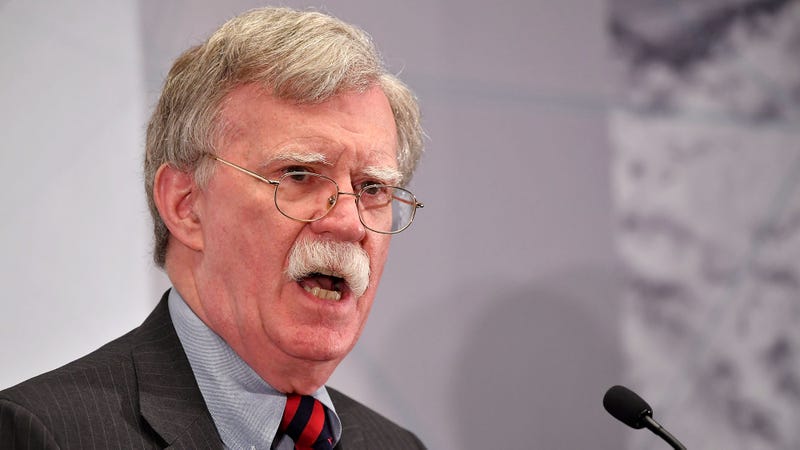
WASHINGTON—Demanding that the
Middle Eastern nation retaliate immediately in self-defense against the
existential threat posed by America’s military operations, National Security
Adviser John Bolton called for a forceful Iranian response Friday to continuing
United States aggression.
“Iran cannot sit idly by as
the American imperialist machine encroaches on their territory, threatens their
sovereignty, and endangers their very way of life,” said Bolton, warning that
America’s fanatical leadership, steadfast devotion to flexing their muscles in
the region, and alleged access to nuclear weapons necessitated that Iran strike
back with a vigorous show of force as soon—and as hard—as possible.
“The only thing these
Westerners understand is violence, so it’s imperative that Iran sends a clear
message that they won’t be walked over. Let’s not forget, the U.S. defied a
diplomatically negotiated treaty for seemingly no reason at all-—these are
dangerous radicals that cannot be reasoned with. They’ve been given every opportunity
to back down, but their goal is total domination of the region, and Iran won’t
stand for that.”
At press time, Bolton said
that the only option left on the table was for Iran to launch a full-fledged
military strike against the Great Satan.
Everyone Is Overlooking a Key Part of the New $15 Minimum Wage Bill
This July, the House of
Representatives is planning to vote on a bill to raise the minimum wage to $15
by 2024. Most of the media coverage has highlighted the groundswell of
progressive support behind the increase — a $15 minimum wage was considered a
pipe dream only a few years ago, and now the bill is co-sponsored by a majority
of congressional Democrats. But an equally monumental — and largely overlooked
— story behind the bill is what it would mean for the 1 in
5 Americans living with a disability.
A loophole in the current
minimum wage law allows employers to pay workers with disabilities
a subminimum wage that’s even lower than the federal limit of $7.25 —
in some cases, paying people as little as pennies per hour. In recent
years, an estimated 420,000 individuals with disabilities have been
paid an average of just $2.15 per hour.
The new bill would sunset the
separate subminimum wage, immediately setting it at $4.25 and then gradually
increasing it every year for the next six years until it is even with the
minimum wage.
Disability advocates have been
pushing for this type of legislation for years. The subminimum wage was
initially introduced in 1938 to encourage employers to hire veterans with
disabilities — and has barely budged in the nearly 80 years since. Now, the
Depression-era policy does far more harm than good. Partly as a result of these
extremely low wages, workers with disabilities are nearly twice as
likely to be economically insecure as workers without disabilities.
While some advocates argue
that the subminimum wage offers workers a foot in the door of the labor market
— paving the way to skill development, training, and an upward career
trajectory — research shows that it exposes workers with disabilities to
exploitation and seclusion. In 2016, phasing out the separate subminimum wage
was a key recommendation of the Department of Labor’s advisory
committee on employment among individuals with disabilities.
The Depression-era policy does
far more harm than good.
In its current form, the
subminimum wage pigeon-holes workers into dead-end jobs — most
often at sheltered workshops, where workers with disabilities are
kept separate from other workers. It’s stigmatizing, sending the message that
disabled individuals’ work is not as valuable as other individuals’ work. And
it’s discriminatory, robbing workers with disabilities of the basic labor
protections afforded to workers without disabilities and leaving them
vulnerable to mistreatment and abuse. Senator Casey and others have introduced
the Transformation to Competitive Employment Act, which would include a
graduated phase out of these programs over six years and financial incentives
to support current programs to move to a model of integrated employment at
competitive wages. However, the Raise the Wage Act is notable for finally
treating these workers as a key part of the workforce from the outset.
Congressional Democrats’
embrace of one fair minimum wage taps into a growing — but so far, largely
frustrated — movement. President Obama attempted to partially rectify the law
by including workers with disabilities in his 2014 executive
order mandating a minimum wage of $10.10 for federal contractors, which
President Trump has threatened
to reverse. At least six states, New Hampshire, Alaska, Maryland,
Washington, Oregon, and Vermont have independently passed legislation to phase
out the subminimum wage for workers with disabilities. Other subminimum wages,
like the one that exists for tipped workers, have been able to make more
progress. Eight states ban the tipped minimum wage, and all national
minimum wage bills introduced since 2012 have included provisions to
partially or fully phase it out.
For the 40
million workers who struggle to make ends meet on low wages, the Raise
the Wage Act is an historic step towards ensuring a livable wage for all. This
call is especially significant for the millions of workers with disabilities
who — after 80 years of being left without a voice in federal legislation — are
finally able to join the chorus, demanding the fair shot at fair pay that all
workers deserve.
Editor’s note: This piece was
originally published on May 18, 2017. It has since been updated
Forget Bernie vs. Warren. Focus on Growing the Progressive Base and Defeating Biden.
June 21 2019, 11:28 a.m.
A FEW DAYS AGO, I shared
what I thought was a fairly innocuous observation about a fundamental
difference between Elizabeth Warren and Bernie Sanders. Warren spends most of
her campaign unpacking and explaining detailed policy proposals, many of them
excellent, while Sanders splits his emphasis between his own strong plans and
his calls for the political revolution he has consistently said will be required
for any substantive progressive policy wins.
“Smart policies are very
important,” I tweeted.
“But we don’t lose because we lack smart policies, we lose because we lack
sufficient power to win those policies up against entrenched elite forces that
will do anything to defeat us.”
Within seconds, I was in the
grip of a full-on 2016 primary flashback. I was accused of being a shill
for Bernie and an enemy of Warren (I’m neither). My feed filled up with
partisans of both candidates hurling insults at each other: She gets things
done, he is all talk; she’s a pretender, he’s the real deal; he has a gender
problem, hers is with race; she’s in the pocket of the arms industry, he’s an easy
mark for Donald Trump; he should back her because she’s a woman, she should
back him because he started this wave. And much more too venal to mention.
I immediately regretted saying
anything (as is so often the case on that godforsaken platform). Not because
the point about outside movement power is unimportant, but because I had been
trying to put off getting sucked into the 2020 horserace for as long as
possible.
Liberals in the U.S. often say
the Trump presidency is Not Normal. And yeah, it’s a killer-clown horror show.
But the truth is that from most outsider perspectives, there is nothing about
U.S. politics that is normal — particularly the interminable length of
campaigns. Normal countries have federal elections that consume two, maybe
three months of people’s political lives once every four to
five years; Canada caps federal campaigns at 50 days, Japan at 12.
In the U.S., on the other hand, there’s a total of about nine months in every
four-year cycle when politics is not consumed by either a presidential or
midterm horserace.
It’s a spectacle that comes at
a steep price. The relentless process of picking electoral winners sucks up
intellectual energy, media airtime, movement muscle, and boatloads of money that are
badly needed elsewhere. Like organizing to stop war with Iran, for instance. Or
supporting movements trying to free migrants from Trump’s concentration camps.
Or figuring out what a transformative Green New Deal should look like on the
ground. Or building international alliances with people in countries facing
their own hate-filled authoritarian strongmen.
There’s another reason to
resist attempts to turn Sanders vs. Warren into a redux of the 2016
primaries eight months before the first vote is cast. Today’s electoral
dynamics are absolutely nothing like 2016. That was a two-way race between two
candidates with radically different records and ideas, in which one candidate’s
gain really was the other’s loss. A winner-takes-all race like that pretty much
always turns into some kind of death match.
These primaries are another
species entirely. There is a small army of candidates, with two of the leaders
running on platforms so far to the left, they would have been unimaginable for
anyone but a protest candidate as recently as 2014. The frontrunner, meanwhile,
is eminently beatable (especially if Joe Biden keeps showing us exactly who he
is, as he did about six times this week).
All this means that for
leftists and progressives, the name of the game is not canceling out each
other’s candidates. It’s doing everything possible not to end up with a Wall
Street-funded centrist running against a president with the power of
incumbency. That means making the case against the idea that candidates
positioning themselves as the “safe choice” are in any way safe, whether at the
polls or once in office. And it means helping to bring more and more people to
one of the genuinely progressive frontrunners. There’s plenty of time to worry
about vote-spitting down the road — the task now is to enlarge the number of
votes available to be split (or combined).
Because Alexandria
Ocasio-Cortez was absolutely right when she said on
ABC’s “This Week,” “We have a very real risk of losing the presidency to Donald
Trump if we don’t have a presidential candidate that’s fighting for true
transformational change in lives of working people in the United States.”
That was clear on the morning
of November 9, 2016. In case more proof is required, see the recent devastating
elections in India and Australia, where right-wing incumbents won despite
predictions to the contrary, as well as the results of the European parliament
vote, most notably in France and Italy, where the far right has surged. Again
and again, we learn the same lesson: Tepid centrists carrying the baggage of
decades of neoliberal suffering are no match for machineries of scapegoating
willing to stop at nothing to win. Luca Casarini, a longtime Italian activist
who now works on an Italian ship that has rescued dozens
of migrants in the Mediterranean, recently put it to me in these harrowing
terms: “There is pleasure being taken in the suffering of others. That is what
these politicians are selling.”
Even on the off chance that
Biden did manage to pull off a Macron and win (which he’s about 35 years too
old for), there is the problem of what he would (and wouldn’t) do once in
power. “No one’s standard of living will change. Nothing would fundamentally
change,” he told a swanky fundraiser at
the Carlyle Hotel — a philosophy he helpfully reiterated,
for those at the back: “You beat them. Without changing the system.”
AS I’VE SAID before a
time or two, in the
age of climate breakdown, if nothing fundamentally changes in the political and
economic spheres, then absolutely everything is going to change in the physical
sphere. Indeed these changes are already well underway.
So we either change those human-created systems or the natural systems on which
all life depends will ruthlessly force change upon us. Given this and so many
other life-and-death crises, would it still be worth substituting Trump for
Biden or some similarly compromised runner-up? Without question or hesitation.
Getting rid of Trump in 2020 is a civilizational imperative, if only to slow
this slide into barbarism.
But what the progressive surge
in these primaries is telling us is that we can, and must, do so much better.
For that to happen, the very
last thing we need is for the two strongest left/progressive candidates and
their supporters to tear each other apart for the next eight or so months, in a
desperate bid to discredit a perceived rival. What should be happening instead
is exactly what Sanders and Warren have been doing (with only a couple minor
lapses): steadily building their bases by talking about ideas and strategies,
thereby sharpening the contrast — in policies, track record, and electability —
with Biden.
Because despite the various
transparent attempts by Democratic power brokers to boost the narrative of a
pitched Sanders vs. Warren battle over a finite pot of progressive voters,
there is less overlap between the two candidates’ bases of support than is
commonly assumed.
“Sanders and Warren have
competed for months over the party’s left flank,” Politico recently claimed.
In fact, both have dramatically expanded that flank, drawing on different parts
of the U.S. electorate. Sanders’s base is younger and more multiracial;
Warren’s is older, whiter, and wealthier, according to a CBS News poll and
one from Fox
News. Sanders galvanizes traditional nonvoters and is more likely to peel
off some Trump voters down the road; Warren is more able to shift former
Hillary Clinton supporters to the left.
What is really happening in
this race, and this is why the rivalry is being so relentlessly stoked, is that
centrist candidates presumed to be frontrunners or at least serious contenders
are flailing, and the progressive flank is expanding — to the extent that
Sanders and Warren’s combined bases exceed Biden’s. This is an extraordinary
turn of events representing an unprecedented revival of unabashedly left ideas
in U.S. politics. In short, it’s not 2016, when broad support for Sanders’s
bold progressive policies took nearly everyone by surprise — it’s something
entirely new.
None of this is to say that
Bernie and Warren are interchangeable. There are big differences between their
policies, styles, and world views: on the role of markets and the military; on
the depths of our structural crises; on the urgency of standing up to the
Democratic Party machine; on the role of outside movement power; and more.
These differences are important and should be explored and clarified during
this interminable campaign. Like everyone else, I have my own preference
(hardly a well-kept secret), and I’ll be writing more on that later. We should
all also pay close attention to how messages resonate beyond our particular
tribes and ideological circles — because beating Trump is paramount.
But as we make these
assessments, let’s not lose sight of the depths of the shift we are witnessing.
Whether it’s Sanders’s stalwart support for Medicare for All or Warren’s plans
to break up big tech, neither politician is primarily trafficking in the kind
of win-win market based “solutions” that never ask the wealthy to give up much
of anything at all. Both are saying to the multimillionaire and billionaire
class: You have won enough, now you have to share so other people can thrive.
IT’S ALSO TREMENDOUSLY significant
that these sorts of policies are catching fire not during an economic crisis
like in 2008, but in an economy that is considered booming by conventional
measures. In 1933, Franklin D. Roosevelt introduced the New Deal to solve the most
profound crisis in the history of capitalism, one for which markets had no
semblance of a solution of their own. Warren is calling for New Deal levels of
market intervention, and Sanders is leading a revival of democratic socialism
at a time when the economic fundamentals are strong — and that has
significantly further-reaching implications. Because it means that when
capitalism is doing precisely what it was built to do — produce unprecedented
wealth — it is a crisis for both the majority of people and the planetary
systems on which we depend.
The threat that this
realization represents to establishment players like the Wall-Street-funded
Third Way think tank and Center for American Progress is the real reason that
both have begun to hold
up Warren as a more palatable version of Sanders. It’s not because
Warren actually has their backing; it’s because this revved-up rivalry is
viewed as the most effective way to undercut Sanders and, with it, the left’s
growing base in the party.
There is no question that the
elite antipathy for Bernie runs deeper than for Warren, for obvious
reasons. Writing on his landmark speech on democratic socialism at George Washington
University earlier this month, Keeanga Yamahtta-Taylor marveled that
“he named capitalism as the culprit and democratic socialism as a solution.
What a breathtaking turn of events.” And as the very real prospect of an attack
on Iran heats up, it’s equally clear that Bernie represents the far
greater threat to the bipartisan consensus for endless war.
But Warren, because of her
track record and her competence, is a threat in her own right. To Wall Street,
for whom she has been a nemesis since 2008; to big tech, whose obscene
profits and monopoly power would take a hit under her plans to break them
apart; to the ultrarich as a class, because of her proposed wealth tax. So make
no mistake: For corporate Democrats, the endgame is still to defeat both Warren
and Sanders. And in this never-ending and crowded campaign, that effort will
shape-shift many times over.
It is true that Biden has had
a bad week. But if Biden implodes, there’s a phalanx of other candidates,
recently seen hopping from one $2,800-a-head Wall
Street fundraiser to the next, all with variations on the same reassuring
message: I’ll change things just enough to fend off the pitchforks and to save
you from the social embarrassment of Trump, but not so much that you will
notice a thing.
“It is important to rotate the
crops,” David Adelman, a financial industry lawyer, told the
New York Times. He was ostensibly explaining why he had co-hosted a fundraiser
for Beto O’Rourke, but in doing so, he also summed up precisely how Wall Street
sees Washington: as its plantation. It engineers the seeds, plants them, then
reaps what it sowed.
These forces, and the think
tanks they finance, want the Warren and Sanders camps at each other’s throats,
demoralizing and weakening each other. Because that’s exactly how the
progressive bloc stalls or shrinks enough for Biden (or some newer political
GMO crop) to walk away with it.
The current political map is
confusing, there is no doubt. Progressive vote-splitting is a real possibility
down the road — but so is vote-combining, and the more progressive voters there
are, the more viable that prospect will become. There are multiple routes by
which a progressive majority spread over several candidates can be translated
into a Democratic ticket that is more progressive than any we’ve seen in nearly
a century, maybe even ever.
There are also multiple ways
that the historic opportunity of this progressive surge can be lost. And that
loss begins with scarcity thinking, trying to tear each other down, and fooling
ourselves into believing that it’s 2016 all over again. When in fact, we are
somewhere we have never been before.
TEFLON TOXIN SAFETY LEVEL SHOULD BE 700 TIMES LOWER THAN CURRENT EPA GUIDELINE
June 18 2019, 10:54 a.m.
NEW DATA SUGGESTS that
the safety threshold for PFOA in
drinking water should be as low as .1 parts per trillion, according to the
nation’s top toxicologist. Linda Birnbaum, director of the National Institute
for Environmental Health Sciences, cited the figure, which is 700 times lower
than the safety level set by the Environmental Protection Agency, at a conference on
PFAS at Northeastern University last week.
While PFOA has already been
tied to kidney and testicular
cancer, among other diseases, recent research linking PFOA exposure to
pancreatic cancer is the basis for the lower number cited by Birnbaum. The
research was done by the National
Toxicology Program, which is a division of the NIEHS.
“If you look at the data,
pancreatic tumors are present at very, very low concentrations from PFOA,”
Birnbaum told the audience at the conference. “If you use the pancreatic tumors
in the rats in the NTP study to calculate what would really be a virtually safe
dose, you’re getting down at about .1 ppt. Well, that’s really low. And that’s
only for one PFAS.” Birnbaum suggested that regulators might ultimately issue
one drinking water standard for the entire class, which contains thousands of
compounds.
About the EPA’s current water
standard, Birnbaum said, “Many of us would think that is not health
protective.”
According to a summary of
the experiment, male rats exposed to PFOA developed both cancerous and
noncancerous tumors of the pancreas. At the lowest of three doses given in the
experiment, 20 out of 50 rats developed the tumors. At the
higher doses, more than half of the exposed rats developed the tumors.
The summary also shows that
PFOA increased the numbers of cancerous and noncancerous liver tumors in the
two-year rat study. At the conference, Birnbaum mentioned that the recent
experiments also showed that PFAS exposure affected breast development. “There
were clearly impacts on the growth of the mammary gland and problems with
lactation,” she said.
Both the NIEHS,
which conducts scientific research on the effects of the environment on health,
and the EPA,
which is responsible for environmental regulation, have said they are
prioritizing PFAS,
industrial compounds used in firefighting foam, nonstick coatings, and other
products that persist indefinitely in the environment and accumulate in people.
But the new information about their health effects has been emerging very
slowly.
The Japan National Institute
of Health Sciences first asked the
NTP to study the perfluorinated compounds in 1990, noting that in rats the
chemicals induced the presence of a biomarker of DNA damage thought to be
related to cancer. In 2003, the EPA also nominated the
compounds for further study, citing their “presumed widespread human exposure”
and the known toxicity of certain compounds in the class.
The rats in this two-year
study were given their first dose of PFOA almost 10 years ago, in July 2009.
And the NTP released a statistical
analysis of the tumor study in June 2018. Yet more than a year later,
the NIEHS has not published reports of the studies, which regulators
typically need to fully understand the science when setting safety levels.
Asked in March about the delay
in releasing the reports, Robin Arnette, of the NIEHS’s office of
communications and public liaison, wrote in an email to The Intercept that “NTP
routinely releases data tables for completed studies while formal reports are
in preparation” and that reports that go along with the toxicology research on
PFAS “are currently undergoing external peer review. We anticipate their
publication on the NTP website later in 2019.”
A technical report based on
the research “is in preparation and external peer review will take place later
in 2019; the date is not yet set,” according to Arnette’s email, which also
said, “Timelines and prioritization are dynamic. We are actively managing our
usual processes to enable efficient delivery of information for those agents of
growing public concern.”
Although the reports have yet
to be released, some state regulators are already considering the NTP data as
they set safety thresholds for PFAS. The Minnesota Department of Health cited
the NTP tables in its April health-based
guideline for PFHxS. And in March, California regulators
set interim safety levels of 14 and 13 ppt for PFOA and PFOS, while citing “new
cancer data recently released by the National Toxicology Program” and noting
that safety levels “and the health effects on which they are based may change.”
The amount of these chemicals
deemed safe to ingest in drinking water has been dropping quickly over the past
several years, as is often the case as scientists learn more about how
chemicals affect health. Between 2009 and 2016, the EPA’s official safety
threshold for PFOA was 400 ppt. In 2016, the agency lowered the number to 70
ppt. Several states have since calculated lower limits. Vermont set
drinking water health advisory limits of 20 ppt for PFOA. And, in April, New Jersey proposed
drinking water standards of 14 ppt for PFOA and 13 ppt for the closely related
chemical PFOS.
Update: June 20, 2019
After publication,
the National Institute of Environmental Health Sciences provided the
following statement from Linda Birnbaum:
The NIEHS has undertaken an
extensive PFAS research program, which involves many studies, hundreds of
chemicals, and partnerships across federal government. There are almost 5,000
PFAS chemicals in use today. Right now, we don’t know enough about the uses and
potential hazards of exposure to PFAS, but if our research results for PFAS are
similar to what we’ve seen with other biologically active chemicals such as
lead, arsenic, and asbestos, I would not be surprised if the safe level of PFAS
for humans is as low as 1.0-0.1 PPT. That’s why this research is so important,
and necessary for protecting public health.
Subscribe to:
Posts (Atom)