Tuesday, December 11, 2018

France's Macron Makes Concessions while 'Yellow Vest' Protests Continue
https://www.youtube.com/watch?v=uVOFMKQSI4M
Message from Justice Democrats
https://www.justicedemocrats.com/home/
Over the last few months, Justice Democrats and progressives in Congress have done something incredible -- we have seized the attention of the Democratic Party, and brought a Green New Deal to the forefront of our national discourse.
It hasn’t been easy. Every
corner of the establishment has cried out that the Green New Deal is “a nice
organizing tactic,” but claims that we need to revert back to “what’s
possible.” In their view, our ambition is merely fantasy. But that’s only
because they don’t remember what we’ve been capable of before.
In 1940, we stood on the
precipice of catastrophe -- staring into the darkness presented by the rise of
fascism. FDR saw what needed to be done, and called for the creation of an
arsenal of democracy: 185,000 planes, 120,000 tanks, 55,000 anti-aircraft guns,
18 million tons of merchant shipping.
Hitler thought it was just
American propaganda. CEOs, generals, business leaders, you name it -- everyone
believed it wasn’t possible for a nation that had produced fewer than 3,000
planes just one year earlier to achieve global superpower status.
They were all wrong. Through
the power of our collective will, we blew past FDR’s ‘unrealistic goals,’ and
confronted the darkness of fascism together. We came together as a nation, and
we achieved the impossible because that is what our reality demanded.
Today, we confront another
form of darkness: the climate catastrophe that we have just 12 years to save
ourselves from. And the free market is not coming to save us -- it wasn’t in
1940, and it is not in 2018.
Together, we must fight
climate change with bold, unprecedented action without delay. But we need your
help to do it
White House Ficus To Leave For Virginia Arboretum After Declining Trump’s Offer To Be Chief Of Staff
https://politics.theonion.com/white-house-ficus-to-leave-for-virginia-arboretum-after-1830989844
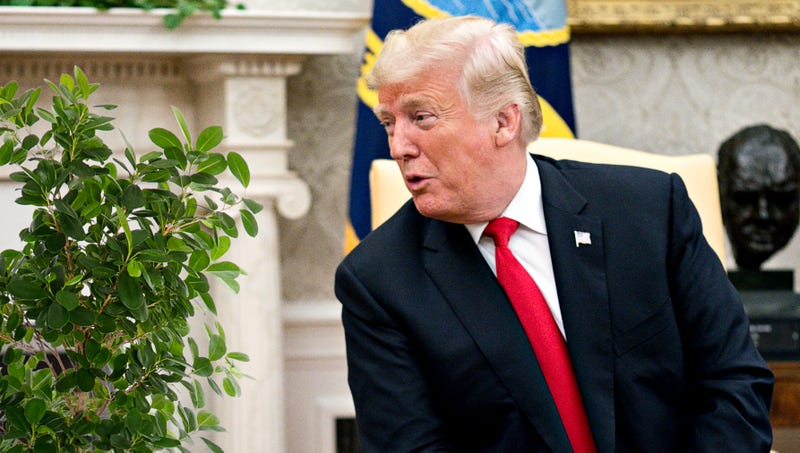
WASHINGTON—As the Trump administration scrambles to find a replacement for outgoing advisor John Kelly, officials announced Monday that a high-level White House ficus would leave for the State Arboretum of Virginia after declining the president’s offer to be chief of staff. “The ficus has been honored to serve President Trump and the American people these last several months and plans to continue advancing the MAGA cause as a member of the private sector,” read a statement drafted by an aide for the ficus, noting that the potted shrub was one of the longest-tenured and most-trusted members of the Trump administration, spending countless hours working alongside the president from a sunny spot inside the Oval Office. “Rumors that the ficus was forced out following a heated argument with Jared Kushner are simply untrue. The ficus will spend the next few weeks helping with the transition of its replacement, a large fern, before departing to work in the tropical plant section of the arboretum.” At press time, the White House was reportedly thrown into chaos after the large fern confirmed it would not accept the new job.
Electric Blanket Use and Breast Cancer in the Nurses' Health Study
Francine
Laden; Lucas M. Neas; Paige E. Tolbert; Michelle
D. Holmes; Susan E. Hankinson; Donna Spiegelman; Frank E.
Speizer; David J. Hunter
American Journal of
Epidemiology, Volume 152, Issue 1, 1 July 2000, Pages 41–49, https://doi.org/10.1093/aje/152.1.41
Abstract
Electric and magnetic fields
(EMFs) have been hypothesized to increase the risk of breast cancer, and
electric blankets represent an important source of exposure to EMFs. The
authors examined the relation between electric blanket use and invasive breast cancer
in the Nurses' Health Study. On the biennial questionnaire in 1992, 87,497
women provided information on this exposure during three consecutive time
periods. In a prospective analysis with 301,775 person-years of follow-up
through 1996 (954 cases), the relative risk for any electric blanket use was
not elevated (relative risk (RR) = 1.08, 95% confidence interval (CI): 0.95,
1.24) after controlling for breast cancer risk factors. There was a weak
association between breast cancer and electric blanket use at least 16 years
before diagnosis and long-term use in age-adjusted analyses but not in
multivariate models. In a retrospective analysis of 1,318,683 person-years of
follow-up (2,426 cases), the multivariate relative risk associated with use
before disease follow-up began was null (RR = 1.05, 95% CI: 0.95, 1.16).
Similar results were obtained in analyses stratified by menopause and
restricted to estrogen receptor-positive breast cancers. While 95% confidence
intervals for these estimates did not exclude small risks, overall, results did
not support an association between breast cancer risk and exposure to EMFs from
electric blankets.
[…]
Why China is focusing its fury on Canada and not the US over Huawei executive’s arrest
While the Chinese government
and state media are stepping up the pressure on Ottawa, Beijing’s warning to
the US side is more restrained
Analysts suggest it would not
be helpful for Beijing to link Sabrina Meng Wanzhou’s case to the ongoing trade
talks with Washington
by Frank Tang
Additional reporting by Keegan
Elmer
China decided to pick a fight
with Canada over the arrest of a senior Huawei executive because it wants to
avoid further confrontation with the United States as talks to resolve the
trade war continue, analysts have said.
Beijing has ratcheted up its
pressure on Canada to release Sabrina Meng Wanzhou, the chief financial officer
of Huawei and the daughter of the Chinese telecom equipment giant’s founder Ren
Zhengfei.
On Saturday night, China’s
foreign vice-minister Le Yucheng summoned Canada’s ambassador John McCallum to
lodge a “strong protest” and officially demand the immediate release of Meng.
China’s official media –
including the Xinhua news agency and party mouthpiece People’s Daily –
as well as the state-backed tabloid Global Times, joined a chorus
condemning Canada’s arrest of Meng and threatened “grave consequences” if she
is not freed.
China summoned the US
ambassador on Sunday night and lodged “a strong protest” over the case. China’s
foreign ministry requested the US to withdraw an arrest warrant for Meng, but
it fell short of threatening “grave consequences” as it did to Canada. Instead,
Le told Terry Branstad that “China will make further response according to the
US acts”, according to a foreign ministry statement.
A district court in New York
requested that the Canadian authorities arrest and extradite Meng, who is
accused of covering up her company’s links to a firm that supplied equipment to
Iran in breach of US sanctions.
She was arrested on December 1
– the day of Donald Trump and Xi Jinping’s meeting in Argentina.
Wang Yiwei, a professor of
international relations at the Renmin University of China, said the case had
been brought forward by a faction in Washington that wanted to undermine the
ongoing trade talks between China and the US.
Wang argued it would be unwise
for China to let the case undo Trump and Xi’s agreement to call a trade truce
for 90 days to give them time to try to reach a deal.
“We must be fully aware of the
big picture and know our top priority,” Wang said. “The trade negotiations
agreed between the top leaders should not be interrupted.”
China’s foreign ministry and
commerce ministry have not yet drawn a link between Meng’s arrest and the
China-US trade talks.
In contrast to the warnings
and threats directed at Canada, Beijing has struck a positive and hopeful note
about the trade talks.
Chen Fengying, a senior
researcher with the China Institutes of Contemporary International Relations,
said there was no need to link Meng’s case to the trade talks, because it was
“better addressed through diplomatic channels”.
Beijing should not “make
economic issues complicated”, he said, arguing that if it was added to the
agenda in the trade talks the issue could become another source of pressure to
force Beijing into making concessions.
US Trade Representative Robert
Lighthizer said on Sunday that US-China negotiations should not be impacted by
the controversial arrest.
“This is a criminal justice
matter. It is totally separate from anything I work on or anything that trade
policy people in the administration work on,” Lighthizer said on CBS’ Face
the Nation.
Meanwhile, Beijing is keeping
up the pressure on Canada.
A Global Times editorial
published on Sunday said: “It does not serve Canada’s national interest if it
intends to fawn over the US by treating Ms Meng unjustly. If Meng is refused
bail and extradited to the US, Canada will get minimal gratitude from the US,
but maximum opposition from China.
“Chinese people will take the
issue seriously, and will ask the Chinese government to impose severe sanctions
on Canada. Canadian public interest will definitely be impaired if Sino-Canadian
relations are put at a risk of major retrogression.”
A Canadian court is currently
holding a bail hearing, which will resume on Monday, and the editorial said the
court should first grant her bail and eventually set her “totally free”.
Roland Paris, a former foreign
policy adviser to Canadian Prime Minister Justin Trudeau, has argued that
Beijing’s efforts to force Ottawa to cave in may not work.
“Perhaps because the Chinese
state controls its judicial system, Beijing sometimes has difficulty
understanding or believing that courts can be independent in a rule-of-law
country,” he wrote in a tweet. “There’s no point in pressuring the Canadian
government. Judges will decide.”
Shi Yinhong, director of
Renmin University’s Centre for American Studies and an adviser to the State
Council – China’s cabinet – said there was a low probability that Canada would
bow to pressure from Beijing and set Meng free.
“If China takes revenge
against Canada, there will be some complaints in the Western world about why
China did not take action against the originator, the US.”
Henry Chan Hing Lee, an
adjunct fellow at the East Asian Institute of the National University of
Singapore, said that while US conservative groups would use the Huawei case and
national security as a reason to push for a tougher stance towards Beijing, nationalist
elements within China were exerting similar pressure to stop a deal.
“The authorities should be
very careful in handling this extremely complicated situation. It would be more
troublesome if its stand-off with Washington lasts,” he said.
Japan latest country to exclude Huawei, ZTE from 5G roll-out over security concerns
Japan’s decision adds to the
list of countries that have pushed back on Huawei’s involvement in 5G
infrastructure plans
Japan decided on Monday to
effectively exclude Chinese telecoms equipment giants Huawei Technologies and
ZTE from public procurement, the government said, adding to the list of
countries that have pushed back against the Chinese technology companies on security
issues.
The decision comes amid
concerns about security breaches that have already prompted the US and some
other countries to ban the two Chinese companies from supplying network
infrastructure products.
Cybersecurity officials of
relevant Japanese government ministries and agencies agreed on the plan, but
did not explicitly name the companies in consideration of the potential impact
on ties between Tokyo and Beijing, which have shown signs of improvement in
recent months.
Japan adds to the roll call of
countries who have effectively blocked Huawei from taking part in 5G mobile
network infrastructure build-outs, including the US, Australia, and New
Zealand, upping the pressure on the Chinese telecom equipment giant as it seeks
to take the lead in next generation mobile networks amid a trade and technology
stand-off between the US and China. The UK and Canada are weighing up the
possible security risks posed by Huawei too.
In August, the US, a key ally
of Japan, enacted the National Defence Authorisation Act to ban the
government’s use of Huawei and ZTE technology products and services on concerns
over their connections with Chinese intelligence.
Australia
and New Zealand have also excluded both firms from their next-generation 5G
mobile network roll-outs.
ZTE declined to comment on
reports of Japan’s decision on Monday. Huawei did not respond immediately to a
request for comment.
The Japanese ban marks the
first setback Huawei has officially encountered from its East Asia neighbours.
In August, when Japanese business newspaper Sankei Shimbun first
reported that Japan may consider a ban in a move to align it with the US and
Australia, Huawei said the news was “unsubstantiated rumour, and not factual”.
A Nikkei report on Monday
indicated that Huawei owned about a 13 per cent share in the telecoms equipment
market in Japan in 2017, compared with 18 per cent shares owned by local players
NEC and Fujitsu, respectively. Huawei’s consumer products, such as smartphones
and tablets, are also widely seen in Japan.
When Australia took the
decision to block Huawei from its 5G infrastructure in August on national
security grounds, Huawei said the decision was not aligned with the long-term
interests of the Australian people, and denied Australian businesses and
consumers the right to choose from the best communications technology
available.
“The Australian government’s
decision to block Huawei from Australia’s 5G market is politically motivated,
not the result of a fact-based, transparent, or equitable decision-making
process,” Huawei said in a statement at the time.
Meanwhile Huawei, the world’s
largest telecoms equipment supplier, last week agreed to British intelligence
demands to address risks in its equipment and software, as the company seeks to
be part of the UK’s 5G mobile network plans, according to a Financial
Times report last Friday.
Its comments came after BT
Group, which runs the UK’s largest mobile network operator EE, said last week
that Huawei will not supply equipment for EE’s core 5G network. It has also
started removing Huawei gear from EE’s core 4G infrastructure. That followed a
warning from the head of the MI6 foreign intelligence service that singled out
the Chinese company as a potential security risk.
The news has not been all
bleak on 5G for Huawei though. Last week Huawei signed an MoU to upgrade
Portugal’s No 1 phone network into the 5G standard.
Huawei will supply the
equipment and software for Altice Portugal to upgrade its network to support
commercially applicable 5G standards by 2019, the Shenzhen-based gear maker
said in a press statement.
The MOU in Portugal is the
latest deal after Huawei announced 22 commercial 5G contracts in November – 14
in Europe, five in the Middle East and three in Asia – putting the Chinese
company ahead of Nokia and Ericsson as the leading supplier of next-generation
telecommunications technology.
Meanwhile, in a move that
threatens to intensify the trade war between Washington and Beijing, Canadian
authorities arrested Meng Wanzhou, the chief financial officer of Huawei
and the daughter of its founder, in Vancouver on December 1 at the request of
US authorities. Meng faces US fraud charges associated with sanctions-skirting
business dealings with Iran, according to media reports.
In April, the US Commerce
Department announced a ban on US firms shipping products to ZTE, alleging the
company violated its sanctions against North Korea and Iran.
ZTE, the second largest
telecoms equipment maker in China, was first fined in early 2017 for selling
millions of dollars’ worth of hardware and software from US technology
companies to Iran and North Korea, which were under American sanctions.
The company was later found to
have lied about the matter, which led the US Commerce Department this year to
impose the seven-year ban.
The inability to buy
components from US suppliers resulted in ZTE’s closing major operations within
weeks. The company’s survival became a source of friction in trade talks
between Washington and Beijing. US president Donald Trump, in what he called a
favour to Chinese President Xi Jinping, directed the Commerce Department to
come up with an alternative, less crippling punishment.
Subscribe to:
Comments (Atom)