Thursday, June 21, 2018

Tuesday, June 19, 2018
How to save the human species by re-inventing politics in the USA
American Progressives--it's time for a third political party in the USA.
The Republican party is falling apart, and the Democrats are drowning in their own bullshit and corruption.
The USA has numerous small and
ineffective leftist organizations. Many of these organizations are taking donations from
ordinary working people.
This is getting us NOWHERE. We need ONE effective leftist organization: a new Left international.
In the meantime, all small
donations from individuals should be going to the same leftist organization. As
it stands today, American working progressives are trying to fill a bucket
which has too many holes!
This new overarching leftist organization
should have the kind of influence on Congress that lobbyists for corporations
have today. If corporations can do it, leftists can do it too. And if hackers
anywhere want to influence elections, they need to assist American progressives, instead of populist scumbags!
If we rely only on democratic procedures (Bernie Sander's plan), progressives will continue to lose--in the long run--to corporate Democrats and populist Republicans.
https://www.lrb.co.uk/blog/2011/10/28/slavoj-zizek/democracy-is-the-enemy/
Why are democratic procedures
inadequate to initiate the change that is needed? Slavoj says it best:
We do not get to vote on who
owns what, or on relations in factory and so on, for all this is deemed beyond
the sphere of the political, and it is illusory to expect that one can actually
change things by "extending" democracy to people's control.
Radical changes in this domain
should be made outside the sphere of legal "rights", etcetera.
Unless this is understood—no
matter how radical our anti-capitalism—the solution sought will involve
applying democratic mechanisms (which, of course, can have a positive role to
play).
But these mechanisms—one should never forget—are themselves part of the apparatus of the "bourgeois" state that guarantees the undisturbed functioning of capitalist reproduction.
In this precise sense, Badiou hit the mark with his apparently wired claim that "Today, the enemy is not called Empire or Capital. It's called Democracy."
It is the "democratic illusion" the acceptance of democratic procedures as the sole framework for any possible change, that blocks any radical transformation of capitalist relations.
[...]
2000 to present [edit]
Further information: Bernie Sanders presidential campaign, 2016; Black Lives Matter; Occupy movement in the United States; and Protests against Donald Trump
Bernie Sanders, a self-described democratic socialist who runs as an independent,[66] won his first election as mayor of Burlington, Vermont in 1981 and was re-elected for three additional terms. He then represented Vermont in the U.S. House of Representatives from 1991 until 2007, and was subsequently elected U.S. Senator for Vermont in 2007, a position which he still holds.[67][68][69] He lost the 2016 Democratic Party presidential nomination to Hillary Clinton but won the fifth highest number of primary votes of any candidate in a nomination race, Democratic or Republican.[70]
In the 2000 presidential election, Ralph Nader and Winona LaDuke received 2,882,000 votes or 2.74% of the popular vote on the Green Party ticket.[71][72]
Filmmaker Michael Moore directed a series of popular movies examining the United States and its government policy from a left perspective, including Bowling for Columbine, Sicko, Capitalism: A Love Story and Fahrenheit 9/11, which was the top grossing documentary film of all time.[73]
In 2011, Occupy Wall Street protests demanding accountability for the financial crisis of 2007 and against inequality started in Manhattan, New York and soon spread to other cities around the country, becoming known more broadly as the Occupy Movement.[74]
Kshama Sawant was elected to the Seattle City Council as an openly socialist candidate in 2013.[75][76][77]
Explanations for weakness [edit]
Academic scholars have long studied the reasons why no viable socialist parties have emerged in the United States.[78] Some writers ascribe this to the failures of socialist organization and leadership, some to the incompatibility of socialism and American values, and others to the limitations imposed by the American Constitution.
[79]
Lenin and Trotsky were particularly concerned because it challenged core Marxist beliefs, that the most advanced industrial country would provide a model for the future of less developed nations. If socialism represented the future, then it should be strongest in the United States.[80]
Although Working Men's Parties were founded in the 1820s and 1830s in the United States, they advocated equality of opportunity, universal education and improved working conditions, not socialism, collective ownership or equality of outcome, and disappeared after their goals were taken up by Jacksonian democracy. Gompers, the leader of the AFL thought that workers must rely on themselves because any rights provided by government could be revoked.[81]
Economic unrest in the 1890s was represented by populism. Although it used anti-capitalist rhetoric, it represented the views of small farmers who wanted to protect their own private property, not a call for collectivism, socialism, or communism.[82] Progressives in the early 20th century criticized the way capitalism had developed but were essentially middle class and reformist. However both populism and progressivism steered some people to left-wing politics.
Many popular writers of the progressive period were in fact left-wing.[83] But even the New Left relied on radical democratic traditions rather than left-wing ideology.[84]
Engels thought that the lack of a feudal past was the reason for the American working class holding middle-class values.
Writing at a time when American industry was developing quickly towards the mass-production system known as Fordism, Max Weber and Antonio Gramsci saw individualism and laissez-faire liberalism as core shared American beliefs. According to the historian David DeLeon, American radicalism, unlike social democracy, Fabianism, and communism, was rooted in libertarianism and syndicalism and opposed to centralized power and collectivism.[85]
The character of the American
political system, which is hostile toward third parties has also been
presented as a reason for the absence of a strong socialist party in the United
States.[86]
Political repression has also contributed
to the weakness of the left in the United States. Many cities had red squads to
monitor and disrupt leftist groups in response to labor unrest such as
the Haymarket Riot.[87]
During World War II, the Smith Act made membership in revolutionary groups illegal. After the war, Senator Joseph McCarthy used the Smith Act to launch a crusade to purge communists from government and the media.
In the 1960s the Federal Bureau of Investigation's COINTELPRO program monitored, infiltrated, disrupted and discredited radical groups in the U.S.[88]
In 2008, Maryland police were revealed to have added the names and personal information of death penalty opponents and anti-war protesters to a database which was intended to be used for tracking terrorists.[89]
During World War II, the Smith Act made membership in revolutionary groups illegal. After the war, Senator Joseph McCarthy used the Smith Act to launch a crusade to purge communists from government and the media.
In the 1960s the Federal Bureau of Investigation's COINTELPRO program monitored, infiltrated, disrupted and discredited radical groups in the U.S.[88]
In 2008, Maryland police were revealed to have added the names and personal information of death penalty opponents and anti-war protesters to a database which was intended to be used for tracking terrorists.[89]
[...]
But for the real true explanation of the weakness of the American left, refer again to Slavoj’s remarks:
We do not get to vote on who
owns what, or on relations in factory and so on, for all this is deemed beyond
the sphere of the political, and it is illusory to expect that one can actually
change things by "extending" democracy to people's control.
Radical changes in this domain
should be made outside the sphere of legal "rights", etcetera.
Unless this is understood—no matter how radical our anti-capitalism—the solution sought will involve applying democratic mechanisms (which, of course, can have a positive role to play).
But these mechanisms—one should never forget—are themselves part of the apparatus of the "bourgeois" state that guarantees the undisturbed functioning of capitalist reproduction.
In this precise sense, Badiou hit the mark with his apparently wired claim that "Today, the enemy is not called Empire or Capital. It's called Democracy."
It is the "democratic illusion" the acceptance of democratic procedures as the sole framework for any possible change, that blocks any radical transformation of capitalist relations.
Bring Julian Assange Home
JUNE 18, 2018
by JOHN PILGER
The persecution of Julian
Assange must end. Or it will end in tragedy.
The Australian government and
prime minister Malcolm Turnbull have an historic opportunity to decide which it
will be.
They can remain silent, for
which history will be unforgiving. Or they can act in the interests of justice
and humanity and bring this remarkable Australian citizen home.
Assange does not ask for
special treatment. The government has clear diplomatic and moral obligations to
protect Australian citizens abroad from gross injustice: in Julian’s case, from
a gross miscarriage of justice and the extreme danger that await him should he
walk out of the Ecuadorean embassy in London unprotected.
We know from the Chelsea
Manning case what he can expect if a US extradition warrant is successful — a
United Nations Special Rapporteur called it torture.
I know Julian Assange well; I
regard him as a close friend, a person of extraordinary resilience and courage.
I have watched a tsunami of lies and smear engulf him, endlessly, vindictively,
perfidiously; and I know why they smear him.
In 2008, a plan to destroy
both WikiLeaks and Assange was laid out in a top secret document dated 8 March,
2008. The authors were the Cyber Counter-intelligence Assessments Branch of the
US Defence Department. They described in detail how important it was to destroy
the “feeling of trust” that is WikiLeaks’ “centre of gravity”.
This would be achieved, they
wrote, with threats of “exposure [and] criminal prosecution” and a unrelenting
assault on reputation. The aim was to silence and criminalise WikiLeaks and its
editor and publisher. It was as if they planned a war on a single human being
and on the very principle of freedom of speech.
Their main weapon would be
personal smear. Their shock troops would be enlisted in the media — those who
are meant to keep the record straight and tell us the truth.
The irony is that no one told
these journalists what to do. I call them Vichy journalists — after the Vichy
government that served and enabled the German occupation of wartime France.
Last October, the Australian
Broadcasting Corporation journalist Sarah Ferguson interviewed Hillary Clinton,
over whom she fawned as “the icon for your generation”.
This was the same Clinton who
threatened to “obliterate totally” Iran and, who, as US secretary of State in
2011, was one of the instigators of the invasion and destruction of Libya as a
modern state, with the loss of 40,000 lives. Like the invasion of Iraq, it was
based on lies.
When the Libyan President was
murdered publicly and gruesomely with a knife, Clinton was filmed whooping and
cheering. Thanks largely to her, Libya became a breeding ground for ISIS and
other jihadists. Thanks largely to her, tens of thousands of
refugees fled in peril across the Mediterranean, and many drowned.
Leaked emails published by
WikiLeaks revealed that Hillary Clinton’s foundation – which she shares with
her husband – received millions of dollars from Saudi Arabia and Qatar, the
main backers of ISIS and terrorism across the Middle East.
As Secretary of State, Clinton
approved the biggest arms sale ever — worth $80 billion — to Saudi Arabia, one
of her foundation’s principal benefactors. Today, Saudi Arabia is using these
weapons to crush starving and stricken people in a genocidal assault on Yemen.
Sarah Ferguson, a highly paid
reporter, raised not a word of this with Hillary Clinton sitting in front of
her.
Instead, she invited Clinton
to describe the “damage” Julian Assange did “personally to you”. In response,
Clinton defamed Assange, an Australian citizen, as “very clearly a tool of
Russian intelligence” and “a nihilistic opportunist who does the bidding of a
dictator”.
She offered no evidence — nor
was asked for any — to back her grave allegations.
At no time was Assange offered
the right of reply to this shocking interview, which Australia’s
publicly-funded state broadcaster had a duty to give him.
As if that wasn’t enough,
Ferguson’s executive producer, Sally Neighour, followed the interview with a
vicious re-tweet: “Assange is Putin’s bitch. We all know it!”
There are many other examples
of Vichy journalism. The Guardian, reputedly once a great liberal
newspaper, conducted a vendetta against Julian Assange. Like a spurned lover,
the Guardian aimed its personal, petty, inhuman and craven attacks at
a man whose work it once published and profited from.
The former editor of the Guardian, Alan
Rusbridger, called the WikiLeaks disclosures, which his newspaper published in
2010, “one of the greatest journalistic scoops of the last 30 years”. Awards
were lavished and celebrated as if Julian Assange did not exist.
WikiLeaks’ revelations became
part of the Guardian’s marketing plan to raise the paper’s cover
price. They made money, often big money, while WikiLeaks and Assange struggled
to survive.
With not a penny going to
WikiLeaks, a hyped Guardian book led to a lucrative Hollywood movie
deal. The book’s authors, Luke Harding and David Leigh, gratuitously abused
Assange as a “damaged personality” and “callous”.
They also revealed the secret
password Julian had given the Guardian in confidence and which was
designed to protect a digital file containing the US embassy cables.
With Assange now trapped in
the Ecuadorean embassy, Harding, who had enriched himself on the backs of both
Julian Assange and Edward Snowden, stood among the police outside the embassy
and gloated on his blog that “Scotland Yard may get the last laugh”.
The question is why.
Julian Assange has committed
no crime. He has never been charged with a crime. The Swedish episode was bogus
and farcical and he has been vindicated.
Katrin Axelsson and Lisa Longstaff
of Women Against Rape summed it up when they wrote, “The allegations against
[Assange] are a smokescreen behind which a number of governments are trying to
clamp down on WikiLeaks for having audaciously revealed to the public their
secret planning of wars and occupations with their attendant rape, murder and
destruction… The authorities care so little about violence against women that
they manipulate rape allegations at will.”
This truth was lost or buried
in a media witch-hunt that disgracefully associated Assange with rape and
misogyny. The witch-hunt included voices who described themselves as on the
left and as feminist. They willfully ignored the evidence of extreme danger should
Assange be extradited to the United States.
According to a document
released by Edward Snowden, Assange is on a “Manhunt target list”. One leaked
official memo says: “Assange is going to make a nice bride in prison. Screw the
terrorist. He’ll be eating cat food forever.”
In Alexandra, Virginia – the
suburban home of America’s war-making elite — a secret grand jury, a throwback
to the middle ages — has spent seven years trying to concoct a crime for which
Assange can be prosecuted.
This is not easy; the US
Constitution protects publishers, journalists and whistleblowers. Assange’s
crime is to have broken a silence.
No investigative journalism in
my lifetime can equal the importance of what WikiLeaks has done in calling
rapacious power to account. It is as if a one-way moral screen has been pushed
back to expose the imperialism of liberal democracies: the commitment to
endless warfare and the division and degradation of “unworthy” lives: from
Grenfell Tower to Gaza.
When Harold Pinter
accepted the Nobel Prize for Literature in 2005, he referred to “a vast
tapestry of lies up on which we feed”. He asked why “the systematic brutality,
the widespread atrocities, the ruthless suppression of independent thought” of
the Soviet Union were well known in the West while America’s imperial crimes
“never happened … even while [they] were happening, they never happened.”
In its revelations of
fraudulent wars (Afghanistan, Iraq) and the bald-faced lies of governments (the
Chagos Islands), WikiLeaks has allowed us to glimpse how the imperial game is
played in the 21st century. That is why Assange is in mortal danger.
Seven years ago, in Sydney, I
arranged to meet a prominent Liberal Member of the Federal Parliament, Malcolm
Turnbull.
I wanted to ask him to deliver
a letter from Gareth Peirce, Assange’s lawyer, to the government. We talked
about his famous victory — in the 1980s when, as a young barrister, he had
fought the British Government’s attempts to suppress free speech and prevent
the publication of the book Spycatcher — in its way, a WikiLeaks of
the time, for it revealed the crimes of state power.
The prime minister of
Australia was then Julia Gillard, a Labor Party politician who had declared
WikiLeaks “illegal” and wanted to cancel Assange’s passport — until she was
told she could not do this: that Assange had committed no crime: that WikiLeaks
was a publisher, whose work was protected under Article 19 of the Universal
Declaration of Human Rights, to which Australia was one of the original
signatories.
In abandoning Assange, an
Australian citizen, and colluding in his persecution, Prime Minister Gillard’s
outrageous behaviour forced the issue of his recognition, under international
law, as a political refugee whose life was at risk. Ecuador invoked the 1951
Convention and granted Assange refuge in its embassy in London.
Gillard has recently been
appearing in a gig with Hillary Clinton; they are billed as pioneering
feminists.
If there is anything to
remember Gillard by, it a warmongering, sycophantic, embarrassing speech she
made to the US Congress soon after she demanded the illegal cancellation of
Julian’s passport.
Malcolm Turnbull is now the
Prime Minister of Australia. Julian Assange’s father has written to Turnbull.
It is a moving letter, in which he has appealed to the prime minister to bring
his son home. He refers to the real possibility of a tragedy.
I have watched Assange’s
health deteriorate in his years of confinement without sunlight. He has had a
relentless cough, but is not even allowed safe passage to and from a hospital
for an X-ray.
Malcolm Turnbull can remain
silent. Or he can seize this opportunity and use his government’s diplomatic
influence to defend the life of an Australian citizen, whose courageous public
service is recognised by countless people across the world. He can bring Julian
Assange home.
This is an abridged version of
an address by John Pilger to a rally in Sydney, Australia, to mark Julian
Assange’s six years’ confinement in the Ecuadorean embassy in London.
Das Kapital the Manga

You may or may not be aware
but someone attempted to turn Karl Marx's Capital into a Manga. It's been
officially released in English for a frankly ridiculous price. There's two
volumes of it and it's well its interesting. It use a farm boy turned cheese industrialist
to explain the economics.
I haven't actually read
Capital (well a couple a bits) so I don't really know how well it translates
but it does an all right job explaining some of the basic concepts and the
story while incredibly blunt (the foreman is a giant and walks around with a
club for example).
So anyone whose read Capital
want to take a look at it and see how well it does? Potentially it could be a
very good ice breaker for the real thing.
Volume one in CBZ files http://www.mediafire.com/download/i5hxc5388m6ta81/Karl_Marx-Capital_Vol._Icbz
If you can't read cbz files I
recommend comical http://comical.sourceforge.net/
Julian Assange and the Mindszenty Case
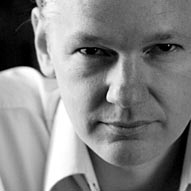
Assange: No way out?
Courageous
publishers like Julian Assange and principled churchmen like Cardinal
Jozsef Mindszenty are a rarity: Neither would be silenced; and both had to seek
asylum; but the similarity ends there, explains Ray McGovern.
By Ray McGovern Special
to Consortium News
During World War II Cardinal
Jozsef Mindszenty was a huge critic of fascism and wound up in prison. In Oct.
1945 he became head of the Church in Hungary and spoke out just as strongly
against Communist oppression. He wound up back in prison for eight more years,
including long periods of solitary confinement and endured other forms of
torture. In 1949 he was sentenced to life in a show trial that generated
worldwide condemnation.
Two weeks after the trial
began in early 1949, Pope Pius XII (having failed to speak out forcefully
against the Third Reich) did summon the courage to condemn what was happening
to Mindszenty. Pius excommunicated everyone involved in the Mindszenty trial.
Then, addressing a
huge crowd on St. Peter’s Square, he asked, “Do you want a Church that remains
silent when she should speak … a Church that does not condemn the suppression
of conscience and does not stand up for the just liberty of the people … a
Church that locks herself up within the four walls of her temple in unseemly
sycophancy …?”
When the Hungarian revolution
broke out in 1956, Mindszenty was freed, but only for four days. When
Soviet tanks rolled back into Budapest, he fled to the U.S. embassy and was
given immediate asylum by President Eisenhower.
There the Cardinal stayed
cooped up for the next 15 years. Mindszenty’s mother was permitted to
visit him four times a year, and the communist authorities stationed secret
police outside the embassy ready to arrest him should he try to leave.
Sound familiar?
Where is the voice of
conscience to condemn what is happening to Julian Assange, whose only “crime”
is publishing documents exposing the criminal activities and corruption of
governments and other Establishment elites? Decades ago, the U.S. and “civilized
world” had nothing but high praise for the courageous Mindszenty. He became a
candidate for sainthood.
And Assange? He has been
confined in the Ecuadorian embassy in London for six years —from June 19,
2012—the victim of a scurrilous slander campaign and British threats to arrest
him, should he ever step outside. The U.S. government has been putting
extraordinary pressure on Ecuador to end his asylum and top U.S. officials have
made it clear that, as soon as they get their hands on him, they will manufacture
a reason to put him on trial and put him in prison. All for spreading unwelcome
truth around.
A Suppression of Conscience
One might ask, is “unseemly
sycophancy” at work among the media? The silence of what used to be the noble
profession of journalism is deafening. John Pilger — one of the few journalists
to speak out on Julian Assange’s behalf, labels journalists who fail to stand
in solidarity with Assange in exposing the behavior of the Establishment,
“Vichy journalists — after the Vichy government that served ad enabled the
German occupation of France.”
Pilger adds:
“No investigative journalism
in my lifetime can equal the importance of what WikiLeaks has done in calling
rapacious power to account. It is as if a one-way moral screen has been pushed
back to expose the imperialism of liberal democracies: the commitment to
endless warfare … When Harold Pinter accepted the Nobel Prize for Literature in
2005, he referred to ‘a vast tapestry of lies up on which we feed.’ He asked
why ‘the systematic brutality, the widespread atrocities, the ruthless
suppression of independent thought’ of the Soviet Union were well known in the
West while America’s imperial crimes “never happened … even while [they] were
happening, they never happened.'”
WikiLeaks and 9/11: What if?
In an op-ed published
several years ago by The Los Angeles Times, two members of Veteran
Intelligence Professionals for Sanity, Coleen Rowley and Bogdan Dzakovic,
pointed out that — If WikiLeaks had been up and running before 9/11 —
frustrated FBI investigators might have chosen to leak information that their
superiors bottled up, perhaps averting the terrorism attacks.
“There were a lot of us in the
run-up to Sept. 11 who had seen warning signs that something
devastating might be in the planning stages. But we worked for ossified
bureaucracies incapable of acting quickly and decisively. Lately, the two of us
have been wondering how things might have been different if there had been a
quick, confidential way to get information out.”
Fourth Estate on Life Support
In 2010, while he was still a
free man, the Sam Adams Associates for Integrity gave its
annual award to Assange. The citation read:
“It seems altogether fitting
and proper that this year’s award be presented in London, where Edmund Burke
coined the expression “Fourth Estate.” Comparing the function of the press to
that of the three Houses then in Parliament, Burke said: “…but in the Reporters
Gallery yonder, there sits a Fourth Estate more important far then they all.”
The year was 1787—the year the
U.S. Constitution was adopted. The First Amendment, approved four years
later, aimed at ensuring that the press would be free of government
interference. That was then.
With the Fourth Estate now on
life support, there is a high premium on the fledgling Fifth Estate, which uses
the ether and is not susceptible of government or corporation control. Small
wonder that governments with lots to hide feel very threatened.
It has been said: “You shall
know the truth, and the truth shall set you free.” WikiLeaks is helping make
that possible by publishing documents that do not lie.
Last spring, when we chose
WikiLeaks and Julian Assange for this award, Julian said he would accept only
“on behalf or our sources, without which WikiLeaks’ contributions are of no
significance.”
We do not know if Pvt. Bradley
Manning gave WikiLeaks the gun-barrel video of July 12, 2007 called “Collateral
Murder.” Whoever did provide that graphic footage, showing the brutality of the
celebrated “surge” in Iraq, was certainly far more a patriot than the
“mainstream” journalist embedded in that same Army unit. He suppressed what
happened in Baghdad that day, dismissed it as simply “one bad day in a surge that
was filled with such days,” and then had the temerity to lavish praise on the
unit in a book he called “The Good Soldiers.”
Julian is right to emphasize
that the world is deeply indebted to patriotic truth-tellers like the sources
who provided the gun-barrel footage and the many documents on Afghanistan and
Iraq to WikiLeaks. We hope to have a chance to honor them in person in the
future.
Today we honor WikiLeaks, and
one of its leaders, Julian Assange, for their ingenuity in creating a new
highway by which important documentary evidence can make its way, quickly and
confidentially, through the ether and into our in-boxes. Long live the Fifth
Estate!”
Eventually a compromise was
found in 1971 when Pope Paul VI lifted the excommunications and Mindszenty was
able to leave the U.S. embassy. Can such a diplomatic solution be found
to free Assange? It is looking more and more unlikely with each passing
year.
A real Progressive--Alexandria Ocasio-Cortez--needs your support
One of our most tenacious and
scrappy candidates is just days away from her primary election.
Alexandria Ocasio-Cortez needs
on-the-ground support to win her primary against Establishment Democrat Joe
Crowley. So we’re sending a team to New York’s 14th and we need your help to
get there.
The two met for a debate on live TV last Friday night where
observers hailed Alex as a “torchbearer,” calling her “fierce,” and noting that
“Crowley seems scared.”
Alexandria is challenging an
entrenched status quo with her determination and belief that everyday Americans
should be represented by everyday Americans. Joe Crowley has used his time in
office to advance the interests of Wall Street, luxury real estate developers,
and corporate healthcare.
Who’s working for who?
In this election cycle alone,
Crowley’s top contributors are the real estate, securities and healthcare
industries. Nearly half (44%) of his campaign contributions come from PACs
while less than 1% come from small-dollar donations from people like you.

Source: Open Secrets
Over 99% of Alex’s campaign
funds came from small-dollar, individual contributions of $200 or less. She
rejects all forms of corporate cash. She has championed a single-payer
healthcare system. She’s a strong advocate of a living wage tied to inflation,
and she’s led the charge in the effort to abolish ICE. Which of these
candidates do you think has your interests at heart?
We currently have 6 Brand New
Congress candidates heading to the general election in November. Let’s make
Alex the 7th member of this post-partisan movement poised to shake up Congress
and American politics for good.
The truth is she is the only
candidate in NY-14 who has proven that she will represent all of us, not just a
select few. And the best part is that our candidate has Crowley and his
big-money corporate friends scared and on the ropes. We are so close to sending
a shockwave through the political establishment.
Listen to children who’ve just been separated from their parents at the border
https://www.youtube.com/watch?v=PoncXfYBAVI
Subscribe to:
Comments (Atom)