Friday, June 1, 2018

Žižek: Britain’s royal wedding had an emancipatory subtext


Slavoj Žižek: Britain’s royal wedding had an emancipatory subtext


Progressives who are inclined to lash out at the monarchy and have fired their vitriol at the new Duke and Duchess of Sussex may be missing the point.

Leftist critics were right about Britain’s recent royal wedding, but for the wrong reason. They conceded how Meghan Markle is a sympathetic figure - a feminist and a mixed-race woman - but they opposed the form of monarchy that was celebrated (if we ignore a few complaints about taxpayers’ money being spent).

What these critics failed to perceive is the emancipatory dimension of this form itself, of the big public ritual which socially links a community. To explain this point, we should go back to Novalis, the key figure of German Romanticism, who is usually perceived as a representative of the conservative turn of Romanticism, but his position is much more paradoxical.

Monarchy is the highest form of republic, “no king can exist without a republic and no republic without a king”. 

Or, to quote Nathan Ross’s resume: “the true measure of a Republic consists of the lived relation of the citizens to the idea of the whole in which they live. The unity that a law creates is merely coercive. /…/ The unifying factor must be a sensual one, a comprehensive human embodiment of the morals that make a common identity possible. For Novalis, the best such mediating factor for the idea of the republic is a monarch. /…/ While the institution might satisfy our intellect, it leaves our imagination cold. A living, breathing human being /…/ provides us with a symbol that we can more intuitively embrace as standing in relation to our own existence. /…/ The concepts of the Republic and monarch are not only reconcilable, but presuppose one another.”

Guessing Game

Novalis’ point is not just some banality such as how social identification should not be merely intellectual (the point also made by Sigmund Freud in his Mass Psychology and Ego Analysis).

Instead, the core of his argument concerns the “performative”dimension of political representation: in an authentic act of representation, people do not simply assert through a representative what they want, they only become aware of what they want through the act of representation.

So, Novalis argues that the role of the king should not be to give people what they think they want, but to elevate and give measure to their desires: “the political, or the force that binds people together, should be a force that gives measure to desires rather than merely appealing to desires.”

There is an important insight given here: politics is not just about pursuing one’s interest. At a more basic level, it is about offering a vision of communal identity which defines the frame of our interests. As for the obvious reproach that such massive rituals were practiced by Hitler (not to mention Stalin), one should never forget that, in organizing the big Nazi performances, Hitler copied (and changed, of course)  Social-Democratic and Communist public events. So, instead of rejecting this idea as proto-Fascist, one should rather look for its Leftist antecedents and associations. 

And one doesn’t have to look far. Just recall the staged performance of "Storming the Winter Palace" in Petrograd (now Saint Petersburg), on the third anniversary of the October Revolution, on 7 November 1920. Tens of thousands of workers, soldiers, students and artists worked round the clock, living on kasha (the tasteless wheat porridge), tea and frozen apples, and preparing for the performance at the very place where the event "really took place" three years earlier; their work was coordinated by army officers, as well as by the avant-garde artists, musicians and directors, from Malevich to Meyerhold.

Although this was acting and not "reality," the soldiers and sailors were playing themselves - many of them not only actually participated in the event of 1917, but were also simultaneously involved in the real battles of the Civil War that were raging in the near vicinity of Petrograd, a city under siege and suffering from severe shortages of food.

A contemporary commented on the performance: "The future historian will record how, throughout one of the bloodiest and most brutal revolutions, all of Russia was acting"; and the formalist theoretician Viktor Shklovski noted that "some kind of elemental process is taking place where the living fabric of life is being transformed into the theatrical."

This was not a performance of actors for the public, but a performance in which the public itself was the actor.

We should therefore shamelessly assert intense immersion into the social body, a shared ritualistic performance that would put all good old liberals into shock and awe by its “totalitarian” intensity – something Wagner was aiming at in his great ritualistic scenes at the end of Acts I and III of Parsifal.

Like Parsifal, the great concerts of the German hard-rock band Rammstein (say, the one in the arena of Nimes on July 23, 2005) should also be called, as Wagner called his Parsifal, Bühnenweihfestspiel (“sacred festival performance”) which is the vehicle for the collectivity’s affirmation of itself.

All liberal-individualist prejudices should fall here – yes, each individual should be fully immersed into a crowd, joyfully abandoning their individual critical mind. Meanwhile, passion should obliterate reasoning.

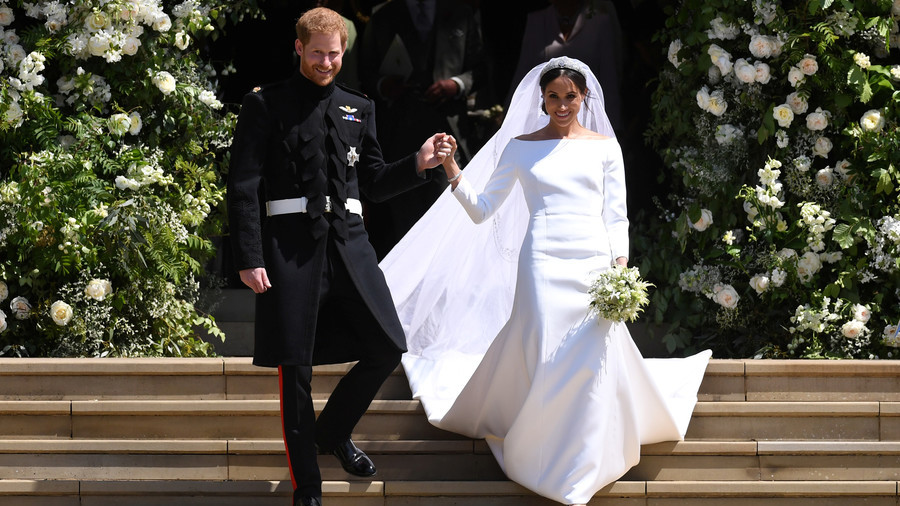
Thus, to conclude, and circle back to the marriage of Meghan and Harry: criticize it as much as you want, but don’t forget to look for a radical emancipatory version of what this spectacle achieved.


Thursday, May 31, 2018

Tom Perez must go


https://www.youtube.com/watch?v=cDLMP5BJOu0


Wednesday, May 30, 2018

Jeff Bezos Announces Customers Can Delete All Of Alexa’s Stored Audio By Rappelling Into Amazon HQ, Navigating Laser Field, Uploading Nanovirus To Servers


SEATTLE—Responding to news of the digital assistant recording users’ conversations without their knowledge, Amazon CEO Jeff Bezos assured critics Tuesday that Alexa’s stored audio can be deleted by simply rappelling into company headquarters, maneuvering through an intricate laser field, and destroying every server with a nanovirus.

“We take privacy concerns seriously, and I want our valued customers to know they can erase all the information their Amazon Echo has gathered just by being dropped from a helicopter over one of our towers, using a diamond-tipped glass cutter to carve out a hole in a 32nd-story window, and then employing advanced cyberwarfare techniques to compromise our data centers,” said Bezos, who added that users merely need to have their demolitions expert blow through a 7-foot steel barrier and reach Amazon’s highly complex cloud storage system to access the audio captured by Alexa.

“If, by this point, you haven’t been detected by our surveillance system and attracted the attention of our CIA-trained super soldiers, you’ll only have to wait while your team’s martial arts expert silently neutralizes several armed guards and cuts out one of their eyeballs to open the doors secured by retina scanners.

Then, assuming you’ve trained for months in a full-scale model of our headquarters that you built in an old warehouse to plan your exact path through this labyrinth, it’s a relatively straightforward matter of uploading the nanovirus and shooting your way out of a building that is rigged to self-destruct within 60 seconds of a data breach.”


Bezos added that once customers complete this process, they will still need to erase the backup copies of their Echo data stored in the drive he wears around his neck, a task that requires finding him in Amazon’s caverns miles below Seattle and fighting him to the death.


Israel’s Premature Celebration: Gazans Have Crossed the Fear Barrier


MAY 28, 2018


60 Palestinians were killed in Gaza on May 15, simply for protesting and demanding their Right of Return as guaranteed by international law.

50 more were killed since March 30, the start of the ‘Great March of Return’, which marks Land Day.

Nearly 10,000 have been wounded and maimed in between these two dates.

‘Israel has the right to defend itself’, White House officials announced, paying no heed to the ludicrousness of the statement when understood within the current context of an unequal struggle.

Peaceful protesters were not threatening the existence of Israel; rock throwing kids were not about to overwhelm hundreds of Israeli snipers, who shot, killed and wounded Gaza youngsters with no legal or moral boundary whatsoever.

8-months old, Laila al-Ghandour was one of the 60 who were killed on May 15. She suffocated to death from Israeli teargas. Many, like her, were wounded or killed some distance away from the border. Some were killed for simply being nearby, or for being Palestinian.

Meanwhile, Ivanka Trump, daughter of US President, Donald Trump, ushered in a new era of international relations, when she and her companions unveiled the new US Embassy in Jerusalem.

She was ‘all smiles’ while, at the exact same moment, hundreds of Gazans were being felled at the border. The already dilapidated hospitals have no room for most of the wounded. They bled in hallways awaiting medical attention.

Ivanka has never been to Gaza – and will unlikely ever visit or be welcomed there. Gazans do not register in her moral conscience, if she has any beyond her immediate interests, as people deserving of rights, freedom and dignity.

At the border, many Gaza kids have been coloring their bodies in blue paint, dressing up in homemade costumes to imitate characters from the Hollywood movie, ‘Avatar’. They hoped that, by hiding their brown skin, their plight and suffering could be more relatable to the world.

But when they were shot, their blood gave them away. They were still human, still from Gaza.

The international community has already condemned Trump’s decision to relocate his country’s embassy to Jerusalem, and declared his recognition of Jerusalem as Israel’s capital ‘null and void’, but will it go further than mere words?

Will the international community remain trapped between hollow statements and no action? Will they ever truly recognize the humanity of Laila al-Ghandour and all the other children, men and women who died and continue to perish under Gaza’s besieged skies? Will they ever care enough to do something?

The plight of the Palestinians is compounded with the burden of having a useless ‘leadership’. The President of the Palestinian Authority, Mahmoud Abbas, has been busy of late, demanding allegiance from the occupied Palestinians in the West Bank. Large signs and larger banners have been erected everywhere, where families, professional associations, unions and companies have announced, in large font: the “Renewal of Loyalty and Support to President Mahmoud Abbas.”

‘Renewal’? Abbas’ mandate expired in 2009. Besides, is this what Abbas and his Fatah party perceive to be the most urgent matter that needs to be addressed, while his people are being massacred?

Abbas fears that Hamas is using the blood of the Gaza victims to bolster its popularity. Ironically, it is a shared concern with Israeli leaders, the likes of Israeli army spokesman, Lt. Col. Jonathan Conricus. The latter said that Hamas has won the PR war at the Gaza border by a ‘knockout.’

This propaganda is as false as it is utterly racist; yet, it has persisted for far too long. It proposes that Palestinians and Arabs lack human agency. They are incapable of mobilizing and organizing their collective efforts to demand their long-denied rights. They are only pawns, puppets in the hands of factions, to be sacrificed at the altar of public relations.

It did not dawn on Conricus to note that, perhaps, his army lost the ‘PR war’ because its brutes shot thousands of unarmed civilians who did nothing, aside from gathering at the border demanding an end to their perpetual siege; or that, just maybe, the PR war was lost because Israel’s top leaders announced proudly that Gazans are fair game, since, according to Defense Minister, Avigdor Lieberman, “there are no innocents in Gaza.’

Ivanka will go down in Israel’s history as a hero. But Palestinian Resistance is not fueled or subdued by Ivanka, but by the sacrifices of the Palestinians themselves, and by the blood of Laila al-Ghandour, who was denied even a celebration of her first birthday on God’s besieged earth.

The US government has decisively and blatantly moved to the wrong side of history. As their officials attended parties, galas and celebrations of the Embassy move, whether in Israel or in Washington and elsewhere, Palestinians dug 60 more graves and held 60 more funerals.

The world watched in horror, and even western media failed to hide the full ugly truth from its readers. The two acts – of lavish parties and heartbreaking burials – were beamed all over the world, and the already struggling American reputation sank deeper and deeper.

Israeli Prime Minister, Benjamin Netanyahu, may have thought he had won. Comforted by his rightwing government and society on the one hand, Trump and his angry UN bully, Nikki Haley, on the other, he feels invulnerable.

But he should rethink his power-driven logic. When Gazan youth stood bare-chested at the border fence, falling one drove after the other, they crossed a fear barrier that no generation of Palestinians has ever crossed. And when people are unafraid, they can never be subdued or defeated.


Fathi Harb Burnt Himself to Death in Gaza. Will the World Notice?


MAY 29, 2018


Fathi Harb should have had something to live for, not least the imminent arrival of a new baby. But last week the 21-year-old extinguished his life in an inferno of flames in central Gaza.

It is believed to be the first example of a public act of self-immolation in the enclave. Harb doused himself in petrol and set himself alight on a street in Gaza City shortly before dawn prayers during the holy month of Ramadan.

In part, Harb was driven to this terrible act of self-destruction out of despair.

After a savage, decade-long Israeli blockade by land, sea and air, Gaza is like a car running on fumes. The United Nations has repeatedly warned that the enclave will be uninhabitable within a few years.

Over that same decade, Israel has intermittently pounded Gaza into ruins, in line with the Israeli army’s Dahiya doctrine. The goal is to decimate the targeted area, turning life back to the Stone Age so that the population is too preoccupied with making ends meet to care about the struggle for freedom.

Both of these kinds of assault have had a devastating impact on inhabitants’ psychological health.

Harb would have barely remembered a time before Gaza was an open-air prison and one where a 1,000kg Israeli bomb might land near his home.

In an enclave where two-thirds of young men are unemployed, he had no hope of finding work. He could not afford a home for his young family and he was about to have another mouth to feed.

Doubtless, all of this contributed to his decision to burn himself to death.

But self-immolation is more than suicide. That can be done quietly, out of sight, less gruesomely. In fact, figures suggest that suicide rates in Gaza have rocketed in recent years.

But public self-immolation is associated with protest.

A Buddhist monk famously turned himself into a human fireball in Vietnam in 1963 in protest at the persecution of his co-religionists. Tibetans have used self-immolation to highlight Chinese oppression, Indians to decry the caste system, and Poles, Ukrainians and Czechs once used it to protest Soviet rule.

But more likely for Harb, the model was Mohamed Bouazizi, the Tunisian street vendor who set himself on fire in late 2010 after officials humiliated him once too often. His public death triggered a wave of protests across the Middle East that became the Arab Spring.

Bouazizi’s self-immolation suggests its power to set our consciences on fire. It is the ultimate act of individual self-sacrifice, one that is entirely non-violent except to the victim himself, performed altruistically in a greater, collective cause.

Who did Harb hope to speak to with his shocking act?

In part, according to his family, he was angry with the Palestinian leadership. His family was trapped in the unresolved feud between Gaza’s rulers, Hamas, and the Palestinian Authority (PA) in the West Bank. That dispute has led the PA to cut the salaries of its workers in Gaza, including Harb’s father.

But Harb undoubtedly had a larger audience in mind too.

Until a few years ago, Hamas regularly fired rockets out of the enclave in a struggle both to end Israel’s continuing colonisation of Palestinian land and to liberate the people of Gaza from their Israeli-made prison.

But the world rejected the Palestinians’ right to resist violently and condemned Hamas as “terrorists”. Israel’s series of military rampages in Gaza to silence Hamas were meekly criticised in the West as “disproportionate”.

The Palestinians of the West Bank and East Jerusalem, where there is still direct contact with Israeli Jews, usually as settlers or soldiers, watched as Gaza’s armed resistance failed to prick the world’s conscience.

So some took up the struggle as individuals, targeting Israelis or soldiers at checkpoints. They grabbed a kitchen knife to attack Israelis or soldiers at checkpoints, or rammed them with a car, bus or bulldozer.

Again, the world sided with Israel. Resistance was not only futile, it was denounced as illegitimate.

Since late March, the struggle for liberation has shifted back to Gaza. Tens of thousands of unarmed Palestinians have massed weekly close to Israel’s fence encaging them.

The protests are intended as confrontational civil disobedience, a cry to the world for help and a reminder that Palestinians are being slowly choked to death.

Israel has responded repeatedly by spraying the demonstrators with live ammunition, seriously wounding many thousands and killing more than 100. Yet again, the world has remained largely impassive.

In fact, worse still, the demonstrators have been cast as Hamas stooges. The United States ambassador to the UN, Nikki Haley, blamed the victims under occupation, saying Israel had a right to “defend its border”, while the British government claimed the protests were “hijacked by terrorists”.

None of this can have passed Harb by.

When Palestinians are told they can “protest peacefully”, western governments mean quietly, in ways that Israel can ignore, in ways that will not trouble consciences or require any action.

In Gaza, the Israeli army is renewing the Dahiya doctrine, this time by shattering thousands of Palestinian bodies rather than infrastructure.

Harb understood only too well the West’s hypocrisy in denying Palestinians any right to meaningfully resist Israel’s campaign of destruction.

The flames that engulfed him were intended also to consume us with guilt and shame. And doubtless more in Gaza will follow his example.
Will Harb be proved right? Can the West be shamed into action?

Or will we continue blaming the victims to excuse our complicity in seven decades of outrages committed against the Palestinian people?


Žižek, Dolar, Zupančič - Philosophy, Psychoanalysis & the Spaces Between (Nov. 2017)


https://www.youtube.com/watch?v=K81xpxYLcsQ&t=2s


Caller: Why Did You & Kyle Kulinski Call Jordan Peterson a Religious Nut?


https://www.youtube.com/watch?v=MPsaWbuVbI0