Friday, February 6, 2015

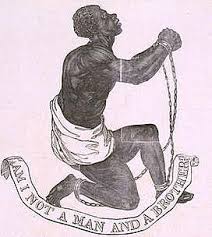
Art & Radical-emancipatory Movements


the French Revolution:

Inline image 1


Inline image 2


the Haitian Revolution:


VIDEO SEGMENT: Revolutions in the Americas

Enlightenment ideas also had dramatic effects in both the Caribbean and in South America. This segment uses the examples of the Haitian revolution and the independence movements led by Simon Bolivar to explore these effects. In Haiti, Enlightenment ideas — especially as reflected by the French Revolution — were received differently by the different social groups on the island. While whites tended to interpret Enlightenment ideals in terms of better colonial representation or greater social equality between whites, free blacks interpreted them in terms of racial equality. Meanwhile, slaves interpreted Enlightenment ideas in terms of emancipation.
These competing interpretations led to conflict, and in 1791 slaves and free blacks engineered a massive revolt. Toussaint L'Ouverture, a free black, emerged to lead the struggle. Although L'Ouverture himself died in a French prison in 1801, his followers eventually defeated the French and declared themselves citizens of the new republic of Haiti — the first nation in history to grant full citizenship to former slaves.
Enlightenment ideals also influenced Simon Bolivar, a wealthy South American plantation owner, who became committed to freeing the region from Spanish control. Bolivar, who like Benjamin Franklin traveled widely in European Enlightenment circles, sought to adapt Enlightenment ideas to the particular situation of the South American colonies. Bolivar did not trust the masses to rule, and in any case he believed that the class and racial divisions between Europeans, Native Americans, and blacks in South America would doom republican-style governments to failure. Instead, he chose a combination of representative government and authoritarian leadership — which in turn created a unique social and political landscape in South America.
[...]


Venezuela's revolution against Spain:

Item: #1964


Inline image 4


the 1917 Russian Revolutions:
Inline image 5


Inline image 6


images from the Spanish Civil War


Inline image 1


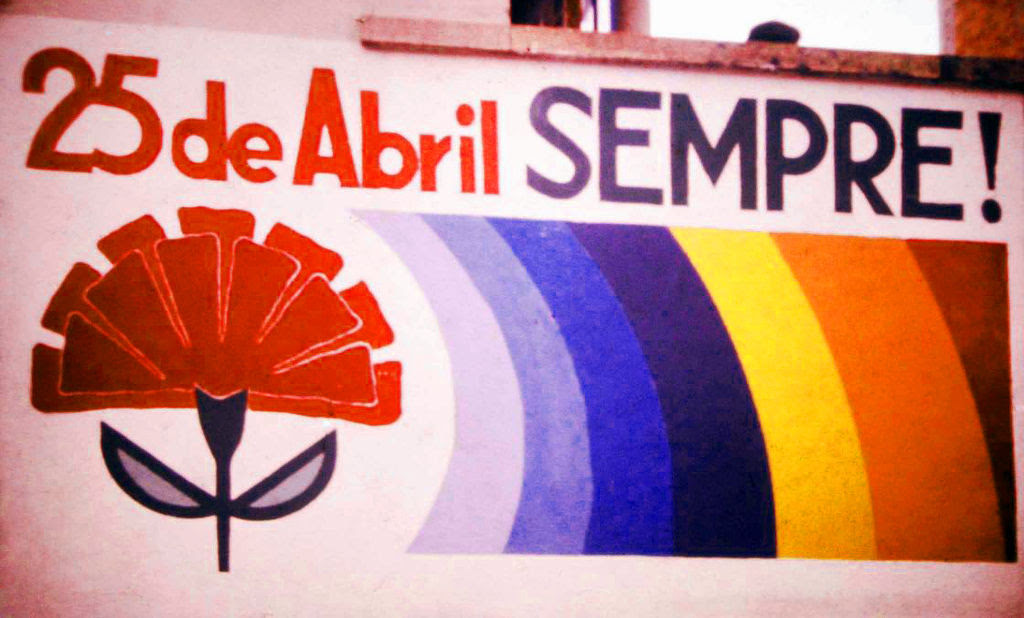
The Carnation Revolution (PortugueseRevolução dos Cravos), also referred to as the 25 April (Portuguese: 25 de Abril), was a military coup in LisbonPortugal, on 25 April 1974 which overthrew the regime of the Estado Novo.[1] The revolution started as a military coup organized by the Movimento das Forças Armadas (Armed Forces Movement, MFA), composed of military officers who opposed the regime, but the movement was soon coupled with an unanticipated and popular campaign ofcivil resistance. This movement would lead to the fall of the Estado Novo and the withdrawal of Portugal from its African coloniesand East Timor.
The name "Carnation Revolution" comes from the fact that almost no shots were fired and when the population took to the streets to celebrate the end of the dictatorship and war in the colonies, carnations were put into the muzzles of rifles and on the uniforms of the army. The Portuguese celebrate the national holiday of Freedom Day on 25 April every year to celebrate the revolution.
[...]


Inline image 7


25 de Abril sempre Henrique Matos.jpg

Si, we can! How the left-wing Podemos party is rattling the Spanish establishment


(As the Spanish election approaches, a surge in support for the party has set the clock ticking.)


http://www.newstatesman.com/politics/2015/02/si-we-can-how-left-wing-podemos-party-rattling-spanish-establishment


“Tick-tock, tick-tock”, chanted the huge crowd in the centre of Madrid last Saturday as they marched in support the new Podemos (“we can”) party. Counting out what they – and many others around Europe – expect to be the last days of the existing Spanish political order, Podemos supporters take heart from recent polls and the Syriza victory in Greece.  The party came from nowhere to win over a million votes and take 5 seats in the European parliamentary elections last May. According to some polls almost 30 per cent of Spaniards could vote Podemos at the next general election – 5 points clear of their nearest rivals, the leftist PSOE. Given that PSOE, founded in 1879, is one of Europe's oldest social democratic parties while Podemos has only just celebrated its first birthday, this is a remarkable result.


Like Syriza in Greece, Podemos is often pigeon holed as “anti austerity”, “radical left” and “Marxist”. Those labels may work for some of its policies but does not begin to describe the movement’s broad social base. The Podemos upsurge is far from a revolt of the crisis-hit poor and huddled masses. In fact, much of the party’s support comes from the well-healed, tech-savvy and most educated. Data from the official sociological research institute (CIS) and leading polling agencies all tell the same story: this is largely a movement of the middle class and the young. The latest CIS data reveals that support for the party amongst the upper middle classes, for example, nearly doubled last year and that 25 per cent of them now say that they will vote Podemos at the next election. Astonishingly, this is almost 10 points above the traditional choice of the Spanish bourgeois, the governing centre right Popular Party (PP).  The professional middle classes and graduates are also turning to Podemos in greater numbers as are skilled manual workers – around one in five of both groups now identify themselves as Podemos supporters.  By contrast there are two groups where the party appears to be making little headway: the unskilled working class and those without any qualifications. Youth is another key constituency for Podemos. A quarter of 18-35 year olds look likely to vote Podemos as will around one in five of those in their 30s, 40s or early 50s. Amongst pensioners, however, support slumps to single figures. 


The irony of a left-wing party harnessing middle-class support is even more evident when compared with what is going on in Britain.  This year “outsider” parties will mount serious electoral challenges to the political establishment in both Britain (Ukip) and in Spain (Podemos). Yet the two are very different not only in their policies but in their core vote. While the right wing Ukip is drawing support from older, unskilled working class voters without formal qualifications the reverse is true for the left wing insurgents of Podemos in Spain who are tapping into a middle class vote.


Despite being tagged as ‘radical left’ Podemos is actually fighting hard for centre ground votes. Around 40 per cent of Spaniards define themselves as “moderate” and in the ideological centre of Spanish politics. Podemos is now the preferred choice for a third of this group – level pegging with the number who say they will support PSOE and twice the number of those who say they will support the PP. It has been a golden rule of post Franco democratic Spanish politics that elections are won by the party which commands most support in the centre. On the current data Podemos are well on their way to consolidating exactly the level of support they need amongst moderate Spaniards to win the next election.


The reasons for Podemos’ success goes way beyond an anti-austerity message. One of the party’s most successful attack lines is against what they call la casta (the caste or the class).  The phrase resonates with many Spaniards and describes the over cosy relationship between politicians, oligopolistic business interests and an inert bureaucracy which is protected by some of the weakest freedom of information laws in Europe. The British equivalent of la casta might be the “Westminster elite” but this translation does not really do the job. Anger at the entrenched elite in Madrid is also directed toward the leaders of Spain’s powerful, de-centralised regions which are frequently dominated by local political cliques.


Simmering discontent with the system has been evident for years. Ordinary Spaniards complained about an “extractive” government class while international reports on the Spanish economy from the OECD and others highlighted shortcomings which arise from the bureaucratic quagmire, low levels of investment and poor productivity.


All this came to head with the economic crisis. Unemployment has soared whilst the living standards for many of those in work – including, of course, the middle class – have been hit hard. But one issue above all others has fuelled support for Podemos: corruption. Spanish courts are now awash with cases of bankers, politicians and even members of the royal family accused of ripping off the public during the boom years. Corruption ranks alongside the economy as the issue which most concerns Spaniards and the old political parties are struggling to respond because it happened on their watch.


Whether Podemos can sustain their momentum depends on several factors some of which are beyond their control. If the new Syriza government in Greece fails it will contaminate the Podemos brand in Spain. The Spanish economy is picking up slowly and this may be enough for some voters to withdraw their gamble on Podemos. And there internal questions to be settled too – several key policies have not been thought through. It is also far from clear whether the party has the logistical muscle to mobilize a large number of first time voters and polls suggest many voters may simply abstain. Yet the Spanish establishment is rattled and rightly so.  The Spanish middle class is angry and the clock really is ticking.


David Mathieson is a former adviser to the late Robin Cook. He is on Twitter as @mathiesonmadrid


Deconstructing the Theoretical Currents in Middle Eastern* Food


*By which we mean the food of the Levant**, but we said Middle Eastern to draw you in.


**It’s really Lebanese food that we are talking about, but we don’t want to alienate Syrians and Palestinians.


There could be no doubt that Levantine cuisine is the greatest in the world, but few people know that it is the product of centuries of ideological conflict, philosophical debates and conceptual disagreements that have often pitted brother against brother and mother against daughter. Before it crystallised into its current form we all love and enjoy, it went through epochs of internecine struggles that the field of food theory has never witnessed the likes off before or since. Here is the fascinating story of how the beloved tabbouleh acquired its current form and why kibbeh looks like a rugby ball.


Much like any Lebanese meal, it all begins with hummus. If you don’t know what hummus is, it’s a dish made of chickpeas… hang on, if you don’t know what hummus is, what are you doing reading this? At the end of the third millennium BC a revolution in the consumption of chickpeas occurred in Mesopotamia, in the Akkadian empire to be specific. For centuries people were used to eating chickpeas whole, until someone thought to mash them and add some olive oil.


This simple innovation caused huge controversy in Akkadian food circles. Commoners took to the new dish with gusto, and it became very popular in cities like Uruk and Mari. But the aristocracy felt threatened and the clerics in particular despised this attack on the integrity of the spherical chickpea. As the priest Gummar of Ur put it: ‘This barbarous mashing of the perfect chickpea is nothing short of blasphemy’. (From a clay tablet found in Tall Kayf.)


This debate was to rage on for centuries, and the legacy of the anti-hummus camp still survives in the form of the hummus-balila abomination, which is nothing more than chickpeas in a plate with no mashing or chopping involved. But in the triumph of the hummus we see the first serious challenge to the authority of the clerics and the aristocracy in the Middle East. It was to be a victory for commoners against the puritanism and stuffiness of the rulers. (Stuffing food will become a subject of controversy centuries later as we shall see.)


Our second course, if you excuse the pun, is the tabbouleh, the ‘princess of all salads’ as renowned Lebanese al-Nahda thinker Jameel al-Bustani called it. Tabbouleh was crucial to the formation of a new Levantine identity under Ottoman rule, exploiting the Ottomans’ weakness when it came to salads despite their otherwise impeccable culinary achievements. To this day, Turkish salads remain half-hearted attempts at mixing vegetables unconvincingly. But I digress. 


The rise of tabbouleh coincided with the rise of fattoush, but this in fact was no coincidence. The two Levantine salads were the products of two different schools of thought that revolved around the philosophical question of how fine one should chop ingredients in a salad. The nationalist modernisers, intent on social and ethnic integration favoured the tabbouleh as a symbol of social cohesion, whereas rationalists preferred a salad like fattoush in which ‘each ingredient retained its identity.’ (An expression still common among Lebanese politicians until today.)


The conflict raged on for centuries and has not been resolved until today. One of the most difficult questions to answer in a Lebanese restaurant is ‘tabbouleh or fattoush?’ Whichever one chooses, the legacy of the historic conflict is always there. Attempts at reconciliation by ordering both are considered bad form.


However, the major food conflict in the 18th century was sparked off by Napoleon’s campaigns in the Levant. The rationalist emperor was incensed by the locals’ way of serving mezzeh dishes haphazardly with no clear order or sequence. As he wrote in one of his letters to his wife: “sometimes the hummus comes first, sometimes the tabbouleh, and one is lost for he does not know what to expect. I miss you very much.” The chaotic way of serving food as it became ready was an affront to the Emperor’s Enlightenment values, and he thought that his attempt to modernise the Levant had to start with altering this non-linear way of serving food.


Napoleon recruited his chief food theorist Vincent Mangetout to wage his battle against the randomness of mezzeh. Mangetout set out to work, writing a pamphlet lambasting this practice and attributing the backwardness of the people of the Levant to this non-sequential way of serving food. “Much like night follows day, it is the natural order of things to have a definite rhythm. The three-course French meal is the purest representation of this rational order, man stamping his authority on the world through reason and discipline.”


The pamphlet enraged locals from Syria to Lebanon to Palestine. Local circles were formed to organise opposition to Napoleon’s draconian reforms, and civic disobedience followed. Extremists took to eating their dessert first but they were criticised for being unnecessarily dramatic. Amidst the turmoil, a group of Lebanese thinkers influenced by European ideas yet keen to emphasise their own identity, found a compromise. The meal would begin with the mezzeh, but then progress to the main course and later fruits and desserts. As a result, people eating Lebanese food to this day still find that they are too full when the main course, usually grilled meat, arrives, but they are too shy to admit it so they try to force down a few morsels.


And much like any decent Levantine meal, we end with the dessert. It is here that the legacy of the different cultures and peoples that have inhabited the Levant come together in a superb display of mastering the art of satisfying the sweet tooth. But even here the field is not without its own history of controversy. The main conflict is between the epicureans and conservative religious puritans who objected on principle to Arab sweetened pastries as ‘the ultimate form of temptation’.


The leading critic of Arab desserts was the scholar al-Maryouffi who saw Arab pastry as a symbol of the decadence of the royal courts and the subsequent decline of Islamic culture. He also waged a war against the ‘unnecessary euphemisms’ implied by the names of desserts such as znoud el sett (the forearms of the lady), which to his mind clearly indicated their role as instruments of temptation, mixing gluttony with sexual desire.


“The way the layers of pastry crush against the cream filling, oozing the rosewater sugar over one’s tongue… is nothing short of a sin. Many a man of weak-faith says ‘this is heavenly’, adding blasphemy to this excess, this temptation should be resisted by every good believer.” Al-Maryouffi said in a famous text on the subject.


Reformers hit back against al-Maryouffi and his rigid interpretation of religion and the strength of human will. The conflict escalated into a full philosophical confrontation that drew in wide circles of scholars and philosophers, and putting the question of dessert at the heart of the theological battle over human will. The continuing popularity of Arab desserts suggests that the majority of people were convinced by the reformers in a definite philosophical victory.


Al-Maryouffi himself was fond of eating those pastries however, and despite his efforts to conceal his secret indulgence he was spotted by people from the other camp who were quick to denounce his hypocrisy in public. Not one to lose an intellectual argument easily he rebutted their attack, arguing that he only ate pastries because they were a good way to strengthen one’s faith by testing it to its limit. He famously said: “I do not take any earthly pleasure out of this, it is reprehensible. Yumyumyum.”

- See more at: http://www.karlremarks.com/2015/01/deconstructing-theoretical-currents-in.html#more